

While the shimmering luxury of Providenciales often steals the spotlight, the true soul of the Turks and Caicos lies just a short ferry ride away, across the Caicos Banks. Welcome to the “Garden Islands”—North and Middle Caicos—where the pace slows down significantly. Connected by a scenic causeway, these two sister islands offer a raw, off-the-beaten-path experience that feels worlds apart from the bustling resorts of Grace Bay.

In North Caicos, you’ll find the historic ruins of Wade’s Green Plantation and Flamingo Pond. But as you cross into Middle Caicos, it gets even better. From the limestone majesty of Mudjin Harbour and the prehistoric depths of the Conch Bar Caves to the crystal-clear shallows of Bambarra Beach, these islands are for those who prefer hidden caves and deserted sands over crowded beaches.
Let’s start with North Caicos, since that’s where we landed. North Caicos is one of the more populated islands in Turks and Caicos, with a population of 1,312.
North Caicos
We disembarked at Bellefield Landing, the primary port and ferry terminal for both North and Middle Caicos. Historically, this area was the agricultural heart of the archipelago during the Loyalist plantation era of the late 18th century. Situated near the settlement of Kew, the landing provided a vital transport link for cotton and sisal produced at nearby estates like Wade’s Green Plantation.
Geographically, Bellefield Landing is surrounded by a 975-acre protected area of tidal channels and mangroves (more to come on that), providing a critical sanctuary for the near-threatened West Indian whistling duck and various marine species.
The terminal is small, but modern. It has a restaurant, a few shops, and a covered waiting area.

Our Favorite Site on North Caicos: Bottle Creek Lagoon
Bottle Creek Lagoon is a vital and expansive body of water located on the eastern side of North Caicos, separating the main island from the uninhabited East Caicos and a string of smaller cays. Spanning approximately 10 miles in length, the lagoon is characterized by its exceptionally shallow, crystal-clear turquoise waters and vast networks of red and black mangroves. These mangroves serve as a critical “nursery” for the archipelago’s marine life, providing shelter for juvenile bonefish, snapper, and Caribbean spiny lobsters before they move into the deeper reef systems.
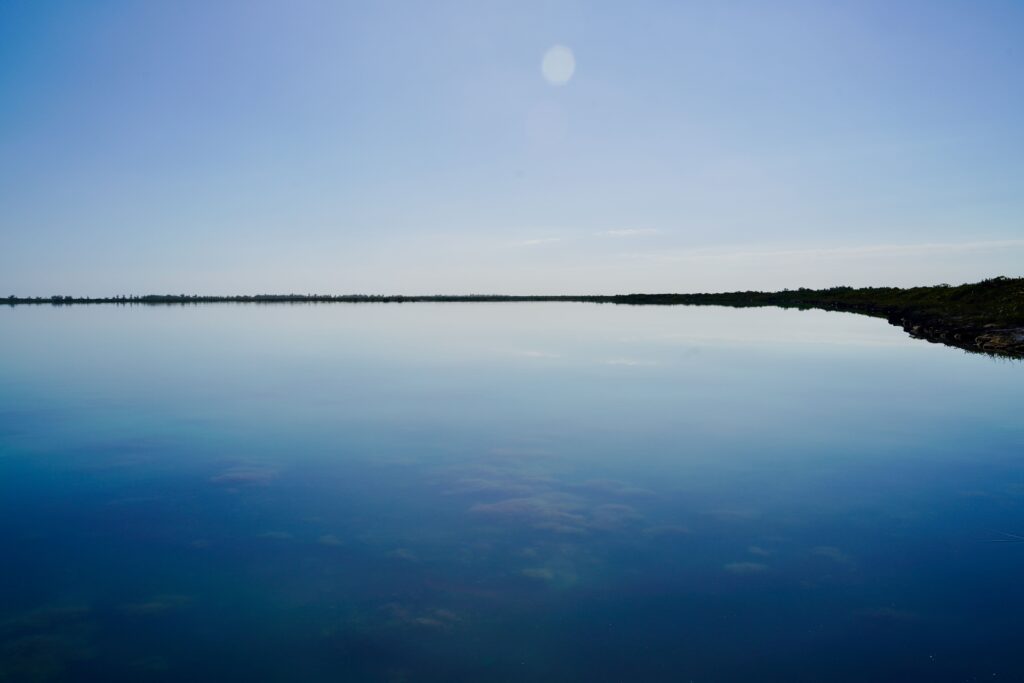
The lagoon is an eco-tourism destination, particularly for bonefishing and birdwatching. Its calm, silty bottom makes it an ideal habitat for West Indian Flamingos, Roseate Spoonbills, and various heron species. Historically, Bottle Creek was the primary site of the island’s colonial-era plantations, and the lagoon served as a central transport artery for moving goods such as cotton and sisal.
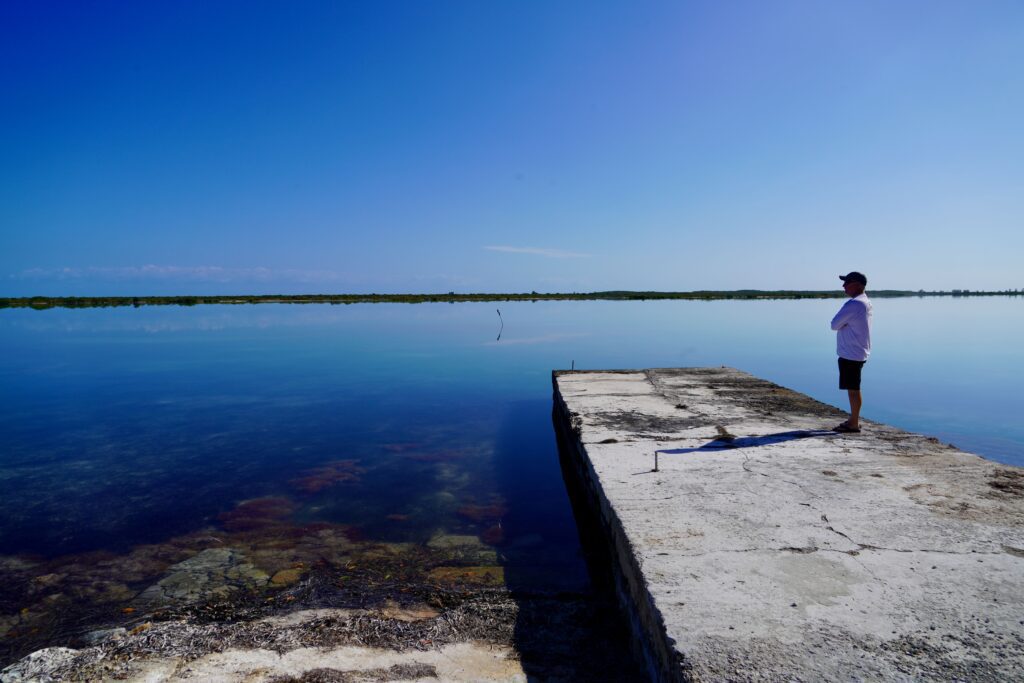
Today, the settlement of Bottle Creek, which overlooks the lagoon from a high limestone ridge, remains the administrative and social hub of North Caicos. The area is also part of a larger protected system, helping preserve its delicate hypersaline environment and local biodiversity.
Things We Loved Most About Middle Caicos
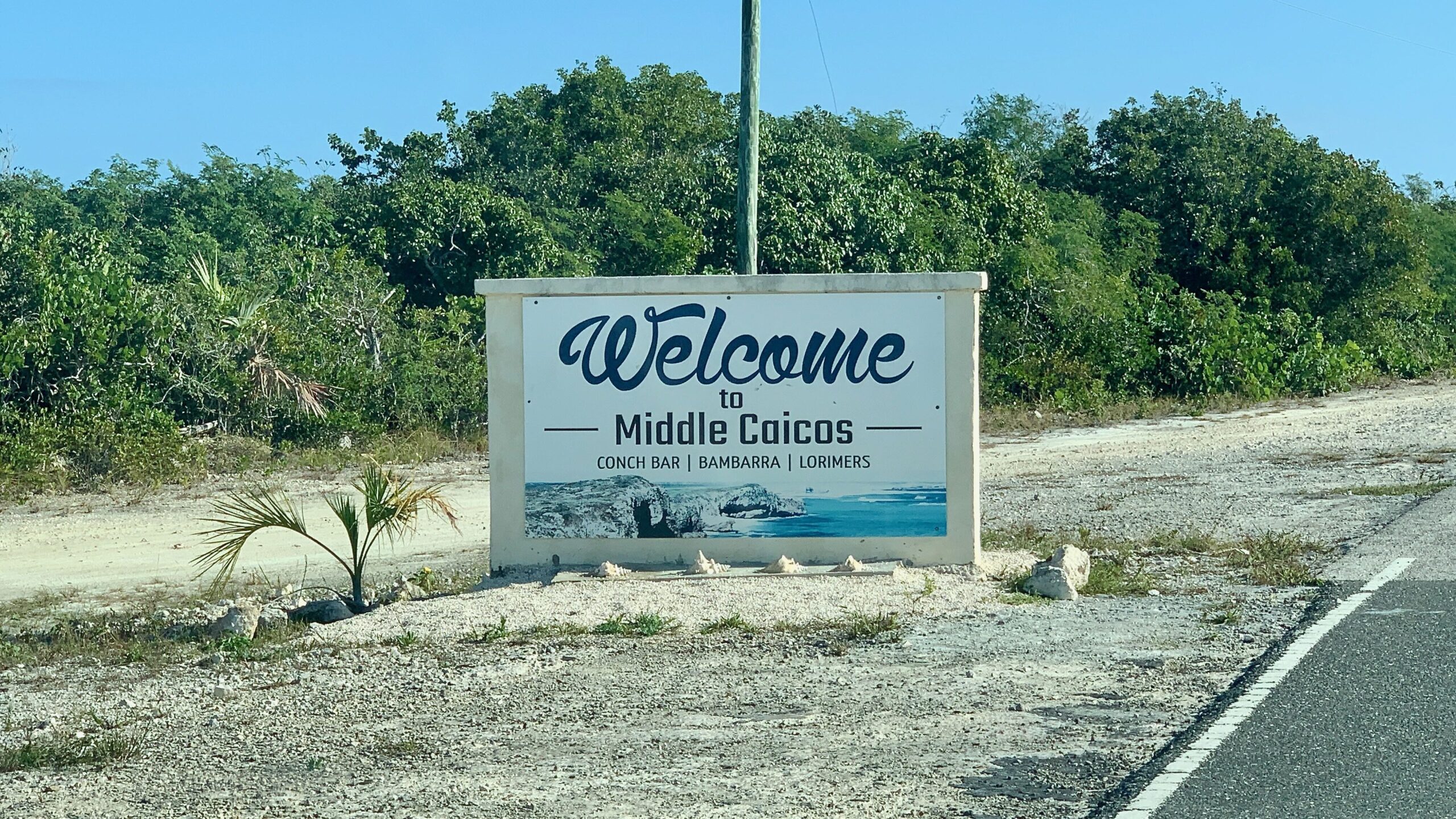
First of all, this island is mostly undeveloped; only about 118 people live here. We absolutely loved its authenticity.
1. The Conch Bar Caves
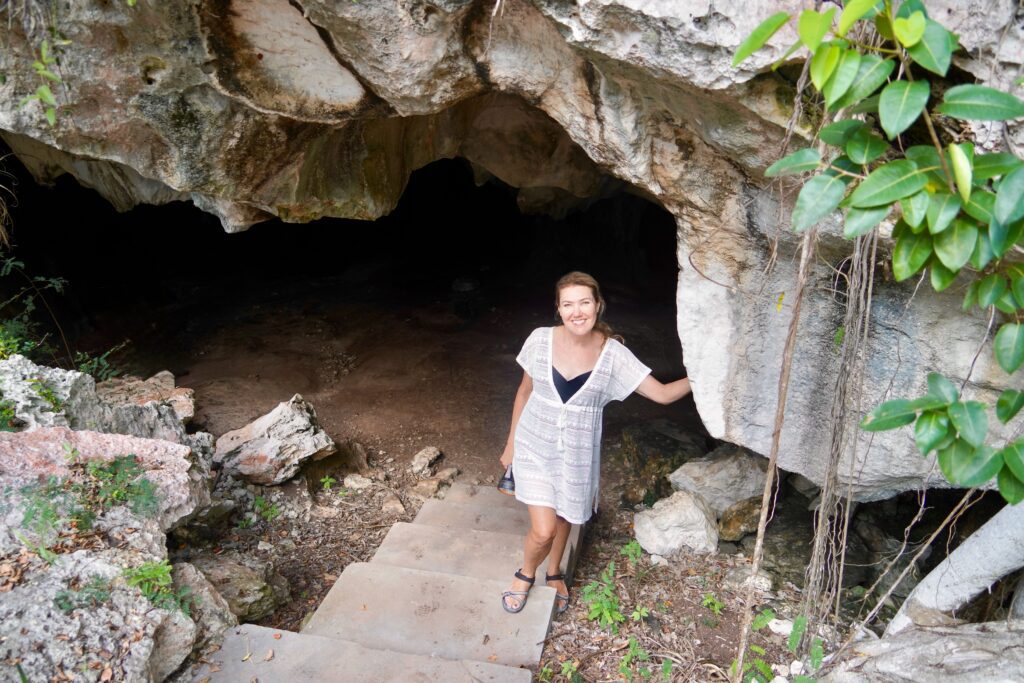
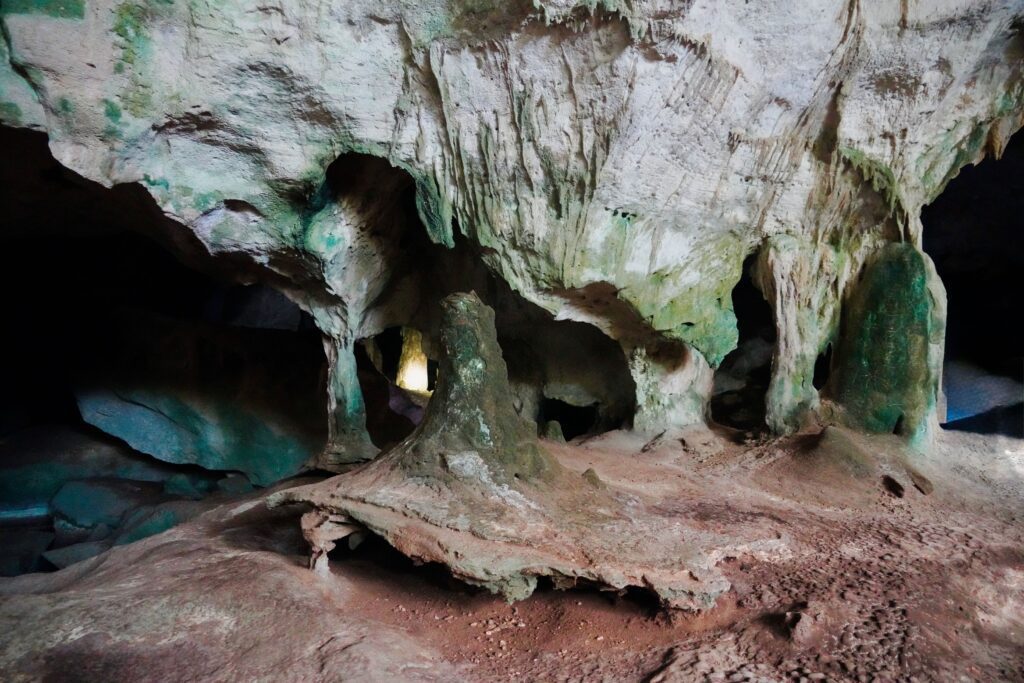
Located in the village of Conch Bar on Middle Caicos, the Conch Bar Caves are among the largest non-marine cave systems in the Caribbean. This sprawling subterranean network consists of at least 1.5 miles of mapped passages, though much of the system remains unexplored. Geologically, the caves are a “karst” formation, carved over millennia by the dissolution of soft limestone by slightly acidic rainwater. The interior is characterized by impressive gallery chambers adorned with classic speleothems, including towering stalagmites, delicate stalactites, and glimmering flowstone.
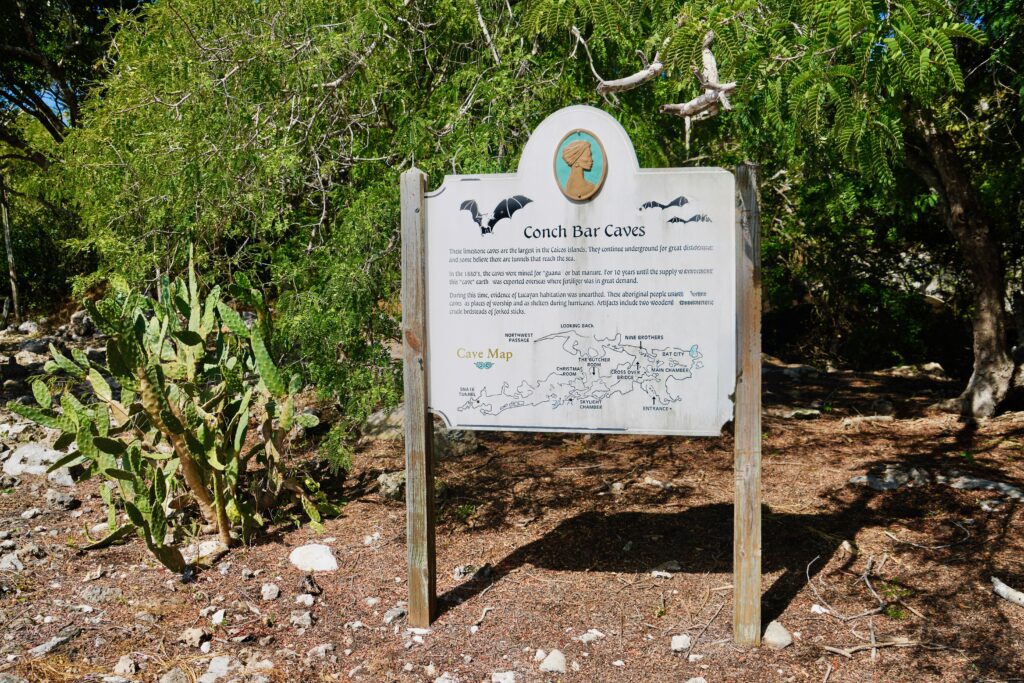
Beyond their geological significance, the caves serve as a critical ecological sanctuary. They are home to at least four distinct species of bats, including the Buffy Flower Bat and the Leach’s Bearded Bat, which play a vital role in the island’s ecosystem.
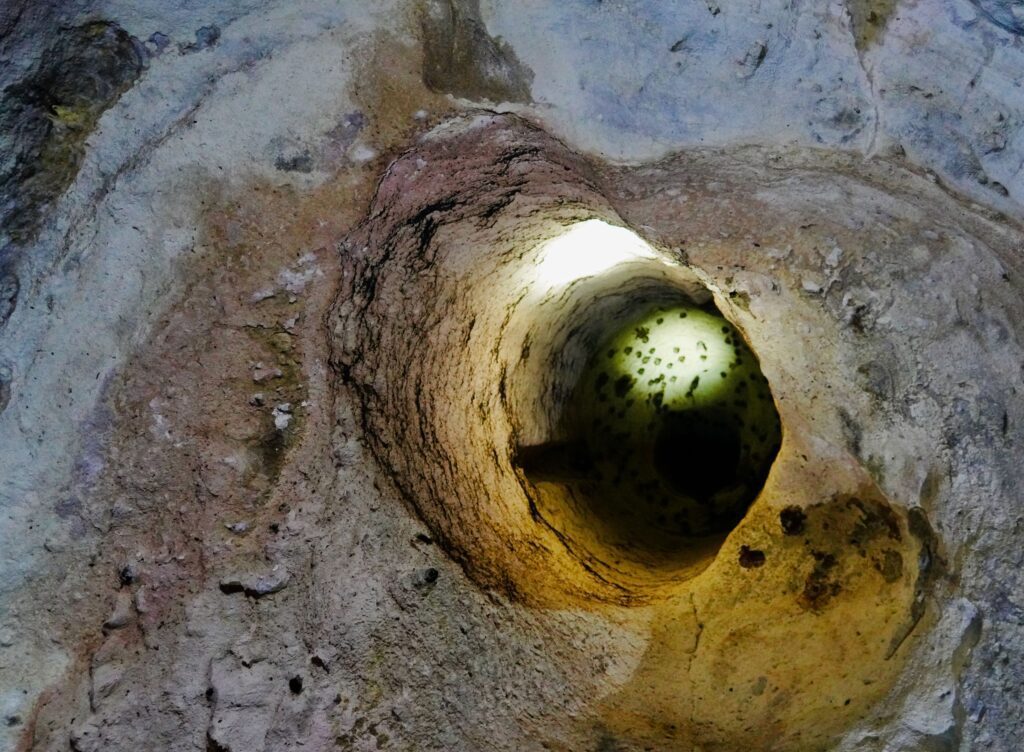
Historically, the site holds immense cultural value; archaeological excavations have uncovered Lucayan artifacts and skeletal remains, proving the caves were used by the archipelago’s indigenous inhabitants for shelter or ceremonial purposes centuries ago.
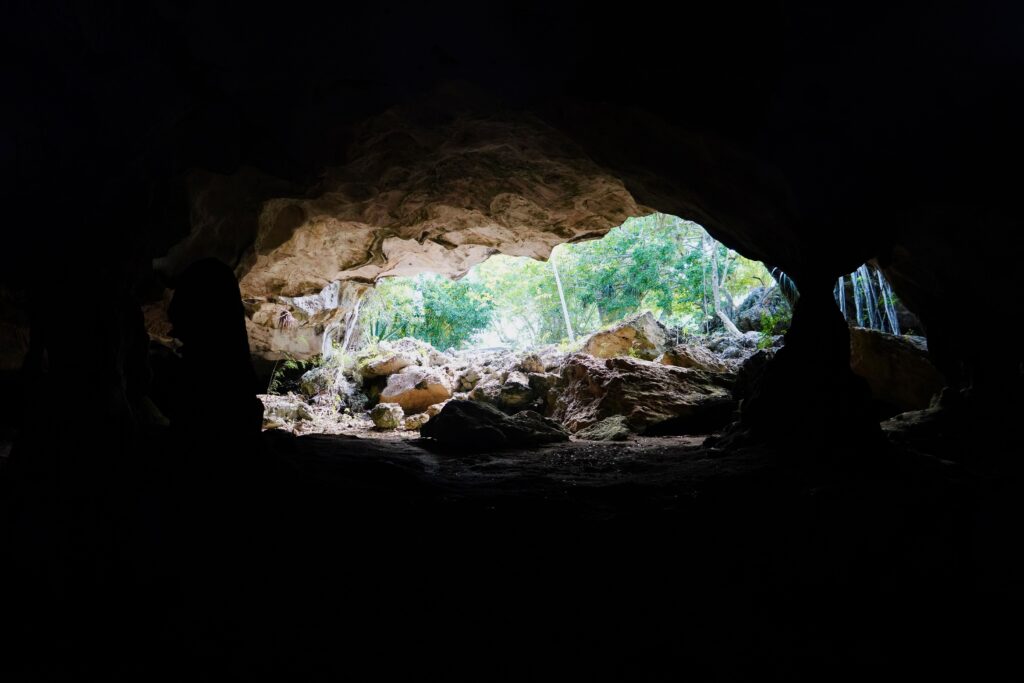
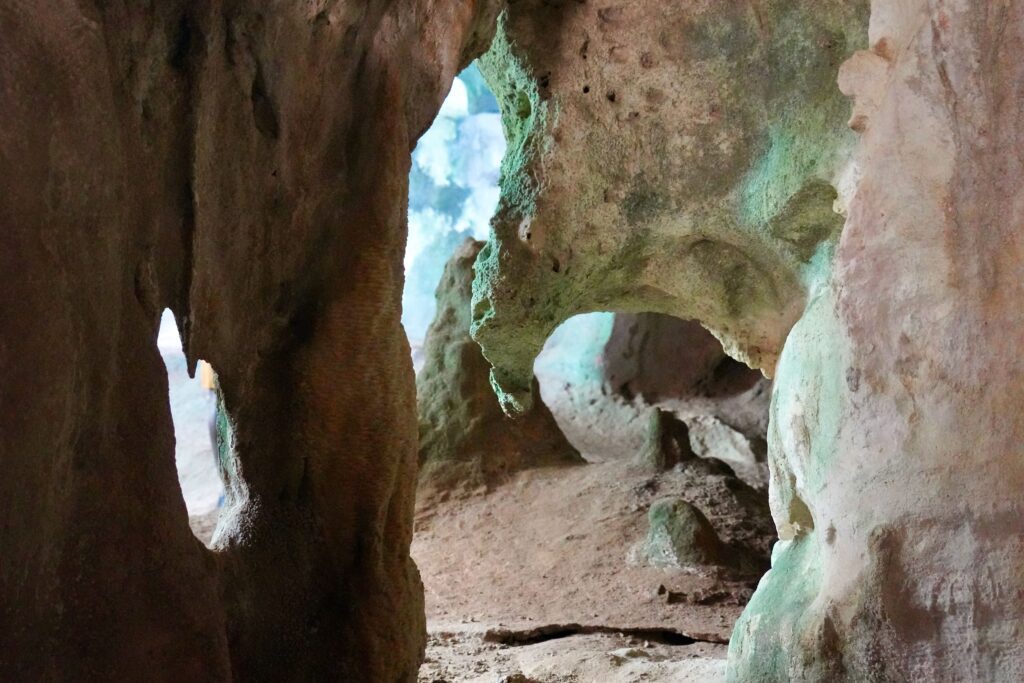
Today, the caves are protected as a National Park. Visitors must be accompanied by a local guide to navigate the slippery terrain and protect the fragile interior environment from damage.
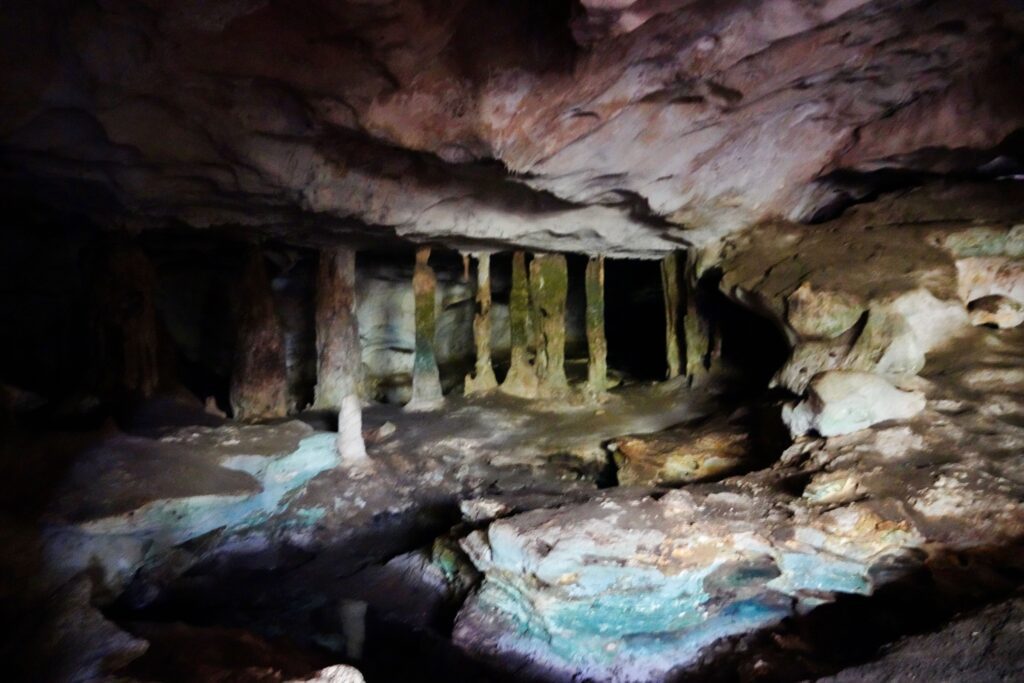
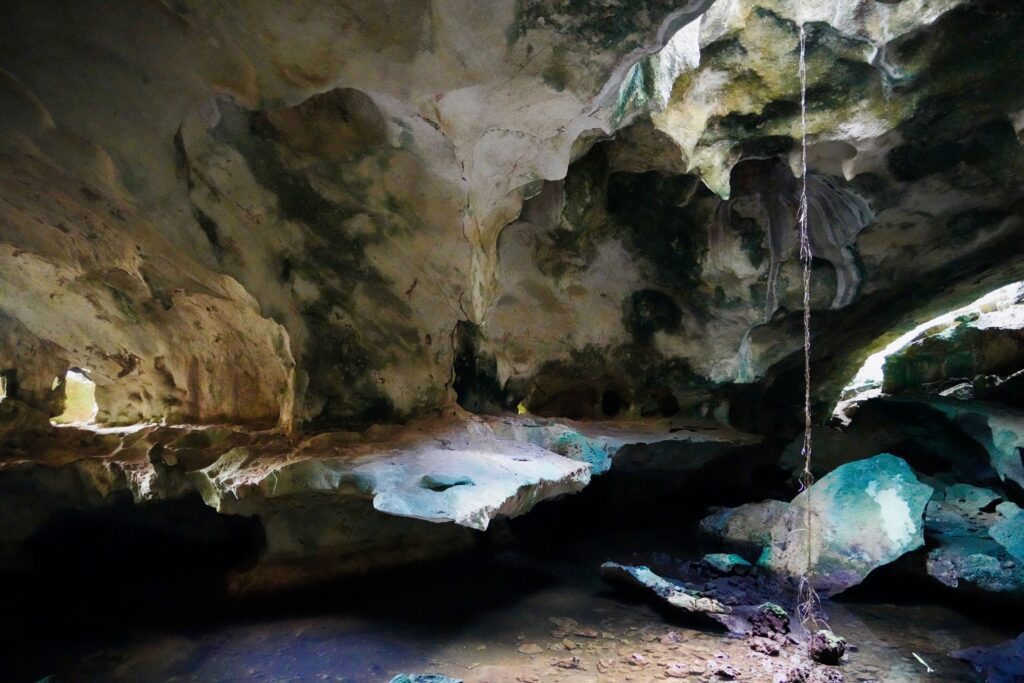
The caves were interesting and hauntingly beautiful.
2. Mudjin Harbor
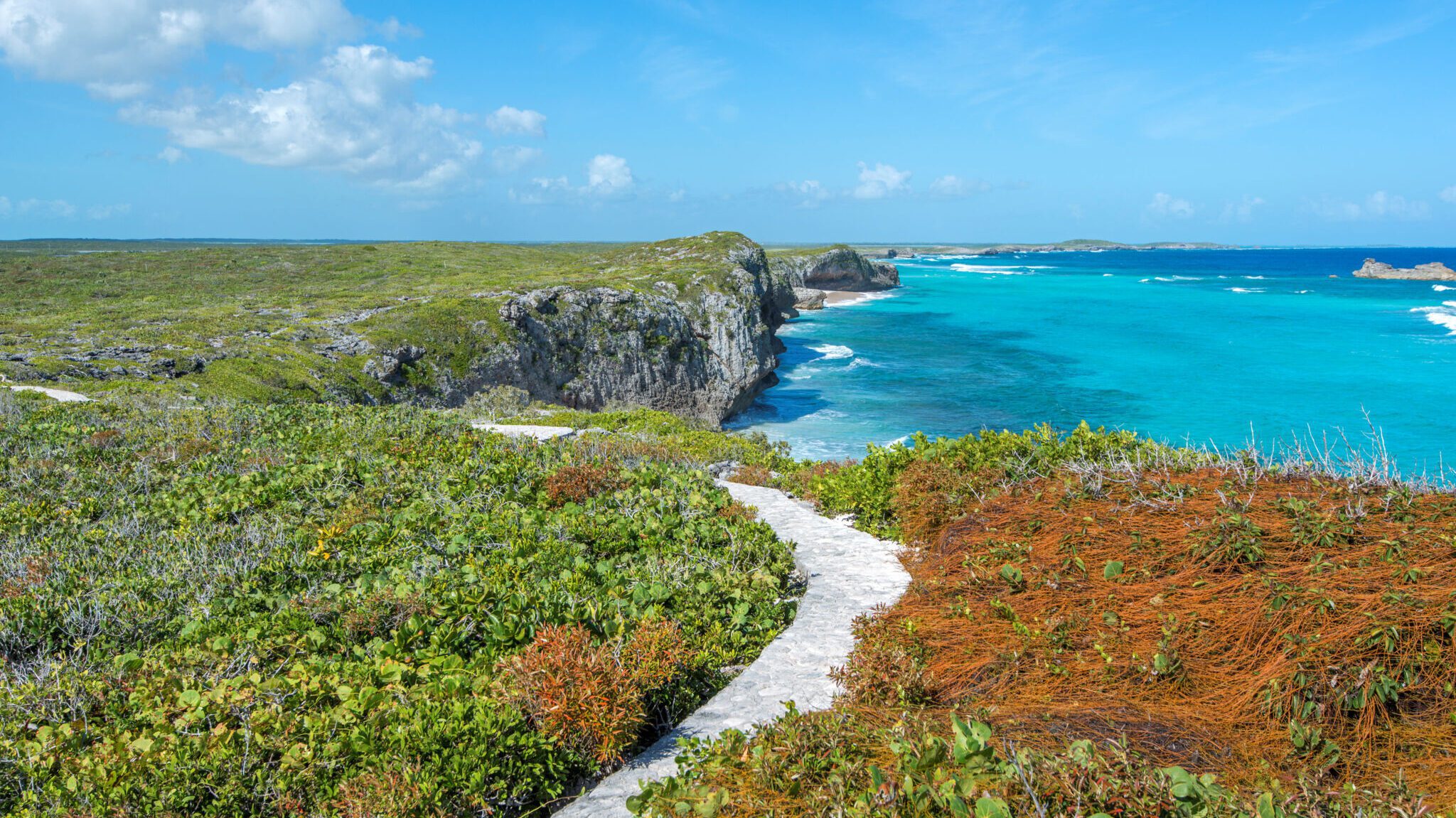
Mudjin Harbor, located on the north coast of Middle Caicos, is widely considered one of the most breathtaking natural landscapes in the Turks and Caicos Islands. Its name is a localized corruption of “Bermudian Harbor,” reflecting the historical maritime links between the archipelago and Bermuda.
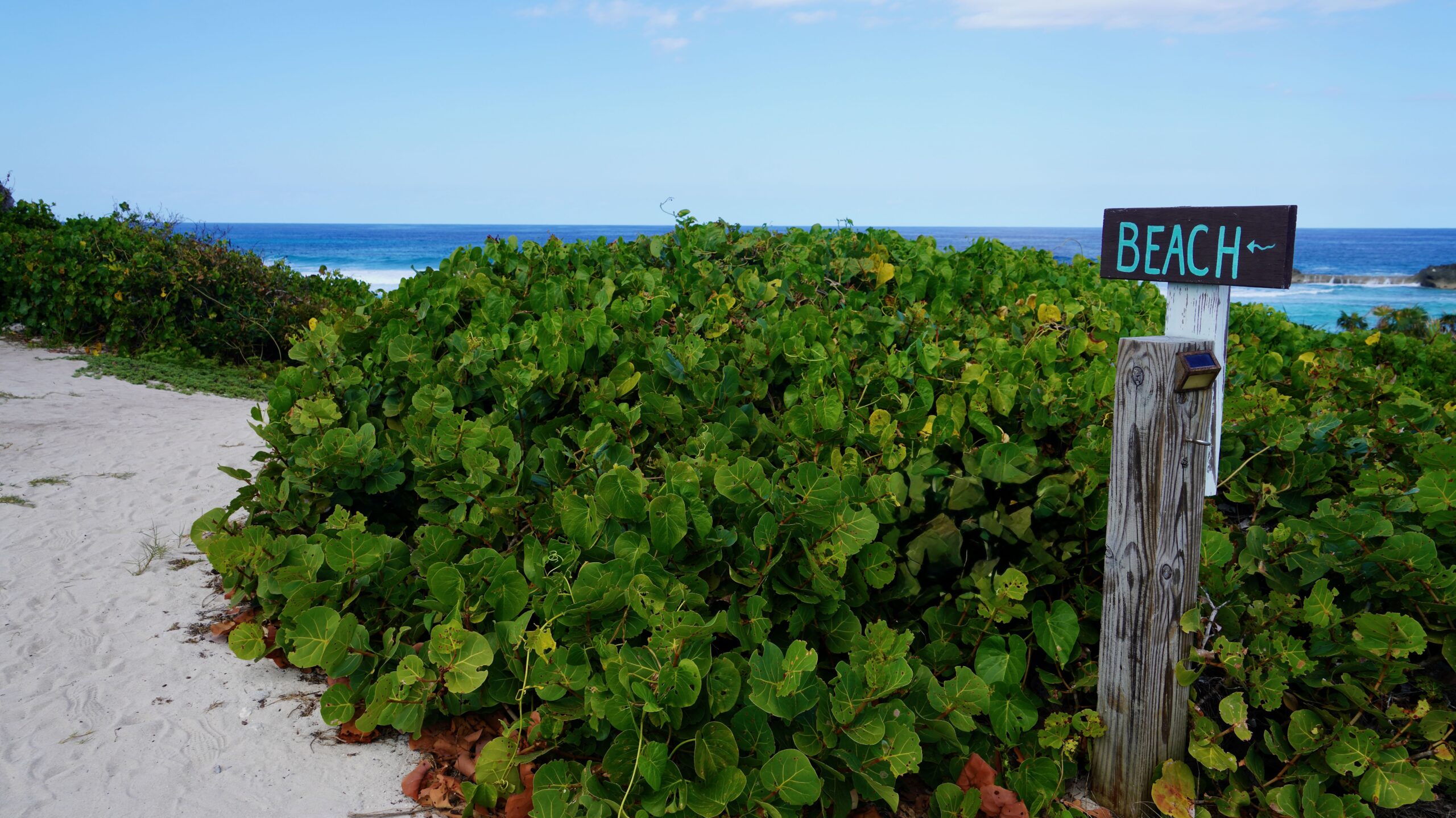
The harbor is defined by a dramatic semicircular cove framed by high limestone cliffs, which are among the tallest in the chain. These rugged “ironshore” formations provide a stark contrast to the white sand beach and the turquoise waters of the Atlantic.
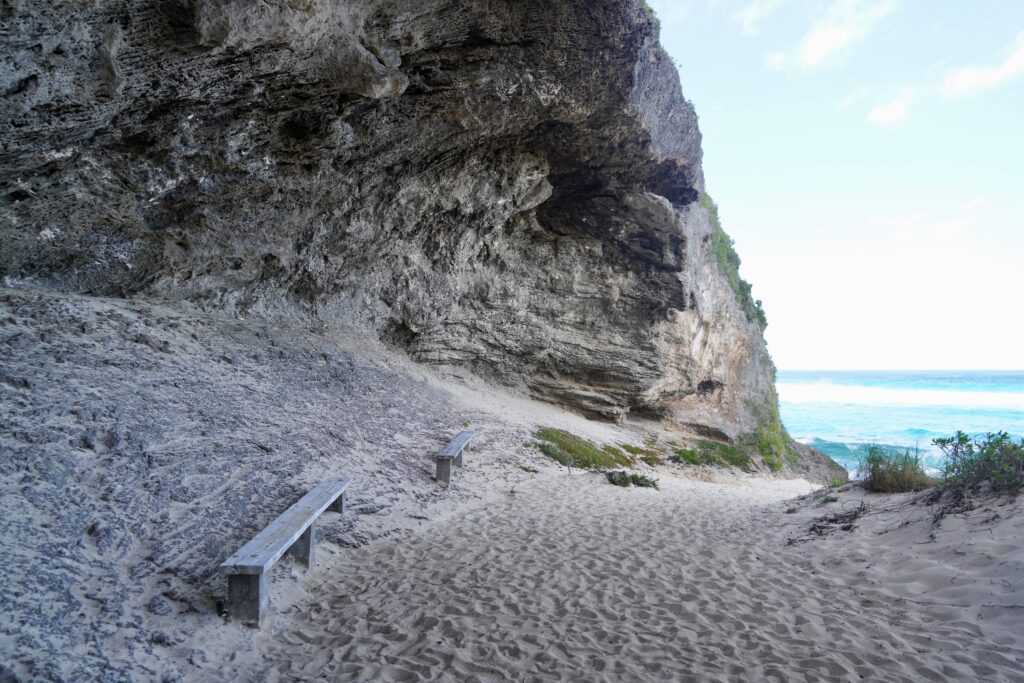
A central feature of the harbor is Dragon Cay, a small limestone island situated about 70 yards offshore. At low tide, a natural sandbar often connects the beach to the cay, allowing visitors to walk across. The area is also geologically significant for its sea caves and open-faced vaults, most notably the Conch Bar Caves nearby and the smaller caves carved directly into the Mudjin cliffs.

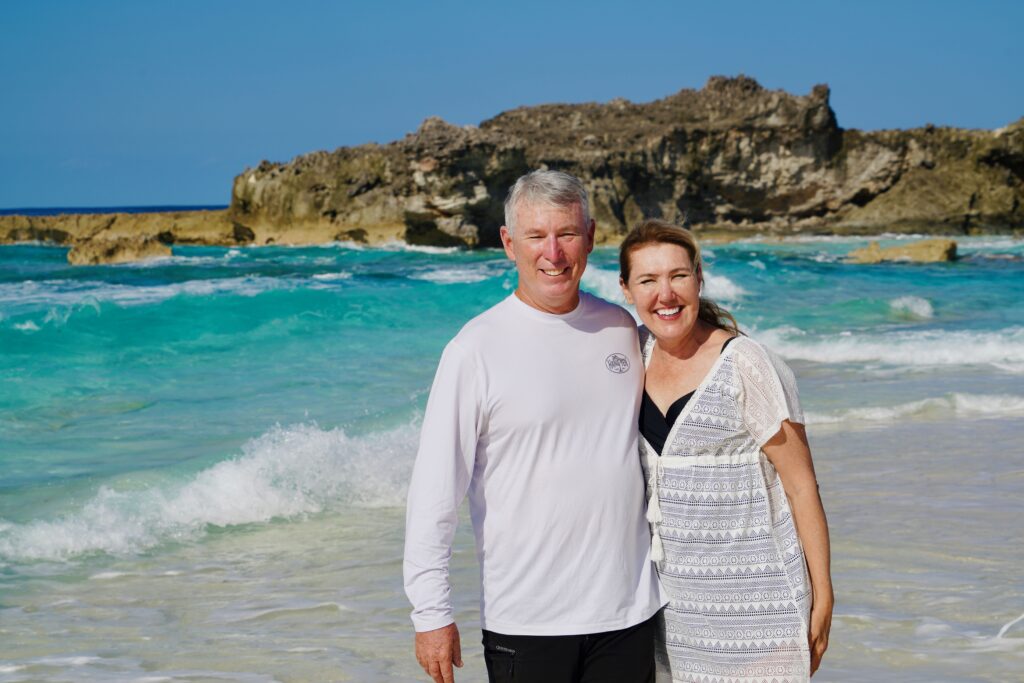
Historically, the harbor’s cliffs served as lookouts for early settlers. Today, the harbor remains largely undeveloped, protected by its remote location on the largest but least populated island in the territory, offering a glimpse into the archipelago’s raw, prehistoric geography.
3. Platico Point
About a 10-minute drive from Mudjin Harbor, Platico Point is home to a notable shipwreck that has become a staple for local divers and snorkelers. The vessel, often referred to simply as the “Platico Point Barge,” was a flat-top transport barge that ran aground several decades ago.
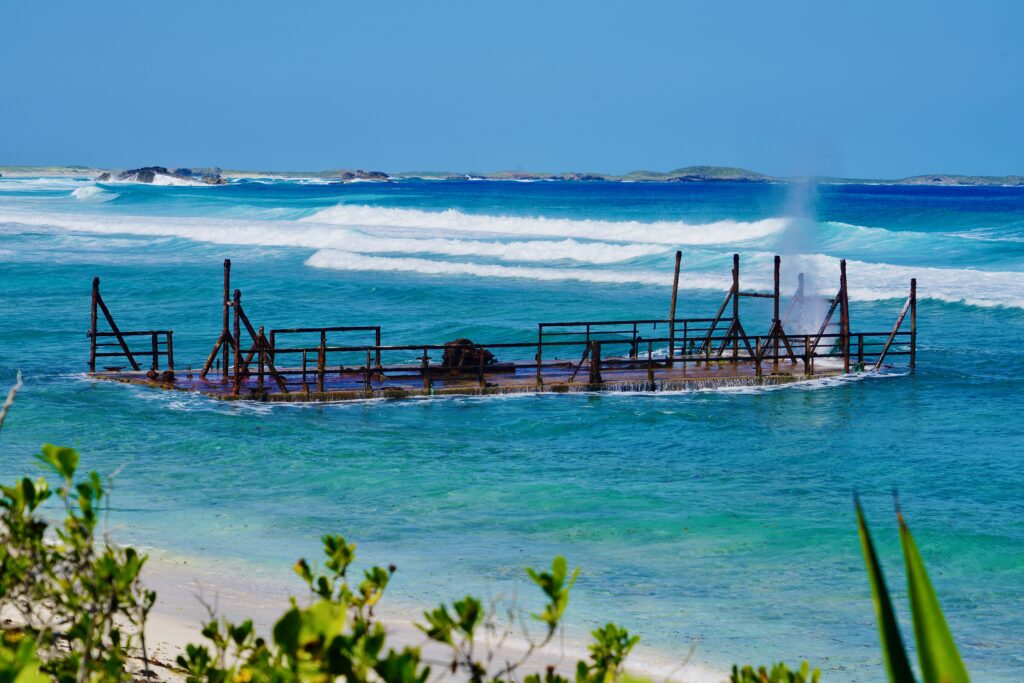
While specific historical records regarding its original name or registration are sparse, it is widely understood to have transported construction materials or salt during the mid-20th century.
The wreck occurred during a heavy storm when the barge was driven onto the shallow ironshore and sandy shelf of the point. Over time, the relentless force of the Atlantic swells and corrosive saltwater broke the vessel into two primary sections.
Today, the rusted hull sits in relatively shallow water, ranging from 10 to 20 feet deep. The site has transitioned from a maritime mishap into a thriving artificial reef. The skeletal steel structure provides a complex habitat for diverse marine life, including Caribbean spiny lobsters, French grunts, and occasionally nurse sharks. Its proximity to the shoreline makes it one of the most accessible “hidden” historical ruins in the Caicos archipelago.
4. Bambarra Beach
Located about eight minutes east of Platico Point, Bambarra Beach is a tranquil, crescent-shaped bay widely regarded as the most family-friendly swimming spot on the island. Unlike the dramatic surf found at Mudjin Harbour and Platico Point, the waters at Bambarra are remarkably calm and shallow, protected by an extensive sandbar system. This geography allows visitors to wade hundreds of yards into the turquoise sea, where the water often remains only waist-deep. Just offshore lies Pelican Cay, a small limestone islet that serves as a nesting site for local bird species; however, visitors are cautioned against swimming or wading to the cay due to deceptive distances and unpredictable currents.


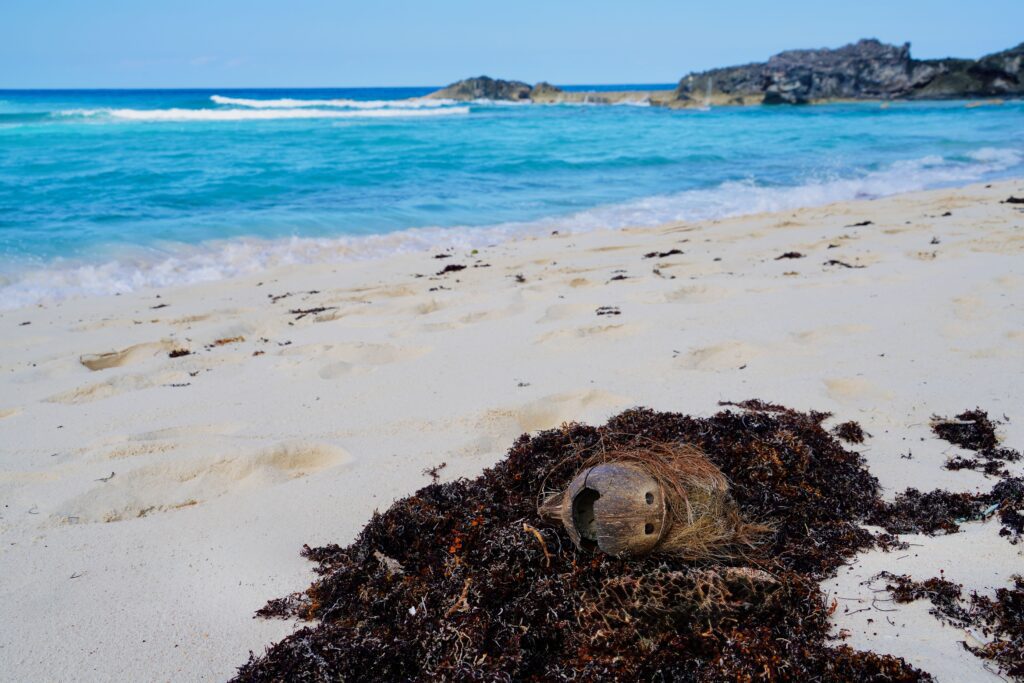
The beach was stunning, but it had a lot of sargassum.
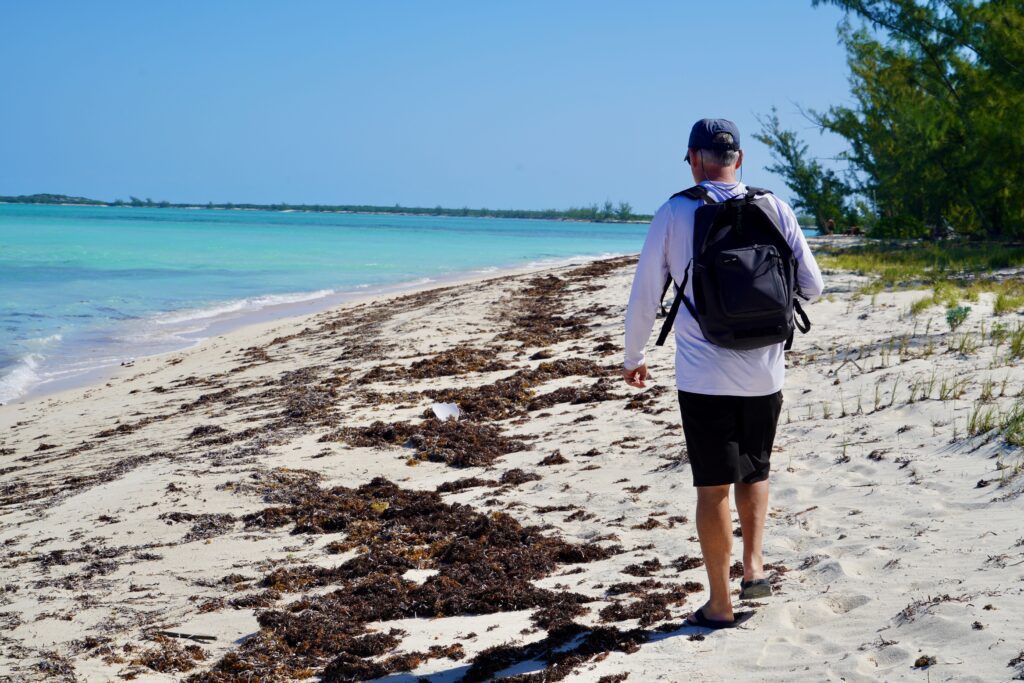
Bambarra Beach is also historically significant. It is the site where Bambarra was founded in 1842 by survivors of the Trouvadore, a Spanish slave ship.


The name “Bambarra” honors the Bambara people of West Africa, whose descendants still reside in the local communities. Today, the shoreline is lined with tall casuarina trees providing natural shade, along with several colorful tiki huts where local vendors serve fresh seafood and “Bambarra Rum” on weekends.
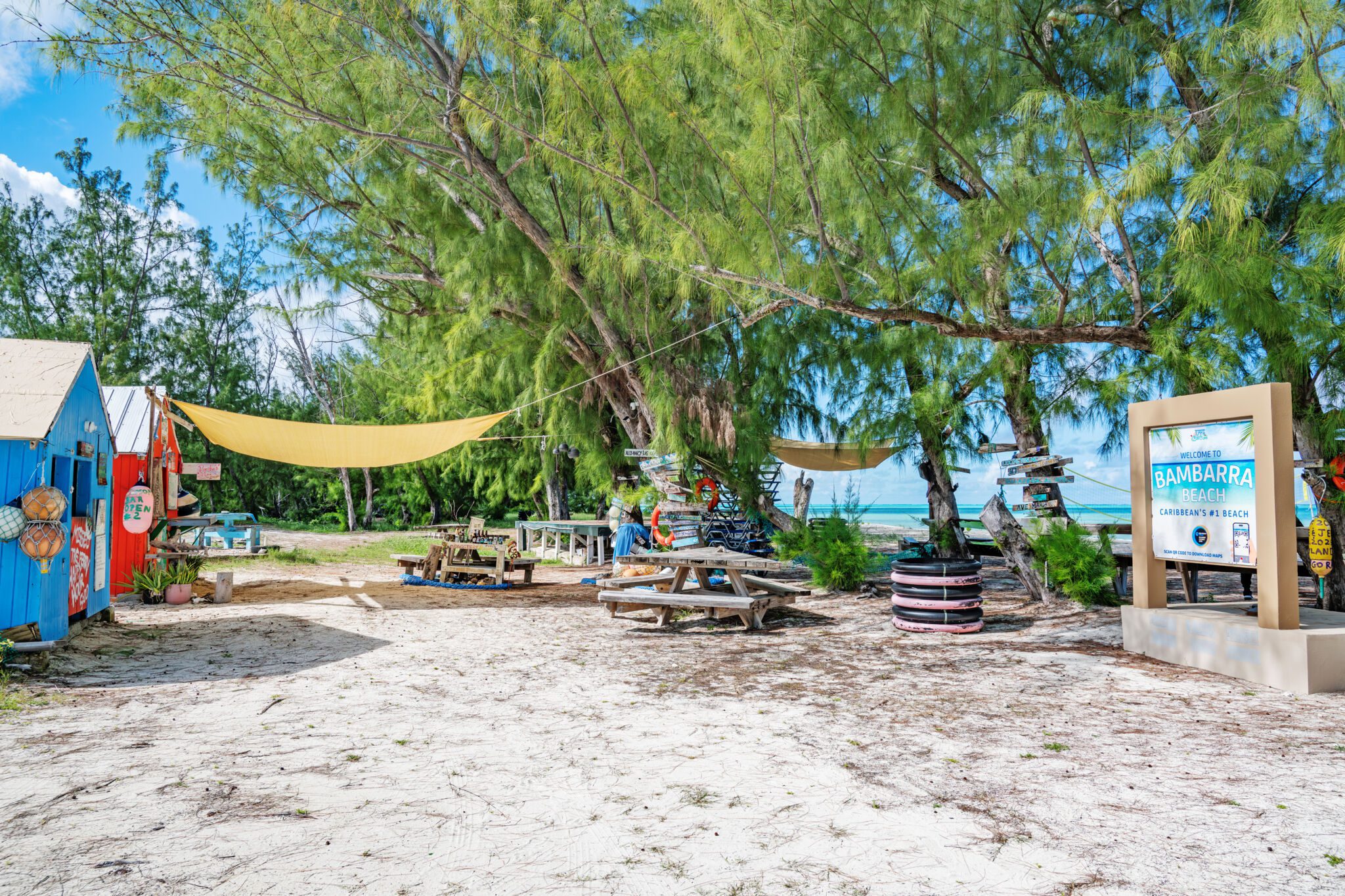
Each February, the beach transforms into a cultural hub for the annual Valentine’s Day Cup, a traditional model sailboat race that celebrates the islands’ maritime heritage.
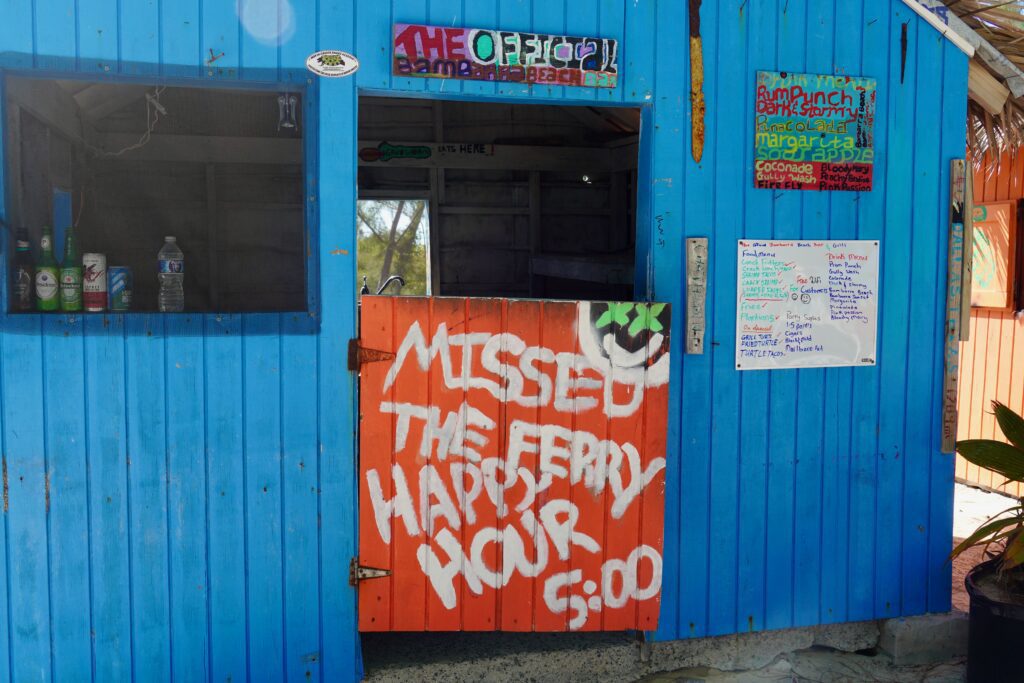
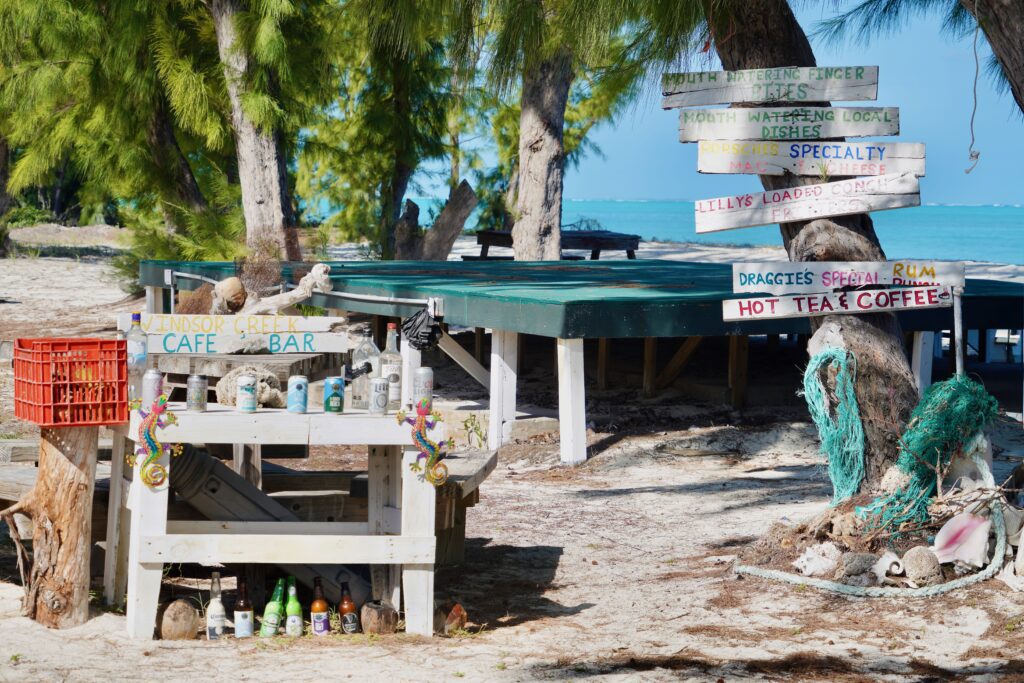
We did our part to support the locals.
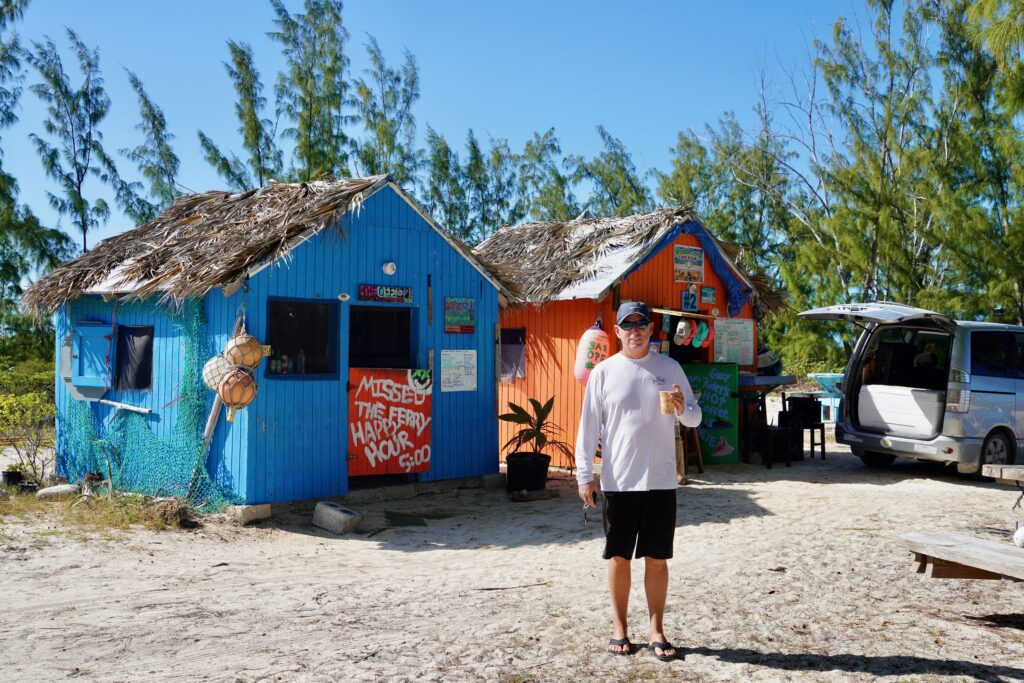
We were tickled when we saw this sign amongst all the others.
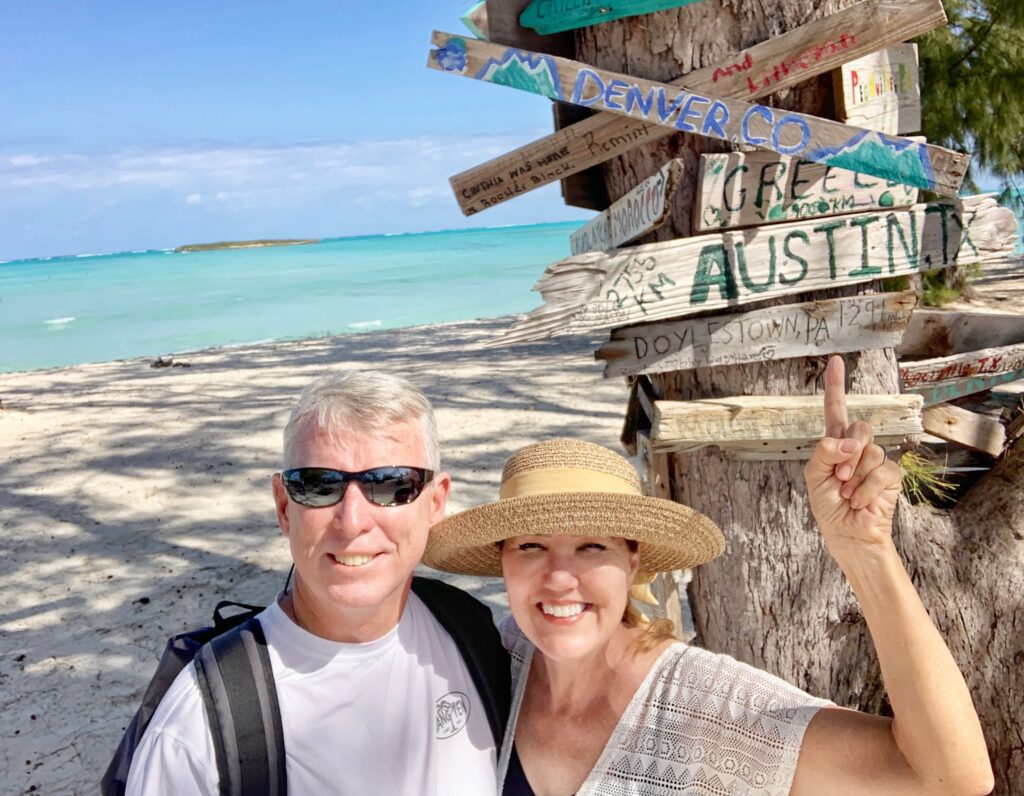
Other Memories of Our Day Trip to North and Middle Caicos
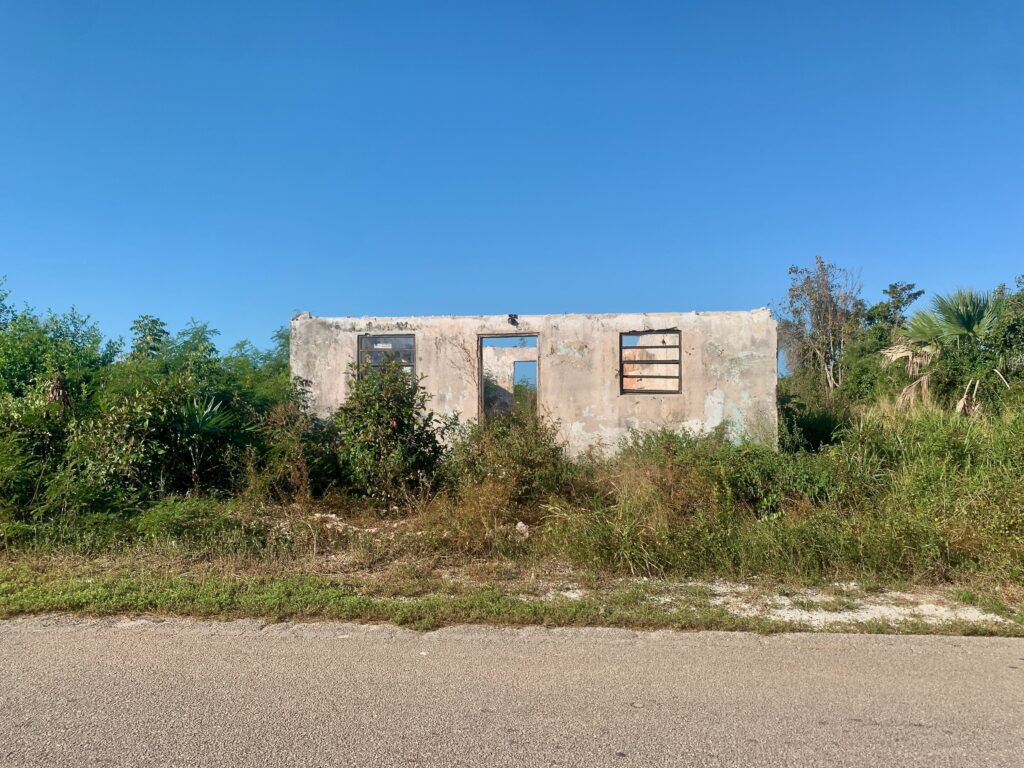
We saw a fair number of ruins around the islands.
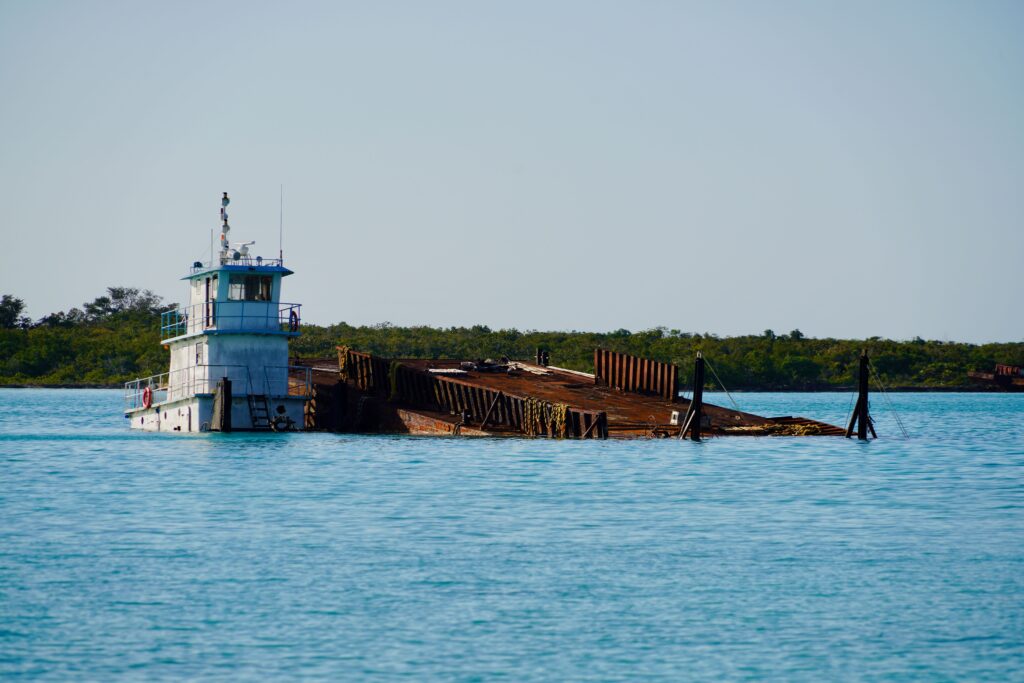
Another sunken barge (this one outside Bellefield Landing):
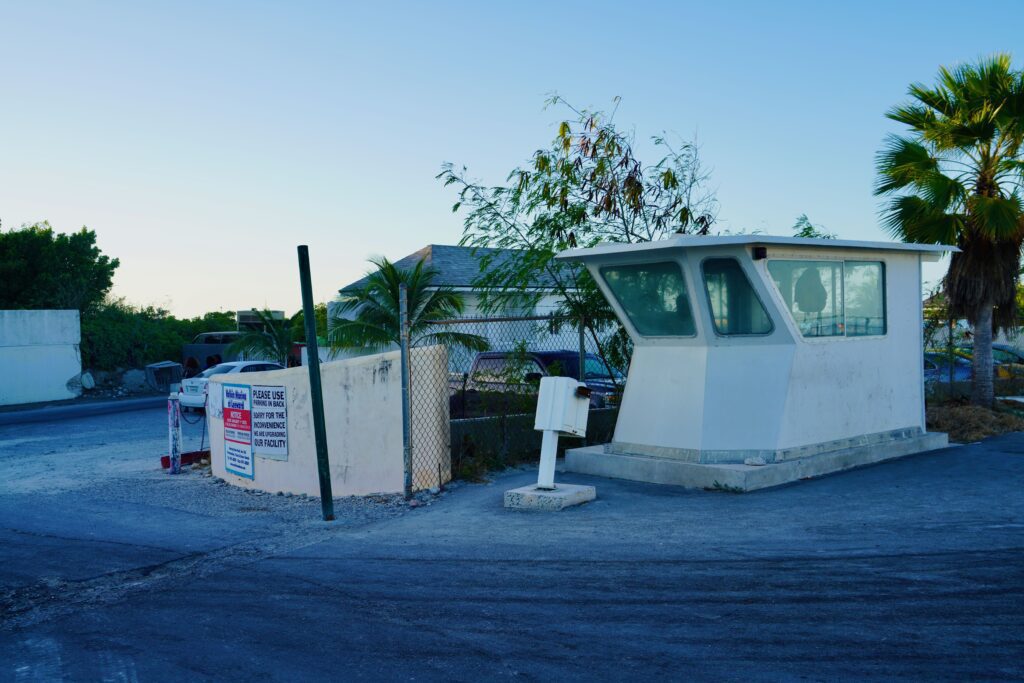
Speaking of ships, this was the guard booth at the Heaving Down Rock Marina (Walkin Marina) where we embarked on our ferry. Clever!
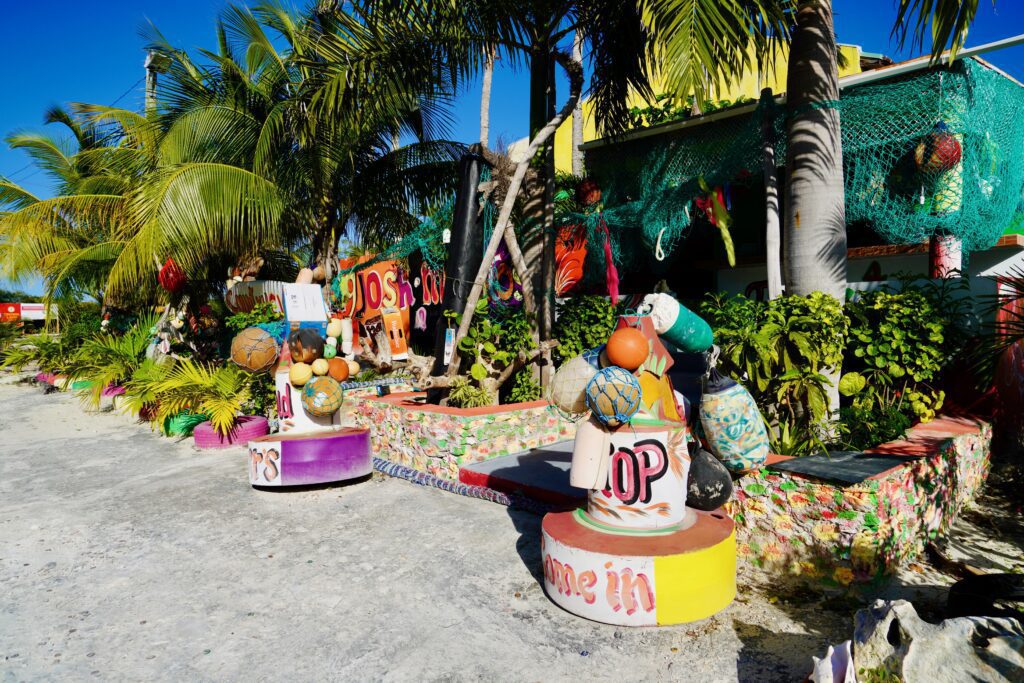
Big Josh Country Club
If we return to Whitby (North Caicos), I would like to go to this restaurant. Unfortunately, we only got to see the outside.
It looks colorful, quirky, and fun!
Another site we only saw from the outside was the well-known historic site on North Caicos, Wade’s Green Plantation.
Wade’s Green Plantation
Wade’s Green Plantation is the most well-preserved example of a Loyalist-era cotton plantation in the Turks and Caicos Islands. Established in 1789 by Wade Stubbs, a British Loyalist who received the land as a grant after the American Revolutionary War, the estate quickly became one of the most successful and expansive operations in the archipelago. At its peak, the plantation spanned thousands of acres and was the primary engine of the island’s short-lived “Cotton Boom,” utilizing the labor of hundreds of enslaved people to produce high-quality sea island cotton for export to British textile mills.

Hopefully, we can tour this in the future and get the full experience.
Last but not least, there was a small disappointment, Flamingo Pond.
Flamingo Pond
For us, this was a bust—not as a concept, but as viewers.
Flamingo Pond, located on the southern interior of North Caicos, is a hypersaline lake that serves as breeding and feeding grounds for the West Indian Flamingo. Part of a protected nature reserve, the pond’s high salinity and shallow depths create an ideal environment for the brine shrimp and algae that comprise the birds’ primary diet, which in turn provides them with their distinctive pink plumage.
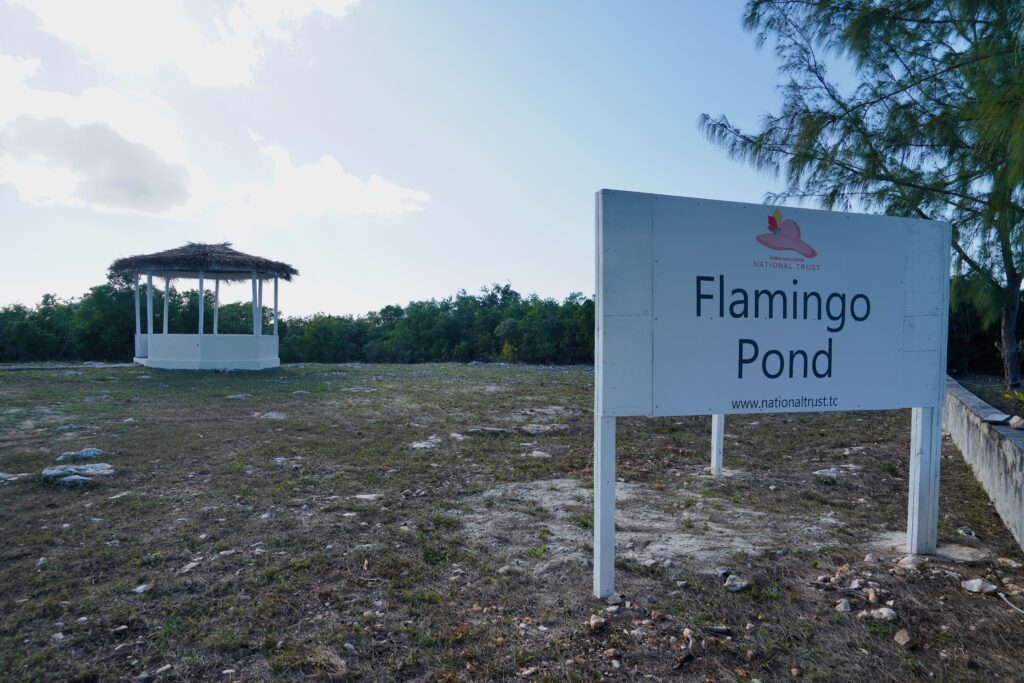
As a visitor, here’s the problem. Because the flamingos are highly skittish and prone to nesting failure when approached, the viewing platform is situated at a considerable distance—typically 300 to 600 yards from the main clusters of birds, depending on seasonal water levels. Due to this gap, all we saw were tiny pink specks.
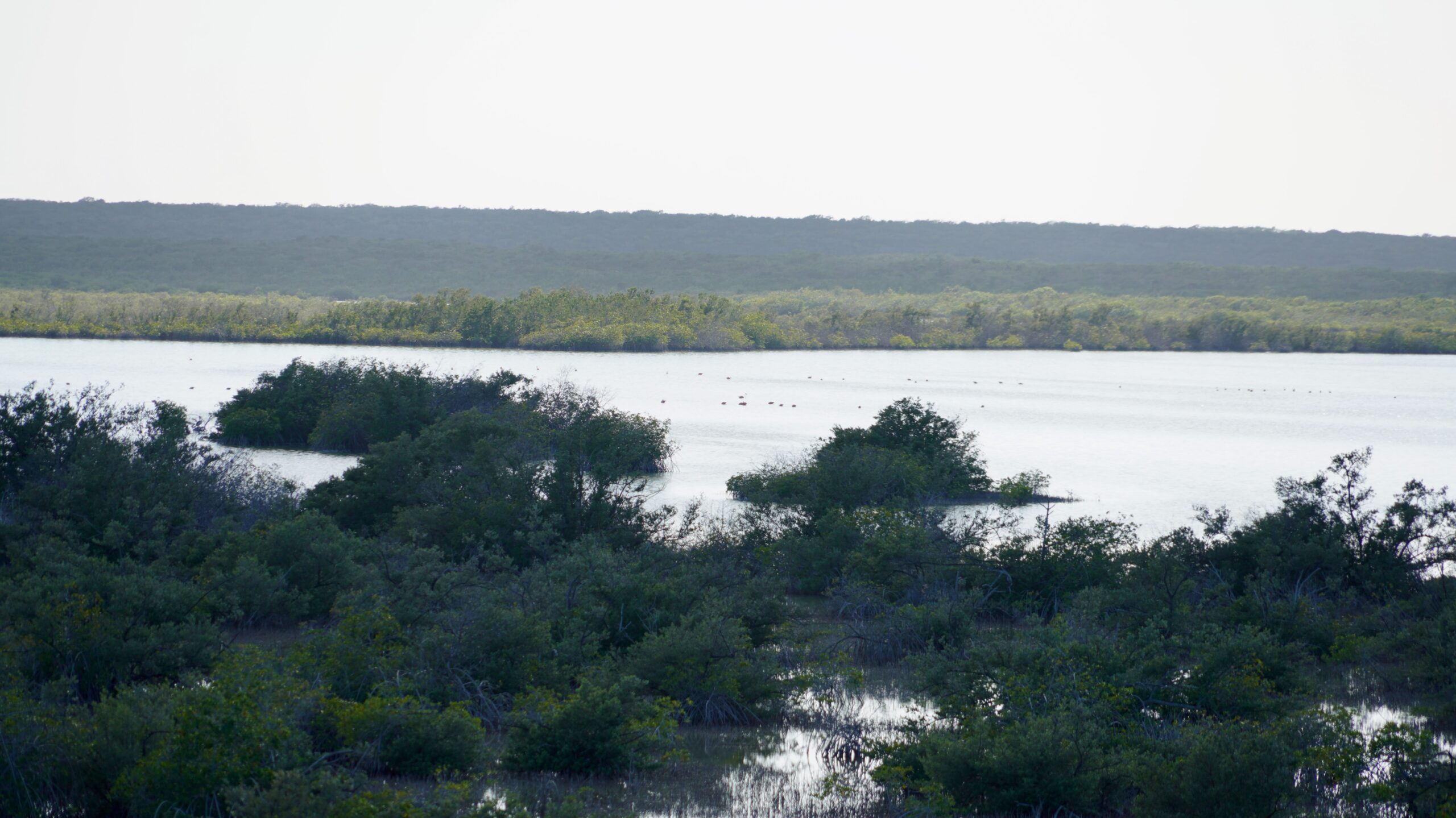
Now, don’t get me wrong—I don’t fault the way this has been situated. After all, this intentional distance ensures the colony’s long-term survival. It’s just good to know going in that they are really, really far away.
Where We Ate
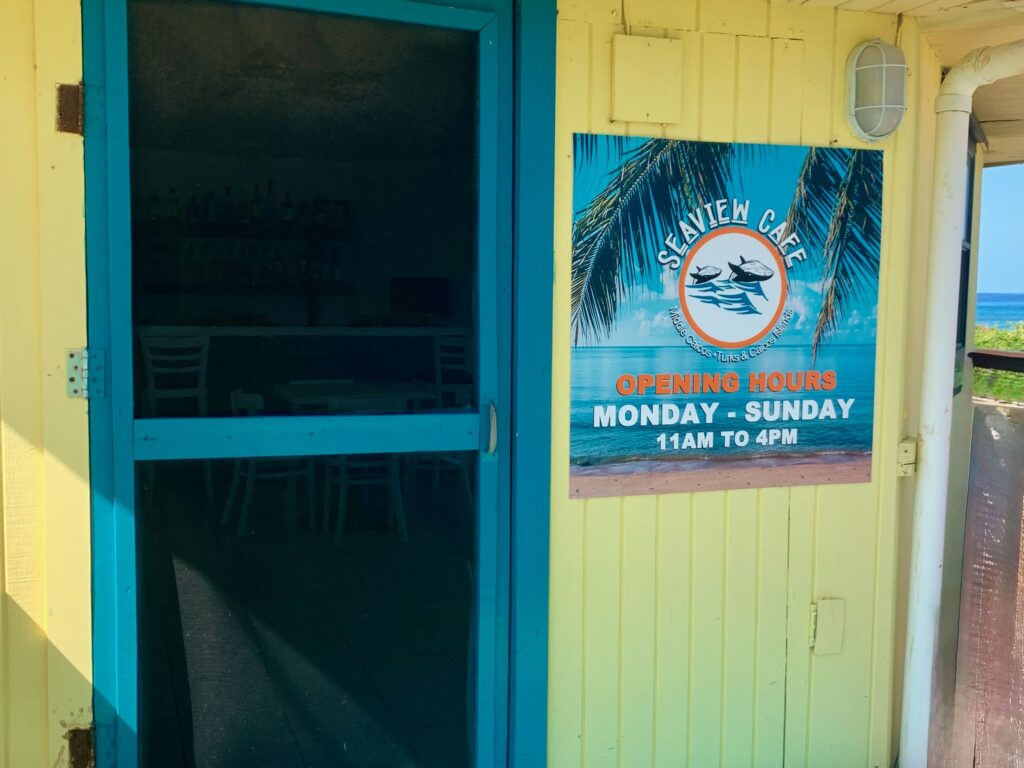
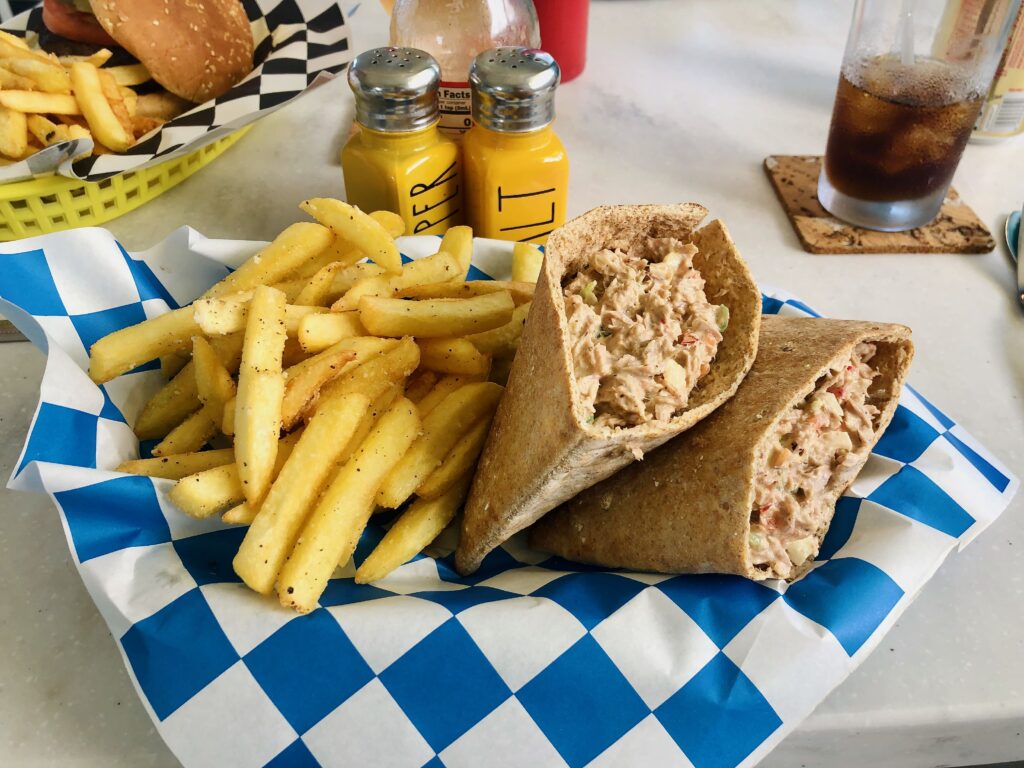
Seaview Cafe was located at Conch Bar in Middle Caicos. At the time, we saw a “For Sale” sign there, and it appears they have since closed. I hope someone buys this beautiful property and opens another restaurant here!
Shopping
On North Caicos, the only retail stores are located in Bottle Creek and Whitby. Dard’s Grocery in Bottle Creek is the island’s largest supermarket, offering dry goods, basic perishables, and a Digicel kiosk for phone top-ups. Other local options include KJ’s Supermarket and My Dee’s Variety. There’s also an Al’s Grocery—possibly the same Al of Al’s Rent A Car.
For souvenirs, Middle Caicos Co-op is the place to go. Despite its name, it is located at My Dee’s Plaza in North Caicos. This non-profit organization represents over 60 local artisans and is the best place to buy traditional straw work. You can find intricately woven baskets and hats made from fanner grass and silver top palm, as well as hand-carved model Caicos sloops. It often closes by 3:00 p.m.
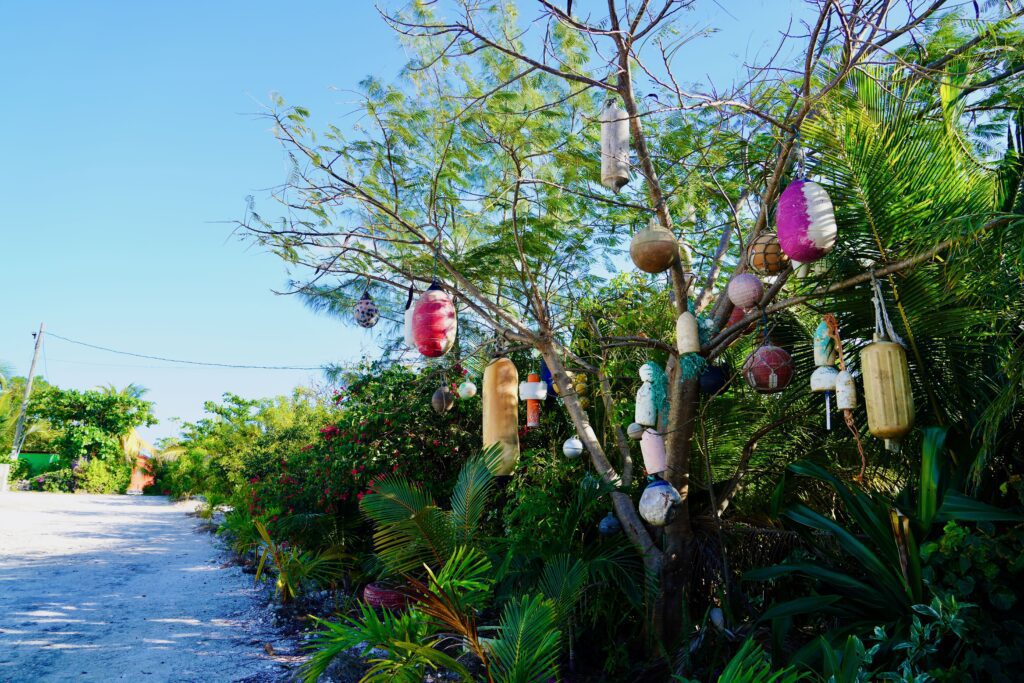
I absolutely applaud the entrepreneurship of locals on small islands. Two examples we saw on North Caicos:


When we were there, Middle Caicos had no shops or grocery stores.
Accommodations
On North Caicos, there are a few boutique hotels and beachfront vacation rentals. The Pelican Beach Hotel in Whitby remains a long-standing landmark, offering traditional Caribbean charm, while the newer Ocean Breeze Resort, which opened in 2023, provides a more modern, suite-style experience with amenities such as a swimming pool and on-site dining. The majority of lodging on the island consists of private villas and cottages concentrated in the settlements of Whitby, Sandy Point, and Hollywood Beach.
Middle Caicos is even more sparsely developed, with Dragon Cay Resort at Mudjin Harbour serving as the island’s only true resort-style accommodation. This property features a collection of private cottages and villas nestled into the limestone cliffs, offering panoramic Atlantic views. Outside of this hub, visitors typically stay in independent vacation rentals in Conch Bar or Bambarra, such as the Bambarra Sands Cottage. Across both islands, many rentals offer complimentary gear, such as kayaks and bicycles, to help guests explore the rugged terrain. You should note that a 12% tourism tax and a 10% service charge are standard, and air conditioning is sometimes billed as an additional utility fee.
We were staying at Blue Haven Marina in Provo at the time.
Getting There
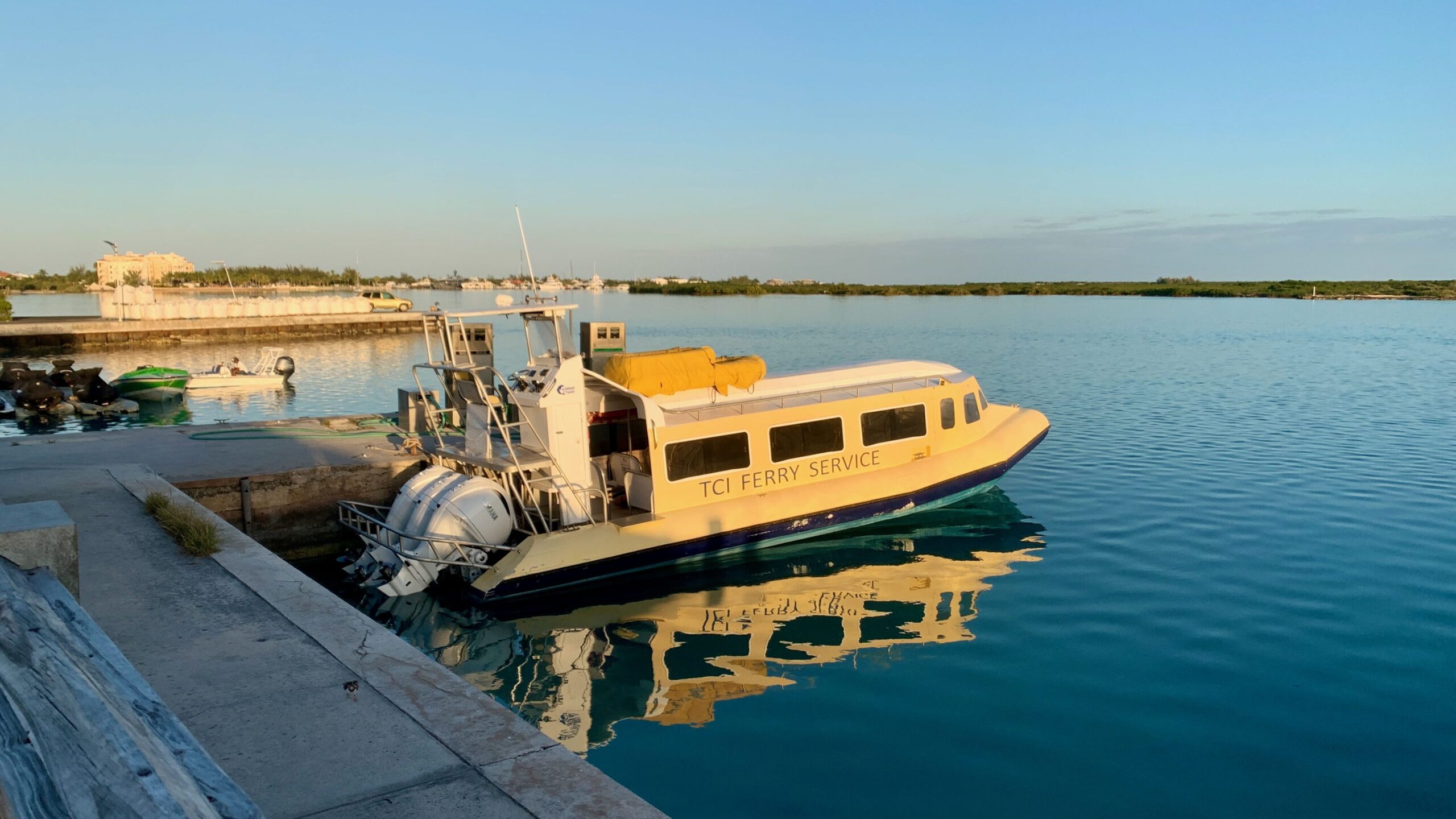
We took the ferry from Heaving Down Rock Marina (Walkin Marina) in Provo. It was about a 30-minute ride each way.
This service is offered by two operators, Caribbean Cruisin’ and MV My Girl Ferry Service, and usually runs seven days a week. It’s recommended to arrive at the marina at least 20 minutes prior to the scheduled departure time. On most days, reservations are not required.
There’s also a domestic flight between North Caicos and Provo, operated several times per week by the local airline, Caicos Express Airways.
Getting Around
This was a first for us. We had pre-arranged a rental car through Al’s Rent A Car; when we arrived, we were told to go to the parking lot. There we saw a line of people waiting at the “rental car counter,” the back of a hatchback.
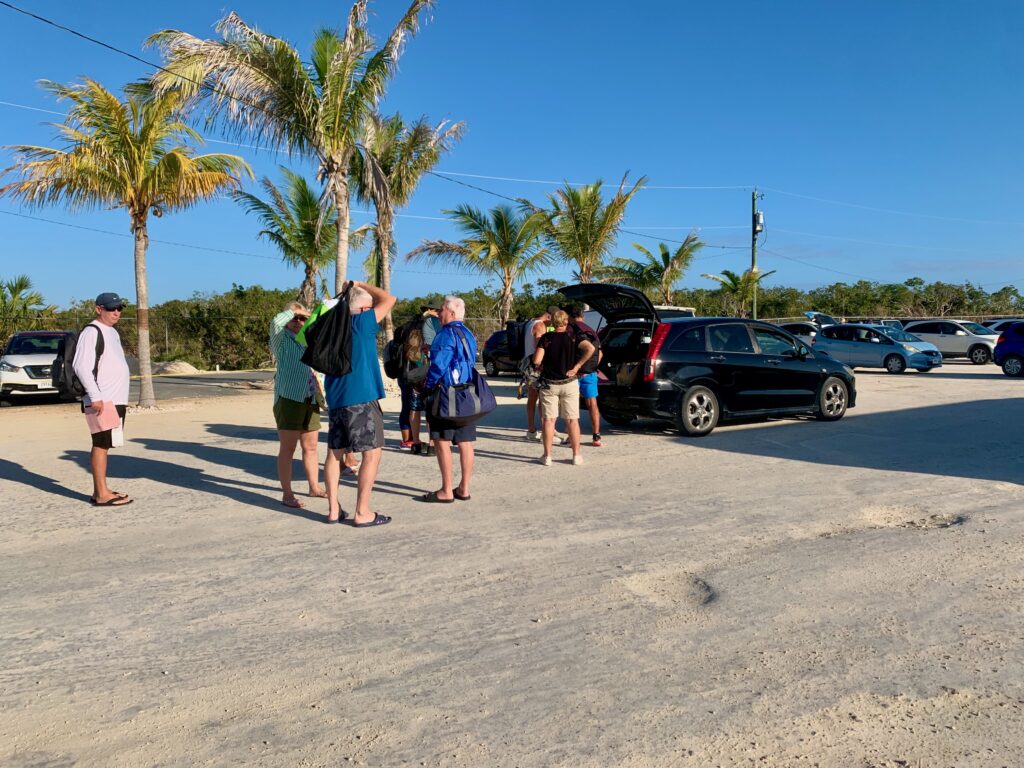
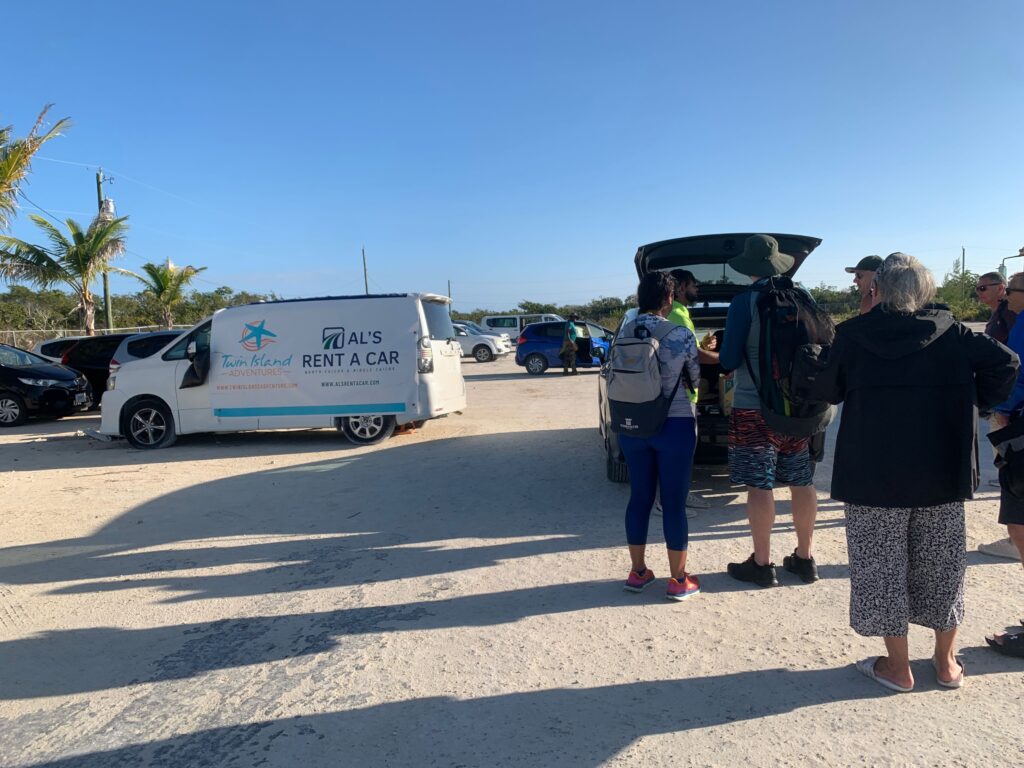
In all seriousness, though, the car was great and definitely a necessity for touring the two islands.
Final Thoughts
North and Middle Caicos are often overlooked by visitors to Turks and Caicos. If you find yourself in Provo, do yourself a favor and take a day (or more) to explore the raw, untouched beauty of these two islands, especially Middle Caicos.
To us, they offered a rare glimpse into the “Old Caribbean.” They challenged us to slow down, talk with the locals, and soak in the natural beauty of their dramatic, untouched beaches.
Originally experienced in February of 2024; content refreshed in March of 2026.
