
Floating just six miles off the southern coast of Basse-Terre, Les Saintes is a volcanic archipelago that ranks among the most picturesque destinations in the Caribbean. Named “Los Santos” by Christopher Columbus in 1493, this cluster of nine islands—only two of which are inhabited—is defined by its dramatic topography, red-roofed Creole villas, and a bay frequently cited as one of the most beautiful in the world.

Unlike the lush, tropical rainforests of mainland Guadeloupe, Les Saintes offers a more arid, Mediterranean-like atmosphere. The cultural heart of the islands is Terre-de-Haut Island, a vibrant, nearly car-free sanctuary where electric scooters, golf carts, and bicycles are the primary modes of transportation. Its main village is Le Bourg.

The islands’ history is deeply rooted in maritime tradition, rather than in a plantation economy.
Things We Loved Most About Terre-de-Haute, Les Saintes
1. Le Bourg
Nestled on the western coast of Terre-de-Haut, Le Bourg serves as the vibrant administrative and social heart of Les Saintes. This picturesque village is renowned for its well-preserved colonial architecture, characterized by brightly colored Creole houses with distinctive red-tiled roofs that climb the volcanic hillsides.
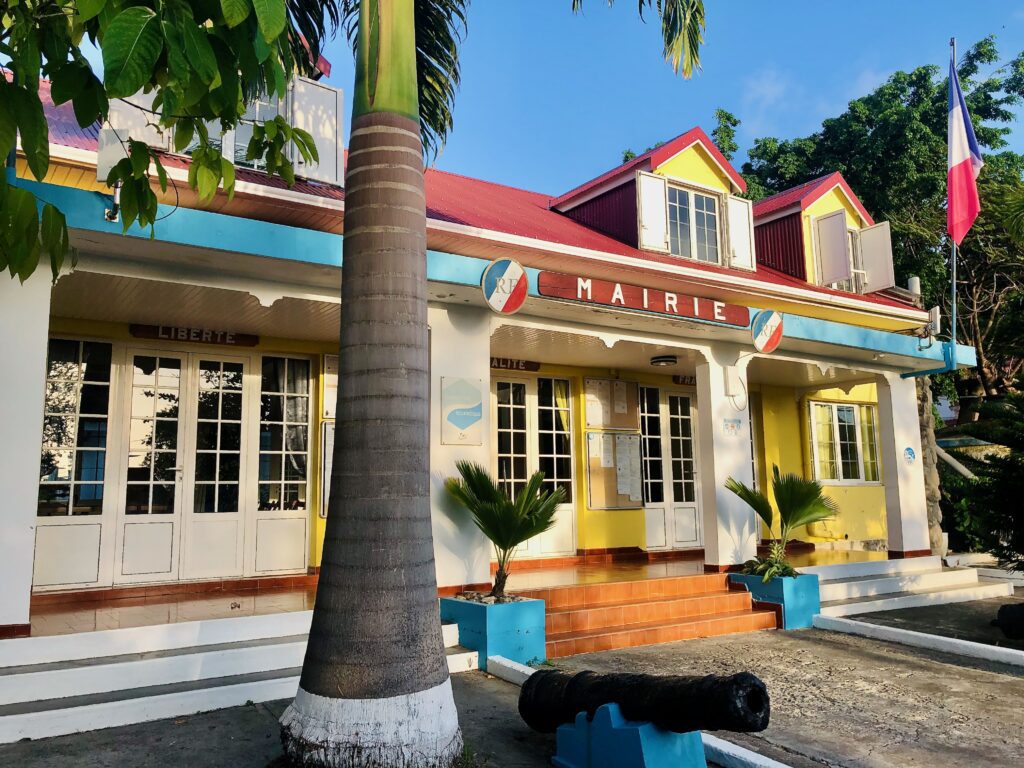
The waterfront is the focal point of daily life. Along the harbor, the Place Hazier acts as a central gathering spot, surrounded by charming boutiques and open-air cafés. Historically, Le Bourg was settled by Norman and Breton fishermen rather than plantation owners, a heritage reflected in the local maritime culture.
We thought it was really charming. Here’s a little walking tour:
The waterfront was especially picturesque.

In the center of the village, the church of Notre-Dame de l’Assomption serves as both a spiritual center and a striking architectural landmark. Unlike the many wooden structures typical of the Caribbean, this church is distinguished by its dark volcanic rock and stone, reflecting the archipelago’s rugged geology. Its distinctive square bell tower, topped with a white-domed cap and a weather vane, is one of the first sights you see when entering the bay.
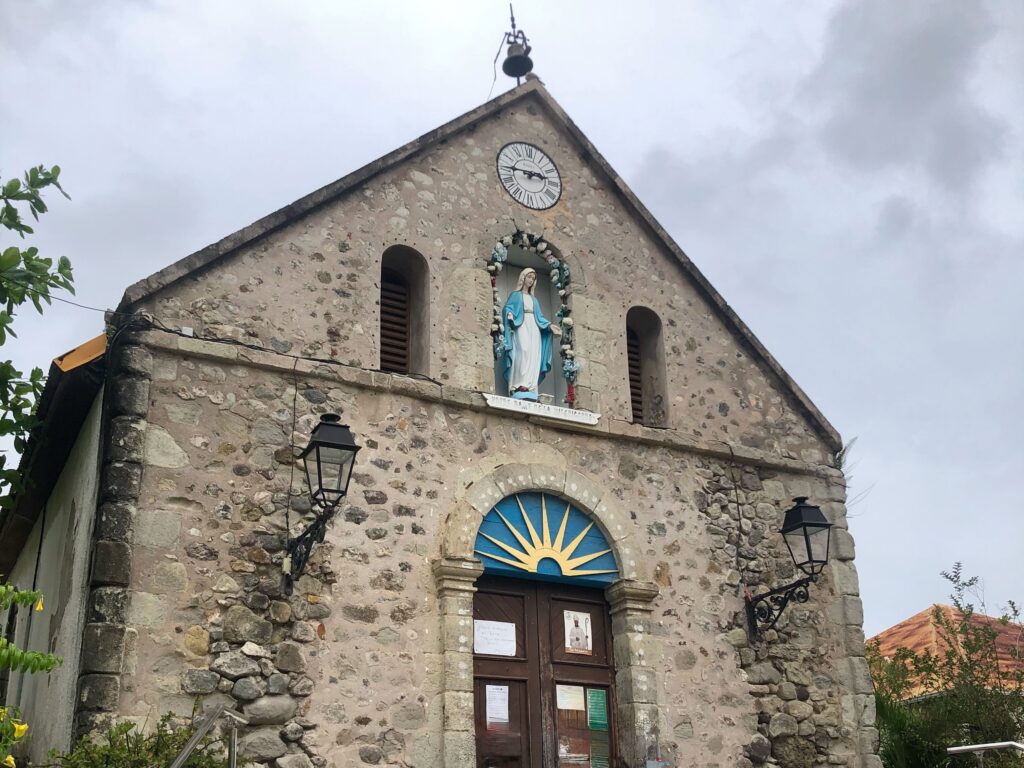
The interior of the church features a magnificent vaulted wooden ceiling that resembles the inverted hull of a ship—a nod to the island’s deep-seated maritime and shipbuilding traditions. Each year on August 15th, the church becomes the focal point of the Fête des Saintes, a major cultural festival celebrating the Feast of the Assumption with processions, traditional costumes, and nautical blessings.

2. Fort Napoléon
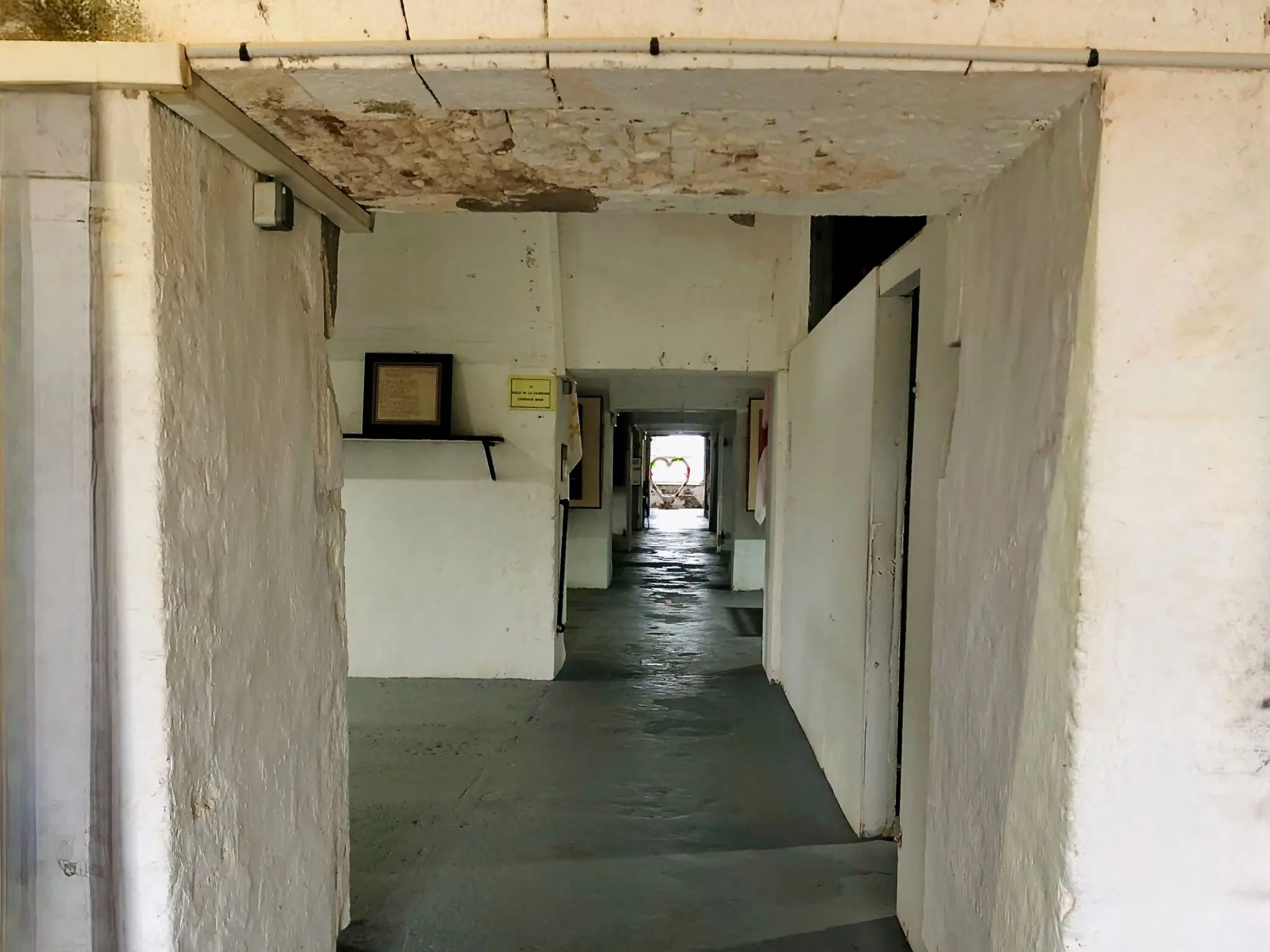
Standing nearly 375 feet above the bay on the summit of Morne à Mire (“Target Hill”), Fort Napoléon is the historical and architectural anchor of Terre-de-Haut. As a visitor, you can explore its casemates, gunpowder stores, and prison cells.
I love forts, so we were all in!
The original structure, Fort Louis, was destroyed by British forces in 1809. Subsequently, reconstruction began in 1845 on the ruins of the original fort, and the Fort Napoleon we see today was completed in 1849. Further expansions occurred from 1857 to 1867 under Emperor Napoleon III’s reign, reinforcing its military capabilities.
Interestingly, despite its formidable appearance and name, the fort never saw actual combat; instead, it served as a penitentiary. For example, from 1940 to 1942, the fortress served as a political prison holding resistance fighters and other opponents, including Paul Valentino. Born in 1902, Valentino was a politician from Guadeloupe who served in the French National Assembly from 1946 to 1955. He became the socialist mayor of Pointe-à-Pitre in January, 1951, after the unexplained death of the communist candidate Amédée Fengarol.
The fort was also used as a quarantine station during various periods of the 20th century. Today, the site functions as a well-maintained museum and botanical garden.
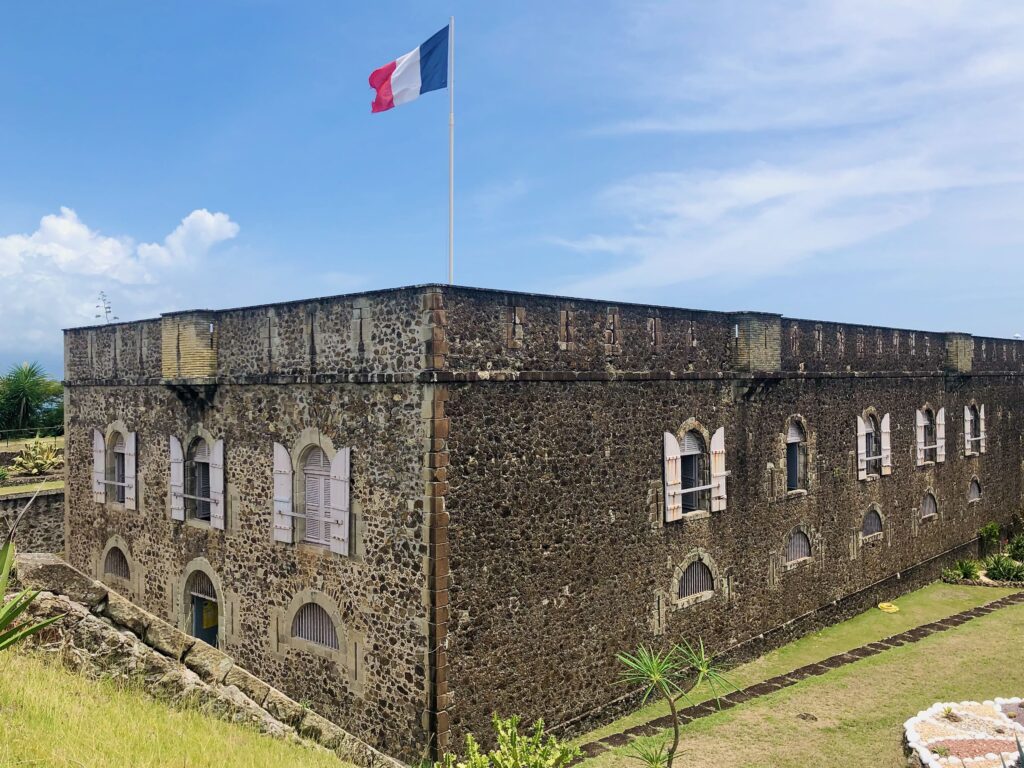
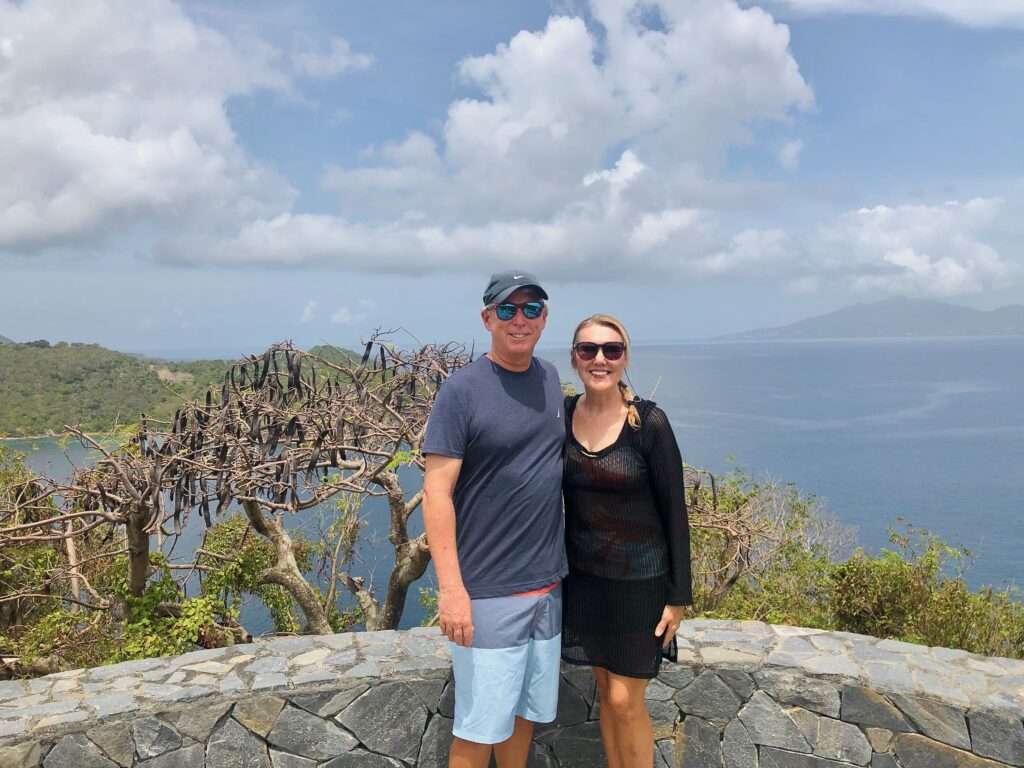
The fort’s terrace offers what is widely considered the best panoramic view of the archipelago.

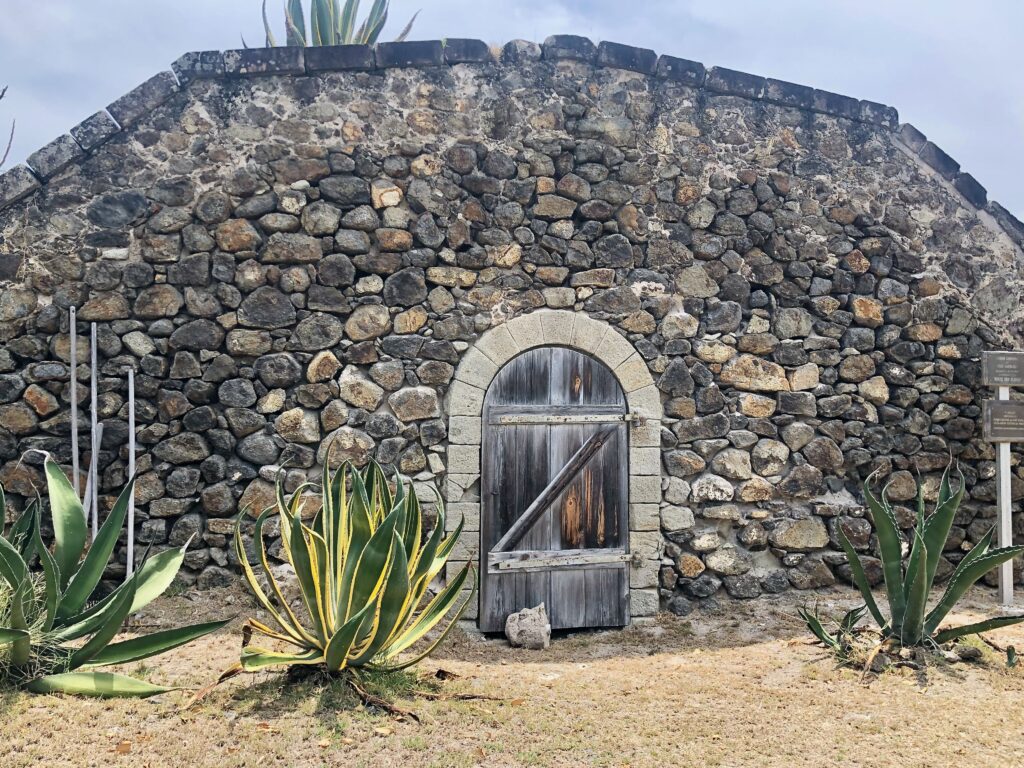
The grounds have been transformed into a world-class succulent garden, featuring a vast array of cacti and agave plants that thrive in the island’s dry microclimate.
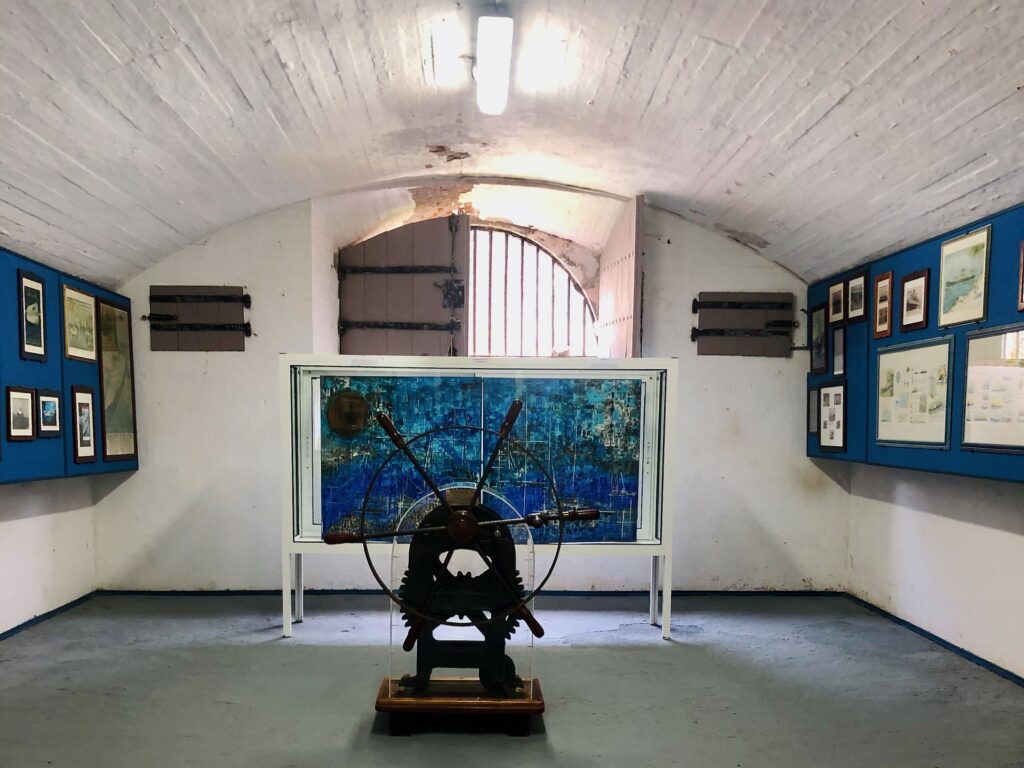
The interior galleries provide a deep dive into the maritime history of Les Saintes, highlighting the strategic 1782 Battle of the Saintes.
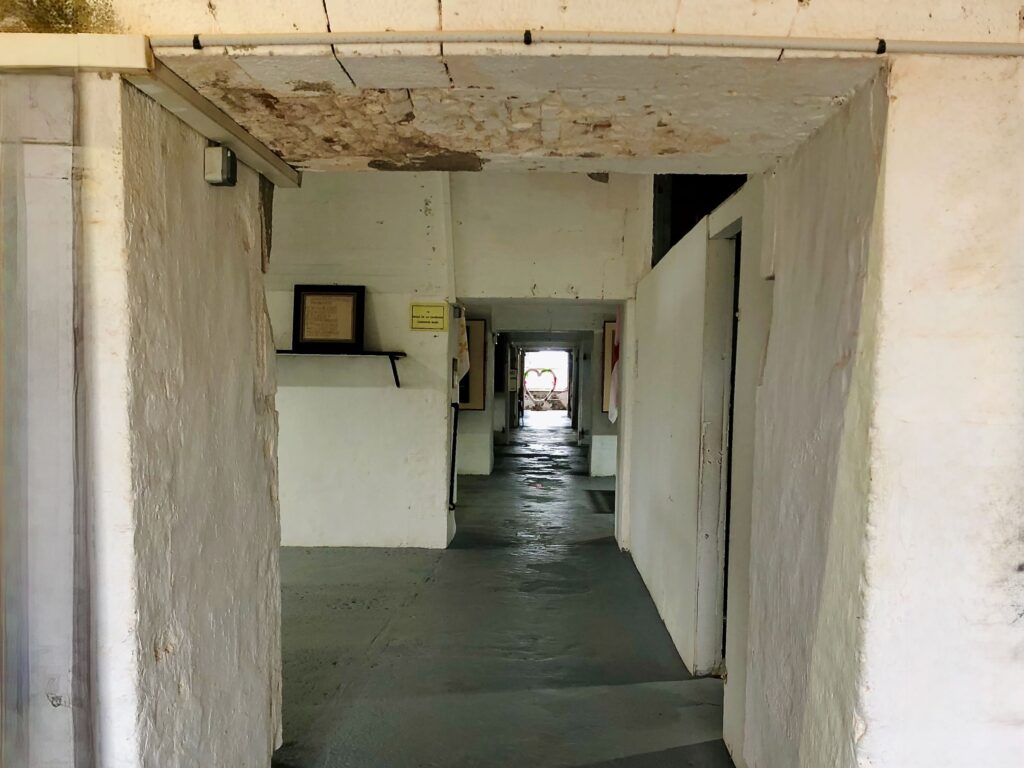
It also explains how Caribbean life was shaped by military and colonial influences. If you’d like to learn more about this history, La Petite Villa des Saintes has done a nice job of describing it on its website.
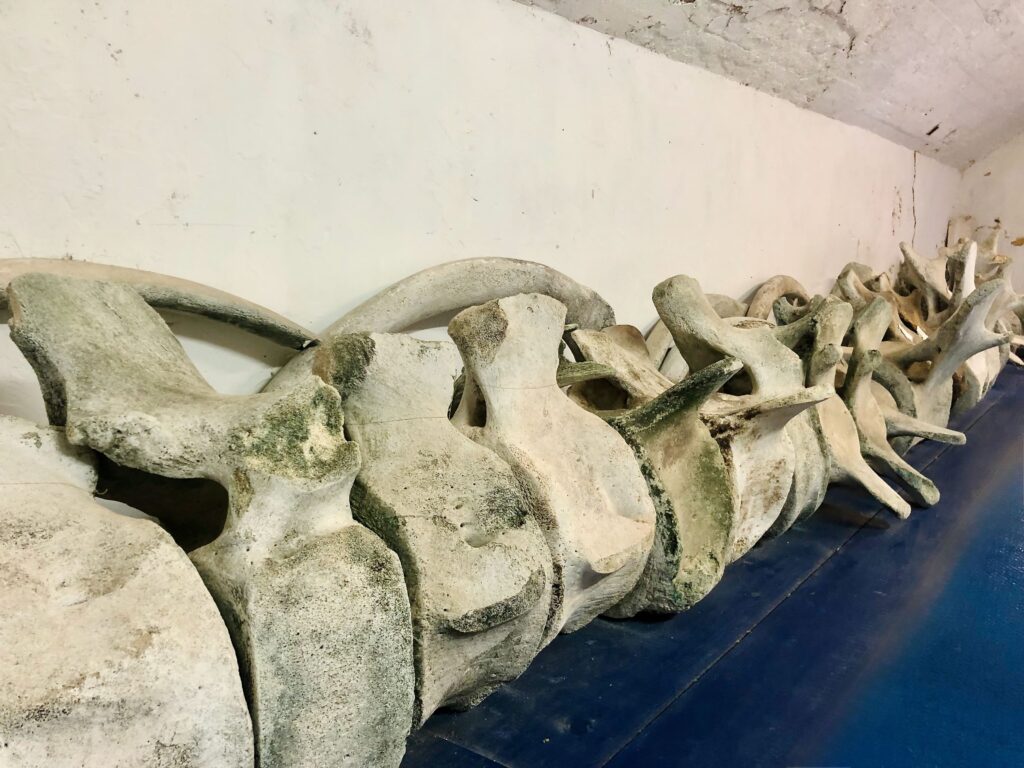
As of this writing, the fort is open daily from 9:00 a.m. to 12:30 p.m. It’s about a 30-minute walk from the center of Le Bourg. We were happy to have a scooter to get there because the road was a bit steep.
Quite honestly, I could stop right here and say that if you are in Guadeloupe, you should visit Les Saintes for these two reasons alone.
But here are a few more.
3. The Beaches
The beaches of Terre-de-Haut offer a diverse range of coastal environments, from tranquil snorkeling coves to rugged, wind-swept Atlantic shores.
Pain de Sucre (Sugarloaf)
The most iconic is Pain de Sucre (Sugarloaf Beach), a small, turquoise cove framed by a dramatic volcanic peak. Its crystal-clear, calm waters make it the premier destination for snorkeling among vibrant coral heads and tropical fish.

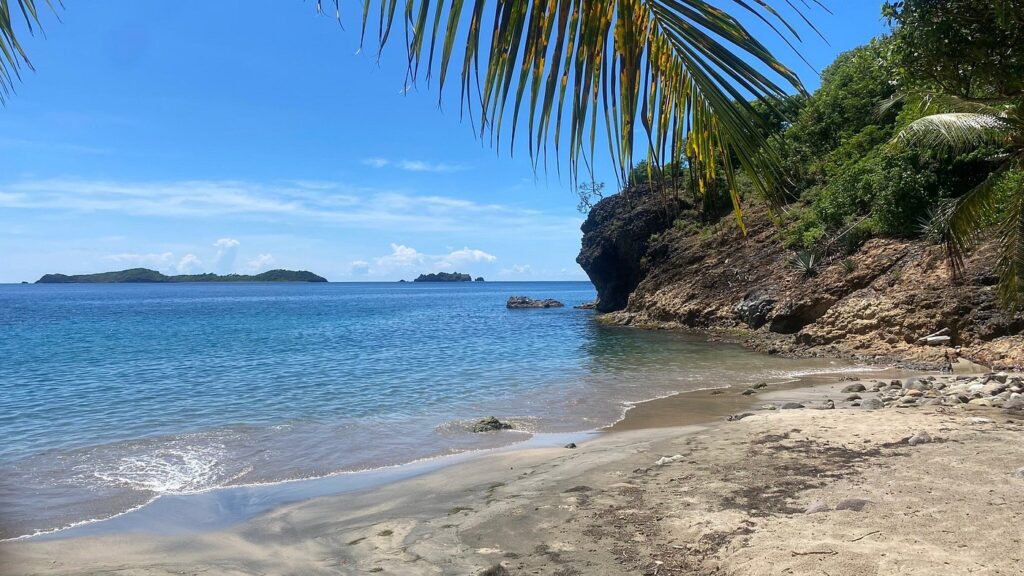
Plage de Pompierre
Plage de Pompierre is a long, crescent-shaped beach protected by offshore rock formations called “Les Roches Percées,” creating a swimming pool-like environment shaded by an extensive grove of coconut palms.

Plague De Crawen
At the southern tip, Anse Crawen offers a more secluded, grey-sand experience with views of the uninhabited Îlet à Cabrit.
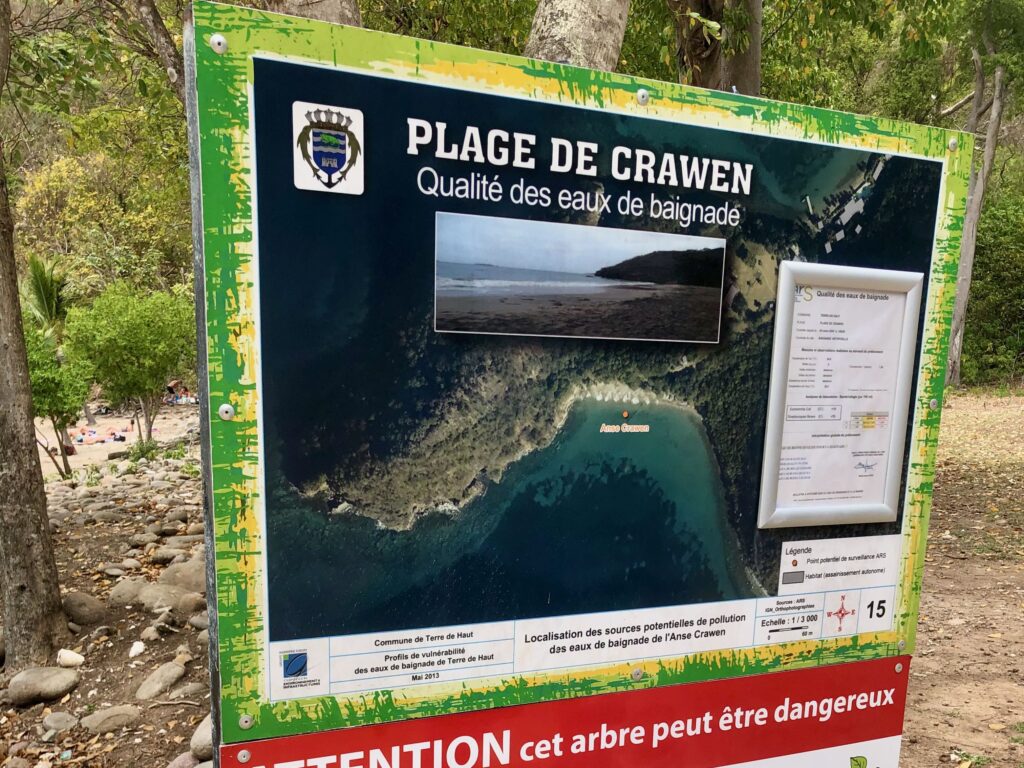
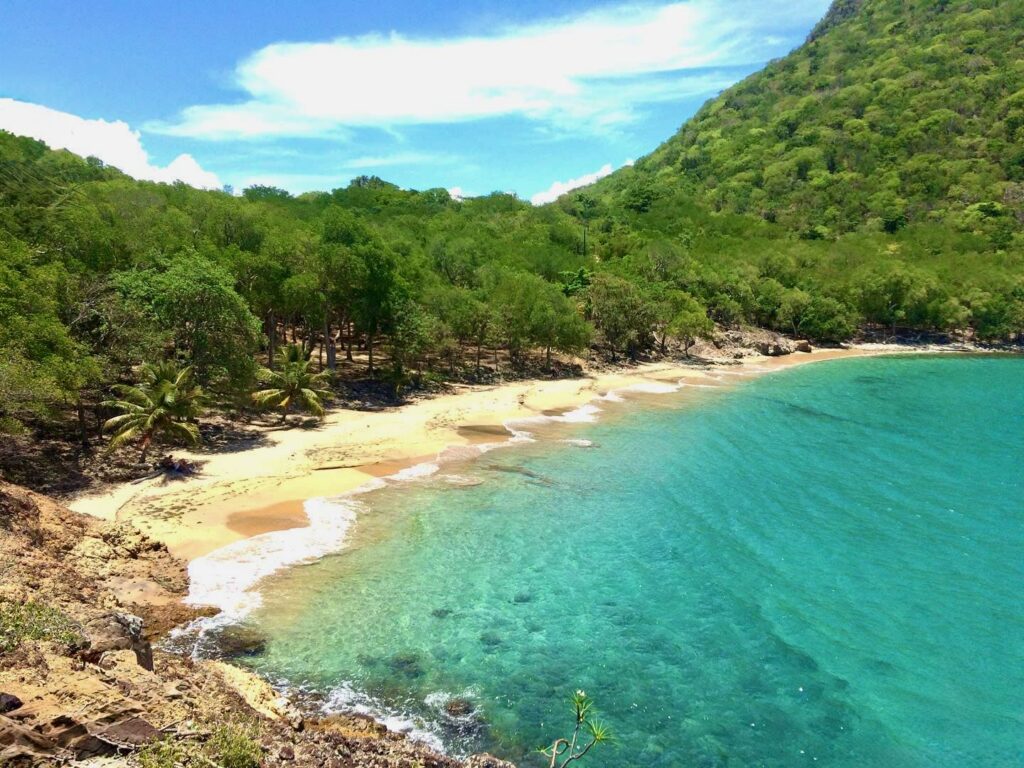
We saw a bunch of chickens and goats here.
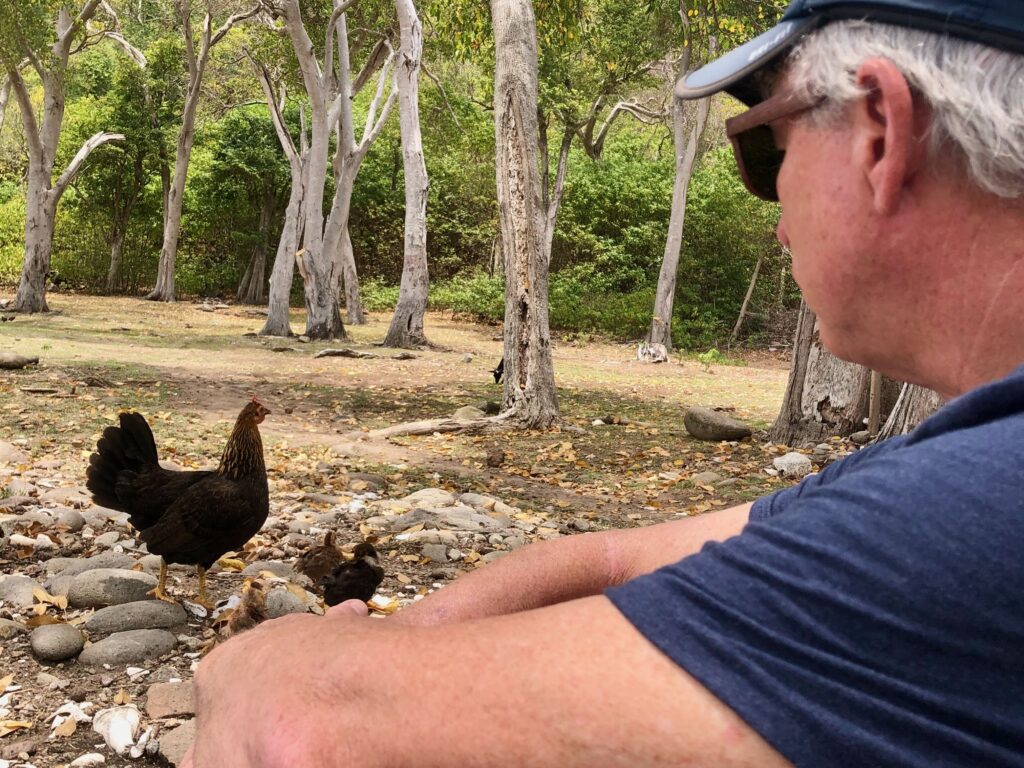
4. Feral Goats
Speaking of goats, they were everywhere!
On the hills:
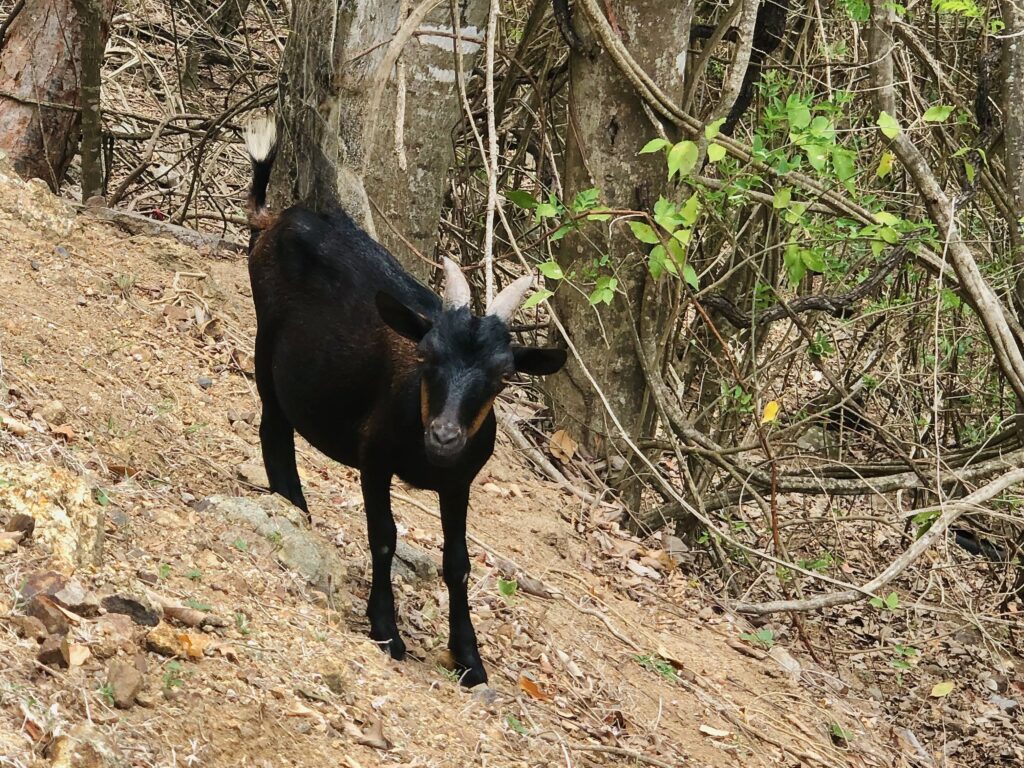
…in the streets:
…and yes, on the beach.
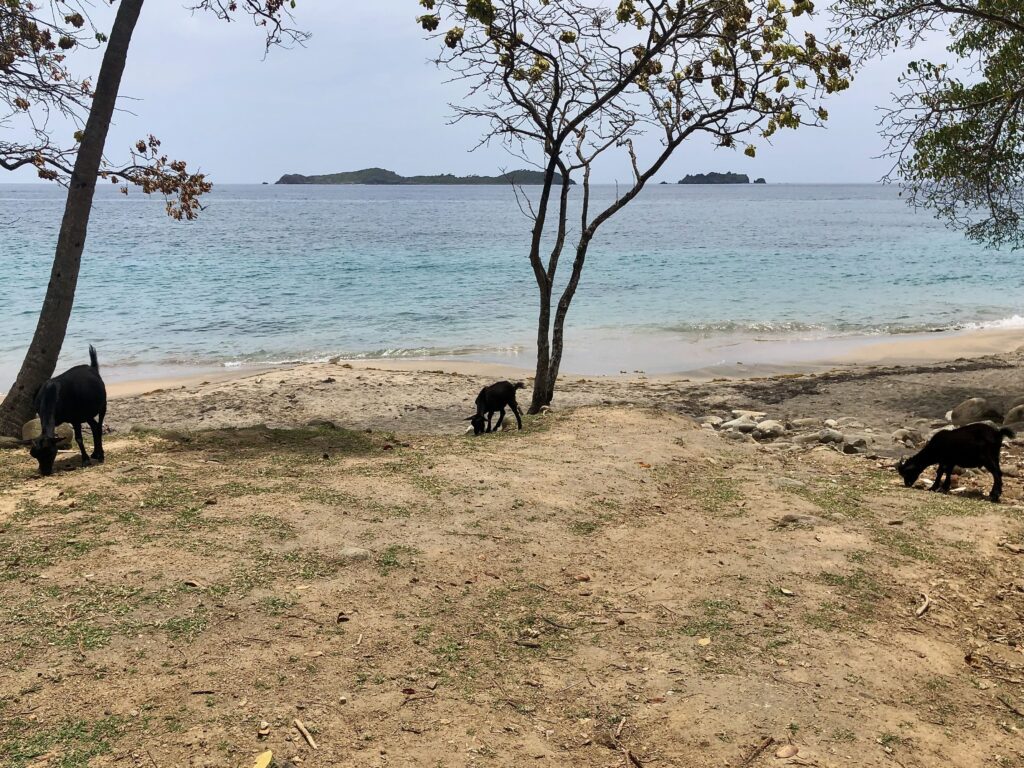
They are descendants of livestock introduced in the 19th century as a backup food source for sailors. These feral Creole goats are hardy, well-adapted to the steep, dry terrain, and have no natural predators, allowing their population to thrive and roam freely.
Okay, maybe citing goats as a “favorite” is a bit off-beat, but they were actually pretty cute.
Getting to Terre-de-Haute, Les Saintes
- Ferry from Trois-Rivières: The most common route. It takes about 15–20 minutes.
- Ferry from Pointe-à-Pitre or Saint-François: Longer trips (up to 90 minutes) but convenient if you are staying on Grande-Terre.
- Private Boat: That’s what we did. We sailed there on our catamaran and stayed in the Tete Rouge anchorage.
Getting Around
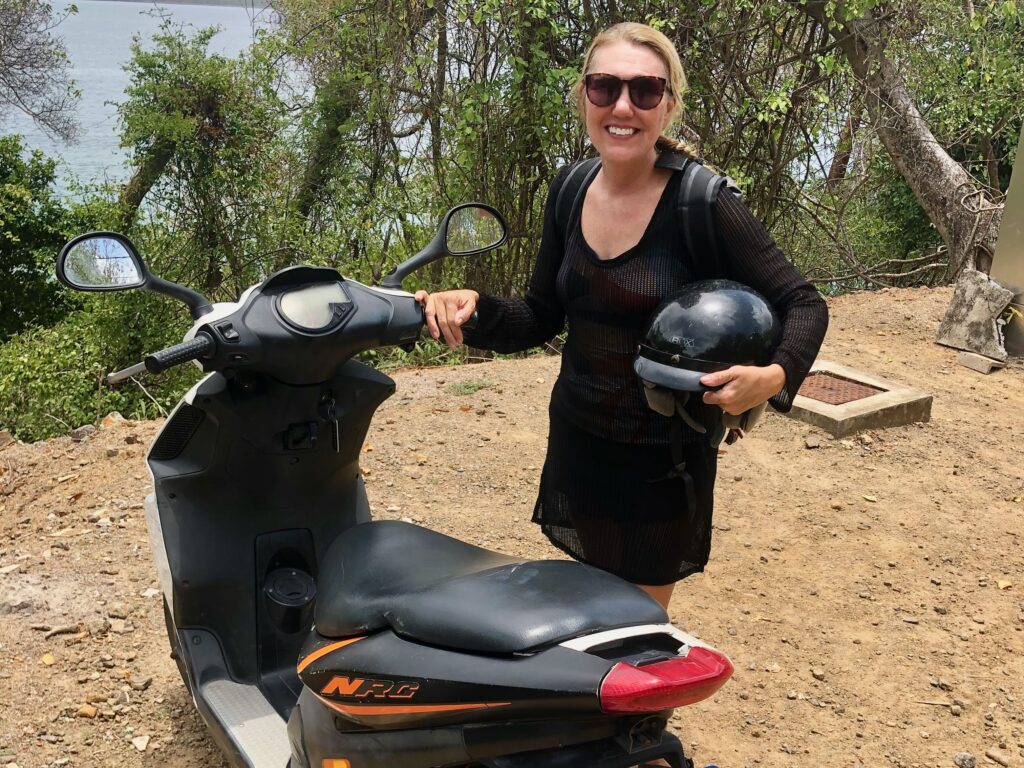
- Electric Scooter or Golf Cart: This is the most popular way to see the island. It’s highly recommended to book in advance, especially during the peak season (December–May).
- By Foot: The village is walkable, but getting to Pompierre or Pain de Sucre on foot in the tropical heat would be exhausting.
We love walking, but we wanted to see the entire island, so we rented a scooter from Chez Rodolphe. It was fun.
Shopping
For being such a small island, there are a lot of very charming, high-end boutiques in Le Bourg.
One of the most iconic items to purchase is the Salako, a traditional flat-brimmed hat made of bamboo fibers and often covered in madras fabric—a craft preserved primarily by artisans on Terre-de-Bas.

Some notable shops include Maogany, which resembles a yacht and sells batik creations and breezy linen wear, and Ultra Marine, which specializes in swimwear. I also liked the Love Boutique.

If you’re looking for souvenirs, you might consider a colorful wood-relief Creole house by well-known local artist Pascal Foy.

For groceries, there are a few markets on the main street, but we thought that the best one was Auchan. It is certainly not huge, but it had some good staples.
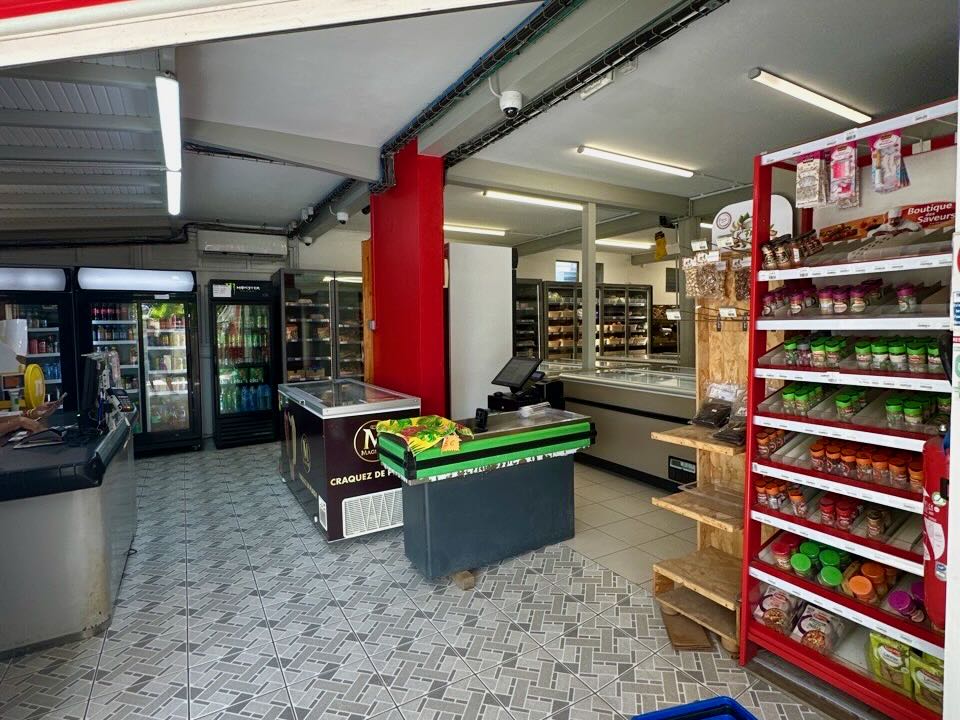
There’s also a Carrefour Express.
Most shops follow traditional French hours, typically closing for a long lunch between 12:30 PM and 3:00 PM, so it is best to plan your shopping for the cooler morning hours or late afternoon.
Accommodations
Accommodations in Les Saintes are mostly small-scale options that favor local charm over massive resorts. Terre-de-Haut is the primary hub, offering a diverse mix of boutique hotels, guesthouses (gîtes), and independent villas. Notable established hotels like Hôtel Bois Joli provide a secluded feel with private beach access and views of the Pain de Sucre, while Lô Bleu Hôtel and Hôtel Kanaoa offer convenient waterfront locations near the main village of Le Bourg.
For a more authentic experience, you can opt for vacation rentals or “chambres d’hôtes.” These range from colorful Creole cottages in the village center to modern villas with private infinity pools perched on the hillsides of Morne Mire or Le Chameau. Terre-de-Bas offers even more modest and tranquil lodging, mostly small villas and eco-friendly cottages. Look for essential tropical amenities like air-conditioned bedrooms, outdoor kitchens, and “buffer tanks” to ensure water availability. Because space is limited and popularity is high, booking several months in advance is highly recommended for travel during the peak winter and spring seasons.
We stayed on our boat in the Tete Rouge anchorage.
Final Thoughts
A visit to Terre-de-Haut in Les Saintes offers a refined blend of historical exploration and pristine natural beauty. As the most developed island in the chain, it serves as a premier destination for travelers seeking an authentic French Caribbean experience. From the impressive heights of Fort Napoléon, which provides panoramic views and a deep dive into the region’s military history, to shopping in charming local boutiques, to relaxing on Plage de Pompierre, the island has something for almost everyone.
Exploring it is best done on an electric scooter or a golf cart, which makes it easy to navigate the steep, winding roads that lead to hidden gems like Le Pain de Sucre. Whether you are beach-hopping on a scooter or simply watching the colorful fishing boats (saintoises) bob in the bay, Terre-de-Haut delivers a serene, laid-back atmosphere. We especially enjoyed dining al fresco and sipping sundowners on the main street, Rue Jean Calot. Our favorite go-to was Coconuts Bar.
During our time here, this tiny island proved to us that some of the most memorable Caribbean adventures come in the smallest, most picturesque packages. If we return—which I hope we do—I would like to hike Le Chameau (the Camel).
Originally experienced in April 2024; content refreshed in March 2026.
