

When people think of the Society Islands of French Polynesia, two places typically spring to mind: Tahiti and Bora Bora. Lately, a few others—namely, Mo’orea and Huahine— have also started to gain popularity.
But the island of Maupiti rarely comes up. In fact, before we started cruising, we had never heard of it.

As we departed Bora Bora and set sail toward Niue, we thought Maupiti would be a nice stop to break up the journey. So after some careful passage planning, we pulled off our mooring in Bora Bora and headed off.
This was kind of a big deal because entering Maupiti’s lagoon can be downright treacherous. You must enter the narrow channel at just the right time. People have died attempting this entry.
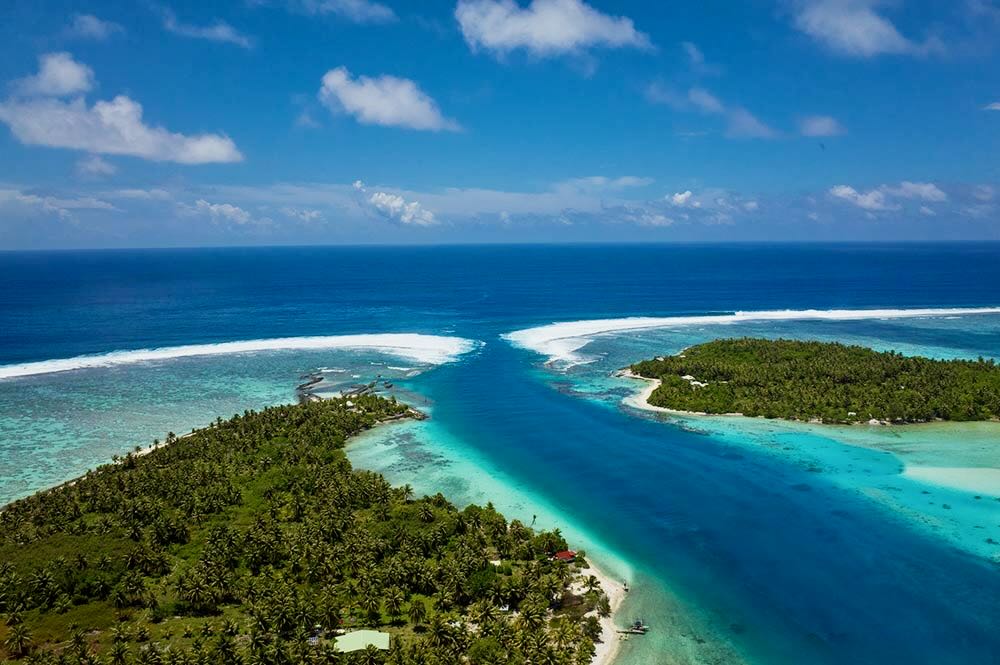
But we were determined to explore this authentic little island, so we did our homework and carefully planned our trip to ensure the safest arrival.
As we approached the channel, the breakwaters were fierce—waves more than nine feet high. We could see why, at Maupiti, you don’t just enter the channel; you study it first.
Over the VHF, we heard two cruisers discussing the pass, so we joined the conversation and asked a departing catamaran for more information about the current conditions. After assessing his input, we grabbed our binoculars and crisscrossed the entrance for a while to examine the wave patterns and sizes.
We eventually saw a perfect opening and took it; it was easily the most intense minute of our lives. Then a sigh of relief: we had made it through.
A Bit About Maupiti
Maupiti sits roughly 195 miles northwest of Tahiti and just 25 miles west of its famous neighbor, Bora Bora. Often described as “the Bora Bora of fifty years ago,” this tiny volcanic island has staunchly resisted mass tourism, luxury resorts, and overwater bungalows. Today, you’ll find just a few tour operators here, and the island is largely devoid of tourism. We marveled at how nice the locals are here.
Surrounded by a bright blue lagoon, a ring of sandy islets (motus), and protective coral reefs, Maupiti is characterized by its authentic Polynesian culture, vibrant marine ecosystem, and slow-paced island life. Measuring only 4.2 square miles in total land area, the island is one of the smallest in the archipelago, yet it is just as lush and dramatic as all the rest. It’s dominated by the dramatic, jagged silhouette of Mount Teurafaatiu, which rises 1,247 feet out of the water.

It is believed that Maupiti was first settled over a thousand years ago, and its strategic location as a stopover in the vast Pacific made it an essential part of early Polynesian voyaging routes. Today, it is home to a small population of under 1,300 people, fostering a close-knit community where everyone plays a role in maintaining the island’s cultural heritage.
Maupiti Highlights
1. Mount Teurafaatiu
This hike (actually, often a “climb”) takes you to Maupiti’s highest point of 1,247 feet. For those who enjoy hiking, it’s a famous, must-do Maupiti adventure.
Before we did it, we noted a lot of confusion online about the route. It’s quite simple, actually. We followed Google Maps to the trailhead pin and went up the hill next to the white building shown below. From there, the trail is very well marked.

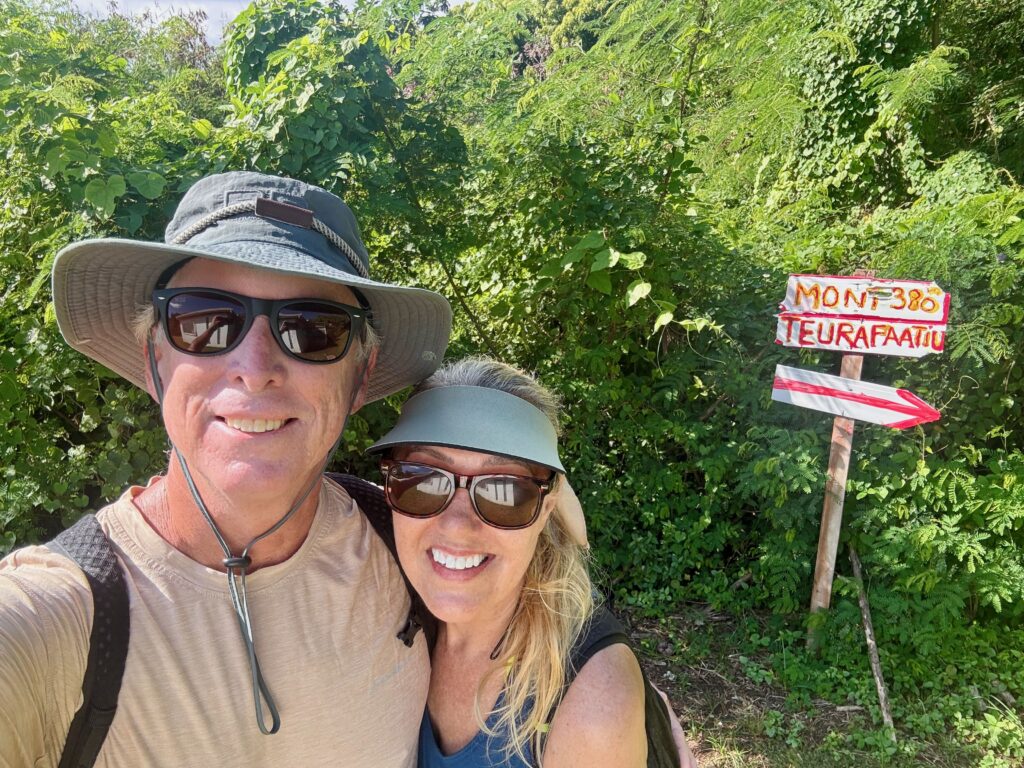
There we were: 9:30 a.m., already sweating and laden with more water than two humans should consume in a day. But it’s all part of the experience, so up we went!
As we were warned, it is steep.
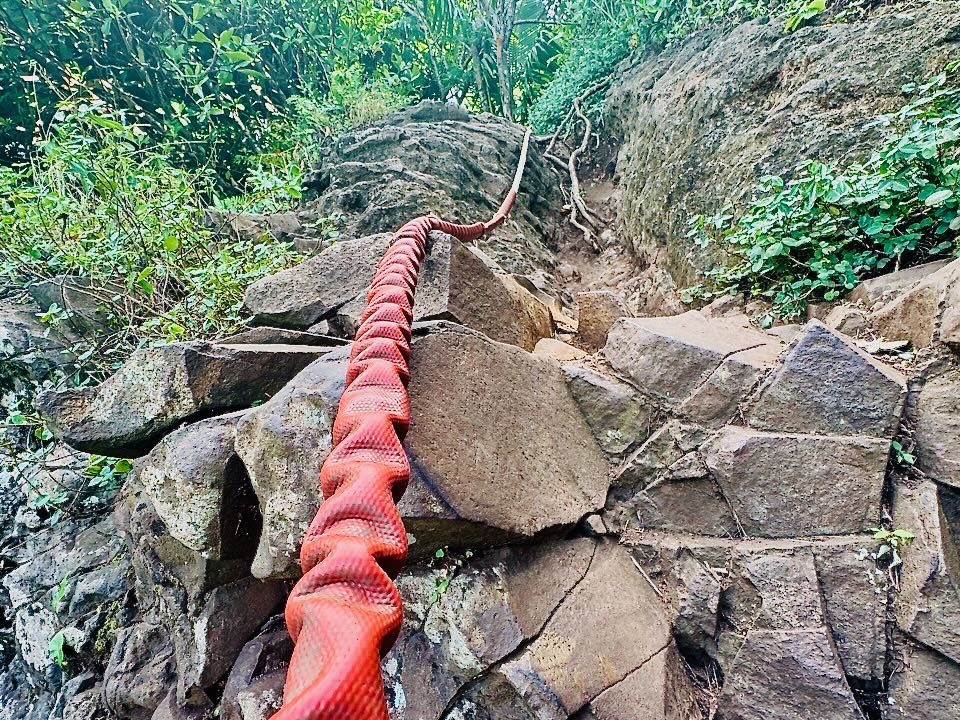
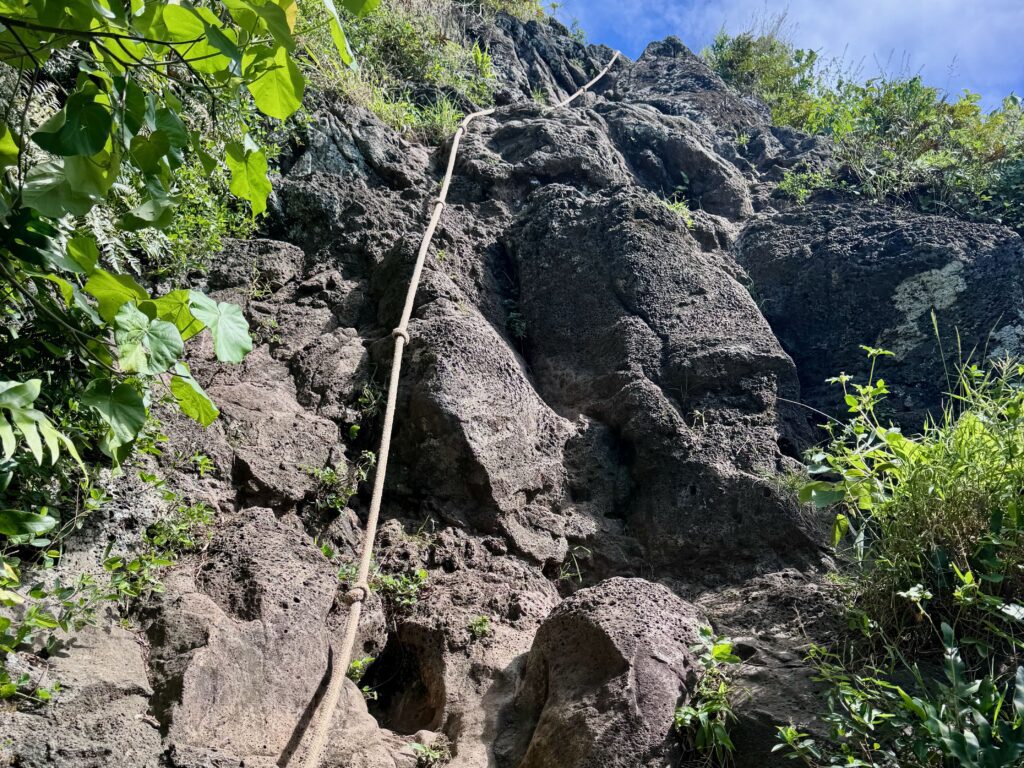

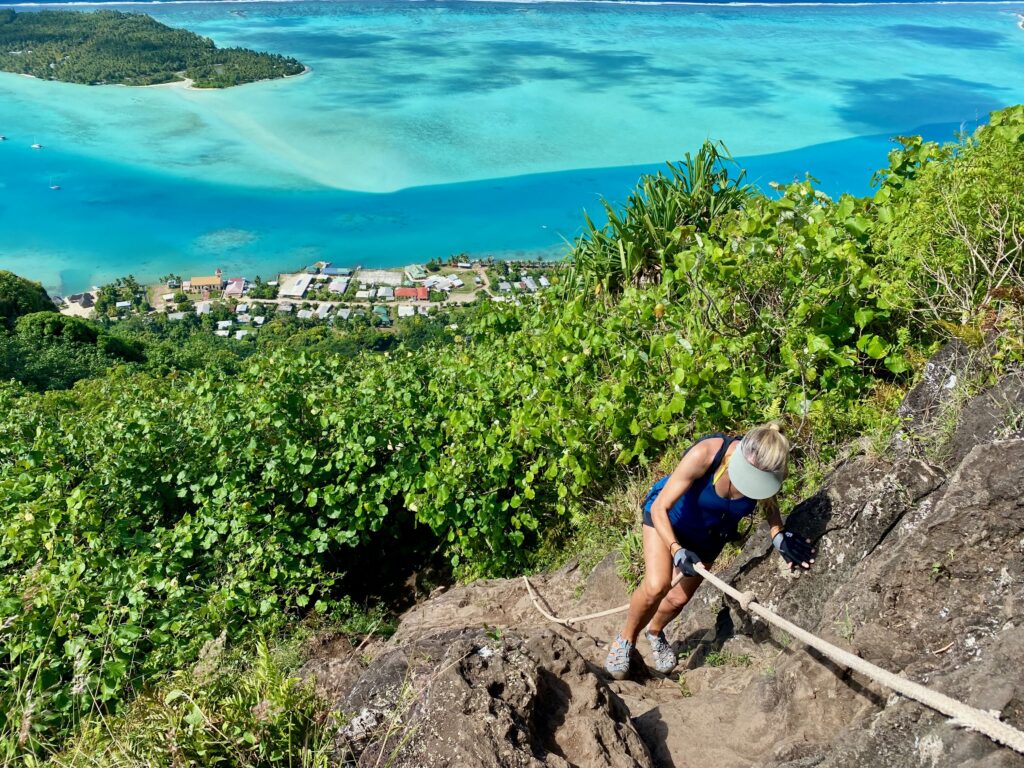
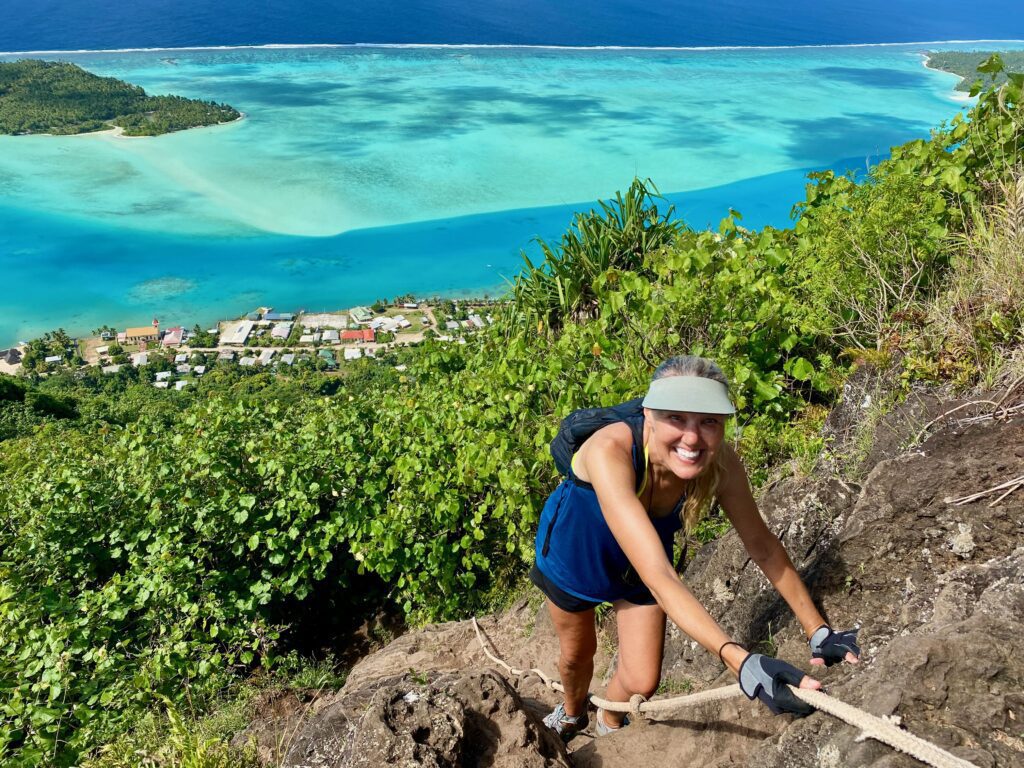
It took about an hour, and we made it to the top! The views are spectacular from the summit.
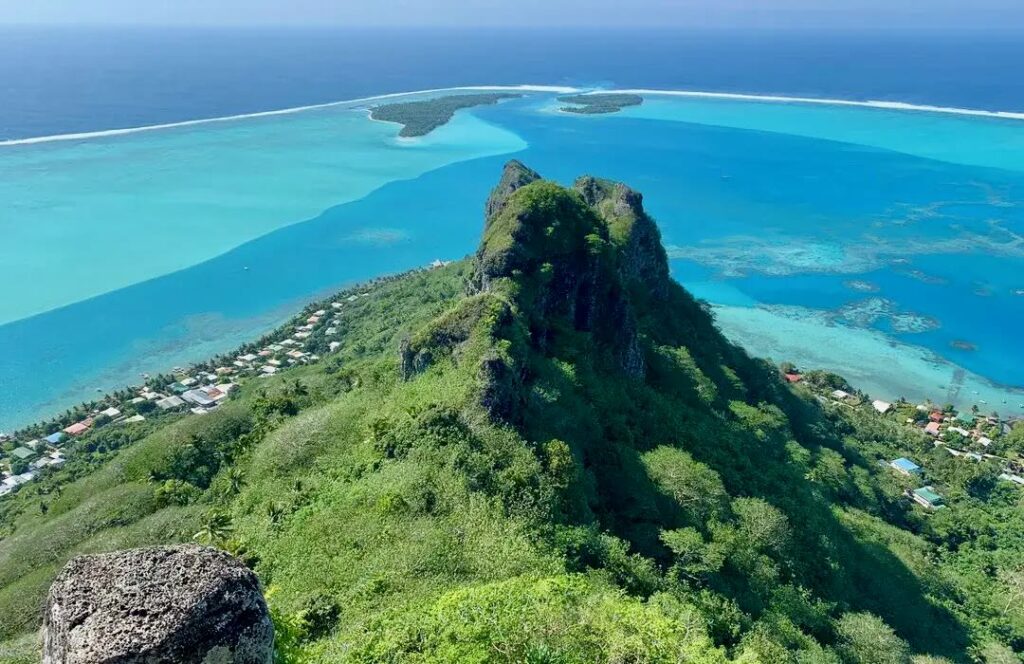
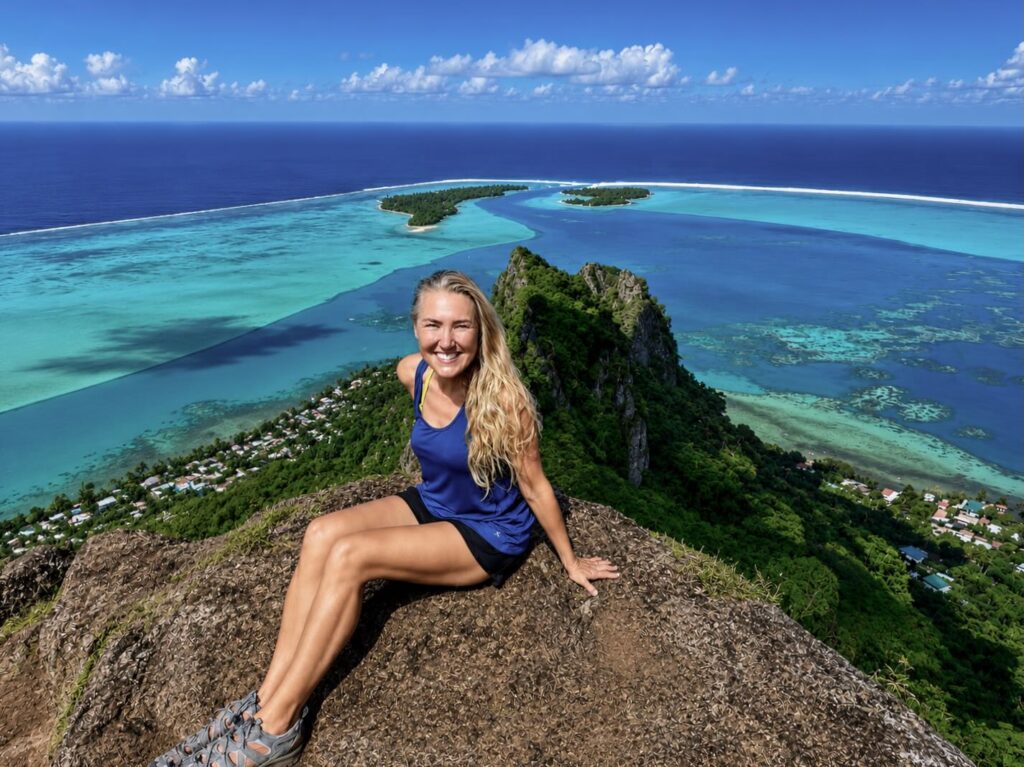

Hoping to take the longer western route back down, we turned left instead of right at the bottom of the big rock and continued past a platform with two odd solar panels. However, when AllTrails and a mysterious arrow on a tree disagreed on which direction we should go, we turned back and descended the same way we had come up.
For us, the descent was definitely more challenging than the ascent. The terrain can be slippery, and you have to choose your footholds carefully. In the end, we both agreed—it’s a challenging hike, but the view is absolutely worth it.
2. Manta Rays
We tried snorkeling on our own to see the manta rays, but the day we went, the visibility was terrible.
In French Polynesia, you are not allowed to freedive to see manta rays, but you can scuba dive with them. So we booked a dive trip with Maupiti Diving. We are so glad we did! Our guide, Lily, was beyond amazing. The dive was perfect in every way—bucket-list-worthy.
If you keep watching, you will see one of them opening its gills so the fish can “clean” it.
They were huge! On that dive, we saw six manta rays at once, including one female about to give birth. Amazing!
3. The Saturday Ahima’a Feast (Umu) on Motu Taipa’a
Every Saturday starting at around 11:30 a.m., a local family hosts a traditional Polynesian feast on Motu Taipa’a.
In preparation for this celebration of Polynesian culture, locals prepare an earth oven, layering volcanic rocks, hot embers, and fragrant banana leaves deep in the ground. Hours of slow cooking transform local ingredients—like suckling pig, breadfruit (uru), taro, and sweet po’e—into smoky delicacies. More than just a meal, this ritual binds the community together.
You can learn more about this tradition here.

The feast we attended was packed with locals and visitors.

After everyone else left, Roy and I, along with our friends Mandy and Billy, two cruisers from Australia, got to relax with three of the motu’s locals.


It was a memorable experience. We later attended a similar feast in Tonga.
4. Motu Auira
On Maupiti, there’s a rite of passage: “walk” all the way from the main island to the rustic motu of Auira.

The island’s sandbar makes this possible. Silly us, though—we went at high tide and during a heavy current. I guess a workout was in order!
Off we went, balancing our valuables on our heads. At one point, the water was shoulder-high. The challenge is to walk it all the way and resist the temptation to swim.
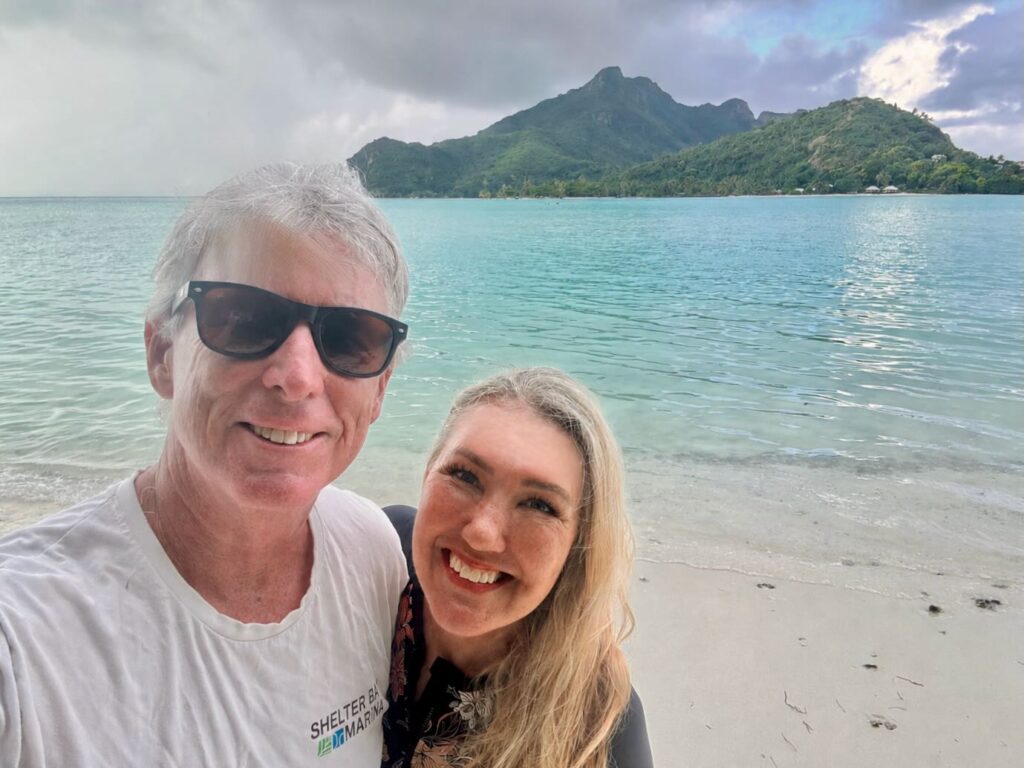
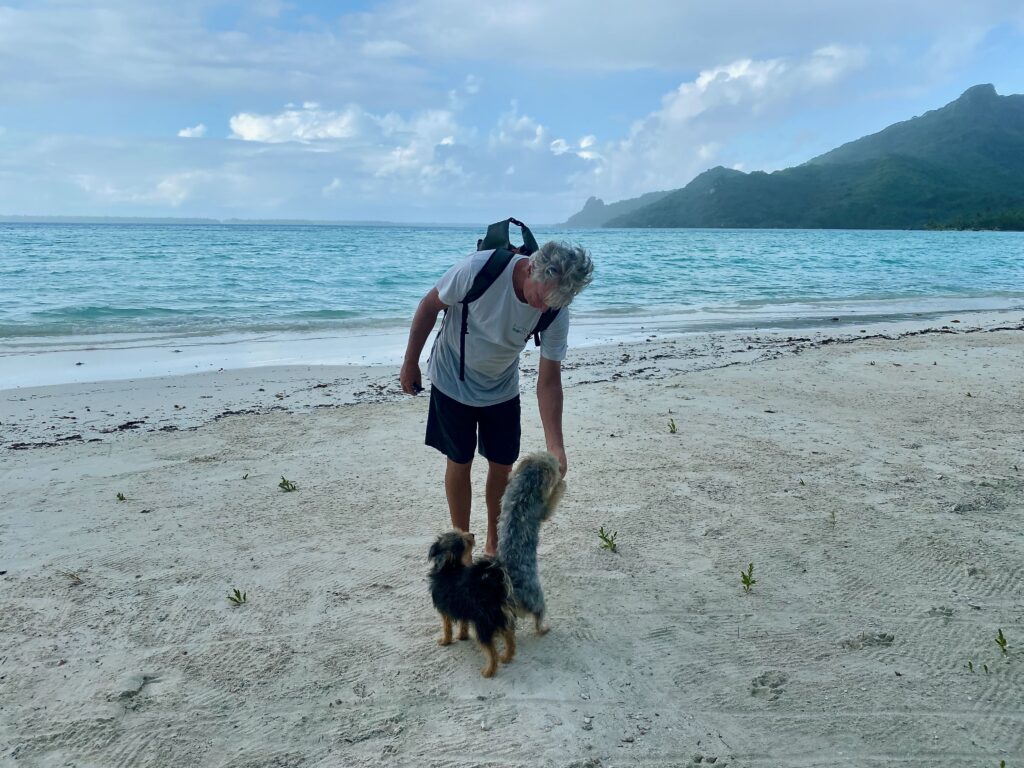
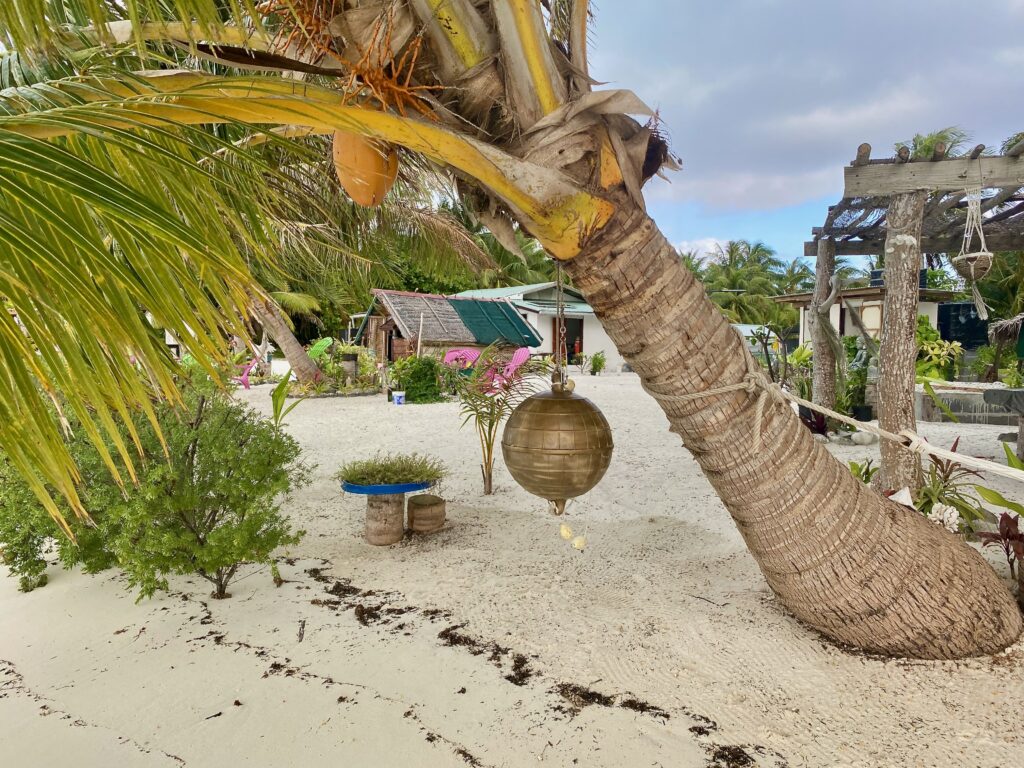
After we made landfall, we explored the motu and admired a lovely beachfront home there. We were immediately accosted by some guard dogs, who played with us on the beach for a while.

As the sun prepared to set, we waded back to the other side (scroll through to see my progress):
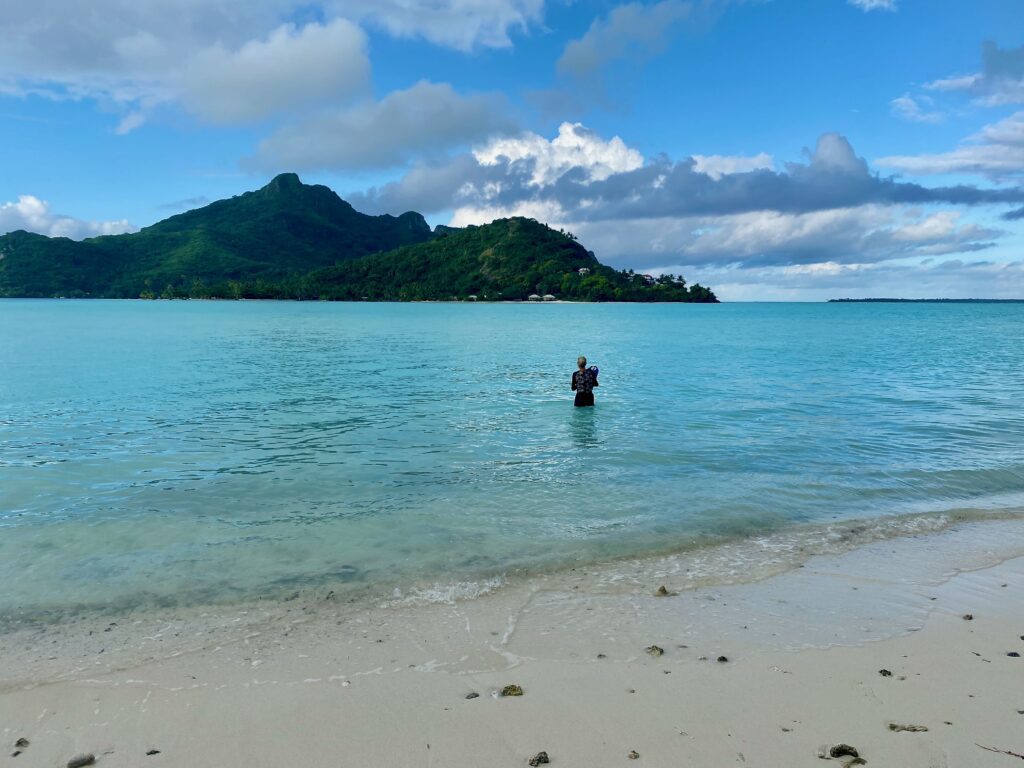
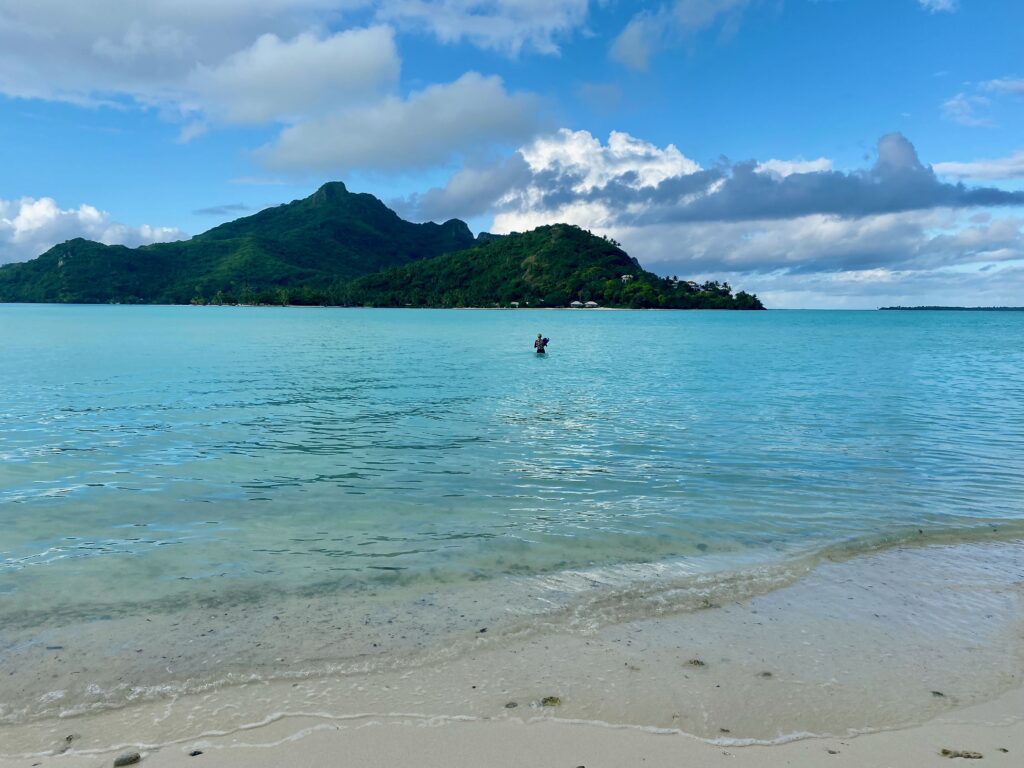
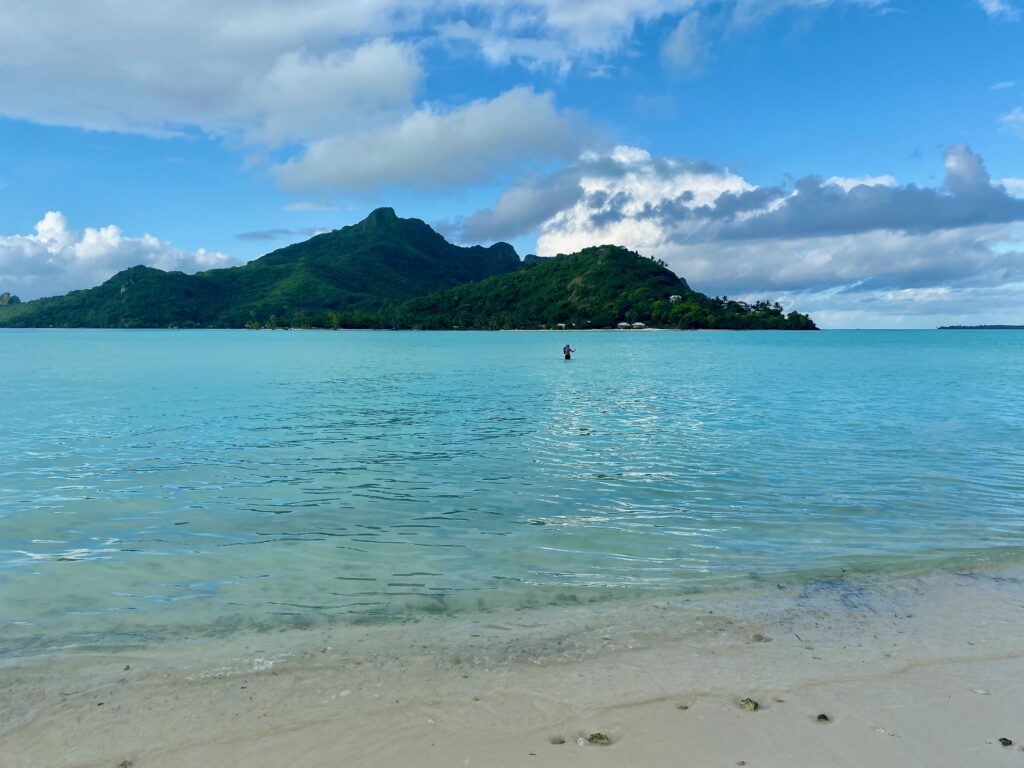
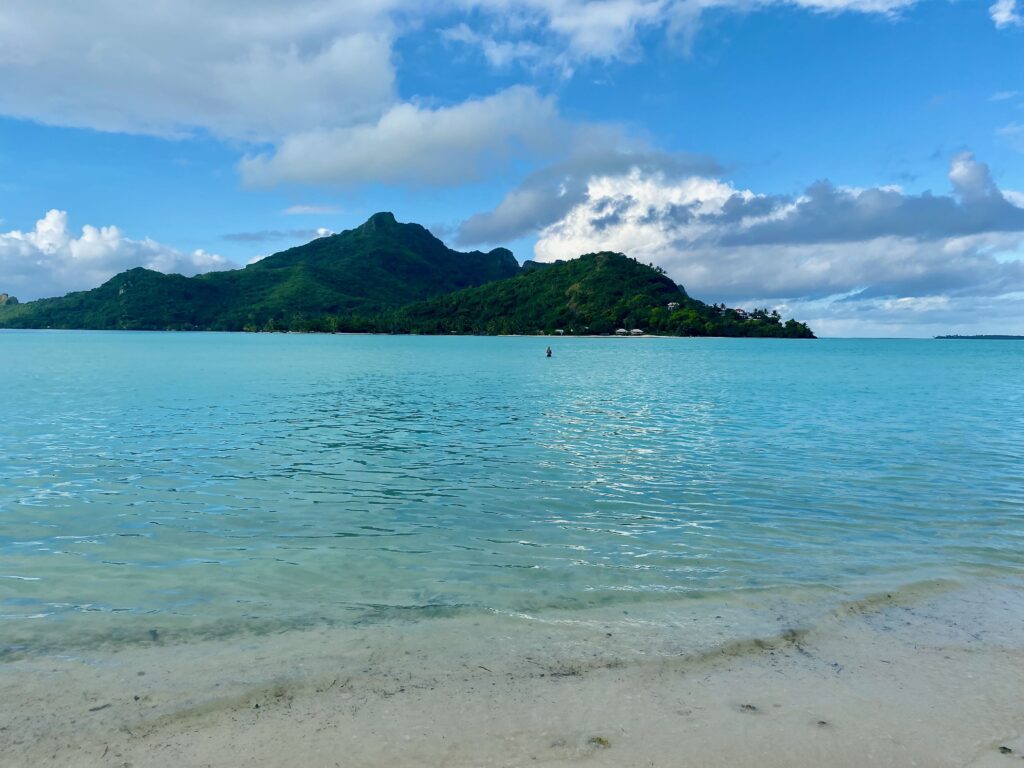
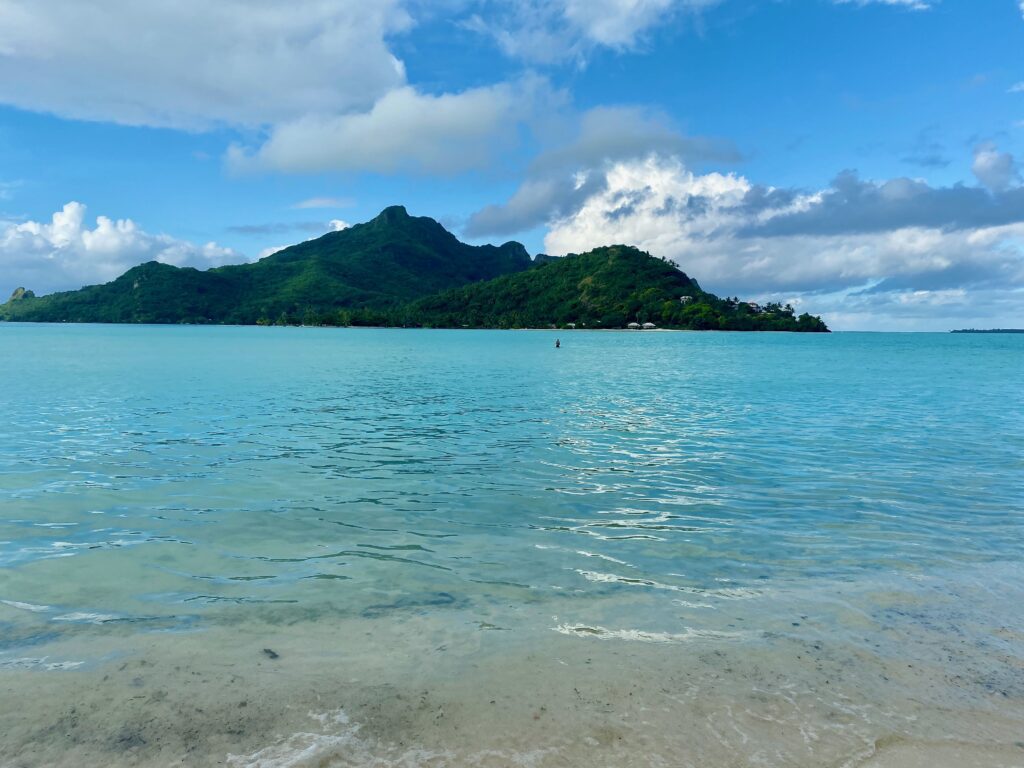
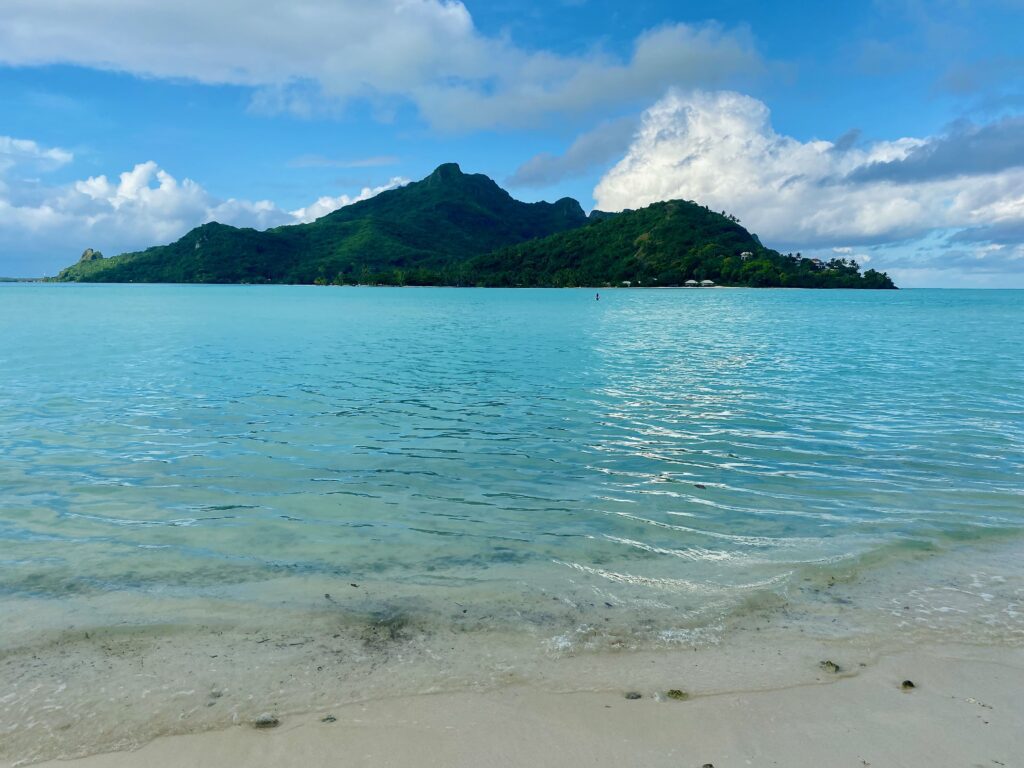
It is a unique experience, and we definitely recommend it, especially if you go during low tide and calm conditions.
5. The Beach
Speaking of beaches, this category takes the number 4 spot.
But not the one pictured below. This is Tereia Beach—a destination we were looking forward to based on all the hype online.
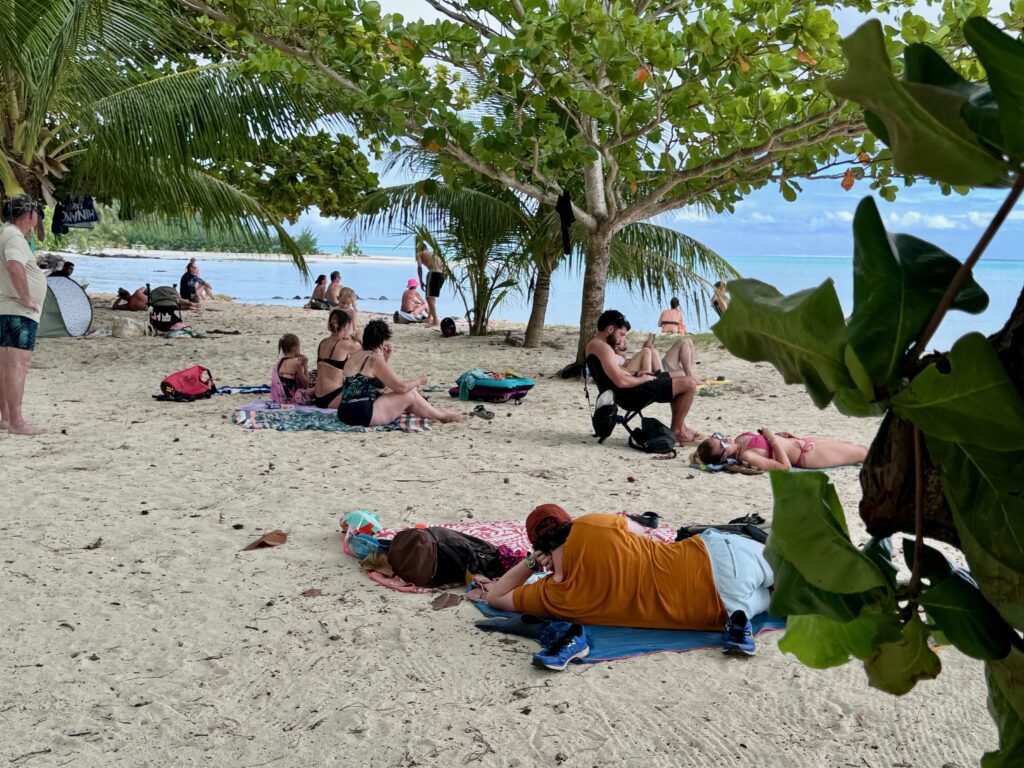
We went there twice, but the scene was the same as in the picture above. It’s called Point Puoro’o, but this frequently visited section of the beach is a bit north of the actual point.
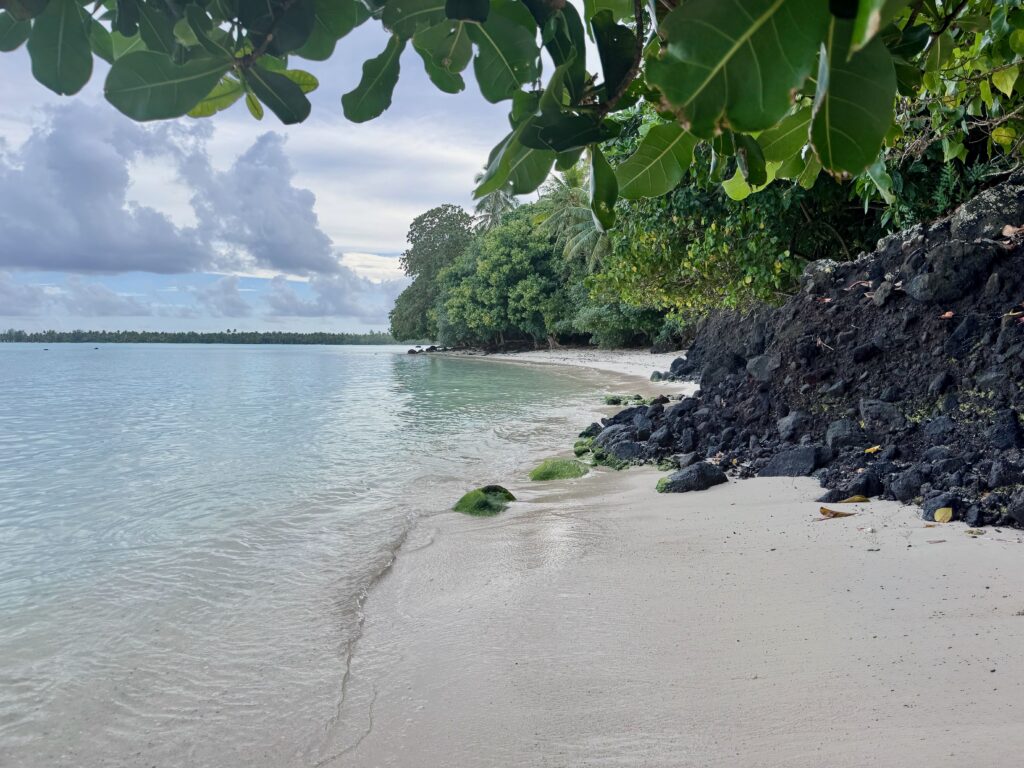
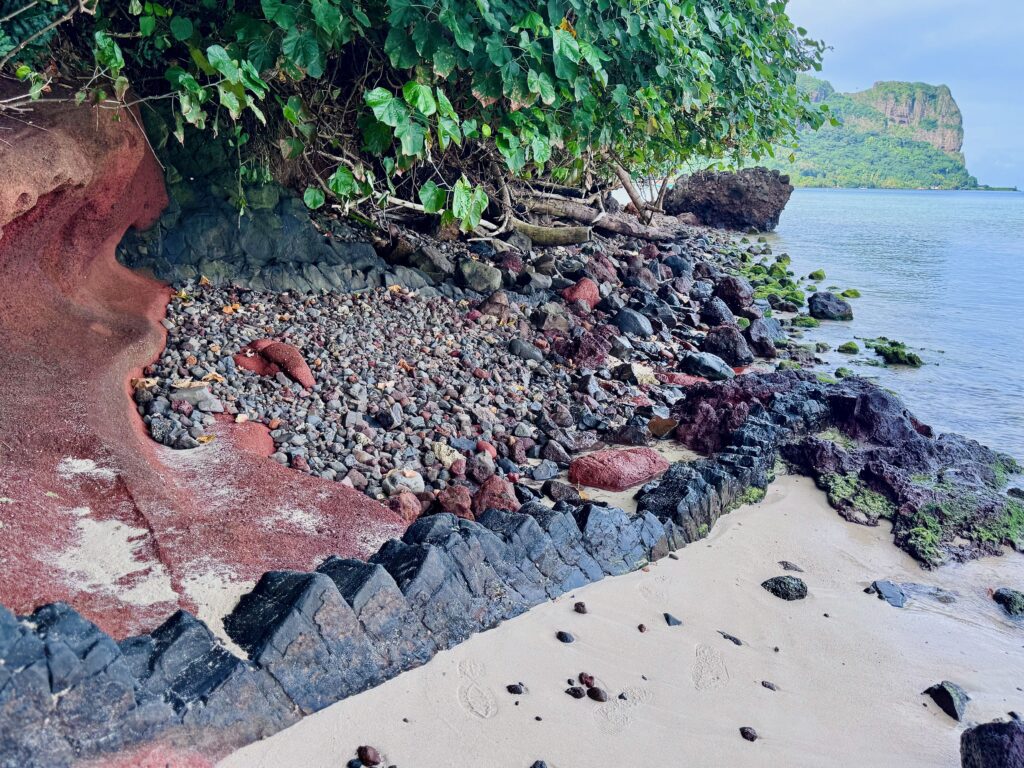
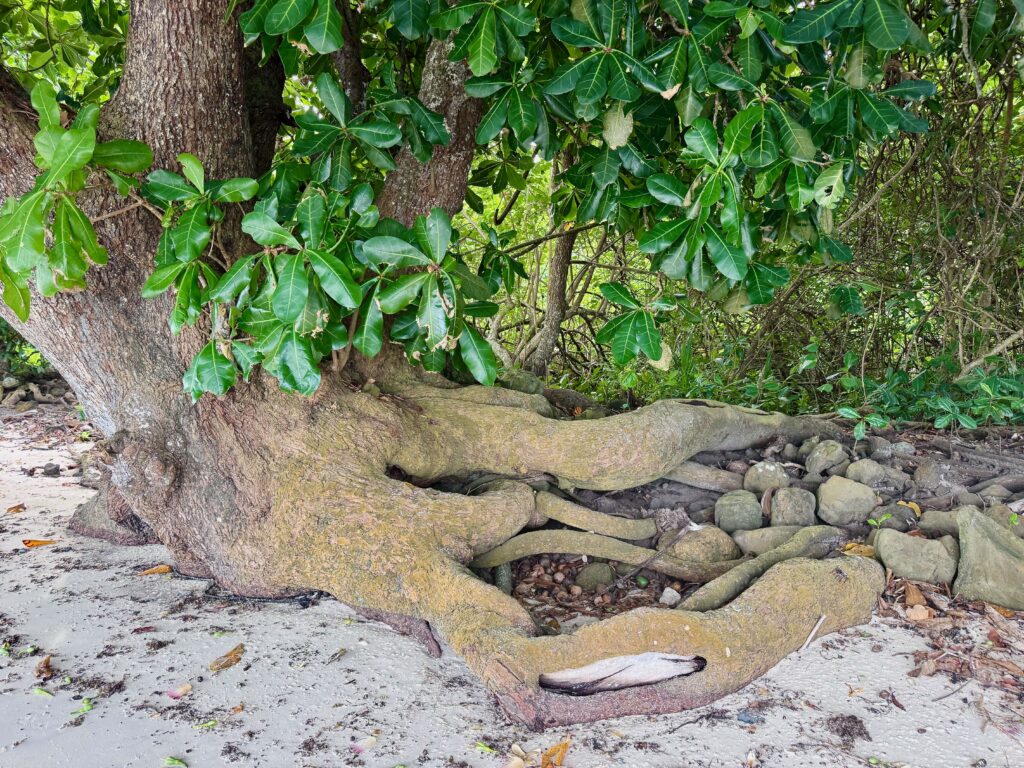
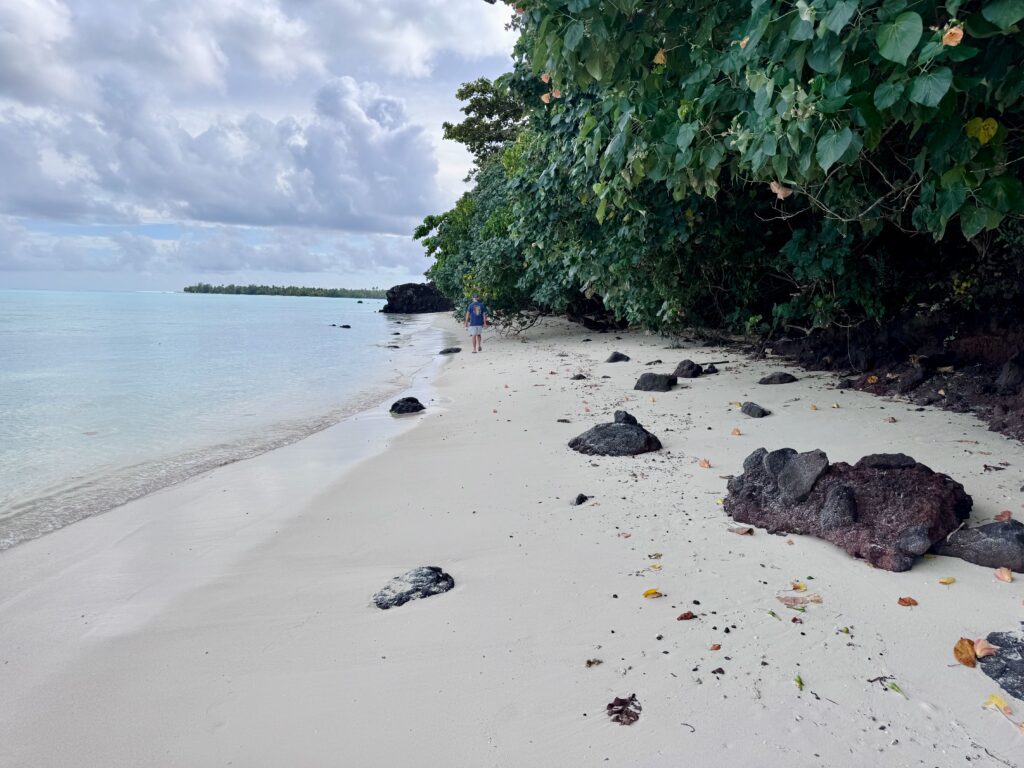
We decided to venture farther south and waded around two landmasses to the section surrounding and beyond the point.
It is magnificent and so worth it! It is a very special low-tide destination, as the ocean swallows much of it up the rest of the time.
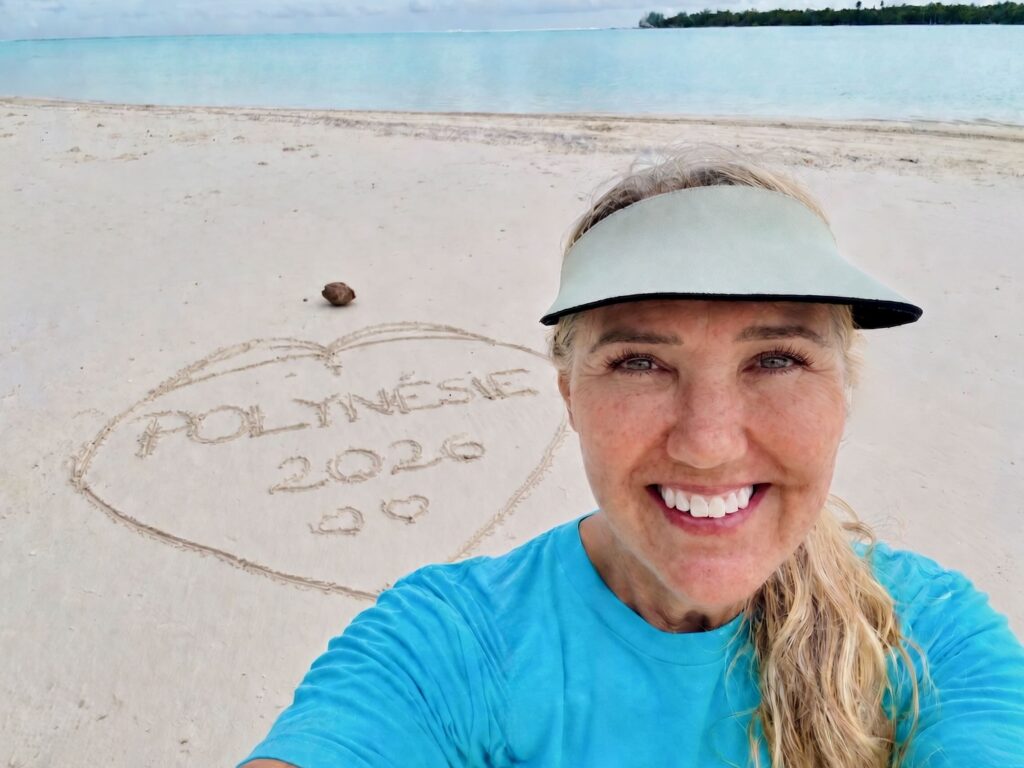
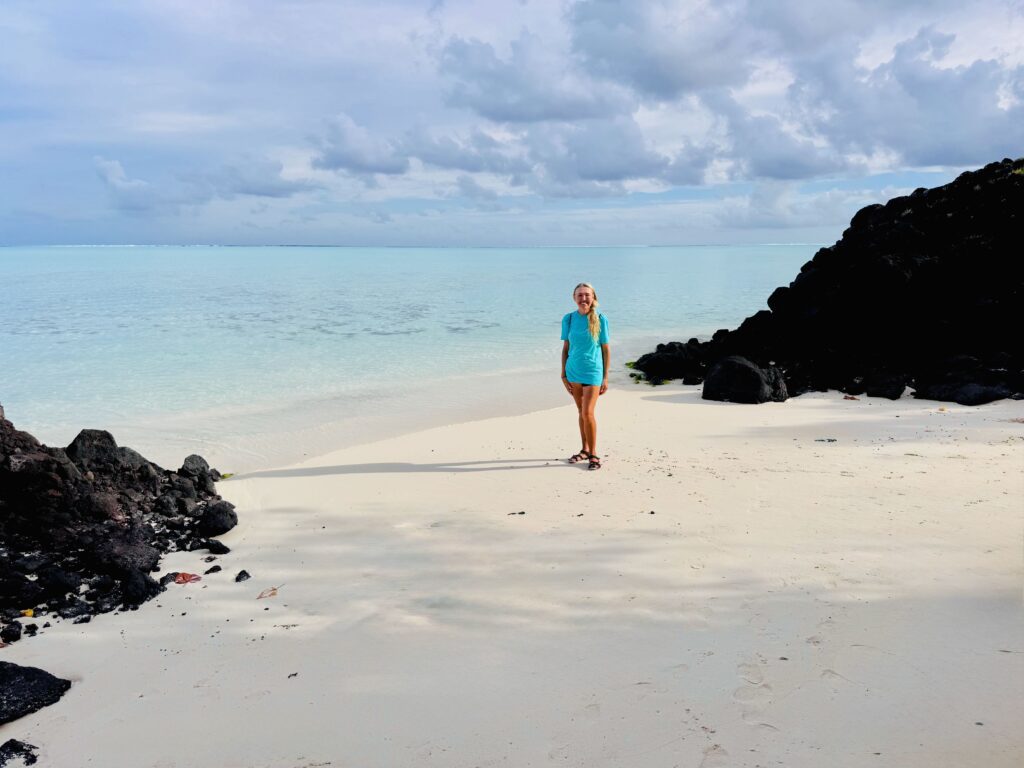
Look at this! We had it all to ourselves.
6. Exploring the Island by Bike
Like Bora Bora, Maupiti has a stunning lagoon that surrounds the primary island. The colors are a sight to behold.
Add to that the fact that the island is so small, and there’s no better way to explore the island than the slow way—by bike.
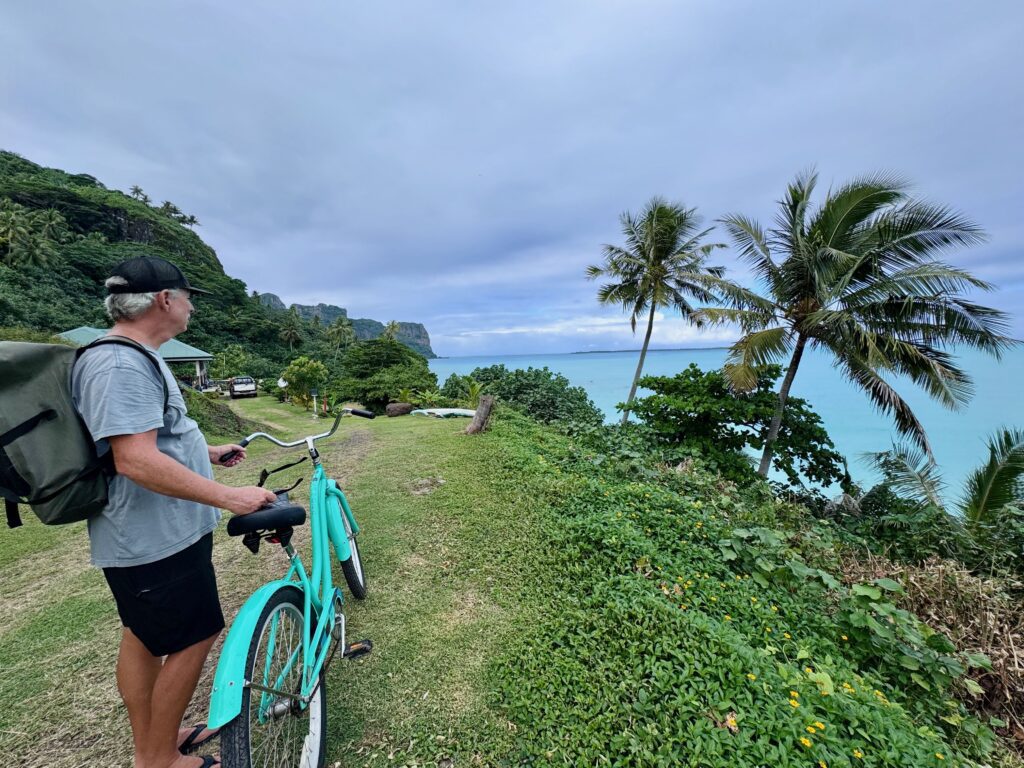
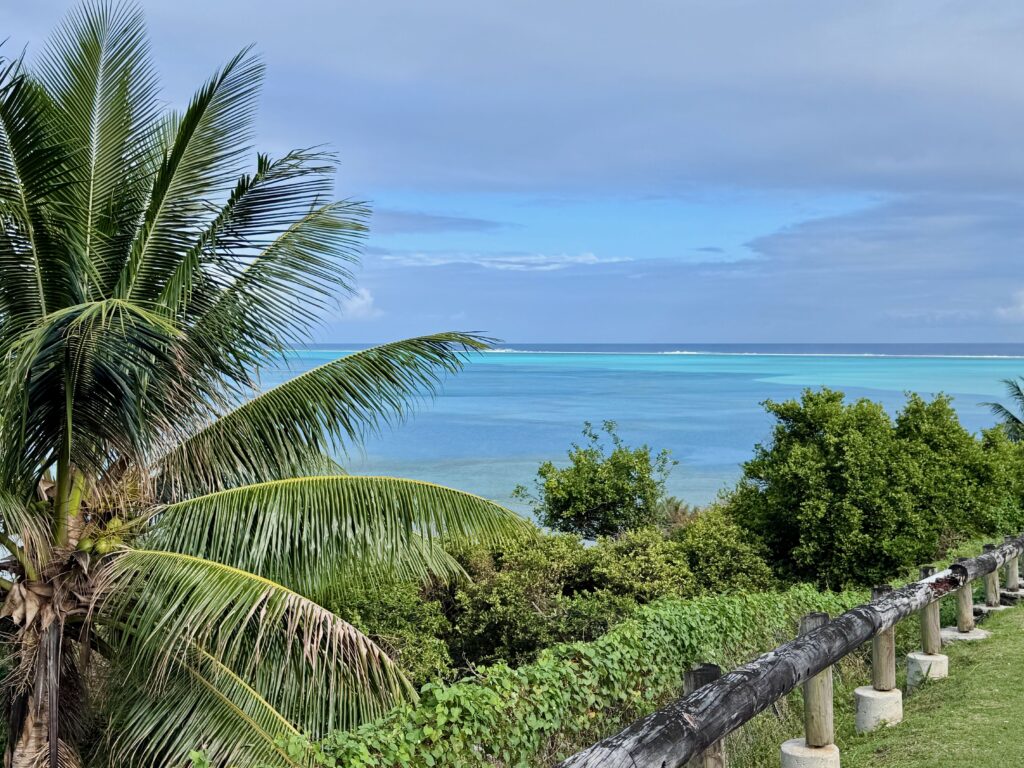
On a bike, you can easily explore the entire island in a few hours and stop whenever you wish to admire the stunning views. Except for one hilly switchback section, the roads are mostly flat and well-paved.
7. The Promenade
This isn’t an official attraction, and it’s certainly not fancy, but when you walk along the waterfront in Vai’ea instead of the main road, you get to see all the wooden fishing boats and some pretty scenery. You can access it from the ferry dock on one end and from the sports complex on the other.


It’s fun seeing all the different boats—workhorses for the local fishermen.


One night, we came across a group of locals enjoying a sundowner on the promenade while listening to festive Polynesian music. They moved their chairs out of the way and welcomed us with all the traditional greetings, but even more notable was the warmth of their smiles. Typical Polynesia.
8. Palais de la Mer
Located on the main road just north of town is the Palais de la Mer, or Coral Palace.
Its owner, Akhy Firuu, is a well-known Polynesian singer who began building this elaborate homestead from natural materials gathered from the sea some 20 years ago and still hasn’t finished it. He’s trying to recreate the seabed’s atmosphere in his home. It looks like this:

It reminds us of artist Ashley Saunders’ Dolphin House in Bimini, Bahamas.


The opening hours vary widely, so check the gate for the latest times. The time changed three times while we were here.

9. Petroglyphs of Haranae
This archaeological site really doesn’t warrant a visit, except for one thing: its pretty surroundings. There’s one main petroglyph, shown below:

After viewing it, you can walk a little farther up; it’s a lovely shaded respite just a short distance from Vai’ea town center.


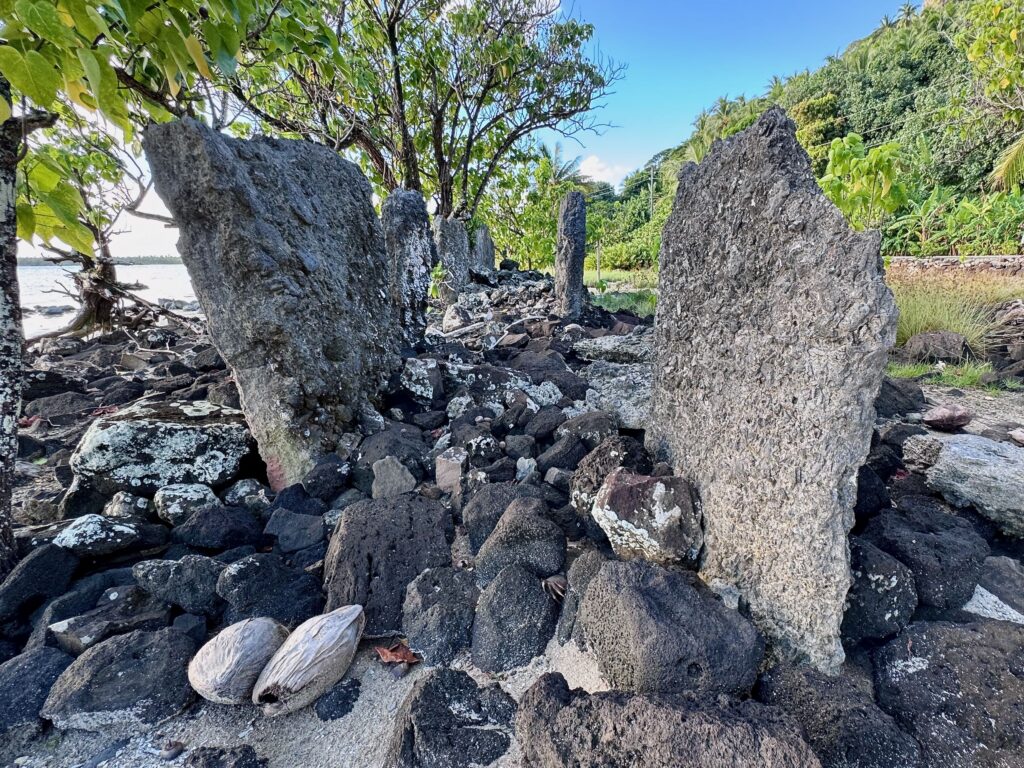
10. Marae
There are dozens—possibly hundreds—of them around the island. Most are simply a marker, but a few feature a rock formation:



Other Memories
Exploring the Motus
From our anchorage, we took our dinghy to a tiny, deserted motu nestled within Motu Tuanai. It was, in essence, a motu within a motu.
We had it all to ourselves.

It made for a fun afternoon.

Skull Head Rock
I honestly don’t know the history of this spot, but others have noted the cliff looks like a skull:

I think I see it.

Family Graves
In Maupiti, there’s no communal cemetery (as of this writing), so many locals bury their family members on their own property. The graves are prevalent; you can’t miss them. For Polynesians, it signifies a connection to the family land.
Some have roofs, some don’t. Some are elaborately decorated, and one even had embellishments that lit up at night.
The one below is my hands-down favorite. The unopened cans of beer are precious, and the seashells around the perimeter (in progress) are a beautiful touch. This person was well-loved.

Other Observations
We came across this hog freely wandering the street in Vai’ea multiple times. One day, it just disappeared.

There was another one on the other side of the island, but it was tied up:

This is the first place I’ve seen young people playing petanque. It is usually a pastime dominated by the older generations. These young men certainly seemed to be enjoying it:

We saw school buses that were the same type that we had seen in Bora Bora:

What is interesting here is that they have a crossing guard who rides the bus with the children and walks them across the street.

The local church, below. I love the anchor symbol—a nod to the community’s strong connection to the sea:

The bells of this church ring vigorously every Sunday morning.
Where We Ate
Restaurant Tarona
Restaurant Tarona is arguably the most well-known restaurant on the island. We ate here multiple times.


It lived up to the hype! The food is delicious, and the portions are characteristically enormous.
They are open Monday through Friday, 11:30 a.m. to 1:30 p.m. We were advised to arrive by noon. It was packed every time we were there.
Snack Raitea
We ordered takeaway pizza from this snack shop five times. The dough was a bit undercooked for us the first two times, but they’re literally one of only two dinner options on the entire island, so we cheerfully returned multiple times. The 3 frommage (three cheese) was our favorite.
The third time we went there, they announced they could offer only one pizza flavor—margarita. Given the options, we were certainly grateful for it. Like Roy says, “You get what you get!”

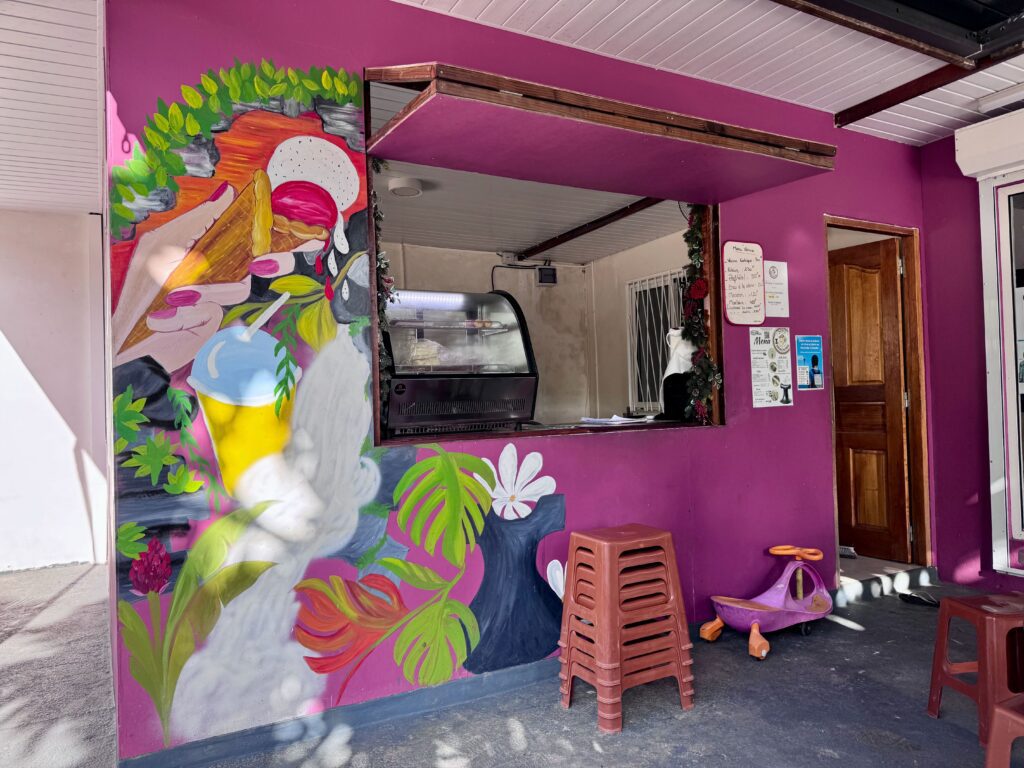
Hani Snacking
They offer paninis, crepes, and the most delicious ice cream in homemade waffle cones. Best yet, they are open six days a week, 11:00 a.m. – 5:00 p.m. Monday through Friday and on Sundays. Closed Saturdays.

Shopping
FARE TOA Tarava
Our favorite magasin is attached to our favorite snack shop (Hani Snacking). It is open from 7:00 a.m. to 6:00 p.m. daily.

Super Patito
Open 6:00 a.m. to 6:00 p.m. Monday through Saturday (closed Sundays). They offer a decent selection of basic grocery items.

Souvenirs
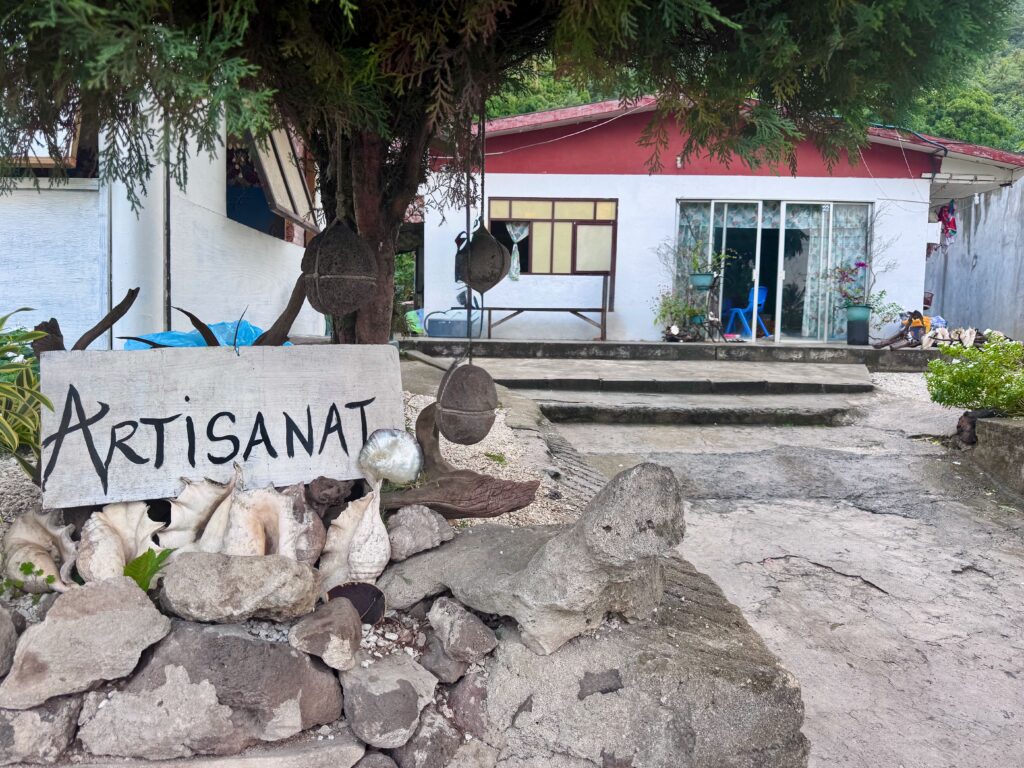

Accommodations
There are no resorts on Maupiti. All accommodations are small pensions.
We stayed on our catamaran, first in the southwest anchorage and then in the eastern anchorage. We definitely preferred the latter, due to the more protected geography.
Getting Here
It’s a 55-minute flight from Tahiti-Faa’a airport to Maupiti, where you land on the islet of Motu Tuanai. A small passenger ferry then takes you on a 15-minute trip across the lagoon to the main island.
The Maupiti Express also offers a twice-weekly ferry service from Bora Bora.
We sailed here on our catamaran.
Getting Around
We circumnavigated the island three times: twice on foot and once on bikes. We rented the bikes from Vaihau Location, right next to the Mairie de Maupiti. The prices are reasonable, and the bikes are nice and new. We were assured we did not need to lock them up. They were right.


Final Thoughts
Going to Maupiti was a commitment. Entering the channel on our catamaran was downright scary, and we were committed to staying until conditions were favorable enough to leave.
Would we do it again? By airplane or ferry, absolutely. By sailboat, maybe, under the right conditions at the pass. The scenery, hiking, and people are amazing.
We recommend booking a dive with Maupiti Diving in advance (ask for Lily) to see the manta rays, then spending 2-3 days here biking around the island, hiking, diving, and snorkeling.


Leave a Reply