

Nestled in the heart of the Lesser Antilles, the French archipelago of Guadeloupe, or “Gwada,” is often described as a butterfly drifting in the Caribbean Sea. This unique shape is formed by two main islands—Basse-Terre and Grande-Terre—joined by a narrow mangrove channel called the Salée River.
Unlike many Caribbean destinations that rely solely on white-sand beaches, Guadeloupe offers a startling diversity of ecosystems, ranging from active volcanoes and dense tropical rainforests to rugged Atlantic cliffs and quiet turquoise lagoons. As a French overseas department, it also offers a sophisticated blend of European infrastructure and vibrant Creole culture.
Comparison of the Two “Wings”
| Feature | Basse-Terre (West) | Grande-Terre (East) |
| Topography | Mountainous & Volcanic | Flat & Limestone |
| Main Flora | Dense Rainforest | Dry Forest & Sugar Cane |
| Sand Color | Black, Brown, and Gold | White and Pink |
| Vibe | Adventure & Eco-tourism | Beaches & Nightlife |
Guadeloupe’s history and population are defined by a complex narrative of colonial struggle and vibrant Creole synthesis. Originally inhabited by the Arawak and later the Carib people, the archipelago was claimed by Christopher Columbus for Spain in 1493. However, it was the French who successfully colonized the islands in 1635, establishing a plantation economy centered on sugar, coffee, and cocoa. This system relied heavily on the forced labor of enslaved Africans, a period that lasted until the final abolition of slavery in 1848. Briefly occupied by the British during the 18th century, the territory officially became a French Overseas Department in 1946, granting its residents full French citizenship.
Today, the population of approximately 384,000 is a diverse mosaic, primarily of African and European (Metis) descent, with significant minorities of East Indian, Lebanese, and Chinese heritage. This melting pot has given rise to a unique Antillean Creole culture, in which the French language coexists with Guadeloupean Creole.
Things We Loved Most About Guadeloupe
1. Carbet Falls
The Carbet Falls (Les Chutes du Carbet) are a series of three spectacular cascades located on the lower slopes of the La Soufrière volcano within the Guadeloupe National Park on Basse-Terre. Fed by the Grand Carbet River, these falls are among the most visited natural landmarks in the Lesser Antilles.
The first fall is the highest, plunging 115 meters down a sheer cliff. Reaching it requires a demanding, long-distance trek through dense tropical rainforest. It’s about a three- to four-hour hike. The second fall, standing at 110 meters, is the most famous and accessible; a well-maintained paved path allows visitors to reach a lookout point in roughly 20 minutes. The third fall is the smallest at 20 meters but is prized for its large circular basin. While it is less steep than the hike to the first fall, it is notoriously muddy. It’s about a two-hour hike.
Christopher Columbus noted these falls in his logbooks in 1493, describing them as massive white streaks visible from the sea.
Due to the high volcanic activity and heavy rainfall in the region, the landscape around the falls is prone to erosion, making the surrounding rainforest one of the most lush and biodiverse ecosystems in the Caribbean.
Quick Comparison of the Falls
| Waterfall | Height | Difficulty | Time (Round Trip) |
| 1st Fall | 115m | Difficult | 3 – 4 hours (round trip) |
| 2nd Fall | 110m | Easy | 45 minutes |
| 3rd Fall | 20m | Moderate | 2 1/2 hours |
Based on someone’s prior recommendation, we decided to hike to the third fall. The last 50 yards of the trail are closed due to prior landslides, and you can no longer swim in the basin. However, we were told it was still a beautiful hike. It was.
It was muddy but reasonable. If we were to return, I would want to hike to the first fall.
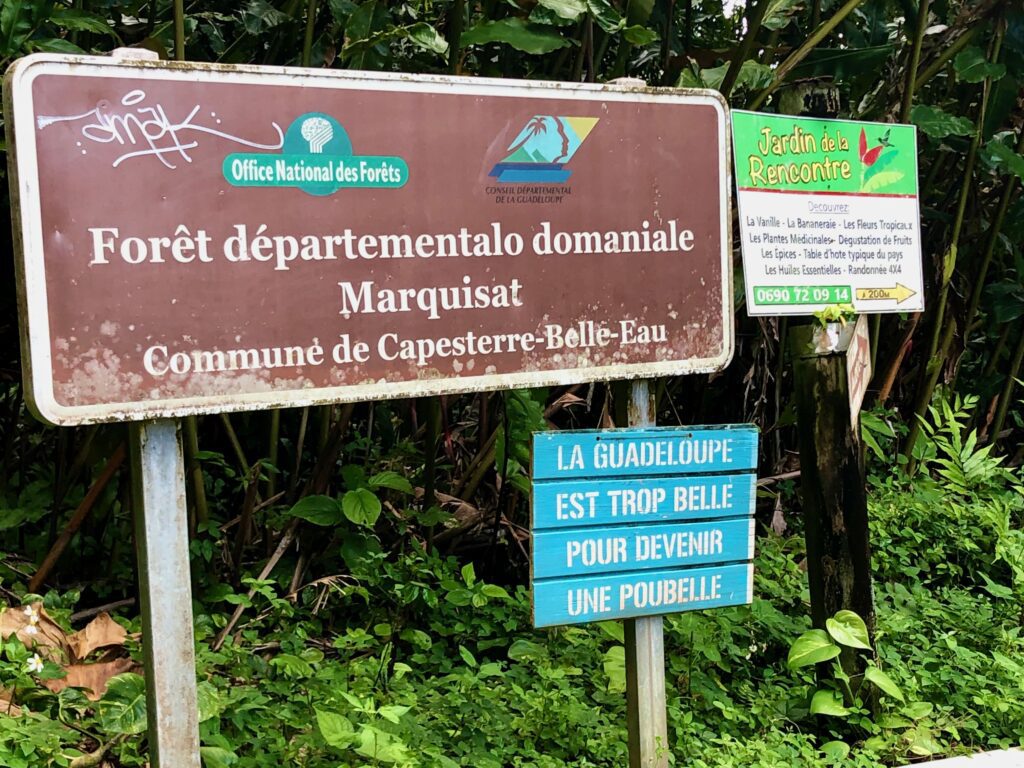
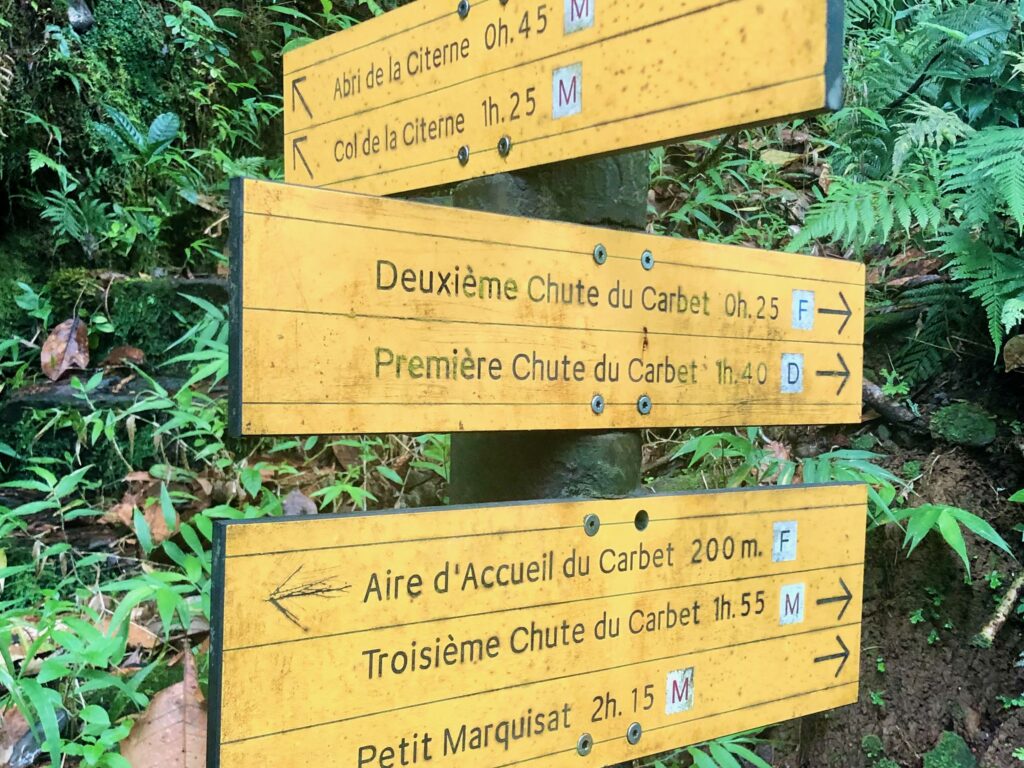
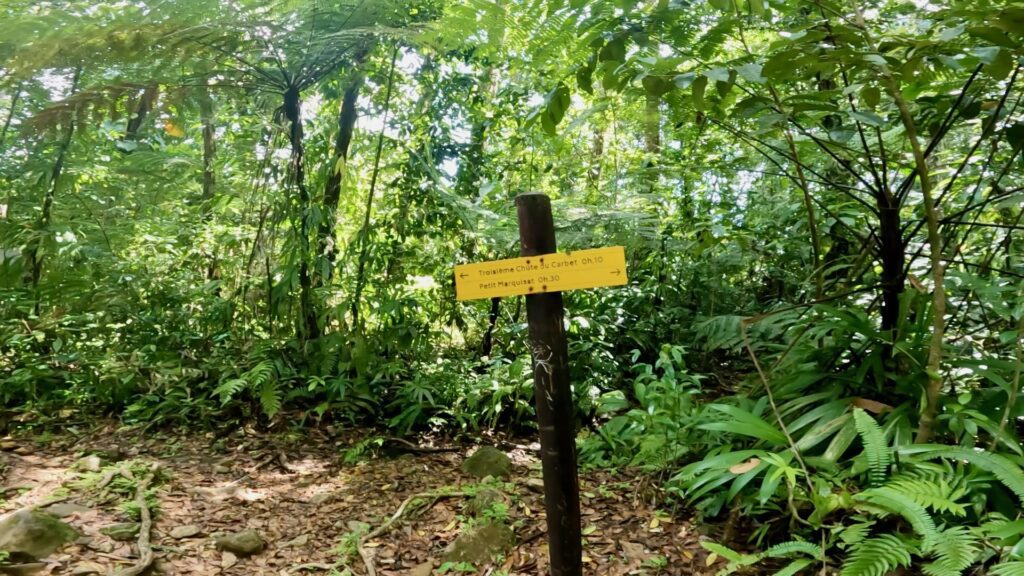
The third fall is about 50 yards from this platform:


At this point, we went back to the other trailheads. When we arrived, the attendant said the first fall was an hour away, and it was too late in the day.
So, off we went down the trail to the second fall. The path to the second trail is paved, so it was a walk, not a hike.
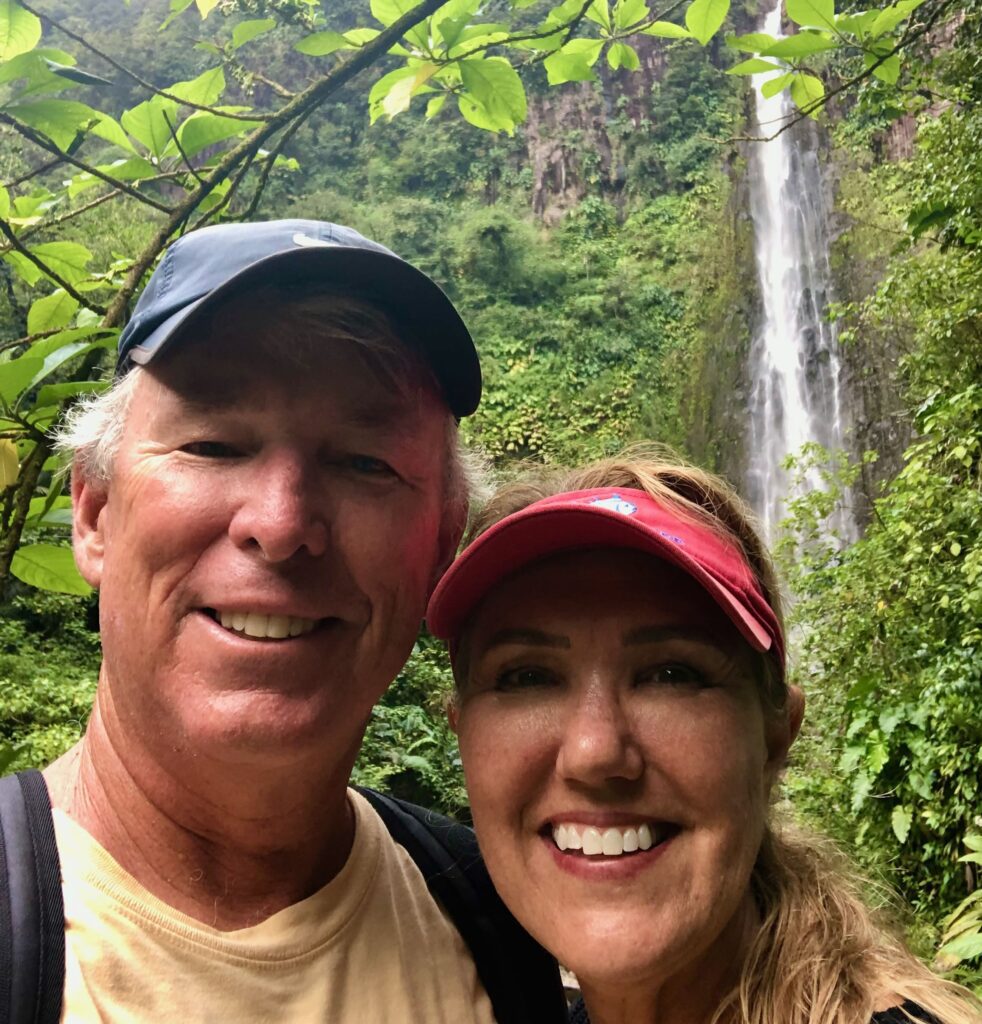
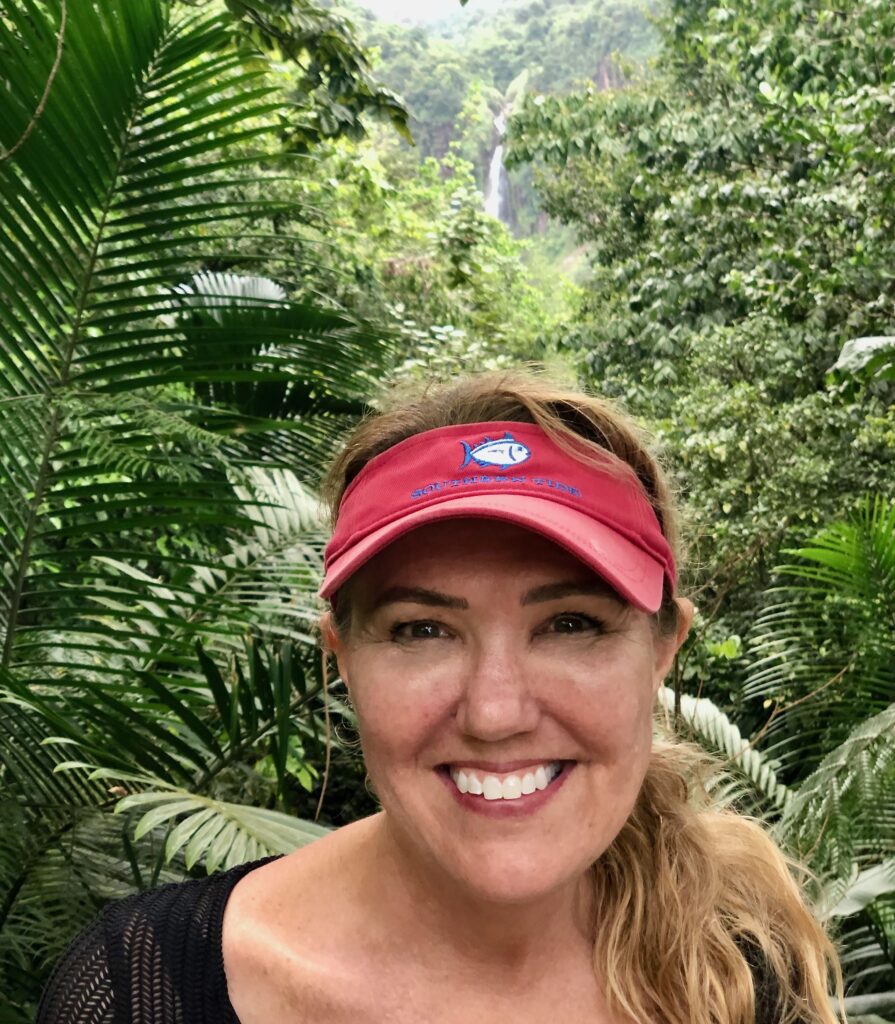
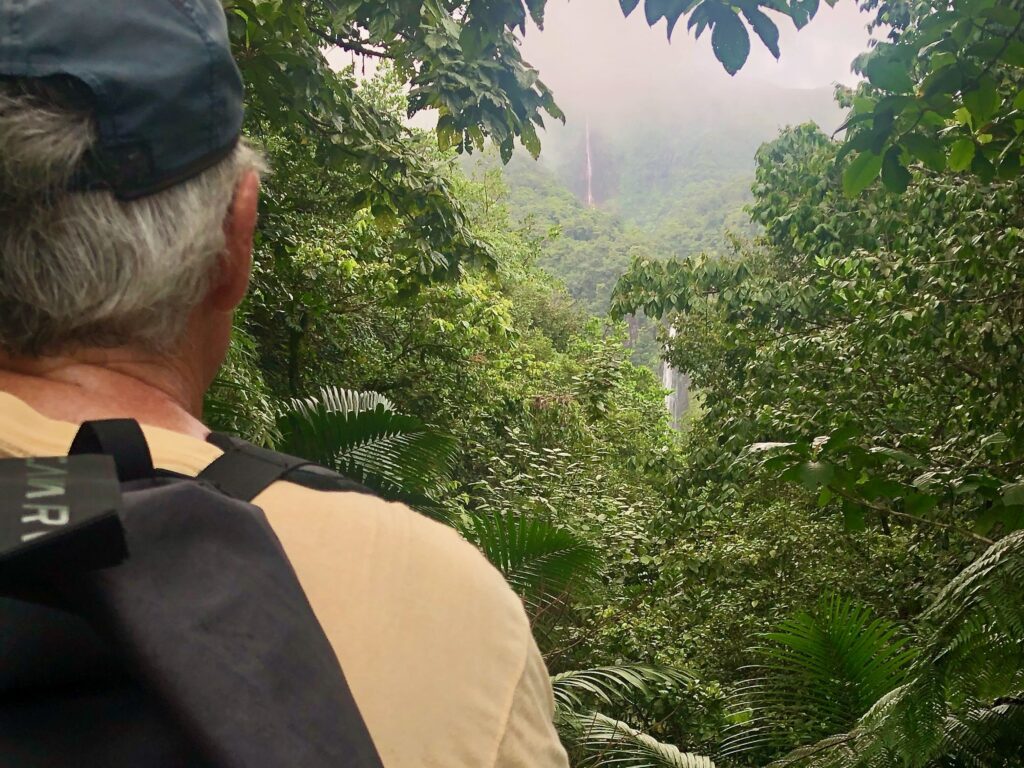
As we were leaving, it started to rain. It felt refreshing!

2. Deshaies Botanical Garden
The Deshaies Botanical Garden (Jardin Botanique de Deshaies), located on the northwest coast of Basse-Terre, is one of the most celebrated floral and animal parks in the Caribbean. Spanning approximately 17 acres, the garden is situated on the former estate of the famous French comedian Coluche. Designed by landscape architect Michel Gaillard, the park is a masterclass in tropical horticulture, featuring more than 1,000 exotic plant species, including majestic baobabs, diverse palm collections, and vibrant bougainvillea.
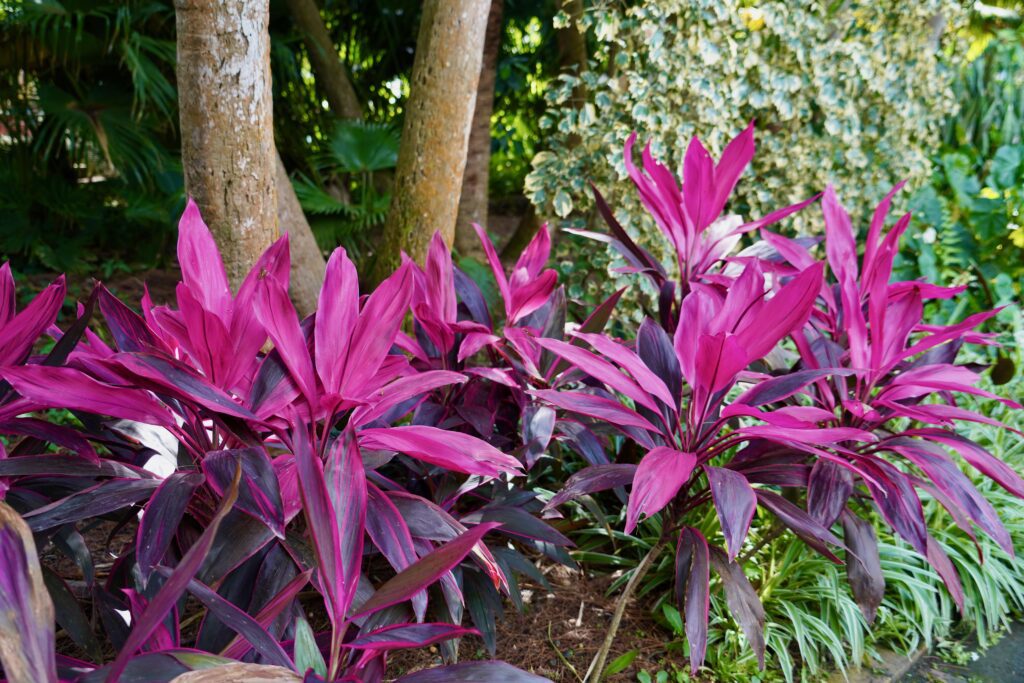
The garden is organized into distinct thematic zones, such as the water lily pond, the orchid path, and the cactus garden. Beyond its flora, the park is renowned for its interactive wildlife experiences; you can walk through a large aviary to hand-feed nectar to colorful rainbow lorikeets or observe flamingos and red macaws. There’s also a man-made waterfall and a koi pond.


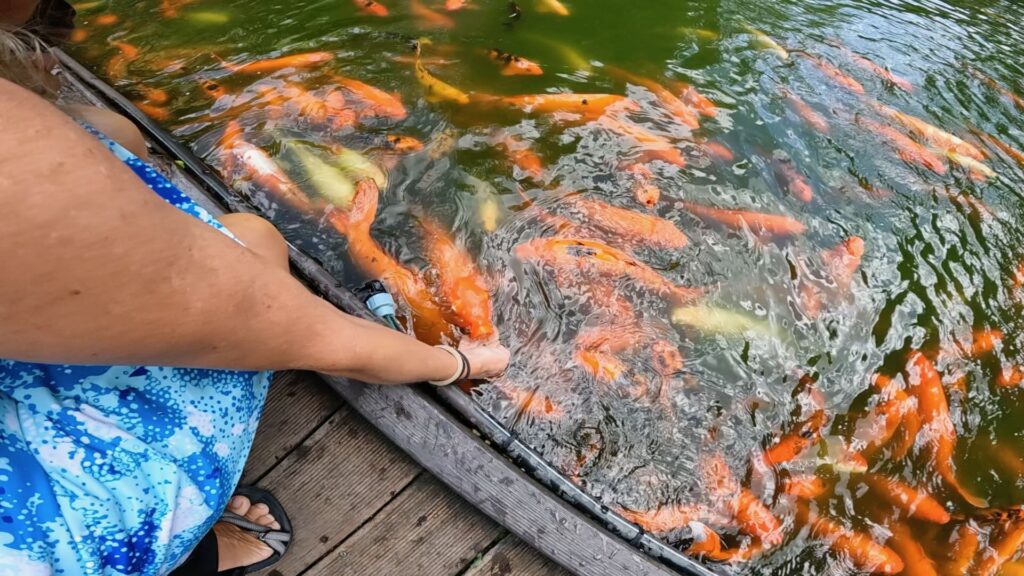
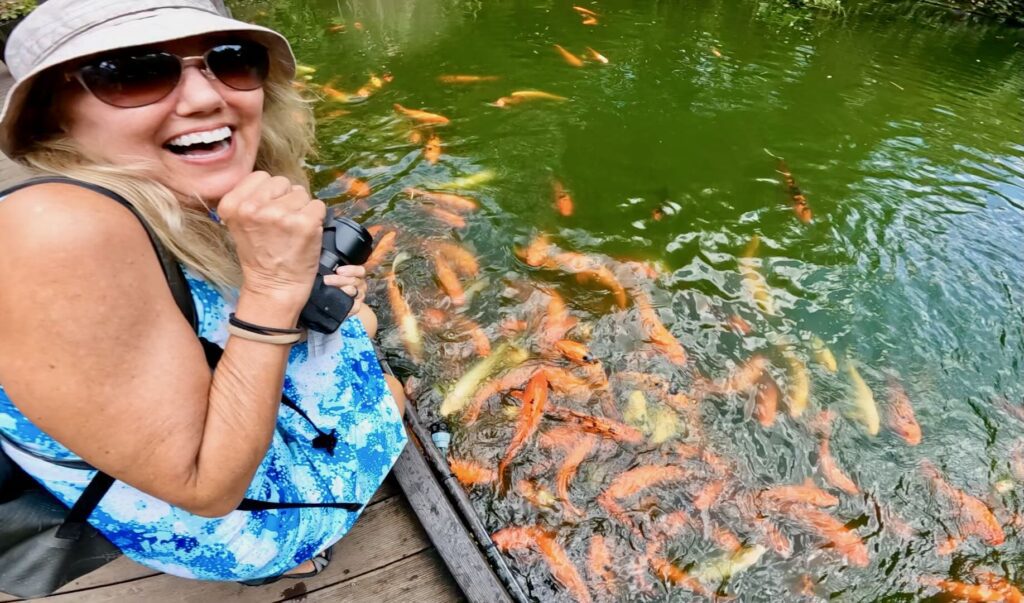


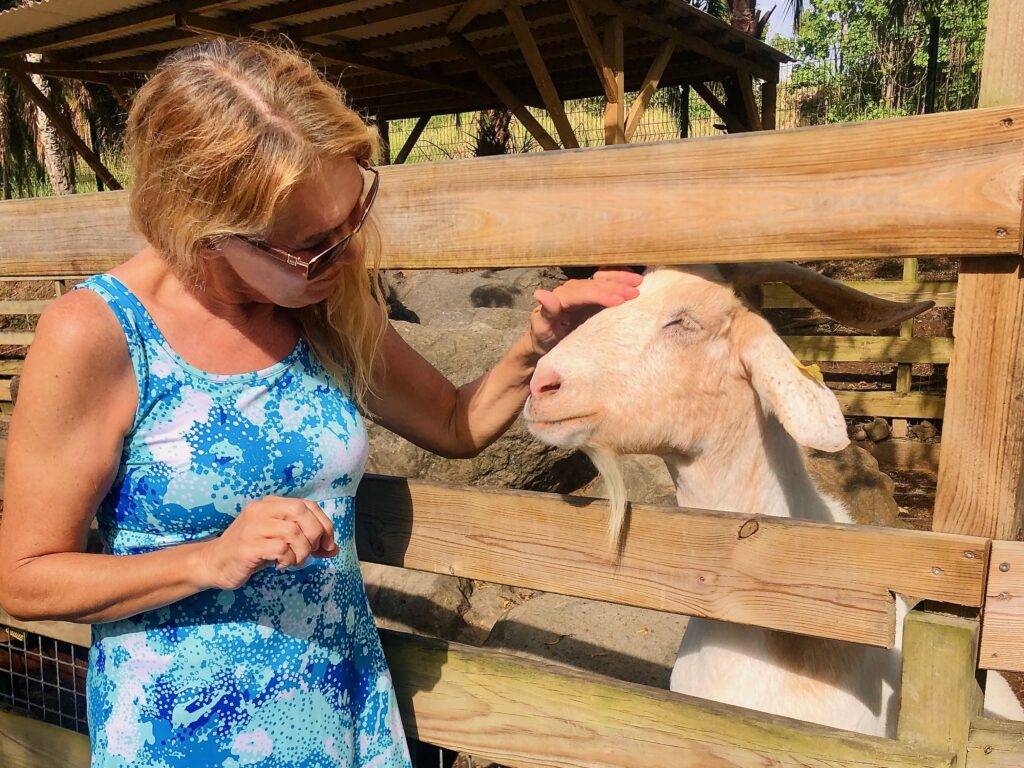

Architecturally, the site maintains a traditional Creole influence, and its hilltop position provides sweeping views of the Caribbean Sea. It serves not only as a major tourist attraction but also as a vital educational resource for Caribbean biodiversity, showcasing the delicate balance of the island’s tropical ecosystem.
3. Sainte-Anne Beach (Plage du Bourg)
Located on the southern coast of Grande-Terre, Sainte-Anne Beach (Plage du Bourg) is widely considered one of the most picturesque and accessible beaches in the French West Indies. This iconic stretch of coastline is characterized by its brilliant white coral sand and a shallow, turquoise lagoon protected by a natural coral reef. Because the reef breaks the Atlantic swells, the waters remain exceptionally calm and clear, making it a premier destination for families with children and casual swimmers.
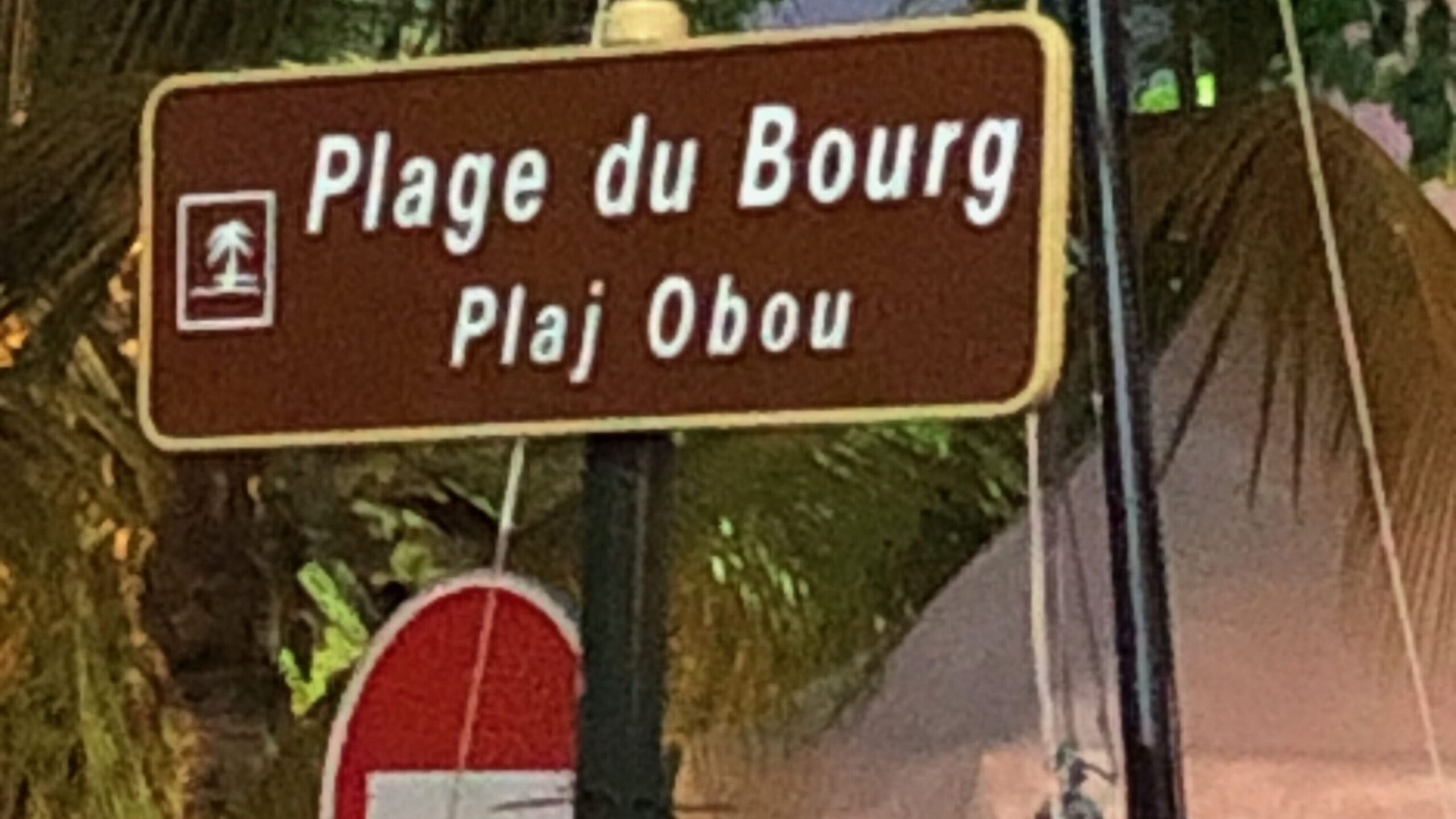
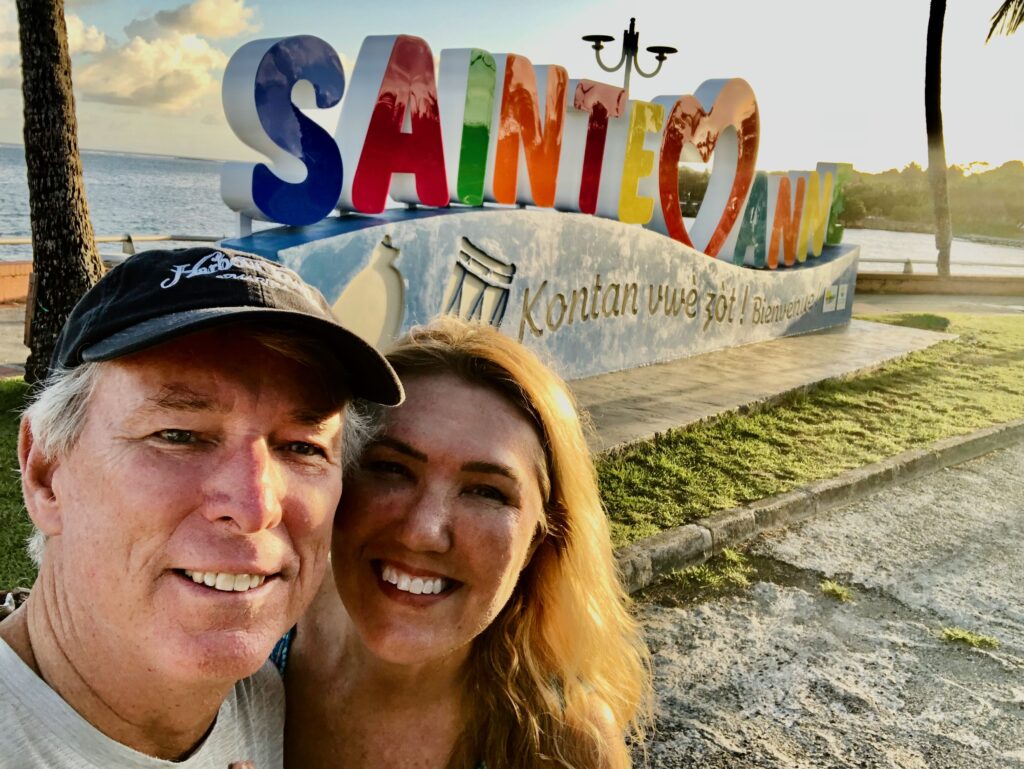
The beach is conveniently situated directly adjacent to the vibrant town of Sainte-Anne, where a bustling daily market offers local spices, tropical fruits, and handmade crafts. Towering coconut palms lean over the shoreline, providing natural shade for visitors. Beyond swimming, the area is a hub for water sports, particularly windsurfing and kitesurfing, due to the consistent trade winds. At the water’s edge, several “lolos” (traditional small restaurants) serve authentic Creole specialties like accras de morue and bokit sandwiches. Despite its popularity and occasional weekend crowds, Sainte-Anne Beach maintains a quintessential Caribbean charm, blending high-end natural beauty with the everyday rhythm of Guadeloupean life.
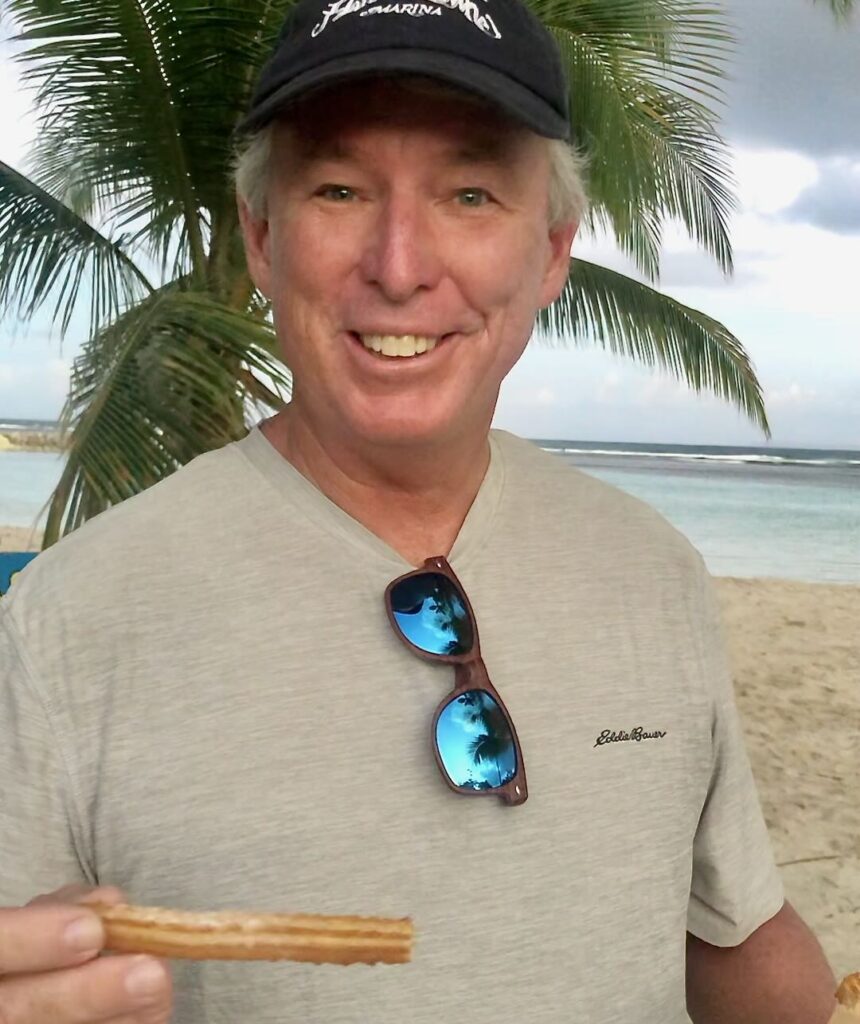
Everyone was getting fresh chichis (churros).
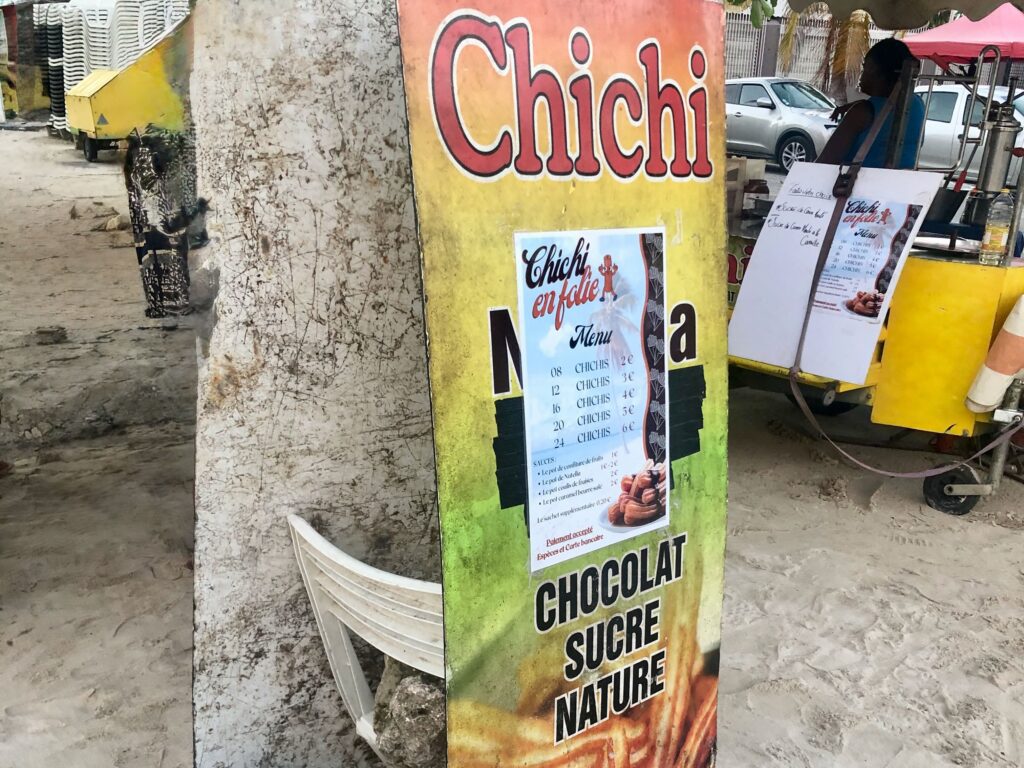
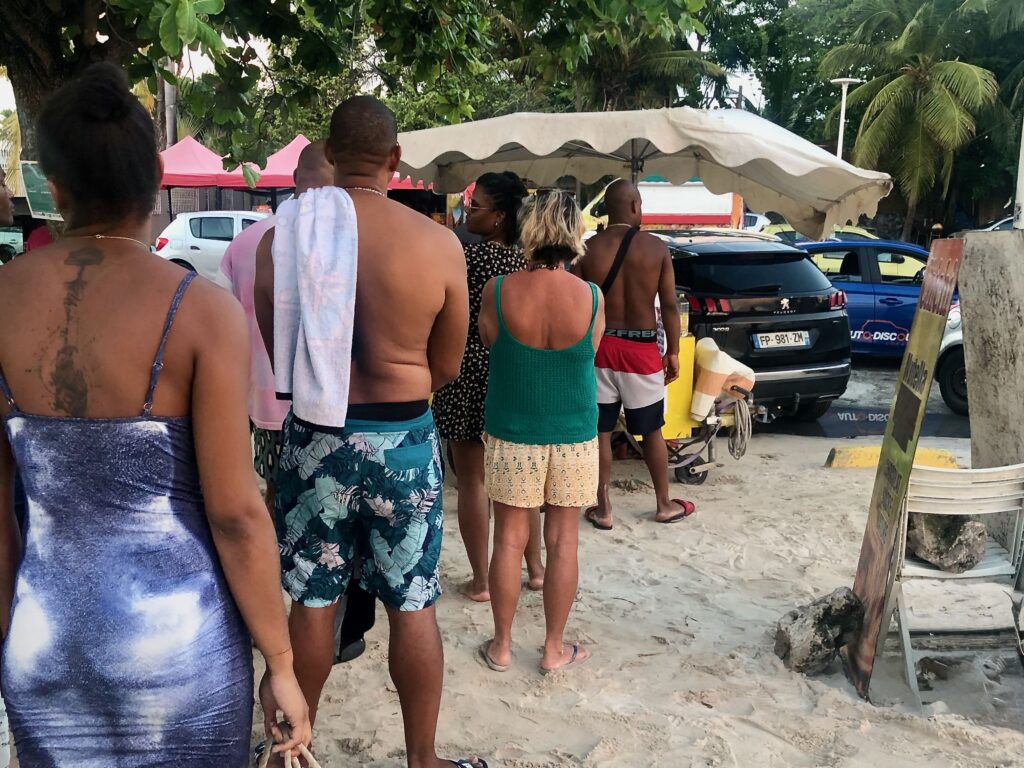
You know what they say: “When in Rome…!”
4. Basse-Terre
Basse-Terre is the western “wing” of Guadeloupe’s butterfly-shaped archipelago and serves as the rugged, volcanic heart of the territory. Unlike the flat limestone plains of its neighbor, Grande-Terre, Basse-Terre is dominated by a massive mountain chain, culminating in the active volcano La Grande Soufrière, which stands at 1,467 meters. This high elevation traps moisture from the trade winds, creating a lush, humid environment that supports the Guadeloupe National Park, a UNESCO Biosphere Reserve. Unfortunately, we did not get to see this while we were there. I hope to hike La Grande Soufrière someday.
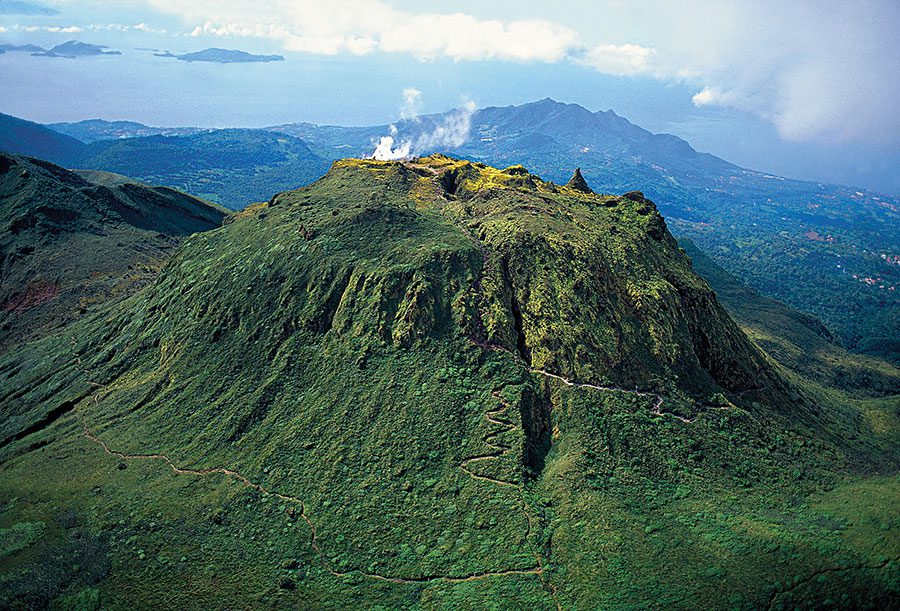
The landscape is defined by dense tropical rainforests, over 300 kilometers of hiking trails, and dozens of spectacular rivers and waterfalls, such as the Carbet Falls. Its coastline is equally distinct, featuring volcanic sand beaches ranging from golden ochre at Grande Anse to shimmering black at Trois-Rivières. The waters off the west coast, particularly within the Cousteau Reserve, are world-renowned for their biodiversity and coral health.
The region of Basse-Terre is also home to the administrative capital of the same name.
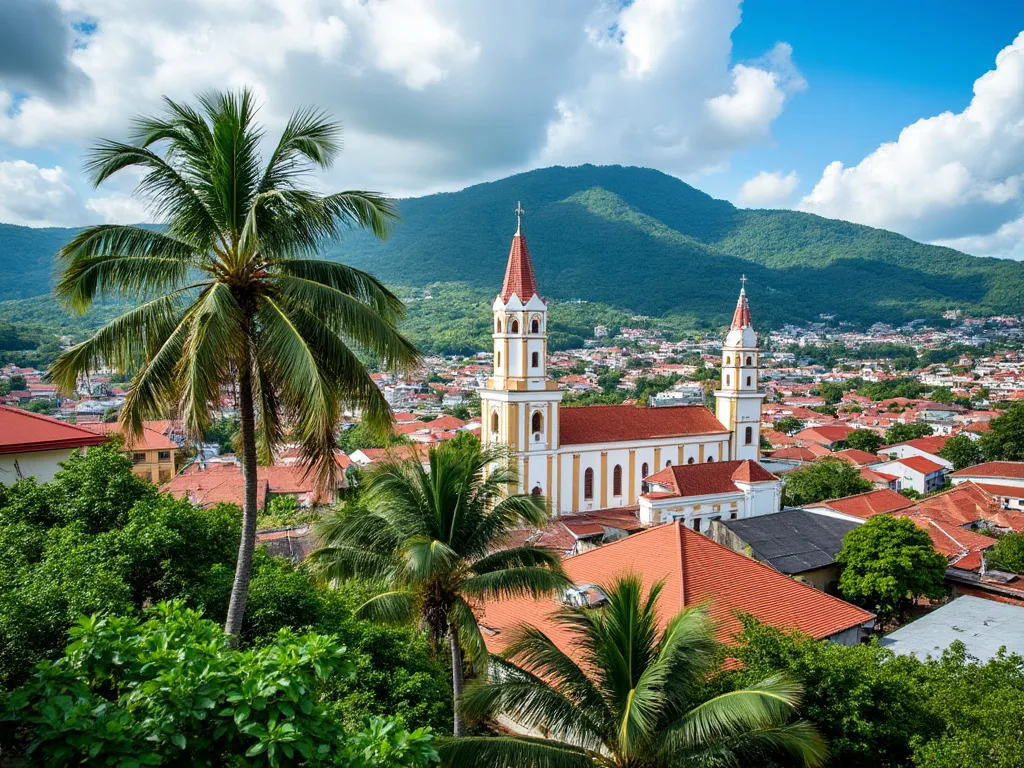
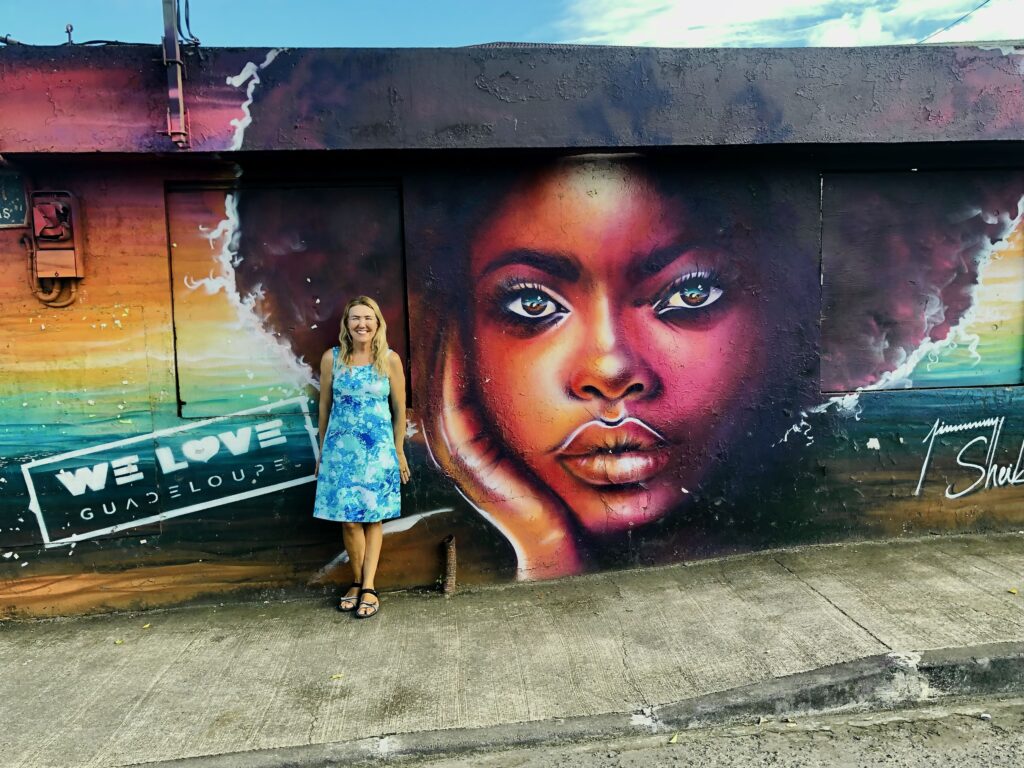
We saw a lot of wonderful murals downtown. The “We Love Guadeloupe” series was spearheaded by artist Jimmy Sheik.
Basse-Terre is home to the Marché de Basse-Terre.
We recommend you arrive early, as many stalls close at 1:00 p.m. As you can see, many were closed by the time we got there.
The economy in Basse-Terre is deeply rooted in agriculture, particularly banana plantations and prestigious “Rhum Agricole” distilleries, offering a more tranquil, nature-focused atmosphere than the commercial hubs of the east.
Other Things to Do in Guadeloupe
Dive the Cousteau Reserve
Pointe des Châteaux
La Grande Soufrière
Parc des Mamelles
Mémorial ACTe
Where We Ate
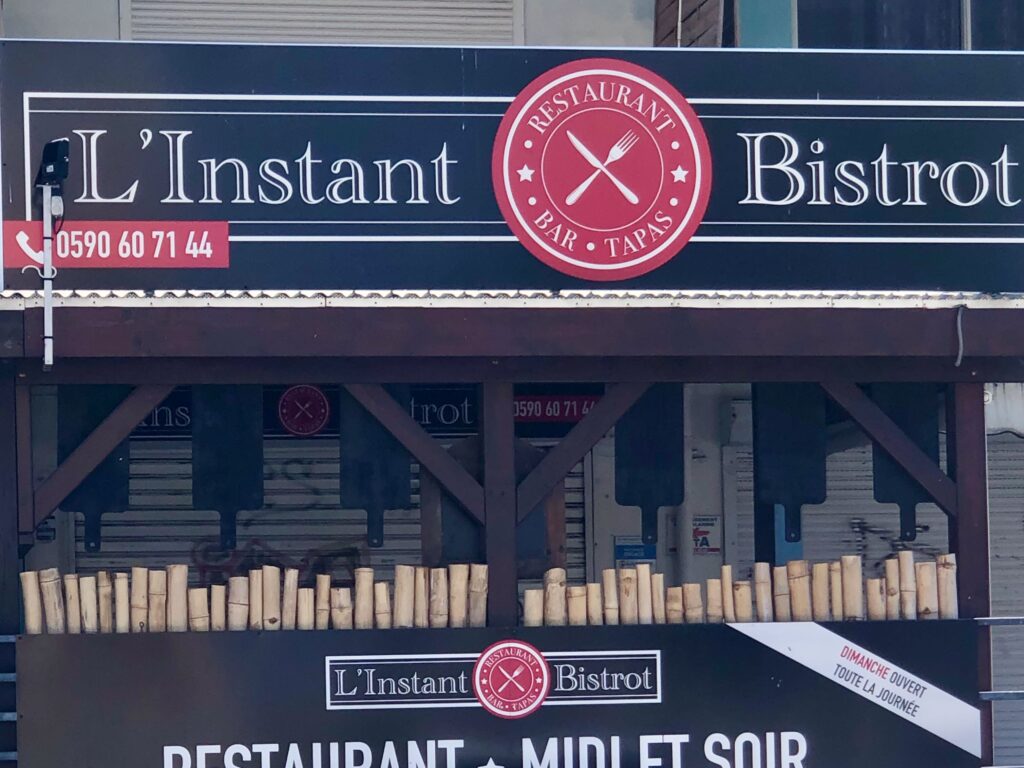
L’Instant Bistrot, near the Riviere Sens anchorage:
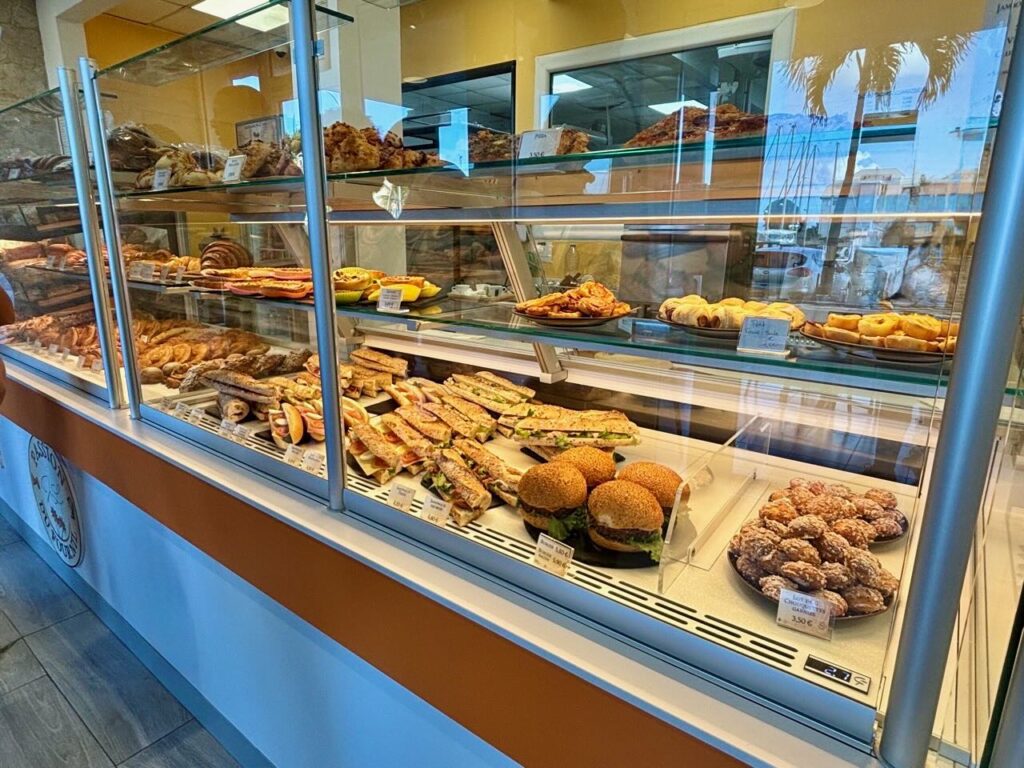
We also regularly got fresh baguettes at Passion du Fournil, which is nearby:
We ate at Pizza 2000 near Sainte-Anne:
Shopping
Shopping in Guadeloupe offers a vibrant mix of bustling open-air markets, chic French boutiques, and modern commercial centers. The heart of traditional shopping is found in Pointe-à-Pitre, where the Saint-Antoine Spice Market (Marché aux Épices) creates a sensory experience filled with the aromas of cinnamon, vanilla, and local colombo curry. Nearby, the Marché de la Darse on the waterfront is the go-to spot for fresh tropical fruits and locally made rums.
If you’re looking for high-end French goods, the streets of Rue Frébault and Rue Nozières feature stores stocking Parisian perfumes, fashion, and jewelry at prices often competitive with mainland Europe. On the outskirts of the city, in Baie-Mahault, lies Destreland, the largest shopping mall in the Lesser Antilles. With over 180 stores, including major French retailers such as Carrefour and Decathlon, it offers a comprehensive, modern shopping experience.
If it’s souvenirs you want, visit the Village Artisanal in Sainte-Anne or Saint-François, which specializes in handcrafted items made from coconut shells, madras textiles, and local art. Traditional “Doudou” dolls and Tourment d’Amour tarts from Les Saintes are also highly prized. Most shops follow French business hours, typically closing for a long lunch break between 12:30 PM and 2:30 PM.
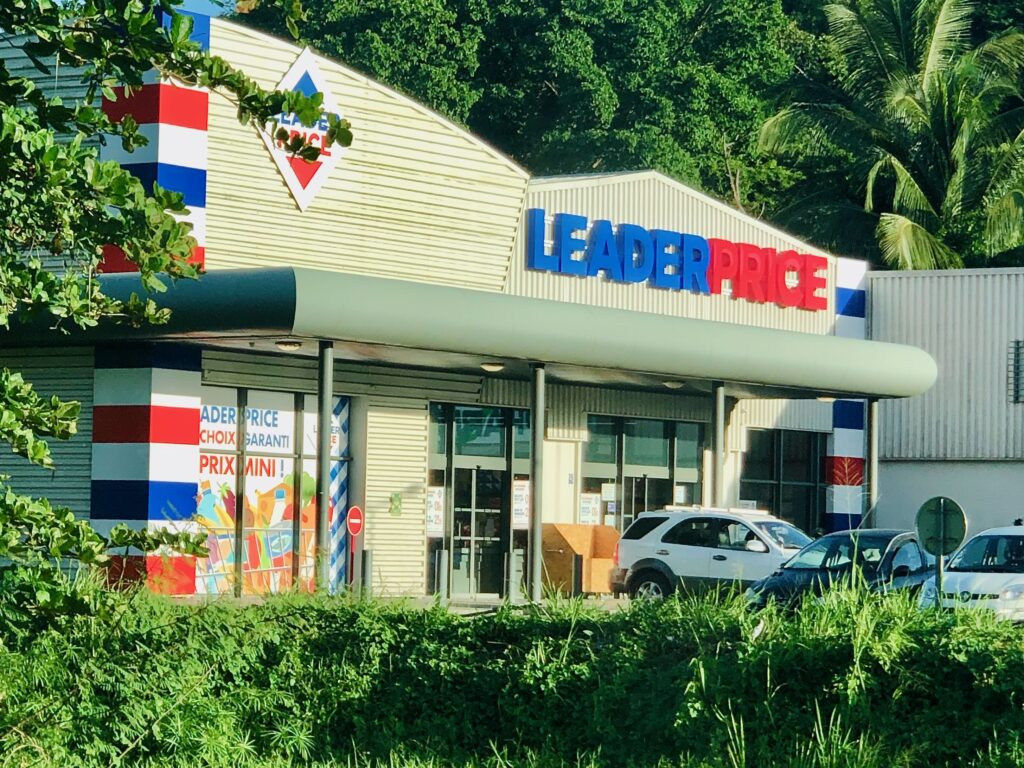
For groceries, we were highly impressed with LeaderPrice. It was extremely well stocked and reasonably priced.

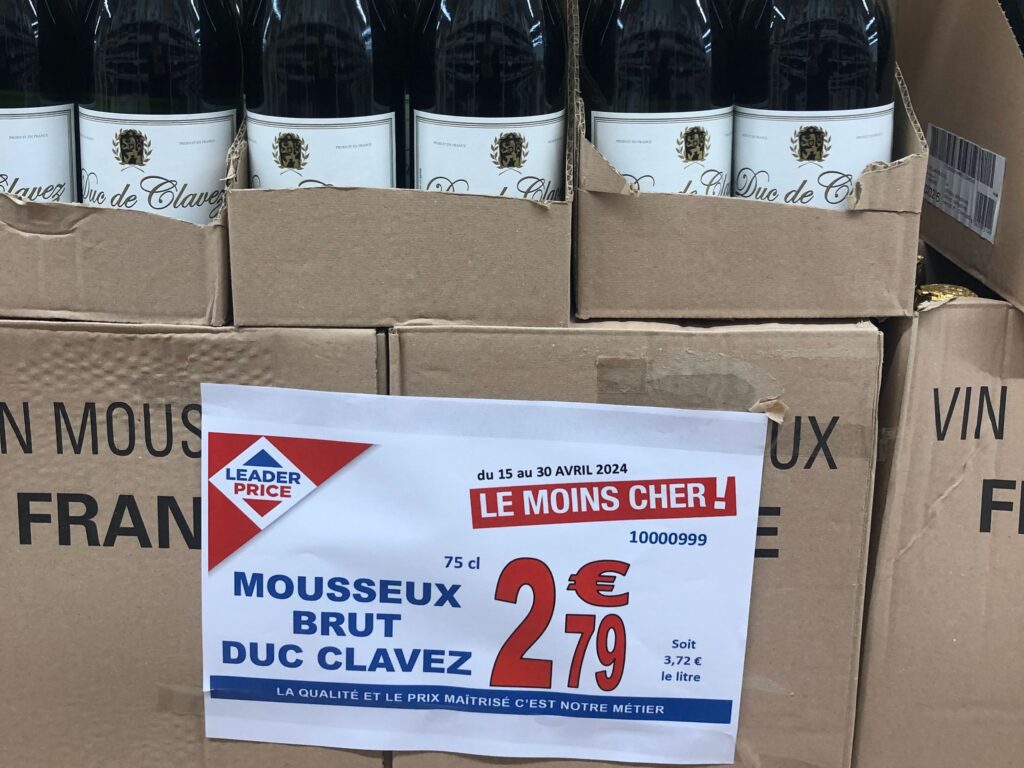
They had the cheapest wine ever:
There’s also a really small chandlery near the anchorage, Antilles Yachting Service. We bought some line there.
Accommodations
Accommodations in Guadeloupe reflect the archipelago’s dual nature, with a clear divide between the two main islands. Grande-Terre is the hub for traditional tourism, featuring a high concentration of beachfront resorts, all-inclusive hotels, and luxury villas, particularly in the popular “Riviera du Levant” corridor of Le Gosier, Sainte-Anne, and Saint-François. These areas provide easy access to white-sand beaches and nightlife, with average hotel prices typically ranging from $150 to $400 per night, though high-end options like La Toubana can exceed $600.
In contrast, Basse-Terre specializes in “green tourism” and eco-lodges. Many visitors opt for gîtes—locally owned, self-catering rural cottages—which offer an authentic Creole experience amid the rainforest or near diving hubs such as Bouillante and Deshaies. These are often more budget-friendly, with many well-rated gîtes and apartments available for $80 to $150 per night.
We stayed on our boat in the Riviere Sens anchorage.
Getting There
Accessing Guadeloupe is most efficient by air, primarily through Pointe-à-Pitre International Airport (PTP), also known as Pôle Caraïbes. As part of the French Overseas Department, the archipelago is exceptionally well connected to mainland France. Major carriers like Air France, Air Caraïbes, and Corsair operate multiple daily wide-body flights from Paris (Orly and Charles de Gaulle), with a flight time of approximately 8 to 9 hours. For North American travelers, direct connections are available from hubs such as Miami, New York (JFK), and Montreal via airlines like American Airlines, Air Canada, and JetBlue, though schedules can be seasonal.
Regional travel within the Lesser Antilles is served by Air Antilles and LIAT, connecting Guadeloupe to neighboring islands such as Martinique, Saint Martin, and Dominica. If you prefer sea travel, the Express des Îles ferry service provides reliable, high-speed catamaran links between Guadeloupe, Martinique, Dominica, and Saint Lucia. Additionally, frequent local ferries depart from various points on the mainland to reach the outer islands of Les Saintes, Marie-Galante, and La Désirade. Upon arrival, renting a vehicle is highly recommended, as the public bus system is limited and a car is essential for navigating Basse-Terre’s mountainous terrain.
We sailed there on our catamaran.
Getting Around
Public transportation is limited and geared toward locals. To truly see the island, renting a car is pretty mandatory. Driving is on the right side of the road, and the infrastructure is excellent. The drive we took around the island was really pretty.
But there was definitely traffic at rush hour:
Final Thoughts
Whether you are seeking the adrenaline of a volcanic ascent or the tranquil rhythm of a Caribbean sunset, Guadeloupe offers an authenticity that is increasingly rare in the modern travel landscape. The archipelago’s “butterfly” geography serves as a perfect metaphor for its dual soul: the wild, emerald peaks of Basse-Terre provide a sanctuary for nature lovers, while the sun-drenched plains of Grande-Terre offer a masterclass in coastal relaxation.
The true magic of a visit here lies in the sensory details—the scent of roasting poulet boucané at a roadside lolo, the vibrant colors of the Saint-Antoine spice market, and the warmth of a culture that seamlessly blends French sophistication with deep-rooted Creole traditions. By stepping off the beaten path to explore the hidden waterfalls of the National Park or the historic rum distilleries of Marie-Galante, you discover a destination that prioritizes heritage over artifice. As you pack your bags, you’ll likely find that it isn’t just the white sands of Sainte-Anne or the heights of La Soufrière that stay with you, but the enduring spirit of the Gwo Ka drums and the untamed beauty of the French West Indies.
Travel Notes
We stayed on our catamaran in this anchorage.
Originally experienced in April 2024; content refreshed in March 2026.
