

Antigua, the larger of the two primary islands in the nation of Antigua and Barbuda, is a place where the geography of the Caribbean meets the deep footprints of colonial history.
Known famously for having “a beach for every day of the year,” the island offers far more than just white and pink sands. The island covers approximately 108 square miles. Unlike many of its mountainous neighbors formed by recent volcanic activity, Antigua is relatively low-lying and undulating.
Long before European contact, the island was known as Wadadli by the indigenous Arawak and Carib peoples.

Carbon dating suggests that the earliest hunter-gatherer settlements, the Siboney, arrived around 2900 BC. By 35 AD, the Arawaks had introduced agriculture, cultivating the famous Antigua Black Pineapple, which remains a national symbol today.
The Colonial Era
Christopher Columbus sighted the island in 1493, naming it after the Church of Santa Maria de la Antigua in Seville. However, it wasn’t until 1632 that English settlers from St. Kitts successfully colonized it. Antigua quickly became a “Gateway to the Caribbean,” a strategic naval asset, and a profitable plantation economy.
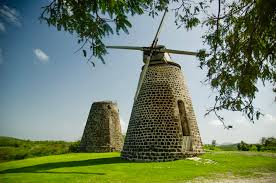
The 17th and 18th centuries were defined by the brutal sugar industry, which relied entirely on the labor of enslaved West Africans. This period left a lasting mark on the island’s landscape, dotted with the stone ruins of over 100 sugar mills. Betty’s Hope, the island’s first large-scale sugar plantation, now serves as a museum and a stark reminder of this era.
Naval Significance
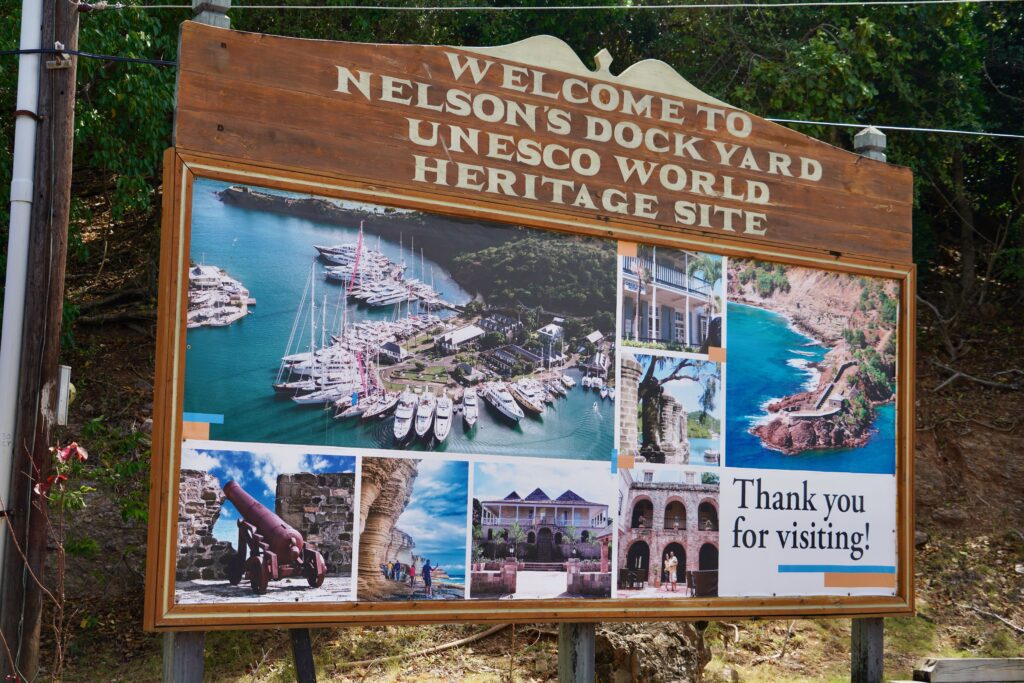
Because of its deeply indented coastline, Antigua provided exceptional natural harbors. English Harbour became the crown jewel of British maritime power in the West Indies. It served as the base for Admiral Horatio Nelson and is today home to Nelson’s Dockyard, the world’s only continuously working Georgian-style dockyard and a UNESCO World Heritage Site.
Antigua finally gained its independence from the United Kingdom on November 1, 1981, remaining a constitutional monarchy within the Commonwealth.
One of Antigua’s most defining physical traits is the lack of rivers and natural springs. This scarcity of fresh water has historically made the island prone to droughts, forcing inhabitants to rely on sophisticated cistern systems and, in modern times, large-scale desalination plants.
Things We Loved Most About Antigua
1. Nelson’s Dockyard
Beyond its 365 beaches, Nelson’s Dockyard is the historical heartbeat of Antigua. Recently celebrating its 300th anniversary (established September 25, 1725), it stands as a masterclass in colonial maritime architecture and strategic preservation.
The Dockyard was originally “His Majesty’s Yard in English Harbour.” Its location was chosen because the deep, narrow bays provided a “hurricane hole”—a natural shelter so effective that in 1723, a massive hurricane destroyed 35 ships in other Antiguan ports while the two docked here remained unscathed.
- Georgian Adaptation: The buildings are iconic examples of Caribbean Georgian architecture. British designs were modified for the tropics with features like thick stone walls for cooling, wraparound balconies for shade, and pitch pine interiors to resist earthquake damage.
- The Labor Behind the Stone: While named after Admiral Horatio Nelson (who served here from 1784–1787), the site was built and maintained primarily by enslaved and free Africans. Modern research projects, like the 8th of March Project, now focus on telling these stories and identifying the shipwrights and blacksmiths who made the British naval dominance possible.
Key Landmarks Within the Site
| Landmark | Current Use | Notable Feature |
| Admiral’s House | Dockyard Museum | Houses Nelson’s original tea set and his 18th-century death mask. |
| Copper & Lumber Store | Boutique Hotel | A former storehouse where copper sheathing for ships was kept; it retains original brickwork and heavy timber beams. |
| Sail Loft | Archaeological Site | Only the massive stone pillars remain today, marking where massive canvas sails were once laid out and repaired. |
| Clarence House | Museum & Event Space | Built for the Duke of Clarence (later King William IV), it overlooks the harbor and showcases 19th-century elite colonial life. |
Nelson’s Dockyard Today
Since its UNESCO designation in 2016, the Dockyard has evolved into a “living museum.” It isn’t just a relic; it is an active international marina that hosts world-class events:
- Antigua Sailing Week: One of the world’s most prestigious regattas, where the Dockyard serves as the primary hub for sailors and social events like “Reggae in the Park.”
- Sustainability Hub: In 2026, the park is exploring “smart heritage” initiatives, including the feasibility of solar tile technology on historic roofs to balance preservation with climate resilience.
- The Tot Tot: A local tradition where many visitors and sailors still gather at the Mainbrace Pub or Admiral’s Inn for a “tot” of Antiguan rum, nodding to the daily rations once given to Royal Navy sailors.
When you pay the entrance fee at Nelson’s Dockyard, your ticket also grants you access to Shirley Heights and the Dow’s Hill Interpretation Centre. Most visitors use the Dockyard as a base before hiking the Middle Ground Trail up to the forts for sunset.
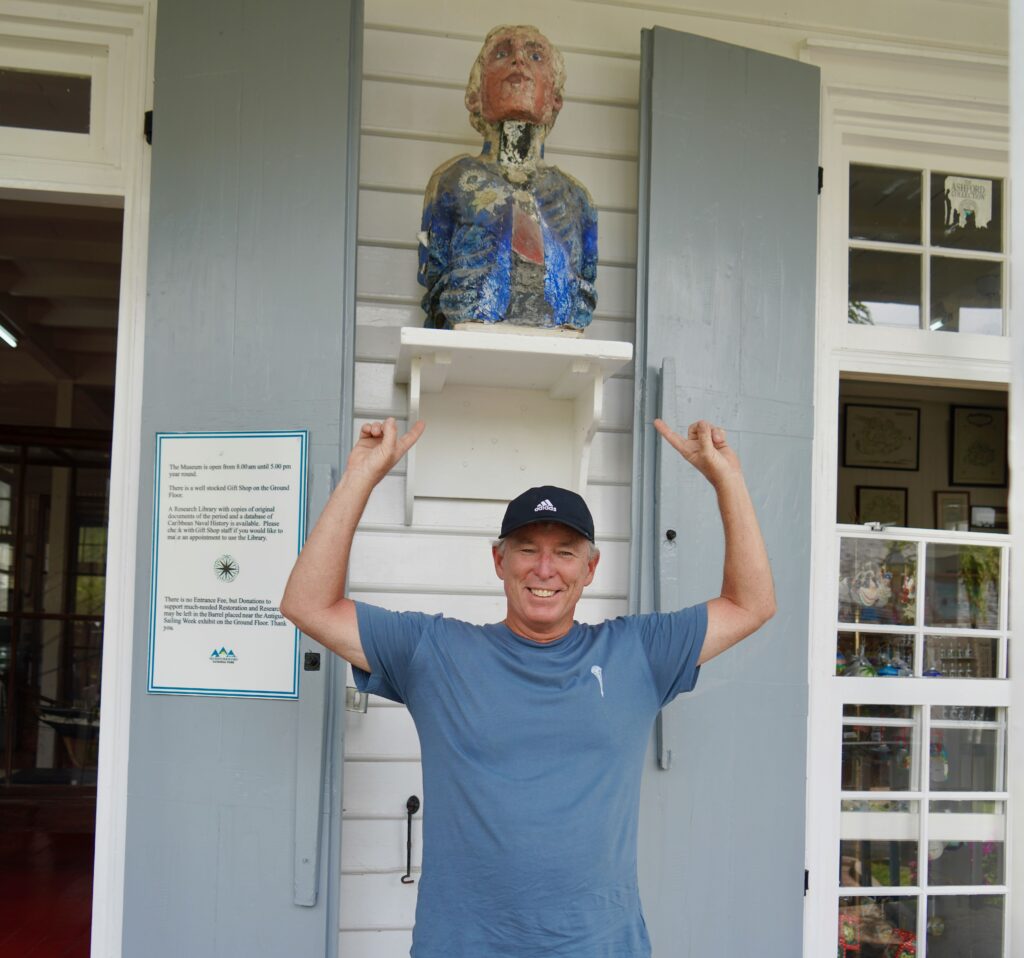
Now, a little family history. Roy’s third great-grandfather, Thomas Kirk RHA, was a well-known sculptor. Roy is named after him (Roy Kirk). Kirk sculpted the figure of Horatio Nelson that stood atop the famous Nelson’s Pillar in Dublin. You can read more about Thomas Kirk here.
We were amused that Nelson is a major figure at this dockyard. It was a bit of a full-circle moment for Roy Kirk.
Since its UNESCO designation in 2016, the Dockyard has evolved into a “living museum.” It isn’t just a relic; it is an active international marina that hosts world-class events:
- Antigua Sailing Week: One of the world’s most prestigious regattas, where the Dockyard serves as the primary hub for sailors and social events like “Reggae in the Park.”
- Sustainability Hub: In 2026, the park is exploring “smart heritage” initiatives, including the feasibility of solar tile technology on historic roofs to balance preservation with climate resilience.
- The Tot Tot: A local tradition where many visitors and sailors still gather at the Mainbrace Pub or Admiral’s Inn for a “tot” of Antiguan rum, nodding to the daily rations once given to Royal Navy sailors.
2. Shirley Heights
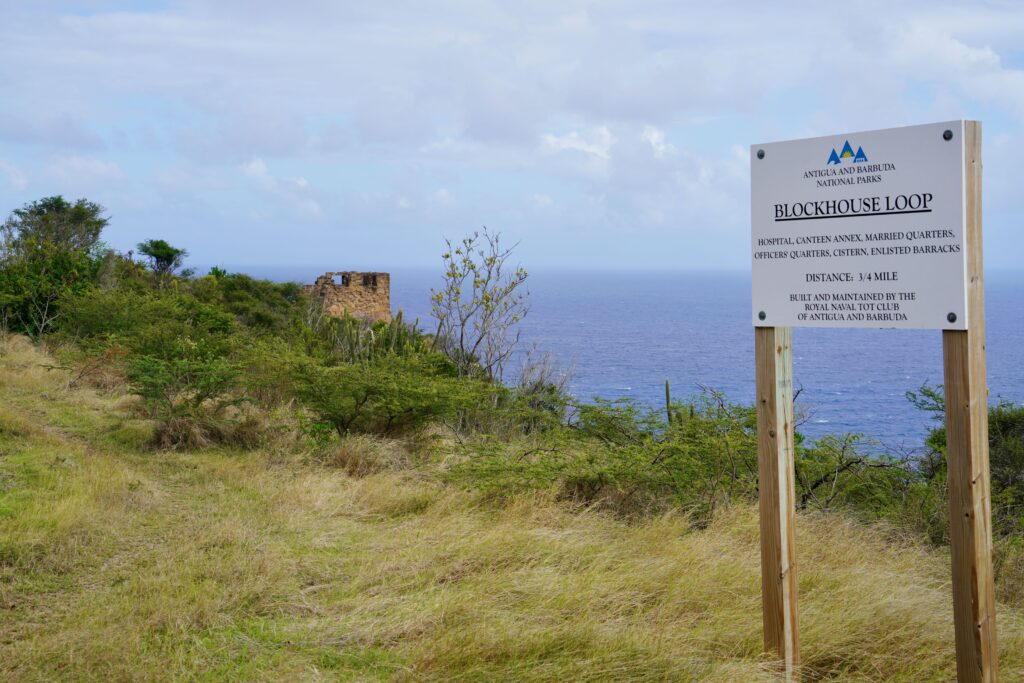
Sitting 487 feet above English Harbour, Shirley Heights is a restored military lookout and gun battery that offers the most iconic panoramic view in Antigua and Barbuda. Named after Sir Thomas Shirley, the Governor of the Leeward Islands, who strengthened Antigua’s fortifications in 1781, the site was strategically designed to monitor ship movements and protect the nearby Royal Navy Dockyard.
Historically, it served as a critical link in a chain of colonial defenses, housing barracks, powder magazines, and a canteen. Today, it is part of Nelson’s Dockyard National Park. While the ruins provide a window into 18th-century military life, the location is world-famous for its social atmosphere.


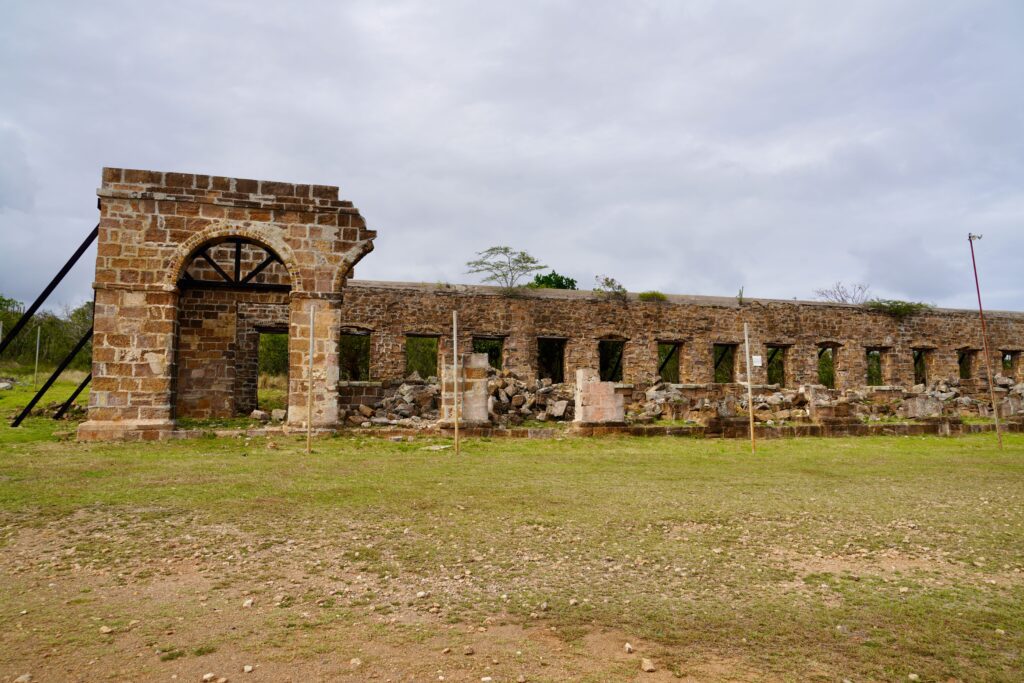
Every Sunday, Shirley Heights hosts a legendary sunset party that has been a local tradition for over 30 years. The event features live steelpan orchestras and reggae bands, attracting both locals and international travelers. On clear days, visitors can see the neighboring islands of Montserrat and Guadeloupe. The combination of its steep historical significance and its status as the island’s premier social hub makes it a quintessential Caribbean landmark.
3. St. John and Its Cathedral
St. John is the vibrant capital and largest city of Antigua and Barbuda, serving as the nation’s commercial and administrative heartbeat. Located on the northwest coast of Antigua, the city is home to approximately 22,000 residents, representing nearly a quarter of the island’s population.
Founded by English settlers in 1632, the city’s skyline is dominated by St. John’s Cathedral. This Anglican landmark, with its distinct white twin baroque towers, was originally built in 1681 and most recently reconstructed in 1848 after earthquake damage.
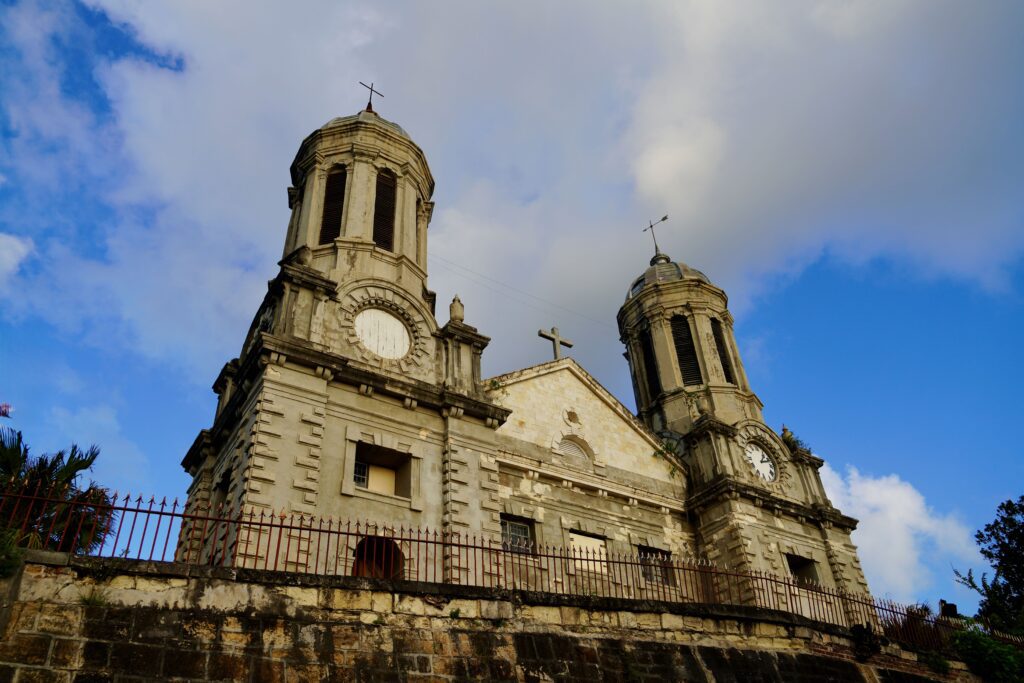

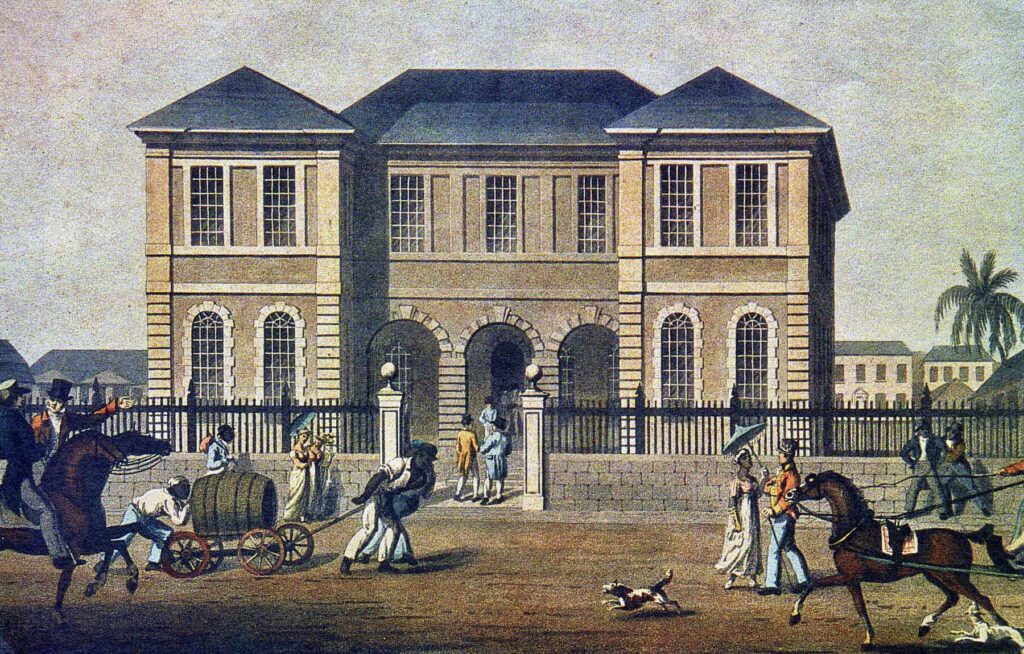
Nearby, the Museum of Antigua and Barbuda is housed in the colonial courthouse (built in 1747), which is the oldest building still in use in the city.
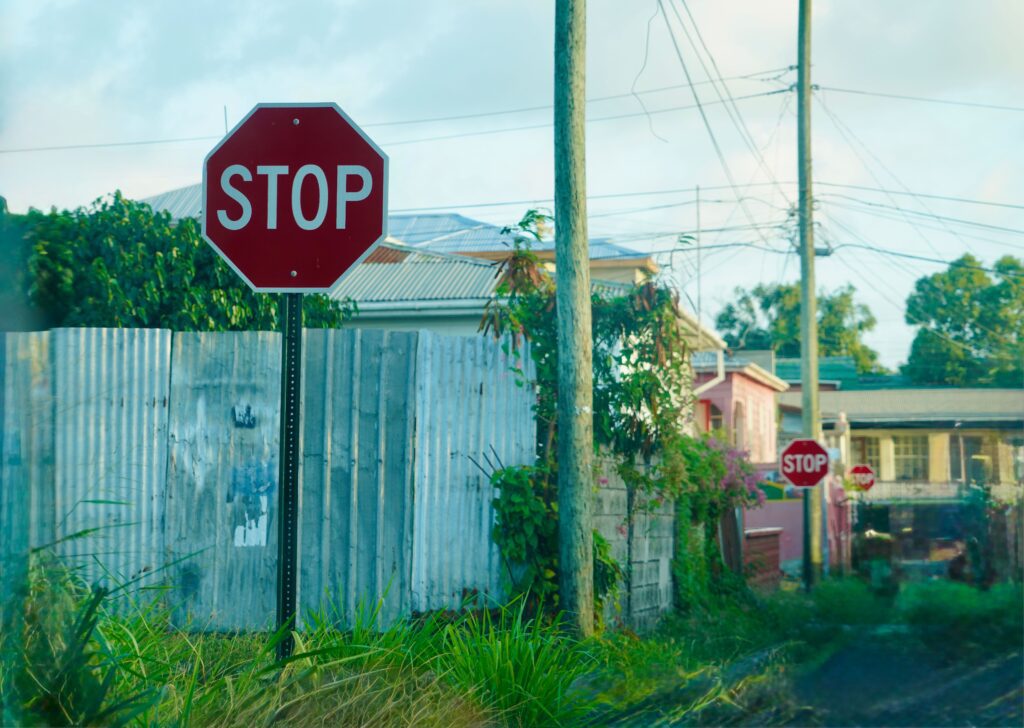
We noticed a hilarious number of stop signs throughout the residential streets.
4. Fig Tree Drive
Fig Tree Drive is Antigua’s most famous scenic route, stretching approximately 4.7 miles through the island’s southwestern volcanic region. Connecting the village of Swetes to the coastal town of Old Road, the drive traverses the lush Shekerley Mountains, offering a stark contrast to the island’s typically dry, low-lying landscape. Despite its name, travelers will not find traditional Mediterranean fig trees here; “fig” is the local Antiguan term for bananas, which grow in abundance along the roadside alongside mangoes, guavas, and towering coconut palms.
Having a rental car, we had to drive it!
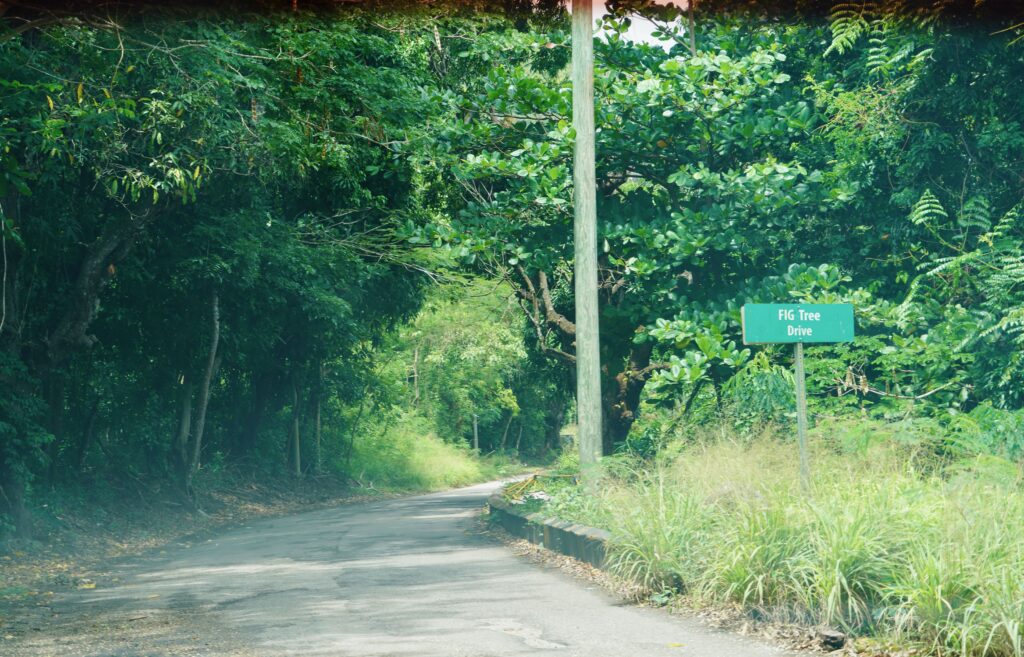
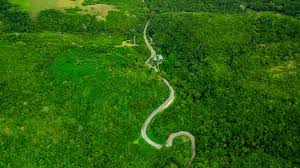
The route serves as a gateway to the Wallings Nature Reserve, a community-managed protected area established around a Victorian-era reservoir. Historically, the area was vital for agriculture, and remnants of old sugar mills still dot the verdant hillsides. Today, the drive is a hub of local culture, with vibrant roadside stalls selling the famous Antigua Black Pineapple.
For more about driving in Antigua, read on. It was spicy!
5. Dickenson Bay Beach
Located on the northwest coast of Antigua, Dickenson Bay is widely considered the island’s most developed and socially vibrant beach. Known for its expansive crescent of soft, white sand and exceptionally calm, turquoise waters, it is a primary tourist hub due to its proximity to the capital, St. John’s, and the international airport.
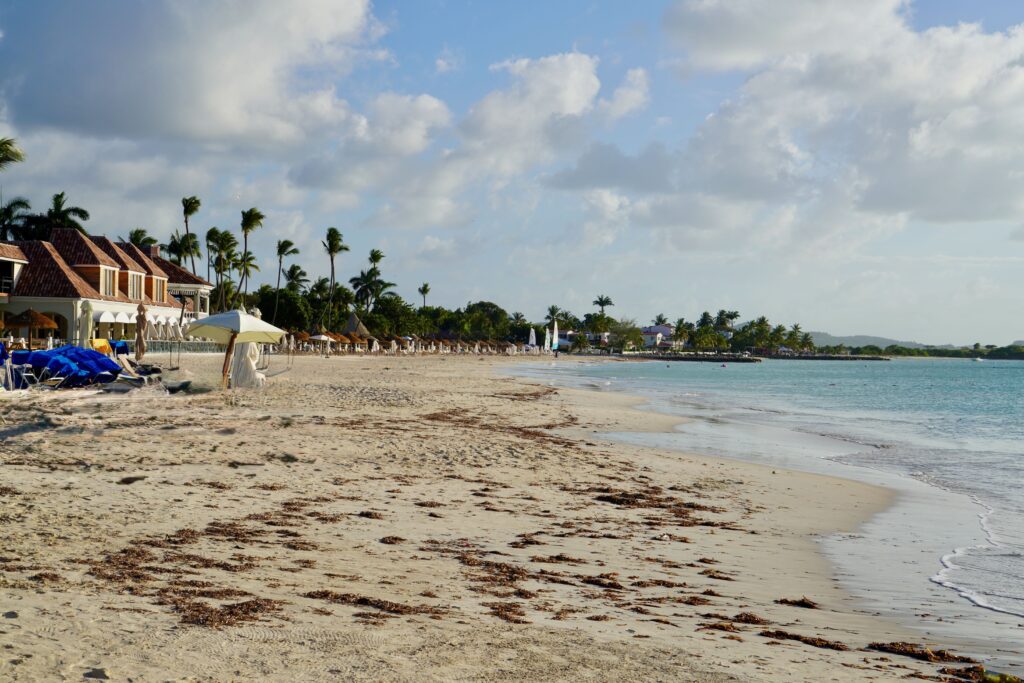
Unlike more secluded southern beaches, Dickenson Bay offers a high density of amenities, including beach bars, seafood restaurants, and independent operators offering jet ski rentals, glass-bottom boat tours, and parasailing.
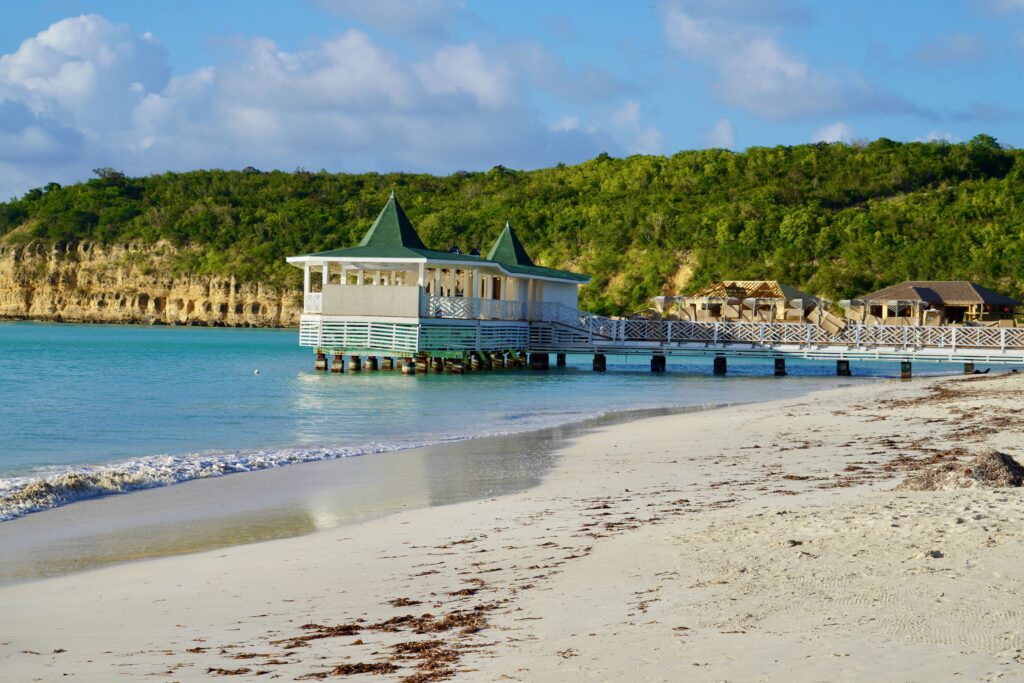
6. Darkwood Beach
Located on the scenic southwest coast of Antigua, Darkwood Beach is widely regarded as one of the island’s most visually stunning and relatively “untouched” stretches of coastline. Unlike the bustling, resort-heavy beaches to the north, Darkwood offers a more expansive, open feel, with a backdrop of lush green volcanic hills, including the prominent Mount Obama (Boggy Peak) in the distance.
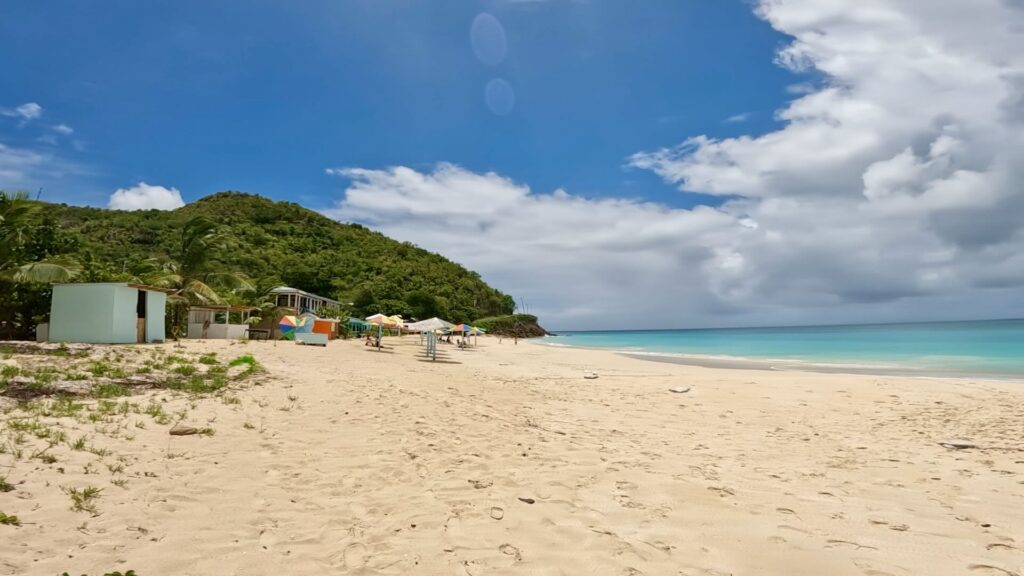
The beach is famous for its striking contrast of brilliant white sand against deep, vivid turquoise waters. Because it lacks large-scale hotel developments, the shoreline feels remarkably spacious, though it remains easily accessible via the main coastal road from Jolly Harbour, which is only a five-minute drive away.
The water at Darkwood is generally calm, making it excellent for swimming, though it drops off more quickly than at Dickenson Bay.

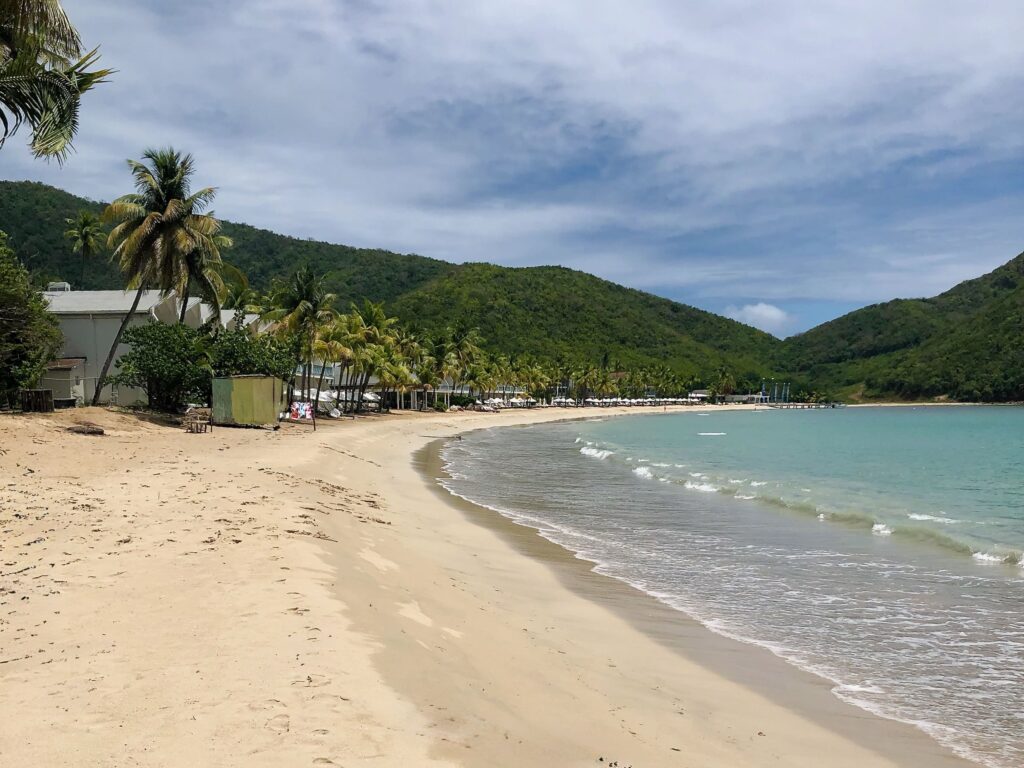
7. Carlisle Bay Beach
Situated on the south coast of Antigua near the village of Old Road, Carlisle Bay is a horseshoe-shaped sanctuary known for its profound tranquility and lush, tropical surroundings. Unlike the flatter northern coast, this bay is framed by a dramatic backdrop of rainforest-clad hills and volcanic topography, which shields the area from prevailing trade winds. This geographic positioning results in some of the island’s calmest, most glass-like waters, making it a premier destination for long-distance swimming and paddleboarding.
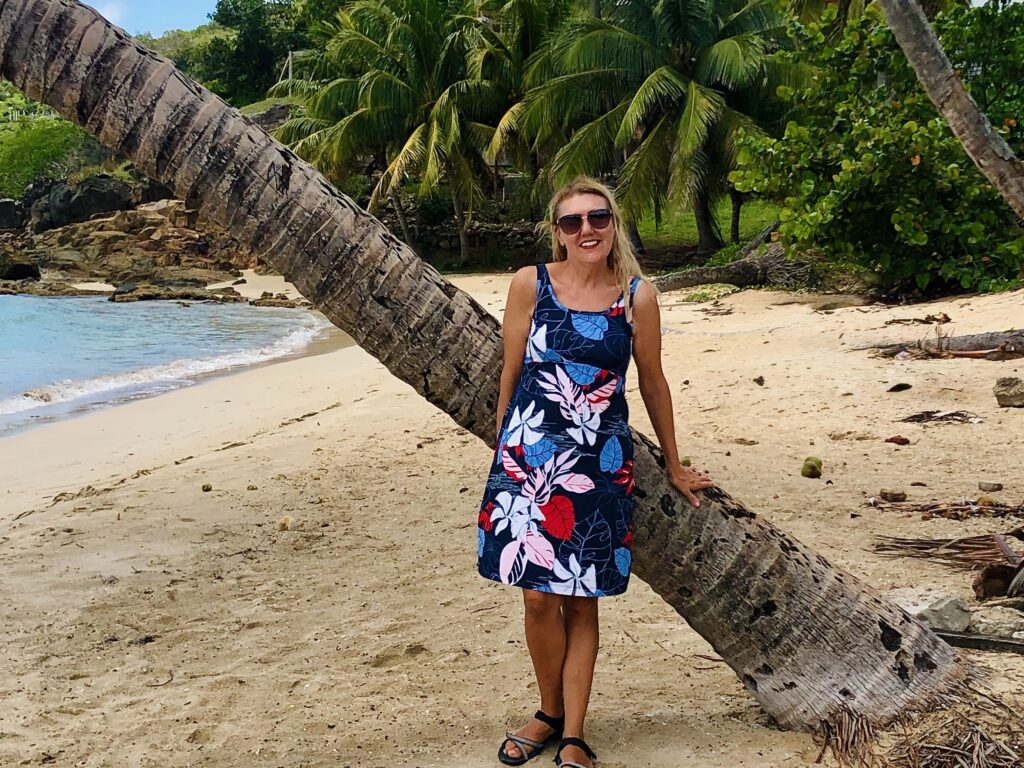
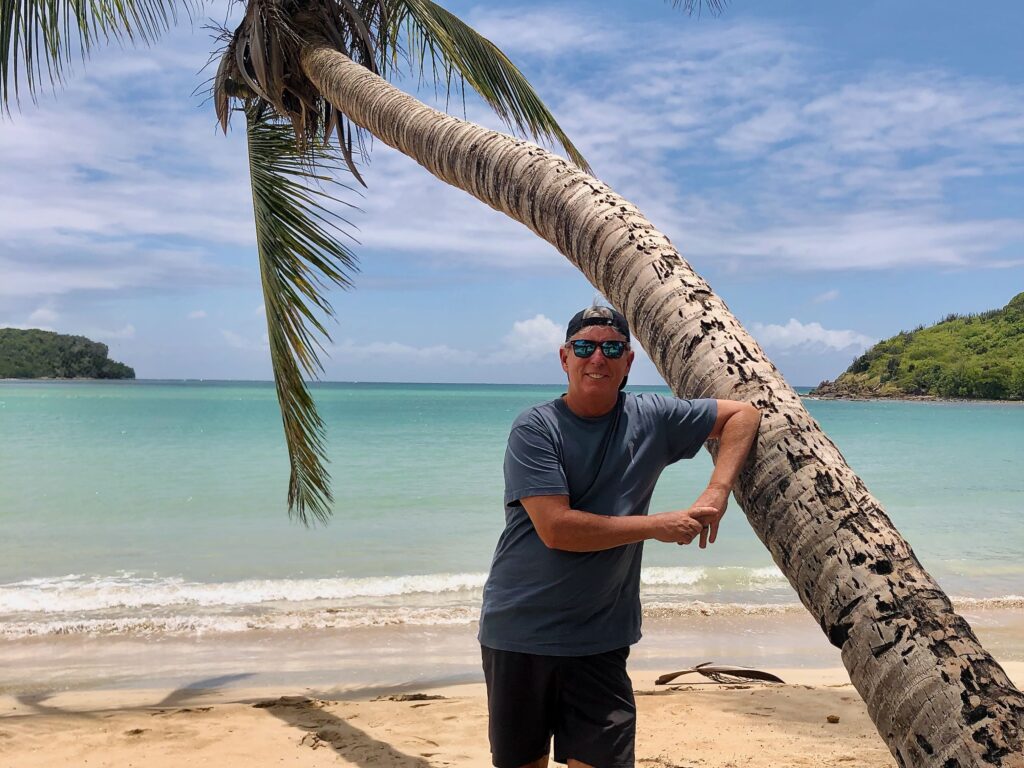
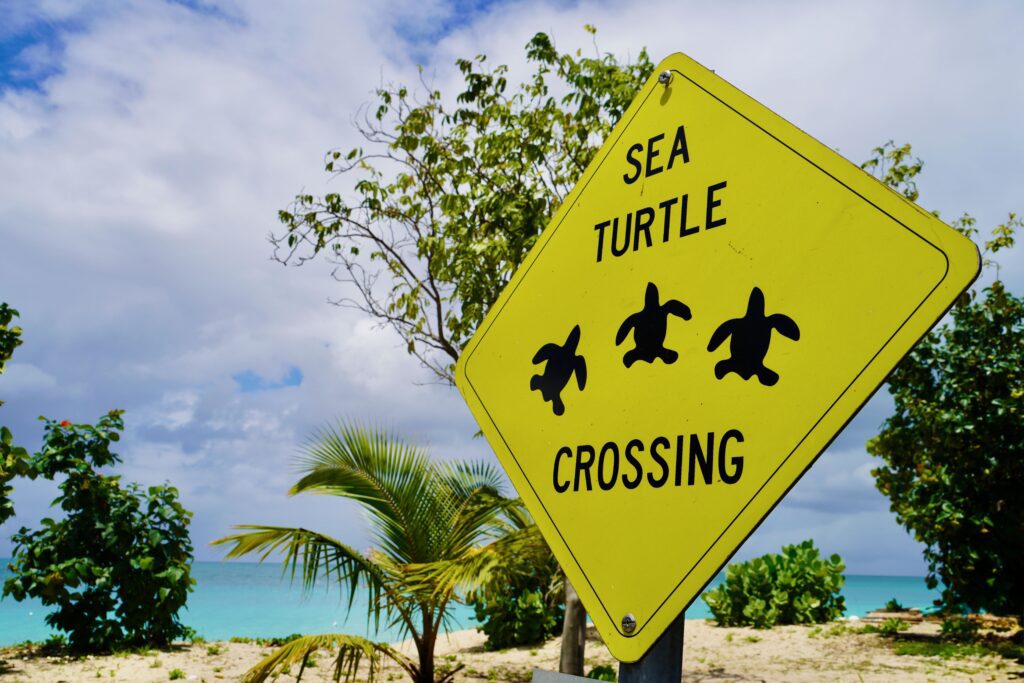
The beach itself consists of soft, pale sand shaded by a dense grove of coconut palms. It is particularly noted for its underwater clarity; a reef system on the eastern edge of the bay allows for excellent snorkeling directly from the shore, where sea turtles and rays are frequently spotted. While the ultra-luxury Carlisle Bay Resort occupies much of the beachfront, the sand remains accessible to the public. Historically, the area is linked to the 17th-century influence of the Carlisle family, and its secluded nature makes it one of the few places on the island where the rainforest literally meets the Caribbean Sea.
8. Roadside Livestock
Raising livestock in Antigua is a critical component of the island’s agricultural sector, characterized by smallholder farming and a focus on climate-resilient breeds. The industry primarily consists of sheep, goats, cattle, and pigs, with poultry production being the most commercially organized.
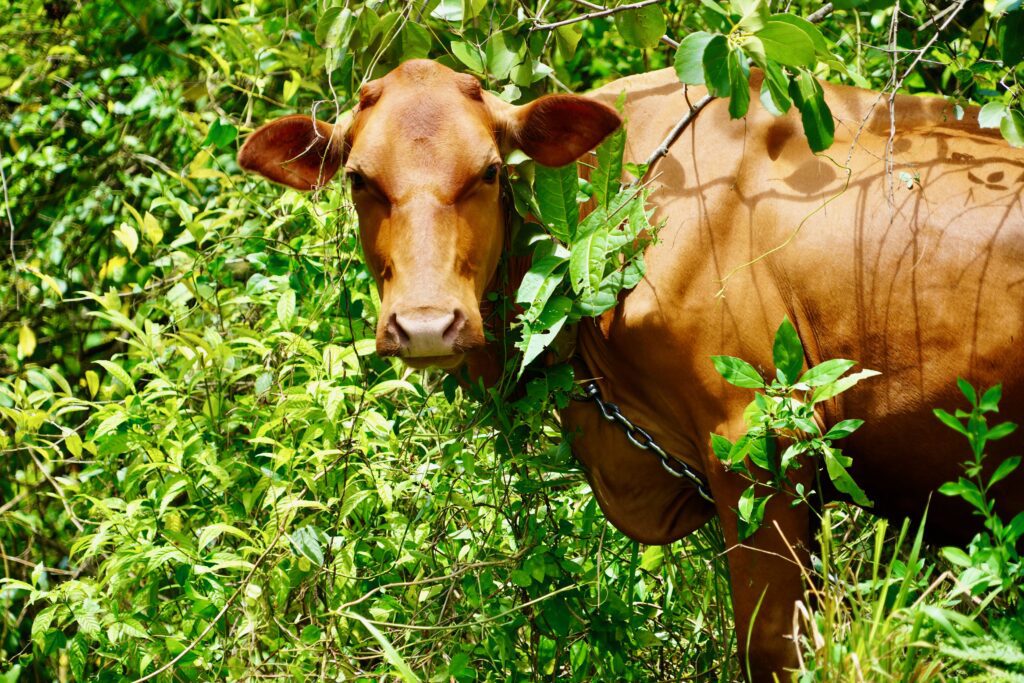
Cattle farming typically involves the Senepol or Creole breeds, valued for their heat tolerance and ability to maintain weight on native grasses.
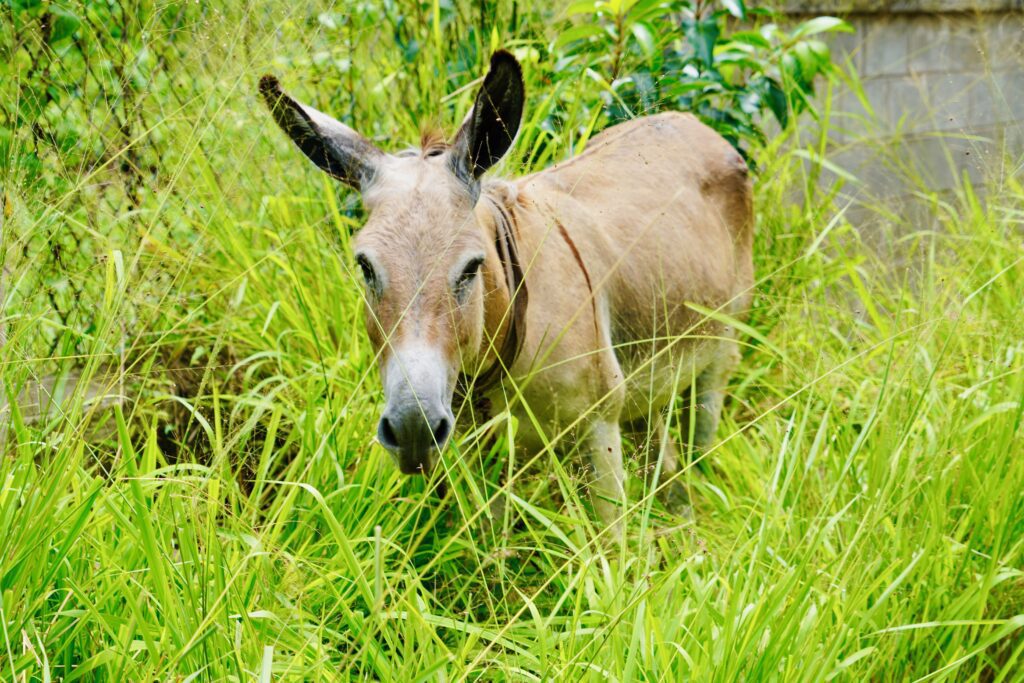
We ran across (and almost into)this herd one day:
Cattle…
…and donkeys
Other Memories
Other Things to Do in Antigua and Barbuda
The Frigate Bird Sanctuary (Barbuda)
Stingray City
Devil’s Bridge
Fig Tree Studio Art Gallery
Betty’s Hope
Where We Ate
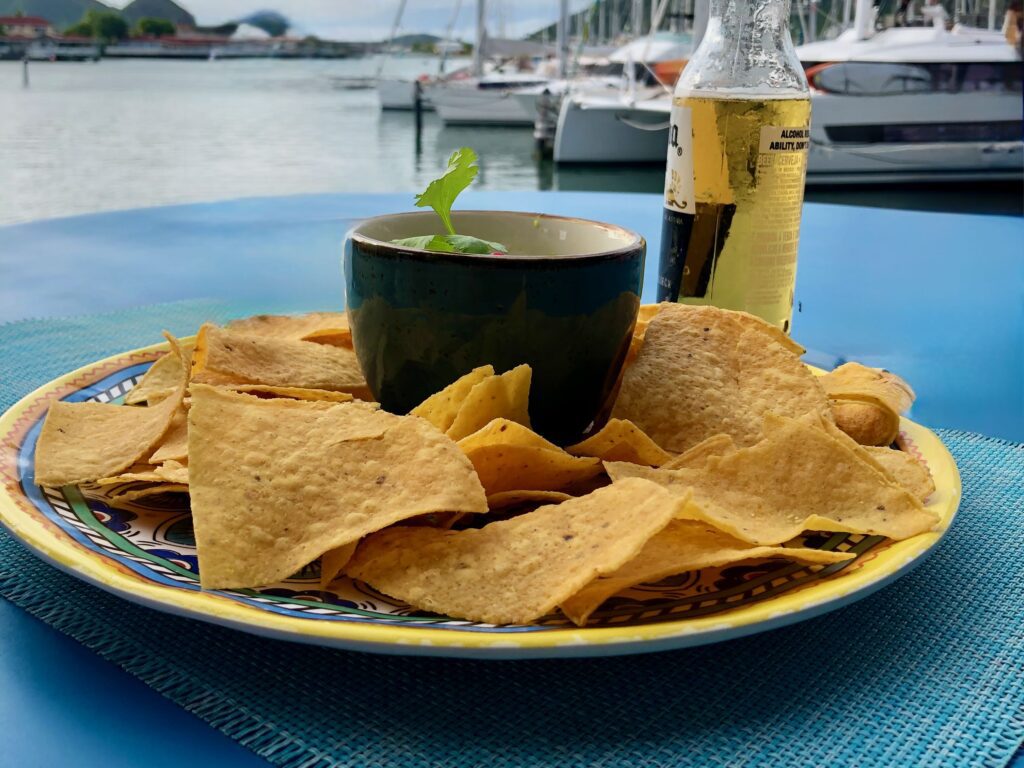
La Cantina
We ate at La Cantina a lot, since it was near our anchorage. Being Tex-Mex fanatics, we loved it.

Shopping
Jolly Harbour offers a specialized shopping experience centered around the cruising community.
The heart of the commercial activity is the Jolly Harbour Commercial Centre. Its anchor is the Epicurian Fine Foods & Pharmacy, widely considered the most comprehensive supermarket on the island. It specializes in international imports, catering to the specific culinary preferences of global sailors and long-term expats, offering everything from European cheeses to premium wines and fresh local produce.

Across from Epicurian is this local vendor. We love supporting locals! She taught us how to cook root vegetables.

Did You Know? The Antigua Black Pineapple is so sweet because of the island’s unique soil acidity and lower-than-average rainfall. It is so delicate that it is rarely exported, making it a “must-try” local delicacy.

Surrounding the marina, you will find a curated selection of boutique shops and service providers. These include:
- Resort Wear & Swimwear: High-end beach fashion and sailing attire.
- Art Galleries: Featuring Caribbean-inspired paintings and local crafts.
The atmosphere is distinctly Mediterranean-meets-Caribbean, with open-air storefronts and boardwalks that allow shoppers to move easily between retail therapy and waterfront dining. It is the premier destination for those seeking quality over quantity in a relaxed, nautical setting.
But the best part? A well-stocked Budget Marine.

Accommodations
Accommodations on Antigua are as diverse as its 365 beaches, ranging from ultra-exclusive private islands to historic boutique inns. The island is particularly famous for its high-end all-inclusive resorts, many of which are situated on the west and south coasts to capture the calmest waters and best sunsets.
Luxury & Boutique Stays
For elite privacy, Jumby Bay Island offers a car-free experience on a 300-acre private island accessible only by boat. On the main island, properties like Hermitage Bay and Carlisle Bay provide “barefoot luxury,” focusing on secluded suites with plunge pools and farm-to-table dining. Those seeking historical charm often gravitate toward English Harbour, where the Admiral’s Inn and Copper and Lumber Store Hotel offer rooms within restored 18th-century naval buildings at Nelson’s Dockyard.
Villa Rentals & Self-Catering
Self-catering is a massive sector, particularly in Jolly Harbour. As the Eastern Caribbean’s largest marina community, it features hundreds of waterfront villas (villas like Sugarhill or Villa Lazy Daze) that allow guests to dock boats directly at their doorstep. These are ideal for long-term stays and families who prefer the flexibility of a private kitchen and proximity to the island’s largest supermarket.
Accommodation Snapshot
| Category | Notable Examples | Best For |
| Ultra-Luxury | Jumby Bay, Hammock Cove | Total Seclusion |
| All-Inclusive | Royalton Antigua, Galley Bay | Stress-free Planning |
| Historic | The Inn at English Harbour | Culture & Sailing |
| Residential | Jolly Harbour Villas | Boaters & Families |
| Adults-Only | COCOS Hotel, Keyonna Beach | Couples & Honeymoons |
Getting There
Reaching Antigua is primarily via V.C. Bird International Airport (ANU), a major regional hub located at the northeast corner of the island. It serves as a gateway for both international long-haul flights and inter-island hops.
By Air
The island is exceptionally well-connected with non-stop service from major global cities:
- United States: Daily flights from Miami and Charlotte (American), New York (JetBlue), and Atlanta (Delta).
- United Kingdom: Frequent direct service from London Heathrow (Virgin Atlantic) and London Gatwick (British Airways).
- Canada: Direct flights from Toronto (Air Canada and WestJet).
- Regional: Carriers like Winair, LIAT20, and interCaribbean Airways provide vital links to neighboring islands like St. Maarten, Barbados, and Puerto Rico.
By Sea
As a premier maritime destination, Antigua offers several ports of entry:
- Cruise Ships: Most passengers arrive at the Antigua Cruise Port in St. John’s, which recently expanded with a fifth berth to accommodate Oasis-class vessels.
- Private Yachts: For those arriving via private vessel, legal ports of entry include Jolly Harbour, English Harbour, and Heritage Quay. Arrivals must submit a clearance request via eSeaClear and fly the yellow “Q” flag until customs and immigration procedures are complete.
- Ferries: The Barbuda Express provides a regular 90-minute connection between St. John’s and the sister island of Barbuda.
Transportation Quick Reference
| Method | Primary Entry Point | Common Carriers |
| Air | V.C. Bird International | American, BA, Virgin, JetBlue |
| Cruise | St. John’s Harbour | P&O, Celebrity, Royal Caribbean |
| Yacht | Jolly Harbour / English Harbour | Private Vessel |
| Inter-Island | St. John’s Ferry Terminal | Barbuda Express |
We sailed there on our catamaran and stayed at the Jolly Harbour anchorage.
Getting Around
Transportation in Antigua is characterized by its compact geography, where most destinations are reachable within 45 minutes. The island operates on a left-hand driving system, a legacy of its British colonial history. For independent exploration, car rentals are a primary choice. Visitors must present a valid national driver’s license and purchase a temporary Antiguian driving permit (approximately US$20) from a rental agency or a local police station.
The public transit system consists of privately owned minibuses identifiable by their yellow “BUS” license plates. These depart from two main hubs in St. John’s: the East Bus Station (serving destinations like English Harbour) and the West Bus Station (serving Jolly Harbour and western beaches). Fares are highly affordable, typically ranging from EC$2.50 to EC$5.00 (roughly US$1.00 to US$2.00). However, buses do not service the airport and typically stop running around 6:00 PM.
Taxis are ubiquitous, especially at V.C. Bird International Airport and major resorts. They operate on government-regulated fixed rates rather than meters; for example, a trip from the airport to St. John’s is roughly US$7-12, while a trip to Jolly Harbour is approximately US$30. Many taxi drivers are also certified tour guides, offering personalized island excursions at hourly rates.
We rented a car at the Jolly Harbour Marina shopping center.
There were so many potholes! We were nervous every time we bottomed out, but luckily, the car was fine.


Final Thoughts
Antigua is an island that masterfully balances the high-energy pulse of a premier sailing destination with the quiet, restorative rhythm of the “365-beach” lifestyle. From the historic heights of the Shirley Heights lookout to the serene, palm-fringed sanctuary of Carlisle Bay, the island offers a spectrum of experiences to suit every type of traveler. Whether you are navigating the sophisticated marina at Jolly Harbour or sampling the world-famous Antiguan Black Pineapple at a local market, the island’s charm lies in its diverse geography and genuine hospitality.
As you plan your departure from V.C. Bird International or set sail for your next Caribbean port, you’ll likely find that the “beach is just the beginning.” Antigua’s blend of colonial history, vibrant yachting culture, and natural beauty creates a lasting impression that transcends the typical tropical getaway. It is a place where you can find a private slice of paradise at a hidden cove one morning and join a legendary steelpan celebration by sunset. No matter how you choose to spend your time, Antigua remains a quintessential Caribbean gem that invites—and rewards—repeat visits.
Travel Notes
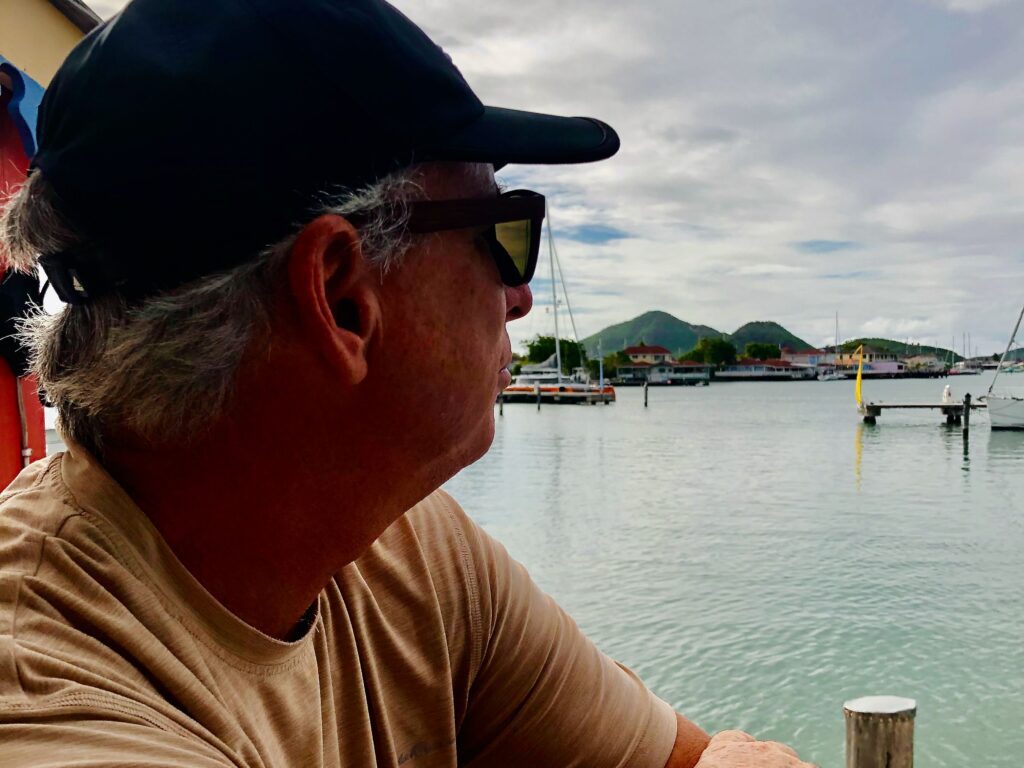
We stayed on our catamaran in this anchorage.
Cover image by Sarah Kilian.
Originally experienced in April 2024; content refreshed in March 2026.


Leave a Reply