

Some islands are protected so thoroughly that even their history is left to fend for itself. Theodore Roosevelt folded Cayo Culebrita into the Culebra National Wildlife Refuge in 1909, and more than a century later it remains almost exactly as he found it: no hotels, no shops, no roads. Just subtropical dry forest, fringing coral reef, and water so clear it reads as liquid glass.
On the island’s highest point stands a Spanish lighthouse that once guided ships through the Virgin Passage. Today it is slowly surrendering to the wind and the scrub. Visitors arrive by water taxi, charter, or private yacht, anchor off the north shore, and make the short climb to see what remains.
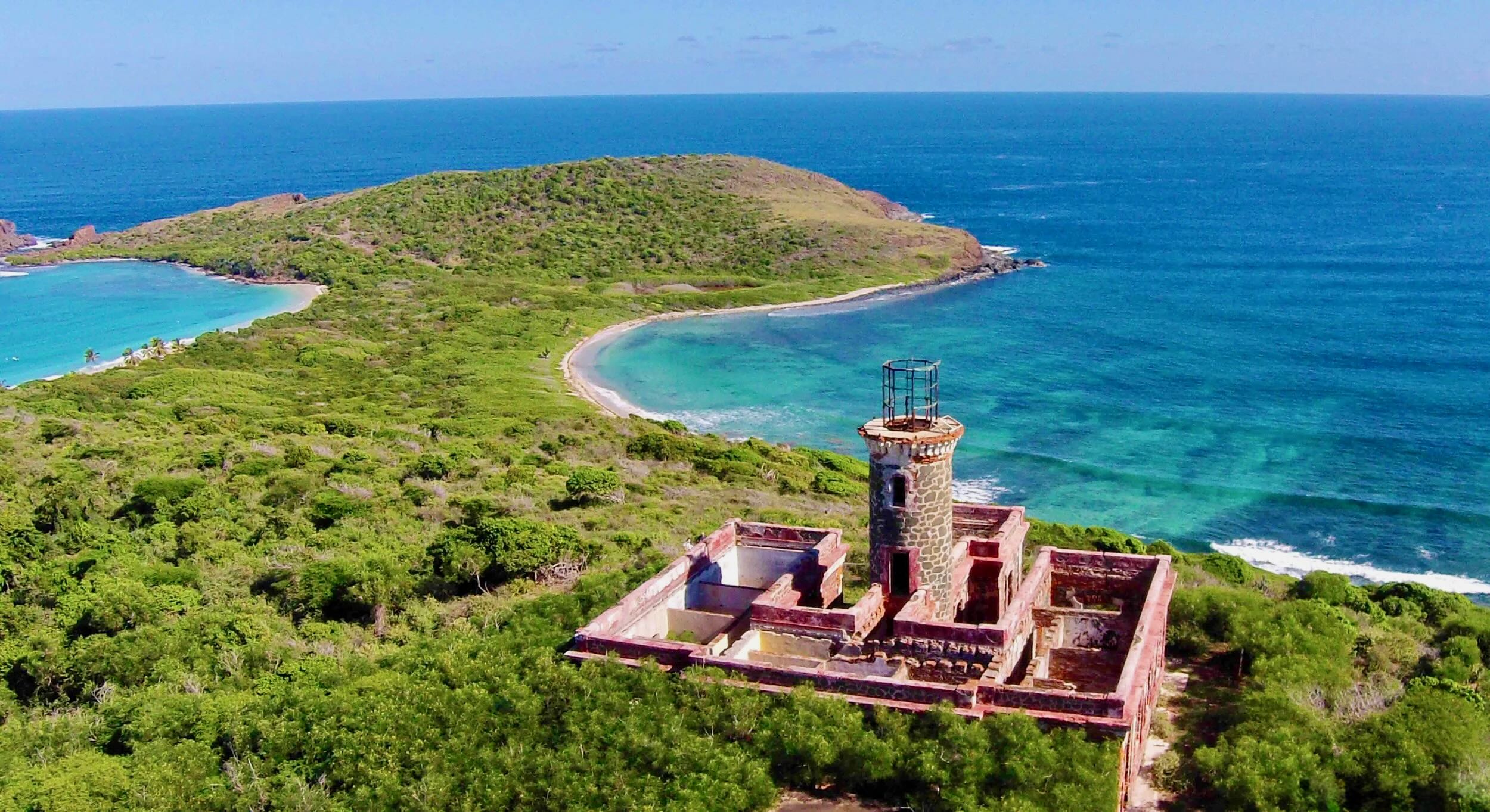
The Walk Up
The trail runs just under a mile, an easy climb that moves between patches of shade and open, sun-baked hillside. Wild goats are said to be the island’s only permanent residents, though they rarely show themselves.

The Light
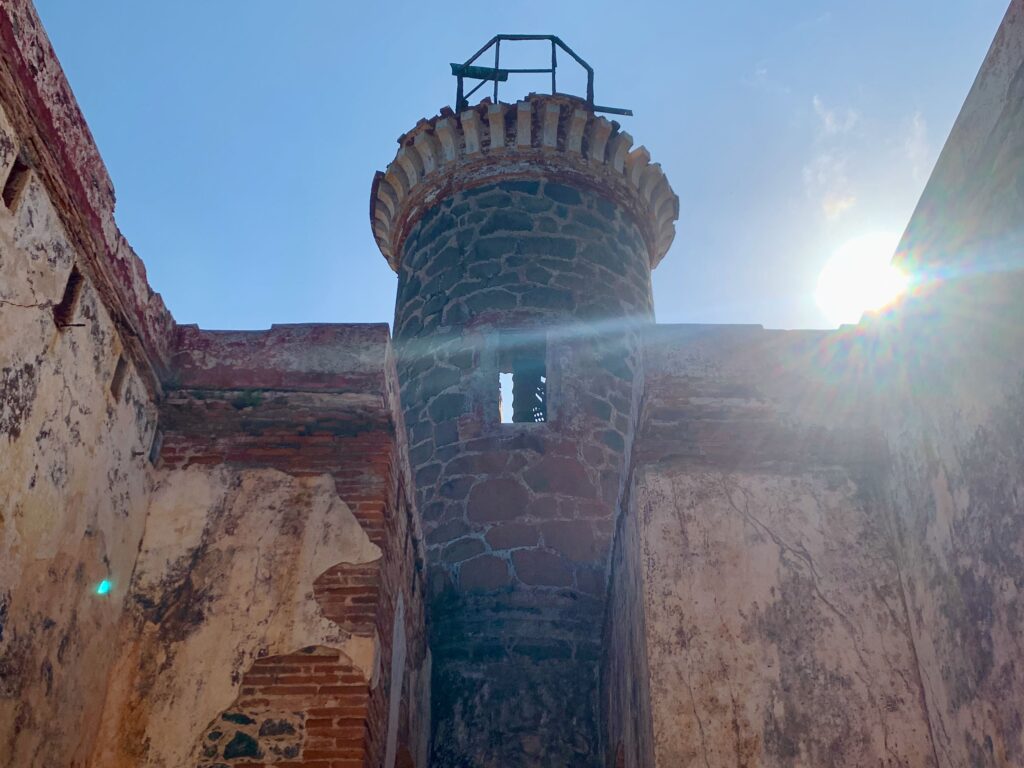

Spain built Faro de Isla de Culebrita as part of a chain of lights guarding the Virgin Passage, the shipping lane that links the Atlantic to the Caribbean. The tower rises from the center of a T-shaped stone keeper’s dwelling, and its fourth-order Fresnel lens once reached roughly 12 nautical miles out to sea.
The light was automated in 1959, extinguished for good in 1975, and replaced by a small solar beacon on a nearby steel tower. In 1981, it was added to the National Register of Historic Places. Then the hurricanes came.
What’s Left


Inside, the details of daily life still surface. Beneath the rubble lies a patterned tile floor, laid by someone who expected it to last. A few steps away, the floor is simply gone.


The Keeper’s View
Whatever the building has lost, the view is intact. This is what the keepers watched over for nearly ninety years: reef, open ocean, and the passage’s islands scattered in every direction.


A hundred and forty years ago, they built this light to bring vessels like ours home safely. Now it stands dark, and the island looks after itself.
Back to the Water
The trail descends to Playa Tortuga on the north shore, a crescent of white sand named for the green sea turtles that graze its seagrass beds and nest along its beach. Managed by the U.S. Fish and Wildlife Service, it remains entirely undeveloped.
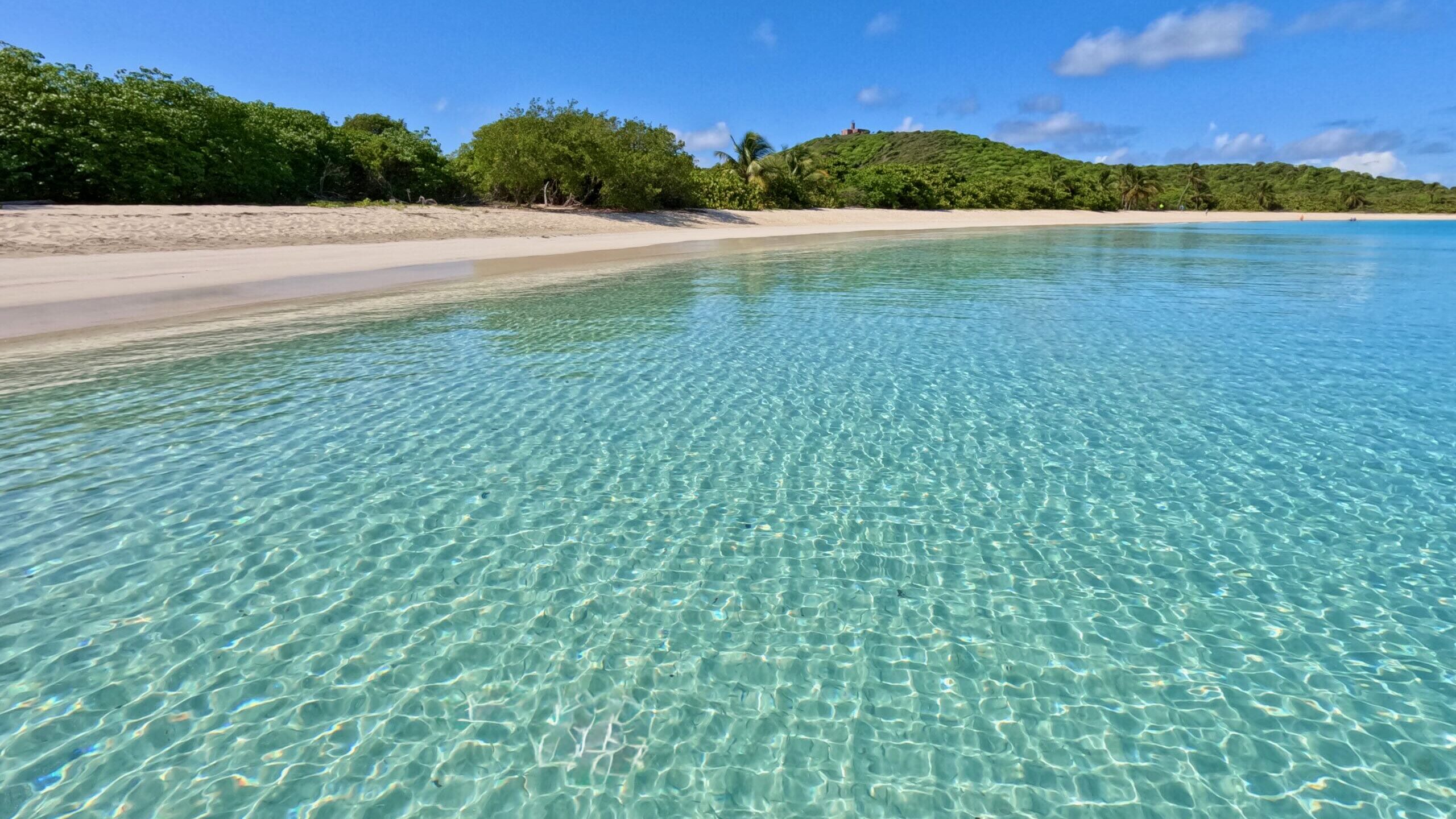
The crumbling lighthouse is a loss of heritage; the untouched beaches are a triumph of conservation. Culebrita holds both at once, offering a rare glimpse of the Caribbean before the resorts and cruise piers arrived, for anyone willing to make the extra effort to reach it.
Travel Notes
- Getting here: No flights, roads, or public ferry. Water taxis run from Dewey or Flamenco Beach on Culebra (usually $60–$100 per person round trip), or charter a boat for the day. Private boats can anchor off the north shore here.
- Getting around: On foot. No roads, no cars, no buildings besides the lighthouse.
- The trail: About 0.8 miles to the lighthouse; easy and not too steep. Bring water and shoes you can scramble in.
- The lighthouse: Unmaintained and structurally unsound. Watch your footing inside.
Originally experienced in March of 2024; content refreshed in October of 2026.
