

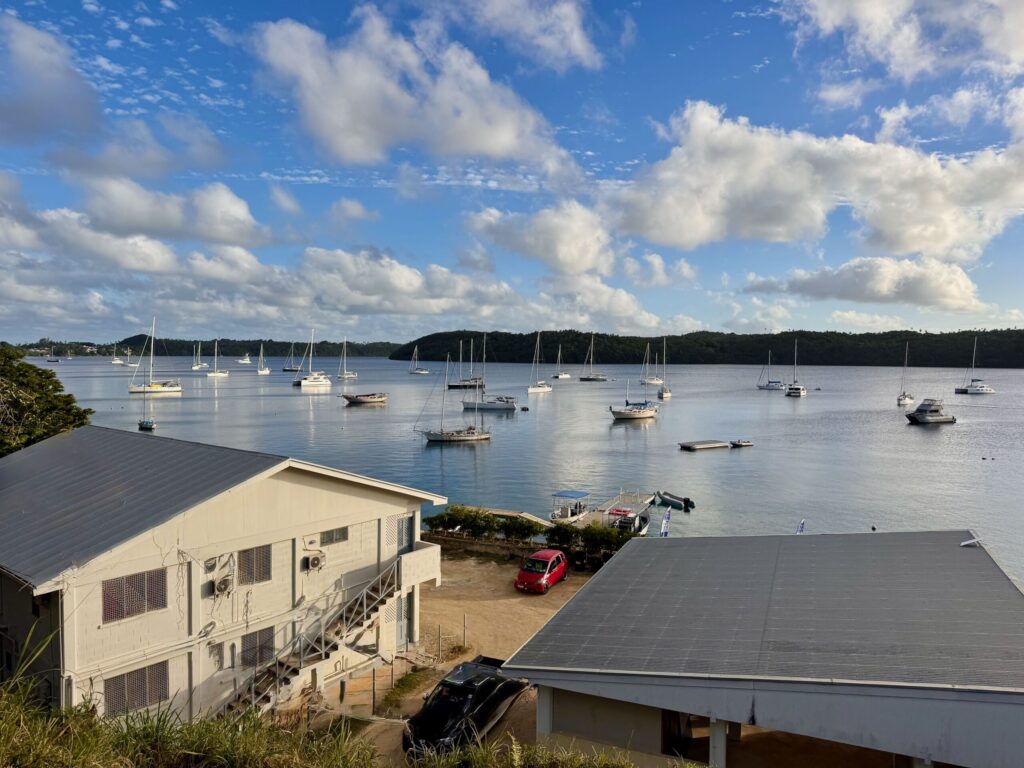
Scattered across the South Pacific roughly 175 kilometers north of Tongatapu, the Vava’u island group is one of Tonga’s four main archipelagos and arguably its most breathtaking. Made up of around 50 islands—many uninhabited, fringed with white sand, and ringed by turquoise water—Vava’u sits at the heart of the Kingdom of Tonga, the only Pacific nation never colonized by a foreign power. Its main town, Neiafu, wraps around the Port of Refuge, which is one of the most sheltered natural harbors in the South Pacific.
Vava’u’s landscape is a mix of raised coral limestone terrain, lush forest, and dramatic coastline, dotted with sea caves, blowholes, and hidden lagoons accessible only by boat. About 5,000 people live here.
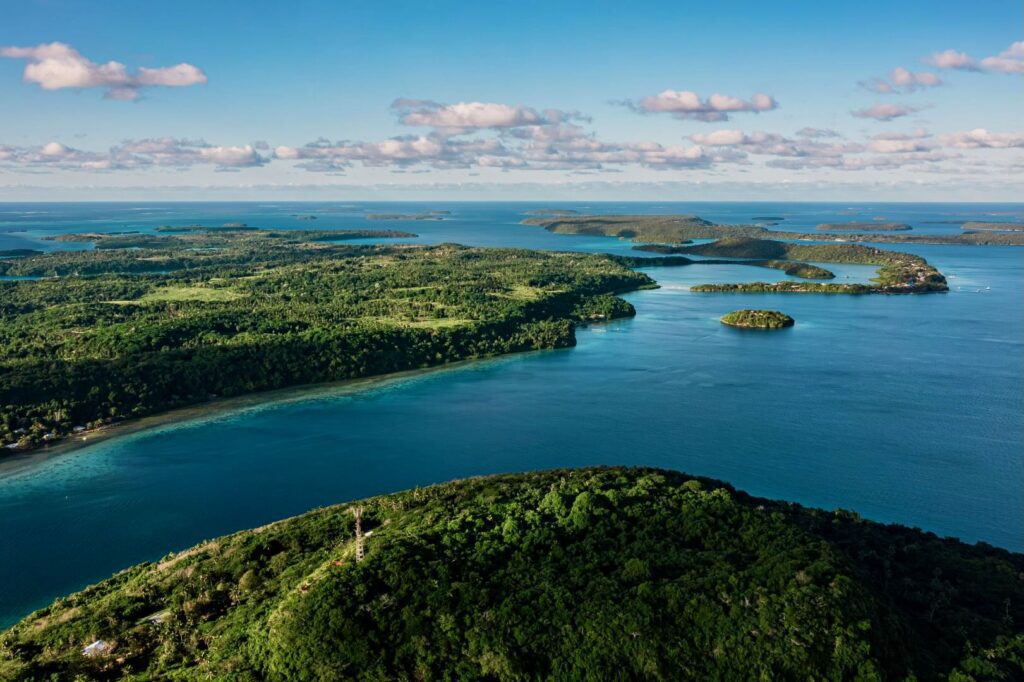
Vava’u’s history stretches back centuries, long before European contact, as part of the wider Tongan maritime kingdom that once extended its influence across Pacific waters.
Vava’u was our first stop in the Kingdom of Tonga, and we found it to be lush, topographically interesting, and culturally rich.
Before coming here, we were very uneasy about one thing: the customs dock (fisherman’s wharf), which we were told we must dock on while clearing in. Made of concrete with rusty barbs protruding from it, it is notoriously rough and can cause significant damage to the side of a boat. We had 11 fenders lining the starboard side of our boat as we entered the harbor.
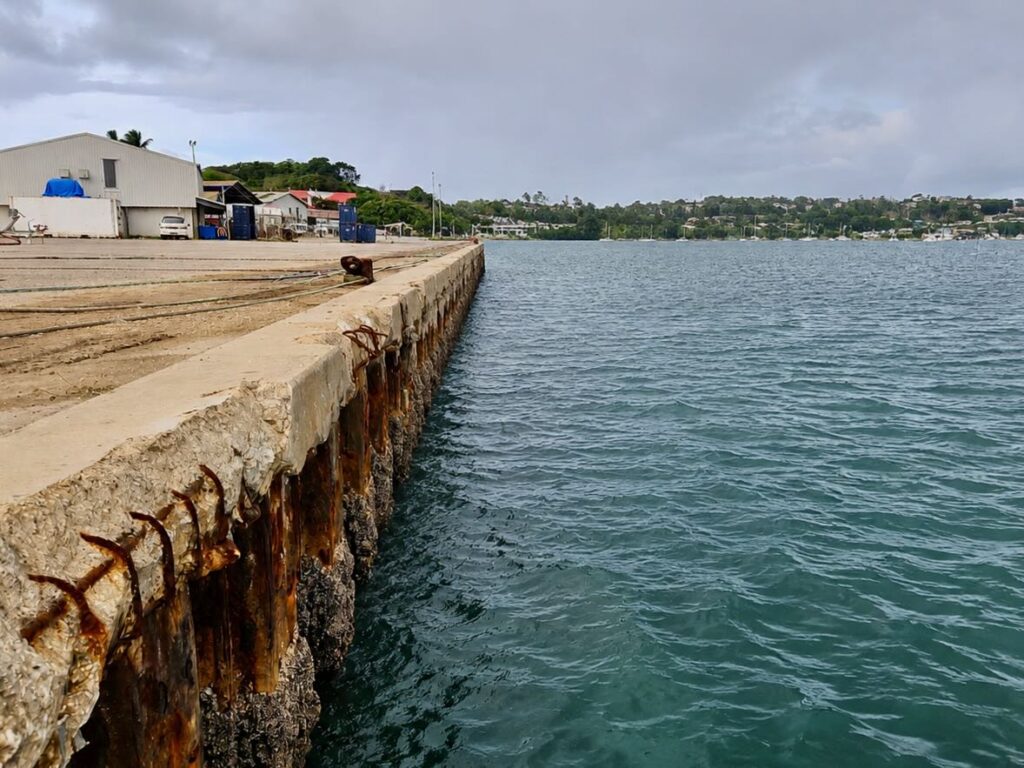
Luckily for us, though, they allowed us to anchor near the dock and ferry the customs staff to our boat with our dinghy. What a relief!
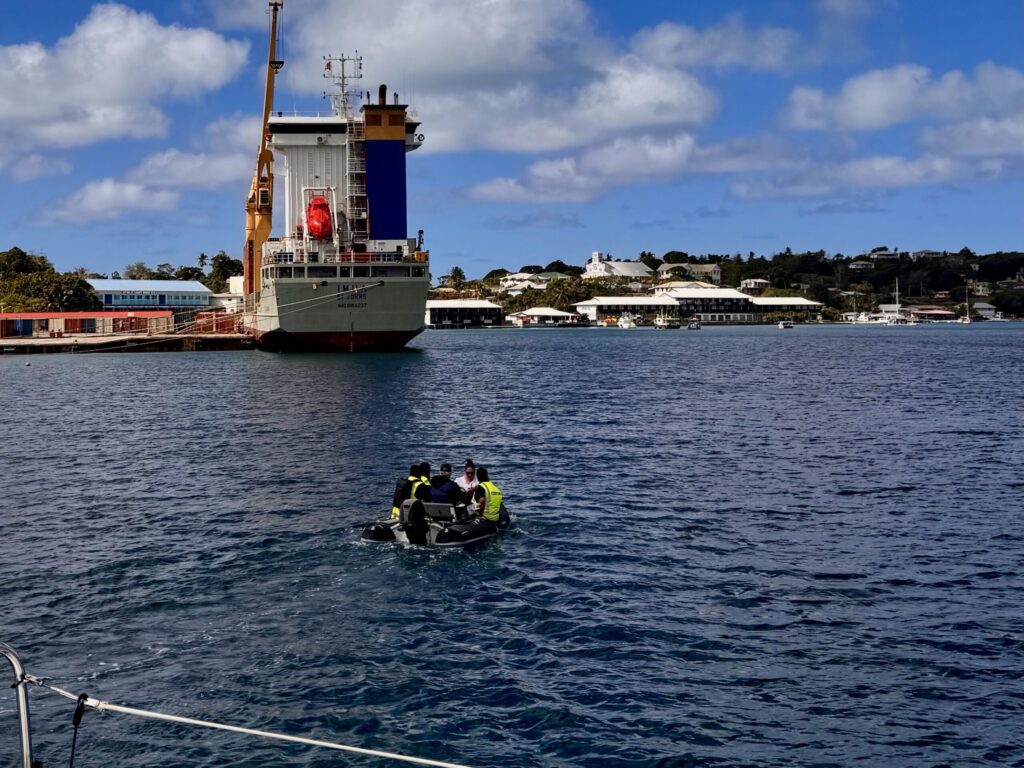
Now on to our top highlights from our time in Vava’u.
Vava’u, Tonga Highlights
1. Humpback Whales
Each year between July and October, humpback whales migrate from Antarctic feeding grounds to the warm waters of Tonga to breed and give birth. Mothers and newborn calves linger in the sheltered lagoons around Vava’u, Ha’apai, and Tongatapu, where calves nurse and build strength before the long journey south. Tonga is one of the few places in the world where swimming with humpback whales is legally permitted, so this is a major draw for a visit to Tonga.
We did our whale swim with Dolphin Pacific Diving. We can’t recommend them highly enough—they were friendly and knowledgeable, and even though they had each done hundreds of whale swims, they were just as excited about the whales as we were. There were only four guests on the boat in total, plus three guides, which meant some serious quality time with the whales.
We left at the crack of dawn, before the other boats, so we got first choice of locations for our day.
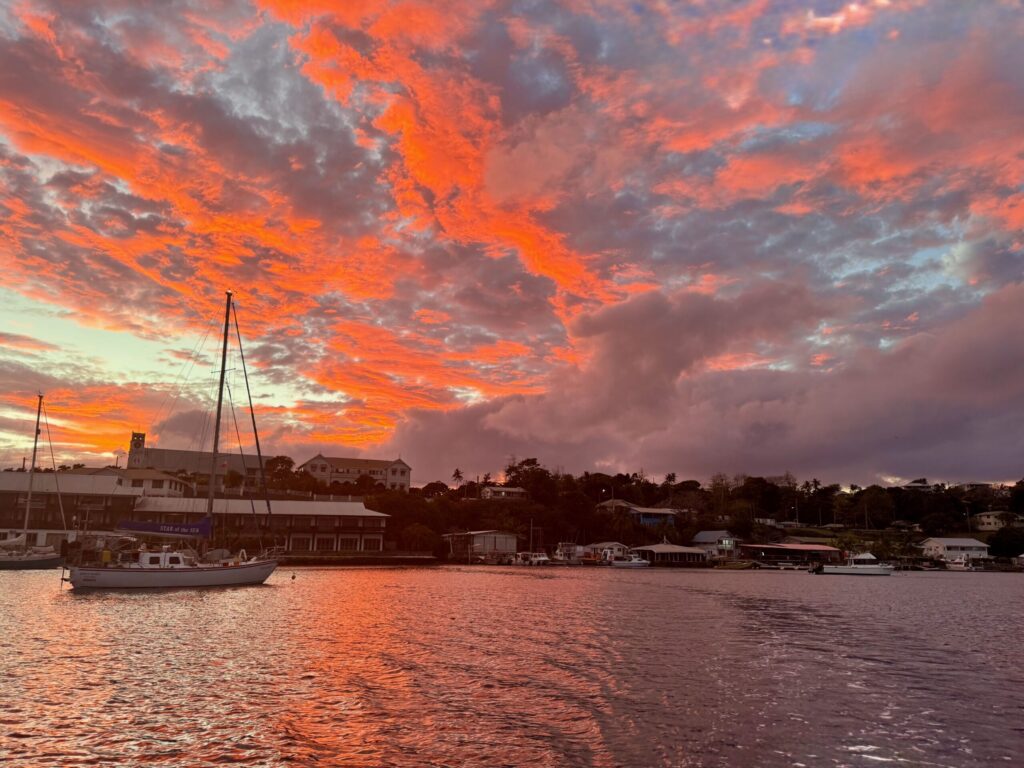
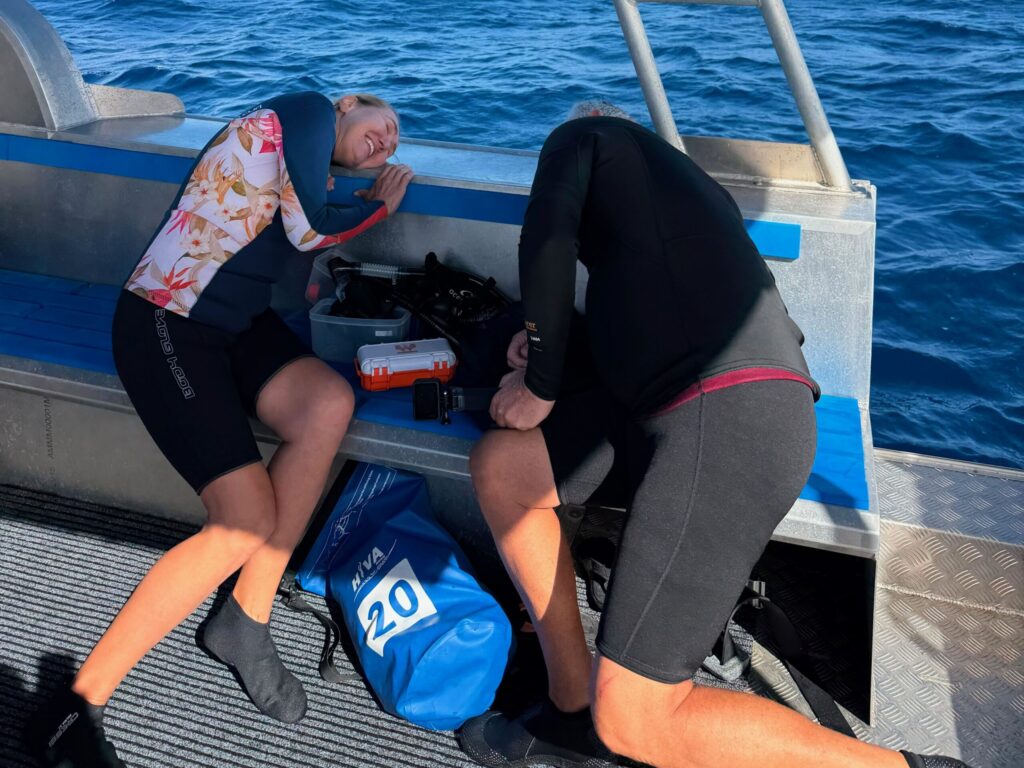
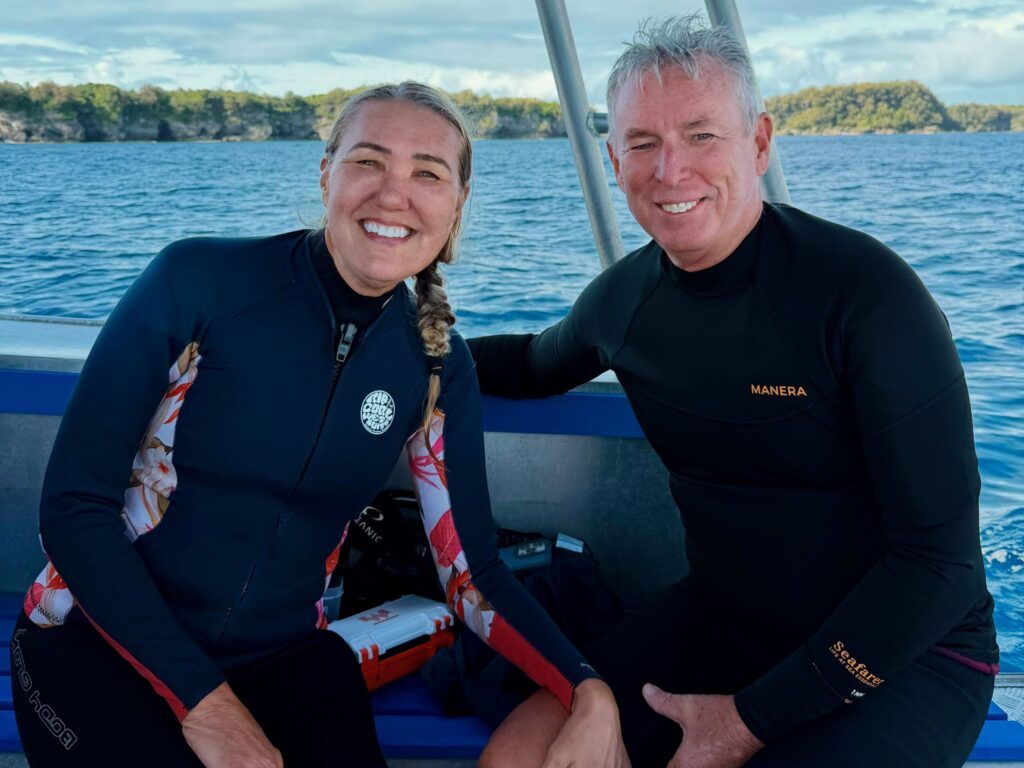
It was chilly, but we didn’t care. We cheerfully layered on multiple wetsuits.

The driver was like a whale whisperer; he found them everywhere we went. At one location, there were 11 groups of whales all at once. Amazing!
In Tonga, only four swimmers are allowed in the water with the whales at a time. For this, Roy and I got to swim with a fantastic guide, Eva, and the owner, Alistair. Because there were so few of us on the boat, it was a very personal experience, and both groups got multiple swims.
The first four pictures below are courtesy of Eva, who had a massive professional camera with her.
We swam with three whales that day at two different sites. Each whale peacefully drifted below us, aware of our presence yet graciously sharing their space with us. Then one by one, each rose to the surface and dove back down. As they ascended, we were so close it felt as if they were going to bump into us. It was quite surreal.


They don’t look very large in these photos, but they were huge. No surprise, since some humpbacks can reach up to 50 feet in length.


Here’s some footage from our GoPro:
Here’s a version of the video with the sound.
One of the whales at the first site was a “singer” whale. Males are known for their complex songs, believed to play a role in mating and communication during the breeding season. We could hear him through the metal surface of the boat:
The whole experience was thorough and unhurried. It was a bucket list day, to say the least.
As a bonus, after mingling with the whales, Alistair took us to Mariner’s Cave for some lunch. See #4 below for more on that.
2. Tongan Umu Feast
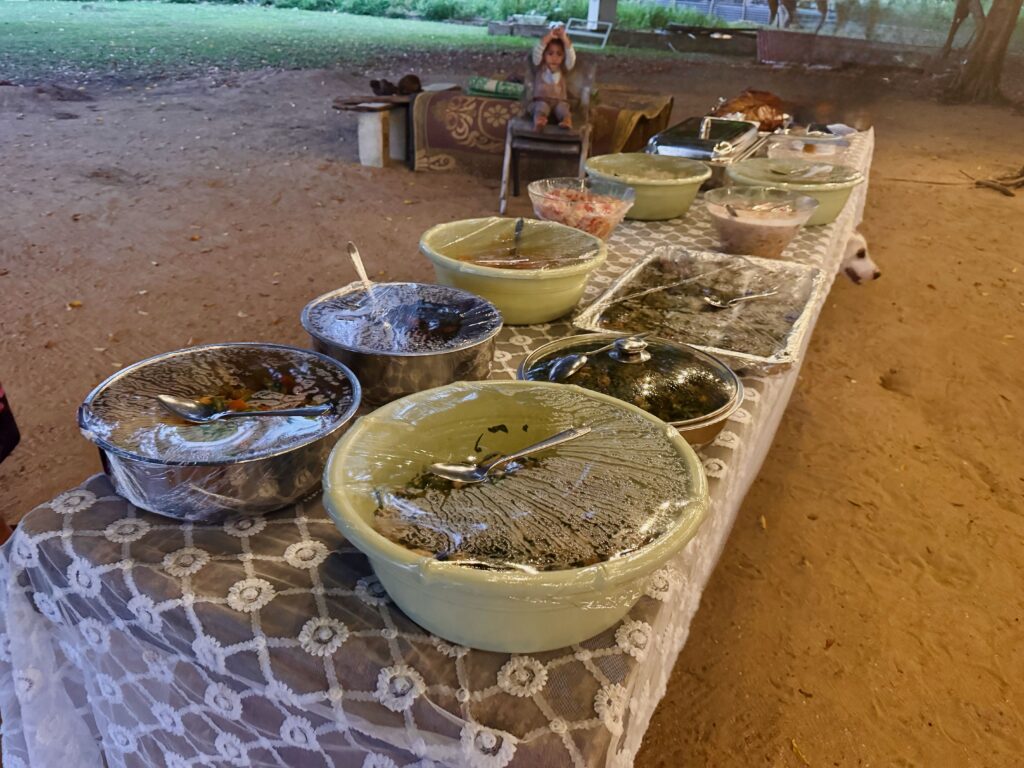
In Tongan culture, an ‘umu is a centuries-old culinary tradition centered around an underground earth oven. The preparation begins by heating volcanic rocks over a wood fire inside a pit. Food staples—such as yams, taro, plantains, pork, chicken, and lū (meat wrapped in taro leaves with coconut cream)—are encased in banana leaves and placed directly onto the hot stones. The oven is covered with leaves and earth to trap steam and smoke, slow-cooking the meal for several hours. Typically prepared for Sunday family gatherings, weddings, and ceremonial feasts, the ‘umu remains a vital cornerstone of Tongan community life.
We got to partake in an ‘umu with a local family who lives all by themselves on a small island called Vaka’eitu.
To see how the earth oven is built and used during community gatherings, check out this video about Tongan Umu Underground Oven Cooking.
All of the guests that evening were fellow cruisers, totaling about 30 in all. We had a great time eating, laughing, and chatting with them.
After the meal, family members performed traditional Tongan dances for us. It started with one dancer:

Later, a song with two dancers:

A subsequent song included all three dancers:
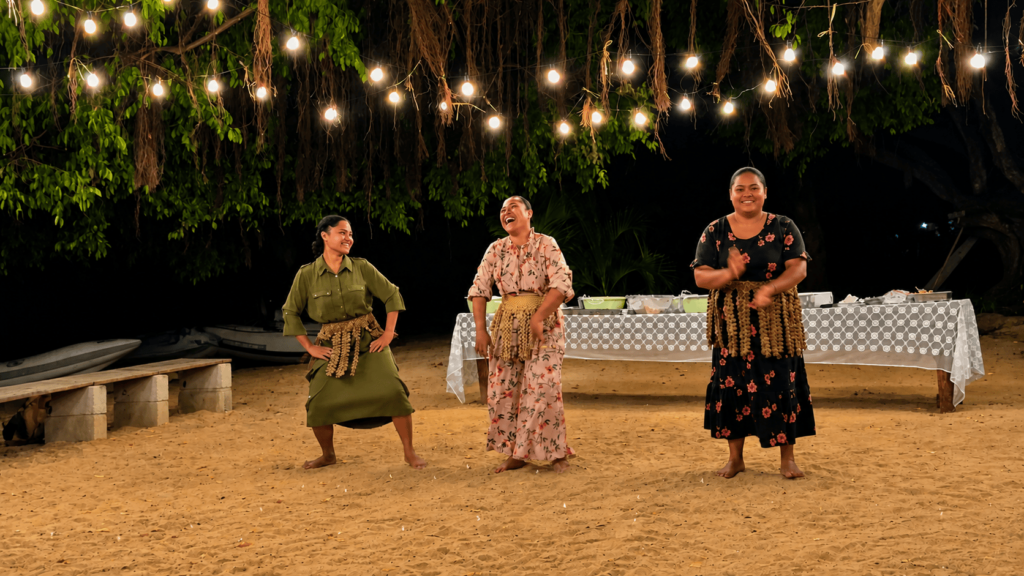
After the dance demonstration, we got to join in.

Our dancing, of course, wasn’t as eloquent.
And then there was this little guy. Throughout the night he flitted from group to group, attempting to dominate our attention.
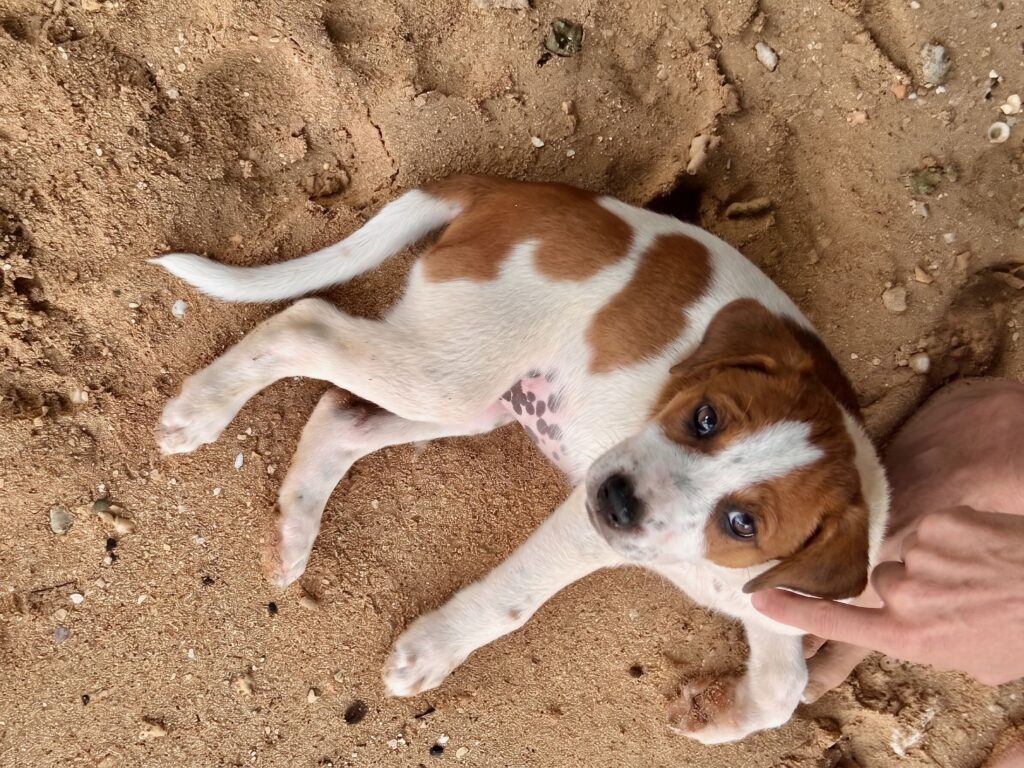
It was a fun and culturally rich evening.
3. Tongan Dancing Lesson
In Tongan culture, dance is far more than entertainment; it is a sacred embodiment of history, genealogy, and communal identity. Dancers use intricate hand gestures (haka) to translate poetic lyrics into visual art, honoring monarchs and ancient lineage. Through dance, Tongans preserve their oral history, celebrate community bonds, and keep their heritage dynamically alive across all generations.
Anna, a daughter of our ‘umu feast hosts, offers dancing lessons. I just had to take one!
The day after the feast, two of us cruisers made our way back to their home and were treated to a dance class. It was a personal and interesting experience as she explained Tongan dance traditions and the significance of different hand gestures.

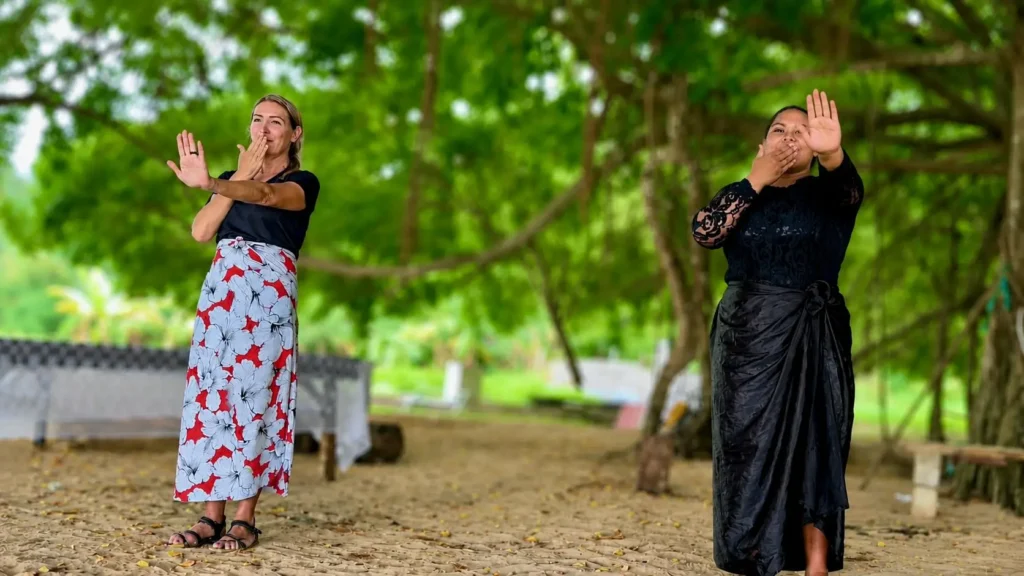
Here are the lyrics to the dance we learned:
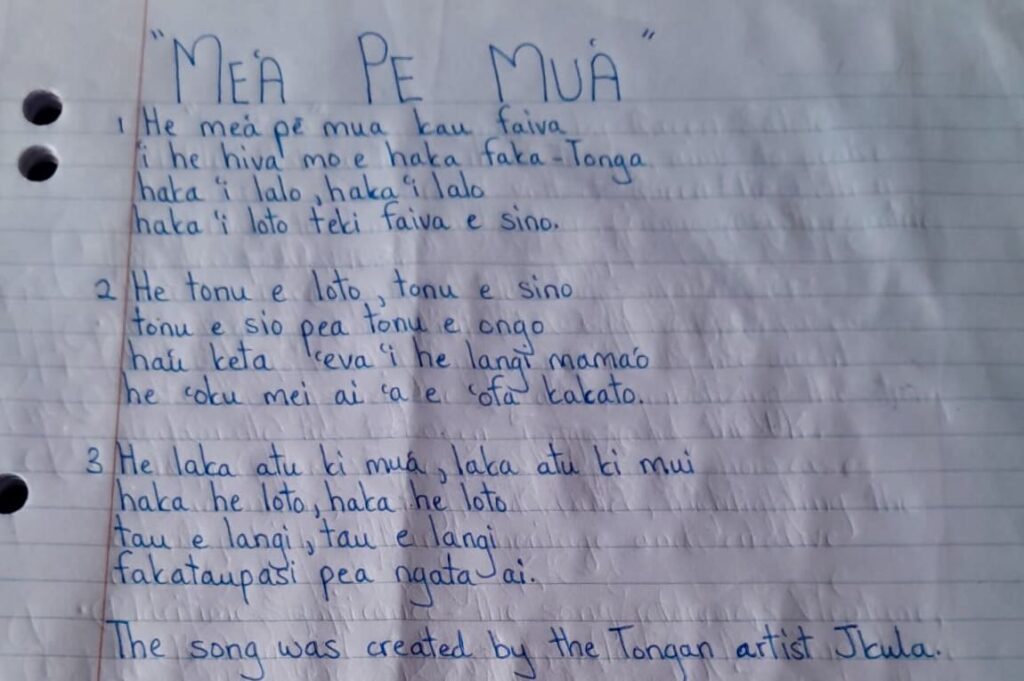

We had a great time.
4. Mariner’s Cave
Mariner’s Cave is a legendary marine cavern accessible only by diving two meters underwater through a dark tunnel. You can’t see the entrance from above the waterline, only below it.
Inside, the rhythmic compression of ocean waves against trapped air causes a thick white mist to instantly form and dissipate with every swell. Named after William Mariner, who recorded local Tongan lore following an 1806 shipwreck, this subterranean sanctuary is an intriguing South Pacific wonder.
Here are a few more photos from Eva’s amazing camera:


5. Mount Talau
Rising to about 131 meters, Mount Talau is a small mountain located on the western side of Vava’u’s main island. It is a protected area—Mount Talau National Park—one of Tonga’s designated conservation zones.
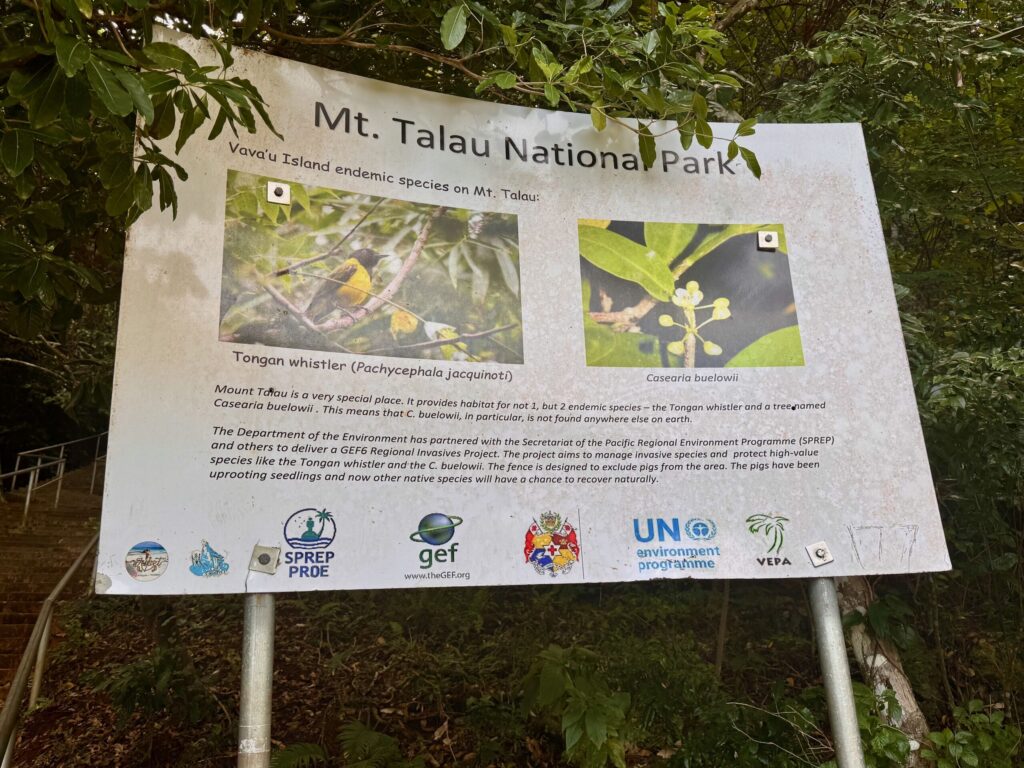
The park serves as an ecological sanctuary for rare endemic flora and fauna, including the Tongan Whistler, flying fox, and the elusive moko, a local lizard species. Most notably, though, the mountain is the only place in the world where the rare Casearia buelowii plant grows.
From the summit, we were rewarded with panoramic views over Neiafu, the Port of Refuge harbor, and the scattered islands of the Vava’u group via two viewing platforms.

This mountain is steeped in legend. It goes something like this: some Samoan tevolo (spirit demons) came to Vava’u by night to steal the flat top of Mount Talau, planning to carry it back to Samoa so they could see across the whole world without obstruction. Armed with a bush knife, they sliced off the summit. The people of Vava’u, desperate to stop them, crowed like roosters to trick the tevolo into thinking dawn was breaking; however, it didn’t work, and the thieves kept cutting.
As a last resort, the Vava’uans called on a cunning tevolo named Tafakula from the island of ‘Eua. She rushed to the eastern side of the island and, in a memorably undignified maneuver, bent over and exposed her buttocks, and the Samoan tevolo mistook its glow for the rising sun. Believing daylight had arrived, the Samoan spirits fled — leaving the mountain’s severed top behind, which is why Mount Talau still has its distinctive flat crown today.
6. Kilikilitefua Wall
Kilikilitefua Wall is a historical site located south of Makave village. Roughly 400 years ago, it served as a living census for the royal family, with a rock added each time a male family member was born, specifically recording the birth of the firstborn son of every family.
So many volcanic rocks accumulated over time that they formed an entire wall.
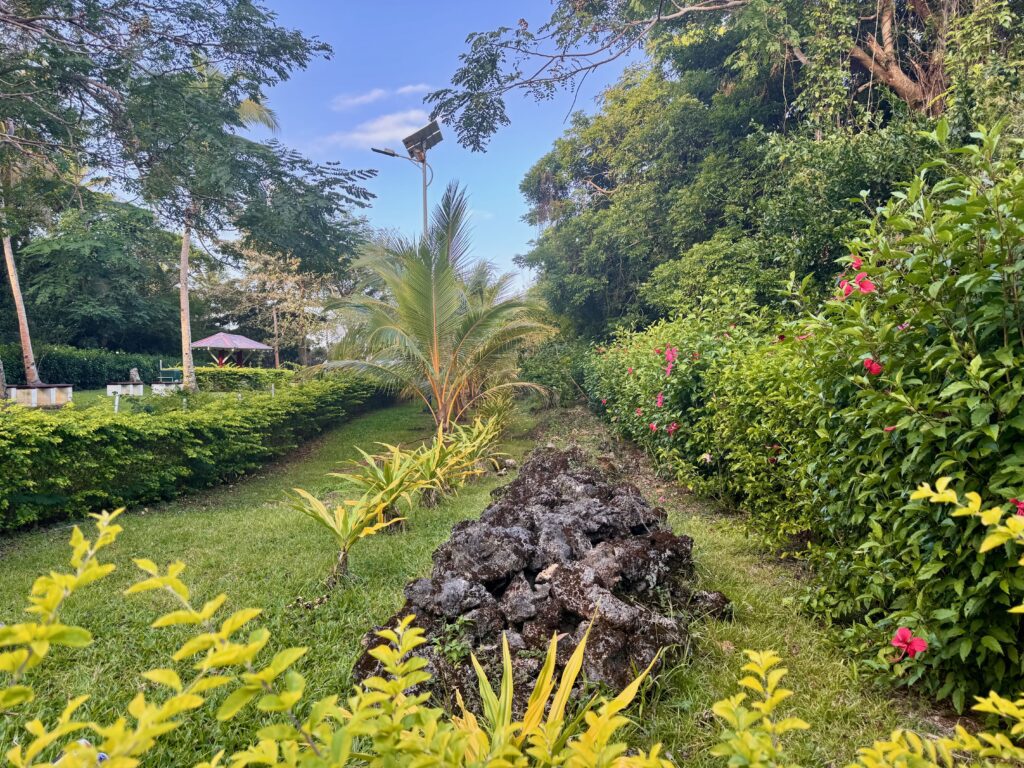
Locals say the wall was once much larger, before residents began removing stones for their own construction projects. Today it remains one of Vava’u’s lesser-visited but historically significant sites.

7. Pigs
Pigs, or puaka, are one of the most common sights on Vava’u, roaming freely along roadsides, gardens, cemeteries, and beaches. Captain Cook introduced them to Tonga in the 1770s, and they have since become deeply woven into Tongan life.
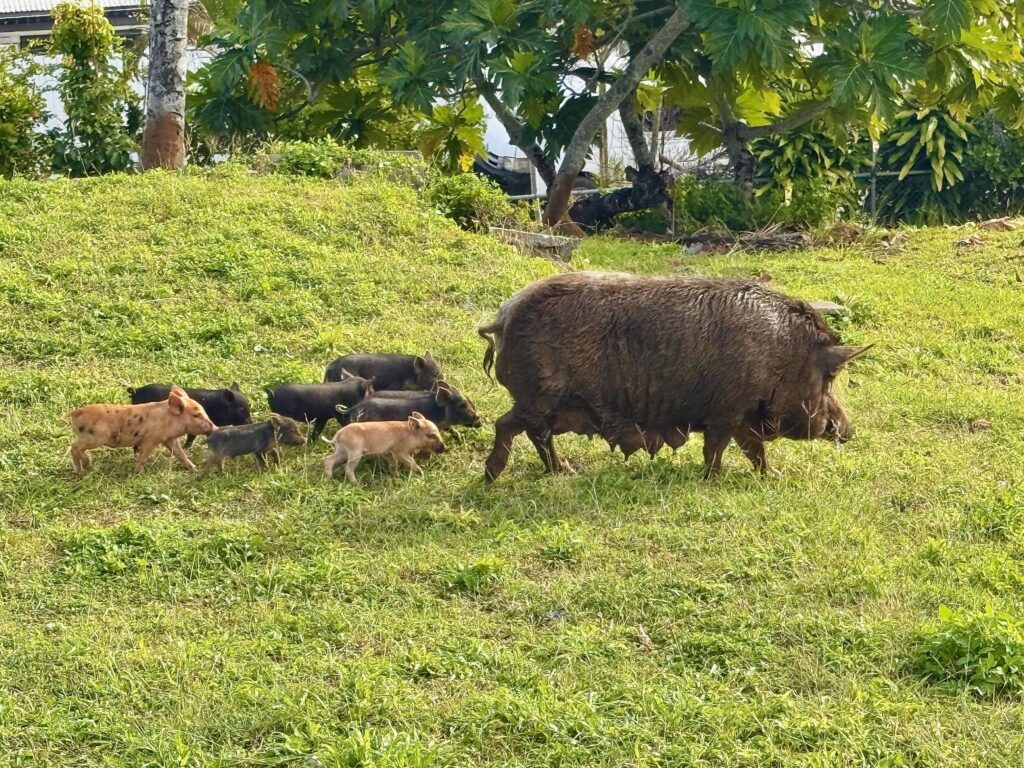
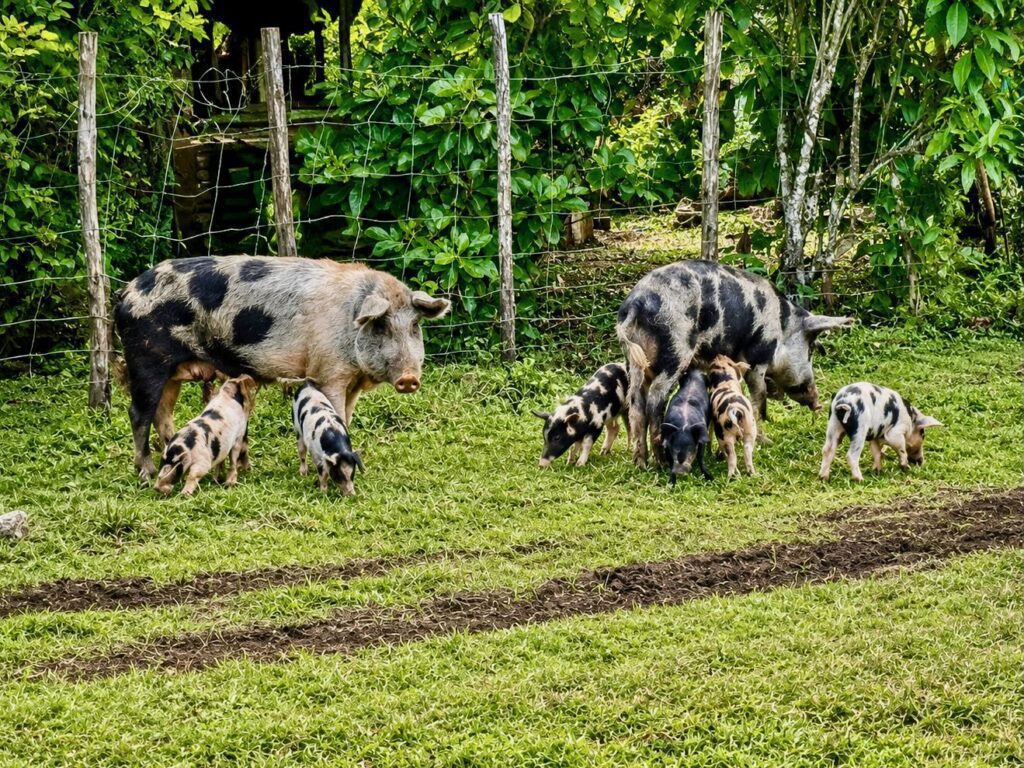
Pigs are largely left to forage on their own, wallowing in mud and scavenging for food, though families supplement their diet with scraps and coconut. Their abundance stems from their cultural importance: pigs are central to Tongan feasts and celebrations, ultimately serving as a sacrifice at major family events or gatherings at the King’s court, making them a valued, semi-domesticated fixture of everyday village life.
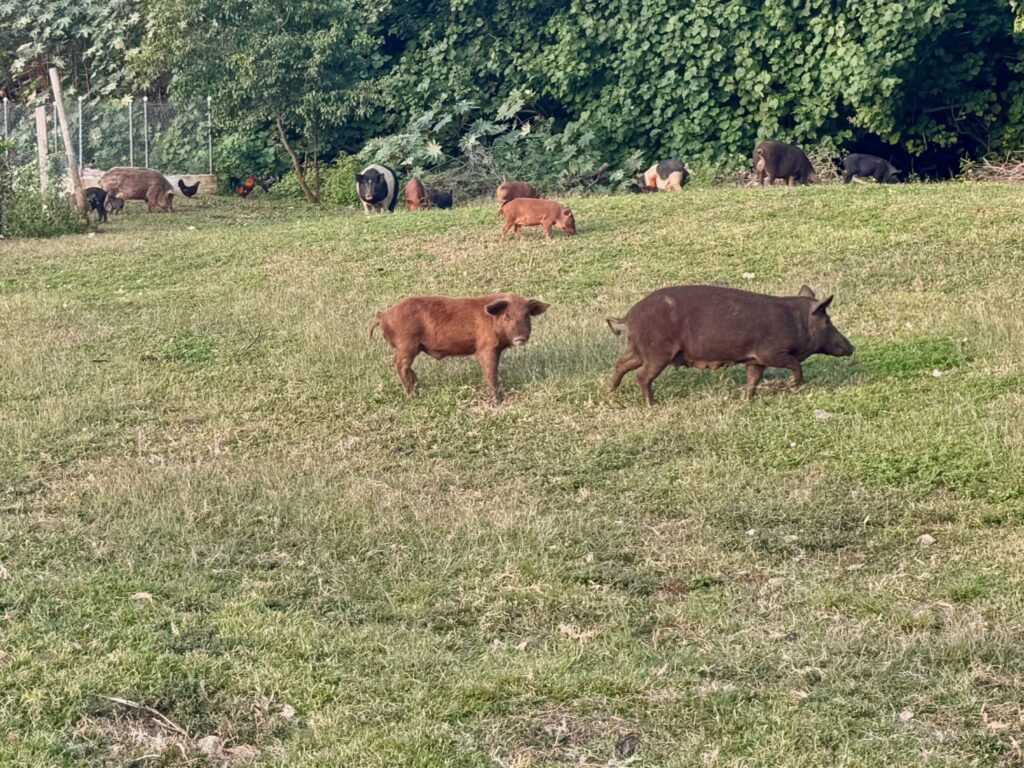
We were surprised at how many of them there were.
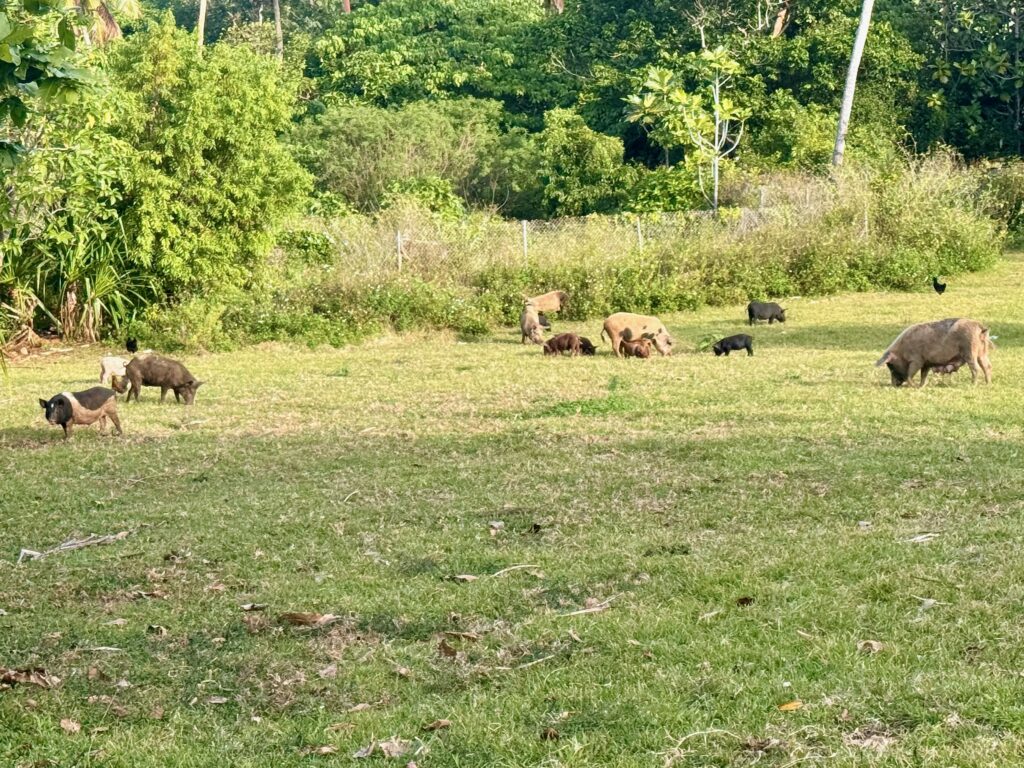
I couldn’t bring myself to eat them.
8. St. Joseph’s Cathedral
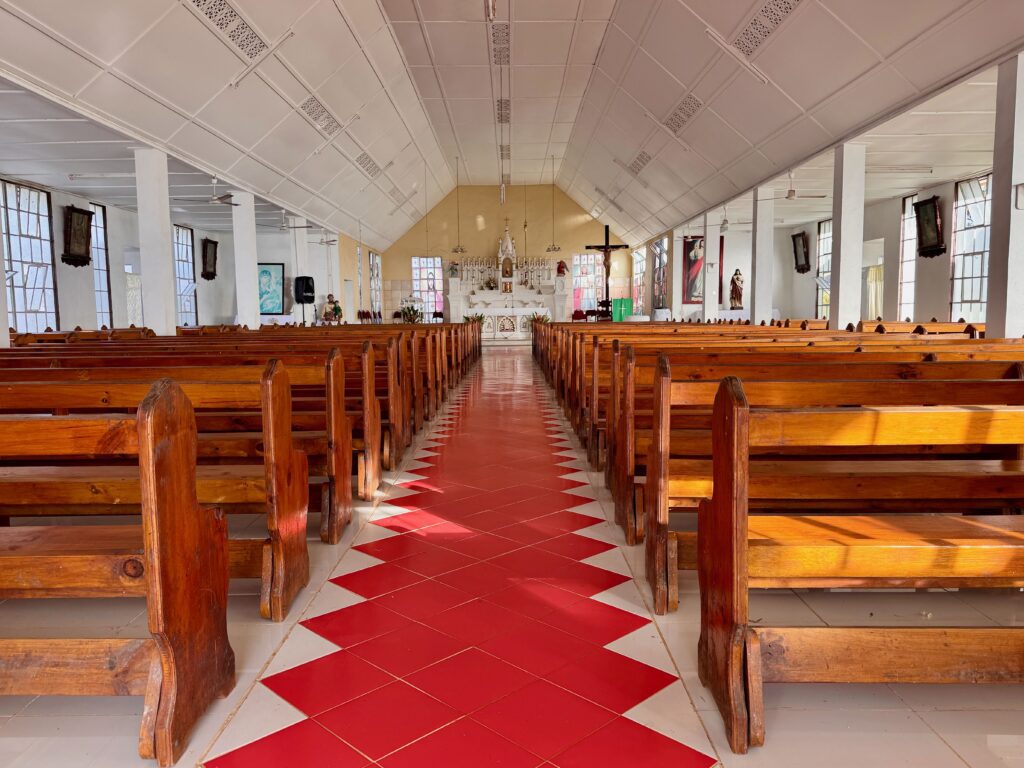
St. Joseph’s Cathedral is a whitewashed Catholic church perched on a hilltop above Neiafu, overlooking the Port of Refuge harbor. Built in colonial-era Polynesian style, it stands on high ground and is visible from many points around town. Rumor has it that prisoners built it during the colonial era.
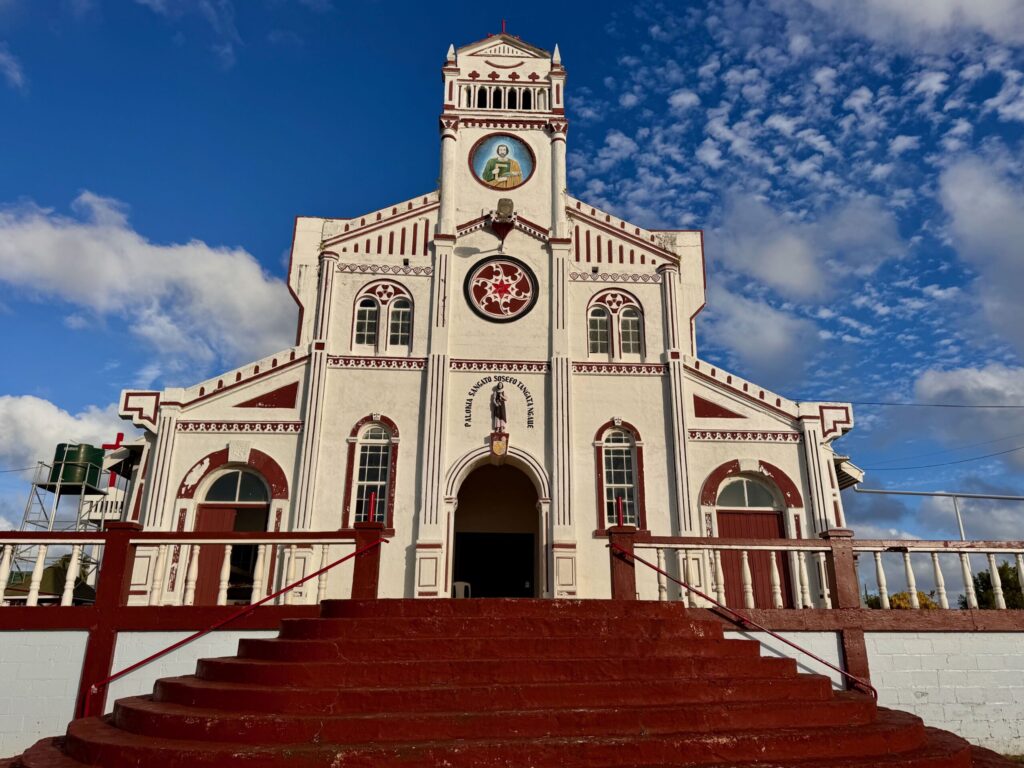
The cathedral’s interior features statues and stained glass, including a statue of St. Joan of Arc. It remains an active place of worship and is considered one of Neiafu’s most recognizable landmarks.
9. Traditional Tongan Dress
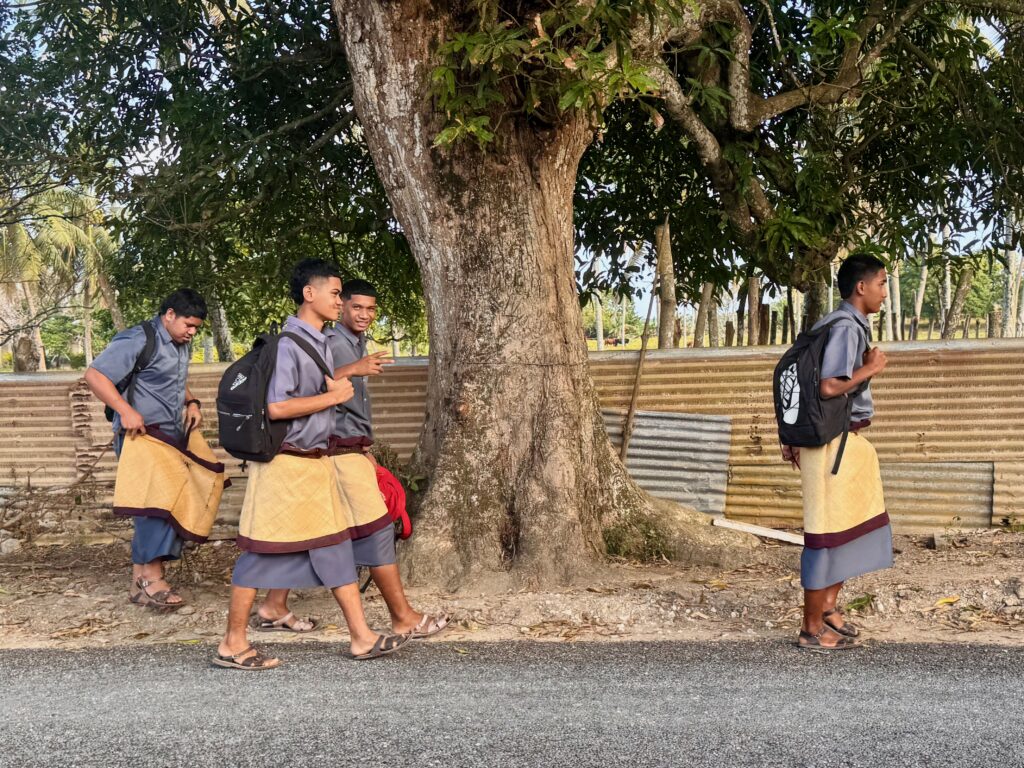
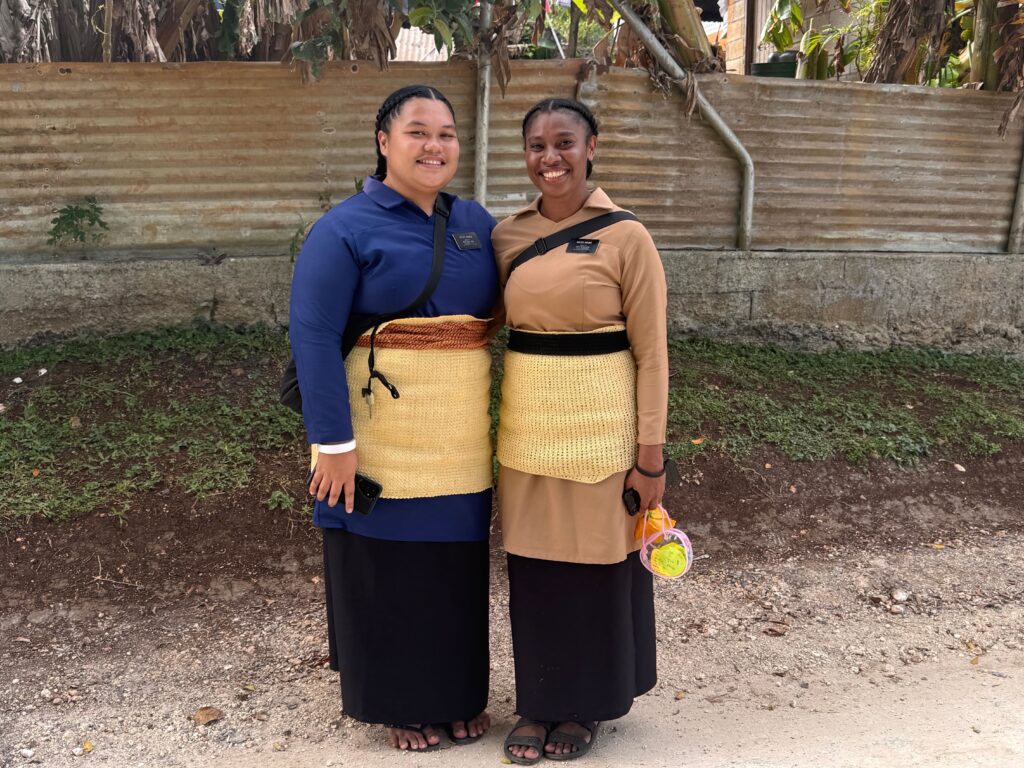
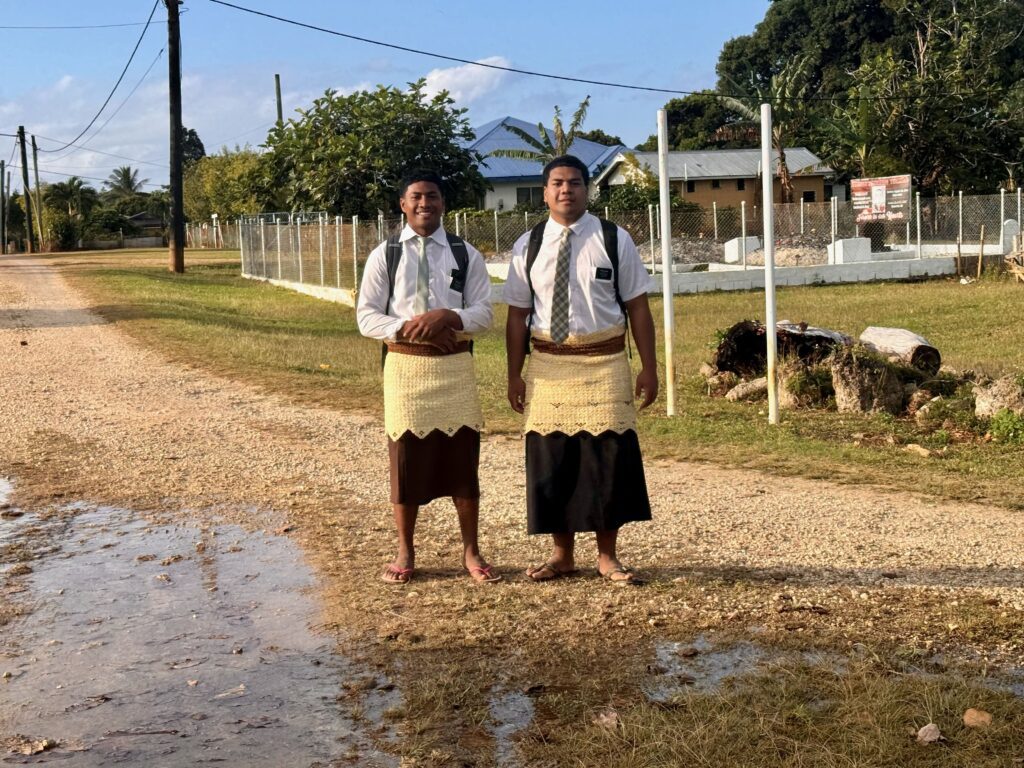
Traditional Tongan clothing centers on the tupenu, a wraparound skirt worn daily by both men and women. For formal occasions, school, church, or government work, Tongans add the ta’ovala, a woven pandanus mat tied around the waist with a cord called a kafa. The older and more worn the mat, the greater the respect it signifies, as many are treasured family heirlooms. Women may instead wear a kiekie, a decorative woven waistband made from pandanus, hibiscus fiber, or other natural materials.
This was one of the most culturally significant and interesting facets of Tongan life we immediately noticed. All of the male students we saw were dressed like this, while girls wore solid-colored jumpers.
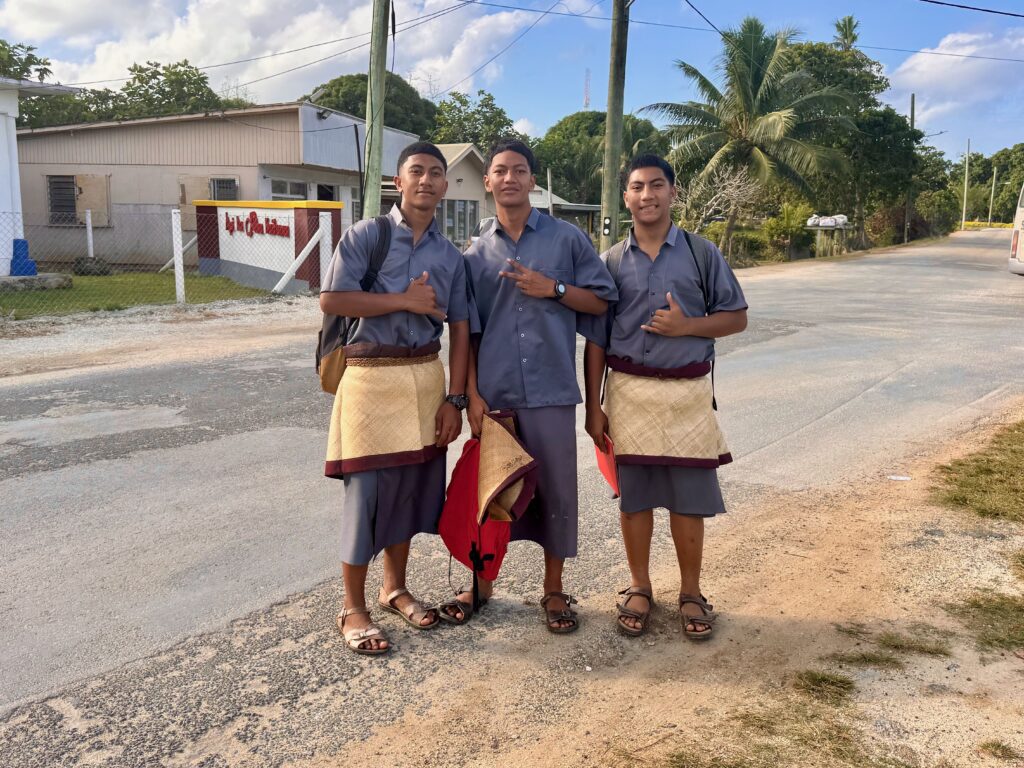
We saw many Mormons in Vava’u, and they were also dressed accordingly, including the women.
While walking to the Kilikilitefua Wall, we had a long conversation with these two young men.
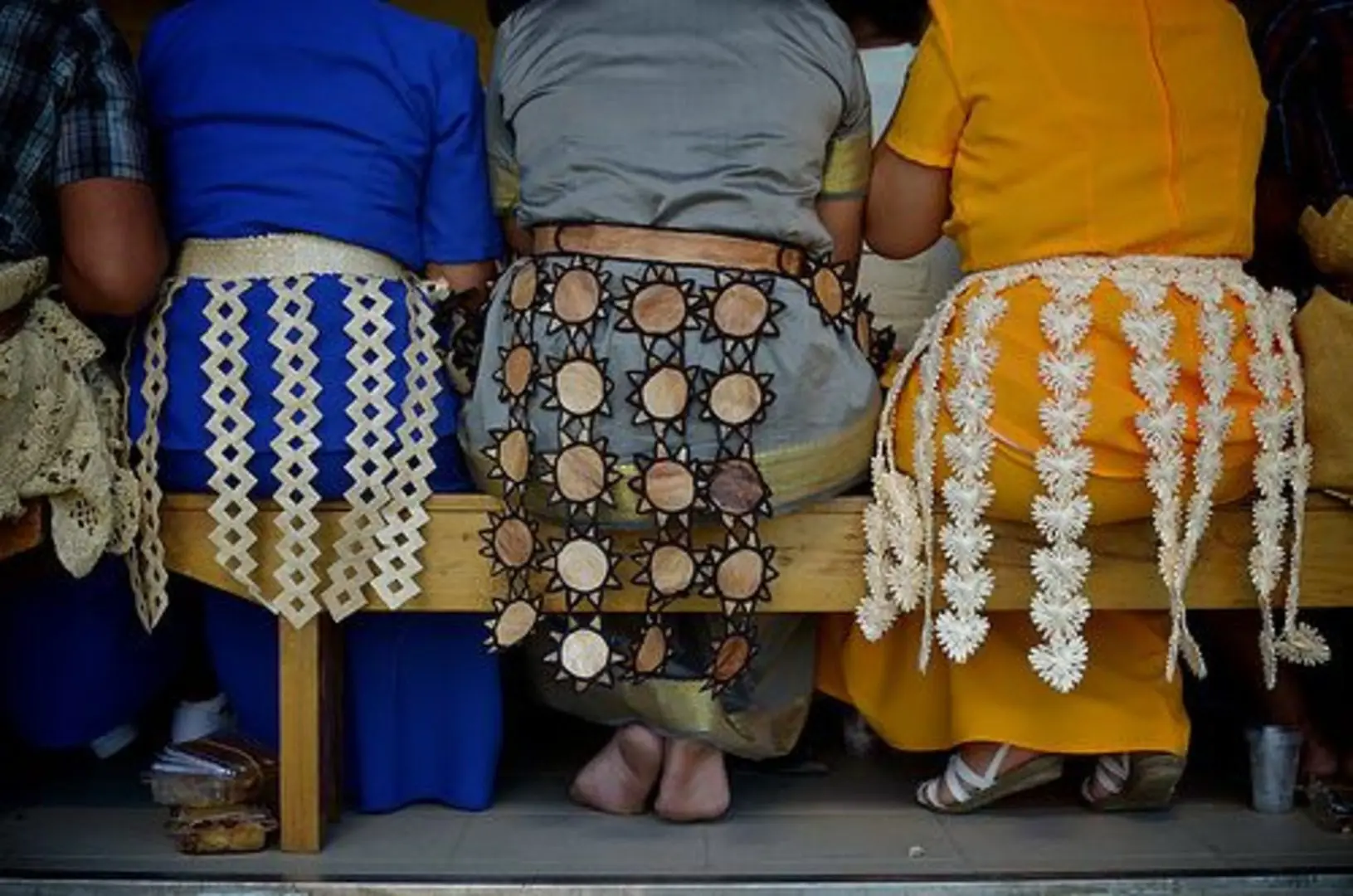
Outside of these traditional skirts, dress in Tonga is generally conservative, covering the knees and shoulders. All-black clothing, or Taʻovala Putu, signals mourning.
Other Memories
There are thousands of jellyfish in Neiafu Harbor. This video was taken as we were leaving the harbor. All of the white dots below are jellyfish. It was truly shocking.
Some other scenes:
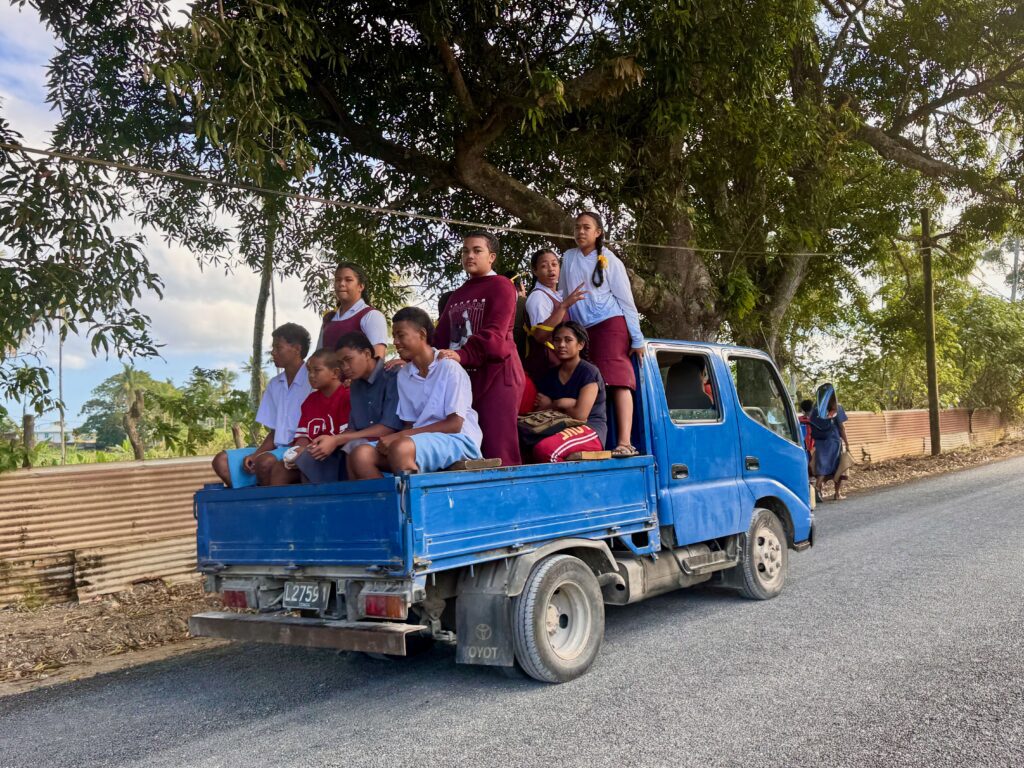
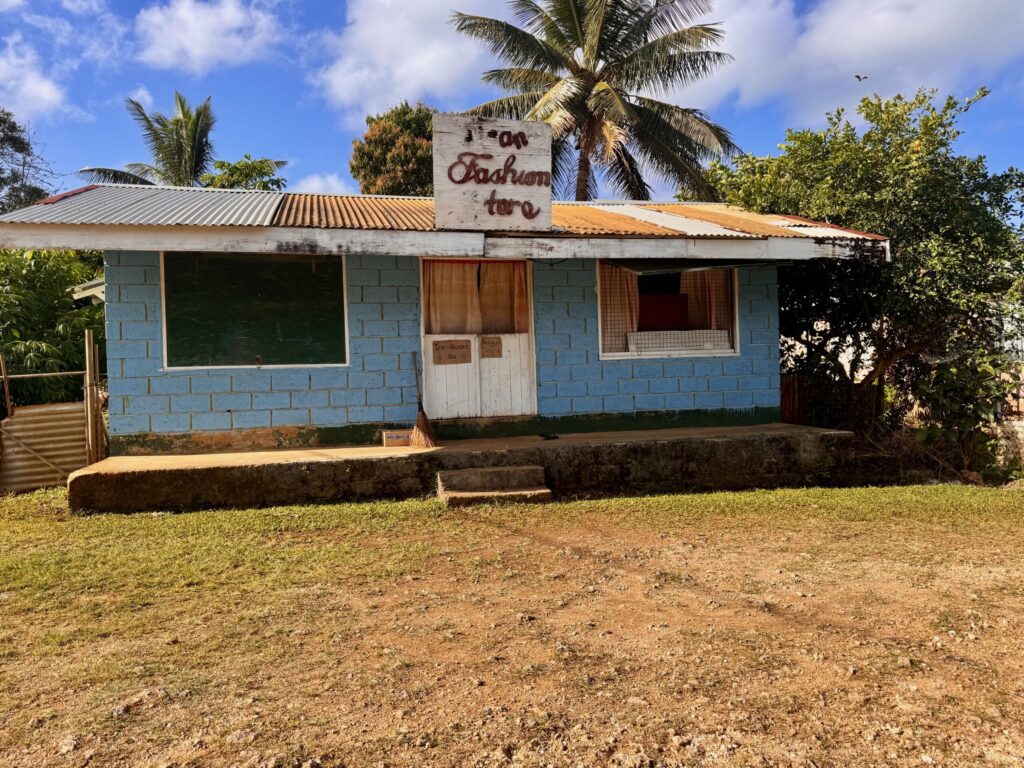
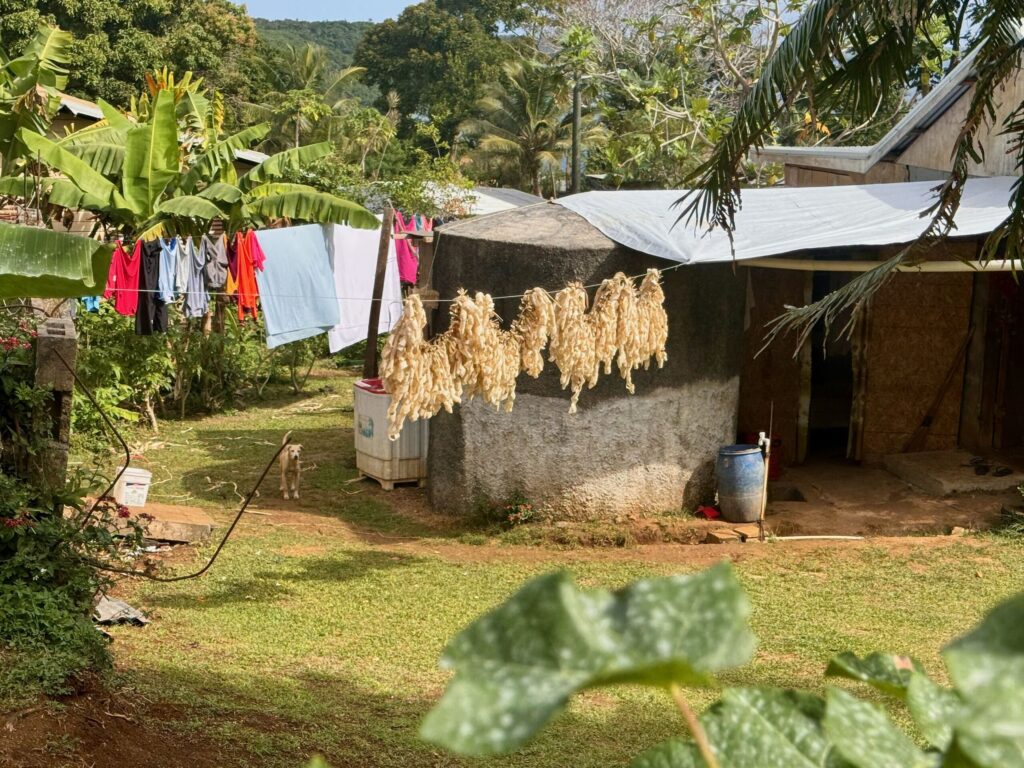
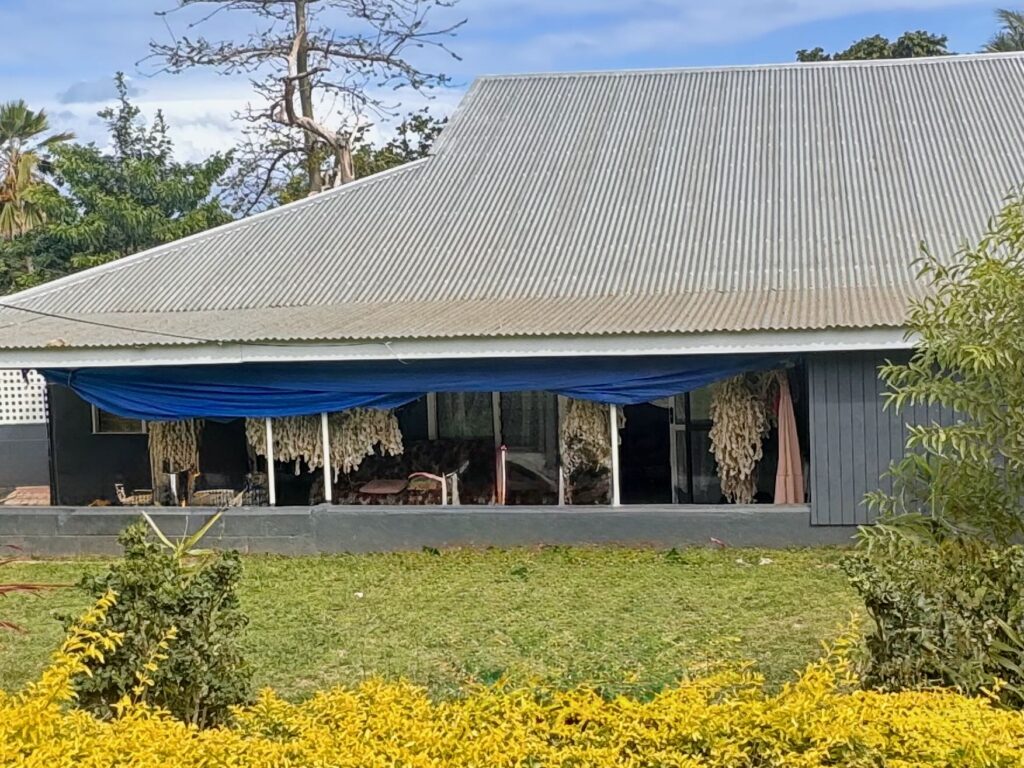
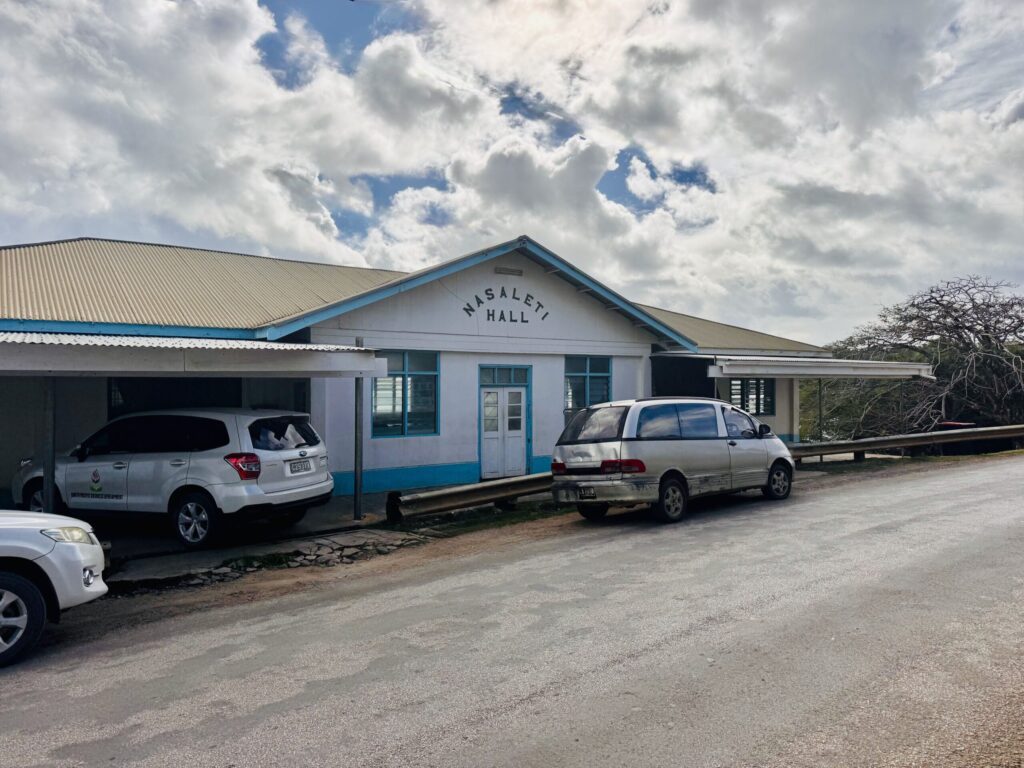
The singing coming from this building was really beautiful. Click below to hear a sample.
Other Things to Do in Vava’u, Tonga
Swallows’ Cave
A’A Cave
Shark Tooth Cave
‘Ene’io Botanical Garden
Otea
‘Esi ‘o Sālote Lookout
‘Utula’āina Lookout
Eat at the Private Mounu Island Resort (yachts: reservations required)
Dining
ranked most to least favorite:
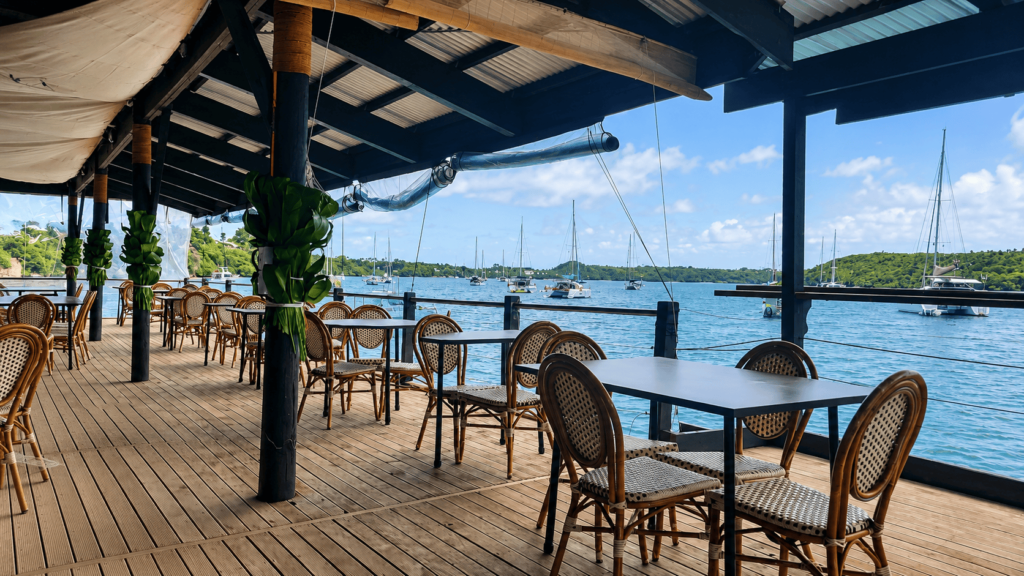
Mango Restaurant
The food and the views here are excellent. We also spent quite a while chatting with the owner, who is very hospitable.
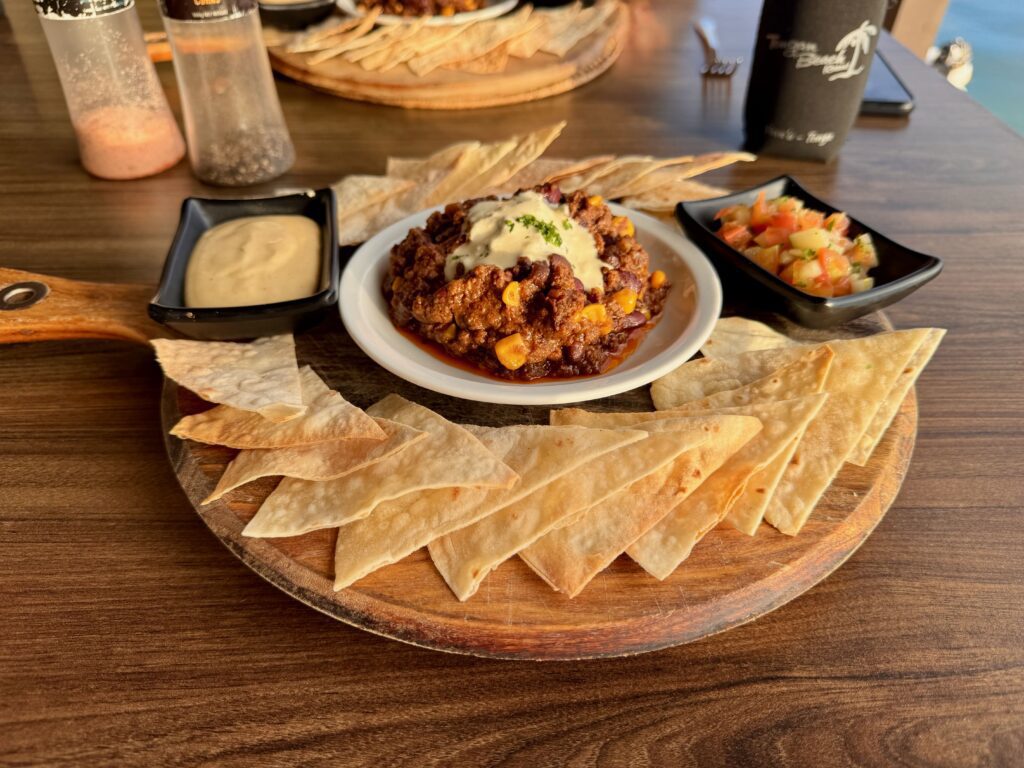
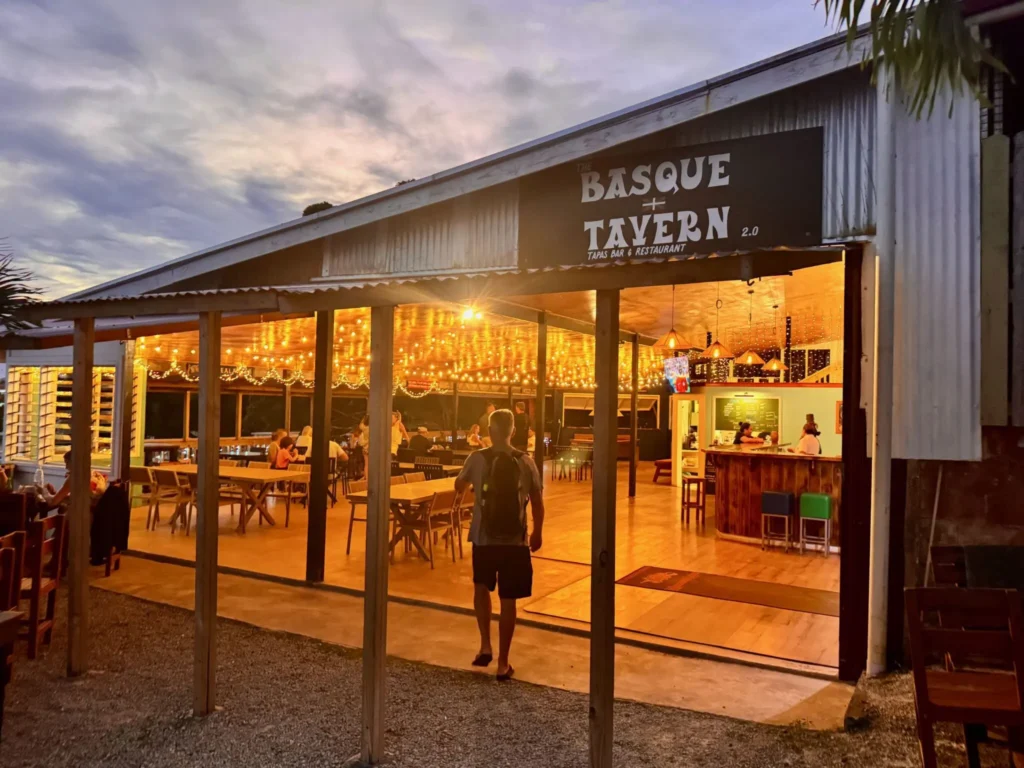
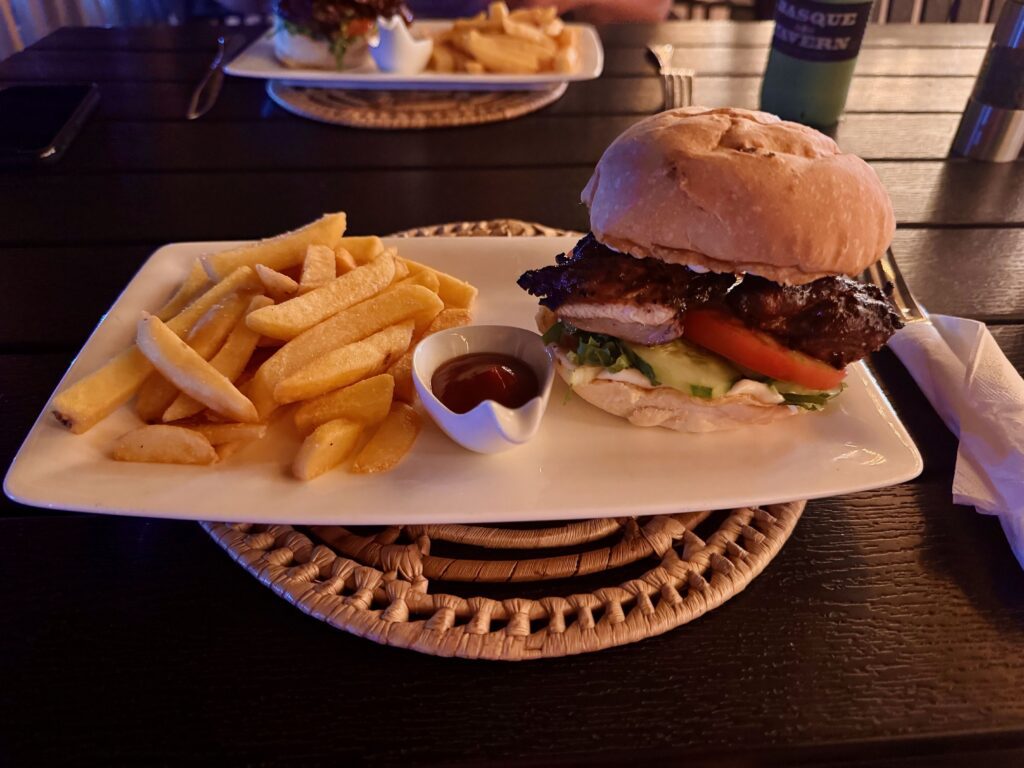
Basque Tavern
The Hideaway
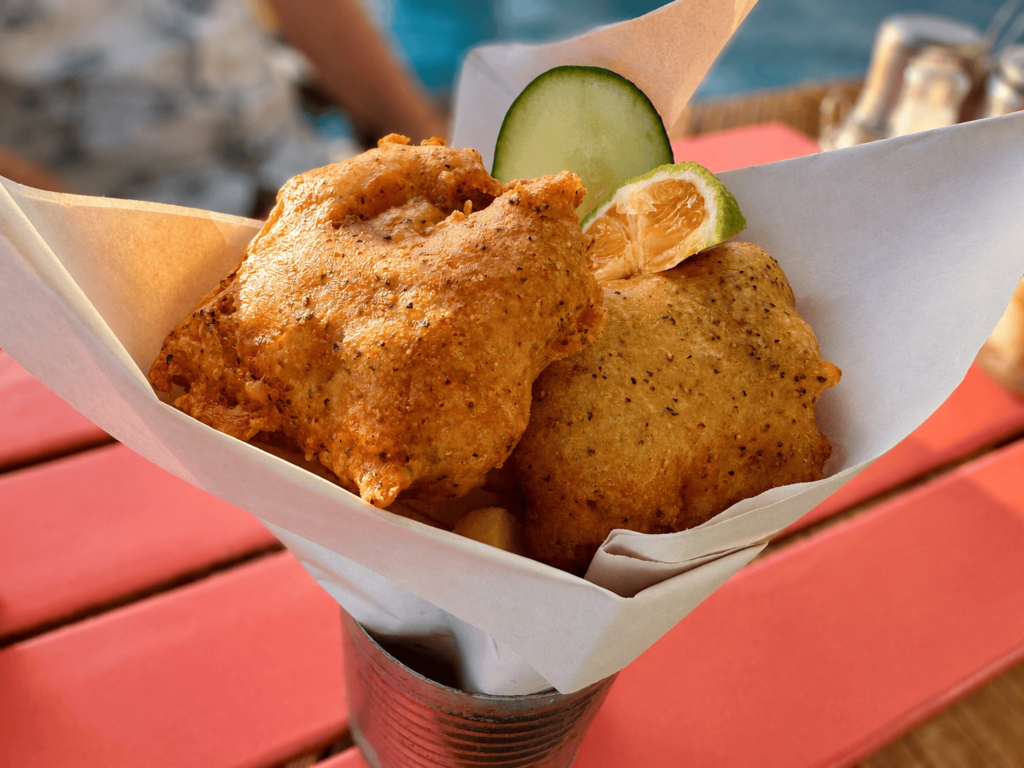
We came here multiple times and chatted with Bear and his wife, Char; Colin from s/v Shenandoah; Mathilde and Dan from s/v Star of the Sea; and two other cruisers—a pilot and his wife from New Zealand. The Hideaway is mainly a floating bar, but it gets the #3 spot because Bear cooks up a mean fish and chips!
Bellavista Cafe
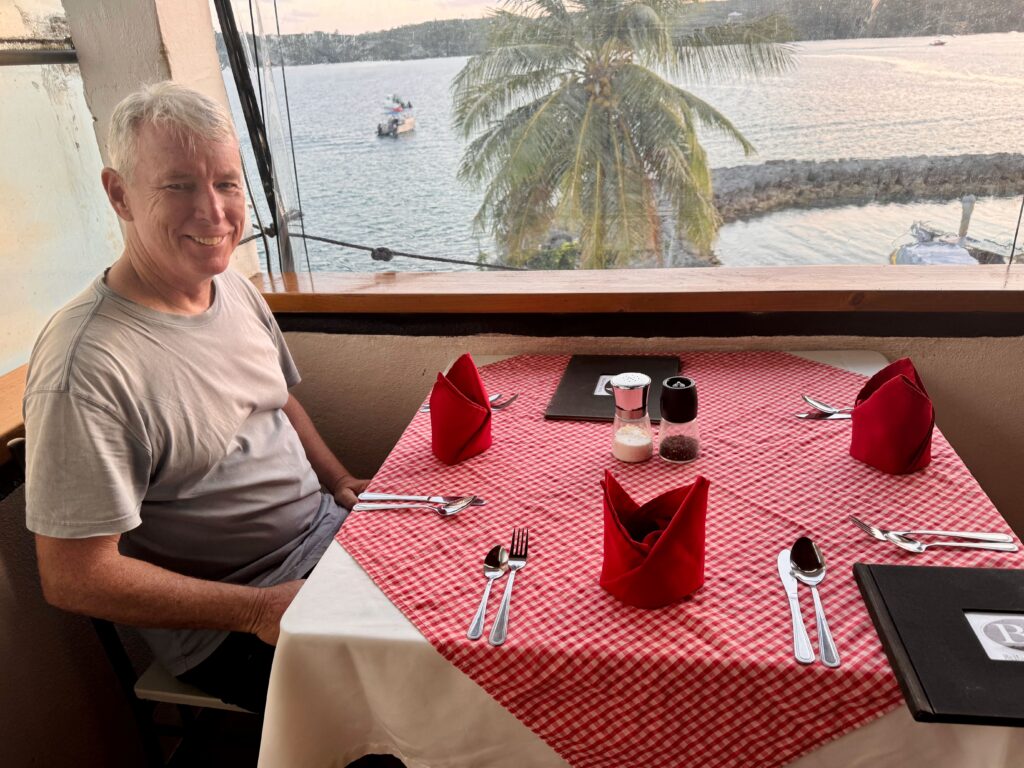
Bellavista Cafe is Vava’u’s answer to fine dining.
Ta’alo
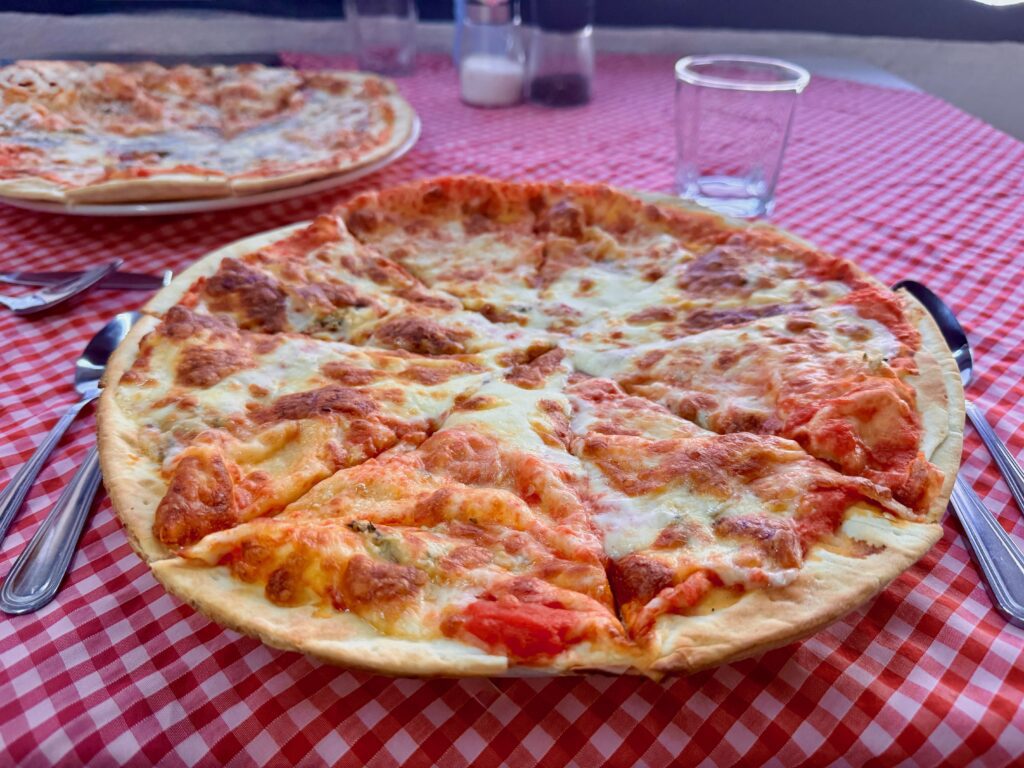
The food here was not our favorite, but the staff was.
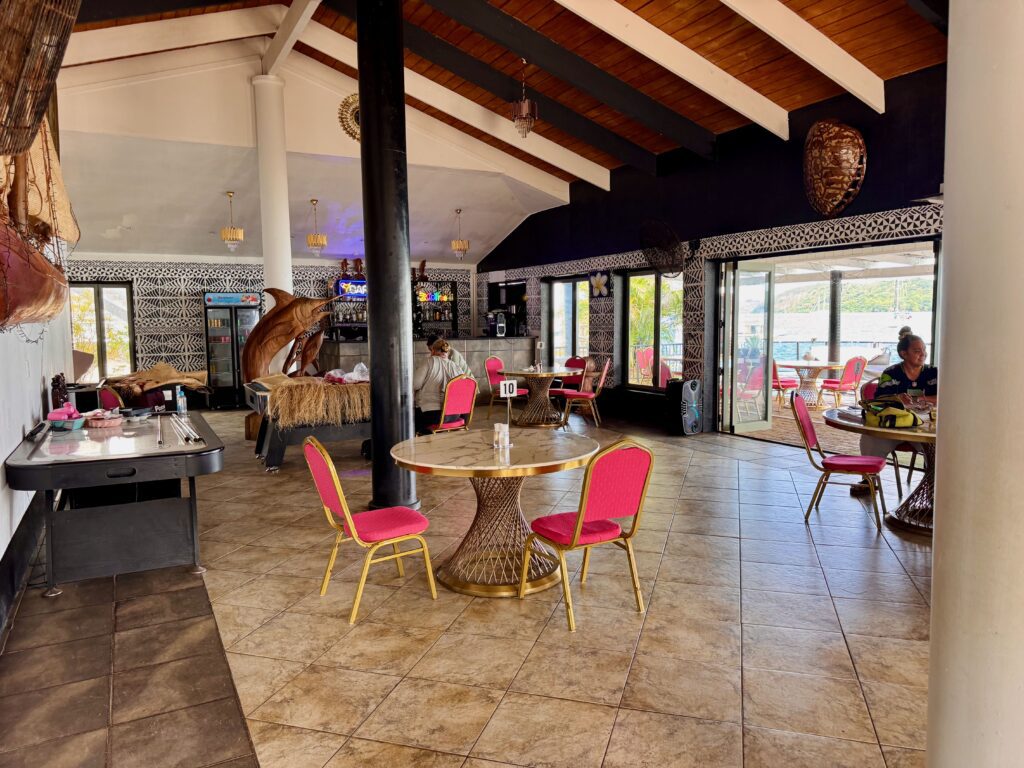
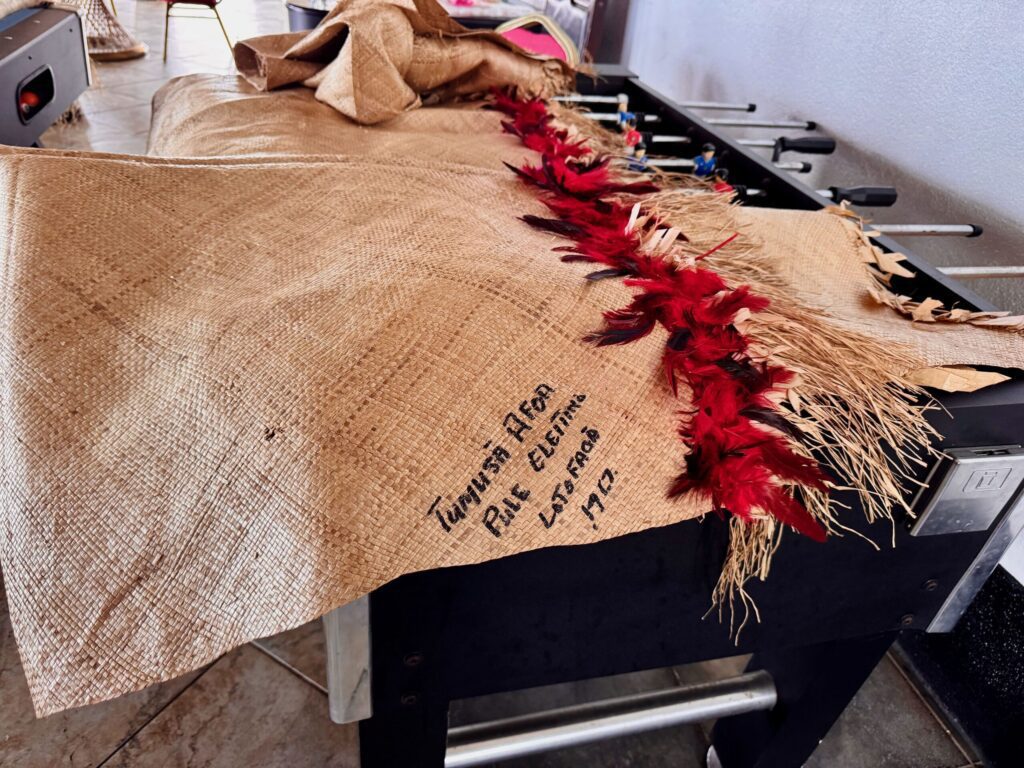
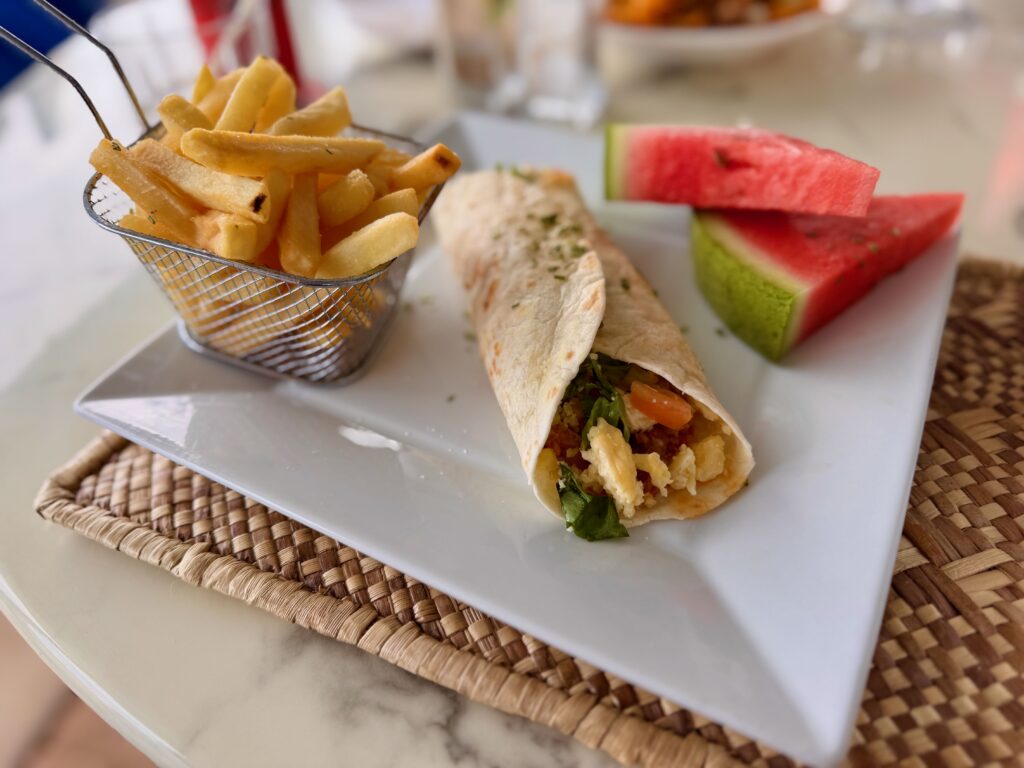
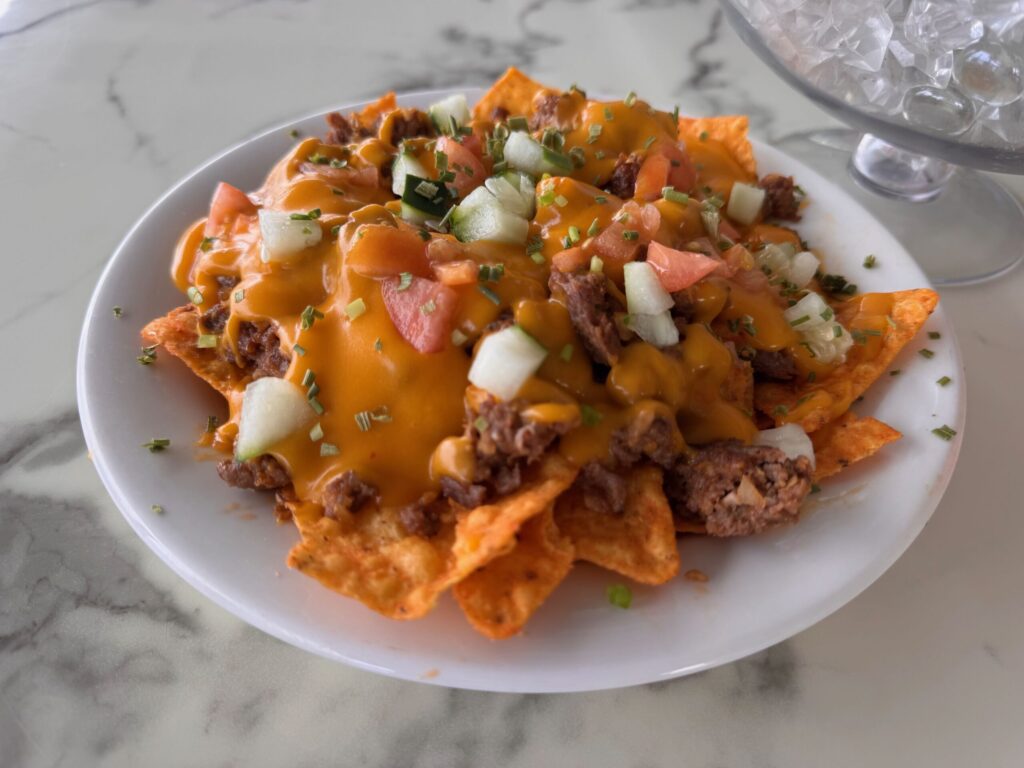
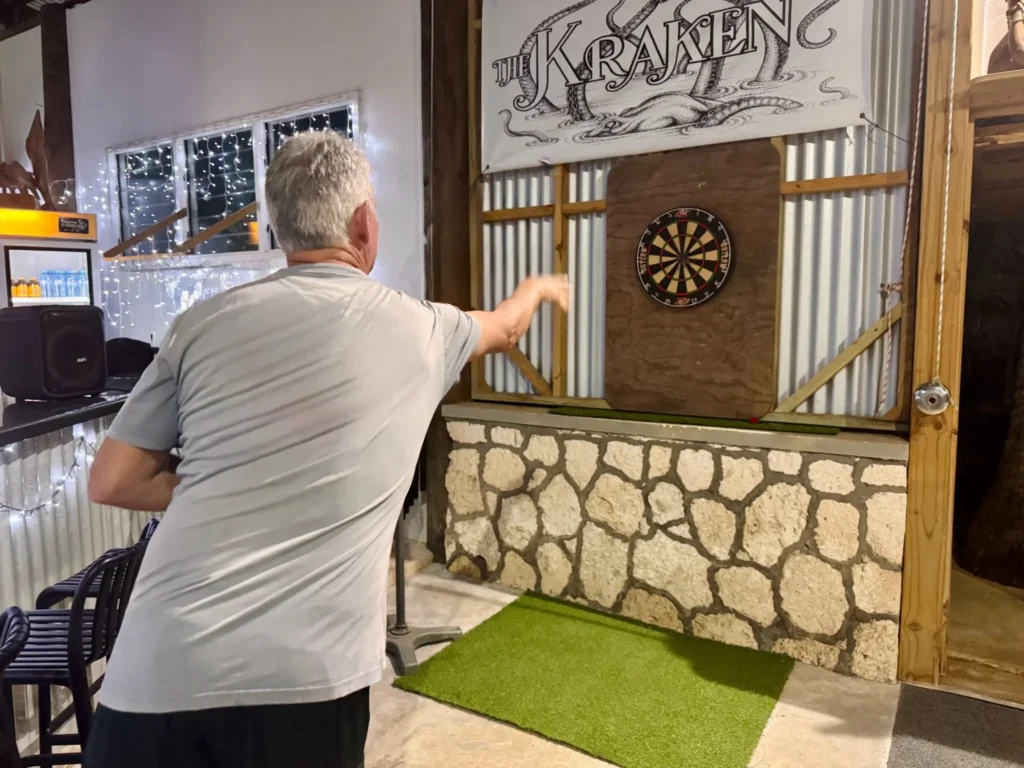
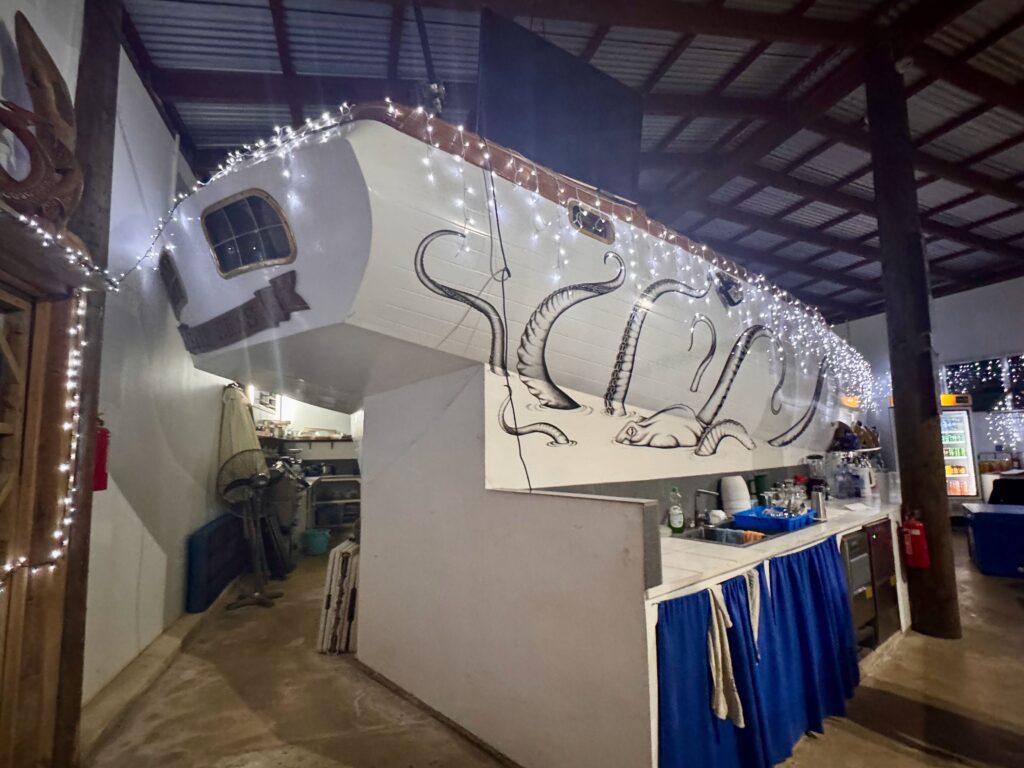
The Kraken
We came here a few times. (We love darts.) Sadly, after eating here, Roy and I were both sick for a week. Coincidence? We’ll never know.
Shopping
Utakalongalu Market
Like virtually every other town we have visited in the South Pacific, Vava’u has its own local market. It is located near the fisherman’s wharf.

While not huge, it features a nice selection of fruits and vegetables.

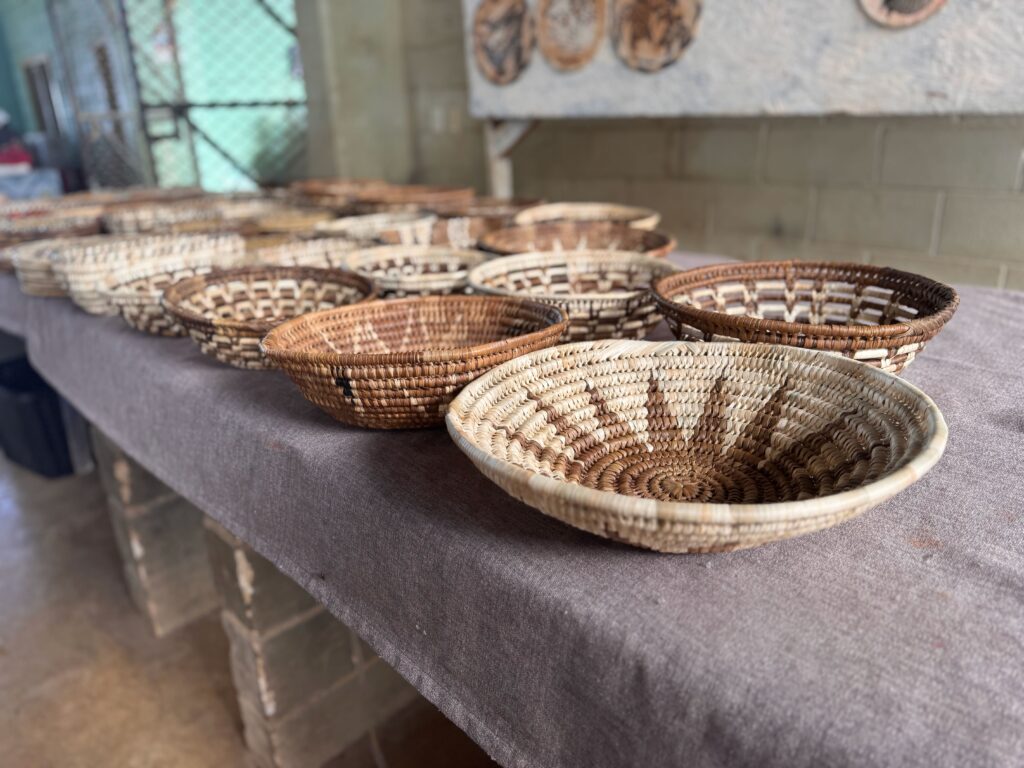
There’s also a small selection of locally made handicrafts.

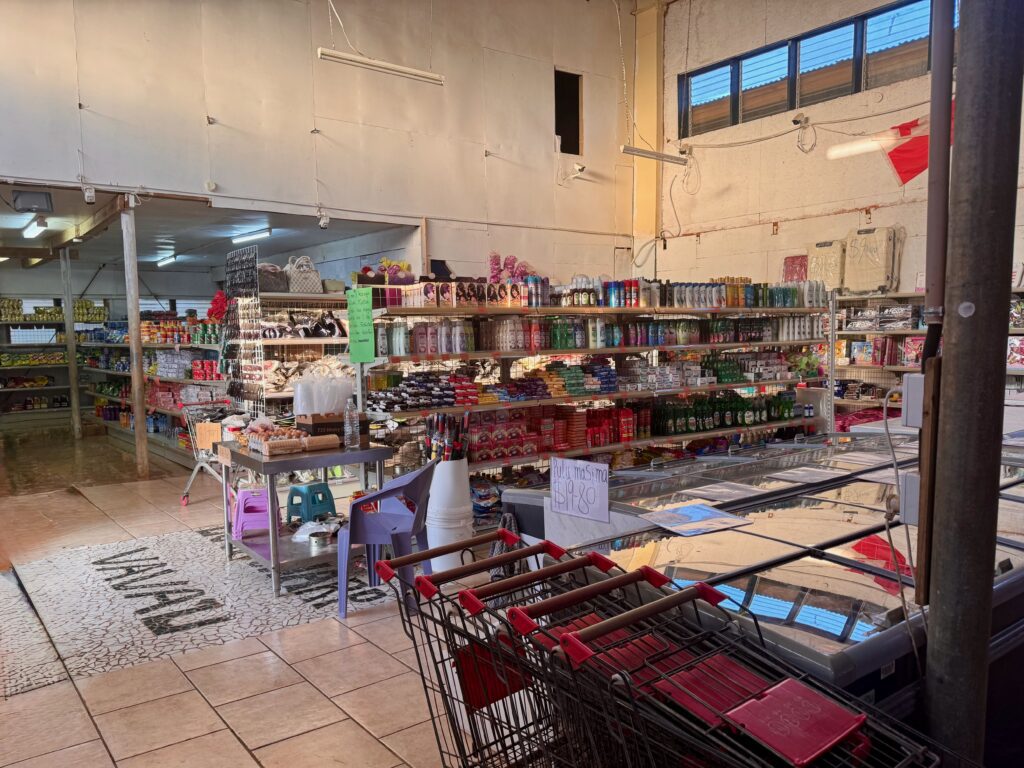
For traditional groceries and other provisions, there are quite a few shops known by locals as “Chinese stores.” They are all very similar, with a decent selection of canned and boxed foods, some meats, and cleaning and hygiene products.
Accommodations
Vava’u offers everything from budget guesthouses in Neiafu to secluded island resorts. In town, hostels and family-run guesthouses sit near restaurants and whale-swimming operators, often including breakfast and kitchen access. Outside town, small resorts like Mounu Island and Blue Lagoon offer traditional fale-style bungalows right on the water, many with their own whale-swimming access. The Reef Resort on Kapa Island is the area’s only 4.5-star property. Homestays are also popular for a more local experience.
Overall, lodging is simple rather than luxurious, reflecting Vava’u’s remote character.
We stayed on our catamaran in two places: the Neiafu mooring field and the anchorage at Vaka ‘Eitu Island.
Getting Here
Most travelers reach Vava’u by flying into Fuaʻamotu International Airport (TBU) on Tongatapu, then connecting via daily domestic flights, except Sundays, to Lupepau’u Airport (VAV)—a trip of about one hour. Some international carriers, like Fiji Airways, also fly directly between Nadi and Vava’u a few times weekly.
A cheaper but slower alternative is the overnight ferry from Nuku’alofa, which takes approximately 16 to 23 hours and stops in Ha’apai along the way.
We sailed here on our catamaran.
Getting Around
Getting around Vava’u mostly means combining land and water transport. On land, Neiafu is small enough to explore on foot, and you can find taxis and rental cars for reaching villages, viewpoints, and trailheads across the main island. We explored two rental car suppliers: the Elim Hotel (two doors away, behind the DVD store) and Ana Tevunga Services. The latter was less expensive.
Since Vava’u is made up of dozens of islands, water transportation is essential, as many resorts, dive sites, and secluded beaches are only reachable by boat.
Final Thoughts
Vava’u is more than a stop on a Pacific itinerary—it’s a place where remoteness has preserved something rare. From the humpback whales that return each winter to breed, to the ta’ovala-clad congregations filling churches on Sunday mornings, to legends still told at the base of Mount Talau, the islands hold onto traditions that have shaped daily life here for generations.
Getting to Vava’u takes effort: a sail, multiple flights, or a long ferry ride. But that same isolation is what has kept its reefs vibrant, its villages close-knit, and its pace unhurried.

Leave a Reply