Ah, Tahiti. Where you are greeted with “Ia Ora Na,” thanked with “Māuruuru,” and sent off with “Nana” (see you later). Where you can admire gorgeous tribal tattoos. And where the weather is warm, but the people are warmer.
We loved our time on this beautiful island, which has two distinct sections: Tahiti Nui and Tahiti Iti.
Tahiti Nui is the larger, northwestern section of the island of Tahiti. It is home to the island’s capital, Pape’ete, and serves as the primary economic and administrative hub of French Polynesia. During the day, it comes alive with the sounds of scooters, sirens, and lively conversation. At night, as the sun sets, it becomes a quiet, windswept paradise.
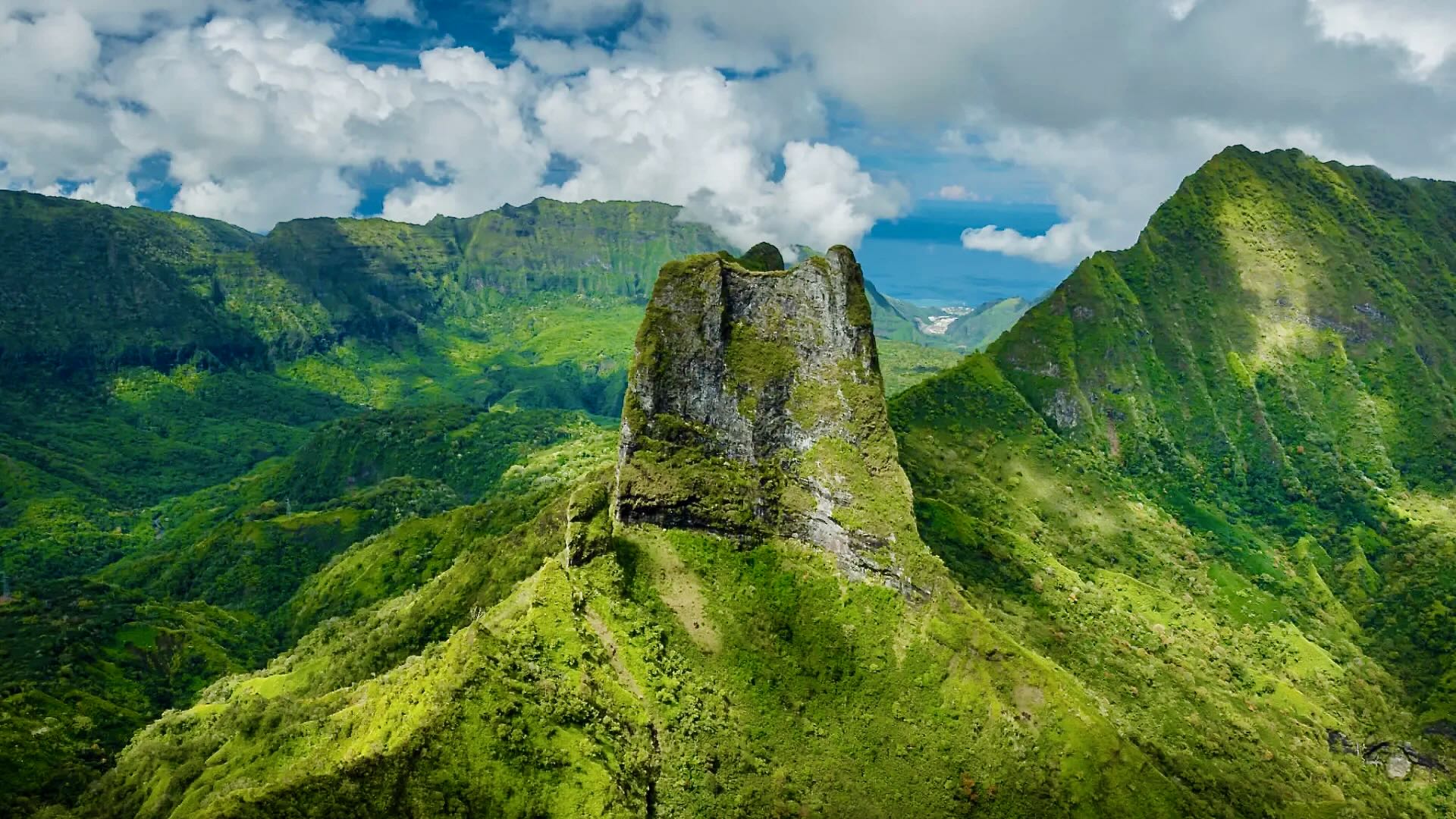
Tahiti Nui’s landscape is defined by its dramatic volcanic geography, featuring mountain peaks that soar to heights of up to 1.3 miles and plunge down to lush interior valleys.
We spent eight months in Tahiti, most of that time in Tahiti Nui. There are two main marinas in Tahiti: Marina Taina and Marina de Pape’ete. We stayed at the latter.
15 Favorite Things About Tahiti Nui
1. Matari’i i ni’a
Matari’i i ni’a celebrates the rising of the Pleiades and the start of the season of abundance. This official holiday honors the Polynesian traditions and deep connection with nature.
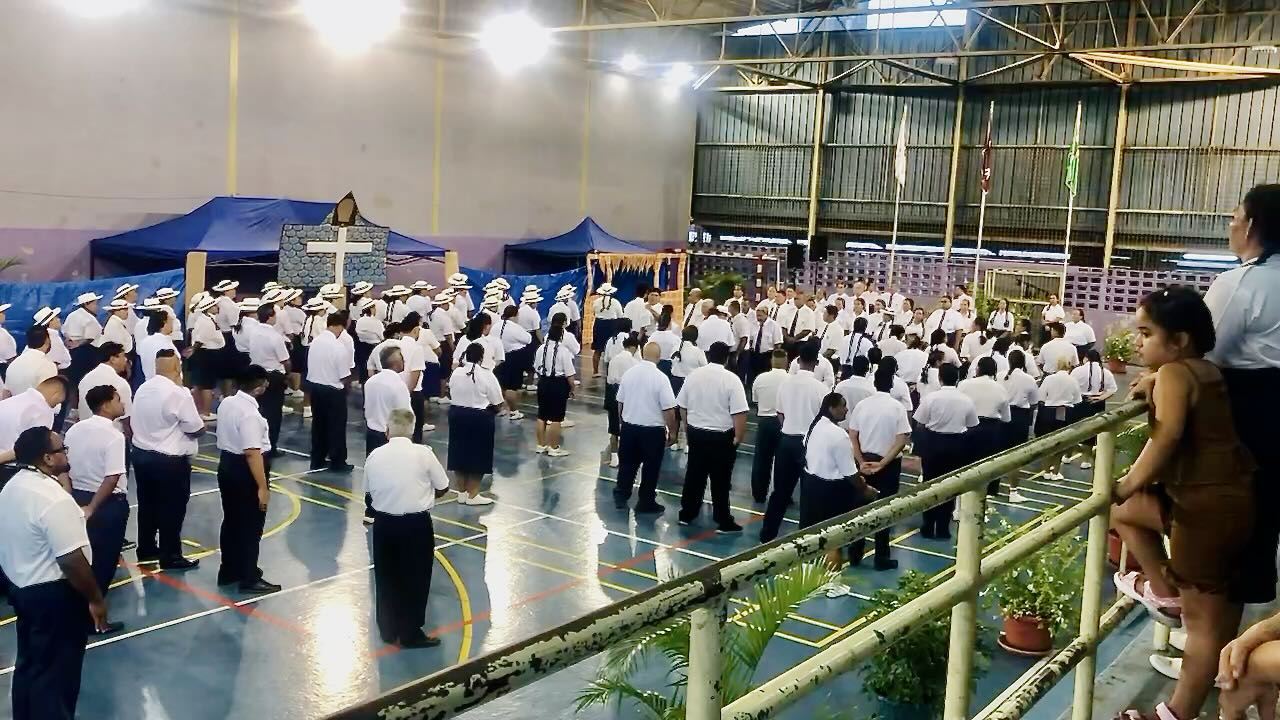
We saw the very first one (November 2025). It features dozens of groups, all dancing to the same traditional Polynesian song. It is beautiful. If you have the chance to visit Tahiti in November, this is a must-see. Since it takes place in downtown Pape’ete, it’s pretty hard to miss.
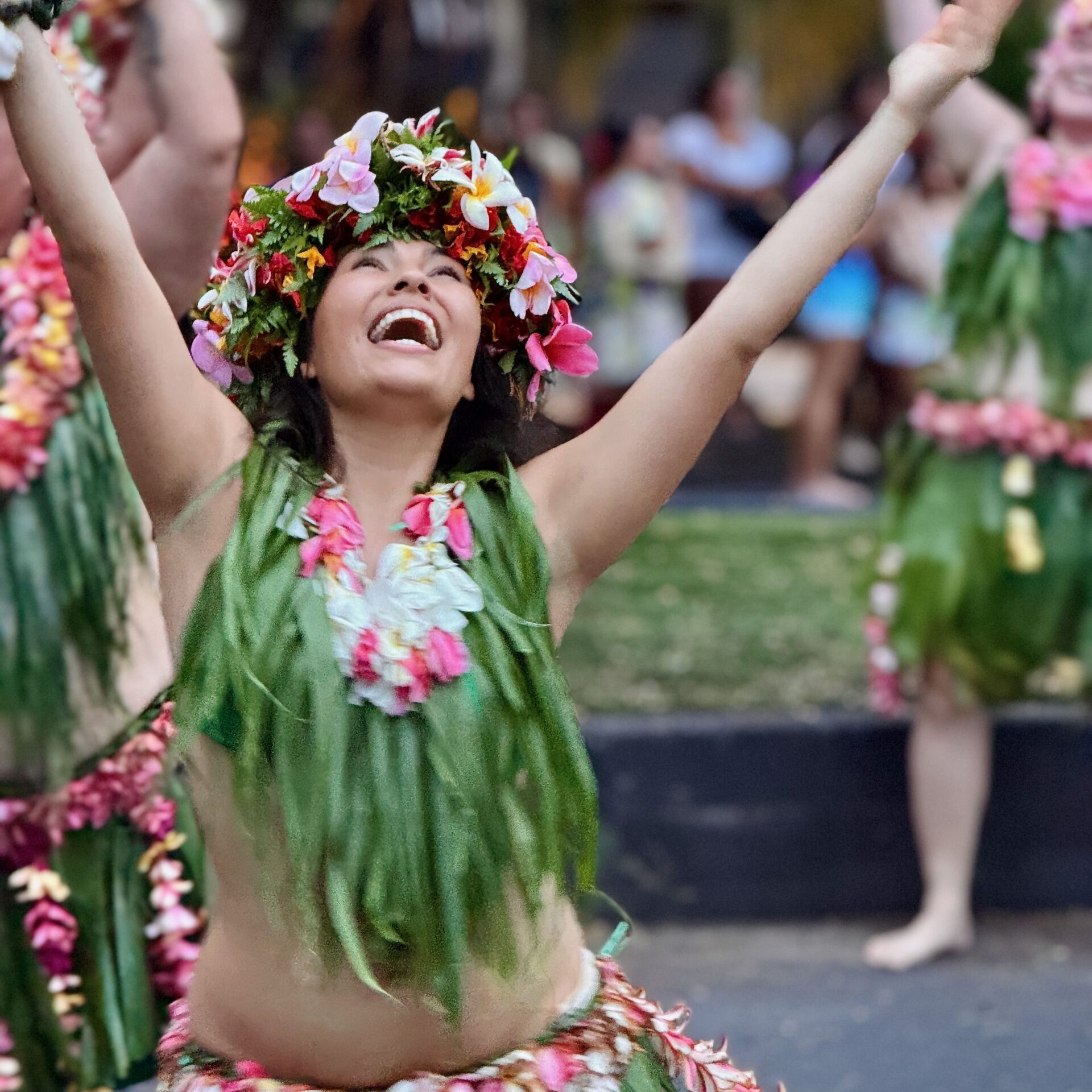
Everyone takes part:
2. Heiva Tu’aro Ma’ohi
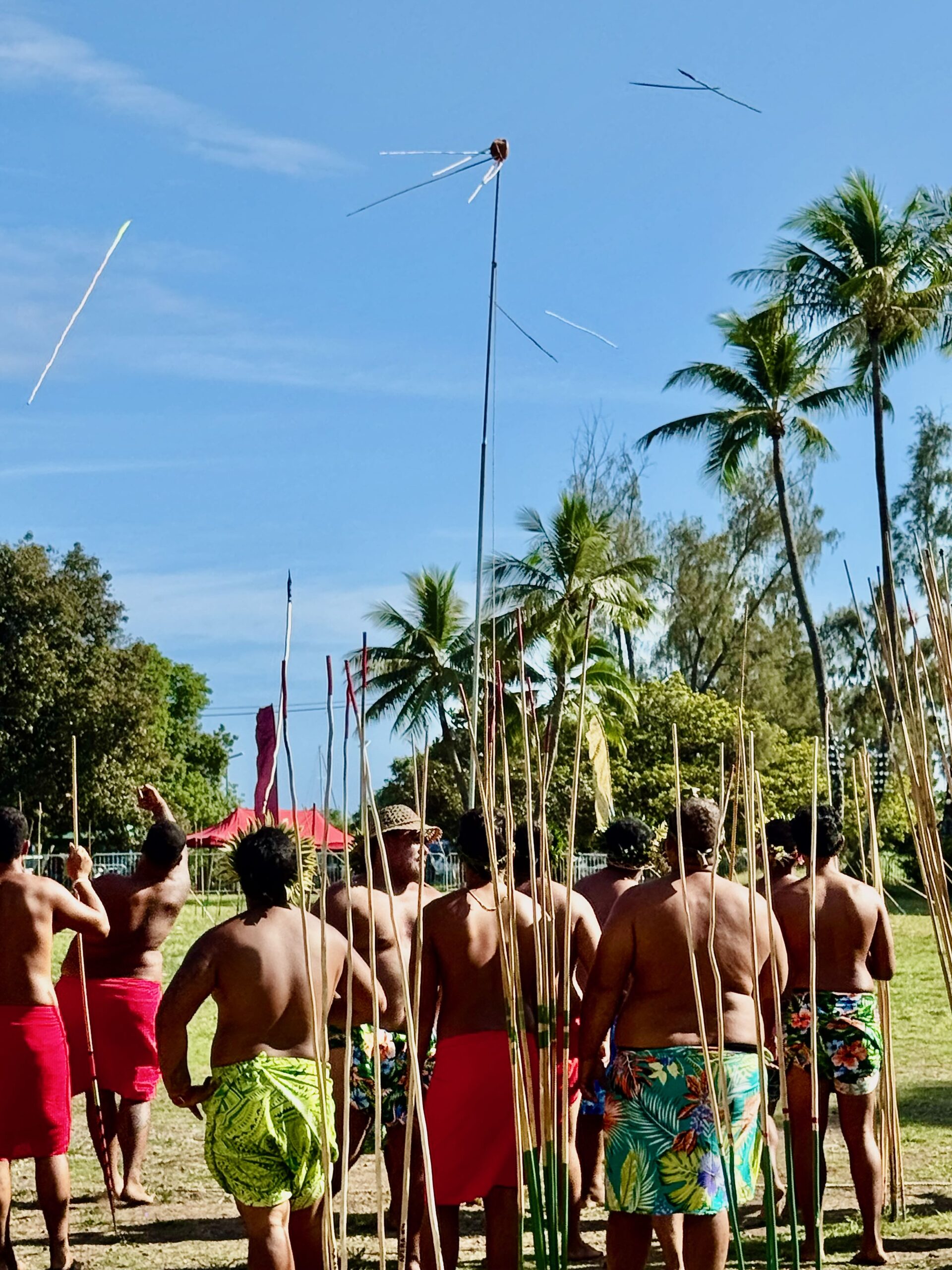
These ancestral games are held every July and are another event you should not miss.
Patia Fā (Javelin Throwing)
Amora’a ‘Ofa’i (Stone Lifting)
Timau Ra’au (Fruit Carrier Races)
3. Jardins d’eau de Vaipahi (Water Gardens)
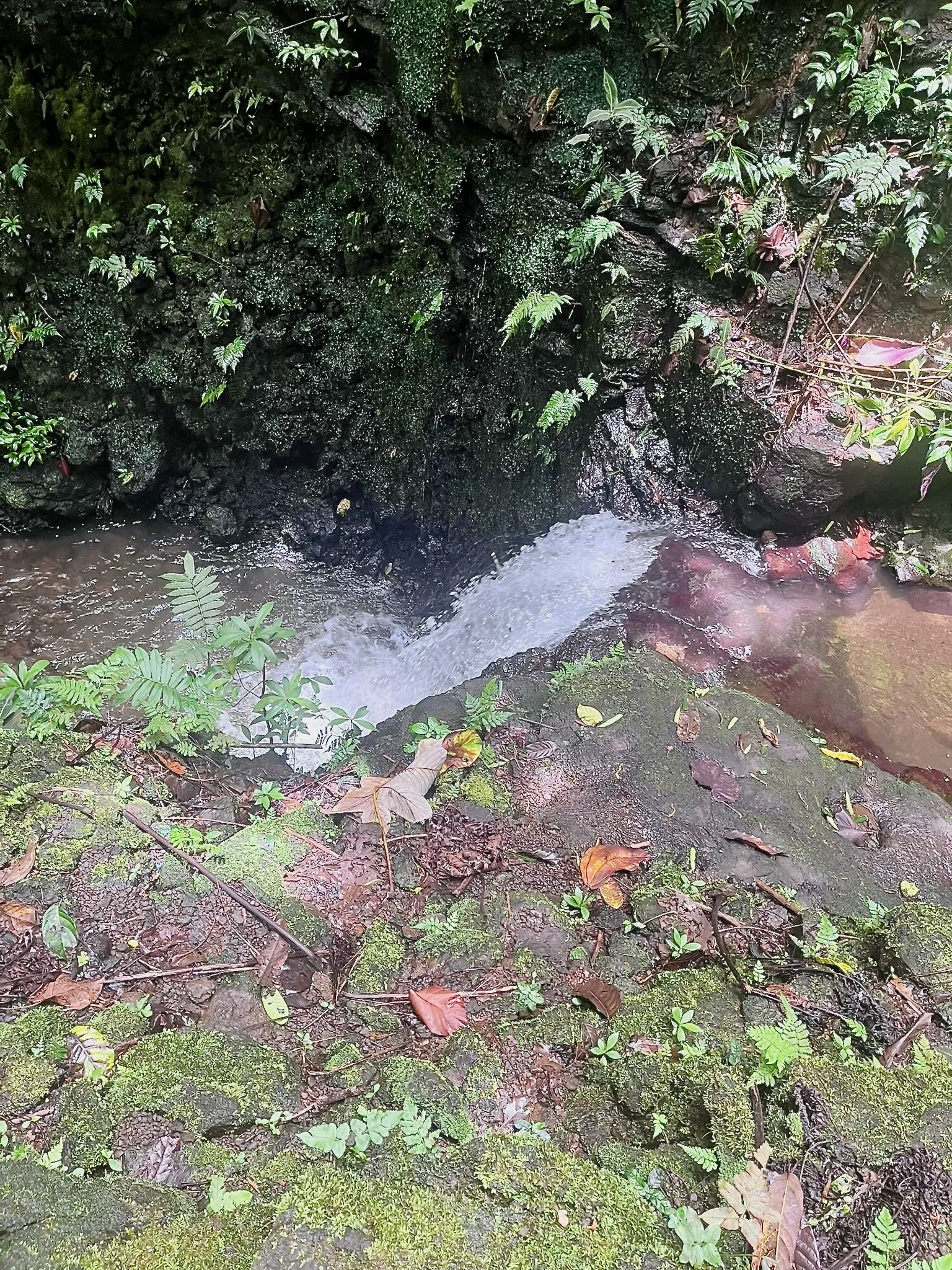
Located on the southwestern coast of Tahiti Nui, Jardins d’eau de Vaipahi is a lush botanical sanctuary spanning about two-and-a-half acres. This public park is renowned for its diverse collection of tropical flora, including exotic lilies, vibrant hibiscus, and towering bamboo. Fed by the Vaima River, the gardens feature a network of wooden bridges, tranquil ponds, and a majestic central waterfall. We loved it so much, we came here twice.
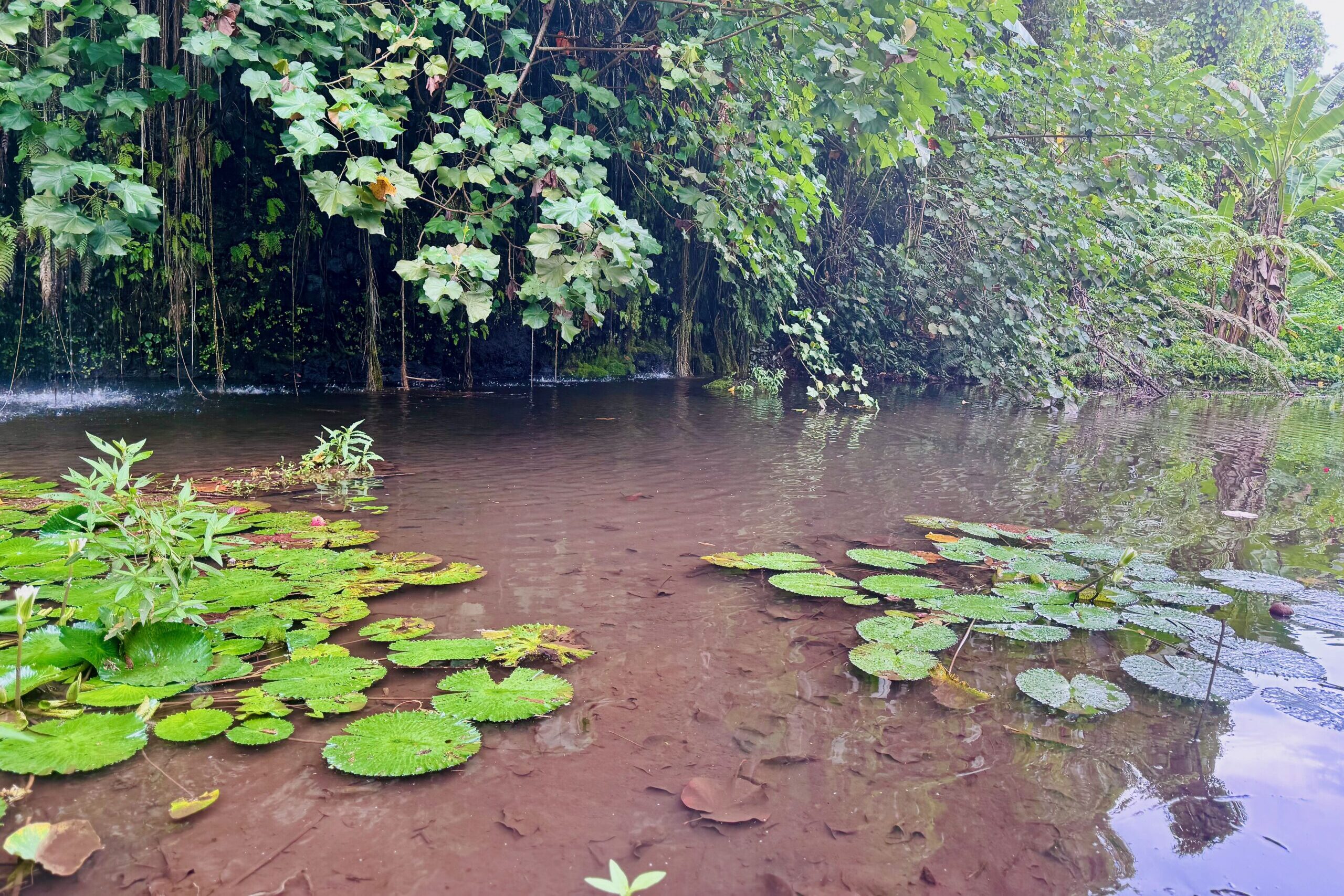
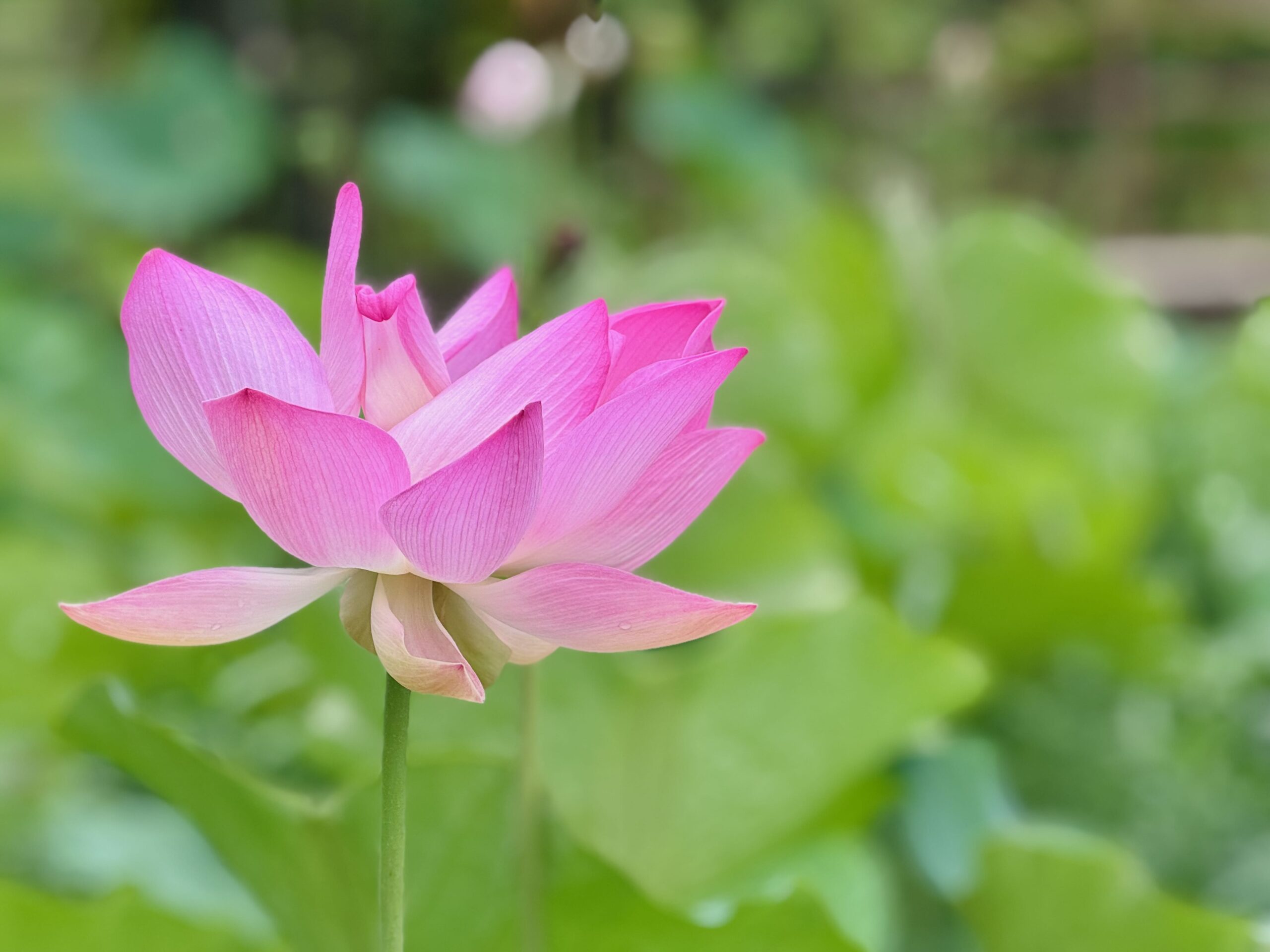
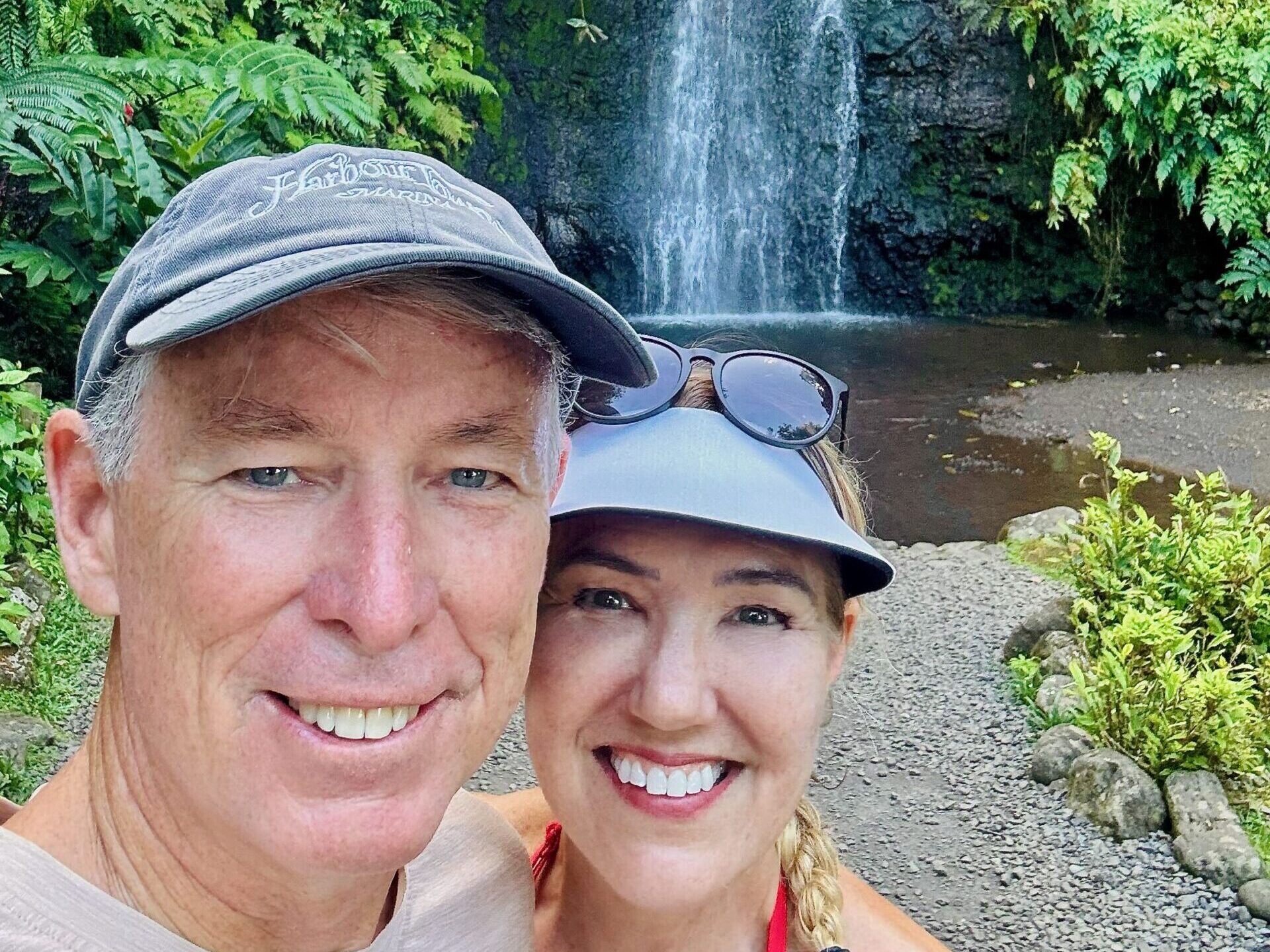
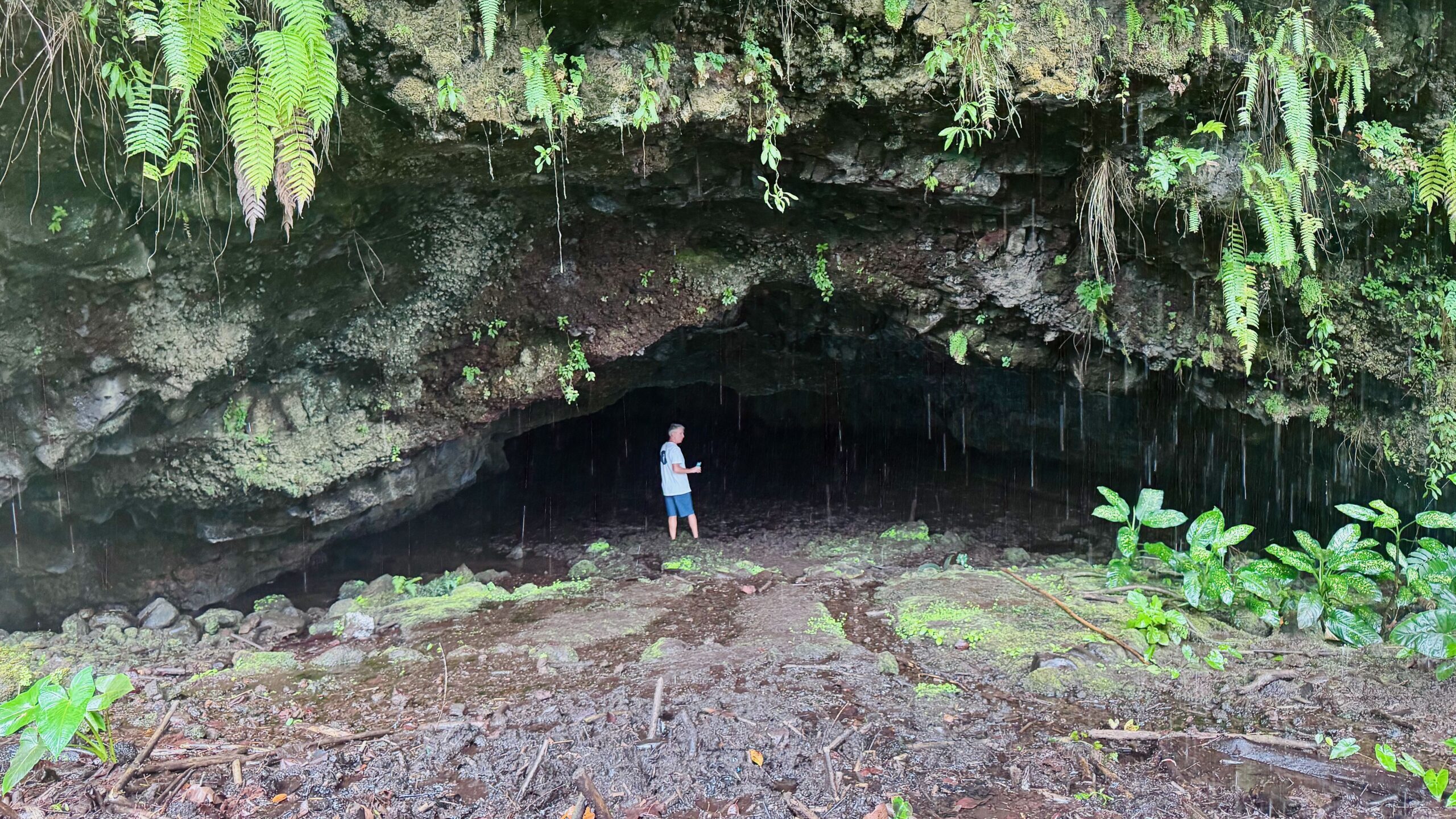
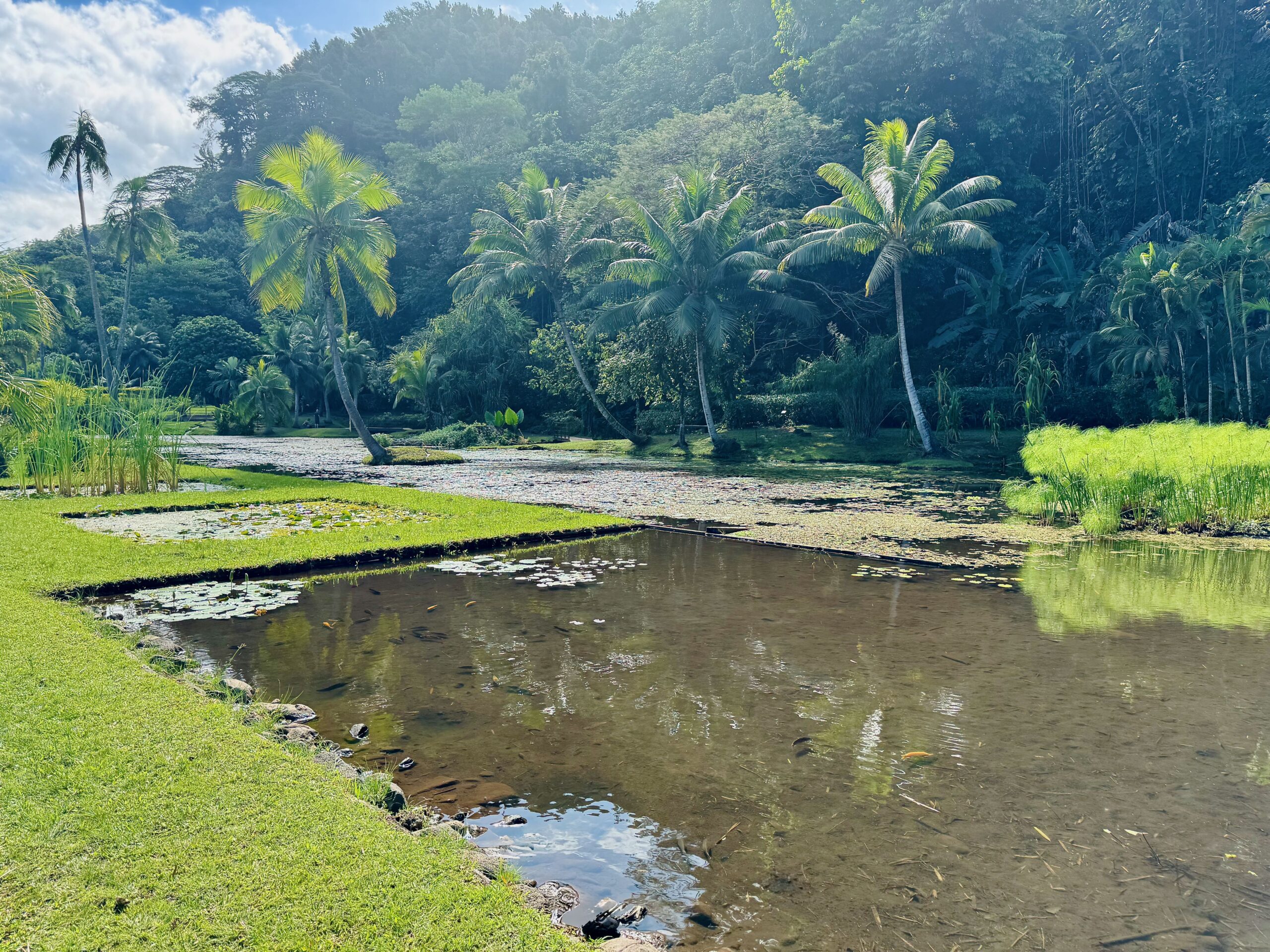
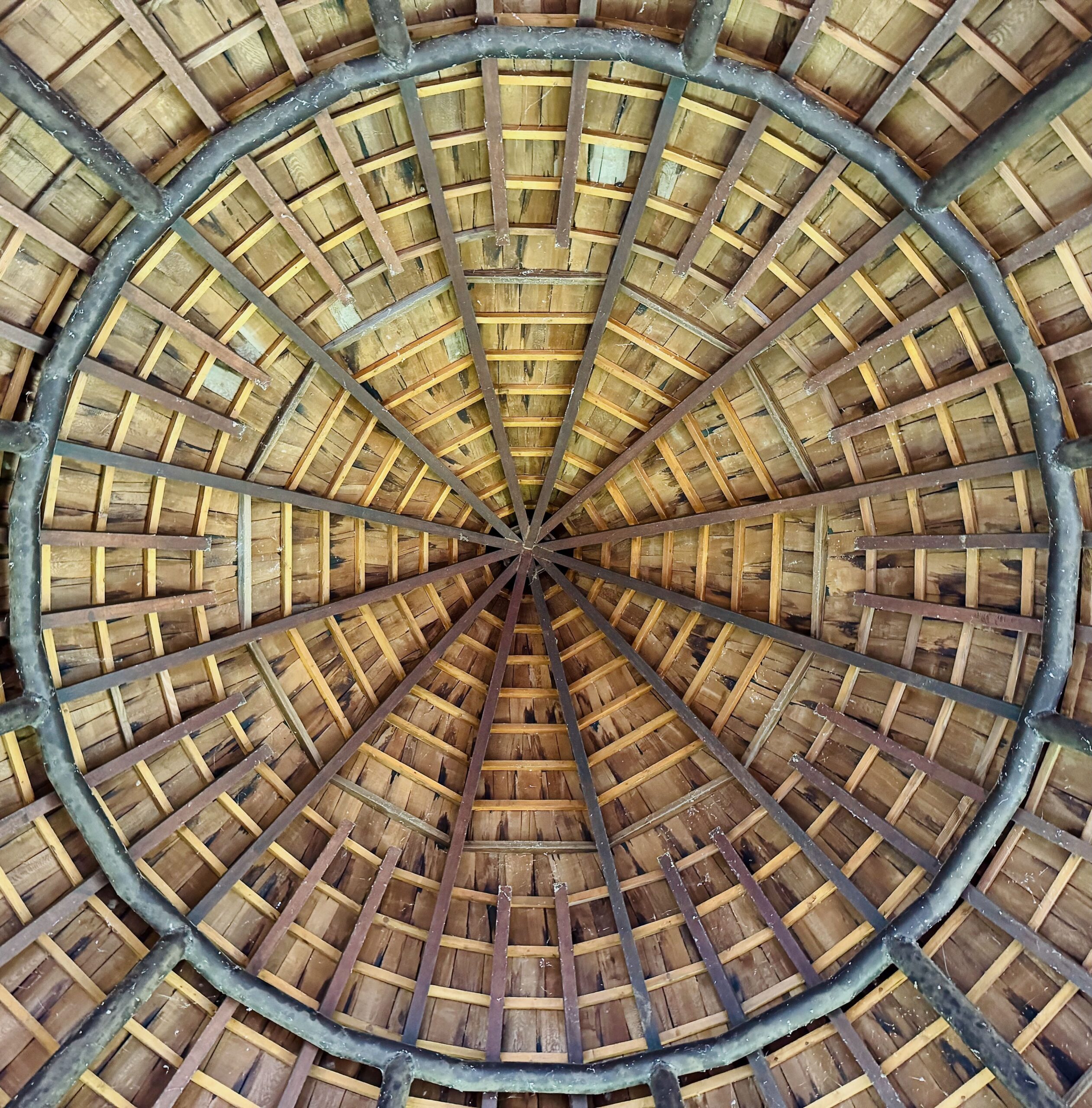
Beyond its natural beauty, the site holds deep spiritual significance; ancient Tahitians believed these waters served as a purification path for souls on their journey to the afterlife. Excellent signage around the park tells the complete story, making it an extremely interesting site.
4. Grande Boucle de Vaipahi (Great Loop to River Trail)
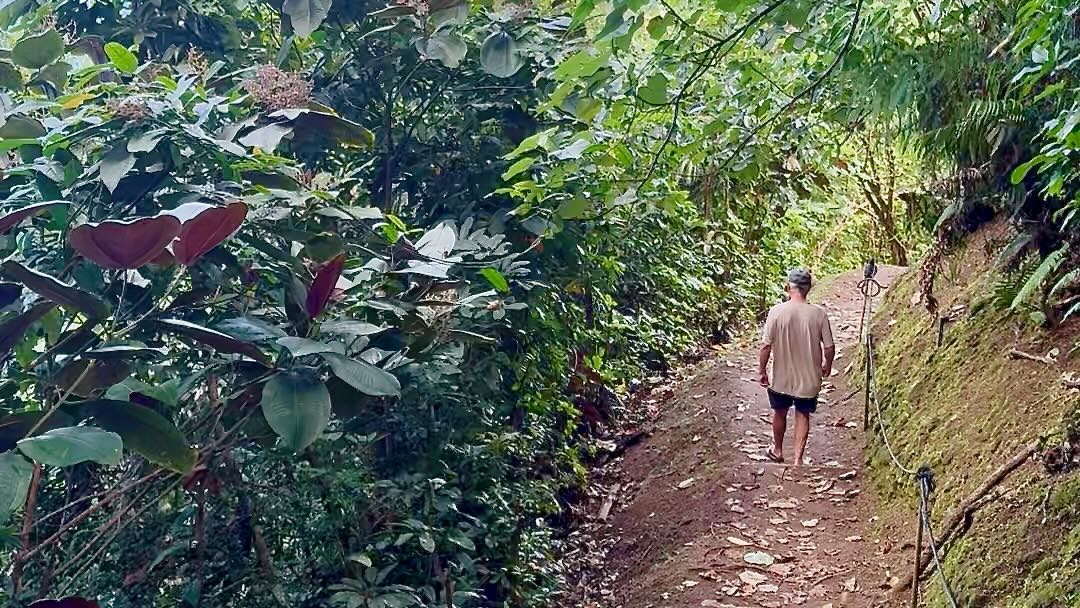
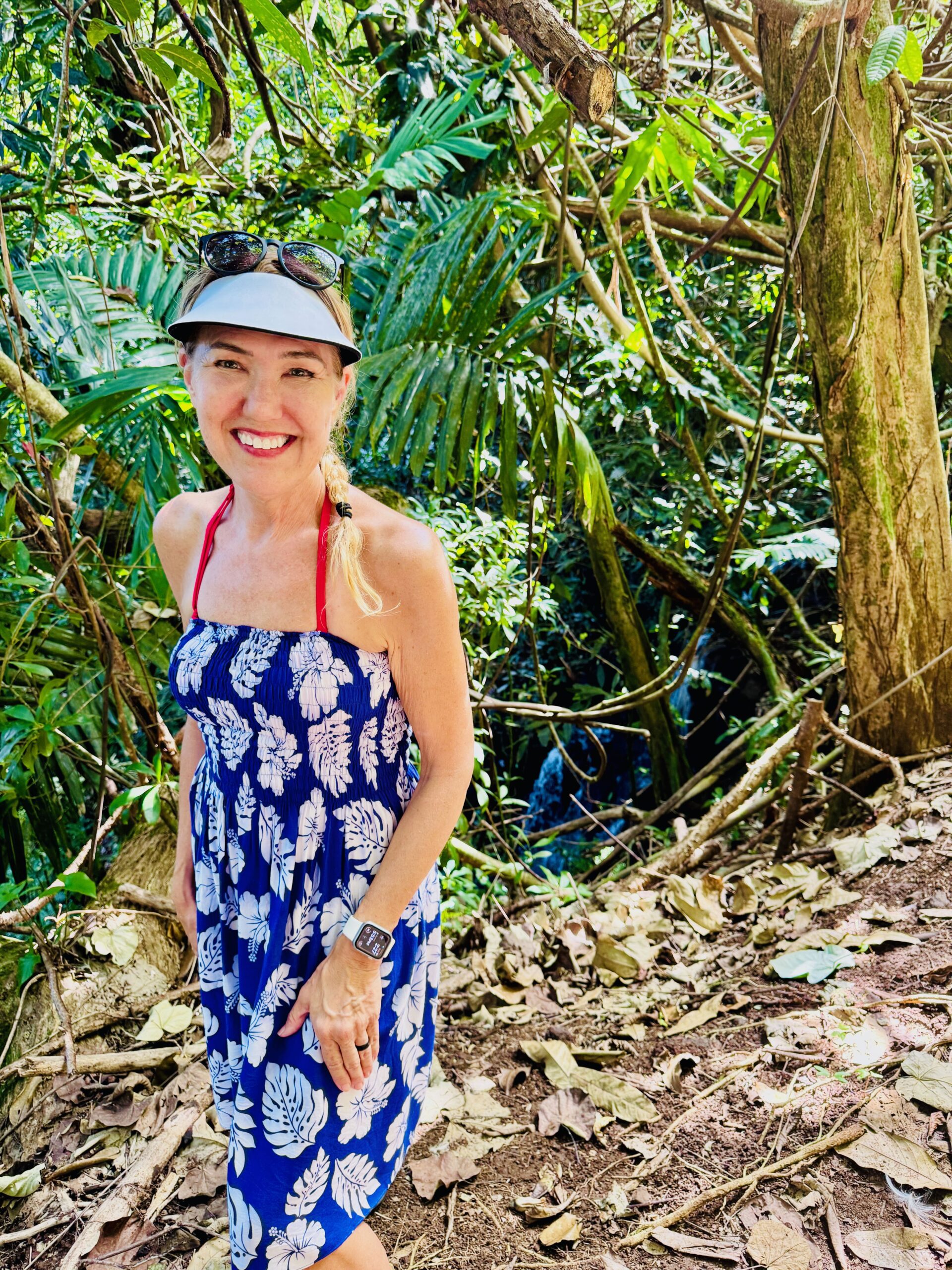
This hike sits within the Water Gardens of Vaipahi. Although shorter paths are available, the full loop is three miles long and 977 feet high. It ascends through lush tropical rainforests and pine groves. As of this writing, some reports indicate that the trails may be closed, so check before you go.
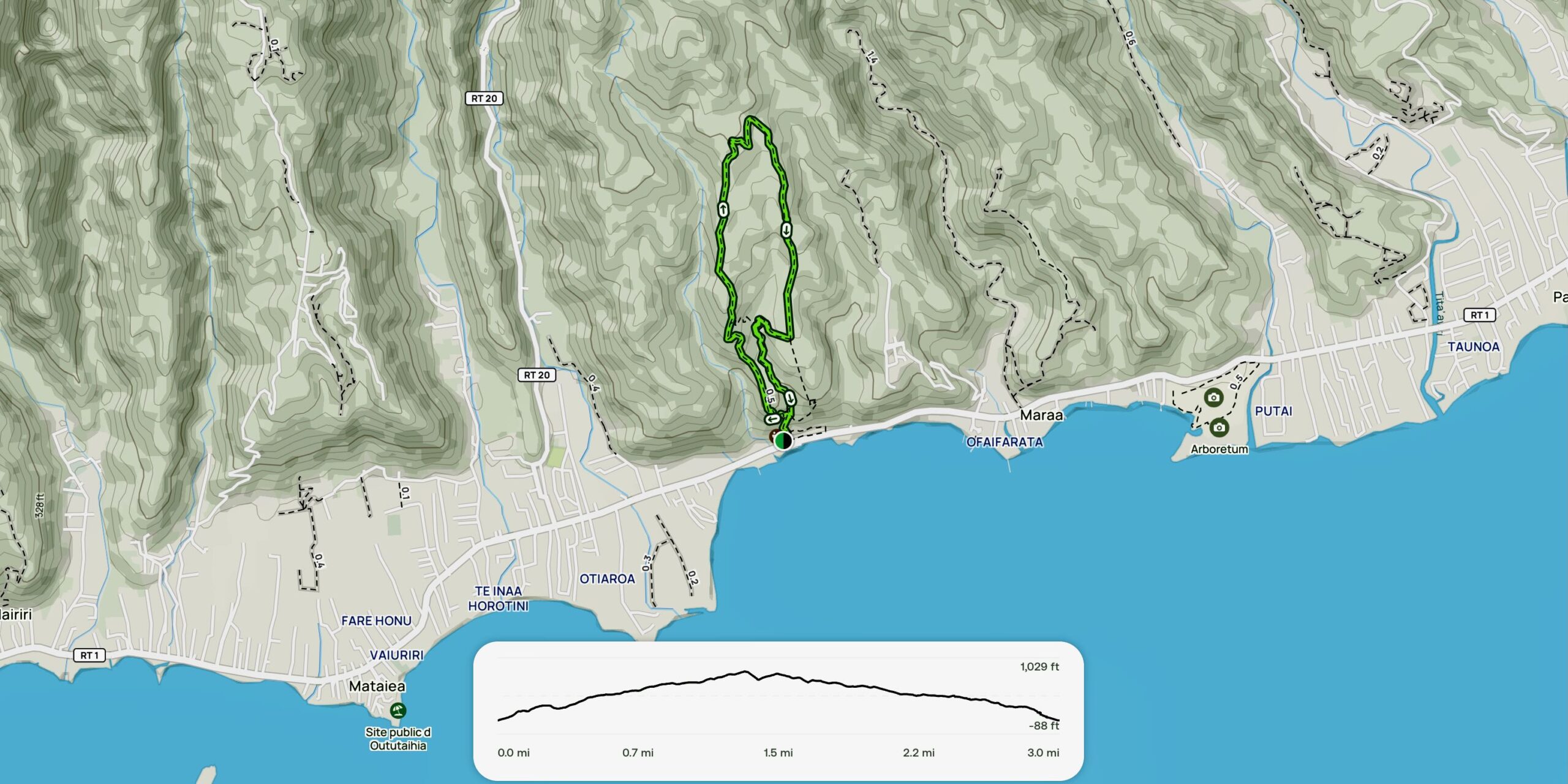
It is quite beautiful and peaceful. From time to time, you are rewarded with panoramic views of the turquoise lagoon below.
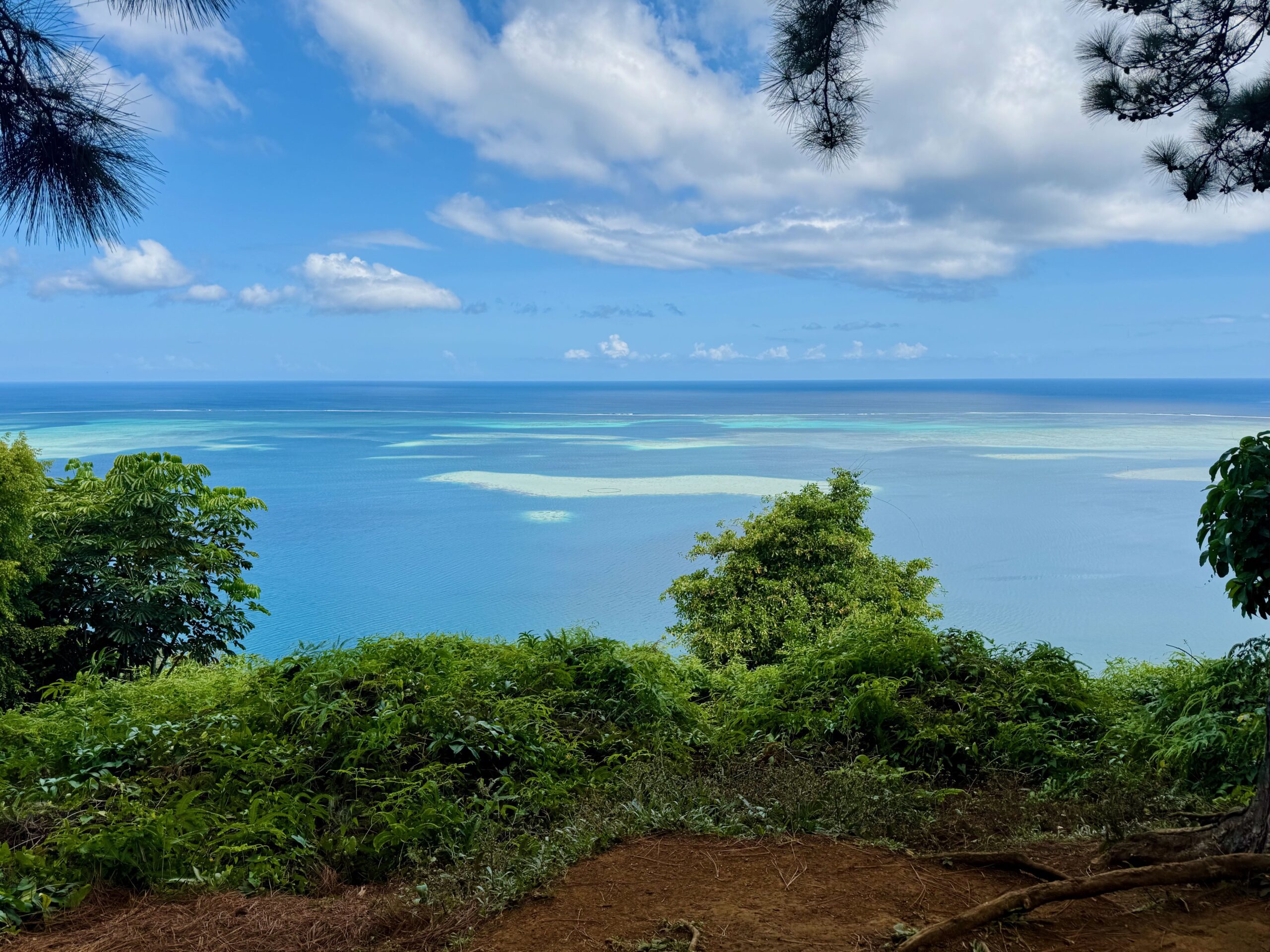
Taking about two hours to complete, the path is well-maintained and features diverse flora and rushing waterfalls.
5. Te Fare Iamanaha (Museum of Tahiti and the Islands)
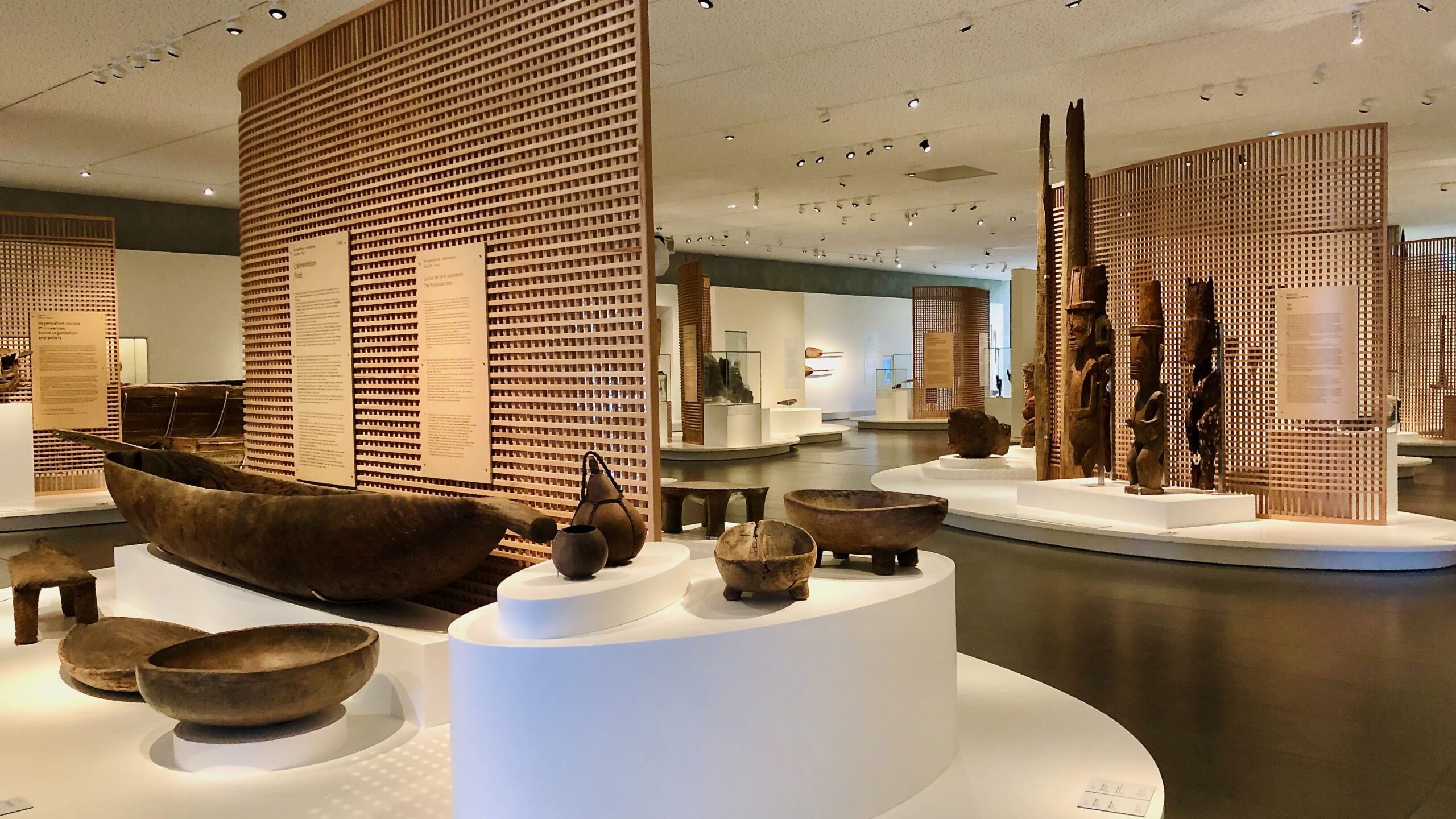
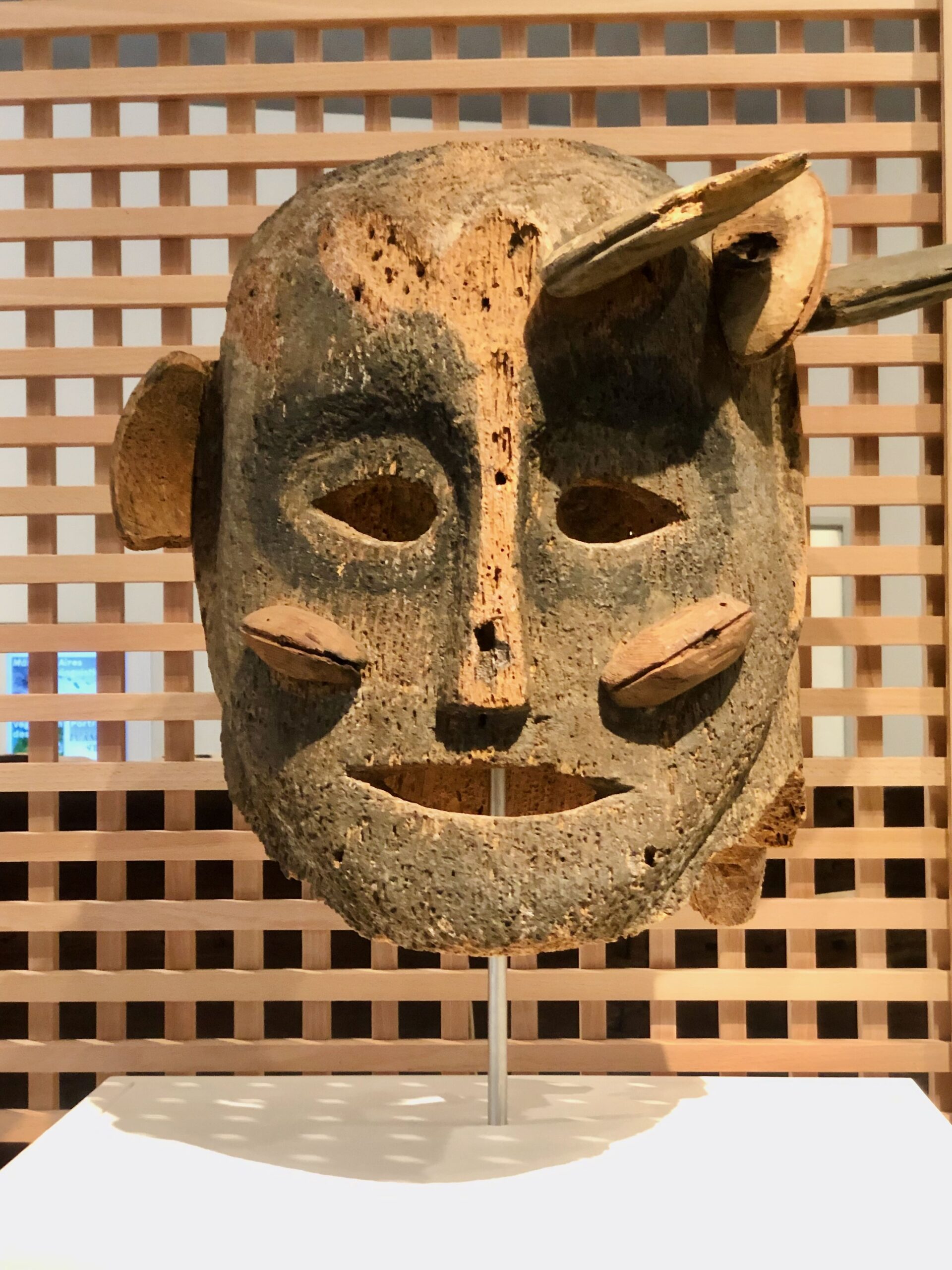
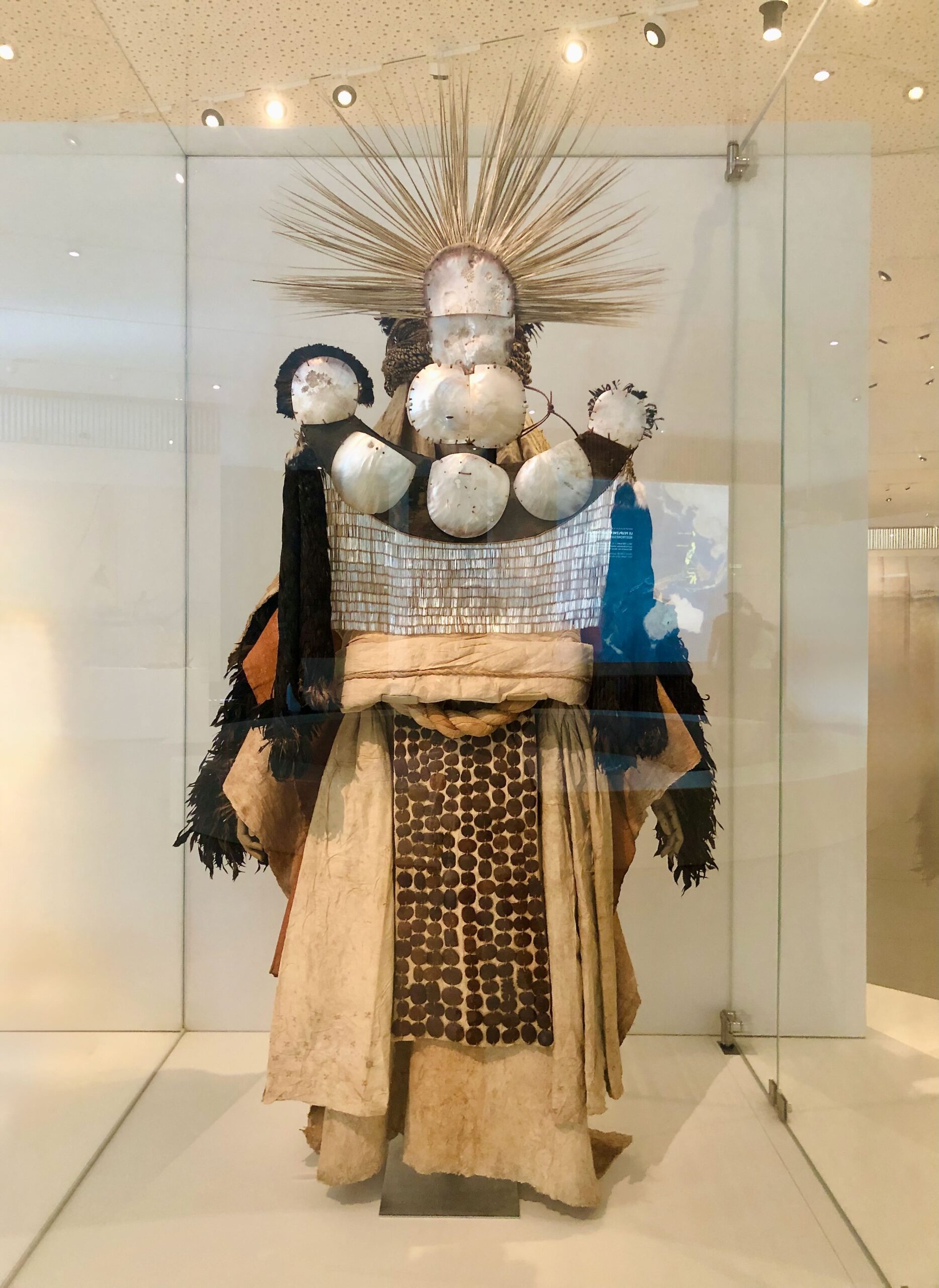
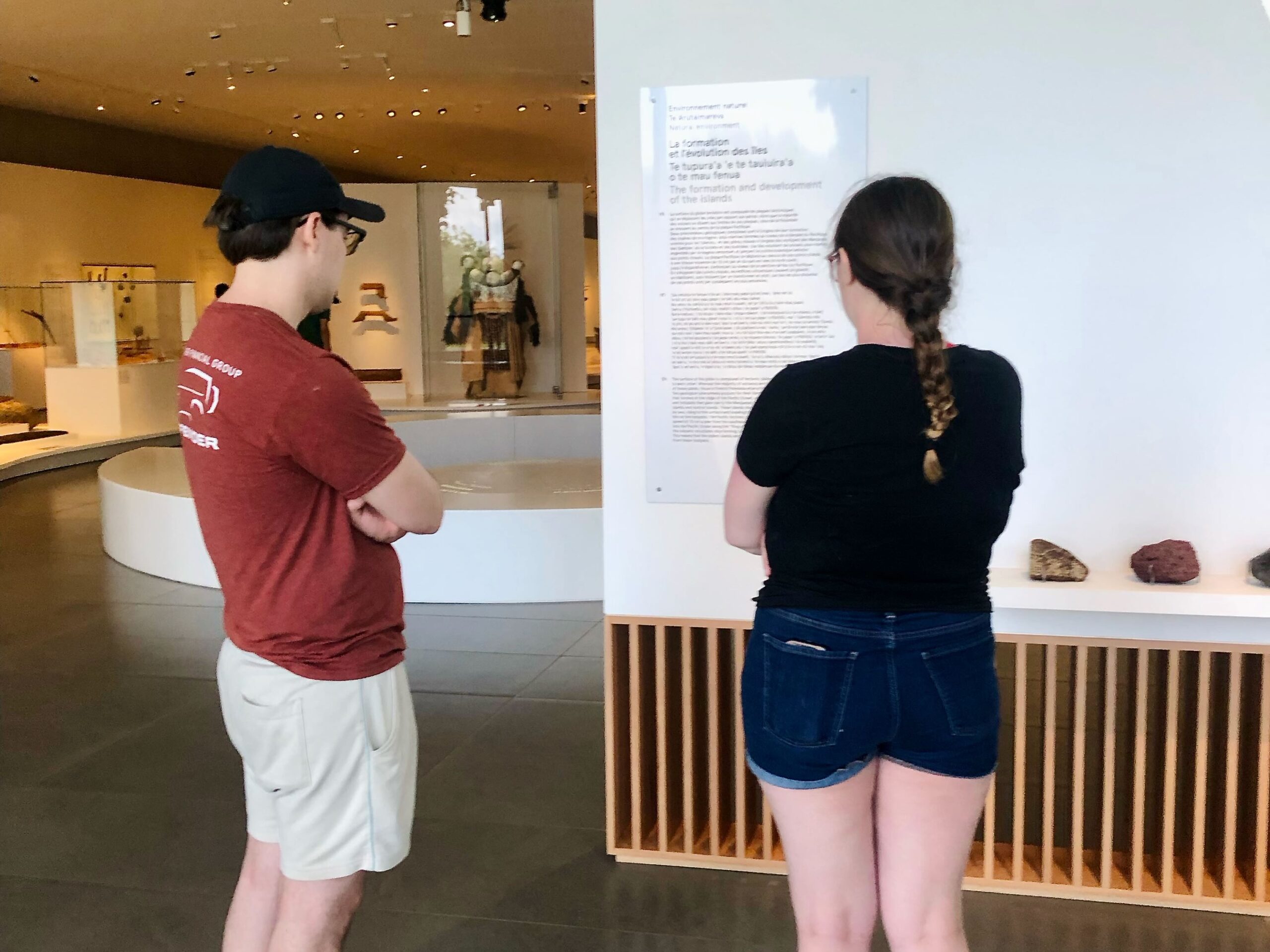
This museum is arguably the best in the South Pacific. It houses incredible collections of traditional dress, navigational tools, and historical artifacts that explain the migrations across the Great Ocean. It’s very well done.
As a bonus, this is located right outside:
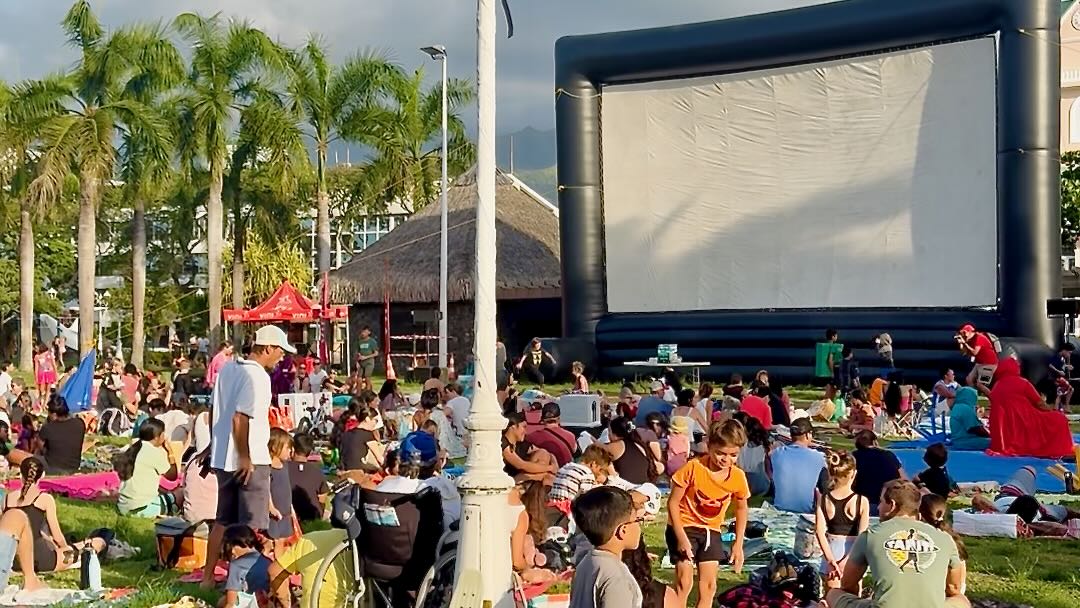
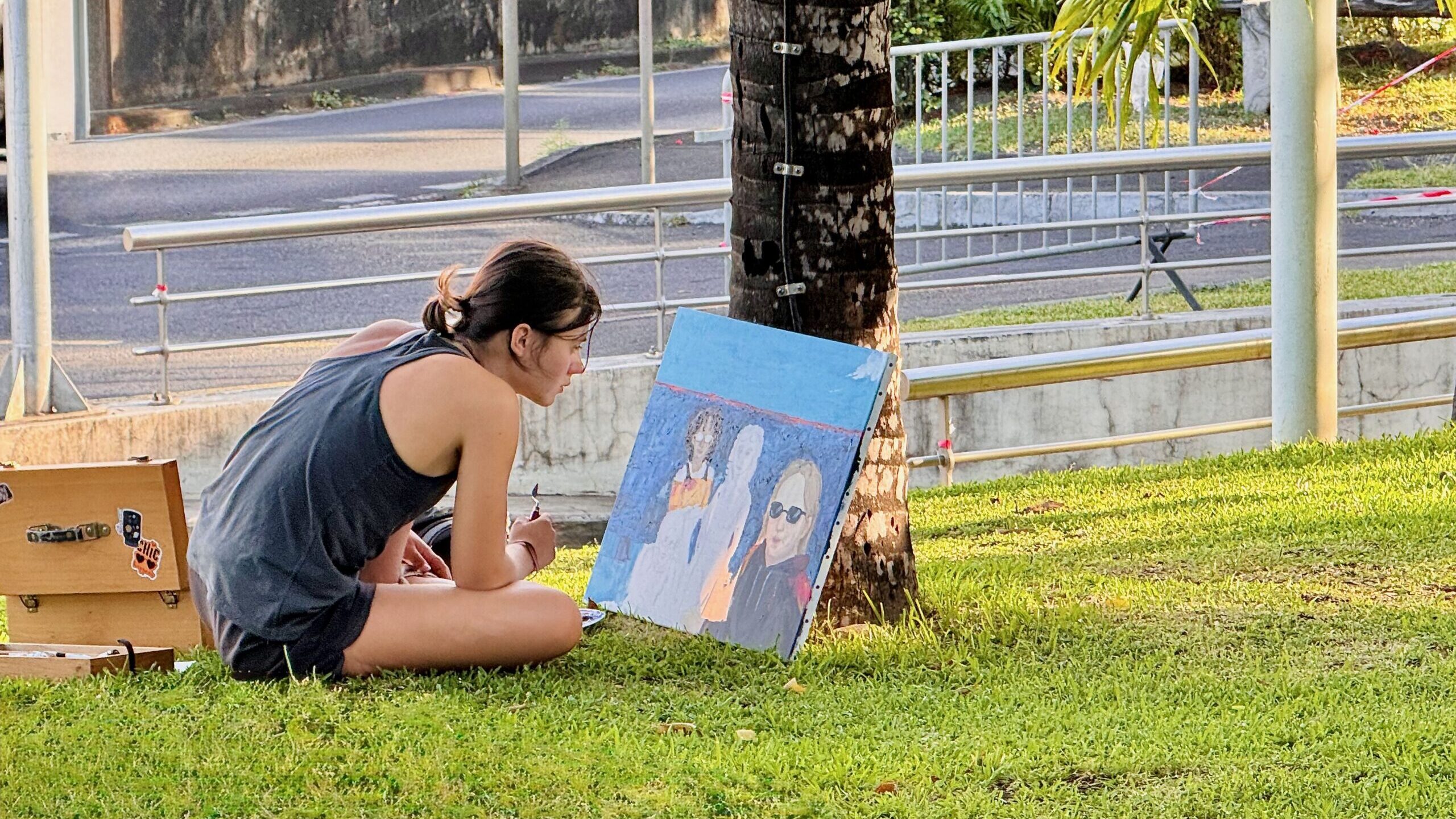
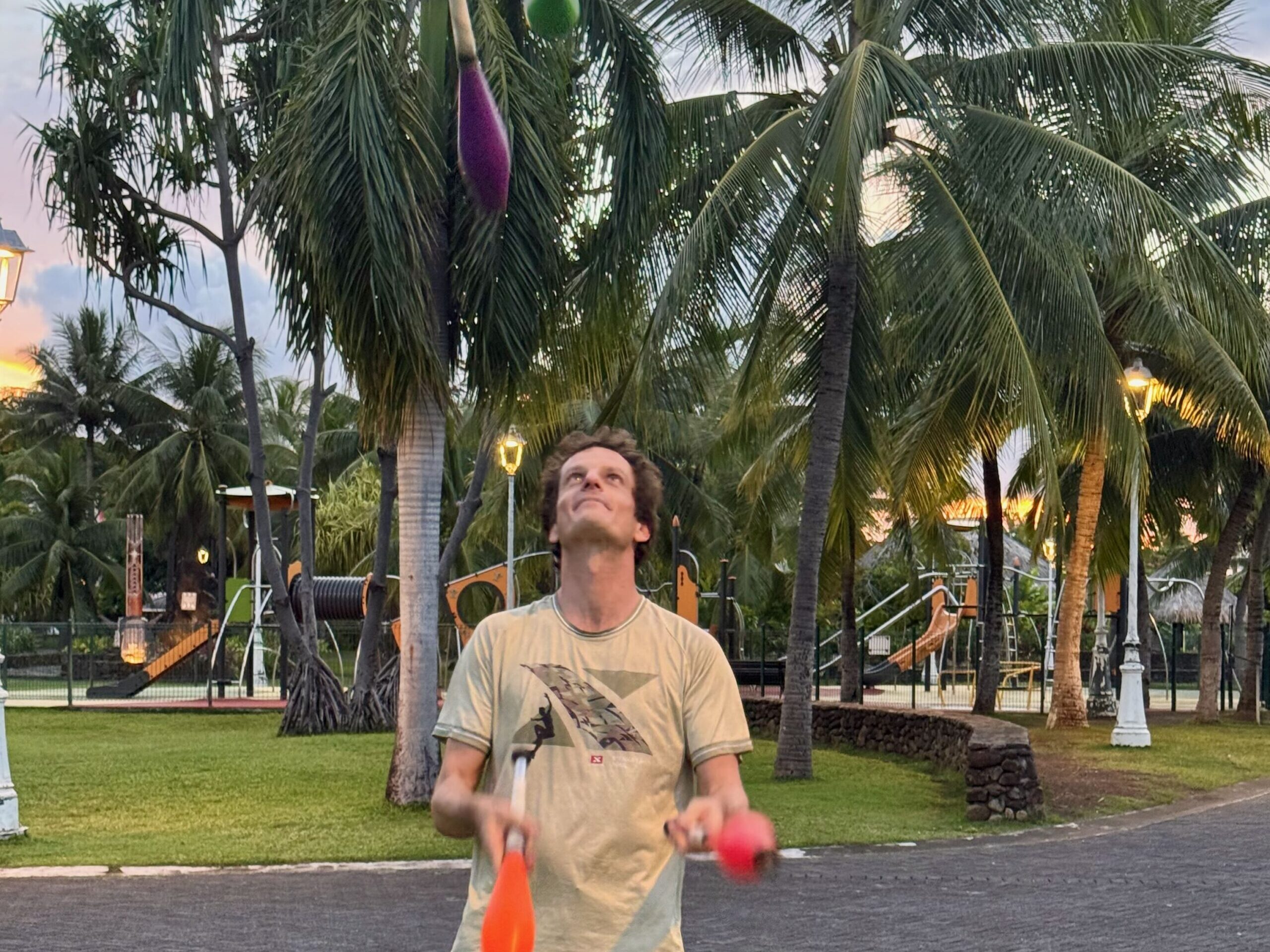
6. Jardins De Paofai (Paofai Park)
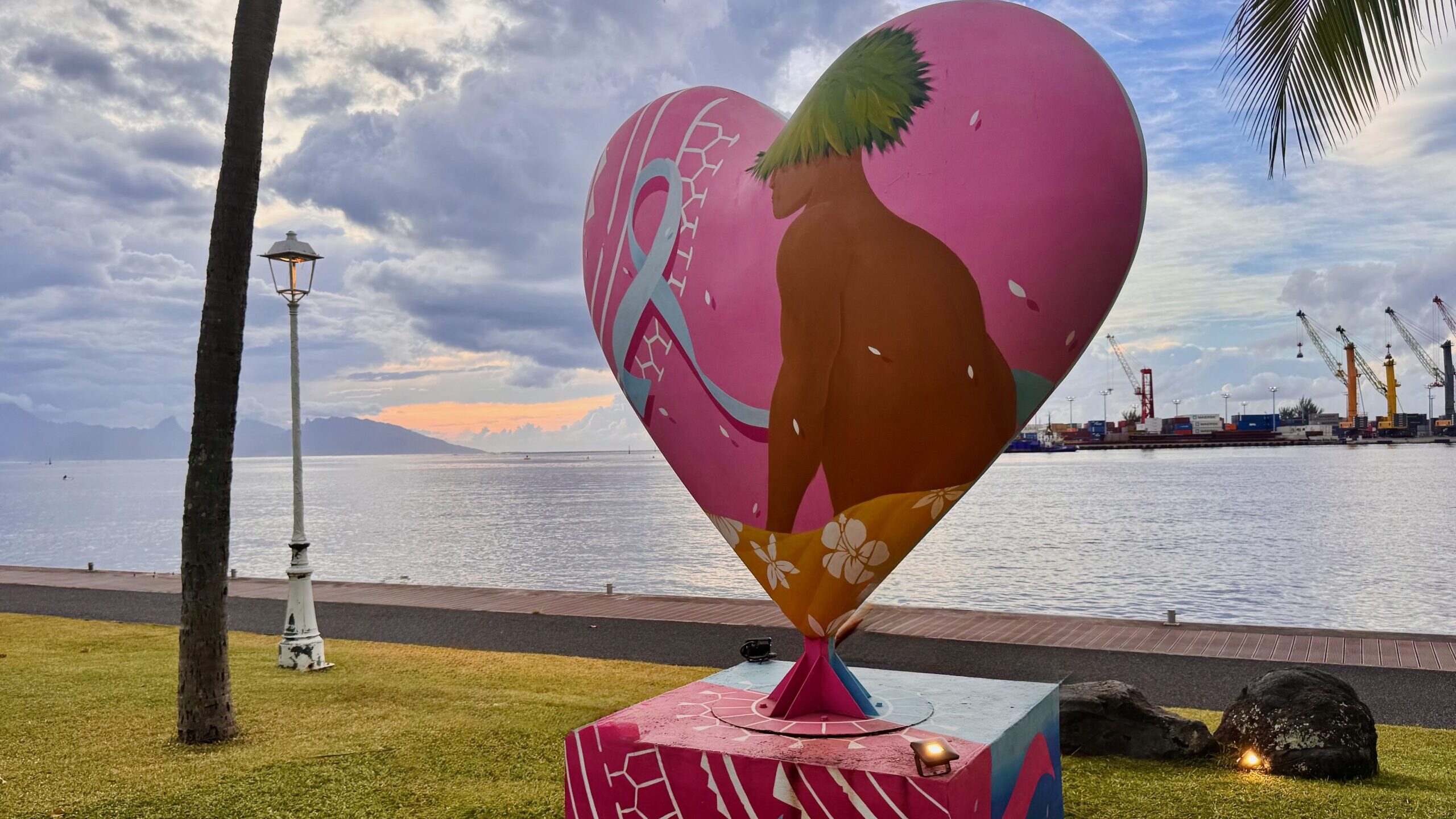
This park is a popular place for sporting activities.
Paintball parties:
Movie nights:
Musicians and artists:
This:
And even this:
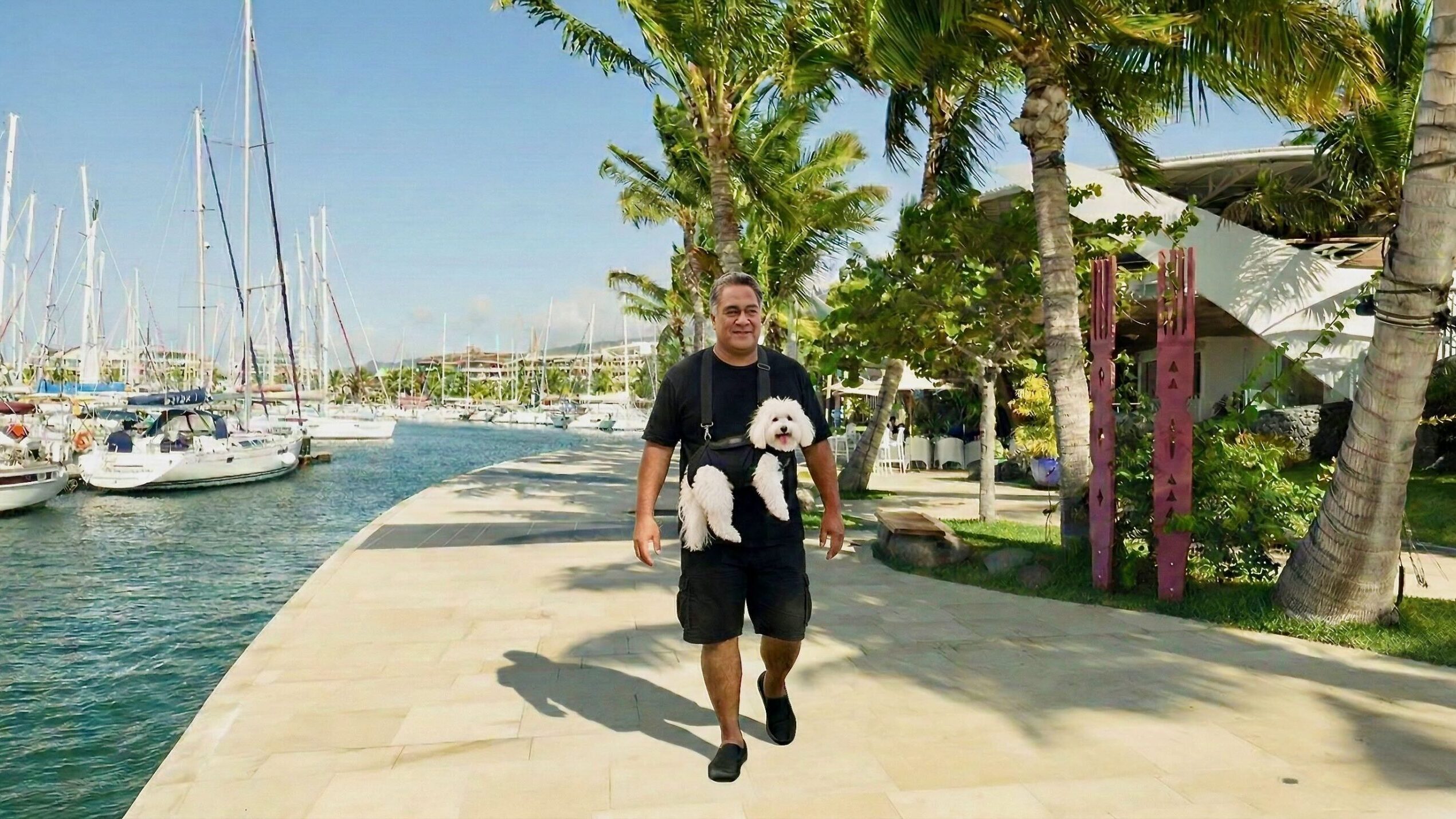
You never know what you will see there.
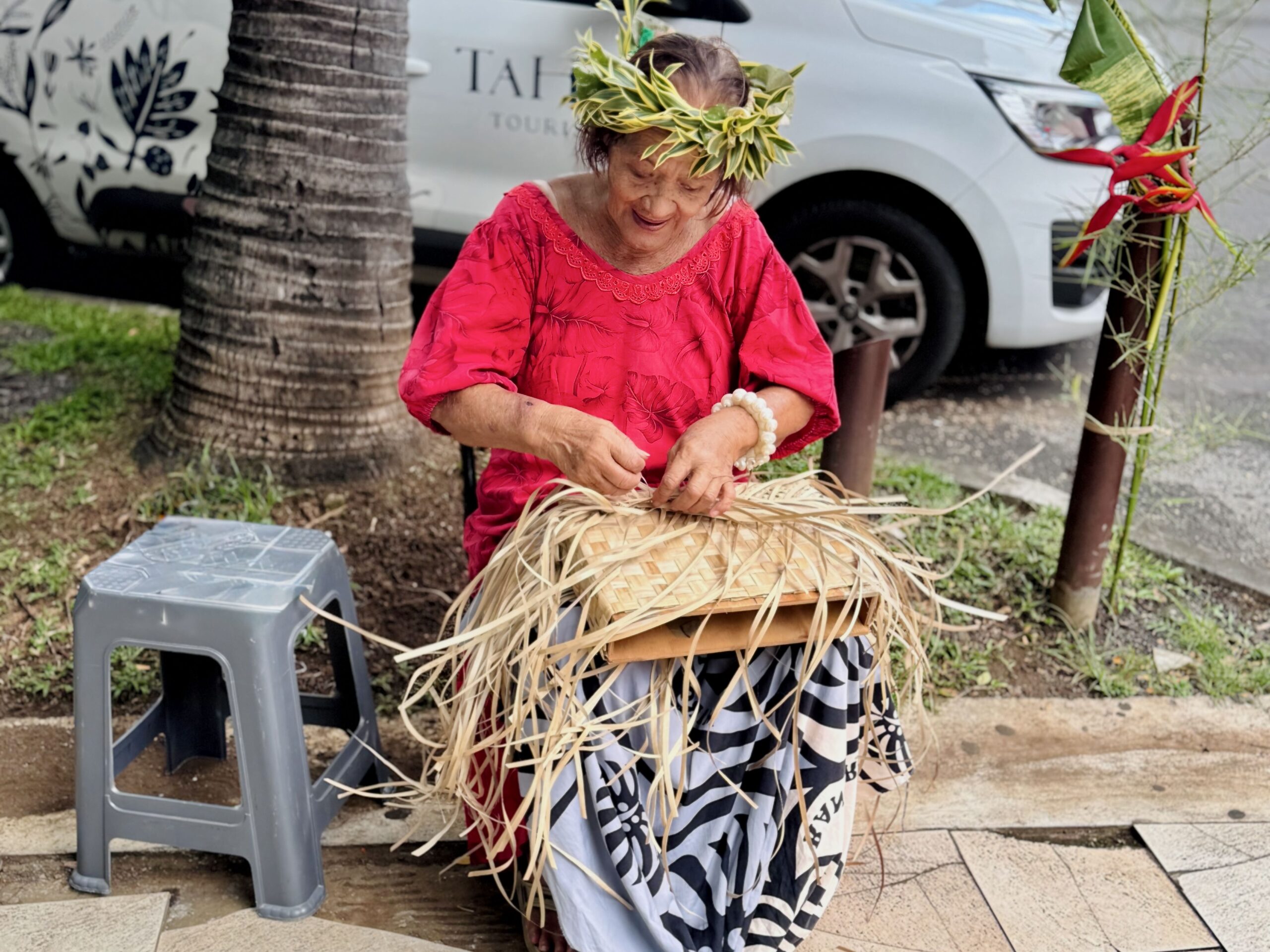
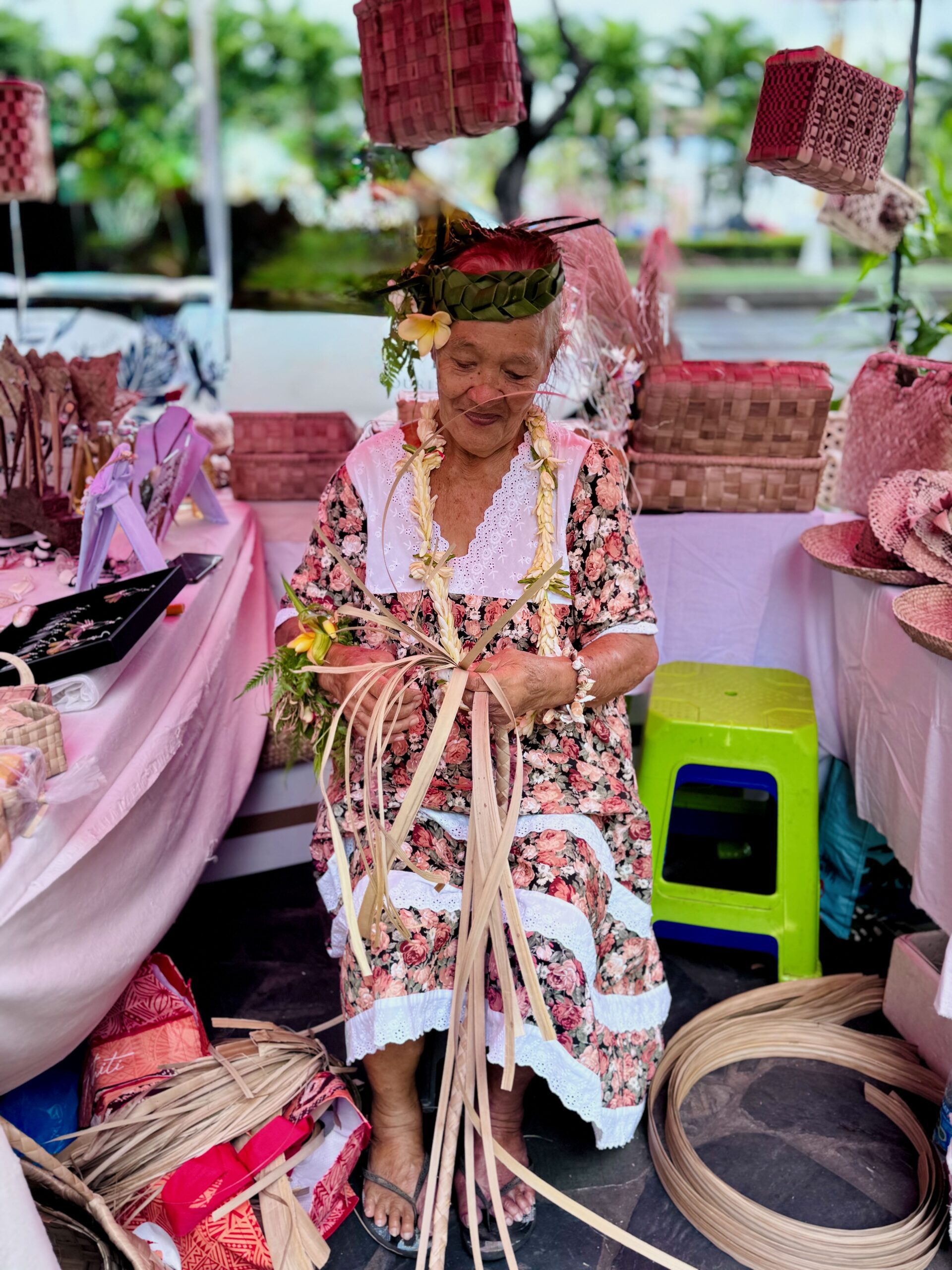
7. Local Crafts
I love watching locals making their crafts.
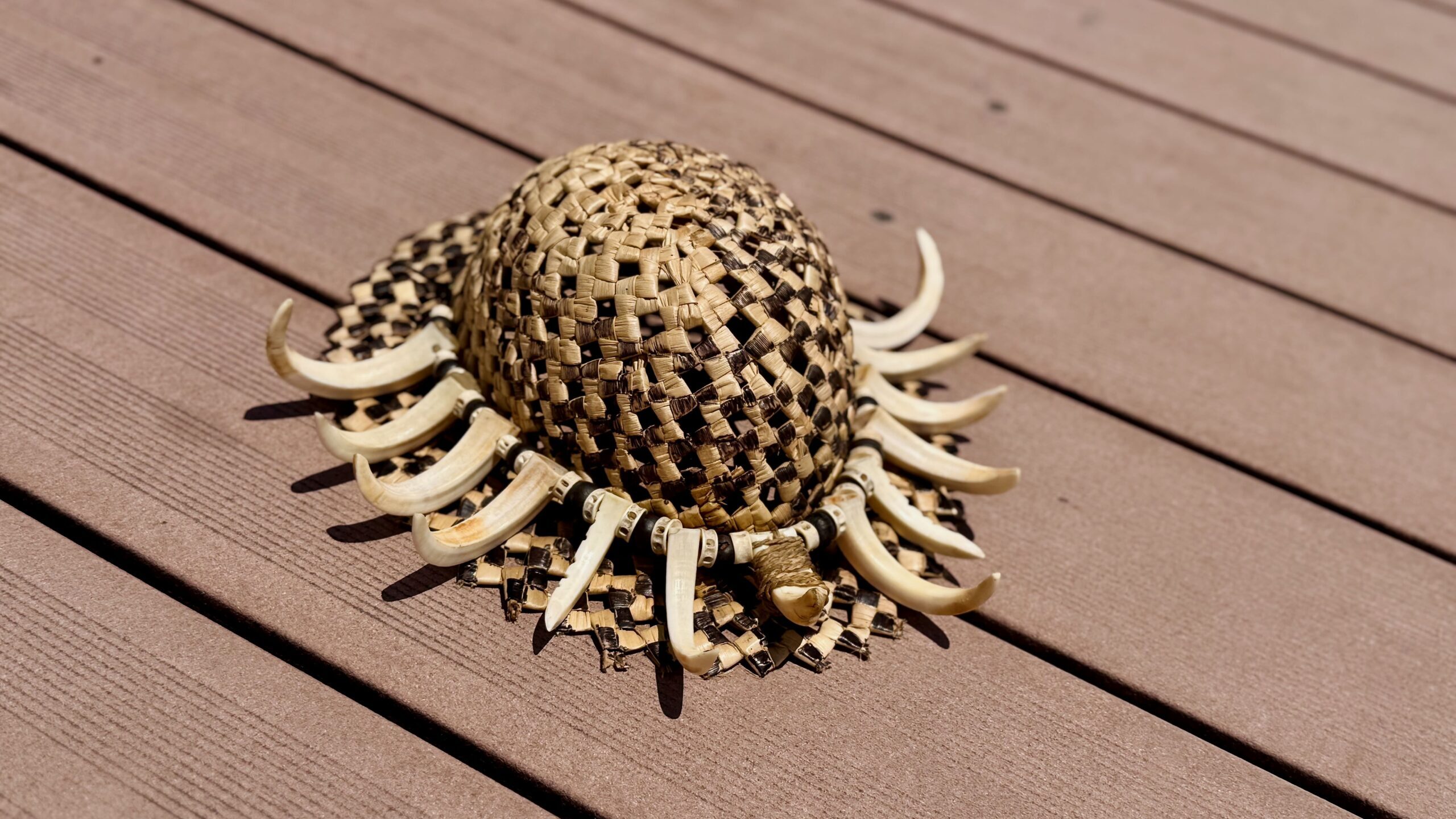
And even more importantly, wearing them. This hat was set aside for safekeeping while a local man worked on a charter boat in our marina. I later saw him wearing it as he walked through Park Paofai.
8. Flowers Everywhere
As an elaborate floral crown or simply worn behind the ear, flowers are central to Tahitian culture. Both men and women wear them everywhere. You would never see that in the USA, but I really love that about the Tahitian culture.
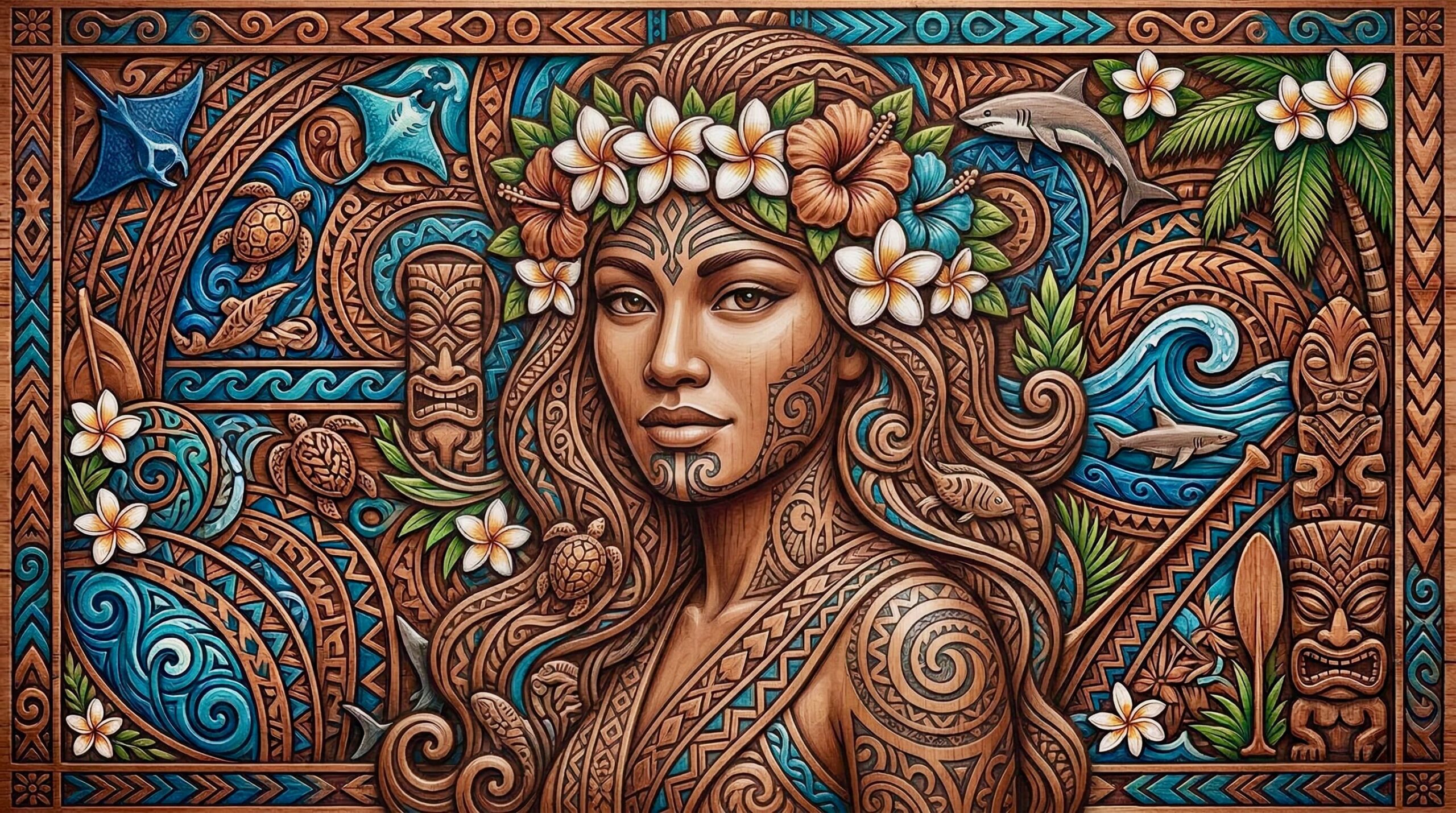
9. Va’a (Outriggers)
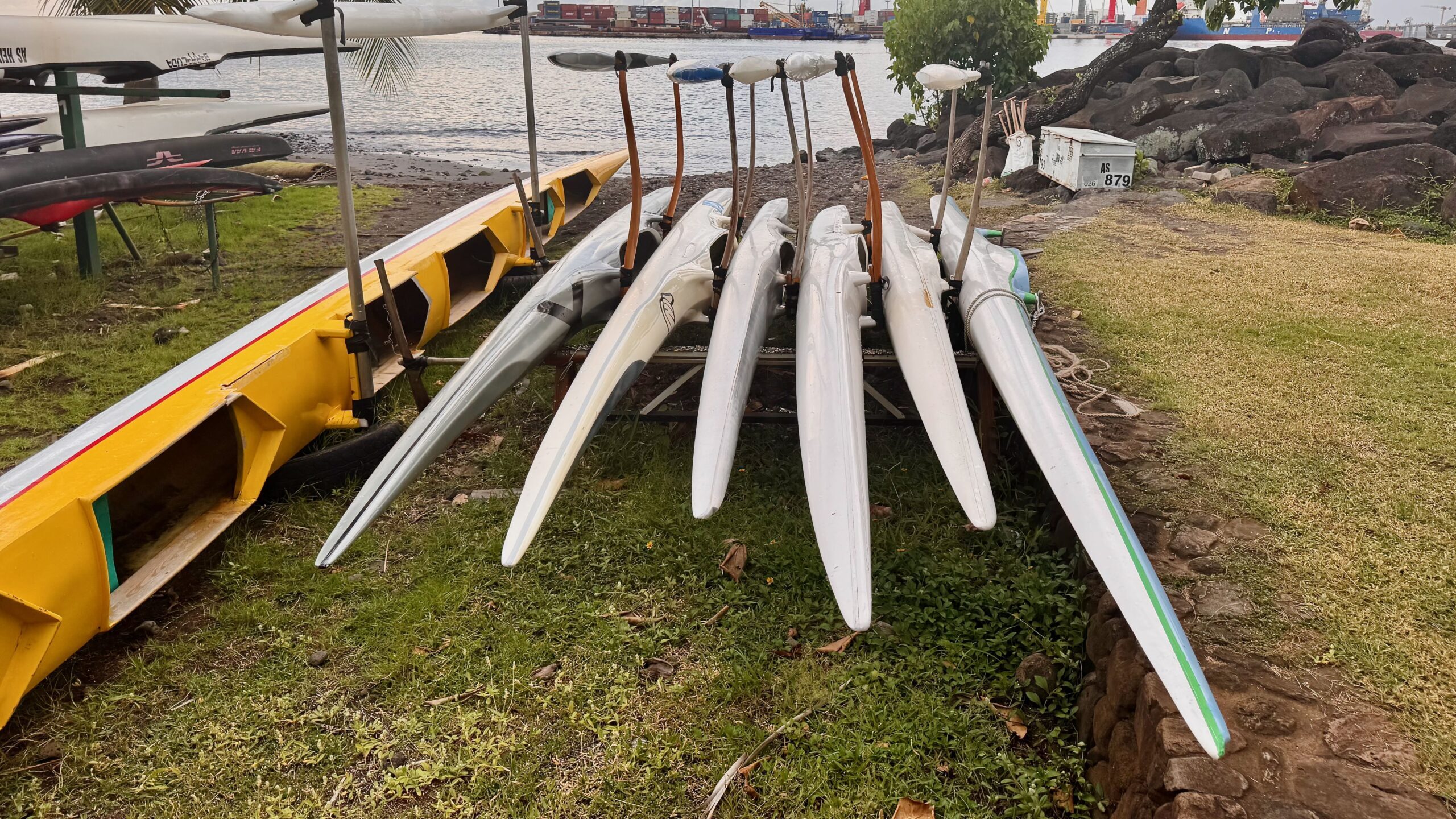
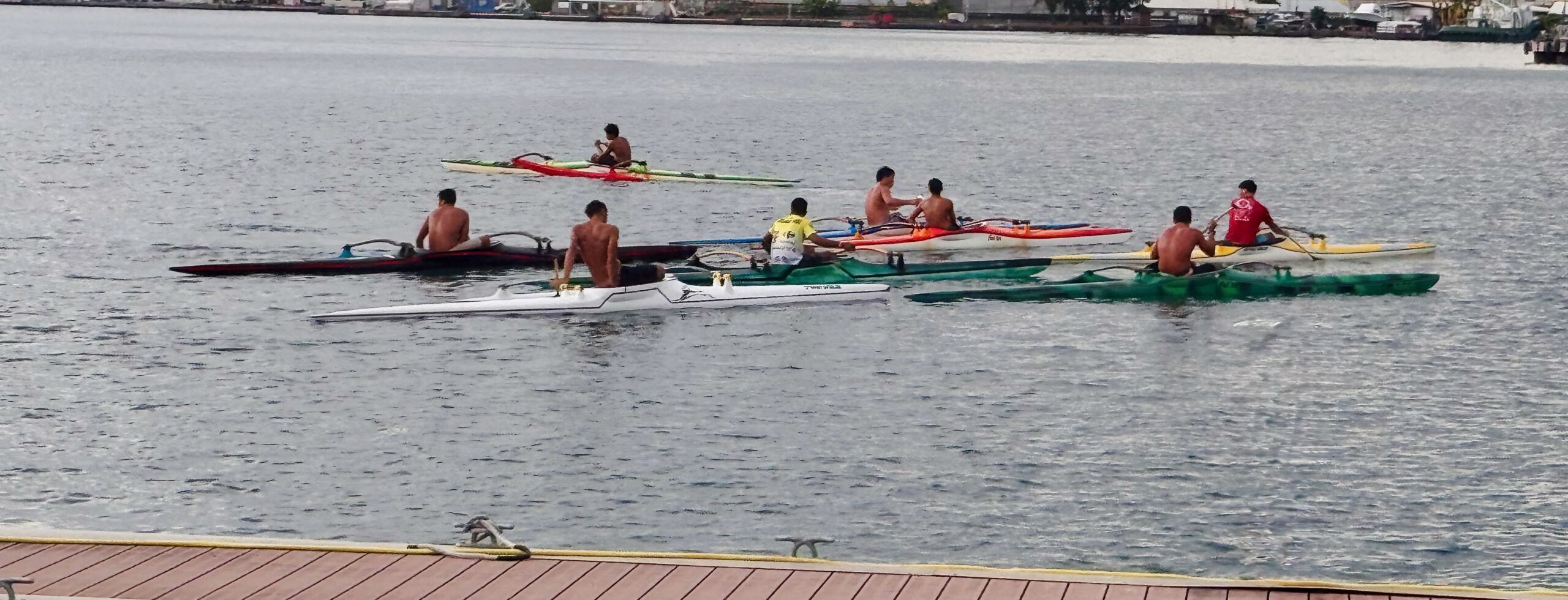
Known as va’a, outrigger canoes are the most significant cultural and sporting symbols in Tahiti. Outrigger paddling is the national sport of French Polynesia. The waters around Tahiti Nui are frequently filled with both traditional wooden canoes and modern fiberglass racing versions.
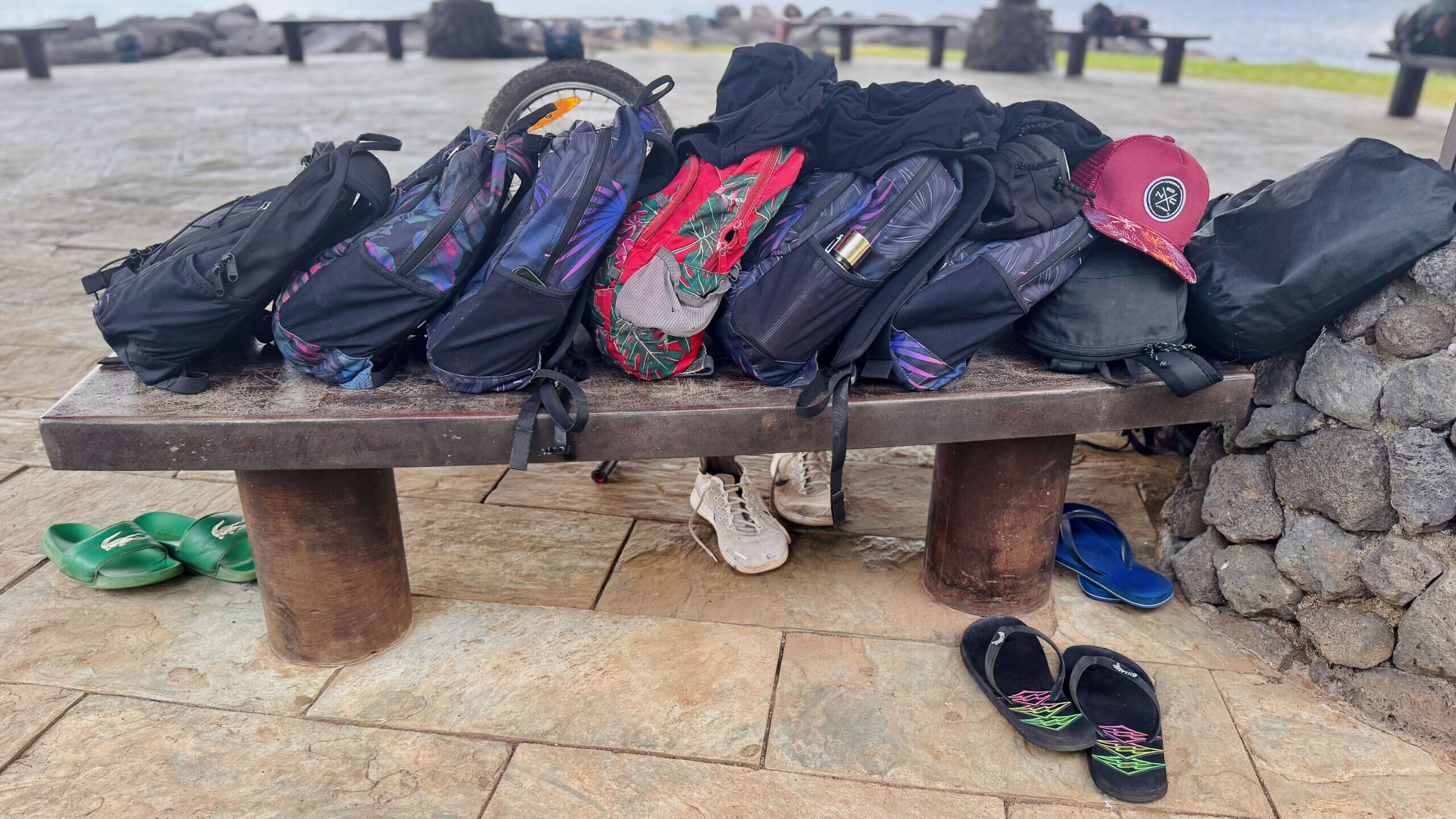
We noticed a large number of young people doing this every day after school.
10. Food Tour
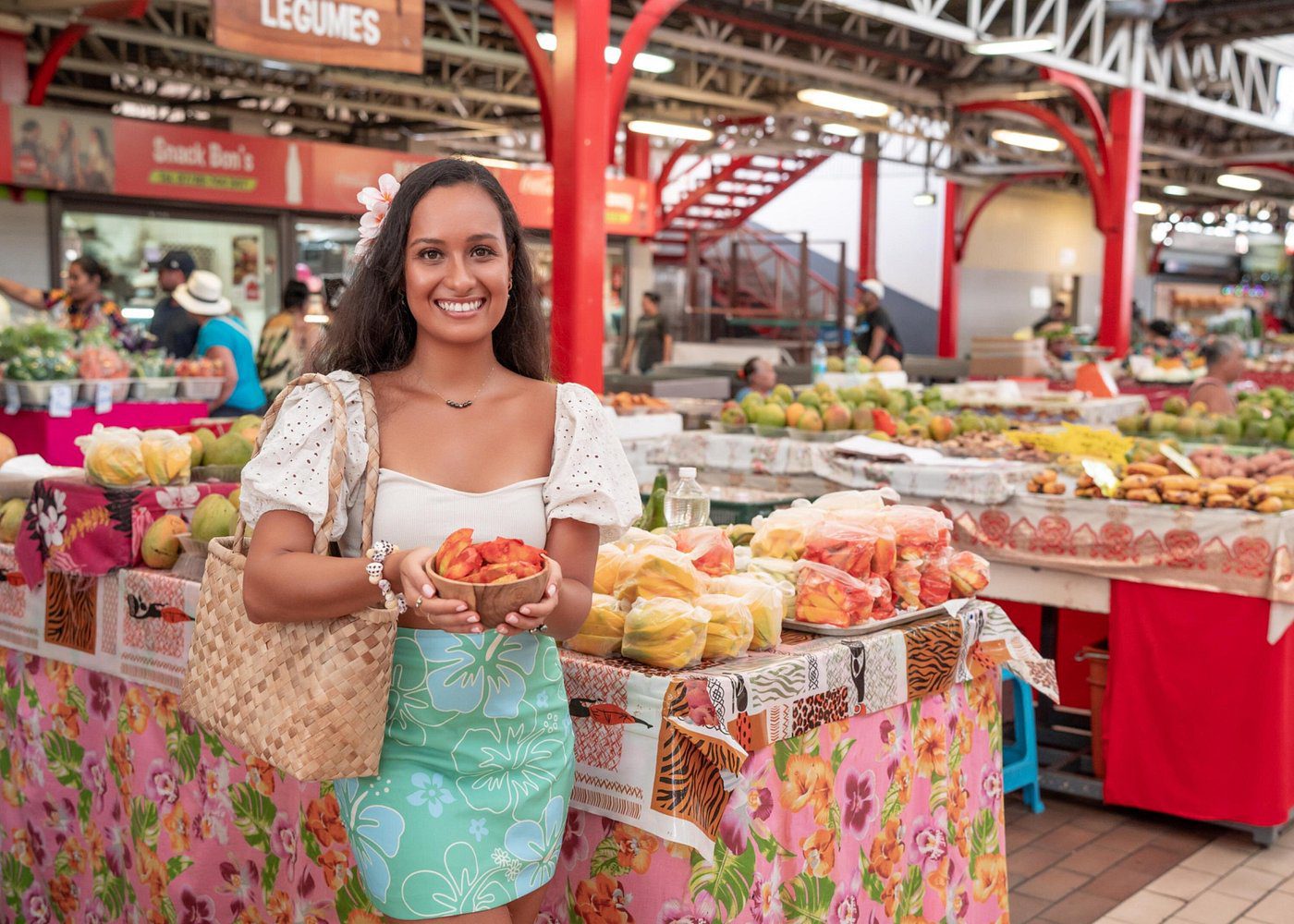
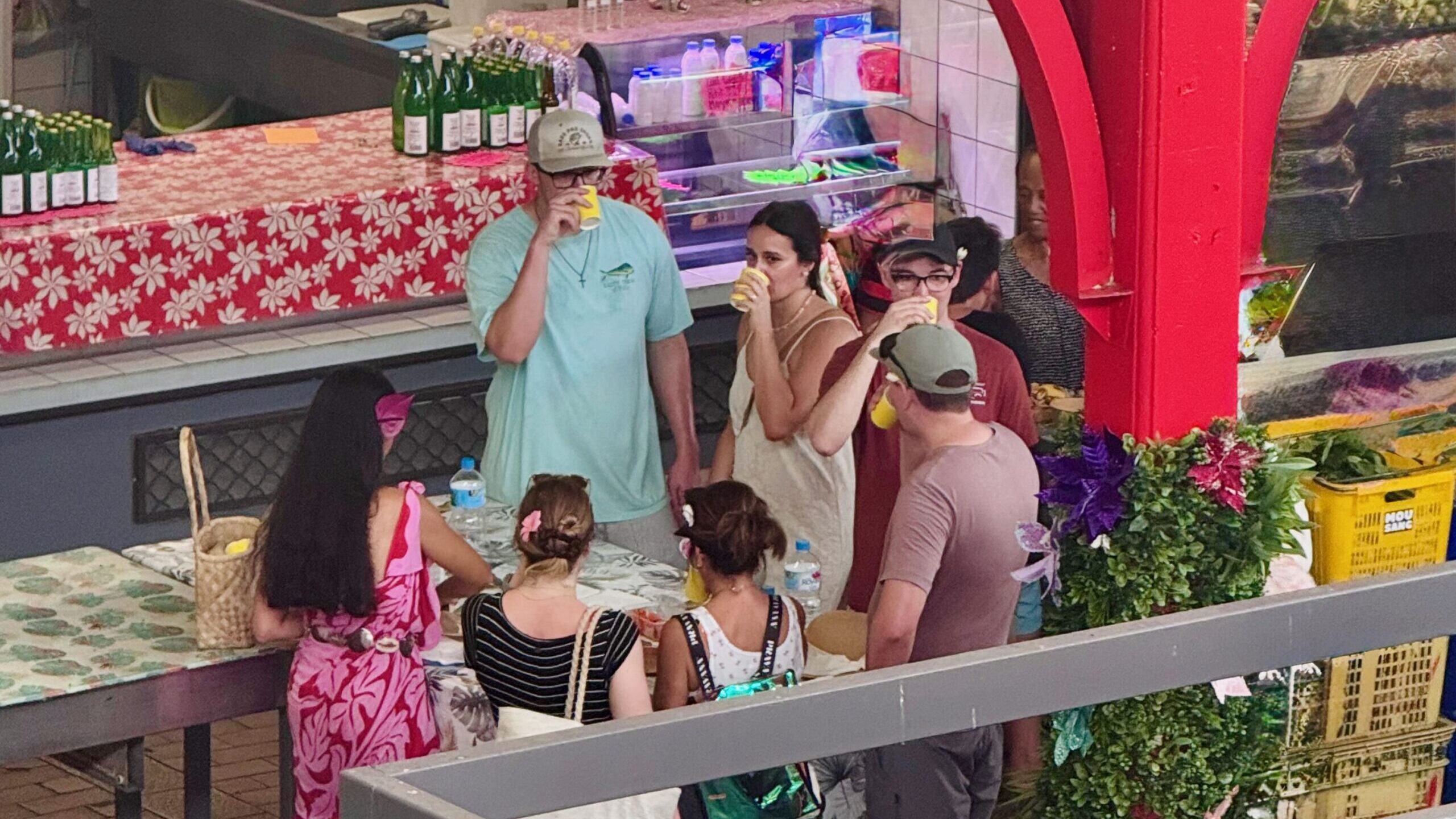
Our boat guests at Christmastime took this food tour and absolutely loved it. The tour makes several tasting stops around Pape’ete, including some private venues. The guide shares stories about the culture and traditions of the Polynesians, and talks about growing up in Tahiti. It was a huge hit!
11. Point Venus and the Lighthouse
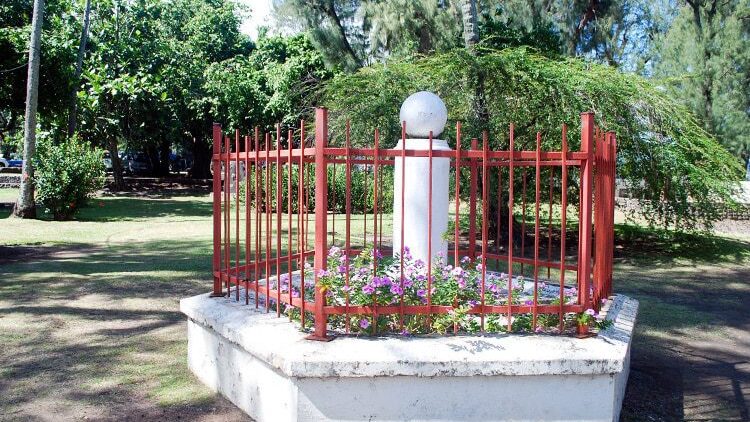
This is where Captain Cook observed the transit of Venus in 1769. Today, there’s a memorial to Cook at the site.
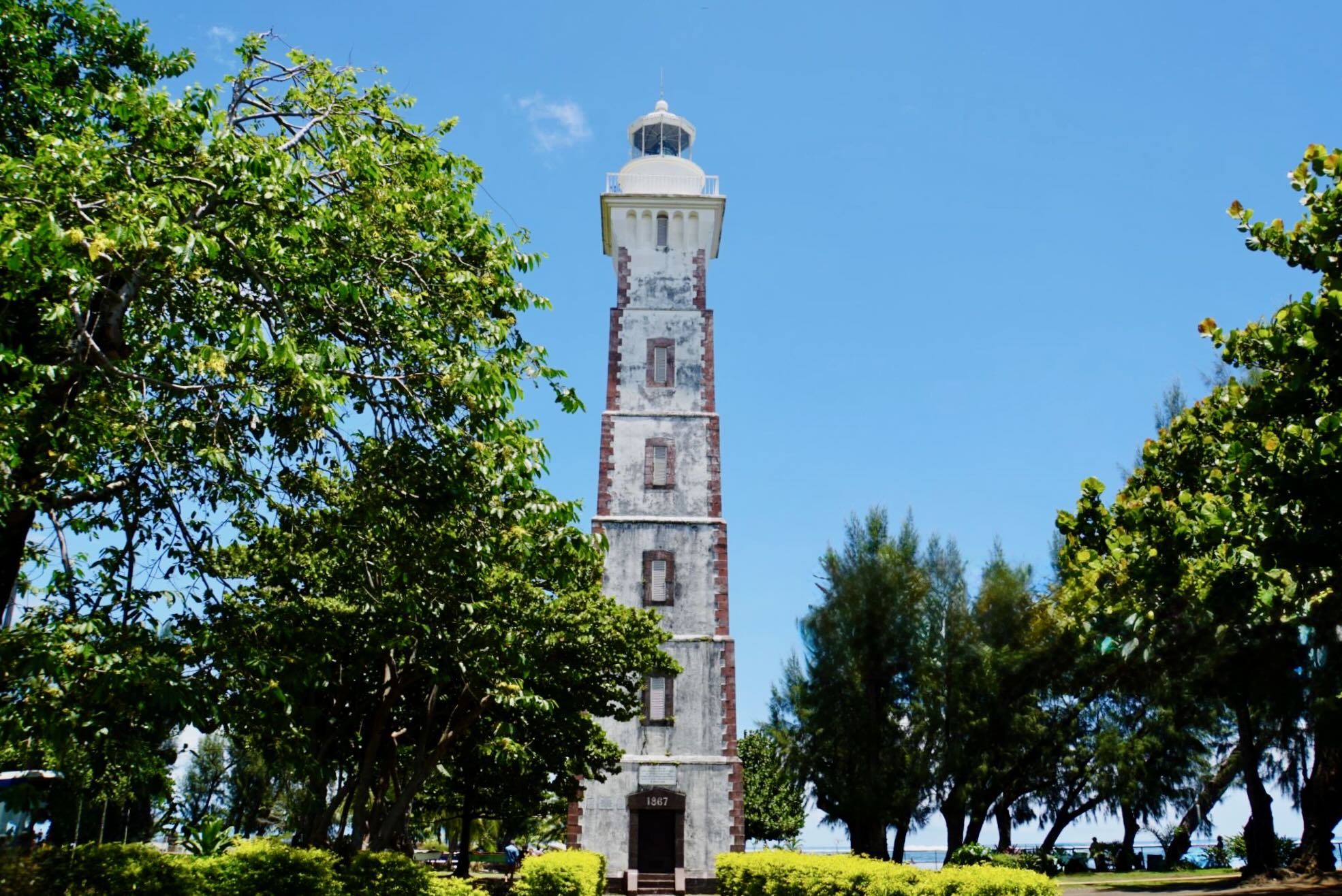
The black-sand beach here is stunning, and the historic Victorian-era lighthouse stands as a tall white sentinel against the dark shore.
It’s a pretty, peaceful place.
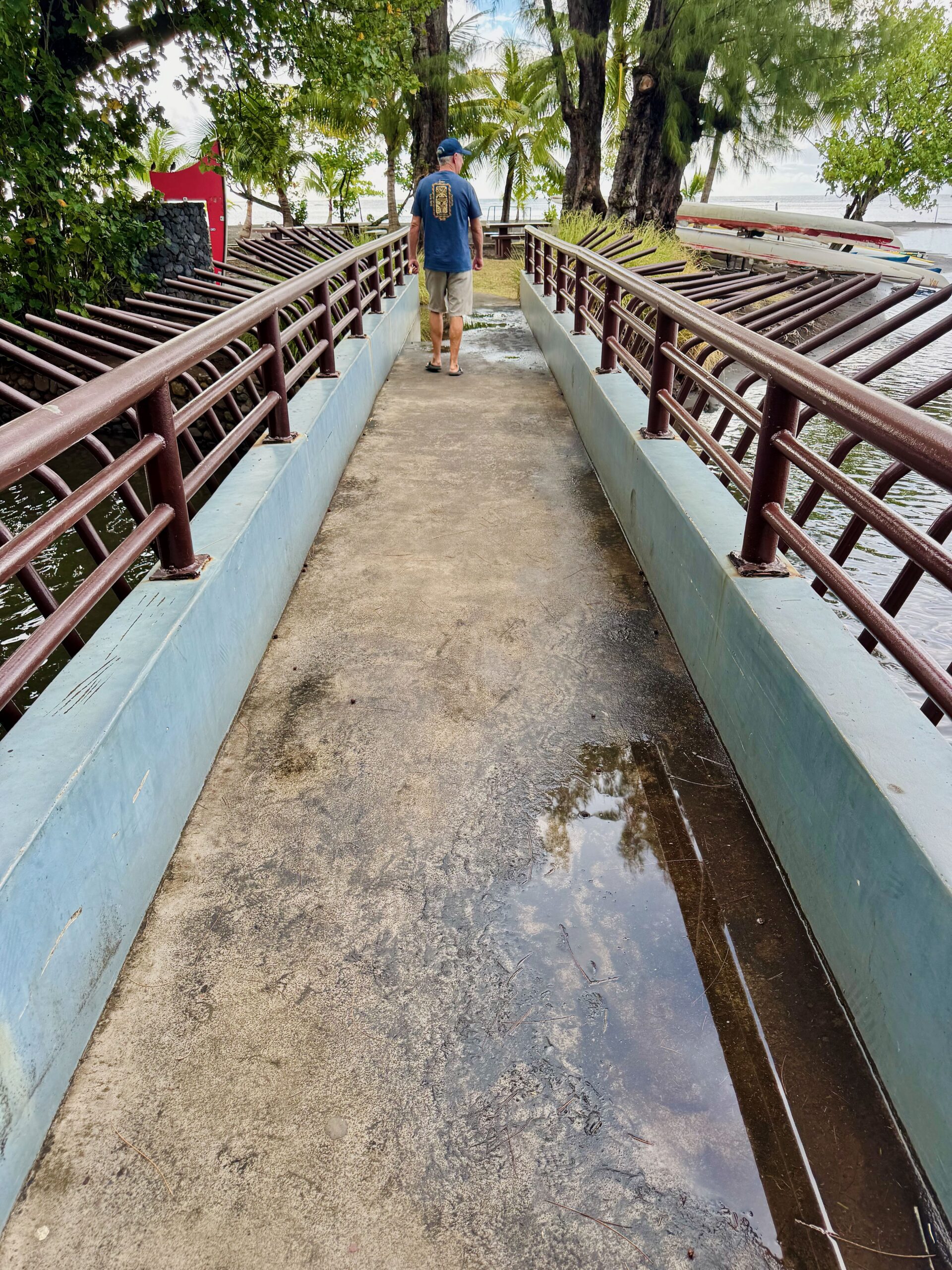
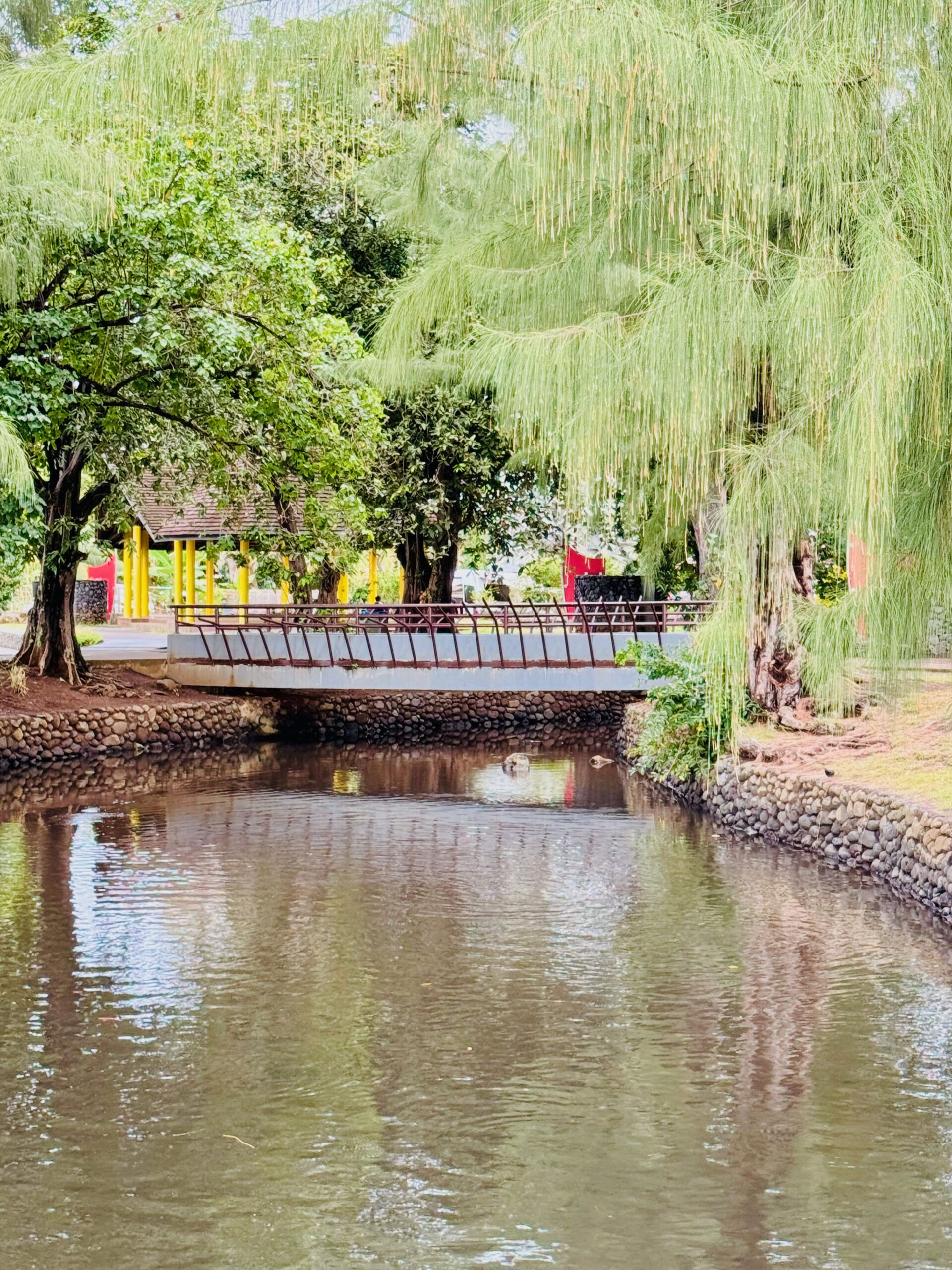
It’s also a popular spot for local families to picnic. We anchored here and also saw many whales. We thought it was a good anchorage.
12. Taharuu Beach
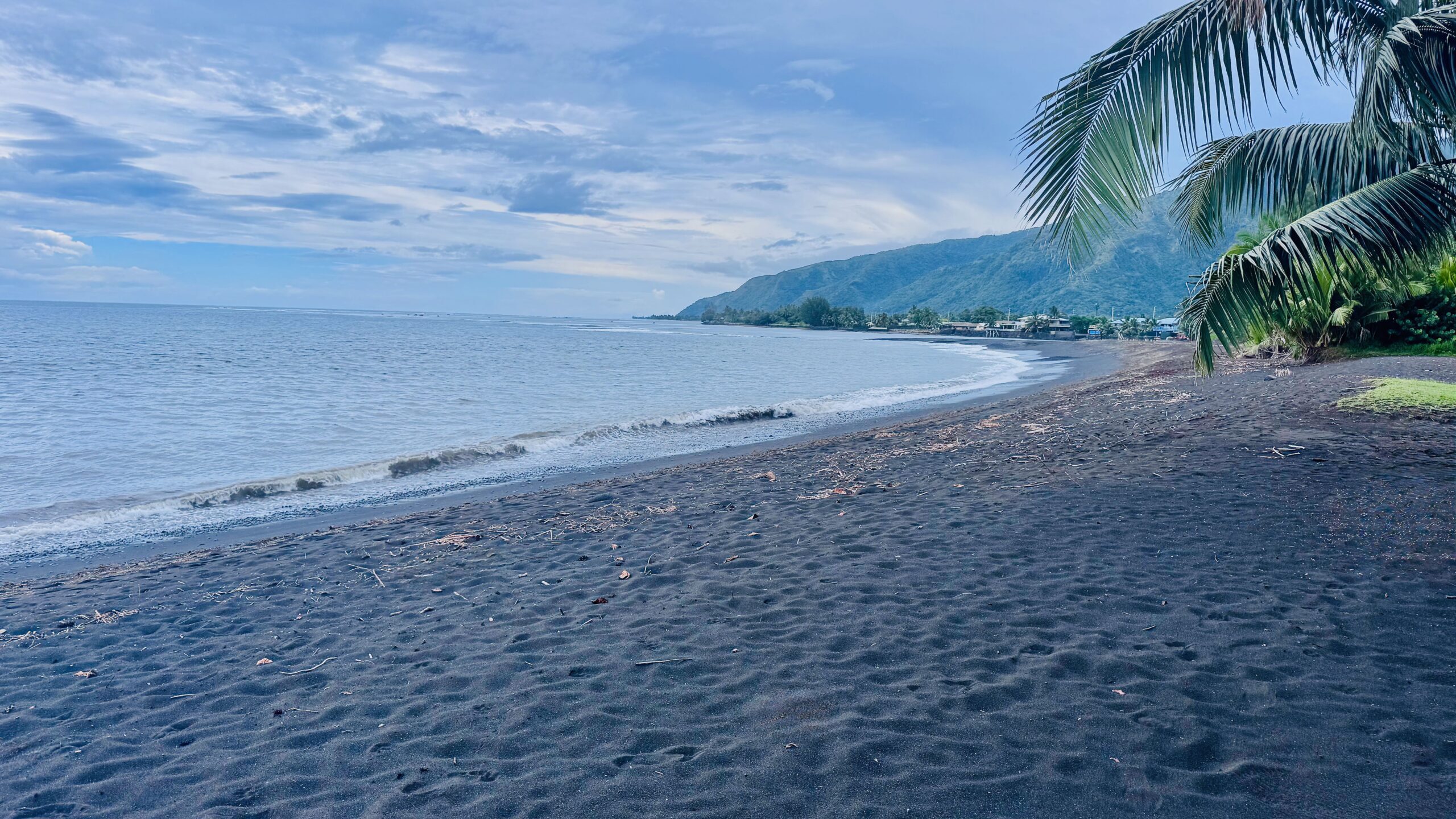
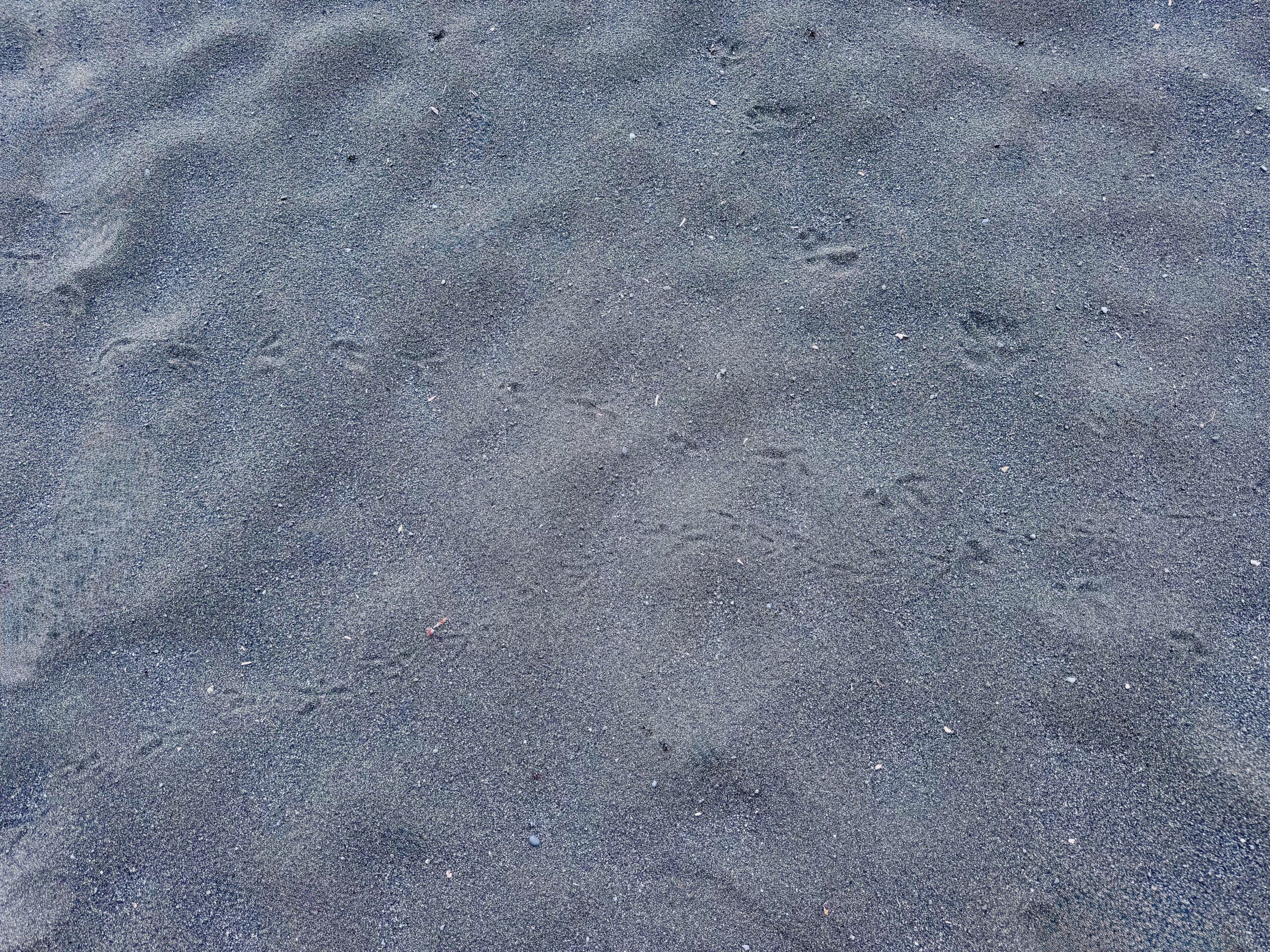
Located on the southern coast of Tahiti in the district of Papara, Taharuu Beach is renowned for its striking black volcanic sand and consistent surf. Unlike the calmer turquoise lagoons found elsewhere on the island, Taharuu faces the open ocean, creating reliable shore breaks ideal for both beginner and intermediate surfers.
The beach is a favorite among locals and remains one of the island’s most accessible and scenic spots for experiencing Tahiti’s raw, volcanic geography.
The two surfers in our crew couldn’t wait to check it out. The waves weren’t great the day we went.
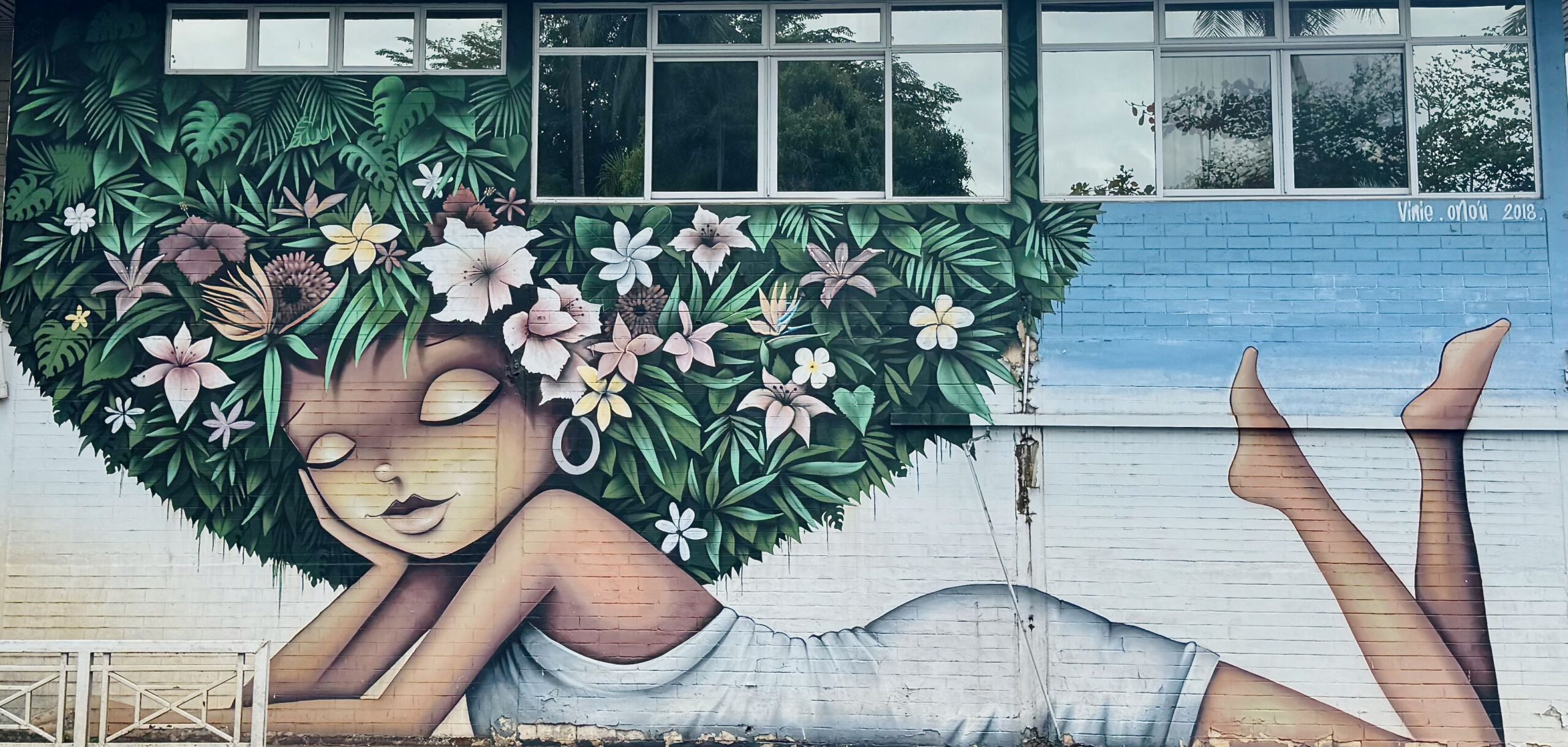
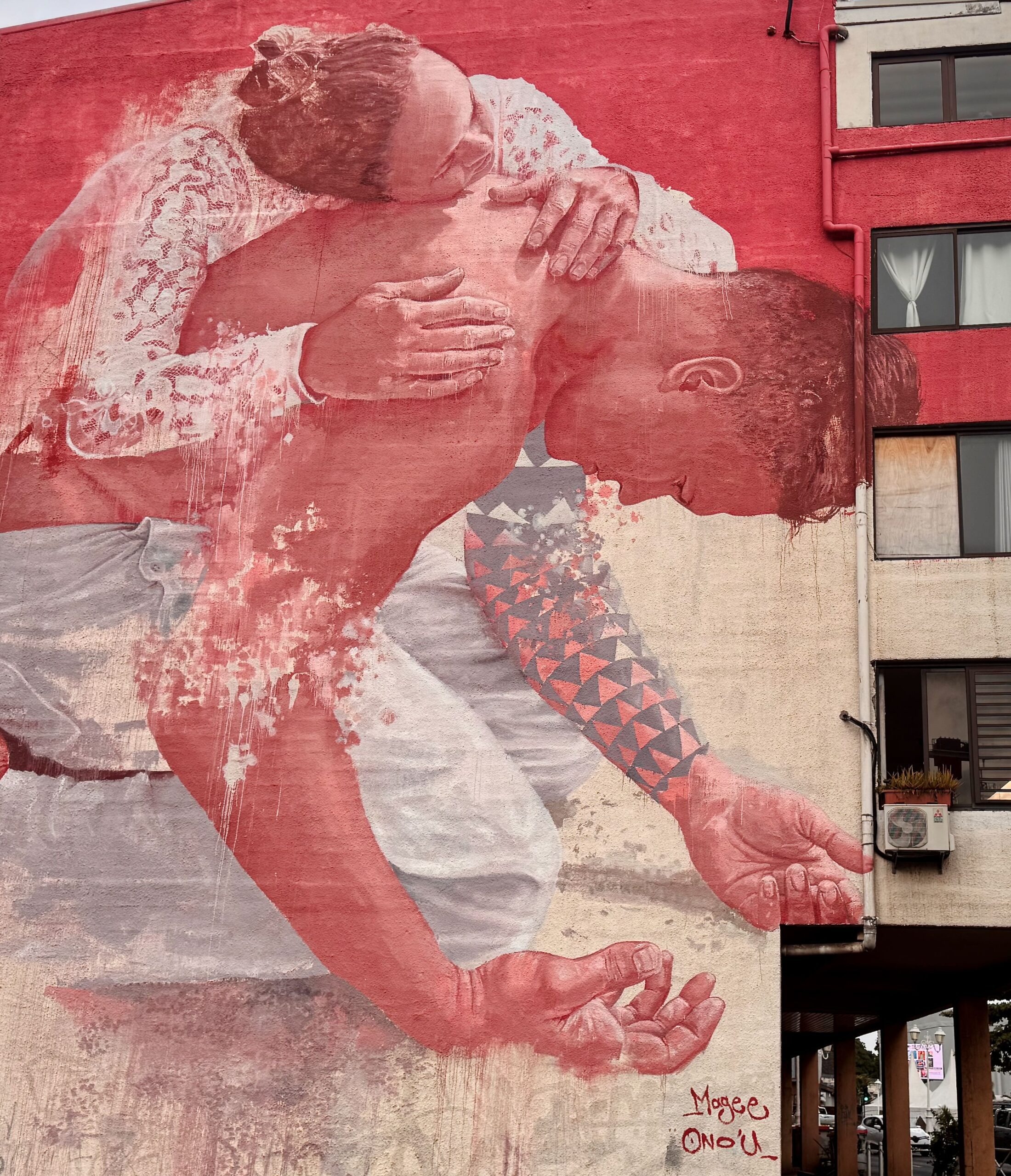
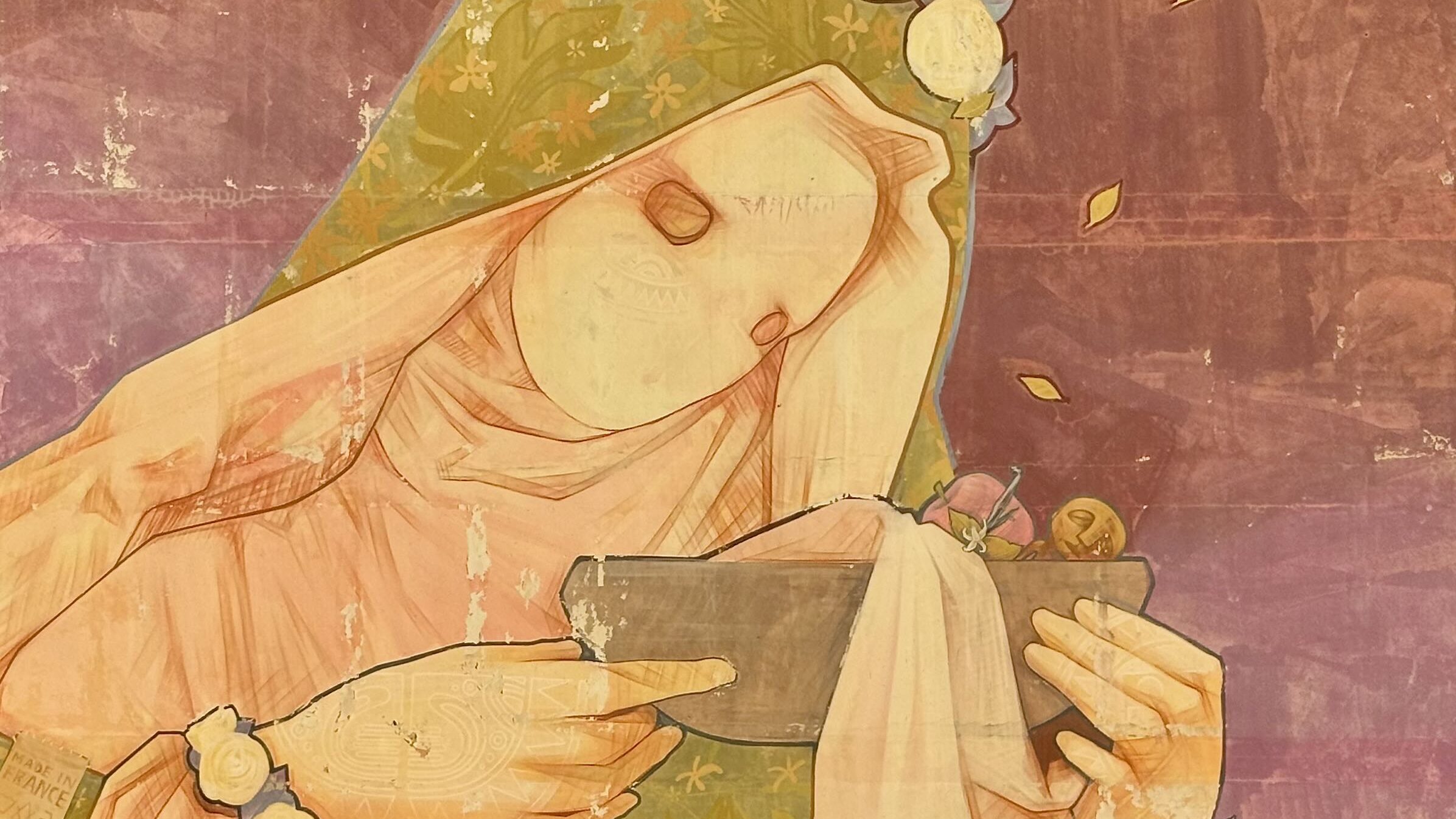
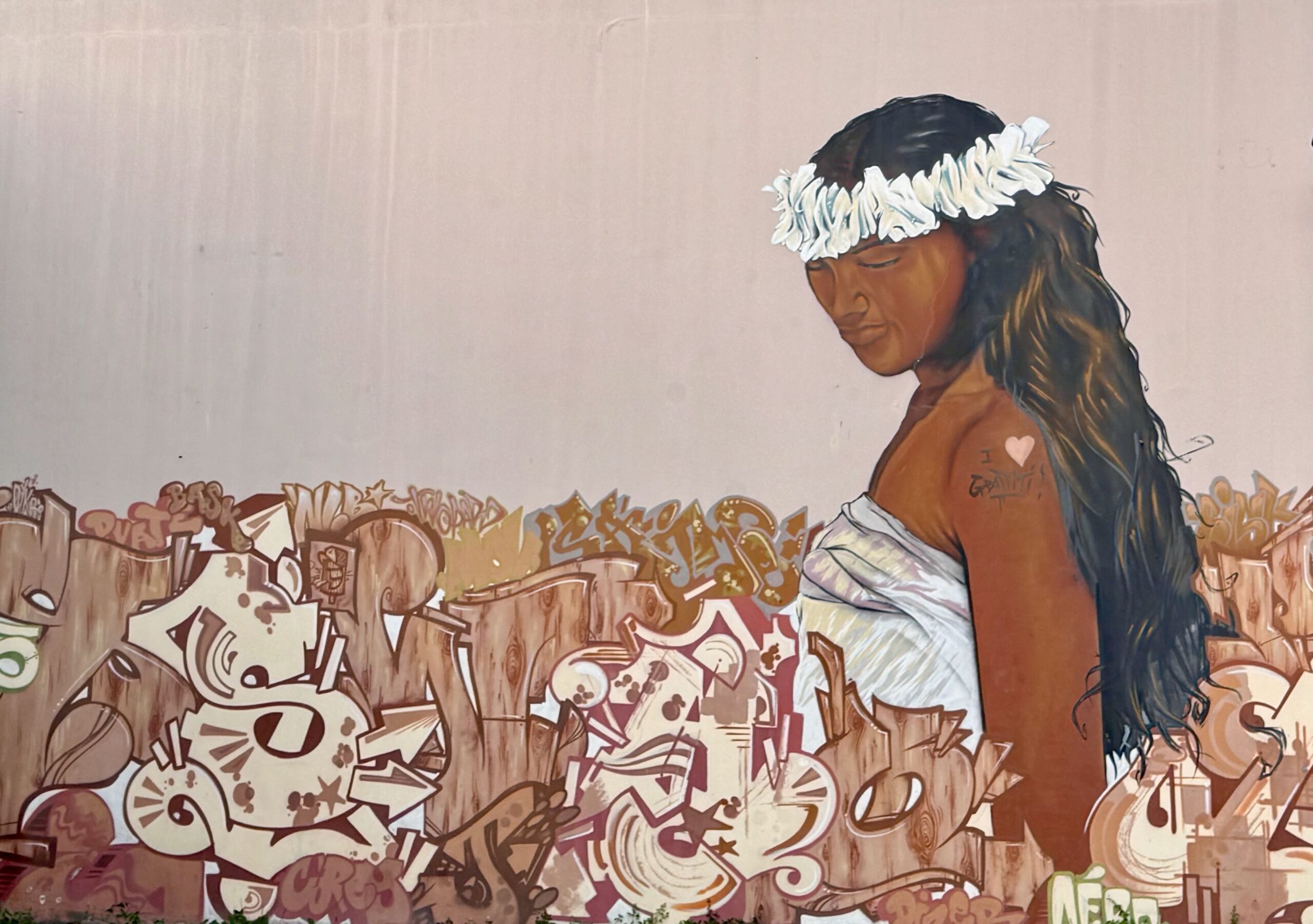
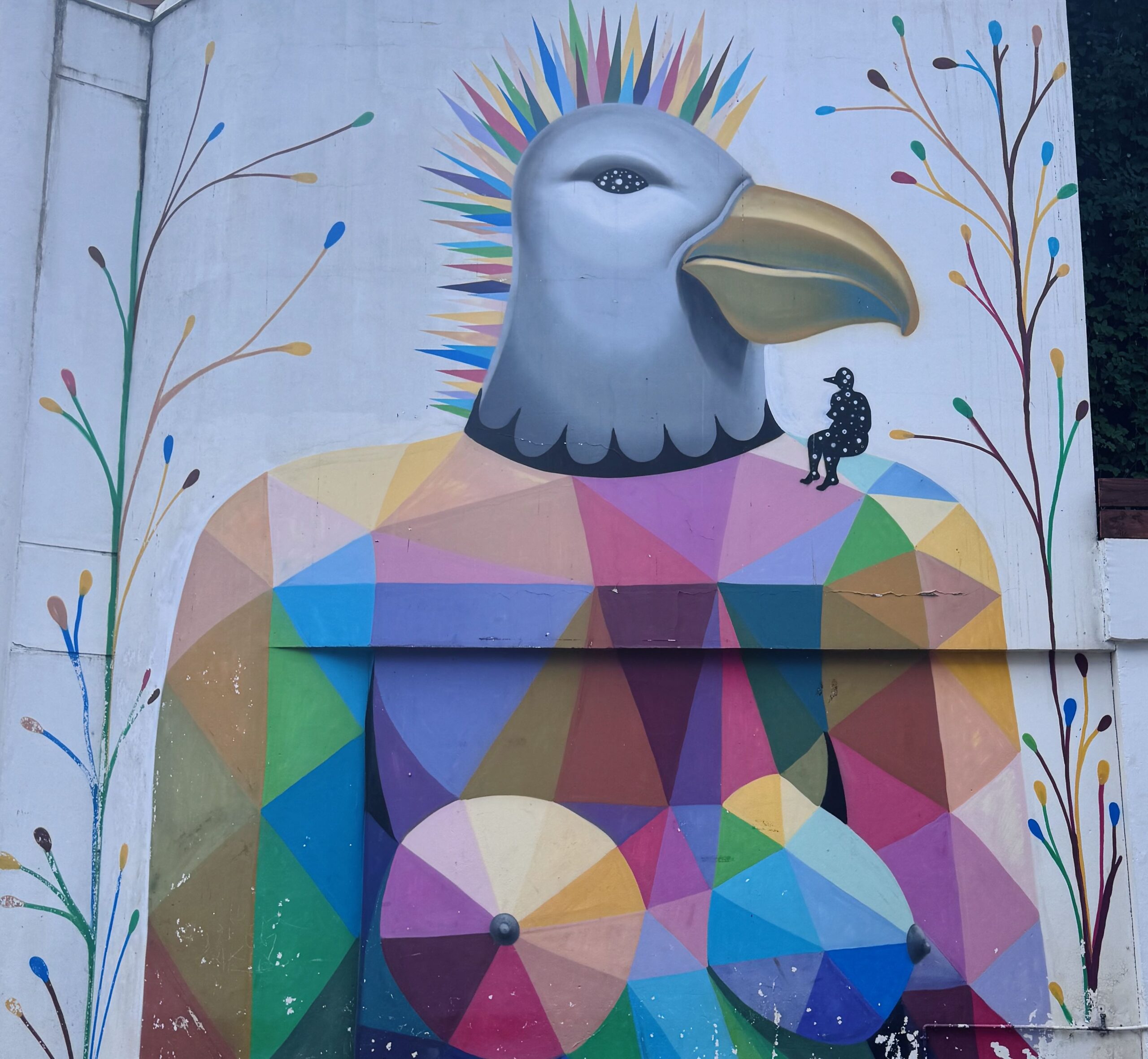
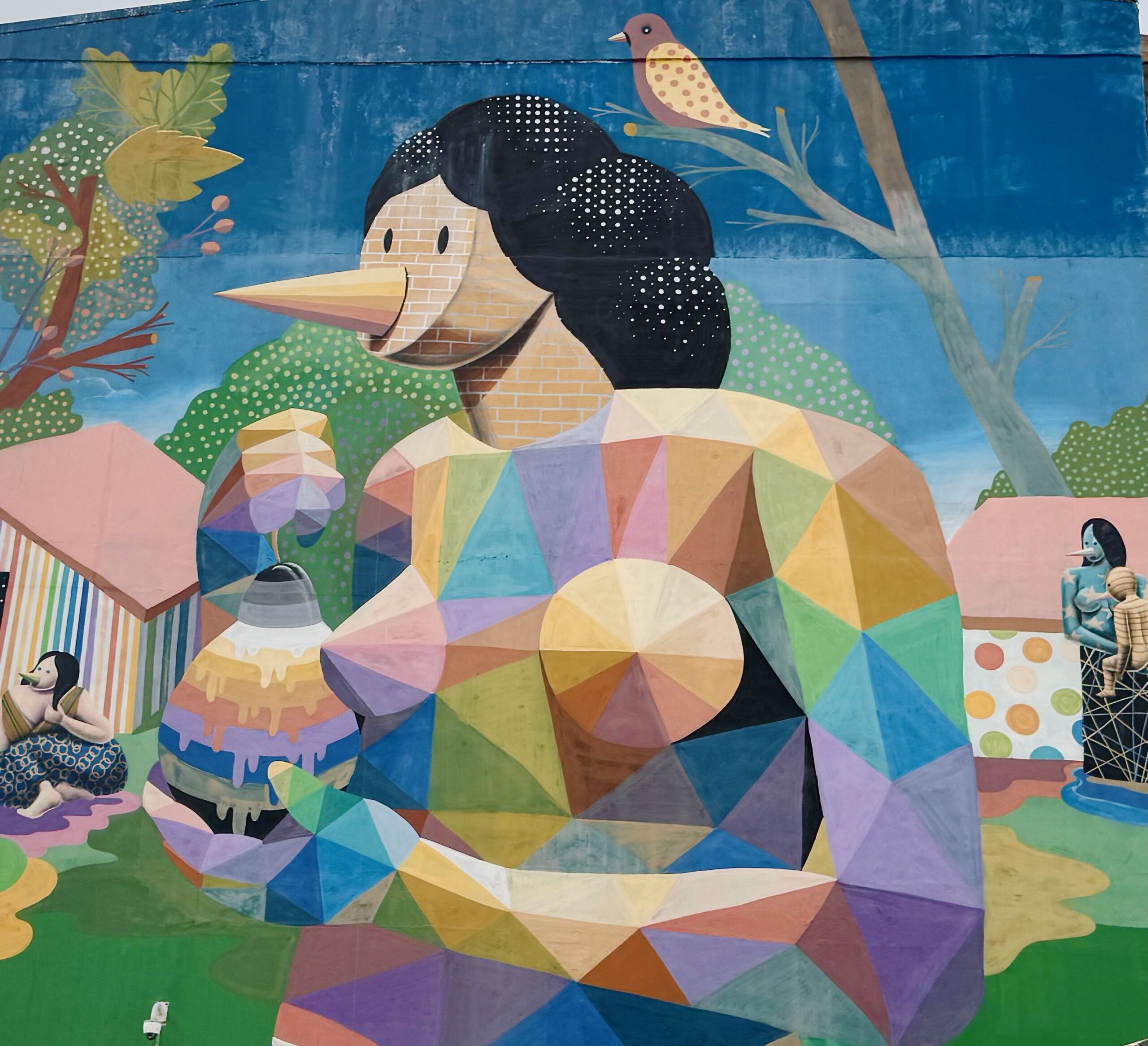
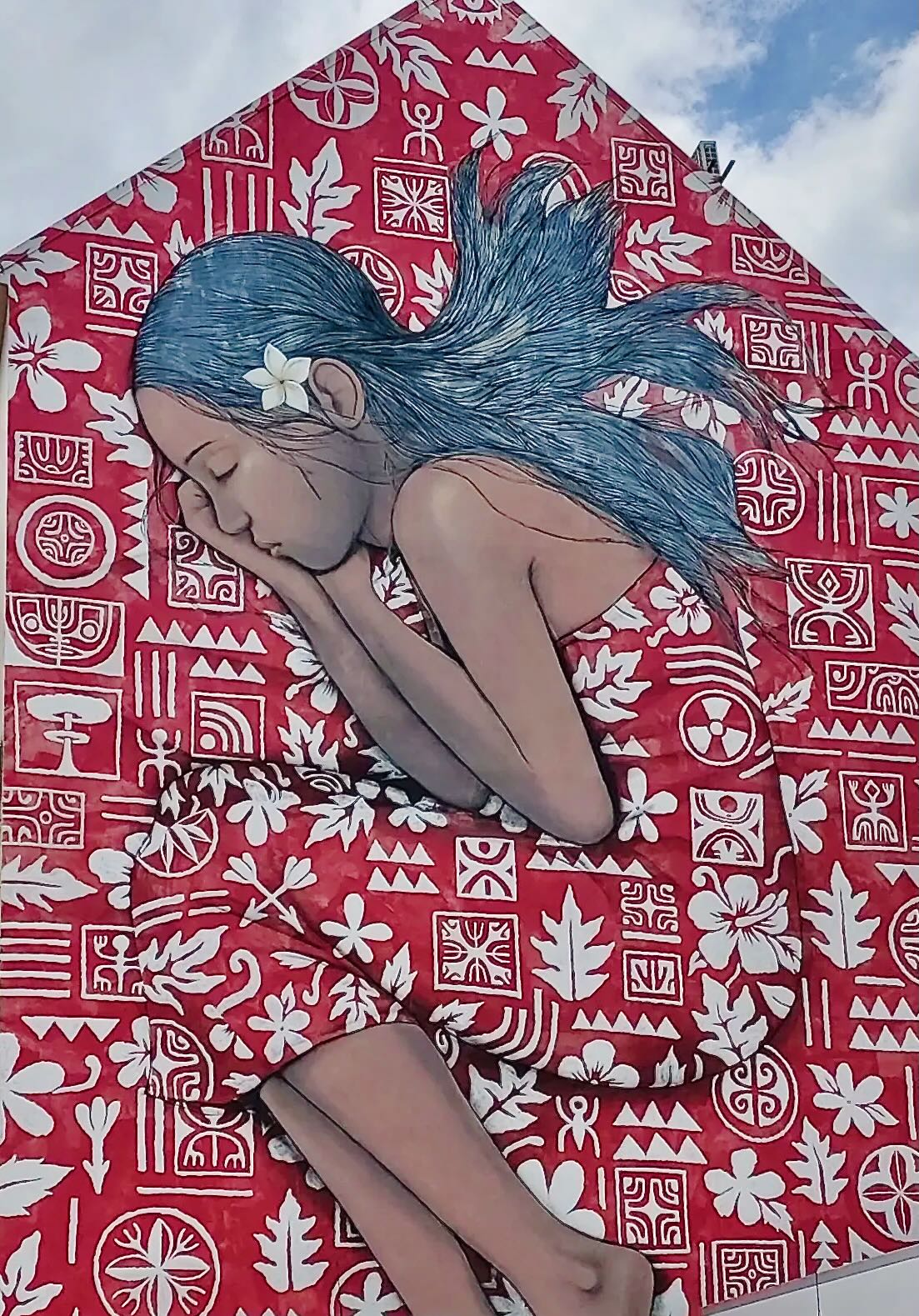
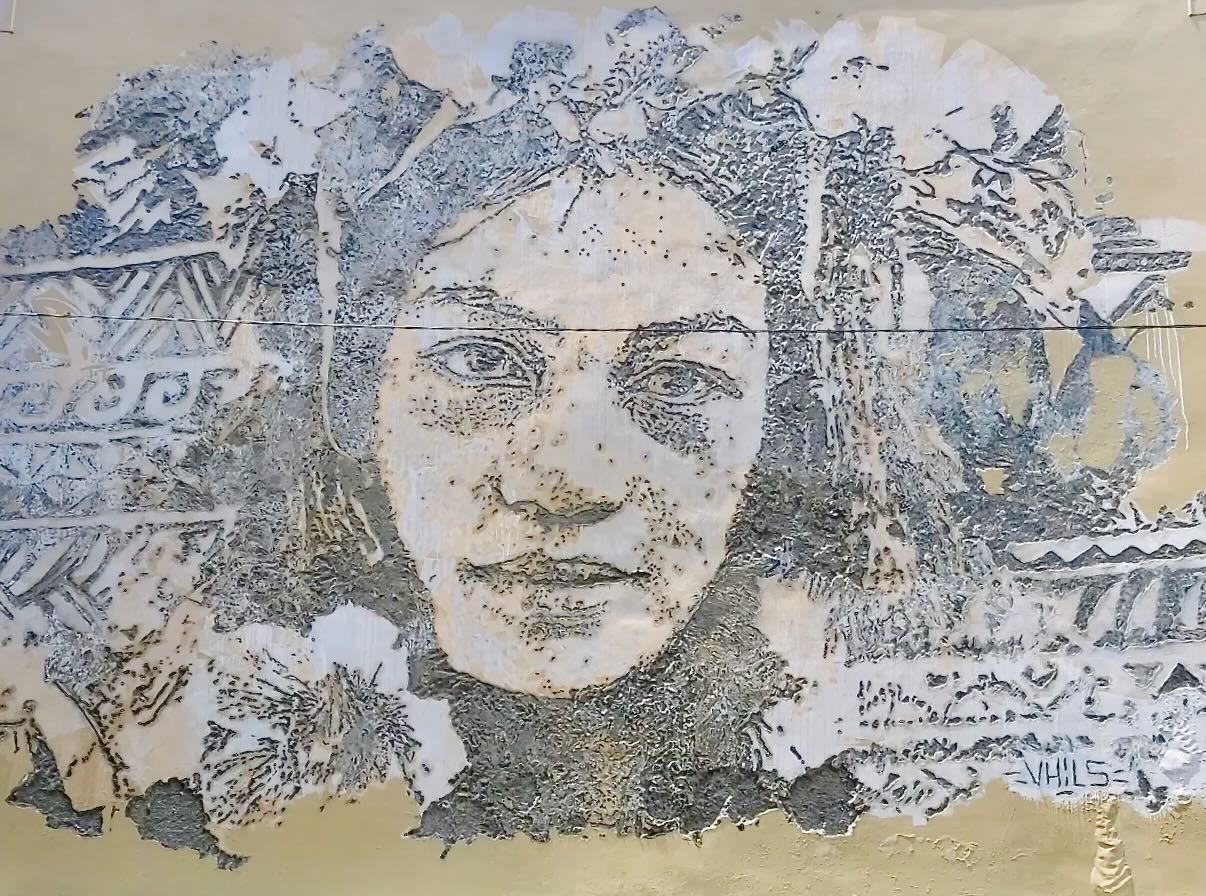
13. Street Art
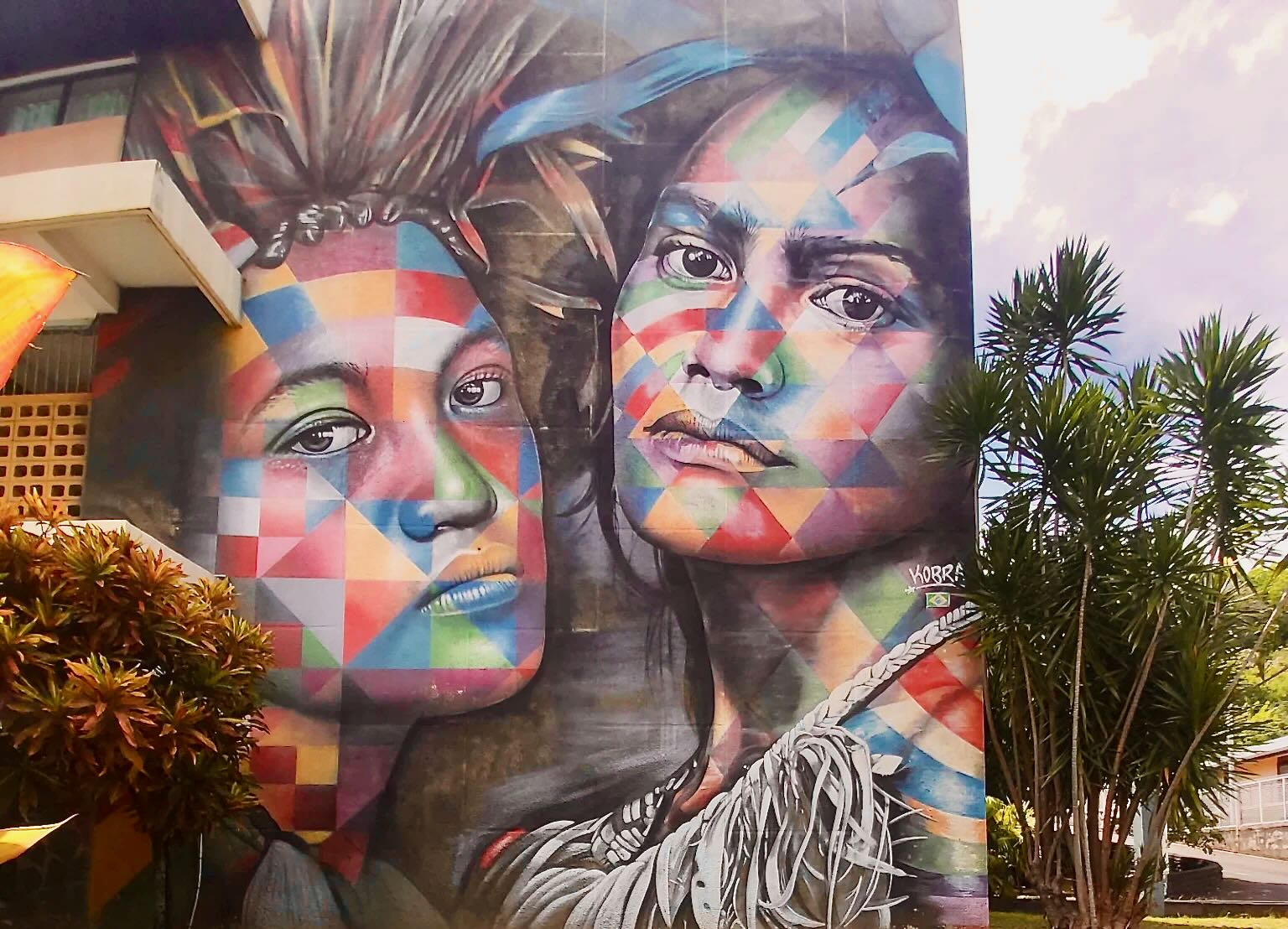
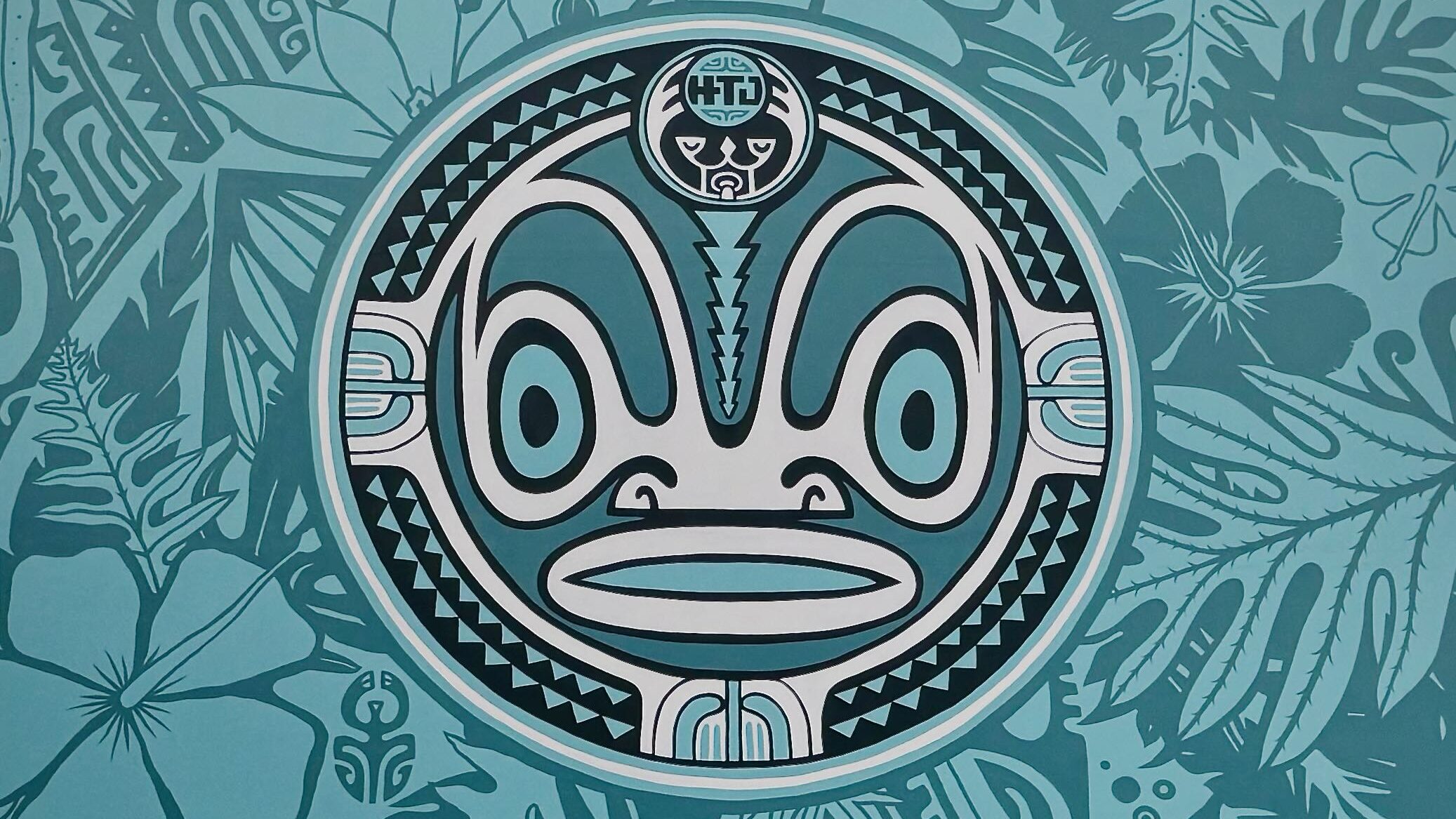
Pape’ete has a vibrant street art scene, thanks in part to Sarah Roopinia, founder of the ONO’U street art festival in Pape’ete. There are many murals throughout the city.
You can scroll through some of them below.
14. The “Small” Community
The population of Tahiti, the largest island in French Polynesia, is almost 200,000, yet we kept seeing the same people over and over. The three (sometimes four) ladies on the park bench every evening, the man with noise-canceling headphones and a cane on his daily stroll, the man who wears white—literally every day—while he walks his three white dogs, the man with homemade hats adorned with feathers: the list goes on and on.
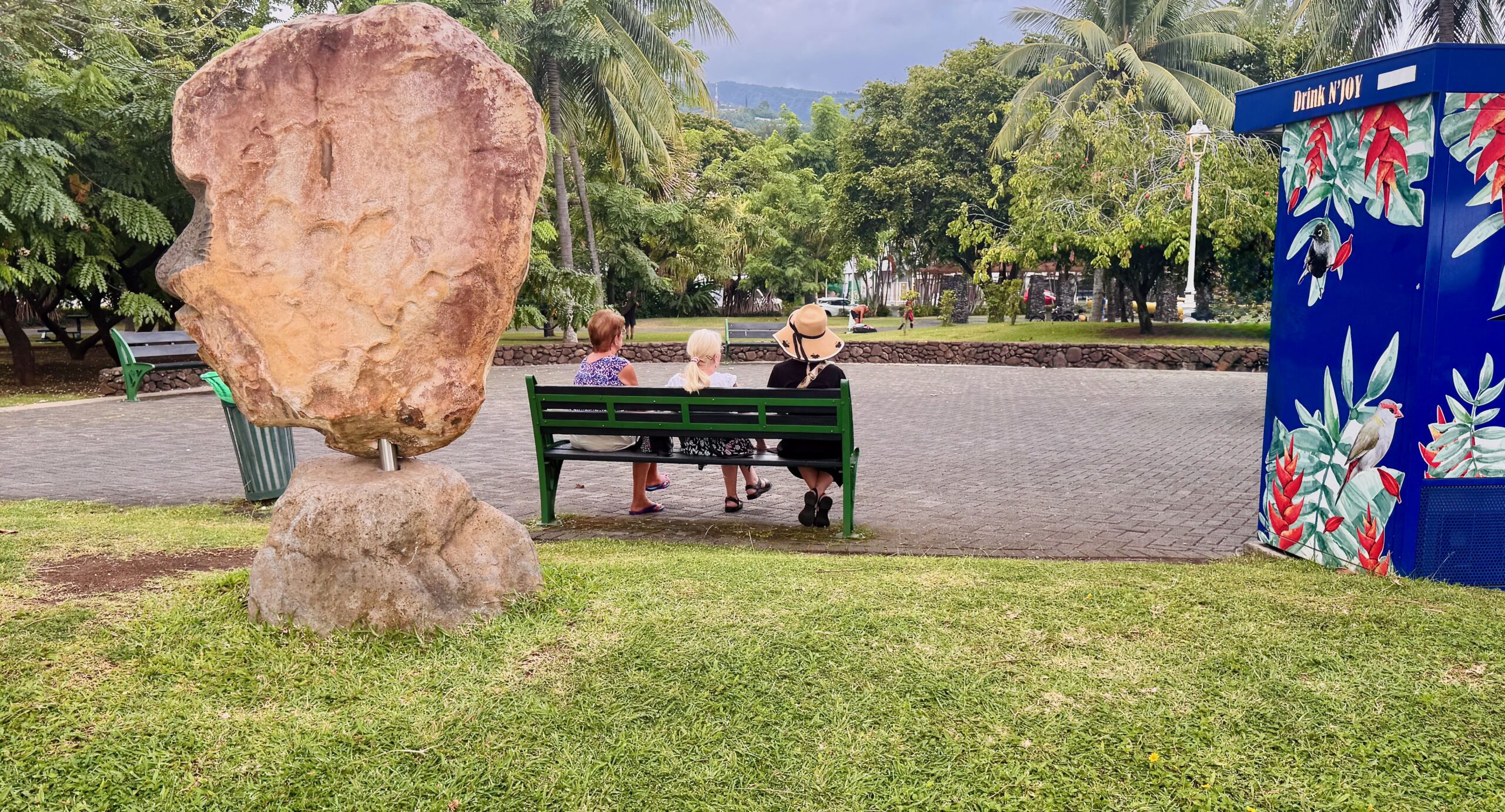
It led to a sense of community I didn’t expect.
15. The Sound of Ukuleles
Almost everywhere we went, we were serenaded by the strumming of ukuleles. The street, the park, the ferry terminal, restaurants, and even the grocery store: no place was off-limits. We loved listening to the musicians performing and even just casually practicing.
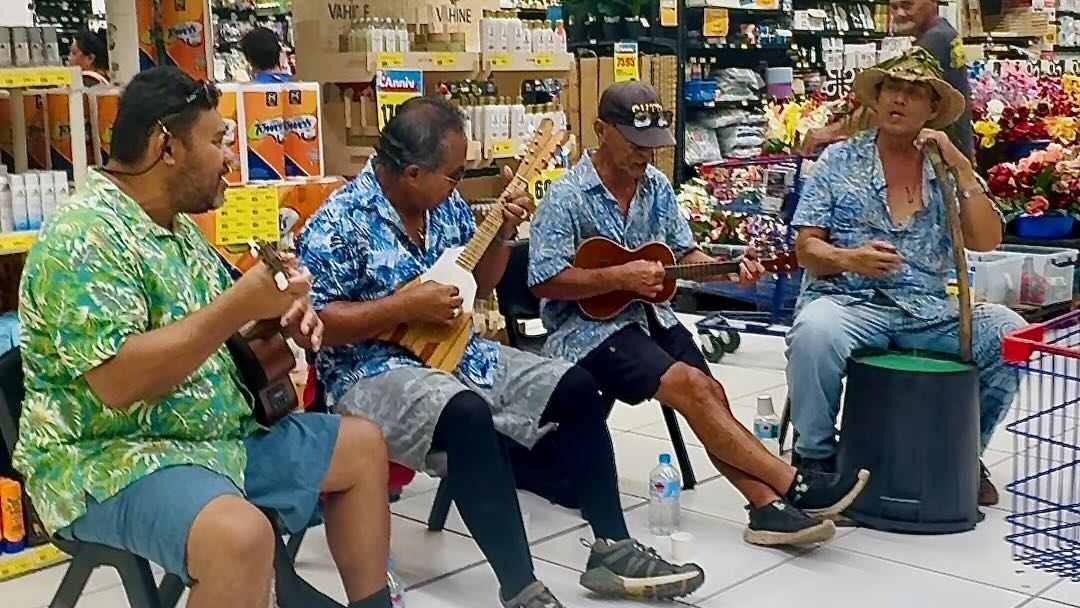
The man in the middle has a uapou; notice the garbage can drum at right.
In Tahiti, two types of ukuleles are used: the hollow-bodied Hawaiian version and the Tahitian ukulele, or uapou. The Tahitian model is typically carved from a single piece of wood and features an open back with a circular hole covered by thin wood or plastic.
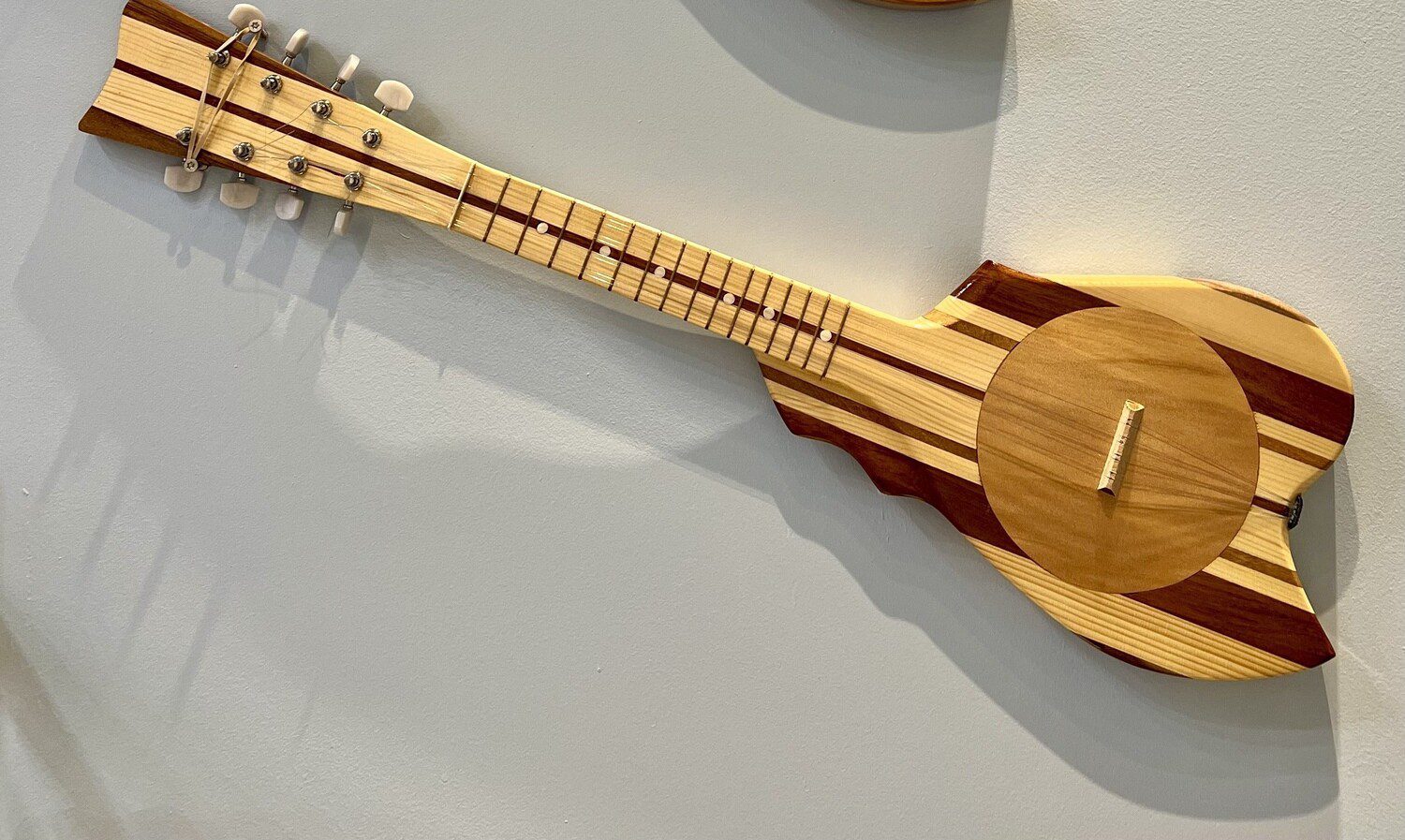
It traditionally uses four double-courses of fishing line, producing a bright, percussive, rapid-fire sound. This high-energy instrument is essential for ote’a (traditional dance) performances, providing the rhythmic drive that accompanies Tahitian drumming and choral singing.
We saw both types of ukuleles being played, usually together. The ukulele is a cornerstone of Tahitian musical identity and it adds a cheerful tone to the Tahitian experience.
Other Memories
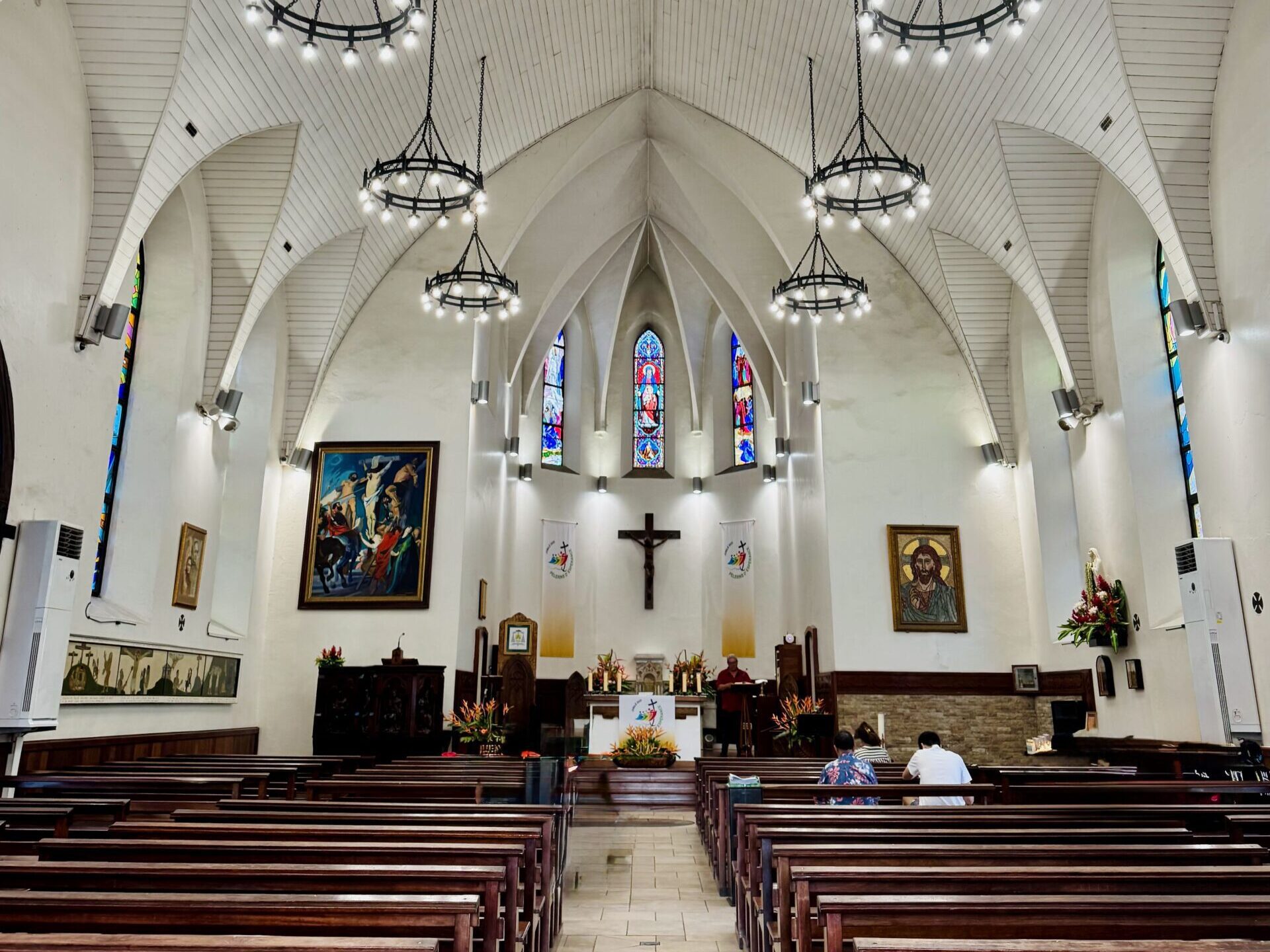

Speaking of dogs, we saw this a few times.
Other Things to Do in Tahiti
I would be remiss if I didn’t mention one of the most famous landmarks in Pape’ete: the Public Market (Pape’ete Market). I find it too touristy for my liking, but people flock here to get souvenirs.
Marché de Papeete (The Public Market)
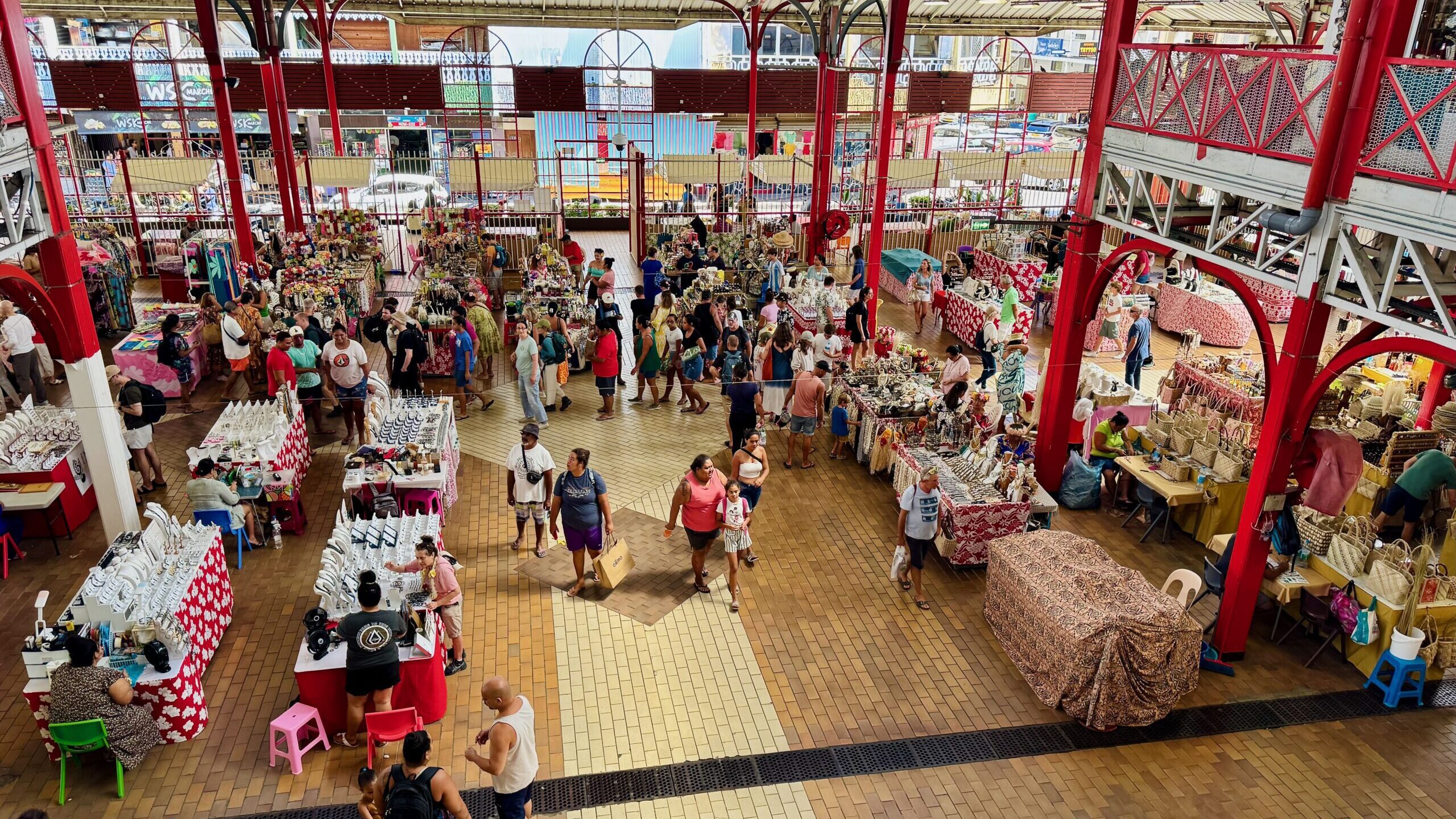
It’s open until 3:30 p.m., except for Sundays, when it closes at 10:00 a.m.
Other Experiences:
Marae Arahurahu
Papeno’o Valley 4×4 Safari
Fautaua Waterfall Hike
The Robert Wan Pearl Museum
Arahoho Blowhole and Faarumai Waterfalls
Food Trucks (Les Roulottes)—although I know an entire family that got food poisoning There
Where We Ate
Dinner Shows
We’re not ones for tourist attractions; however, this is one we did not once, but twice! On my birthday, Roy took us to see the show at the Intercontinental Resort. It was a nice, relaxing evening, and it gave us another glimpse into the dance traditions of Polynesian culture.
InterContinental Hotel
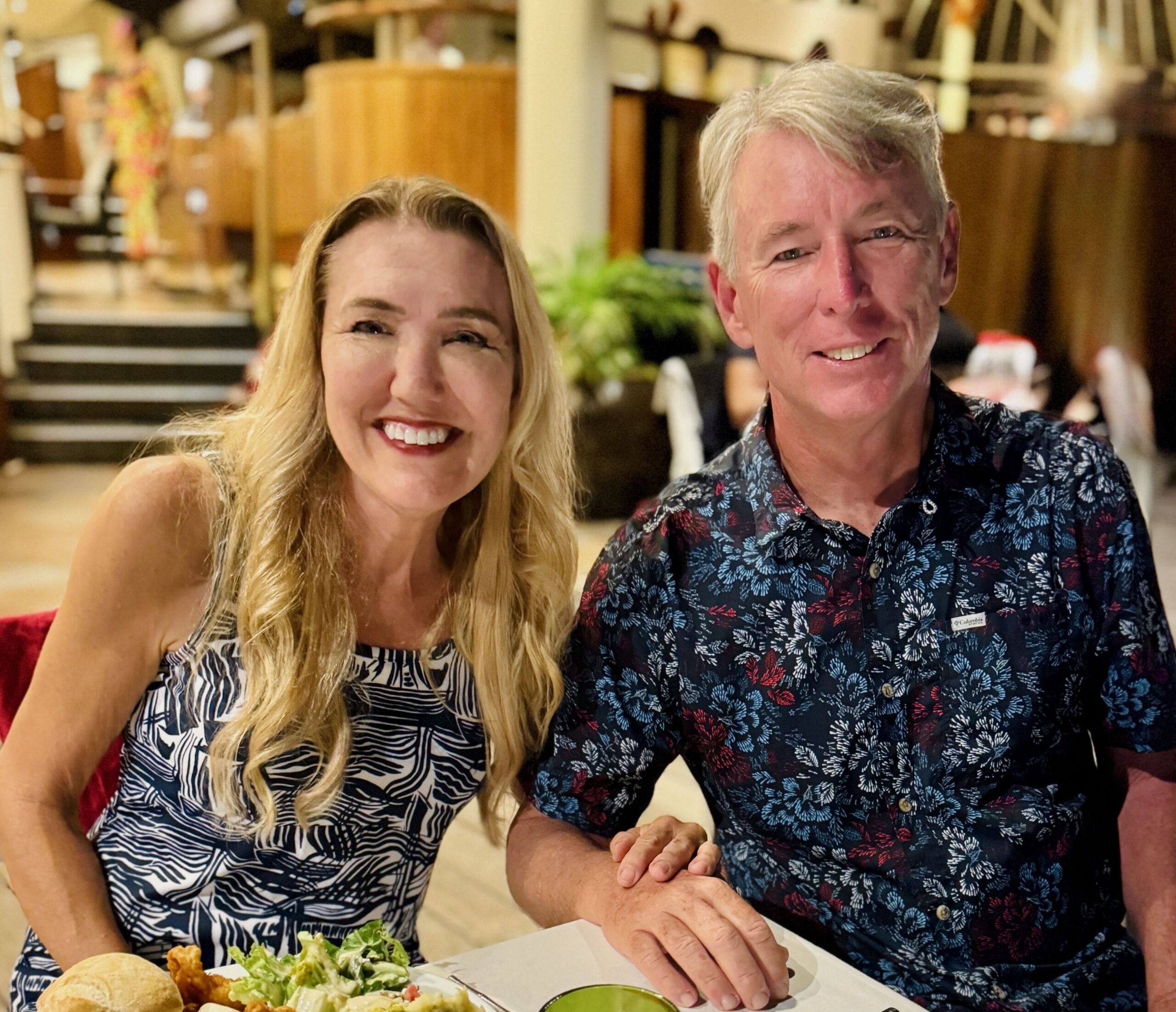
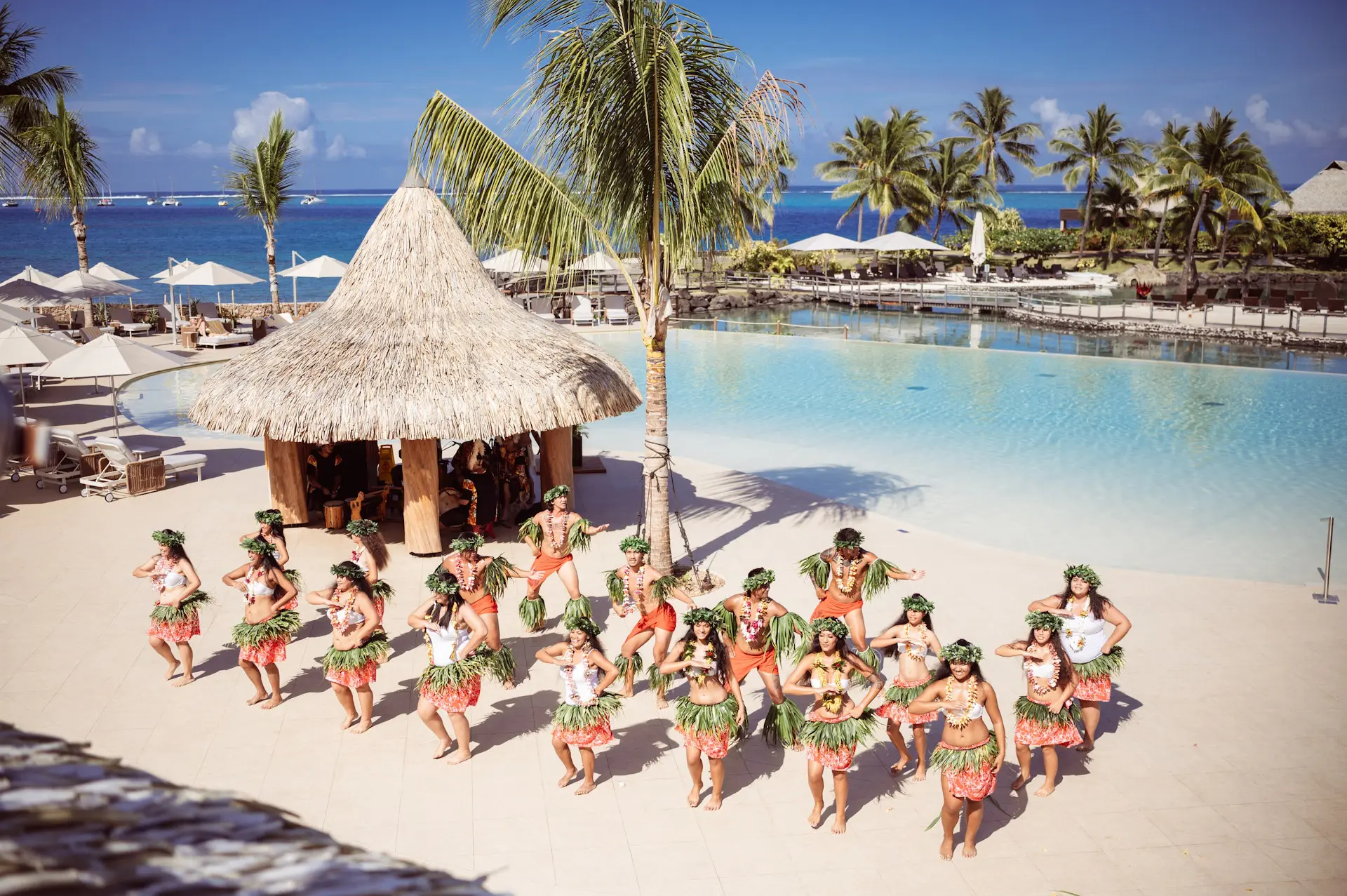
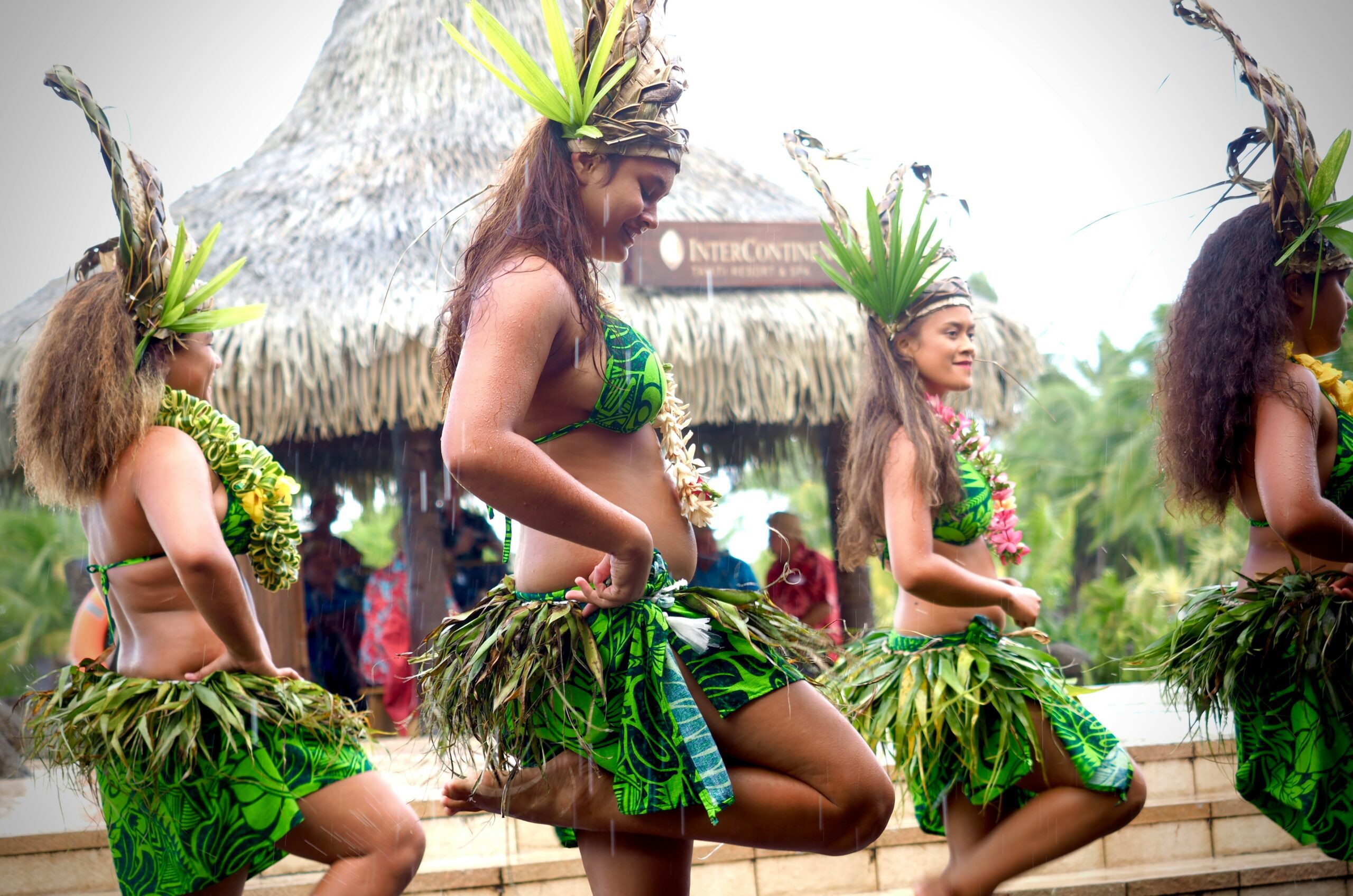
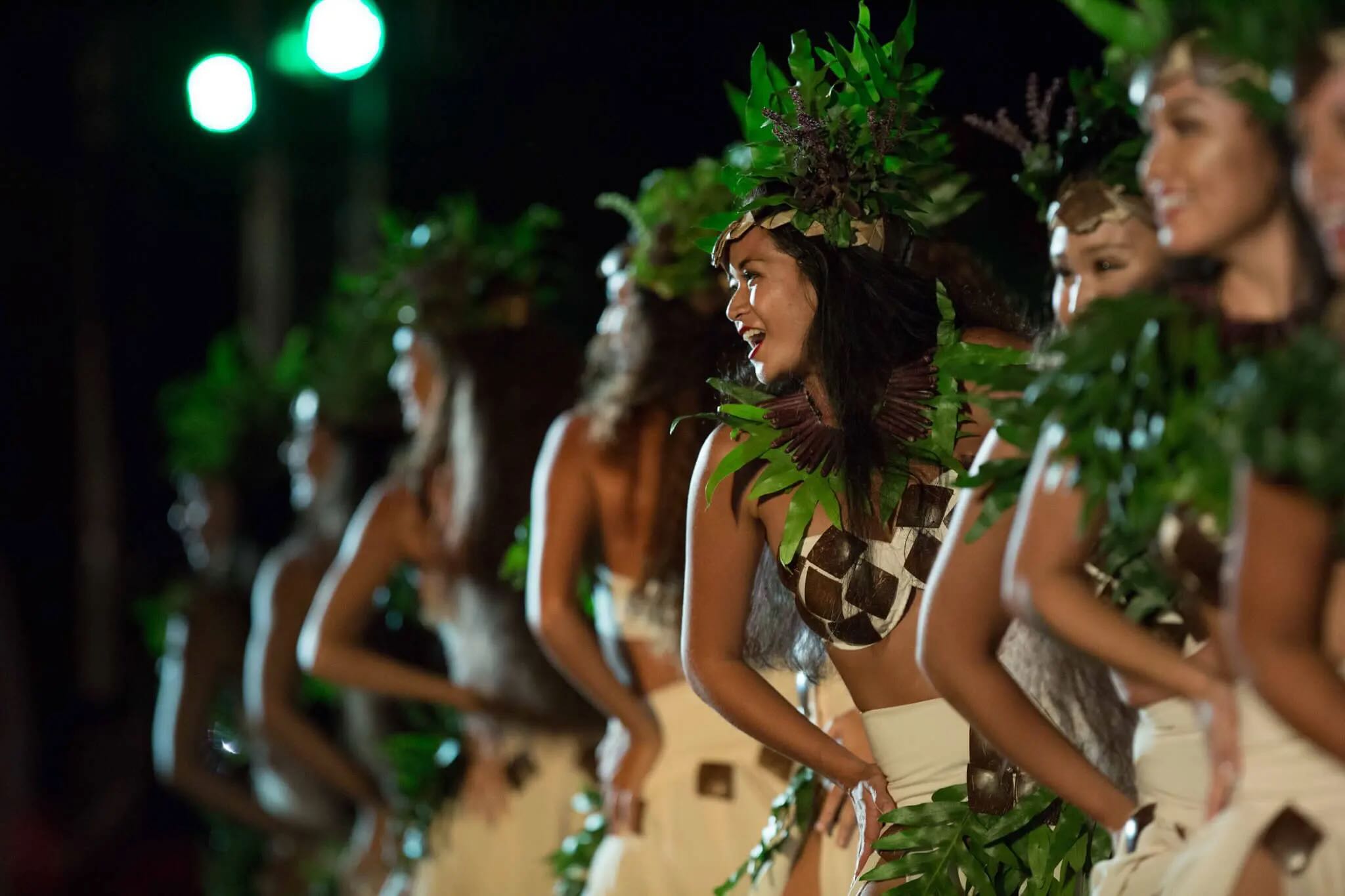
A few months later, we had a boat full of guests, and we took them to Le Tahiti Resort for a similar show on Christmas Eve. Everyone had a great time!
Le Tahiti Resort
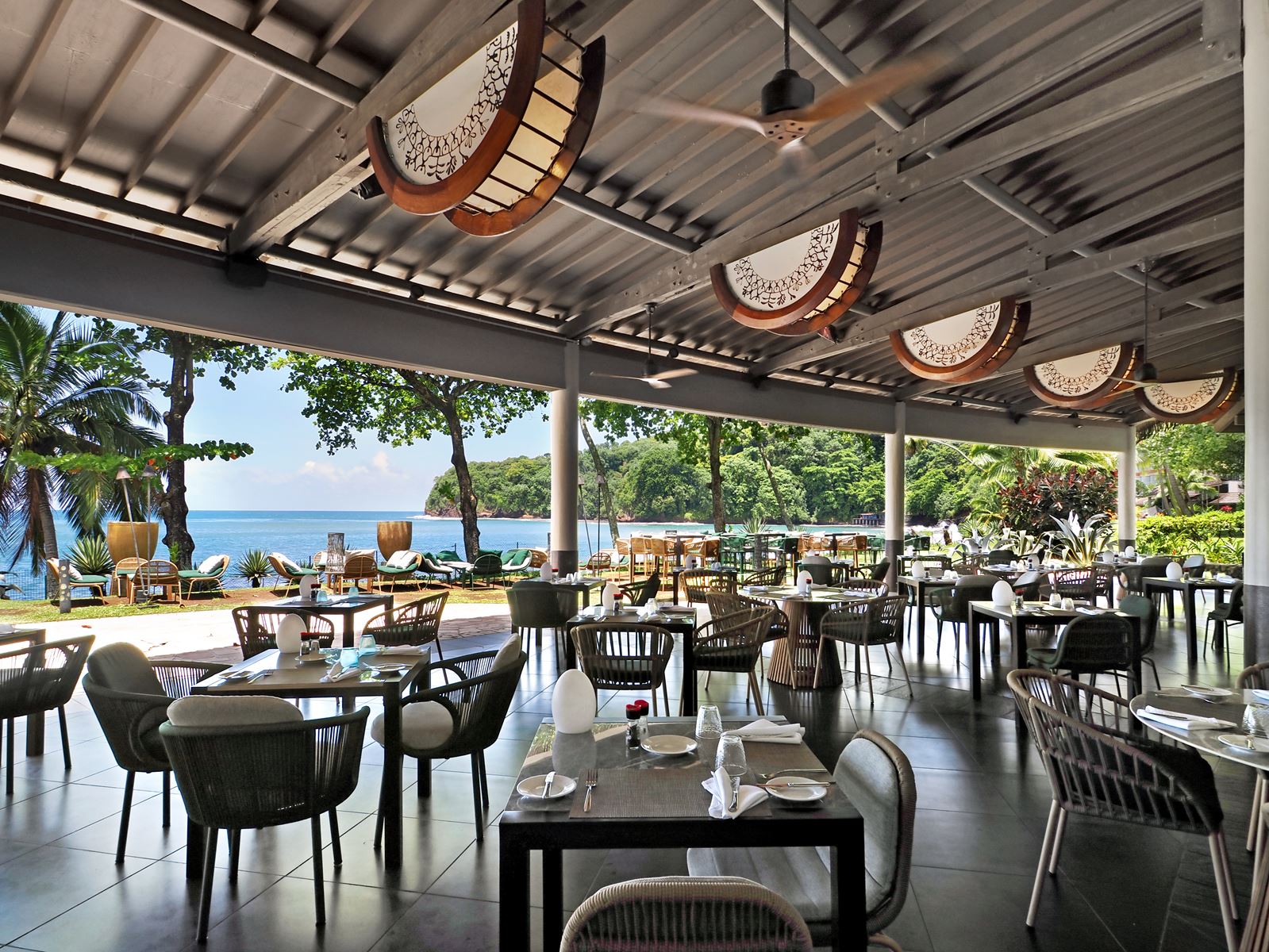

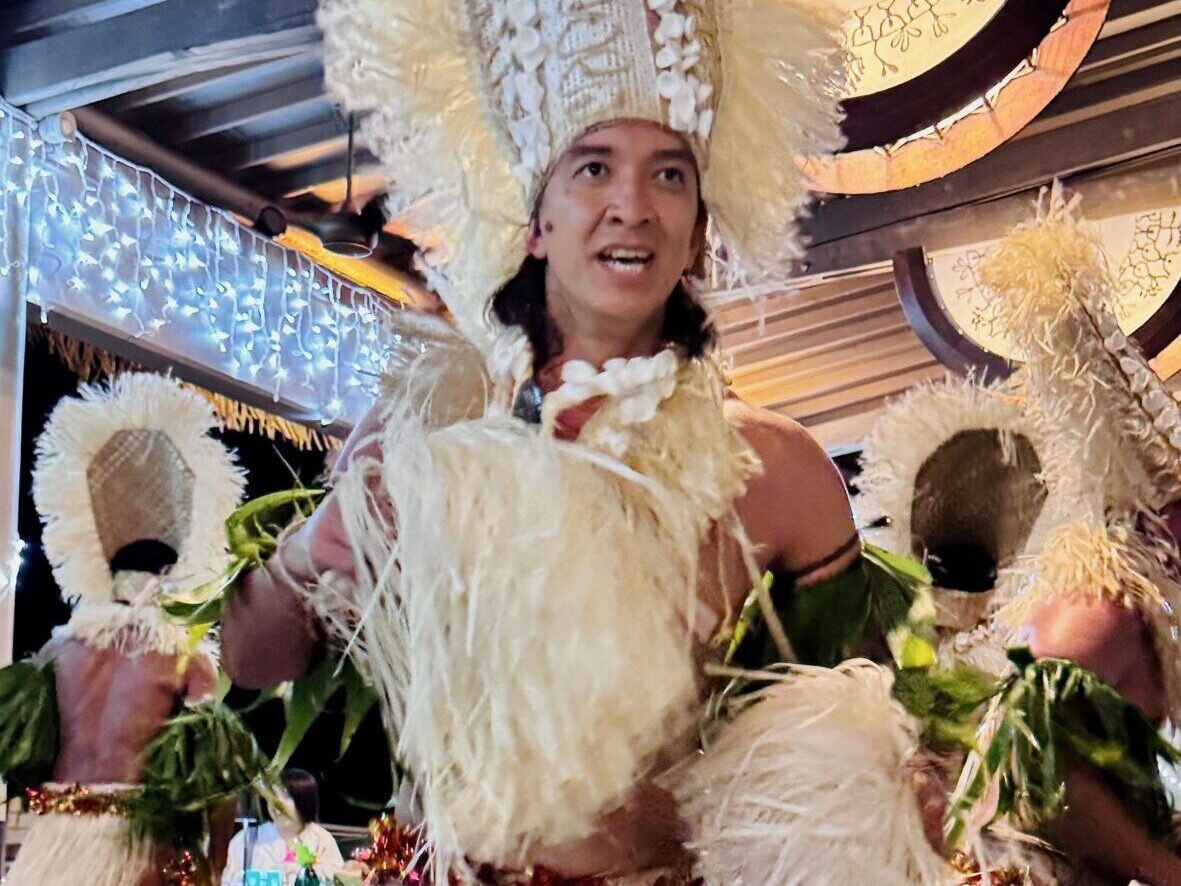
The only difference between the two was that at Le Tahiti Resort, it was a bit harder to see the large group dances because of the shorter stage. However, to make up for that, they performed smaller group dances in the center of the room afterwards. This is something they didn’t do at the InterContinental.
Notice how the dancers are singing along. We saw that a lot in Tahiti: Polynesians singing along to their traditional songs in grocery stores, parks, other public spaces —you name it. I love that!
Were the shows cringeworthingly touristy? Sure.
Would we do it again? Yes, but once is probably enough. If given the choice, I think I would choose the InterContinental over Le Tahiti Resort.
Other than the Intercontinental Hotel (Le Lotus)and Le Tahiti Resort, we also dined at these restaurants (listed in order of most to least favorite):
LaPizzaria
Wonderland
Star Studio (try the fish sandwich)
Poke Bar (good but pricey)
JoJo’s Pizza
Getting There
It’s easy to get to Tahiti. Located near the capital city of Pape’ete, Faa’a International Airport (PPT) serves major carriers such as Air Tahiti Nui, Air France, and United Airlines.
Direct flights are most frequent from hubs such as Los Angeles (LAX), San Francisco (SFO), and Auckland (AKL), with flight times from the U.S. West Coast averaging around eight hours.
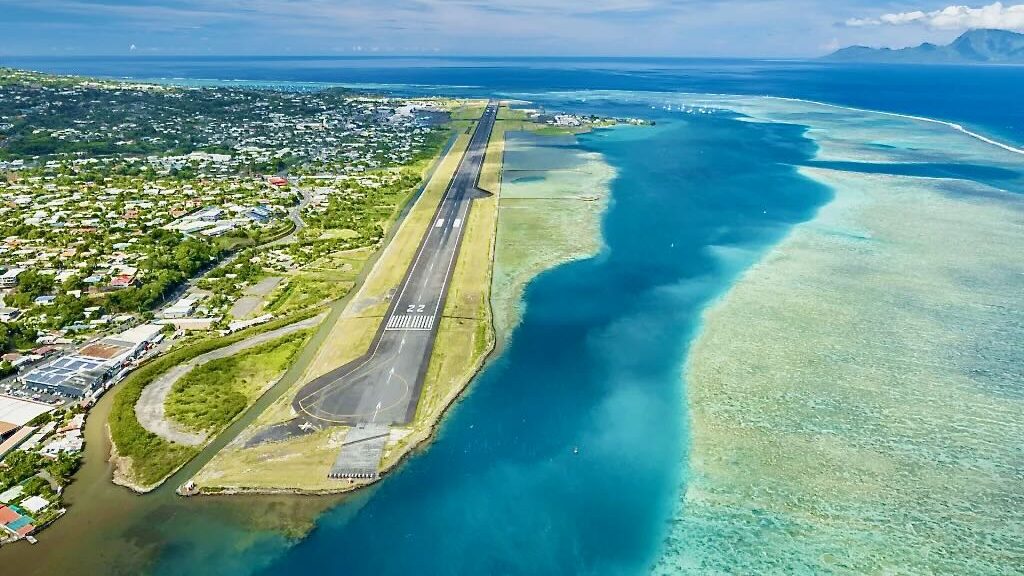
We sailed there.
Getting Around
Navigating Tahiti requires a mix of modern and traditional methods. The most flexible option is renting a car. We rented one from Eco Cars a few times and had a great experience.
In Pape’ete, taxis are common but difficult to hail on the street. Instead, you must call them. There’s a taxi stand located right across the street from Pape’ete Marina. It’s fun watching the cab drivers answer the landline as prospective customers order a ride.
For public transit, the RTC bus system operates modern coaches on various routes, though service is significantly reduced on weekends.
Getting to other islands within the Society Island archipelago is also easy. Inter-island ferries are readily available, especially to Mo’orea, with ferries crossing multiple times daily.
Final Thoughts
After eight months in Tahiti, we can honestly say it is a favorite of ours.
It is an island of rugged peaks, deep-seated traditions, and a spirit that is impossible to ignore. From the chaos of the morning market to the strumming of ukuleles and the silence of the Te Pari cliffs, it offers a depth of experience that stays with you.
You can view a map of Tahiti here.