Since first dreaming of our liveaboard life, Roy and I have known we wanted to cross the Pacific—it opens the door to amazing adventures on the other side of the world.
Covering roughly 30% of the Earth’s surface, the Pacific is not just a body of water; it is a geographic giant that demands immense respect, meticulous preparation, and seasoned seamanship.
So, before launching off, we took two years cruising the USA East Coast and down through the Caribbean to gain experience and get to know our boat.
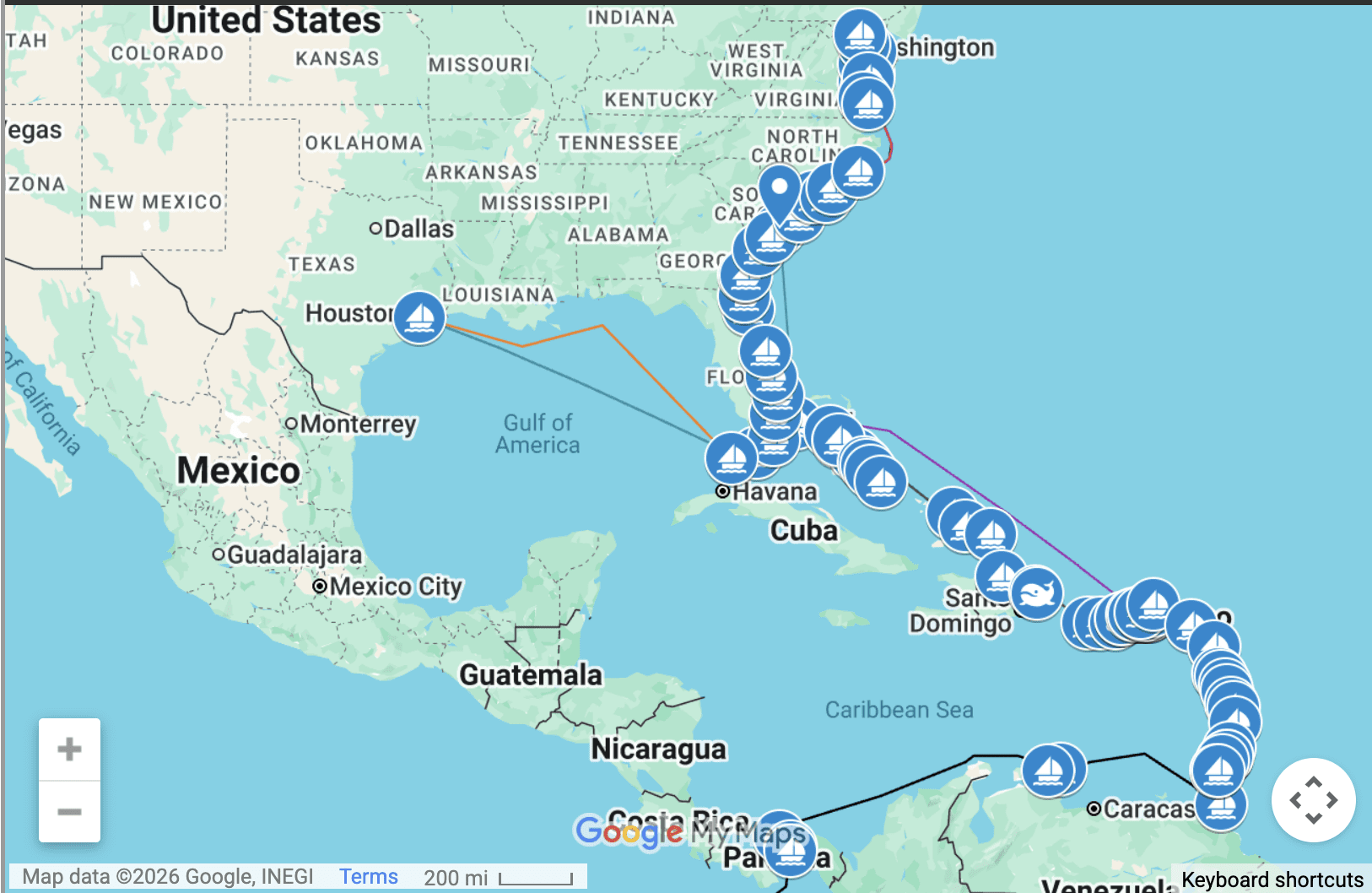
Our departure point was Grenada, so everything I talk about here reflects a westward path.
The Route and the Timing
Like most cruisers, we followed the classic “Coconut Milk Run,” a route heavily dictated by the prevailing trade winds and the changing of the seasons. The traditional Pacific crossing begins in the Americas and ends in French Polynesia, utilizing the steady easterly trade winds.
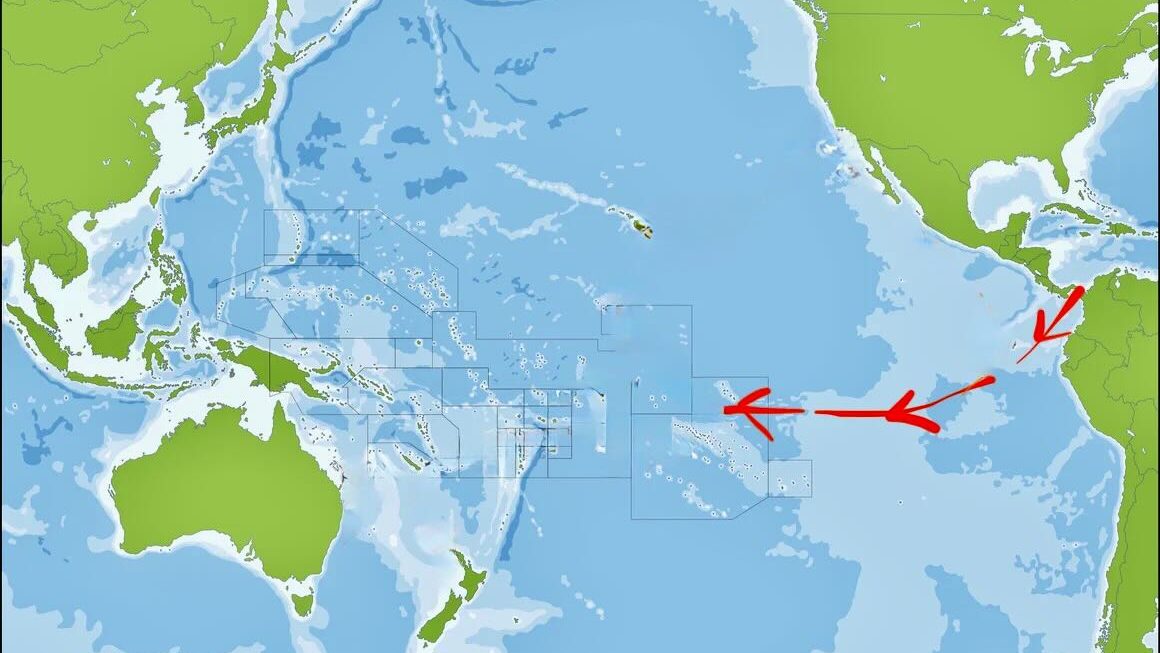
Our Itinerary:
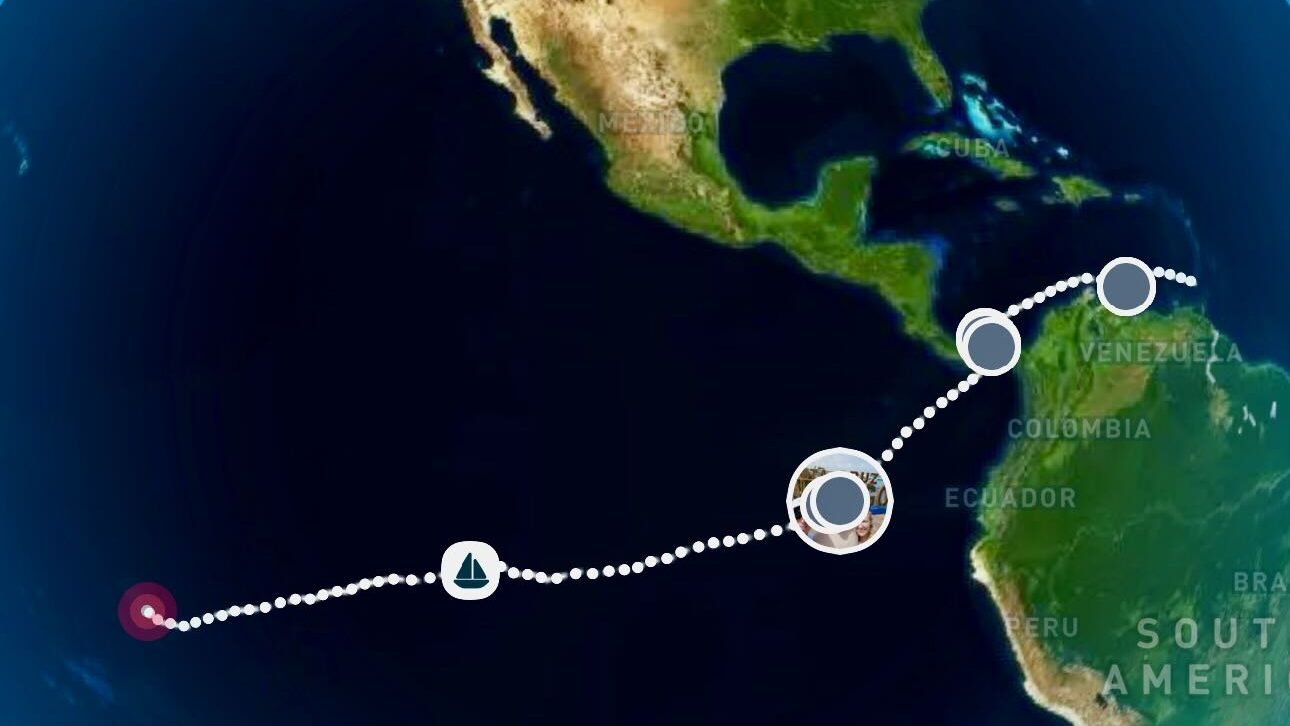
- Leg 1: Panama to the Galapagos Islands (approximately 900 nautical miles)
- Leg 2: The Galapagos to the Marquesas, French Polynesia (approximately 3,100 nautical miles)
We aimed to transit the Panama Canal in December, jumping off into the Pacific by March or April to ensure we were safely outside of the cyclone belt before the next season began. Our boat insurance mandated the same.
Before the Crew Arrived
- We had done an enormous amount of preparation before embarking on this passage. You can read about that here.
- I gathered the crew’s dietary concerns and preferences and made a tentative meal plan.
- We discussed with the crew and supplied (or agreed to) any specific items they requested to be on board (safety, exercise, etc.).
Right Before We Left
- We met as a crew and agreed on boat rules, including energy and water conservation.
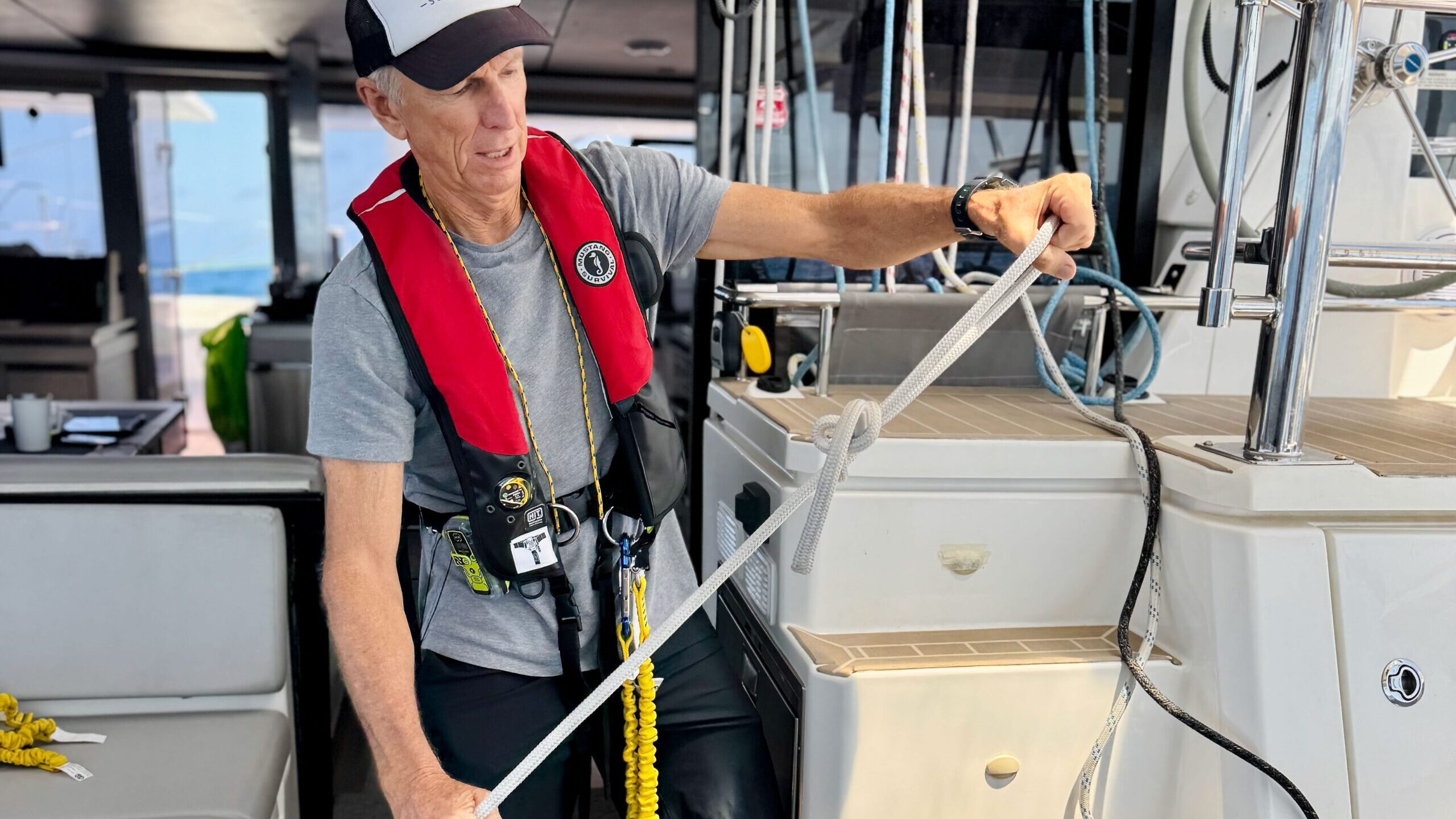
- We practiced our knot tying.
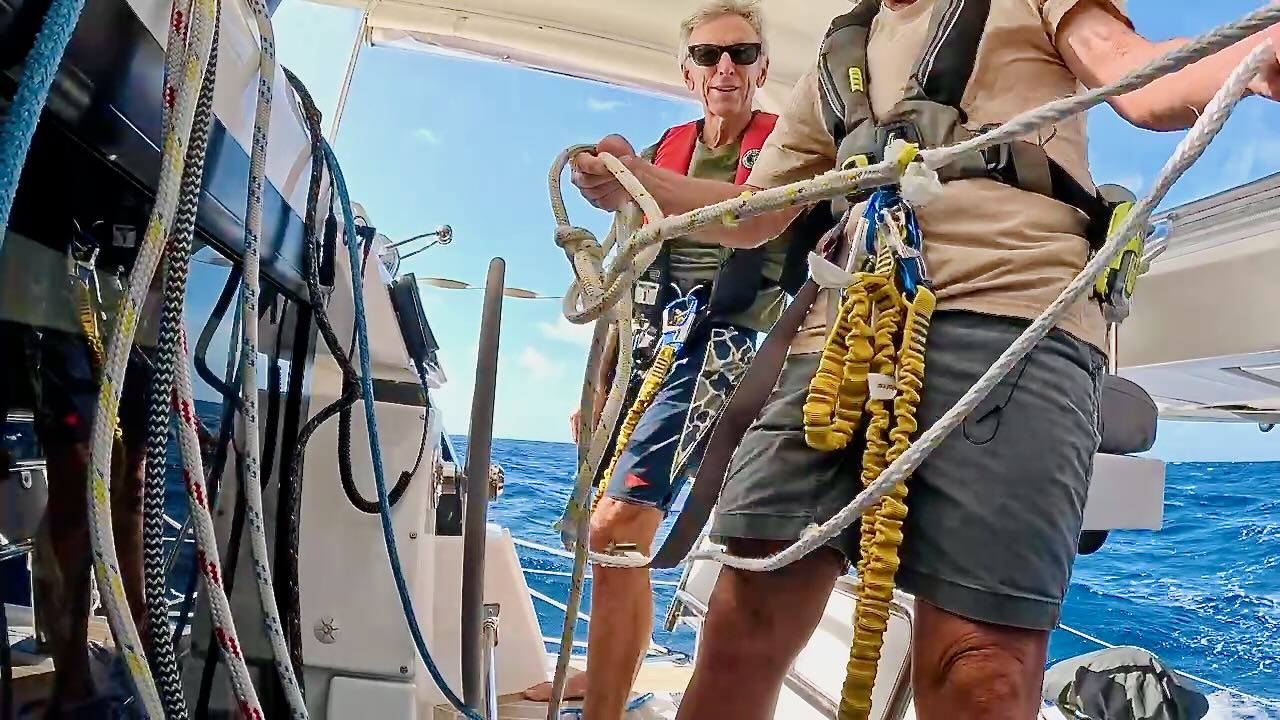
- Captain Roy conducted an in-depth safety briefing and distributed ocean-rated inflatable personal flotation devices (PFDs) and personal locator beacons (PLBs) to each crew member.
- We agreed on the watch schedule. I posted it in the salon for easy access.
- As I always do, I sent our float plan and multiple tracking links to our family members so they could follow us (Garmin, PredictWind, Iridium GO!, PolarSteps, and SailTies). I also discussed with them who to call if a concern should arise. I sent my usual departure notification to them right as we were leaving.
- Captain Roy conducted all of his usual engine and system checks.
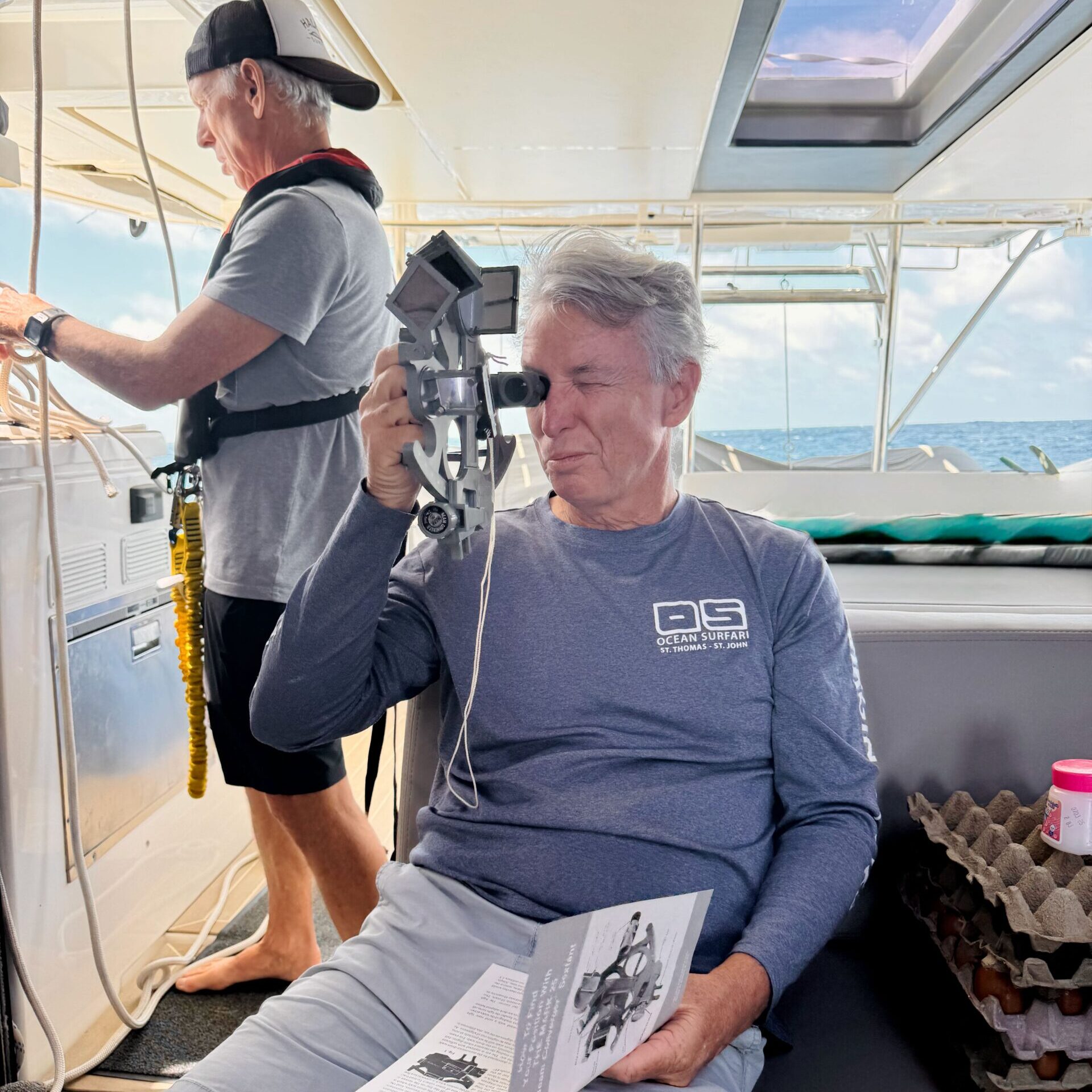
Notice my egg-greasing station on the right. You can read about that here.
Tip! Snacks and personal food stores can quickly become a touchy subject. Discuss in advance which foods are off-limits and which can be enjoyed by all.
Daily Life On Board
On a long passage, routine is actually very comforting. We all settled into our personal routines within a few days. A few of our crew members made exercise (resistance bands and calisthenics) a big part of their daily routine.
Routine Tasks
- Boat Maintenance: The captain had a daily maintenance routine of checking all systems for readiness and chafe at least a few times a day, and an hour before sunset.
- Communications: I took responsibility for checking in with our support network regularly to let them know we were okay. (Not daily, but every few days.)
- Cooking: I chose to do this, but often crew members share this task.
- Cleaning: Everyone cleaned up after themselves. We have a dishwasher on board, so I took responsibility for washing the dishes.
- Trash: We separated our trash into the following categories: 1. Food scraps, paper, glass, and aluminum (these went into a bucket) 2. Plastics and plastic-coated paper (which I cleaned and crushed daily) 3. Batteries and other toxic waste. 4. All Other. I managed all of these receptacles at least once a day. These categories changed at the Galapagos Islands. They have a strict rule that all trash must be divided and labeled as follows: Blue (recyclable), Green (organic), and Black (non-recyclable). You can read more about that on Noonsite.
Watch Schedule
- Leg 1: We had three crew members, so the schedule was four hours on, eight off.
- Leg 2: We had four crew members, so the schedule was three hours on, nine hours off.
We rotated times every couple of days, so no one person got stuck with the worst times. We had a rule that all crew members must do night watches. I always posted the current schedule in the salon.
Night Watches and Safety
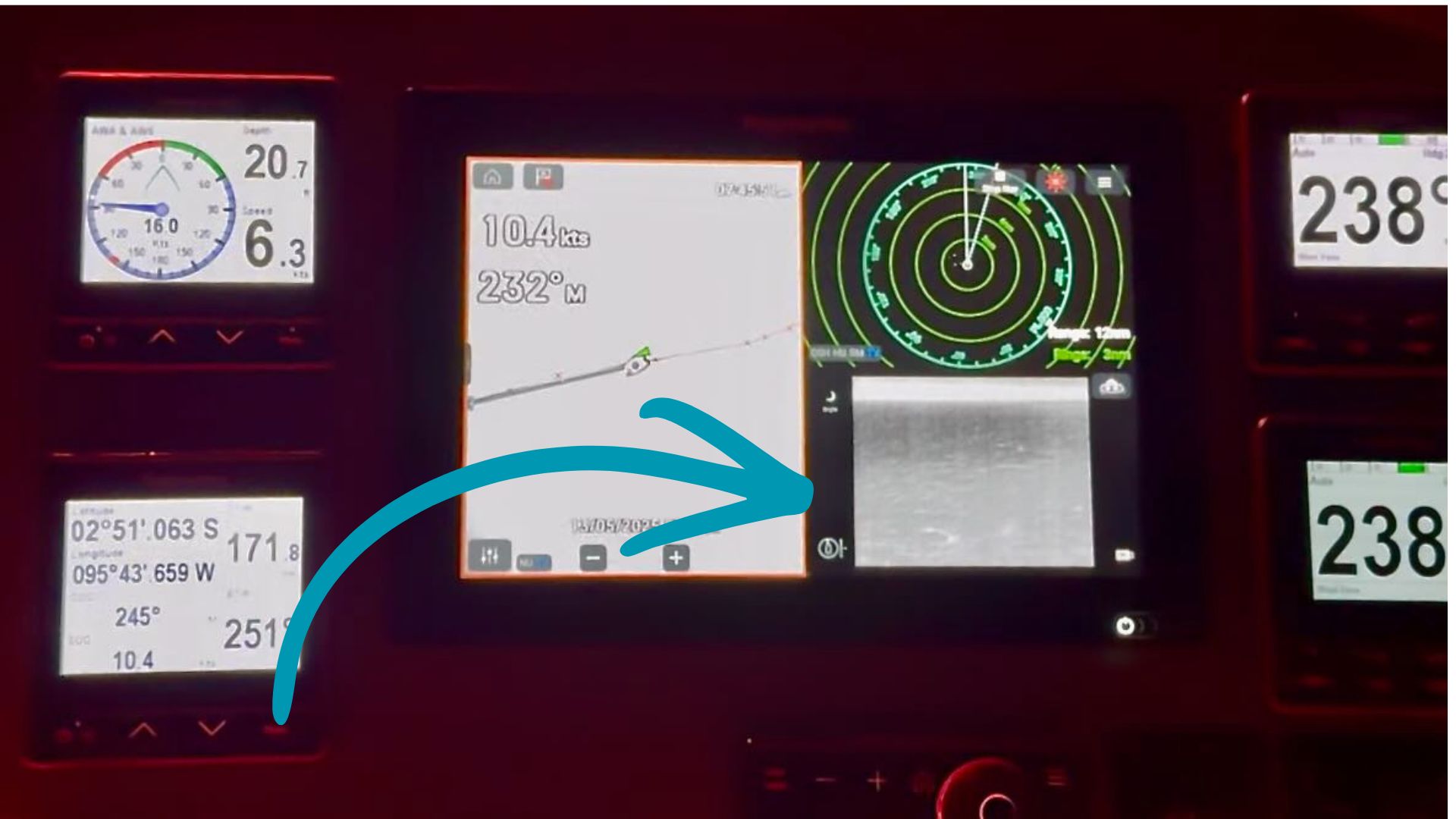
Speaking of night watches, we are staunch believers in all crew members staying alert and aware of our surroundings at all times, especially after the sun goes down. There was always someone at the helm, watching the radar. Our new FLIR camera made this even more effective. There were many rules for daytime and night watches, and all crew members agreed to them.
With all the planning and preparation out of the way, let’s get on to the journey.
Leg 1: Panama to the Galapagos Islands
The ITCZ and the Doldrums
The primary obstacle on this 900-nautical-mile stretch is the Intertropical Convergence Zone (ITCZ), commonly known as “the doldrums.” This is a region near the equator where the northeast and southeast trade winds collide, creating an area of low pressure characterized by breathless calms, sudden violent squalls, and heavy thunderstorms.
Navigating the ITCZ often requires significant motoring, so we carried ample diesel (as discussed here).
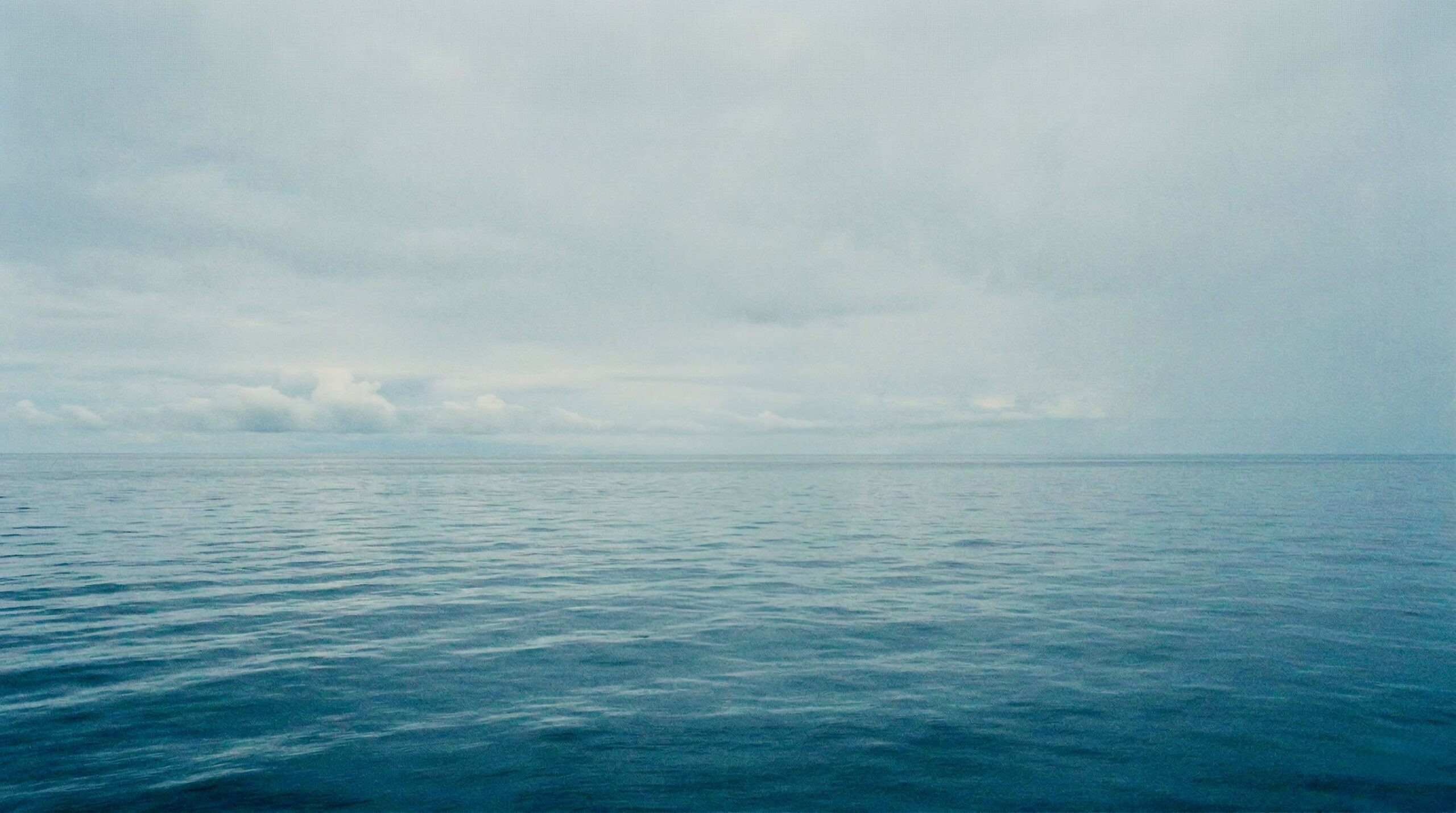
Furthermore, the Humboldt Current and the Panama Current can significantly affect speed over ground, sometimes adding frustrating counter-currents to the journey.
We motored through, and since we had brought so much fuel, it didn’t bother us too much.
Wildlife
I am always fascinated by the birds we see hundreds or thousands of miles offshore. We encountered a few on this passage.
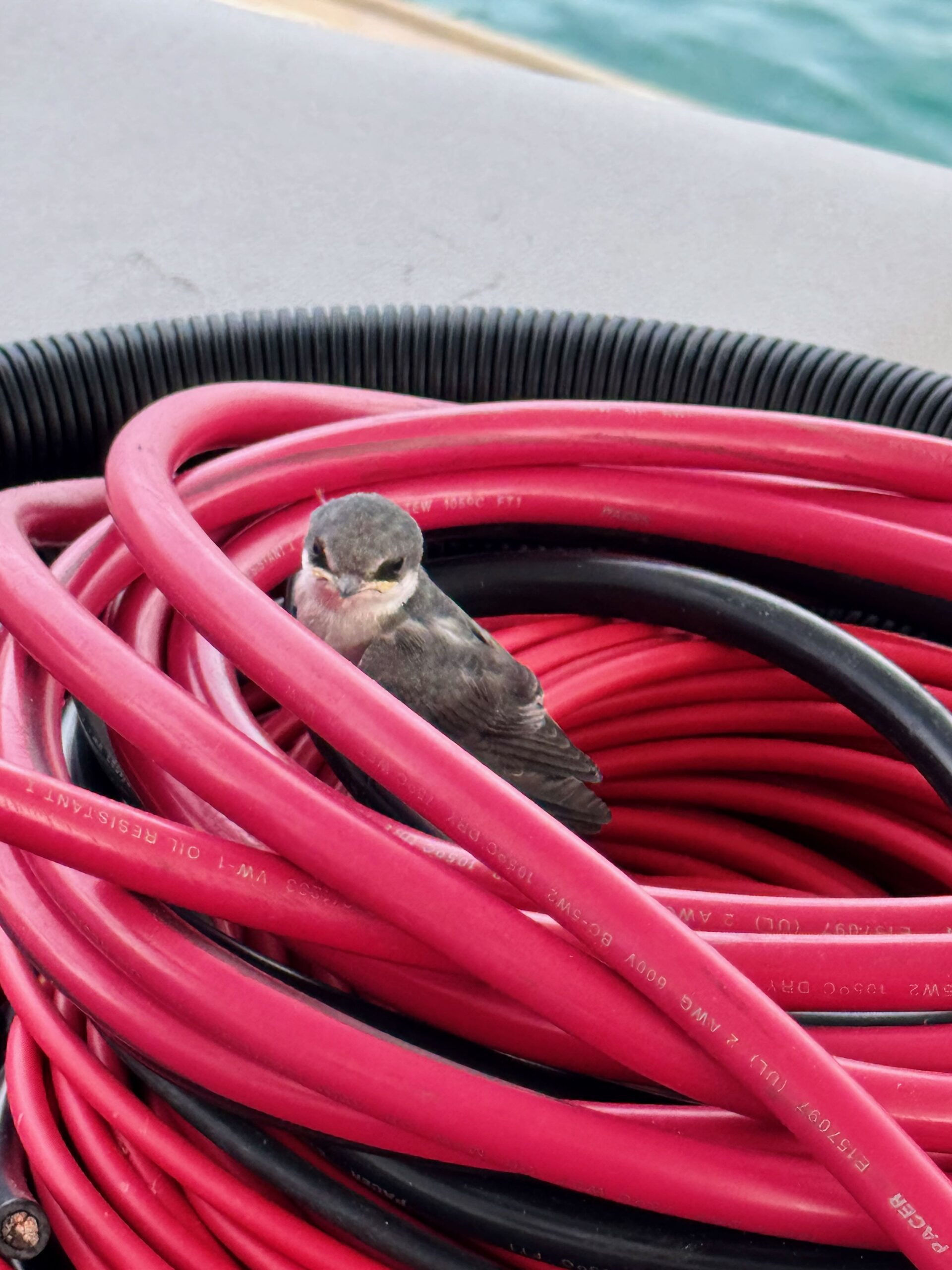
He joins us for a little while as we are leaving Panama.
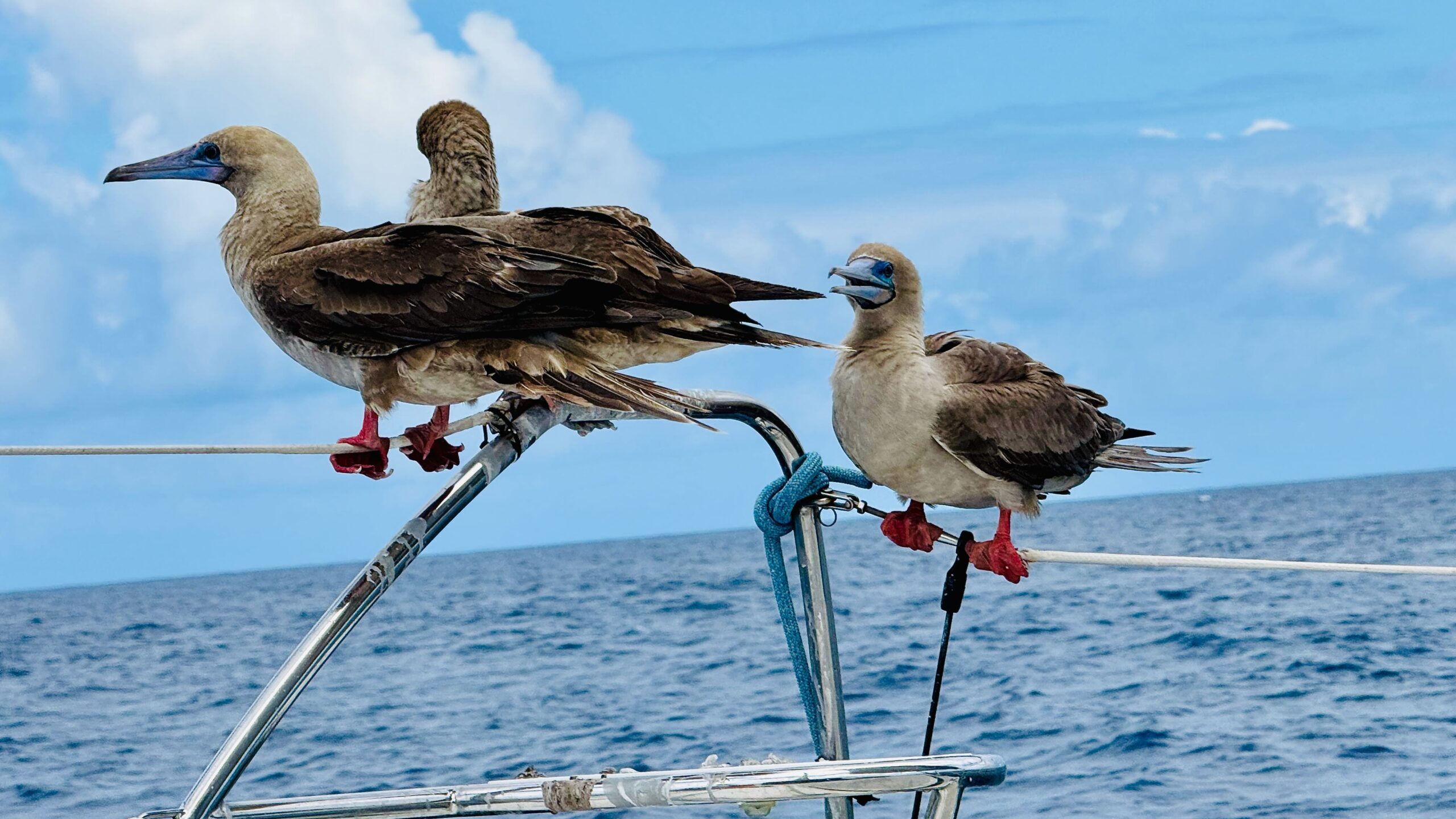
Most noticeable were the red-footed boobies who tagged along with us. Sometimes there were two; other times, several. In truth, they were a bit of a messy nuisance.
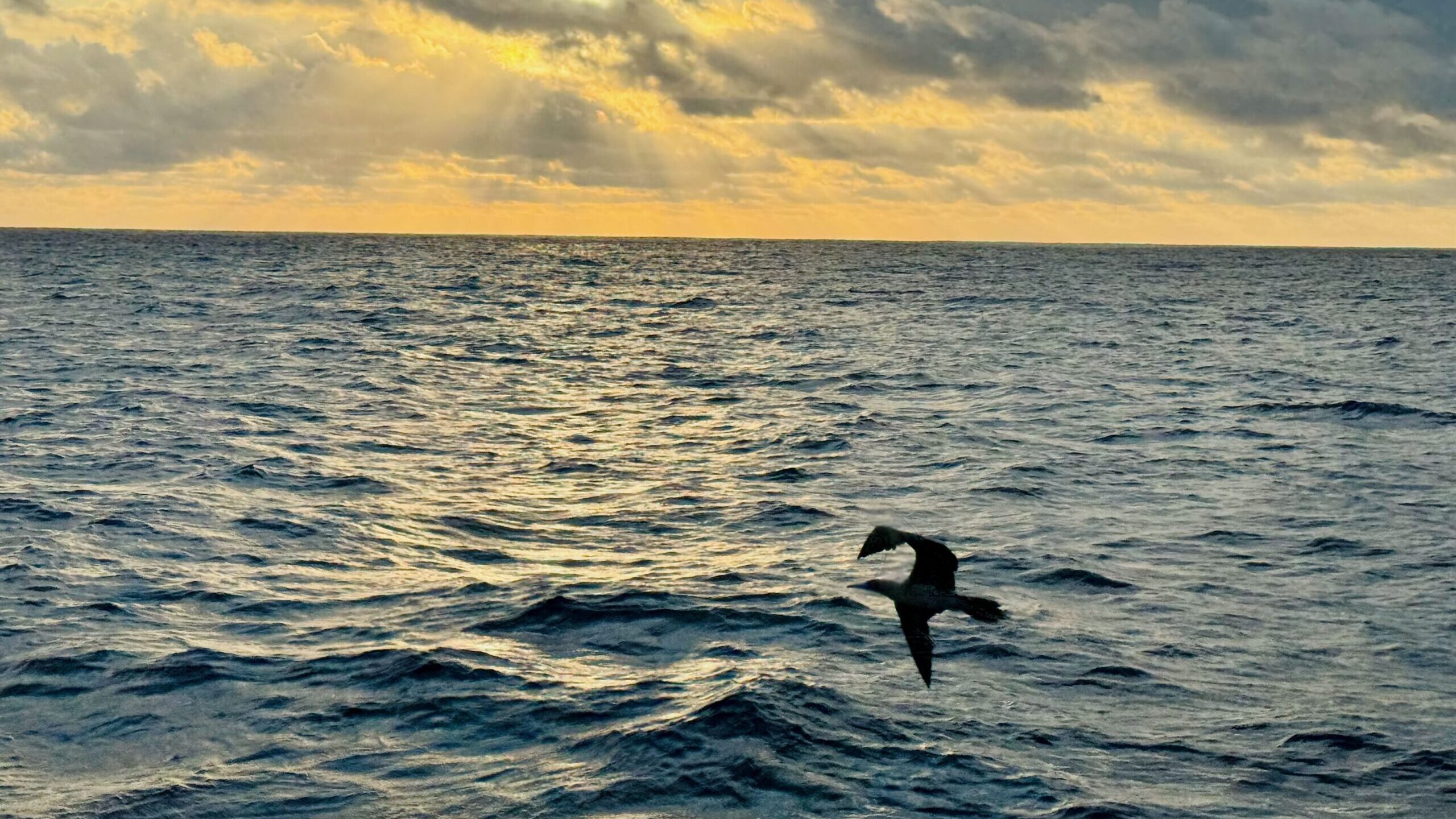
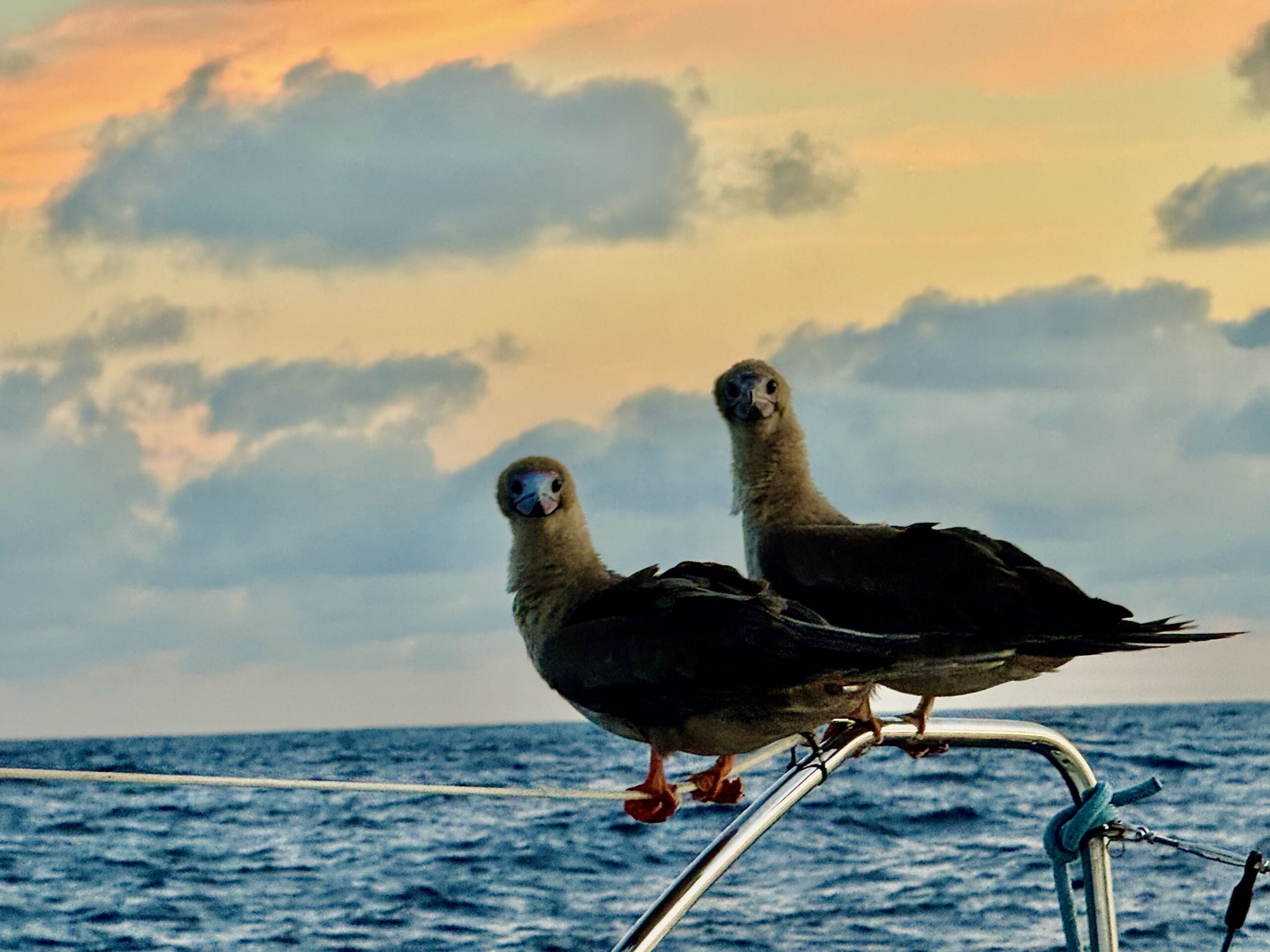
from Panama to the Galapagos Islands.
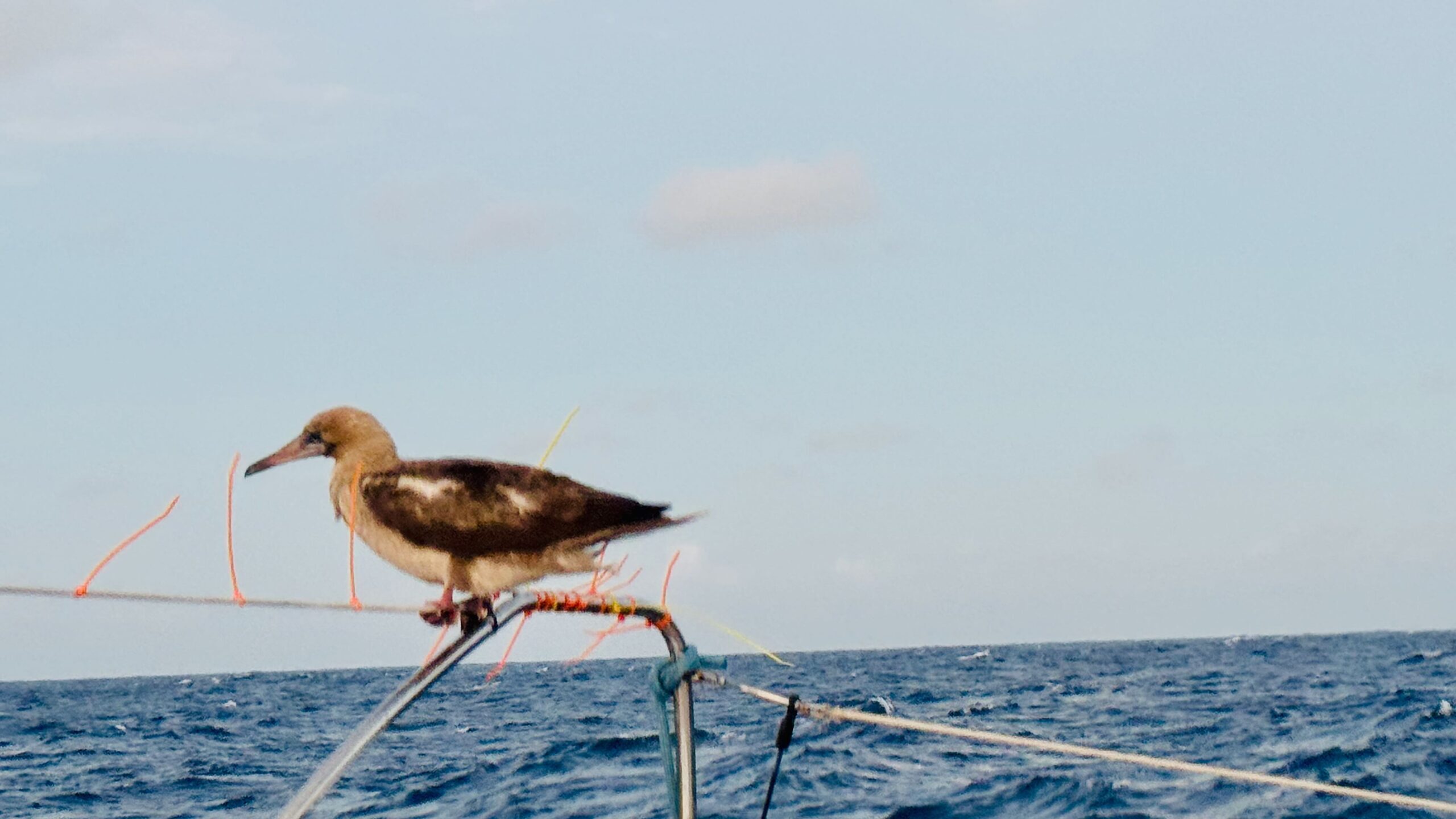
At one point, we erected a zip tie barrier.
Yeah, no. We kept adding more zip ties, to no avail. At one point, it seemed like they were actually enjoying the challenge.
So we added white flags. Notice that at this point, we had also installed “deck covers” (trash bags) to catch their droppings.
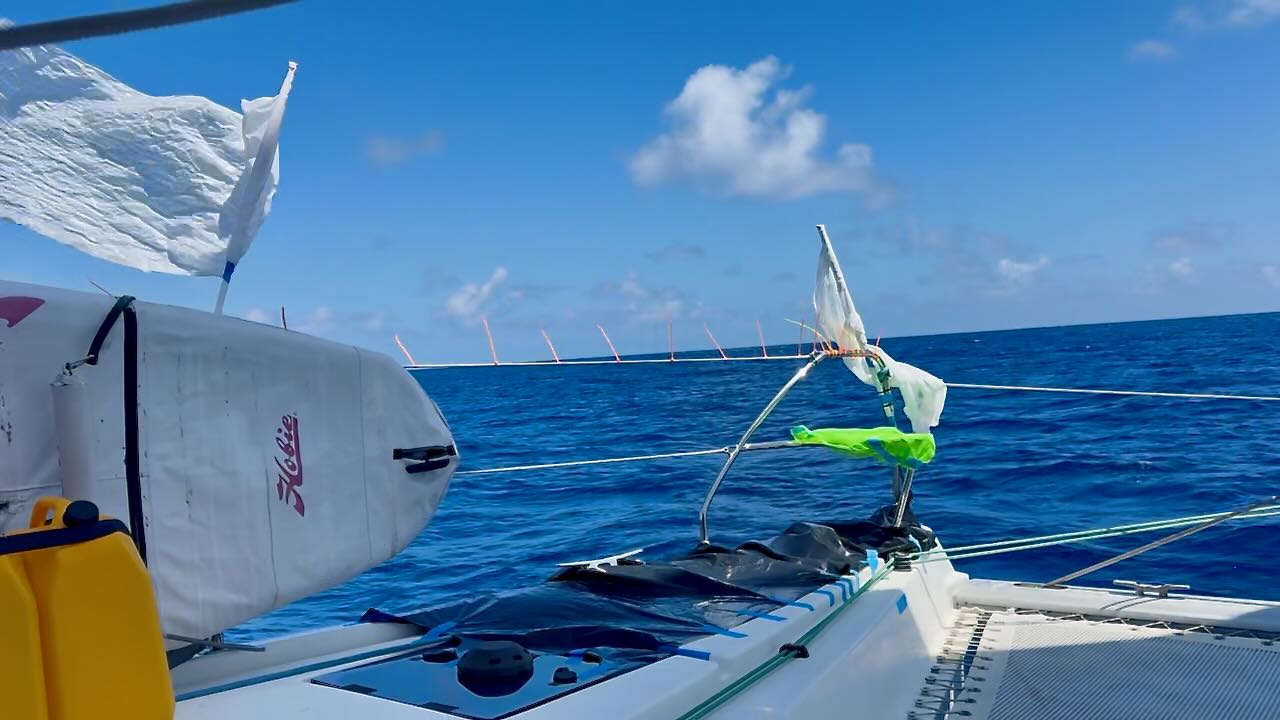
A nice try, but it still didn’t work. The zip tie method definitely had room for improvement, but we eventually gave up. Months later, we were on a friend’s new-to-them boat and noticed the same zip tie strategy. We got a big laugh out of that.
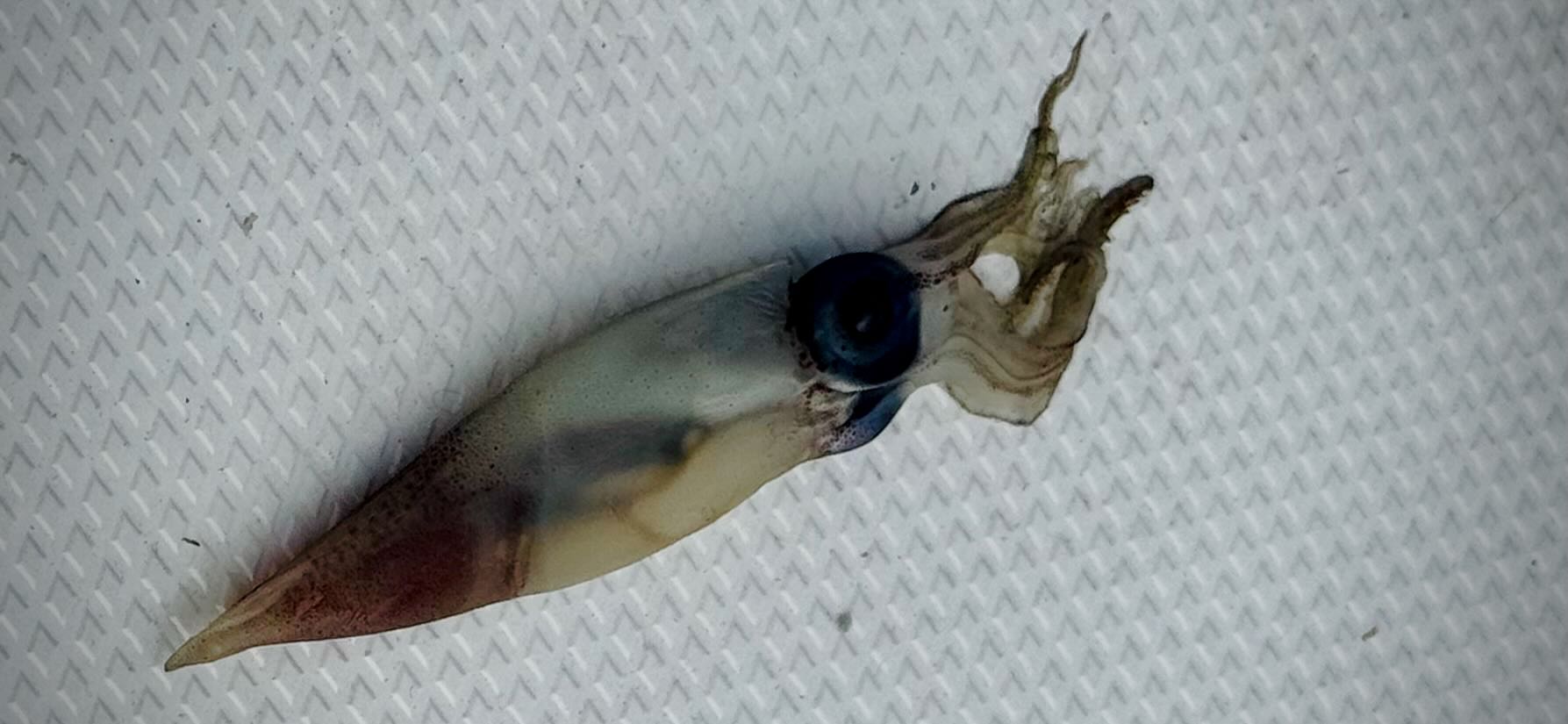
But before we move on, one more stowaway.
Crossing the Equator
This was a big moment for us.
Sailors have performed the “Neptune Ceremony” (or Equator line-crossing ceremony) for more than 500 years. Originating from 16th-century European voyages—with documented instances from French sailors in the early 1500s—this ritual initiates “polliwogs” (first-timers) into “shellbacks” (veterans) under King Neptune. You can read about this tradition here.
In our case, we were all “polliwogs” (none of us had ever crossed the equator before). Instead of dressing up in costumes, we chose to make a ceremonial Neptune head out of a cabbage.
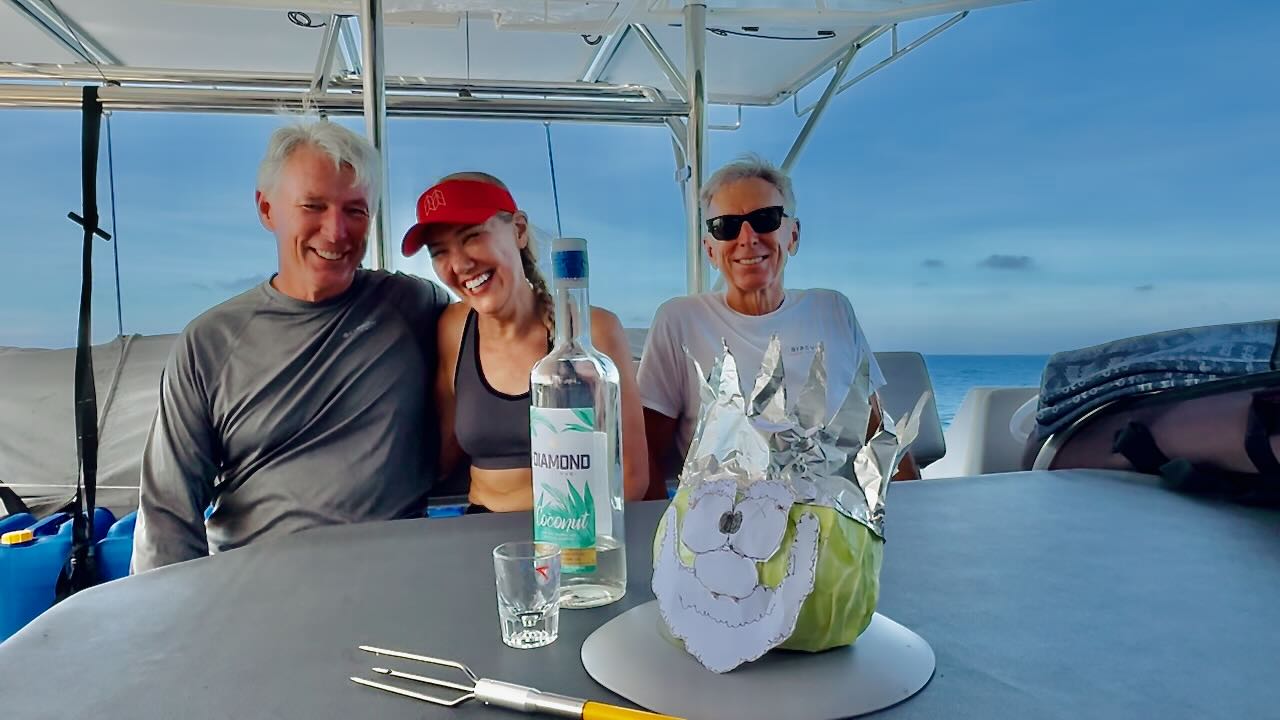
We then waited for the big moment.
Next, we circled back around and performed the ceremony.
We were in the doldrums (no wind and pretty flat seas), so after circling back around again, we then did the “dunking”—we swam in the ocean at the Equator!
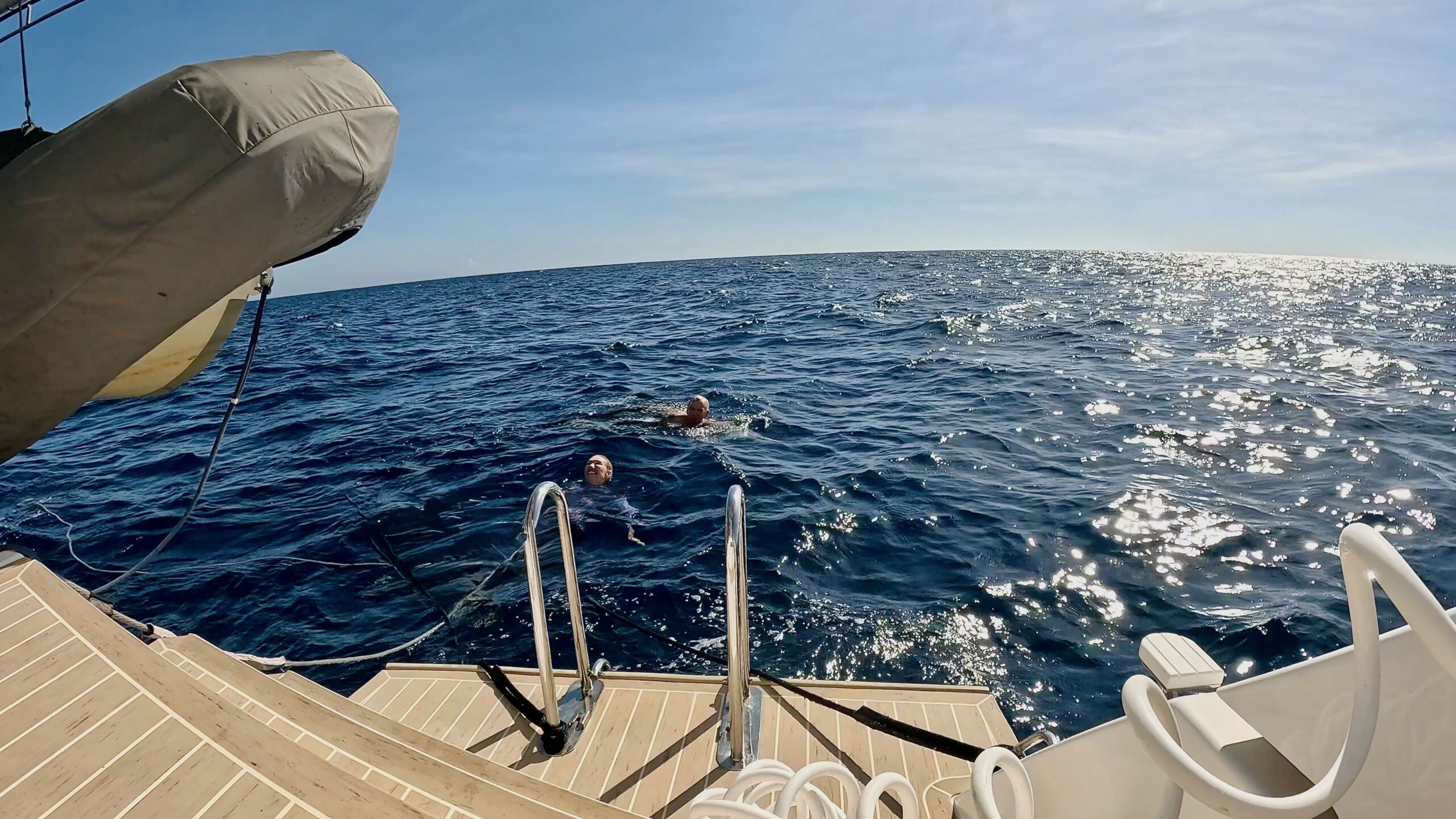
A few safety notes:
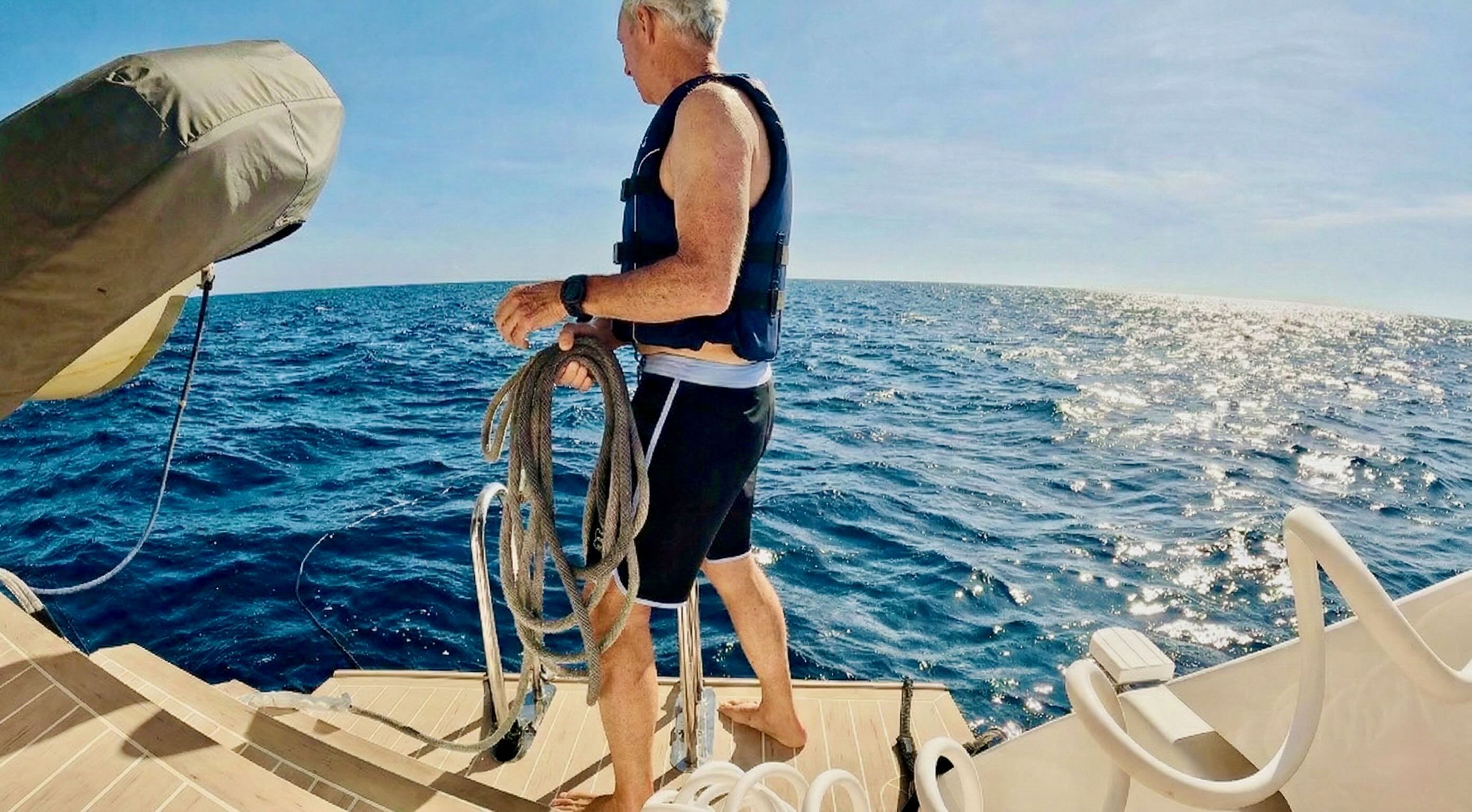
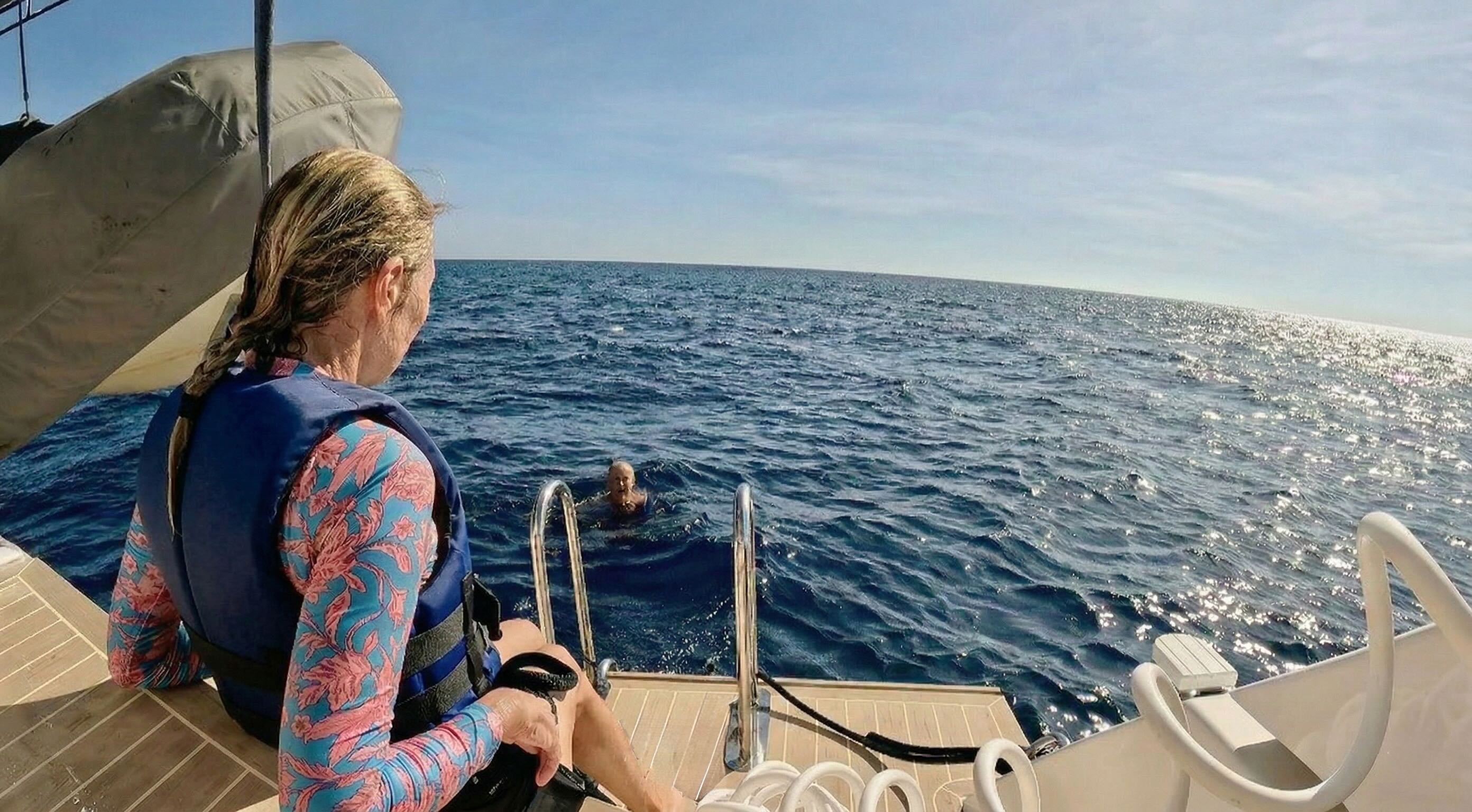
So much fun! And just like that, we are all officially now “shellbacks.” What a once-in-a-lifetime experience!
Arriving in the Galapagos
It took us eight days to motor-sail from Panama to Santa Cruz Island. You can read about the check-in process here.
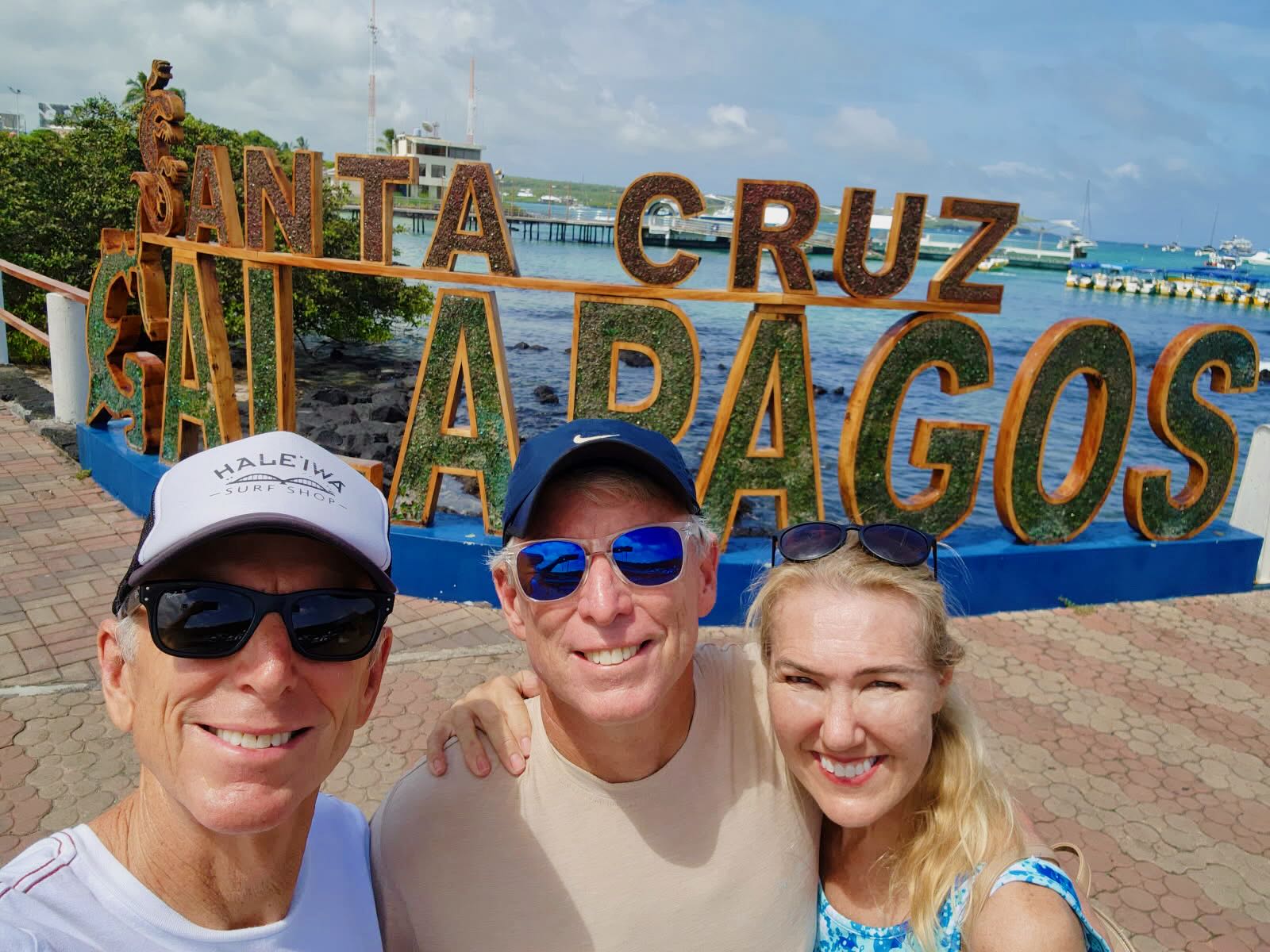
We had a fabulous 15 days in the Galápagos Islands and easily met our fourth crew member there.
I really hated to leave, but we had to keep moving, so we shoved off toward French Polynesia.
Leg 2: The Long Jump: Galapagos to the Marquesas
This is the defining challenge of the Pacific crossing. Stretching around 3,100 nautical miles, the passage from the Galapagos Islands to French Polynesia takes the average cruising sailboat anywhere from 18 to 30 days. It took us 21 days.
During this passage, there is no land, no shelter, no other boats, and no immediate rescue for thousands of miles. We wanted to buddy-boat, but the timing didn’t work out, so we were all alone.
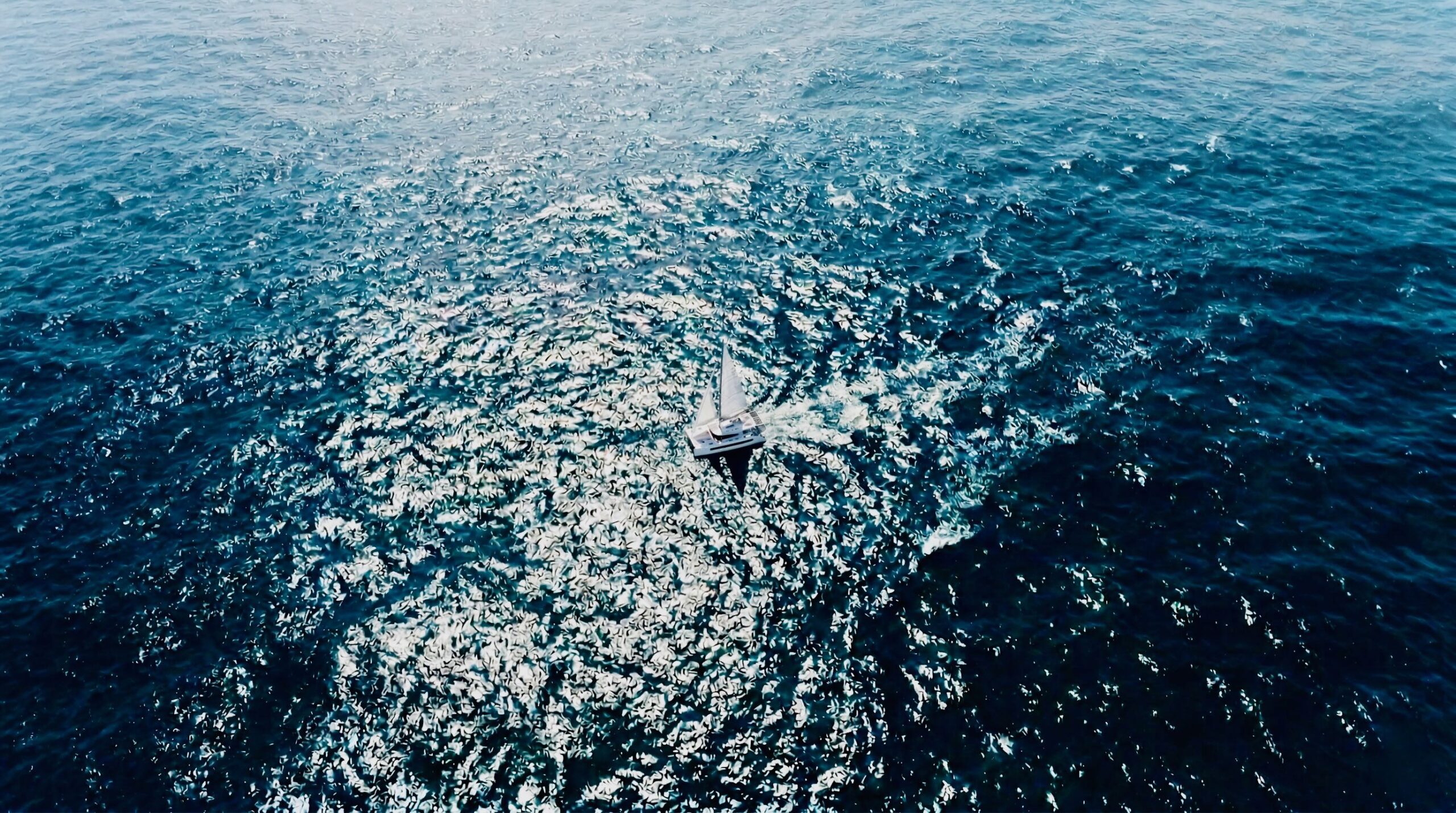
In the end, we ultimately formed a “buddy,” while en route, with another catamaran that was on the same path as us, a few miles away. We later became friends with them when we were in Pape’ete Marina, Tahiti.
Weather and Wind
Several people had told us that this passage would be the “best of our lives”—calm and stunningly beautiful. While the latter was certainly true, it was not always smooth sailing for us.
We didn’t always have following seas, making the passage rockier than I expected.
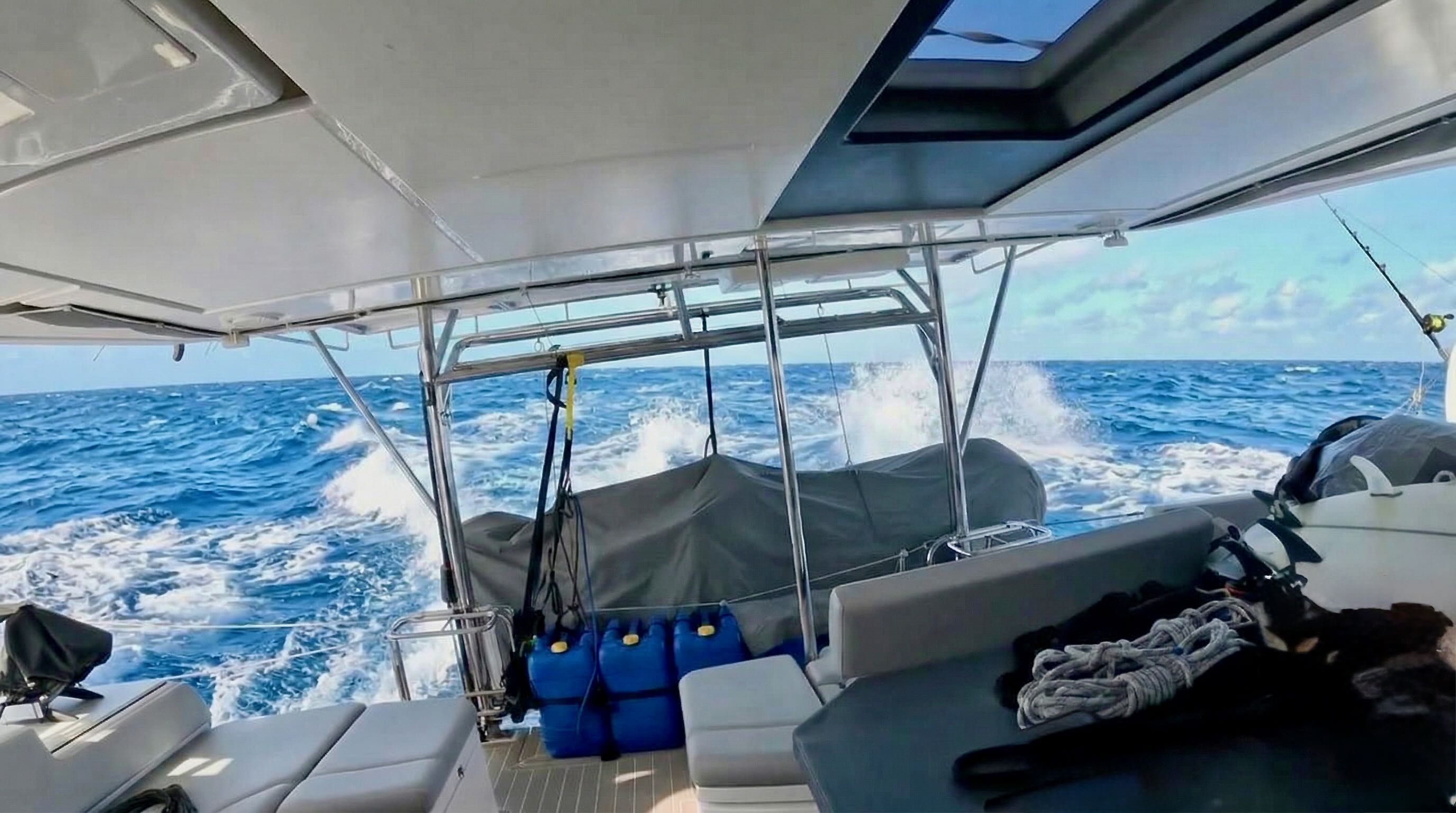
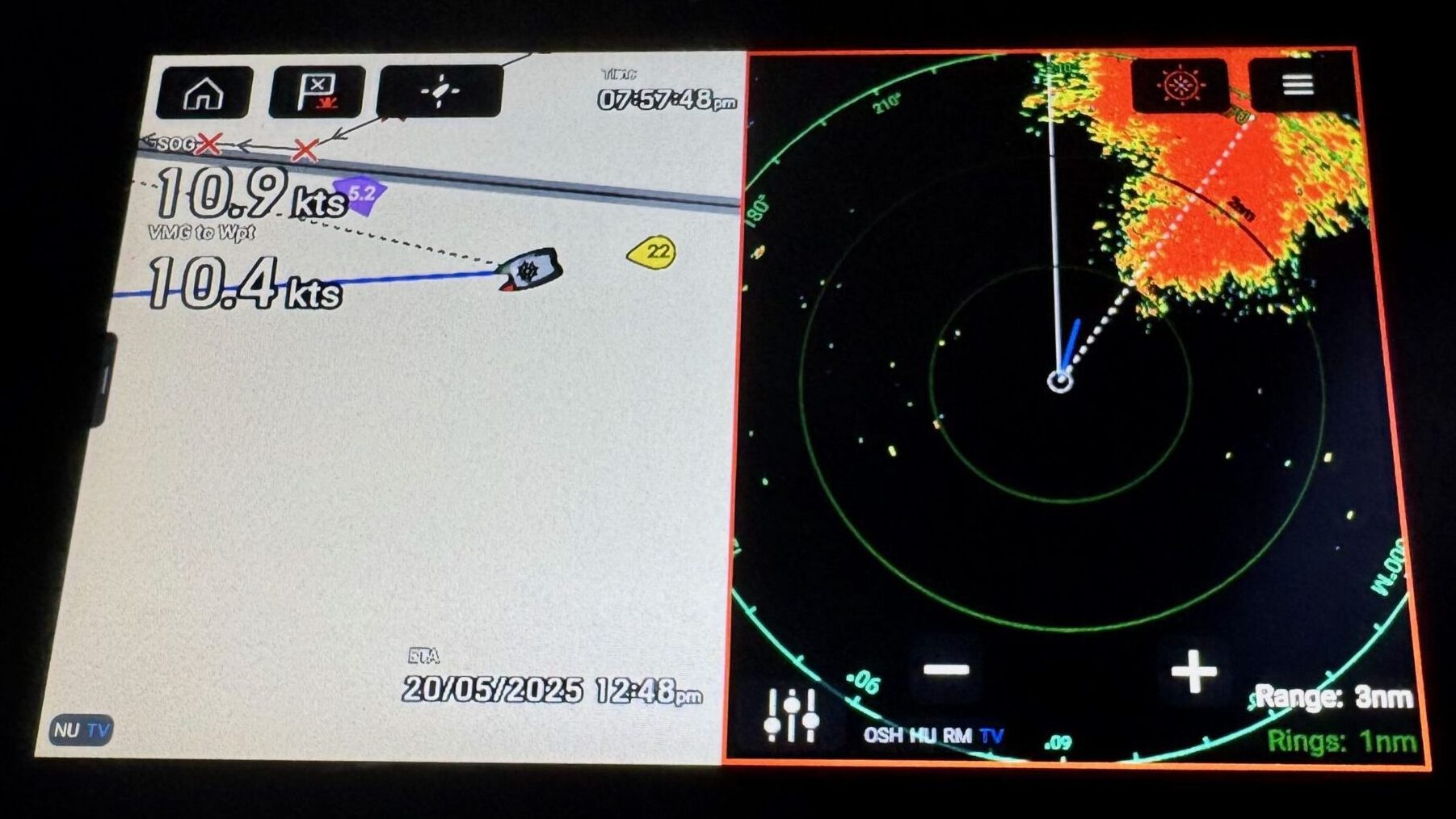
However, we’ve experienced a lot worse, and it was certainly tolerable.
What Went Wrong
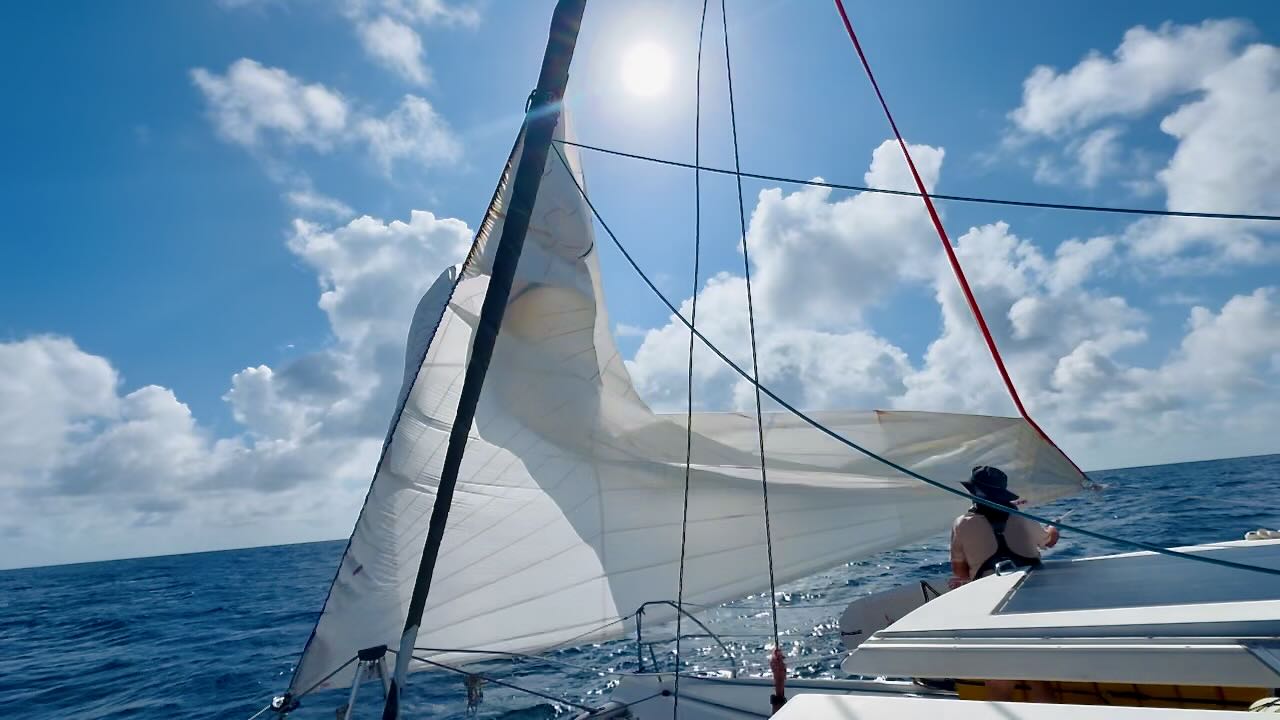
Well, a few things. First, our asymmetrical spinnaker shredded into pieces. We were really disappointed; however, it is replaceable, so we quickly brushed it off and moved on.
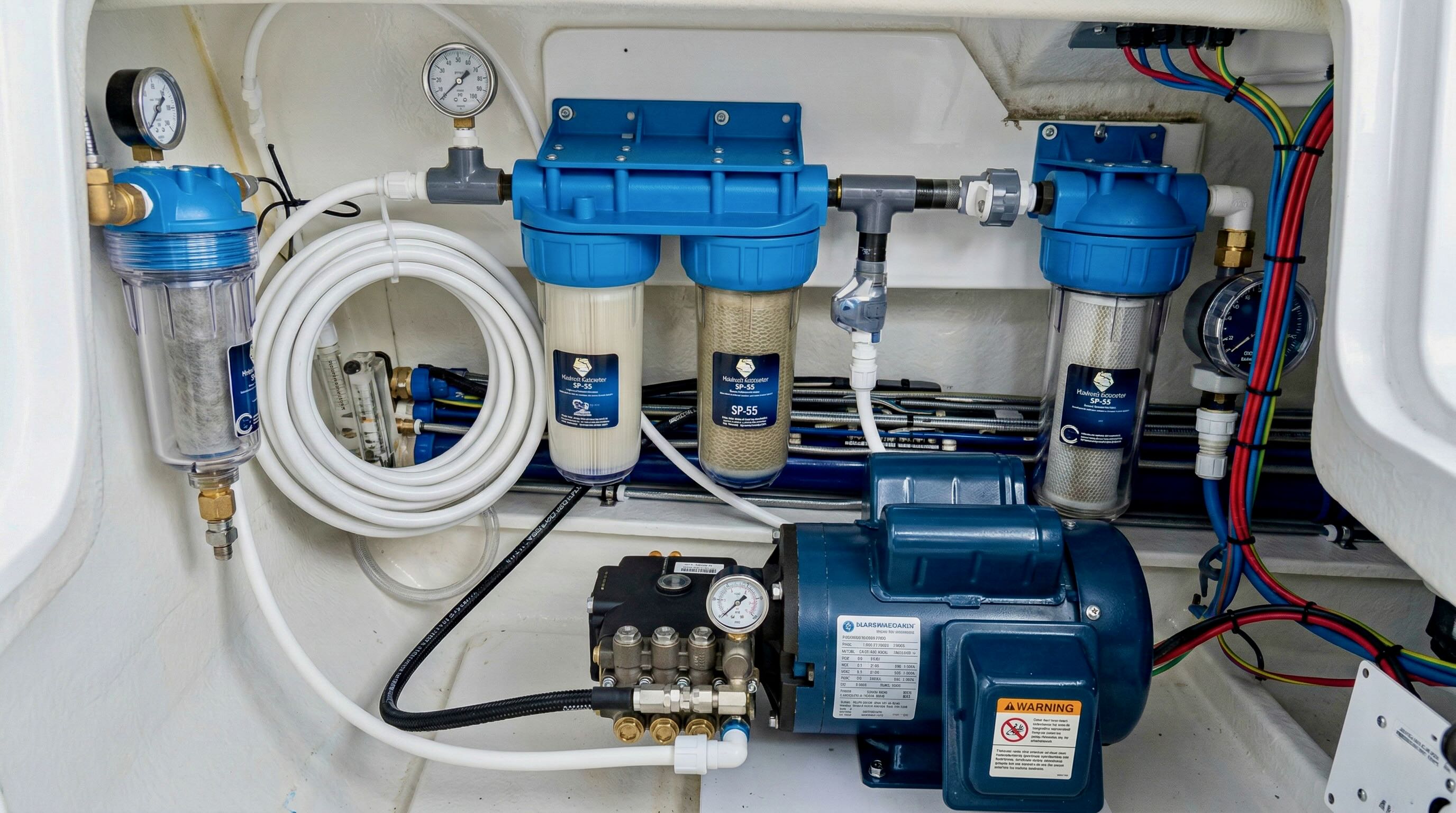
Next, our watermaker stopped working. The good news? We had a backup! We used it for the rest of the passage, and we were really glad to have had it.
Third, a solar fuse blew.
Last, our lazy jacks broke. This was probably the most difficult problem that arose. We had to find a way to manage the mainsail when lowered.
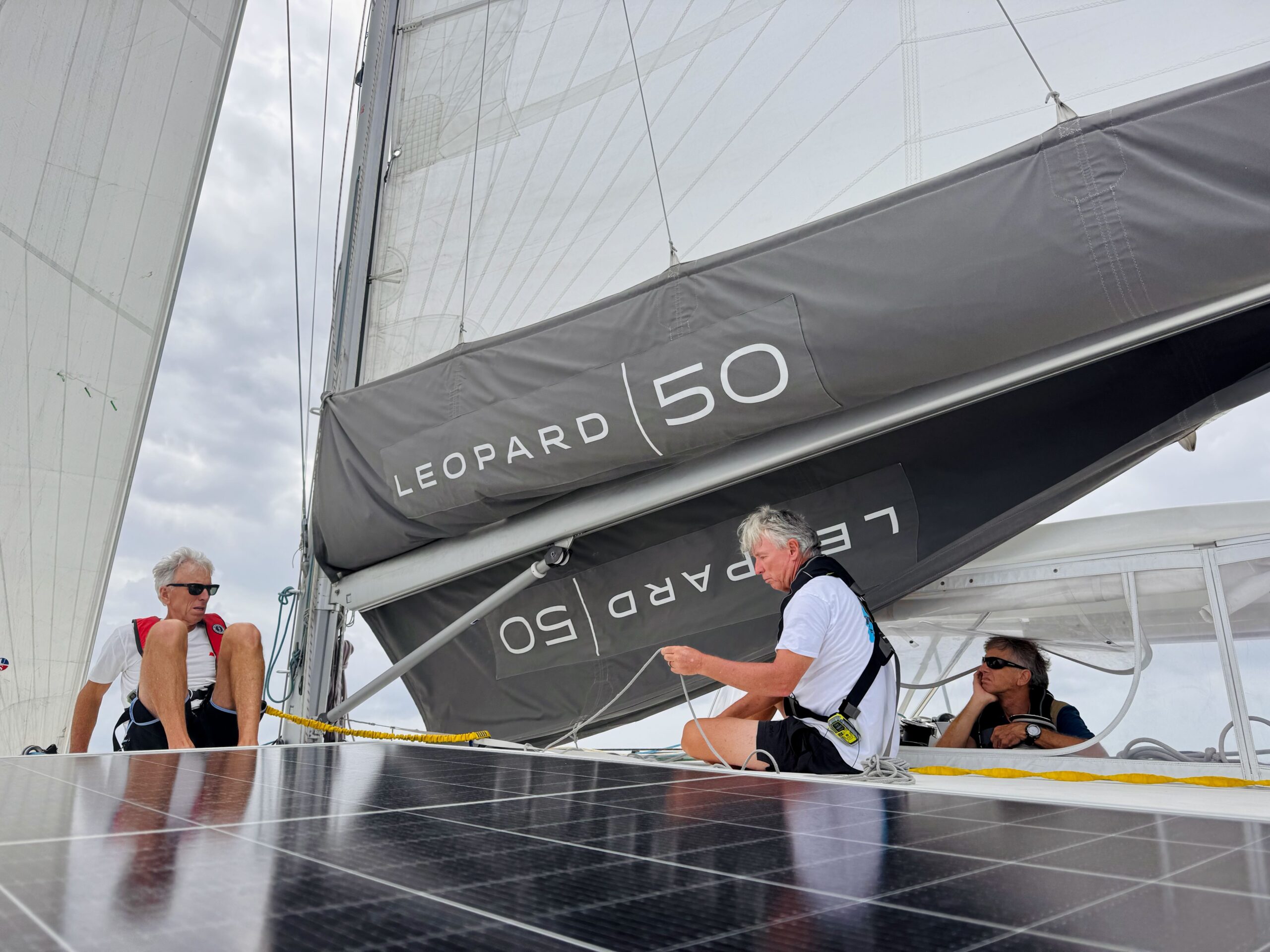
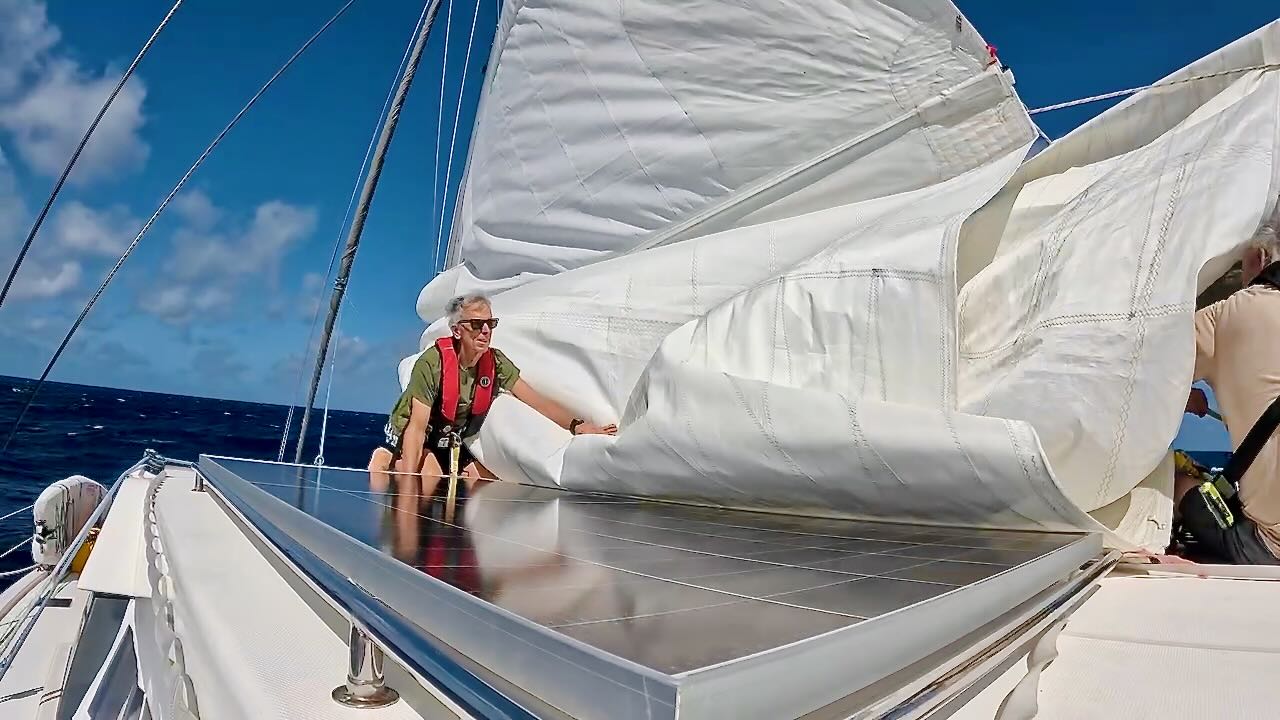
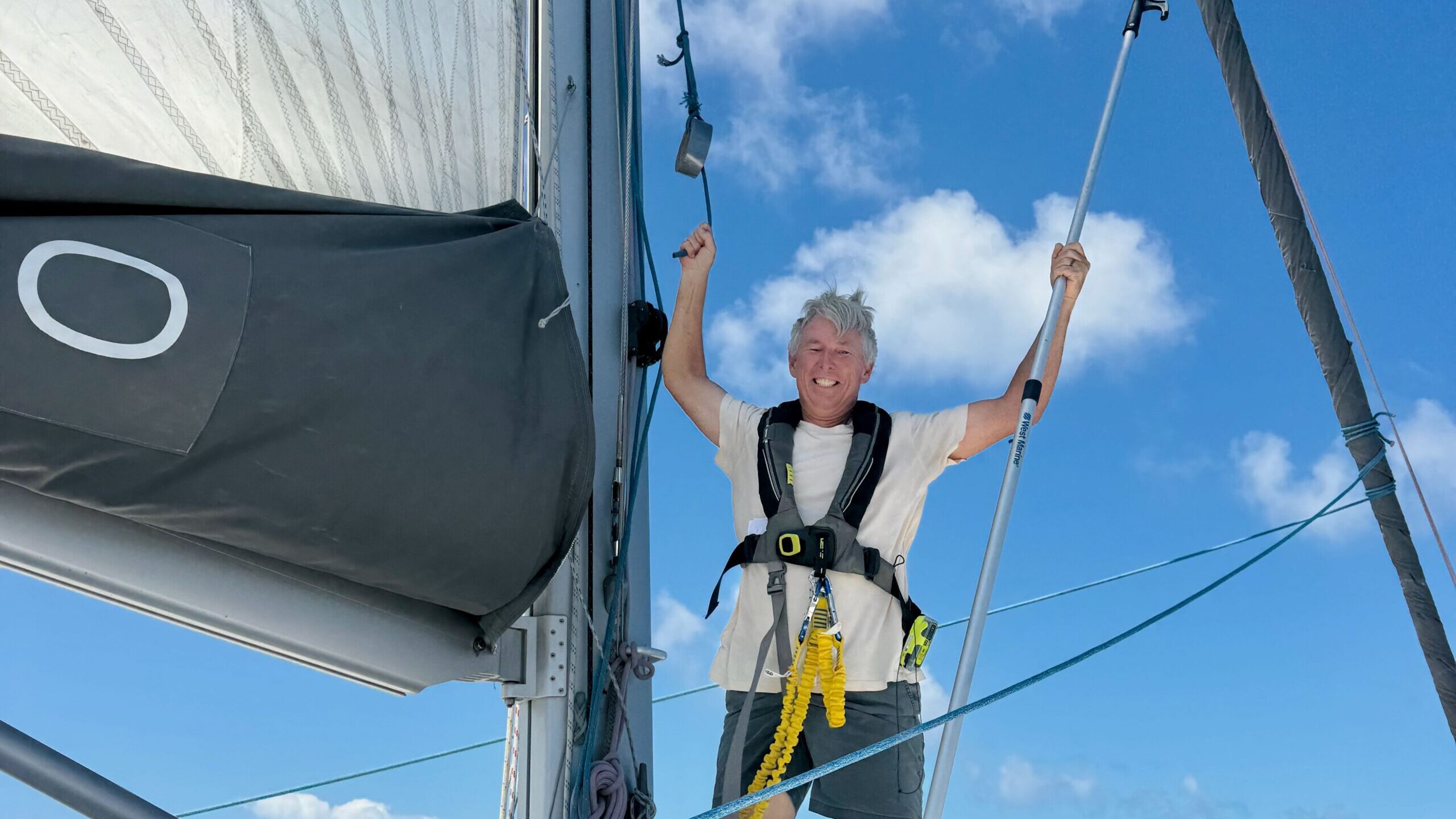
Every small fix sometimes feels like a huge victory.
What We Loved
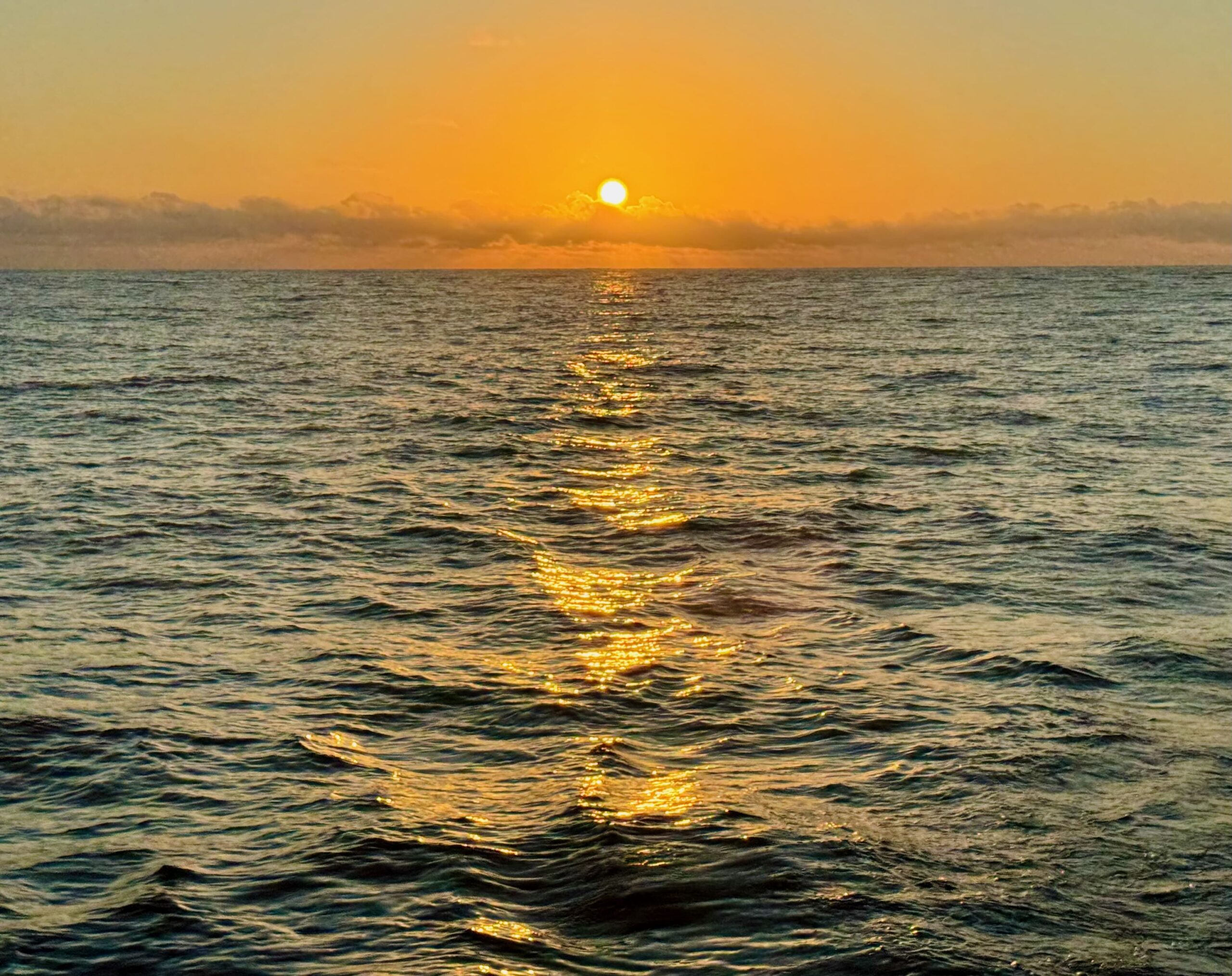
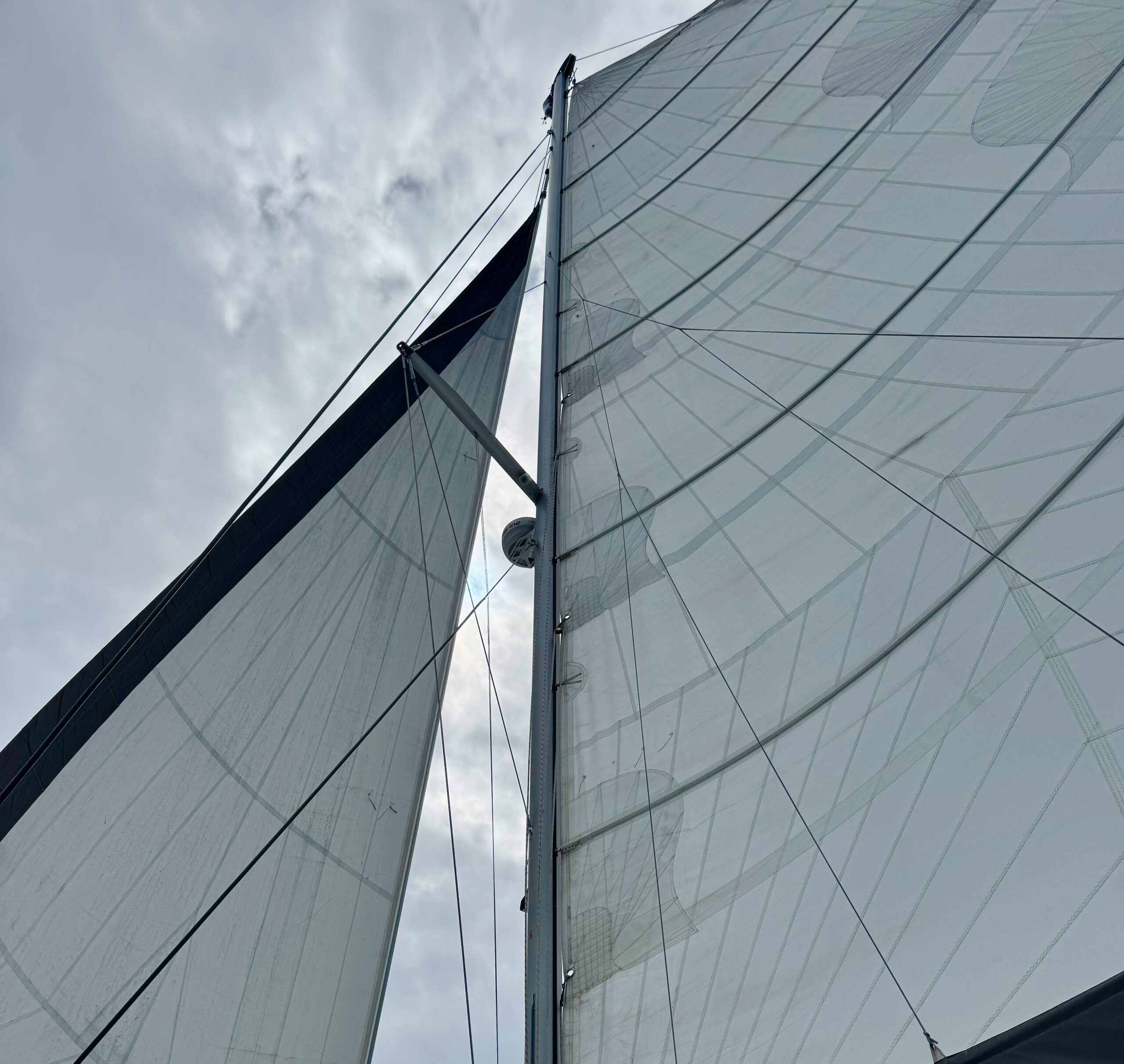
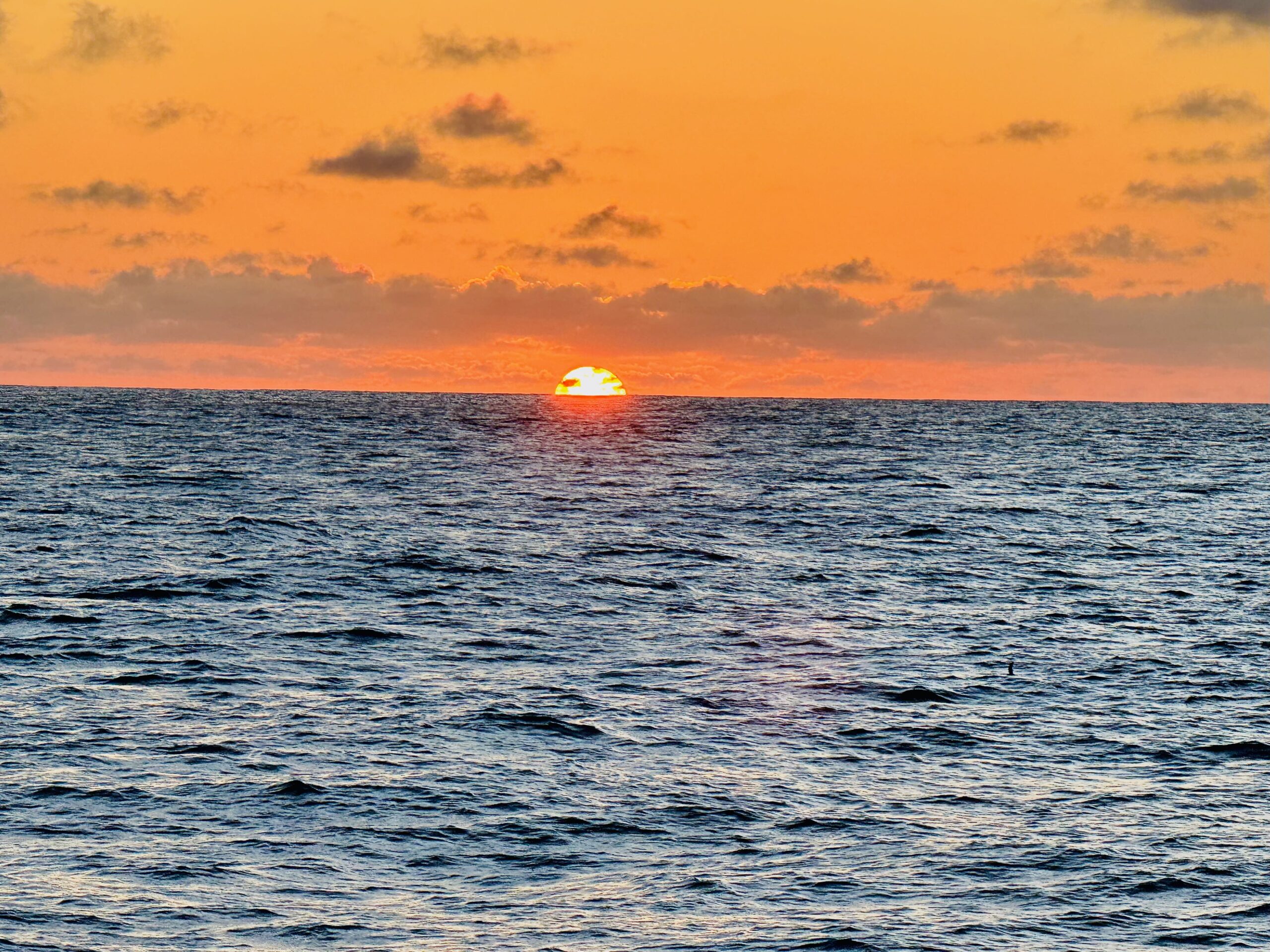
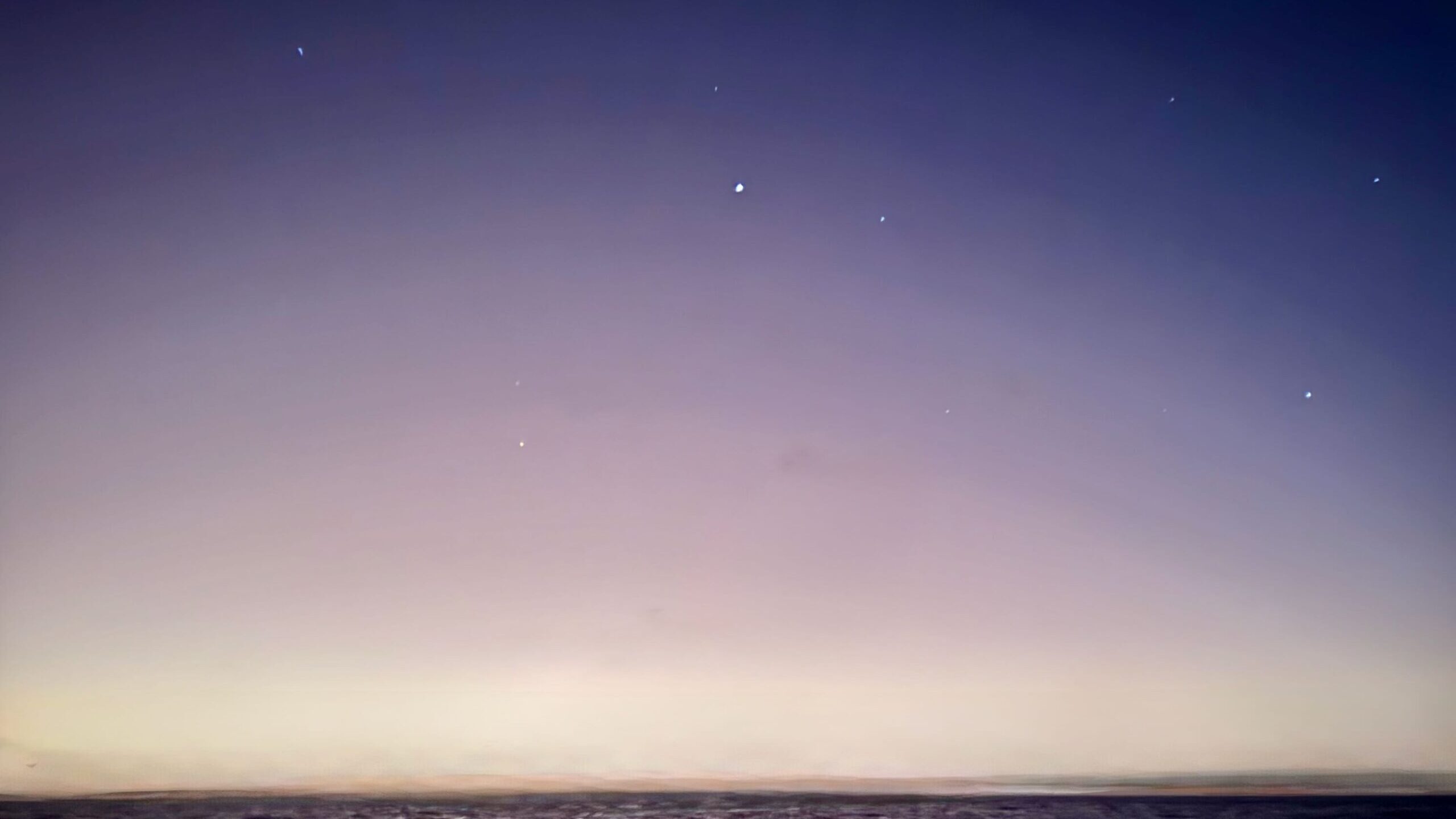
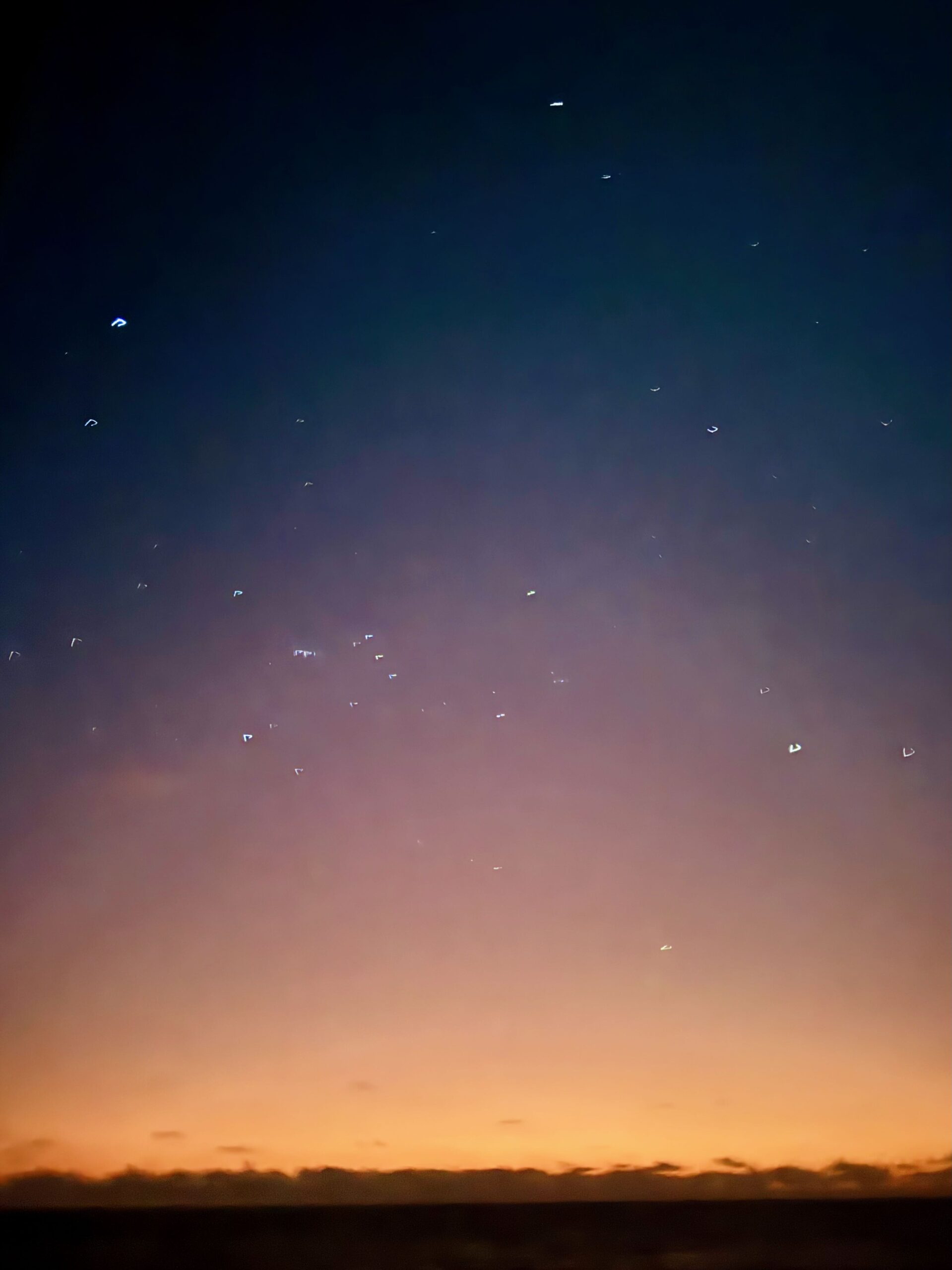
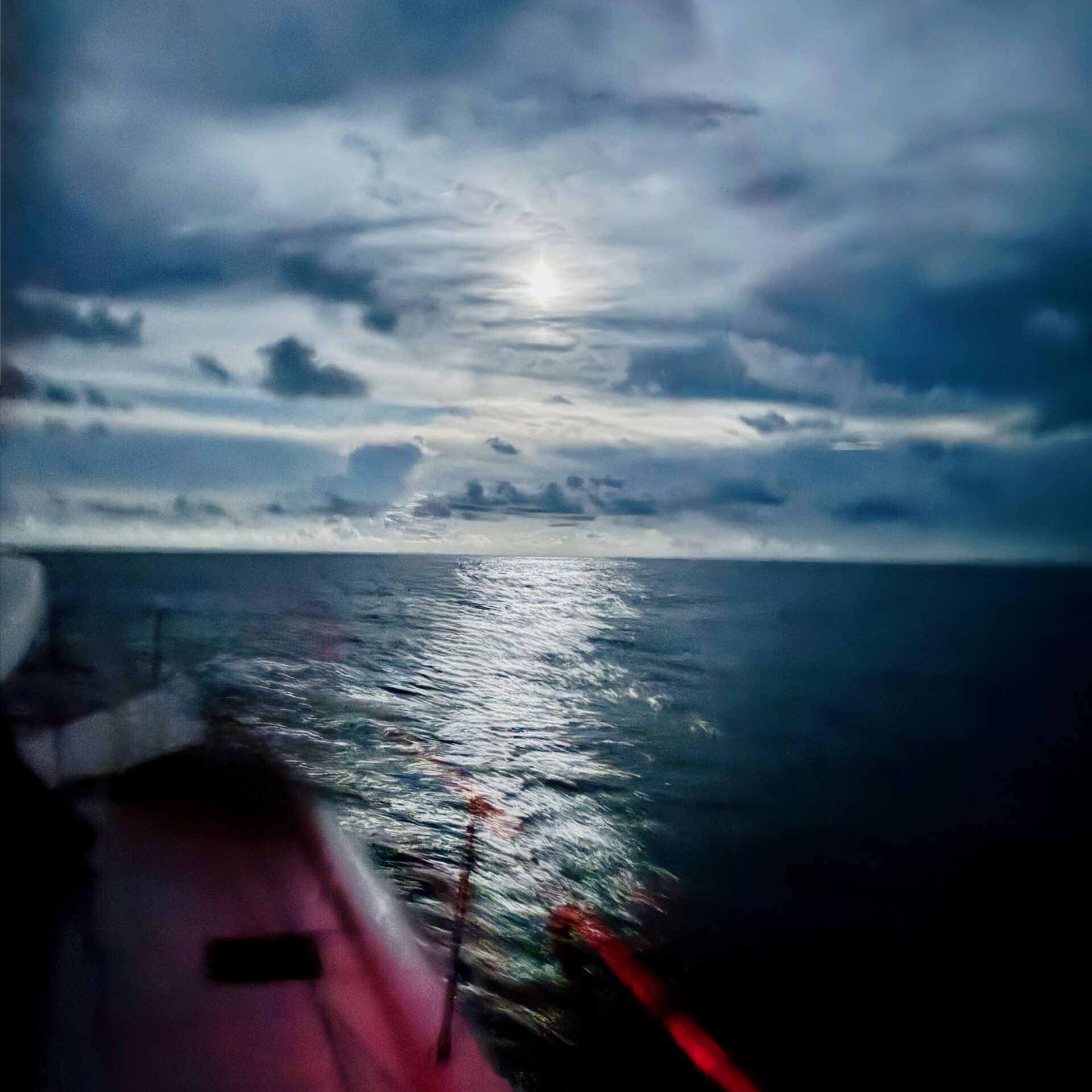
Flying fish:
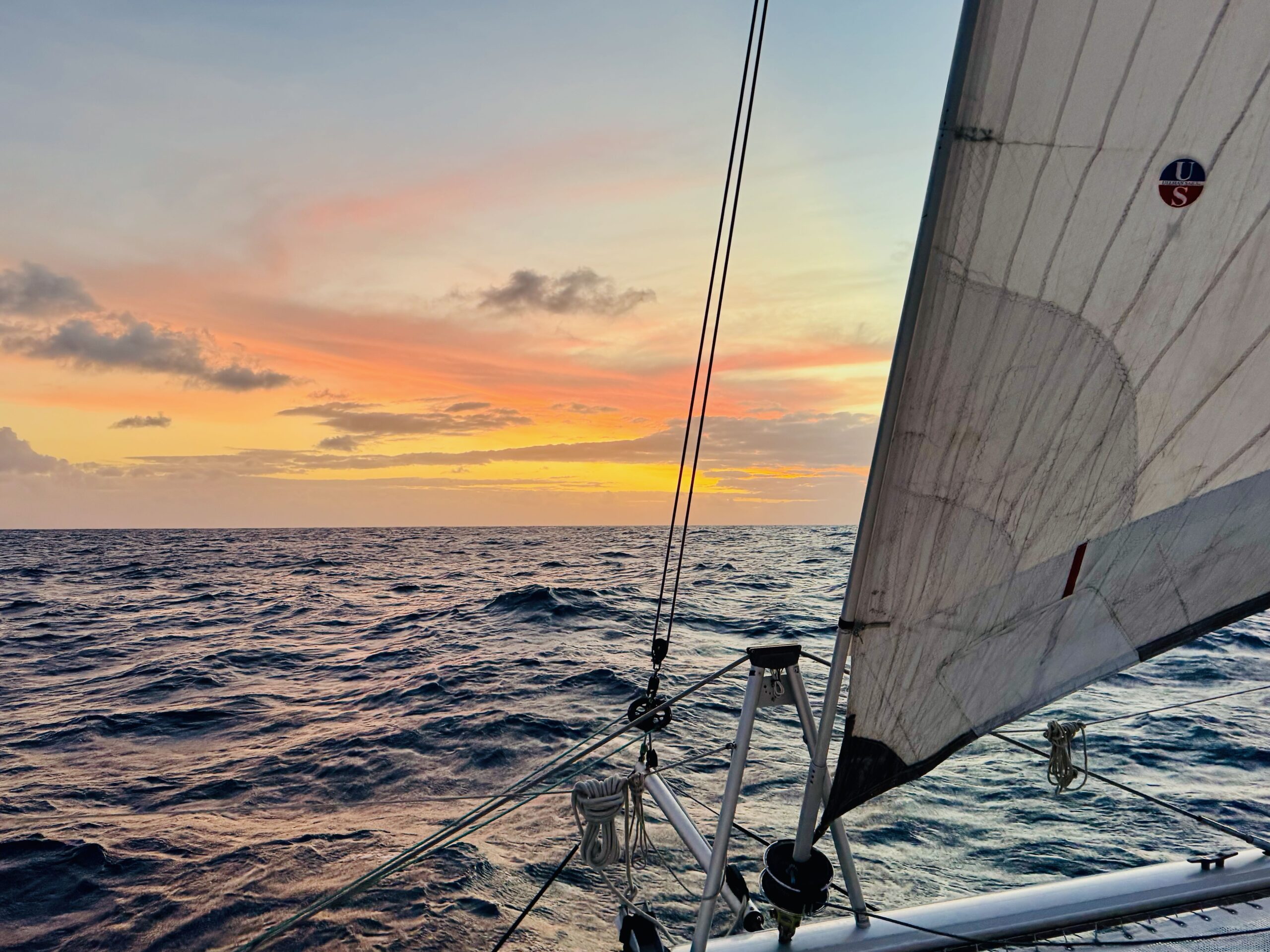
Landfall in French Polynesia
After 21 days and 3,100 nautical miles of nothing but deep blue water since leaving the Galapagos Islands, we arrived in French Polynesia. Our total voyage was 4,000 nautical miles and 29 days.
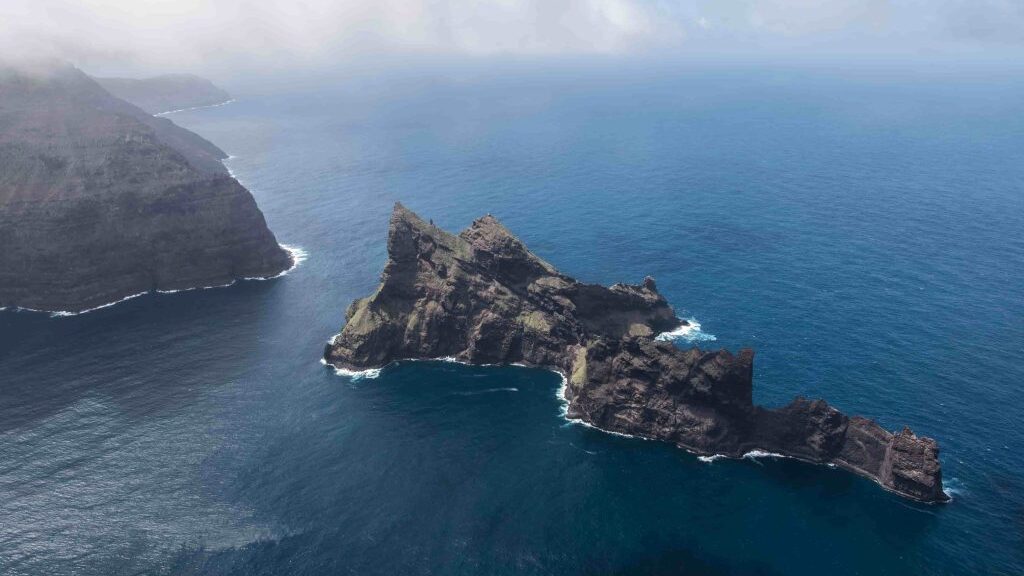
The Marquesas Islands lack the protective coral reefs found elsewhere in the Pacific. Instead, volcanic spires rise abruptly from the ocean. The scenery was absolutely stunning.
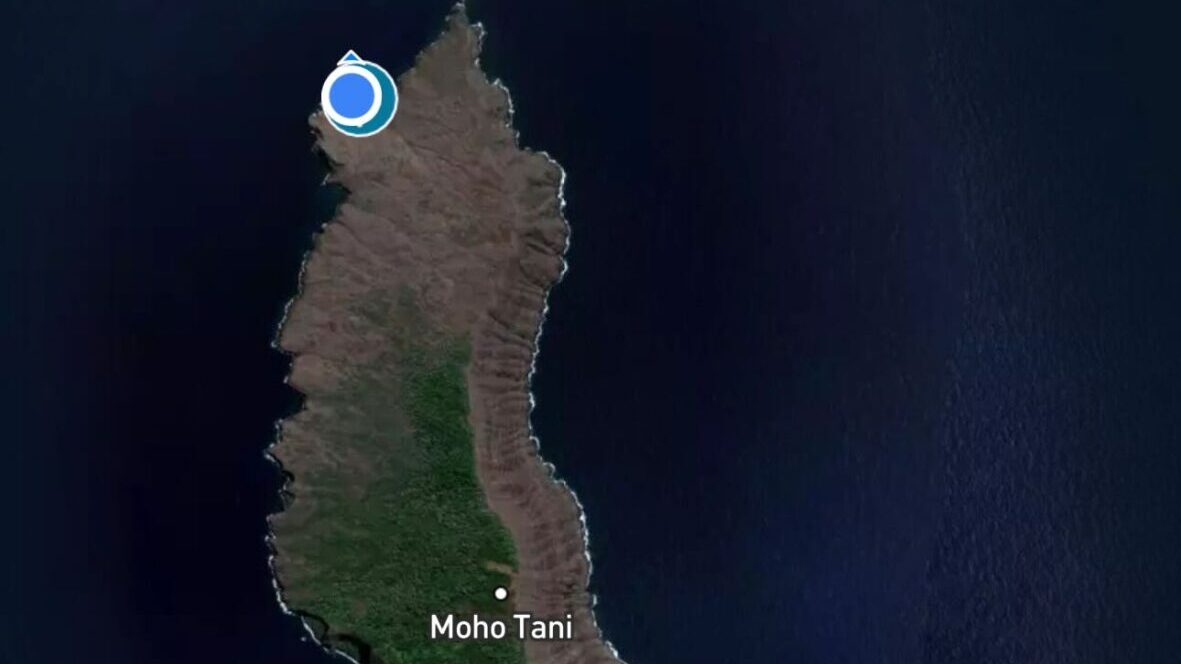
We spent our first night at the deserted island of Moho Tani and did not leave the boat because we had not yet cleared in.
As with the previous two countries, we had hired an agent: this time, Kevin Ellis of Yacht Services Nuku-Hiva (in retrospect, we may not have needed this). We cleared in the next day at the gendarmerie in Hiva Oa.
This opened the door to our next adventure: French Polynesia!
Final Thoughts
Crossing the Pacific is not a vacation; it is an expedition. It demands technical proficiency, immense patience, and a willingness to surrender to the ocean and the weather.
It also takes the willingness to be thousands of miles away from land, with no other humans or means of rescue nearby. We found that to be peaceful, not frightening.
Yet, the reward of arriving in our own sailboat is indescribable. We were a bit disappointed that the journey had ended, but excited for what lay ahead.