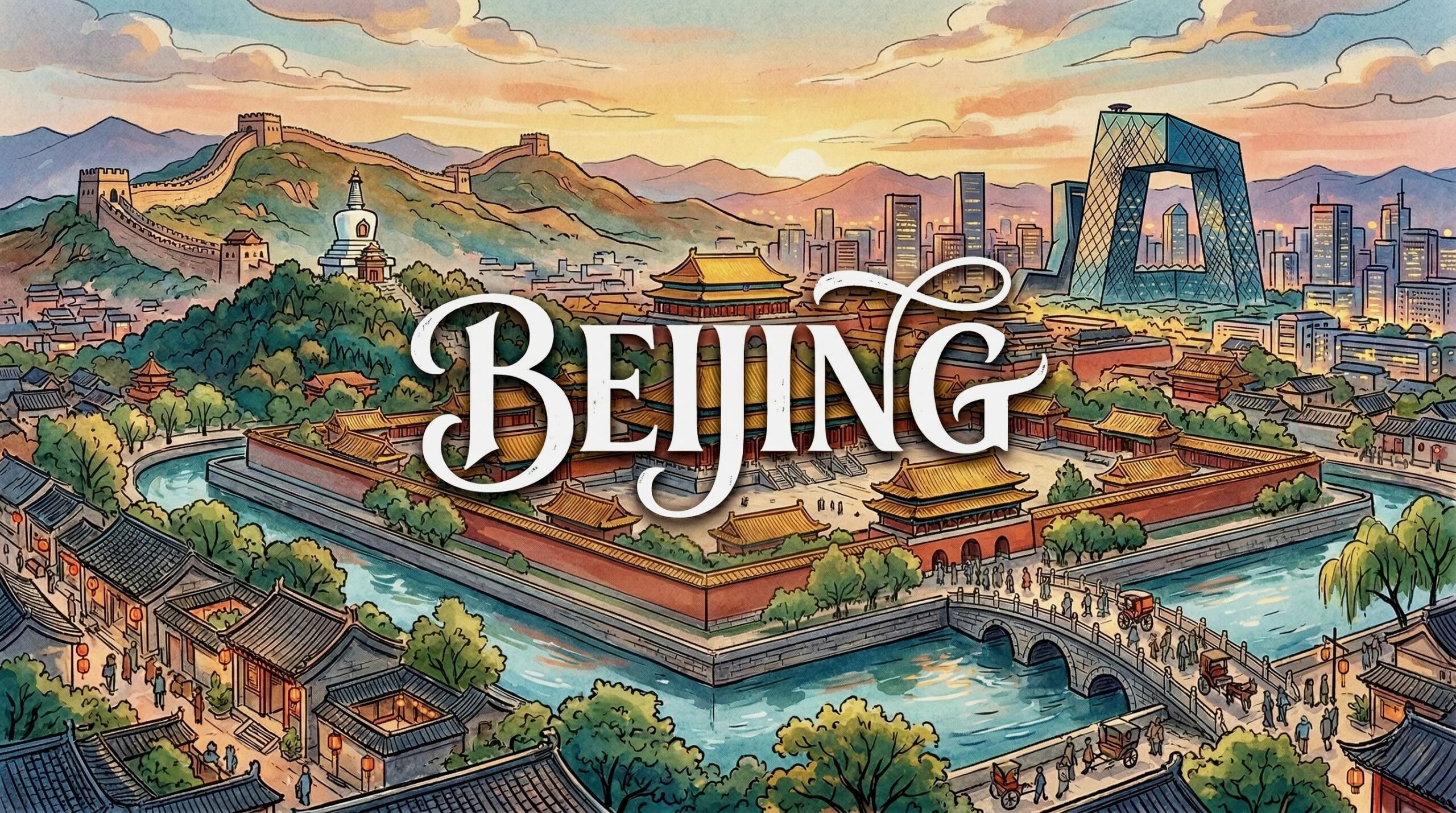
Beijing is a city of layers, a sprawling metropolis that feels like a living museum and a contemporary metropolis all at once. For more than 3,000 years, this landscape has shifted from ancient tribal settlements to the gilded seat of the Ming and Qing dynasties, and finally into the heart of modern China. Here, the scent of incense from a 1,000-year-old temple drifts past high-tech flagship stores, and the narrow, grey-brick alleyways of the hutongs stand in the shadow of gleaming, glass-and-steel skyscrapers.

As the only city in history to host both the Summer and Winter Olympic Games, Beijing has perfected the art of the grand entrance. The pulse of the city is best felt along the Beijing Central Axis, a collection of UNESCO World Heritage sites. This five-mile line is the city’s spiritual and architectural spine, stretching from the Bell and Drum Towers in the north, down through the formidable Forbidden City and Tiananmen Square, to the Temple of Heaven.
To visit this capital city of China, a unitary communist state, we had to apply for tourist visas, which required two in-person trips to a Chinese embassy three hours away.
It was definitely worth it. This was one of our most memorable trips ever, as virtually no one spoke English. In fact, we rarely saw another tourist our entire time there. It was cultural immersion at its finest.
10 Things We Loved Most About Beijing
1. The Great Wall of China
Obviously.
Spanning more than 13,000 miles across northern China, the Great Wall is the world’s largest man-made structure and a definitive symbol of Chinese civilization. While early fortifications date back to the 7th century BC, the most famous and well-preserved sections were constructed during the Ming Dynasty (1368–1644) to defend the empire against nomadic incursions from the north. The wall is not a single continuous line but a complex network of walls, watchtowers, troop barracks, and signaling stations built using a variety of materials, including rammed earth, stone, and brick.
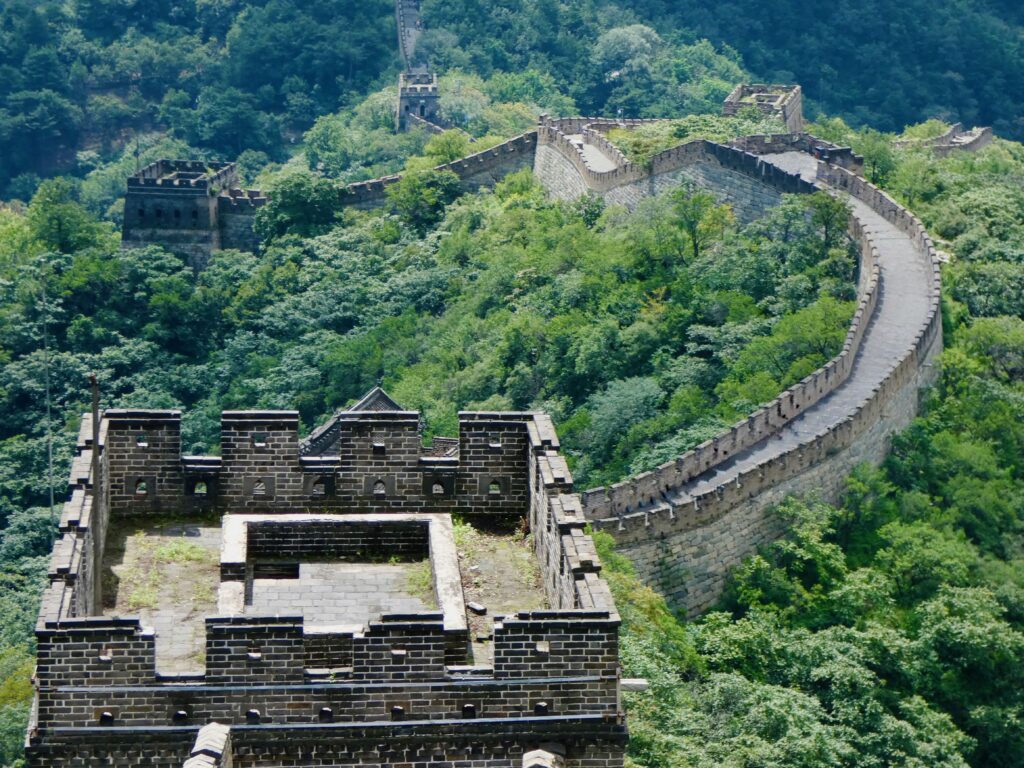
The architecture of the Ming-era wall, particularly at sections such as Badaling and Mutianyu, features high battlements and wide walkways designed to facilitate the rapid movement of soldiers and horses. Strategically placed beacon towers enabled long-distance communication via smoke and fire signals, creating an integrated military intelligence system. Beyond its defensive function, the wall served as a means of border control, regulating trade along the Silk Road and collecting duties. In 1987, it was designated a UNESCO World Heritage site, and it remains a testament to ancient engineering prowess and the enduring historical narrative of a unified China.
When exploring the Great All, you have several distinct sections to choose from:
- Mutianyu: A favorite for its stunning scenery and well-preserved towers, this section is less crowded than Badaling and offers fun features like a cable car and a toboggan slide.
- Badaling: The most accessible and popular section, often bustling with tourists.
- Jiankou: For those seeking a rugged, un-restored experience, this section offers a challenging hike with raw, wild beauty.
We visited the Mutianyu section.
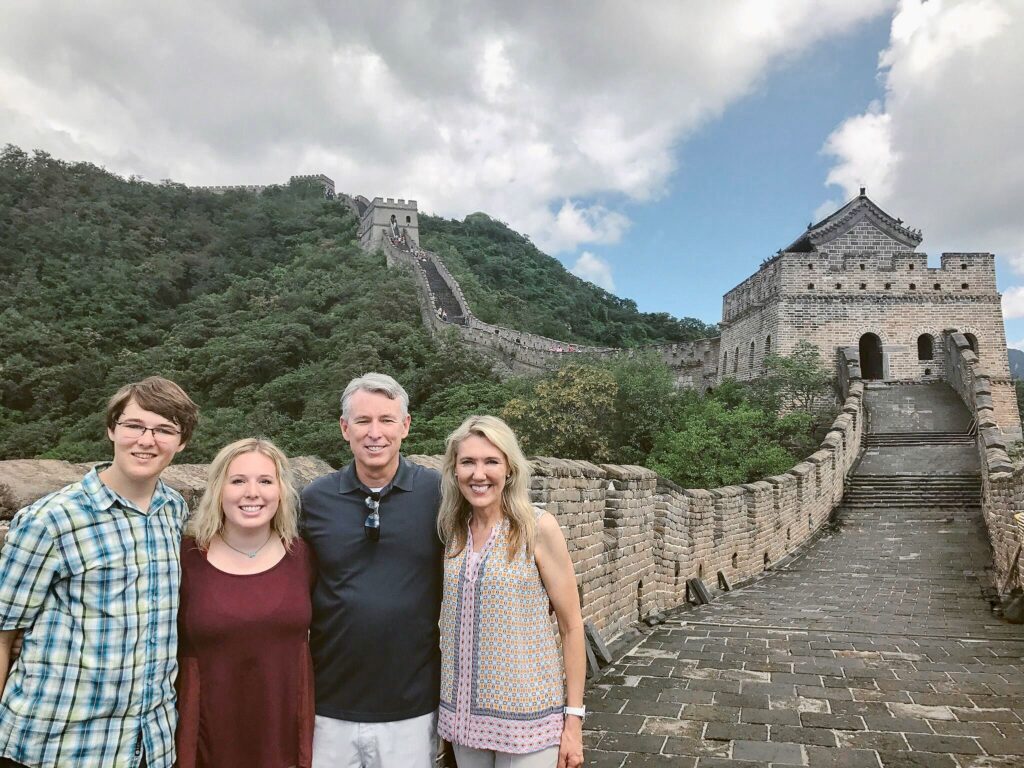
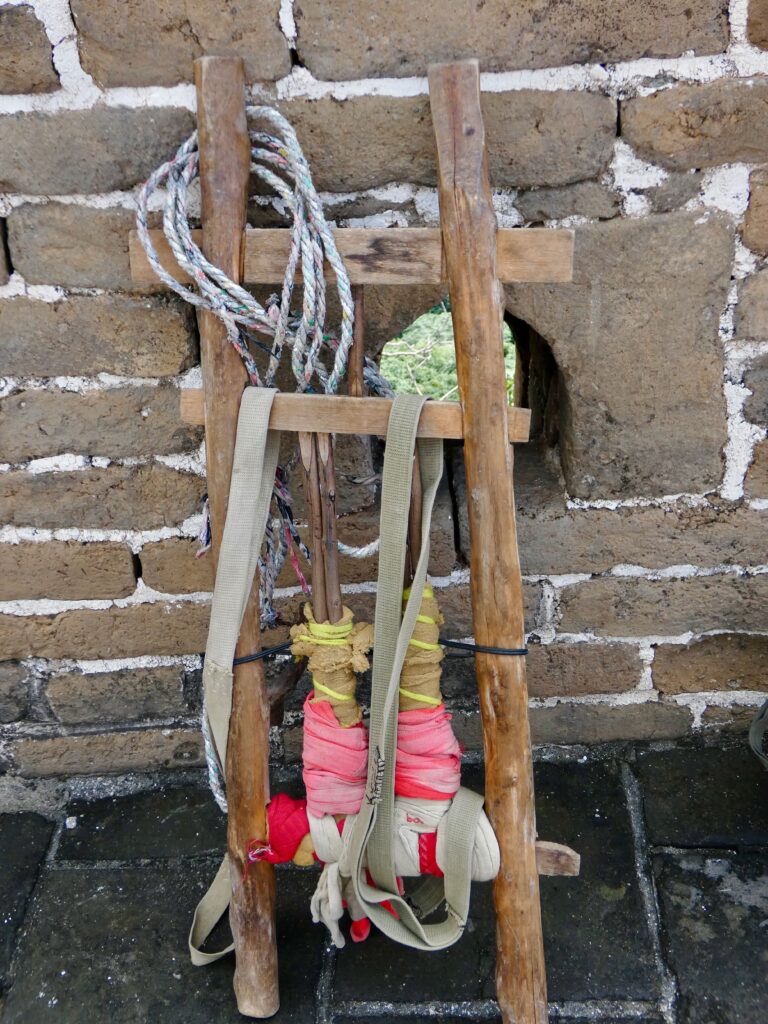
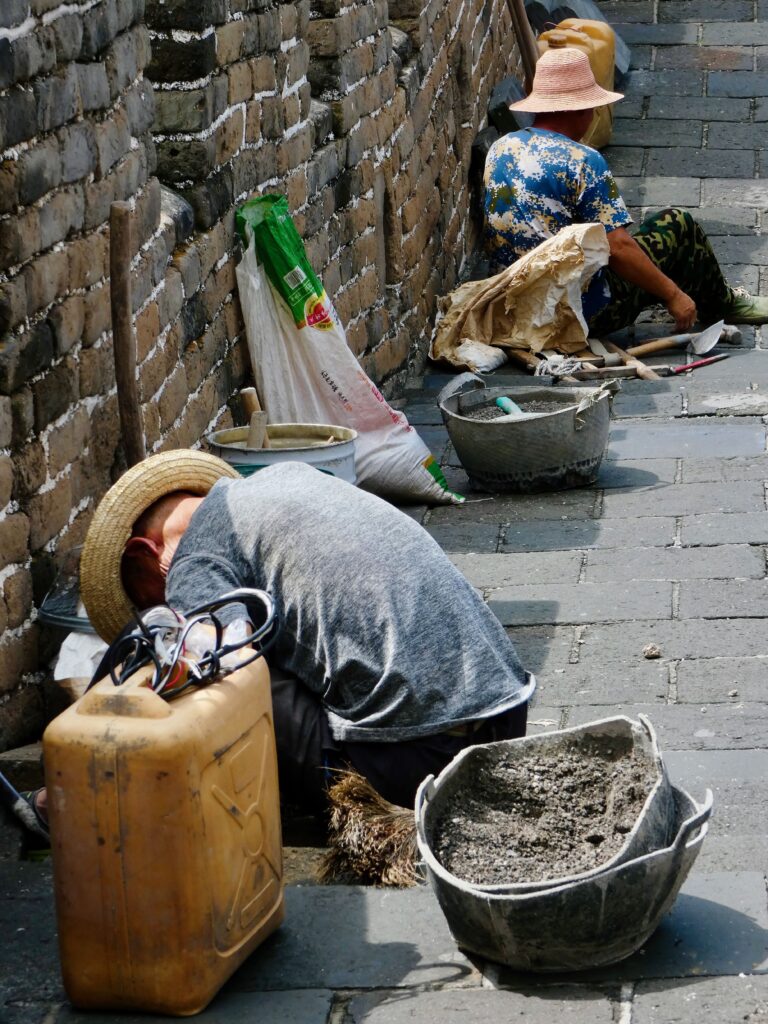
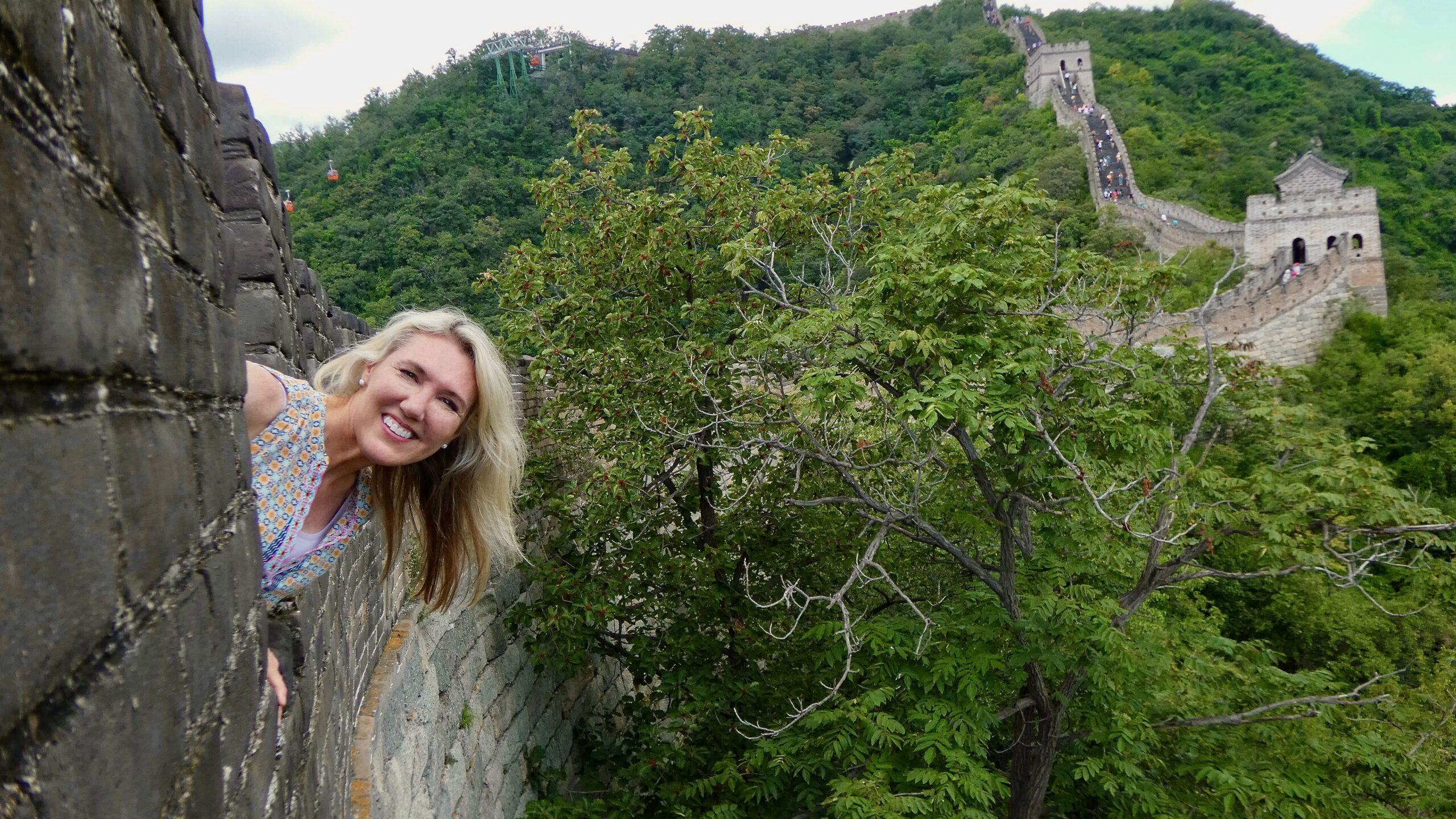
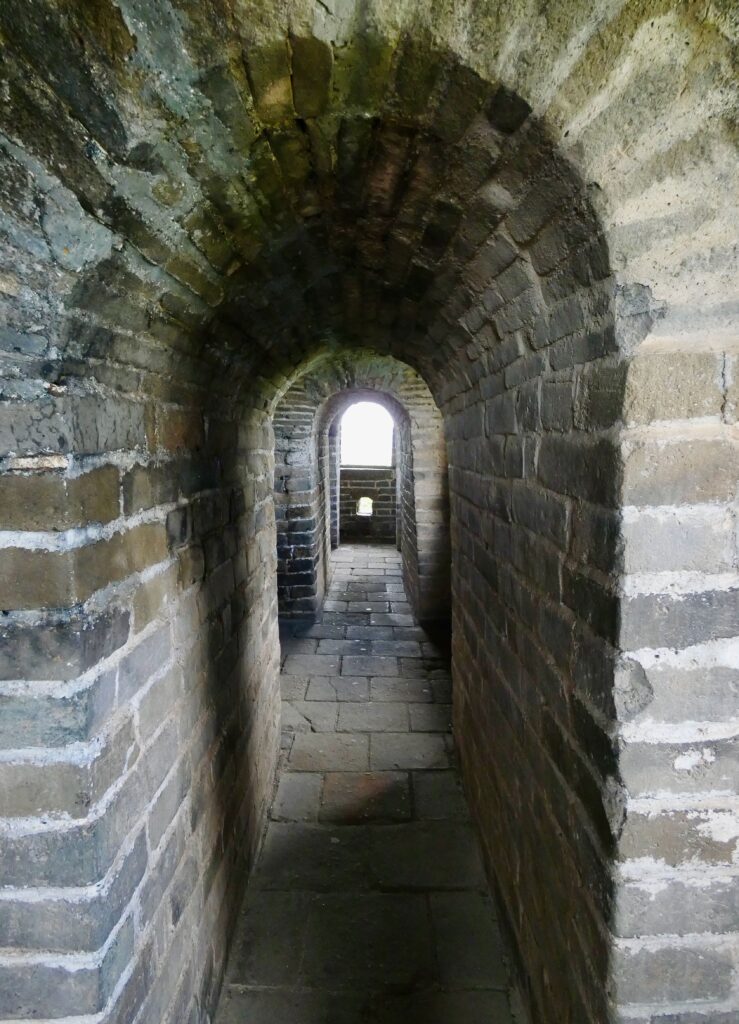
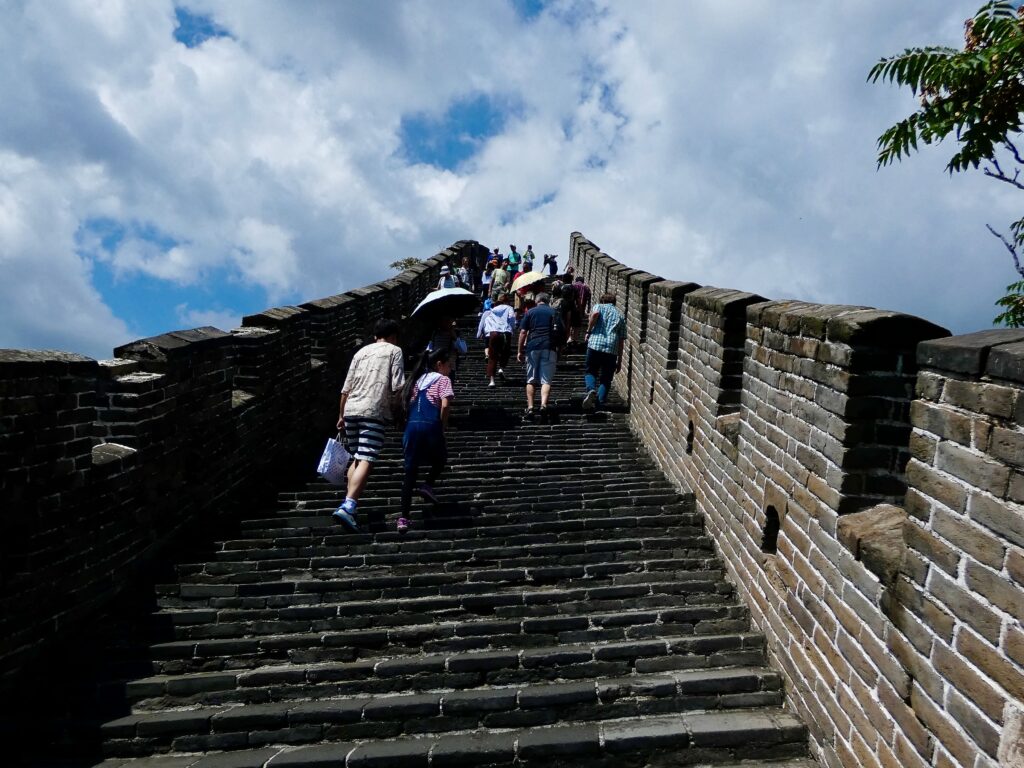
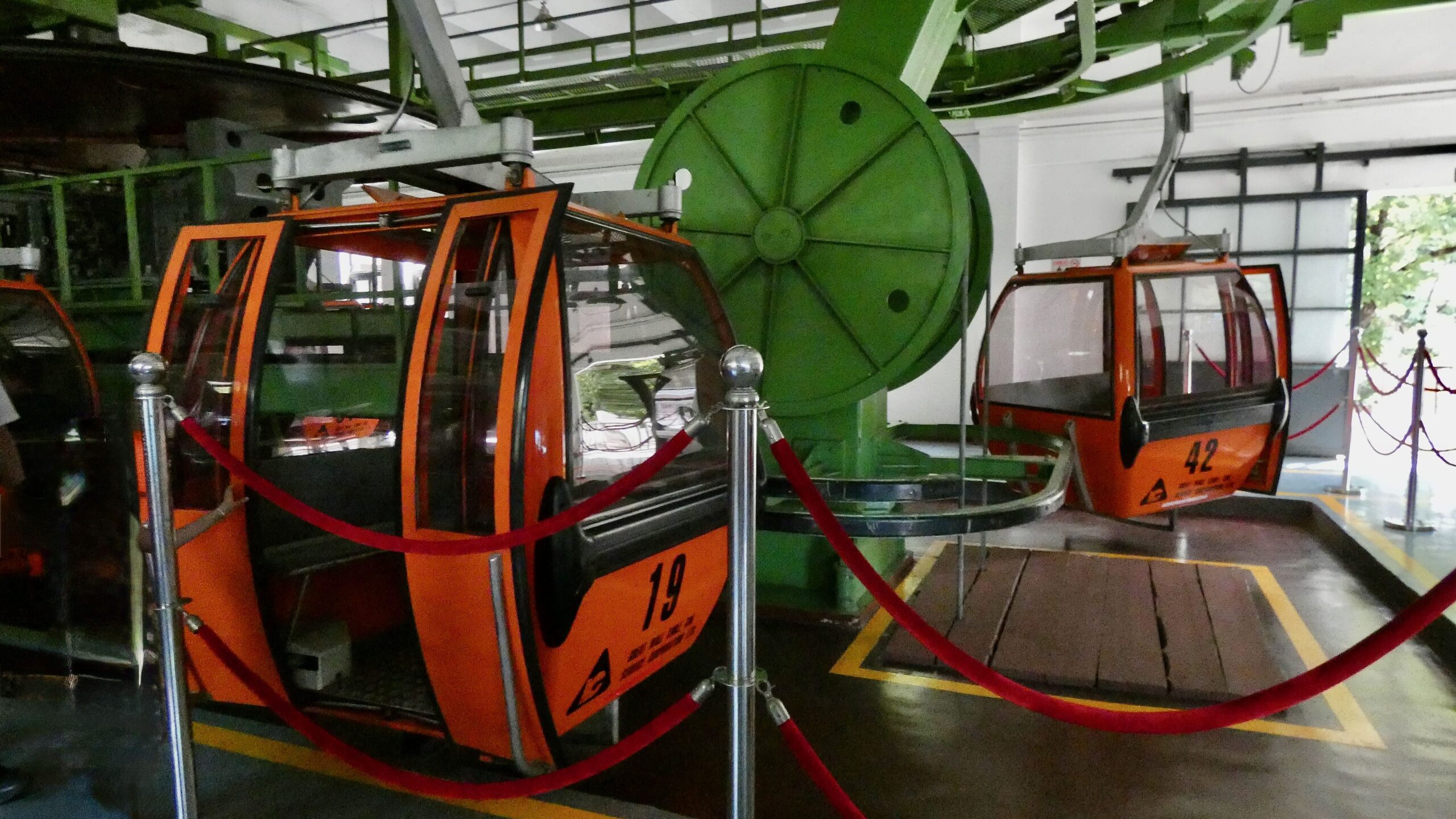
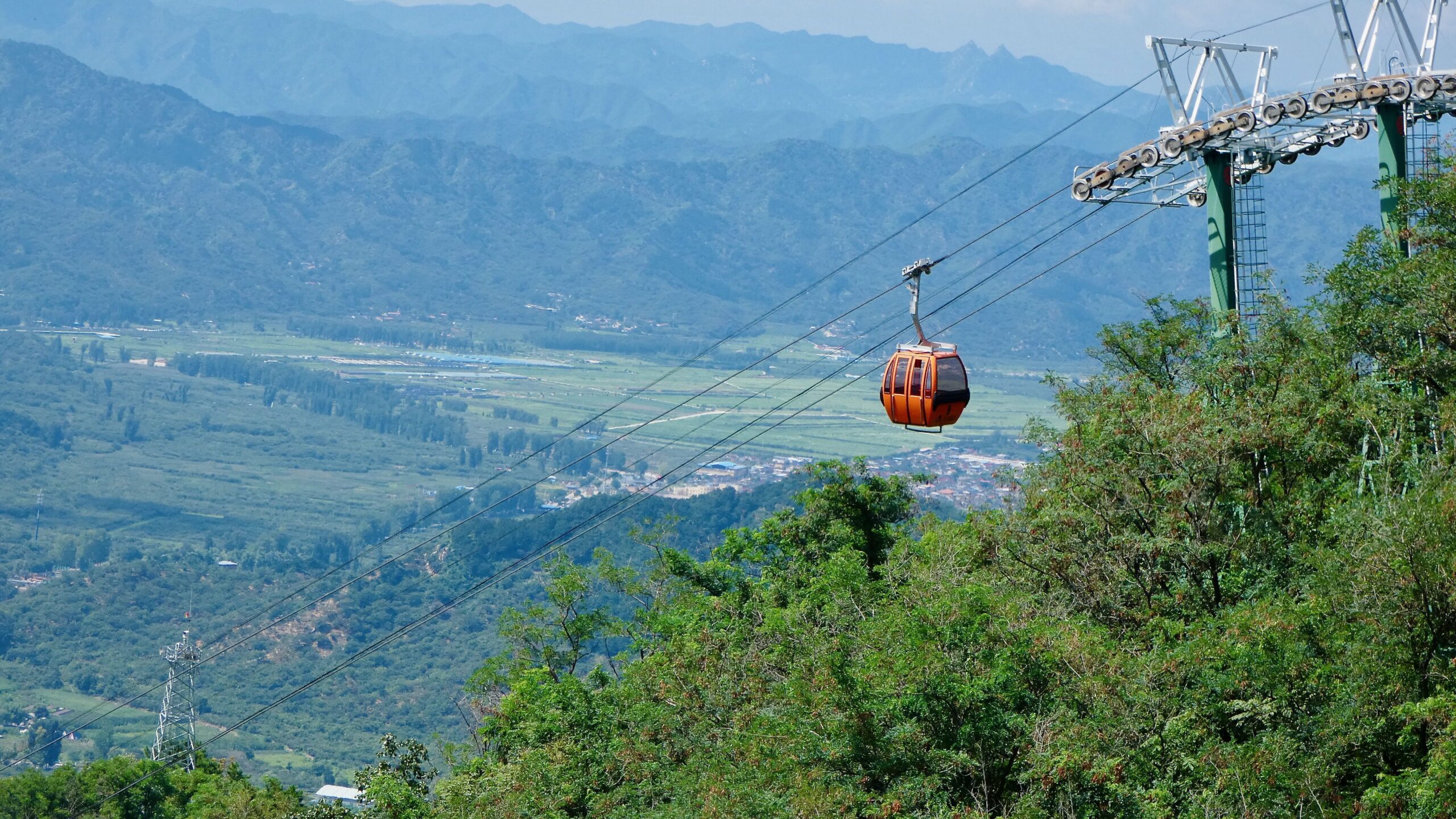
We took a cable car up the mountain.
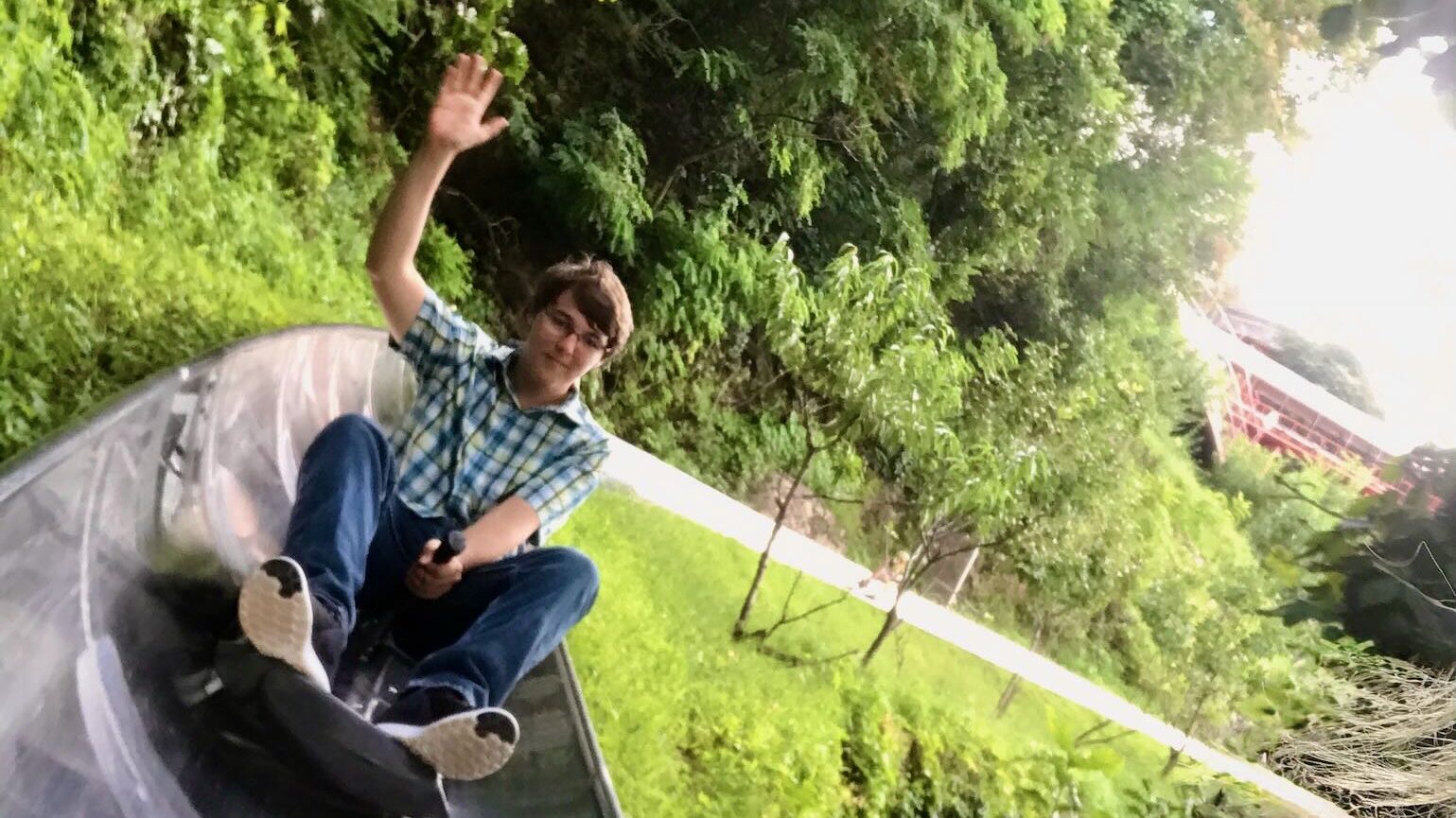
Then we slid back down the mountain on toboggans.
2. The Forbidden City
Located at the exact center of Beijing’s ancient central axis, the Forbidden City (now the Palace Museum) served as the imperial residence for 24 emperors of the Ming and Qing dynasties. Constructed between 1406 and 1420, this massive complex consists of 980 buildings and is reputed to contain 9,999.5 rooms—a number just shy of the celestial 10,000 reserved for the gods.
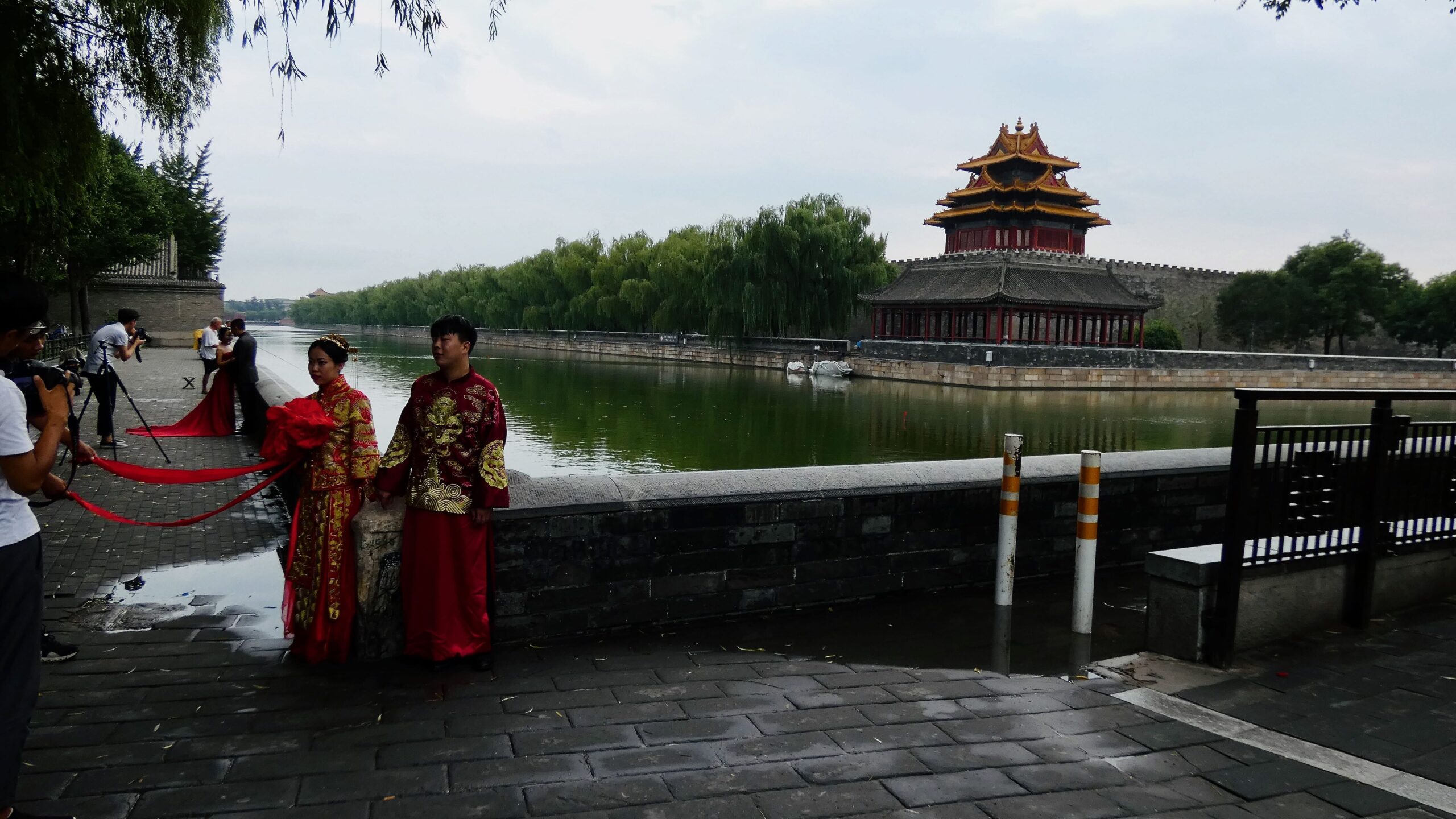
As we walked through the park toward the entrance, I suddenly heard, “click,” “click,” click,” behind me. I turned, and this is what I saw.
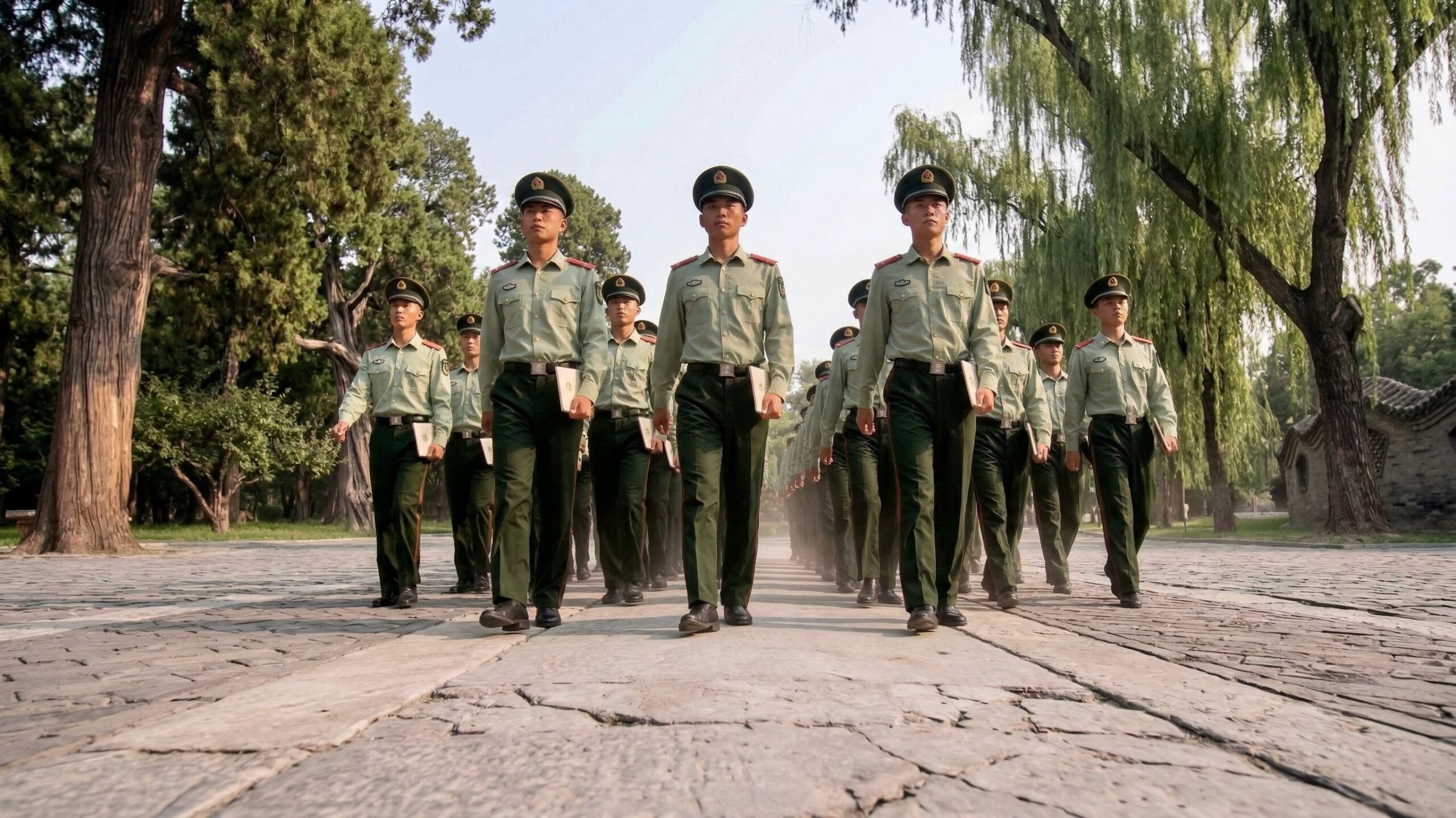
I quickly scurried out of their way.
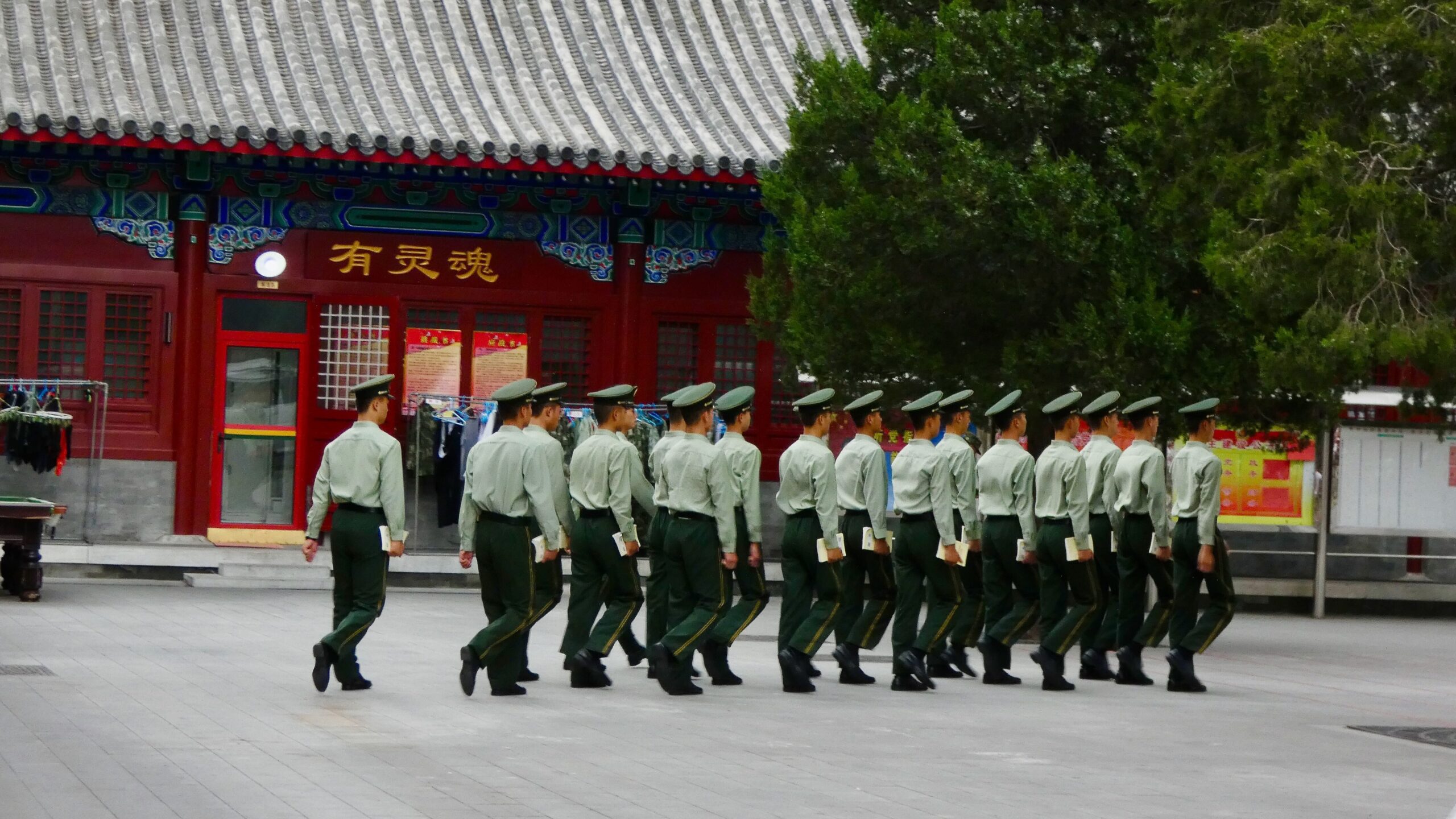
Flustered but undeterred, we continued toward the entrance.
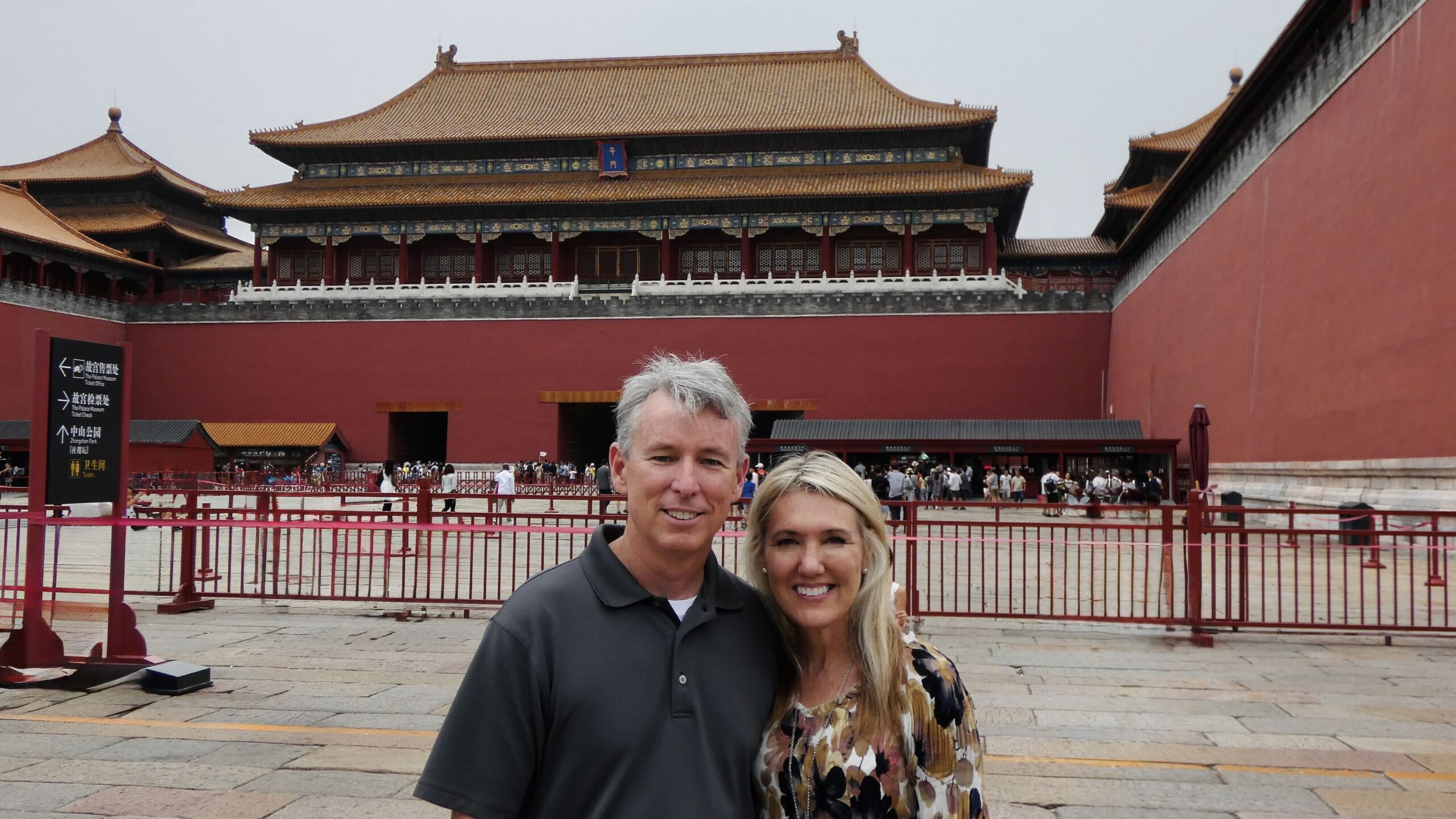
As we walked up to the ticket window, the woman behind the glass said something we couldn’t understand. We glanced at one another, confused.
She said something different, but this time she wagged her finger as if to say, “No.”
My heart sank. This was the highlight we had been looking forward to.
“Do you need tickets?” a young local man asked as we turned around to leave.
“We do!” I exclaimed as I started a conversation with the man we would soon call our favorite tour guide ever, Tony.
Tony took us all around the Forbidden City that day. His English was impeccable, and he was very patient with all my picture-taking.
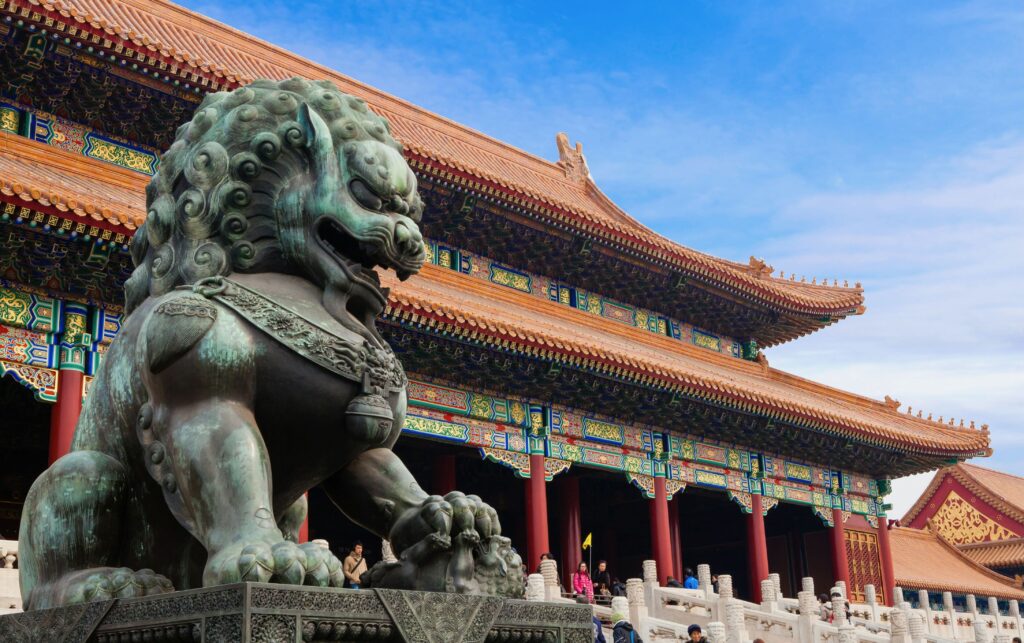
The palace is divided into the Outer Court, used for ceremonial purposes, and the Inner Court, which served as the residential quarters for the imperial family and their retinue.
Throughout the day, we marveled at the architecture, which is a masterclass in traditional Chinese geomancy and symbolism. Its north-south orientation, yellow-tiled roofs (representing the Emperor), and defensive 170-foot-wide moat reflect a rigid social hierarchy and a quest for cosmic harmony. Key structures, such as the Hall of Supreme Harmony, sit on tiered marble platforms and served as sites for high-state functions, such as coronations and imperial weddings.
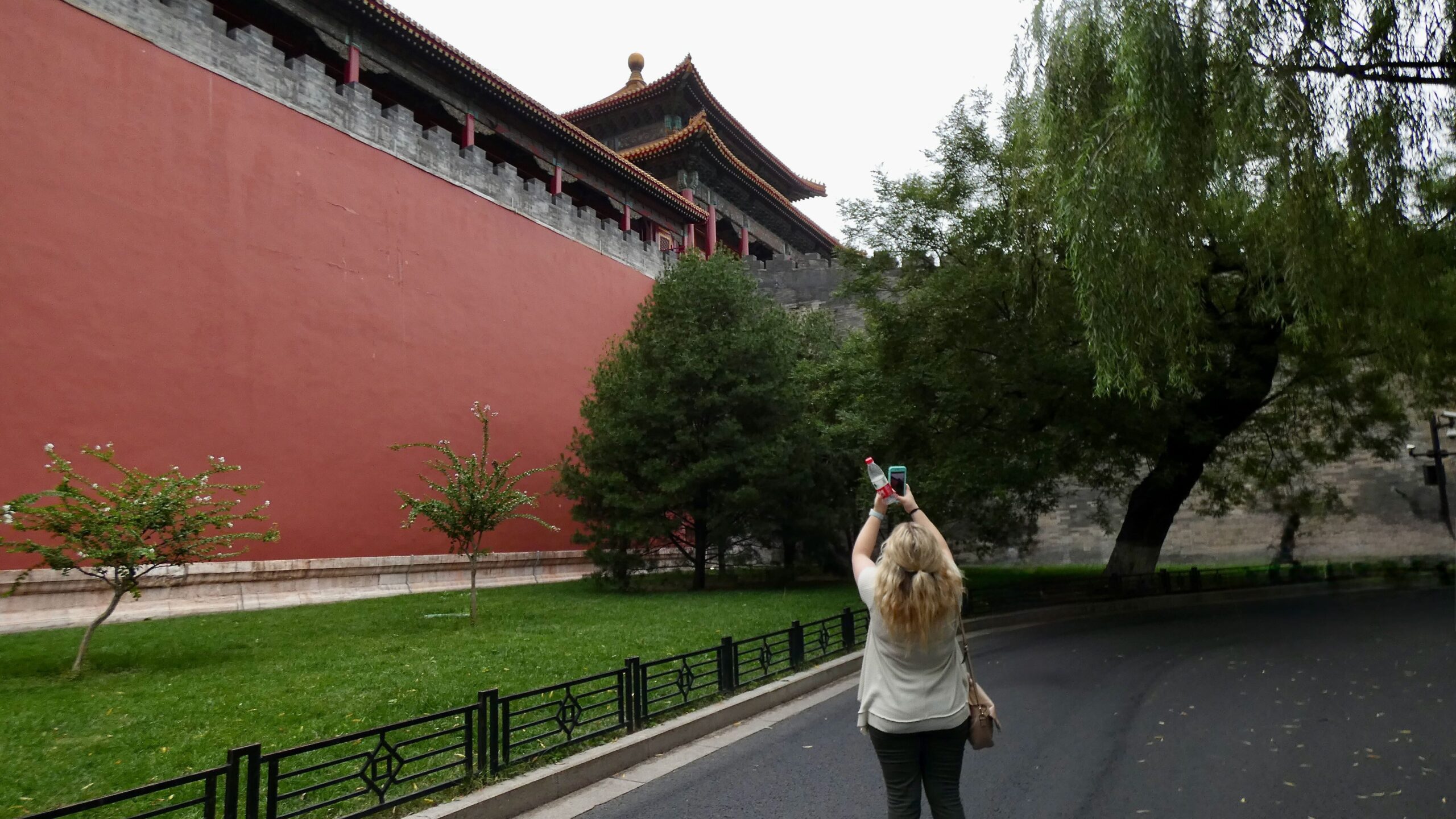
Since its conversion into a museum in 1925, the Forbidden City has become a UNESCO World Heritage site, housing over a million rare artifacts and serving as a preserved monument to five centuries of Chinese political and cultural history.
3. Tiananmen Square
Located at the geographic and political center of Beijing, Tiananmen Square is one of the largest public squares in the world, spanning more than 273,000 square feet. Its name, which translates to “Gate of Heavenly Peace,” is derived from the massive Ming-era gate at its northern end, which separates the square from the Forbidden City. Since its expansion in the 1950s, the square has served as a primary stage for China’s most significant national events, military parades, and political rallies, most notably the founding of the People’s Republic of China in 1949.
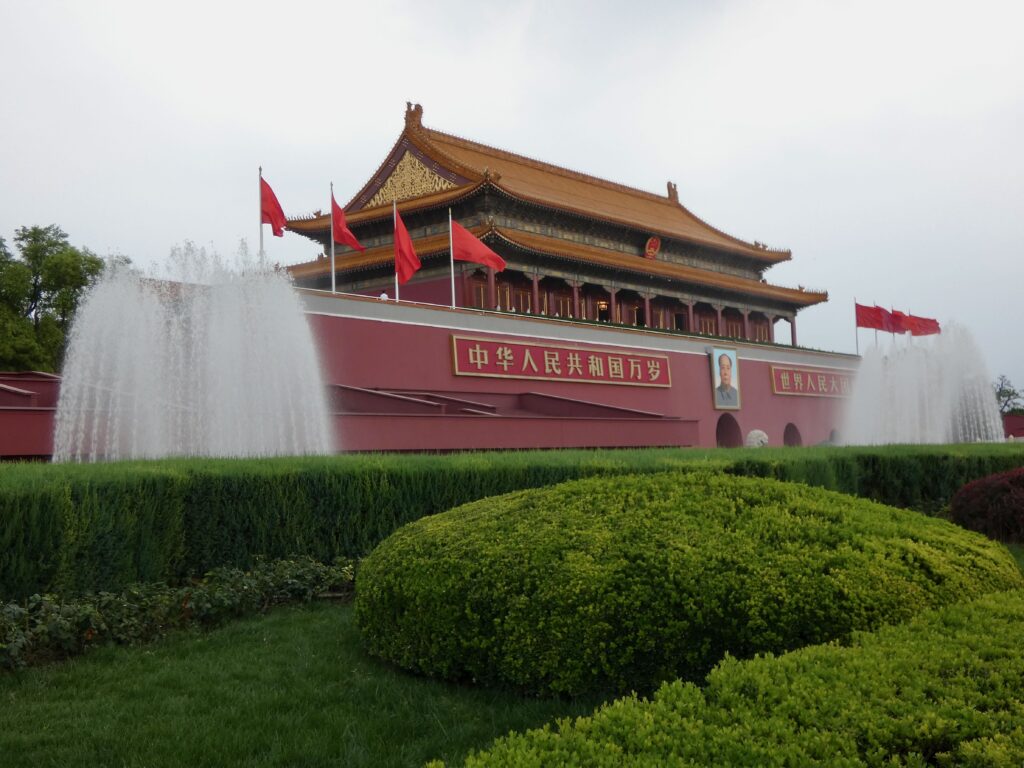
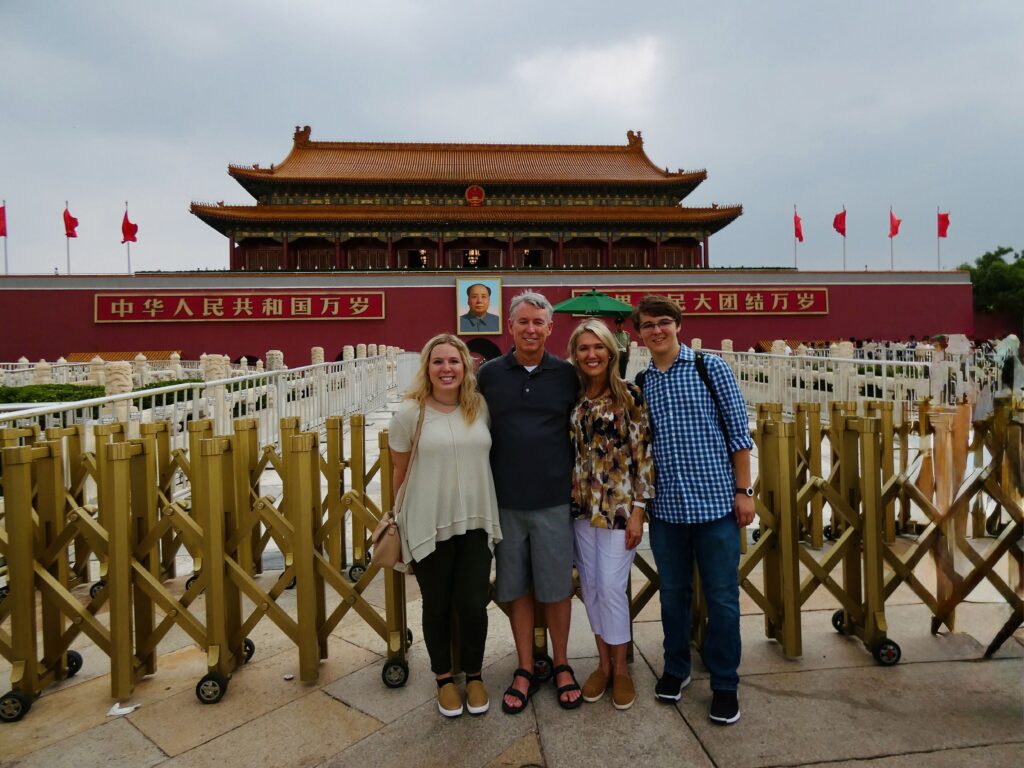
The square is bordered by monumental structures that define the modern Chinese state. To the west lies the Great Hall of the People, the seat of the national legislature, while the National Museum of China occupies the eastern flank. At the center stands the Monument to the People’s Heroes, a ten-story granite obelisk, and the Chairman Mao Memorial Hall, where the embalmed body of Mao Zedong is interred. Every morning and evening, the square hosts a highly choreographed flag-raising and lowering ceremony performed by the People’s Liberation Army.
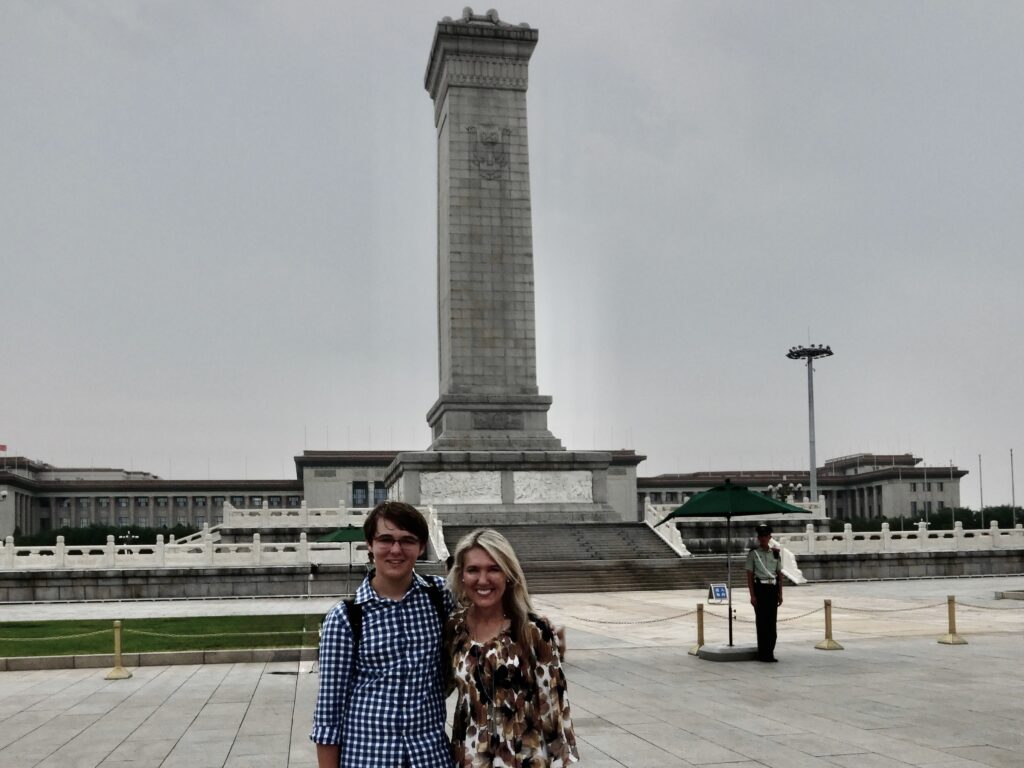
Despite its immense scale, the square remains a heavily regulated and symbolic space, acting as a profound intersection of imperial history and contemporary national identity.
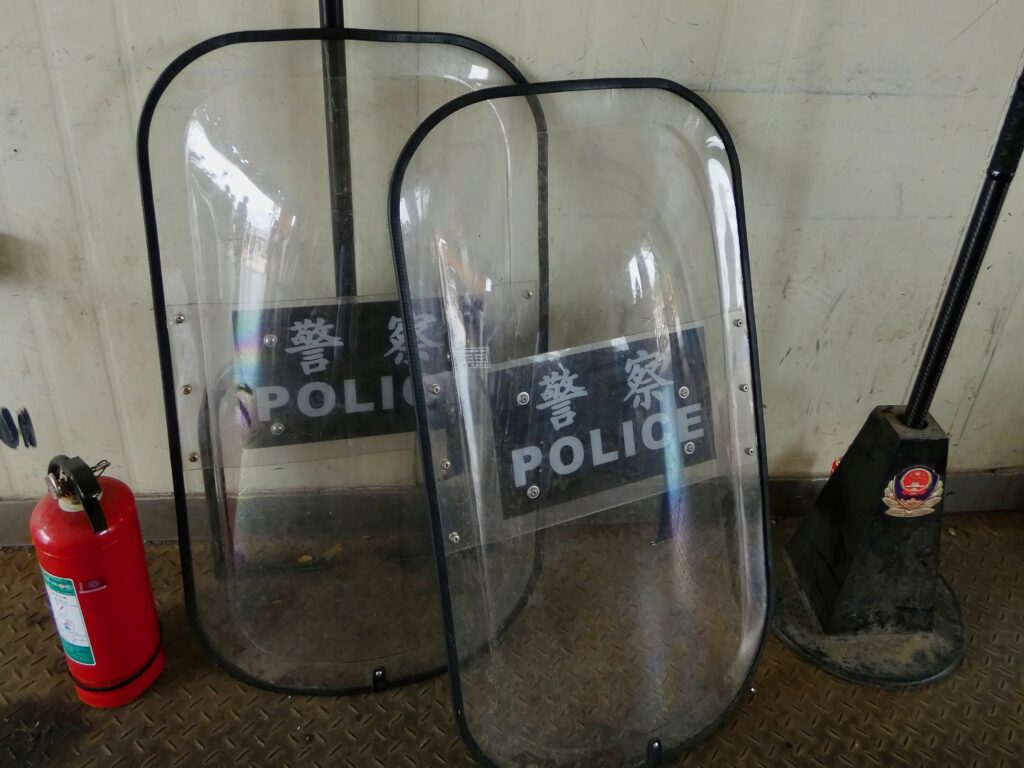
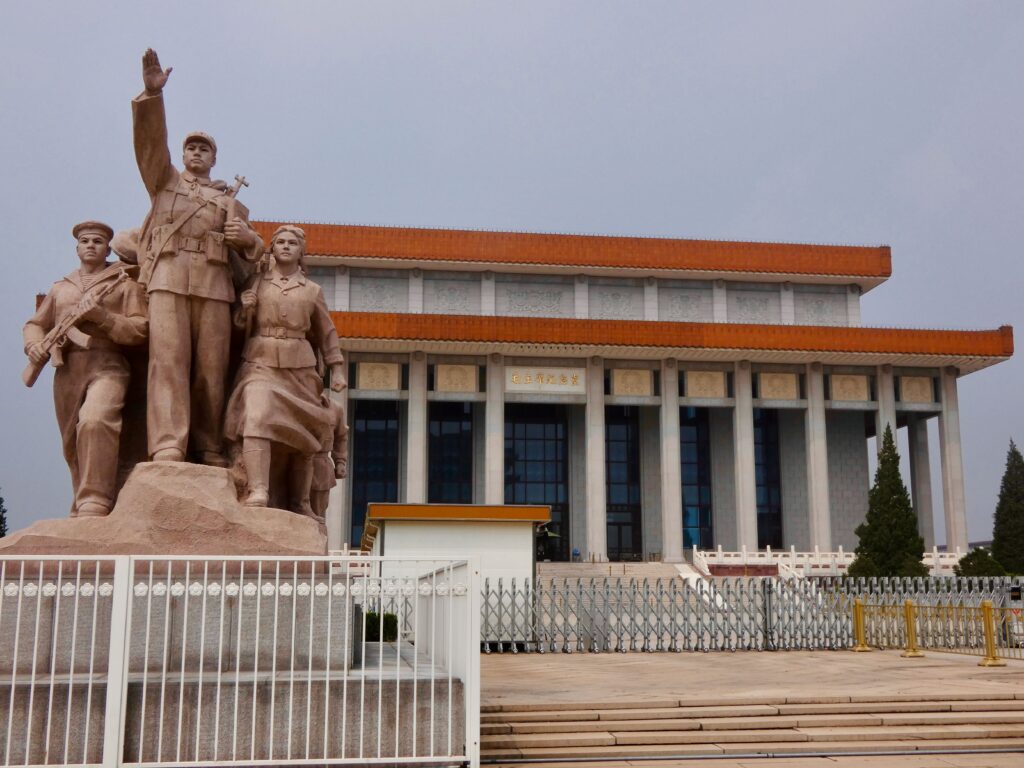
The image on the right is a view of Chairman Mao Memorial Hall (Mausoleum of Mao Zedong).
4. Jingshan Park
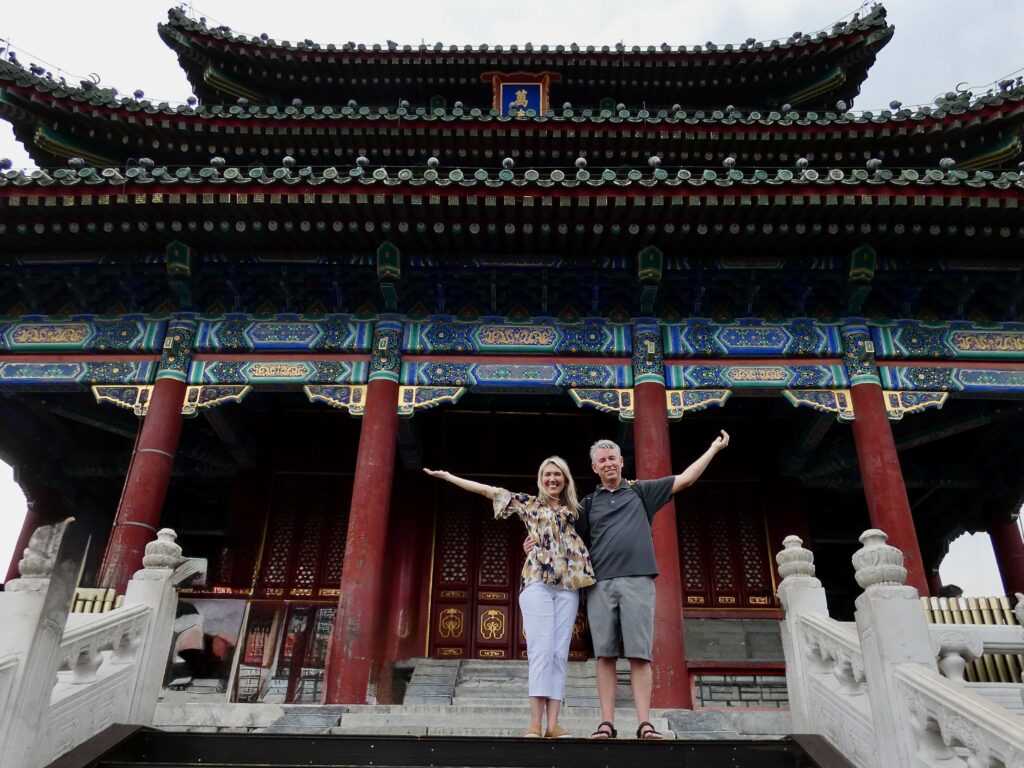
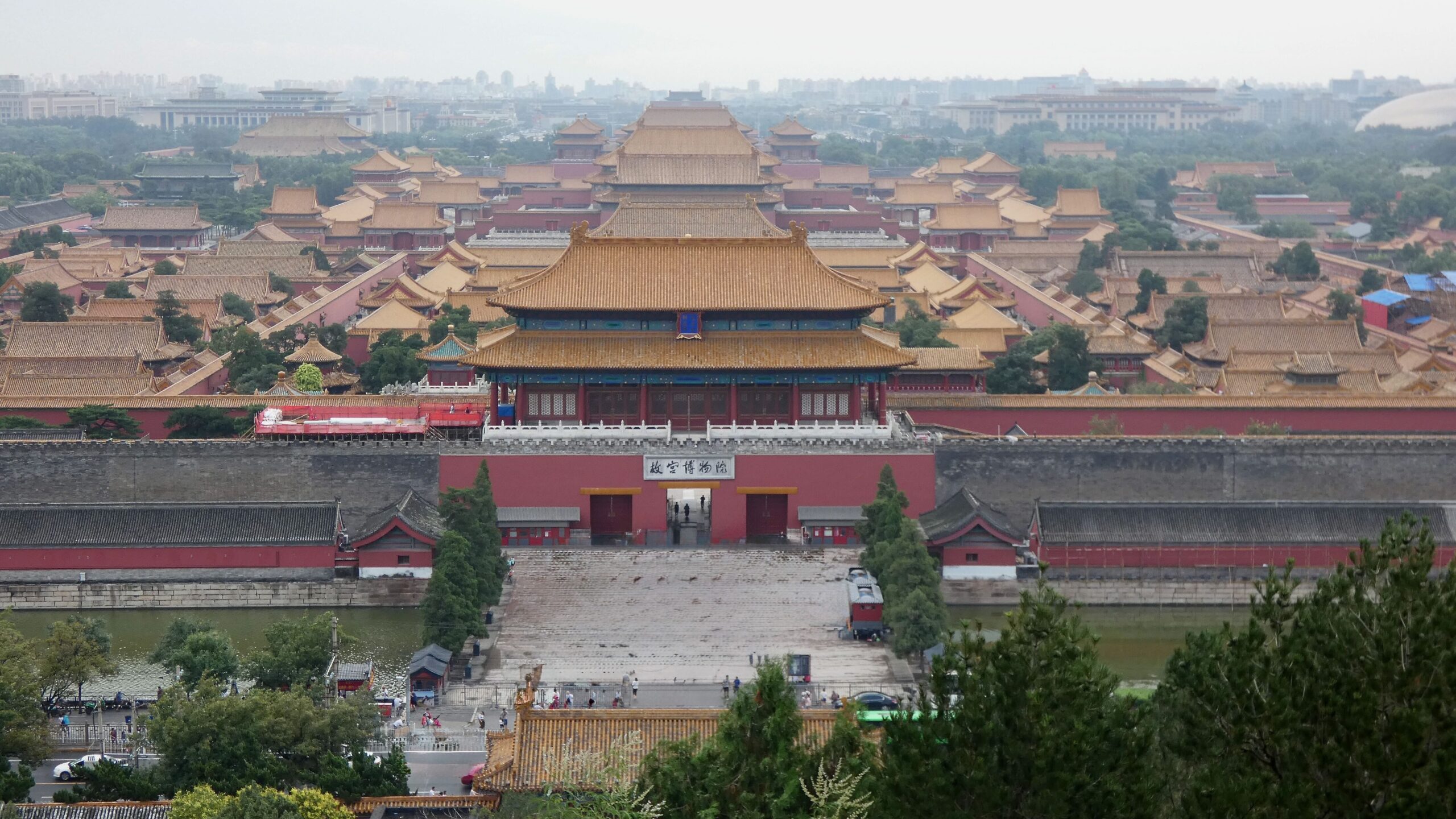
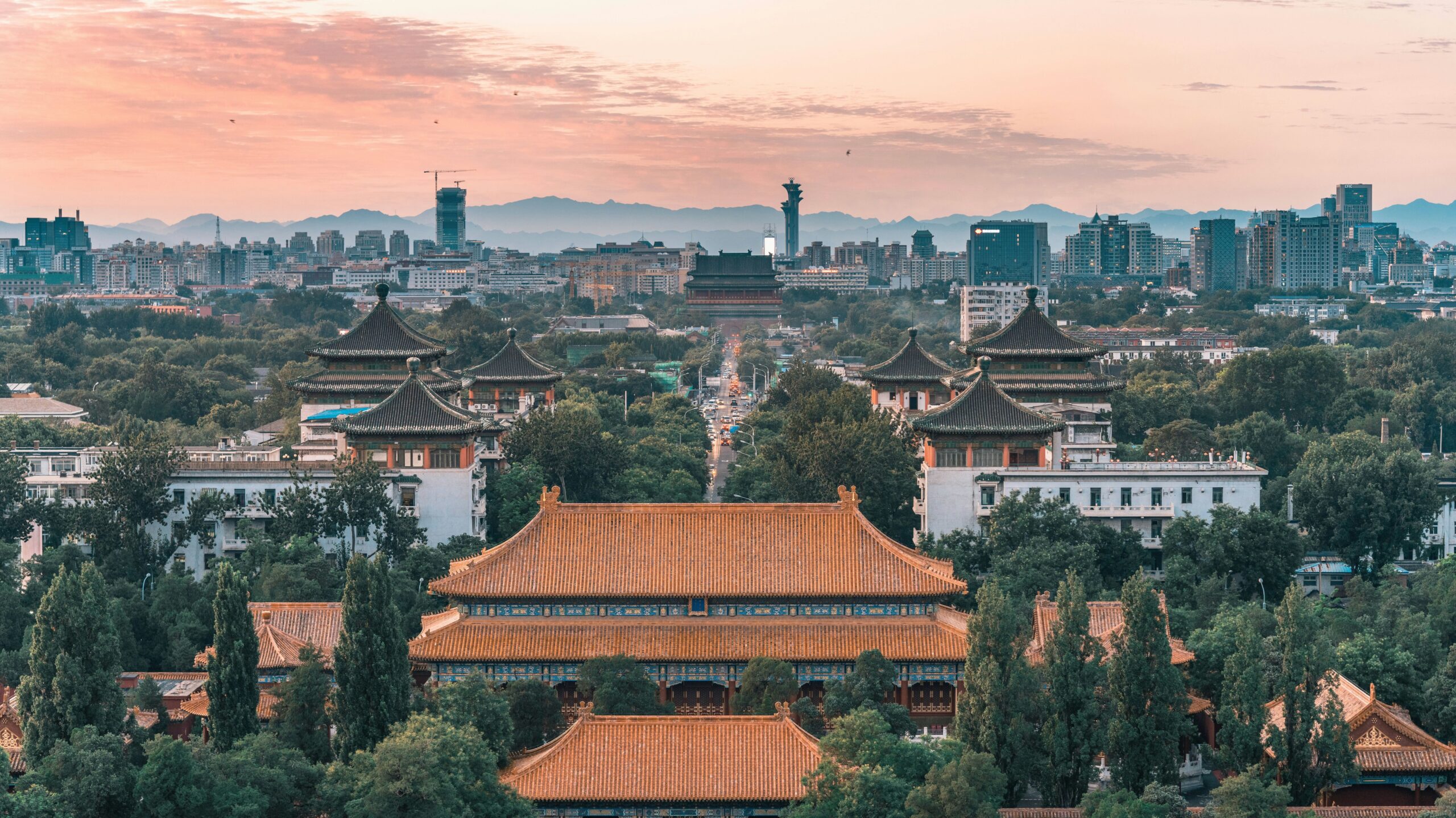
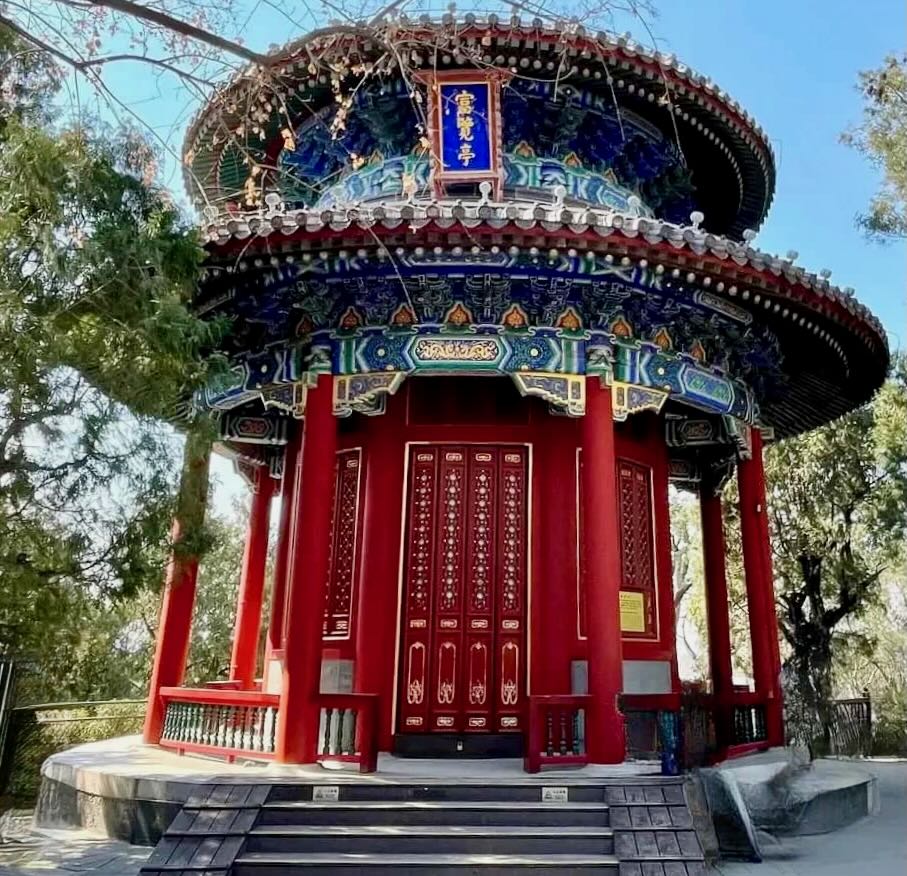
Located directly north of the Forbidden City’s Divine Might Gate, Jingshan Park is a former imperial garden that offers the most iconic panoramic view of Beijing. The park’s centerpiece is Jingshan (Coal Hill), a 150-foot-high artificial mound constructed during the Ming Dynasty using soil excavated from the Forbidden City’s moats. For centuries, this “prospect hill” served as a protective barrier according to Feng Shui principles, shielding the imperial palace from northern winds and perceived evil spirits.
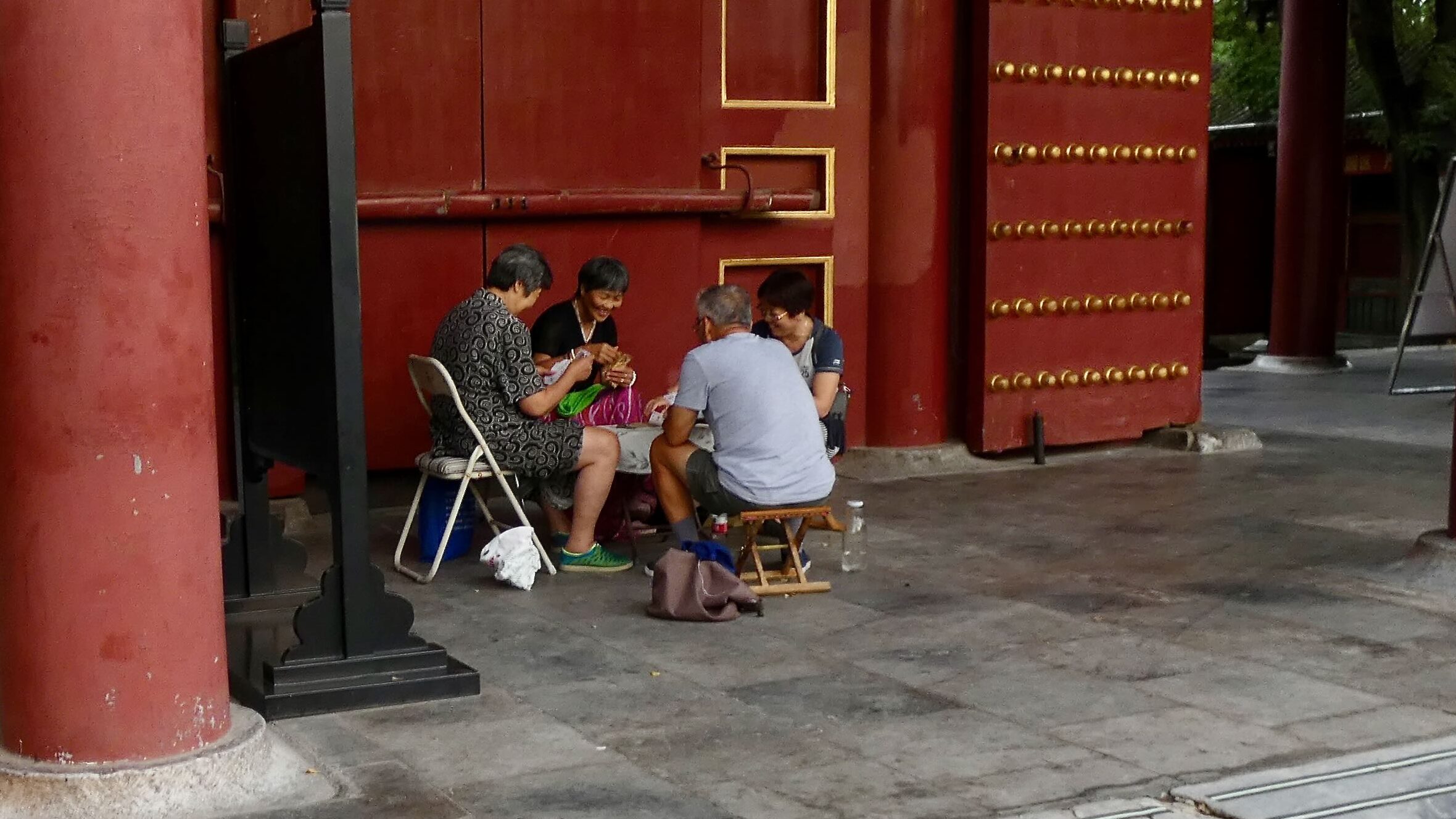
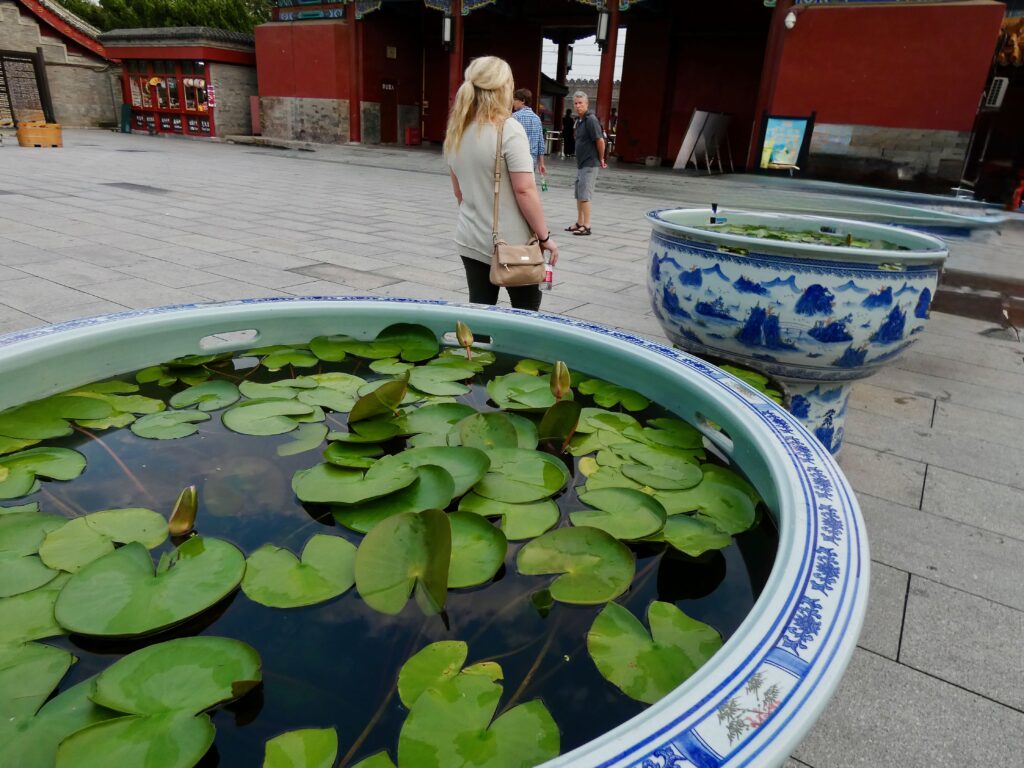
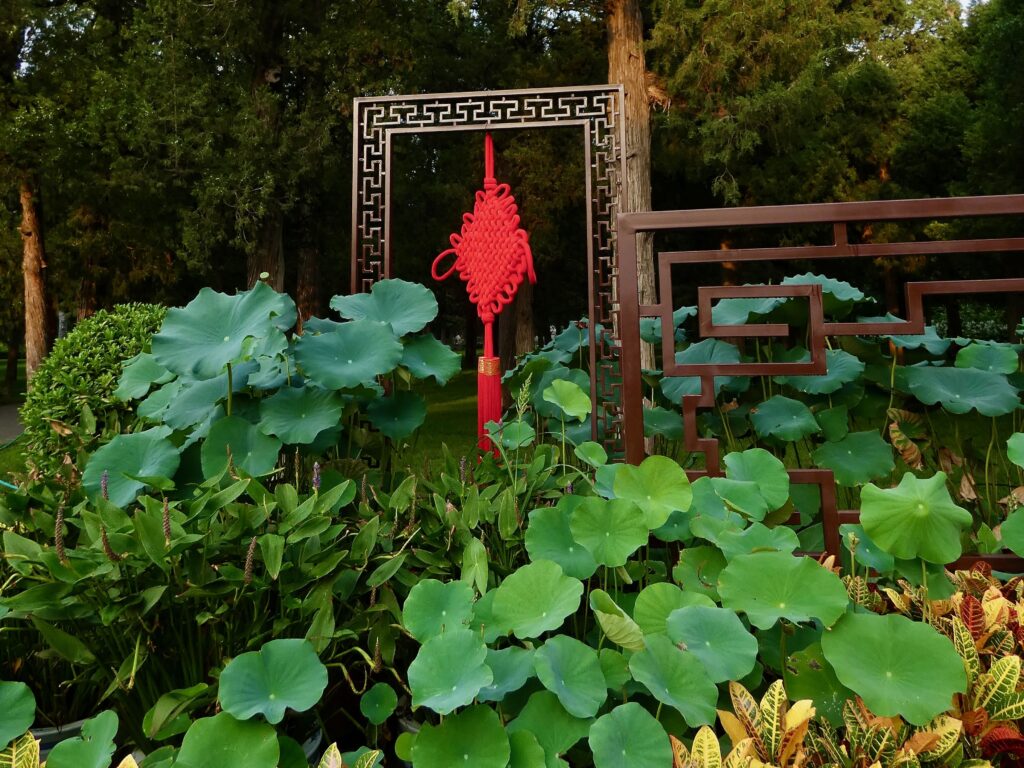
The summit is crowned by the Wanchun Pavilion (Pavilion of Everlasting Spring), which marks the highest point on Beijing’s historical central axis. From this vantage point, you can see the vast expanse of yellow-tiled roofs within the Forbidden City stretching toward Tiananmen Square.
Historically, the park is also known for a somber event: it is the site where the last Ming emperor, Chongzhen, allegedly took his own life as rebel forces entered the city in 1644. Today, the park is a vibrant community hub where locals gather for morning exercises, choral singing, and the annual Peony Festival, which showcases more than 20,000 plants in late spring.
5. The Lama Temple (Yonghe Palace)
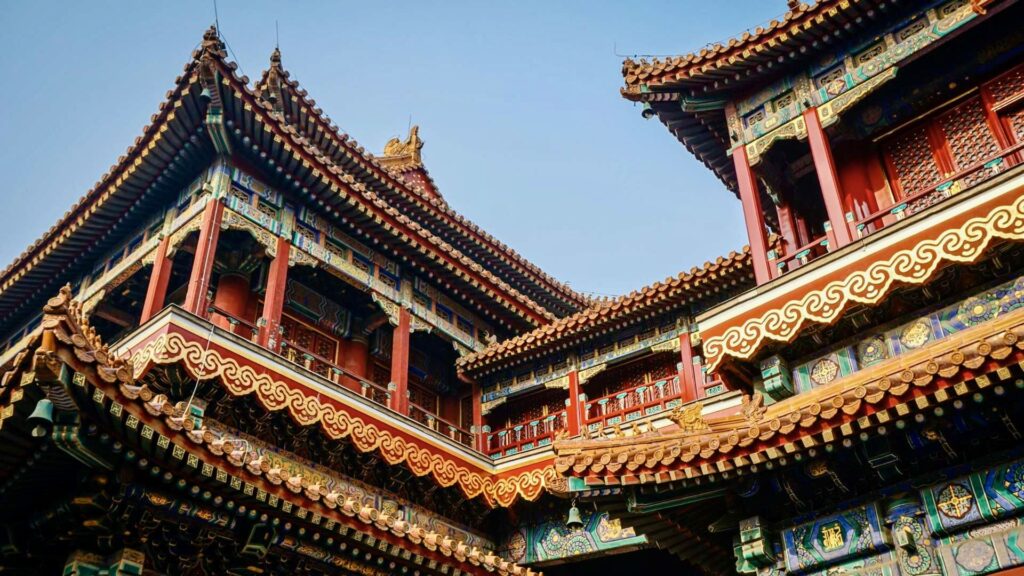
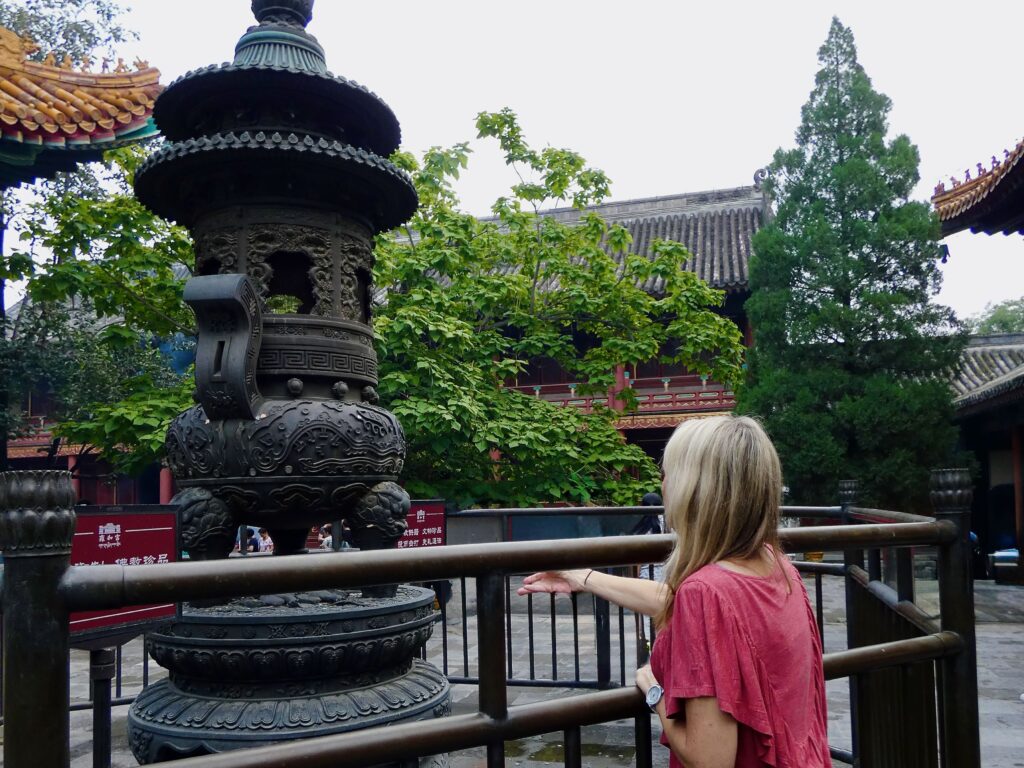
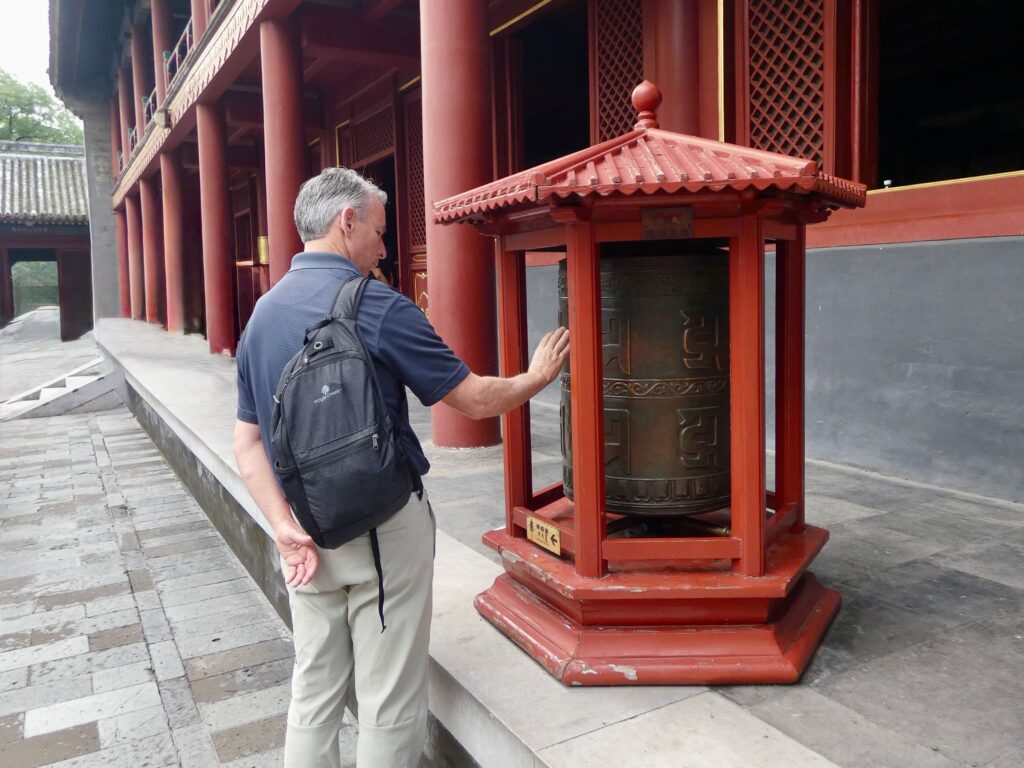
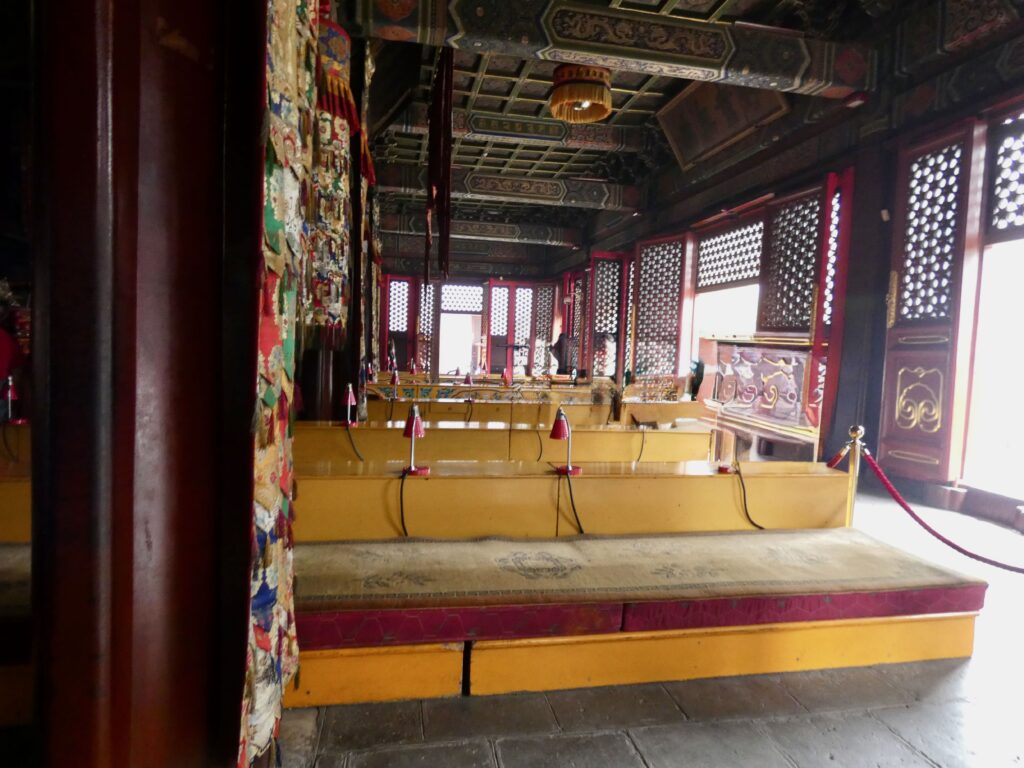
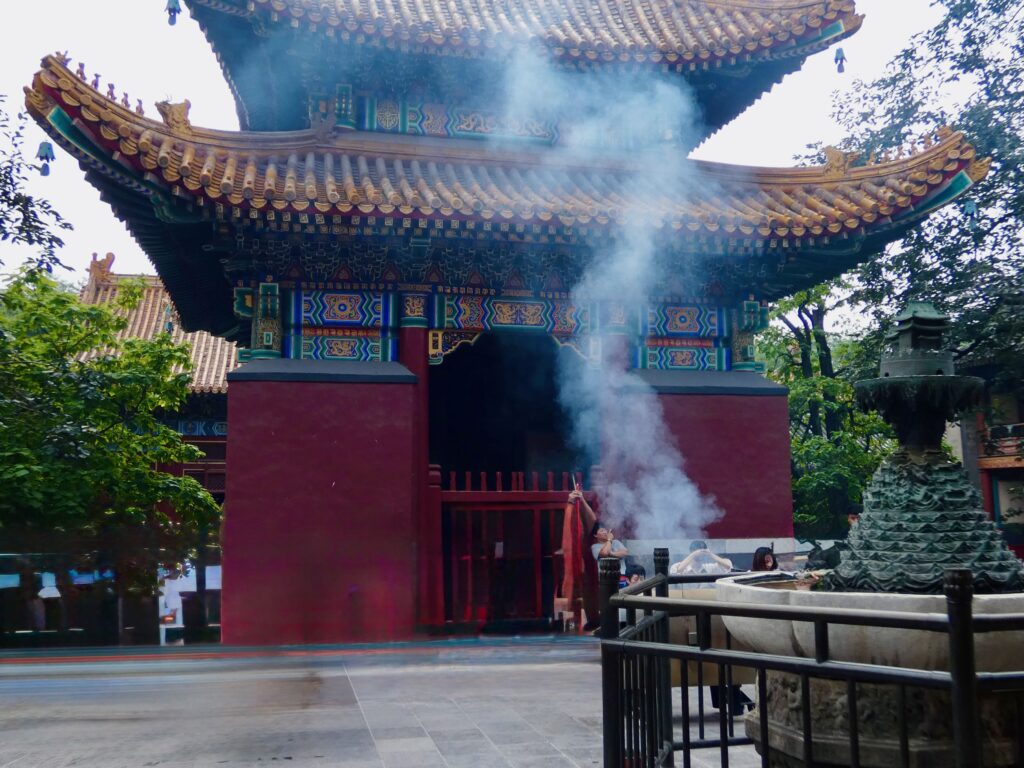
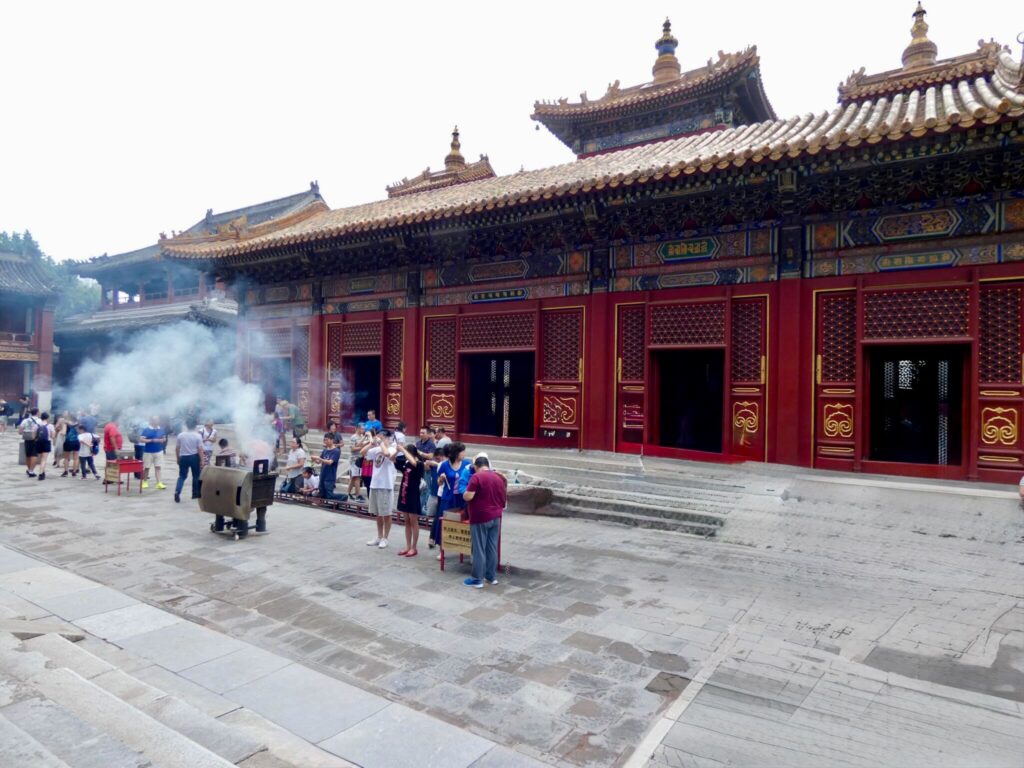
Located in Beijing’s Dongcheng District, the Lama Temple (Yonghe Palace, or Yonghegong) is the most renowned Tibetan Buddhist monastery outside of Tibet. Originally built in 1694 as the residence of Prince Yong (later the Yongzheng Emperor), the complex was converted into a lamasery in 1744. This transition infused the architecture with a unique blend of Han Chinese, Tibetan, and Mongol styles, featuring five grand halls separated by tranquil courtyards. As an imperial palace-turned-temple, it stands out from other religious sites in the city thanks to its yellow roof tiles—a color reserved for the emperor.
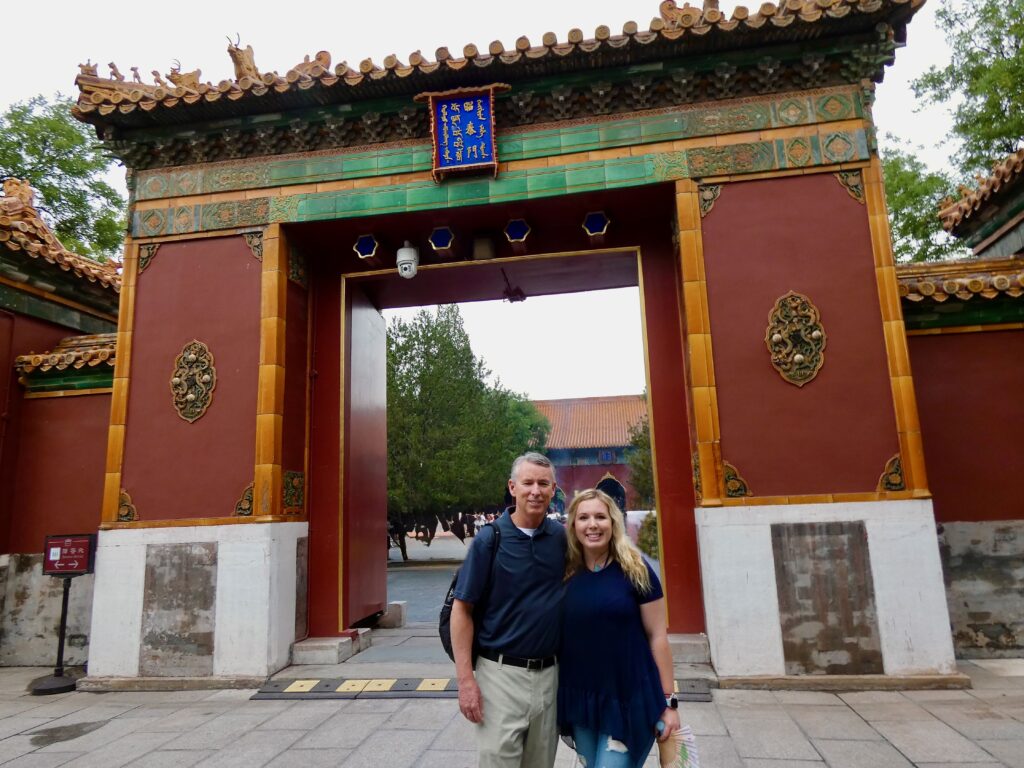
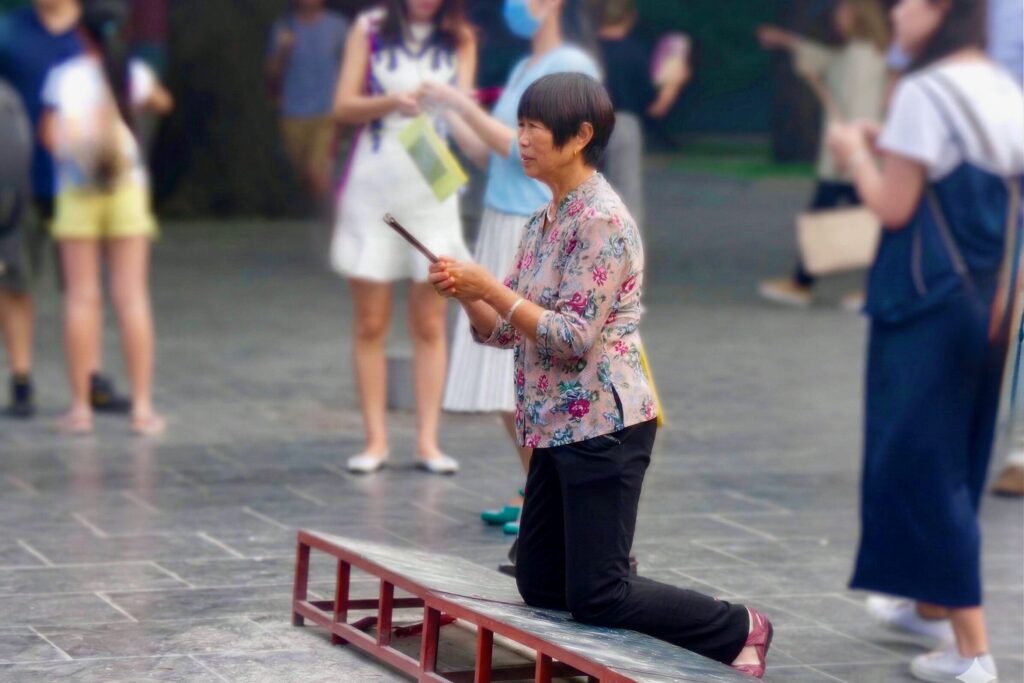
The temple’s spiritual centerpiece is the Wanfu Pavilion (Hall of Infinite Happiness), which houses a magnificent 60-foot-tall statue of the Maitreya Buddha. Carved from a single block of white sandalwood, the statue holds a Guinness World Record and stands as a testament to the artistic heights of the Qing Dynasty. Beyond its massive icons, the temple remains an active place of worship where you can witness monks in saffron robes performing traditional chants amidst clouds of incense. Its preservation as a functional monastery and an imperial relic makes it a vital cultural bridge in modern Beijing.
6. Qianmen
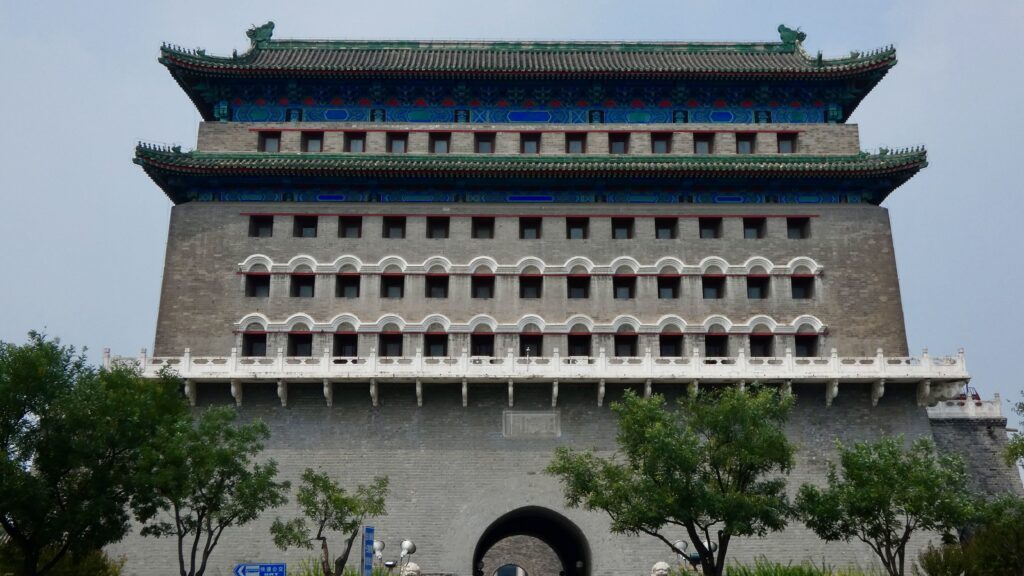
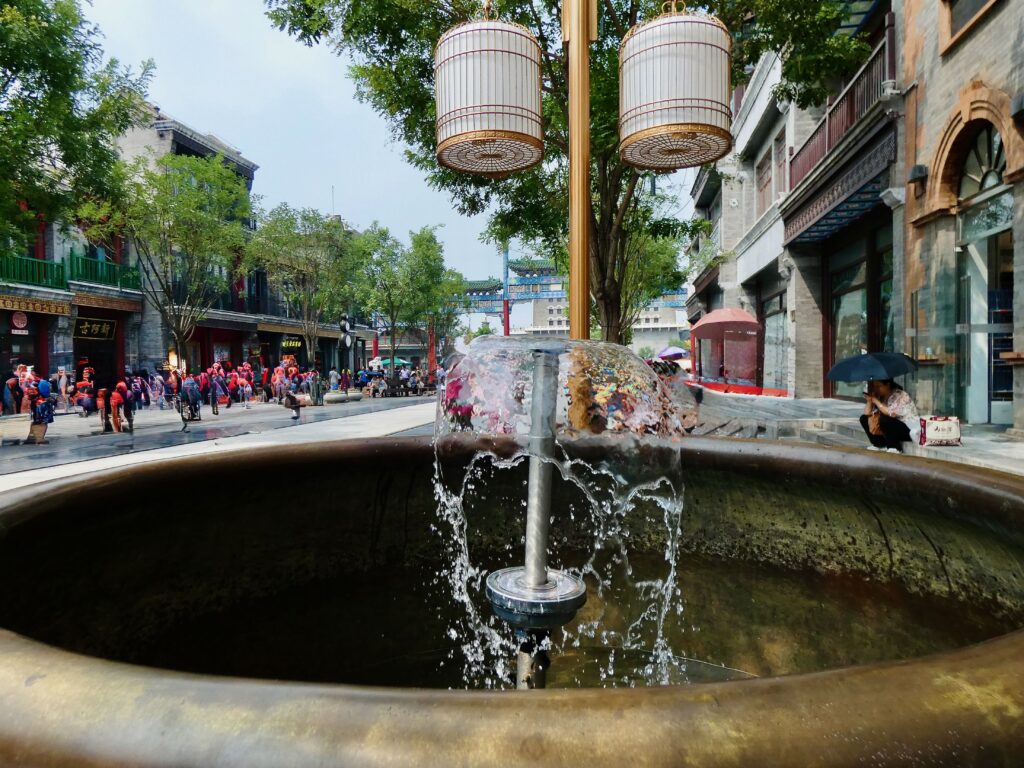
Located directly south of Tiananmen Square, the Qianmen district (officially the Zhengyangmen area) serves as a historic gateway that once separated the inner and outer cities of imperial Beijing. Its centerpiece is the towering Zhengyangmen Gate, which dates back to the Ming Dynasty and stands as one of the few remaining structures of the city’s ancient fortification system.
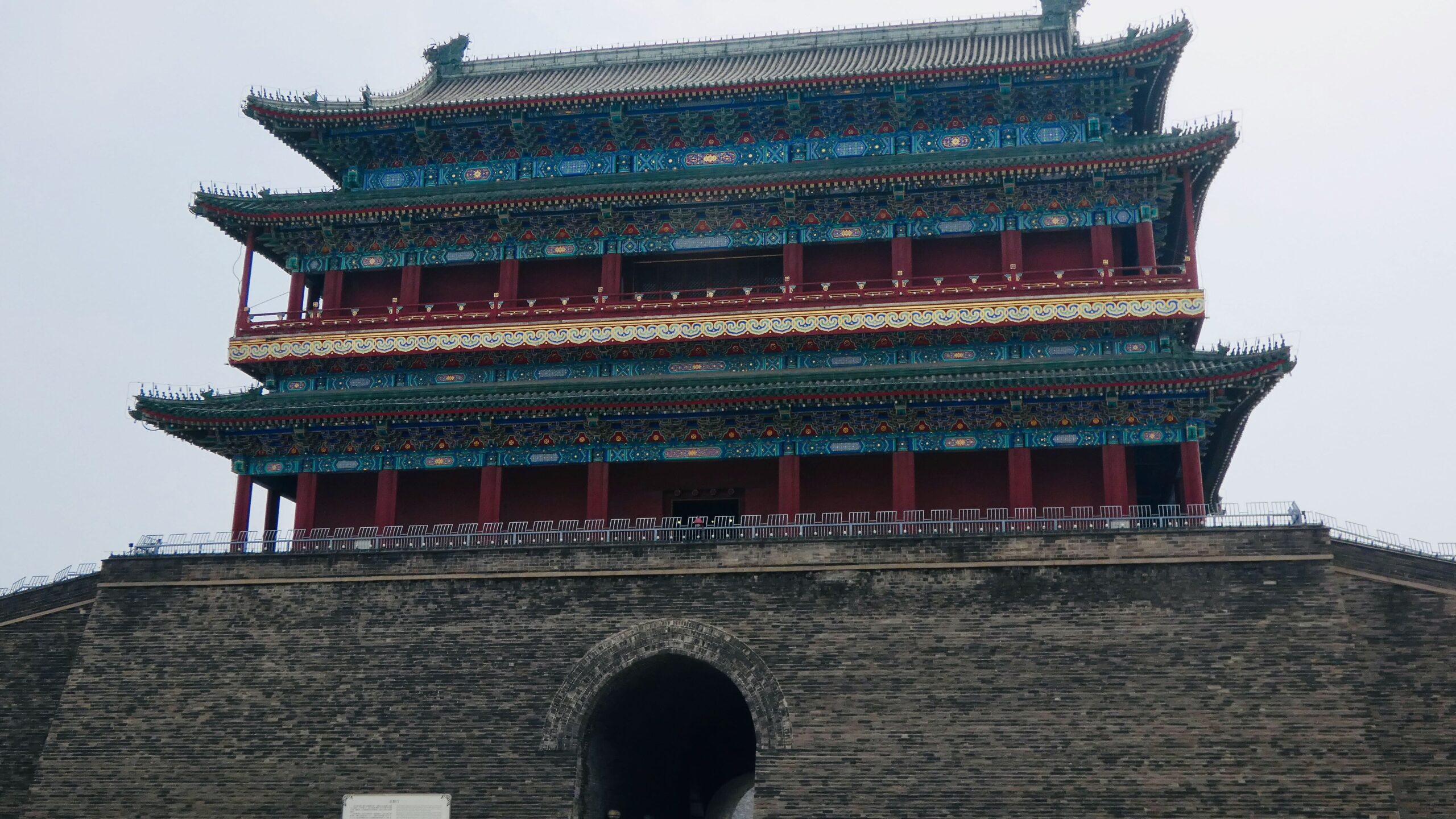
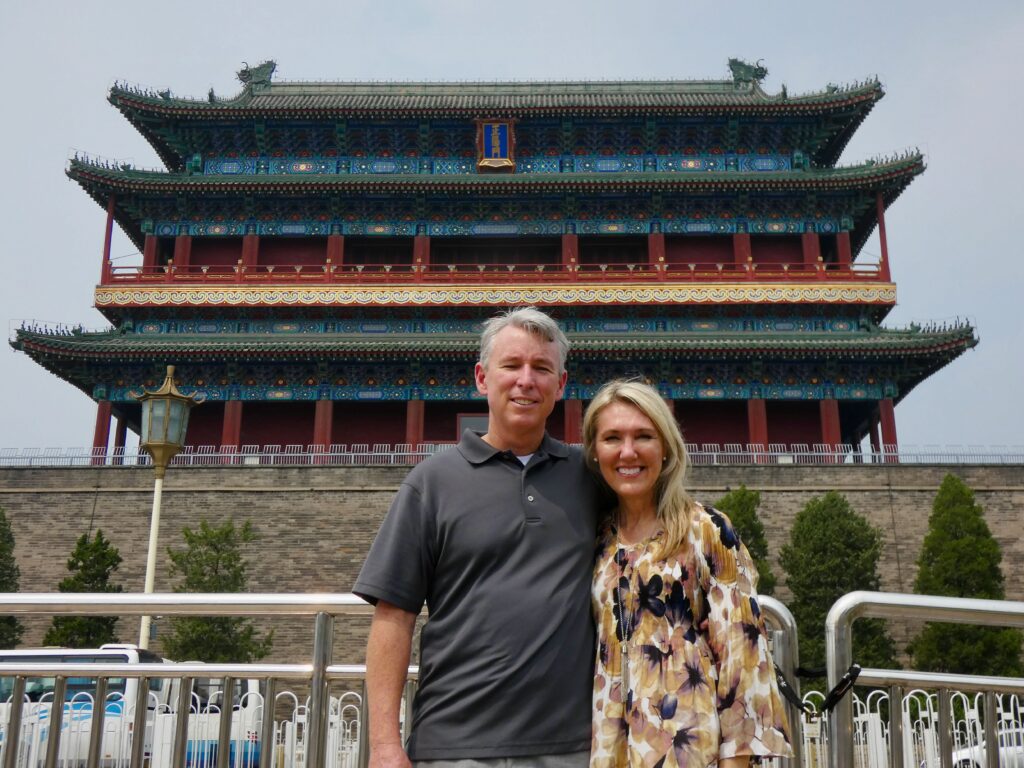
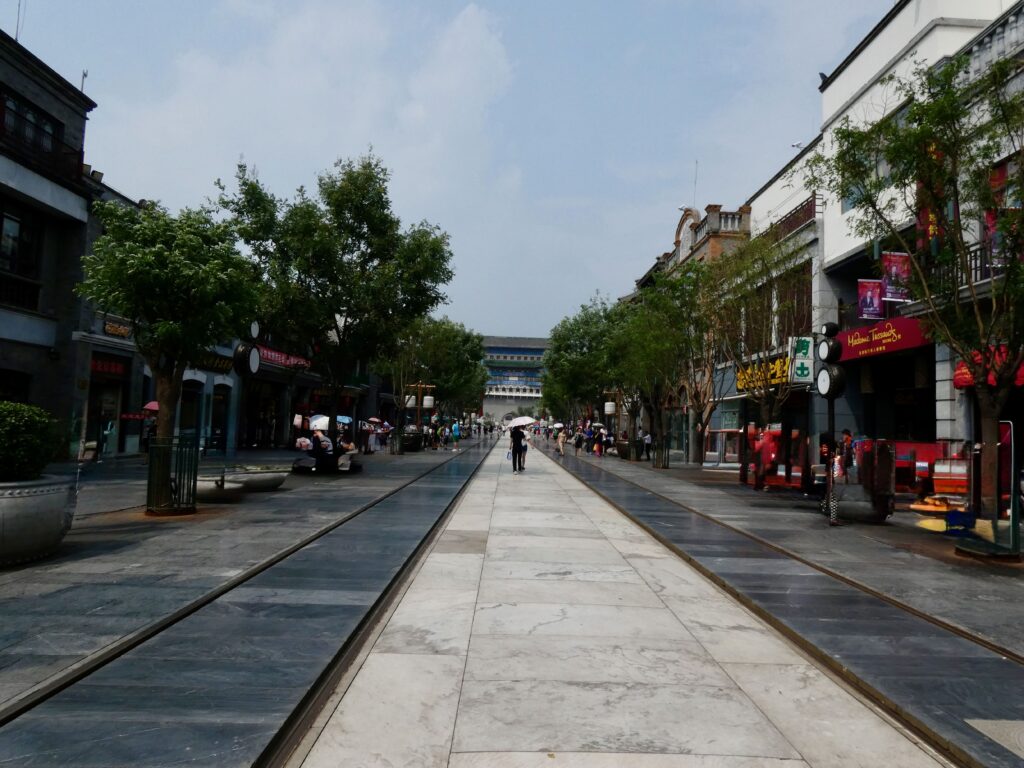
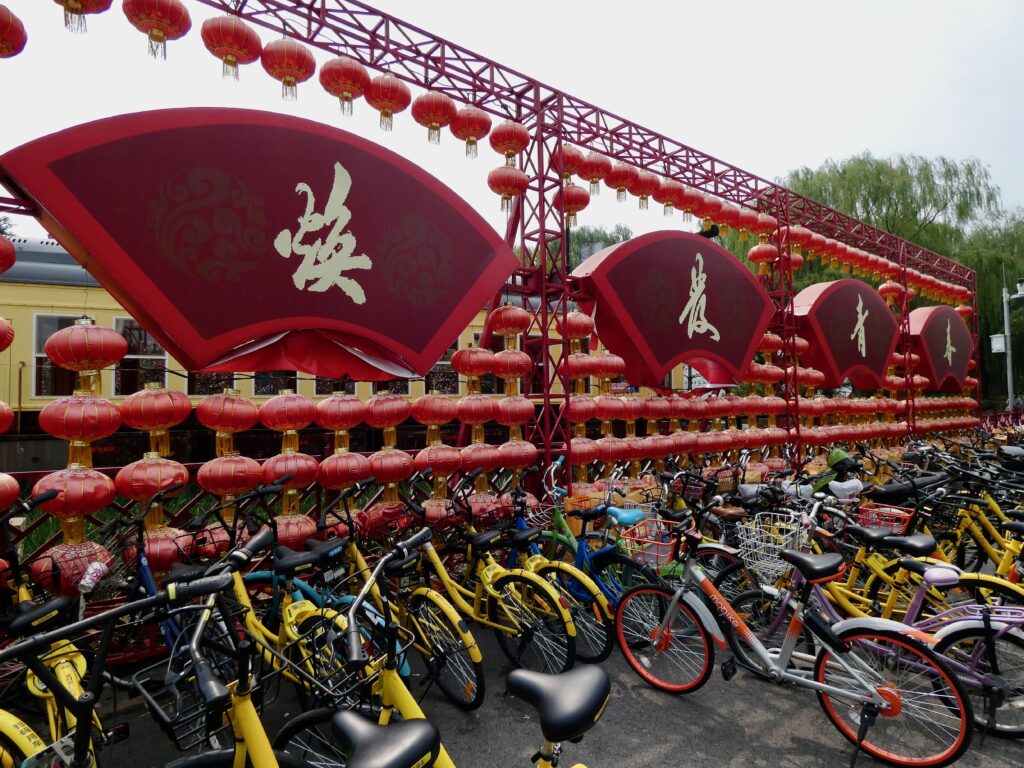
The district is defined by Qianmen Street, a half-mile-long commercial thoroughfare that has undergone significant restoration to recapture its 1920s-style charm, complete with a vintage “Dangdang” sightseeing tram.
Branching off the main street are the winding hutongs of Dashilar, where the architecture shifts to traditional grey-brick courtyards. In recent years, the district has successfully integrated modern lifestyle elements, such as the Beijing Fun complex, which houses contemporary bookstores and galleries alongside Qing Dynasty facades. This blend of imperial gravity and bustling marketplace energy makes Qianmen a vital cultural bridge between Beijing’s storied past and its cosmopolitan present
7. Olympic Park
The Beijing National Stadium, universally known as the Bird’s Nest, served as the centerpiece for the 2008 Summer Olympics. Designed by Swiss architects Herzog & de Meuron in collaboration with Chinese artist Ai Weiwei, the structure is an engineering marvel comprised of 42,000 tons of interlocking steel struts. Its organic, lattice-like exterior was inspired by Chinese “crazed” pottery and intended to symbolize a cradle of hope for humanity. During the 2008 Games, the stadium’s capacity reached 91,000, creating an electric atmosphere for the opening and closing ceremonies and the track and field competitions.
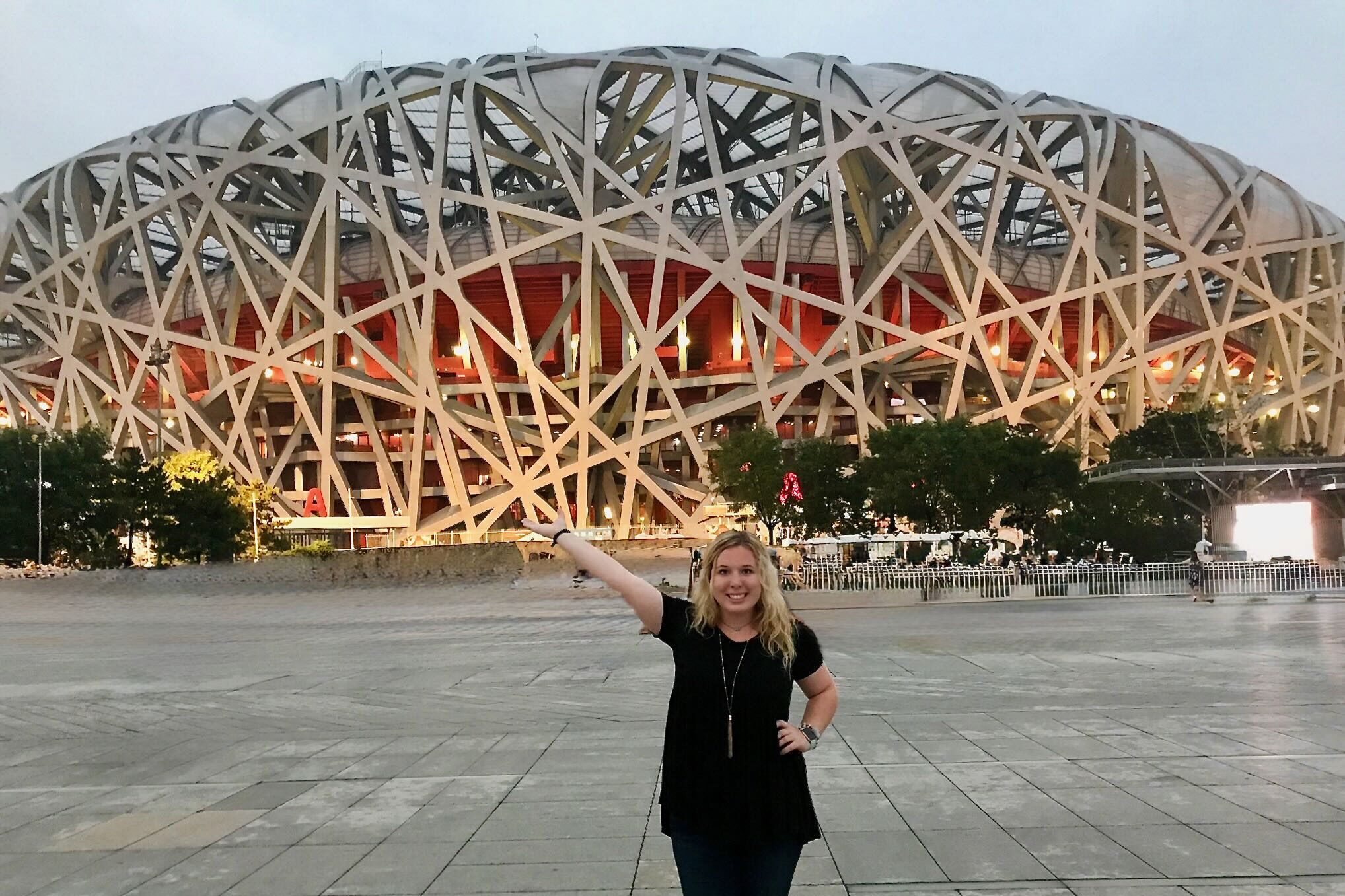
The year 2008 remains iconic for the athletic milestones achieved within this stadium. It was here that Usain Bolt shattered world records in both the 100m and 200m sprints, cementing his legacy as the fastest man in history. The opening ceremony, directed by Zhang Yimou, was lauded globally for its scale and technological precision, featuring 15,000 performers.
Beyond the Summer Games, the stadium made history again in 2022 as the first venue to host the opening and closing ceremonies for both a Summer and Winter Olympics. Today, it stands as a permanent monument to China’s modern era and a popular destination within the Olympic Green.
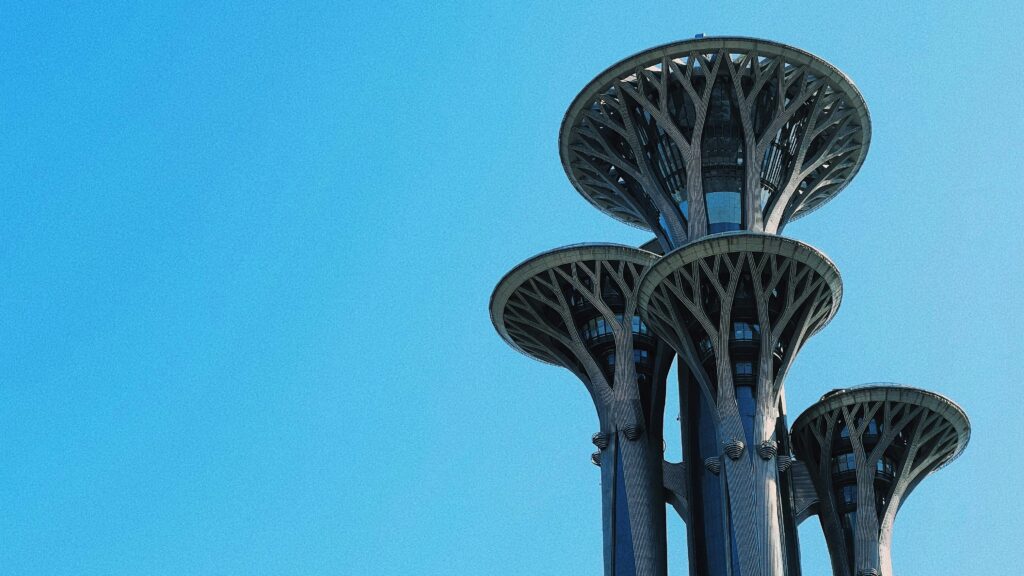
We spent quite a while strolling around the complex. It was impressive, to say the least.
8. Chao Yang Theater Acrobatic Show
The Chaoyang Theatre (Cháoyáng Jùyuàn), located in Beijing’s bustling CBD district, is widely considered the premier venue for traditional Chinese acrobatics. Established in 1984, the theatre has gained international acclaim, hosting millions of visitors and numerous foreign dignitaries over the decades. The acrobatics at Chaoyang emphasize extreme physical discipline, balance, and precision, reflecting a folk art tradition that dates back over two thousand years.
The performance, often titled “The Flying Acrobatics Show,” features a rapid-fire series of gravity-defying acts. Signature routines include plate spinning, where performers manipulate dozens of porcelain plates on slender poles, and contortionism, which showcases incredible flexibility.
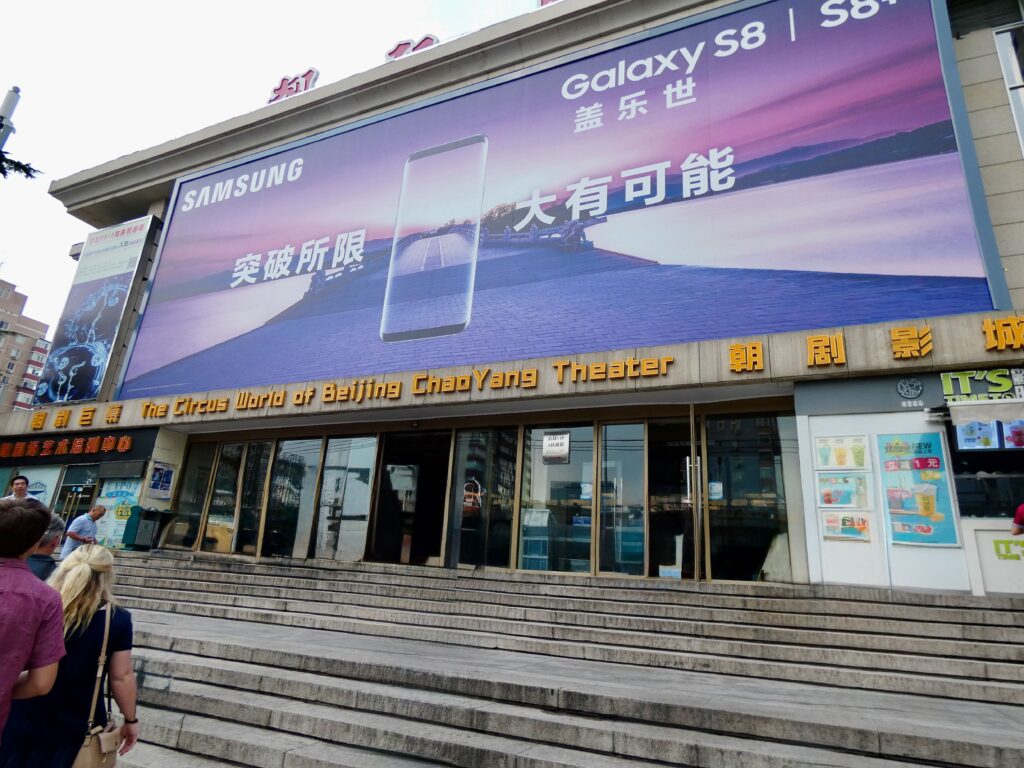
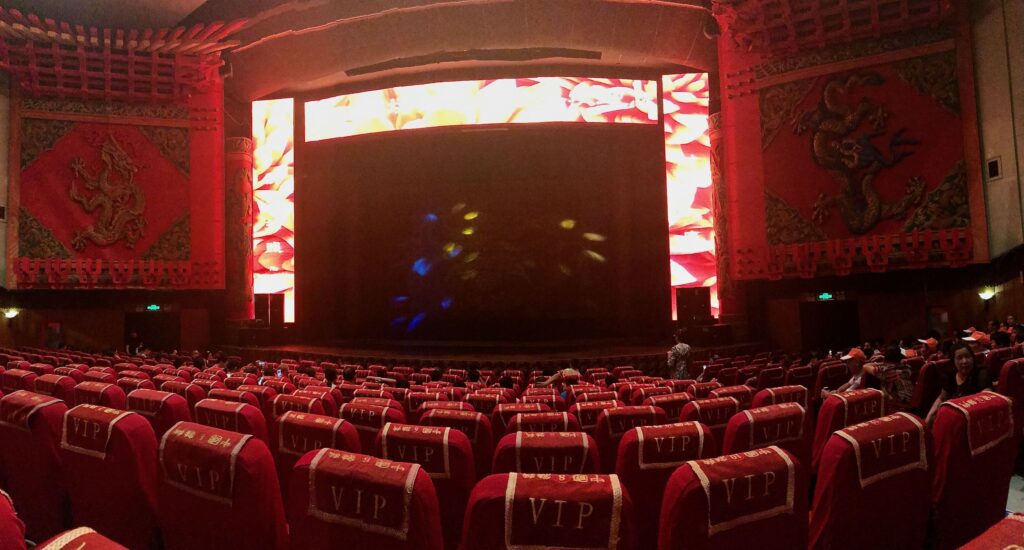
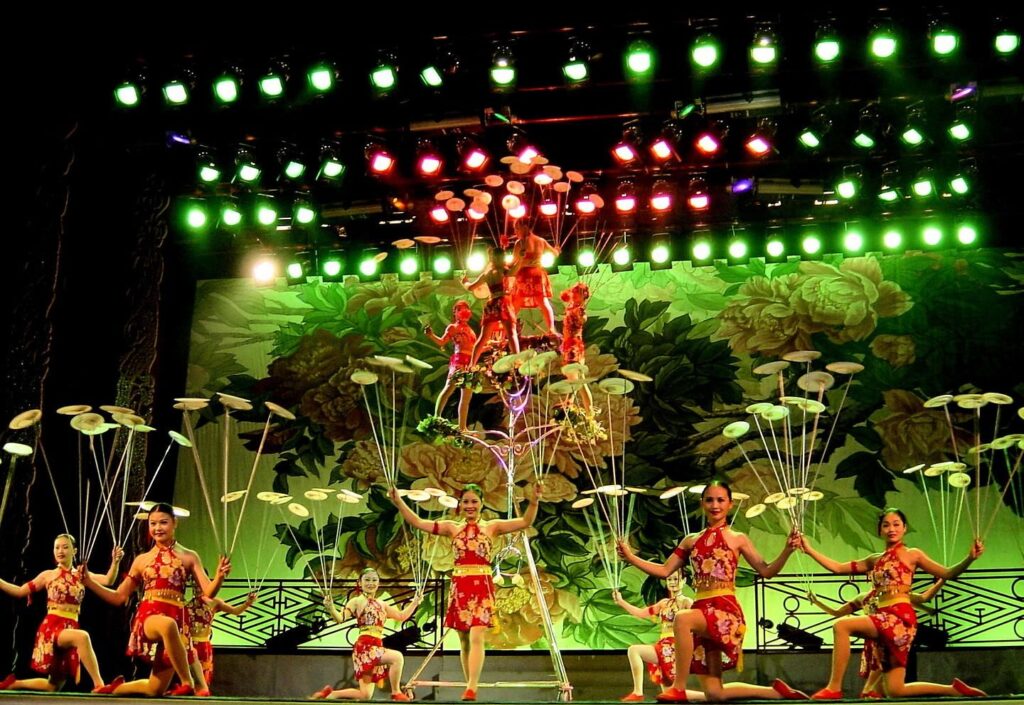
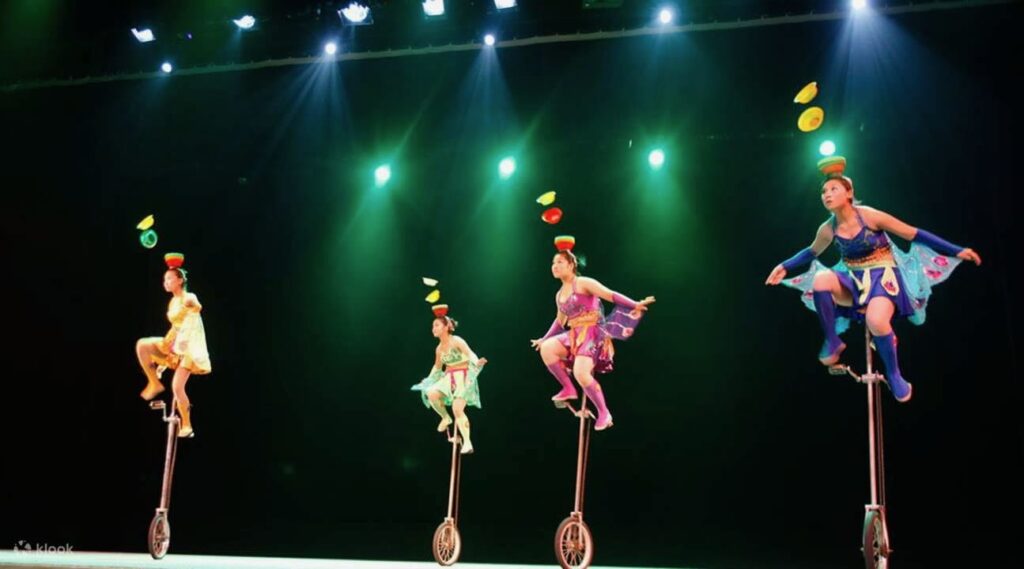
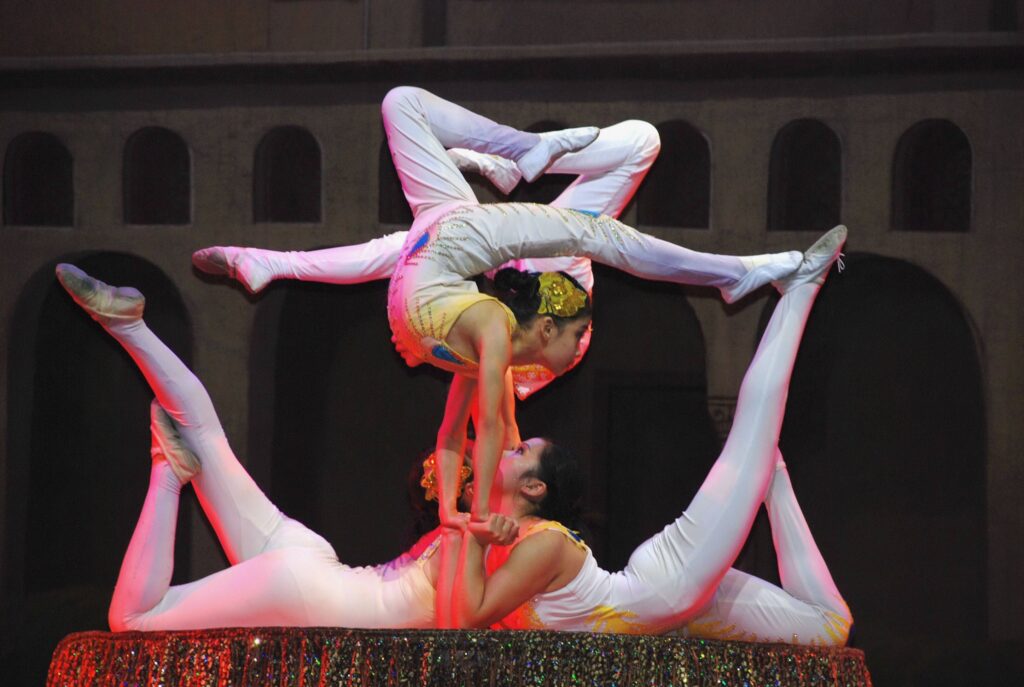
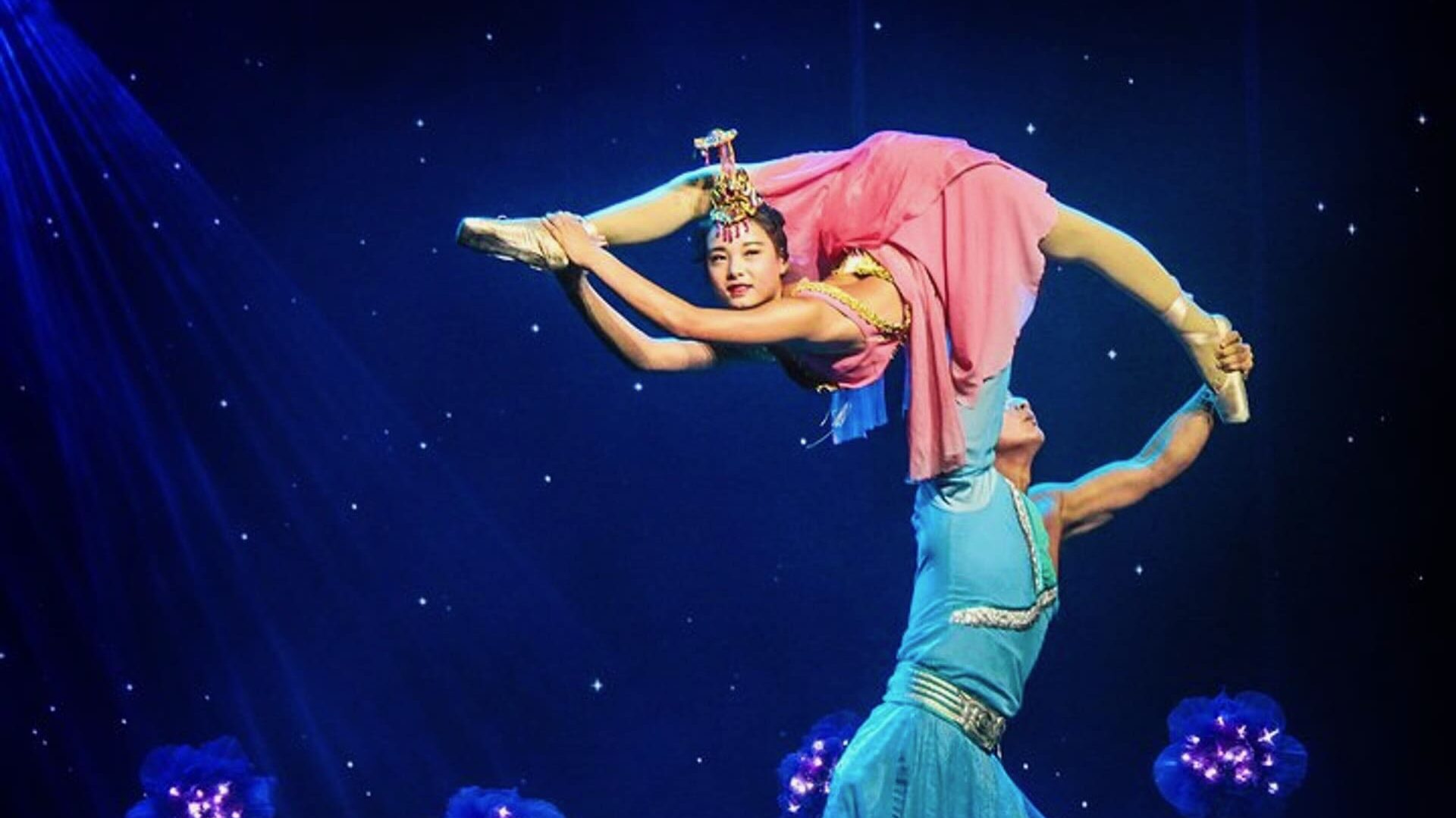
The show typically reaches its climax with the Globe of Death, featuring multiple motorcyclists racing at high speeds within a confined steel cage, and the pagoda of chairs, where a soloist balances high above the stage.
Globe of Death:
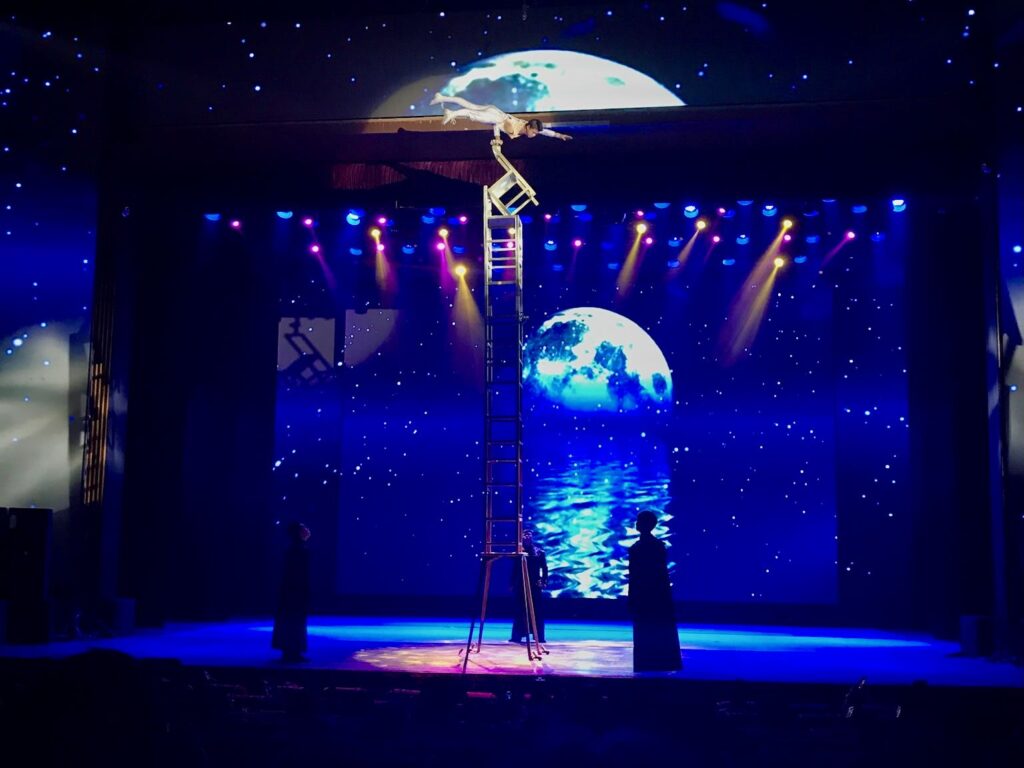
Enhanced by modern lighting and synchronized music, the Chaoyang Theatre provides a high-energy window into China’s cultural heritage, transforming ancient athletic feats into a world-class theatrical experience.
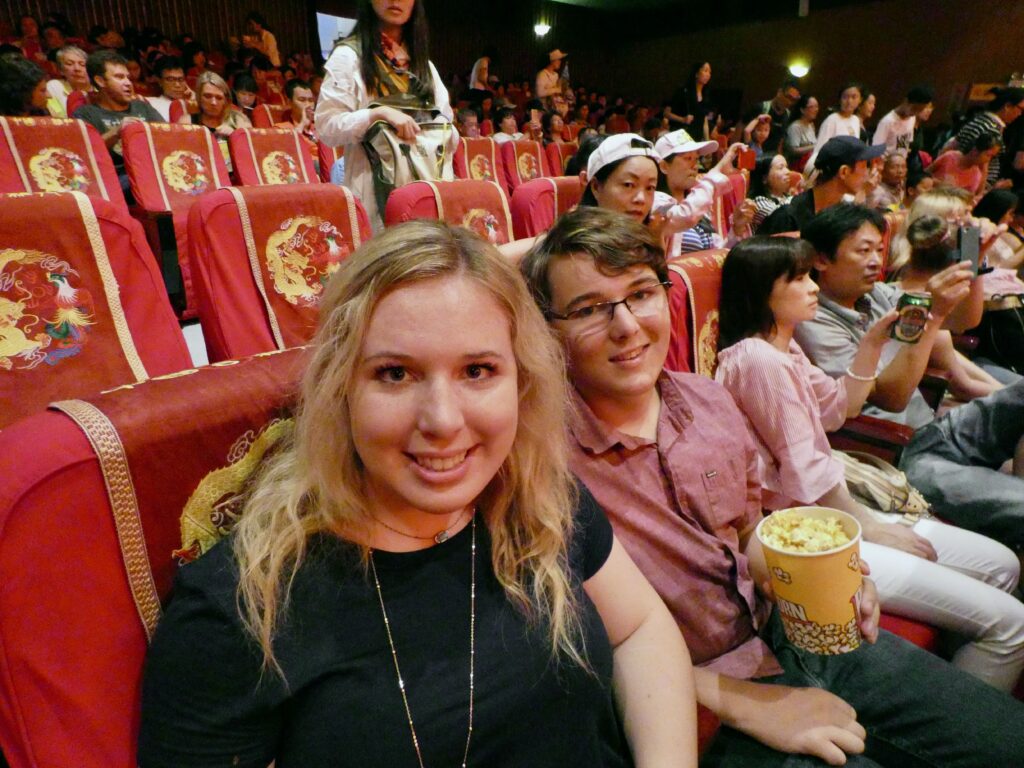
I would have loved this to be higher on our “favorites” list, but there was one major flaw: the audience. Throughout the show, people got up, roamed the aisles, and engaged in boisterous conversations. It was really distracting.
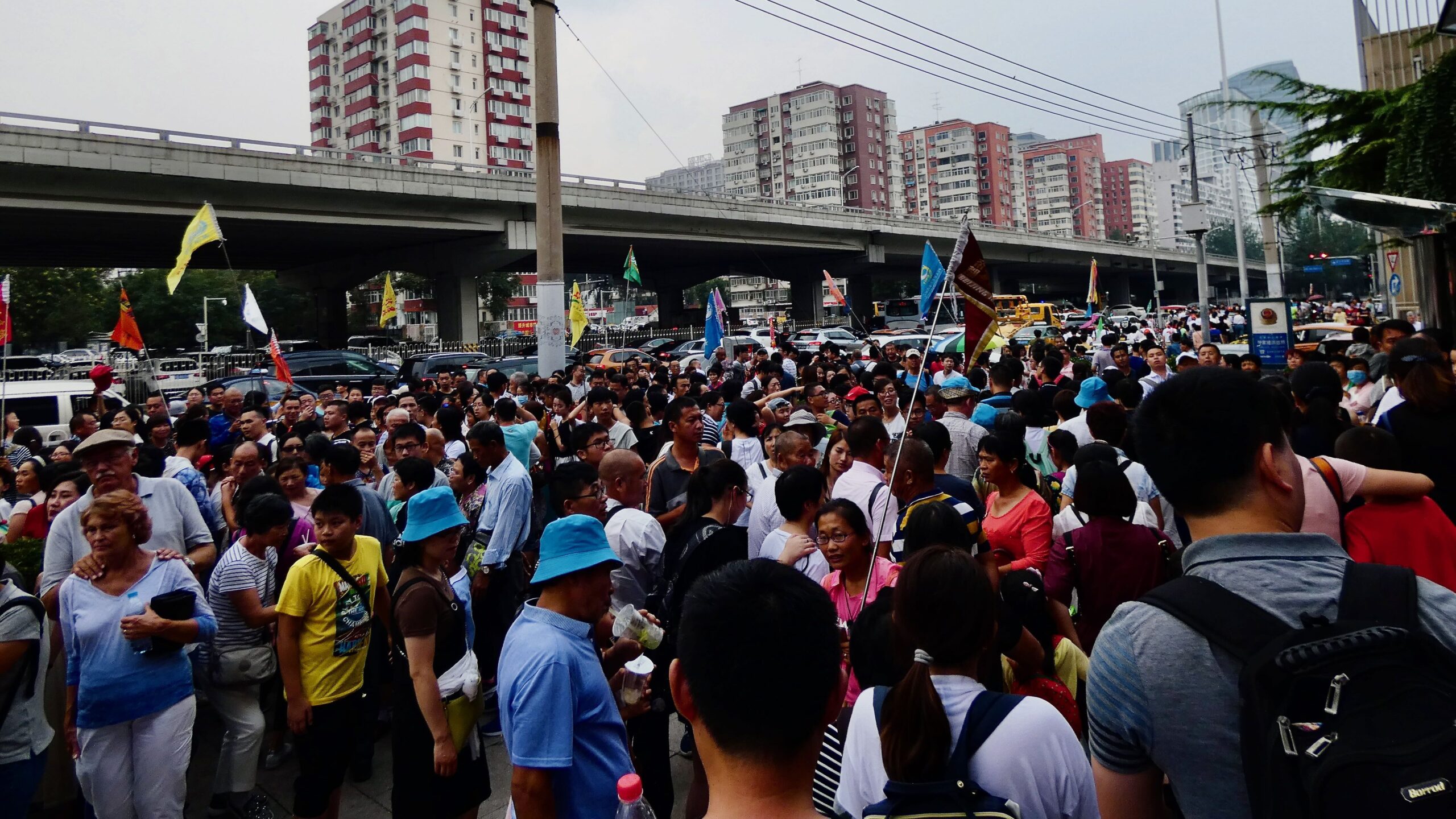
The crowd scene as we entered should have been our first clue. It was a madhouse.
Would we go again? Yes. The performances were stunning. However, next time, we would know to expect this cultural difference in theater etiquette in advance.
9. Tea Ceremony
In Beijing, the tea ceremony—often referred to as Gongfu Cha—is as much about etiquette and mindfulness as it is about the beverage itself. While the formal Gongfu style originated in southern China, Beijing’s tea houses, particularly those in the Dashilar and Maliandao districts, have refined the practice into a celebrated urban ritual. The ceremony typically utilizes a Gaiwan (a lidded bowl) or a small Yixing clay teapot to meticulously brew high-quality leaves, such as the city’s beloved Jasmine tea or robust Pu-erh.
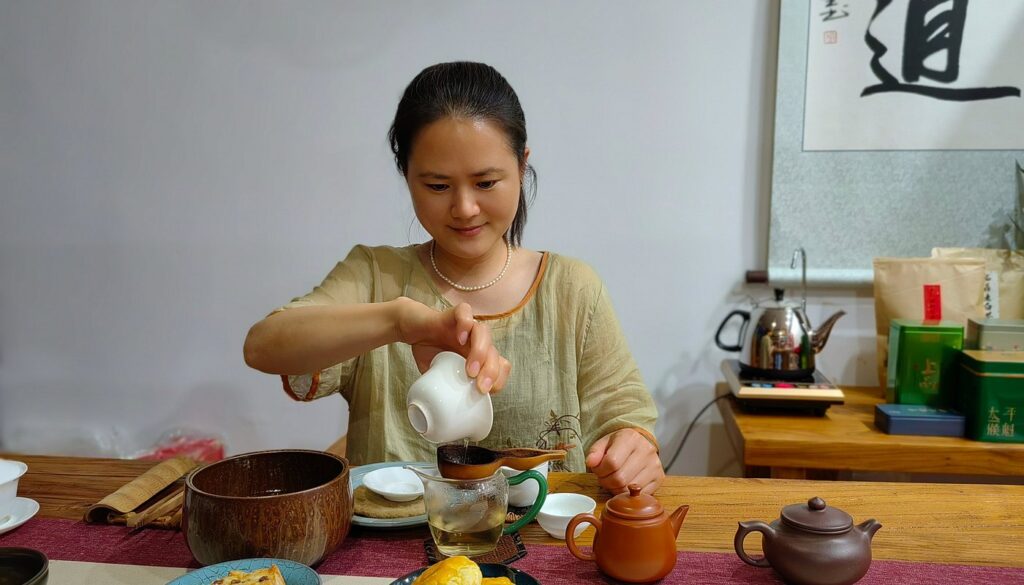
The process is highly rhythmic: practitioners begin by “warming the ware” with boiling water, then quickly rinse the leaves to “awaken” their aroma. Precision is key, as steeping times are measured in seconds to ensure the perfect balance of flavor. Beyond the technicality, a Beijing tea ceremony emphasizes the “Way of Tea” (Chadao), focusing on the harmony between the host, the guest, and the environment.
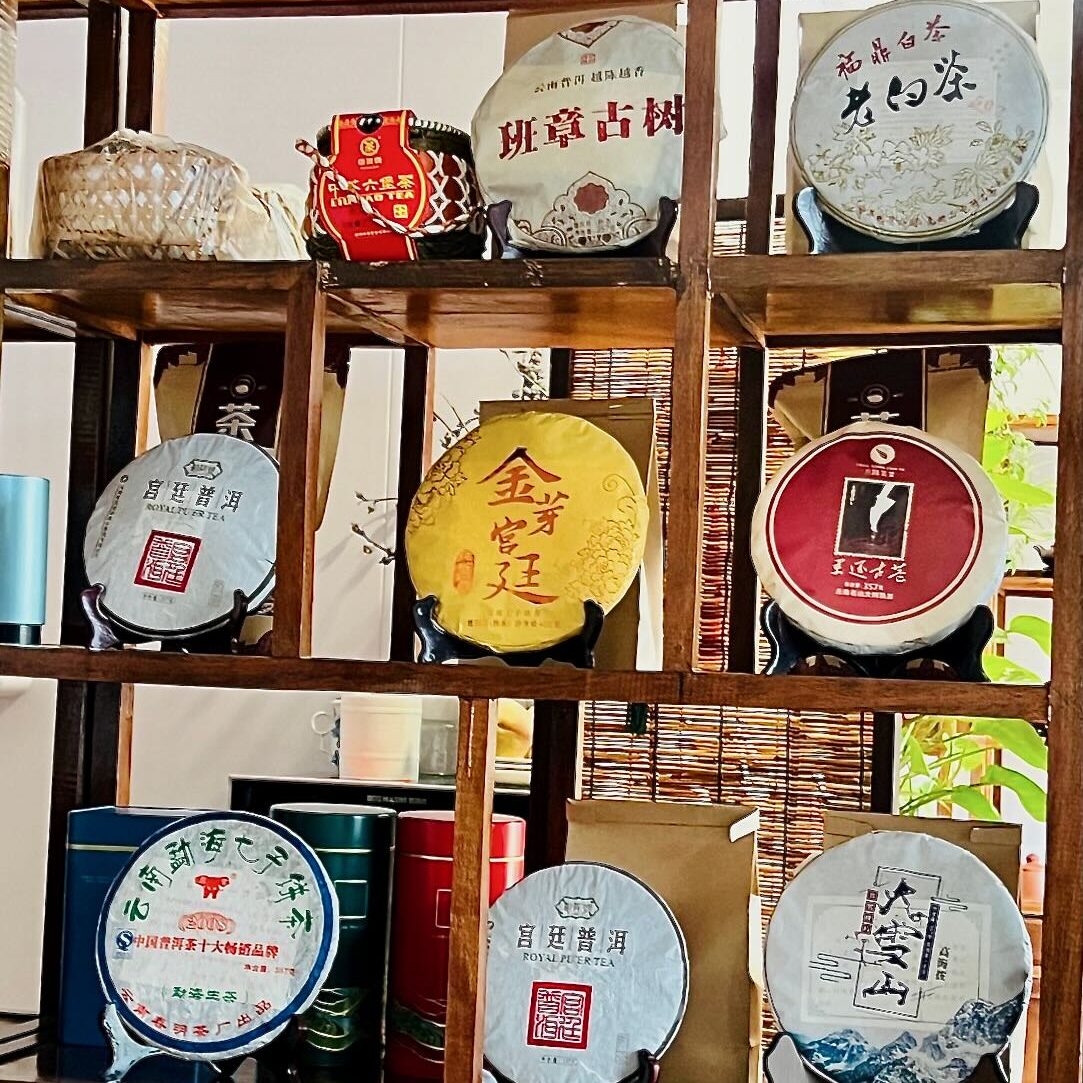
We enjoyed tasting different teas, and we all especially enjoyed the black tea (hong cha, or “red tea” in China), which holds significance in Beijing as a warming, restorative, and culturally historic beverage. Black tea is also valued for its health benefits, aiding digestion and providing warmth, and it played a crucial historical role as a key trade item along the Tea Horse Road.
10. Wangfujing Street
Wangfujing Street, located in Beijing’s Dongcheng District, is one of China’s most prominent and historically significant commercial thoroughfares. Its name derives from the Ming Dynasty, when ten princely mansions (“Wangfu”) were constructed in the area, and a renowned well (“Jing”) famous for its sweet water was discovered nearby. Commercial activity here has flourished for centuries, evolving from a market serving aristocratic residences into a bustling, modern retail epicenter.
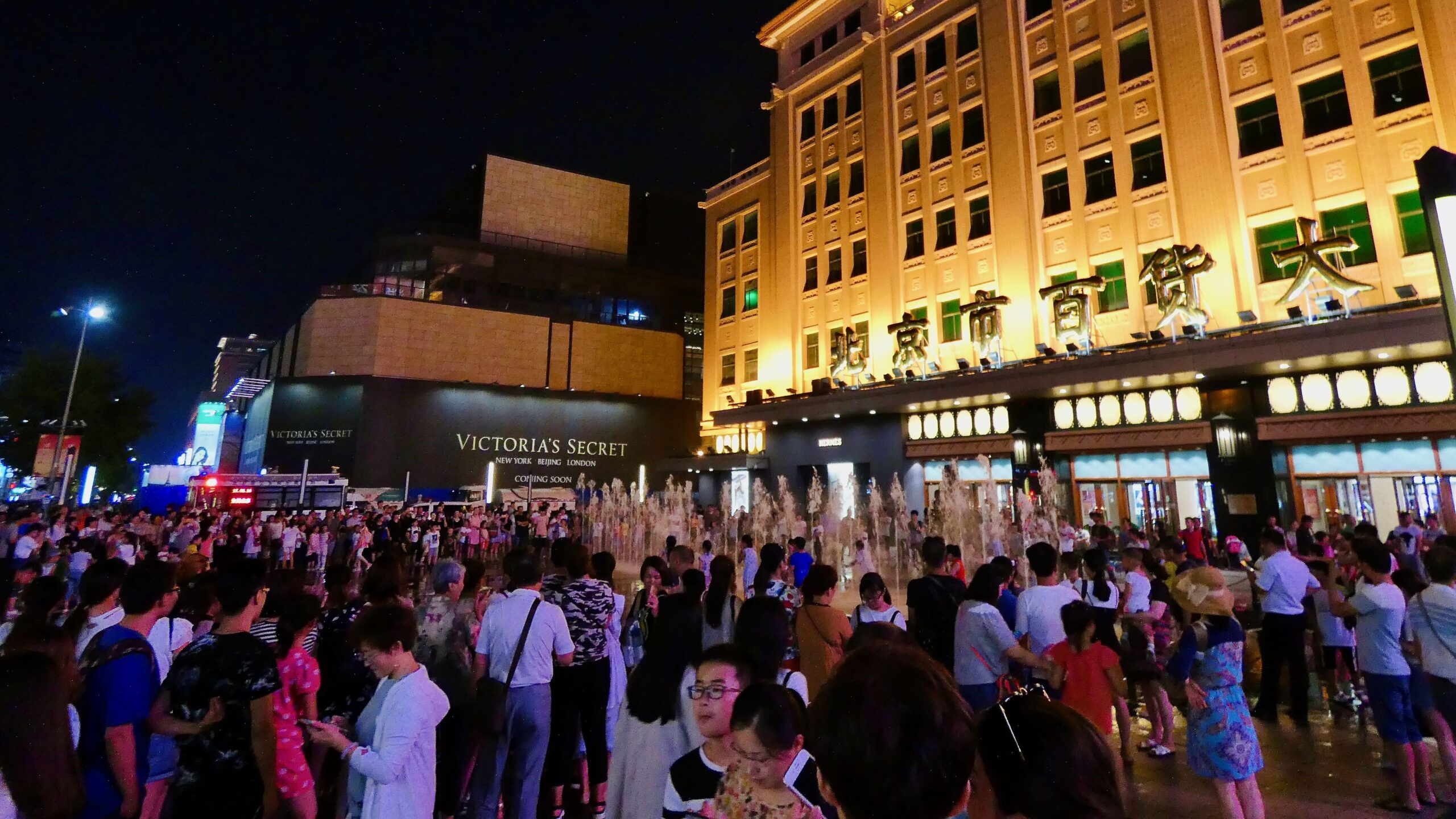
In the late 1990s, urban planning initiatives pedestrianized most of the street, transforming it into a visitor-friendly destination that reminded us of Paris’ Champs-Élysées. Today, the street extends approximately one mile and serves as a vibrant intersection of traditional and contemporary culture. It features high-end shopping malls, such as Oriental Plaza and Beijing apm, alongside time-honored stores selling traditional tea, silk, and medicine.
We walked this street frequently, as it was near our hotel and several landmarks, such as Tiananmen Square.
It’s also where Wangfujing Catholic Church is located. We found it fascinating that there was frequently a guard stationed out front.
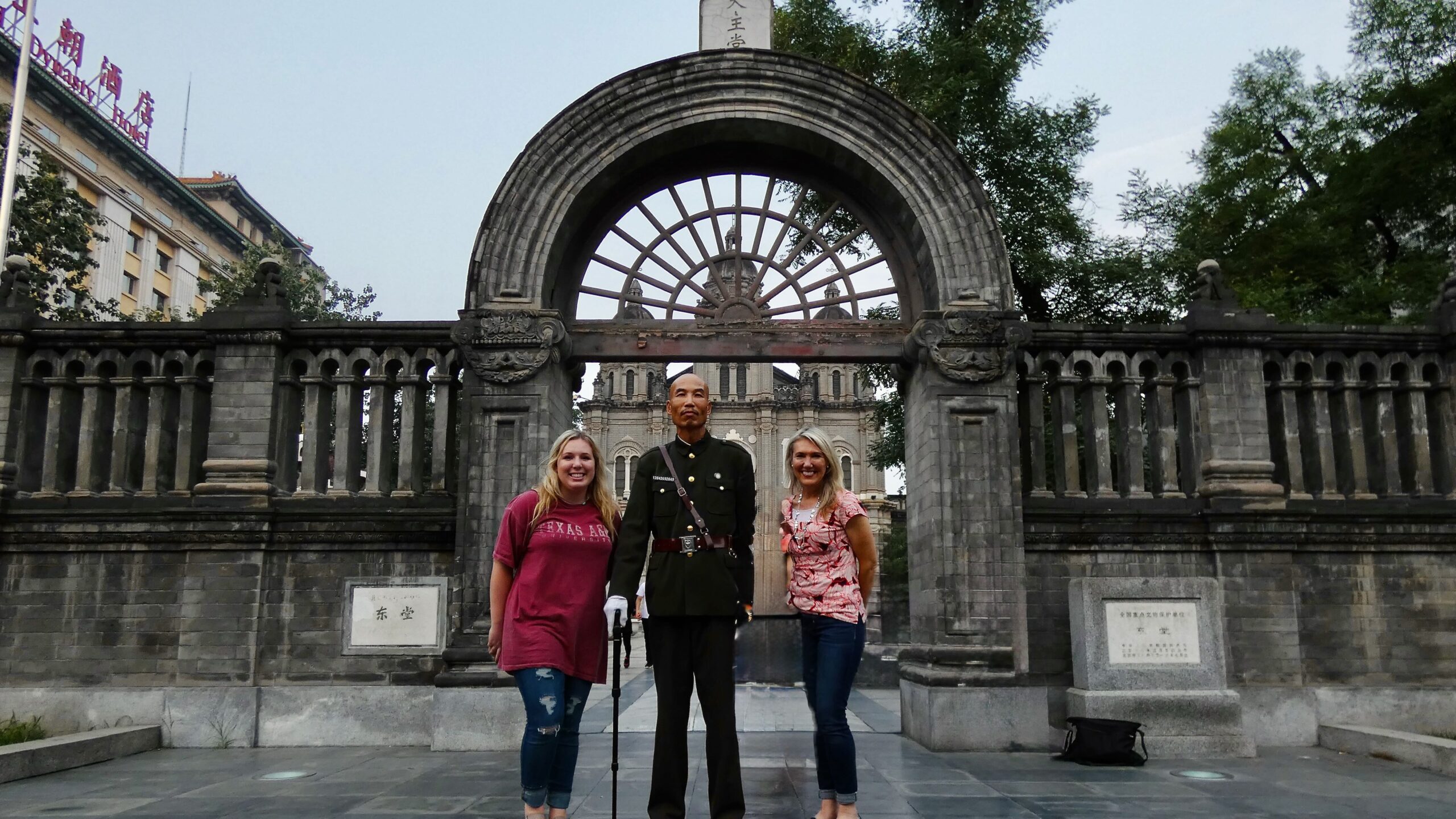
We assumed this was because the communist party monitors religious activity. Because of this, security is sometimes present to ensure that activities within state-sanctioned churches, such as Wangfujing, operate within government-controlled parameters, especially as they manage “local safety.”
In this case, not so. We later saw this “security guard” get chased away by the police. We’re actually not sure who he was or why he was there.
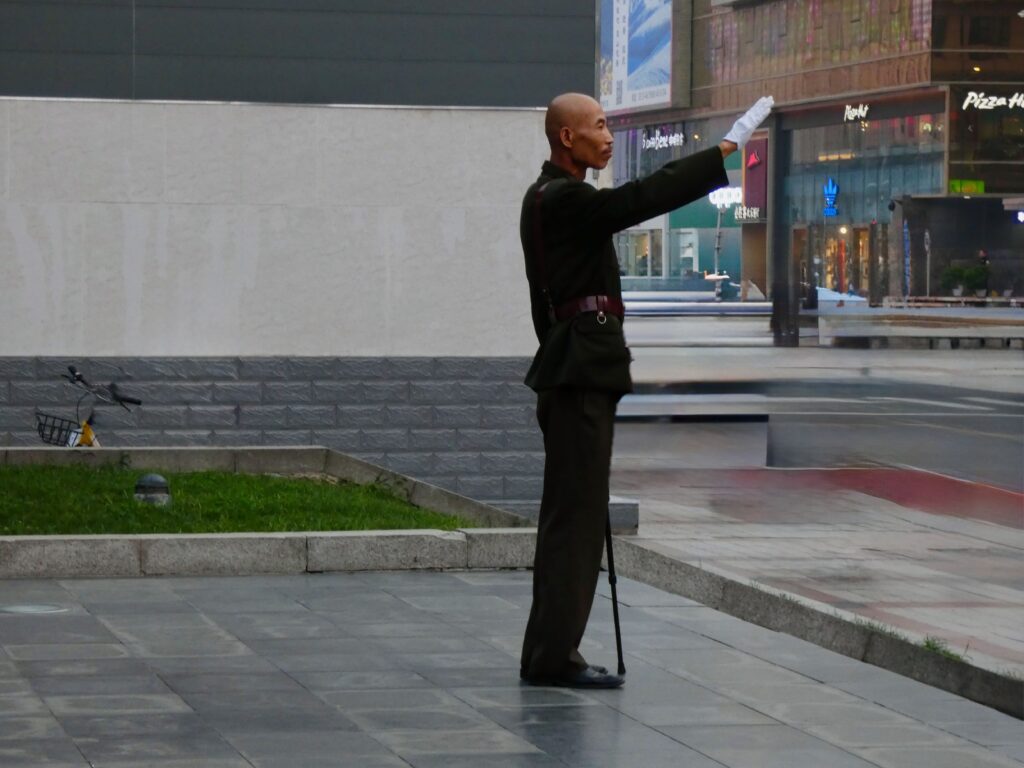
The Catholic Church in China is split into the state-sanctioned Chinese Catholic Patriotic Association (which appoints its own bishops) and an “underground” church loyal to the Vatican. Catholics represent less than 1% of China’s total population.
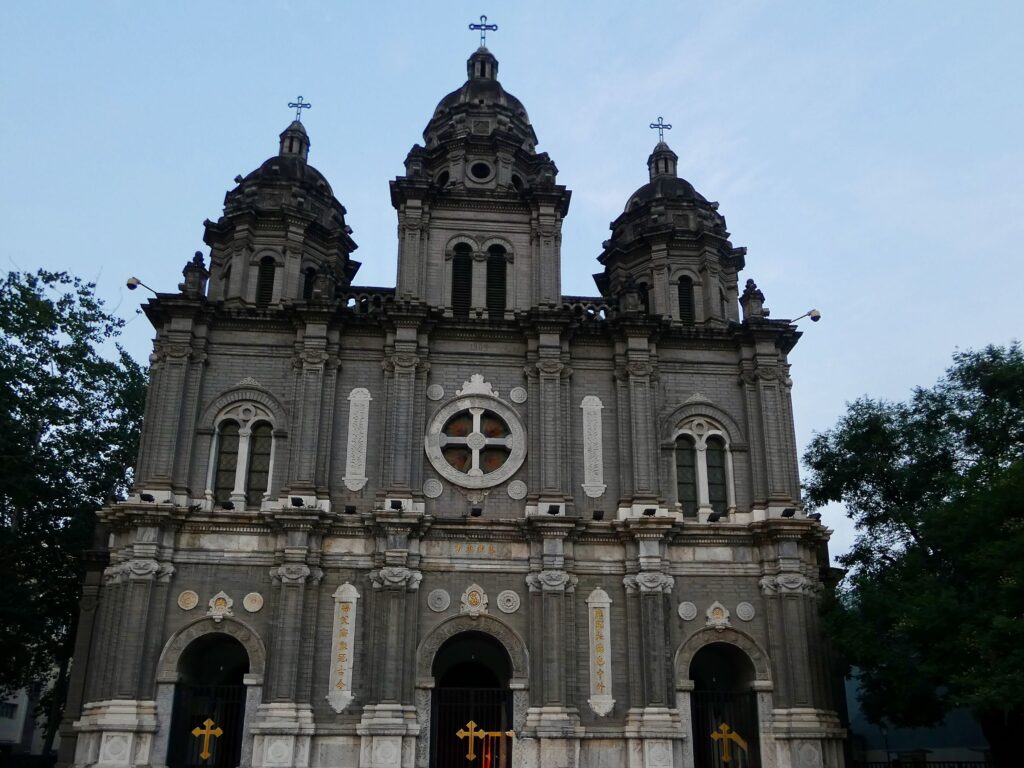
Regardless of the drama, it was a pretty church.

Other Memories
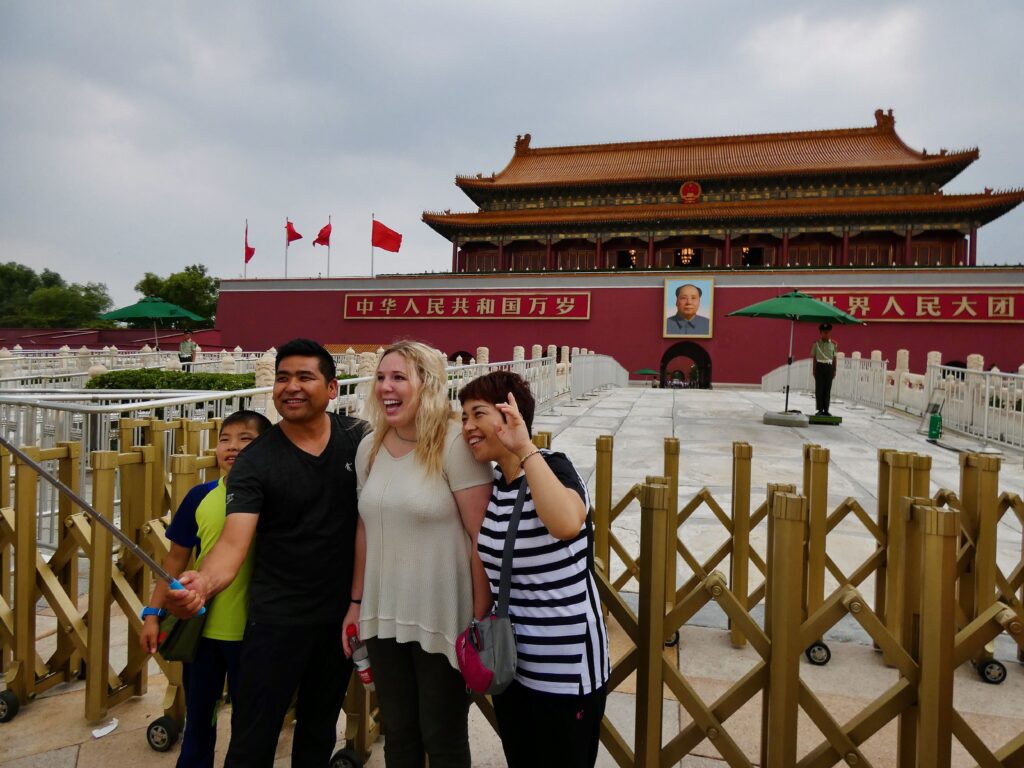
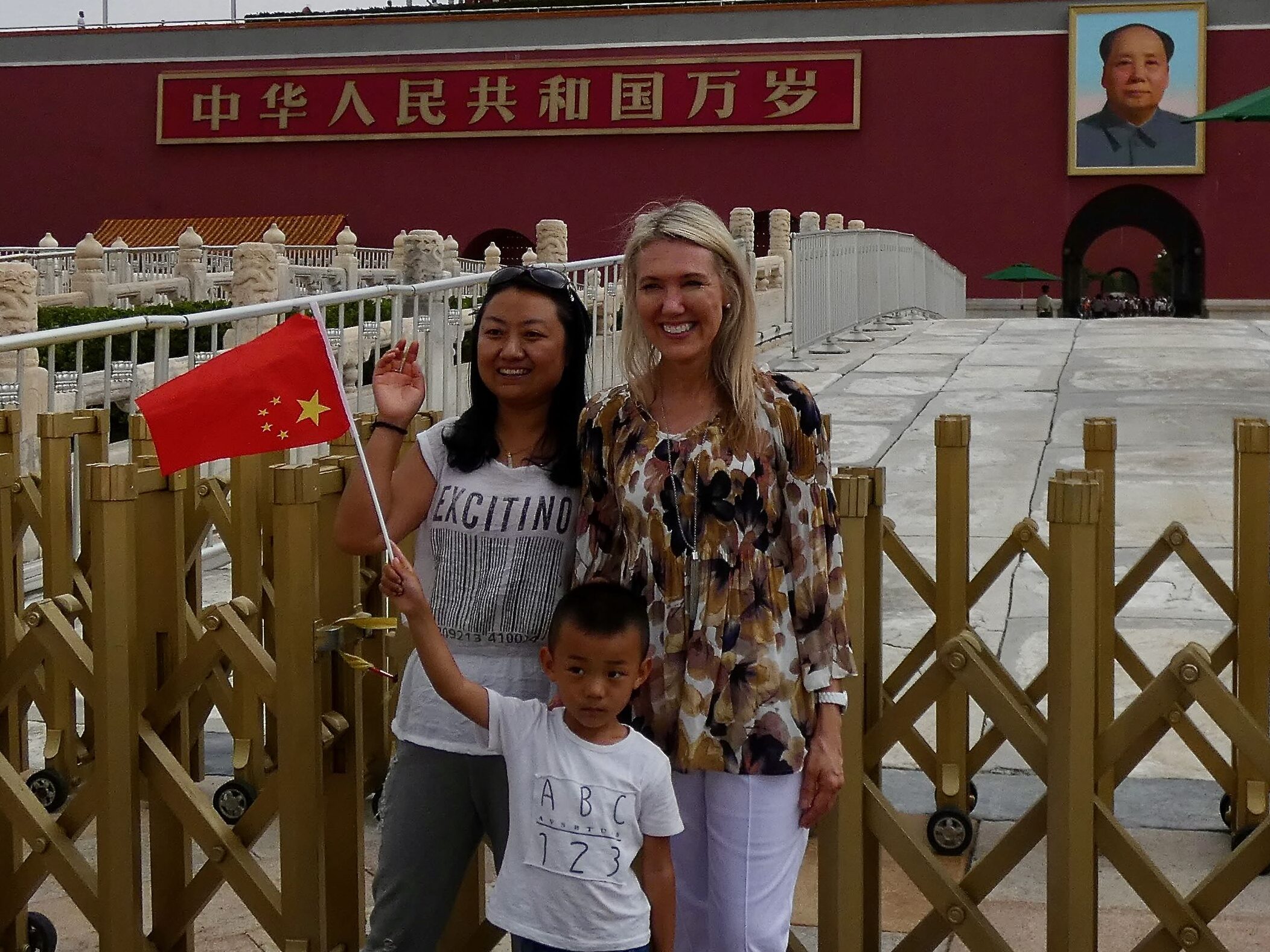
Sarah and I were frequently asked to pose with locals because of our distinctly American appearance. No one spoke English, so there was a lot of hand gesturing.
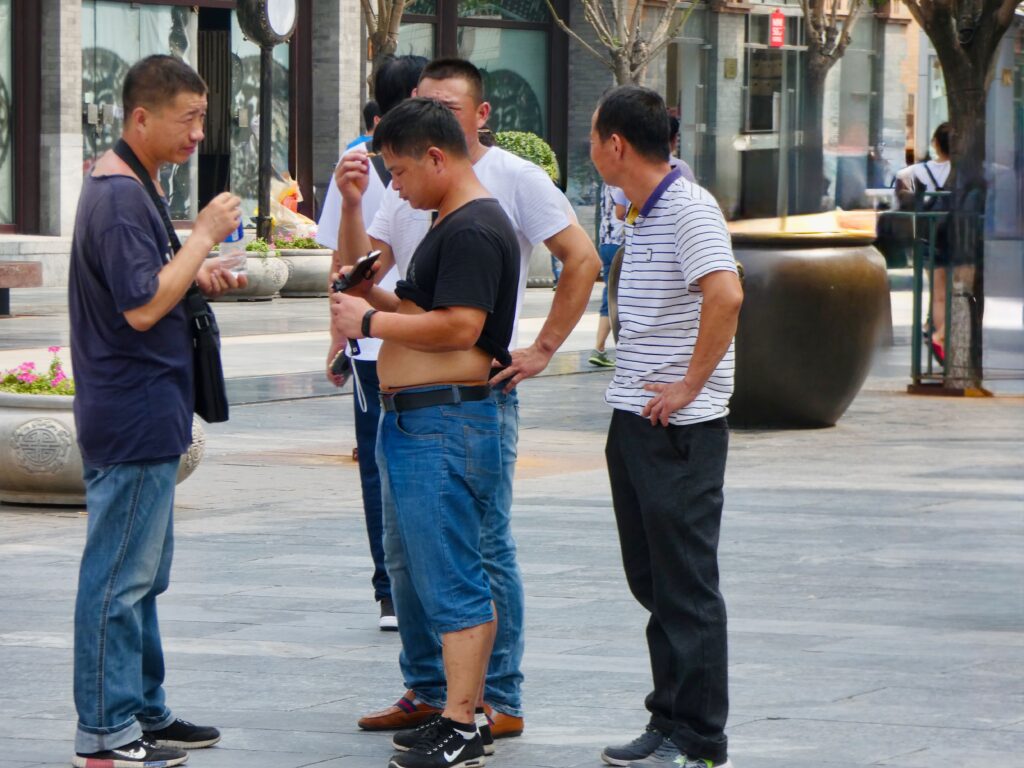
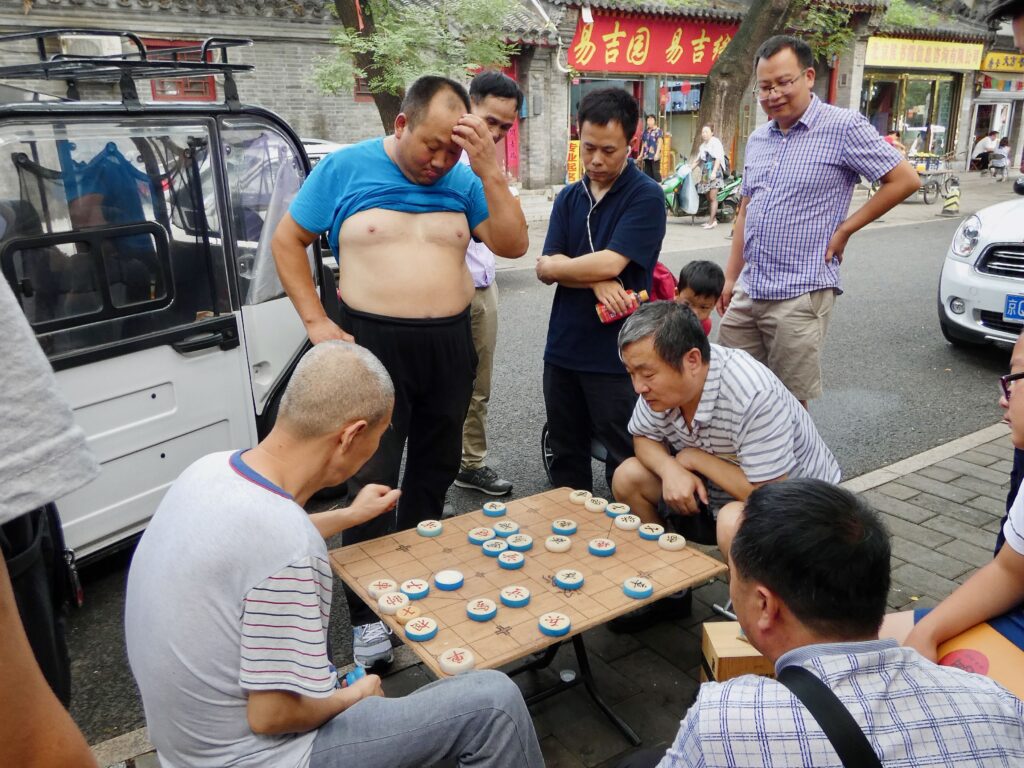
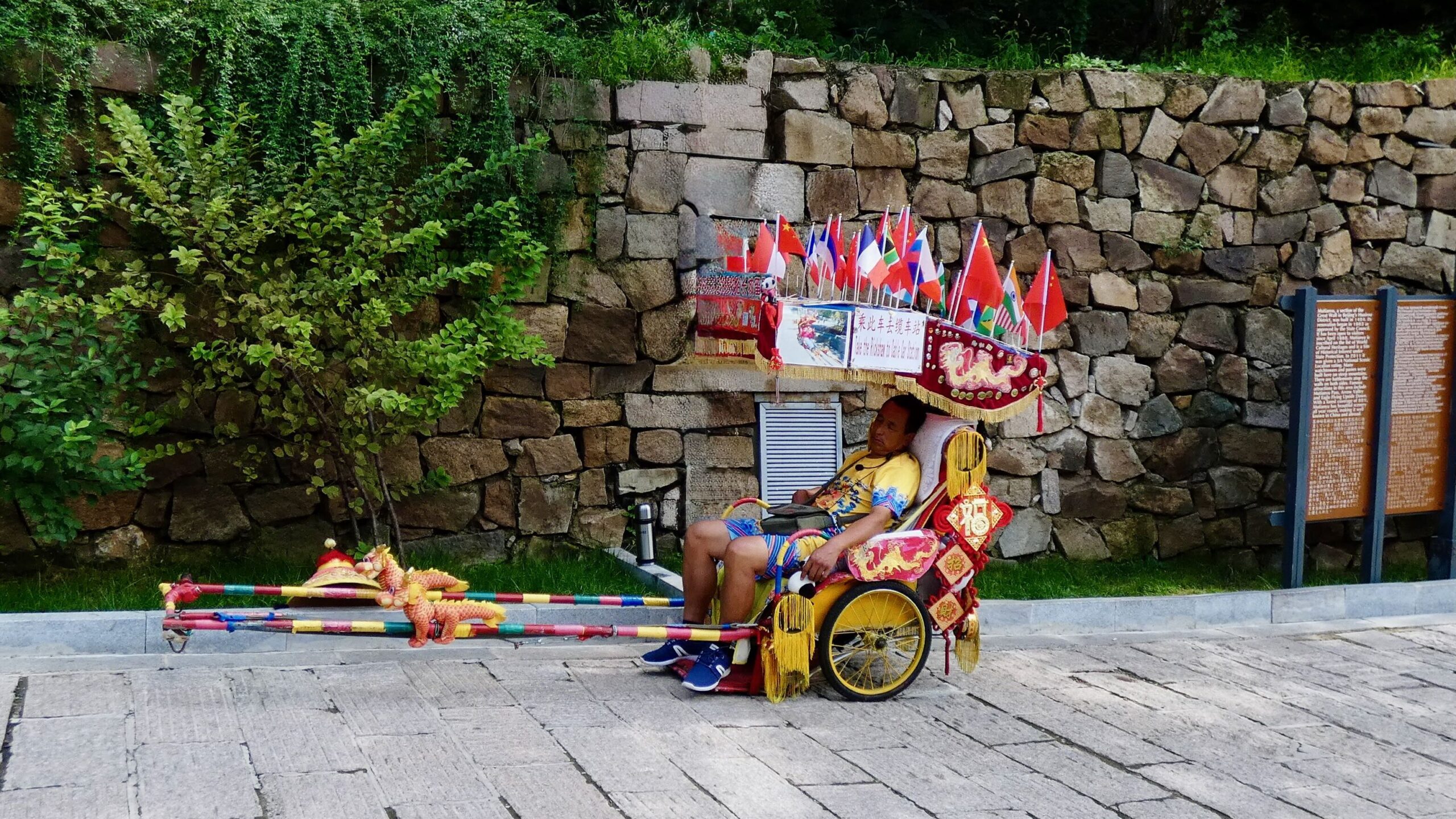
And then there was this guy: he was just done.
Food in Beijing
The city’s culinary scene is legendary, ranging from imperial banquets to street-side snacks.
- Peking Duck: This is the city’s most famous dish, known for its crispy skin and tender meat. Local favorites for an authentic experience include Siji Minfu or the classic Quanjude.
- Zhajiangmian: Often called “the taste of home” for locals, these chewy noodles are served with a savory, salty soybean paste and fresh vegetables.
- Copper Pot Hot Pot: A traditional way to warm up in winter, featuring fresh cuts of lamb dipped in a boiling clear broth and sesame sauce.
We spent some time at Wangfujing Snack Street and came across many foods we had never tried before.
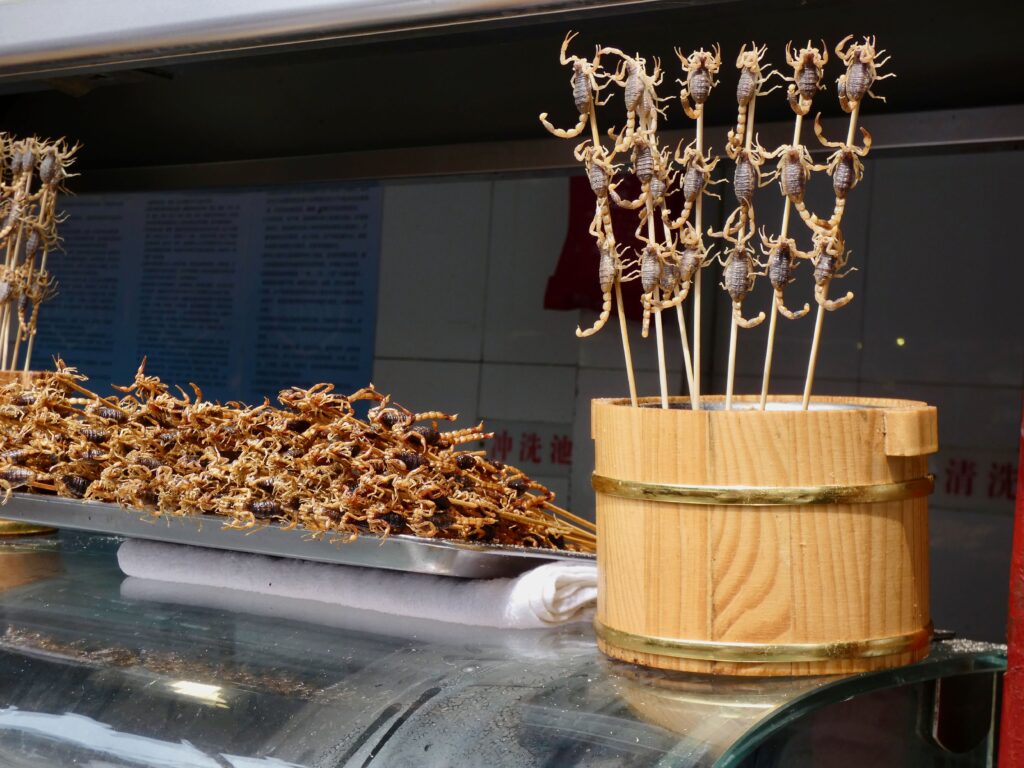
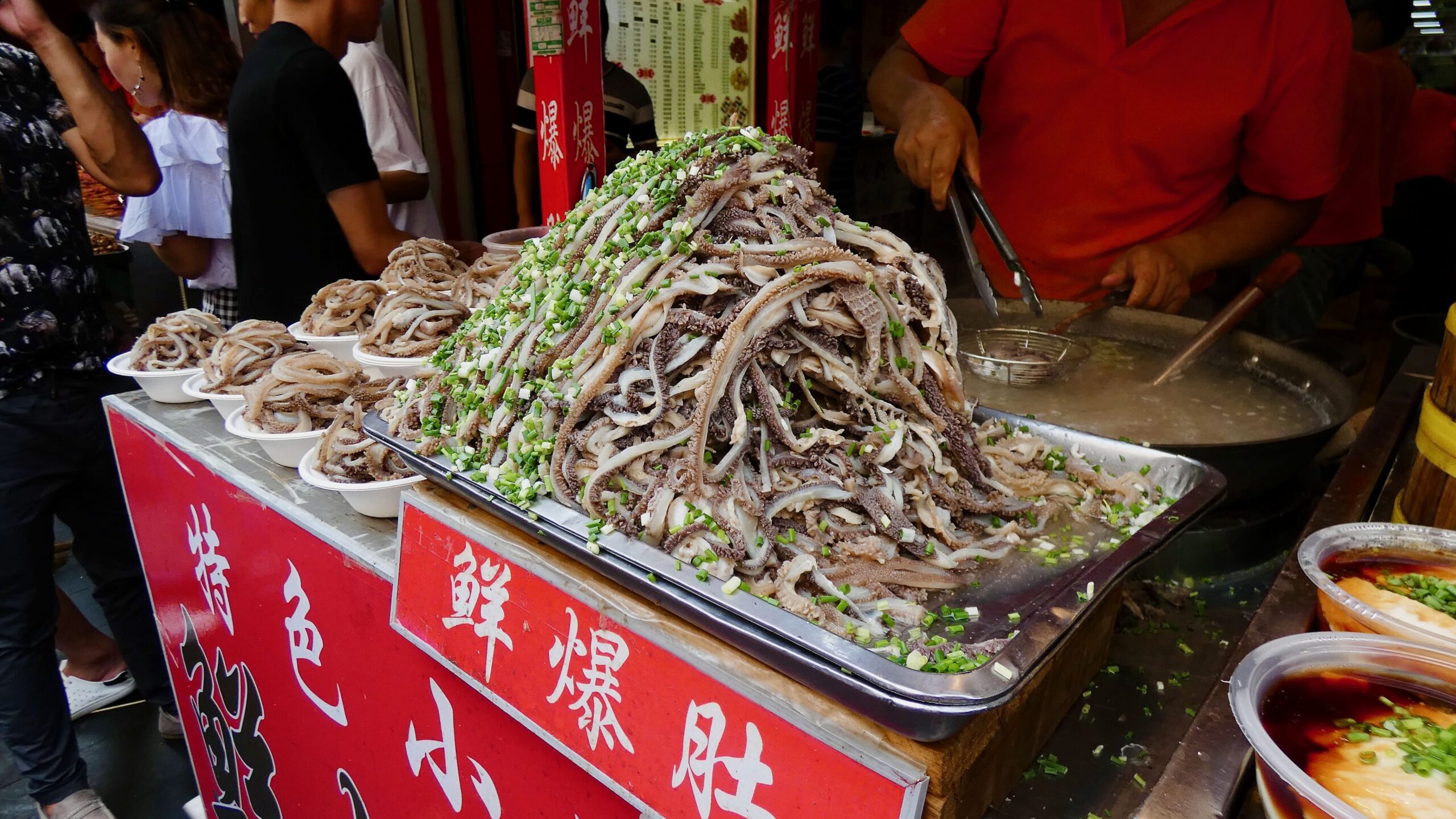
Wangfujing Snack Street was pretty crowded.
Admittedly, I grew up with a pretty unadventurous palate. Being Dutch, scorpions were definitely not on our dinner table.
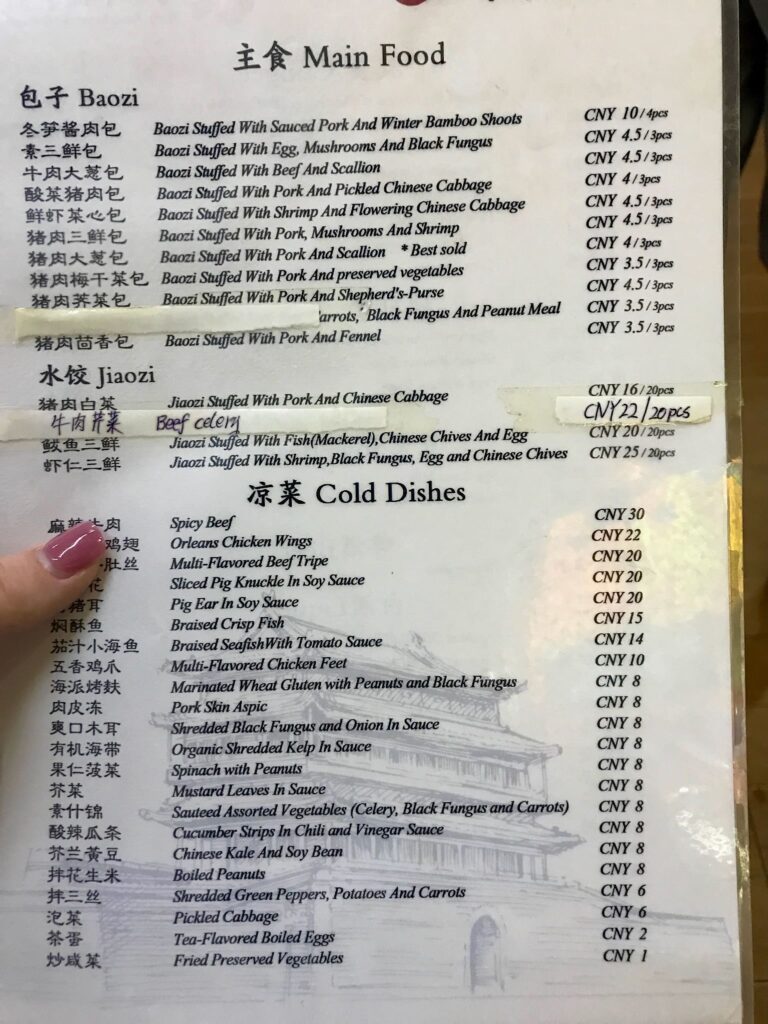
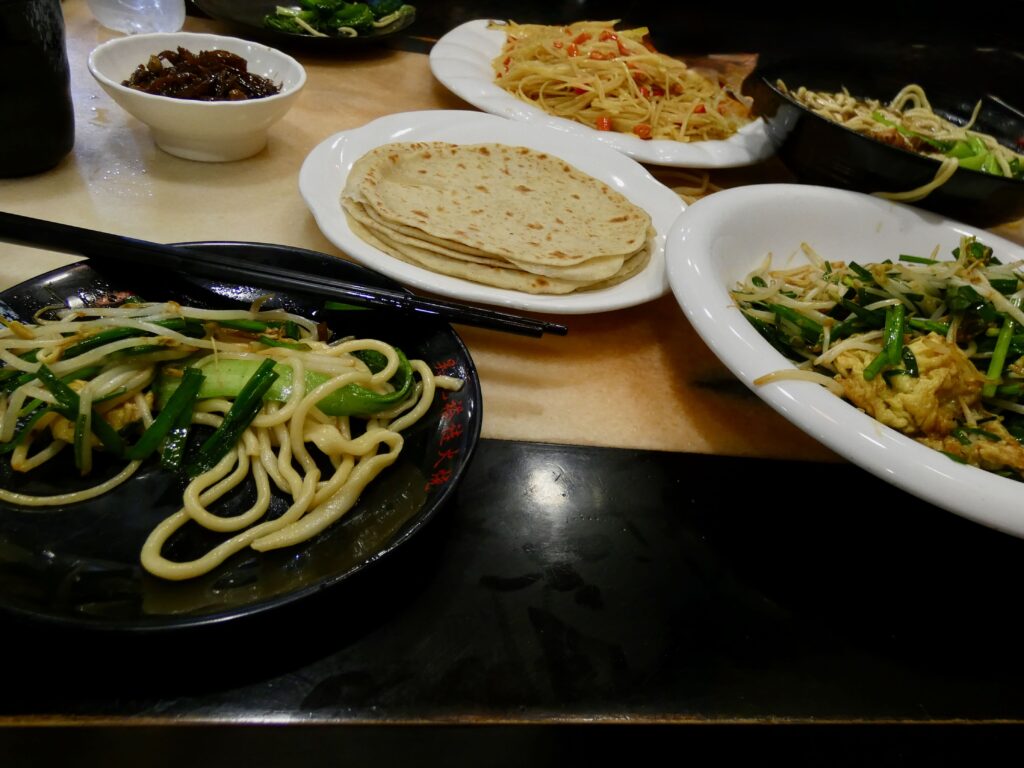
While in China, we ate a lot of noodles and dumplings.
Other Things to Do in Beijing
798 Art District
Temple of Heaven
Nanluoguxiang
The Summer Palace (Yiheyuan)
The Drum and Bell Towers
Accommodations
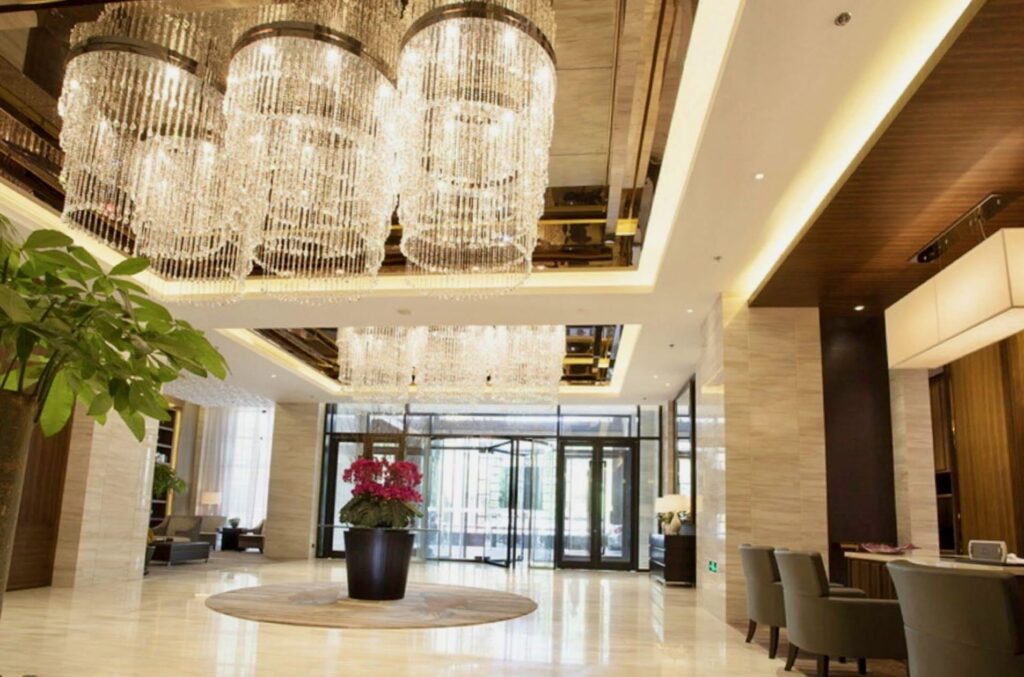
We stayed at the Lee Garden Service Apartment. Located in the heart of the Wangfujing Shopping District, the 5-star Lee Garden Service Apartment offers 200 luxury units. The property is strategically positioned within walking distance of iconic landmarks, including Tiananmen Square, the Forbidden City, and St. Joseph’s Cathedral.
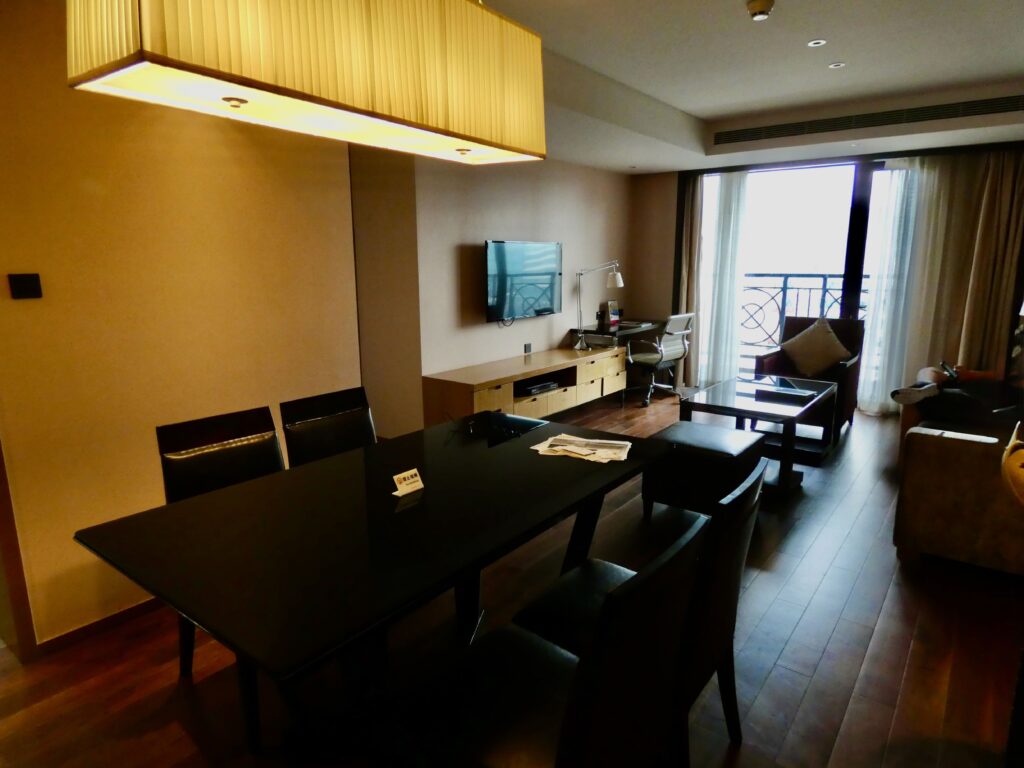
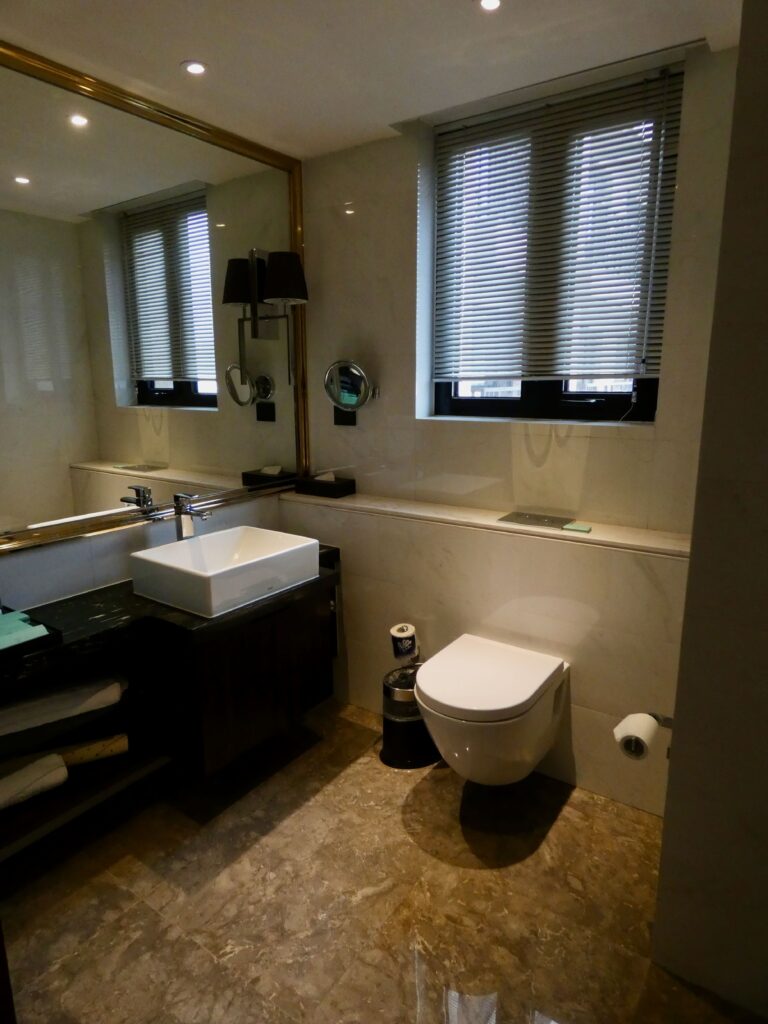
Our apartment featured a fully equipped kitchen, washer/dryer, and two generously sized bedrooms separated by a spacious living/dining room.
We were so busy exploring the city that we didn’t use the on-site amenities, but they included an indoor heated swimming pool, a state-of-the-art gymnasium, and a sauna.
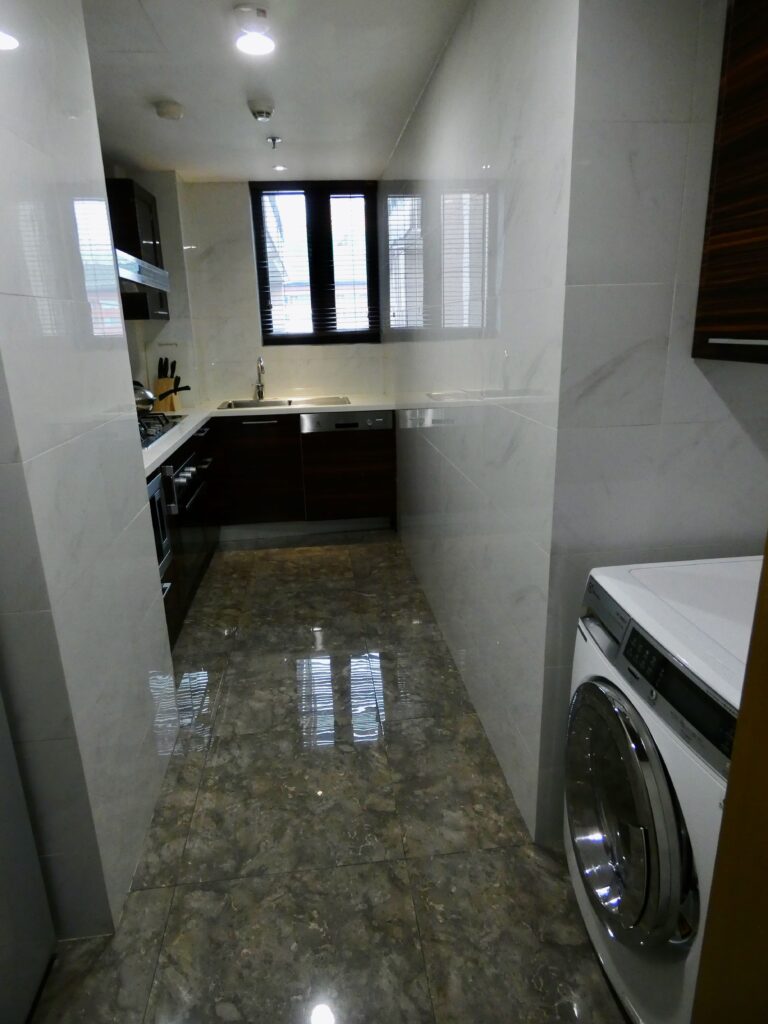
We all loved this hotel and would highly recommend it.
Getting There
Getting to Beijing is easy, as it is served by two world-class airports and an unparalleled high-speed rail network. Most international travelers arrive at Beijing Capital International Airport (PEK), the city’s primary gateway, or the Beijing Daxing International Airport (PKX), which features a terminal designed by Zaha Hadid. Both airports are connected to the city center via dedicated Airport Express subway lines, reaching downtown in 20 to 30 minutes.
Beijing is also the central terminal for China’s high-speed rail (HSR), with “G-series” bullet trains reaching speeds of 217 miles per hour, connecting the capital to Shanghai in just over four hours and Hong Kong in under nine.
Getting Around
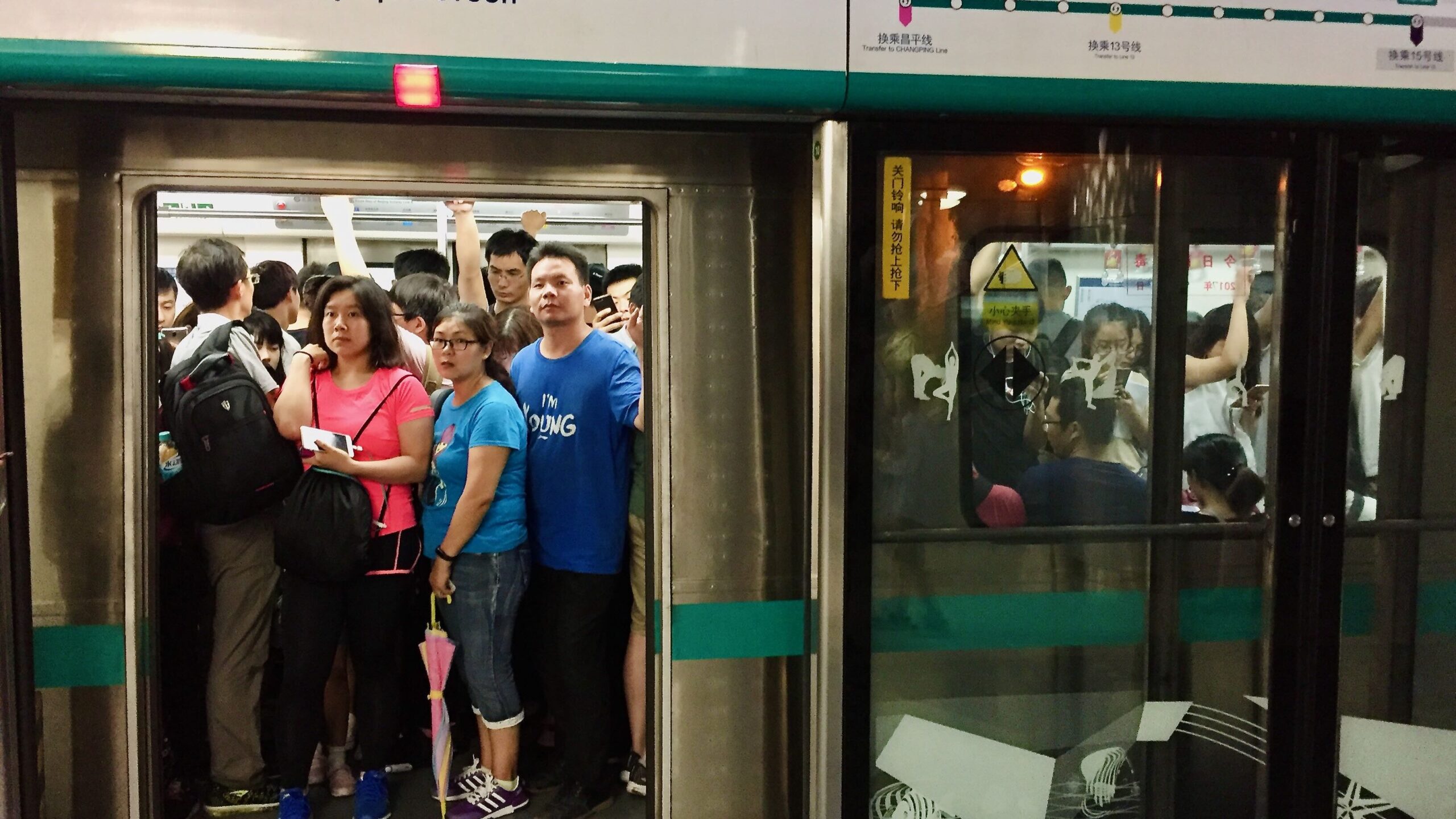
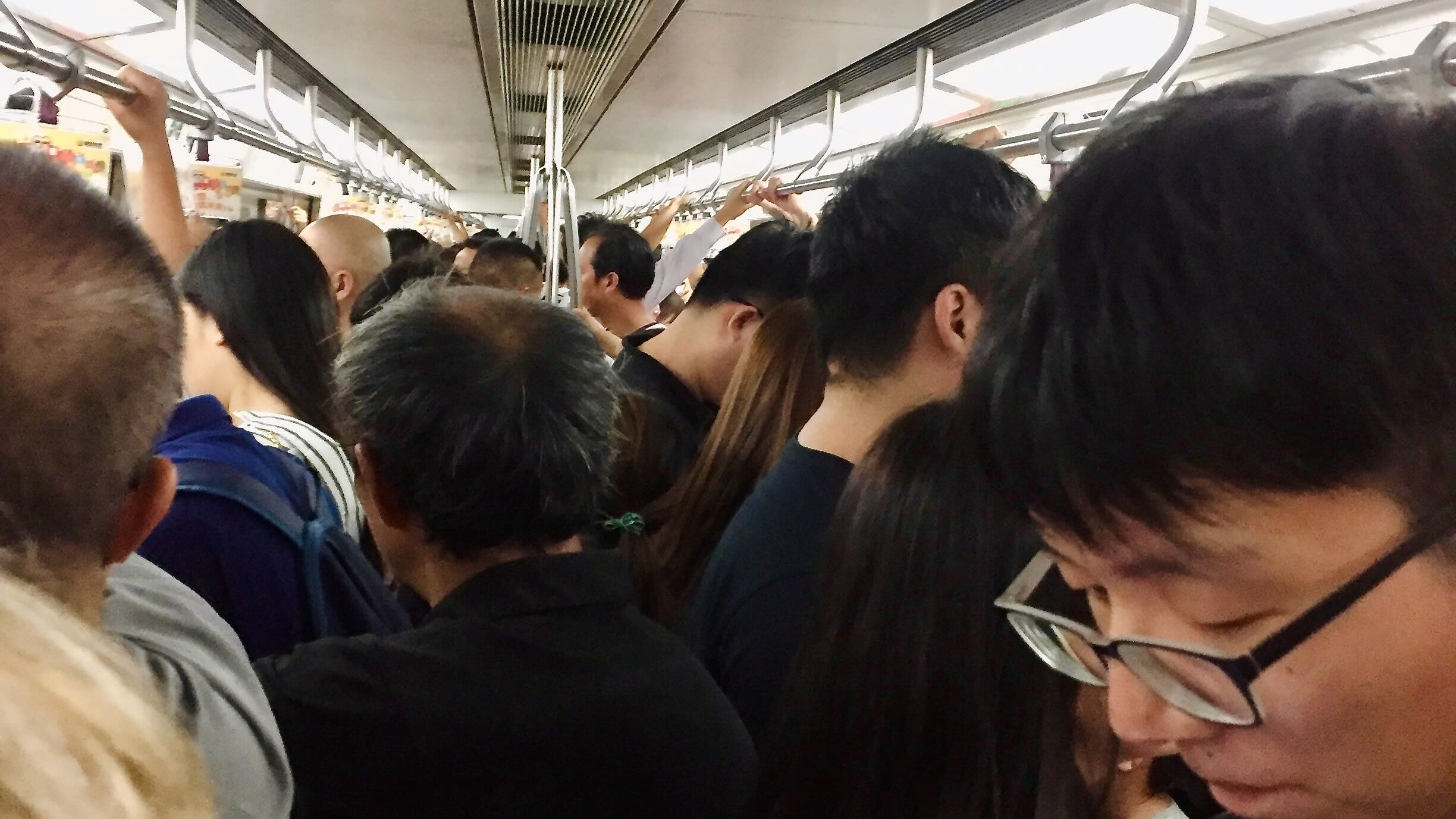
Beijing’s subway is the world’s most extensive urban rail network, with an operational track exceeding 560 miles. Since opening in 1971 as China’s first underground system, it has grown into a massive grid of 30 lines and more than 520 stations, facilitating more than 10 million trips daily.
Be prepared, though—it’s really crowded.
Outside of the subway, Beijing also has an app called Didi Chuxing, China’s equivalent to Uber. You can use the Didi mini-program within Alipay or WeChat, which features a built-in English interface and automatic translation for messaging drivers. Taxis are also plentiful and can be hailed on the street, though using a ride-hailing app provides a fixed price and avoids potential language barriers.
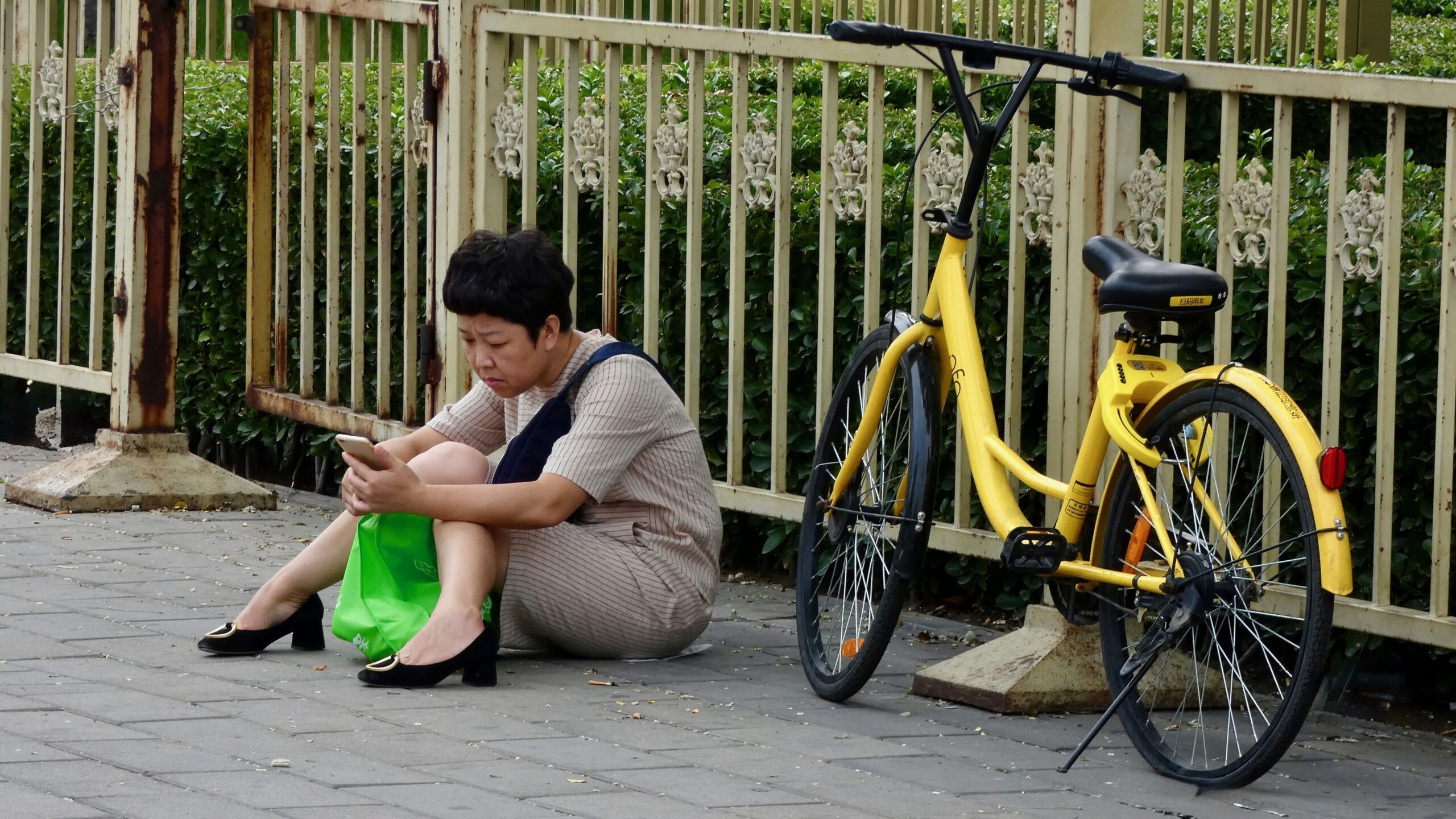
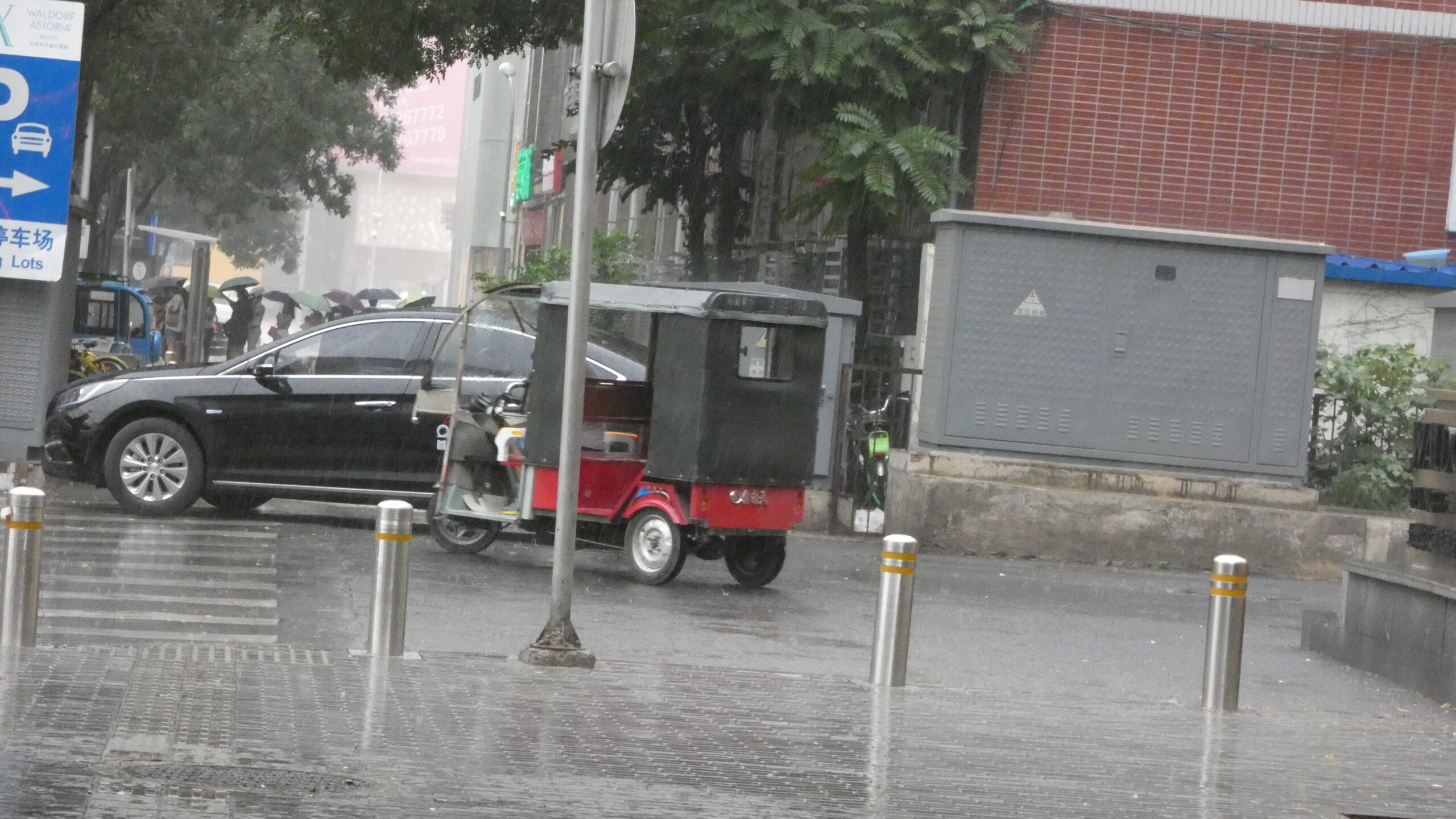
There are also public buses, shared bicycles, and various versions of motorized and human-powered rickshaws. We took a motorized rickshaw on a rainy day while navigating from the Forbidden City back to our hotel. It was fun.
Final Thoughts
Beijing is a city that refuses to be defined by a single era. This capital city has seamlessly integrated its 3,000-year legacy with a highly efficient, digital-first infrastructure. From the UNESCO-inscribed Central Axis to the neon-lit futuristic skyline of the CBD, the city’s magic lies in its constant reinvention. You can spend your morning touching the ancient stones of the Great Wall and your evening watching the sunset from a skyscraper bar, where you will see imperial structures juxtaposed against glass-and-steel giants.
From witnessing the gravity-defying feats at the Chaoyang Theatre, to taking in the meditative incense at the Lama Temple, to admiring the panoramic views from Jingshan Park, we felt enriched by this vibrant experience.
It left an indelible mark on us that will last for years to come.

Originally experienced in August 2017; content refreshed in March 2026.