

Comprising more than 60 islands, islets, and cays, the British Virgin Islands (the “BVIs”) is a volcanic archipelago in the Caribbean, long celebrated as the “sailing capital of the world.” Situated east of the US Virgin Islands and north of the Lesser Antilles, the BVI is defined by the Sir Francis Drake Channel, a deep-water seaway that provides some of the most protected and scenic cruising grounds on the planet.
From the bustling administrative hub of Road Town on Tortola to the remote, coral-fringed shores of Anegada, the territory offers a diverse landscape of emerald peaks and white-sand beaches.
We visited all the major inhabited islands—Tortola, Virgin Gorda, Jost Van Dyke, and Anegada—as well as some smaller ones.

The Path We Took Through the British Virgin Islands (BVIs)
1. Jost Van Dyke
Named after a 17th-century Dutch privateer, Jost Van Dyke is the smallest of the four main islands in the BVIs, covering approximately three square miles. This rugged, volcanic island is characterized by steep, lush hillsides, with its highest point, Majohnny Hill, reaching 1,053 feet. Despite its diminutive size and a permanent population of only around 300 residents, it is a premier destination for the cruising community, largely due to its world-famous beach bars and protected anchorages.
It was our first stop in the BVIs. We tried getting a mooring ball in Great Harbour, but no luck—it was packed. That would turn out to be a recurring theme of our entire stay in the BVIs.
The first thing we noticed was the clarity of the water. It was stunning.

We were happy to have finally arrived in the BVIs and couldn’t wait to start our adventures. We cleared in at the Great Harbour Customs and Immigration Office and then dinghied over to nearby White Bay, home of the iconic Soggy Dollar Bar. It was here in the 1970s that the painkiller cocktail was invented.
It’s basically a cruiser’s rite of passage to visit Soggy Dollar. We couldn’t resist!
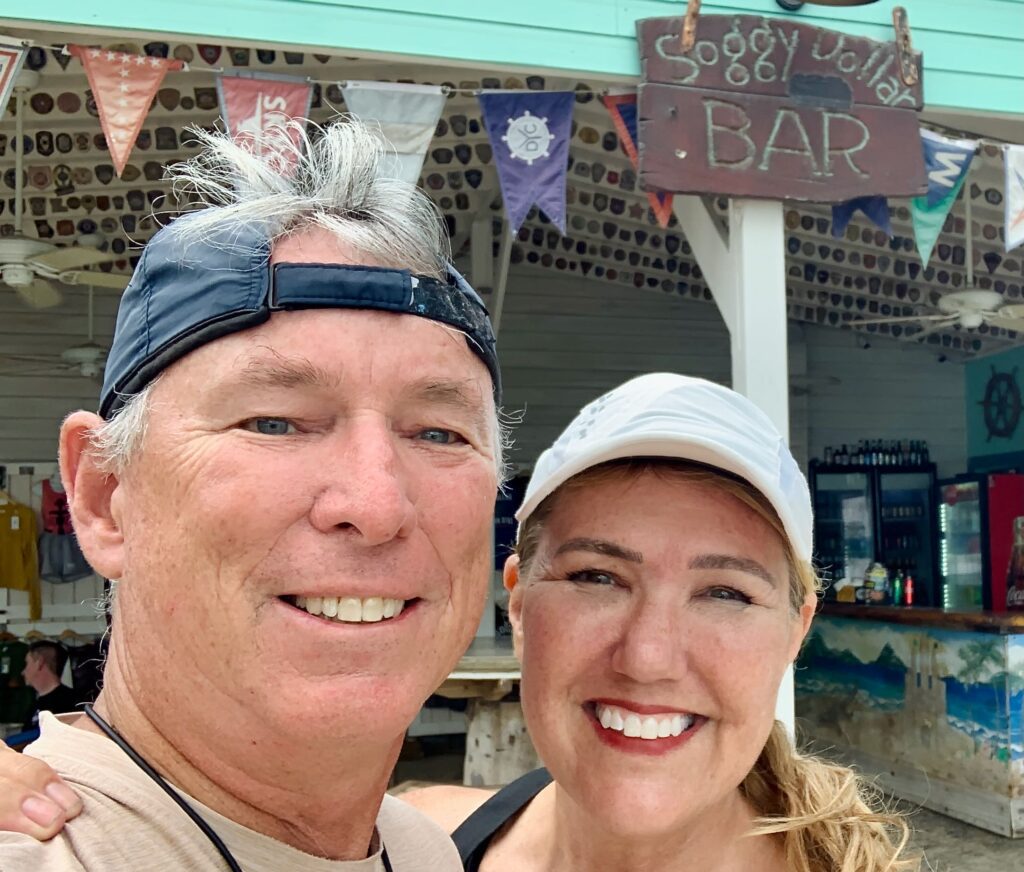
The bar’s name itself refers to the wet currency of sailors who traditionally swam ashore from their moored vessels. We hung out for a while, played some bar games, and walked around a bit.
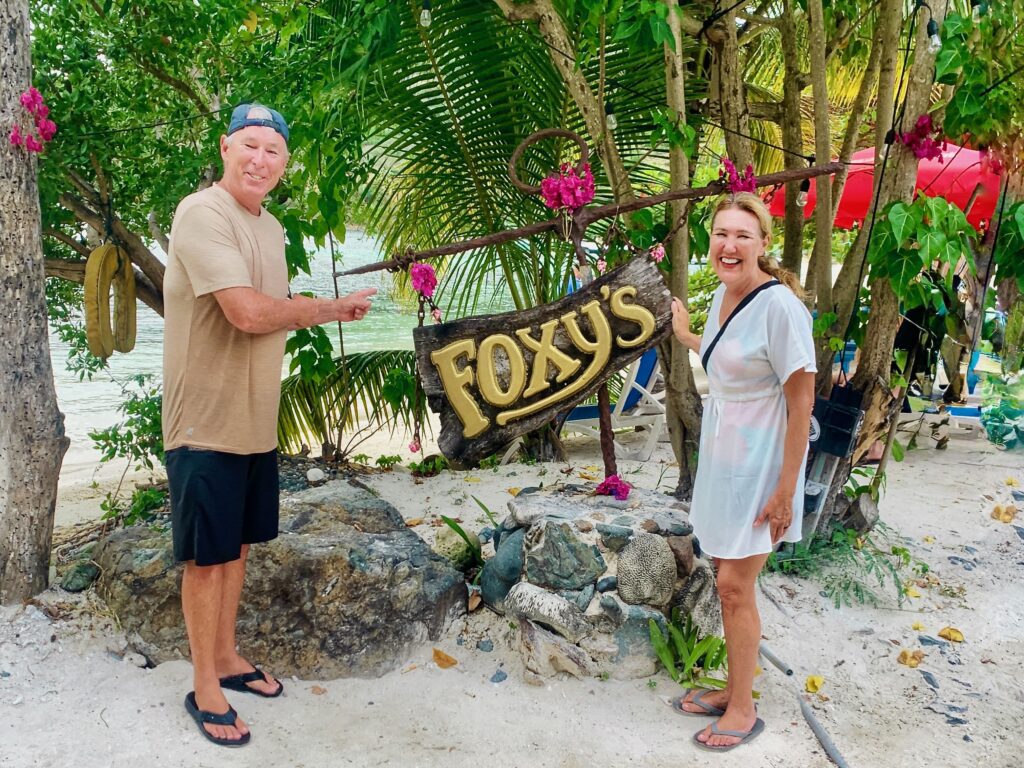
Our next stop was Foxy’s Tamarind Bar. A legendary Caribbean institution opened by Philiciano “Foxy” Callwood in 1968, it’s famous for its microbrewery, “Old Year’s Night” parties, and eclectic decor of hanging hats and business cards.
2. Tortola (Beef Island)
First thing the next morning, we woke up early to reserve a mooring ball, but none were available. We went ahead and sailed over to Tortola Island and moored in Trellis Bay.
Cruiser’s Tip: If you want to reserve a mooring ball in the BVIs, you must be online by at the latest 6:55 a.m. It’s important to scope out your desired boaty ball in advance so you can target it.
Every time, Roy and I both actually sat there, index fingers poised over our computer mice, like desperate concert-ticket-seekers fighting for tickets.
Five, 4, 3, 2, 1…Click, click, click, click, click—we furiously clicked on the ball(s) we wanted. Sometimes we actually even got one! On days like that were elated and actually even a bit pompous; it was like we had won the lottery.
By 7:03 a.m., they are literally all taken, every time.
So on this day, here we were in Tortola, with no mooring reservation. The good news is, we never had a problem getting a mooring ball in this particular mooring field. The reason is that it’s located at the base of an airport runway. This never bothered us even a bit, so we ended up back at this mooring field a few times.
Now, a quick digression: my heart hurts a little every time I see someone’s dreams destroyed. Every time we passed the former Last Resort Bar, in the Trellis Bay mooring field, I wondered what it must have been like during its heyday.
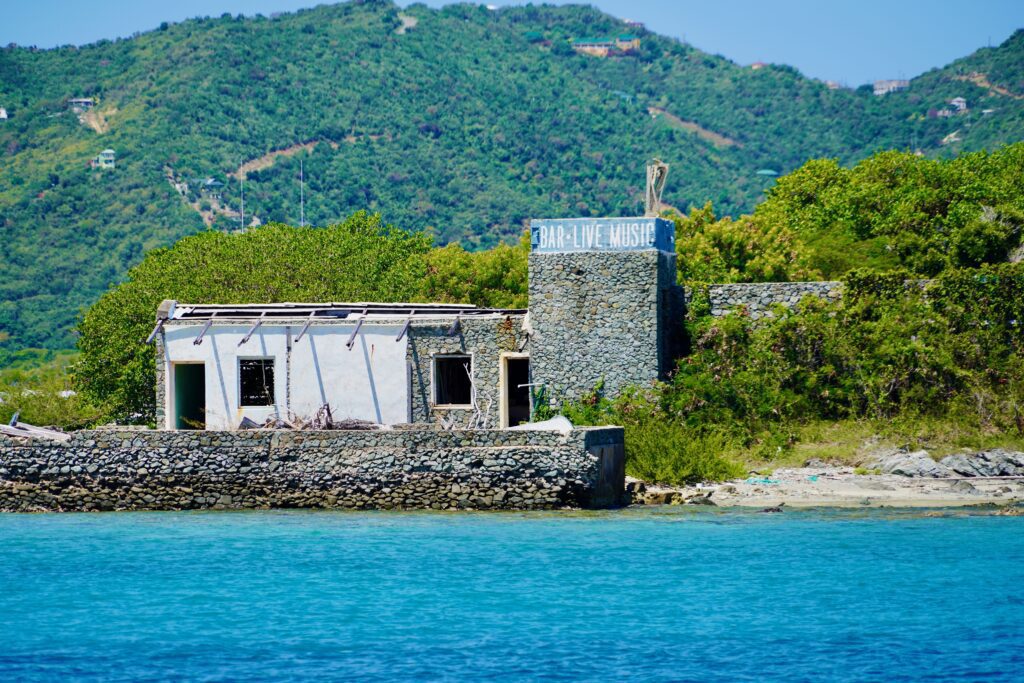
Owned by Tony and Jackie Snell, the Last Resort was a historic restaurant and bar known for its lively entertainment, including a singing chef. Located on a small private island, it was famous for its cabaret-style dinners. It was destroyed by Hurricane Irma in 2017 and has not been rebuilt. This was the second location they had opened after the first one had burned down. Now that’s some bad luck!
3. Norman Island
It was time to move on to Norman Island, and we couldn’t wait.
Widely believed to be the inspiration for Robert Louis Stevenson’s classic novel Treasure Island, Norman Island is a 600-acre uninhabited private island. Its history is steeped in maritime lore, including documented accounts of Spanish silver buried on its shores in the mid-18th century. Today, it serves as a premier destination for cruisers, known for its deep, protected anchorage at The Bight.
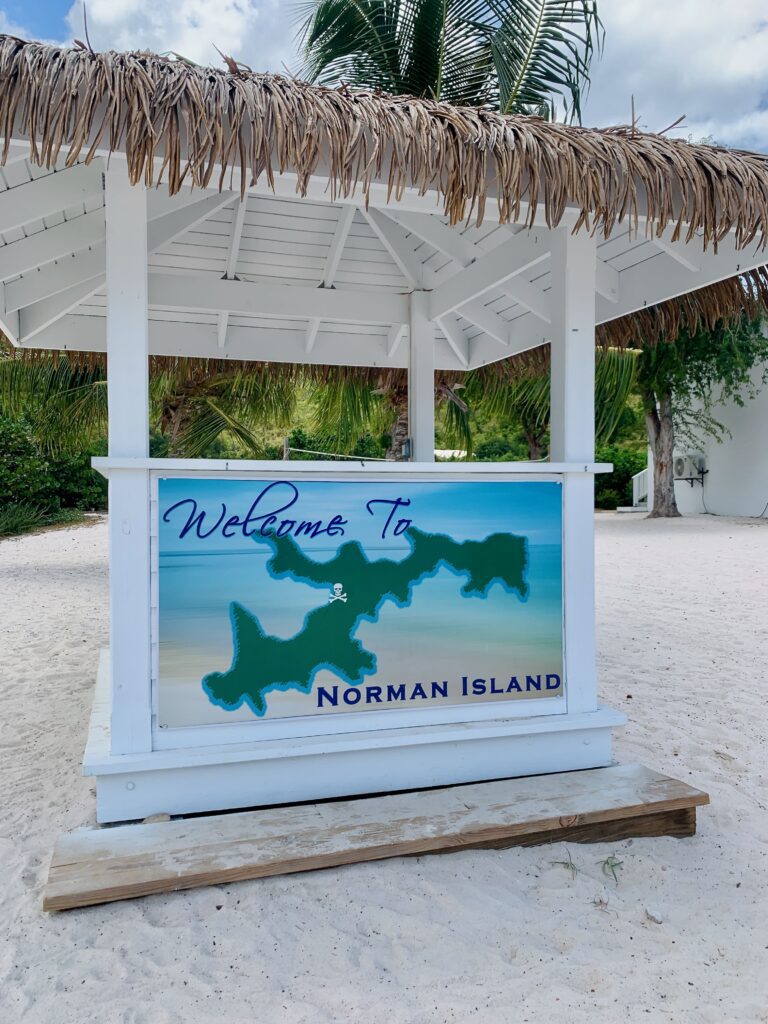
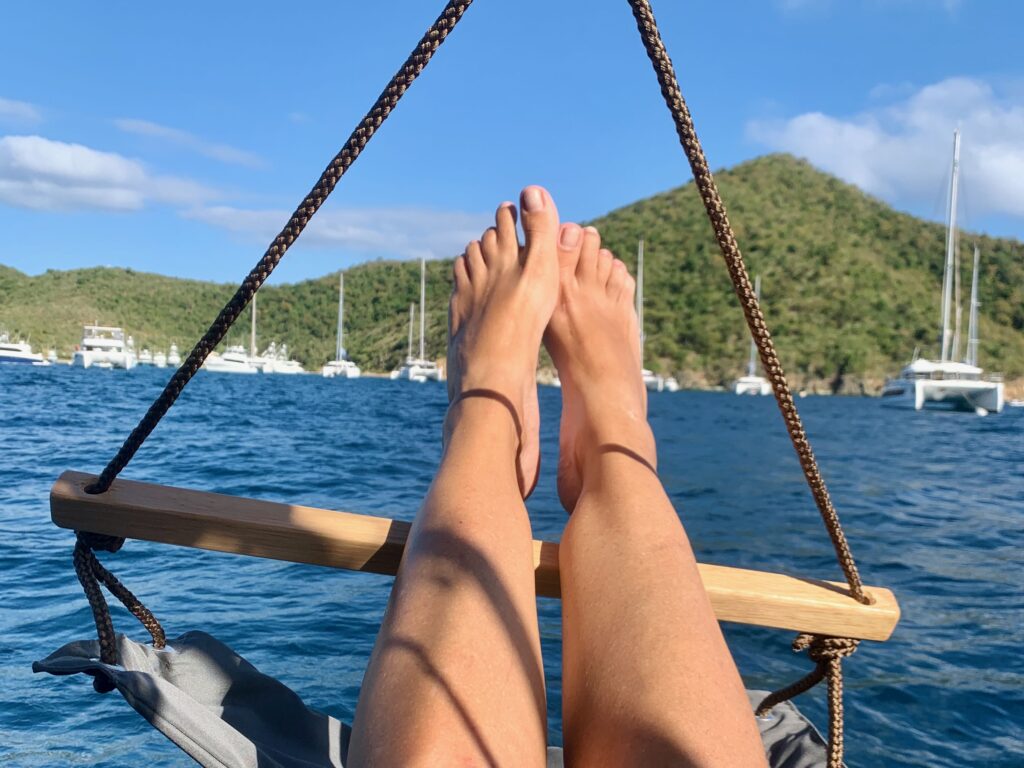
First, we relaxed and enjoyed the beautiful surroundings.
Next, we simply had to hike to the top of Spyglass Hill.

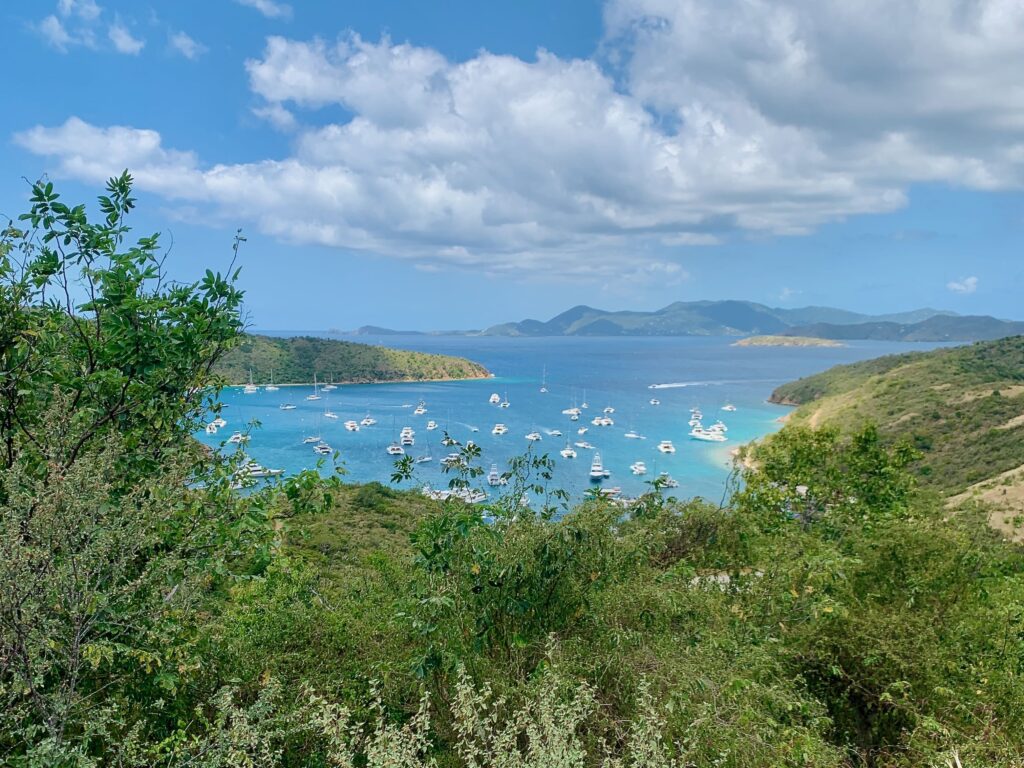
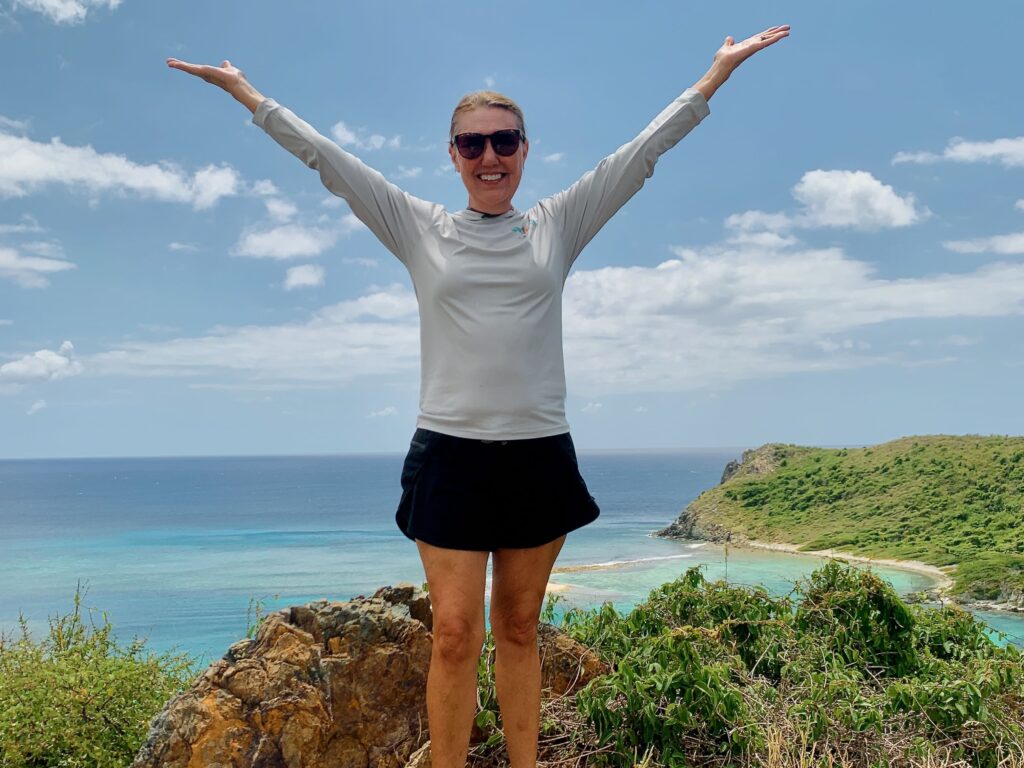
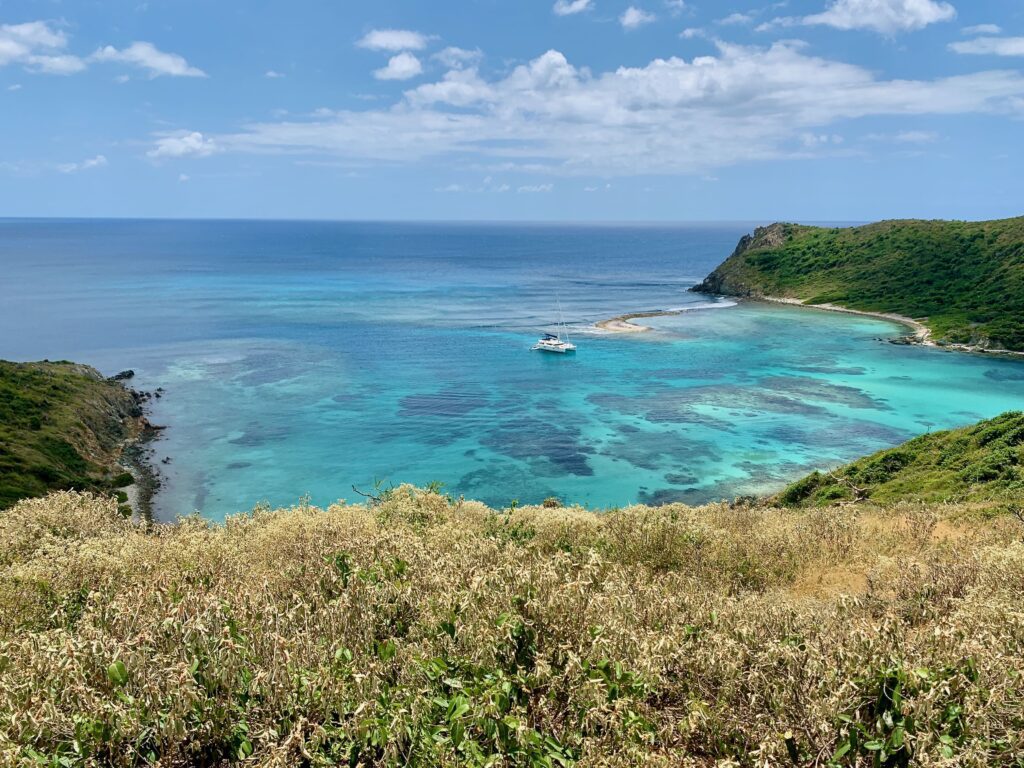
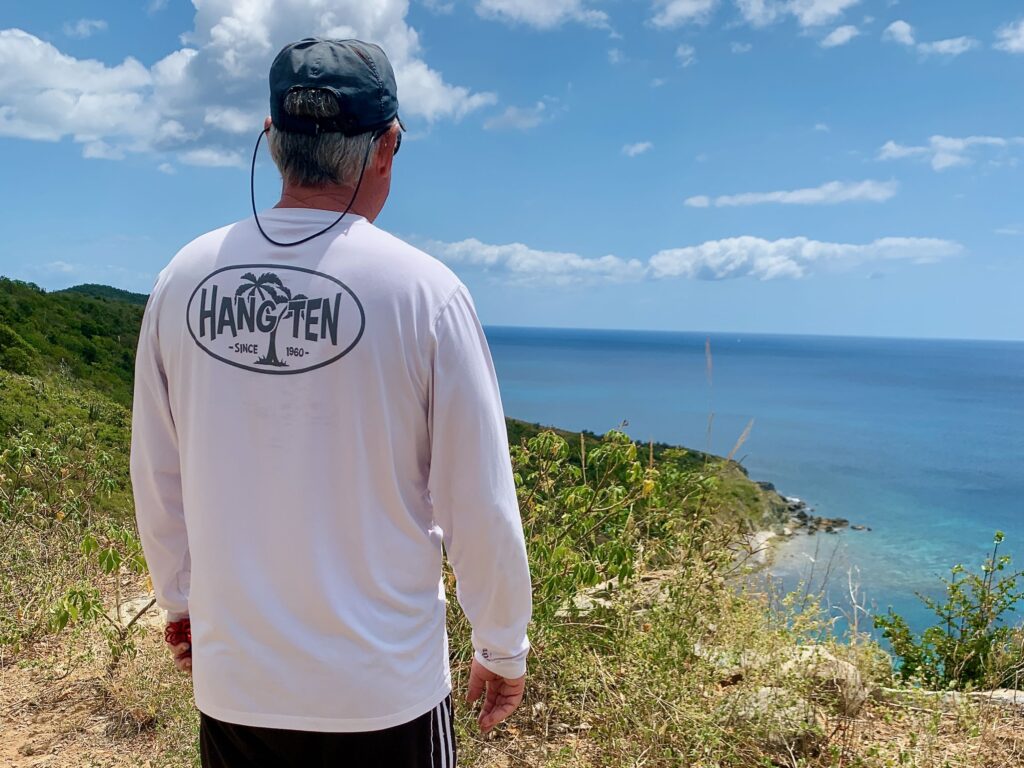
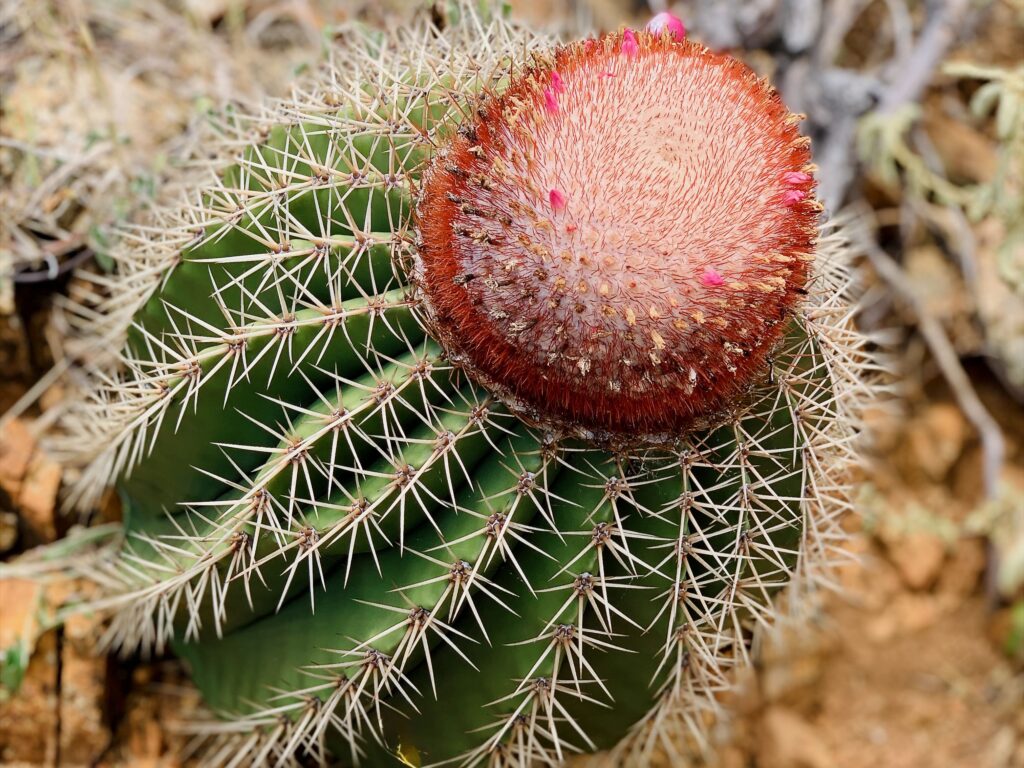
It was breathtaking. Turquoise, crystal-clear water juxtaposed against the beautiful native succulents: perfection.
Social life on the island revolves around two iconic establishments: Pirates Bight, an upscale beachfront restaurant and bar, and the Willy T, a world-famous floating restaurant and bar fashioned from a converted merchant ship. Moored in the bay, the Willy T is famous for its lively atmosphere and traditional “jump” off the top deck into the turquoise waters below. We ate dinner at the latter.
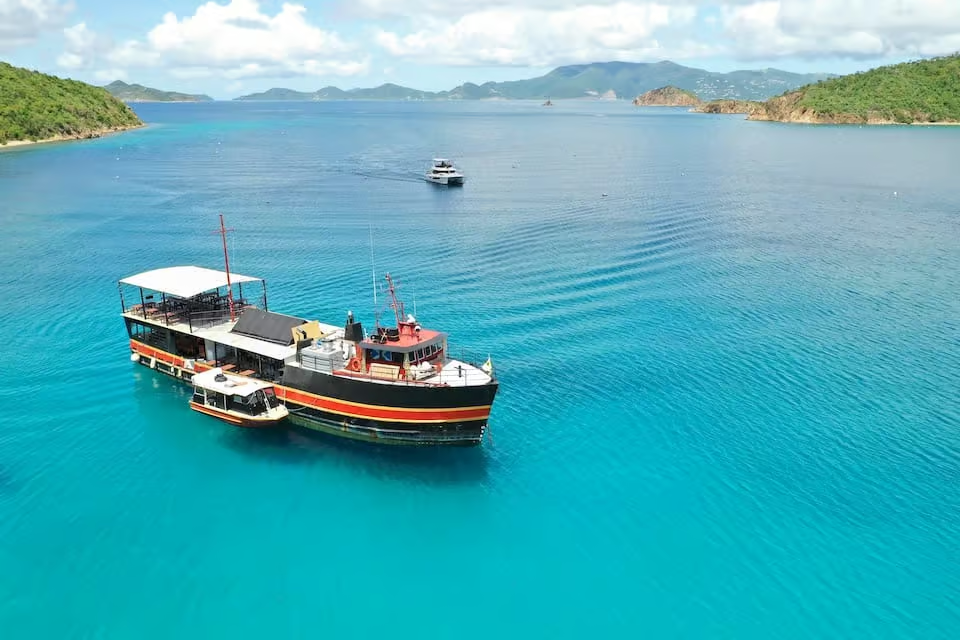

We didn’t do it, but we watched others take the plunge.
In retrospect, I think this was my favorite island in the BVIs, mostly because of the hiking opportunities.
4. Pelican Island
Located west of Pelican Island, The Indians is widely considered one of the most iconic snorkeling and diving destinations in the Caribbean. This uninhabited archipelago consists of four dramatic rocky pinnacles that rise roughly 50 feet above the sea, so named because their silhouette from a distance resembles a traditional Native American headdress.
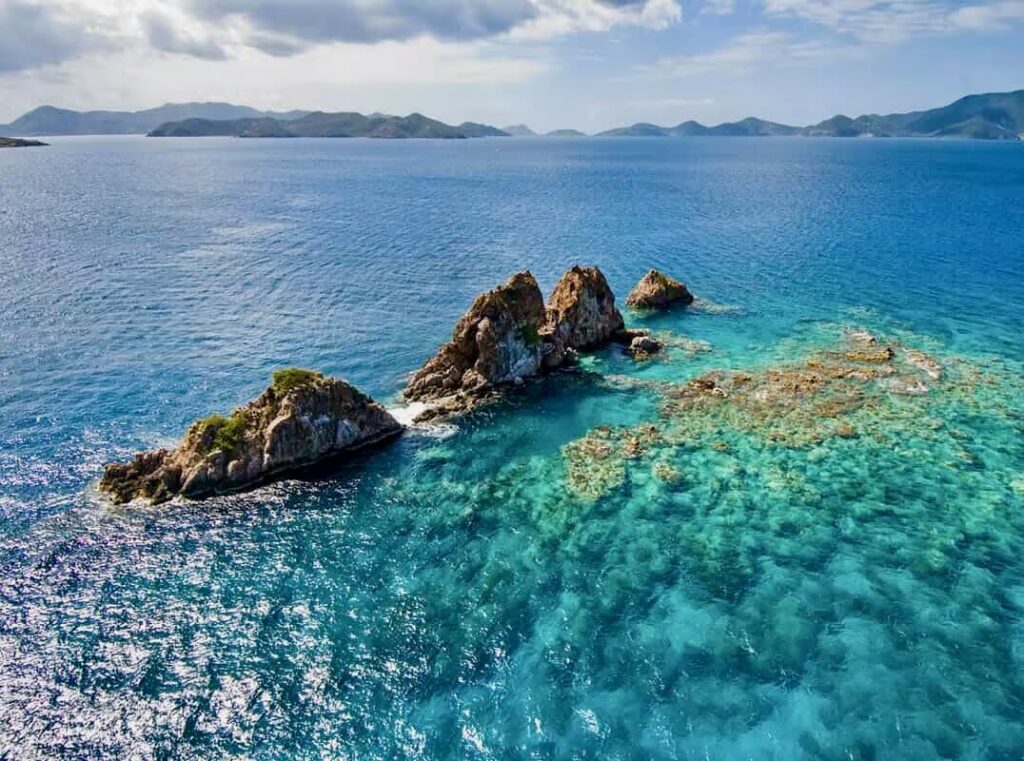
The site is part of the BVI National Parks Trust, which maintains day-use mooring balls to protect the delicate seafloor from anchor damage. We took our dinghy there from Norman Island and tied up.

Under the surface, the site offers a diverse topography, with depths ranging from a shallow 10-foot reef on the eastern side near Pelican Island to a steep 50-foot wall on the western side.


We saw vibrant coral gardens teeming with purple sea fans, elkhorn, and brain corals.
We recommend you go there early in the morning for optimal privacy and visibility.
5. Salt Island
Now, a tragic story.
RMS Rhone was a British Royal Mail Ship that carried mail, passengers, horses, and cargo on scheduled routes. On October 29, 1867, the Rhone and RMS Conway were both refueling on Peter Island when the barometric pressure began to drop. This early warning of an approaching storm did not overly concern the two captains, but they decided that the best course of action would be to make a break for a more sheltered harbor and to transfer all of Conway’s passengers to Rhone.

Following common maritime practice of the time, passengers aboard the Rhone were tied to their bunks to keep them secure should waves toss the ship about.

The ship ran at full steam to make its escape, but due to a fouled anchor, the hull was breached, cool sea water met the superheated boilers, and the resulting explosion tore the ship in half. Rhone sank almost immediately, its passengers still secured to their bunks.
Rhone was initially carrying 146 passengers, but without knowing how many people were transferred from Conway, it is impossible to know exactly how many perished. Only 23 people survived, all of them crew members. Some of them were found clinging to the topmast, which did not sink below the surface.
We snorkeled the site.


We saw colorful schools of fish near the site.


6. Marina Cay
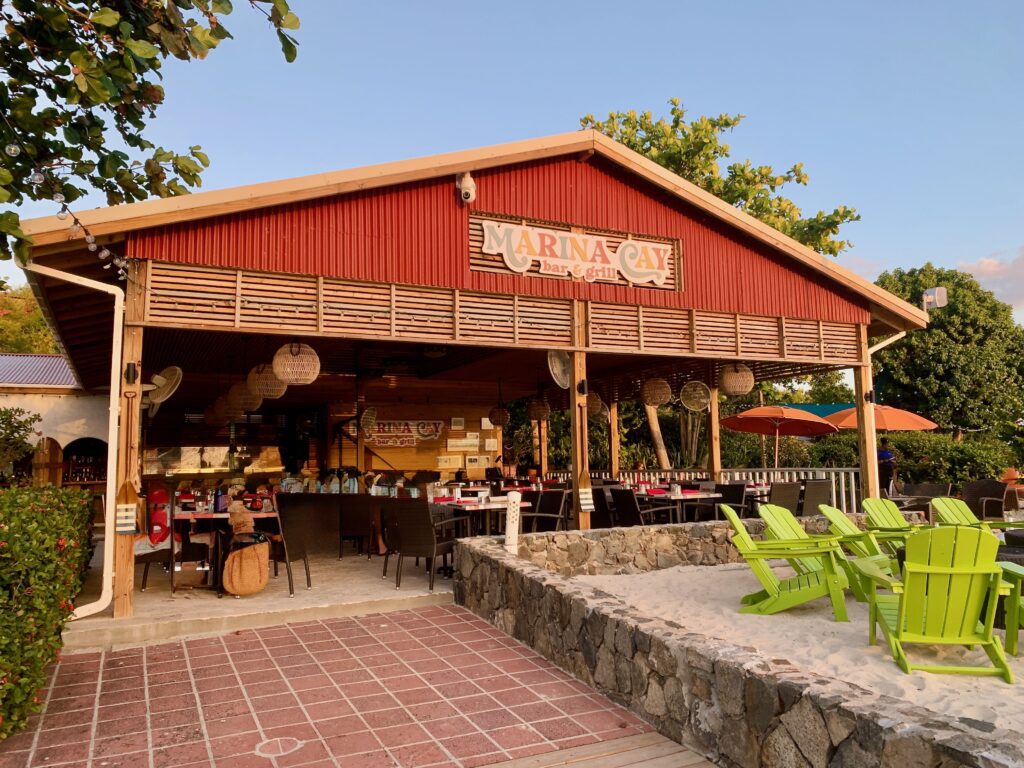
We had reserved a mooring ball at Marina Cay, so we hurried over there and tied up just in time for dinner. We enjoyed a nice meal at the restaurant, with a table right on the water. I had a grilled vegetable pita, and Roy opted for a hamburger. It was lovely.
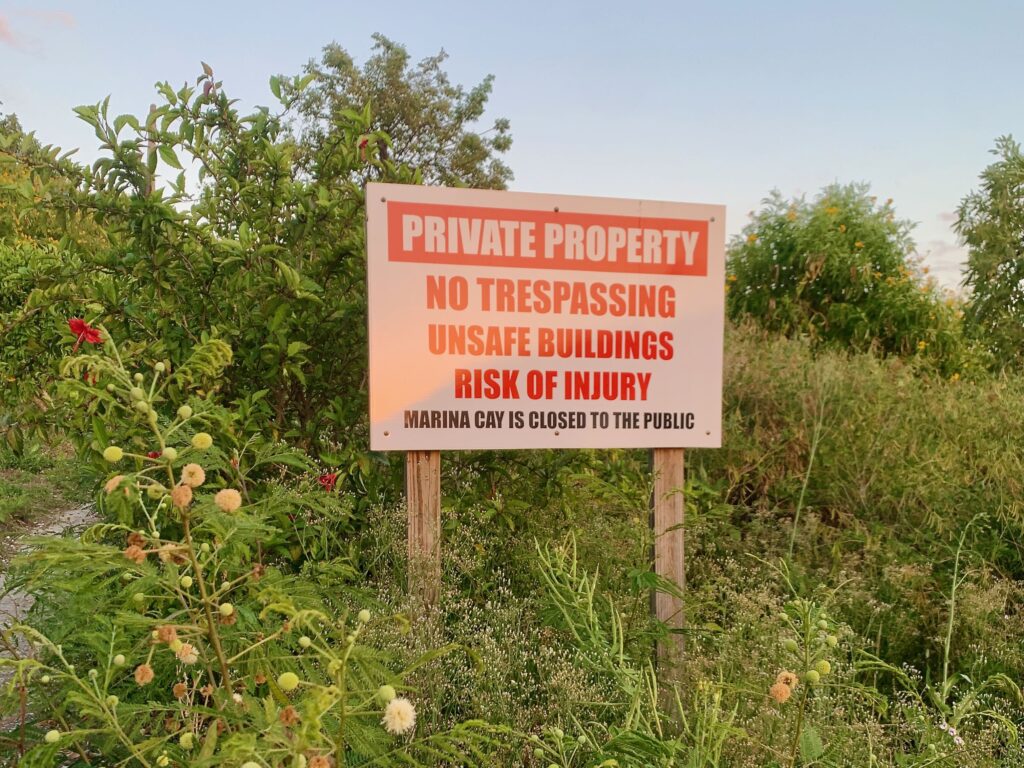
After dinner, we tried to walk around the island, but we came to a sign that said we would not be allowed to.
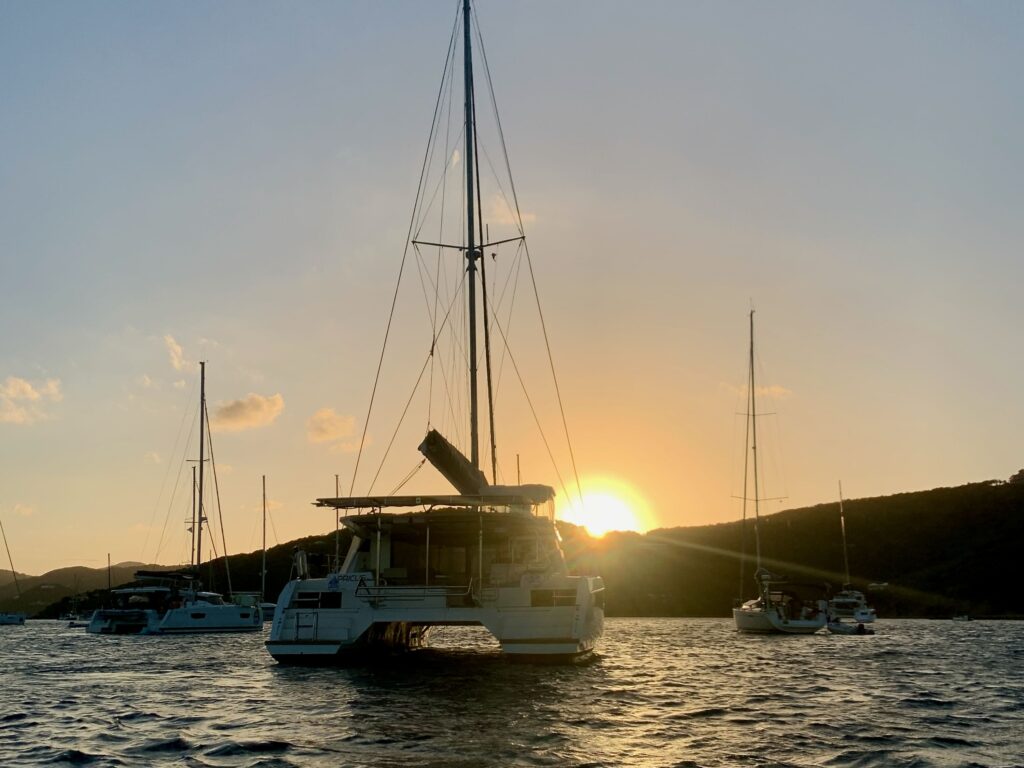
No problem—we returned to our boat, settled in for a relaxing evening, and enjoyed the sunset.
7. Tortola (Beef Island), Part II
The next morning (or sometime in the middle of the night), Roy began having hamburger regret. He had food poisoning, and it was not pretty.
Eventually, it was nearing noon, and we had to vacate our mooring ball. The problem? Roy was in no condition to drive the boat.
I yelled a play-by-play from the deck while Roy heaved down below.
“Ooh, ooh! A white ball is opening up!” I shouted. “I see them getting ready to go!” I watched in delight as a crew member strolled up to the bow, boat hook in hand.
Yes! A tell-tale sign.
But from down below: silence. As I watched helplessly, the boat did indeed leave, but as they slid away from the mooring ball, another one was right behind them, rushing into the spot.
A few minutes later, Roy felt well enough to motor us over to our favorite mooring field, which we knew would take us. So back to Trellis Bay we went. Within a day or so, Roy was back to his normal self.
During this visit to Tortola, we decided to walk to the airport and rent a car. It was time to explore the island!
Driving in Tortola
At this point, I must mention that driving in Tortola is not for the faint of heart. The roads are pitted; there are unmarked speed bumps and sections without guardrails; the switchbacks are tight and steep; and don’t forget—they drive on the left side of the road.
It was definitely a white-knuckle ride. To this day, whenever we encounter a tricky driving situation, Roy and I laugh and remember Tortola.
We are glad we had the car, though, because it enabled us to drive the entire island. The views from the top were breathtaking.
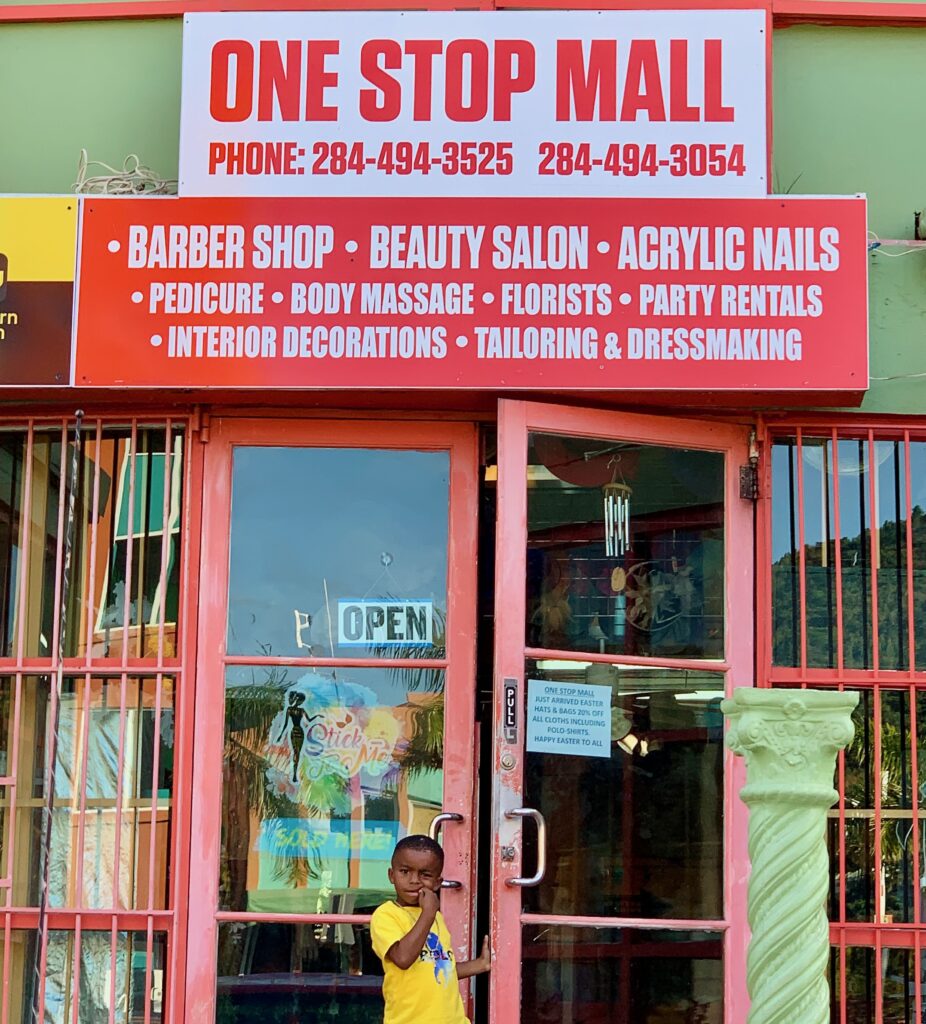
We also spent some time wandering along Main Street. This mall looked pretty handy:
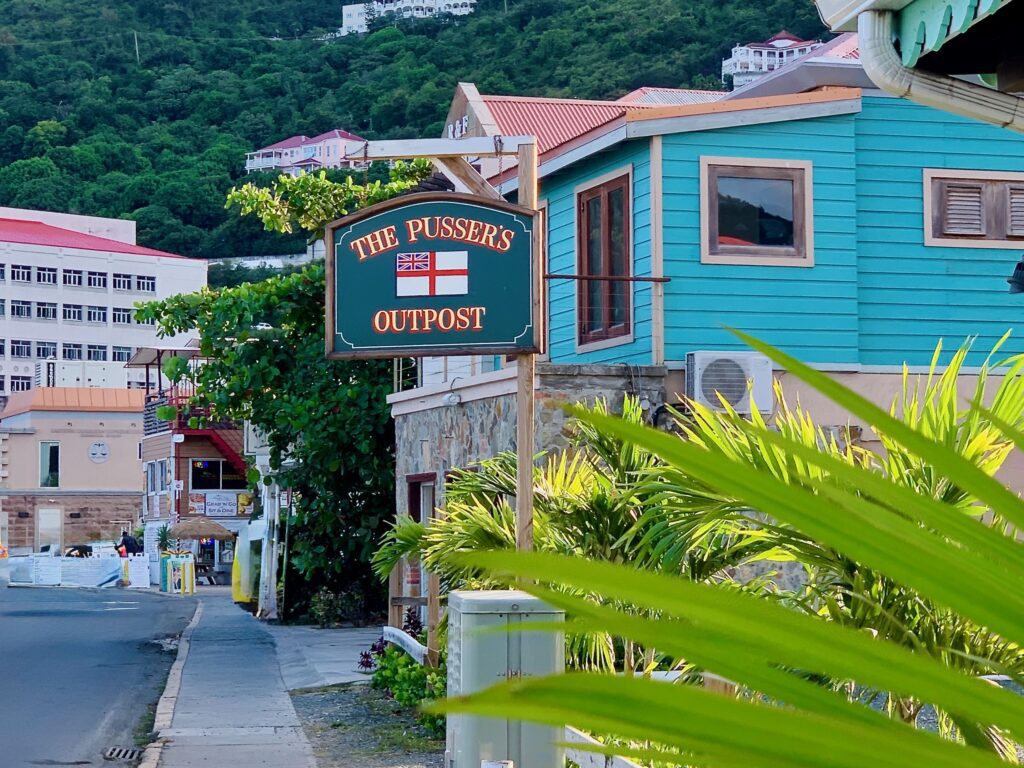
We, of course, also had to try a painkiller at Pusser’s, another famous cruiser destination. This simple little pub has an interesting history.

For more than 300 years, the British Royal Navy issued a daily “tot” of rum to its sailors. This specific blend was managed by the Purser (corrupted by sailors to “Pusser”). In 1970, the Admiralty ended this tradition, an event known as “Black Tot Day.”
The Pusser’s brand as it exists today was founded by Charles Tobias, a sailor and entrepreneur, in 1979. He sought permission from the Royal Navy to commercialize the Admiralty’s secret rum recipe. In exchange for the recipe, Tobias agreed to pay a royalty to the Royal Navy Sailors’ Fund.
Tobias established the company’s headquarters on Tortola in the late 1970s, choosing Road Town as the base for what would become a global brand. The flagship location in Road Town became a cultural landmark for the BVIs.
One night after dinner at Trellis Bay, we wandered over to this art studio nearby. It’s named after Aragorn Dick-Read, its owner and resident artist. He’s also an organic farmer.
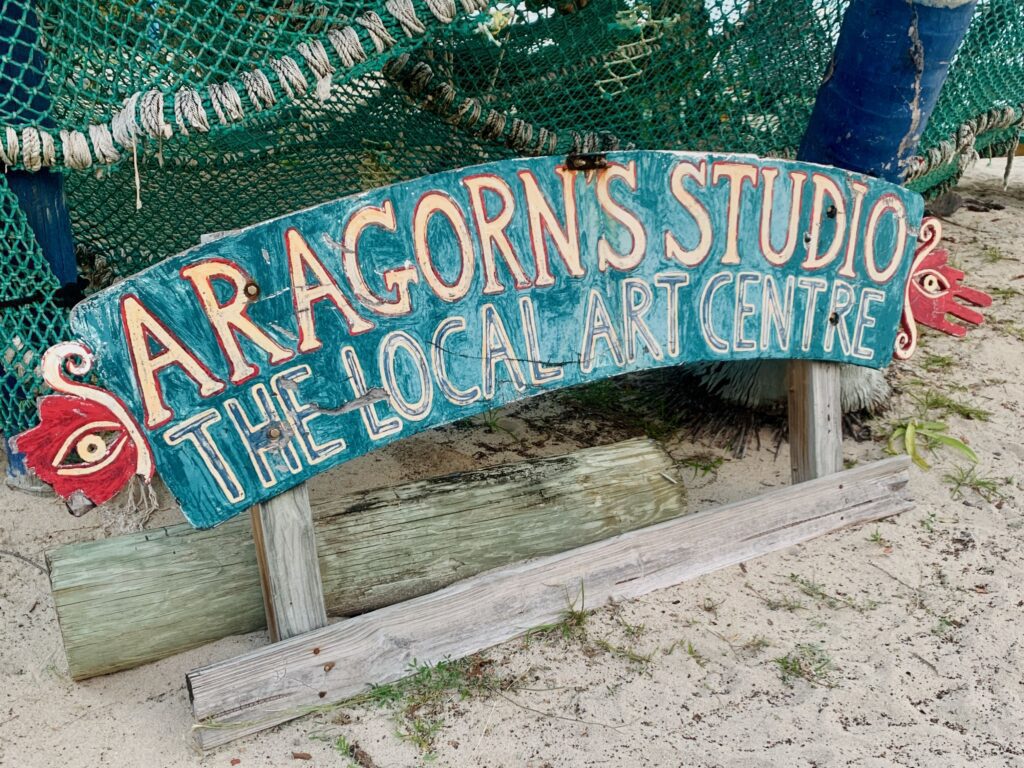
It was brilliant.

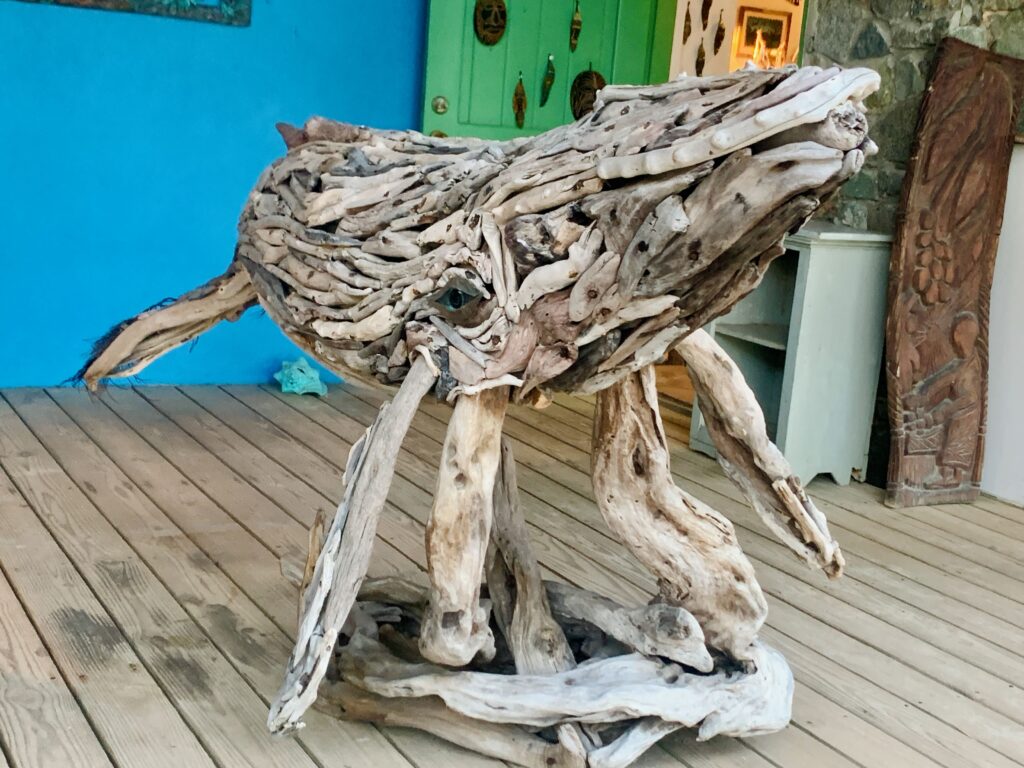
If you’re in Tortola, I recommend visiting his studio.
8. Virgin Gorda
Eventually, it was time to move on; we were off to Virgin Gorda.
First, a bit about the island. Known as the “Picturesque Island,” Virgin Gorda is the third-largest and second-most populous island in the BVIs, covering approximately 8.5 square miles.
Its History
Christopher Columbus is said to have named it Virgen Gorda (Fat Virgin) in 1493 because its profile on the horizon resembles a reclining woman. Geographically, the island is split into two distinct regions: a flat, boulder-strewn southwest peninsula and a rugged, mountainous northern end that rises to 1,359 feet at Gorda Peak.
Historically, the island served as a strategic naval base for figures like Sir Francis Drake and was a hub for copper mining in the mid-19th century; the ruins of the Copper Mine remain a protected national park on the southeastern cliffs.
Current-Day Virgin Gorda
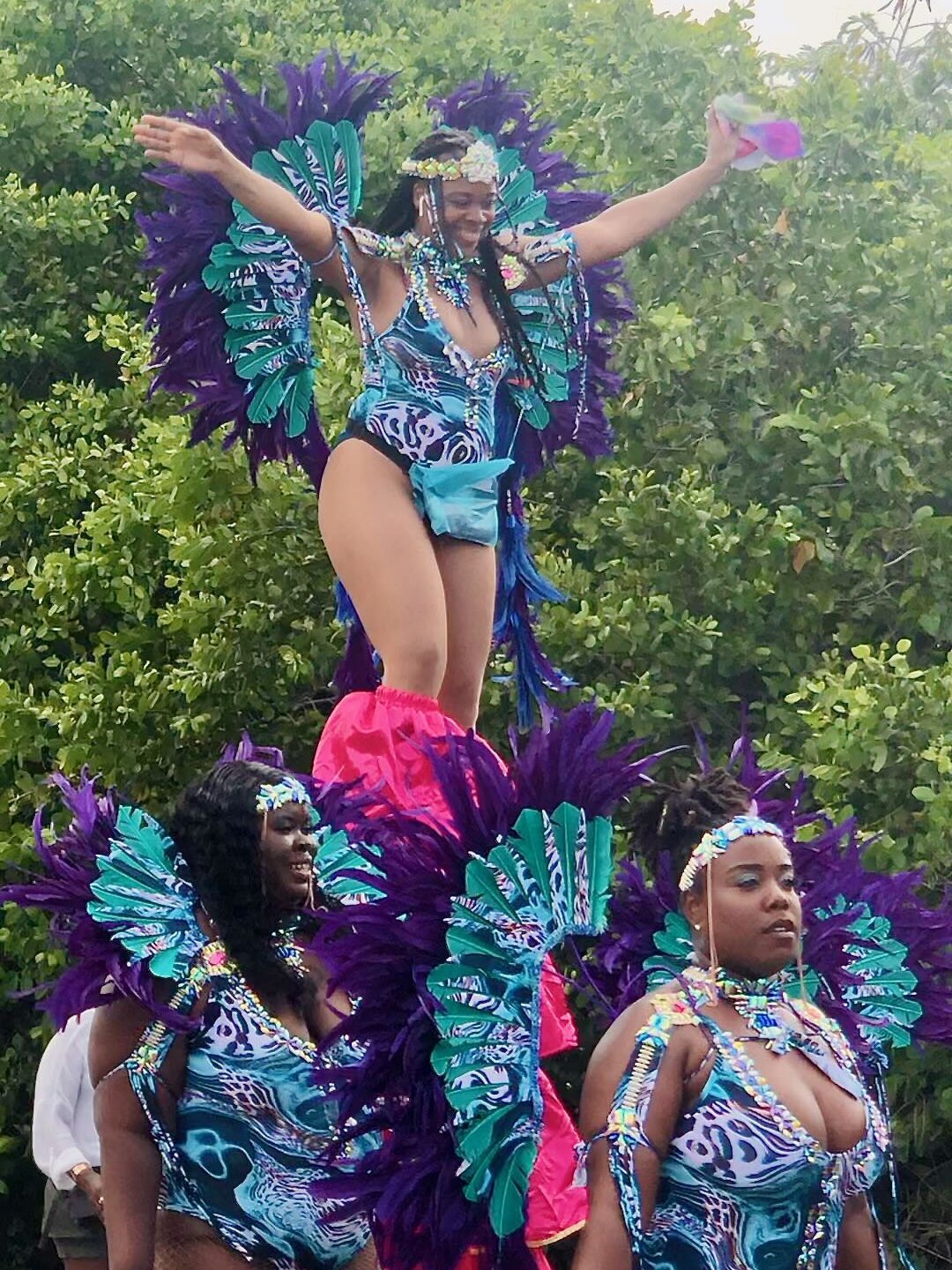
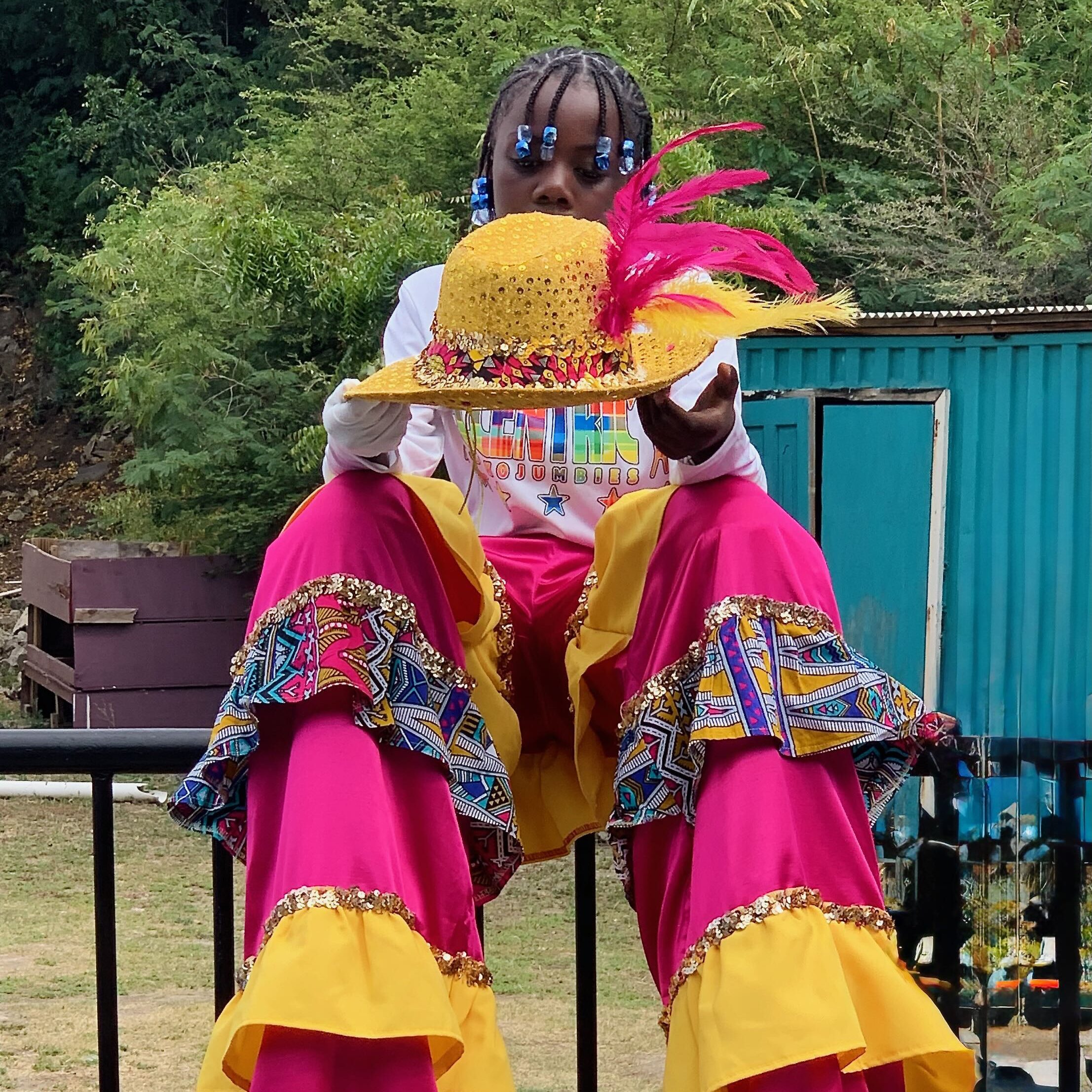
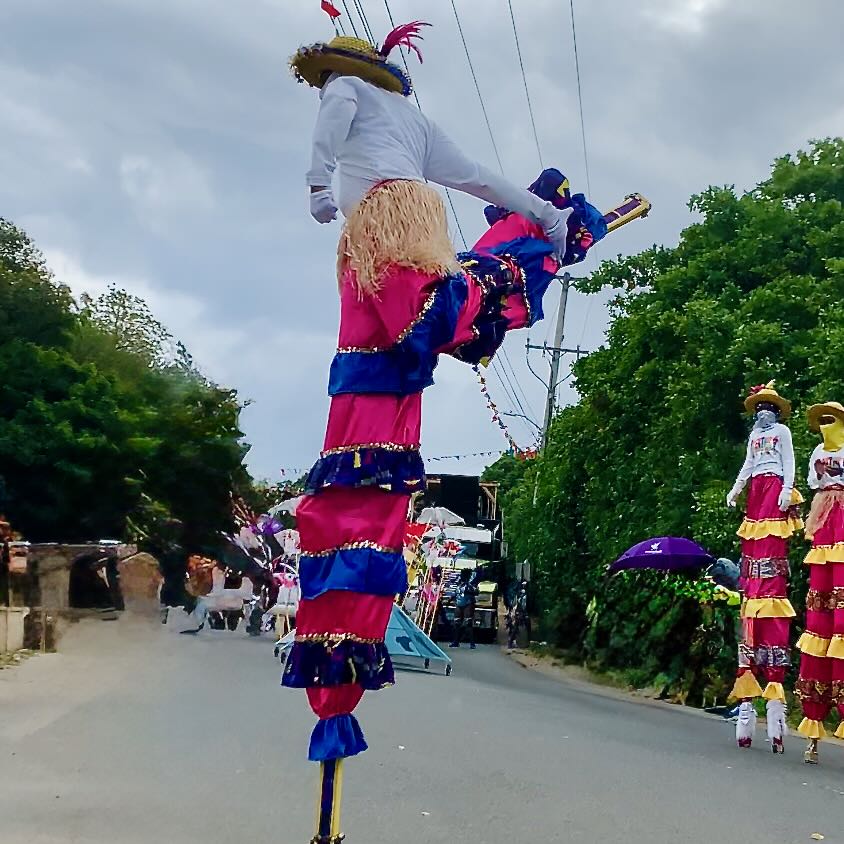
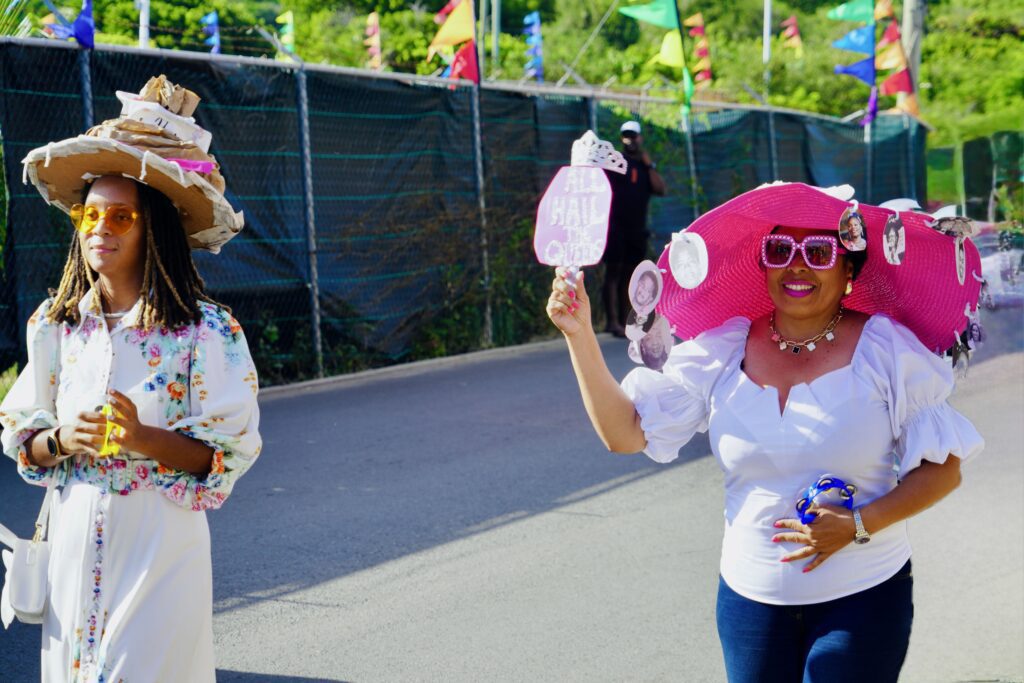
Today, Virgin Gorda is a premier luxury destination, centered around the yachting hub of Spanish Town (The Valley) and the world-renowned anchorages of North Sound. It hosts major annual events like the Taste of Virgin Gorda (held at the Nail Bay ruins) and the Easter Festival, balancing high-end tourism with a deep-seated commitment to preserving its tropical dry forest ecosystems. We were there around the time of Easter, so we were in luck: we got to witness the famous Easter festival.
After anchoring at Spanish Town Reef, we made landfall to enjoy the colorful parade.
9. Anegada
We arrived in Anegada after dark, but we didn’t worry too much because we had managed to reserve a mooring ball. As we pulled into the mooring field, we saw that another boat was tied up to our ball. By this time, it was really dark, and the mooring field was packed, making it really tricky to transit between the moored boats. Luckily, we found another ball, and it all worked out.
Now, a bit about Anegada. Unlike the rest of the mountainous, volcanic islands in the BVIs, Anegada is a low-lying coral and limestone atoll located approximately 15 miles north of Virgin Gorda. Its highest point rises only 28 feet above sea level, earning it the name “Drowned Land” from early Spanish explorers. The island is surrounded by the Horseshoe Reef, which, at 18 miles long, is the largest barrier coral reef in the Caribbean and the fourth-largest in the world. This treacherous reef has caused over 300 shipwrecks, making it a legendary site for wreck diving and maritime history.
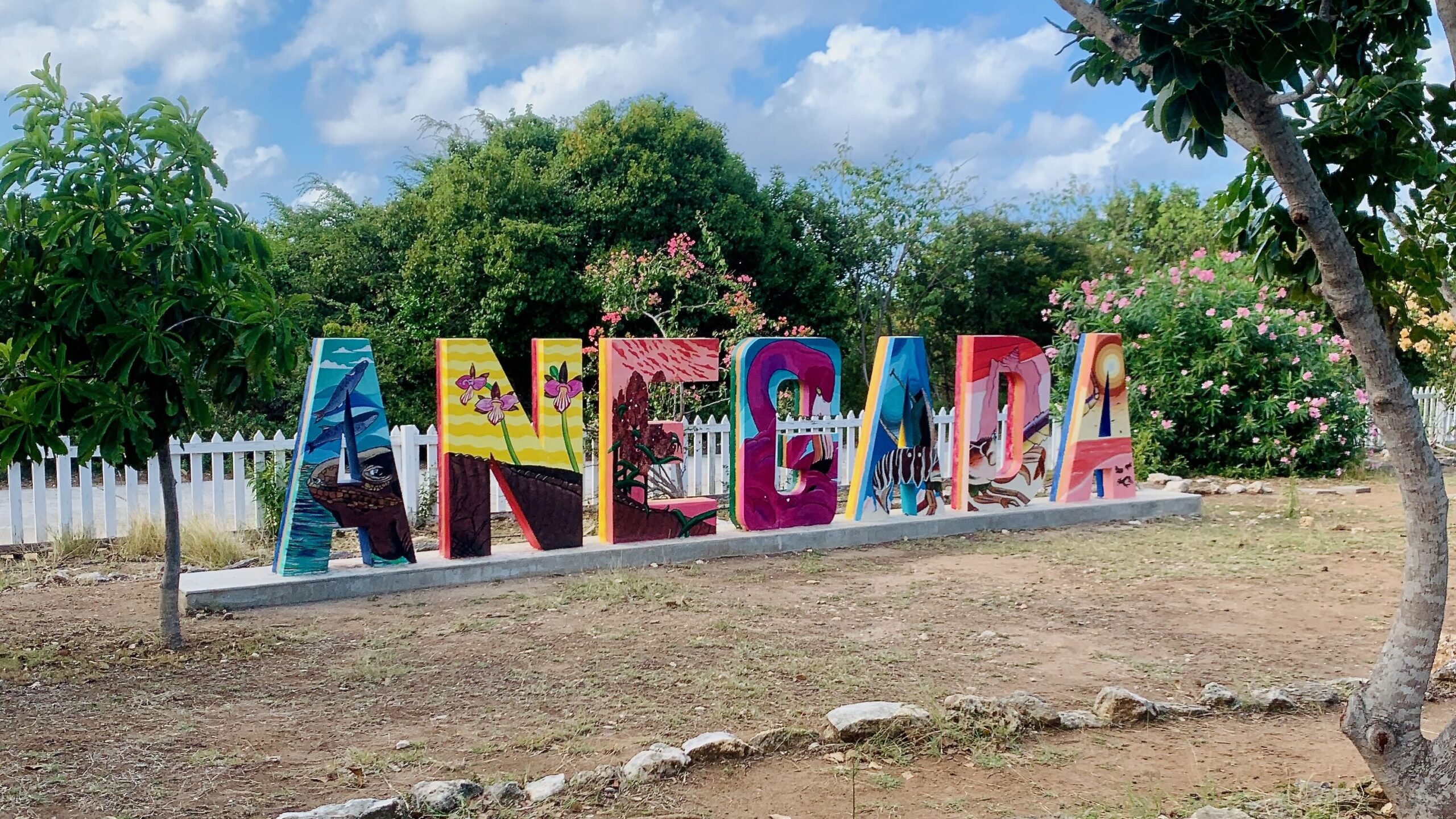
The island is world-renowned for its distinct culinary staple, the Anegada spiny lobster, which is celebrated annually during the Anegada Lobster Festival in November. Beyond its dining scene, the island features striking natural beauty, including the expansive white sands of Loblolly Bay and Cow Wreck Beach. The latter was our first stop.
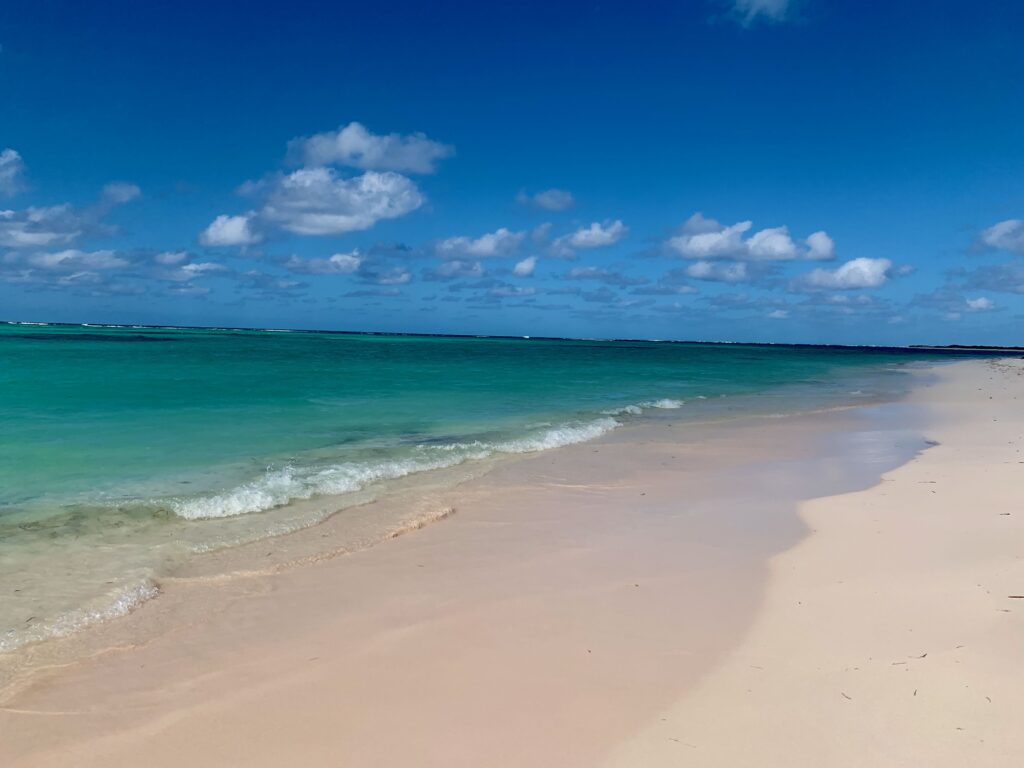

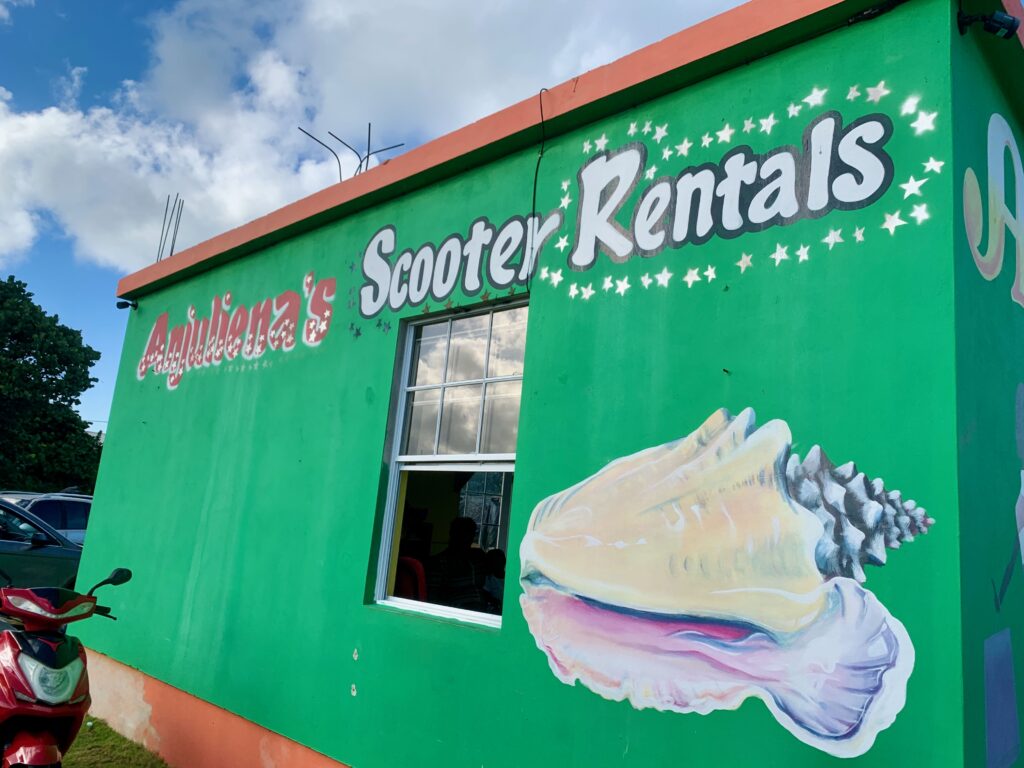
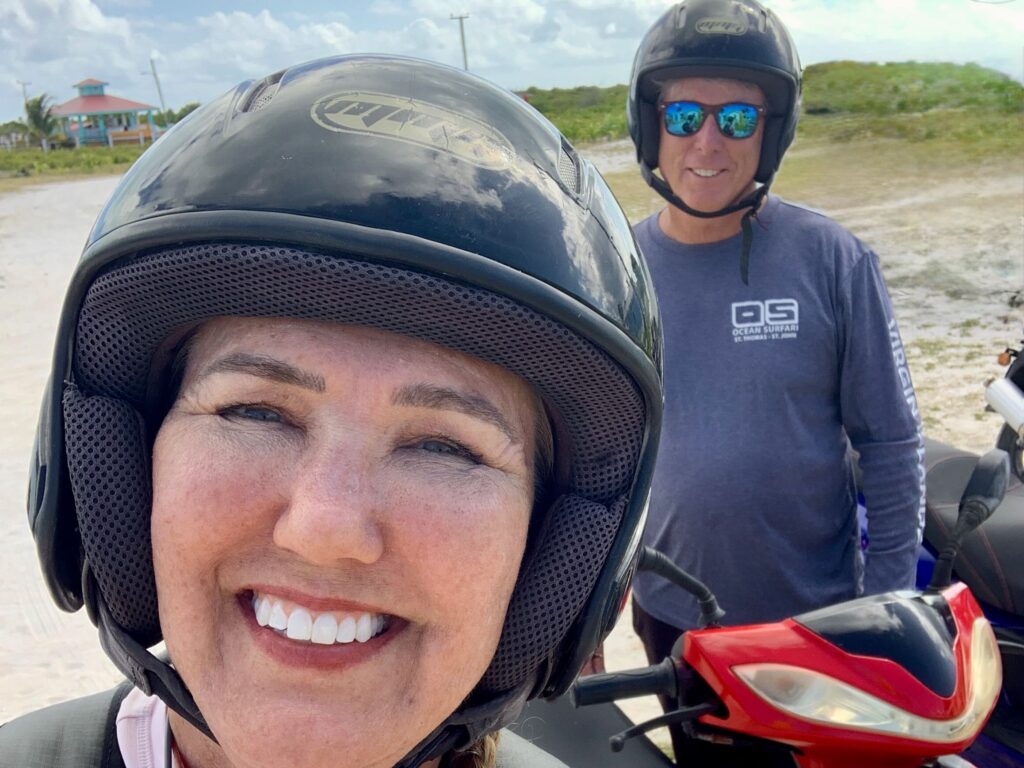
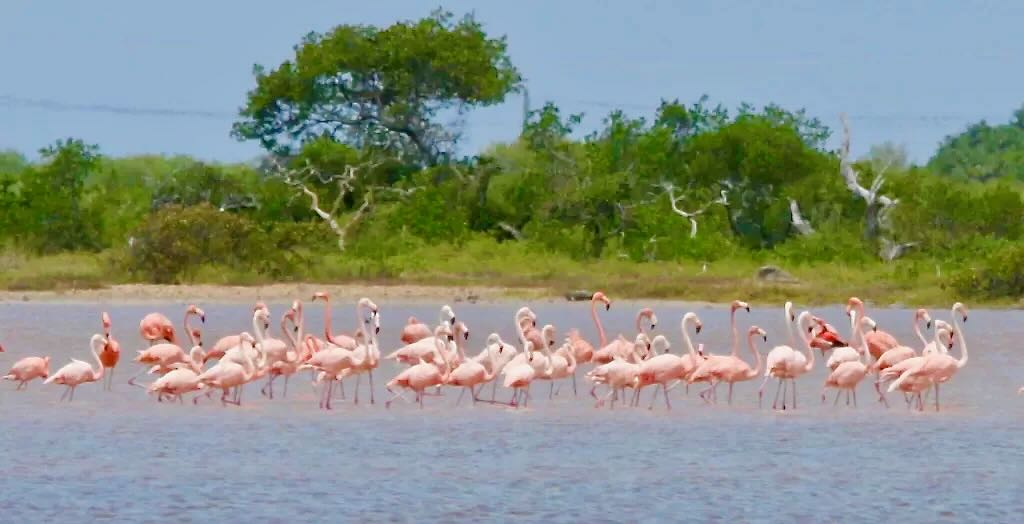
At its interior, the salt ponds are home to a restored population of Caribbean flamingos and the rare Anegada rock iguana. We rented a scooter so we could tour the entire island.
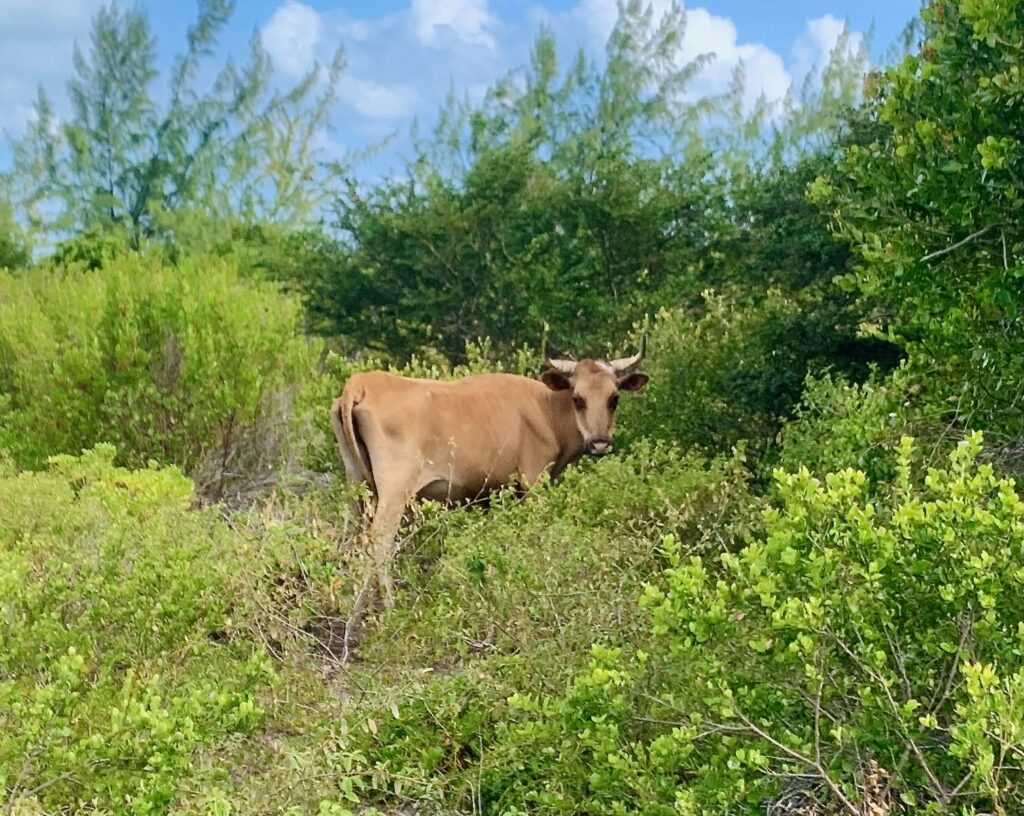
We saw cows.
We peered through binoculars to see flamingoes.
And at the end, we enjoyed a nice lobster dinner at The Lobster Trap.
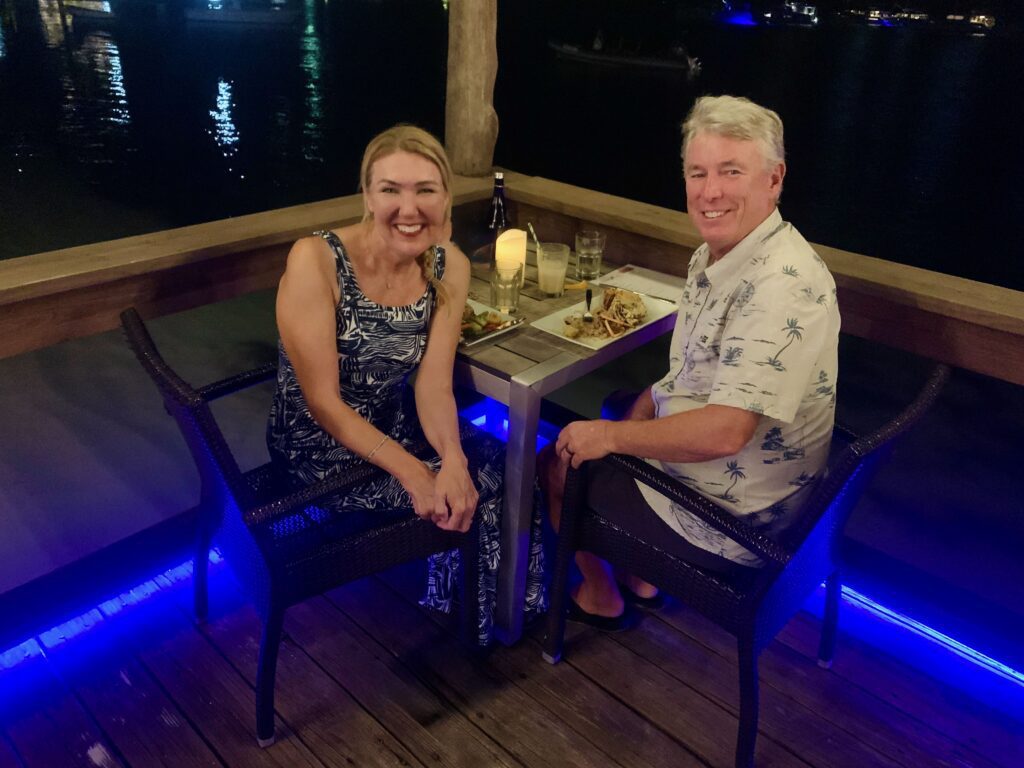
We really enjoyed it. After Anegada, we sailed back to Trellis Bay and then Virgin Gorda for a few days before leaving the BVIs.
10. Virgin Gorda, Part II
Once back at Virgin Gorda, we just had to go to The Baths.
They did not disappoint!
Located on the southwestern tip of Virgin Gorda, The Baths is a world-renowned geological wonder and a protected National Park since 1990. The site is famous for its massive, rounded granite boulders—some reaching 40 feet in diameter—scattered across white sand beaches and into the turquoise sea. These formations, known as batholiths, originated roughly 50 million years ago when molten rock cooled slowly beneath volcanic layers, eventually becoming exposed through eons of erosion and uplifting.
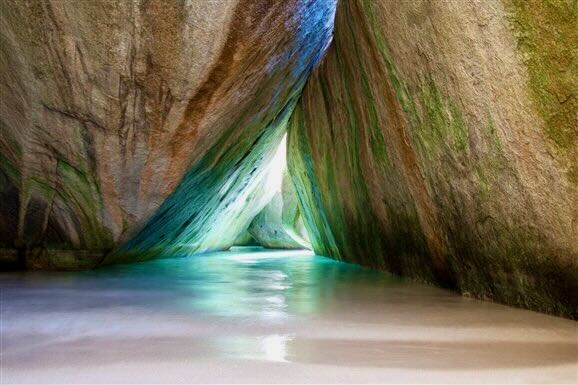
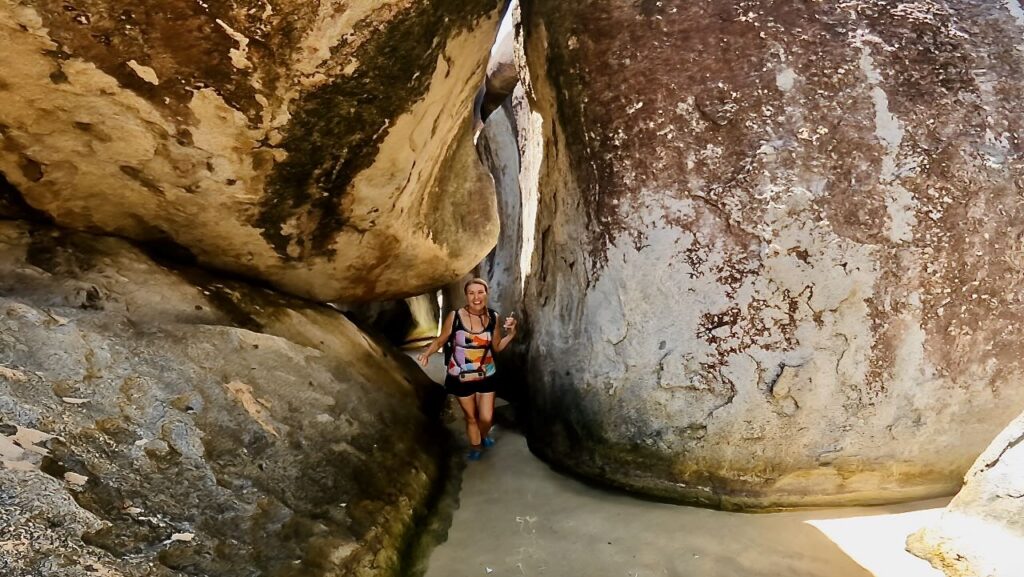
The highlight is a one-way trail that snakes through a labyrinth of scenic grottoes and sun-drenched tidal pools. Notable features along this path include the Cathedral Room, a natural pool inside a cave illuminated by shafts of light, and several narrow passages where you wade through knee-deep water and climb wooden ladders.
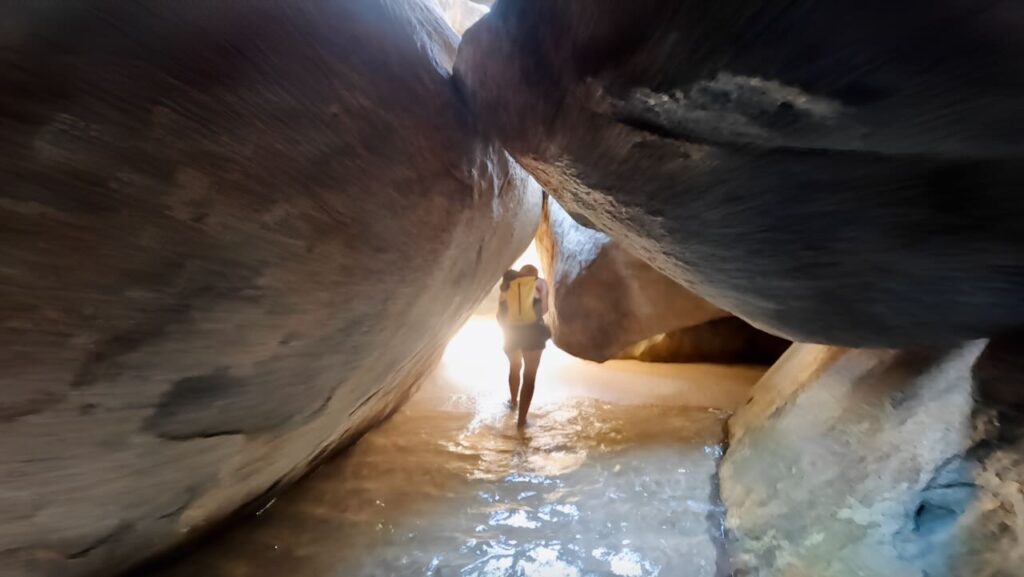
The trail eventually opens into the serene horseshoe of Devil’s Bay, an ideal spot for swimming and sunbathing.
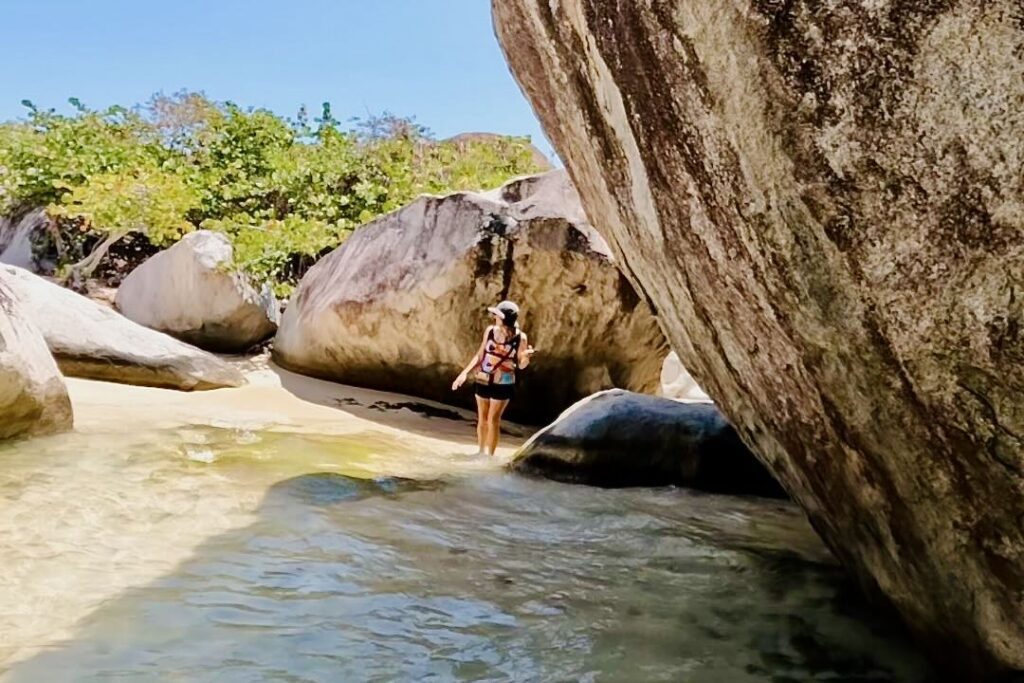
Because of its popularity, it is best visited early in the morning to avoid crowds. A flag system is used to monitor conditions: a red flag indicates high swells, making the shore inaccessible by boat or unsafe for swimming.
I have no idea why people were throwing rocks on top of this boulder, but I’m always up for a good challenge!
Well, we had so much fun that day that we decided to go back.
So the next day, we made our way back over to the moorings, tied up our dinghy, and prepared to swim to shore. I carefully secured my iPhone in my yellow dry bag and held it above my head as I pulled myself to shore along the provided rope.

The water was pretty rough that day, and it was a bit more difficult than anticipated. By the time we got to shore, the yellow dry bag was waterlogged.
My shiny iPhone with the ultraprotective case was no more.

I was without a phone for three months until we took a trip back to the U.S.
Torture!
And so ended our time in the BVIs.
Accommodations
Accommodations in the BVIs range from ultra-exclusive private island retreats to historic boutique hotels and functional marina resorts catering to the yachting community. On Virgin Gorda, the standard for luxury is set by legendary properties like Rosewood Little Dix Bay, founded by Laurance Rockefeller, and the secluded Oil Nut Bay, which is accessible only by boat or helicopter. For those seeking the ultimate in privacy, Sir Richard Branson’s Necker Island and the newly developed Moskito Island offer bespoke, all-inclusive experiences on entire private atolls.
Tortola, the commercial hub, provides a wider variety of stays. Road Town features convenient harbor-side hotels like Village Cay Hotel & Marina and Maria’s by the Sea, which are popular for their proximity to ferry terminals. Along the north shore, boutique options such as the Sugar Mill Hotel, set in a restored 17th-century sugar plantation, and Long Bay Beach Resort offer a more tranquil, beachfront atmosphere. On the laid-back island of Jost Van Dyke, the recently opened The Hideout at White Bay represents the island’s first luxury boutique villa resort, while nearby Anegada remains famous for its charming, low-key guesthouses and beachfront “glamping” that prioritize a connection with the island’s unique coral atoll environment.
Getting There
Traveling to the BVIs typically requires a combination of international flights and regional connections, as there are no direct long-haul flights from the US, Canada, or Europe to the main hub, Terrance B. Lettsome International Airport (EIS) on Beef Island.
- Via San Juan (SJU): The most common route involves flying into Puerto Rico and taking a short 40-minute connecting flight with carriers like Silver Airways, Cape Air, or InterCaribbean.
- Direct from Miami (MIA): American Airlines operates direct flights to Tortola (EIS), providing the only non-stop link from the US mainland.
- Via St. Thomas (STT): Travelers often fly into the US Virgin Islands and then take a 50-minute public ferry from Charlotte Amalie or Red Hook to Road Town or West End, Tortola.
As of 2026, all visitors must have a valid passport. Most travelers (including US, UK, and Canadian citizens) do not require a visa for stays of up to 30 days but must present a return or onward ticket. Additionally, the BVI government requires travelers to complete an Online Immigration and Customs Form via their official portal at least 72 hours before arrival.
We sailed there on our catamaran.
Getting Around
The BVIs is a quintessential “island-hopping” destination, where the proximity of the islands makes transit part of the experience. The primary modes of transport are public ferries, private water taxis, and chartered boats.
The most common way to travel is via the extensive public ferry network. Most routes originate from Road Town or the West End on Tortola.
- Tortola to Virgin Gorda: Frequent 30-minute crossings run daily to Spanish Town.
- Tortola to Jost Van Dyke: Ferries depart from the West End, arriving at Great Harbour in about 25 minutes.
- Tortola to Anegada: Due to the distance and reef navigation, this ferry typically runs only a few times a week (usually Mondays, Wednesdays, and Fridays) and takes about 60 to 90 minutes.
For those arriving late or traveling in groups, private water taxis offer 24-hour, “door-to-door” service between islands and even from St. Thomas (USVI). These are more expensive but provide customs clearance assistance and flexible scheduling.
Last but certainly not least is island-hopping on a privately owned or chartered boat. There always seems to be a glut of charter boats in the area, which makes renting a mooring ball so challenging. We sailed from island to island on our catamaran.
Final Thoughts
The BVIs offer a rare balance of high-seas adventure and laid-back Caribbean luxury. From the geological wonder of The Baths on Virgin Gorda to the legendary painkillers at White Bay, each island in this archipelago possesses a distinct character that rewards slow, intentional travel.
The true magic of the BVI lies in its accessibility as a world-class sailing destination. The ability to wake up in the protected anchorage of The Bight at Norman Island, snorkel among the vibrant coral towers of The Indians, and reach the sandy shores of Anegada by sunset is a special experience. As the islands continue to preserve their natural beauty through the BVI National Parks Trust, they remain a sanctuary for marine life and a bucket-list destination for those seeking the ultimate barefoot escape.
My one complaint—and it’s a big one—is the stiff competition for mooring balls.
Originally experienced in April 2024; content refreshed in March 2026.
