

Located approximately 75 miles south of Nassau, with a landmass of less than two square miles, Staniel Cay serves as the primary hub for the central Bahamas.
Historically, the residents of Staniel Cay were master shipbuilders and fishermen. Because of the treacherous reefs and shifting sandbanks of the Exumas, local sailors developed a deep understanding of the tides and currents. This expertise is celebrated every year during the Staniel Cay New Year’s Day Sailing Regatta, in which traditional Bahamian sloops compete in high-stakes races.
Until the mid-20th century, Staniel Cay was largely isolated. Mailboats were the only connection to the outside world, bringing supplies, news, and passengers from Nassau once a week.
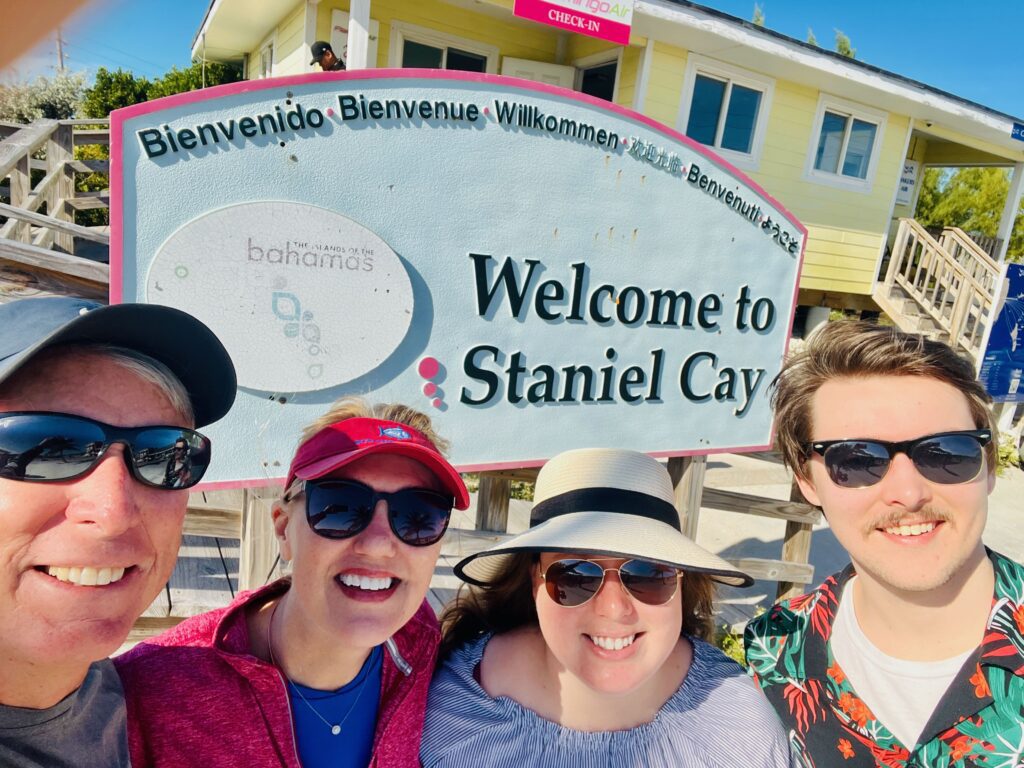
Despite its tiny size, today Staniel Cay is the most developed island in the central Exumas. Its strategic location makes it the “base camp” for boaters, pilots, and adventurers exploring the surrounding cays. And the pigs don’t hurt.
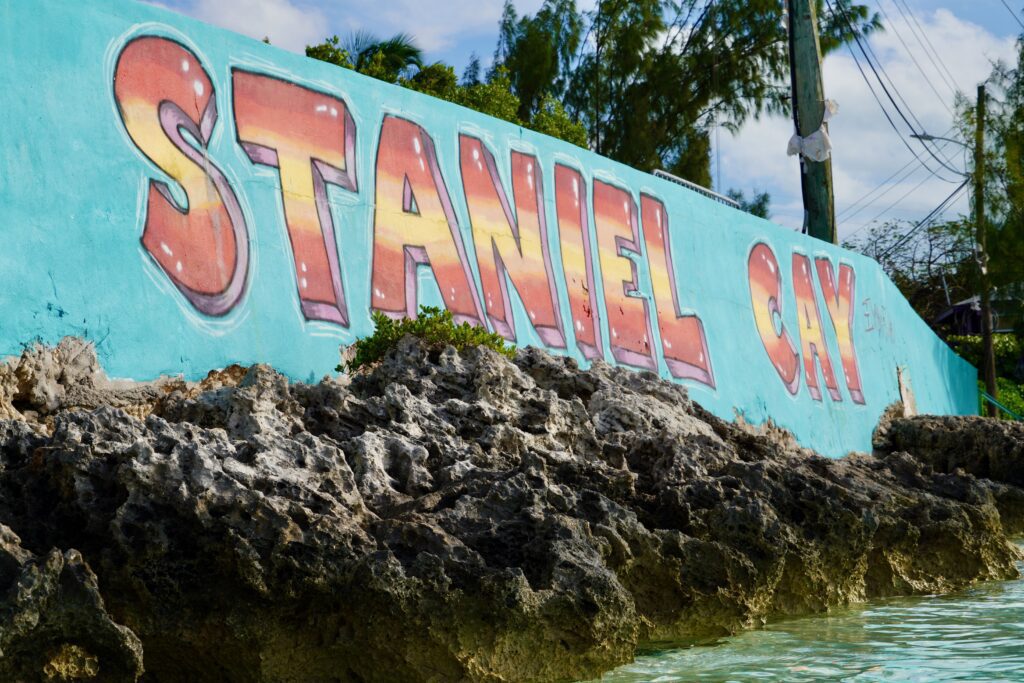
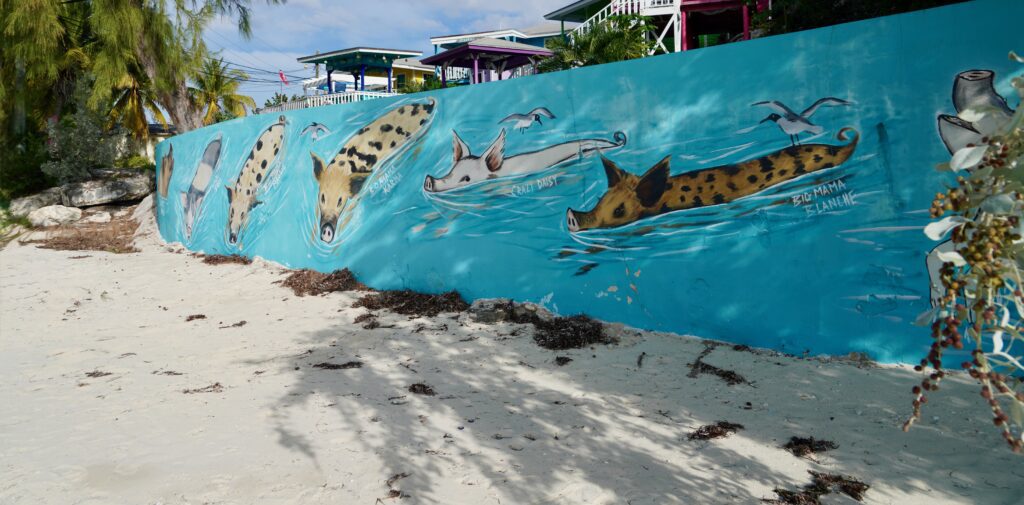
Staniel Cay has a small, tight-knit community of approximately 80 to 118 full-time residents. The majority of the island’s permanent population lives in Staniel Cay Village on the western side of the island.
The village is a picturesque collection of brightly colored houses, small grocery stores (known locally as “commissaries”), and a historic church.
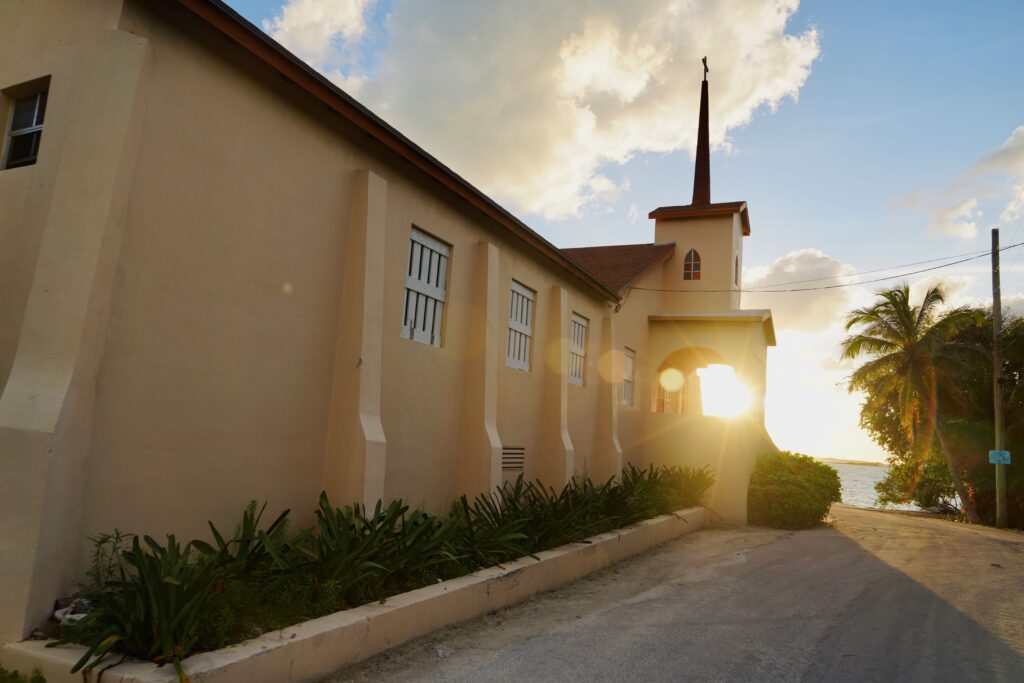
It’s a simple, slow-paced lifestyle.
5 Things We Loved Most About Staniel Cay
1. Thunderball Grotto
Thunderball Grotto is a spectacular underwater limestone cave system located just west of Staniel Cay in the Exuma Cays. Often described as a “natural aquarium,” the grotto is world-renowned for its ethereal beauty and its role in cinematic history, having served as a filming location for the James Bond films Thunderball (1965) and Never Say Never Again (1983), as well as the film Splash. The cave features a hollow center with high, domed ceilings, punctuated by natural skylights that let beams of sunlight illuminate the crystalline turquoise water below.
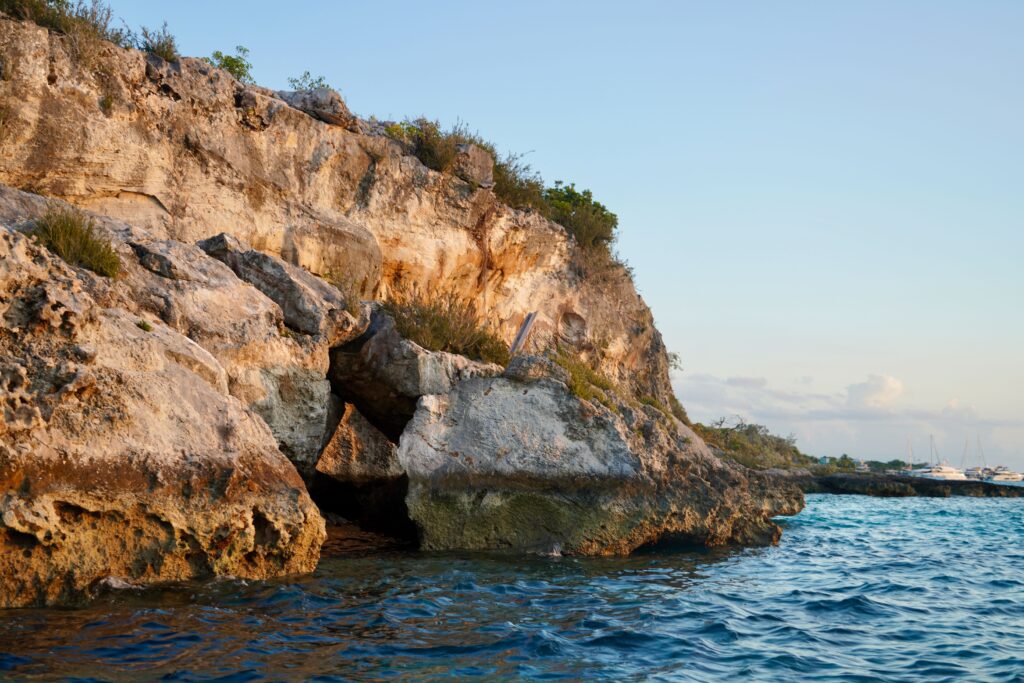
Navigating the entrance requires careful timing; at low tide, you can easily swim through several small openings in the rock face. However, at high tide, the entrances become fully submerged, requiring a short underwater dive to reach the central chamber. We went there a few times, including at high tide, and we thought diving down to reach the grotto wasn’t difficult.

The grotto teems with vibrant marine life, including yellowtail snappers, angelfish, and Sergeant Majors, which are often quite tame due to frequent human interaction. We swam with a turtle for a while just outside the grotto.
We could literally see this amazing landmark from our mooring ball.
2. Big Major Cay (Pig Beach)
Big Major Cay, widely known as Pig Beach, is an uninhabited island that is famous for its resident population of feral swimming pigs. While the exact origin of the pigs remains a subject of local folklore—ranging from stories of shipwrecked survivors to sailors leaving them as a future food source—they have become a global phenomenon and a cornerstone of Bahamian tourism. You can only get there by boat. This site was located just around the corner from our mooring ball, a quick dinghy ride away.
The pigs are remarkably curious (or more likely, hungry). They swam out to greet us.
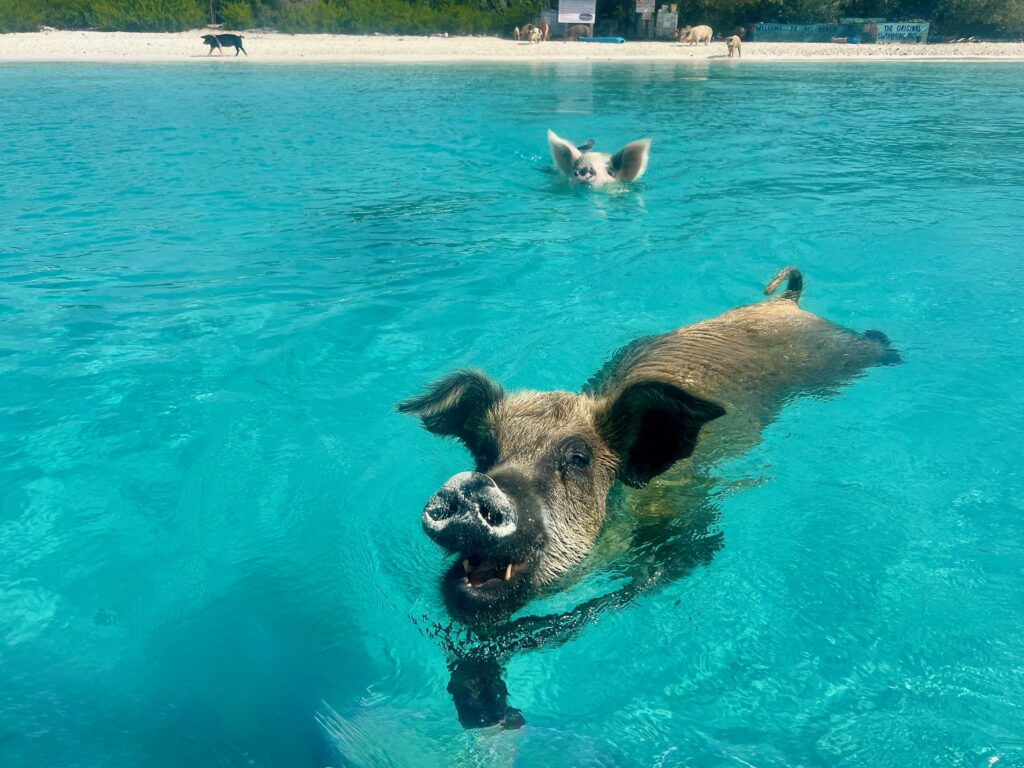

The island itself is protected by the Bahamas National Trust. To ensure the health of the animals, the government has implemented strict regulations, including a “no-take” policy for the surrounding waters and specific guidelines on what visitors can feed the pigs (typically, pitted fruits and vegetables). We noticed that the pigs were tagged.
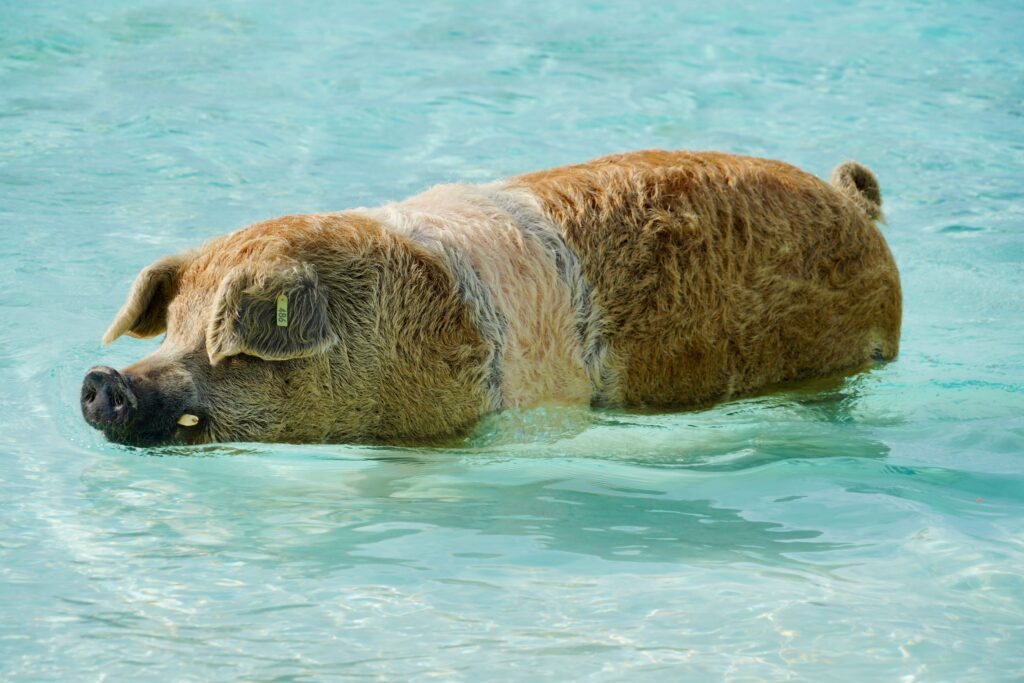
At first, we were the only ones there, so we had the pigs all to ourselves.
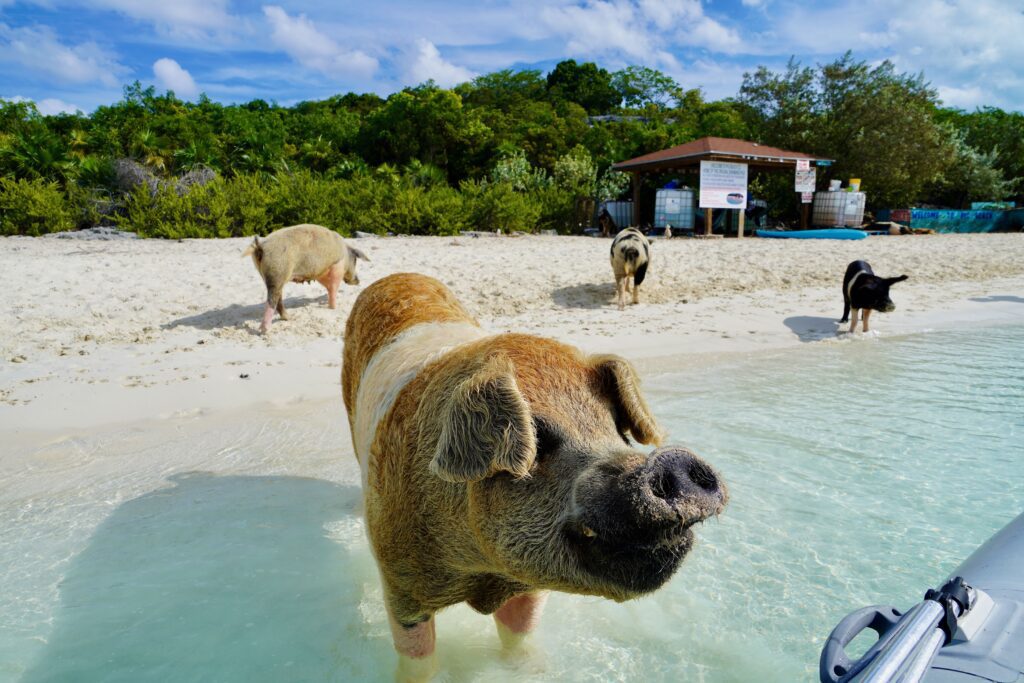

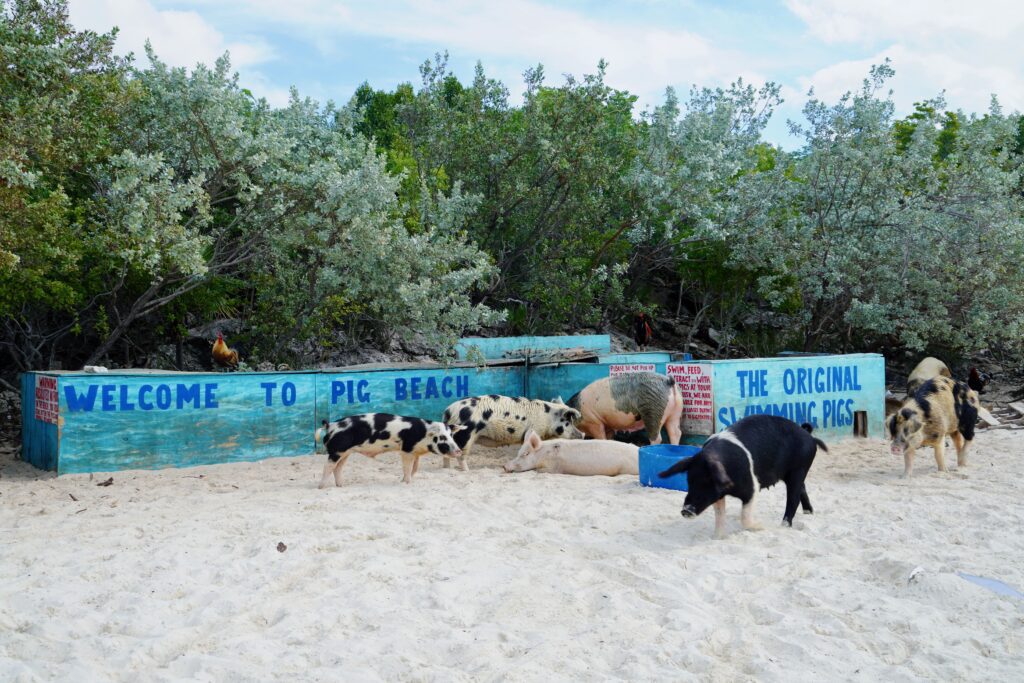
We did just a tiny bit of feeding because we were warned they might get aggressive if we fed them too much.
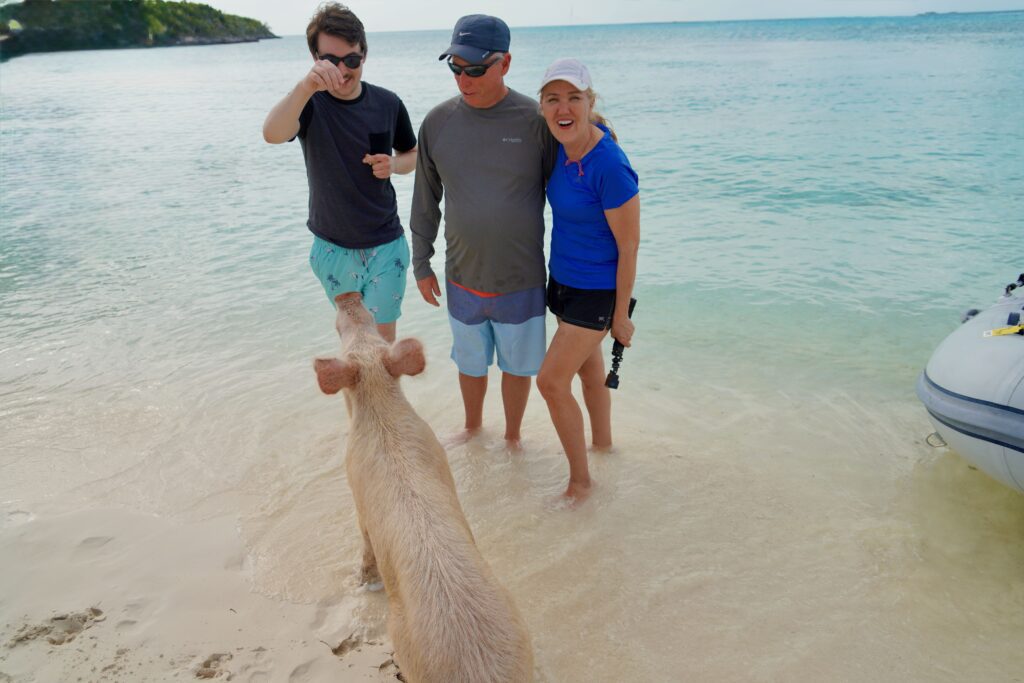

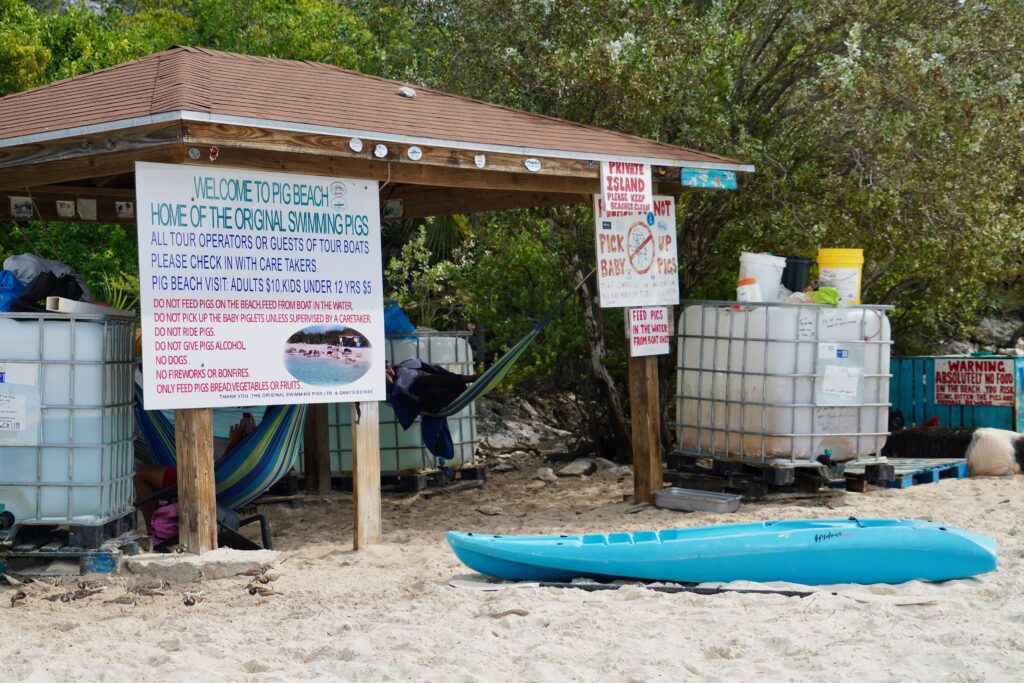
There were large signs declaring that you should not pick up the baby pigs, yet when the tour boats came, we saw several tourists doing so. Yeesh.
We were careful to look, not touch.
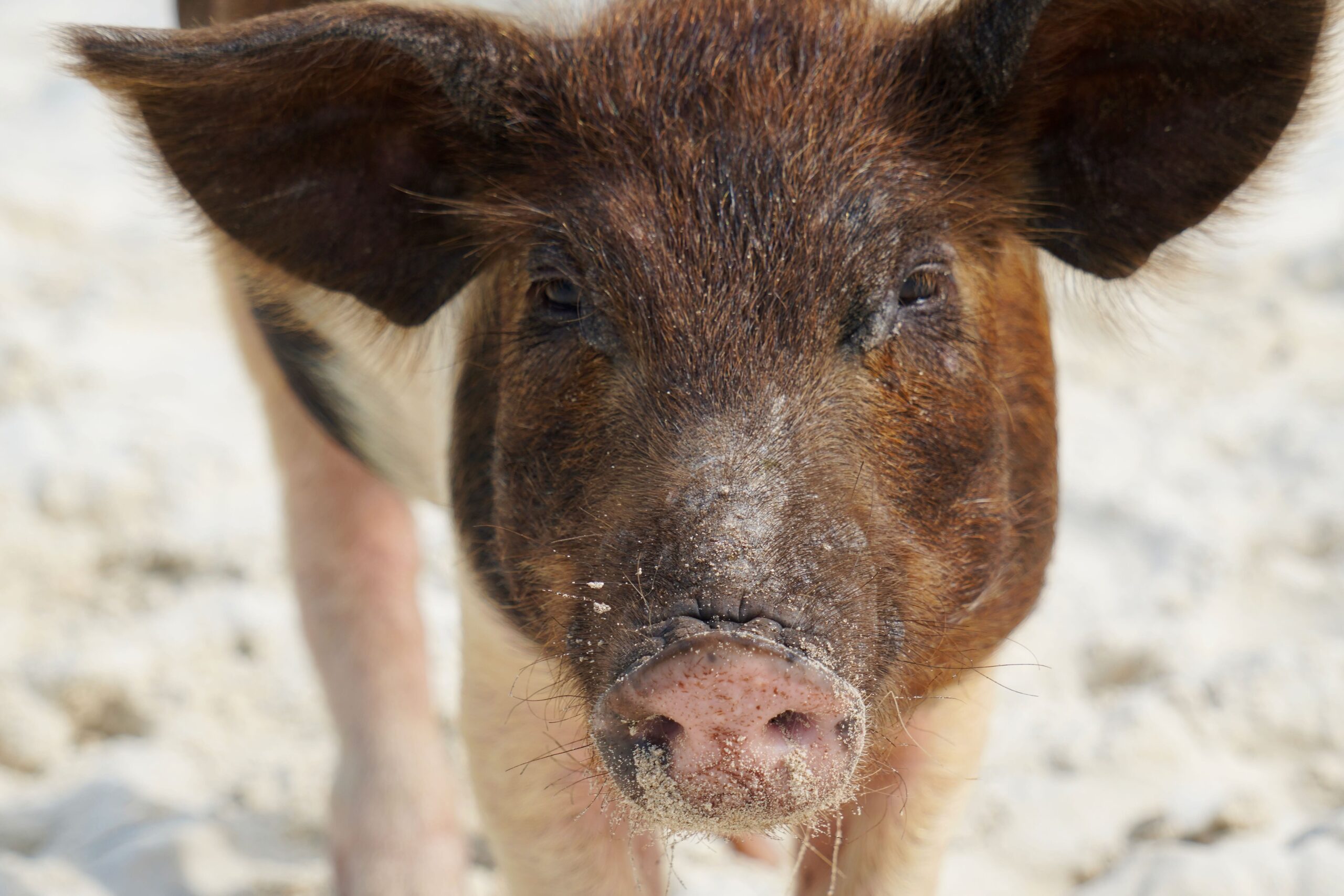
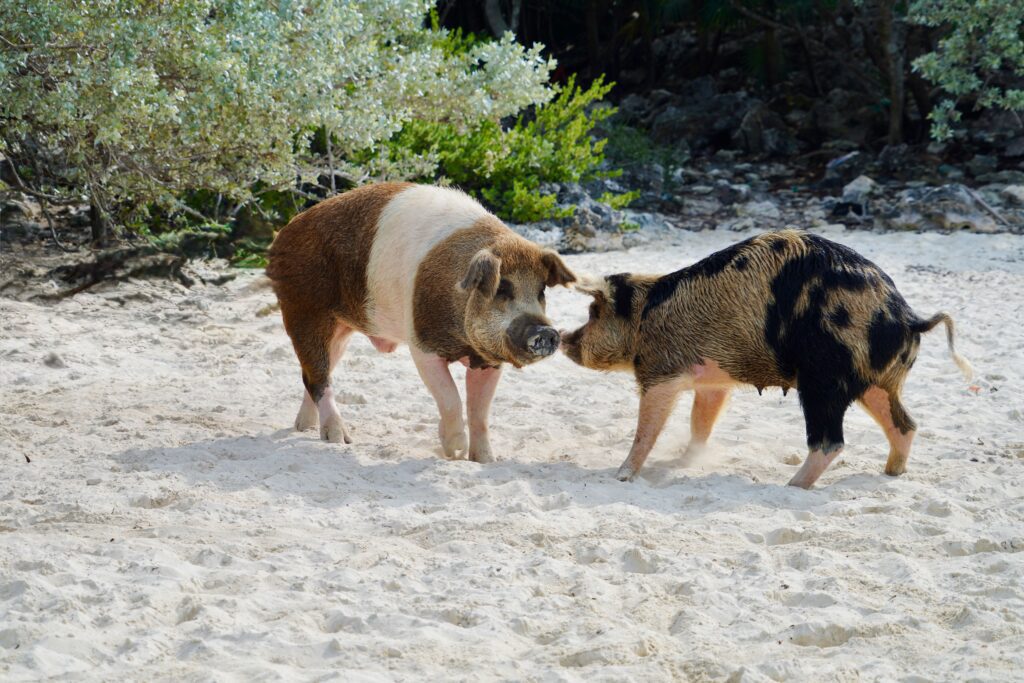
Some of them were huge and had some serious teeth.
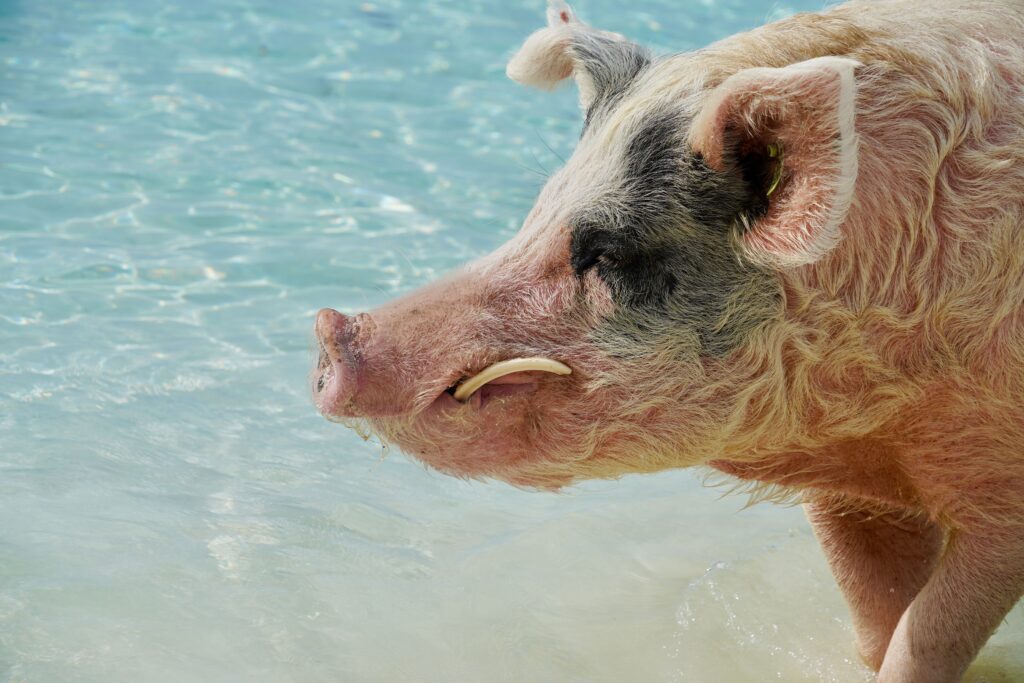
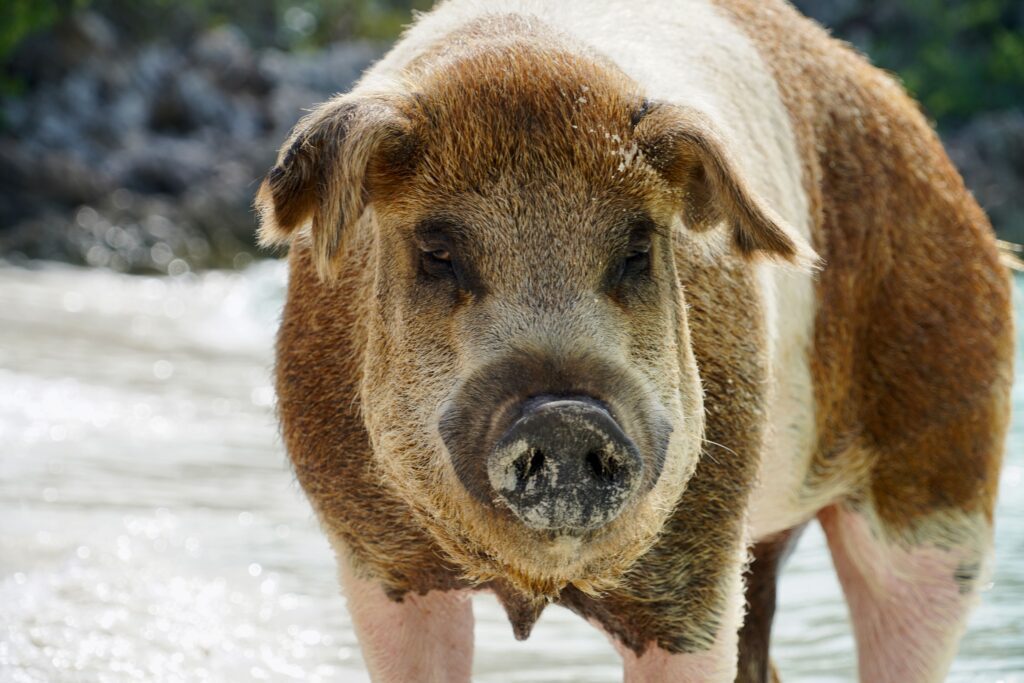
After observing them for a little while, a few of them became a bit aggressive.
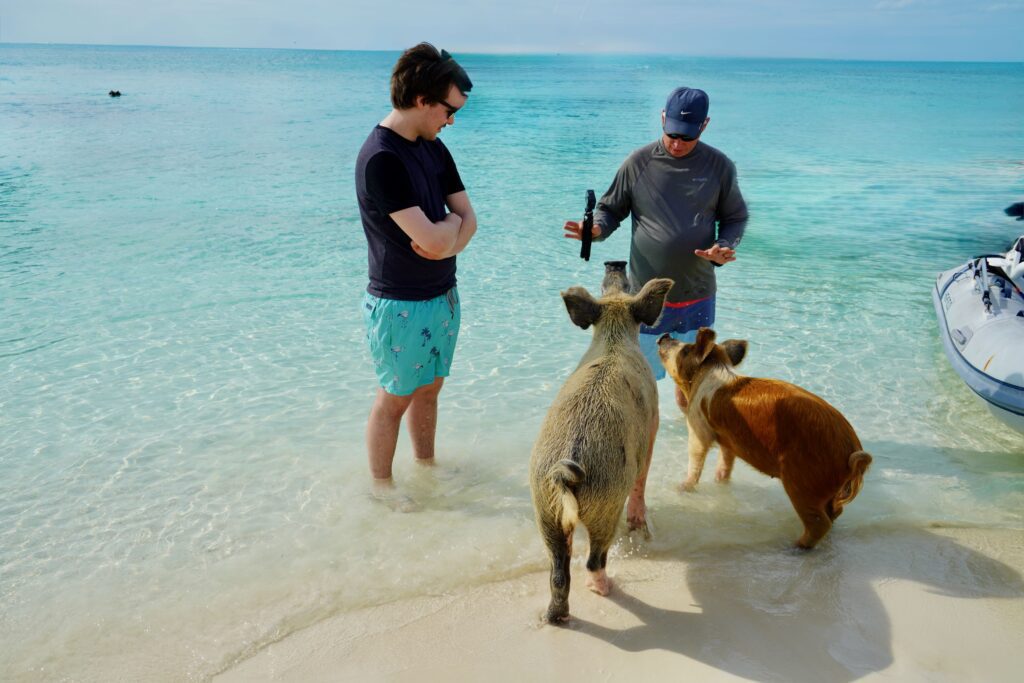
And even tried to come home with us.
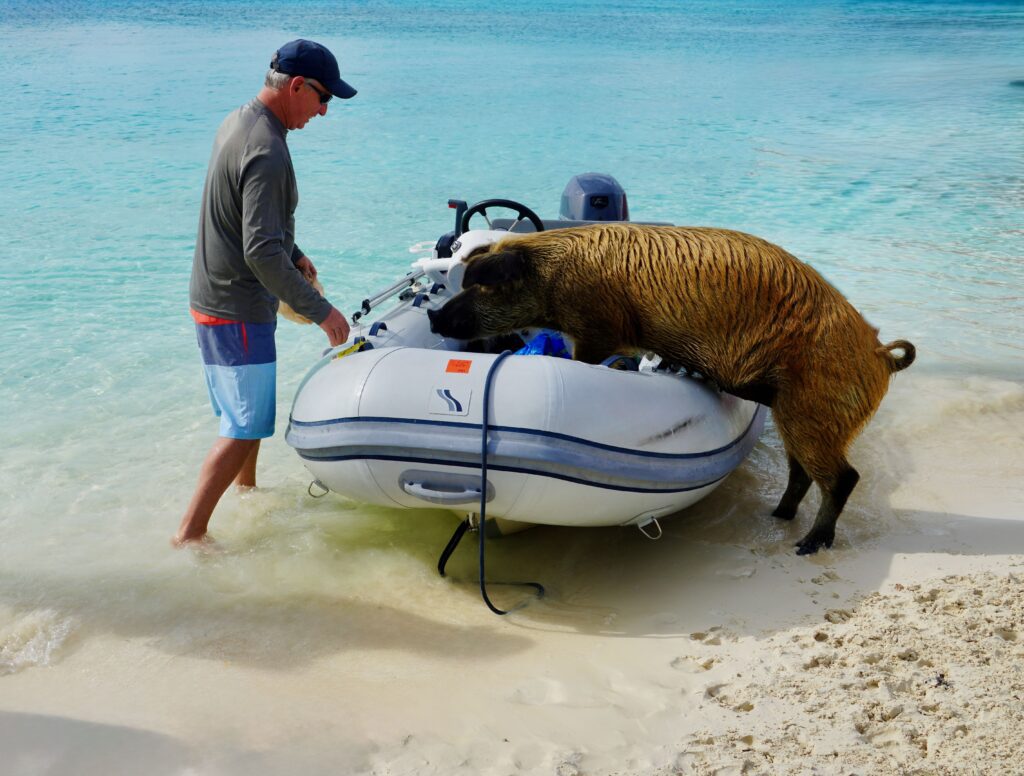
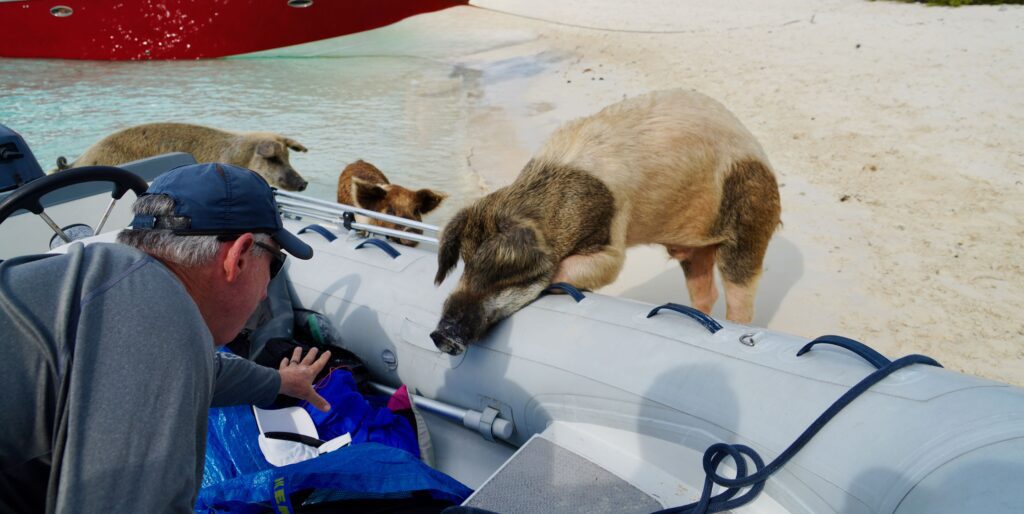
By this time, the beach was packed, so we decided it was time to go.
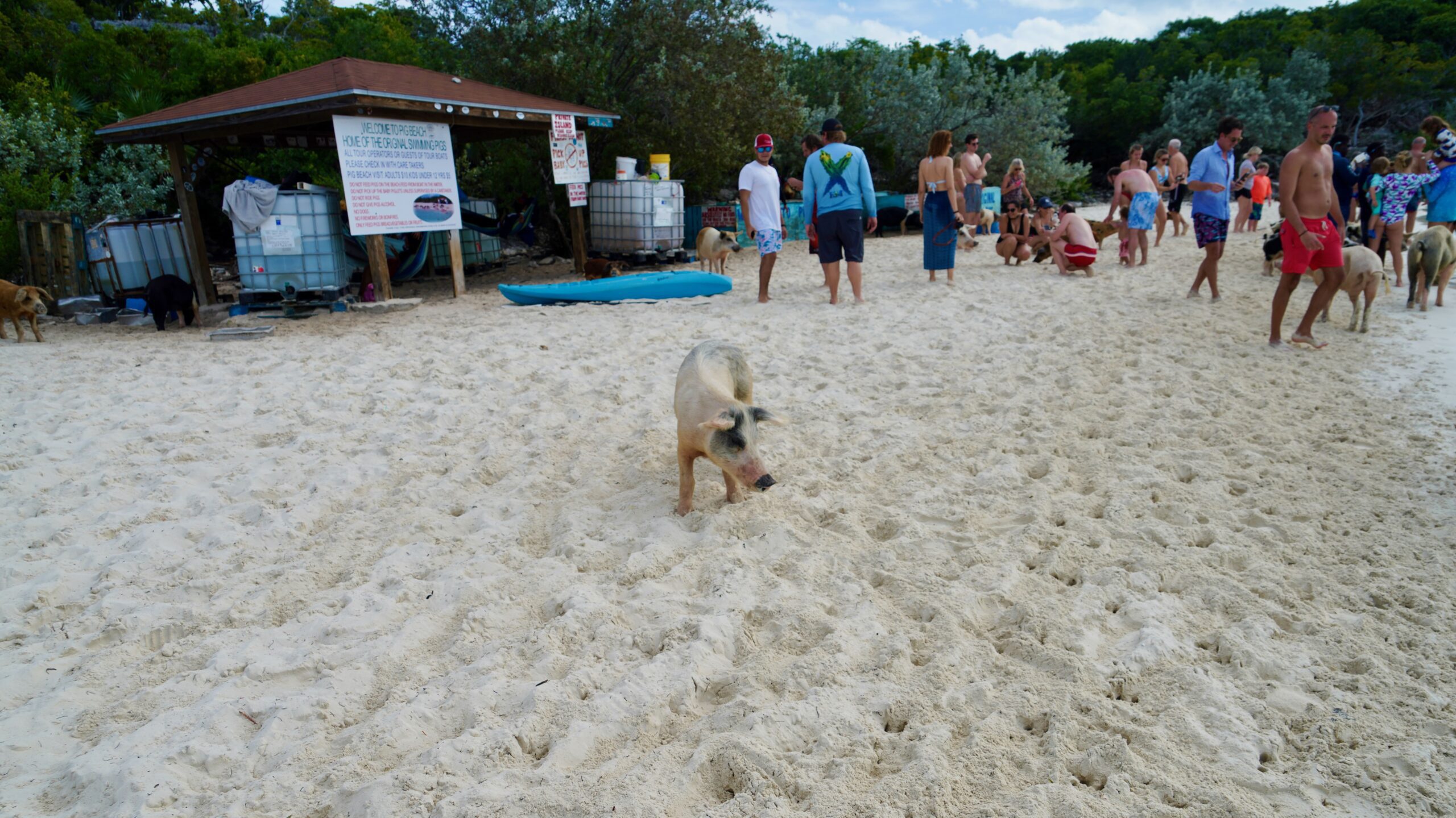
By and large, they were cute and curious. It was a fun experience. Our advice? Go early.
3. Black Point Natural Swimming Pool
We took several walks around the island.
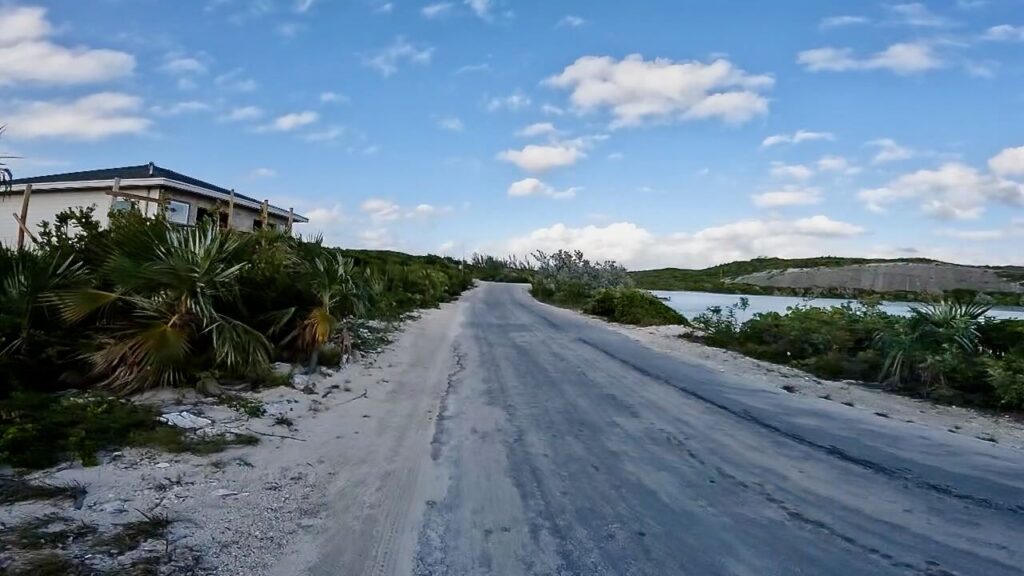
One day, we reached the Black Point Natural Swimming Pool and were awed by its natural beauty.
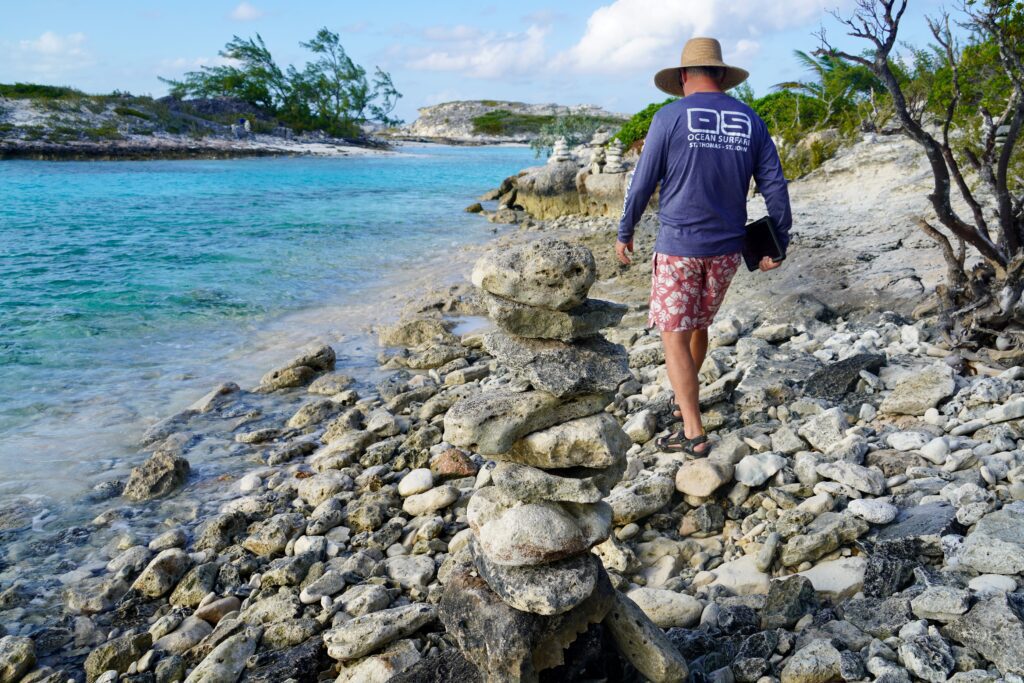
We were obviously not the first to be there.
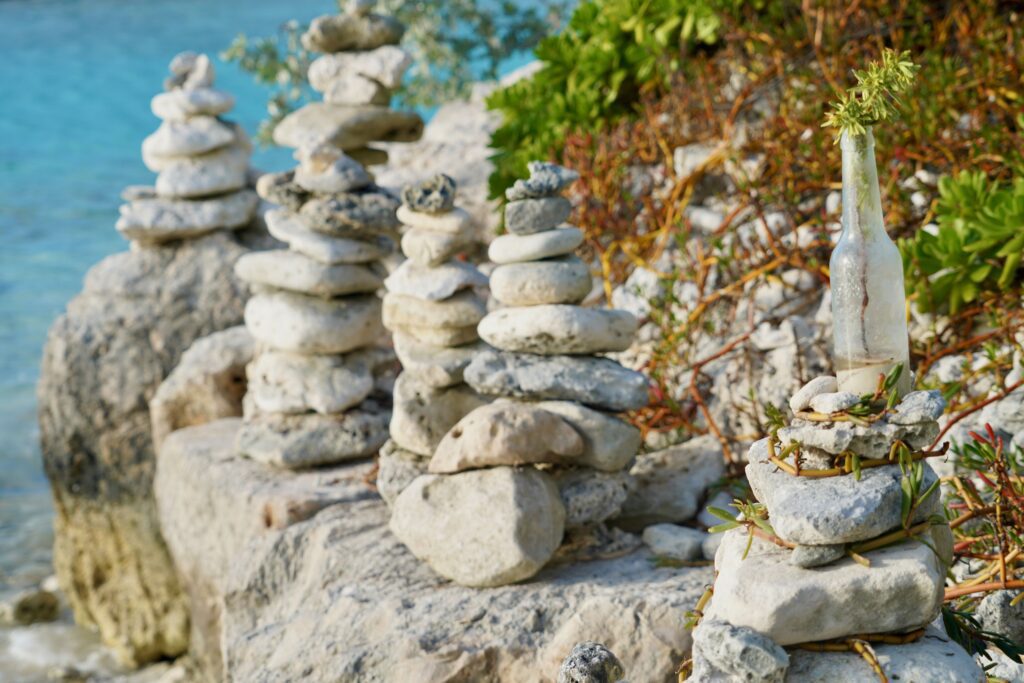
There were so many cairns that we had to navigate around them on the narrow path.
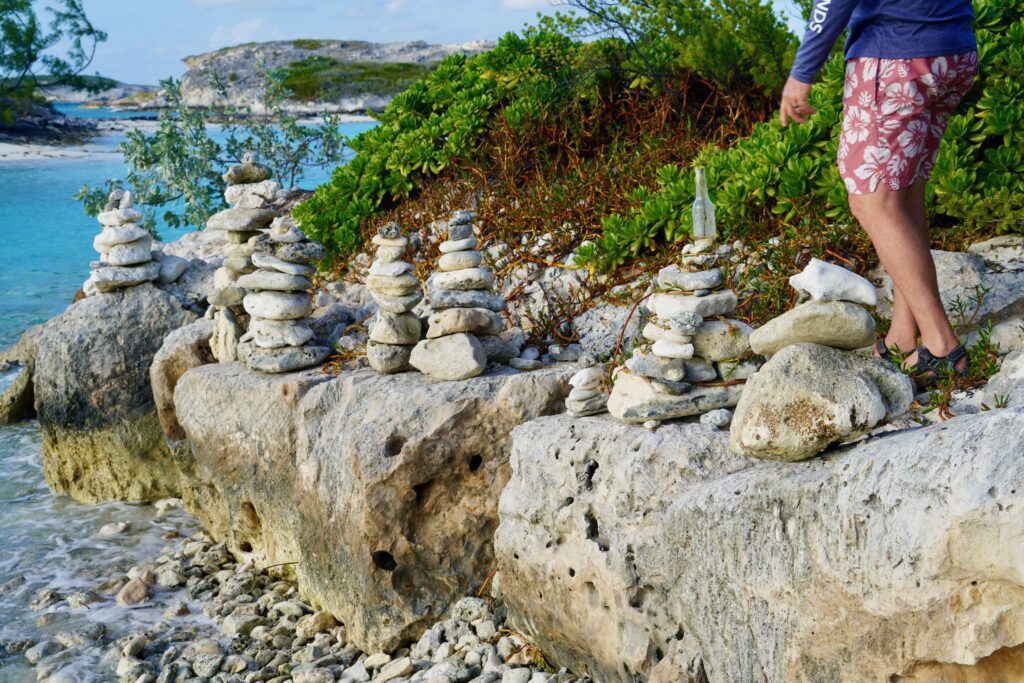
It was really beautiful.
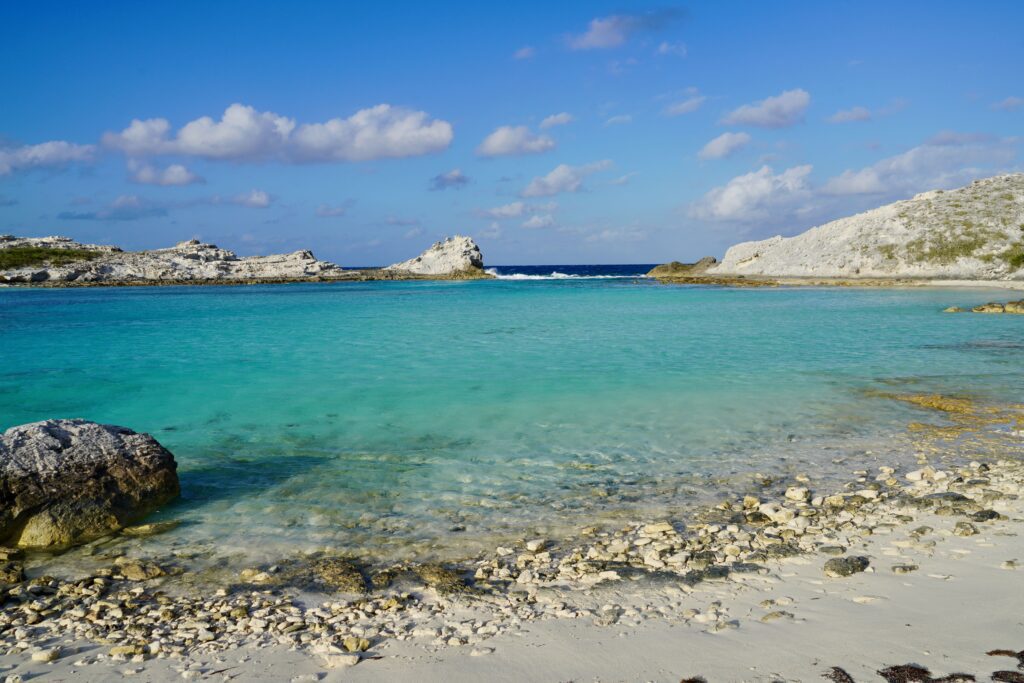
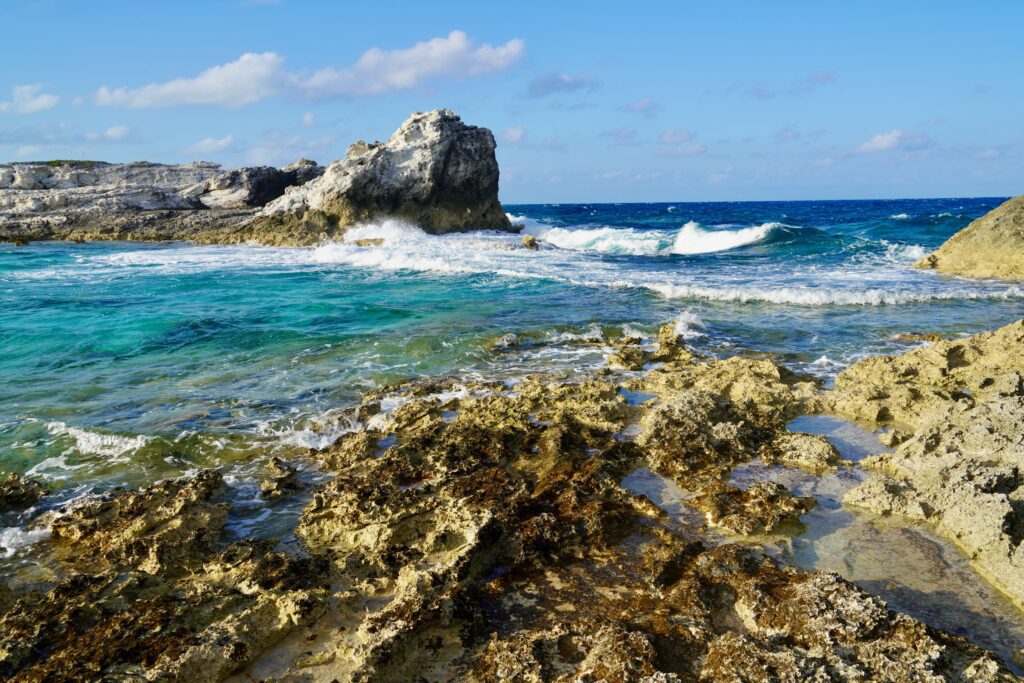
We came back another day and hiked the cliffs.
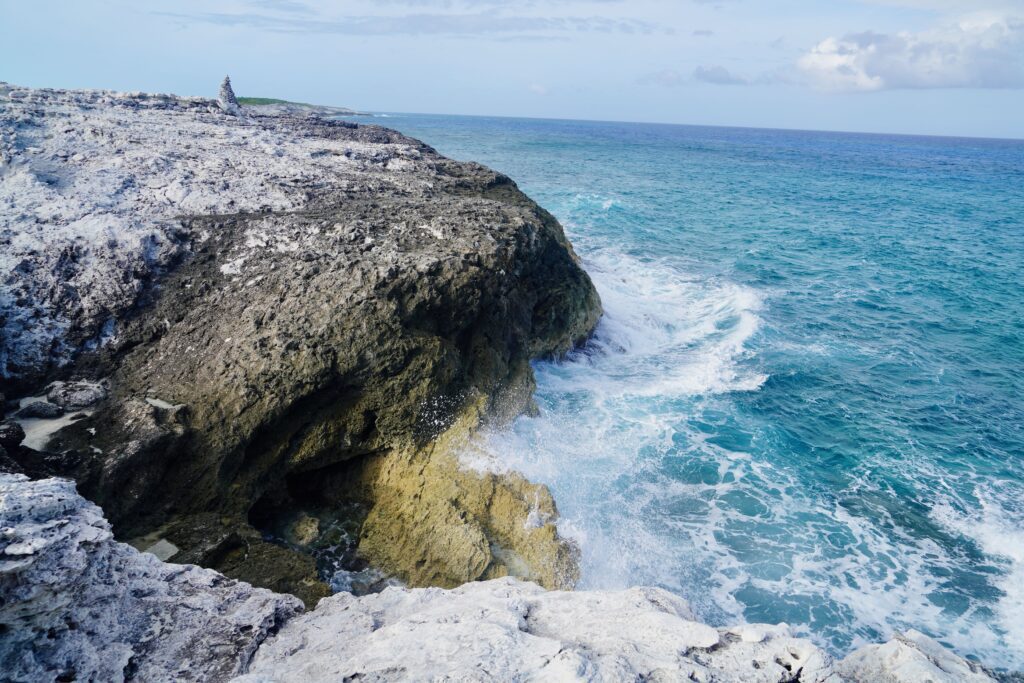
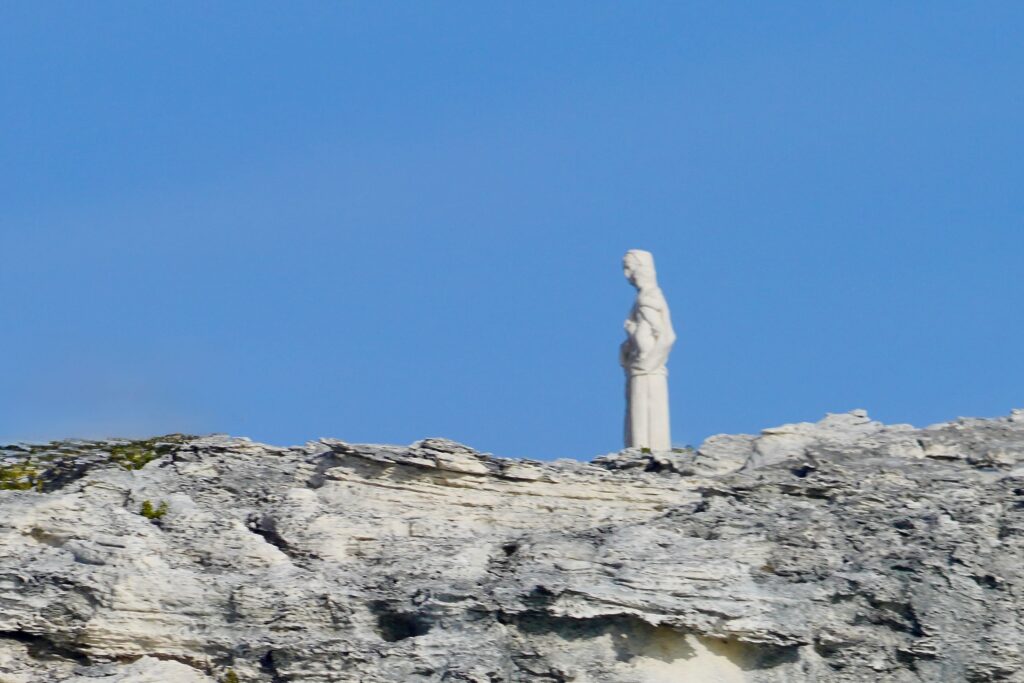
We also took our dinghy to where the Madonna statue is located.
4. Bitter Guana Cay (Iguana Beach)
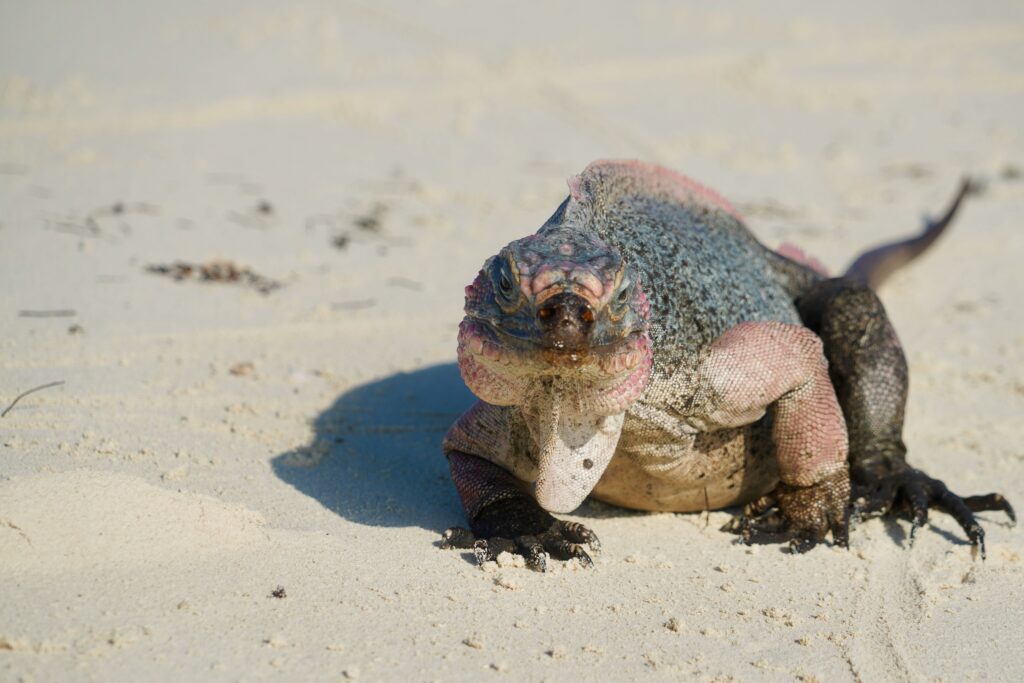
Bitter Guana Cay, widely known as Iguana Beach, is a breathtaking, rugged limestone island close to Staniel Cay. It is one of the few remaining natural habitats for the Exuma Island Iguana (Cyclura cychlura figginsi), a critically endangered subspecies of the Northern Bahamian Rock Iguana.
These prehistoric-looking reptiles, which can grow up to three feet in length, are found nowhere else on Earth. The island’s striking landscape is lined by a pristine stretch of white sand where the iguanas frequently congregate to bask in the sun.
We were the only humans there.
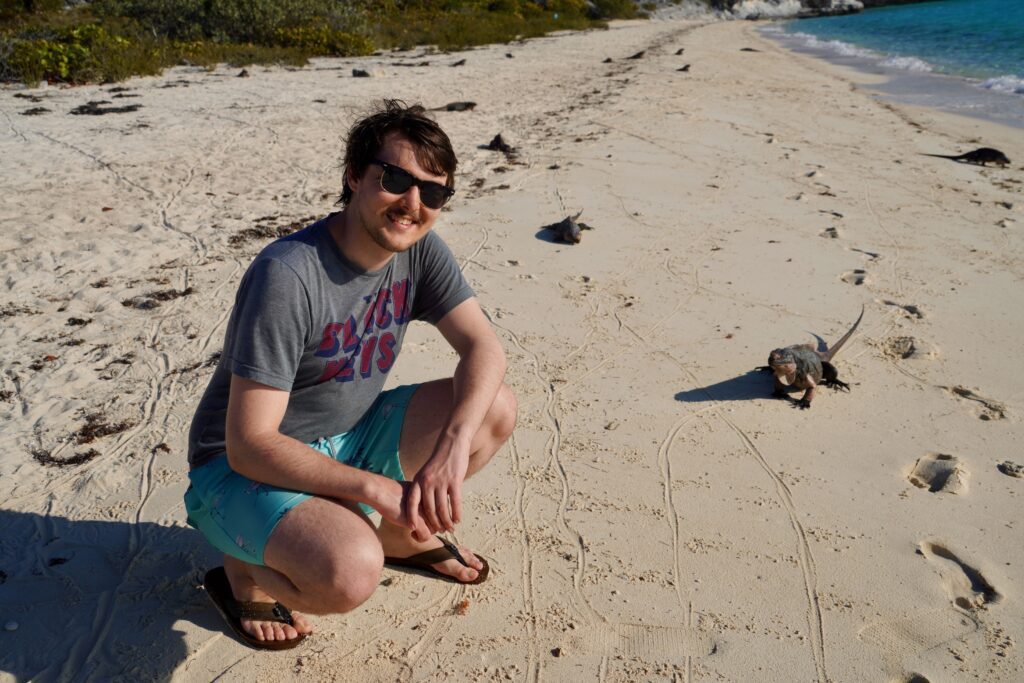
As a protected area under the Bahamas National Trust, Bitter Guana Cay offers a rare opportunity for controlled wildlife observation. The iguanas were surprisingly social and scurried right up to us. We saw dozens of iguanas that day.
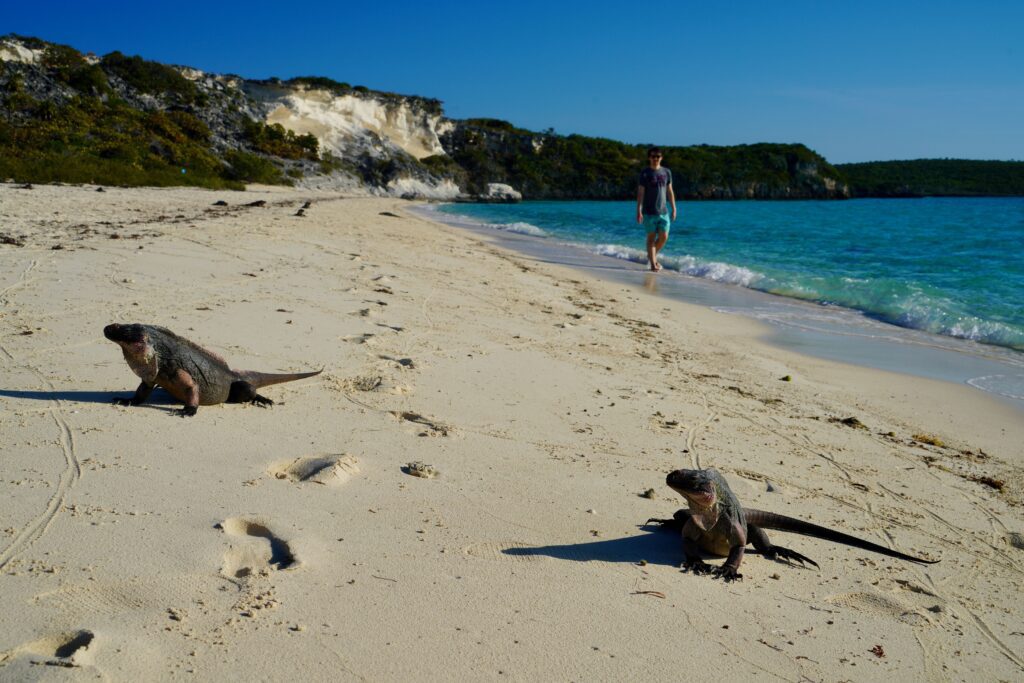
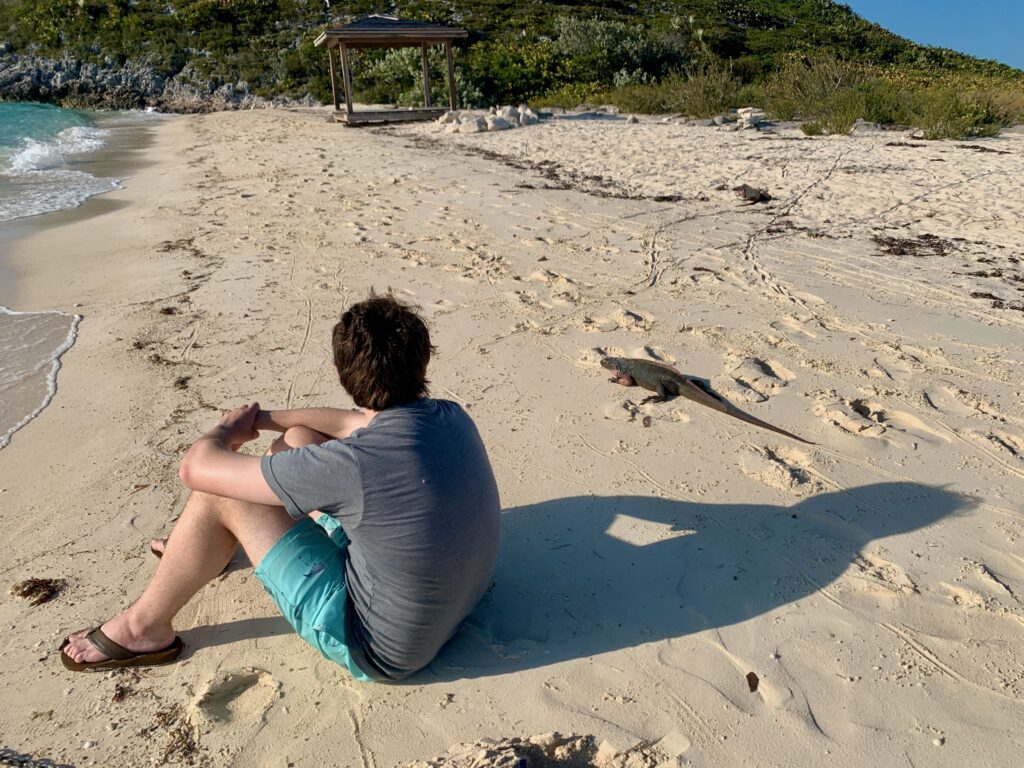
Accessible only by boat, the island is inhabited only by animals, no humans.
5. Watersports and Relaxation
As with most of the Bahamas, the water was incredibly clear.
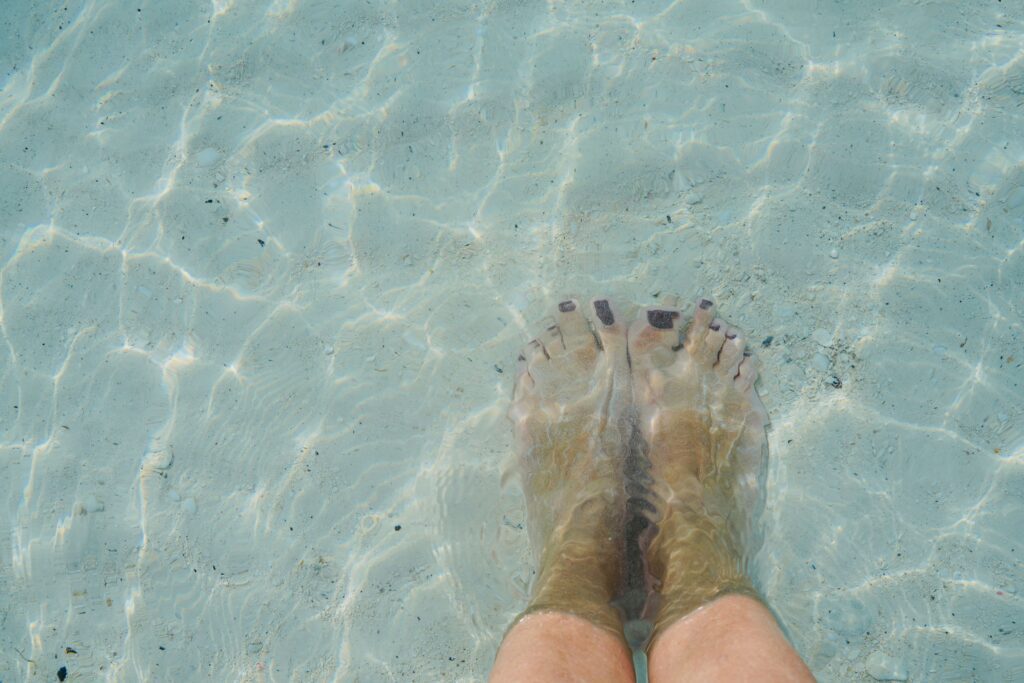
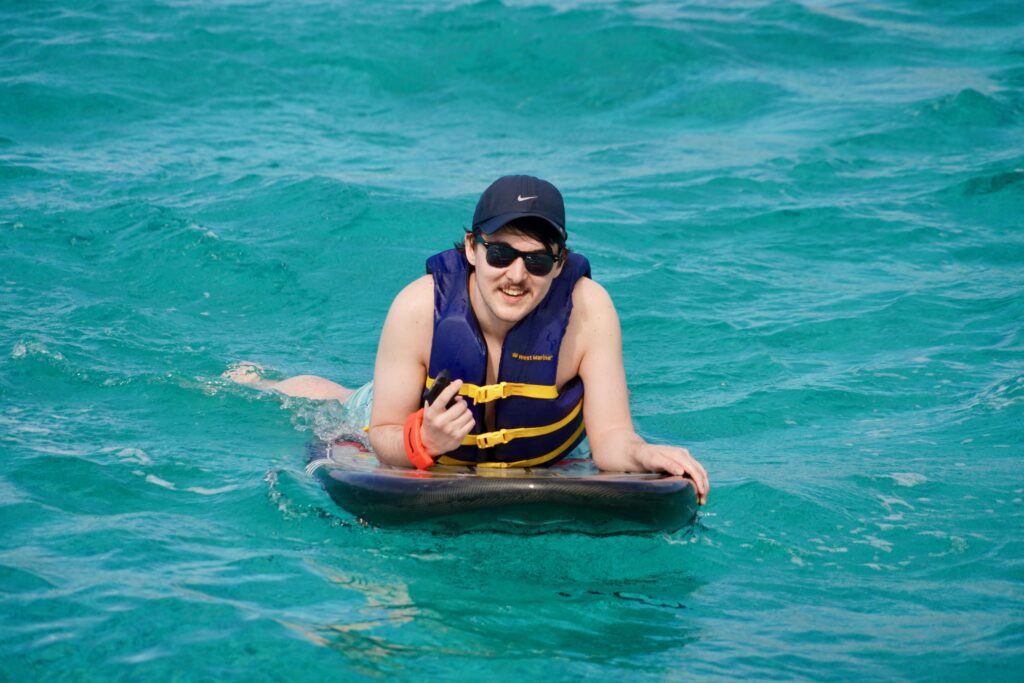
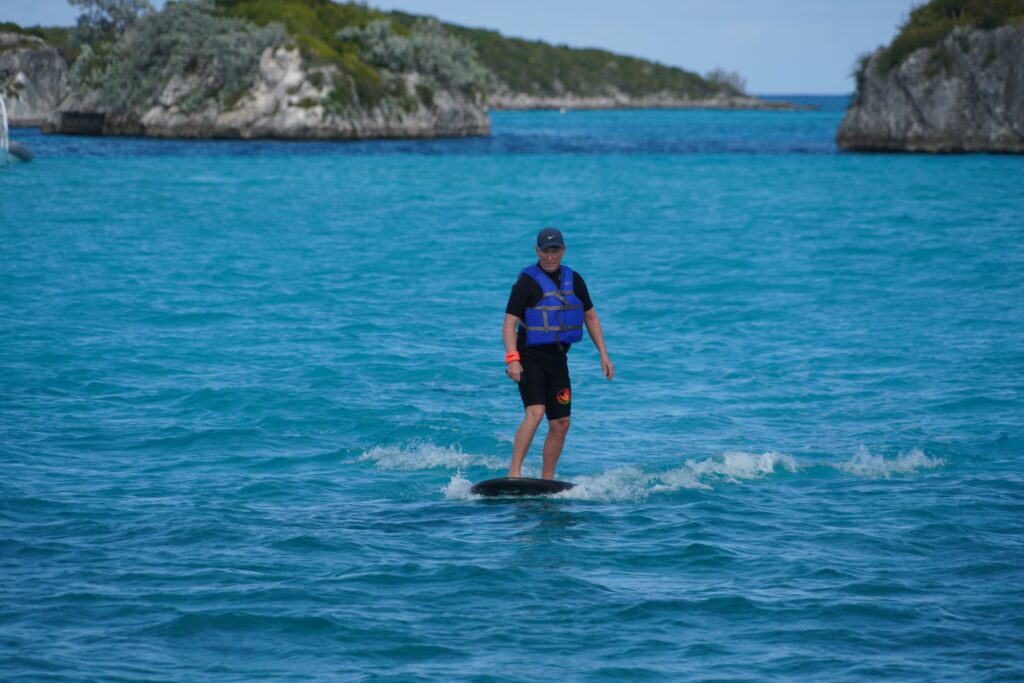
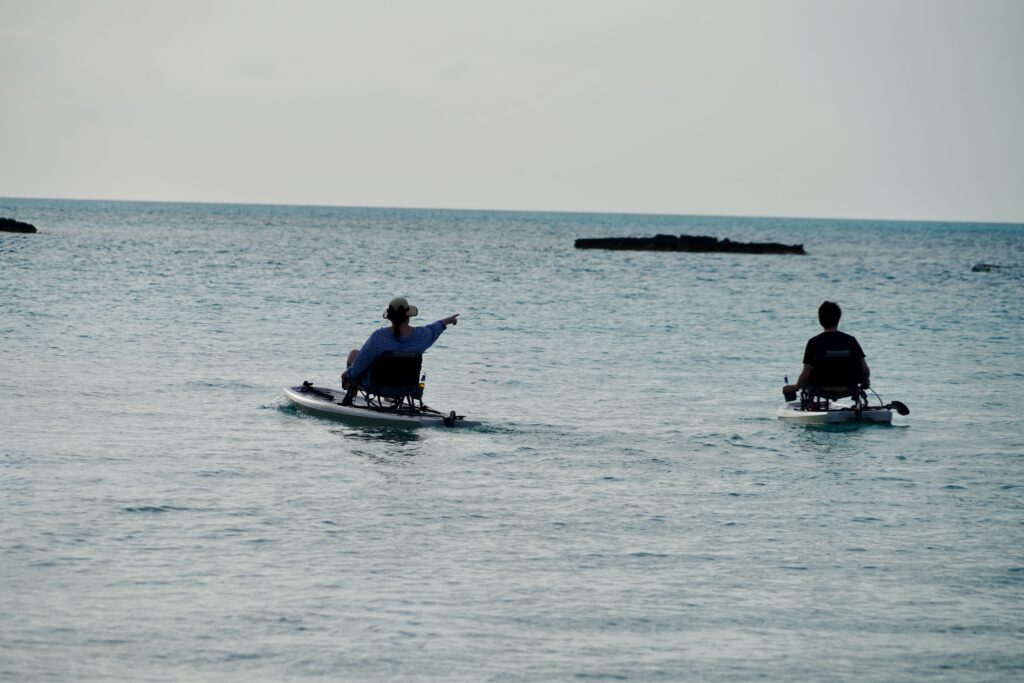
So some days, we just hung out at the boat, lounging, kayaking, and foiling.
We snorkeled the wreck of a drug smuggler’s plane that ditched here during the Pablo Escobar drug-running empire in the 1970s.
Roy and Hayden did some foiling.
We kayaked.
This is what we were kayaking over:
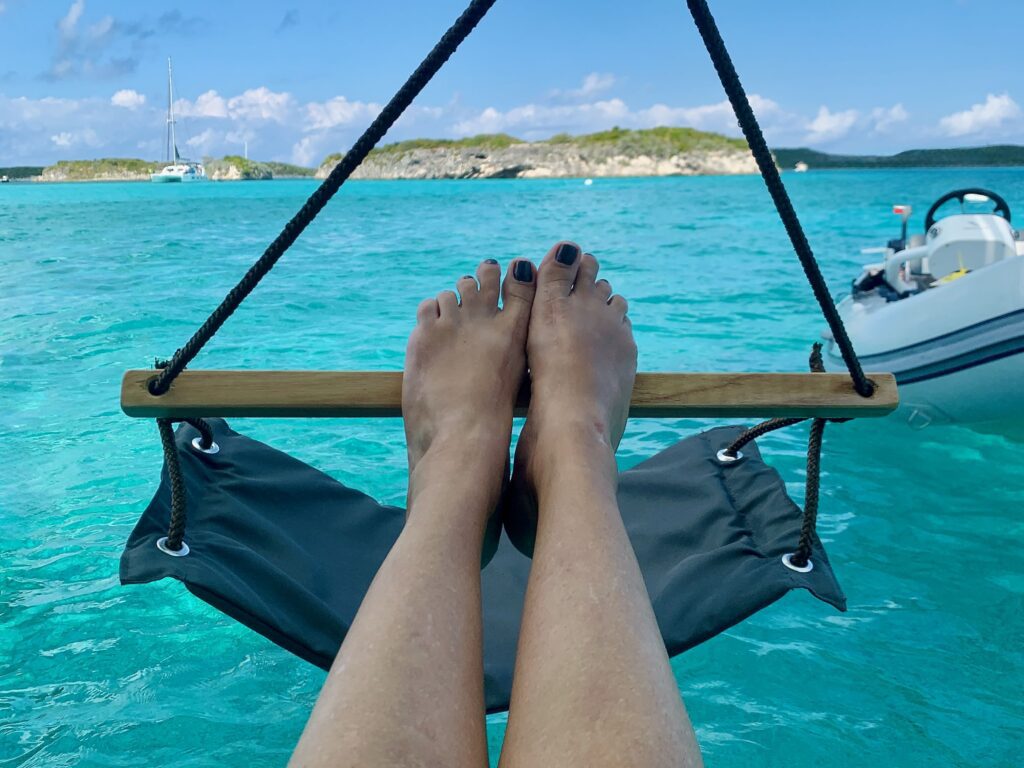
And we just soaked it all in.
Where We Ate
We usually ate at Staniel Cay Yacht Club (SCYC), since we were moored there.
Established in 1956, the club is the definitive social and logistical hub of the central Exumas. This historic establishment features an 18-slip full-service marina, a mooring field, a boutique hotel with 14 waterfront bungalows, a private airstrip, and, of course, a bar and a few restaurants.
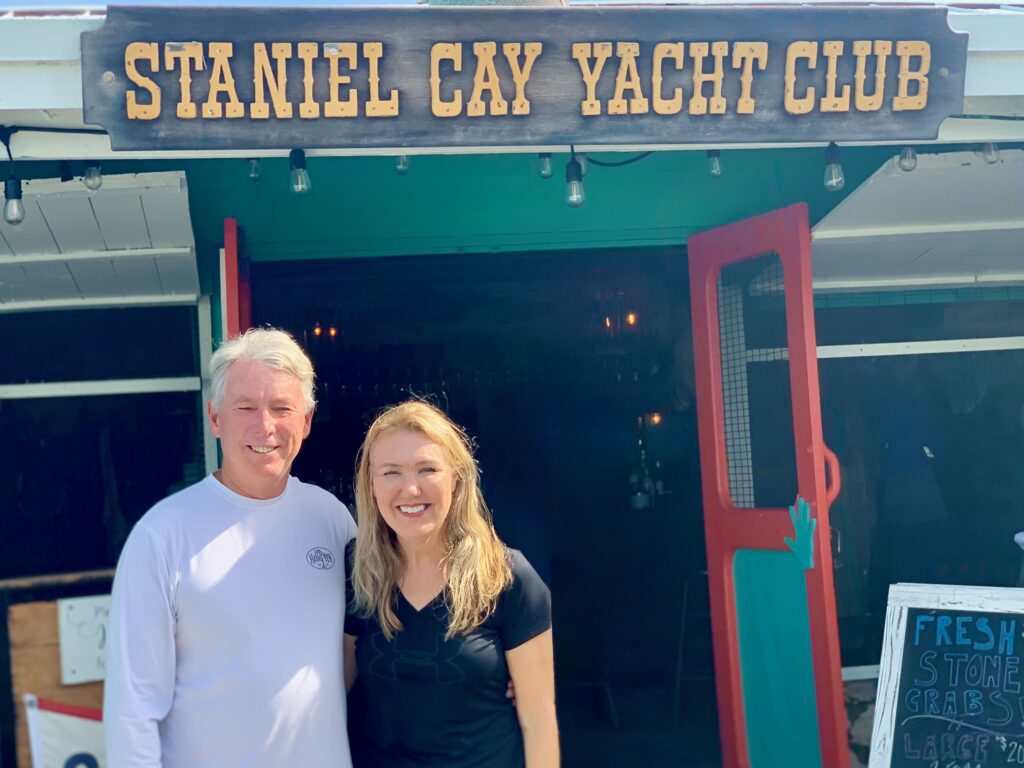
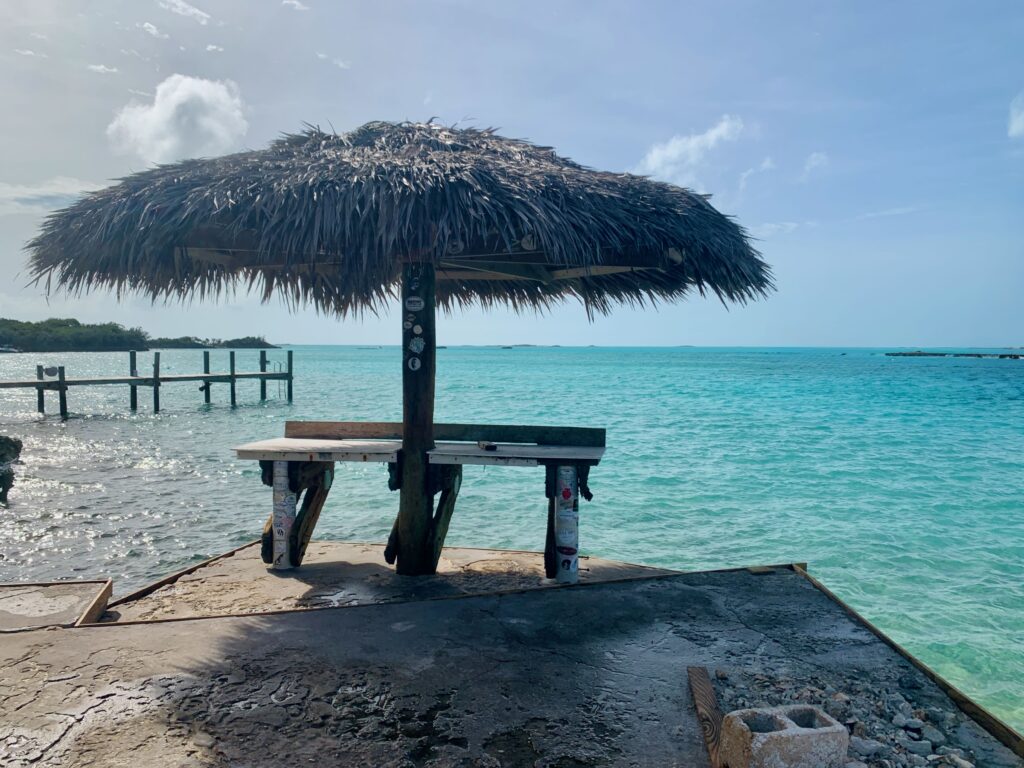
The club gained international fame in the 1960s as a base for the cast and crew of the James Bond film Thunderball. Today, it remains celebrated for its “Old Bahamas” charm, recognizable by the hundreds of nautical burgees decorating the rafters and its commitment to hosting the annual New Year’s Day Sailing Regatta.

Being there kind of felt like a rite of passage.
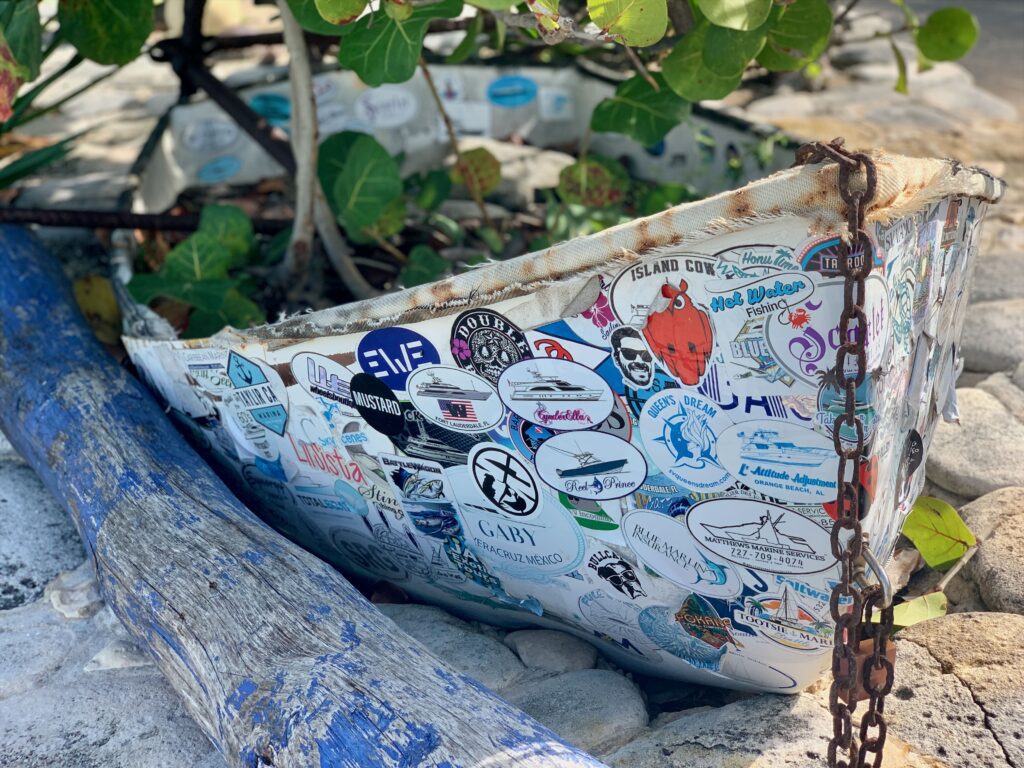
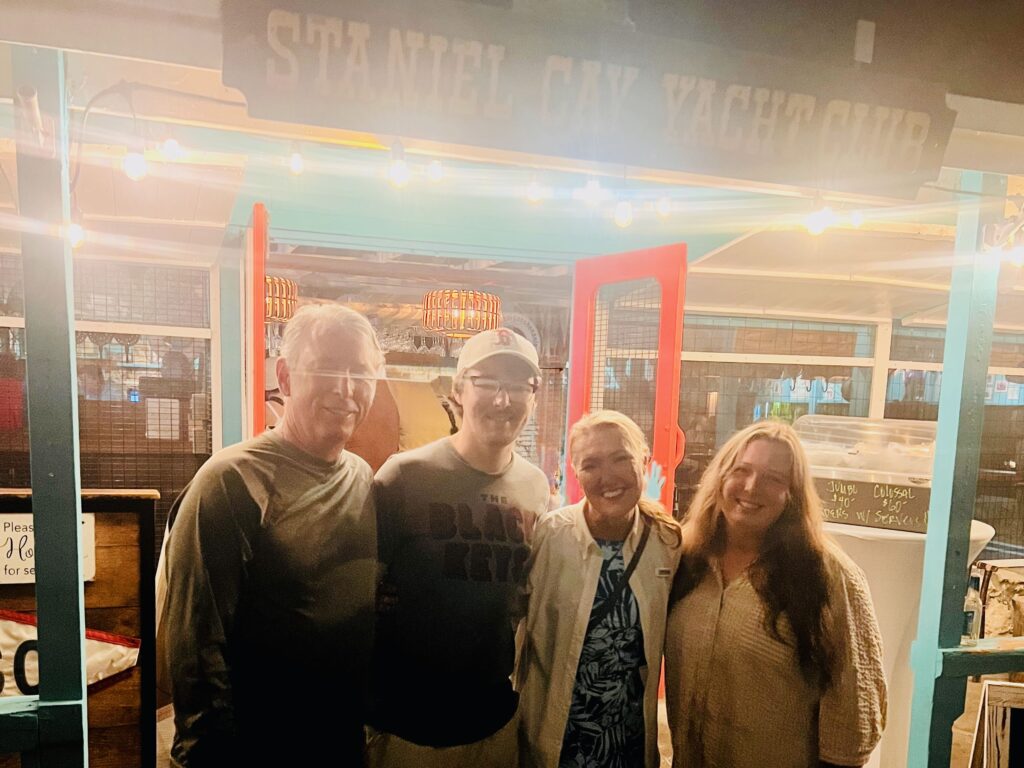
There aren’t many restaurants on the island, but if I were to return, I would like to try some of the others.
Shopping
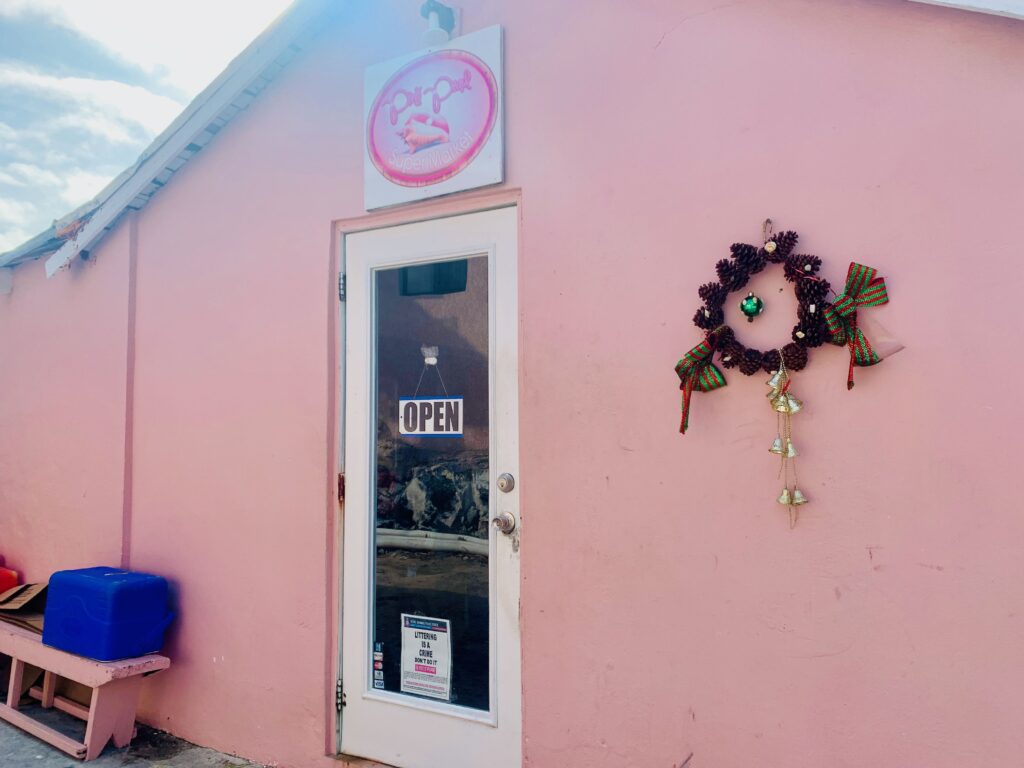
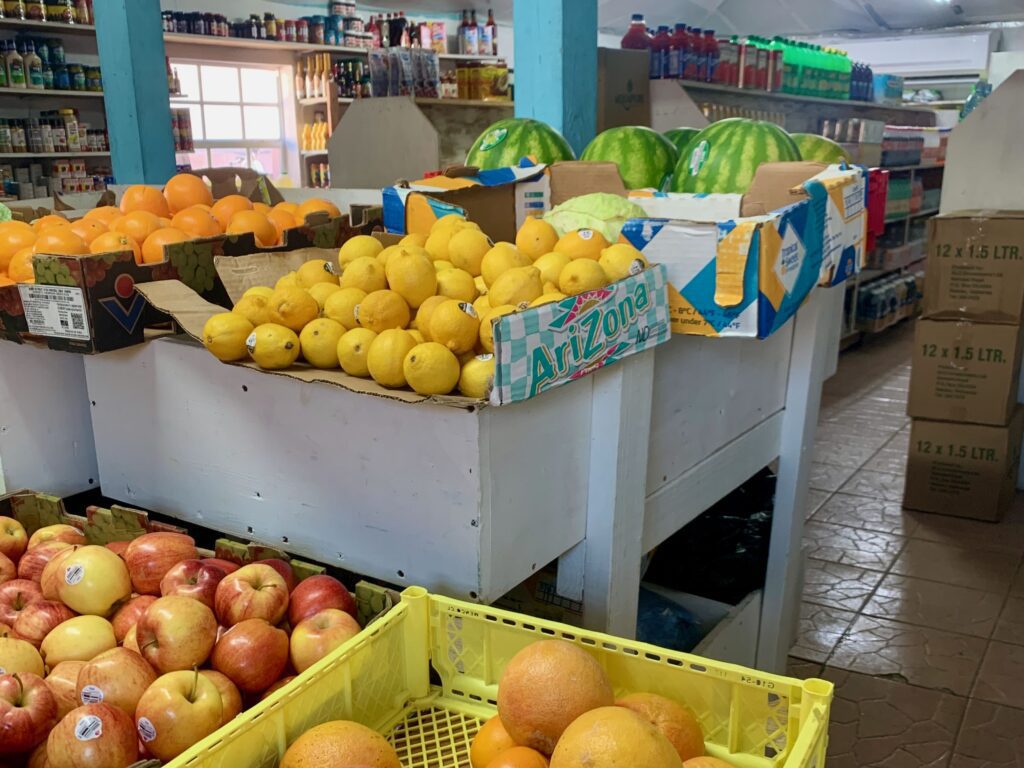
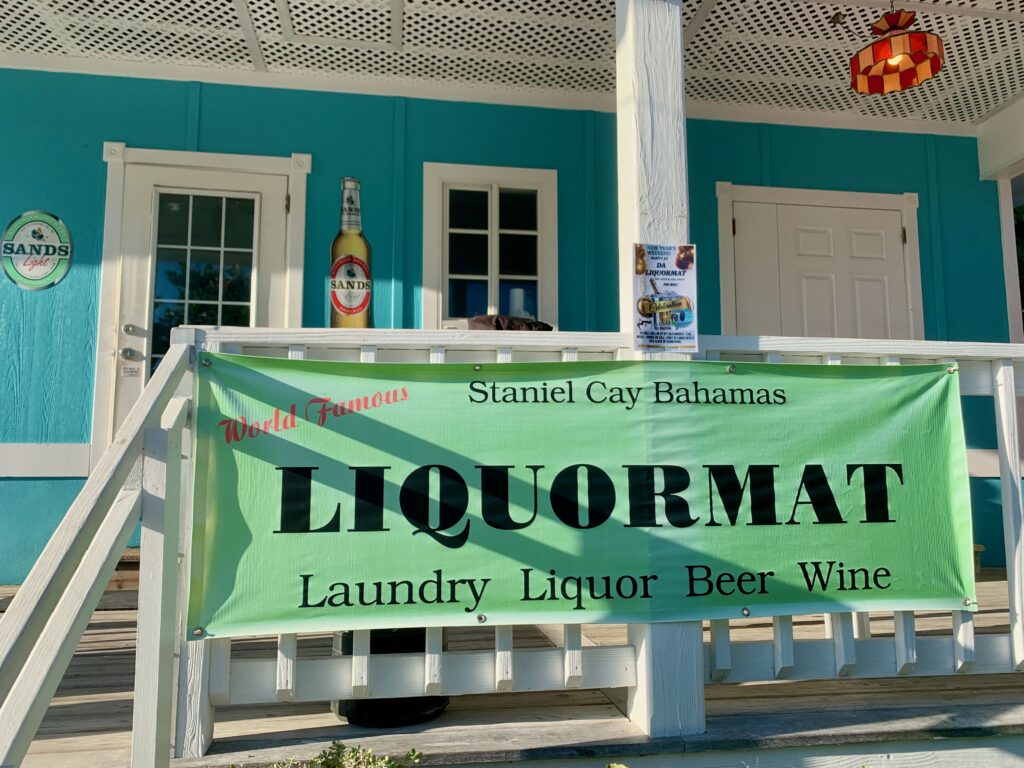
There are a few commissaries on Staniel Cay. Our favorite was Pink Pearl.
It was surprisingly well stocked.
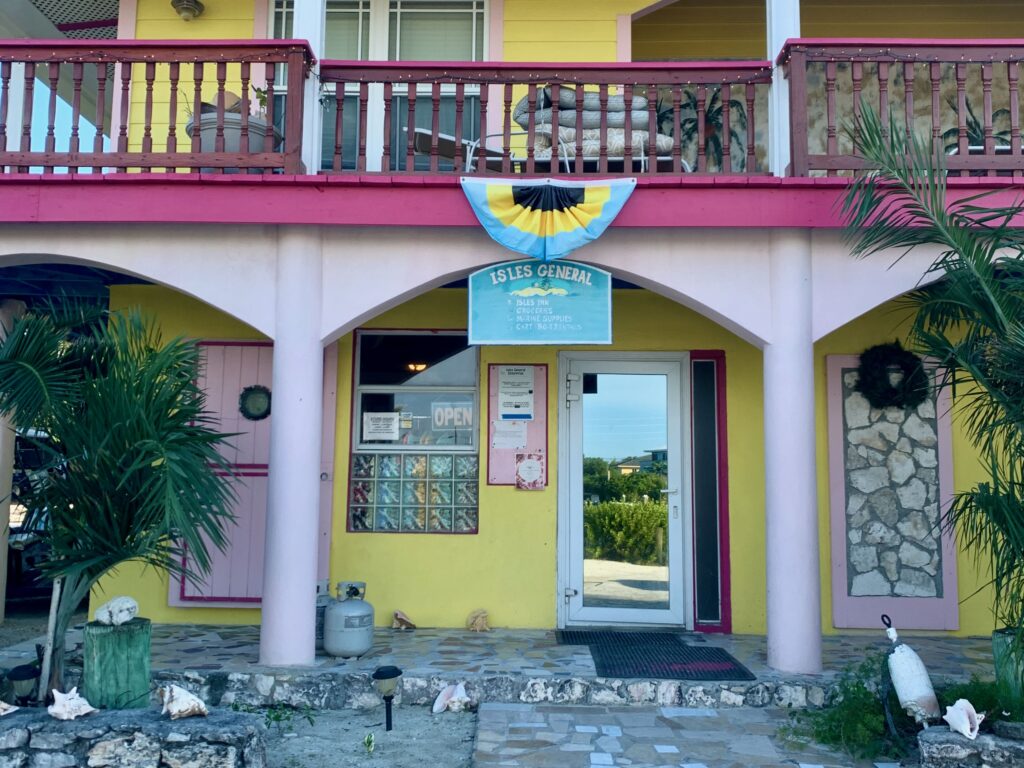
We also went to Isles General, but we didn’t feel like it had as much inventory, especially of fresh fruits and vegetables. It did, however, have more boat-related products.
There’s a mall at the airport.
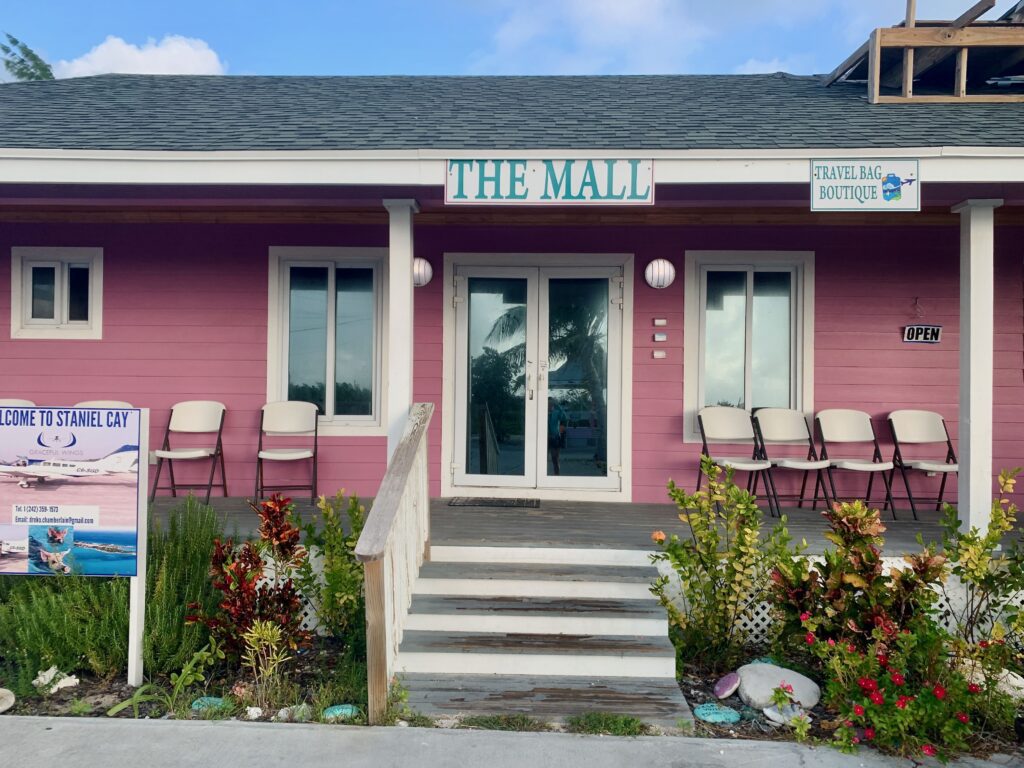
Don’t get your hopes up too much, though—it’s one room and looks like this inside:
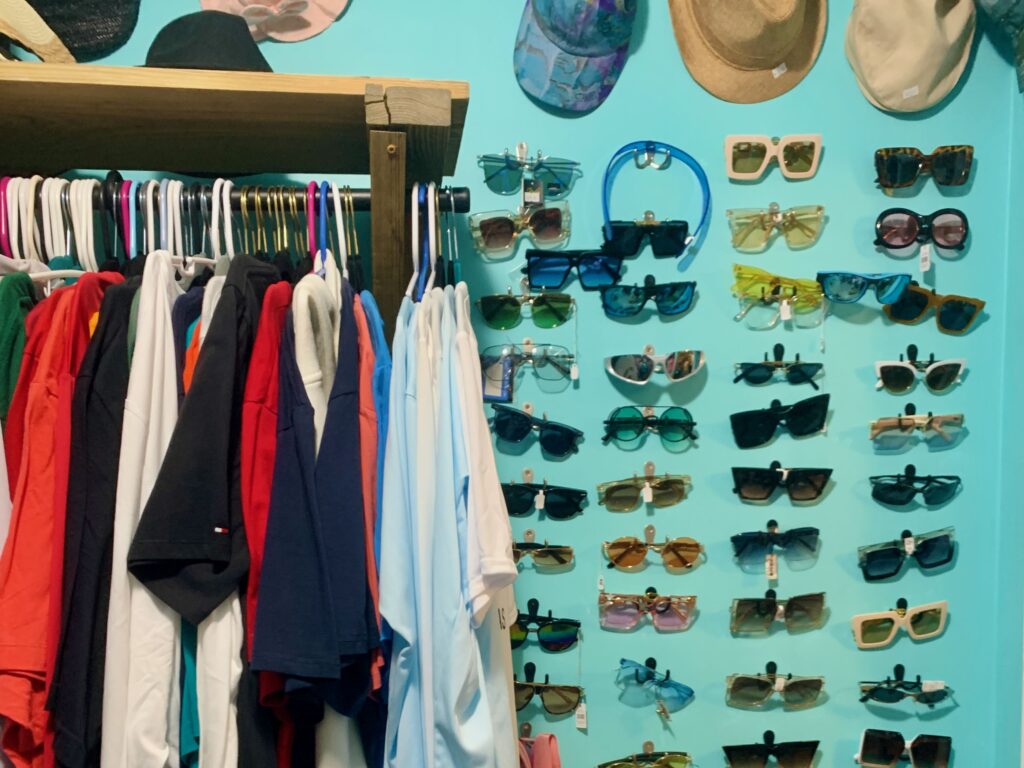
But as I always say, something’s better than nothing!
Accommodations
- Staniel Cay Yacht Club: The classic choice, offering all-inclusive packages that often include your own 13-foot Whaler (skiff) to explore the nearby cays.
- Villas and Rentals: Several luxury villas and locally-owned cottages are available for rent through platforms like Airbnb or private management companies. EMBRACE Resort is another notable option, focused on sustainable tourism and Bahamian culture.
Since we were staying on our boat, we were happy to get mooring ball #12 through Staniel Cay Yacht Club.
Getting There
By Air: Small regional carriers like Flamingo Air (from Nassau) and Makers Air (from Fort Lauderdale/FXE) offer daily flights. These flights are often on 9-seater Cessna Caravans.
Now, a story. Our son, Hayden, was joining us at the airport on a Flamingo Air Flight. As we were preparing to pick him up at the airport, he texted us, “Uh, they left me.”
Wait, what? Yes, they had left him.
Good-natured as he is, he stayed in Nassau that night and caught the first flight the next day. To their credit, Flamingo Air offered a voucher for his troubles, but the situation was a bit comical: how do you leave one of the passengers behind on your nine-seater flight? Funny.

Staniel Cay has its own 3,000-foot paved runway (TYM), making it one of the few islands in the central Exumas accessible by scheduled commercial flights from Nassau and Fort Lauderdale.
- By Sea: Private yachts and “Day Away” powerboat tours from Nassau are popular options. However, the 75-mile crossing from Nassau can be rough depending on the wind and “the rage” at the cuts. We sailed there on our catamaran.
Getting Around
There are no rental cars on Staniel Cay. You can rent golf carts to navigate the island’s narrow paved roads, or you can do what we did: we walked everywhere.
Final Thoughts
Ultimately, Staniel Cay is more than just a convenient stopover; it is a unique experience that stands out as a highlight of the Exuma Cays. While we enjoyed spending time with pigs and rare iguanas, and especially snorkeling Thunderball Grotto, we equally liked the island’s unique blend of rugged isolation and rich yachting heritage.
We spent ten days there and were never bored.
Travel Notes
We stayed on our catamaran in this anchorage.
Originally experienced in January 2024; content refreshed in March 2026.
