

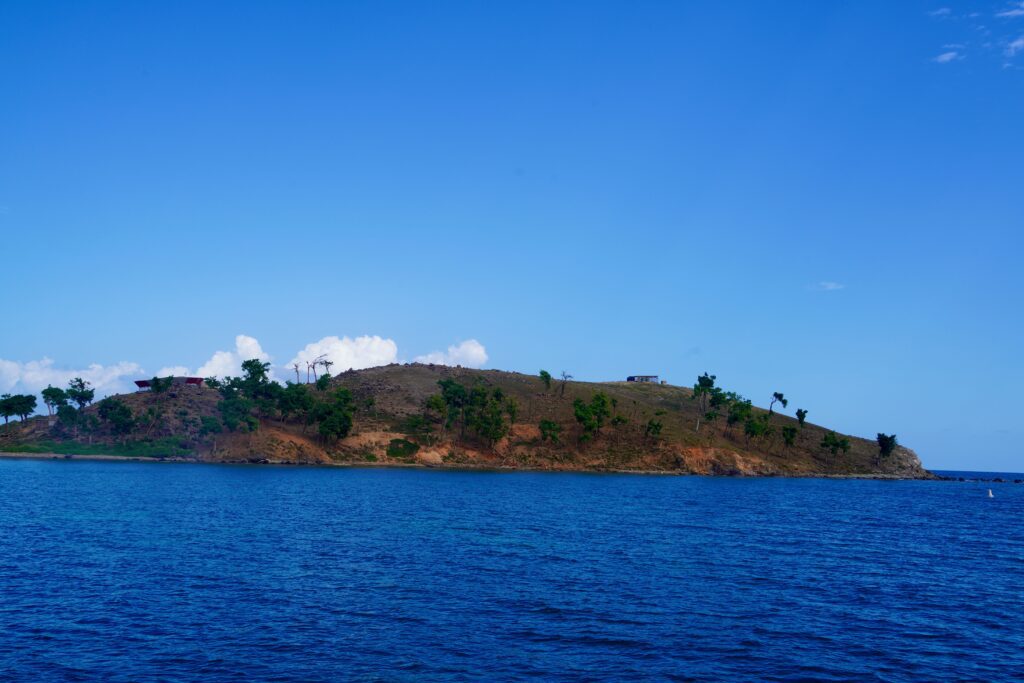
Rising from the turquoise waters just off the coast of Humacao, Puerto Rico, lies a 38-acre limestone cay that holds one of the most significant roles in the history of biological science. Known officially as Cayo Santiago, but more famously as “Monkey Island,” this small outcrop is home to approximately 1,800 rhesus macaques (Macaca mulatta). It is not a zoo, nor is it a sanctuary in the traditional sense; it is the world’s longest-running continuous primate field site.
No Public Access
Because Cayo Santiago is a restricted research facility, members of the general public are not allowed to set foot on the island. This rule is strictly enforced for two primary reasons:
- Protecting the Research: Human interference can disrupt the natural social behaviors that scientists have spent decades documenting.
- Biosafety: Rhesus macaques can carry the Herpes B virus, which is harmless to them but can be fatal to humans. Conversely, humans can pass common respiratory illnesses to the monkeys, which could devastate the colony.
However, you can still experience the “Island of the Monkeys” from a distance. Several tour operators in the Punta Santiago area of Humacao offer boat and kayak excursions that circle the island. We anchored in the Cayo Santiago anchorage and circled the island on our dinghy.
The Genesis of Monkey Island
The story of Cayo Santiago began in 1938 with a daring vision by primatologist Clarence Ray Carpenter. At the time, scientists faced a logistical hurdle: studying primates in their native habitats (like India or Southeast Asia) was difficult due to terrain and distance, while studying them in cramped laboratory cages altered their natural behavior.

Carpenter proposed a “middle ground”—a free-ranging colony on an isolated island where monkeys could live in natural social groups but remain accessible for close observation. With funding from Columbia University and the University of Puerto Rico, Carpenter traveled to India and captured over 400 rhesus macaques. These “pioneer” monkeys were shipped across the Atlantic and released onto Cayo Santiago.
A Goldmine of Biological Data
Since that initial release, the colony has been managed by the Caribbean Primate Research Center (CPRC), under the University of Puerto Rico. What makes Cayo Santiago truly unique is the longitudinal data. For over 85 years, researchers have tracked every single birth, death, and social interaction on the island.
Because the population is “closed” (no new monkeys are introduced from the outside), the pedigree of every monkey is known. This has created a massive genetic database that allows scientists to study:
- Inheritance of Behavior: How traits like aggression or sociability are passed down through generations.
- Aging: Because macaques age roughly three times faster than humans, researchers can observe the entire lifespan of an individual—and its impact on the group—in just over a decade.
- The Skeleton Collection: When a monkey dies, its remains are often preserved in the CPRC’s skeletal collection, which now houses over 3,000 specimens with known life histories, providing an unparalleled resource for studying bone disease and physical evolution.
The Social Hierarchy: Despotism and Kinship
The macaques of Cayo Santiago live in a highly structured, “despotic” society. Their world is governed by two main factors: Matrilines and Rank.
- Female Philopatry: Females stay in the social group they were born into for their entire lives. This creates powerful family dynasties (matrilines) where sisters, mothers, and grandmothers support one another.
- The Daughter Rule: In a quirk of macaque society, mothers usually remain dominant over their daughters, but among sisters, the youngest often holds the highest rank—a phenomenon researchers call “youngest ascendancy.”
- Male Dispersal: Unlike females, males must leave their birth group upon reaching puberty. They must “immigrate” into a new group, starting at the bottom of the social ladder and working their way up through alliances or sheer endurance.
Observations
Here are some of the monkeys we “met” that day.
Scouts
It became immediately obvious that they were curious about us. We saw multiple monkeys serving as “scouts.”


This one jumped in the water and circled around our dinghy:

On the Move
We watched them navigate around the island.


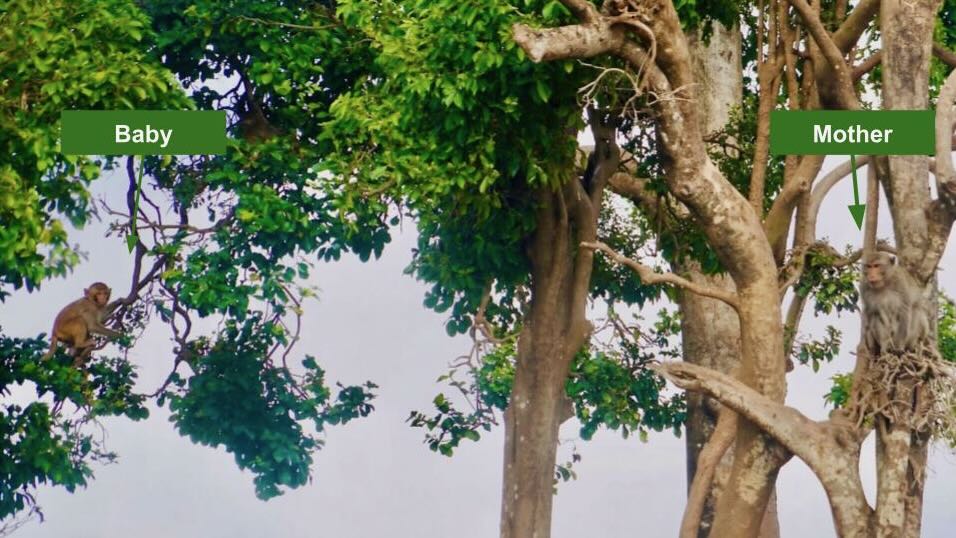
In trees:


We watched this baby actively try to catch up to its mother:
On the ground:


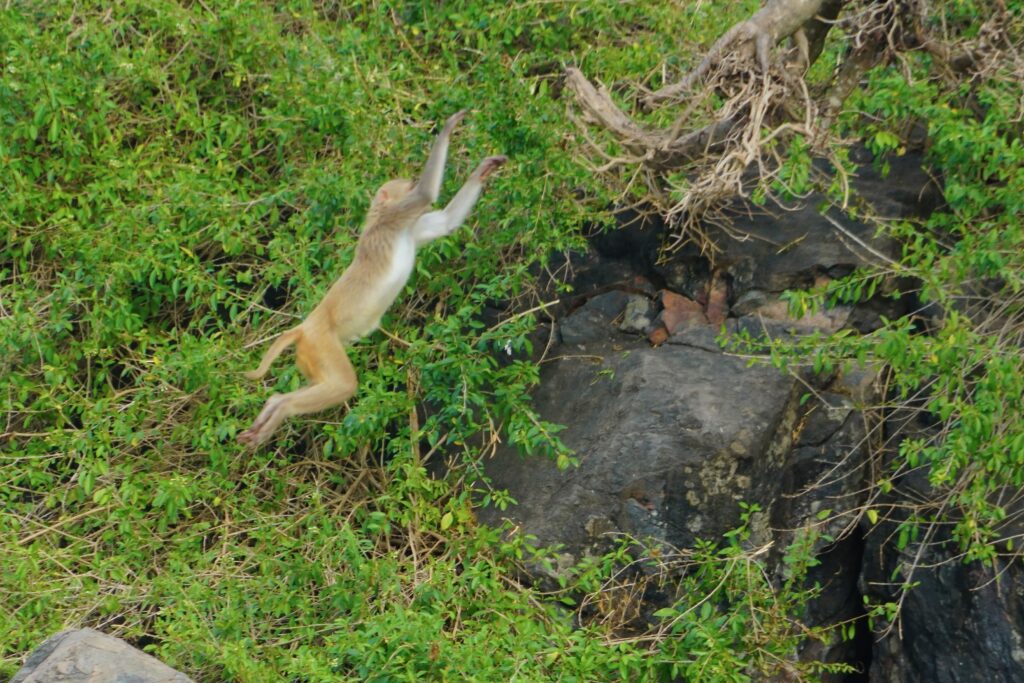
…and rock climbing to the summit.

Snacking
We saw more than one eat leaves off the trees.

Relaxing
Many were just casually lounging.


Mother and baby:

There were so many of them! Those silhouettes are all monkeys!

My favorite shots of the day. I feel so fortunate to have witnessed them:



Hurricane Maria: A Natural Experiment in Resilience
In September 2017, Hurricane Maria slammed into Puerto Rico as a Category 4 storm. Cayo Santiago was directly in its path. The storm decimated the island’s vegetation, stripping the trees bare and destroying the research infrastructure, including the systems that provided the monkeys with fresh water.

In the aftermath, scientists feared the colony would be wiped out. However, the macaques proved incredibly resilient. Only about 2.75% of the population perished in the storm itself. But the most fascinating discovery came in the years that followed.
The “Kindness” Shift
Before the hurricane, the monkeys were notoriously competitive, often fighting over shade and food. After the storm, with shade trees destroyed and the environment harsher, researchers observed a dramatic shift in social behavior.
- Increased Tolerance: Monkeys began to sit closer to one another and share limited shade, even with individuals they weren’t related to.
- Expanding Social Networks: To cope with the stress of the altered environment, the macaques expanded their social circles, forming “friendships” with distant acquaintances to reduce stress.
This finding, published in journals such as Science, provided profound insight into how natural disasters can reshape a species’ social fabric, favoring cooperation over competition during extreme crises.
Accelerated Aging and Human Health
While the monkeys became “kinder,” the stress of the hurricane took a hidden toll. A study led by the University of Pennsylvania and other institutions found that the monkeys who lived through Maria experienced accelerated biological aging.
By analyzing gene expression in the monkeys’ immune cells, researchers found that the survivors’ immune systems had aged the equivalent of two extra years (about 7-8 human years) compared to monkeys who had not experienced the storm. This research is vital for humans, as it helps doctors understand how the “weathering” of chronic stress from natural disasters can lead to premature illness in survivors of similar events.
Fast Facts about Cayo Santiago
| Feature | Detail |
| Location | 0.6 miles off the coast of Humacao, PR |
| Species | Rhesus Macaque (Macaca mulatta) |
| Current Population | ~1,800 monkeys |
| Established | 1938 by Clarence Carpenter |
| Management | Caribbean Primate Research Center (UPR) |
| Primary Food | Commercial monkey chow supplemented by vegetation |
| Scientific Impact | Over 1,000 peer-reviewed publications |
Getting Here
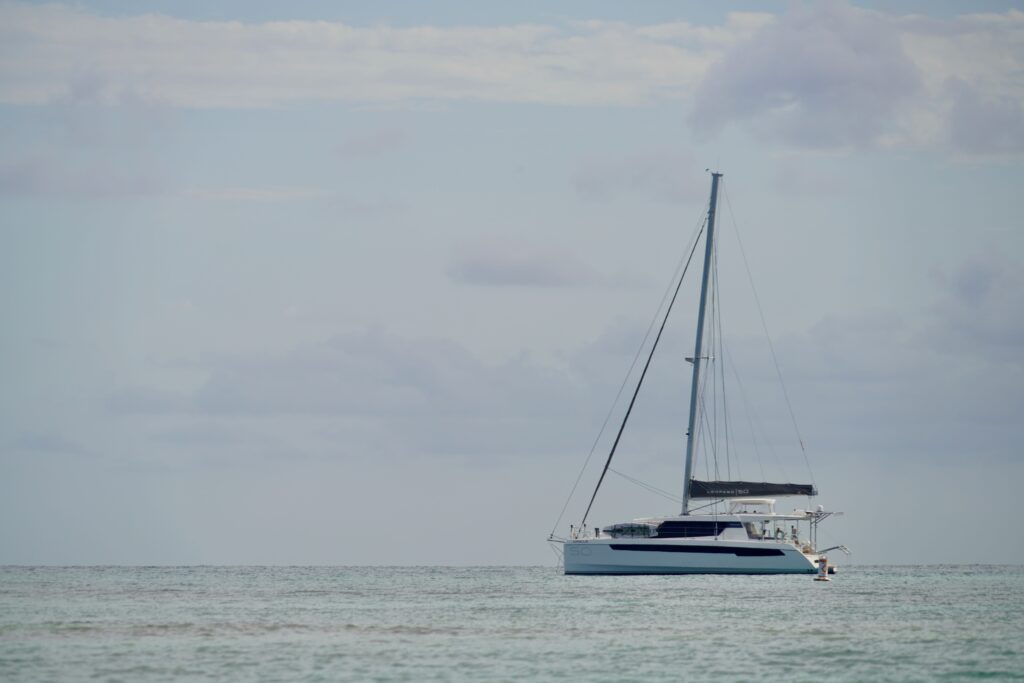
You can only arrive by boat. We sailed here on our catamaran and anchored in the Cayo Santiago anchorage.
Final Thoughts
Cayo Santiago remains a bridge between the wild and the lab. It has survived world wars, economic crises, and devastating hurricanes, yet the monkeys continue to thrive. For the people of Puerto Rico, “La Isla de los Monos” is a point of local pride and a symbol of resilience. For the global scientific community, it is an irreplaceable window into the primate mind.
As we look toward a future of shifting climates and increasing natural disasters, the lessons learned from these 1,800 monkeys—about how to survive, how to age, and how to be a little kinder to our neighbors—are more relevant than ever.
It was absolutely fascinating, even from afar.
Travel Notes
We stayed on our catamaran in the anchorage.
Originally experienced in March of 2024; content refreshed in March of 2026.
