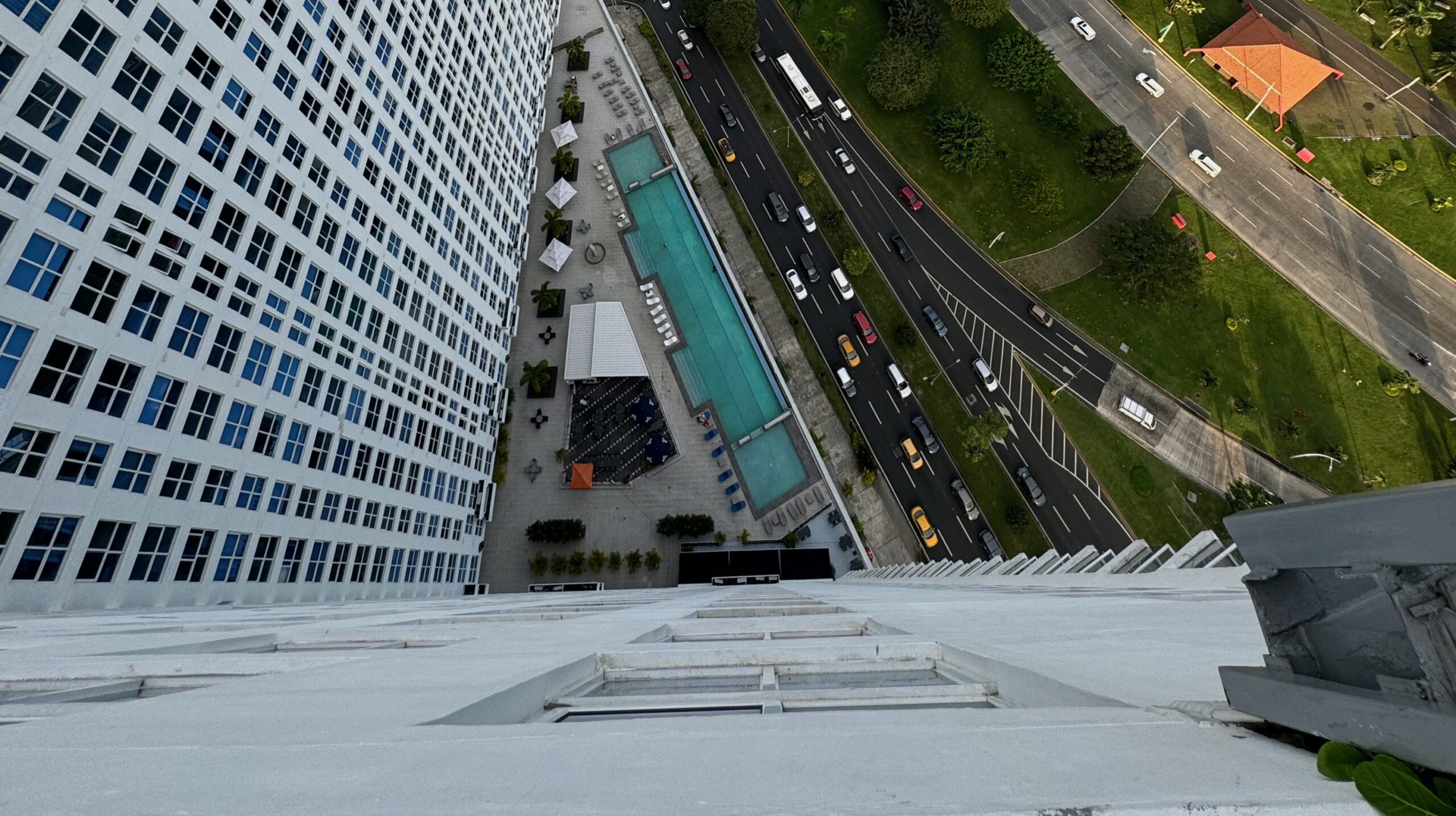
We stand on the 37th floor of the POIN Panamá building in Panamá City. Earlier this morning, I hadn’t even heard of “urban ziplining,” yet here I am, at 59, in a city nearly 2,000 miles from home, about to do it. I’m here with my husband, Roy, and my son, Hayden.
It all starts as a throwaway line over breakfast, when Hayden reads aloud from a list of things to do in the city: Casco Viejo, Old Panama, the fish market, ziplining between skyscrapers. He pauses at the last one, and I laugh, prompting him to look up from his phone, over the top of his glasses, with the kind of sparkle in his eyes that says he’s dead serious.
“You’re joking,” I say.
“Why not?” he asks. “It’d be fun.”
Fun? What kind of person thinks whirring above a city street, 37 floors up, is fun?
The kind I raised, apparently. Given how adventurous Hayden is, his enthusiasm shouldn’t surprise me. In fact, both of my children are quite fearless, which has always made me proud.
But now that same pride is about to get very personal.
For years, I’ve been collecting thoughts to validate my self-inflicted acrophobia.
Dad was afraid of heights his whole life, I tell myself. I might plunge to my death. And what if I regret it halfway down?
The notions have become part of my identity. Some of these ideas are sensible, a few are true, and many are just habits wearing the costume of wisdom.
As we step out of the elevator at the top of a skyscraper in Panamá, I can feel each heartbeat inside my chest. The air smells of warm concrete and faraway rain. Somewhere down below, a horn sounds and fades. A young man in a black T-shirt and baseball cap greets us with a smile far too relaxed for the occasion.
As we wait for our turn, I edge over to the balcony railing, grip it, and make the mistake of looking down. Suddenly, I feel light-headed.
The cars below seem no bigger than a parade of tiny ants marching along the street, and the whole city tilts in my vision, glittering and indifferent. My knees go soft. A small, ridiculous part of my brain recites all the reasons I should get back in the elevator and head downstairs.
“Roy, I can’t do this,” I tell my husband. My voice comes out thinner than I want it to.
Roy’s gaze holds mine. He doesn’t rush to laugh or fill the pause. He has always understood that fear doesn’t need to be argued with; it needs company. “You can,” he assures me in his slow, steady way. “You know you can.”
He’s probably right. He usually is, which is sometimes annoying but mostly a gift. I take his hand and slowly loosen my grip on the railing. I think of all the places that hand has steadied me over the years: slippery trails, the ladder leading onto a blimp, and more importantly, the long, unremarkable middle stretches of ordinary life. If anyone has earned the right to say “you can,” it’s him.
The cheerful attendant finally looks at us and asks, “Who’s up?”
“I’ll go,” I offer, knowing that if I don’t, I might lose my nerve.
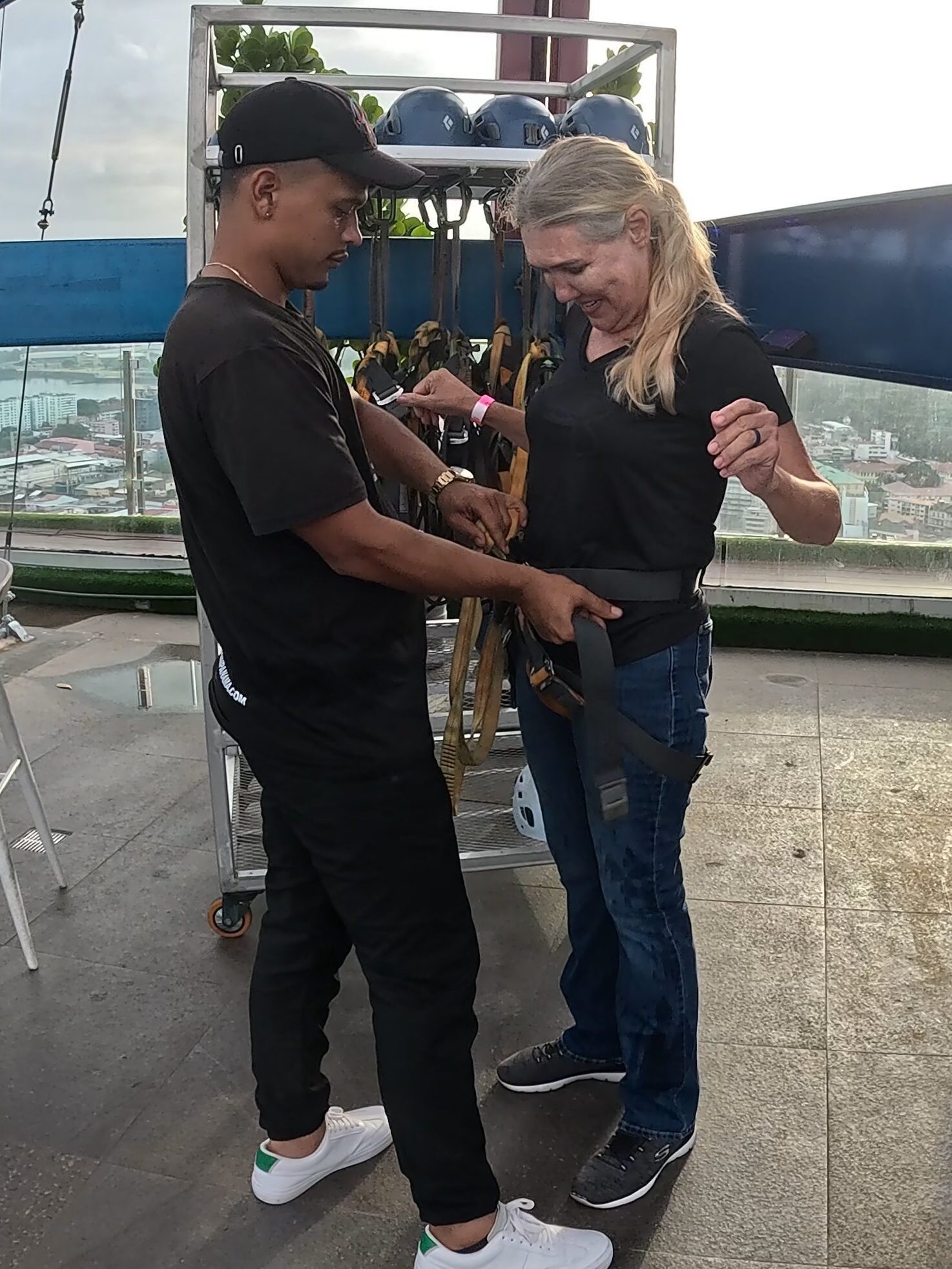
As the man fastens my gear, I run through a million reasons I shouldn’t be doing this. But I tell myself I can’t back out now.
I climb the stairs, my steps echoing off the metal. My legs feel sluggish. Halfway up, I stop, one hand on the rail, and take three long breaths. Below me, the stairwell drops away, and I tell myself not to look.
A different man waits at the top of the stairs, and he is decidedly less talkative.
He runs through the safety briefing in a rushed, emotionless rhythm. Keep your hands on the handles. Don’t touch the cable. Lean back. Wait for the brake. I nod at each point and absorb none of it.
He tightens the straps around my thighs and waist, tugging each buckle twice, and I try to memorize the sound of those tugs. Each one says secure. The helmet presses snugly against my ears, and the world becomes slightly muffled, as though I’m underwater.
On the zipline launch platform, the wind is stronger. Beyond the edge, a steel cable runs out into open air, shrinking to a thread before it reaches the far tower. It looks impossible, far too thin for what it’s about to carry. I glance over at the man holding the zipline hook, a calm figure with rough hands, and think, I’m sure he’s done this hundreds of times. Somehow, that’s comforting. Anything that’s about to happen to me for the first time is, for him, an ordinary Tuesday.
“First time?” he asks.
“It’s that obvious?”
“Everyone is nervous the first time,” he replies. “Then they are happy.” He says it matter-of-factly, and, strangely, I believe him.
With swift, silent efficiency, the man clips my harness onto the zipline tether and gestures for me to grab the handles. I grip them so tightly my knuckles turn white, and I feel my damp palms slide along the cool metal.
“Lean back,” he instructs.
At this moment, every instinct screams the opposite. Lean back? Are you kidding me?
But I do it. I let my weight go and sit back, trusting a few buckles and a stranger’s steady voice. His hands settle on the small of my back, and for one suspended second, the world is perfectly still.
Then—whoosh—I’m propelled forward.
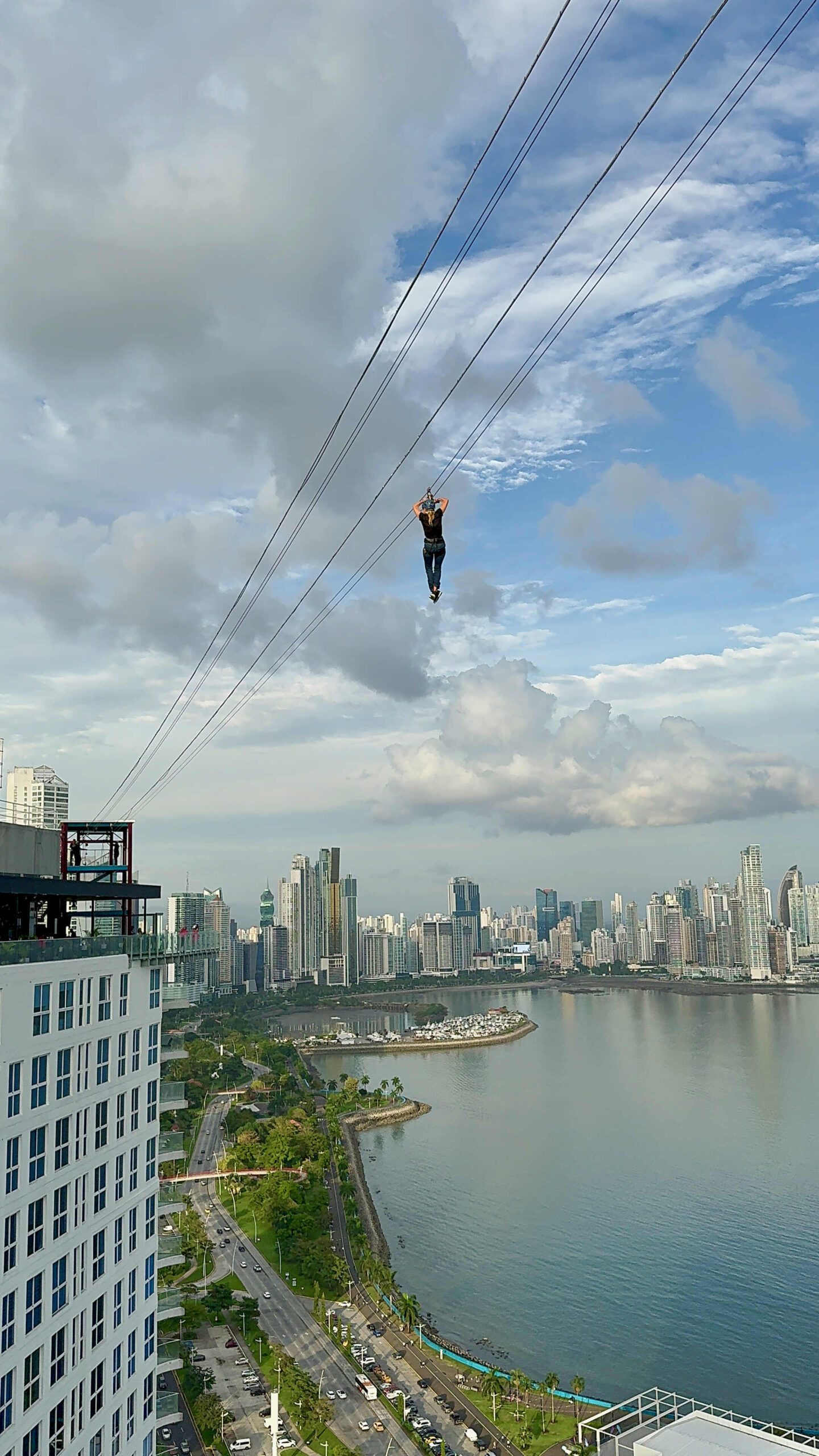
The zipline’s whir drowns out everything else: the traffic, the wind, even the anxious thoughts in my head. The cool breeze brushes my face, and the fear that has clung to me all morning peels away like a wet coat. For the first few seconds, I forget to breathe. Then I remember, and a laugh—loud, unplanned, and a little wild—escapes me.
Once airborne, I can’t help but grin. I look down, and this time the height doesn’t terrify me. It thrills me. The city spreads out before me: rooftops and glass, a crowded sidewalk, a sliver of green park, and the bay shimmering beyond the towers. Then I look across at the approaching skyscraper, my destination, which is growing larger by the second. The ride is exhilarating, and I wish it could last forever.
Somewhere in the middle of this glide, I think, absurdly, of every time I’ve said, “Maybe next time.” How many next times have I let slip away? Up here, there is no maybe—only the wind, my next breath, and the cable that holds me up.
As I near the platform, the brake engages with a jerk, and my feet finally meet the deck. My legs wobble, then hold.
“That was incredible!” I exclaim to the three young men who greet me, my voice cracking with excitement. They smile as they unhook my harness, chatty and welcoming; one of them gives me a fist bump that I happily return.
I step aside, breathless, watching the cable and waiting for Roy. My hands are shaking, but it’s a different kind of trembling now, the kind that comes after laughing too hard. A few minutes later, a small figure appears on the far tower, then grows larger and larger until Roy comes whizzing in. He lands with a stumble, beaming.
“See? I told you you could do it!” he says, laughing and pulling me into a hug that smells like sunscreen and sweat.
Indeed.
Hayden comes zipping in right behind him, looking thoroughly pleased with himself. After all, he came up with this whole thing.
Afterward, we ride the elevator down to the restaurant, where they offer us a free soda. I can’t stop talking. I describe the cable, the wind, and the way the pedestrians looked like toy figures. All the while, Hayden and Roy listen, smiling as though I’m telling them about a place they’ve never been. In a way, I am.
“Again?” Hayden asks, eyebrows raised.
“Don’t push your luck,” I say. But I’m grinning, and all three of us know I’ve accomplished something today.

Sitting here drinking my soda, I think of another time I was sure I couldn’t do something. Just a few months ago, I got scuba-certified. I remember our first dive, sitting on the boat’s railing, regulator in my mouth, convinced that breathing underwater would go against everything my body knew. I was certain I would drown.
After a while, though, I did it: I leaned back and let myself roll backward into the water.
As we descended, my instructor held out his hand and pumped it twice, signaling to slow down and breathe. So I did. Diving initially frightened me, yet I eventually came to love it—the silence, the slow drift, the strange new world that had been right there all along.
Two leaps, and the same lesson both times: what I dread is never what’s actually there. What waits on the other side of fear is always bigger, brighter, and easier than the story I’ve told myself.
Now, whenever I face a new challenge, I recall that day in Panamá City with gratitude. I think of the damp palms, the tug of the buckles, and the instruction that seemed impossible but became the key: lean back. It’s a powerful reminder that we’re often capable of far more than we imagine.
At 59, I’m still learning that courage is its own reward, and that you never know what you’re missing until you lean back. Sometimes, all it takes is a hand to hold and a willingness to let go of the railing.
