

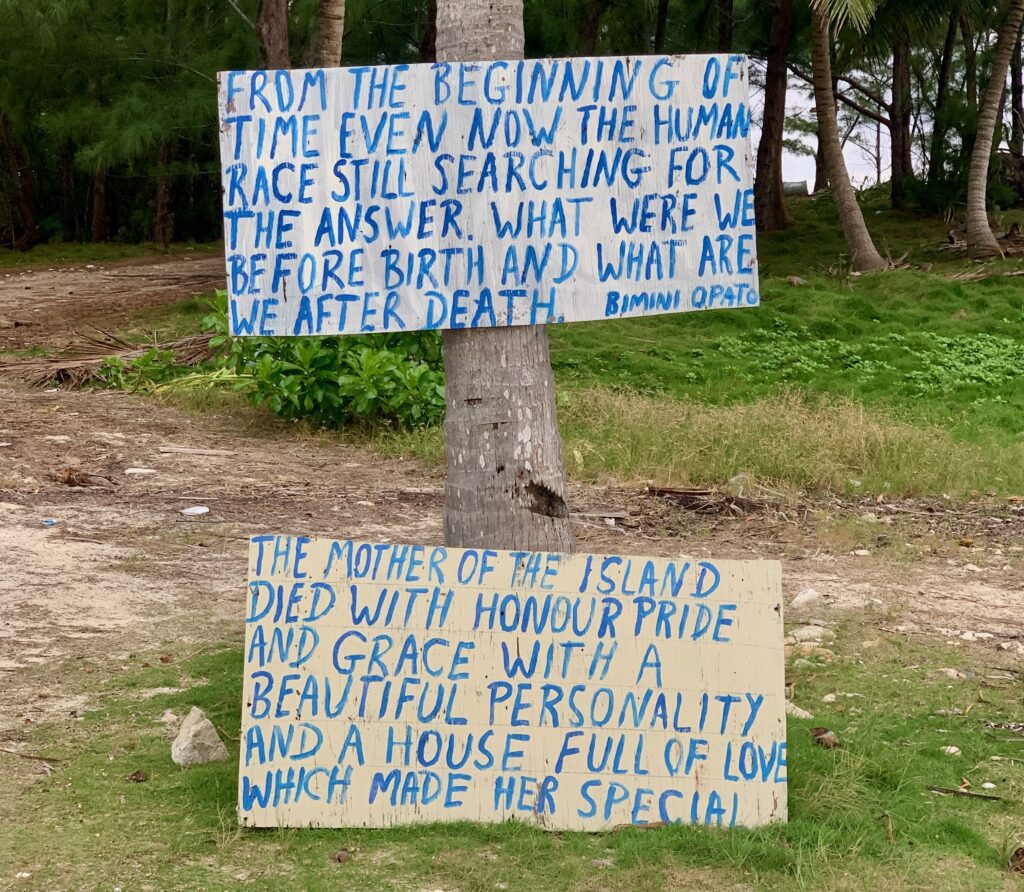
Bimini’s history is a captivating mosaic of ancient myth, colonial struggle, and high-stakes adventure. Long before it became a modern getaway, the island was inhabited by the Lucayan people, who named it “Bimini,” meaning “Islands of the Seeking” or “The Mother of the Waters”. This sense of mystery was amplified during the Age of Discovery when Spanish explorer Juan Ponce de León purportedly searched the island’s lush forests for the legendary Fountain of Youth in 1513.
The 18th and 19th centuries saw Bimini become a strategic outpost for wreckers and privateers, but its most colorful era arrived in the 1920s. As the closest foreign port to the United States, Bimini became a bustling hub for rum-runners during Prohibition, serving as a vital link in the Atlantic smuggling trade.
This era of grit and glamour attracted figures like Ernest Hemingway, who helped establish the island’s reputation as the “Big Game Fishing Capital of the World.” From the limestone ruins of its early settlers to the concrete hull of the SS Sapona, Bimini’s history remains etched into its landscape, telling the story of an island that has always been a gateway to the unknown.
Things We Loved Most About Bimini
1. The Dolphin House
This is an absolute must-see when visiting Bimini.
The Dolphin House in Alice Town, North Bimini, is a beautiful example of sustainable, recycled art architecture. It was founded in 1993 by local author and historian Ashley Saunders, who began building the structure using materials scavenged from the island’s shores and construction sites. The three-story house and museum is constructed primarily from coral rock, concrete, and a vast mosaic of recycled items, including sea glass, shells, old coins, and colorful tiles. Every inch of the exterior and interior is decorated with intricate maritime-themed patterns, with a particular focus on the wild Atlantic spotted dolphins that are native to the surrounding waters.
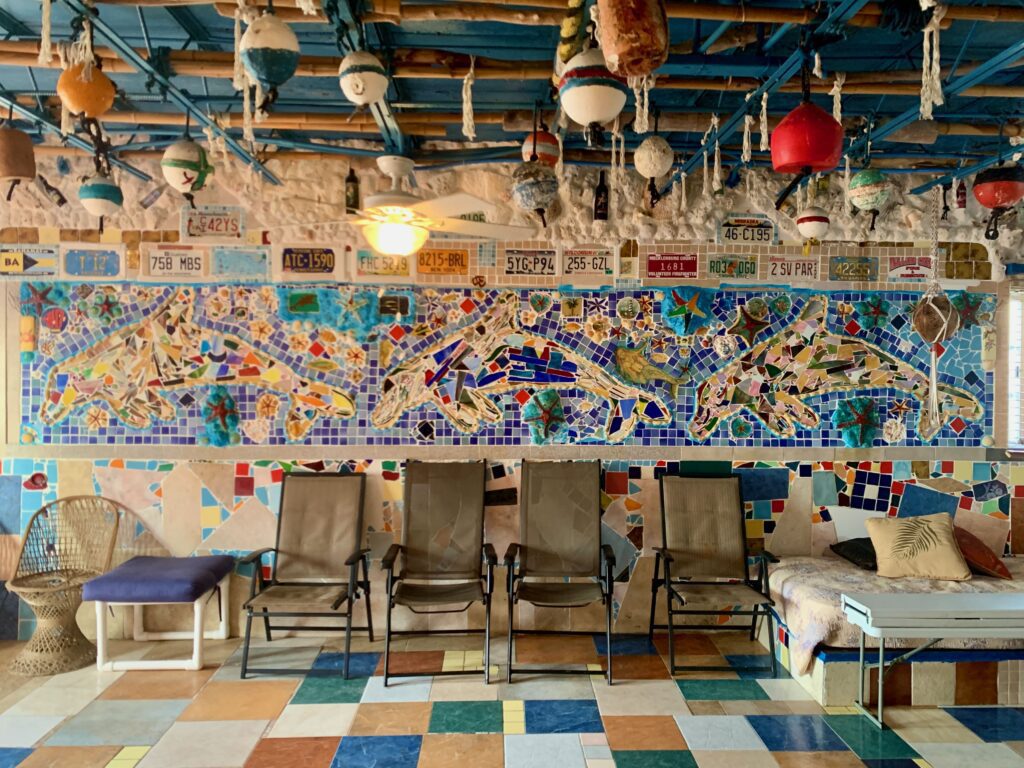
Hoping for a tour, we walked by one day to learn about how to book one. As we approached, a man popped his head out of a second-story window.
“Are you here for a tour?” he asked.
“Well, yes—that would be great!” Roy replied.
As the man ushered us into the home, he introduced himself as Ashley Saunders, the home’s owner, architect, and resident artist.
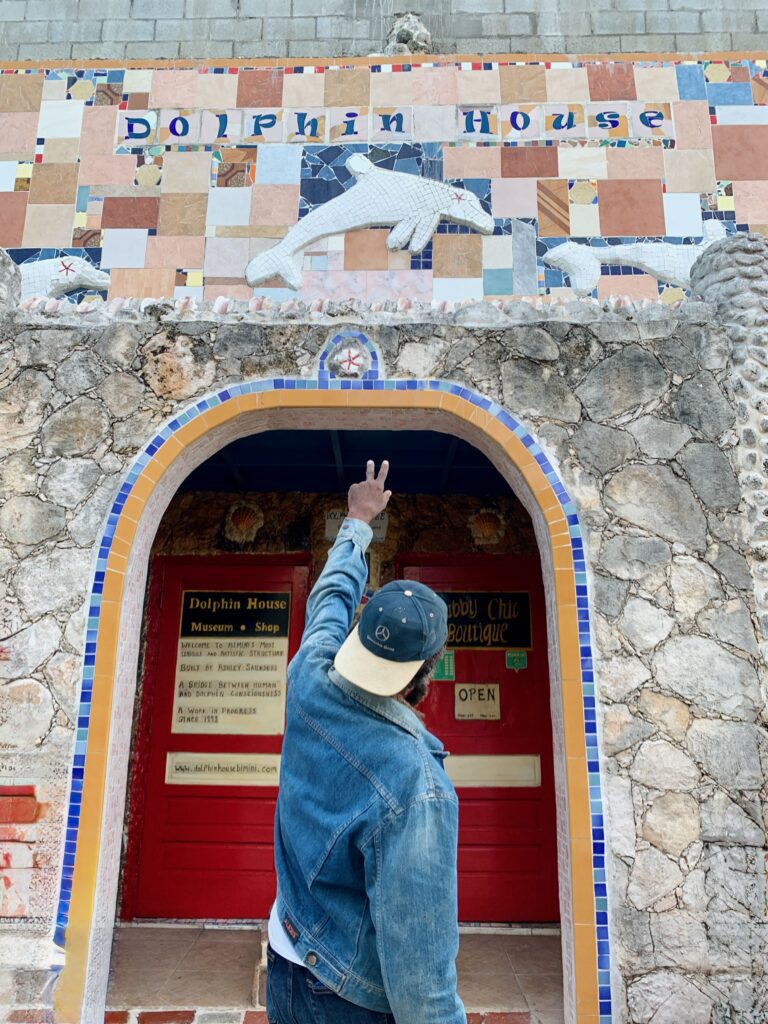
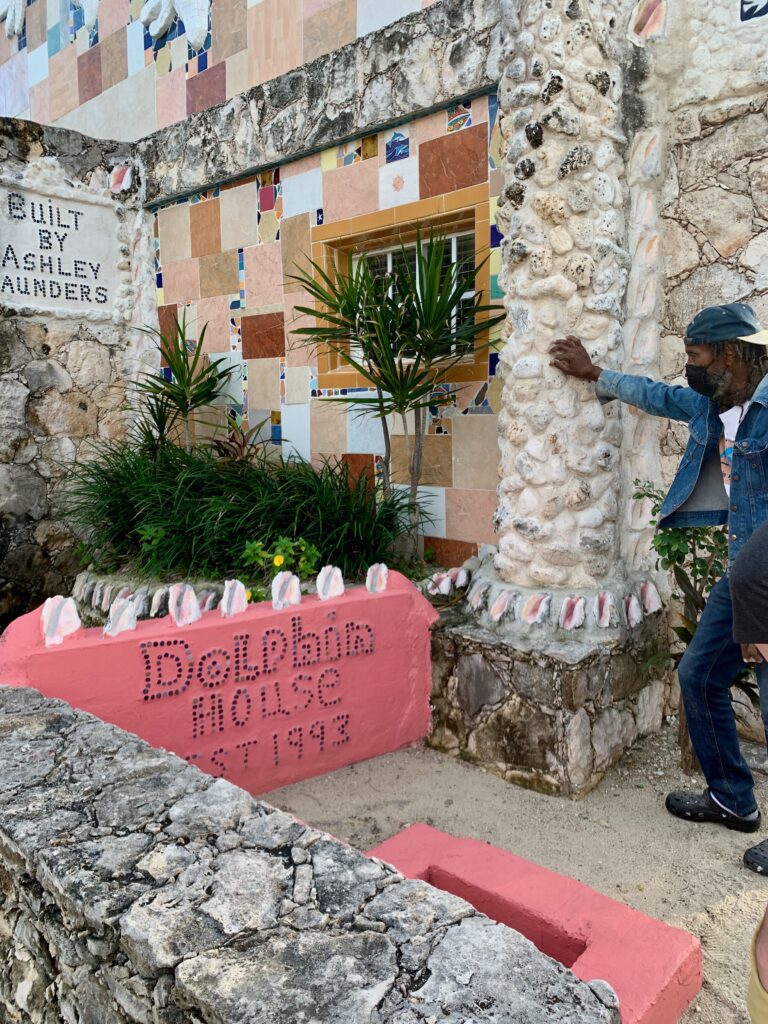
Getting a tour from Saunders himself is pretty special. He is a gifted, immensely creative artist, and we were in awe of every room we toured.
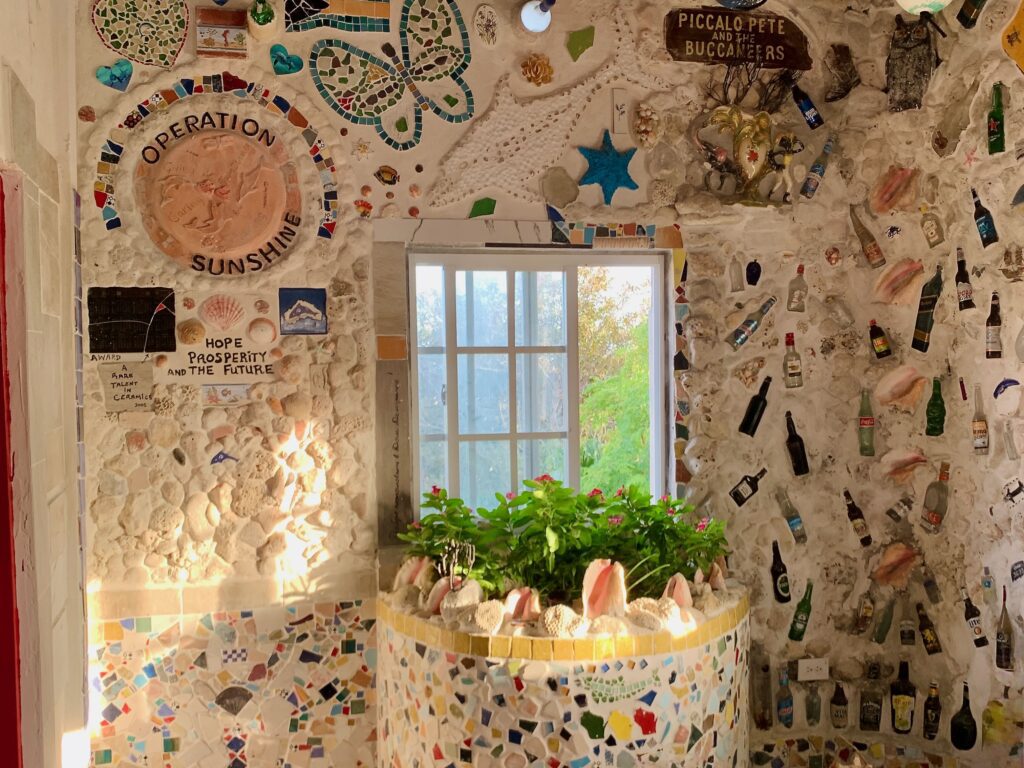
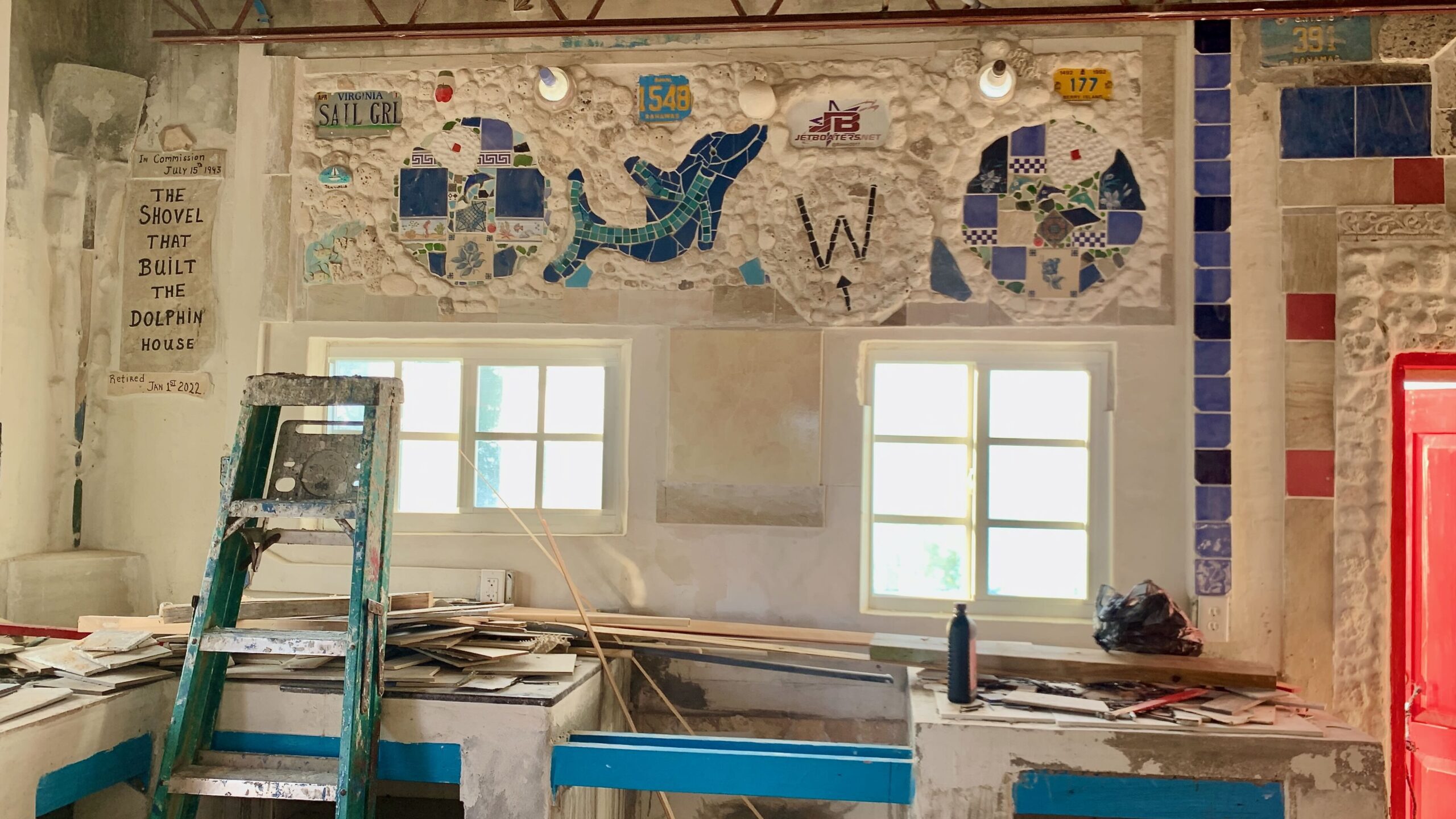
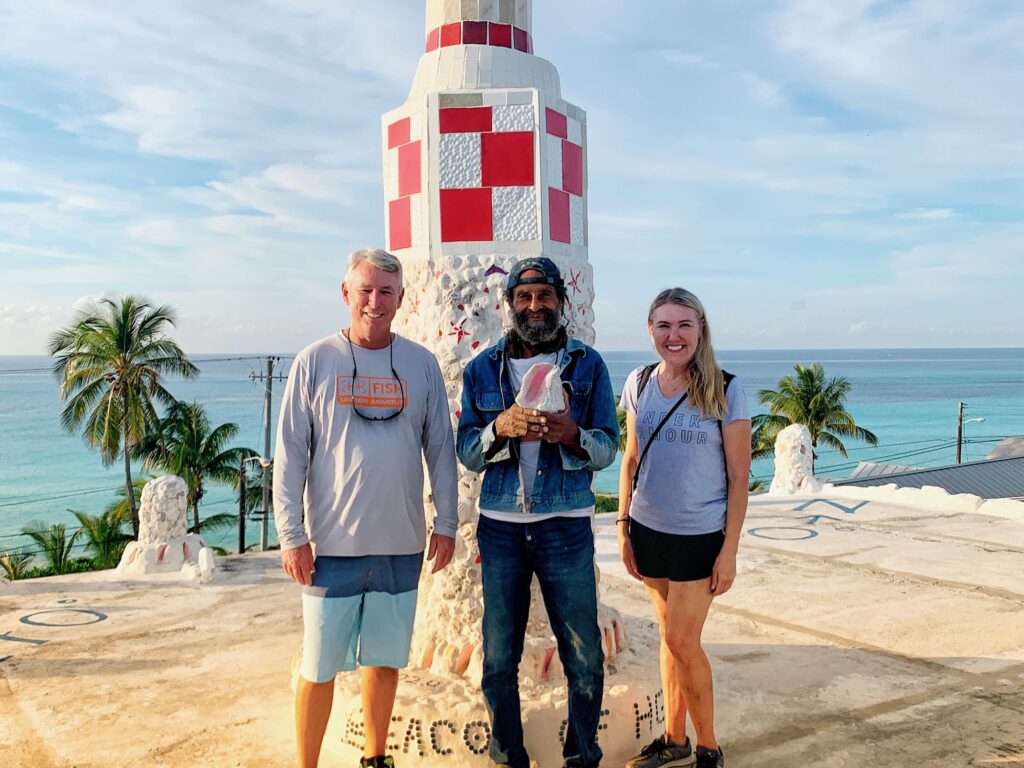
Beyond its artistic merit, the Dolphin House serves as a cultural repository for Bimini’s history. Saunders, a descendant of the island’s early settlers, has filled the space with historical artifacts and his own literary works. The building is designed to be eco-friendly and hurricane-resistant, embodying the resilience of the local community. It is recognized as a major landmark by the Bahamas Ministry of Tourism and continues to expand as a living work of art.
When we were there, he was building a few guest suites; it appears they may have since become operational. It would be such a unique experience to stay there.
2. Radio Beach
Radio Beach is the most accessible and popular public beach on North Bimini, located in the heart of Alice Town. It is the first in a trio of contiguous beaches, followed by Blister Beach and Spook Hill, which together form a long stretch of brilliant white sand along the island’s western shore. The beach is renowned for its strikingly clear, turquoise waters and its vibrant, social atmosphere. Because of its proximity to the town’s main settlement, it serves as a central gathering point where both locals and visitors congregate, especially at sunset.
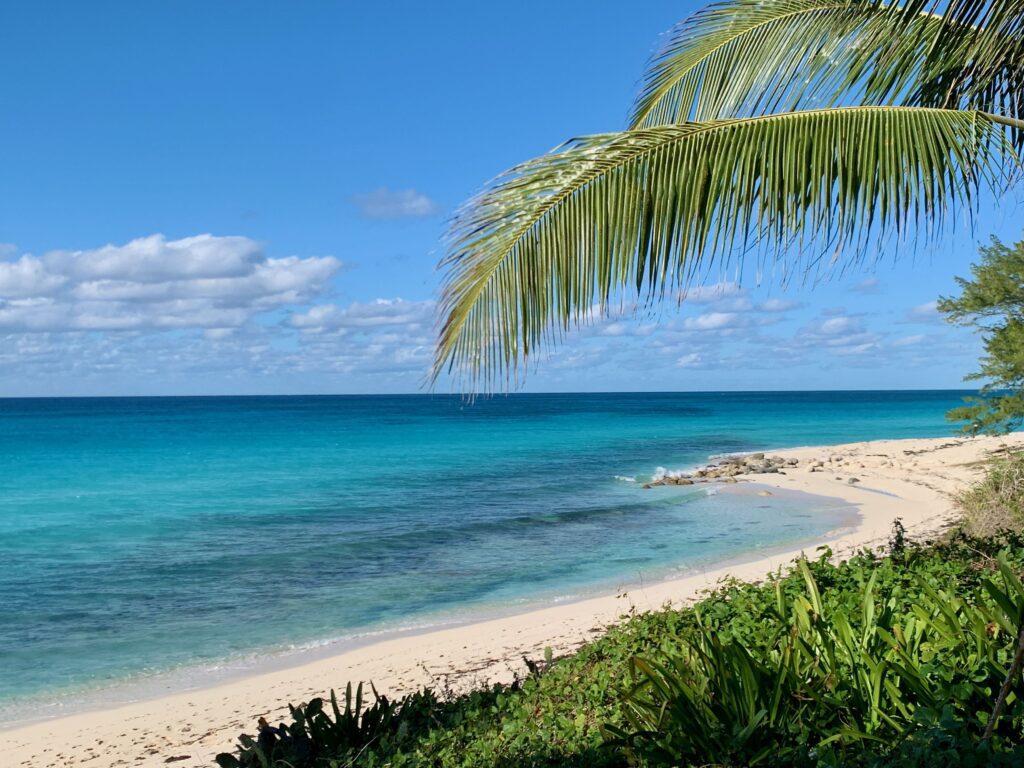
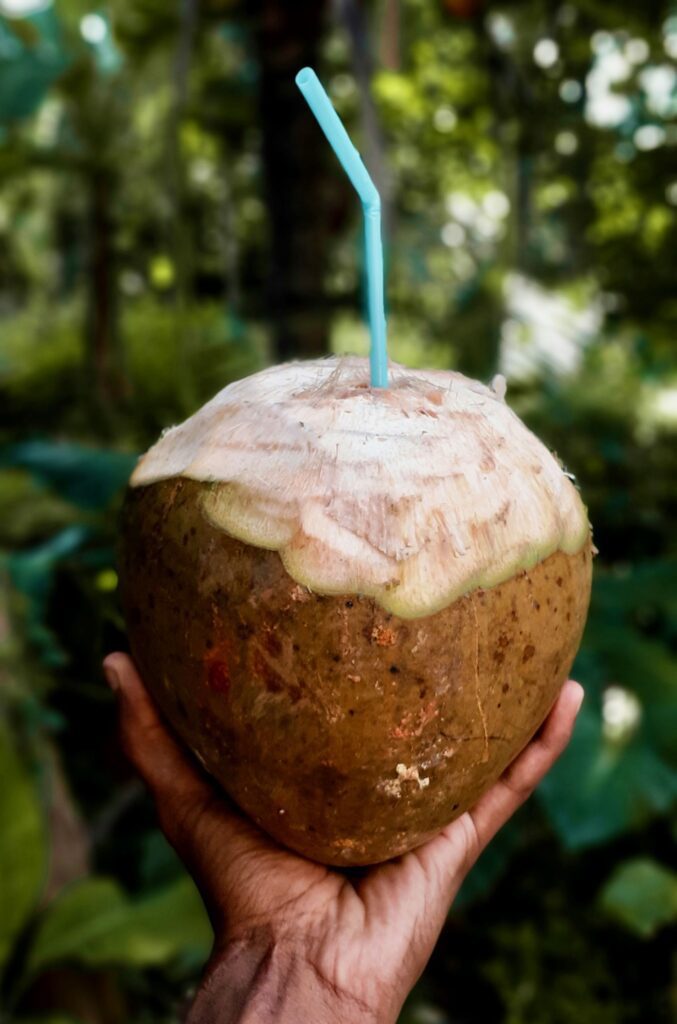
Unlike some of the more secluded stretches on South Bimini, Radio Beach offers convenient amenities, including small shacks and nearby eateries serving local delicacies like conch salad. We noticed that the coconut drinks were especially popular.
Our crew spent a lot of time floating around in the cool water.
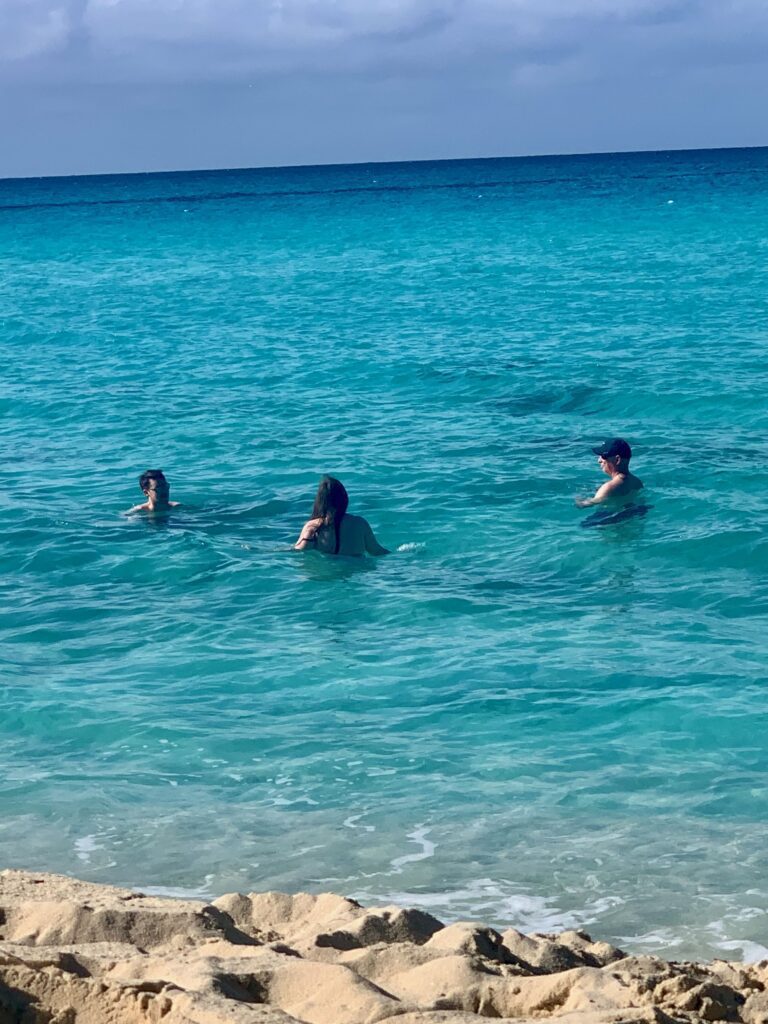

I took a long walk along the shore and soaked in the views.
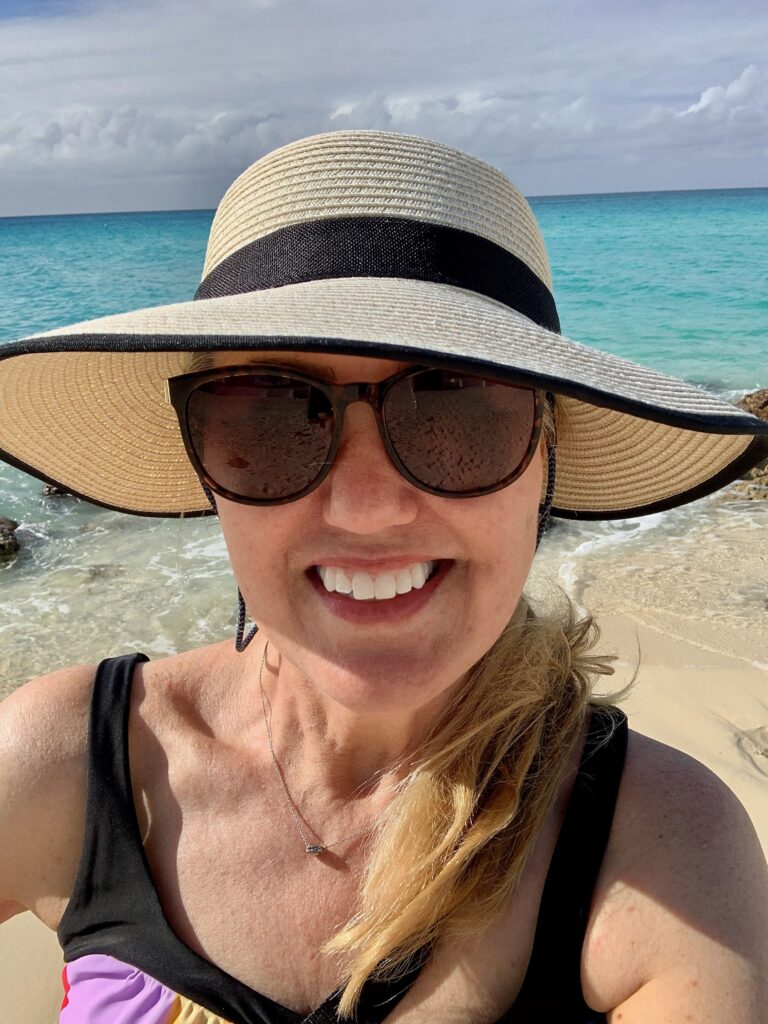
The name “Radio Beach” is derived from the nearby telecommunications towers that have long characterized this part of the island’s skyline. The shoreline is characterized by a gentle slope, making it an ideal spot for swimming and beachcombing.
3. South Bimini
Getting to South Bimini is really easy. There’s a ferry that runs continuously throughout the day connecting the two islands.
Hiking on South Bimini offers a starkly different experience from the developed areas of its northern neighbor, focusing on ecological immersion and preserved natural trails. The island is home to a nature trail that winds through indigenous tropical hardwood hammocks and coastal mangroves. This trail provides a rare opportunity to observe the island’s unique flora and fauna in a protected environment. Along the way, you can encounter several endemic species, most notably the Bimini Boa, a non-venomous constrictor that is the island’s largest terrestrial predator. Luckily, we missed out on that adventure.
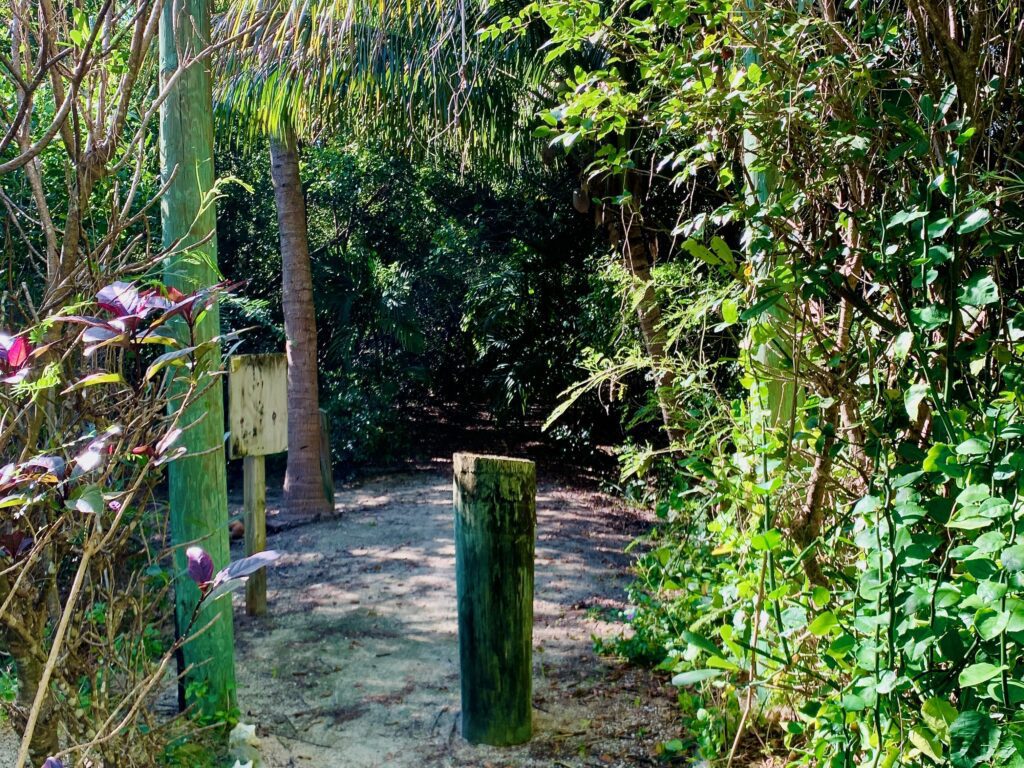
The terrain is generally flat, making it accessible for most skill levels, though the environment is dense with buttonwood trees and poisonwood—hikers are often advised to wear long sleeves and stay on marked paths.
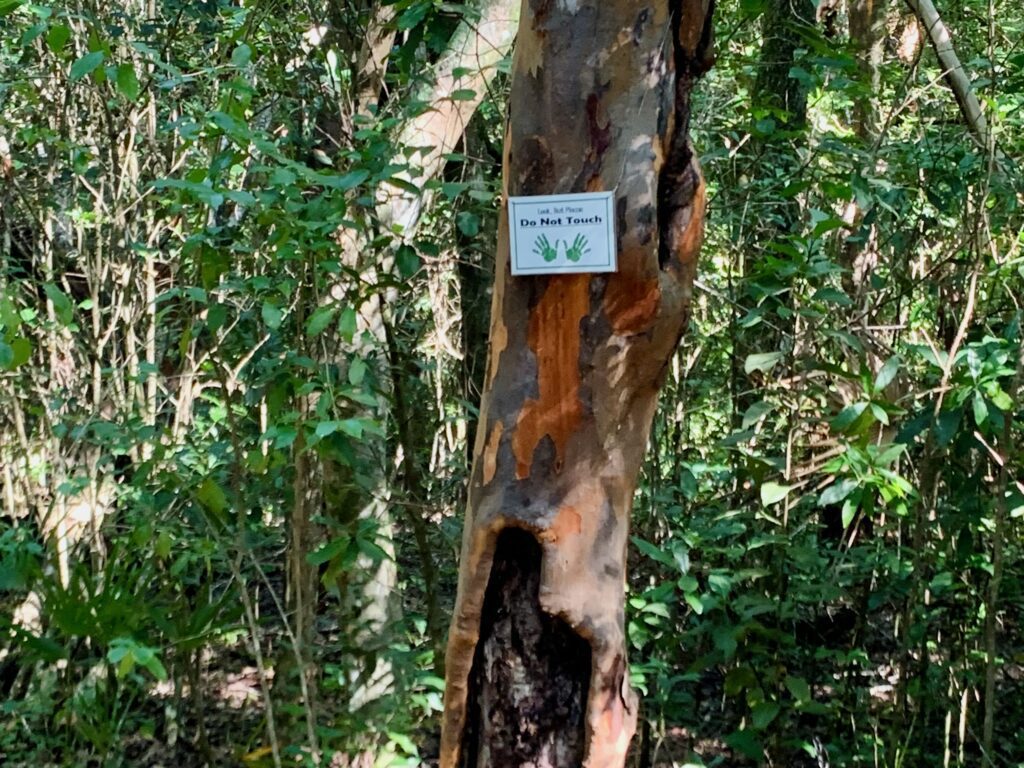
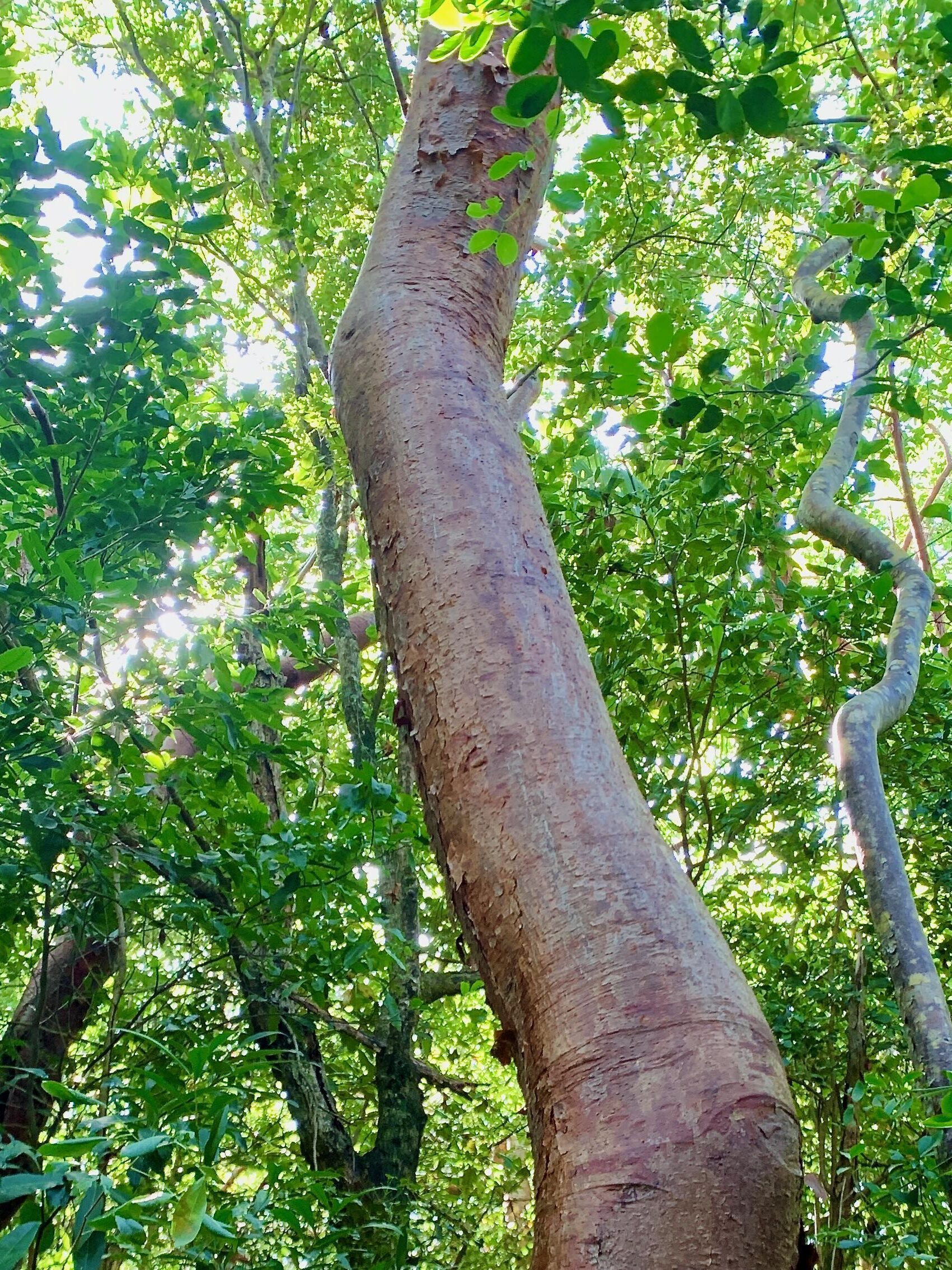
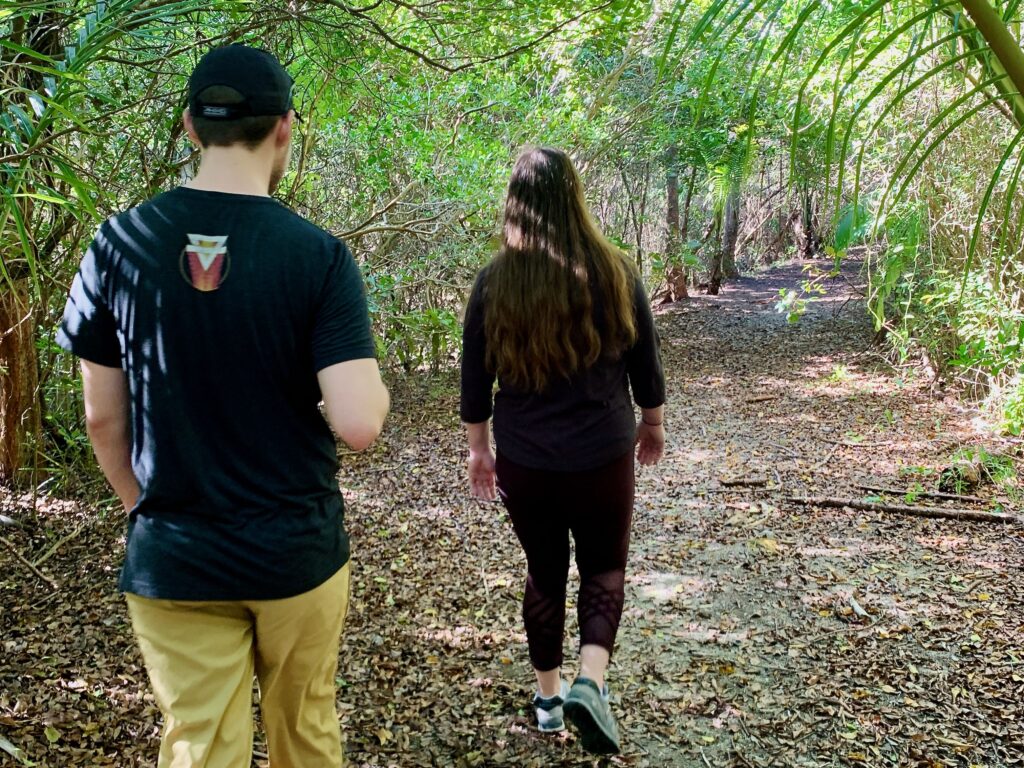

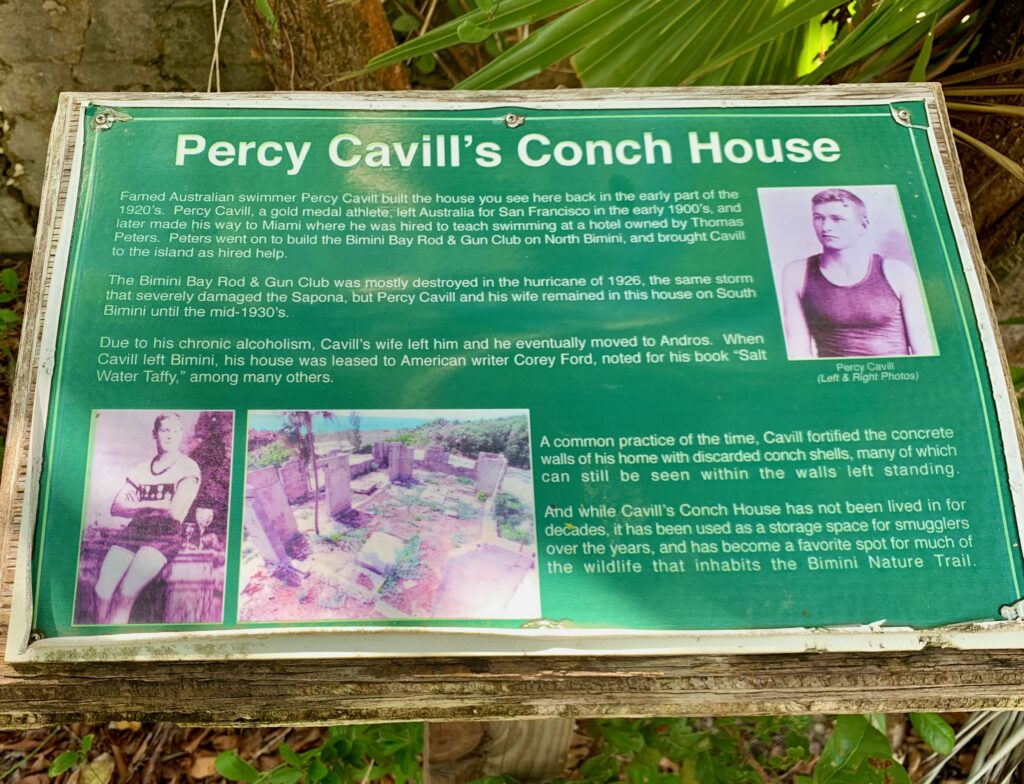
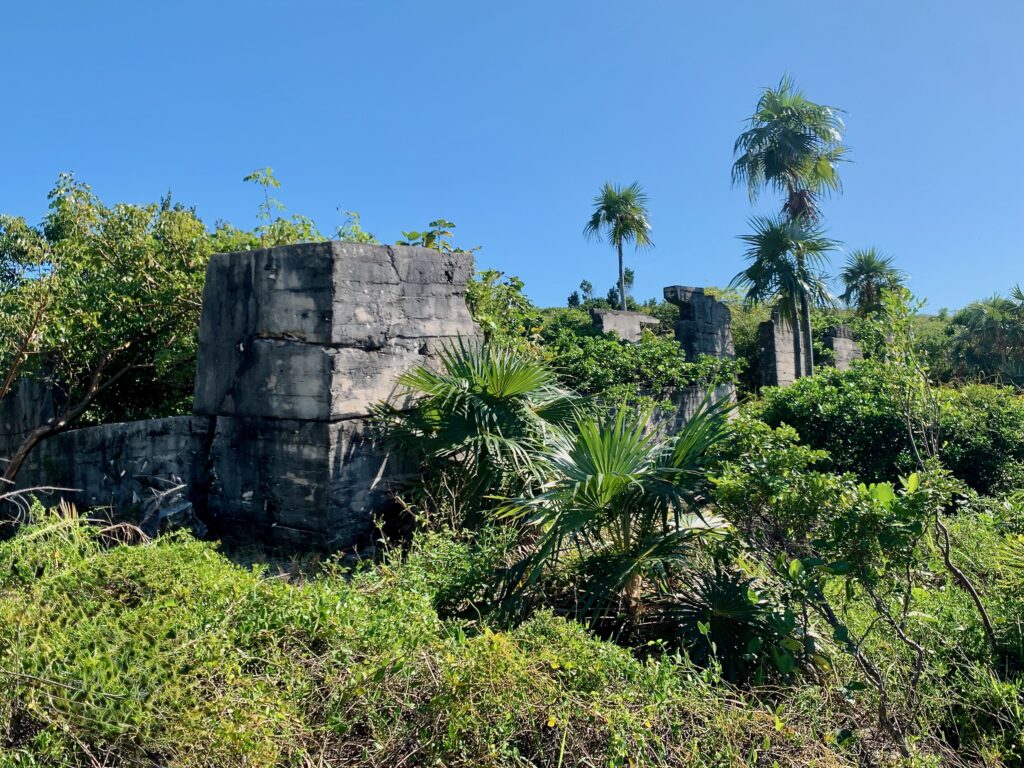
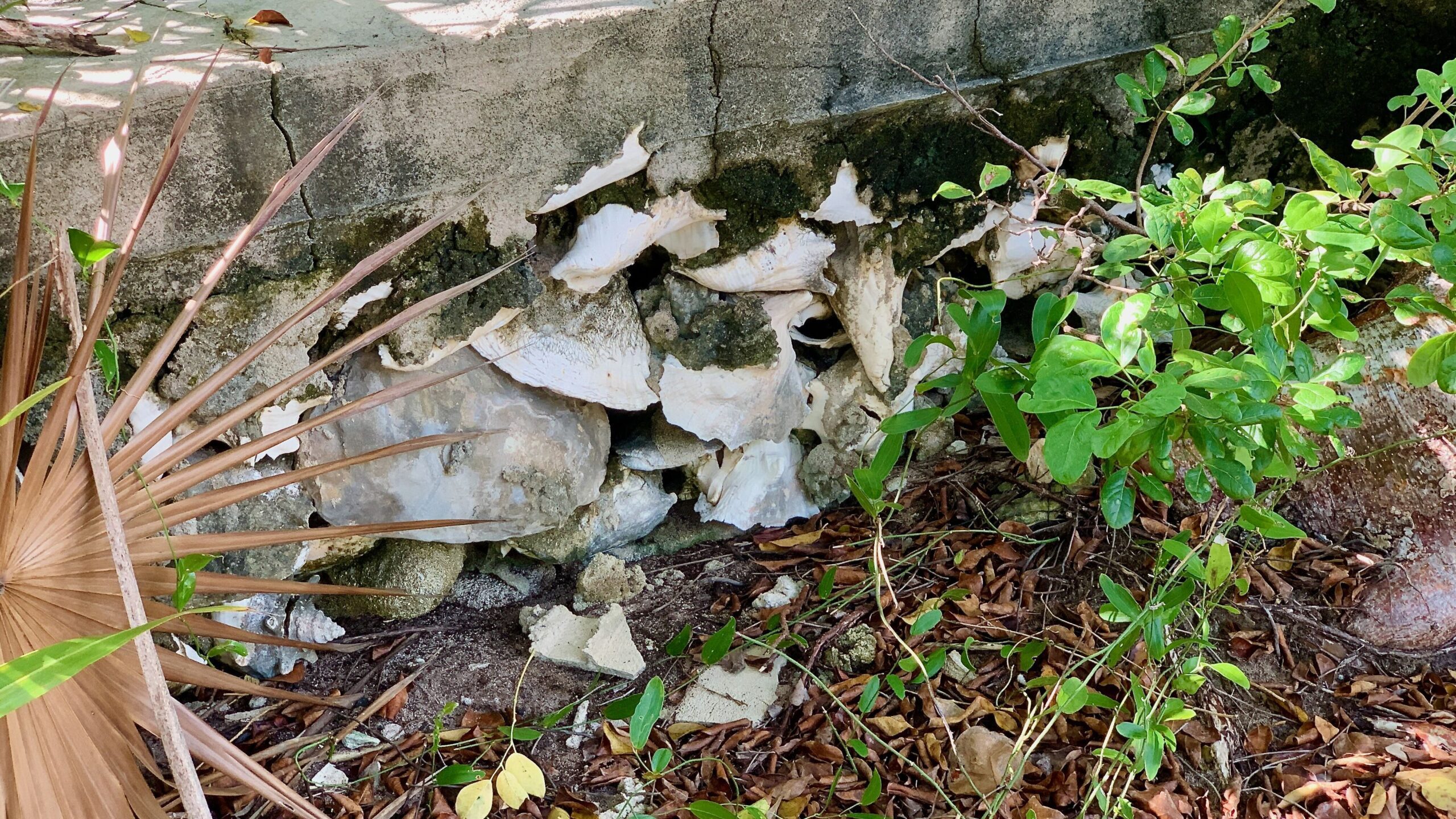
At the end, we found Percy Cavill’s conch house. Cavill was an Australian champion swimmer and a member of the famous Cavill family, credited with developing the crawl stroke. He later relocated to South Bimini, where he lived as a hermit for many years. He famously used discarded conch shells as a primary building material for the structure.
4. Bimini Bread
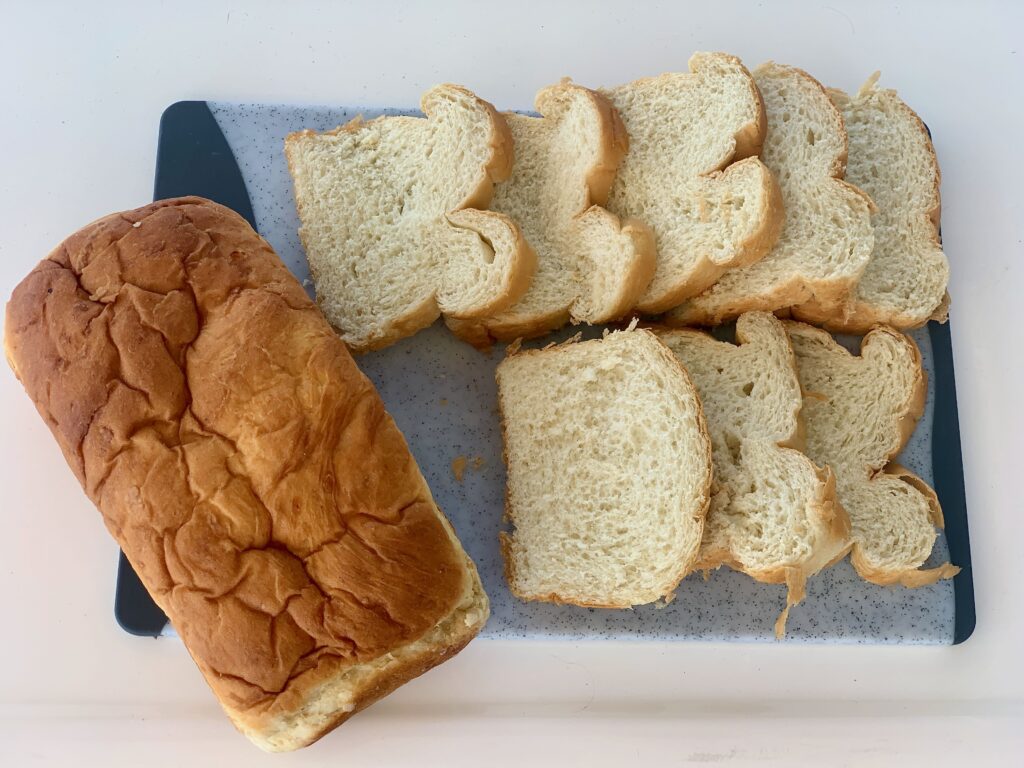
Bimini bread is a signature culinary staple of the Bimini islands in the Bahamas, renowned for its distinctively sweet flavor and pillowy texture. This iconic loaf is traditionally enriched with coconut milk, which provides its characteristic sweetness and a subtle tropical aroma. Often compared to a brioche or a sweet Hawaiian roll, the dough is yeast-leavened and typically brushed with melted butter immediately after baking to create a soft, golden-brown crust.
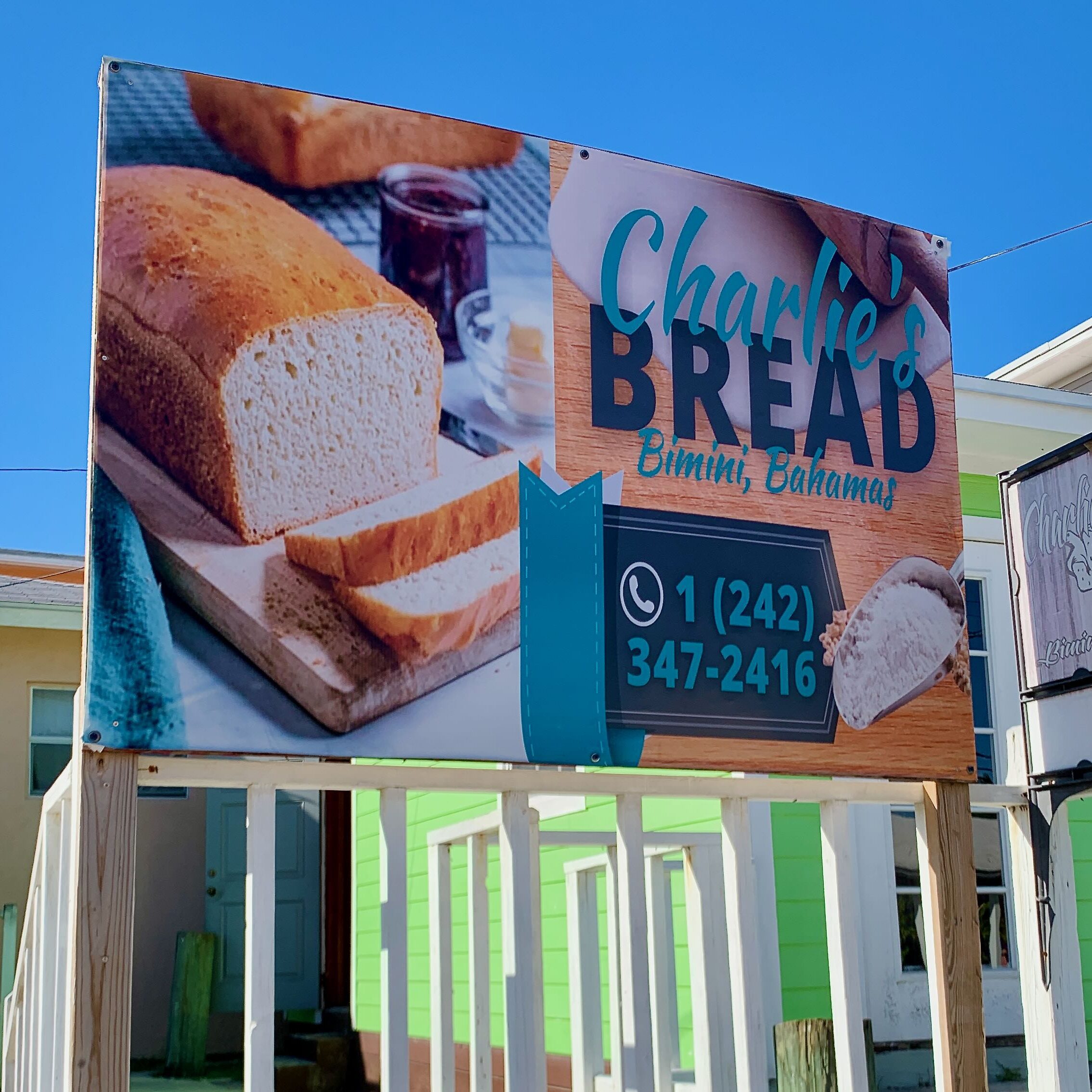
One day, we were walking by Charlie’s Bread and decided to pop in. There we met Charlie himself, and he told us that his bread had sold out, but if we returned in a few hours, he would have more.
We were happy to do so and were treated with some of the best bread we have ever tasted. It wasn’t cheap (around $6.00 a loaf), but it was well worth it. We’re told he sells out every day, and if you want fresh bread in the morning, you should arrive before 7:30 a.m.
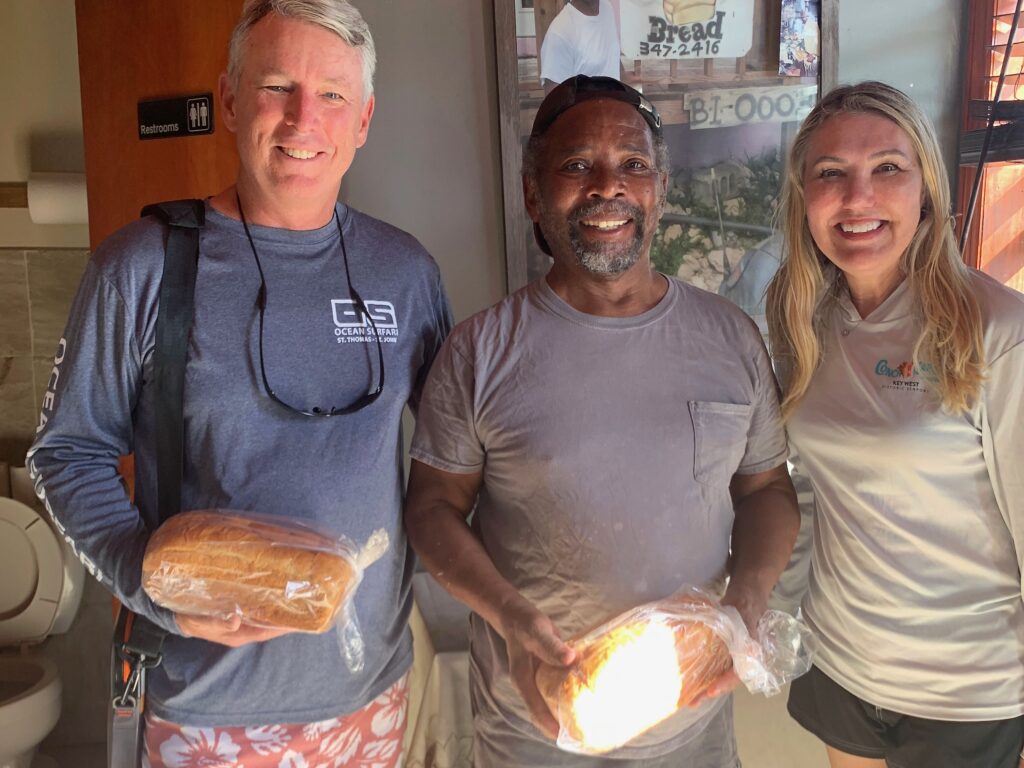
After sampling Charlie’s bread, we started coming for loaves virtually every day of our time in Bimini. We tasted multiple flavors; I think my favorite was the basic coconut bread.
Historically, the bread was baked in outdoor limestone ovens, though modern versions (like Charlie’s) are now produced in commercial ovens. It is deeply integrated into the local diet and is frequently served as a thick-cut accompaniment to savory Bahamian dishes like lobster stew, steamed fish, or fresh conch salad. It remains a point of cultural pride for residents, with secret family recipes often passed down through generations.
5. Shipwreck of the Gallant Lady
The Gallant Lady is one of the most poignant shipwrecks in the Bahamas, located on the rocky southern shore of North Bimini. Originally a coastal freighter, the vessel was sailing from Belize when it experienced a catastrophic engine failure during a severe storm in 1997. The crew was unable to regain control, and the ship was violently propelled onto the jagged coral shoreline, where it has remained ever since. Luckily, no lives were apparently lost.
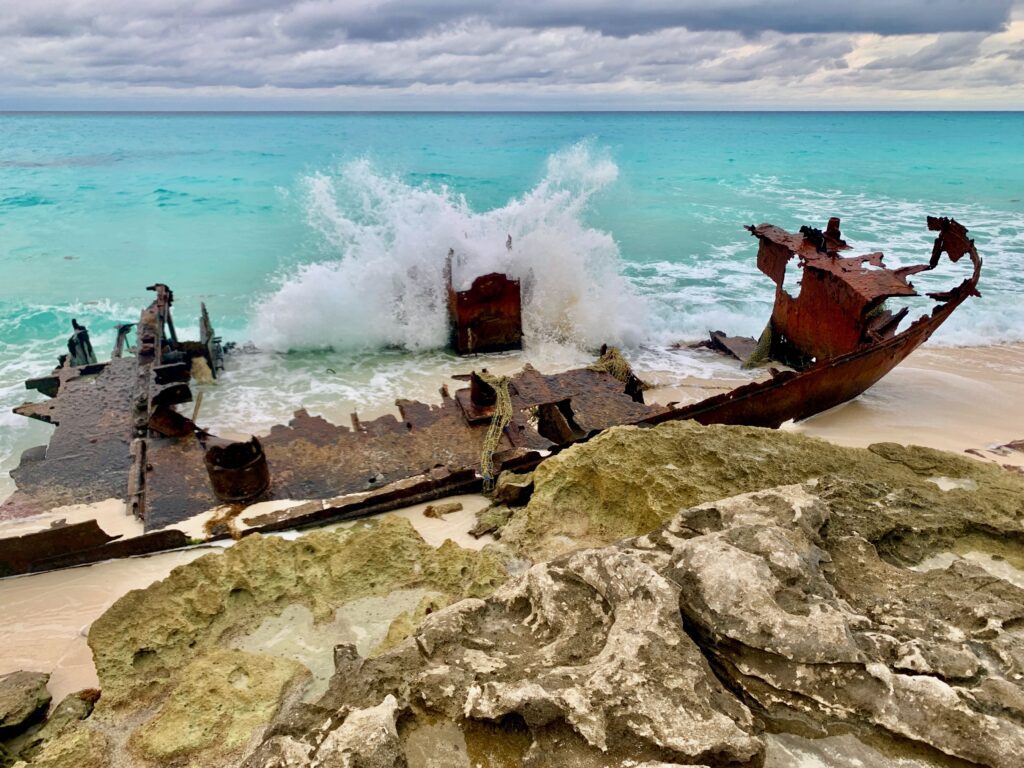
Unlike the submerged SS Sapona, the Gallant Lady is a “shore wreck,” meaning much of its skeletal structure sits above the waterline, directly battered by the Atlantic waves. Over the decades, the relentless saltwater environment and powerful hurricanes have caused the iron hull to corrode into a deep, rusted orange, creating a stark and beautiful contrast against the bright turquoise ocean. It has become a favorite subject for photographers and a landmark for those walking the coastline near Alice Town. While the wreck is slowly being reclaimed by the sea and breaking apart, it stands as a silent monument to the power of the Gulf Stream and the unpredictable nature of maritime travel.
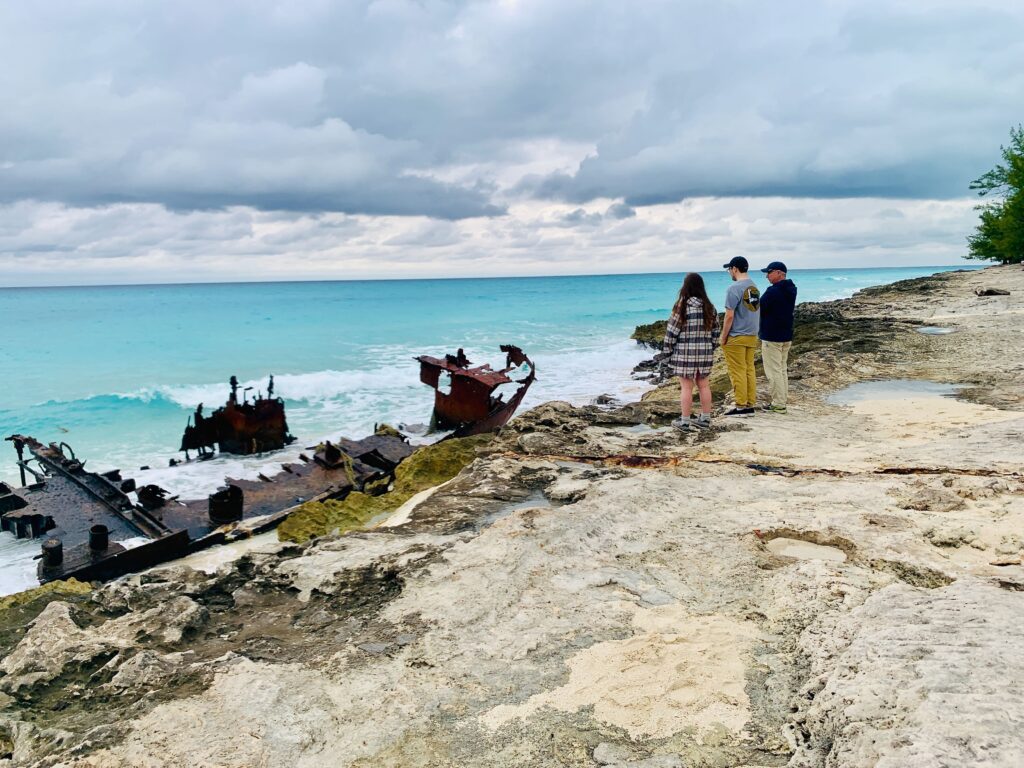
There are also some captivating tide pools there.
6. Conch, Conch, and More Conch
Conch fishing is a cornerstone of Bimini’s economy and cultural identity, centered primarily on the Queen Conch (Alstrombus gigas). This large marine mollusk is harvested from the vast seagrass beds surrounding the islands, where specialized fishers—often referred to locally as “conch knockers”—free-dive to depths of 10 to 30 feet to collect them by hand. The process is labor-intensive; once brought to the surface, a small hole is “knocked” into the shell’s spire to release the muscle’s suction, allowing the meat to be extracted.
On Bimini, you can see heaps and heaps of discarded conch shells.
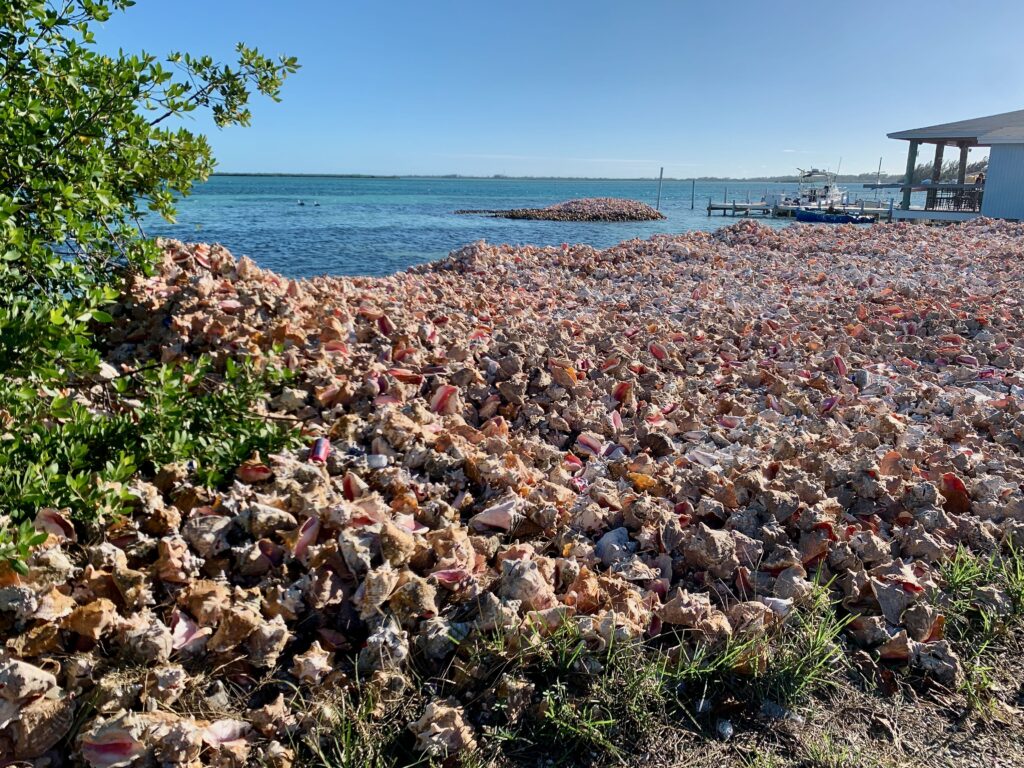
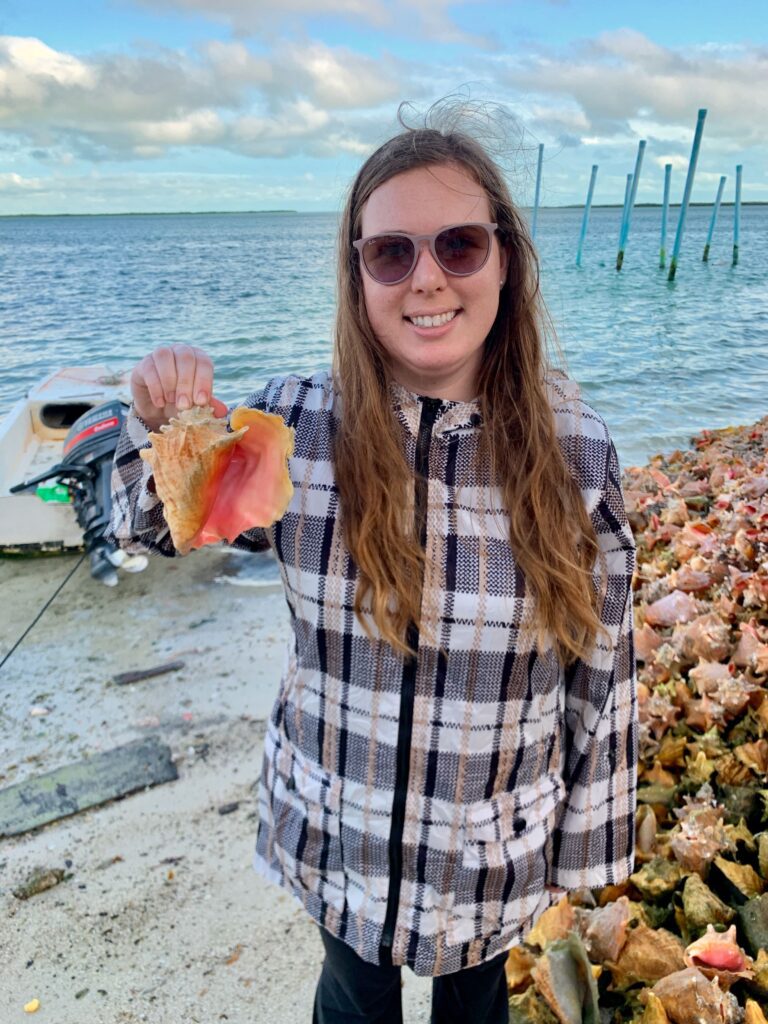
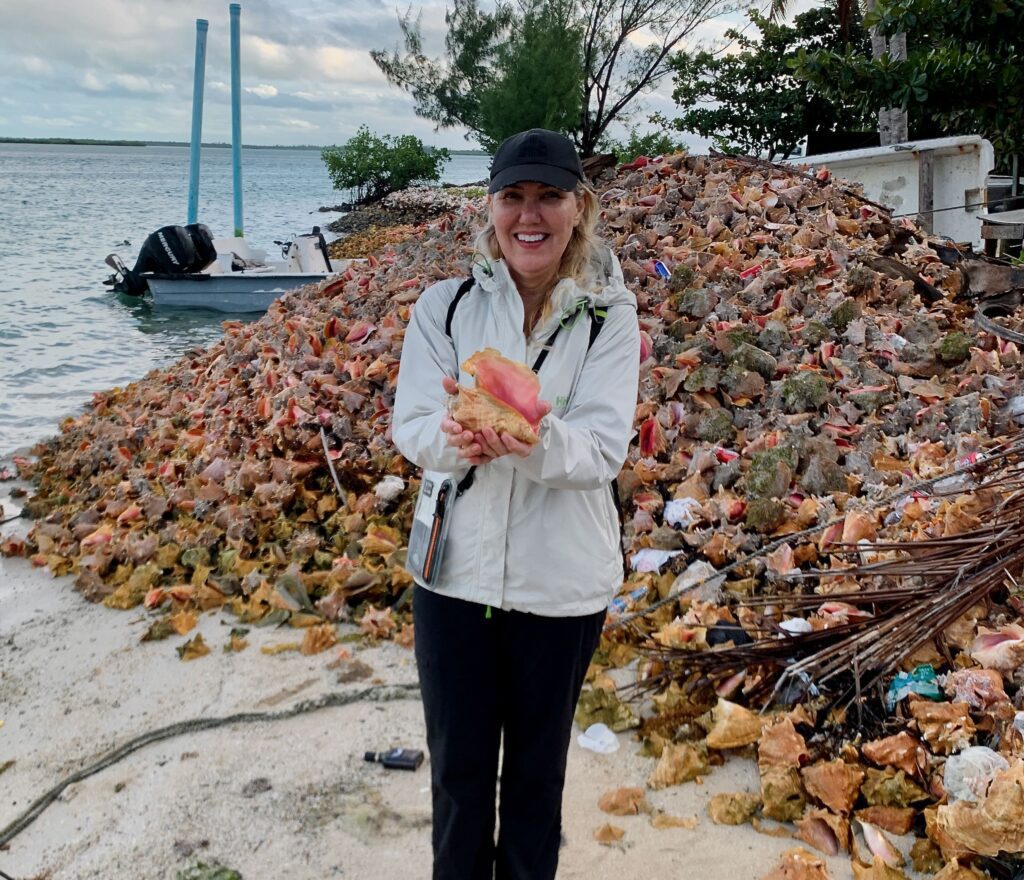
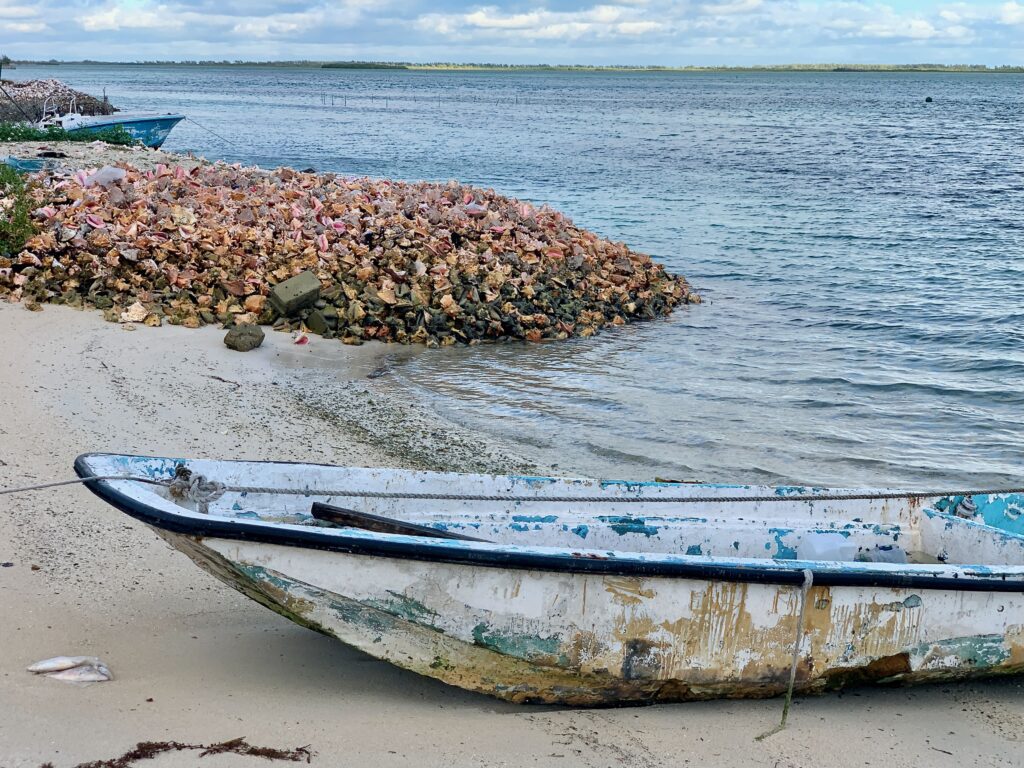
Locals have found many creative ways to use them.
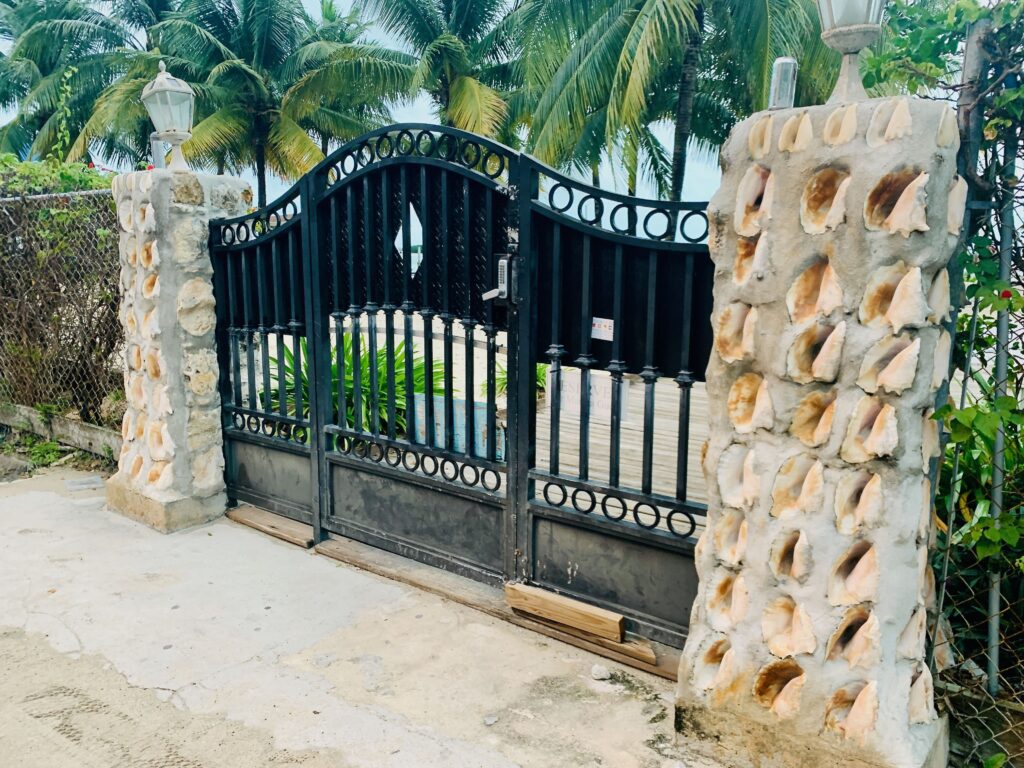
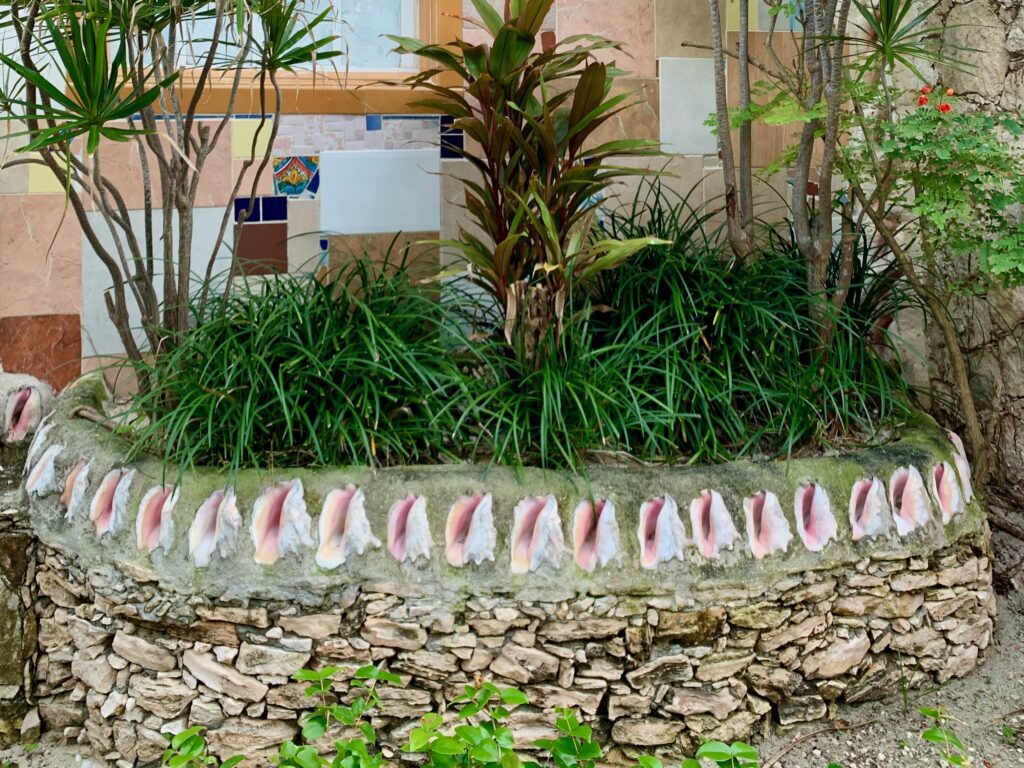
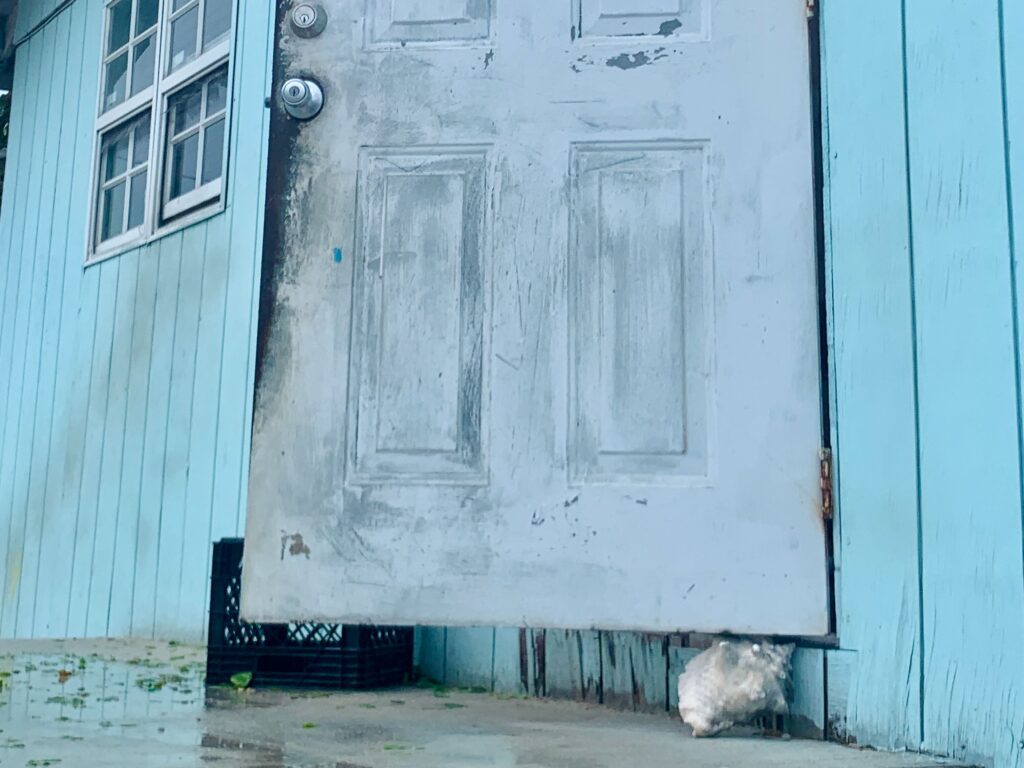
Obviously, though, the primary use of the conch is as a food source.
Bimini’s conch is renowned for its freshness, often processed immediately at waterfront stalls in Alice Town and Bailey Town to create the island’s signature conch salad. However, due to high global demand and the conch’s slow maturation, the fishery is strictly regulated by the Bahamian government. Current conservation laws mandate that only “flared lip” conch—indicating a mature adult—can be harvested to ensure the population can reproduce.
7. Shark Watching
If it’s shark watching you’re looking for, you’re in luck. Bimini is known as a shark sanctuary.
Go to Blue Water Marina any day around dusk, and the sharks will be actively circling around the docks. This is because the fishermen clean their catch in the small pavilion there and discard the scraps.
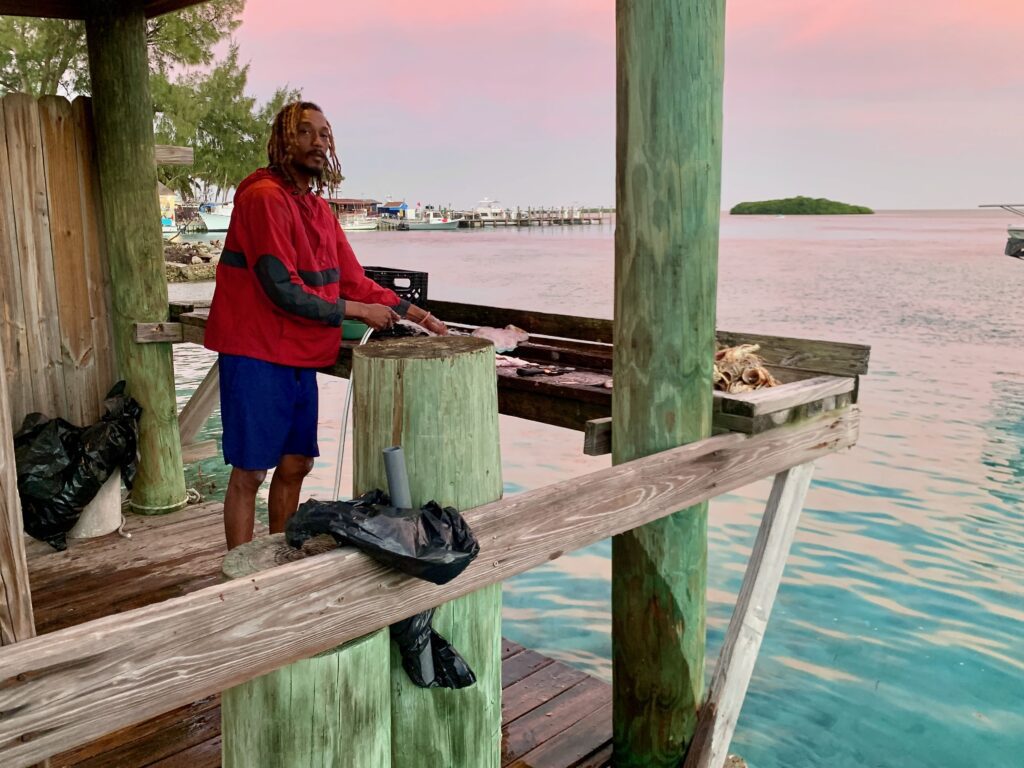
The most frequent visitors to the waters around marinas include nurse sharks, which are often seen scavenging near the docks, and bull sharks, which are considered among the most dangerous shark species to humans due to their aggressive, territorial nature and powerful bites. That’s the breed we saw most frequently.
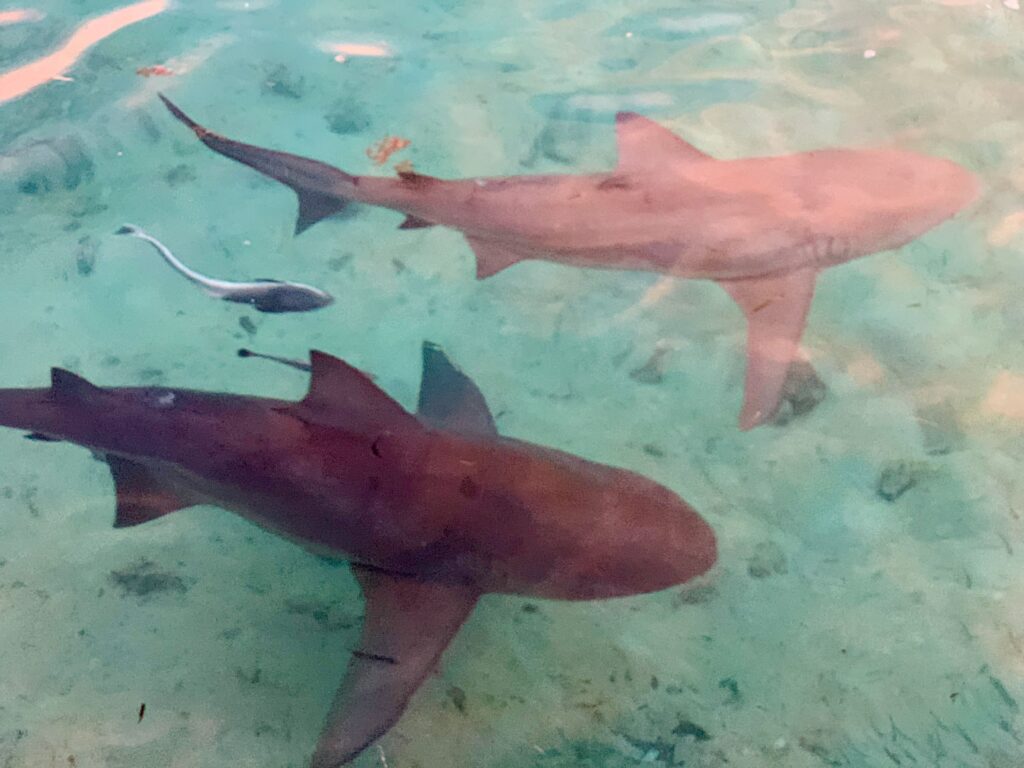
Another place to see sharks is the Bimini Big Game Club. While the club is famous for its marina and sportfishing legacy, it’s also known for its on-site “Shark Cage” experience.
Apparently, the Big Game Club works in tandem with local conservation efforts to promote sustainable tourism. Beyond the immediate docks, the club serves as a departure point for excursions to see great hammerheads, which migrate to the area’s sandy shallows during the winter months. These encounters are non-consumptive and strictly regulated, emphasizing the importance of sharks to the Bahamian ecosystem. The club’s proximity to the Bimini Biological Field Station (Shark Lab) further cements its status as a hub where adventure meets marine education.
8. The Compleat Angler Hotel
The Compleat Angler Hotel was a legendary landmark in Alice Town, North Bimini, best known as the favorite island retreat of Nobel Prize-winning author Ernest Hemingway.
Built in 1935 by Helen Duncombe, the hotel was a two-story structure constructed from island pine and coral rock. Hemingway stayed there frequently between 1935 and 1937, occupying Room Number 1, where he worked on the manuscript for To Have and Have Not and drew inspiration for his later masterpiece, The Old Man and the Sea. Over the decades, the hotel’s bar became a world-renowned gallery of Hemingway memorabilia, adorned with rare photographs, signed letters, and fishing trophies.


Tragically, the historic wooden structure was completely destroyed by a fire in January 2006, resulting in the loss of its priceless historical collection and the death of its owner, Julian Brown, who died while attempting to save guests.

Today, the site remains a point of pilgrimage for literary fans and anglers alike. While the original building is gone, its legacy as the “home of the big game fisherman” persists, and its influence is still felt in the local culture and the nearby rebuilt structures that honor the connection between Hemingway and the sea.

There’s a plaque out front. Apparently, Big John’s in Alice Town may have some remaining memorabilia.
Other Memories
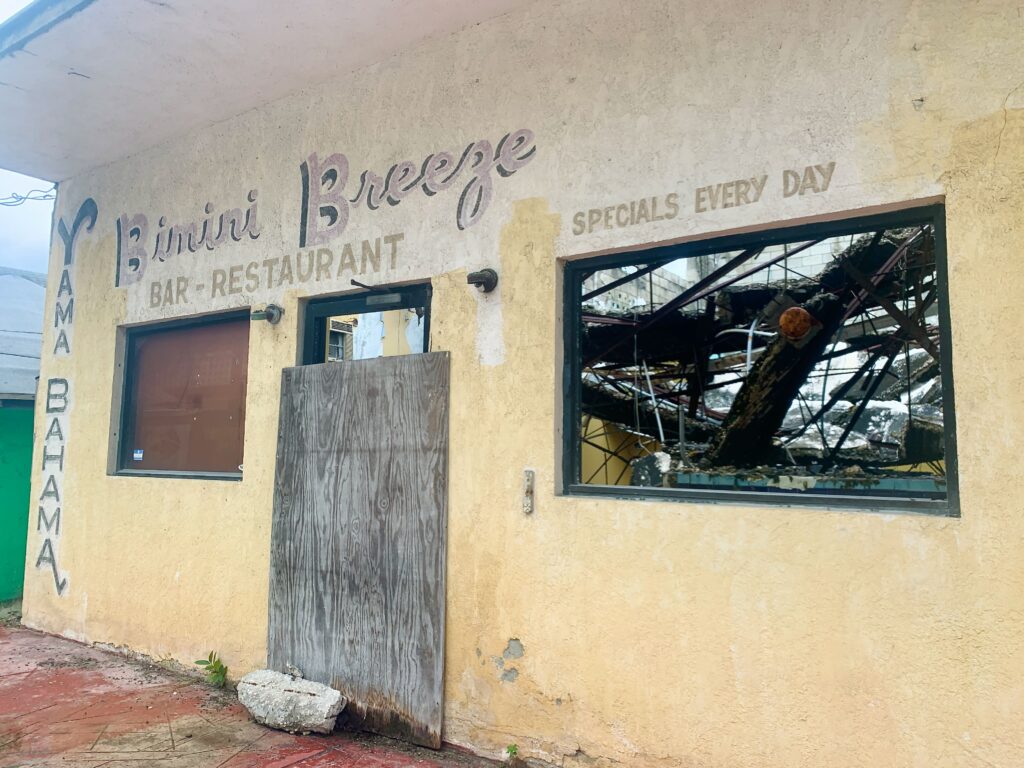
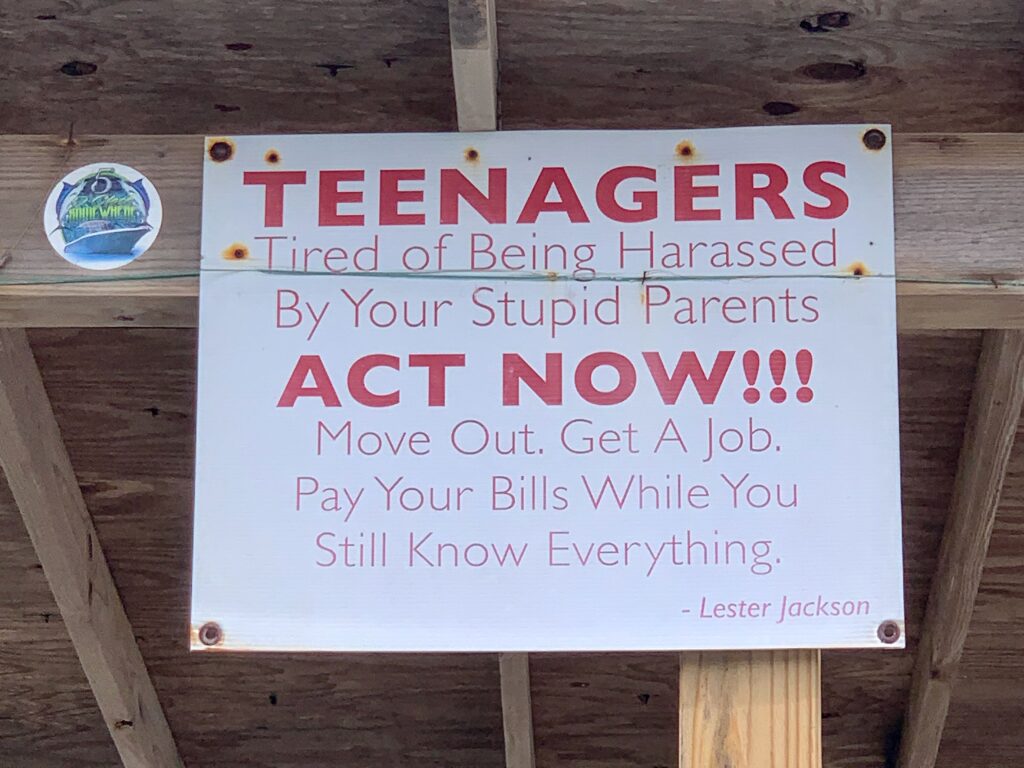
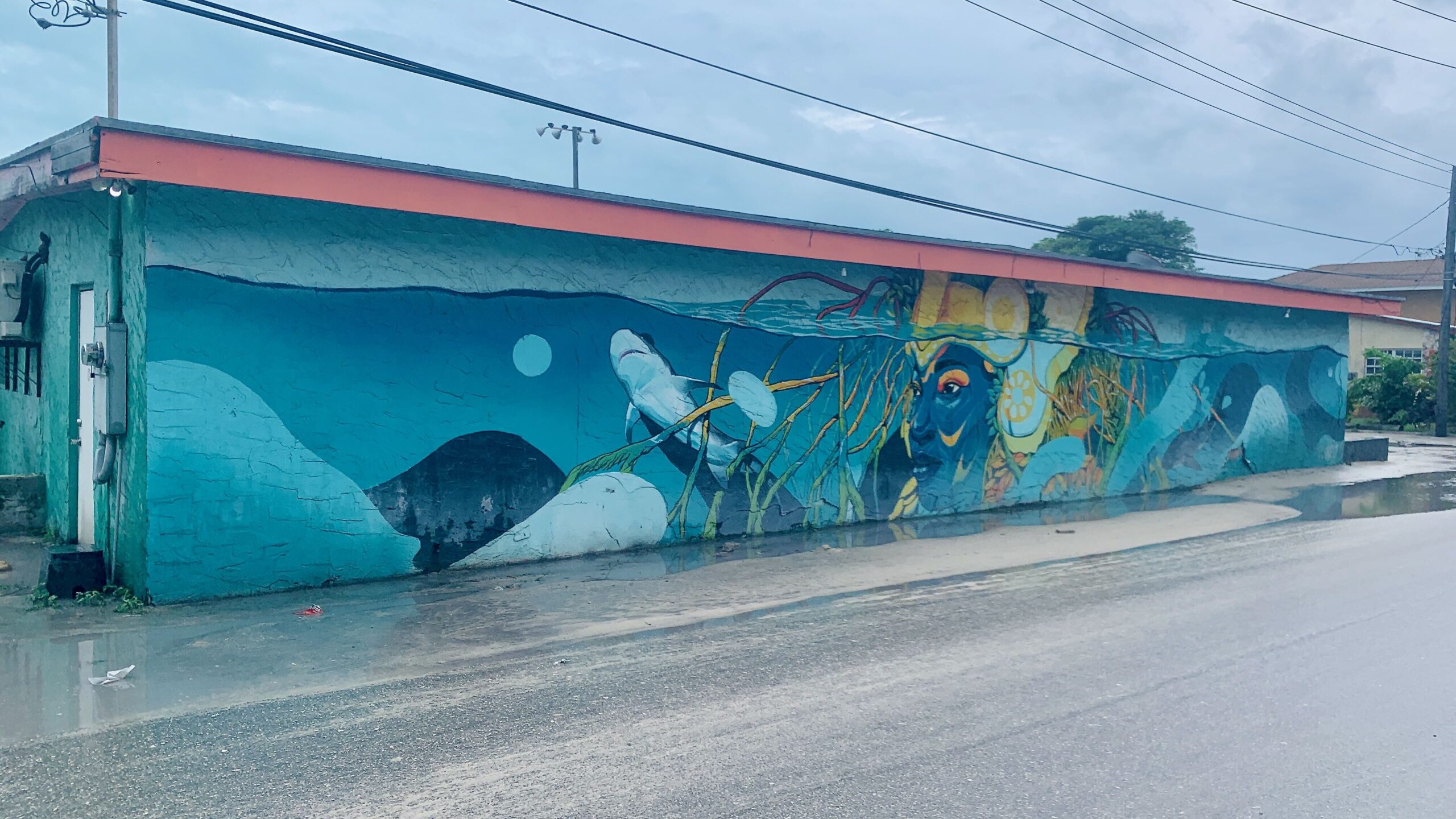
Other Things to Do in Bimini
The Healing Hole
Snorkeling the Bimini Road
The Fountain of Youth
Bimini Museum (always closed when we went by)
Where We Ate
We mostly ate at the restaurant at the Bimini Big Game Club, Bimini Big Game Bar & Grill. While the cuisine wasn’t the best we’d ever had, it was very dependable.
Shopping
There are some small shops on the island with basic groceries, namely D&S Grocery Store (Alice Town), King Brown’s Grocery Store, Broward Kwik Stop (Bailey Town), 2Z Convenience Store, and Robert’s Groceries. The latter was usually our go-to.
Accommodations
MArinas
We stayed at two different marinas in Bimini.
First, a story about our first marina, Bimini Big Game Club. We had a made a reservation in advance and as we approached the channel, we hailed them on the VHF as instructed.
“Bimini Big Game Club Marina, Bimini Big Game Club Marina, Bimini Big Game Club Marina, this is Apricus,” Captain Roy announced over the VHF. No response. After a few minutes, he said it again.
“Bimini Big Game Club Marina, Bimini Big Game Club Marina, Bimini Big Game Club Marina, this is Apricus,” he repeated. Nothing.
This went on for probably close to 30 minutes, all the while we were losing light and watching a monohull run aground just a few hundred yards away. So we called them on the phone. No answer.

Out of desparation, we eventually pulled up to a side wall and started tying off to the pylons. Almost immediately, we saw two dockhands frantically running down the dock. As they re-tied us up to the undersized cleats, they breathlessly explained that the pylons are not strong enough to hold a boat.
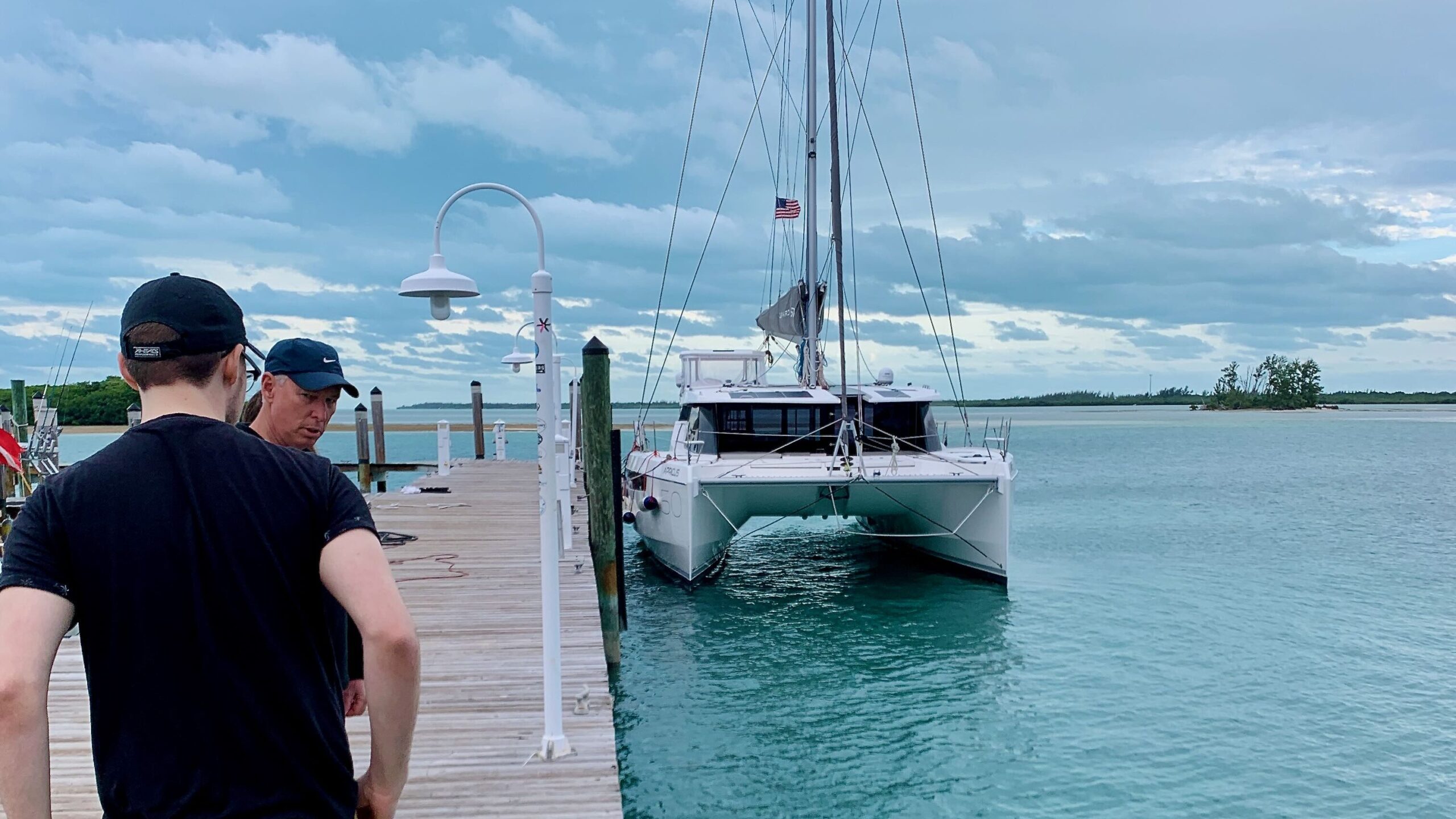
Well, that doesn’t sound good, we thought. It really wasn’t. This spot wasn’t really a berth at all; they just had us staged here until our pre-reserved T-head opened up. For the next several days, we made the best of things.
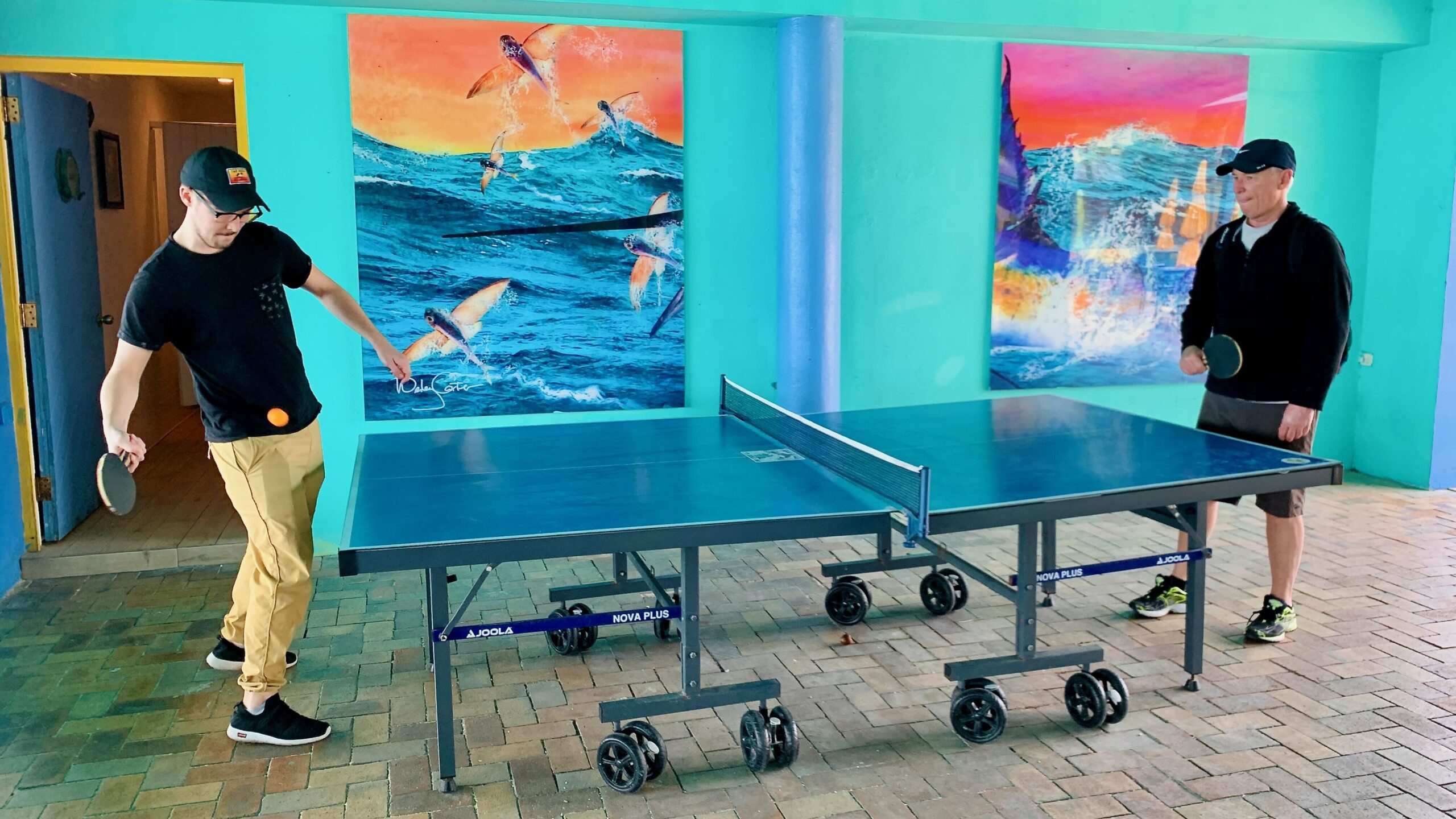
We stayed on the side tie, patiently waiting. The surge was pretty worrisome. Eventually, our T-head did open up, and we moved. Not a great welcome to Big Bimini Game Club.
The amenities were okay, but not game-changing. So we eventually contacted Blue Water Marina next door, and they said we could move over there. What a difference: the dockmaster met us at the dock, tied us up properly, and gave us a tour of the marina. We had a great experience at Blue Water Marina and enjoyed the rest of our time there.
Resorts
As far as land-based accommodations, the largest resort on the island is Resort World Bimini (RWB). Located on the far north side of the island, it features an infinity pool, private beach club, and a small casino.
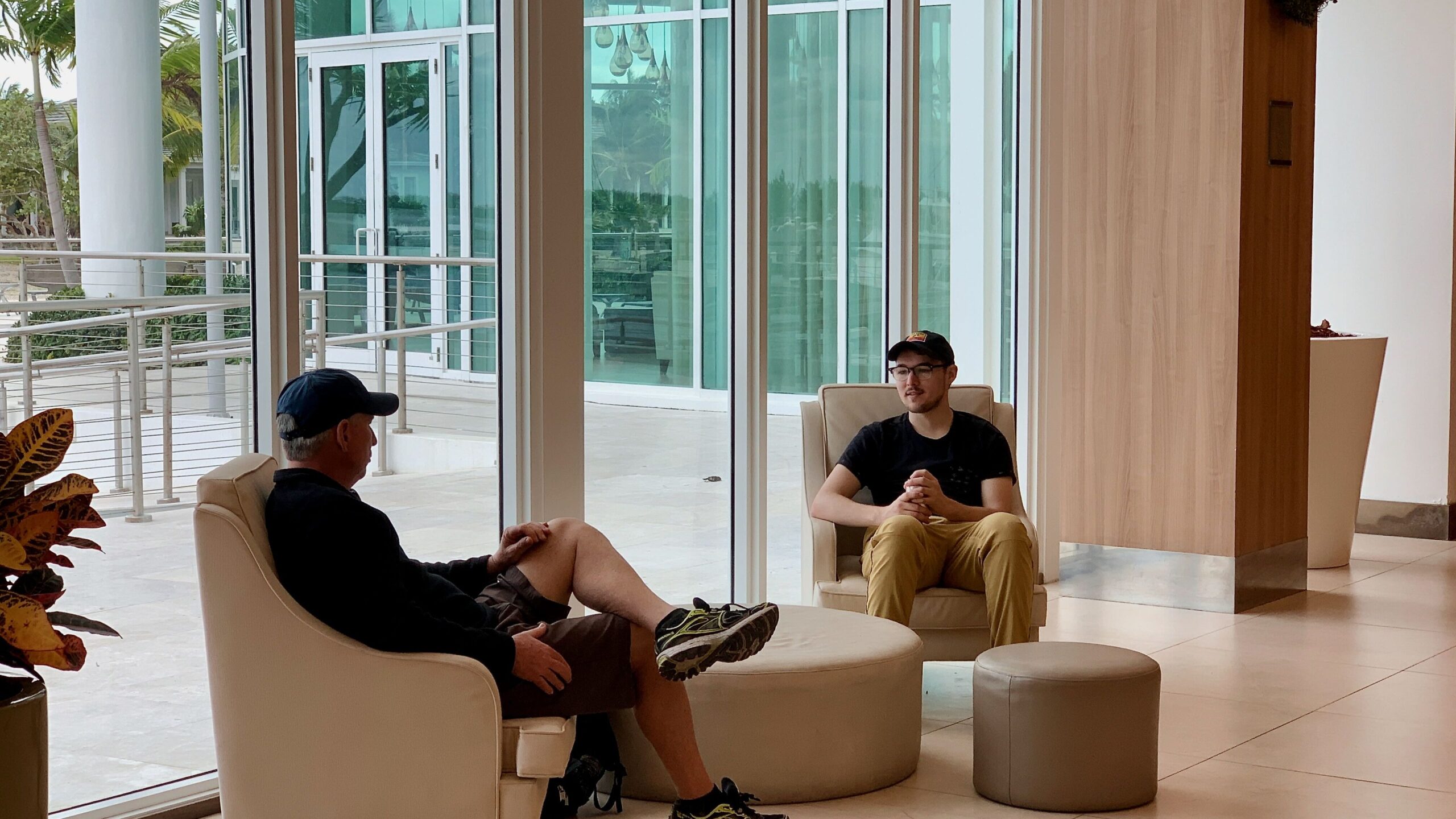
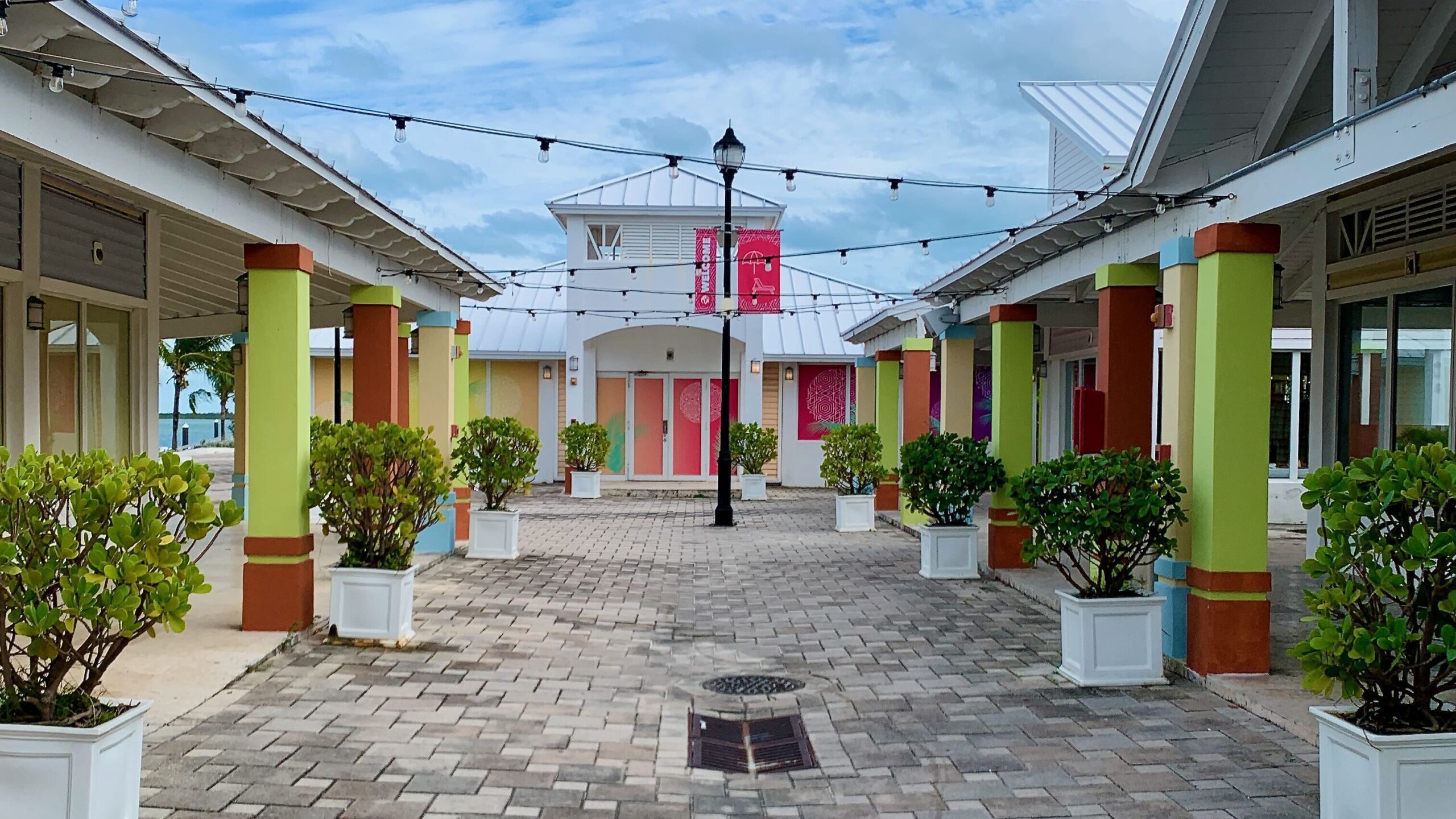
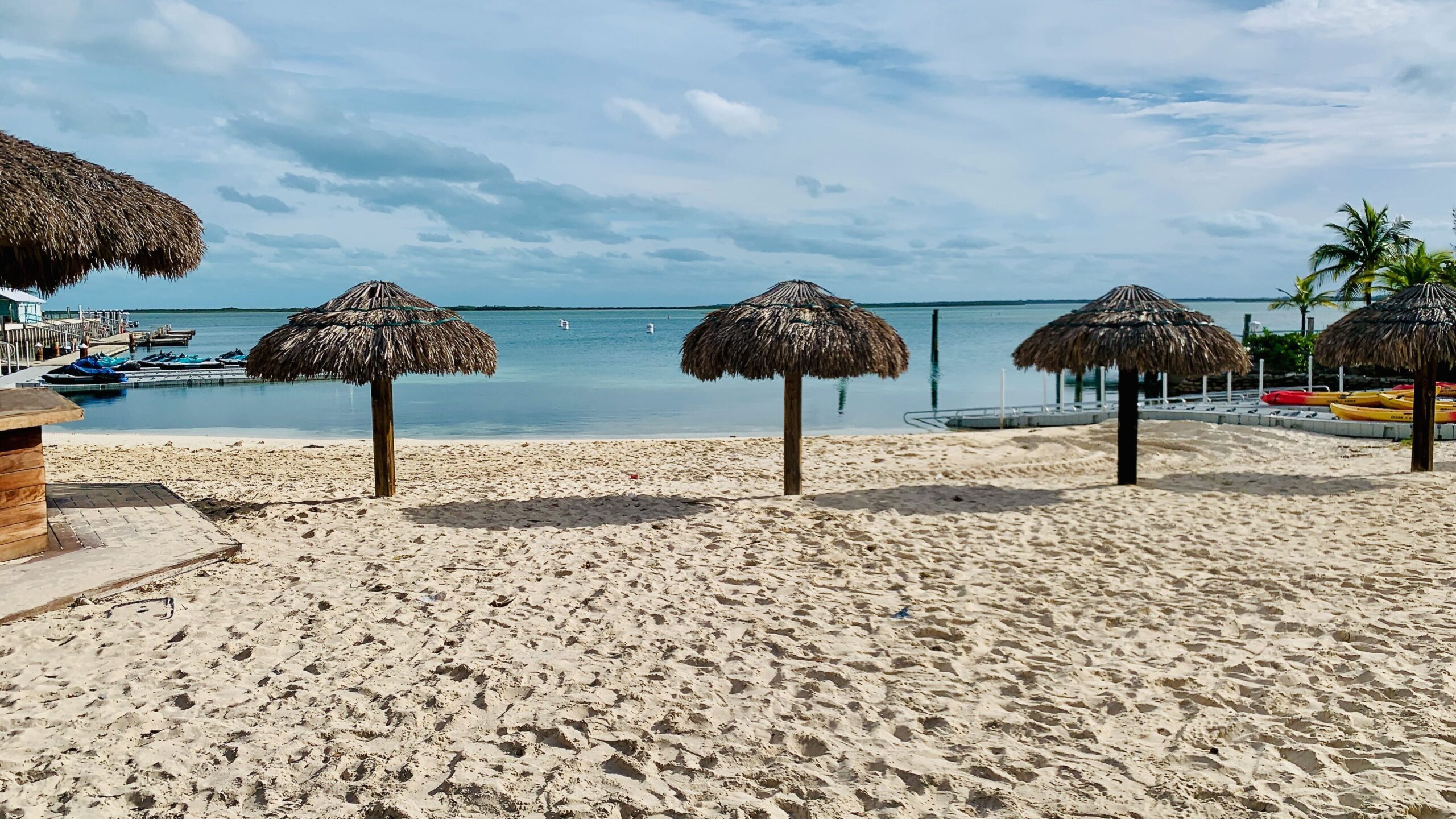
For a more authentic experience, I, for one, would try to stay at Ashley Saunders’ Dolphin House.
Getting There
- By Ferry: The most popular method is the Balearia Caribbean fast ferry, which departs from Port Everglades in Fort Lauderdale. The crossing takes approximately two hours, with round-trip fares typically starting around $225 to $300, including taxes.
- By Plane: For a faster trip, Tropic Ocean Airways operates amphibious seaplanes that land directly at the North Bimini Seaplane Base. The flight from Fort Lauderdale or Miami takes about 25 to 35 minutes. Alternatively, traditional flights land at South Bimini Airport (BIM).
- By Private Boat: This is what we did. The motor-sail across the Gulf Stream took us around 8 hours.
Regardless of the method, a valid passport is required for all travelers.
Getting Around
Bimini is very small. The entire length of North Bimini is only about 7 miles. Scooters are available, but the primary mode of transportation is the golf cart. Whenever a cruise ship was in town, we saw scores of golf carts parading down the one main road.
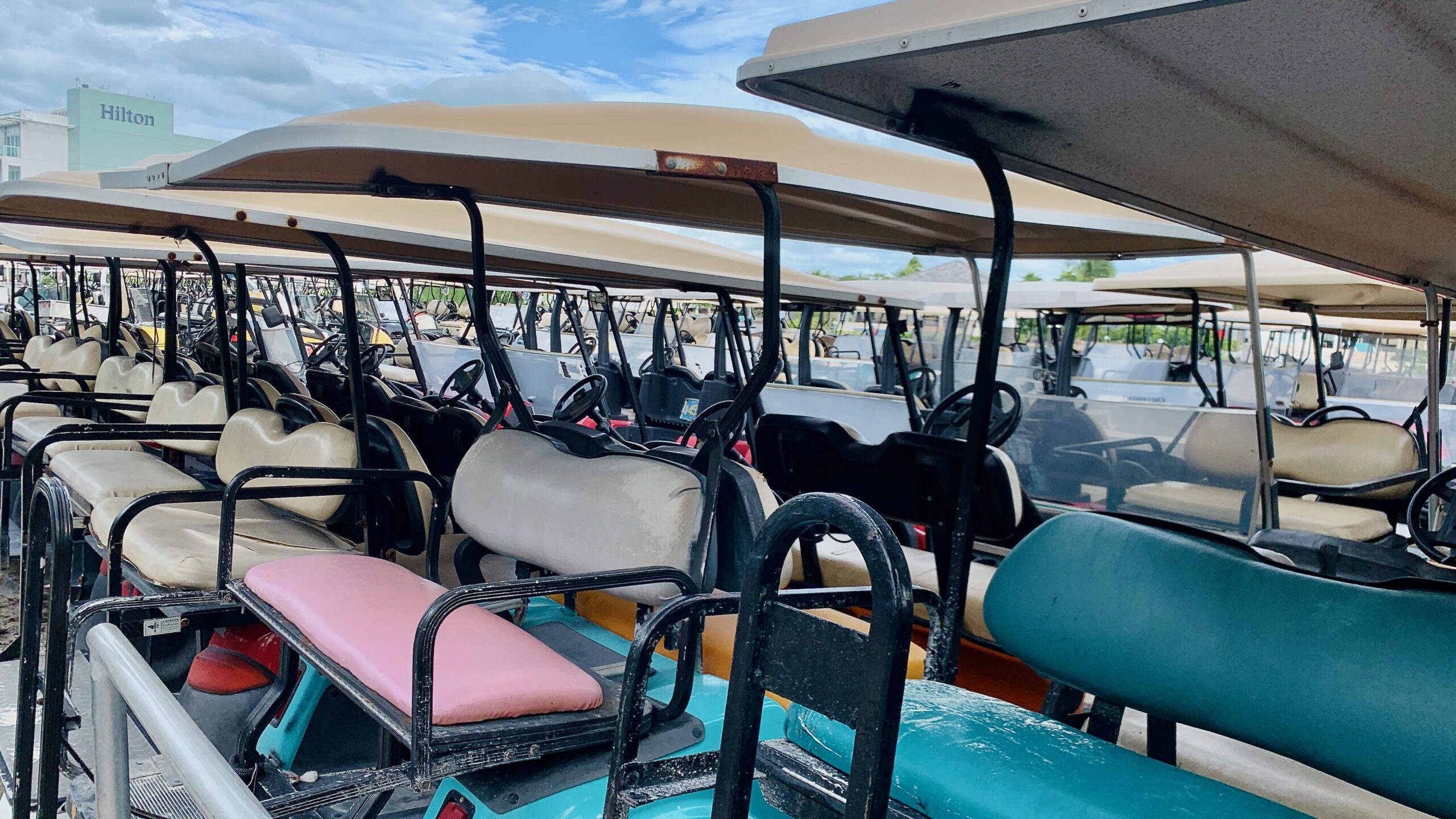
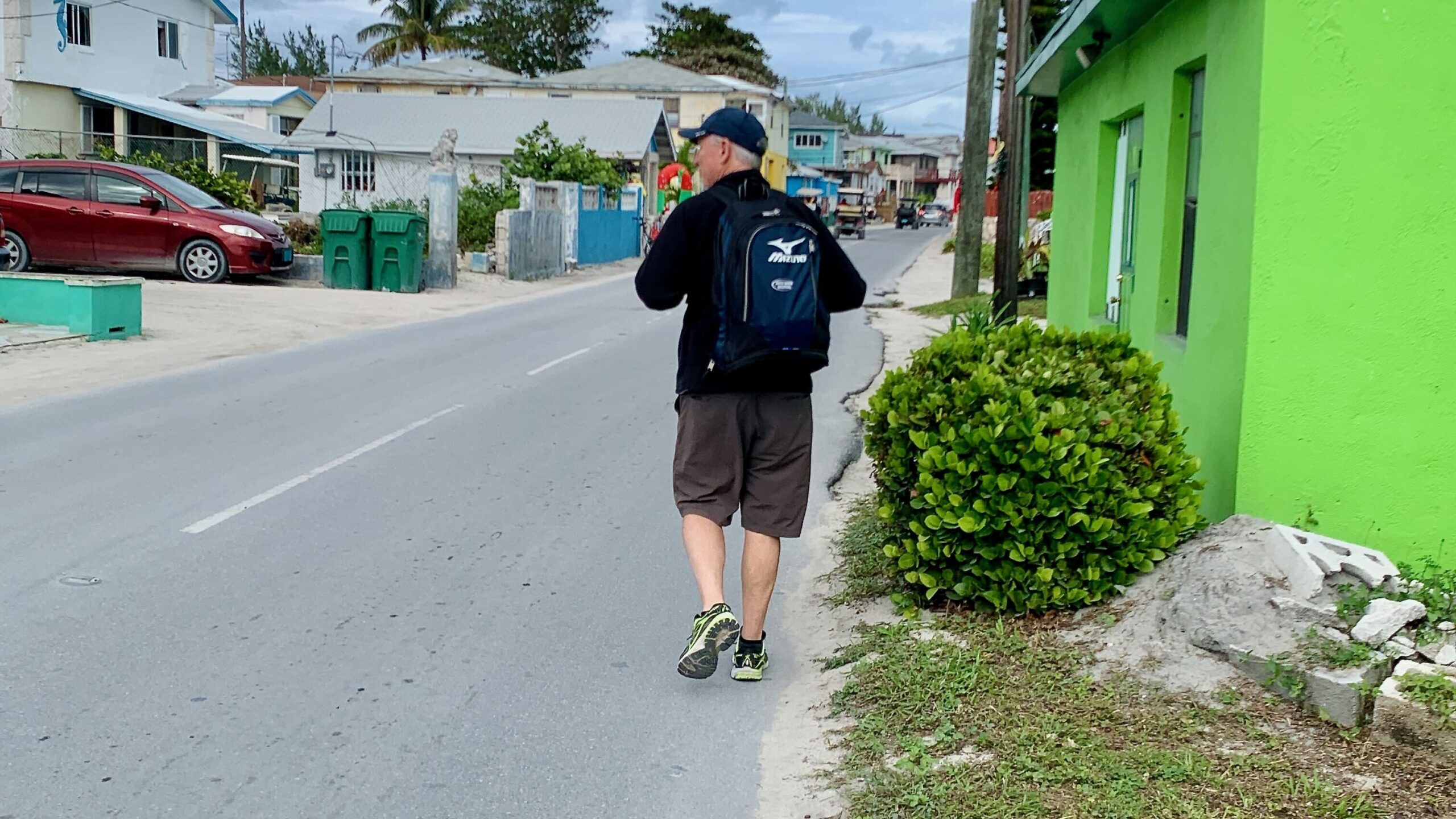
Us? As usual, we walked everywhere.
Final Thoughts
Today, Bimini stands as a profound testament to the layered nature of Bahamian history, where ancient geological mysteries and 20th-century lore converge. The island’s identity remains inextricably linked to its past as a sanctuary for those seeking everything from mythical immortality to the ultimate big-game catch. Walking through the streets of Alice Town, one can still feel the echoes of the Prohibition era and the literary influence of Ernest Hemingway, whose presence helped transform this quiet outpost into a world-renowned destination.
The preservation of sites like the SS Sapona and the Dolphin House ensures that Bimini’s story is not just found in history books; it is a tangible, living experience for every visitor. As the “Gateway to the Bahamas,” the island continues to balance its rapid modern development with a deep respect for the maritime traditions and ecological wonders that first put it on the map.
Travel Notes
We stayed on our catamaran at this marina.
Originally experienced December 2022; content refreshed March 2026.
