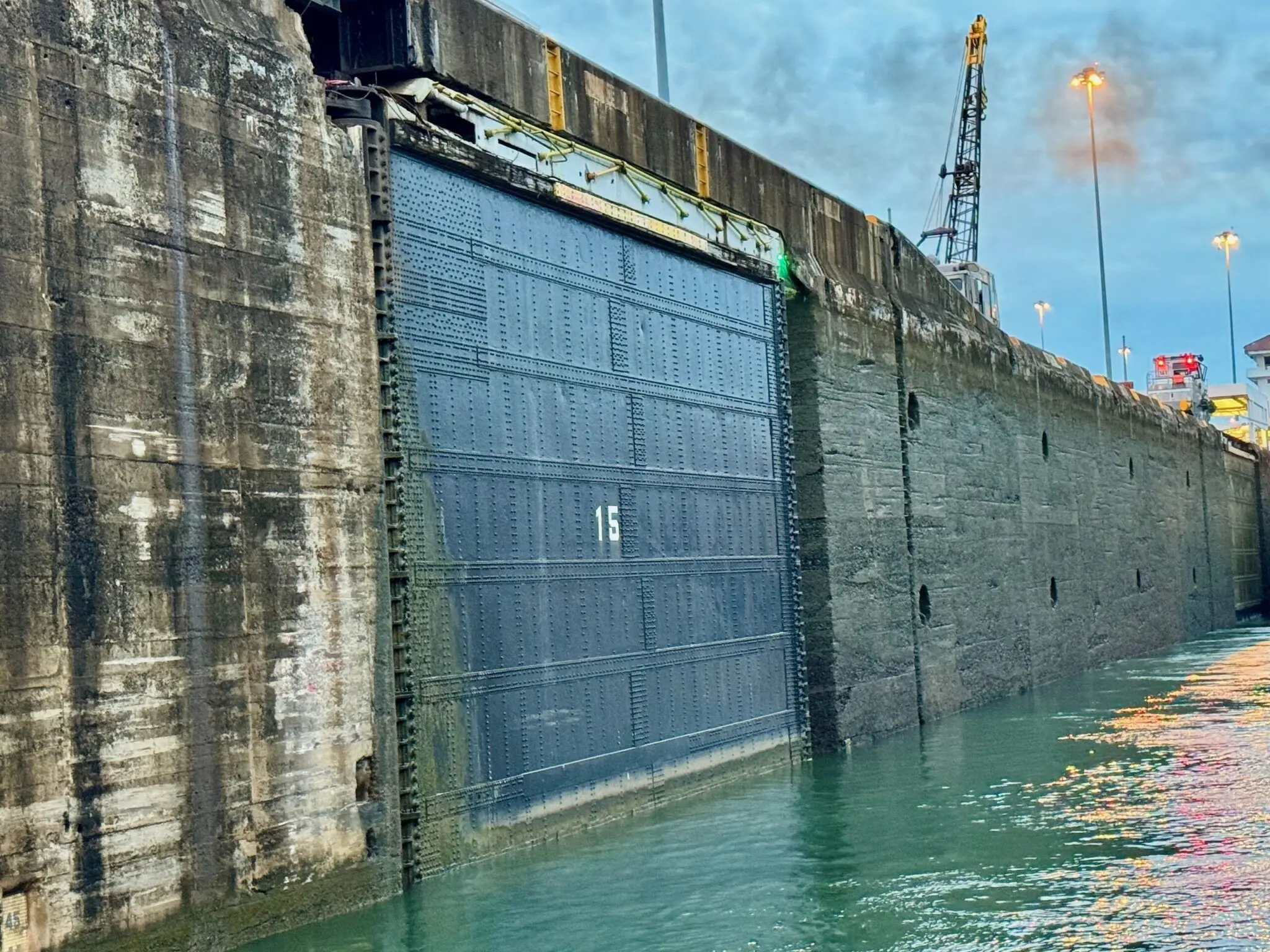
For sailors circumnavigating the globe or cruisers looking to switch oceans between the Caribbean and the Pacific, the Panama Canal is more than just a waterway; it is a legendary milestone. It is an engineering marvel that saves thousands of miles of treacherous sailing around Cape Horn. However, transiting this industrial behemoth in a recreational vessel requires meticulous planning, at least five crew members (four plus the captain and the advisor), specific gear, and patience.
The journey through the Canal began long before we arrived in Panama. We were advised to use an agent, which we did.
Preparation and Pre-Arrival
Three months before our Panama Canal crossing:
We made contact with an agent, Erick Galvez of Centenario & Co. SA. Erick responded within a few hours (on a Sunday, nonetheless). He sent a very comprehensive email with the next steps.
Step 1: Costs and Requirements
Costs
He supplied a detailed proforma for us to review. Payment is by credit card (Visa/Mastercard), online or via a card reader. For our 50-foot catamaran, the cost would be around $4,100.00, which included required preparations for our next destination, the Galapagos Islands.
Click here to view the detailed proforma (cost list).
Line Handlers
Autoridad del Canal de Panamá (ACP), an autonomous agency of the Panamanian government, requires a minimum of four line handlers in addition to the captain and supplied advisor. The captain must remain at the helm at all times to maneuver the vessel, while one handler is stationed at each corner of the boat to manage the heavy lines during the lockages. The advisor? Well, he/she advises.
Our agent hired two local professional line handlers for us. The fee was $240.00 USD.
Lines and Fenders
The Panama Canal is designed for massive cargo ships, not fiberglass yachts. The turbulence inside the lock chambers as millions of gallons of water rush in or out can be significant. Therefore, the ACP has strict requirements for gear to keep your vessel safe.
You must have four heavy-duty lines. The regulations state these lines must be a minimum of 125 feet in length and have a minimum diameter of 7/8 inch (22 mm). Standard yacht dock lines are usually insufficient.
Equally important are fenders. Standard inflatable yacht fenders are often inadequate and can pop under the immense pressure against rough concrete lock walls or neighboring vessels. They recommend heavy-duty alternatives. You need enough of them to protect both sides of the vessel, as you may not know your lock configuration until the last minute.
Our agent supplied the lines and fenders.
Advisor
Having an advisor on board is mandatory. They are supplied by ACP. The advisors are there to provide transit instructions to the captain and communicate with lock control. However, unlike a pilot on a large ship who sometimes may take full command, on a small craft, the captain remains ultimately responsible for the safety and navigation of the vessel at all times.
Step 2: Questionnaire and Release Form
He included a questionnaire and release form for us to complete and email back. We completed the questionnaire and returned it in the body of an email to Erick two days later.
Click here to view the detailed, 52-question survey.
We sent copies of our boat registration, crew list, passports, and port clearance (once available).
We didn’t return the release form yet because we had a question about it.
Step 3: Photos
He noted that the inspection is now virtual.
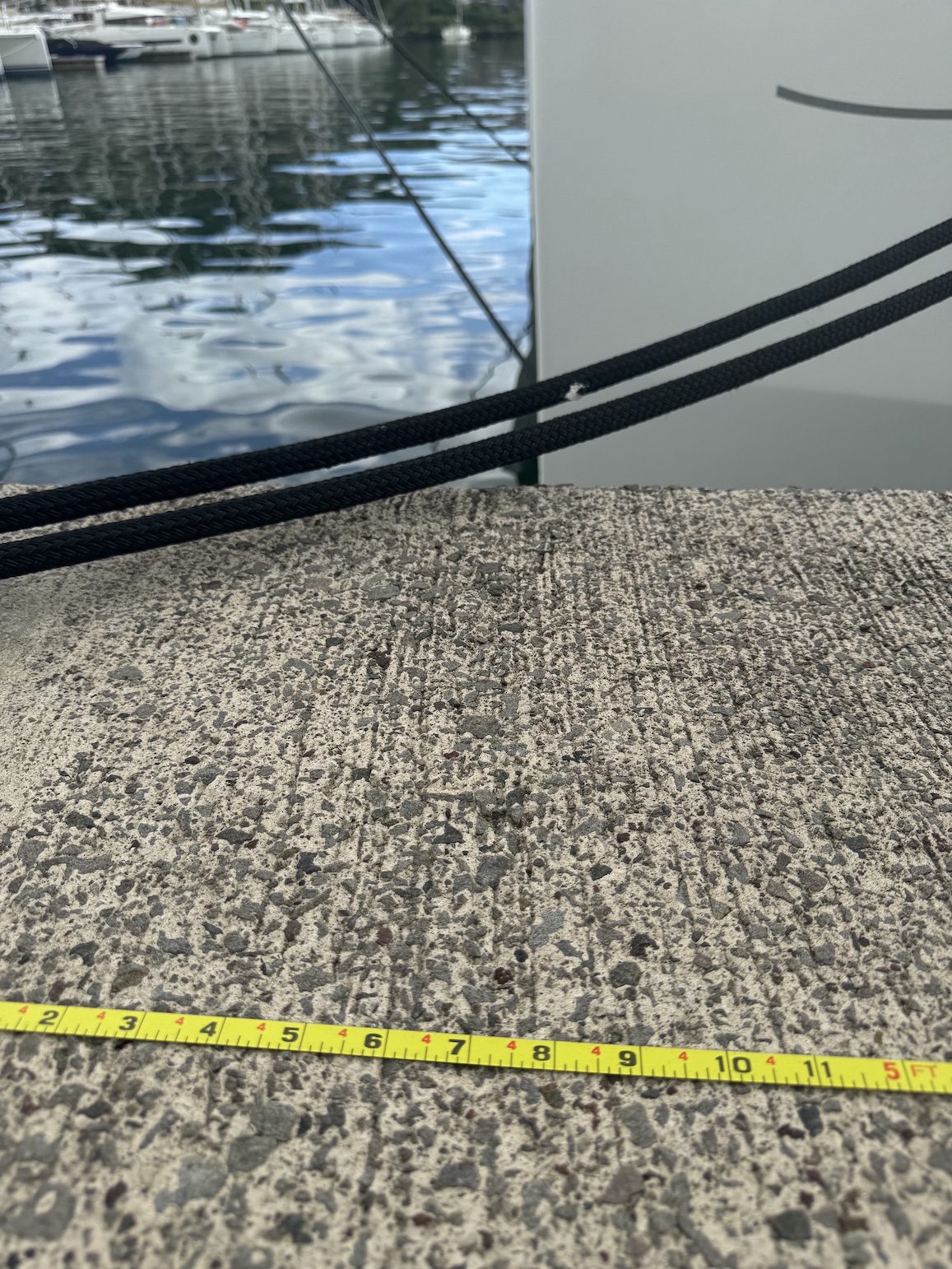
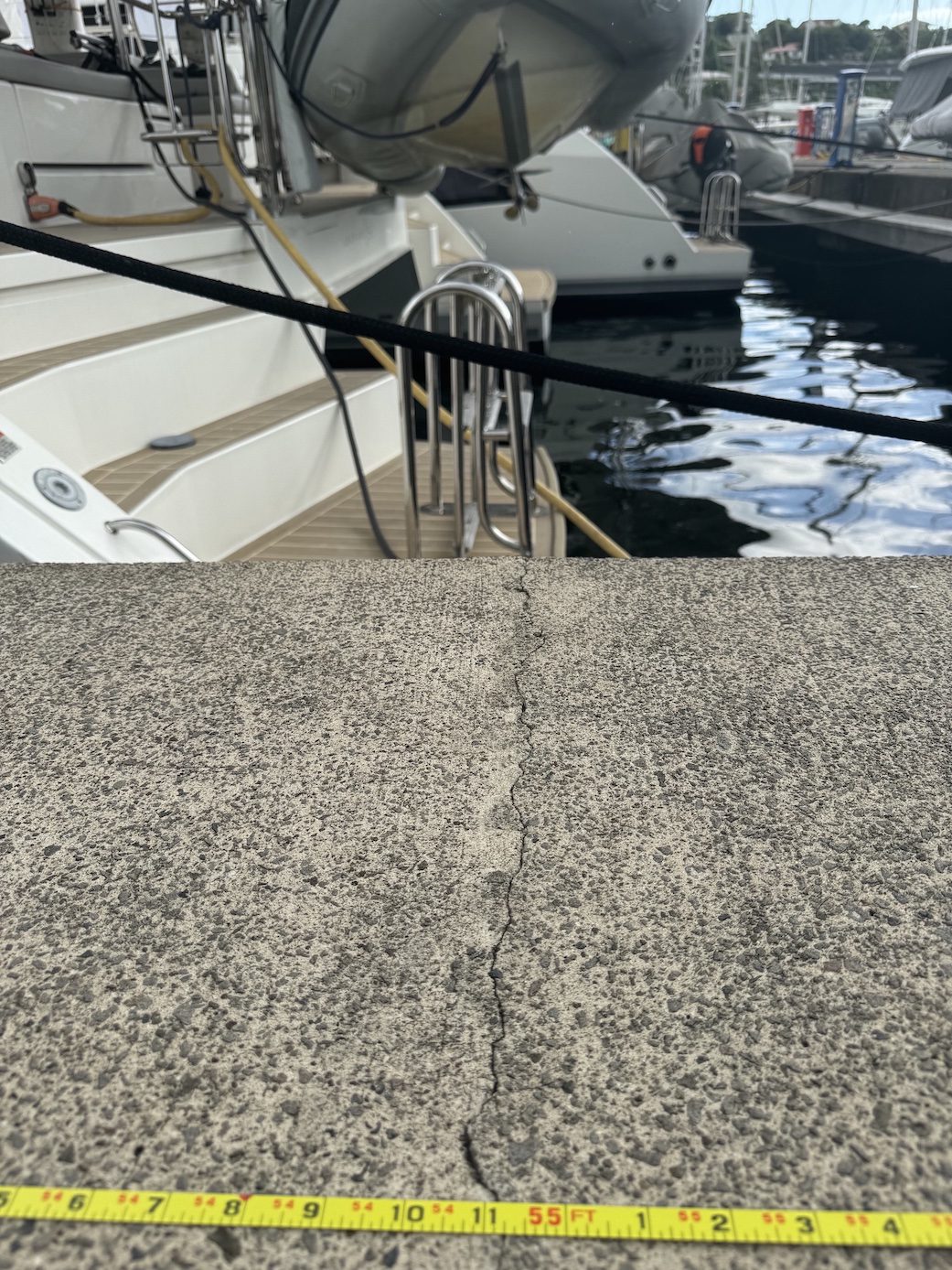
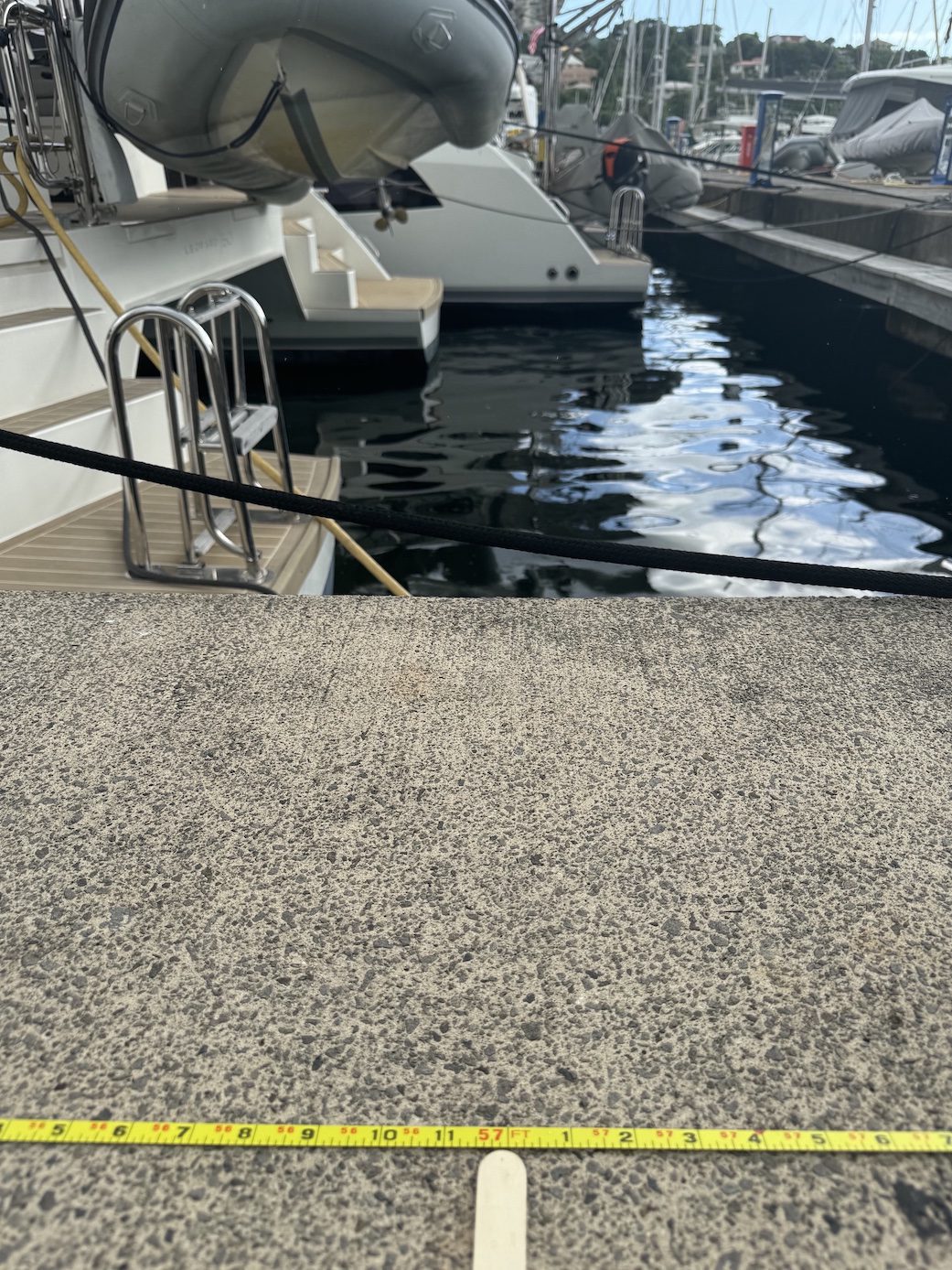
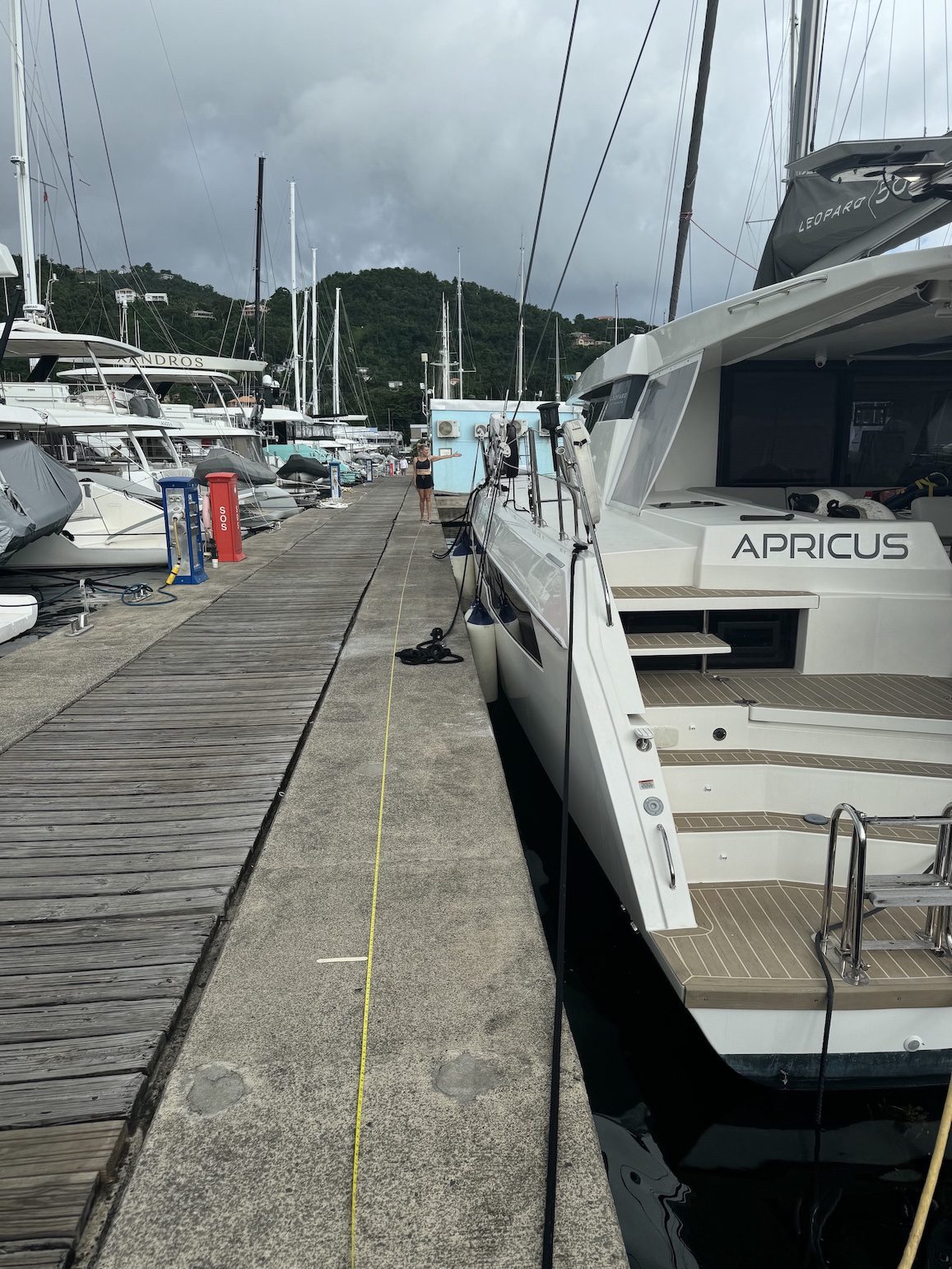
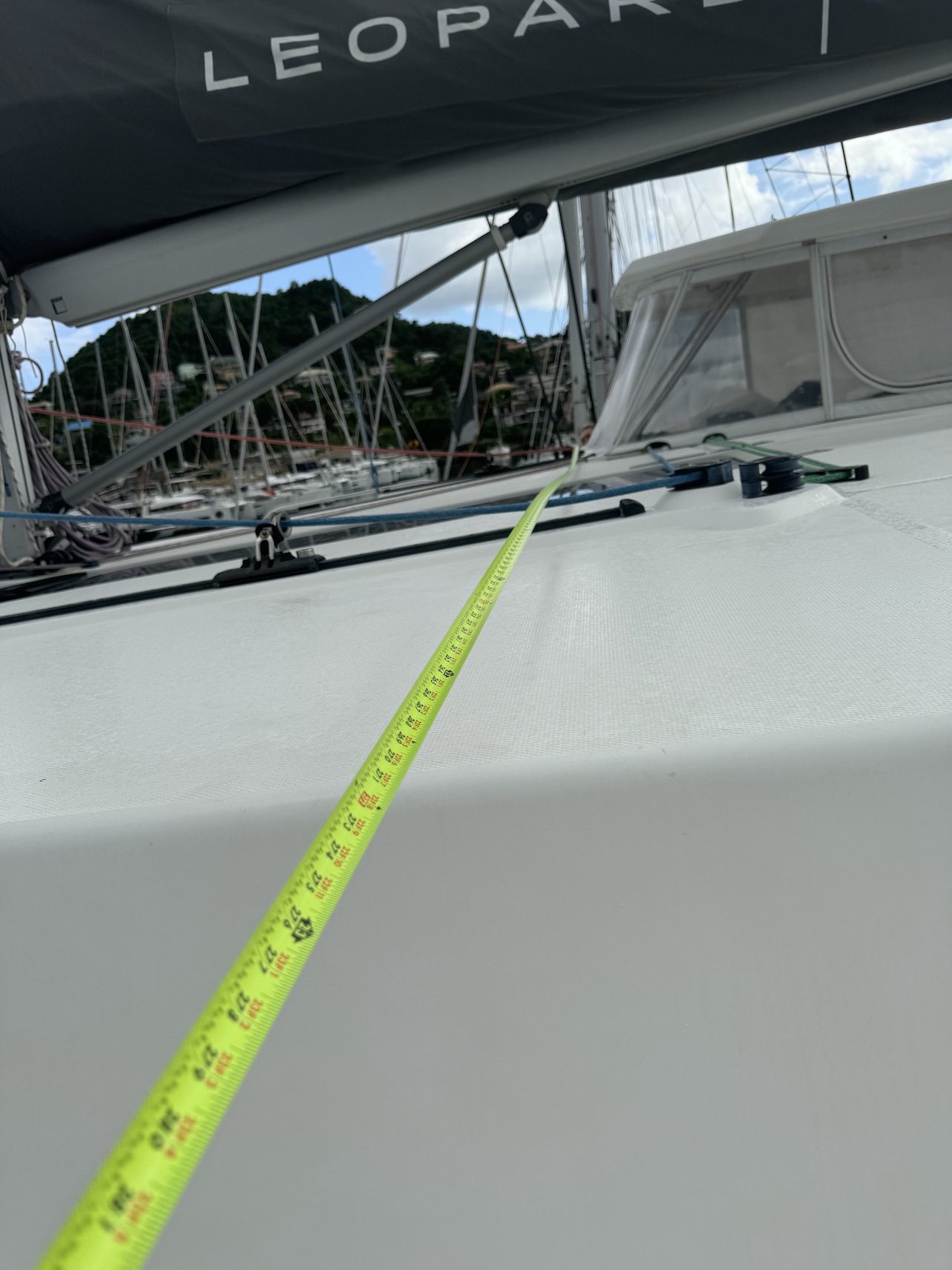
We were told to return at least four photos in total showing the boat’s measurements: one picture per section, in jpg or png formats, and less than 2 mb each. He supplied some sample photos and instructions to indicate how these measurements should be taken.
- Length
- AFT extension
- Forward extension
- Extreme beam (the widest part of the boat)
The next day, we ended up sending 10 photos, in all, to tell the complete story. Here are the photos we sent:



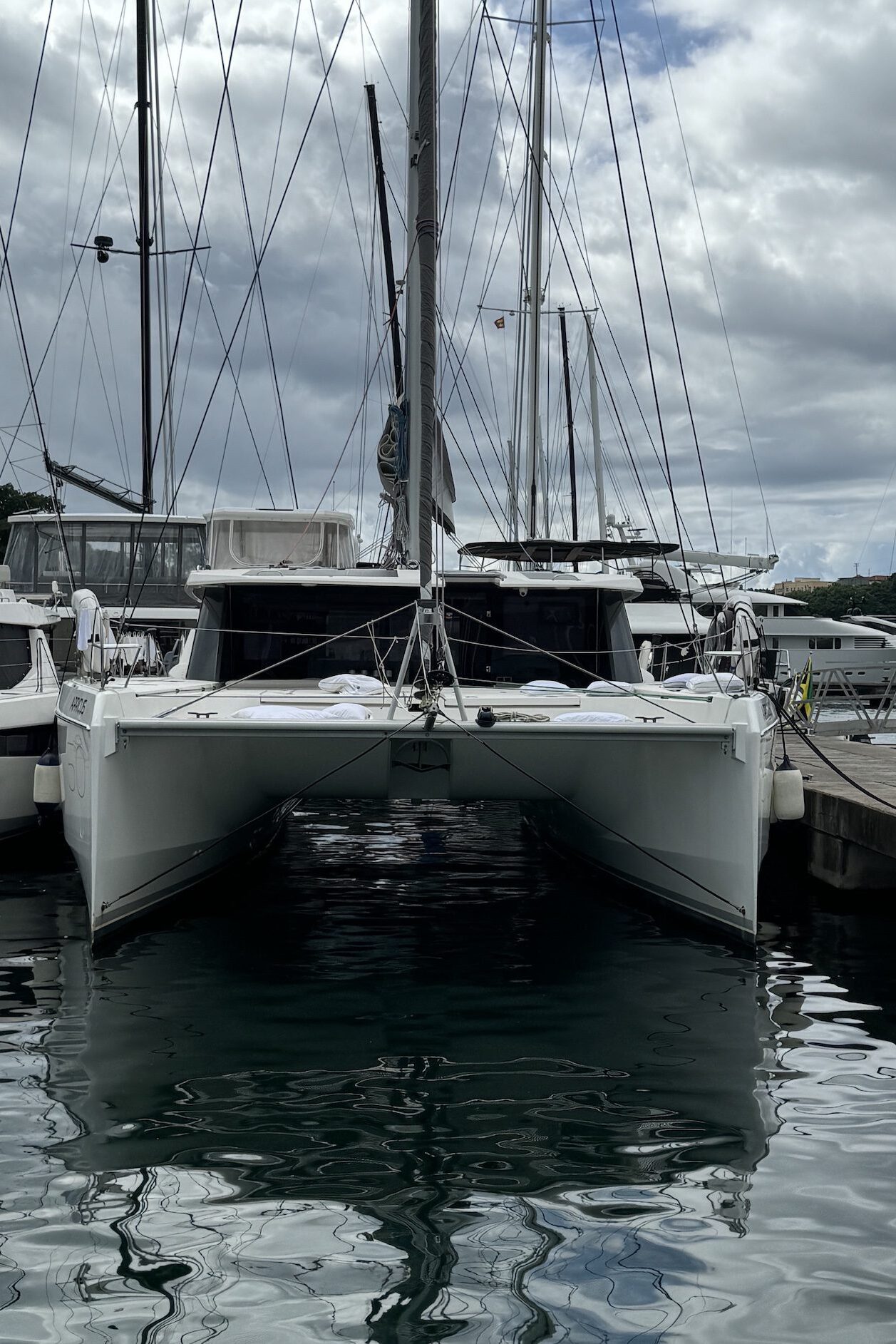
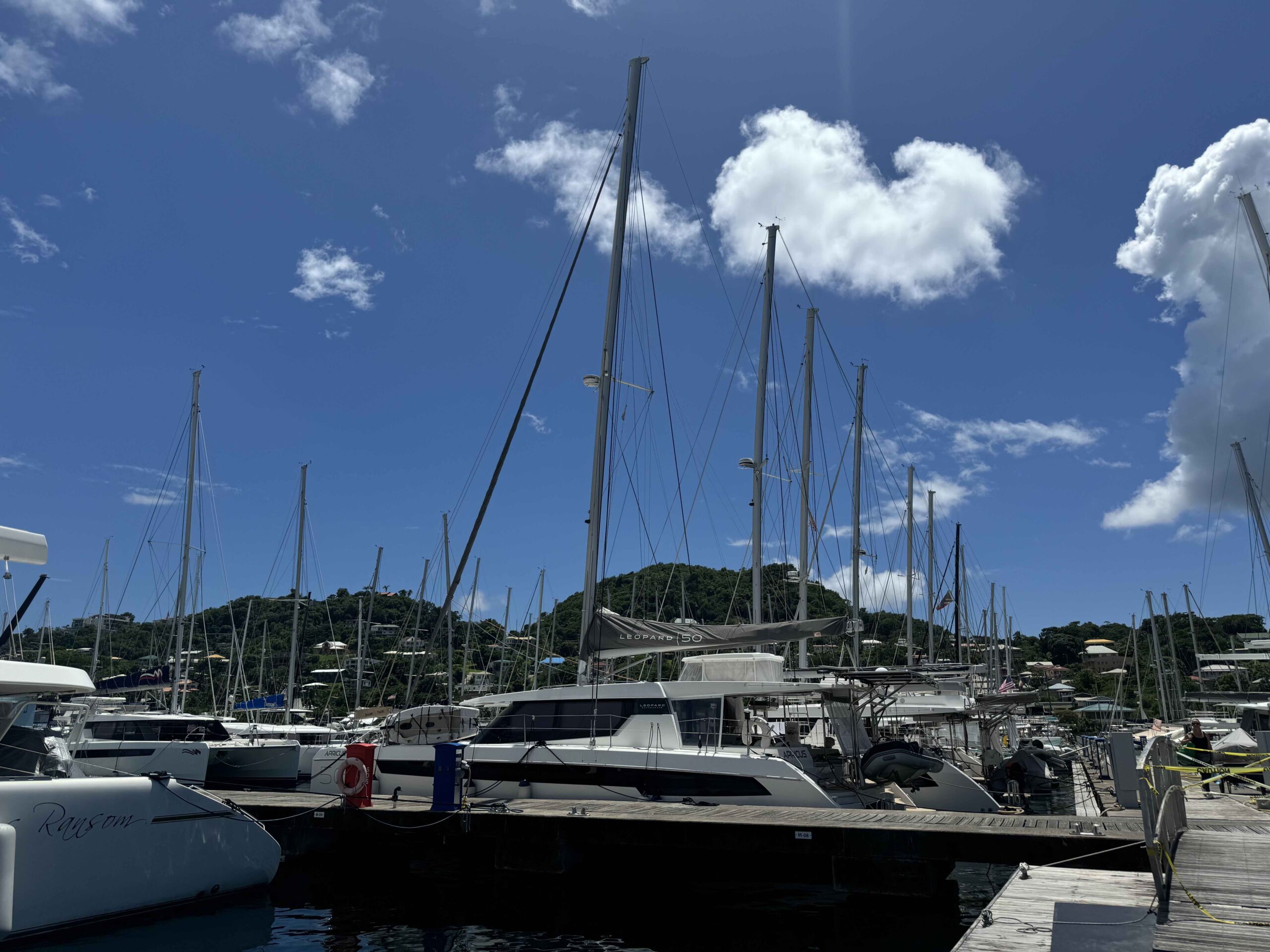
We returned the release form in the same email.
Step 4: Get to Panama
Erick explained that we had to be in canal waters to request a transit date. We had the option to complete the transit in one or two days (since our vessel can exceed 8 knots). We chose the latter.
He noted that November and December are best, to avoid the January and February heavy arrivals, ARC Rallies, holidays, and limited advisor availability.
November/December arrival = transit is 3-4 days afterwards,
January arrival = transit is 7-10 days afterwards,
February arrival = transit is 10-20 days afterwards, and
March arrival = transit is 20-30 days afterwards.
Timing was a big deal to us because our kids were coming to Panama to join us on the transit, so it really needed to be around Christmastime.
So we shoved off the dock in Grenada and set sail for Bonaire.
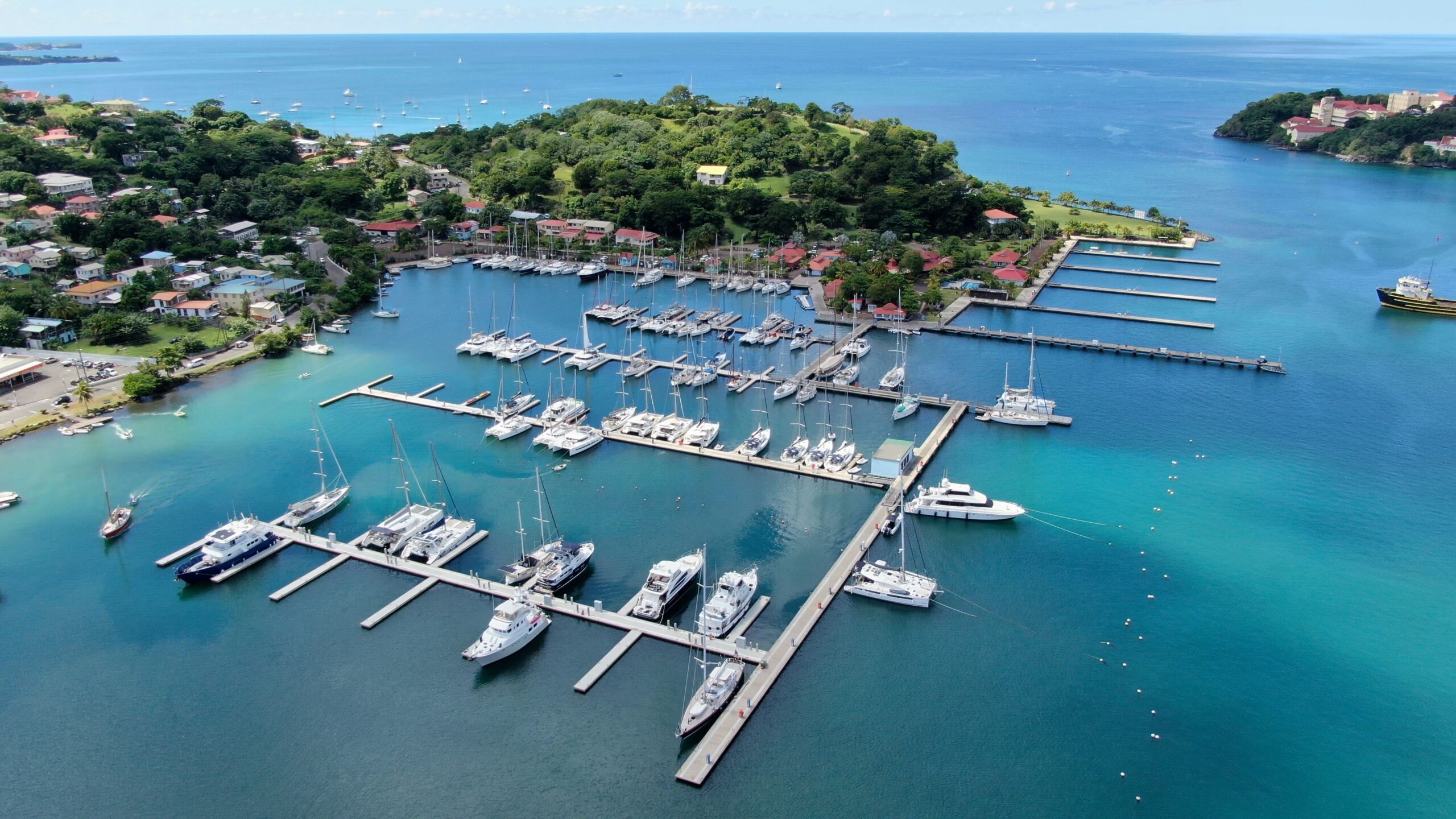
After a few days in Bonaire, we set off again, this time for Colón, Panama. I kept Erick informed as to our arrival dates/times along the way.
Erick sent us some entry instructions from the marina:
When one mile from the main breakwater entrance, call Cristobal Signal station on Channel 12 advising of your approach and intention to come to Shelter Bay Marina. Once inside the breakwater heading towards the marina call (Shelter Bay Marina) on VHF channel 74. (Staff members) will be standing by to assist with berthing instructions and to receive the lines upon your arrival to the assigned slip. We do encourage daytime arrivals, any arrival between 7:00 PM and 7:00 AM will have an additional fee of $50.00.
The entry channel runs approximately 200 meters south and parallel to the breakwater. It is clearly marked with four green buoys on your port side and a red one on your starboard side as you get close to the marina entrance. As you approach the Shelter Point headland before entering the marina cove, keep at least 70 meters north of the headland. This will keep you well clear of the reef extending 150 meters EAST NORTH EAST of this Shelter Point headland.
Step 5: Clear Panama Customs and Immigration
When we arrived in Panama, I informed Erick, and he submitted our transit request to the canal authorities. We received our transit date confirmation the same day.
He then sent one of his colleagues to Shelter Bay Marina to get us checked in with a customs and immigration officer. It was a holiday, so we paid an overtime fee. It was all very easy.
Step 6: Receive the Schedule and Wait
The day before our transit, Erick sent us the final details.
At this point, we didn’t know what the transit configuration would be. In cases where your boat is the one tied off to the wall, there’s a chance that your solar panels can get damaged when the lines are thrown back onto the boat. So out of an abundance of caution, we covered the solar panels and Starlink with cardboard.
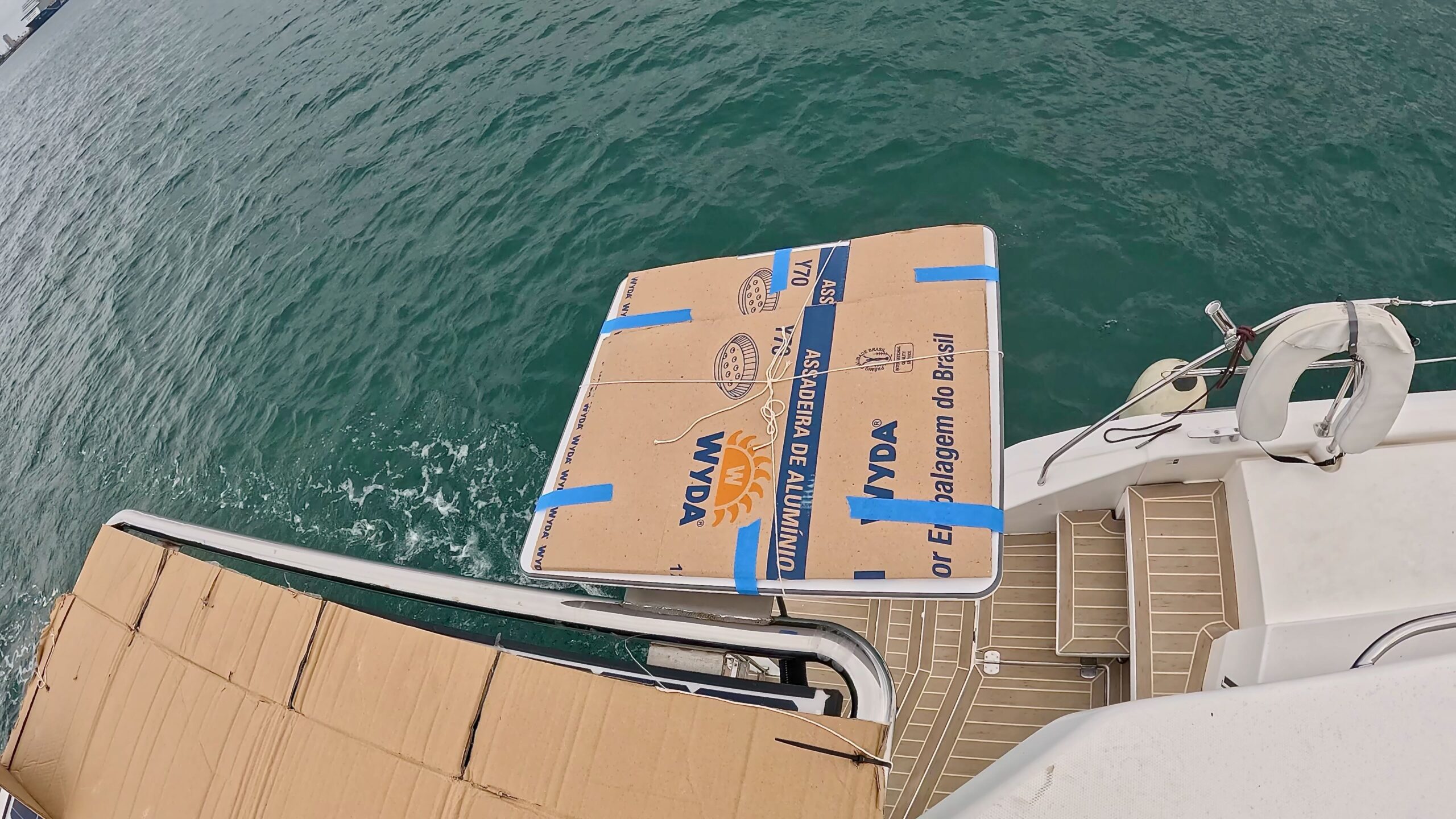
Day One of Our Panama Canal Transit
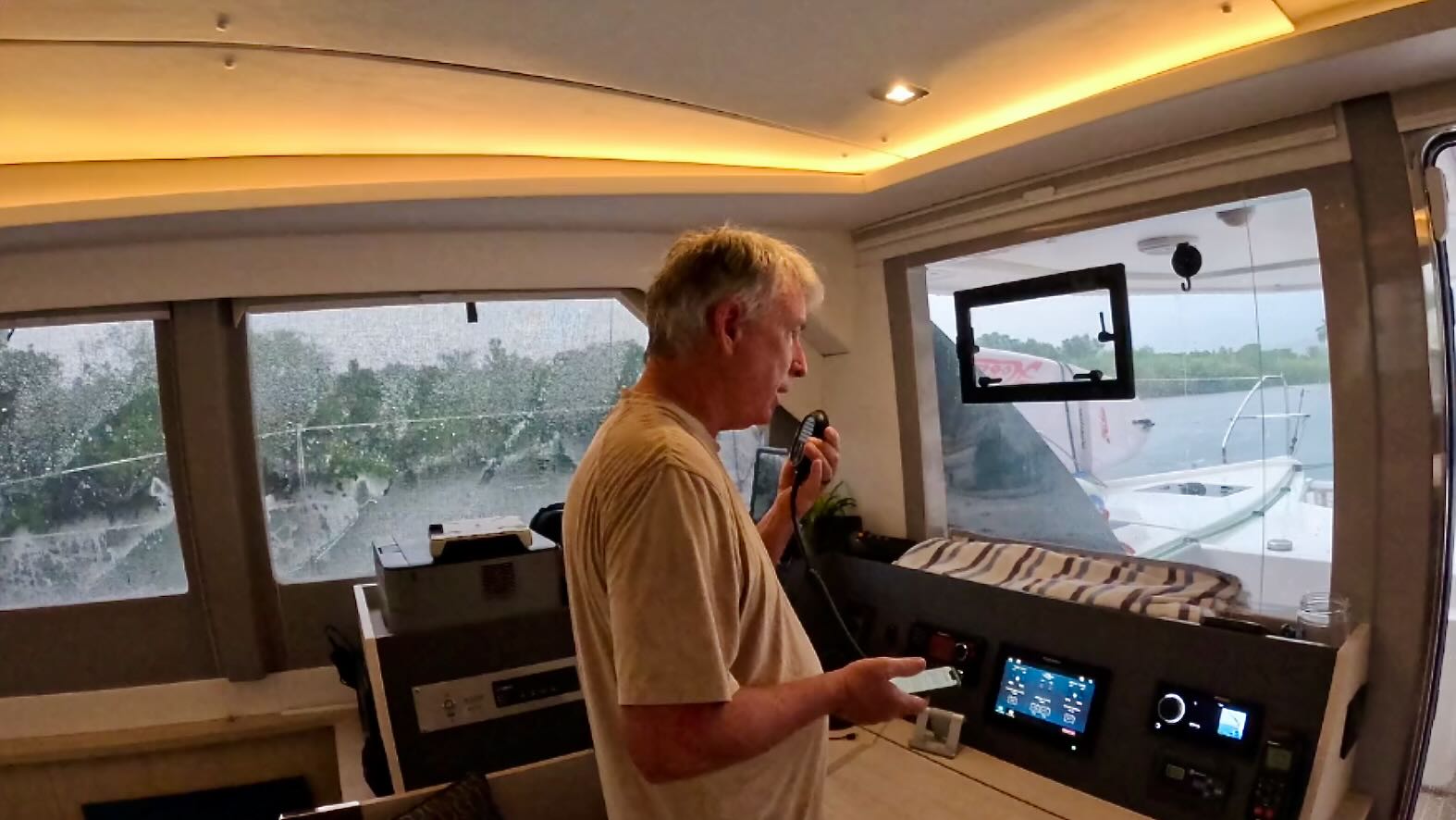
9:00 a.m.—As instructed, we called Cristobal signal station at 9:00 a.m. on VHF channel 12 for any updates.
12:00 p.m.—Our two hired line handlers arrived. They brought lines and fenders with them.
1:00 p.m.—We motored to the staging area (west anchorage, 100 meters south of the beacon marker near Shelter Bay Marina). We were told that it was not marked by buoys and that other yachts would be there. We were also warned not to anchor near shore. We were instructed to contact the Cristobal signal station on VHF channel 12-16 once there, to let them know our anchoring position and that we were waiting for our transit advisor.
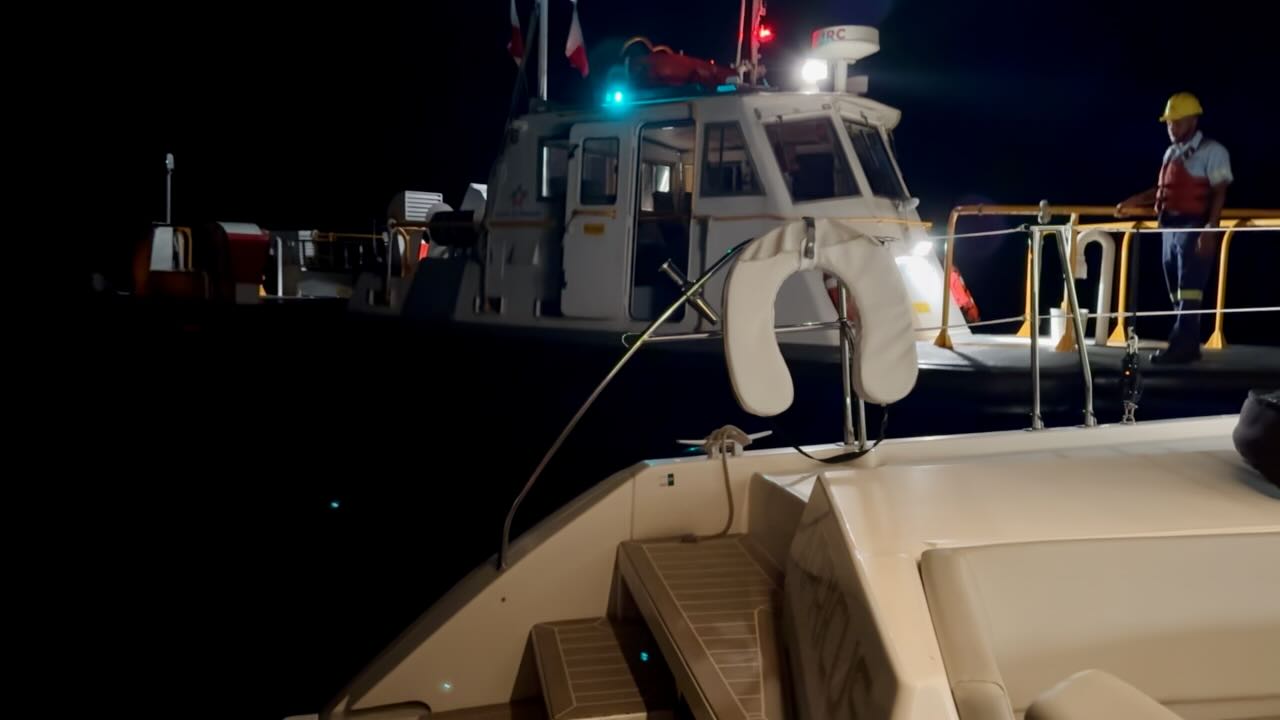
3:30 p.m.—Our advisor boarded the boat. Everything was very well coordinated.
As the two boats rocked, he leaped onto our boat without hesitation. He made it look so easy.
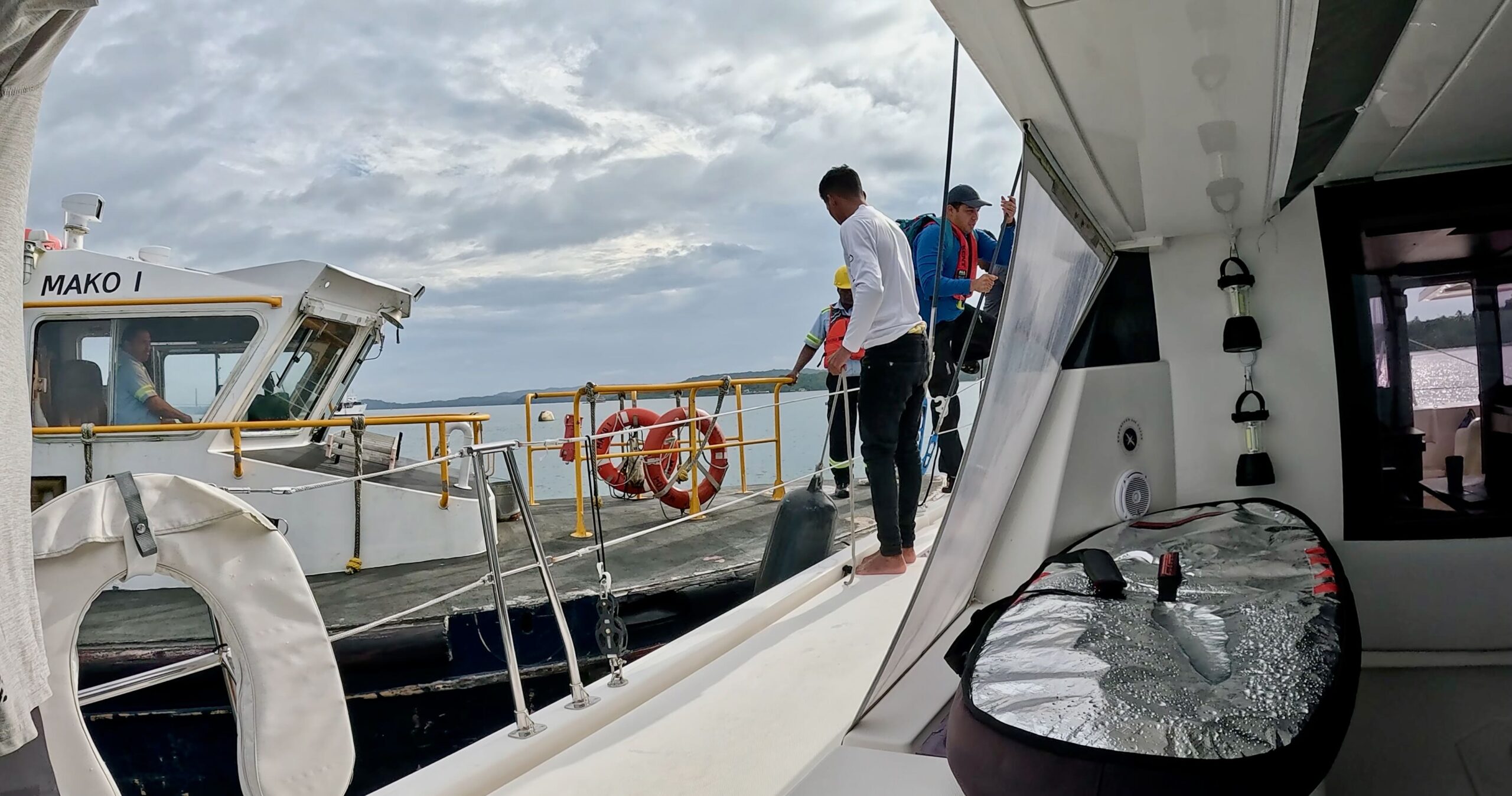
We then raised anchor and started motoring toward the canal.
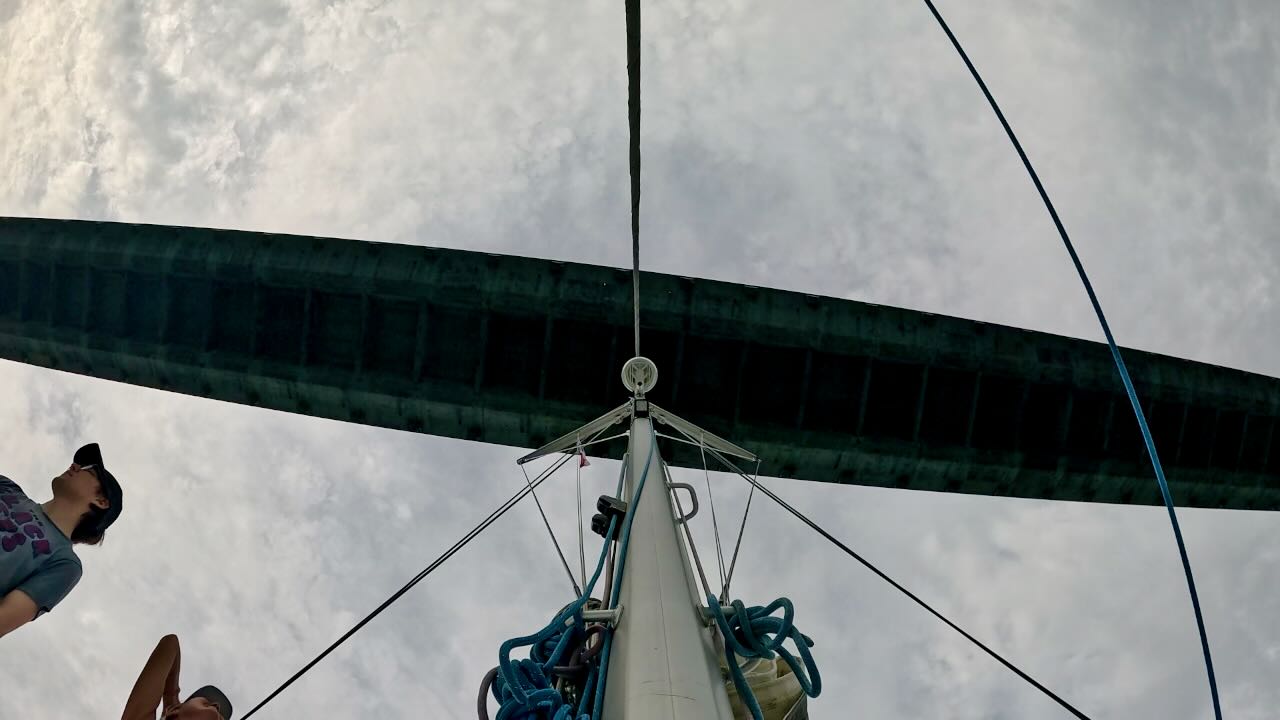
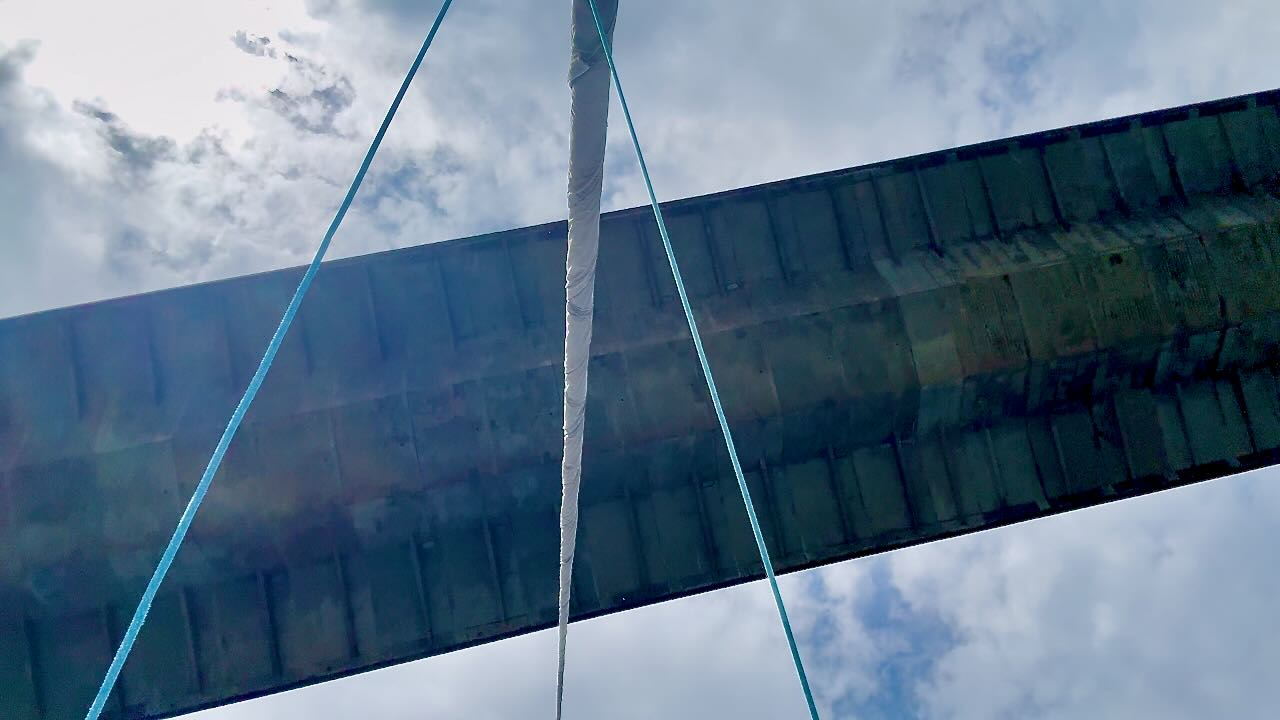
First, we crossed under the Atlantic Bridge.
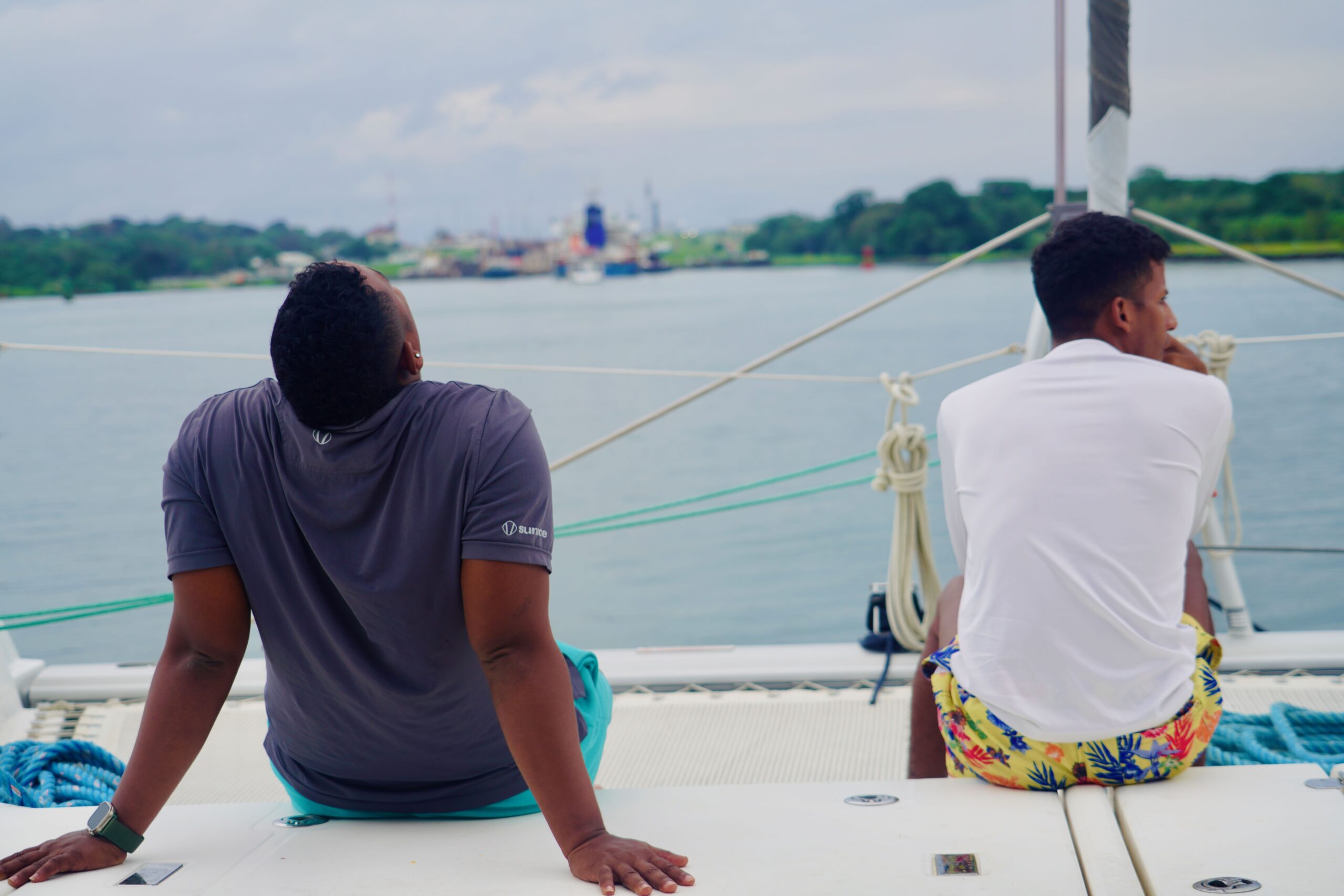
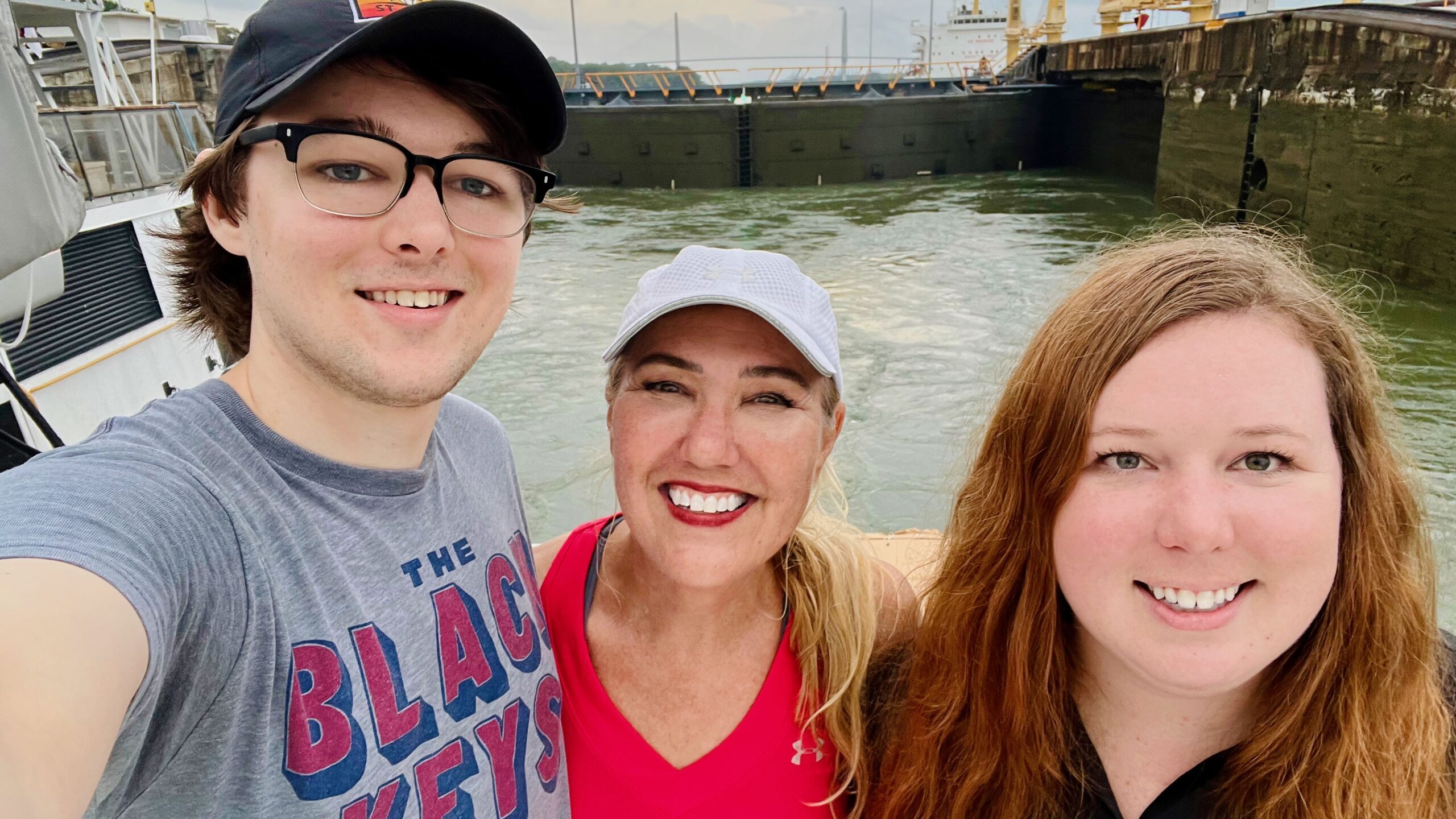
On our first day, we ascended through the three chambers of the Gatun Locks.
Entering the Locks
As we approached the first set of locks (Gatun Locks), our advisor informed us of our lock configuration. Yachts never transit alone in a huge chamber; they are grouped.
There are different ways small craft can be configured in the locks, such as:
- Center-chamber: The yacht is positioned in the middle of the chamber, held in place by its four long lines secured to bollards on the canal walls above.
- Nesting (Rafting): Multiple yachts are tied securely together side-by-side to form a single raft, which then moves through the locks as one unit. The vessels on the outside of the raft secure lines to the canal walls.
- Alongside: The yacht is tied alongside a canal tugboat or a small commercial vessel. This is often considered the easiest method, as the tug’s crew handles the lines to the shore, and you simply move with them.
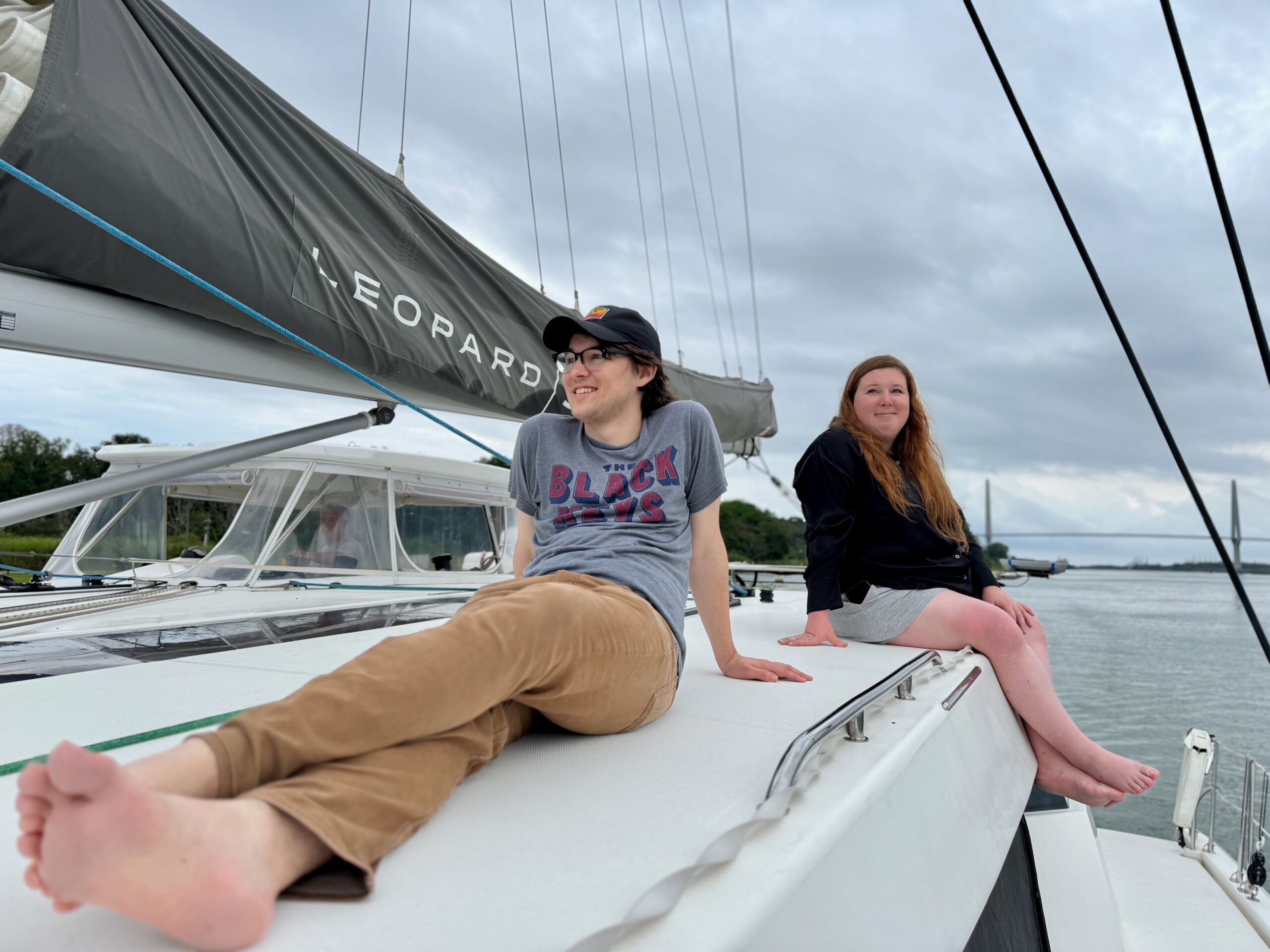
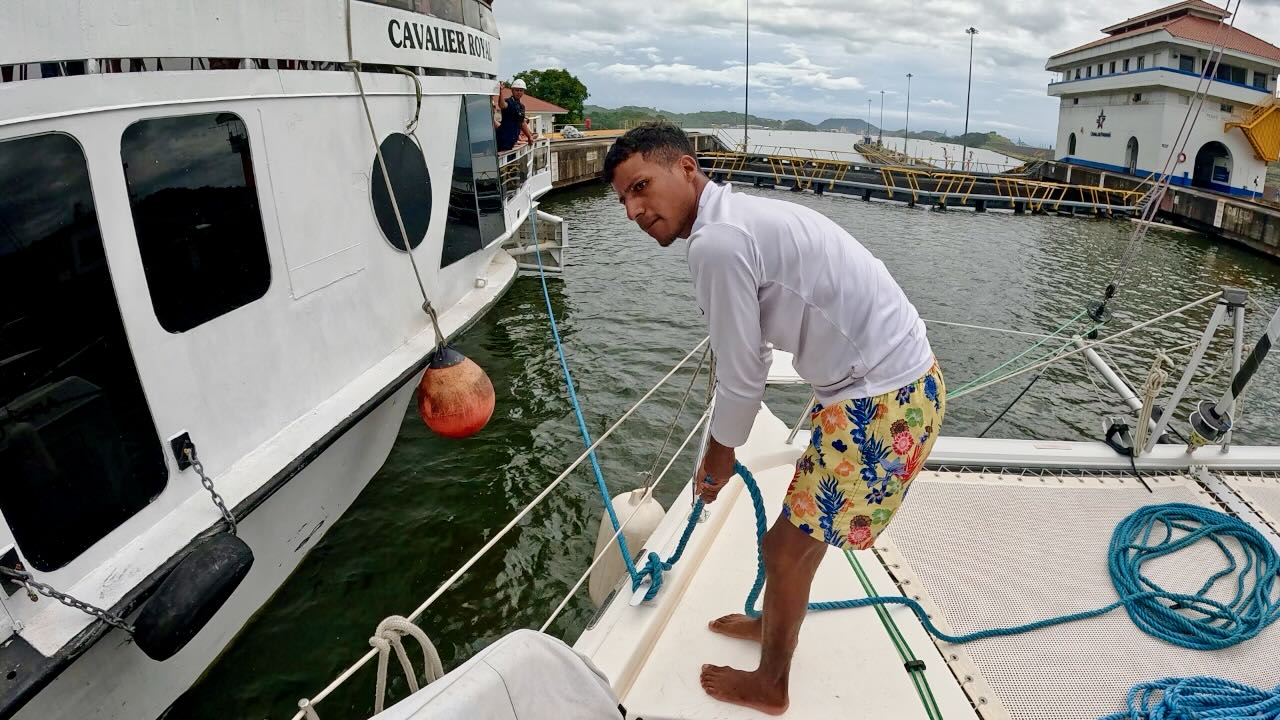
Our configuration was actually a bit different because we were the only small, private boat in our group. We rafted up to a tour boat (both days), but we moved independently. On both days, there was also a cargo ship with us.
Since we were rafting up to the tour boat, not the wall, we ended up not needing the cardboard on our solar panels. But we were still happy to have had it just in case.
The Ascent (first three locks)
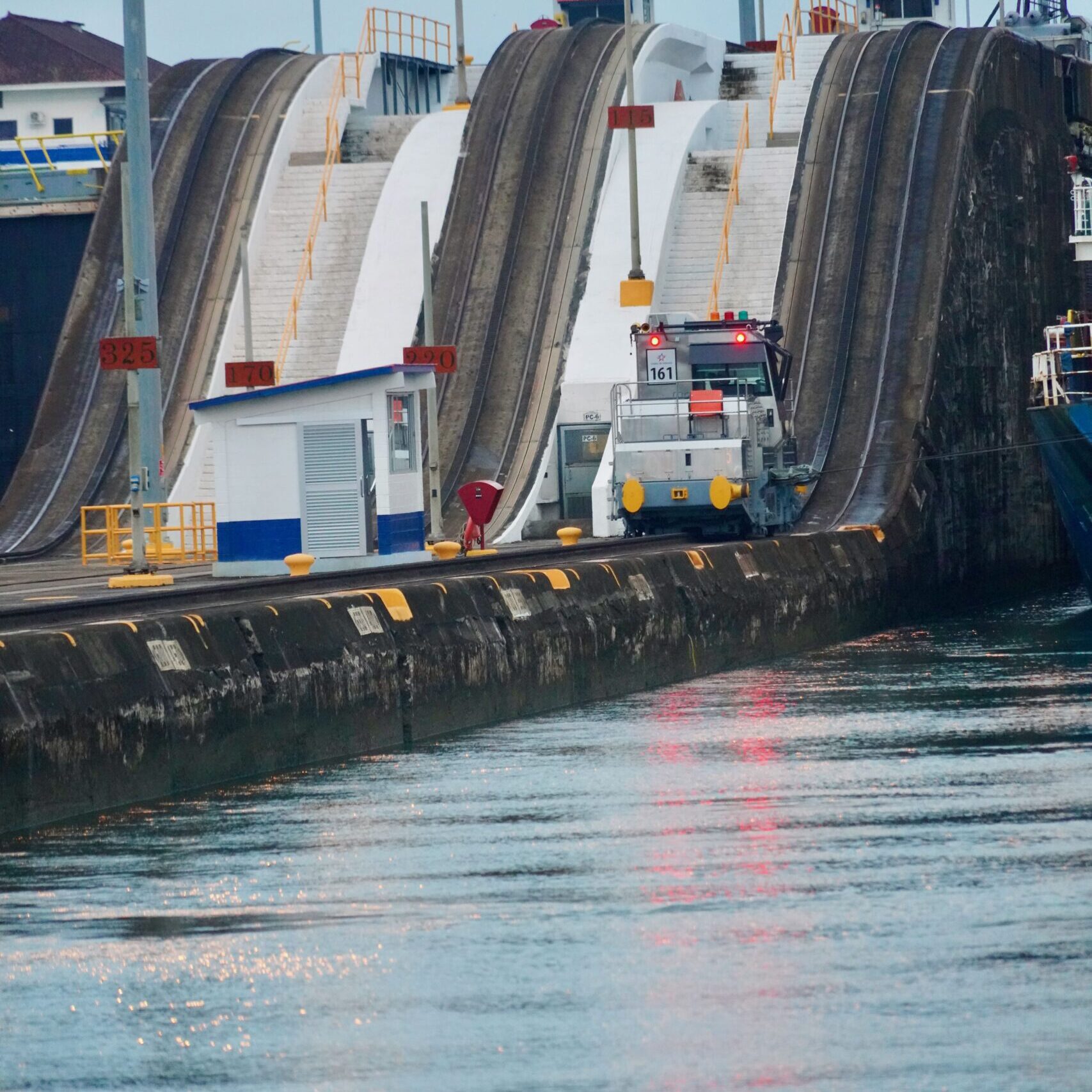
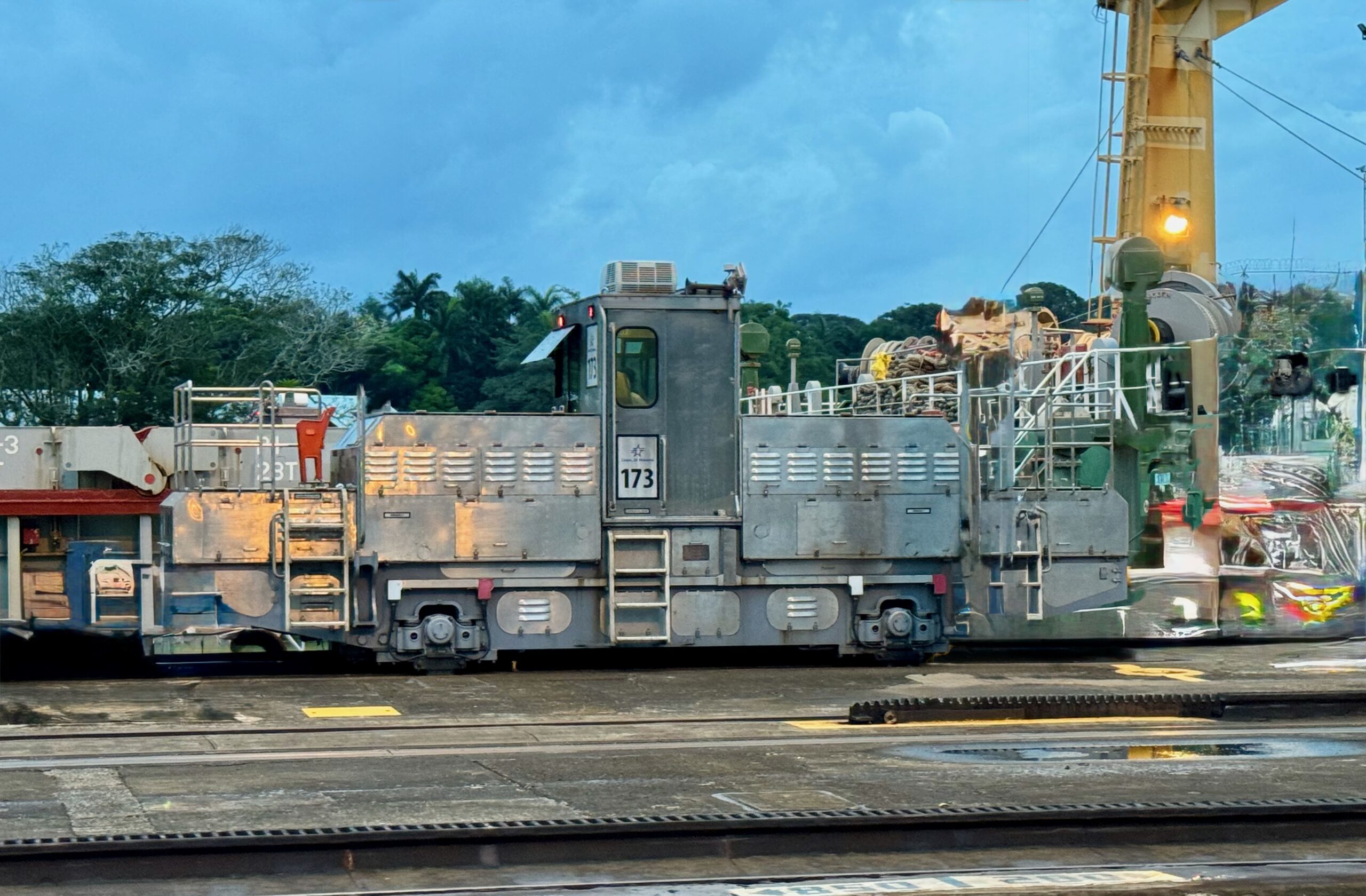
I find the little “mules” that move the cargo ship lines fascinating.
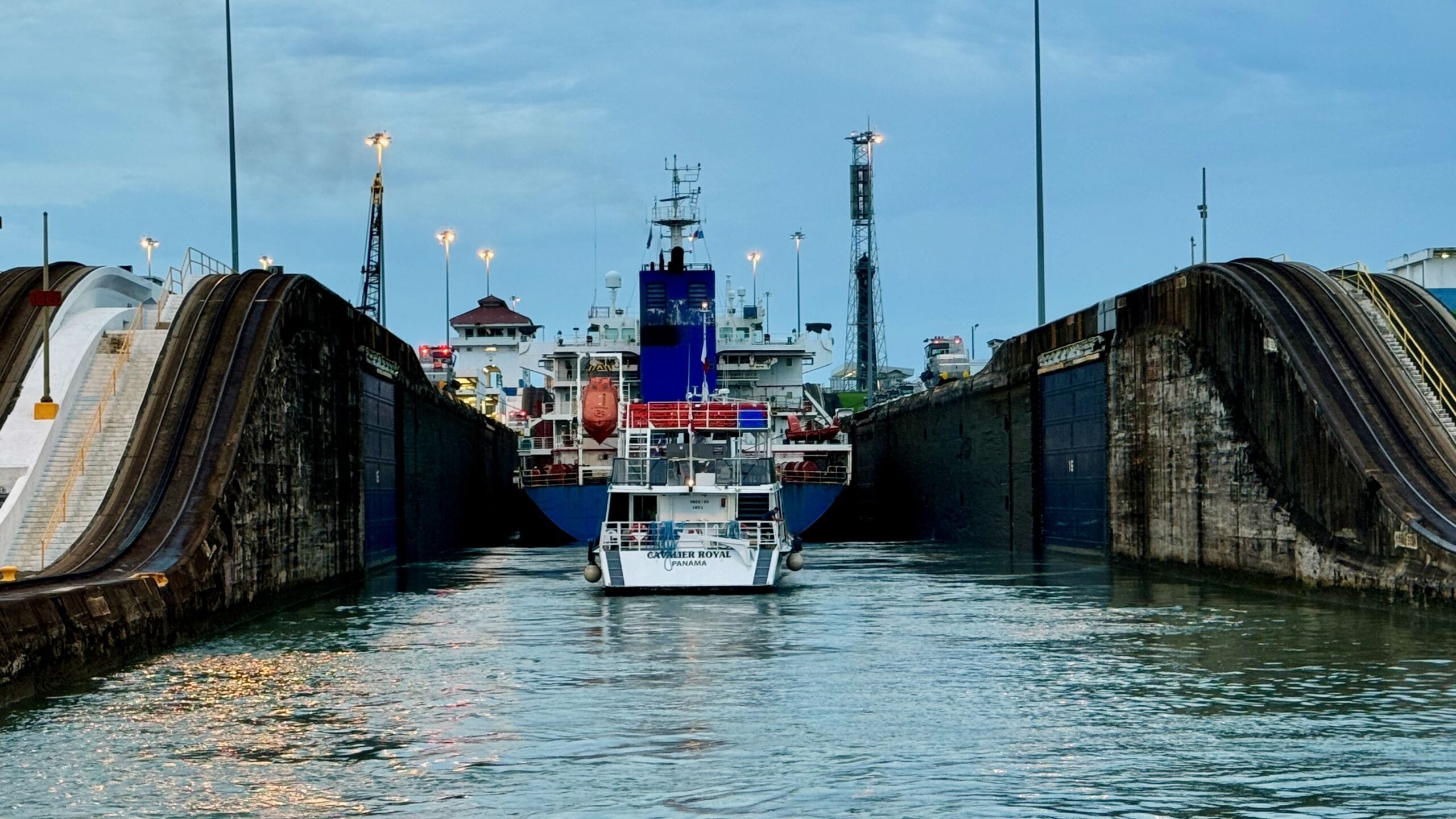
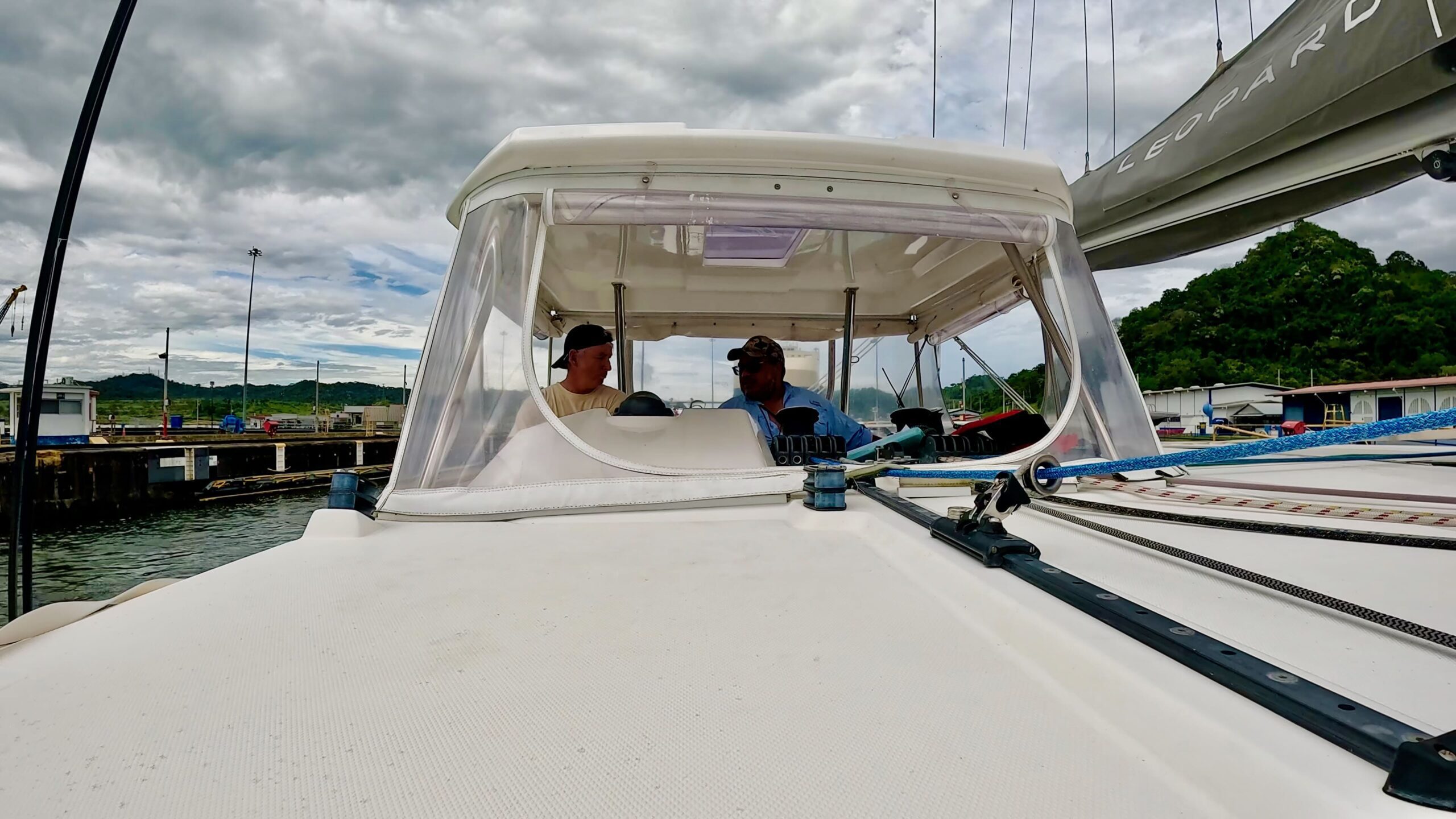
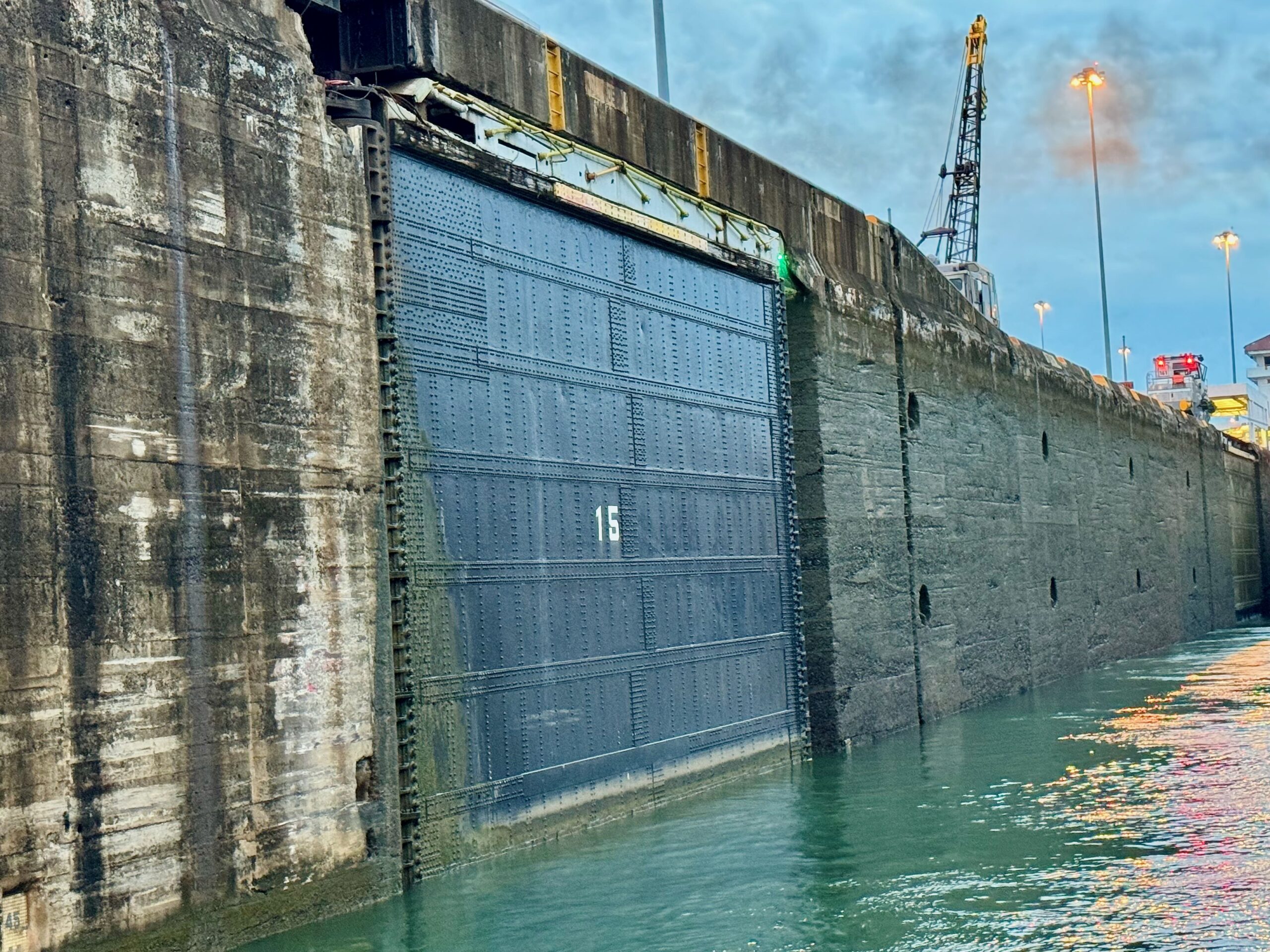
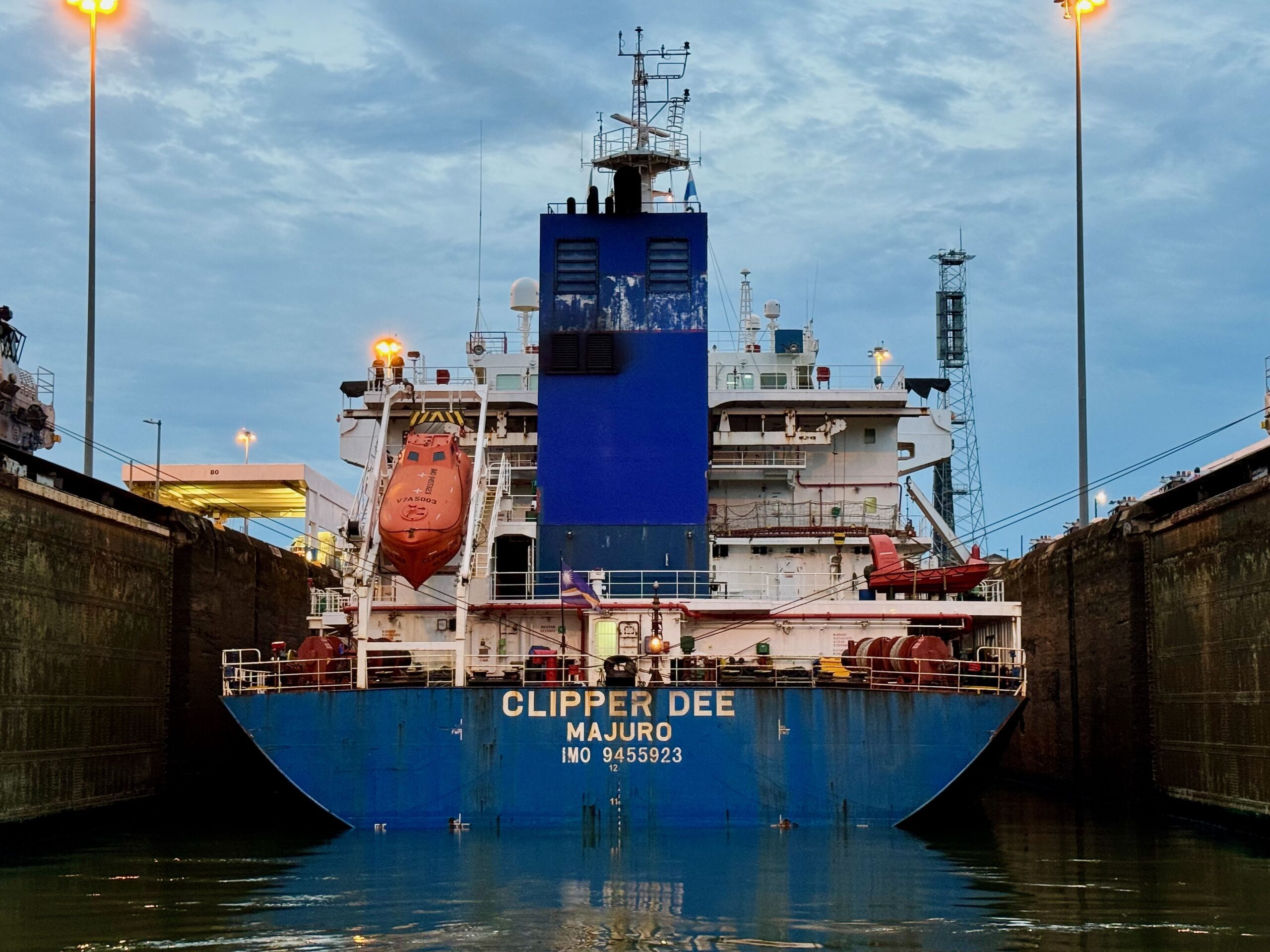
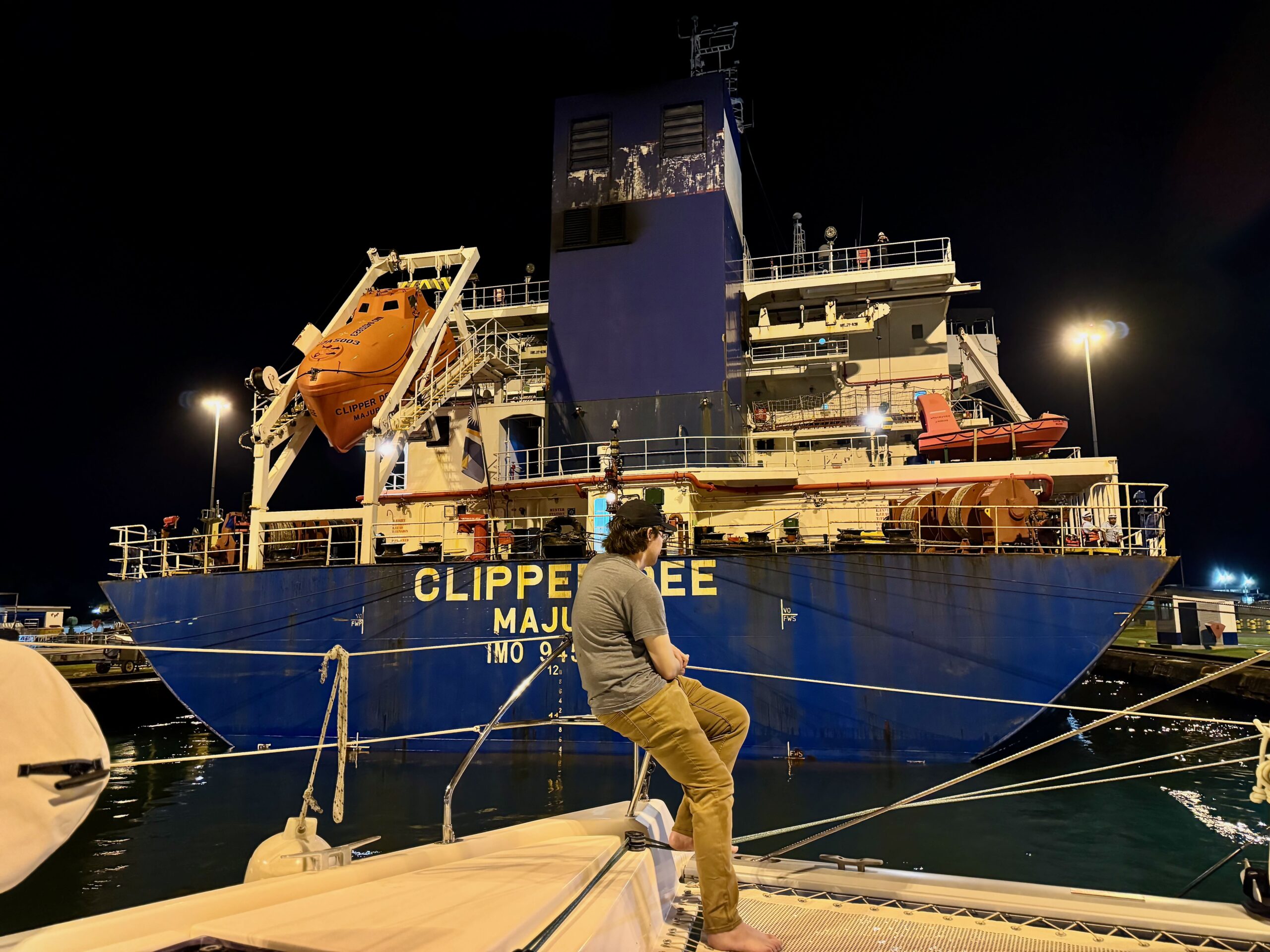
The turbulence was at times intense. Here you can see the prop wash from the cargo ship in front of us.
Here’s a timelapse video:
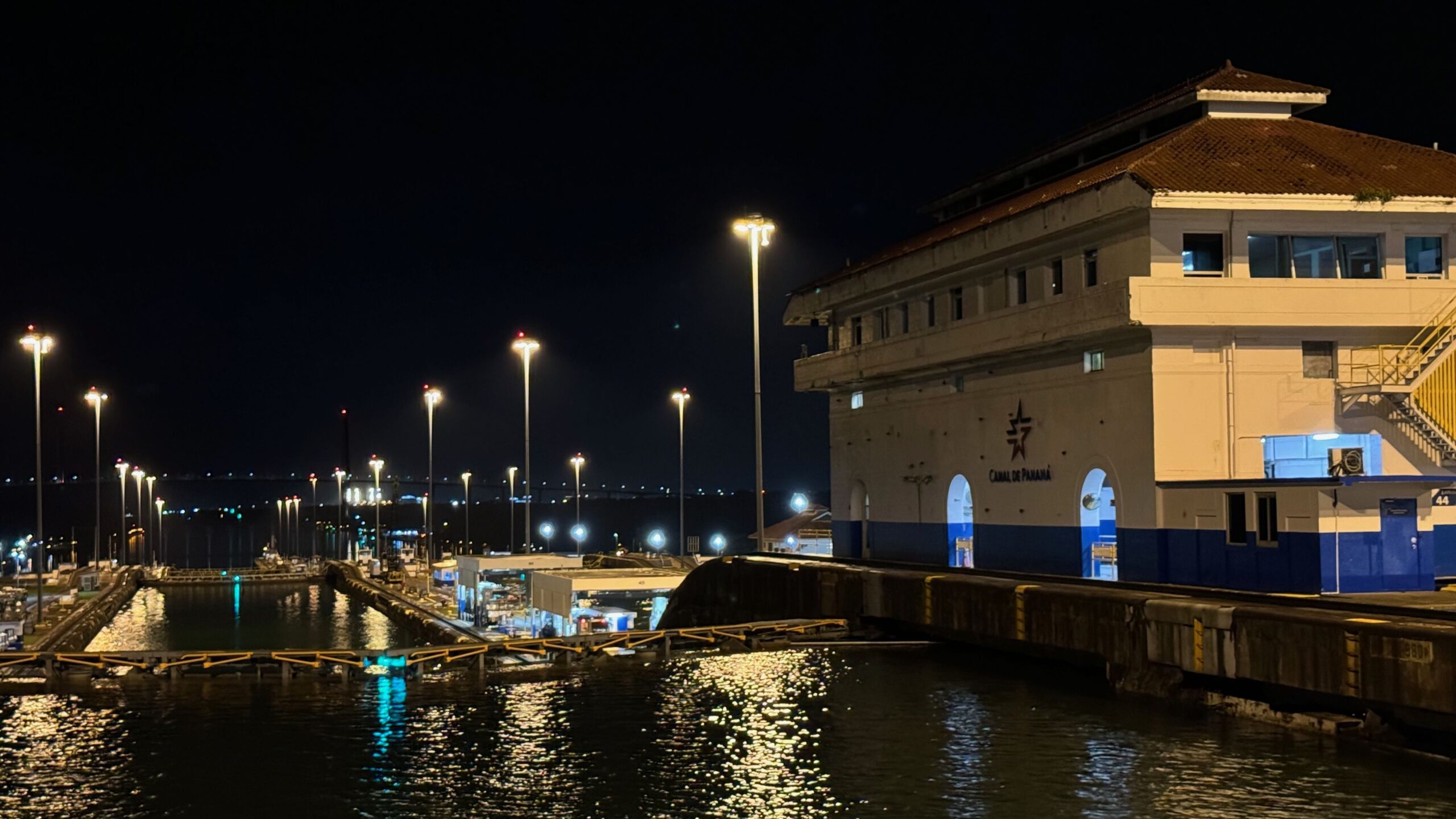
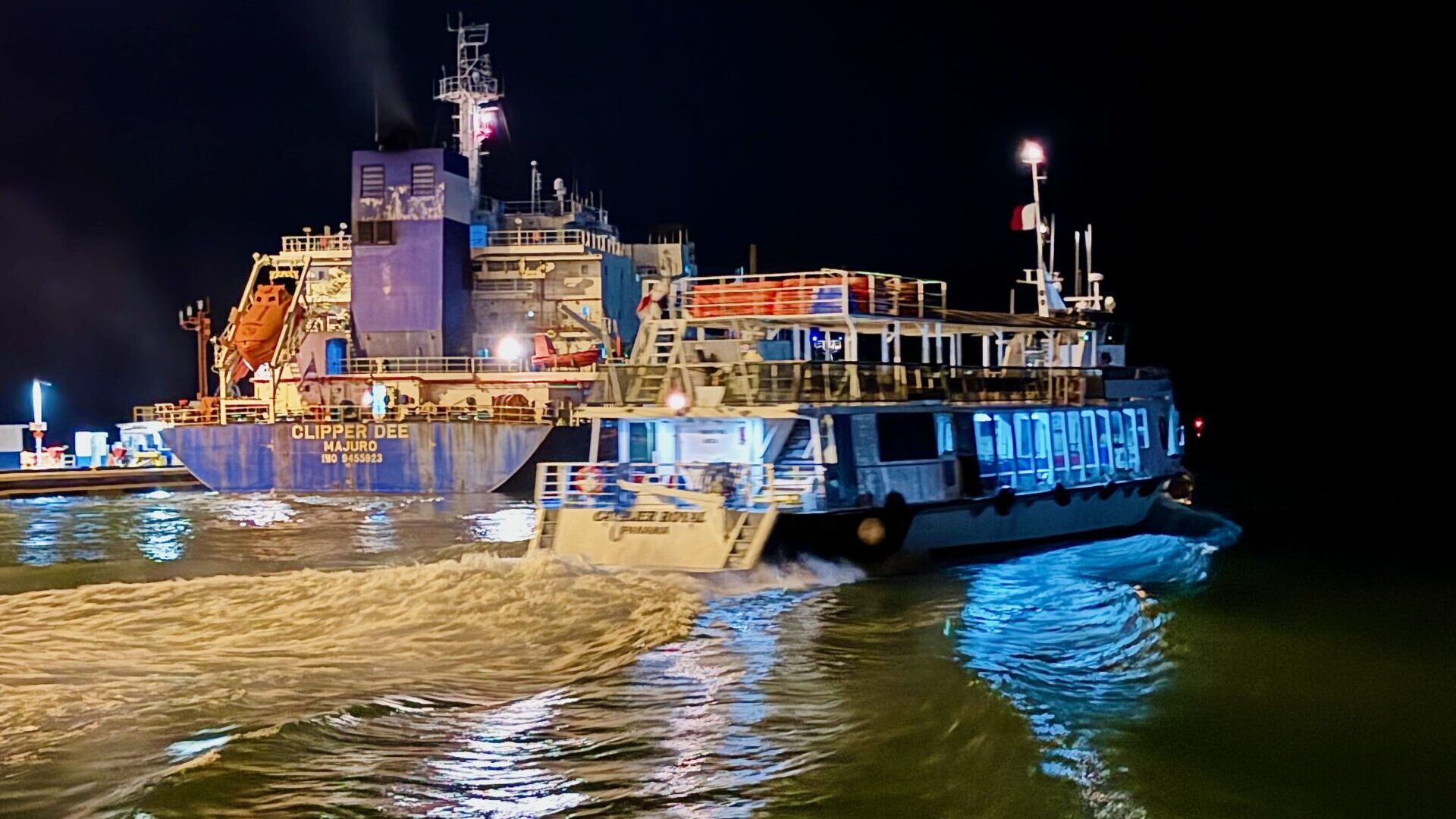
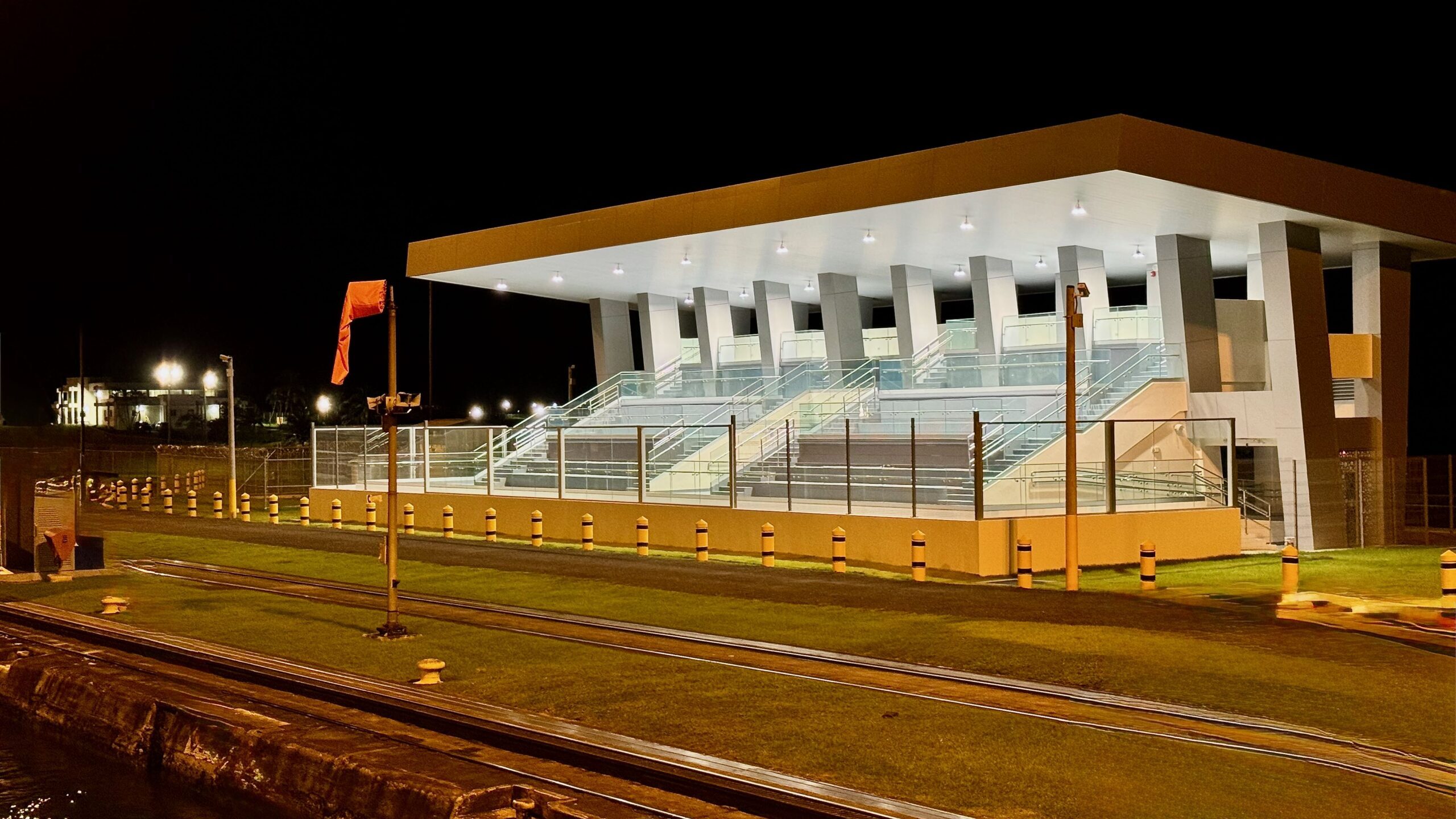
We had entered the canal at 5:45 p.m. and had gotten through the three chambers by 7:15 p.m.—in about 90 minutes. Once we reached the top, we were 85 feet above sea level in Gatun Lake.
Gatun Lake

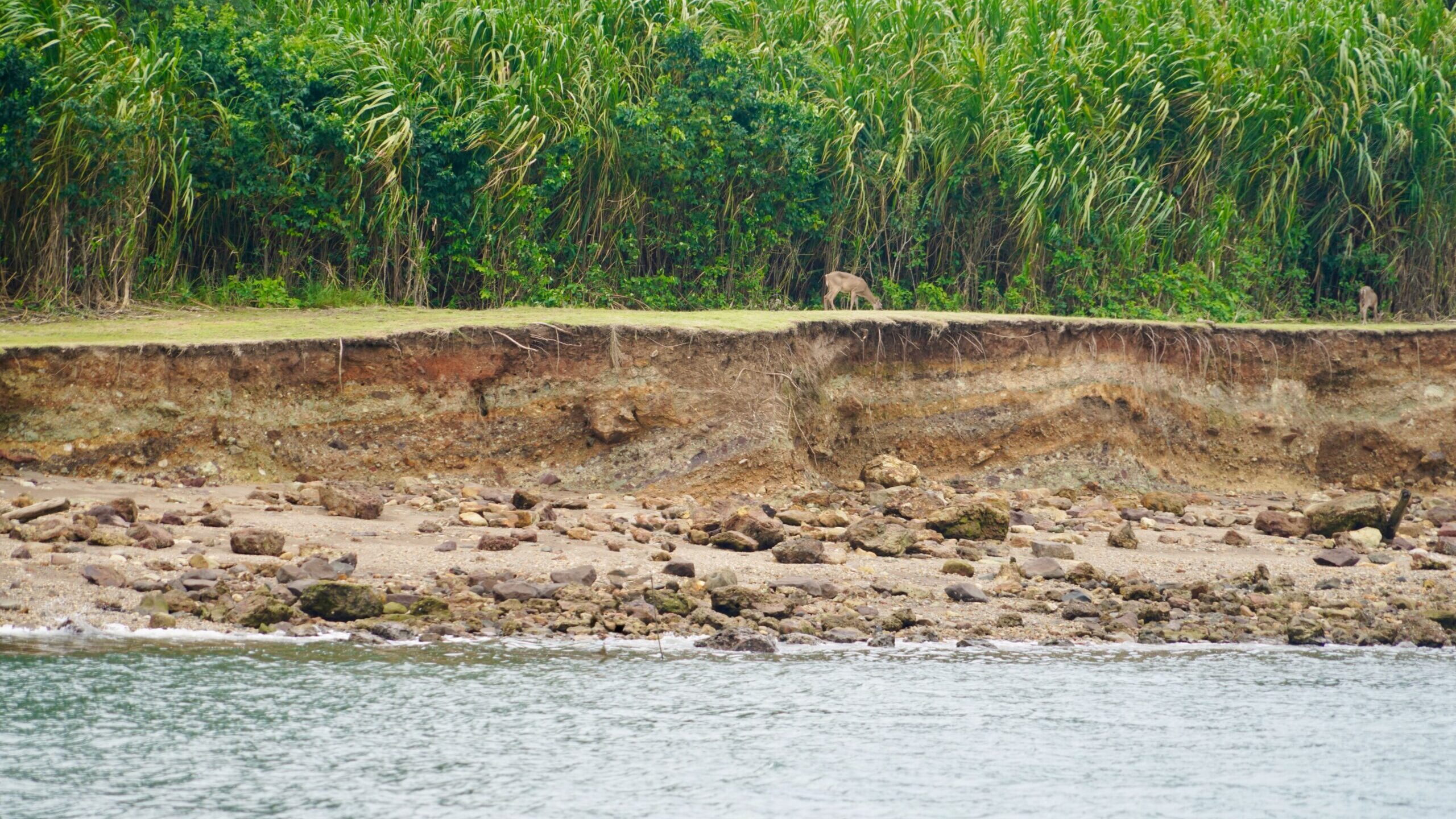
A massive man-made freshwater lake, Gatun Lake is a stark contrast to the industrial locks. It is surrounded by dense jungle.
We tied up to a massive mooring ball and were the only ones there.

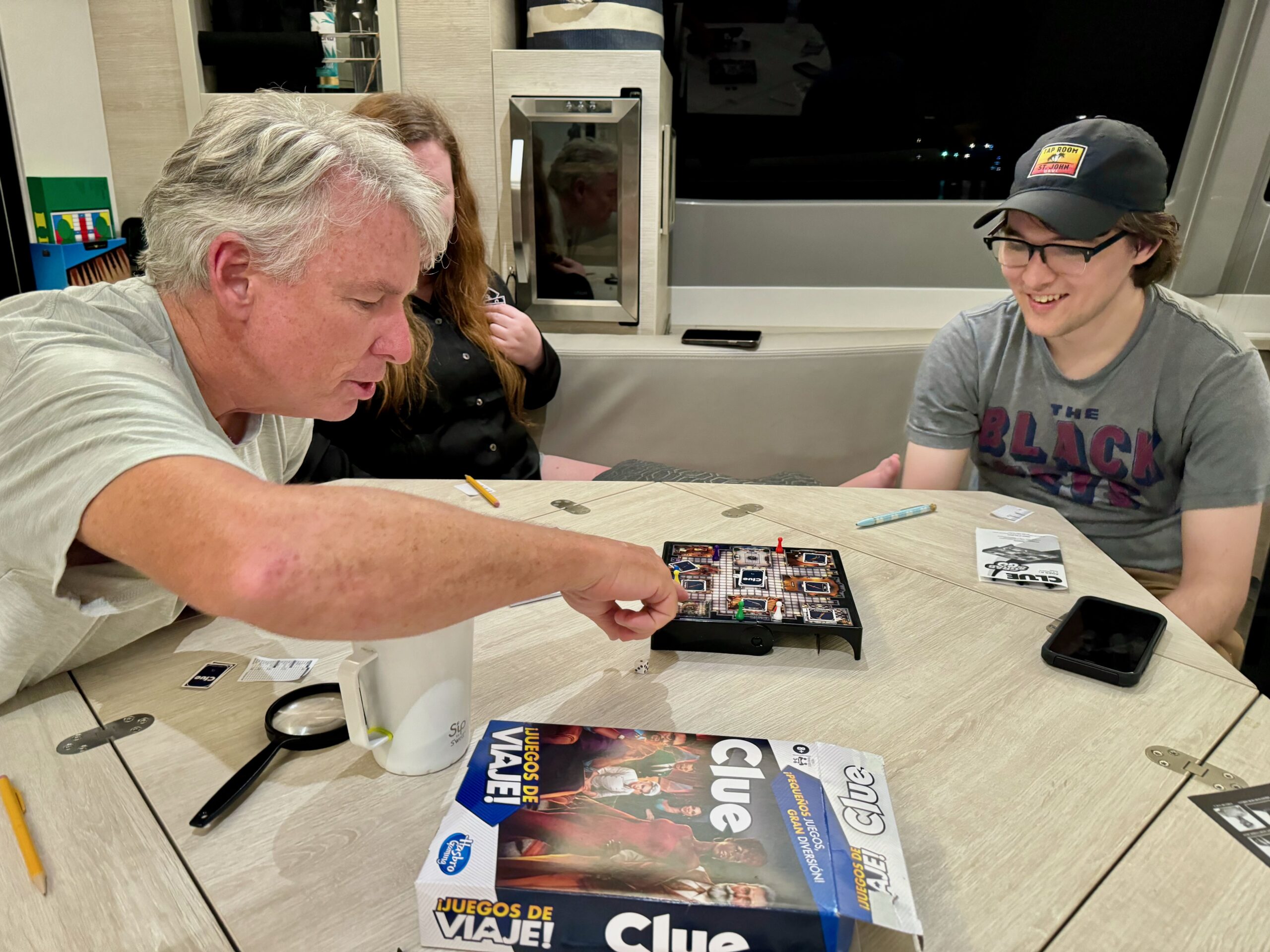
We spent that evening (New Year’s Eve) relaxing and playing games in the middle of the Panama jungle, halfway between the oceans.
The two hired line handlers stayed on the boat that night.
Day Two of Our Panama Canal Transit
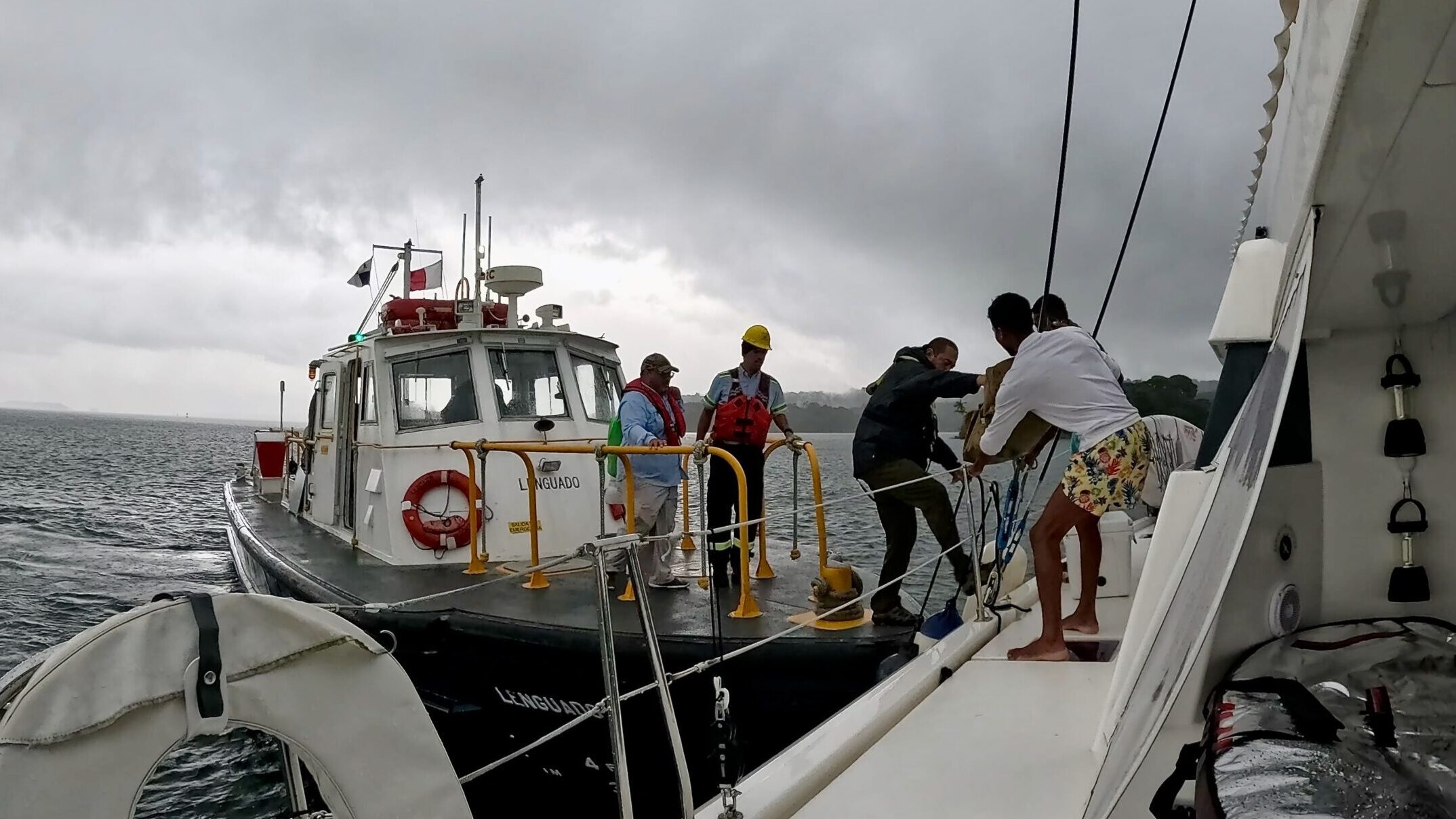
Around 9:00 a.m., our new advisor boarded our vessel, bringing along with him a trainee and even breakfast!
After they got settled in, we began the long motor across Gatun Lake and through the famous Gaillard Cut, the narrowest section of the Canal carved through the Continental Divide.
We tied up to the wall, waiting for our group’s cargo ship to arrive.
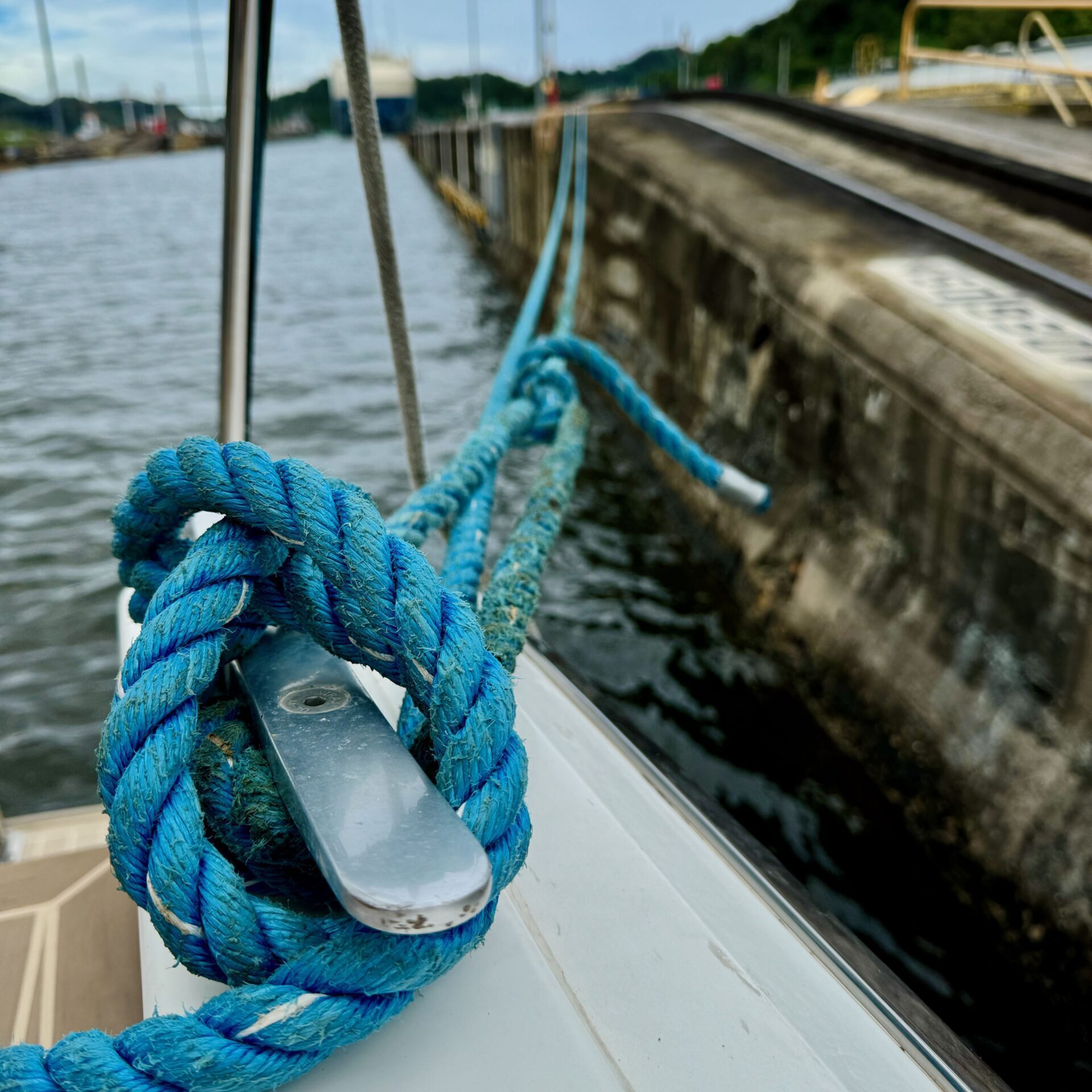

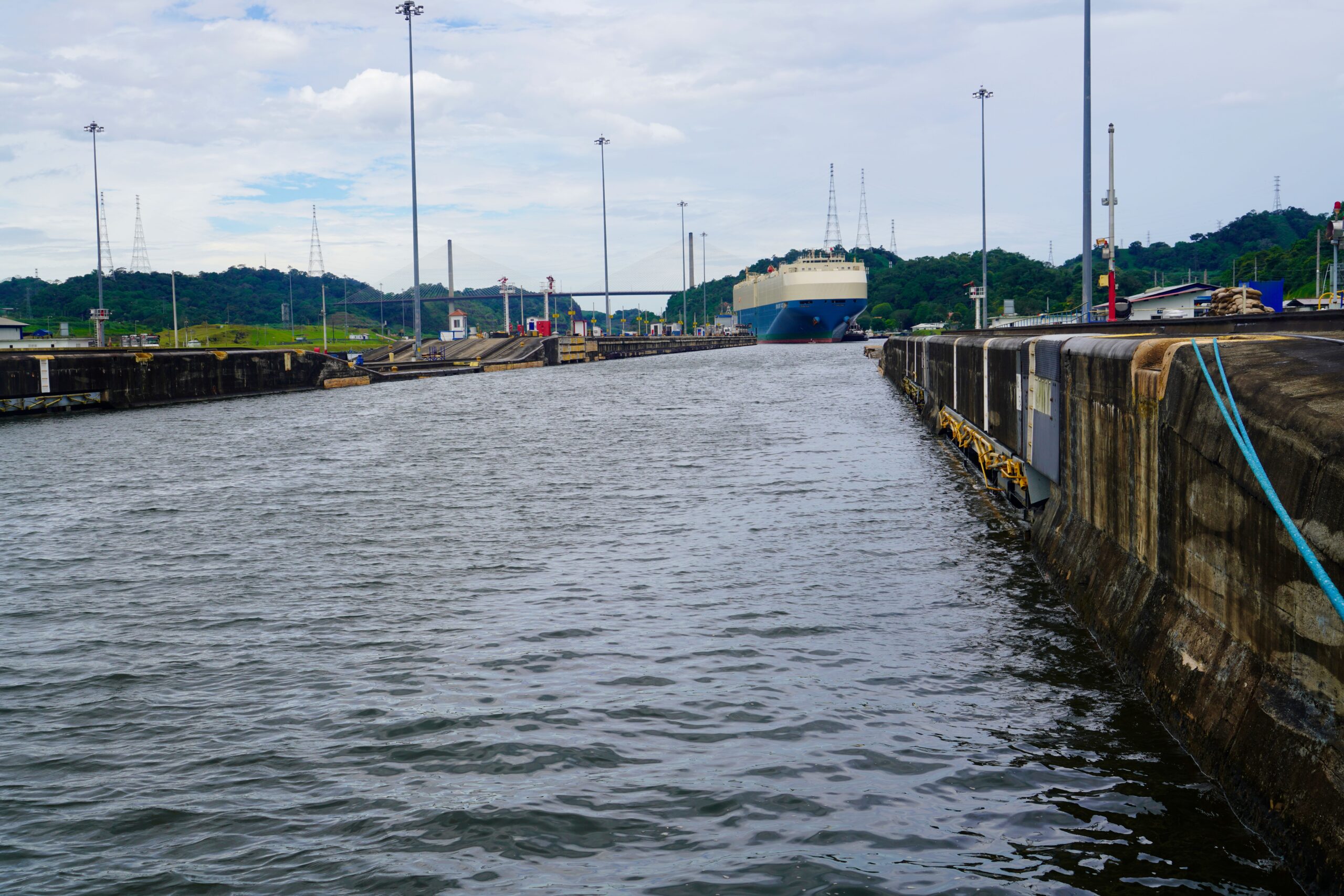
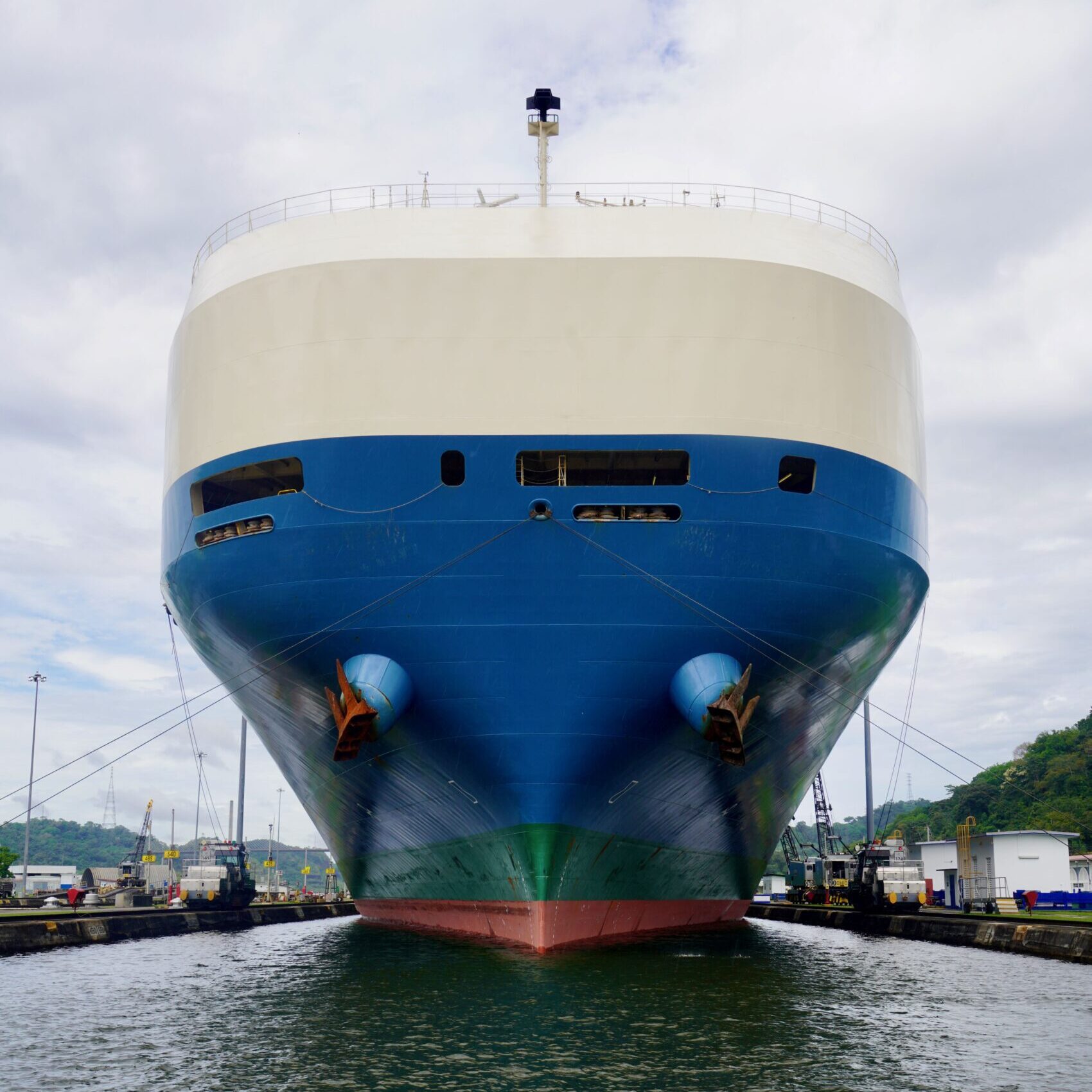
Today, the tour boat was full of passengers, and we became part of the show.
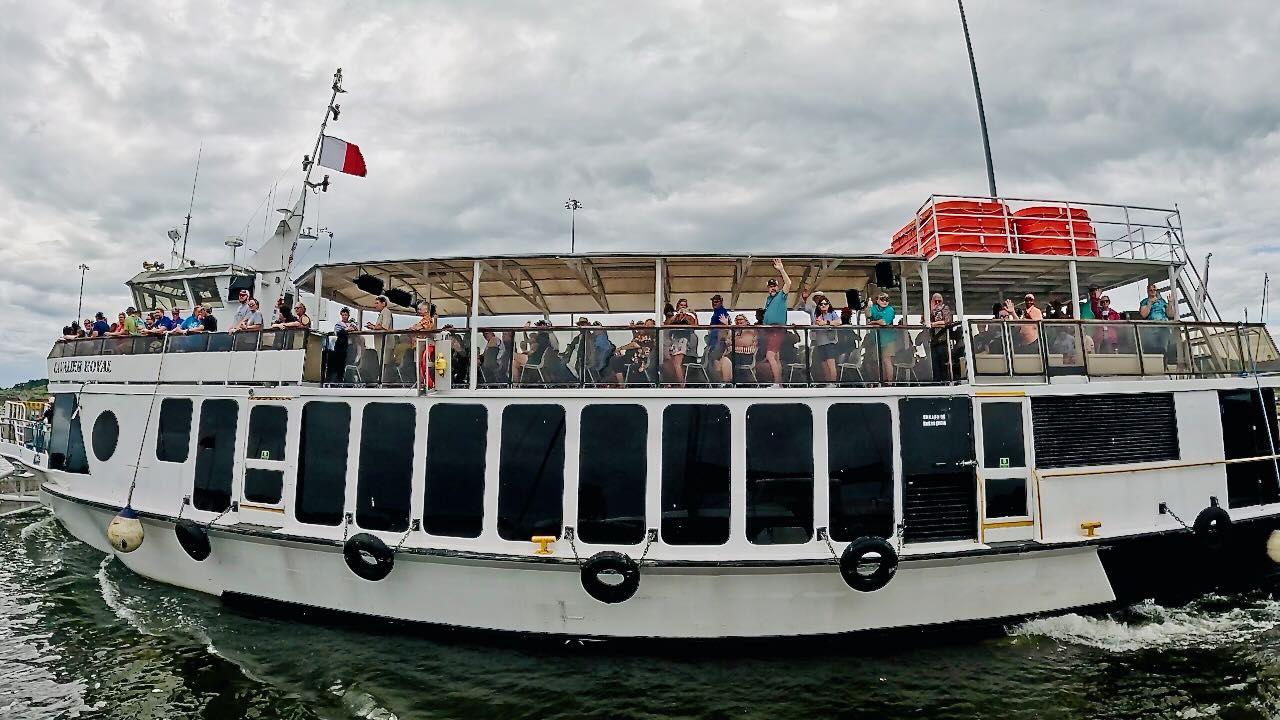
By 12:30 p.m., we were settled into the Pedro Miguel Lock.
This was the scene as we rafted up to the tour boat.
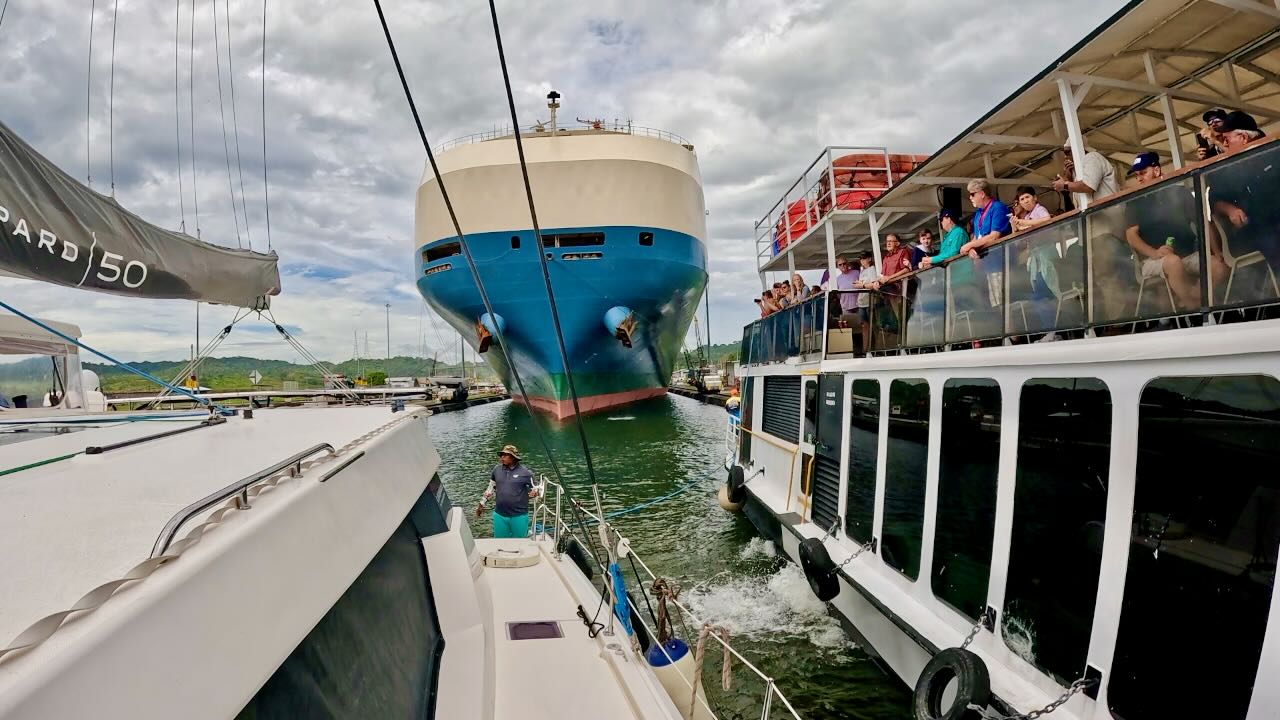
The process was then reversed: instead of water rushing in to lift us, the water rushed out to lower us back to sea level.
We then headed to the first Miraflores chamber.
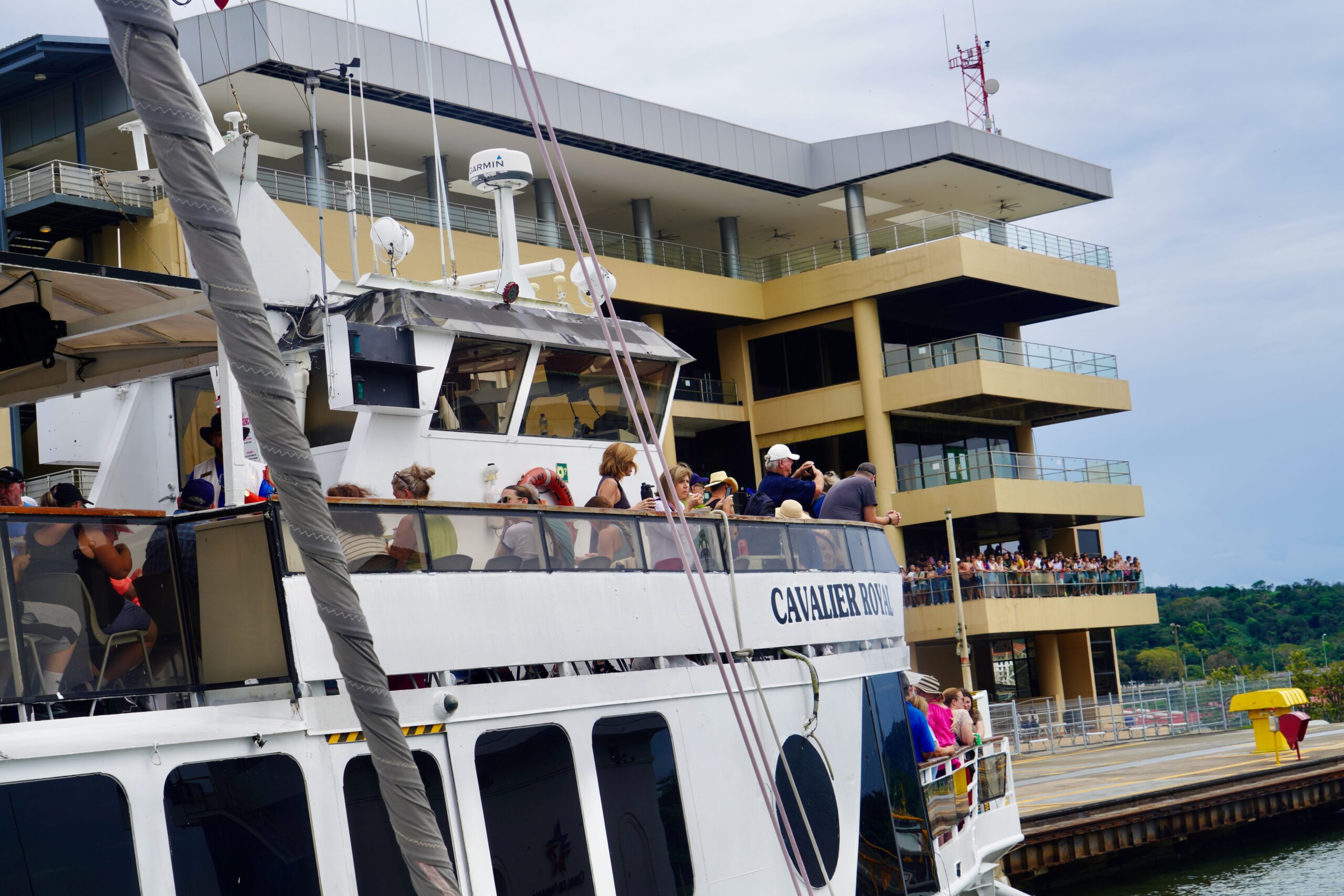
Once the waters had dropped, we untied and got out of the way so the tour boat could go in front of us.
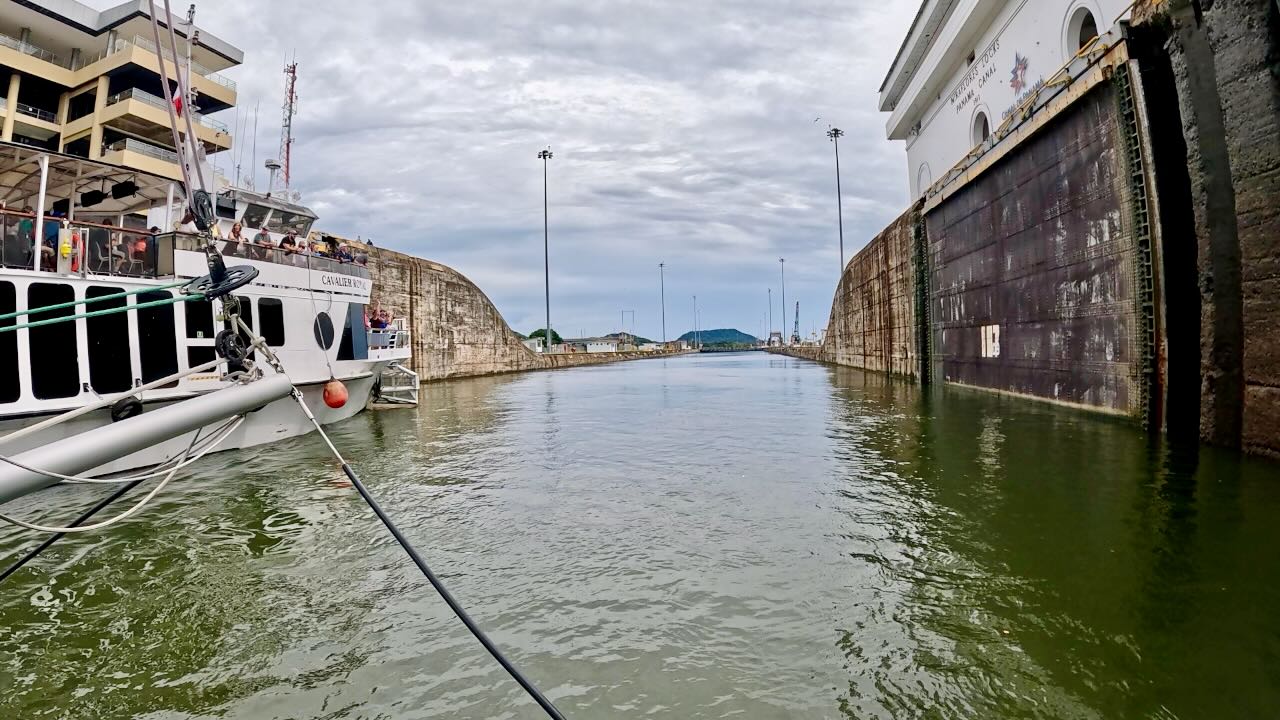
That left one last set of locks to go, the second Miraflores chamber. We were preparing to depart the last chamber at 1:50 p.m.
Once we cleared the final chamber of the Miraflores locks, the massive gates opened to the Pacific Ocean.
Here’s a timelapse video:
Around 2:00 p.m., we were officially on the Pacific side. The process took about 90 minutes—the same as the day prior.
We motored past the Bridge of the Americas, and once clear of the canal zone, our advisor disembarked via a pilot boat.
Once we completed the transit, we stopped at the Balboa yacht club (VHF channel 12) to drop off the fenders, lines, and line handlers. We tipped the club boatman as instructed.
Final Thoughts
Crossing the Panama Canal on a small sailboat is a profoundly humbling and surreal journey.
Drifting beside towering concrete walls, you stand in awe as millions of gallons of turbulent water surge beneath your hulls.
But then, motoring through the humid, jungle-fringed expanse of Gatun Lake—listening to the echoing calls of howler monkeys—the uniqueness of this experience takes your breath away.
When the final gates swing open to the vast Pacific, the entire crew shares a moment of elation, and a whole new ocean lies before you, waiting to be explored.
