
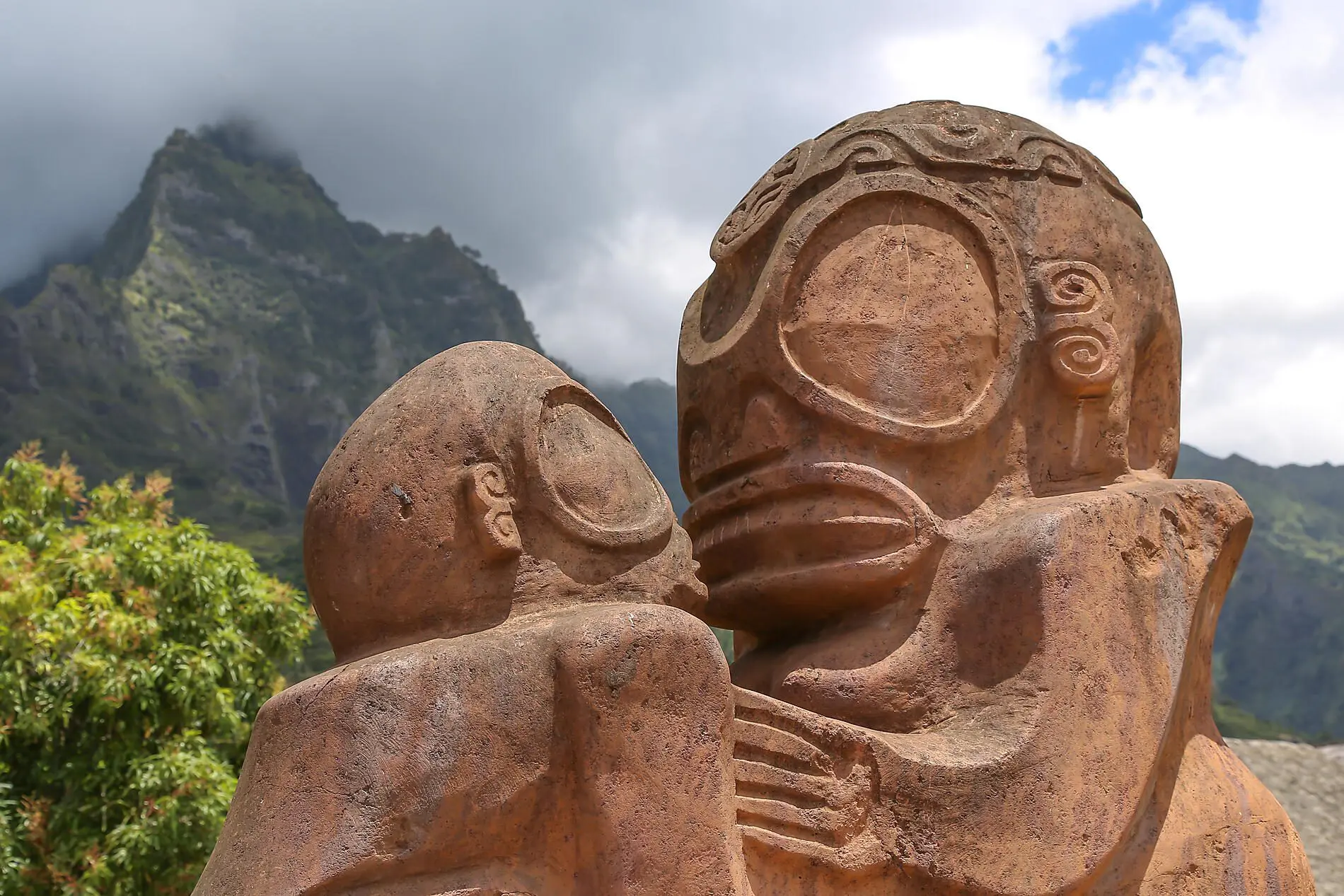
Hiva Oa is the second-largest island in the Marquesas archipelago, yet it feels delightfully undiscovered. It is an island that has seduced legends—most notably the painter Paul Gauguin and the singer Jacques Brel—who both came here seeking peace and found their final resting places in its soil.
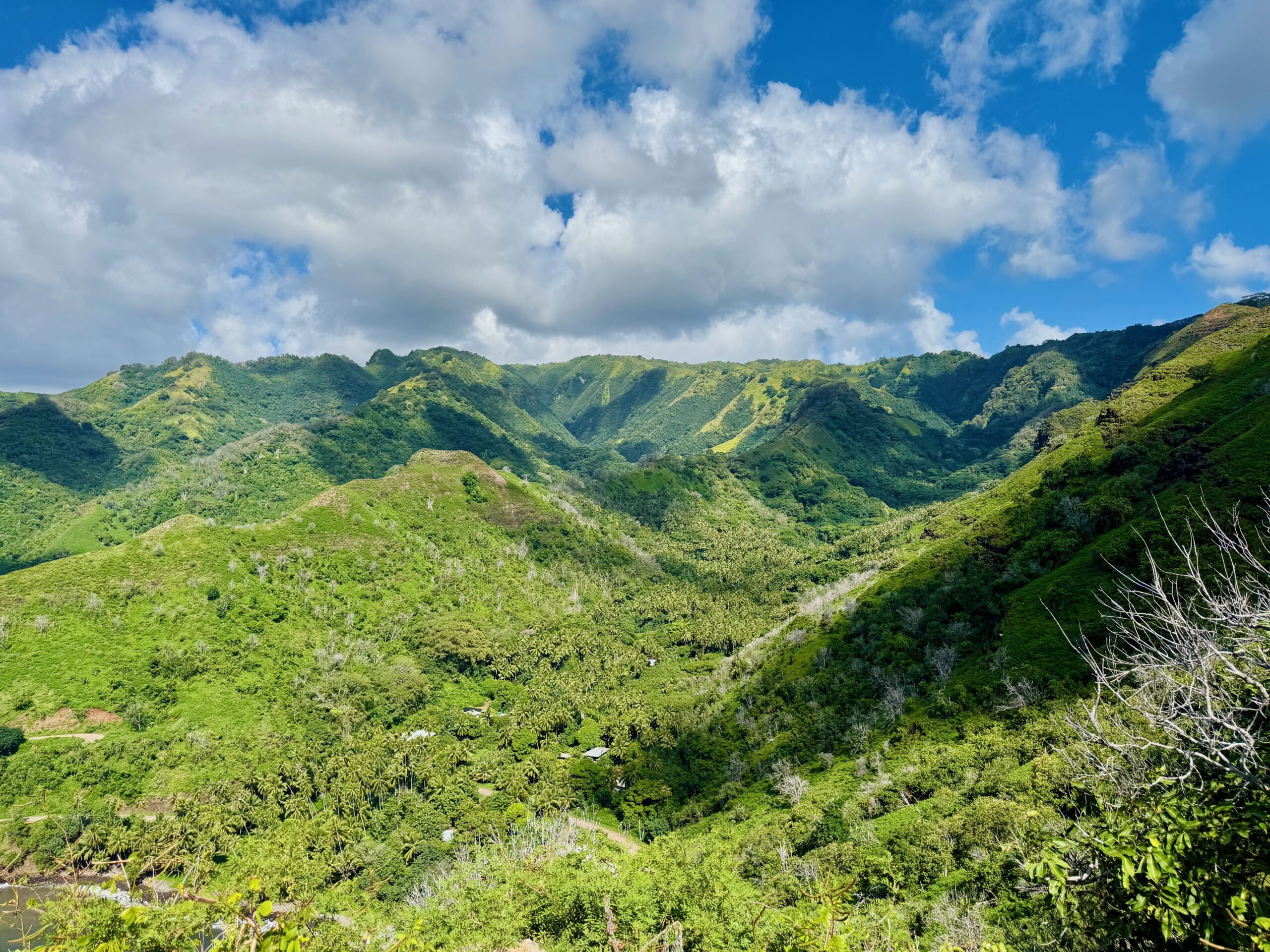
This is understandable: Hiva Oa is known as “The Garden of the Marquesas” due to its exceptionally lush landscapes, deep valleys, and dramatic, misty mountain peaks, like Mount Temetiu.
It is home to about 2,400 people.
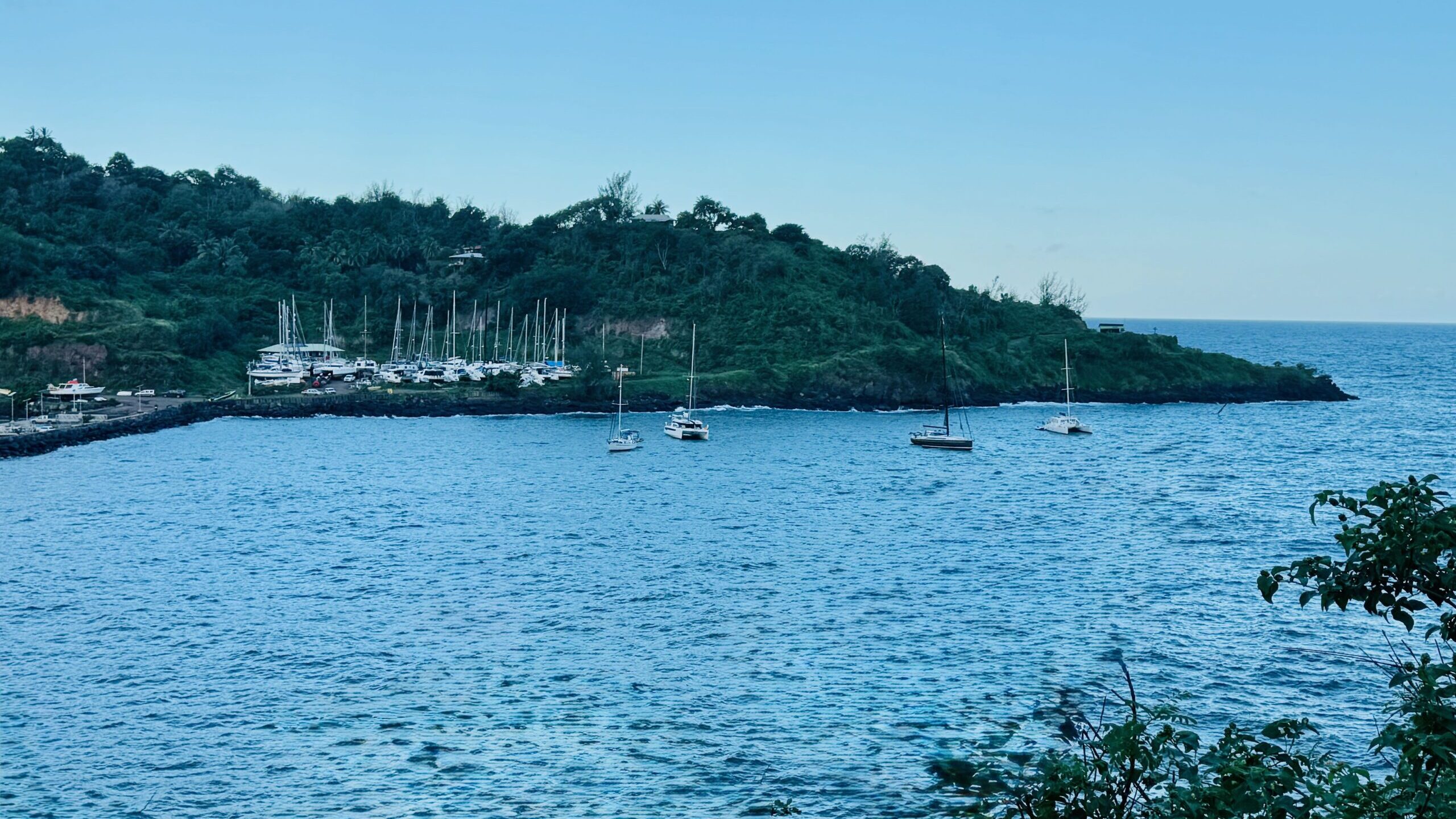
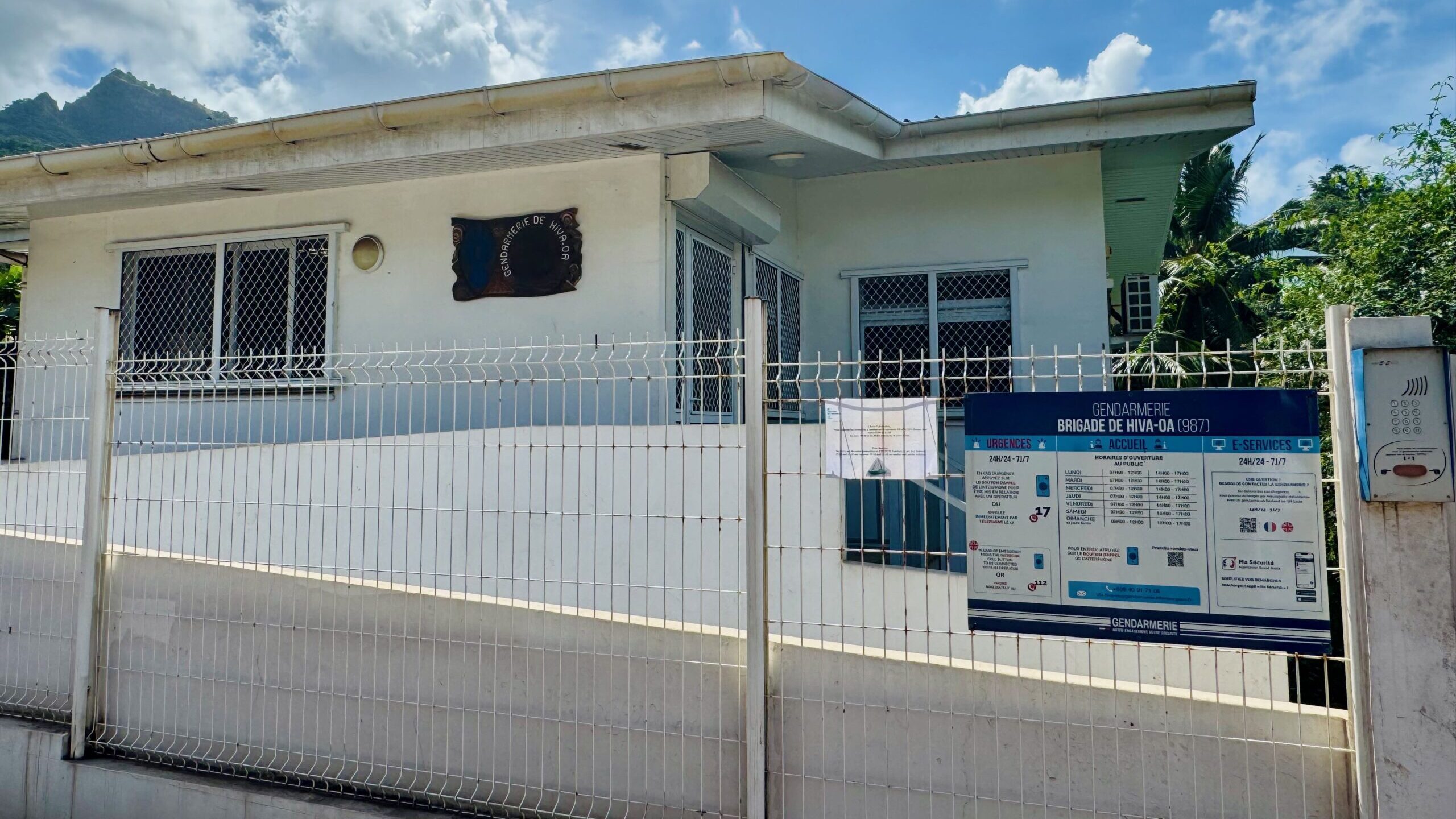
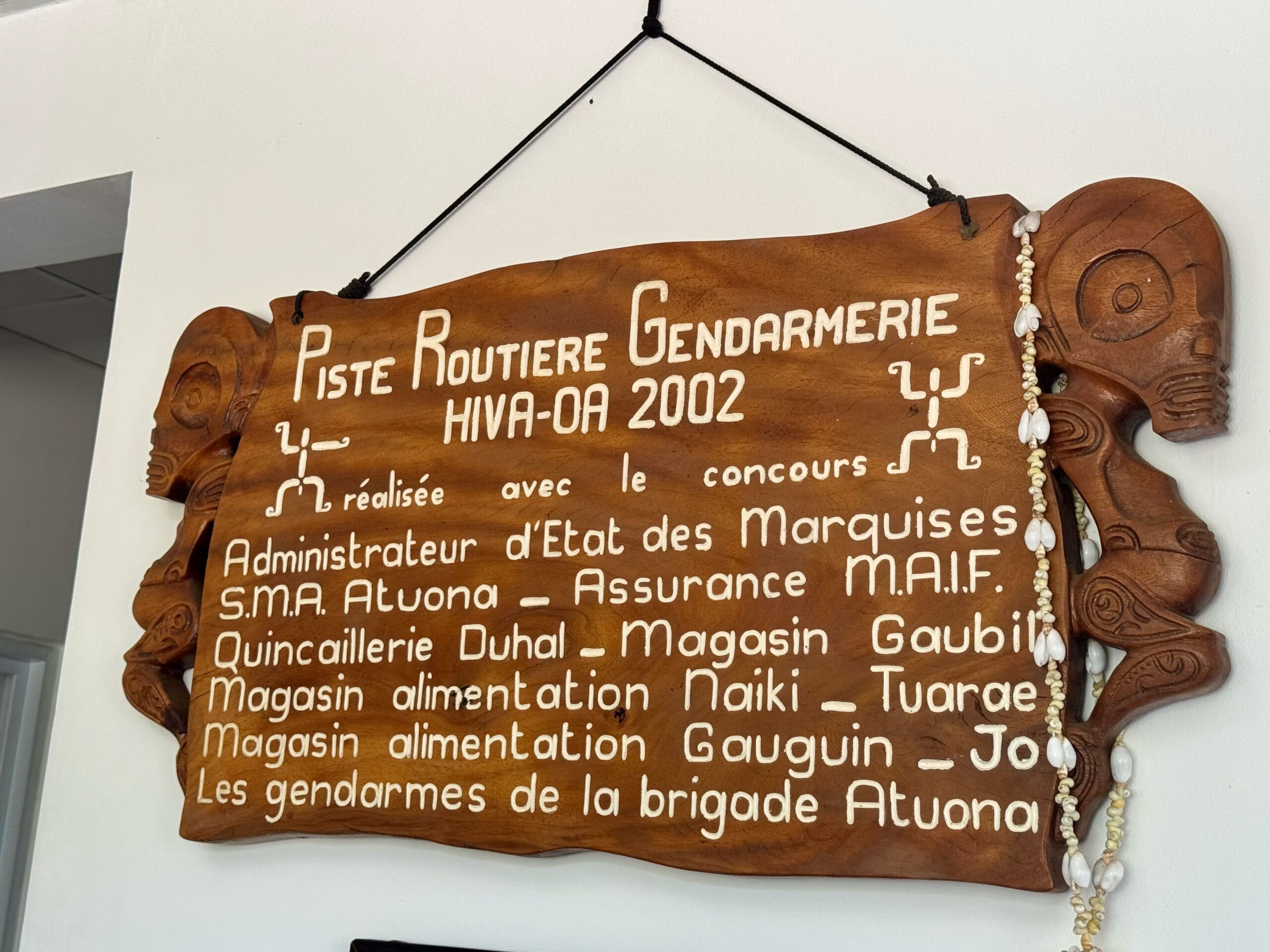
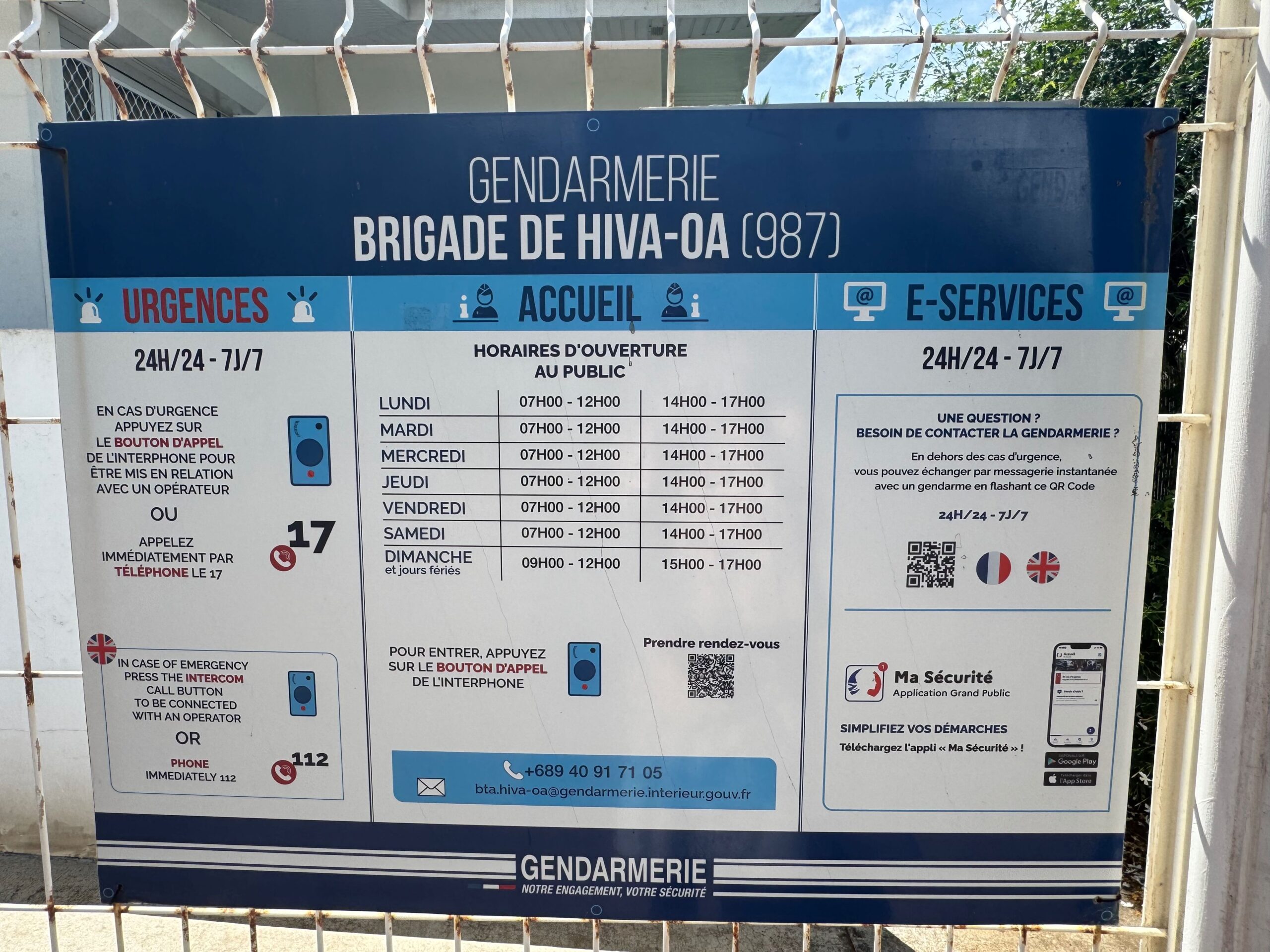
This was our first real stop after our 21-day Pacific crossing, and our crew was happy to be on shore. Our first order of business was to check into customs and immigration at the Gendarmerie in Atuona.
Some Things We Loved About Hiva Oa
1. Te I’ipona
Te I’ipona is one of the most important religious sanctuaries in all of French Polynesia. It was not just a general place of worship; it was a me’ae (sacred family temple) dedicated to the ancestors of a specific, high-ranking clan known as the Pa’ahatai.
Archaeologists and oral traditions estimate the site was active around the time of the “Great Migration” to the neighboring island of Tahuata, roughly forty generations ago—several centuries before European arrival.
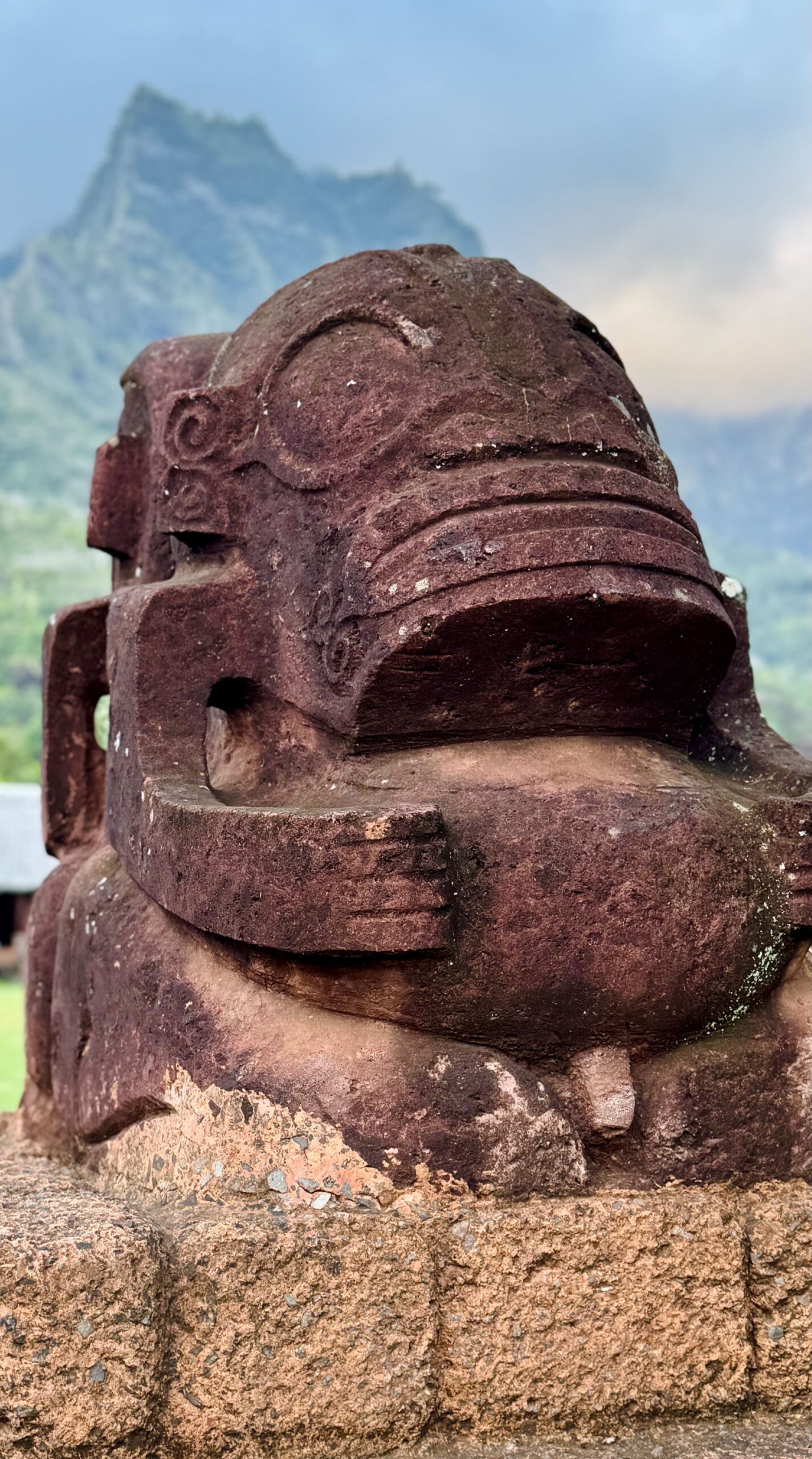
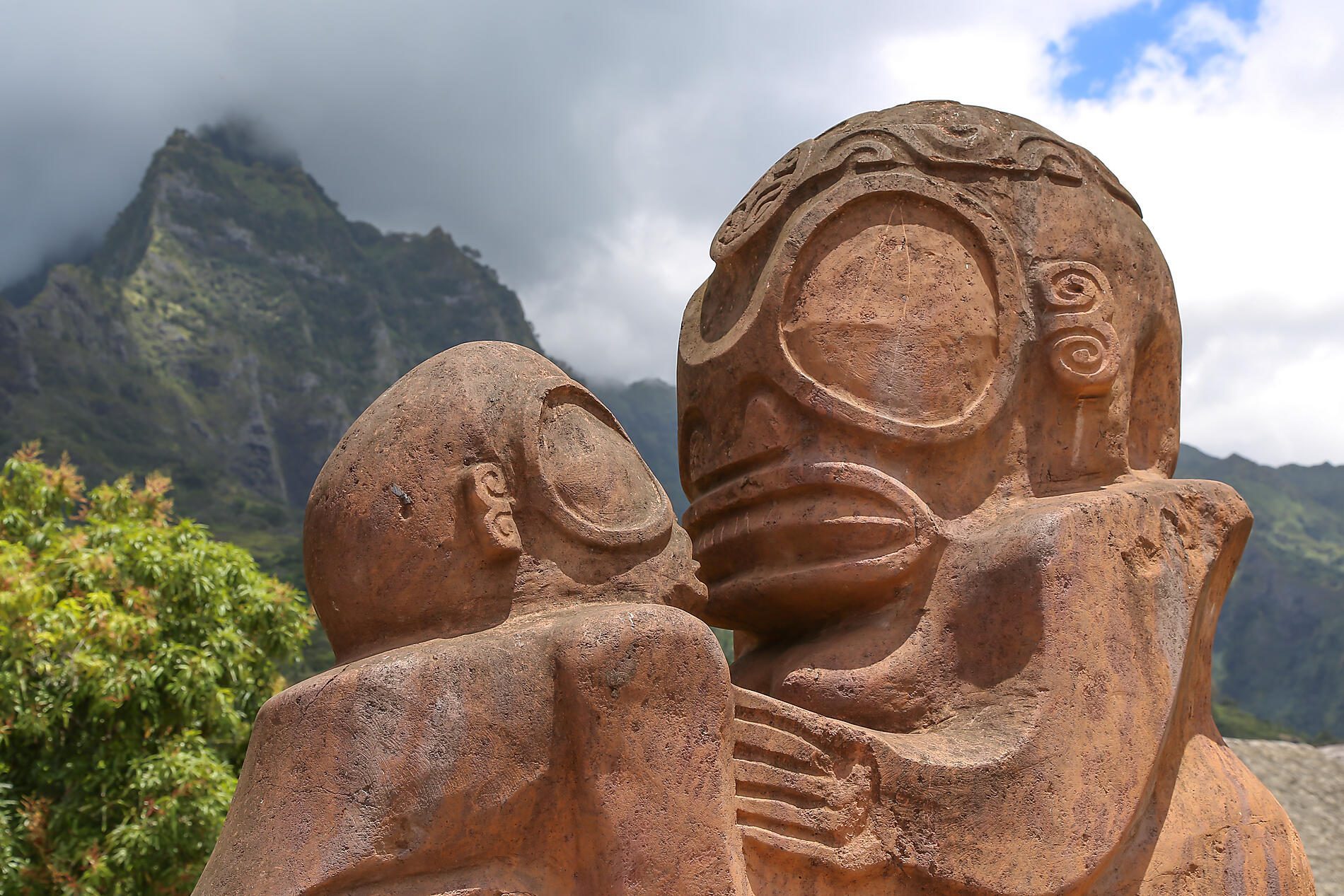
The first tiki we saw there was the Tiki Maki Tara Pepe (“flying tiki”), one of its most famous. Some say it represents a woman giving birth, while others believe it depicts a dolphin.
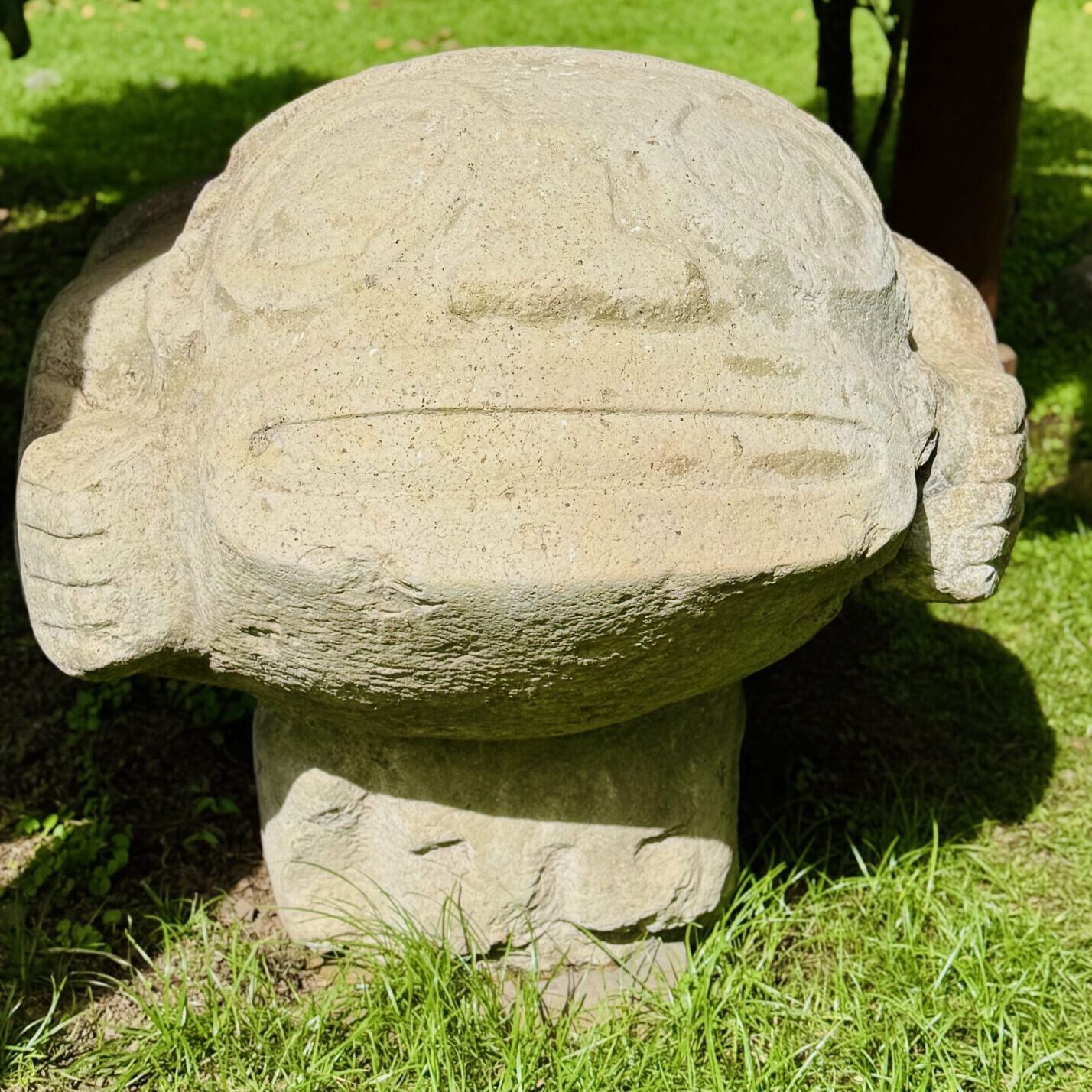
We, of course, then had to see the largest tiki in French Polynesia: Tiki Takaii. It stands at 8.7 feet tall.
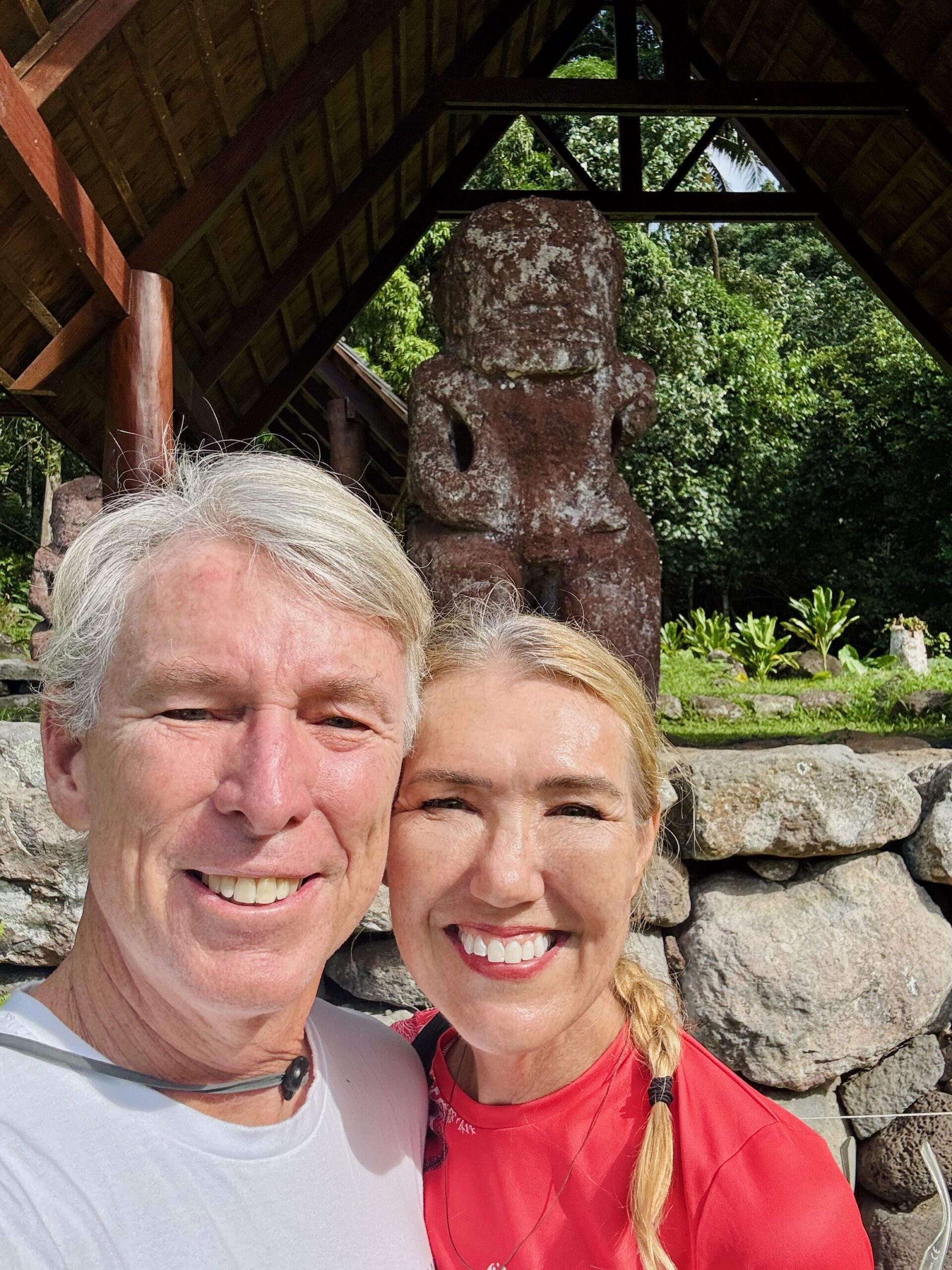
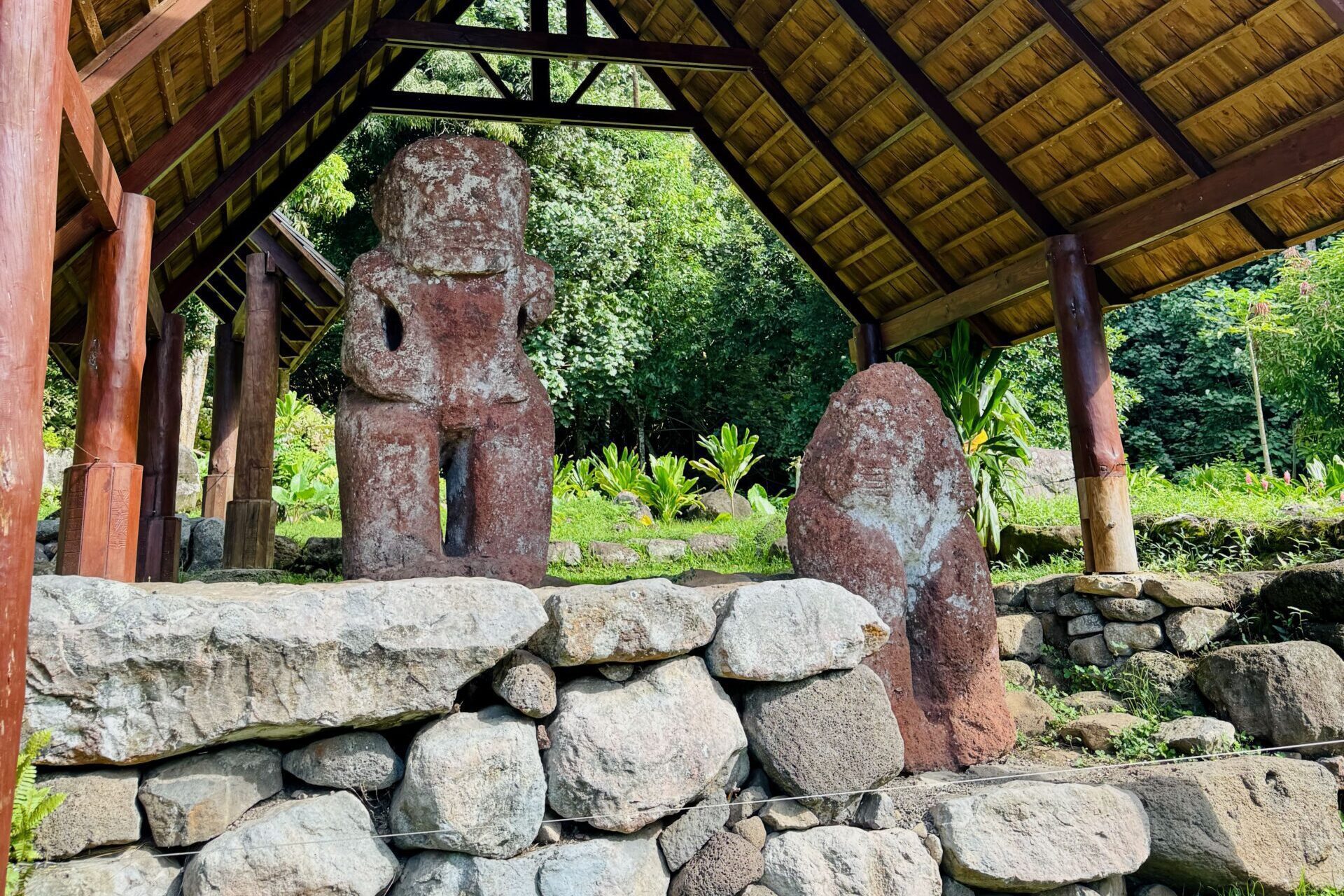
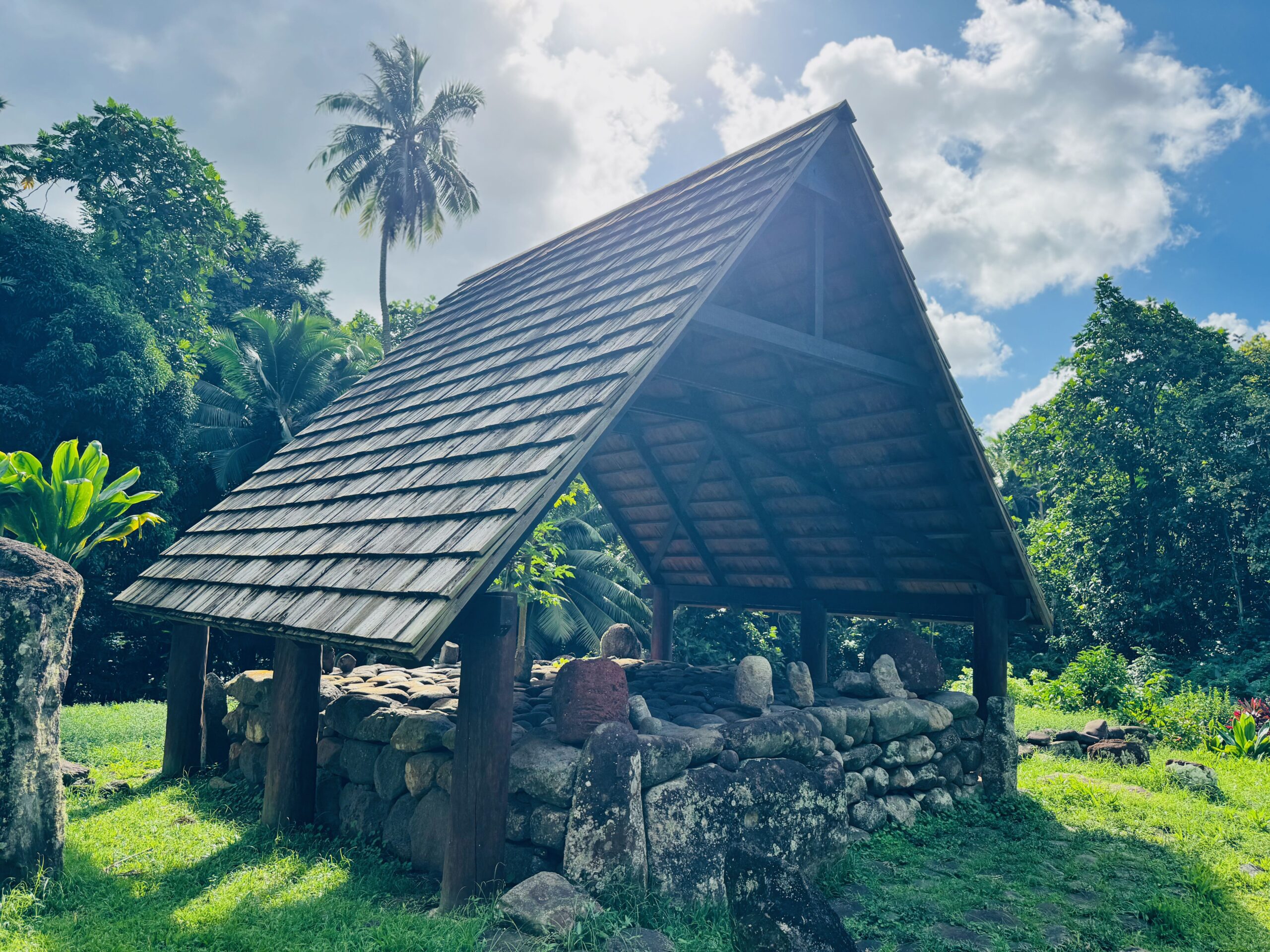
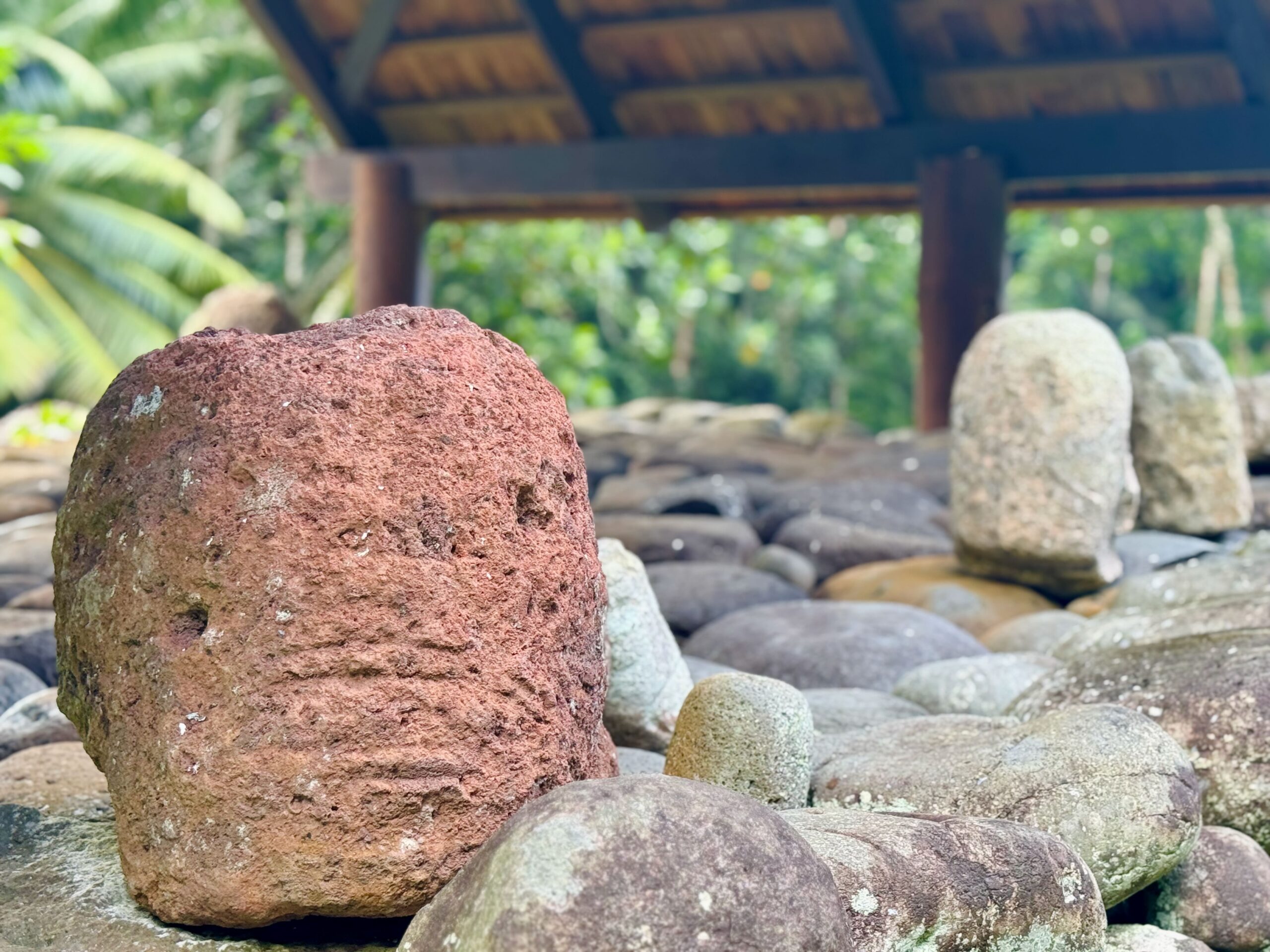
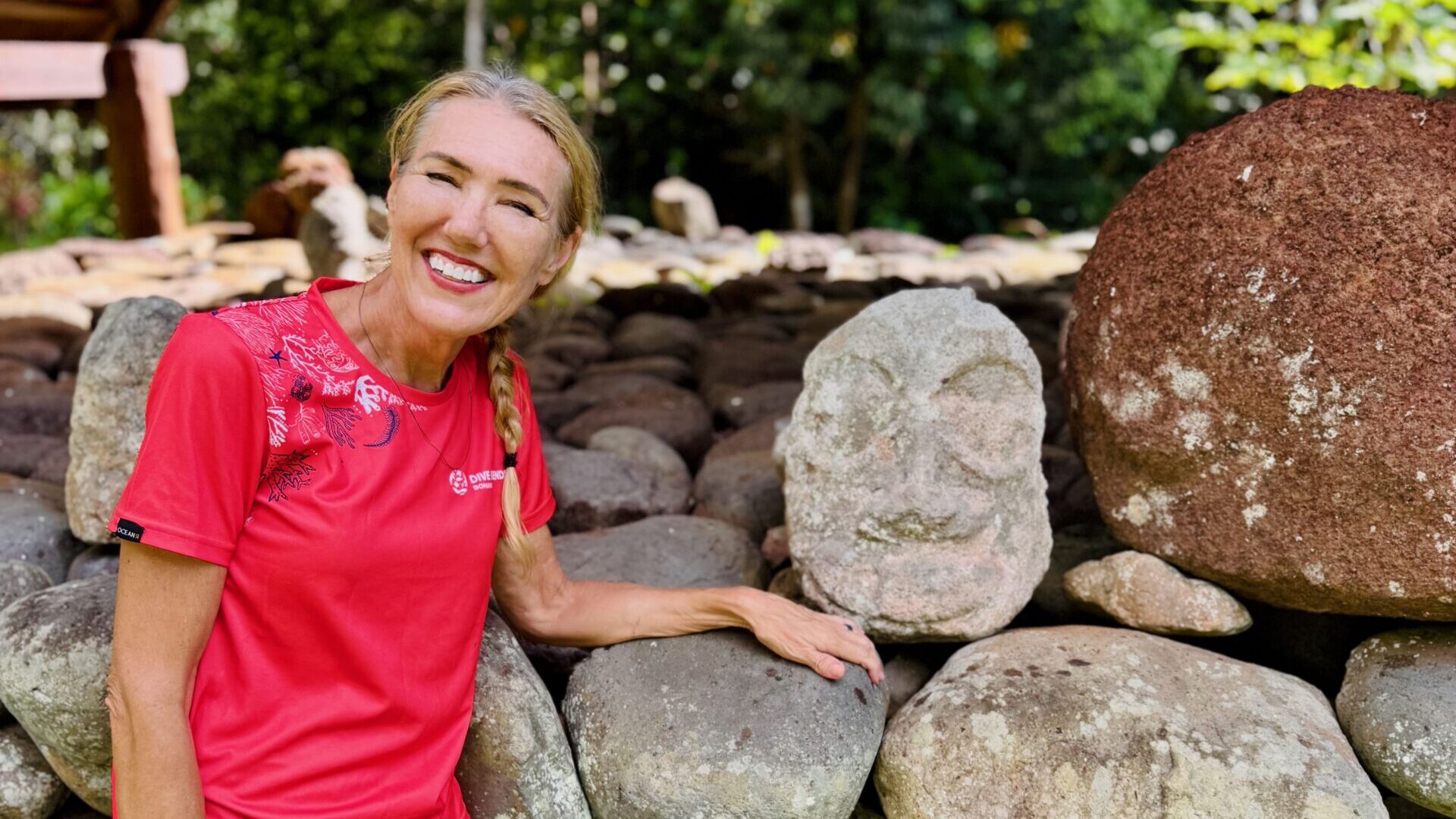
The grounds were beautiful, with banana plants, red and pink ginger flowers (Alpinia), and lush green trees.
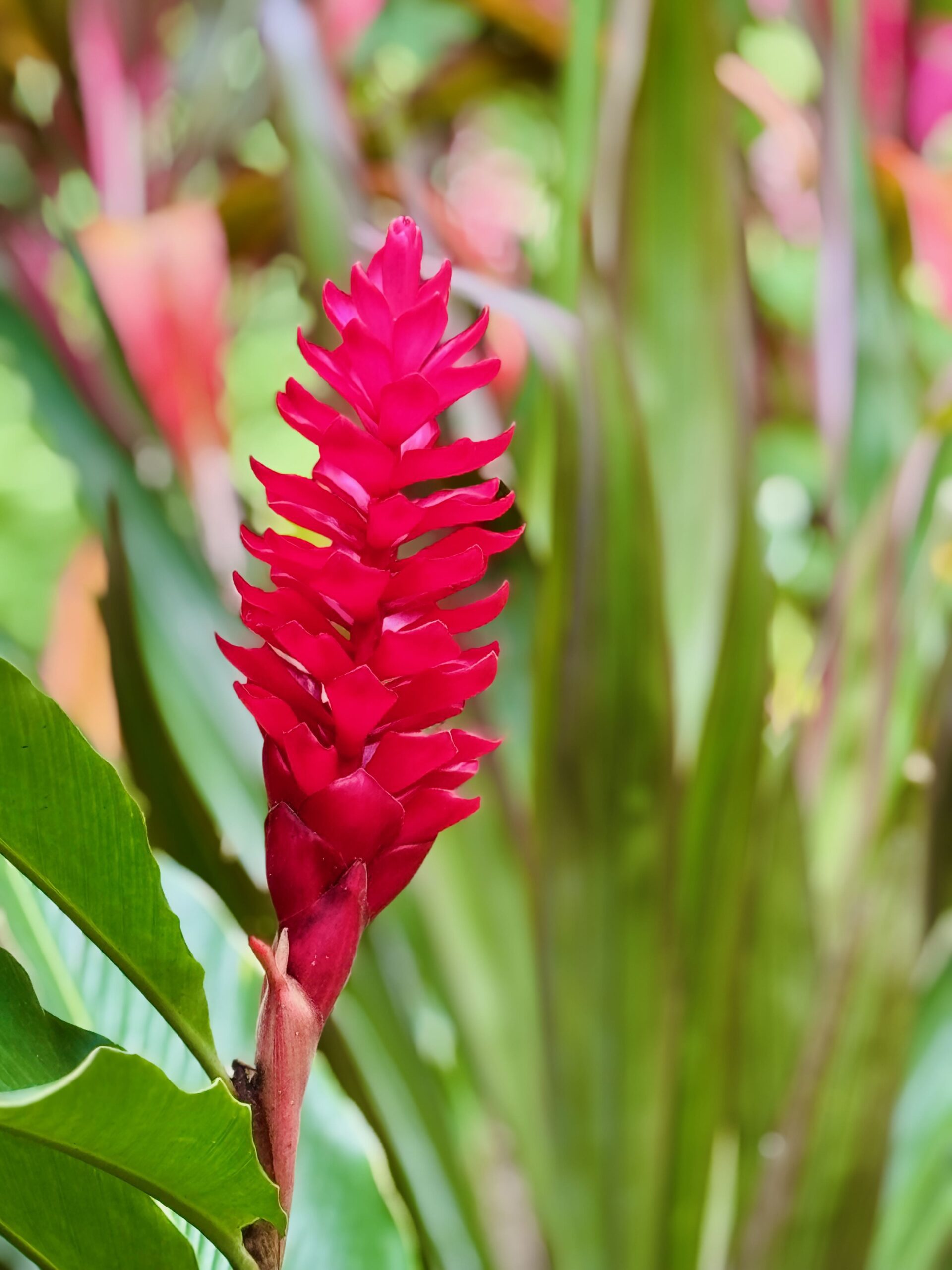
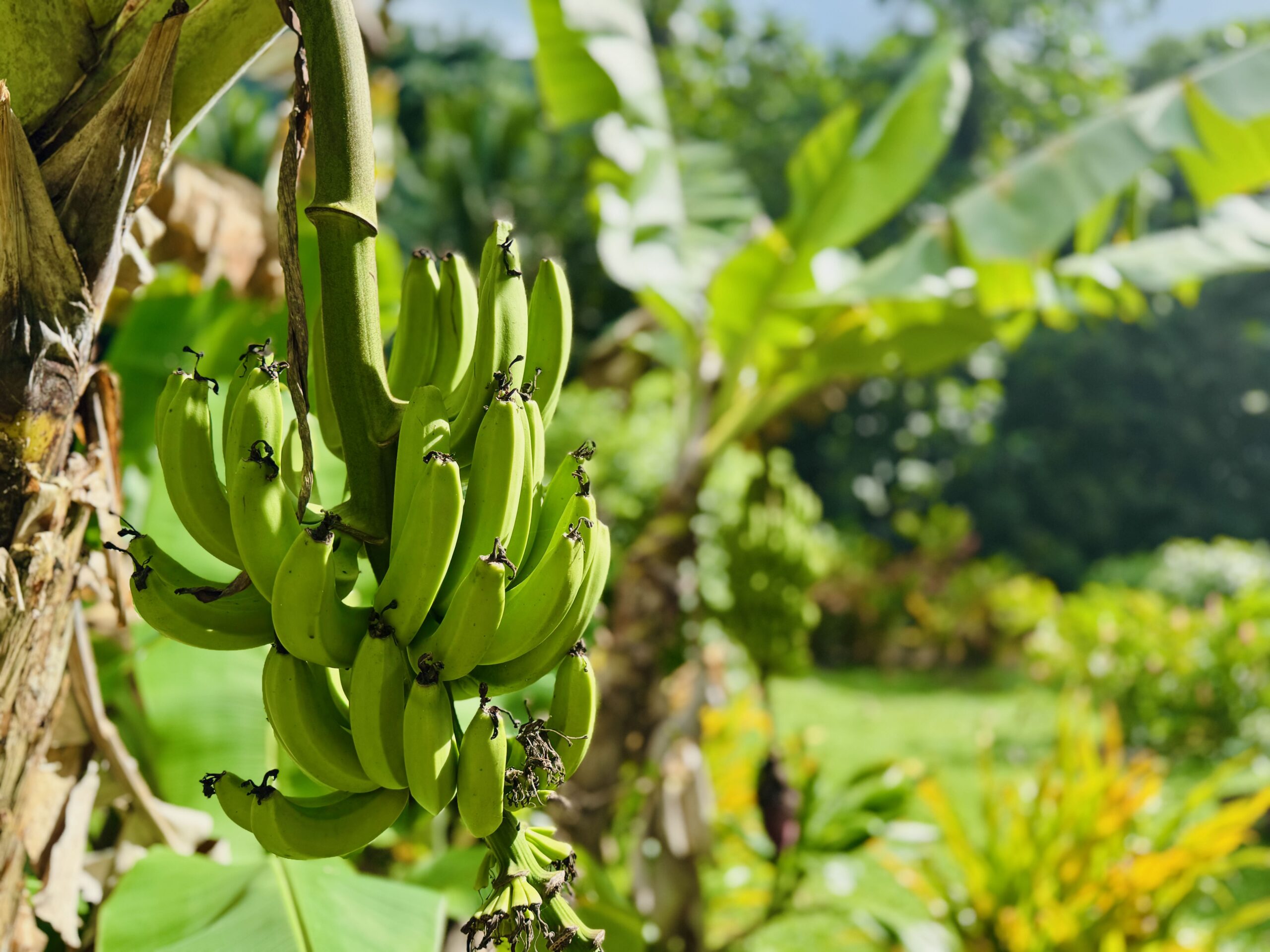
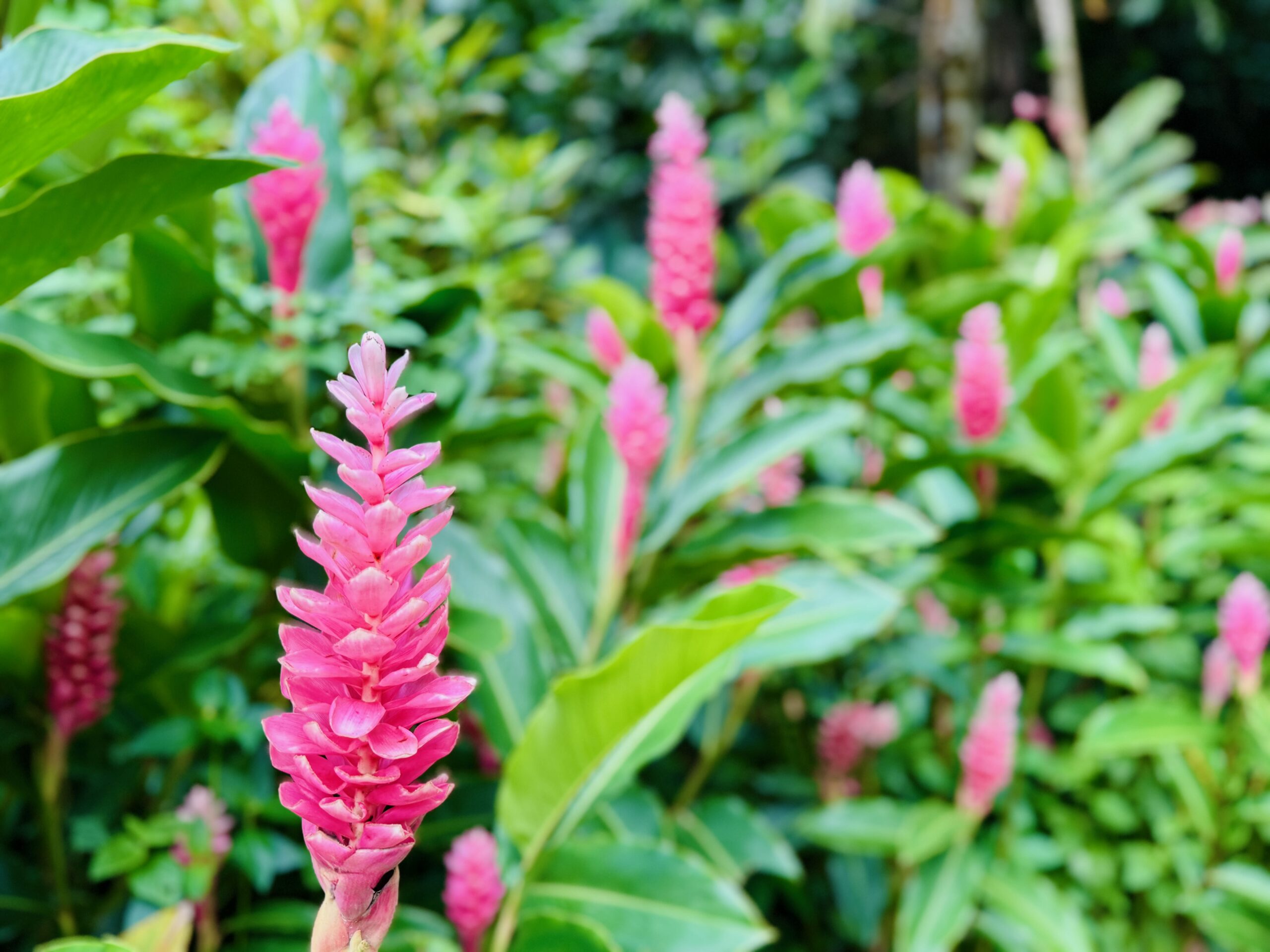

When Catholic missionaries arrived in the 19th century, they systematically destroyed many me’ae and toppled tikis to break the “pagan” power of the local chiefs. Luckily, over the years, Te I’ipona was largely reclaimed by the jungle, which protected it from destruction.
It remained hidden under vegetation until it was meticulously restored in 1991 for the Marquesas Arts Festival. This restoration marked a major turning point in the “Marquesan Cultural Awakening,” helping the local people reclaim their heritage after a century of suppression.
2. The Drive to Puamau
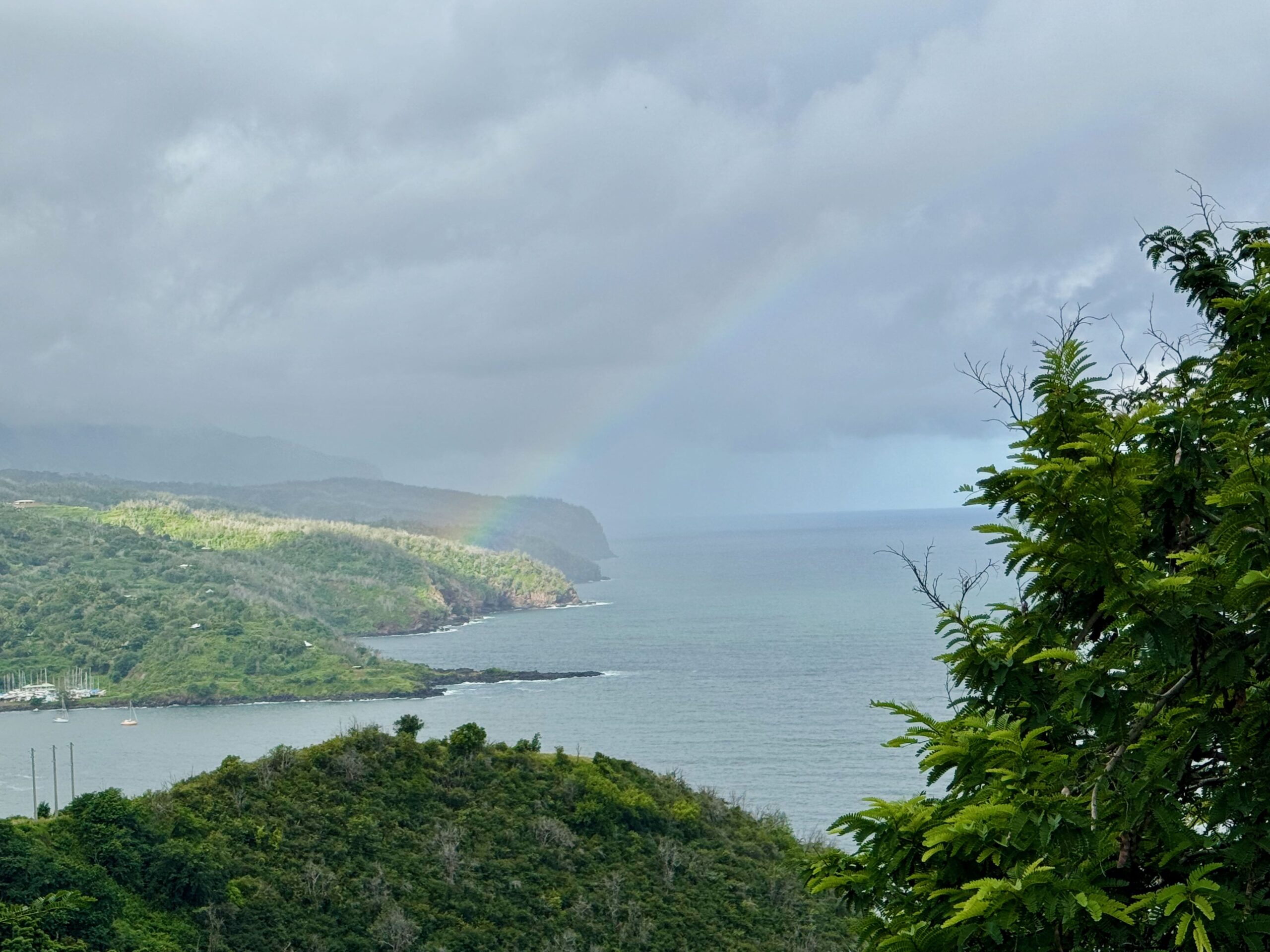
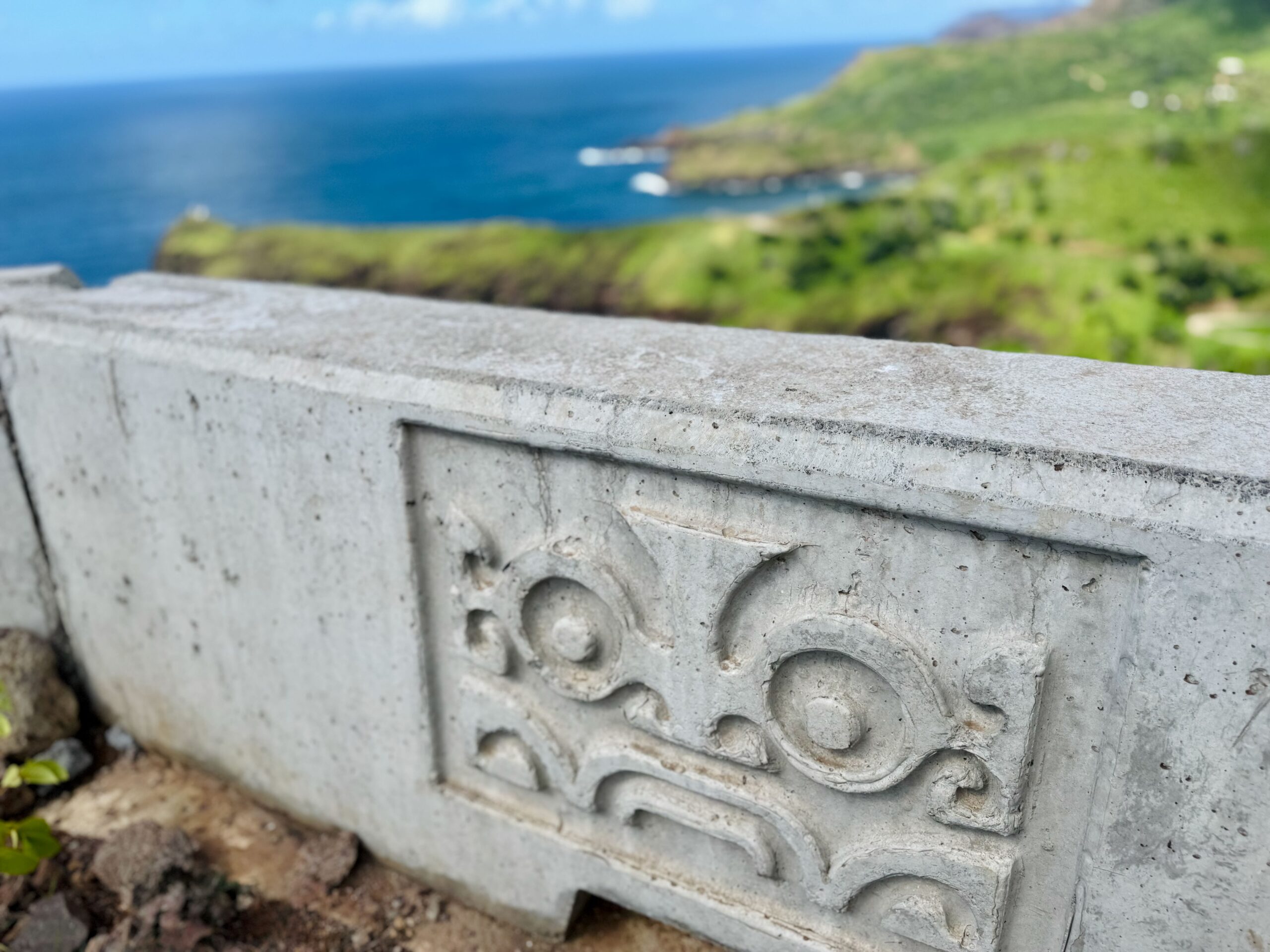
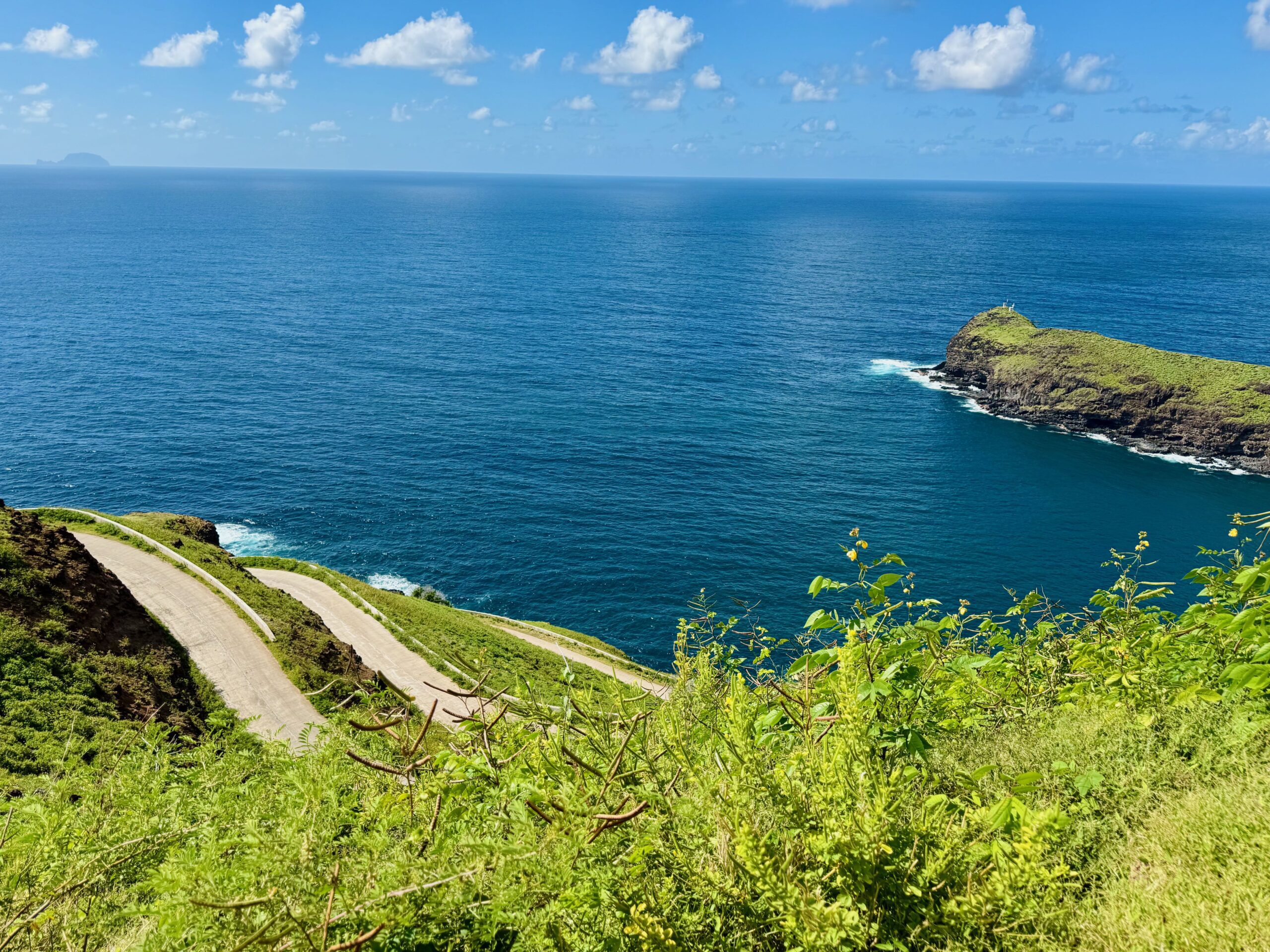
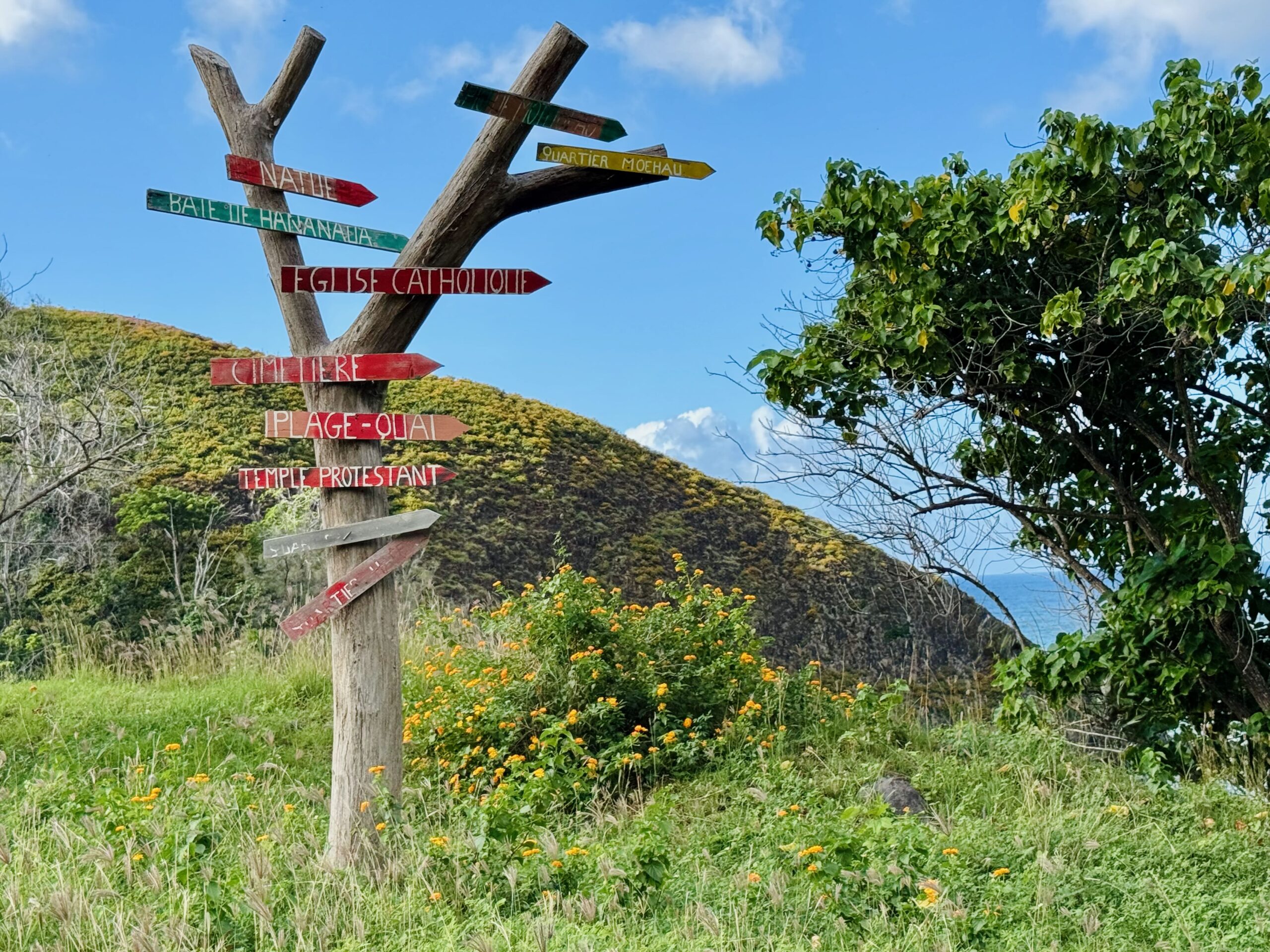
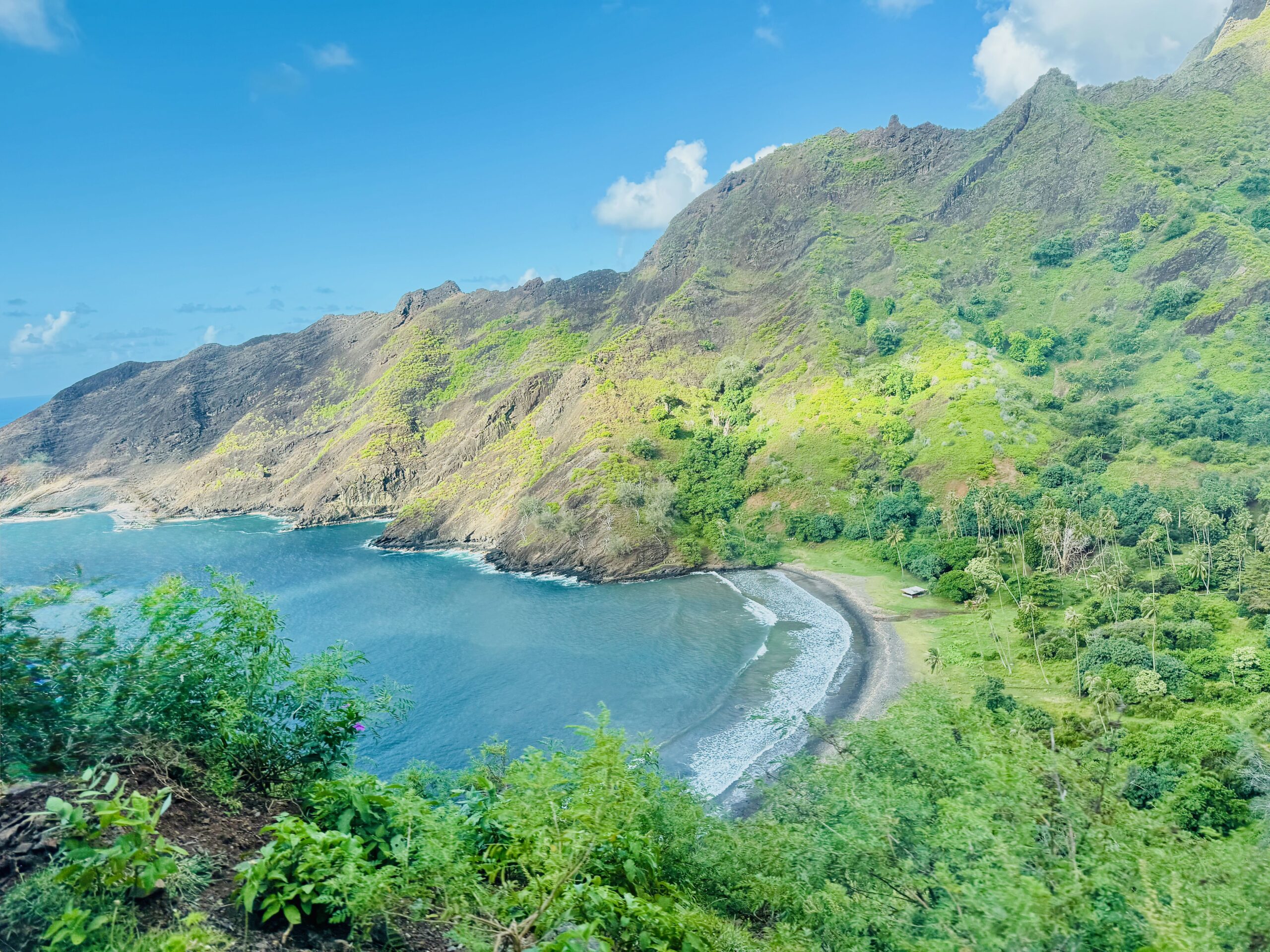
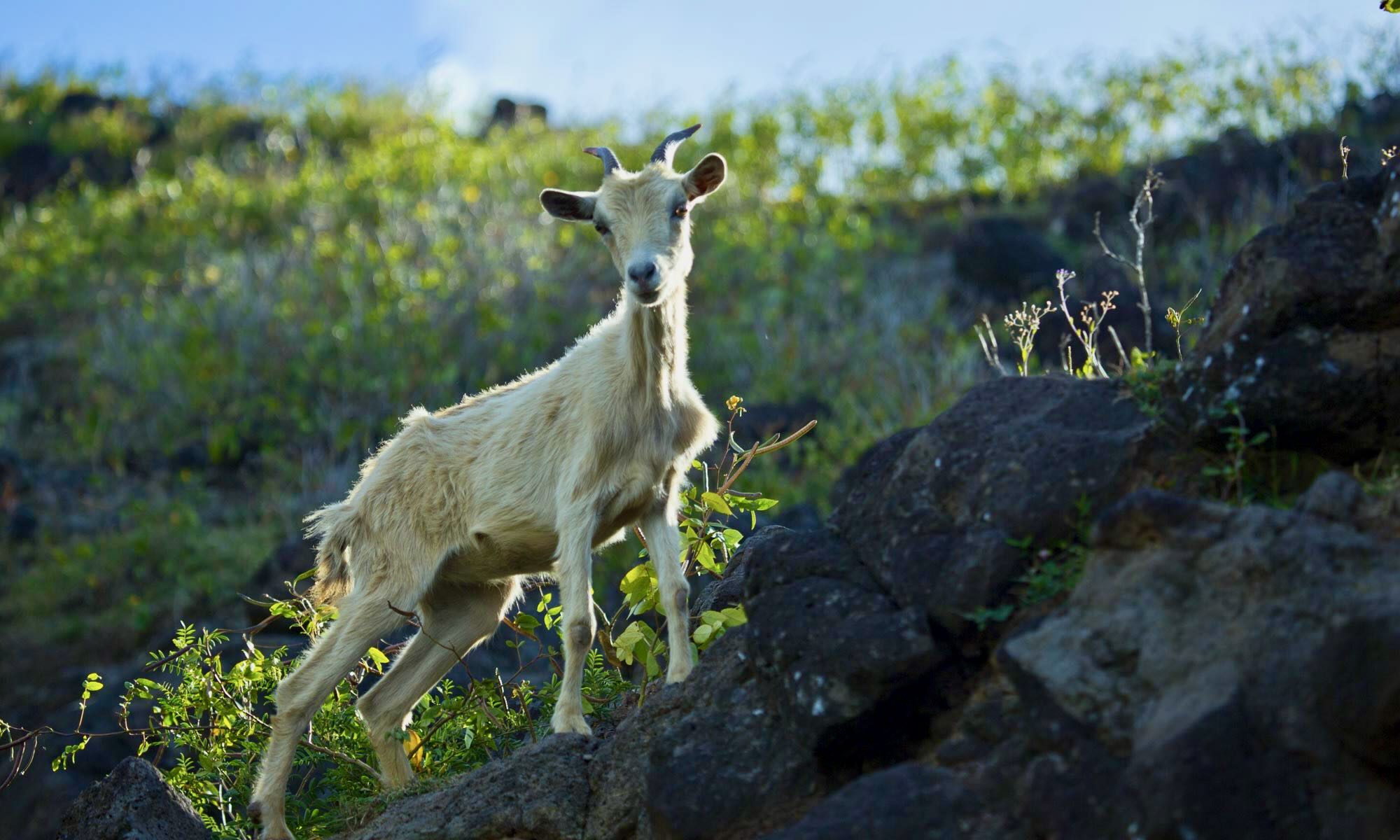
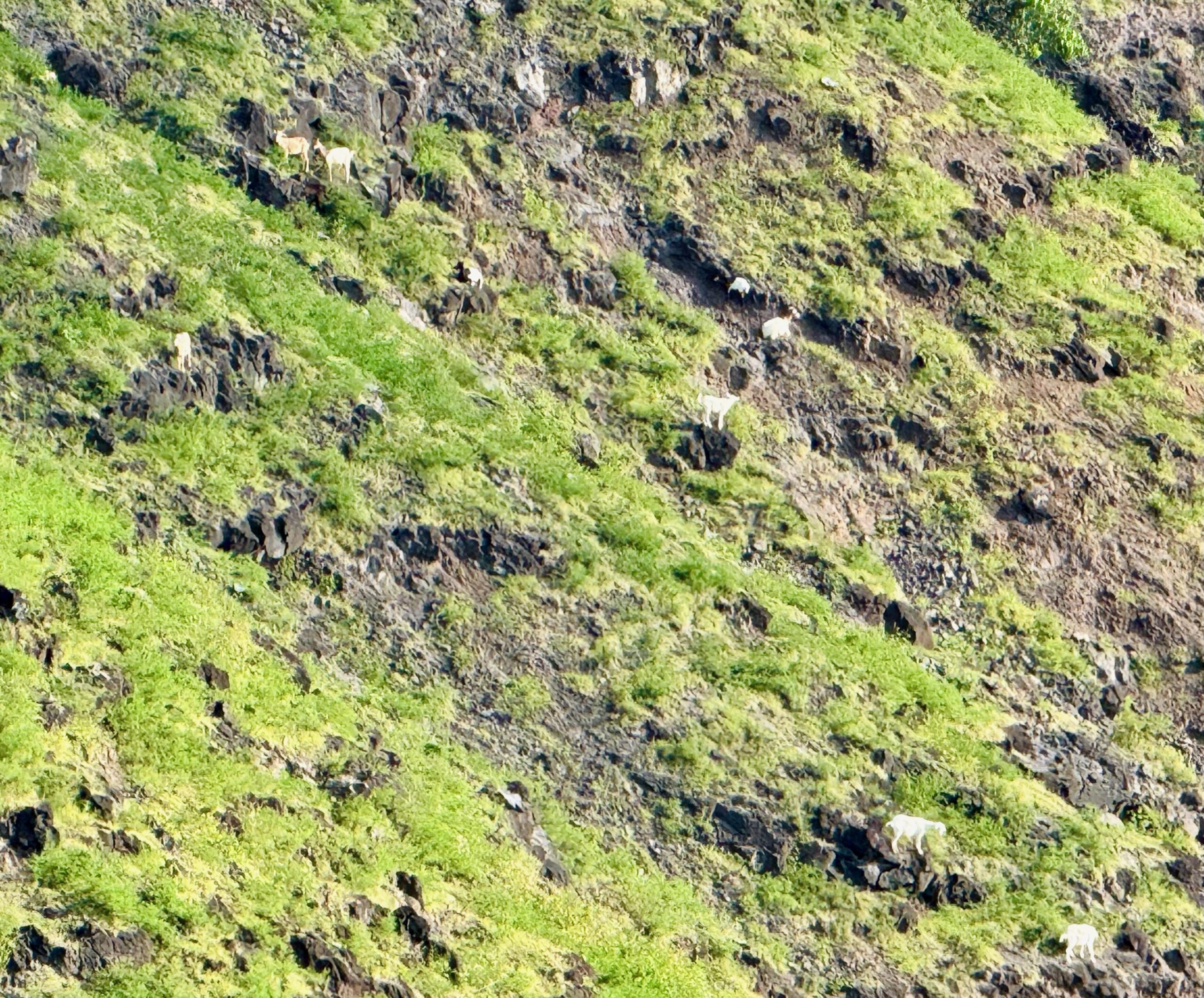
The drive from Atuona to Puamau took about three hours on a winding, steep road that offered spine-tingling views of the coastline. We probably could have gotten there faster, but we stopped frequently to savor the view.
Along the way, we passed through lush valleys and skirted the edges of towering cliffs. It was about a 25-mile trip.

3. Centre Culturelle d’Atuona Hiva’Oa
Centre Culturelle d’Atuona Hiva’Oa is a restored, open-air ceremonial plaza located in Hiva Oa’s main village, Atuona. It serves as a central hub for community gatherings, traditional dance rehearsals, and cultural festivities, such as the Marquesas Arts Festival (Matavaa).
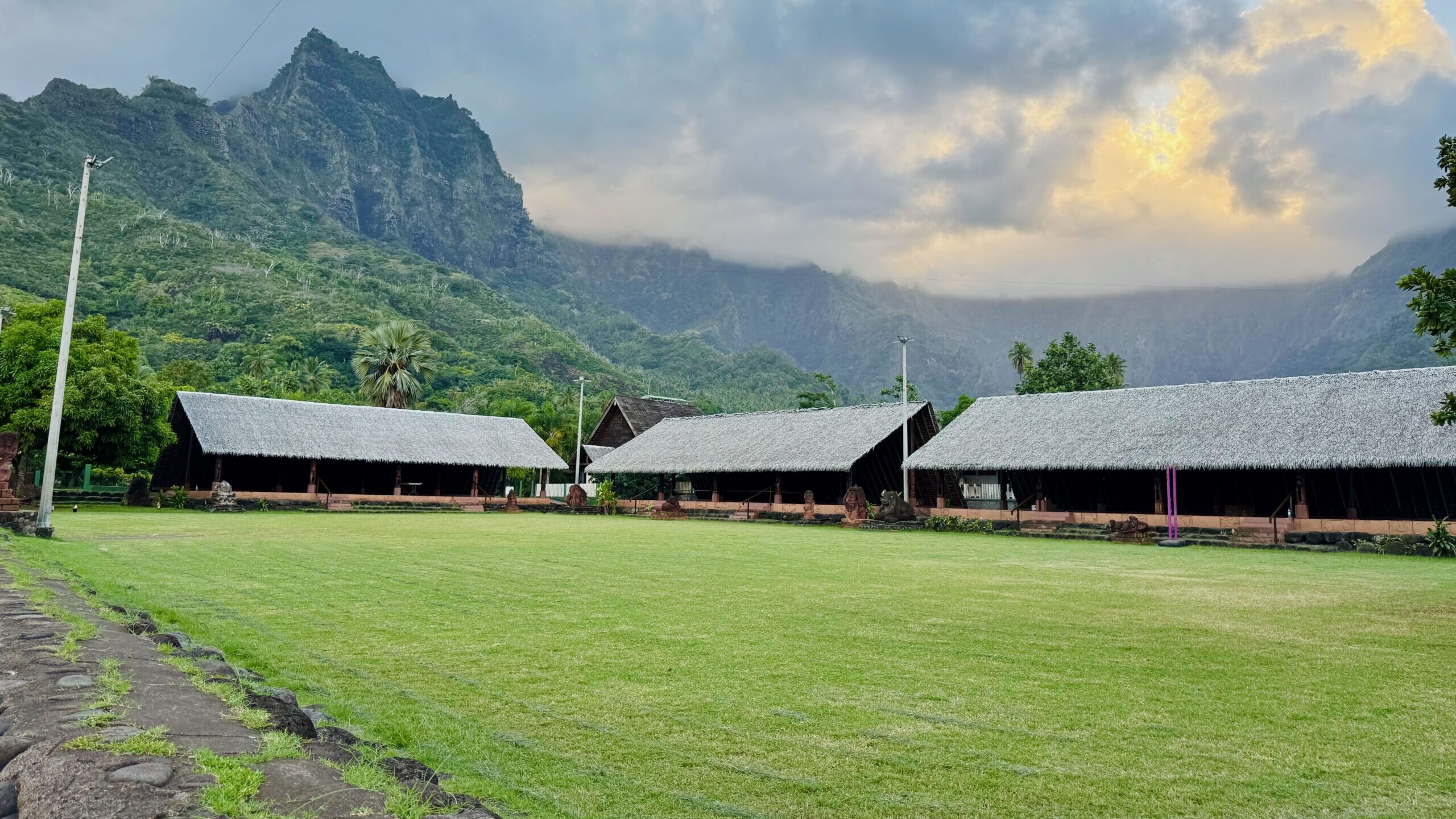
It was restored for the 1991 Marquesas Arts Festival and remains a vital location for preserving and showcasing the living culture of the Marquesas.

4. Hanaiapa Beach
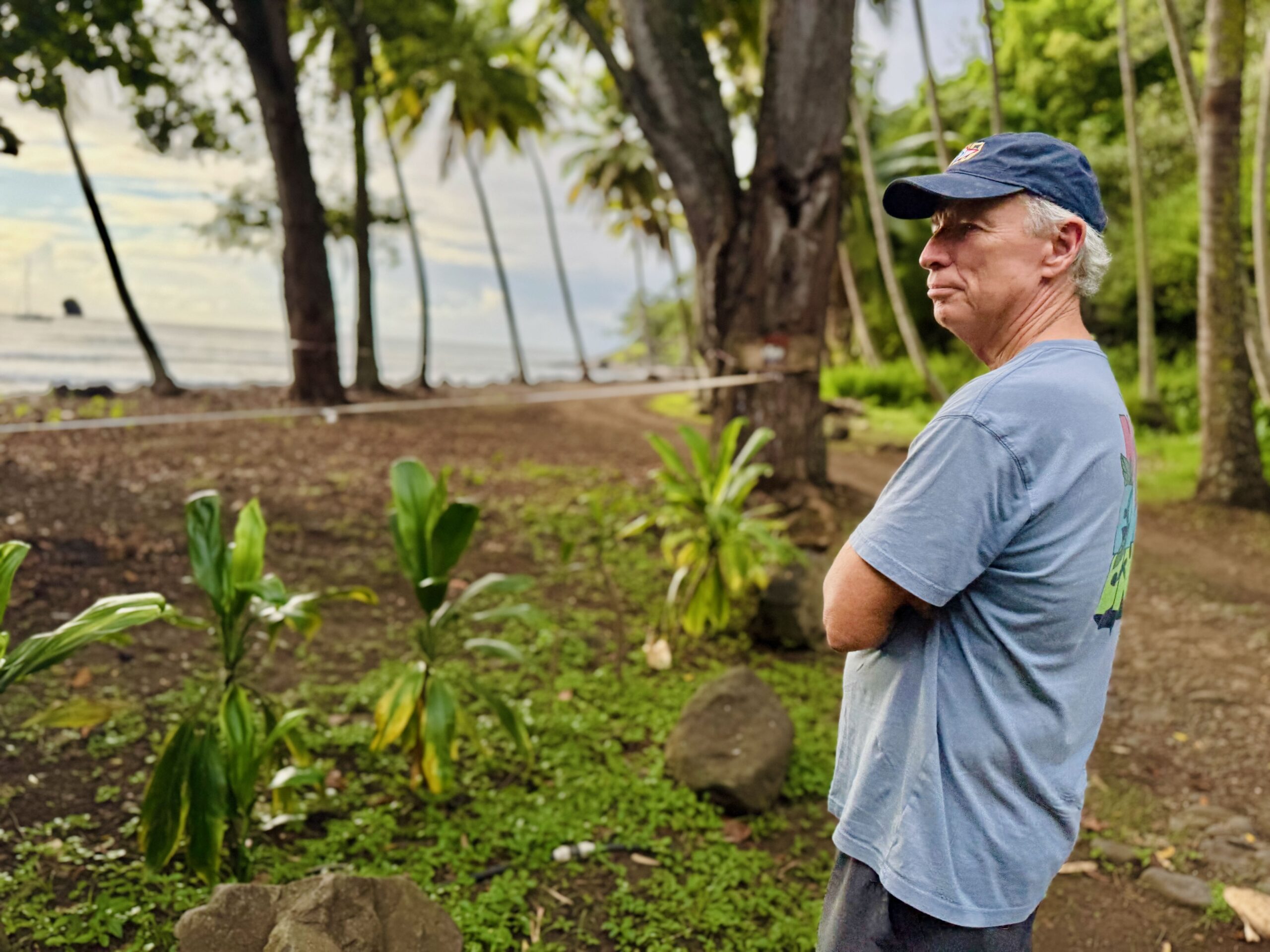
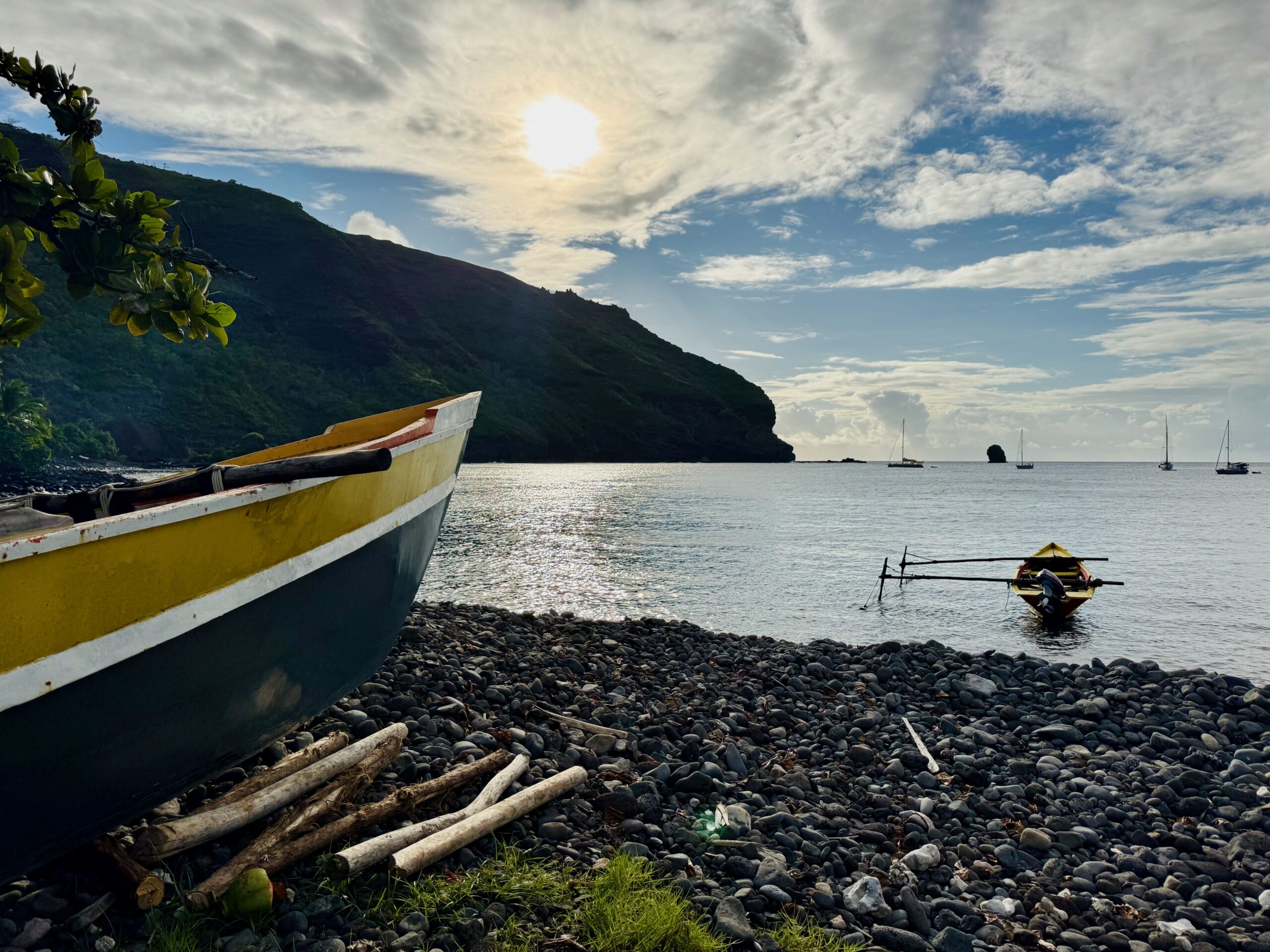
Hanaiapa Beach is a scenic, black-sand gem tucked into a deep bay on the island’s northern coast. Framed by towering cliffs and lush greenery, it offers a glimpse of authentic village life.

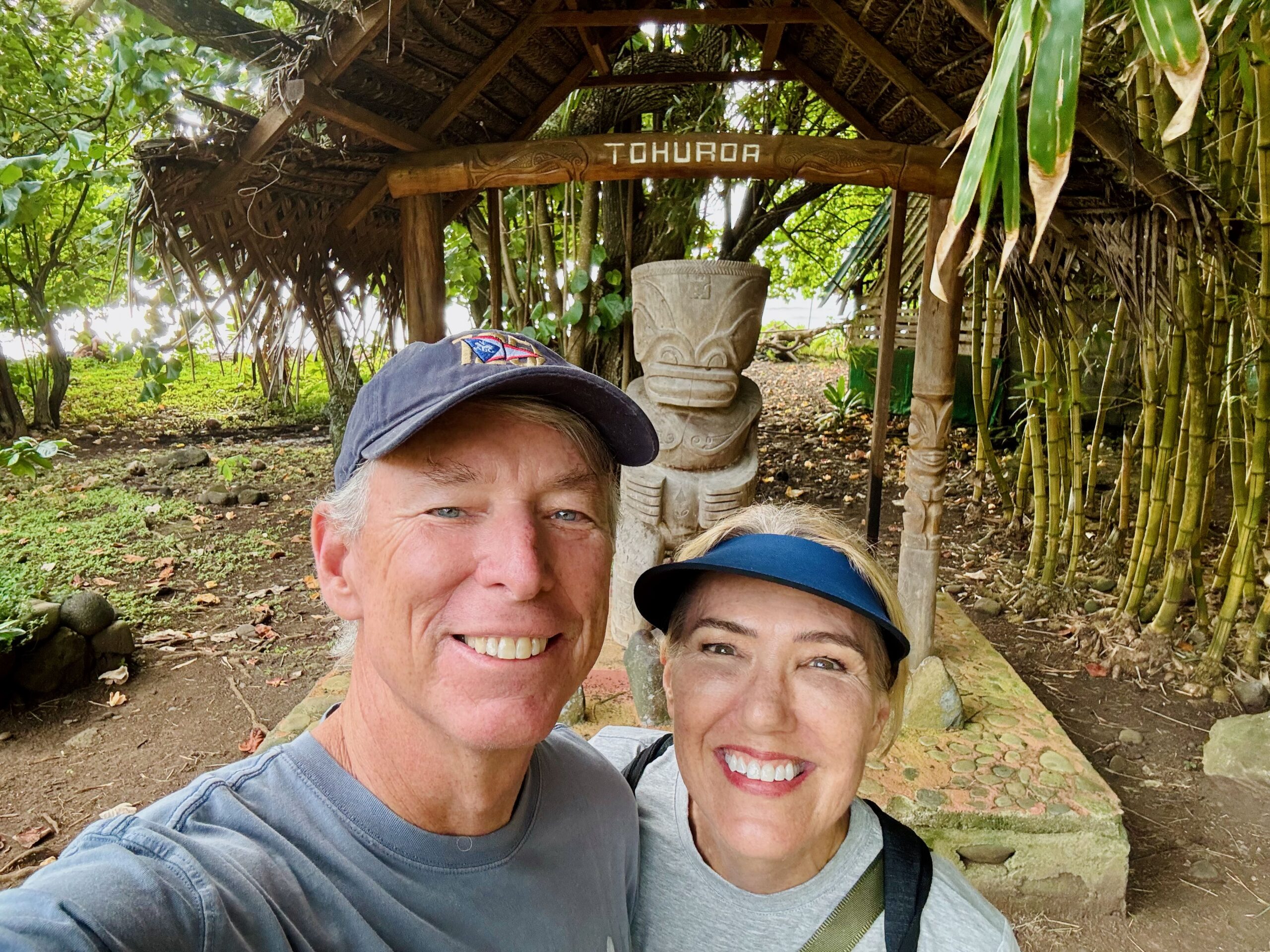
It even had its own tiki.
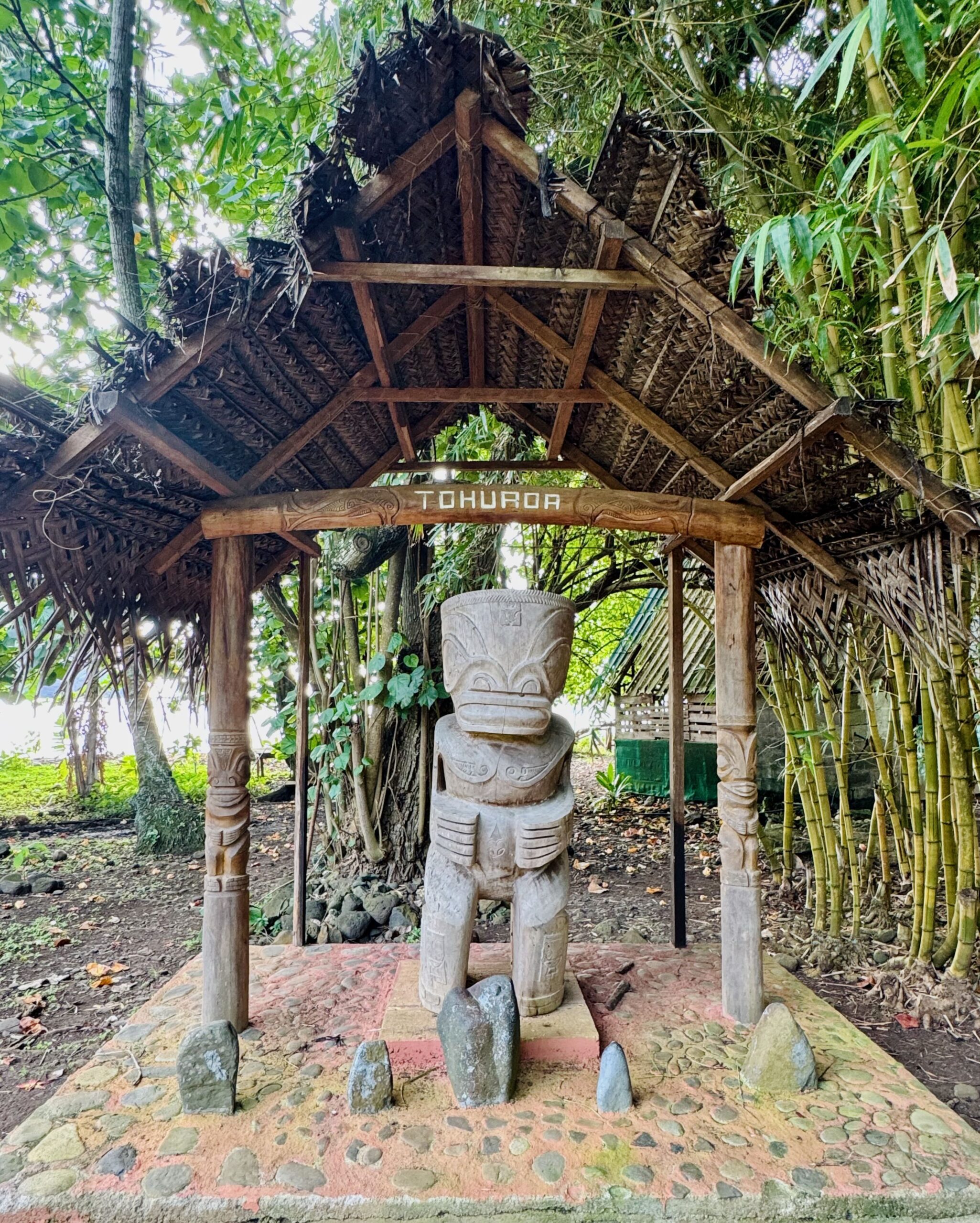
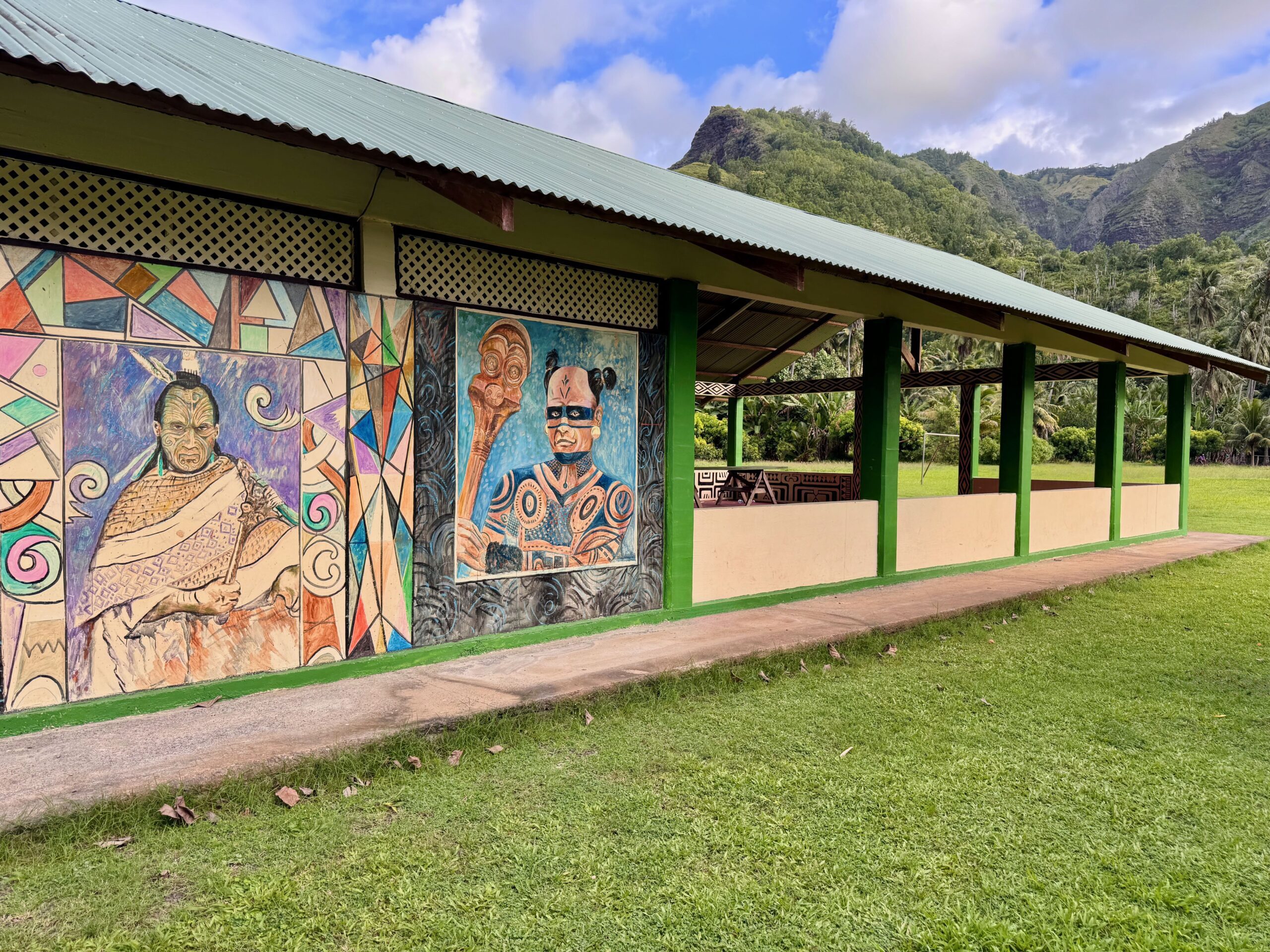
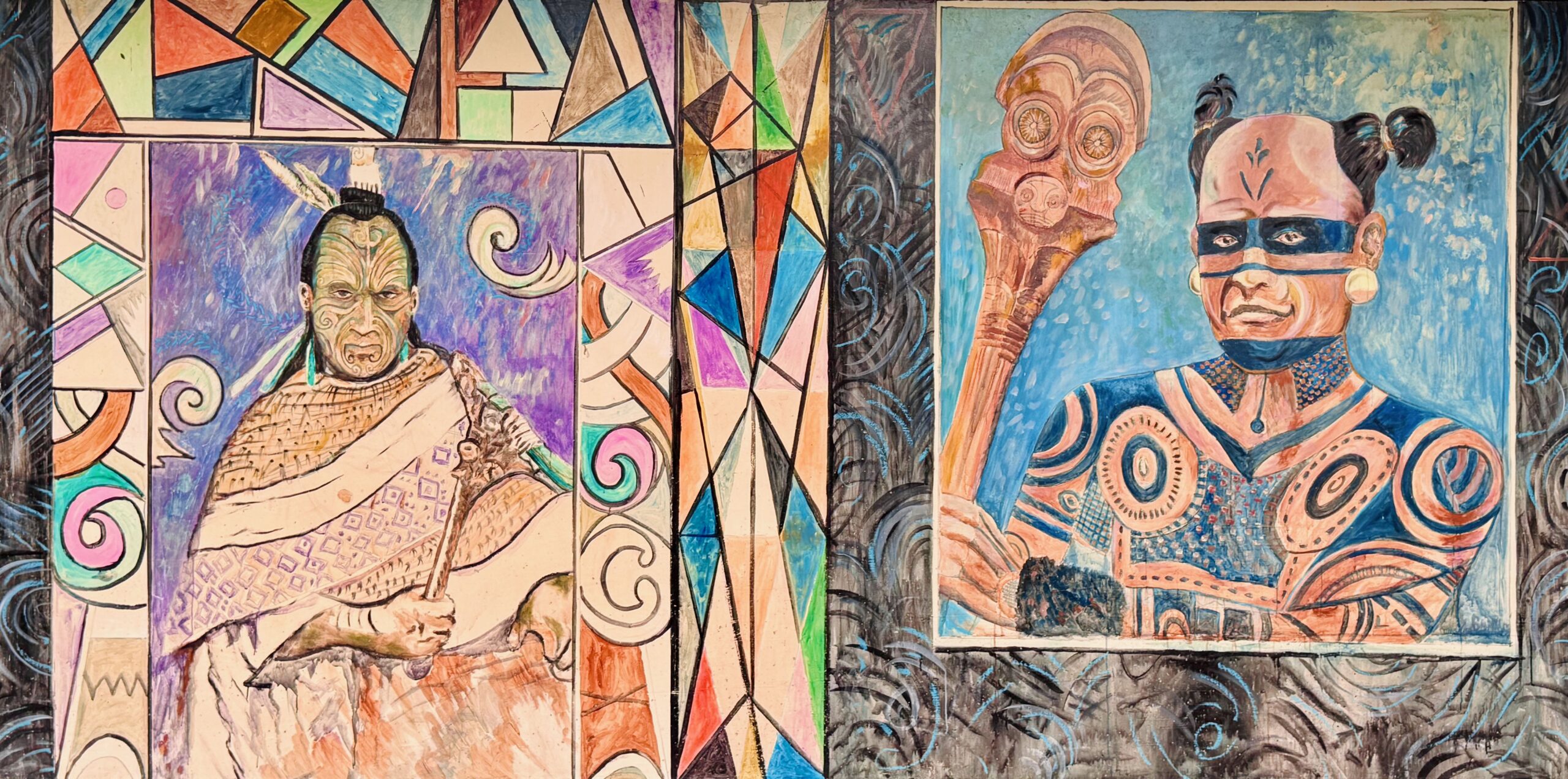
While swimming can be rough due to the surf, we did see locals stripping down to their underwear and swimming. Nearby was a community center with beautiful murals.
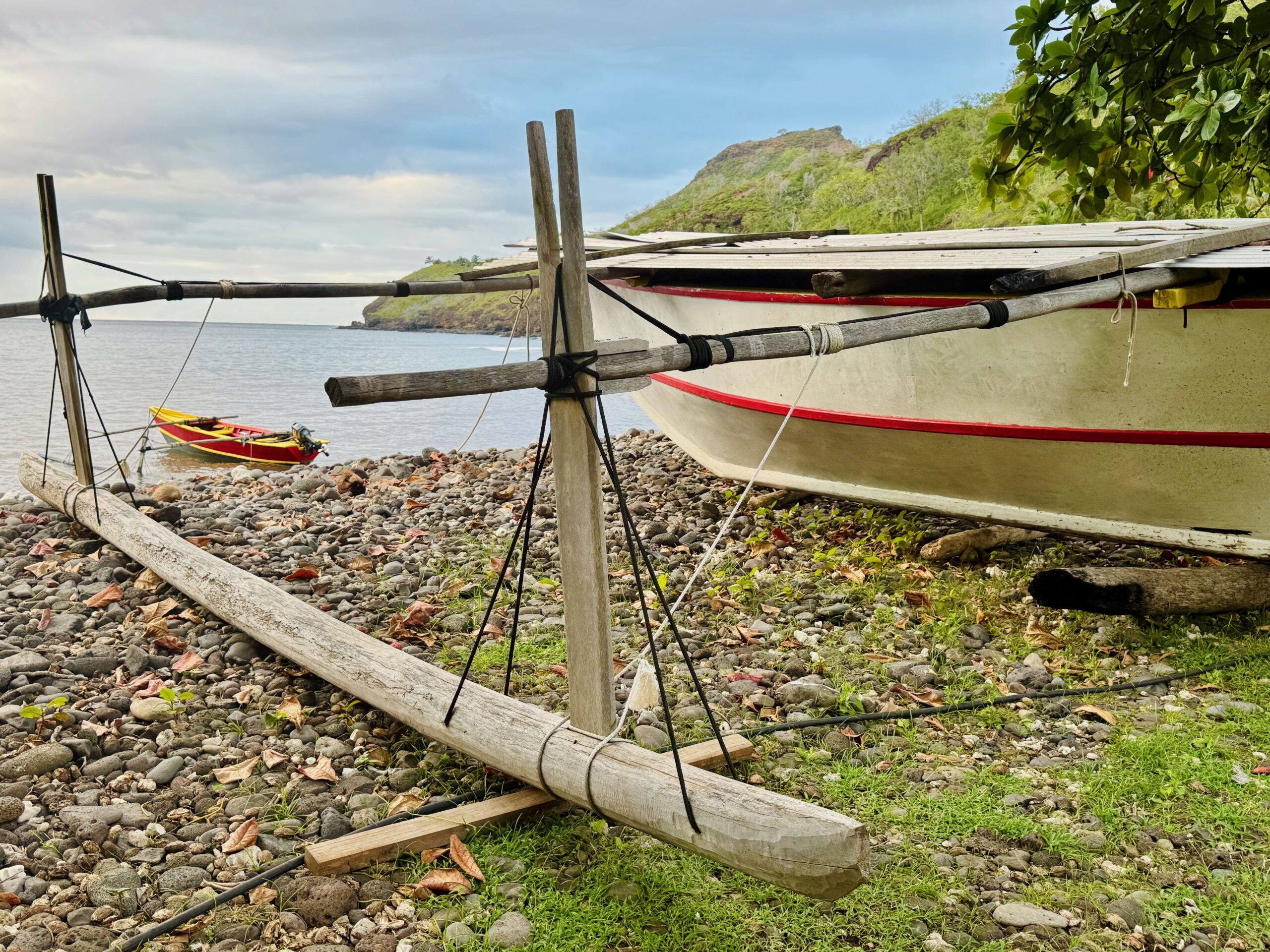
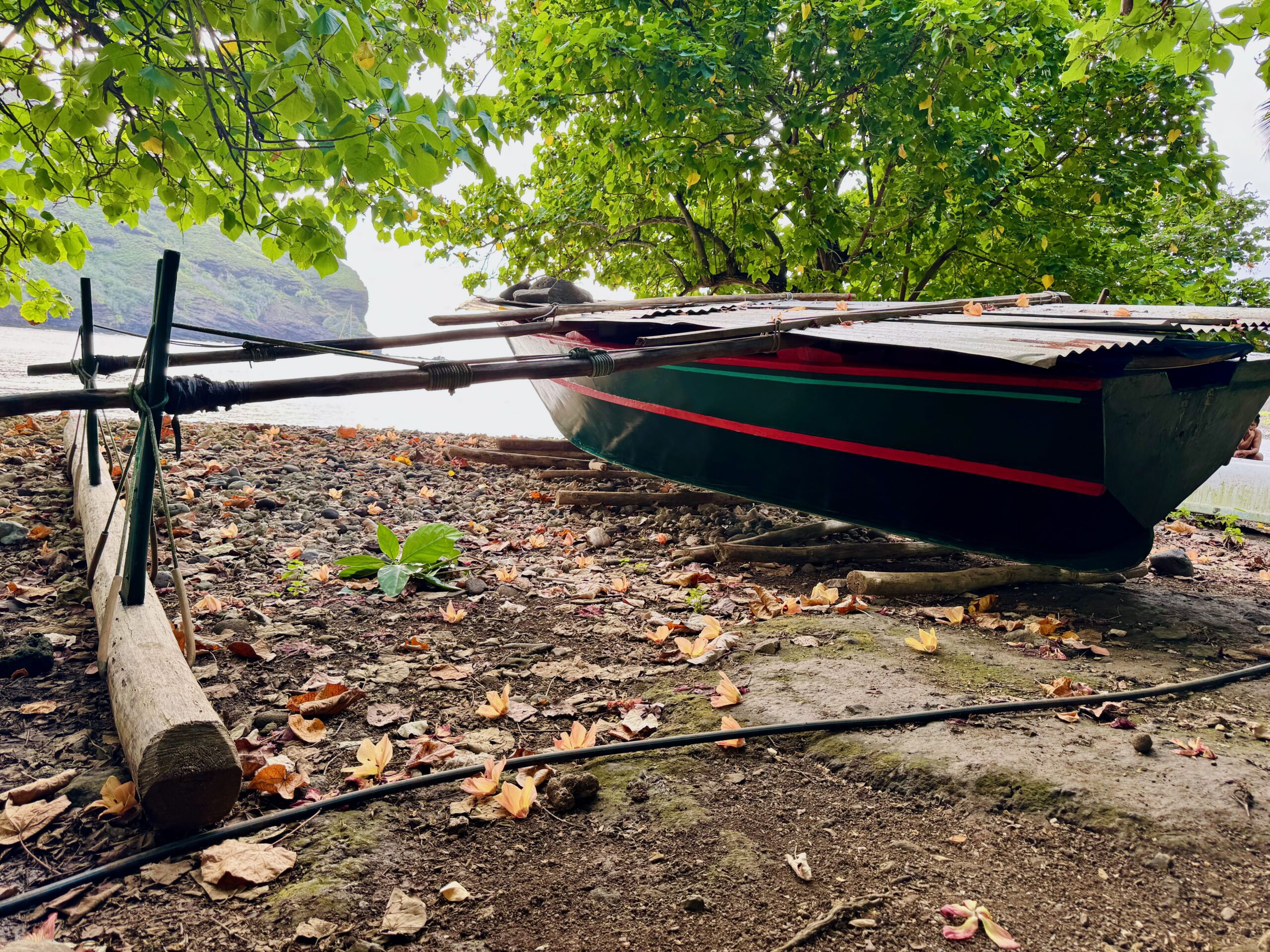
We saw several outriggers there.
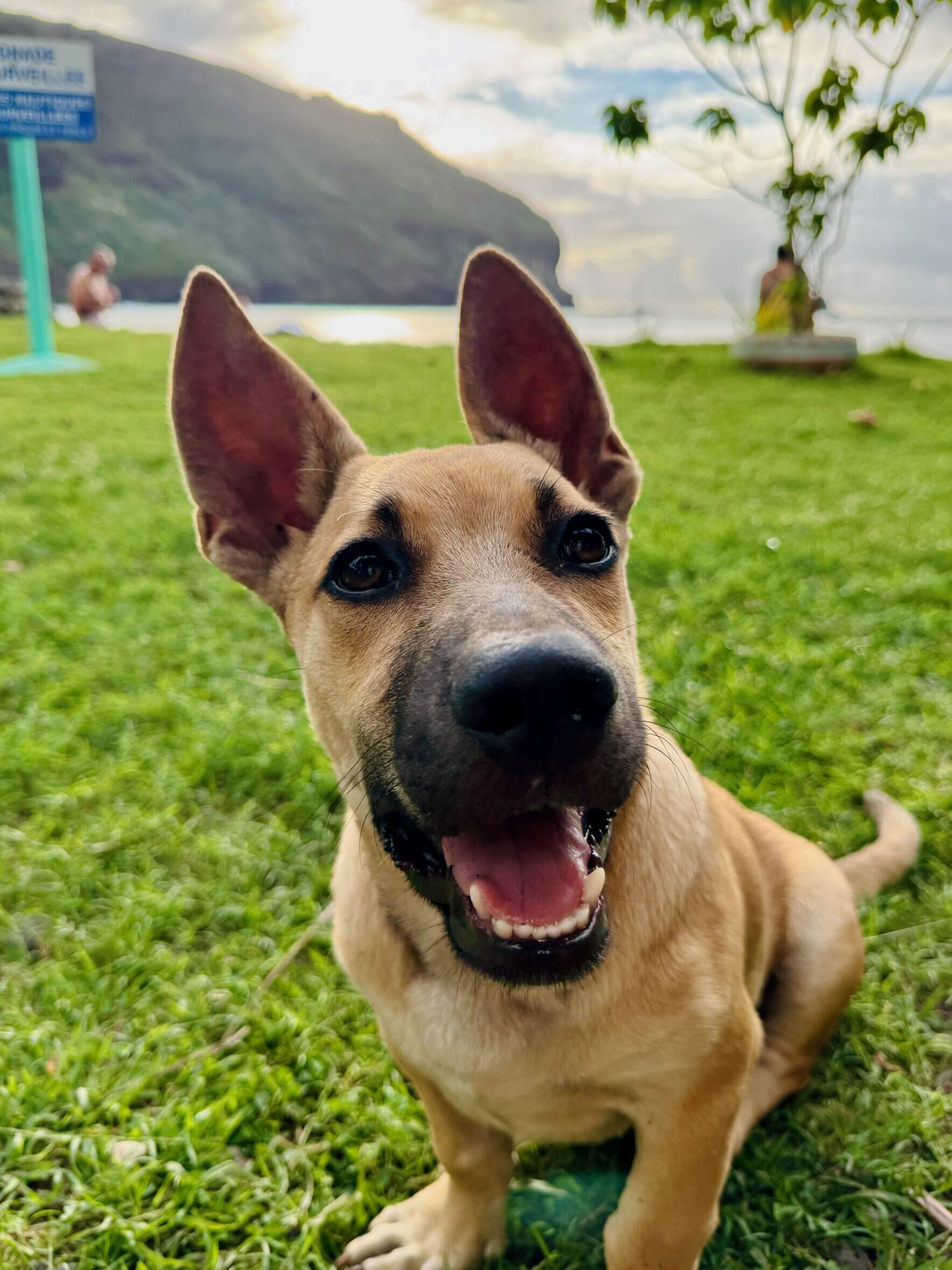
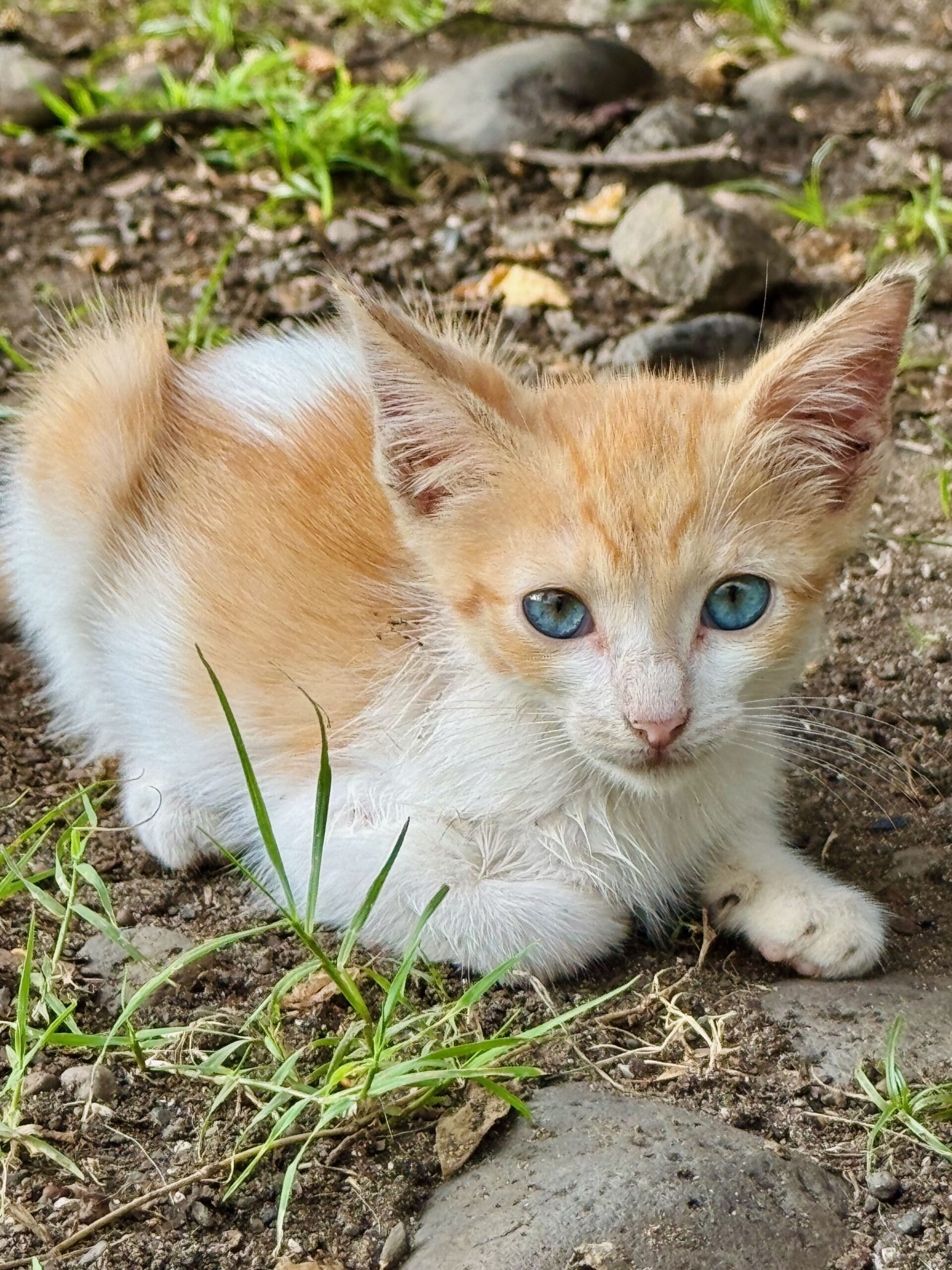
And these two cuties:
There’s a large rock in the middle of the bay that has an interesting legend.
While relaxing on the beach, we saw a blow hole on the other side of the bay.
5. Atuona
Not a highlight, but Atuona gets an honorable mention.
This town, the main one on Hiva Oa, is a quiet, leafy settlement nestled at the foot of Mount Temetiu. While it serves as the administrative center, it felt more like a sleepy village and is, of course, also home to Tohua Pepeu.
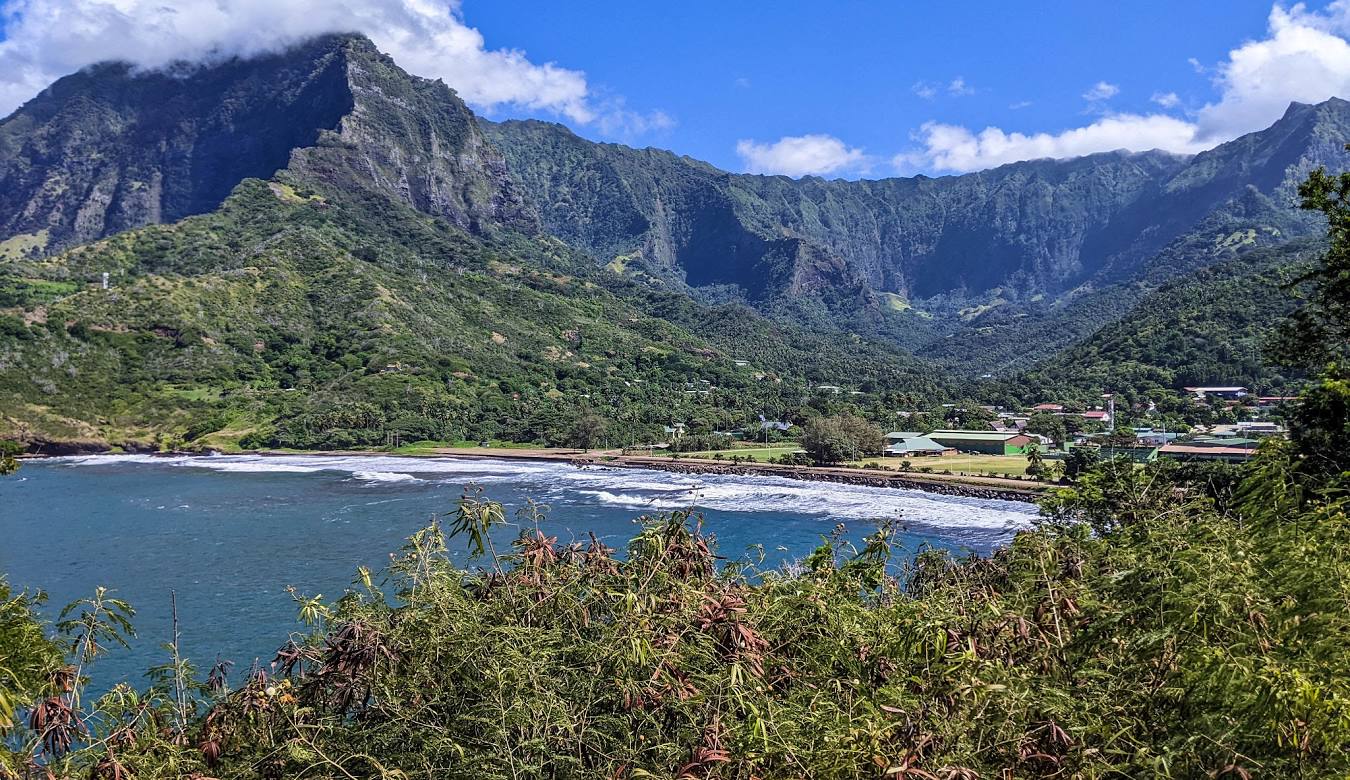
There were a few decent grocery stores—namely, Magasin Naiki and Magasin Gaubil—and a handful of restaurants, so it’s worth a visit.
Things We Didn’t Get To
Hanatekuua Beach
Tiki Souriant (The Smiling Tiki)
Ruins of Upeke
Paul Gauguin Cultural Center
Espace Jacques Brel
Calvary Cemetery
Where We Ate
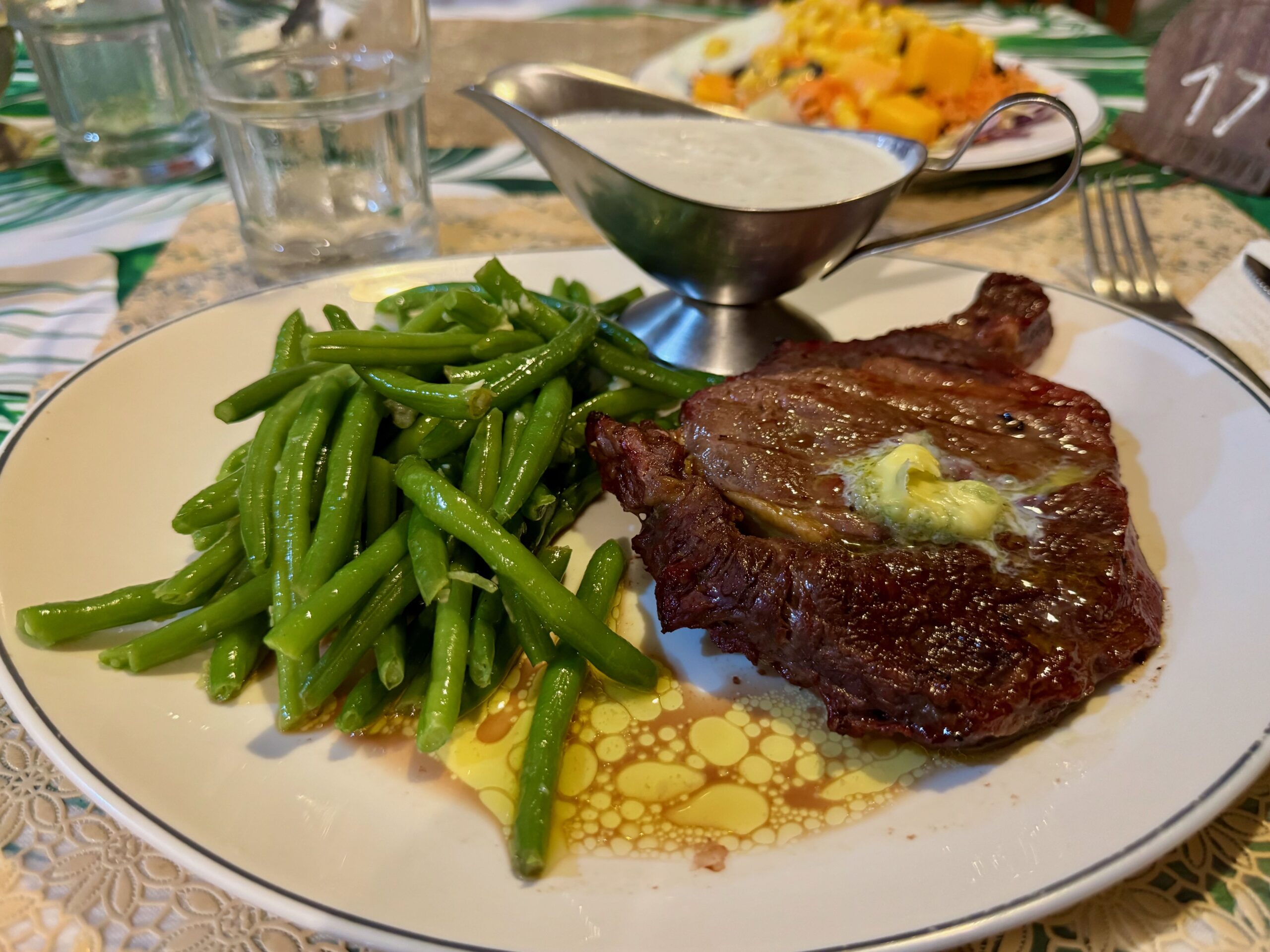
Relais Maehau Restaurant is located right at the entrance of Atuona. We ate there multiple times.
We also had drinks and enjoyed the view at Hôtel Hiva Oa Hanakee Lodge:
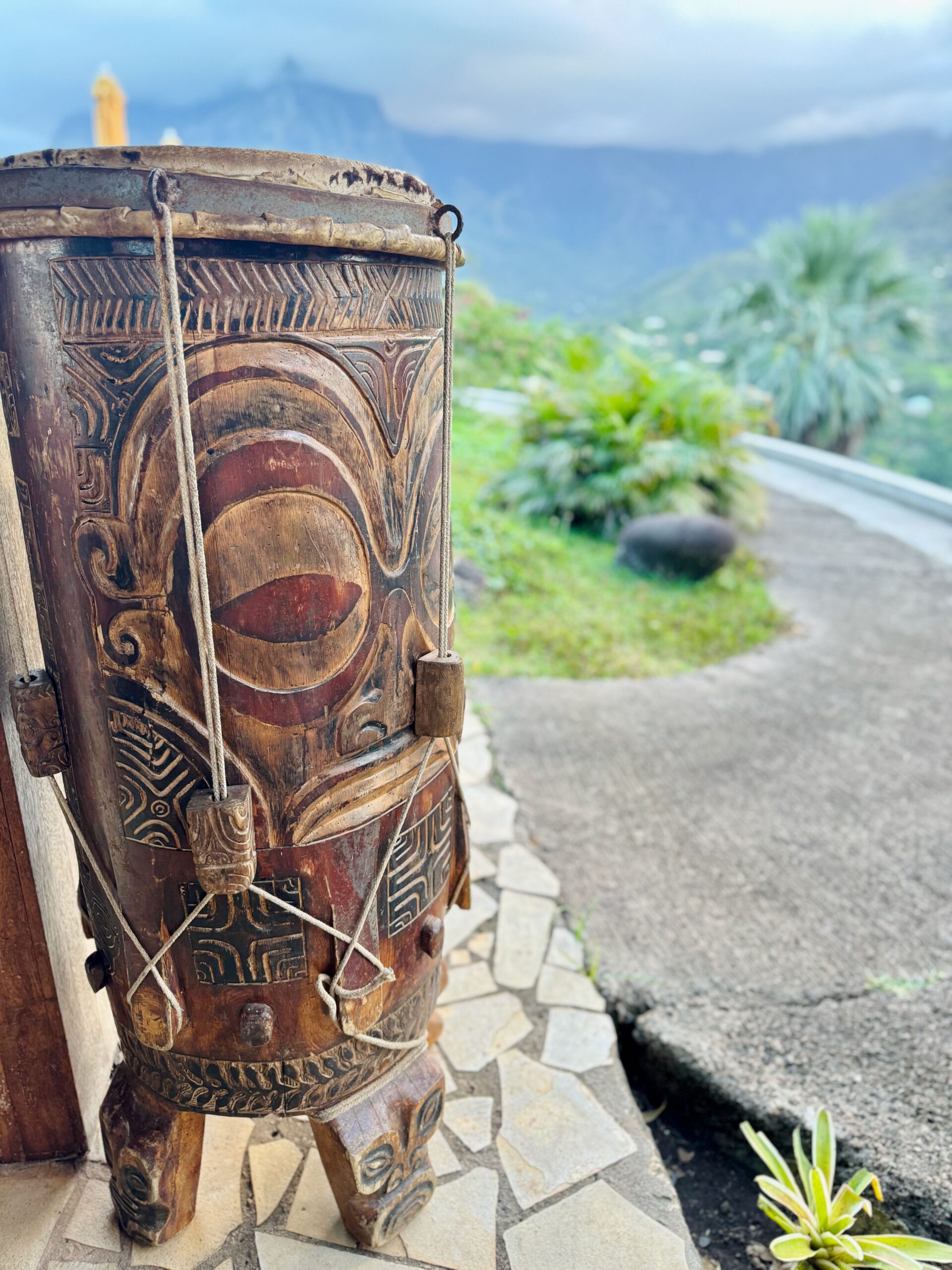
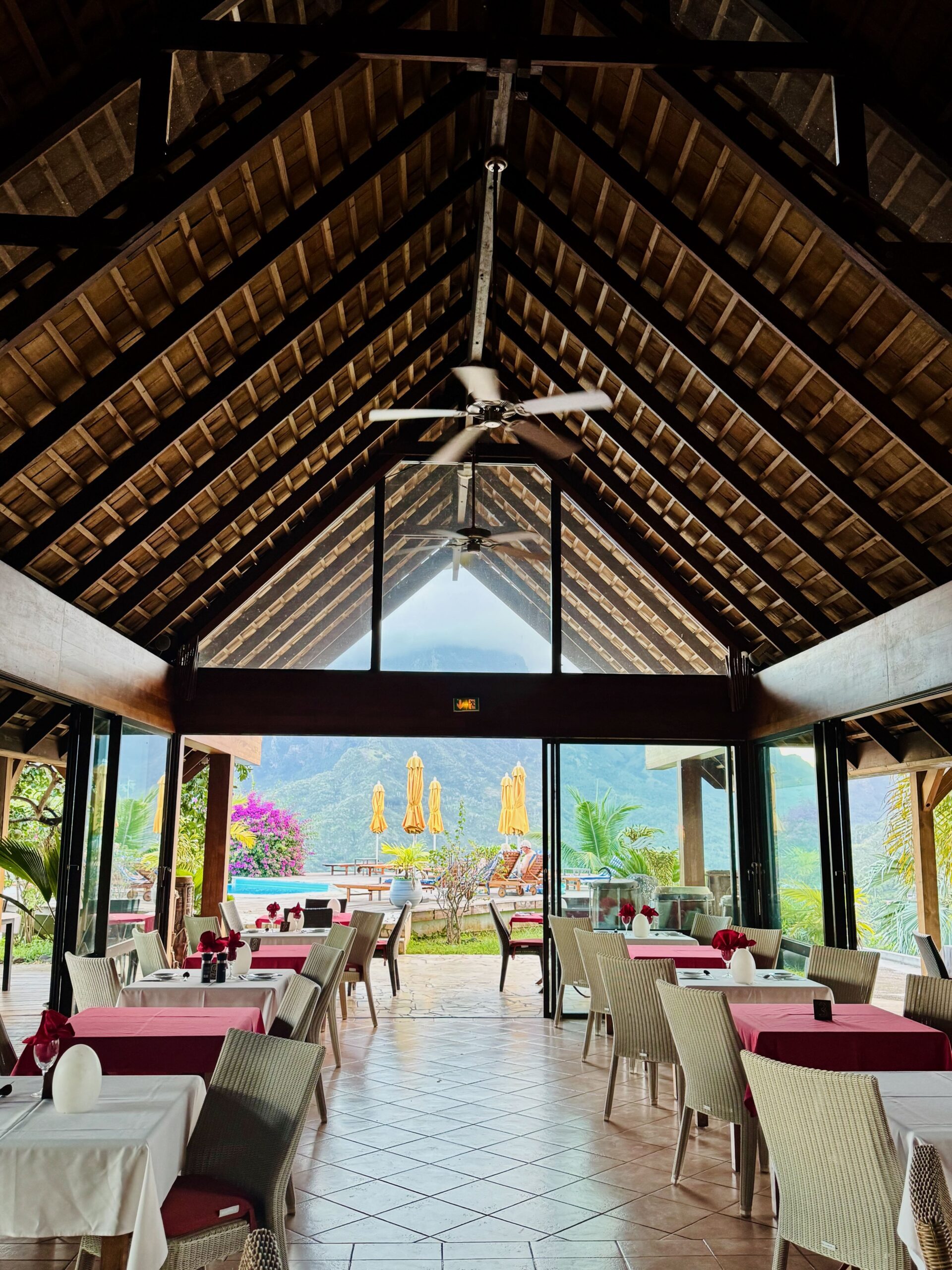
Getting There
Air Tahiti flies to Hiva Oa from Tahiti and Nuku Hiva. The flight from Tahiti takes about 3.5 hours. Apparently, the approach to the airport is spectacular, with the plane descending between mountains.
We sailed there on our boat.
Getting Around
There’s no public transportation on Hiva Oa, and there are a limited number of taxis, mainly operating as airport transfers. To see the sites, you have two options: rent a 4×4 vehicle (be prepared for steep, winding roads) or hire a local guide with a truck.
Now an important note for those staying on a boat at the Taha Uku (main) anchorage: it’s about a 45-minute walk, each way, to the town of Atuona. After a few days of doing this hilly walk, we rented a car. I say this as someone who LOVES walking: do yourself a favor and rent a car. We got ours through Hiva Oa Shop and Rent.
It was so worth it! Because we had a car, we got to see all of this:
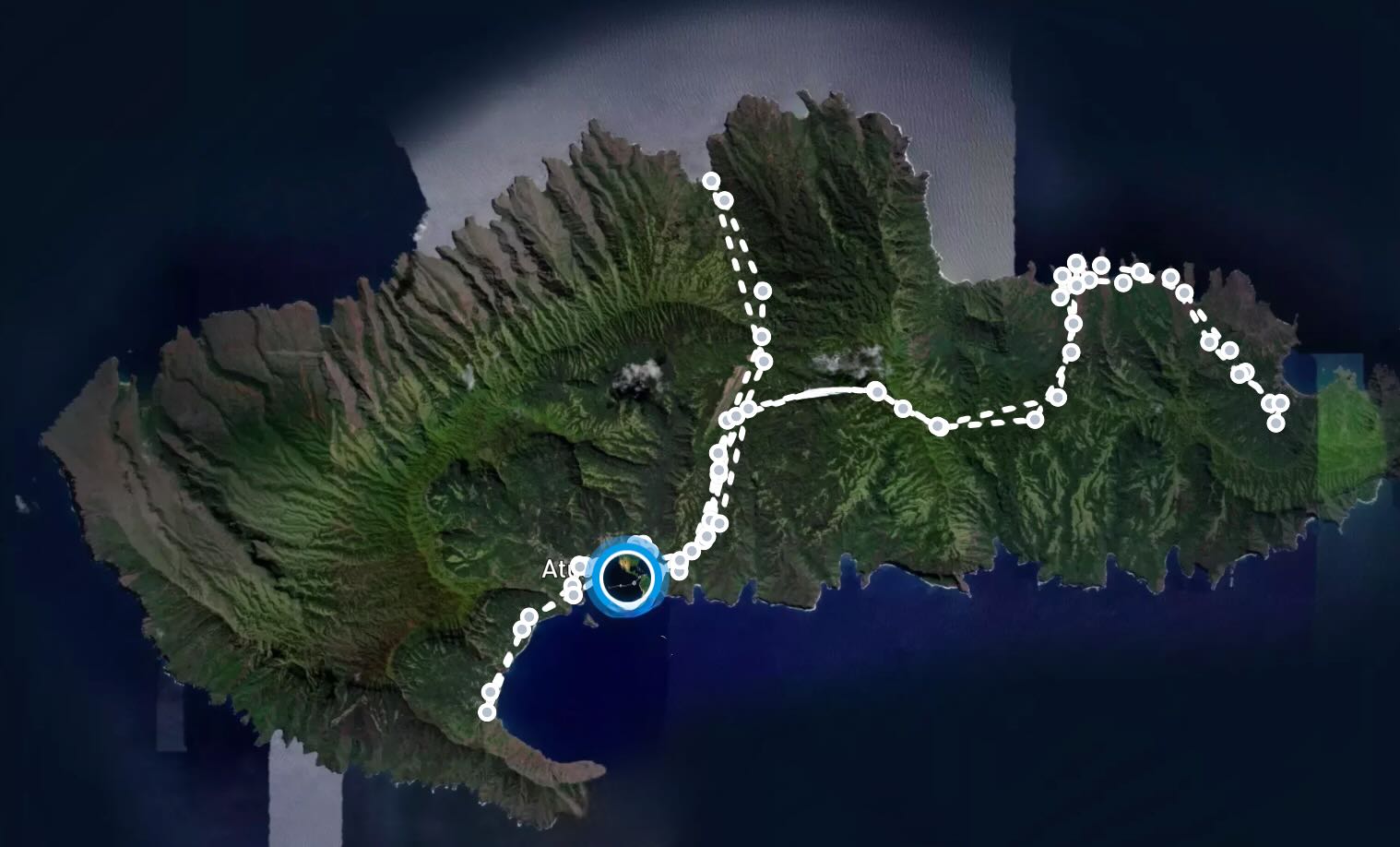
Of all the places we’ve visited, this is one of the least walkable we’ve been to.
Final Thoughts
Hiva Oa is not a destination for the passive tourist. It demands your attention. It asks you to hike through mud, drive up vertical roads, and sit in silence before stone tikis that have watched over the valleys for a millennium.
But for those who make the journey, Hiva Oa offers something rare in modern travel: authenticity.
The Matavaa O Te Henua Enana (Marquesas Arts Festival) takes place there every four years—that’s an incredible time to visit if your timing aligns.
You can view a map of Hiva Oa here.