

A trip to the Galapagos Islands is not complete without a day trip to view the magnificent wildlife congregated in this area.
The government requires that visitors do this via a professional excursion company in order to protect the delicate ecosystem of the Galapagos Islands. We were happy to comply and booked a trip to North Seymour Island through Oswaldo of Galapagos Surf Islands.
It was a day jam-packed with wildlife and was especially extraordinary because we were there during mating season.
Seymour Island Highlights
1. Blue-Footed Boobies
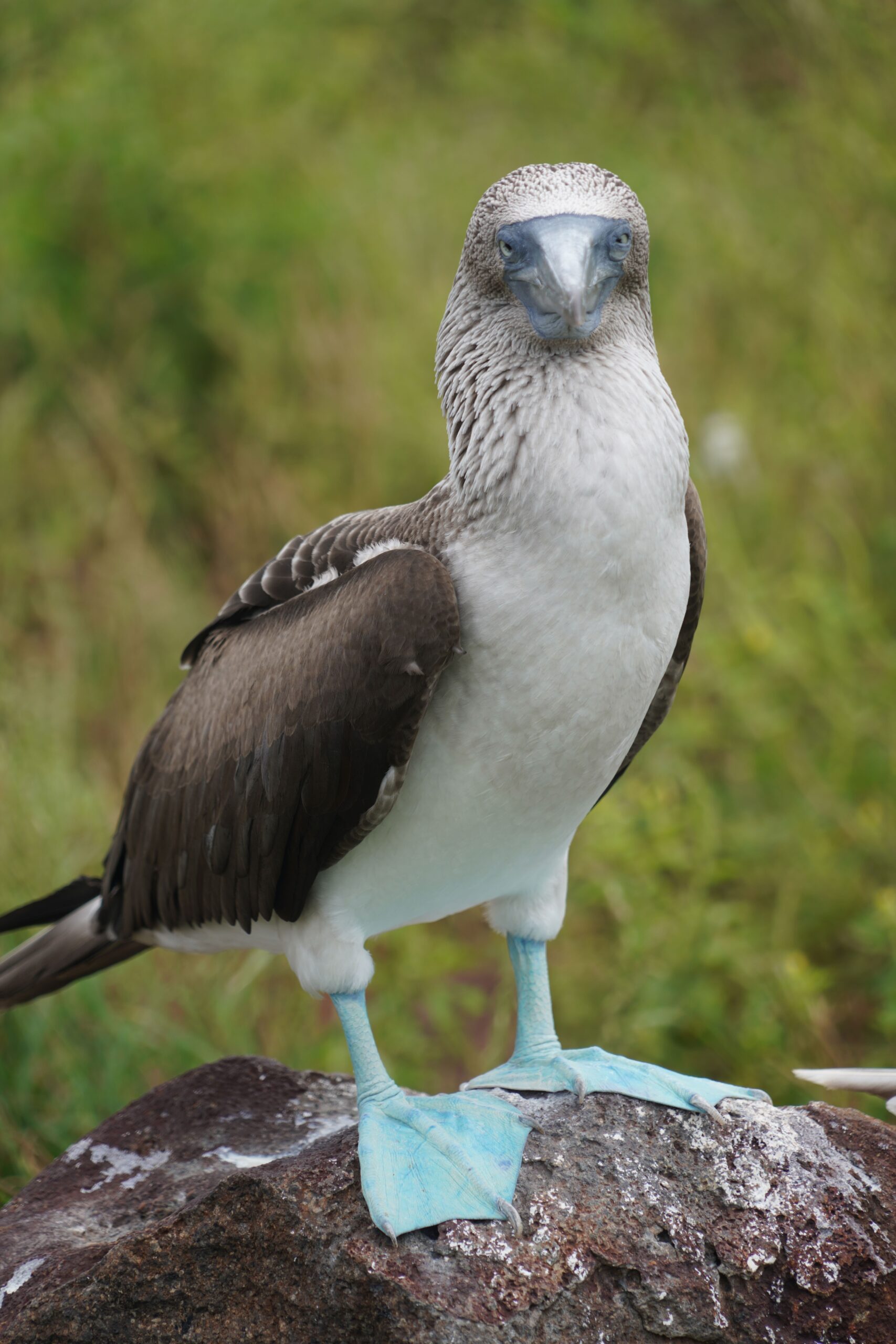
The blue-footed booby is undoubtedly one of the most charismatic and instantly recognizable residents of the Galápagos Islands.
Not surprisingly, the distinctive coloration of their feet is not merely ornamental: the blue hue is derived from carotenoid pigments obtained through a diet of fresh fish. Consequently, the brightness of a booby’s feet acts as a reliable indicator of its health and genetic vigor.
Based on this, females overwhelmingly select males who have the most vivid turquoise feet.
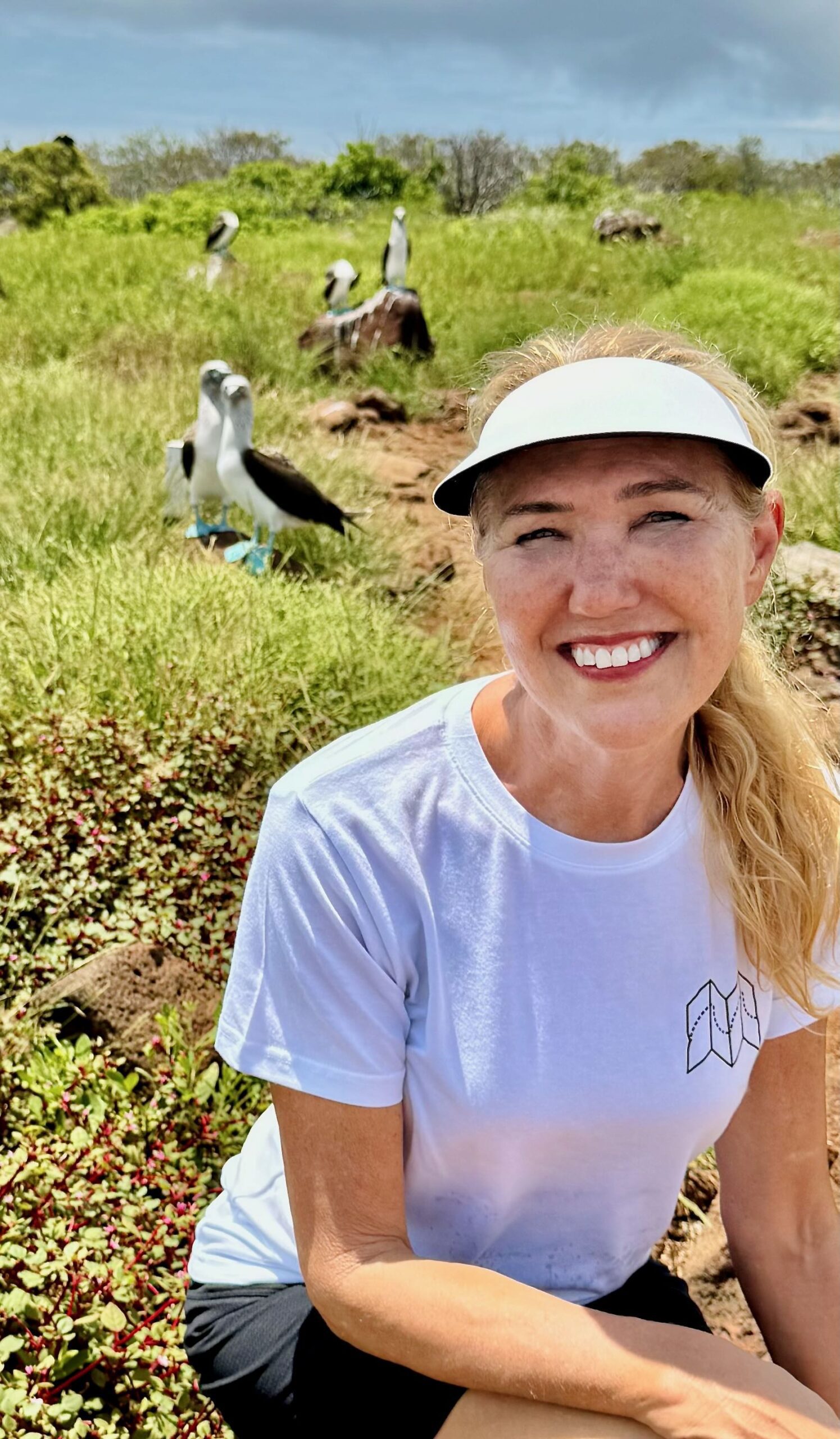
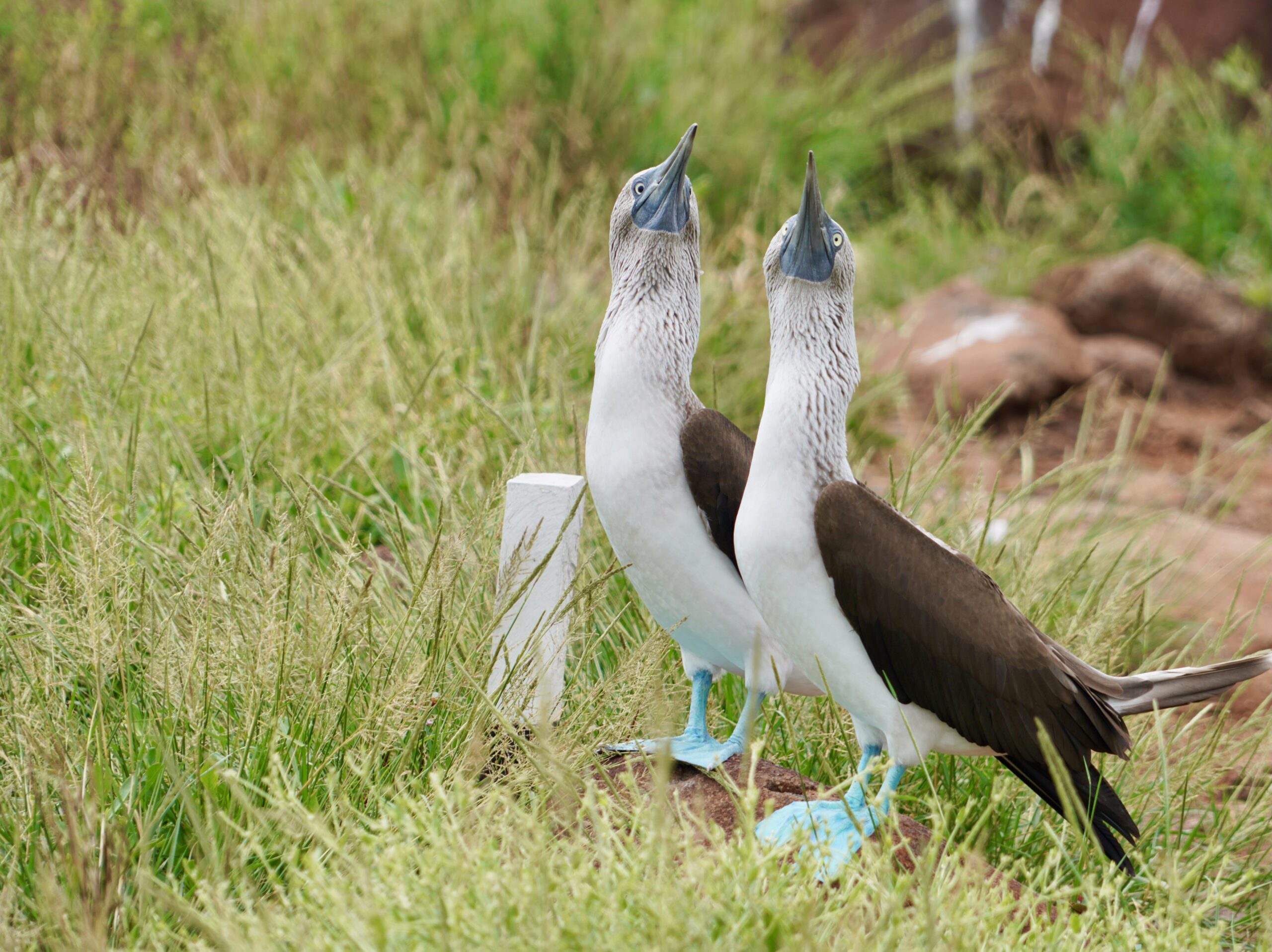
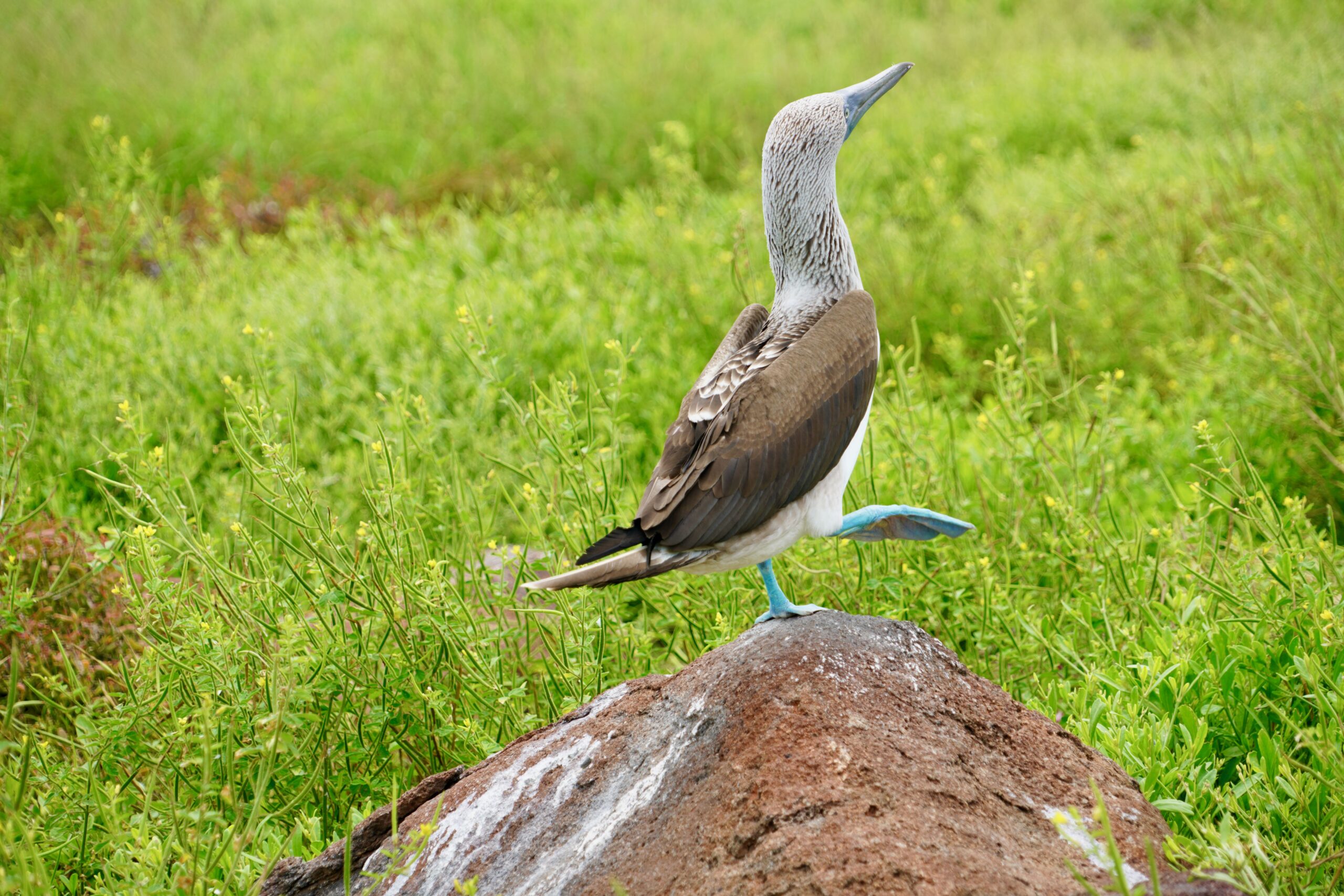
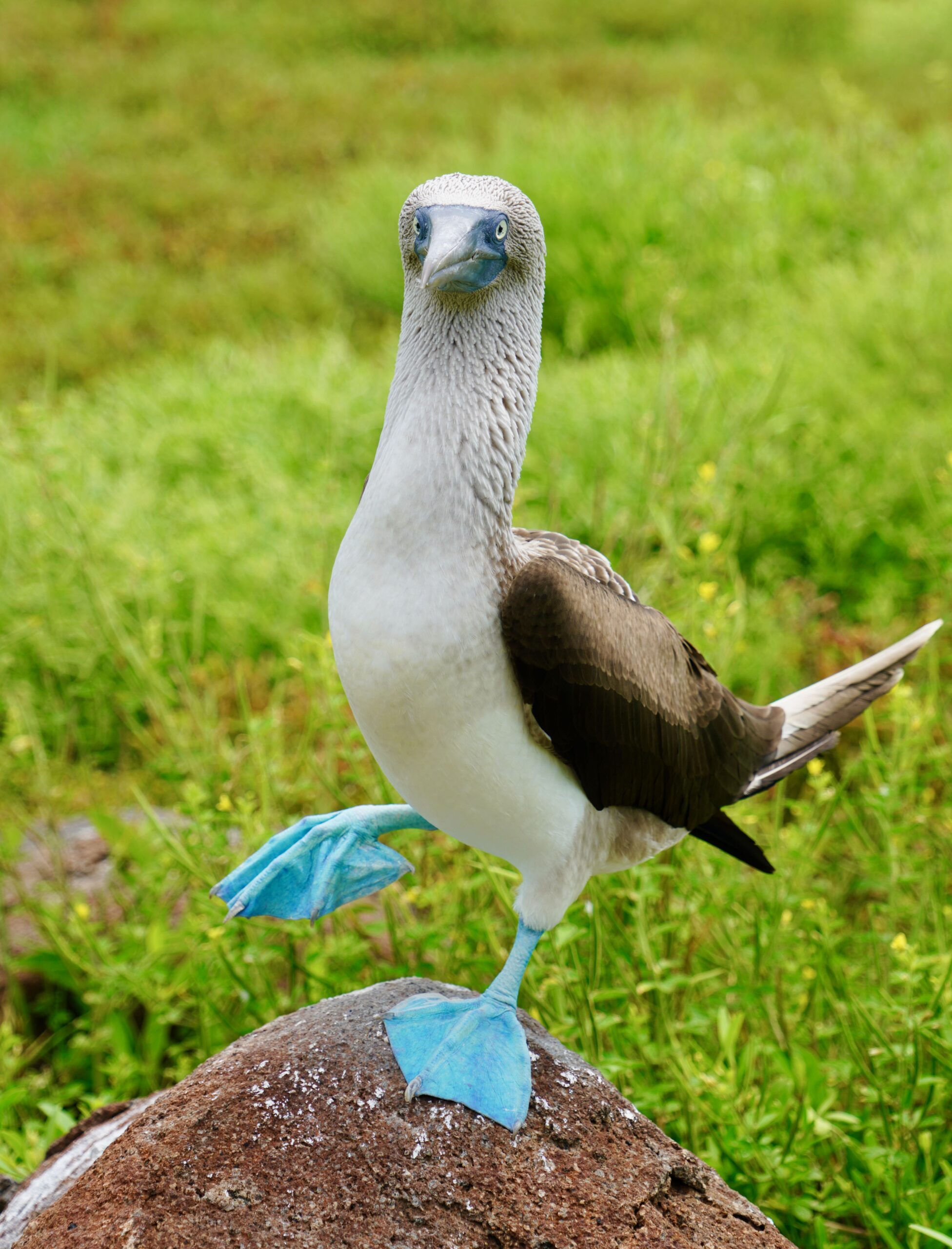
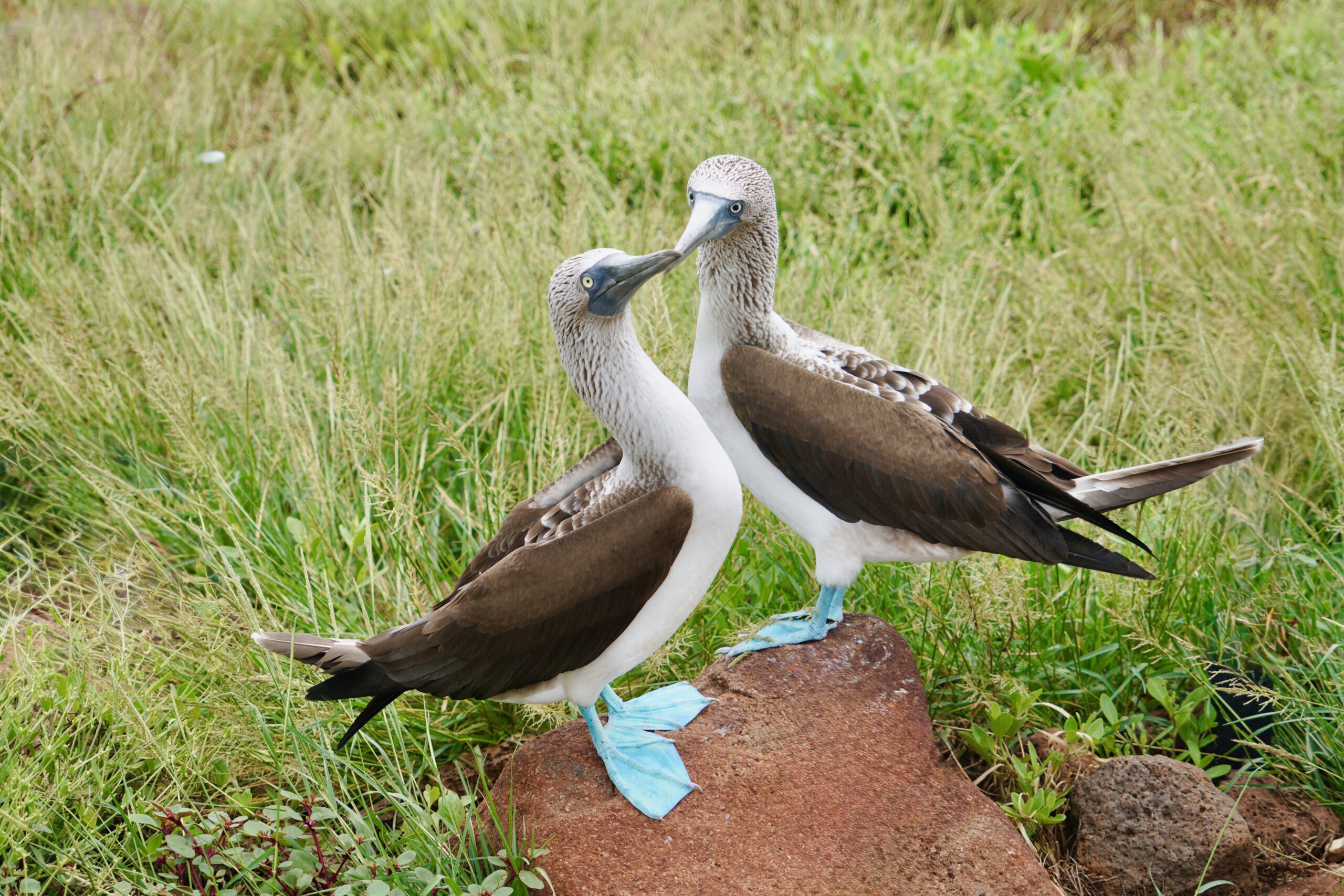
These birds have an elaborate and endearing courtship ritual, often described as a dance.
The spectacle begins when a male presents a small stick or stone to a prospective mate before engaging in a high-stepping strut. During this display, the male deliberately lifts his feet high in the air to flaunt their color, often accompanied by “sky-pointing,” a move wherein he tilts his head back, spreads his wings, and emits a piercing whistle. If the female is impressed, she may join in, and the pair will dance together in a synchronized display of bonding.
Once a match is made, the female lays two or three eggs directly on the bare ground. They then use their feet to incubate their eggs, carefully wrapping their webs around them to keep them warm.
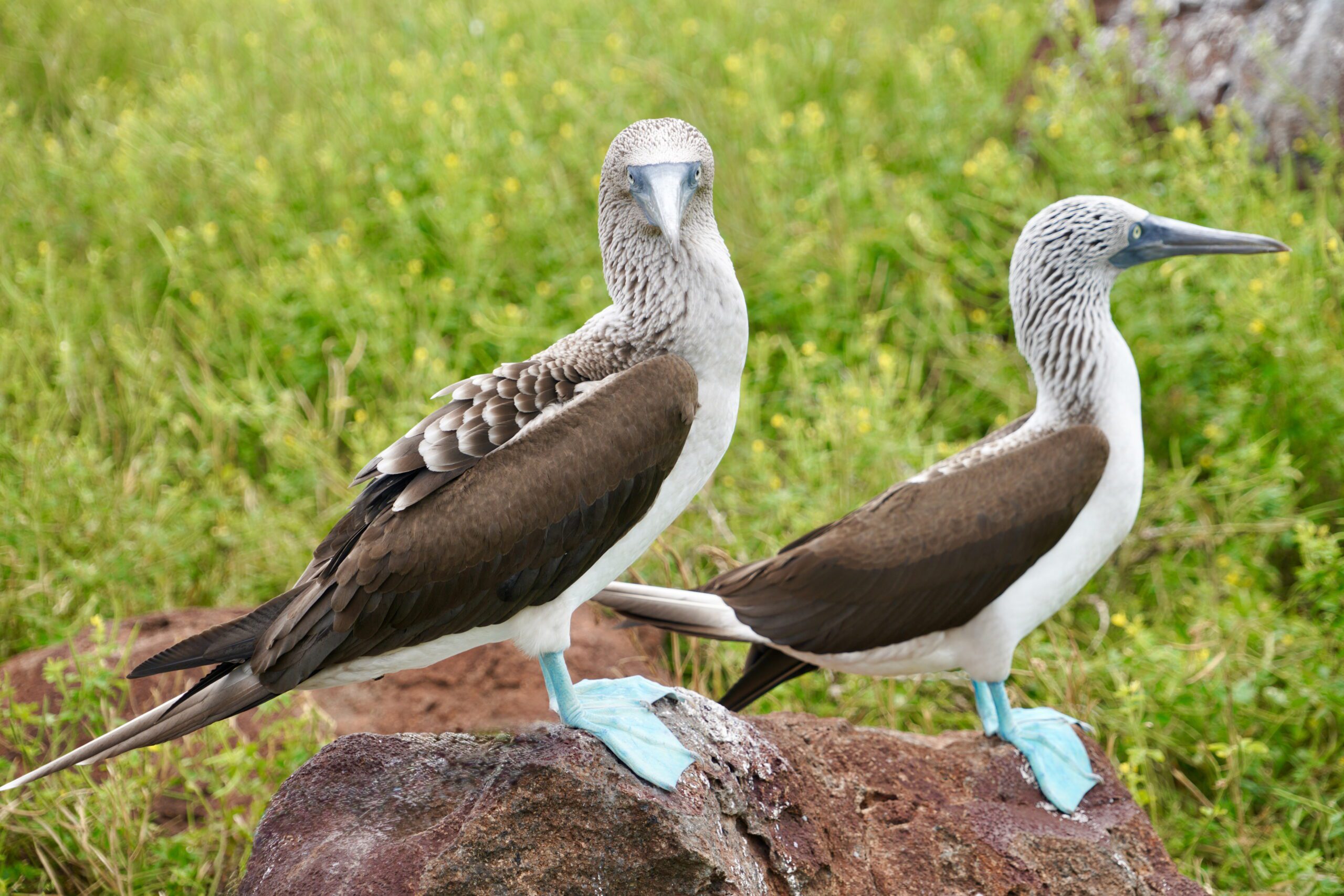
While they may appear clumsy and foolish on land—a trait that earned them the name “booby” from the Spanish word “bobo“—boobies are masterful aerobats and hunters over the open ocean. They specialize in plunge-diving, a high-speed hunting technique wherein they fold their wings back to form a streamlined torpedo shape and dive from heights of up to 80 feet.
Hitting the water at speeds approaching 60 miles per hour, they can pursue prey such as sardines, anchovies, and flying fish to depths of 80 feet. To survive the immense physical impact of these dives, they have air sacs in their skulls that protect their brains, and their nostrils are permanently closed to prevent water intake, forcing them to breathe through the corners of their mouths.
2. Magnificent Frigatebirds
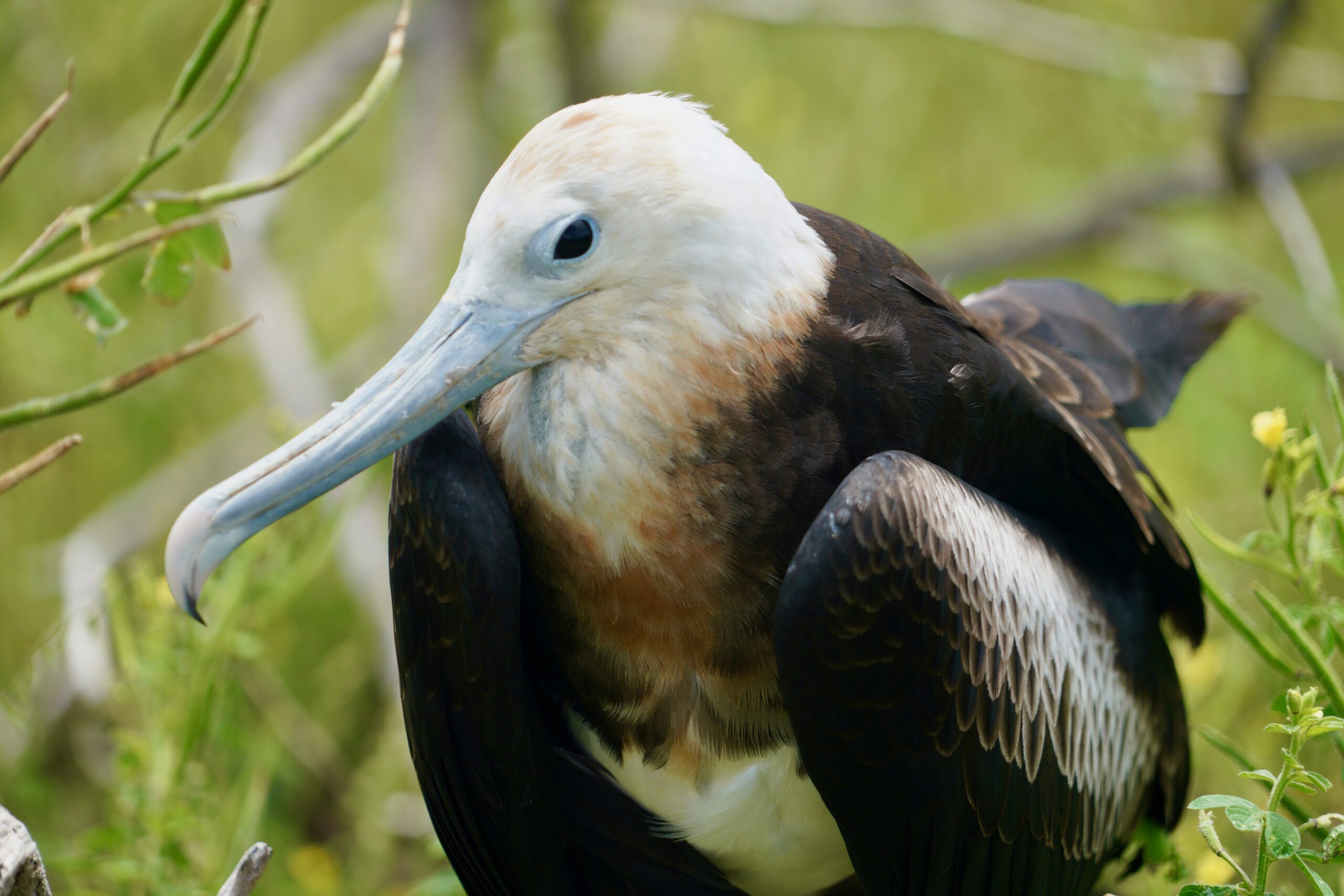
With a wingspan reaching nearly eight feet—the largest body-to-wing ratio of any bird—the magnificent frigatebird is capable of soaring for days on thermal currents without a single wingbeat.
During the breeding season, the male magnificent frigatebird transforms into one of the most striking sights in the archipelago. He inflates his bright red gular sac—a throat pouch—until it resembles a massive, heart-shaped balloon.
Perched in the low mangroves of North Seymour or San Cristóbal, males gather in groups to display for females flying overhead, drumming their bills against their inflated pouches to create a resonant rattling sound while vibrating their outstretched wings.
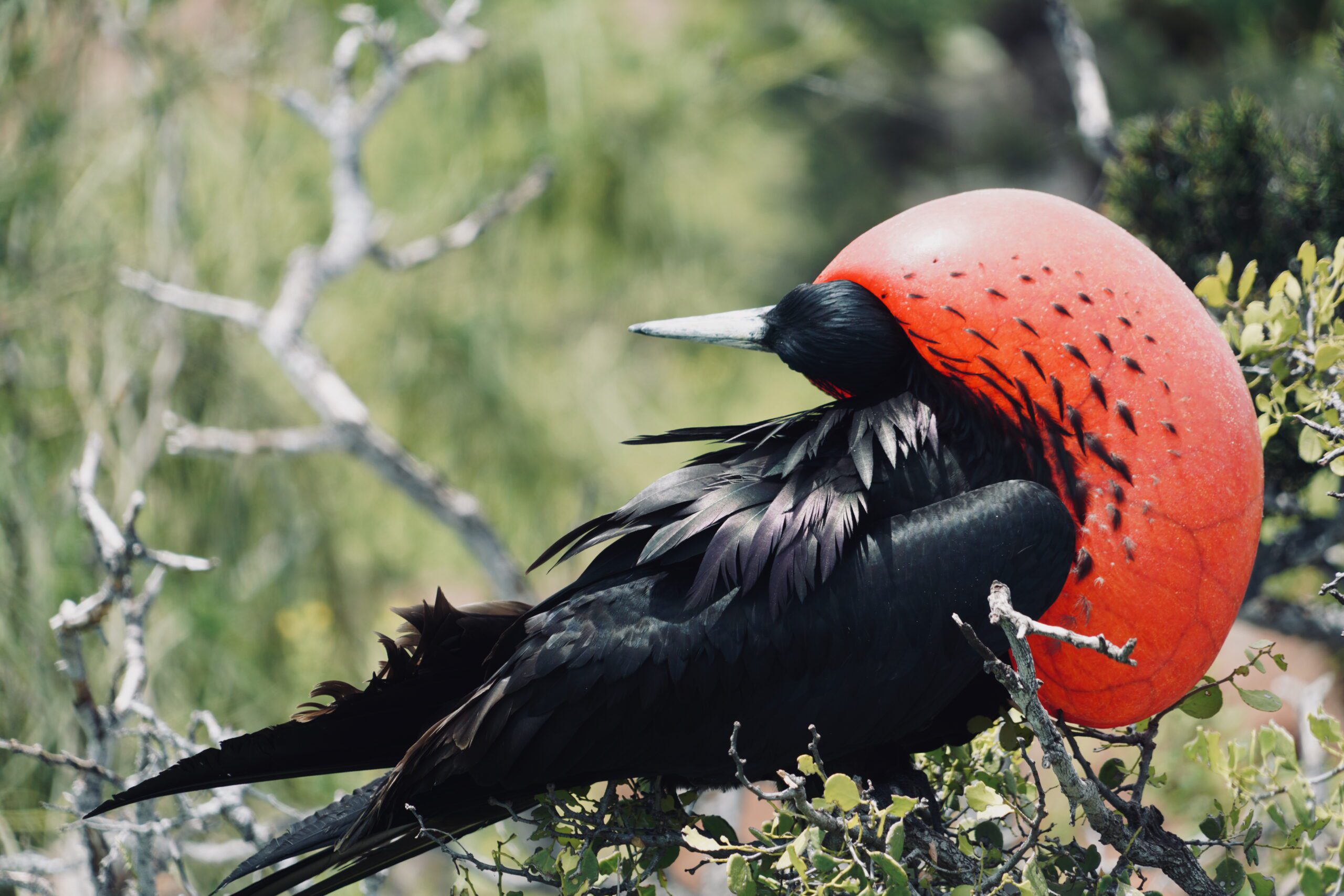
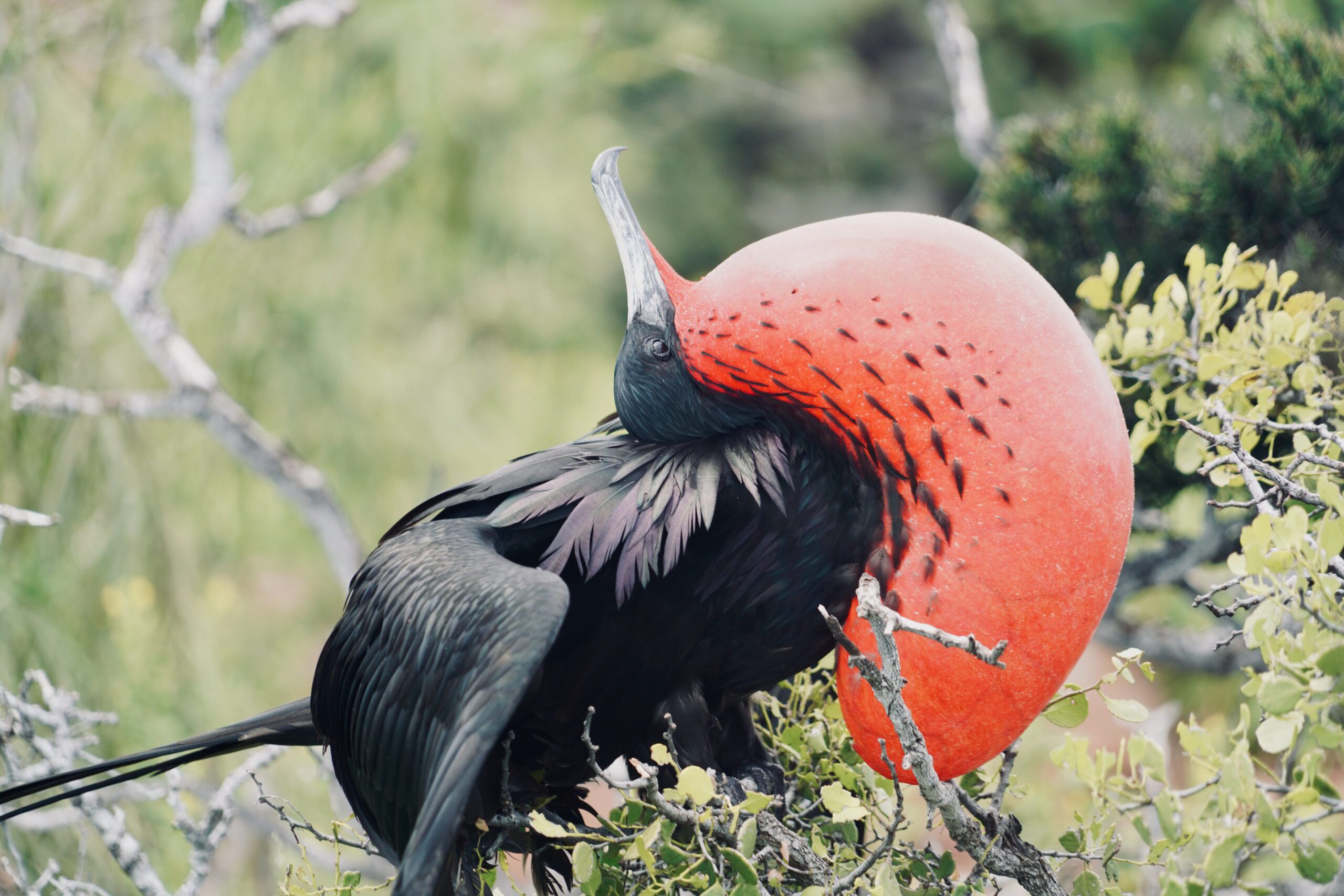
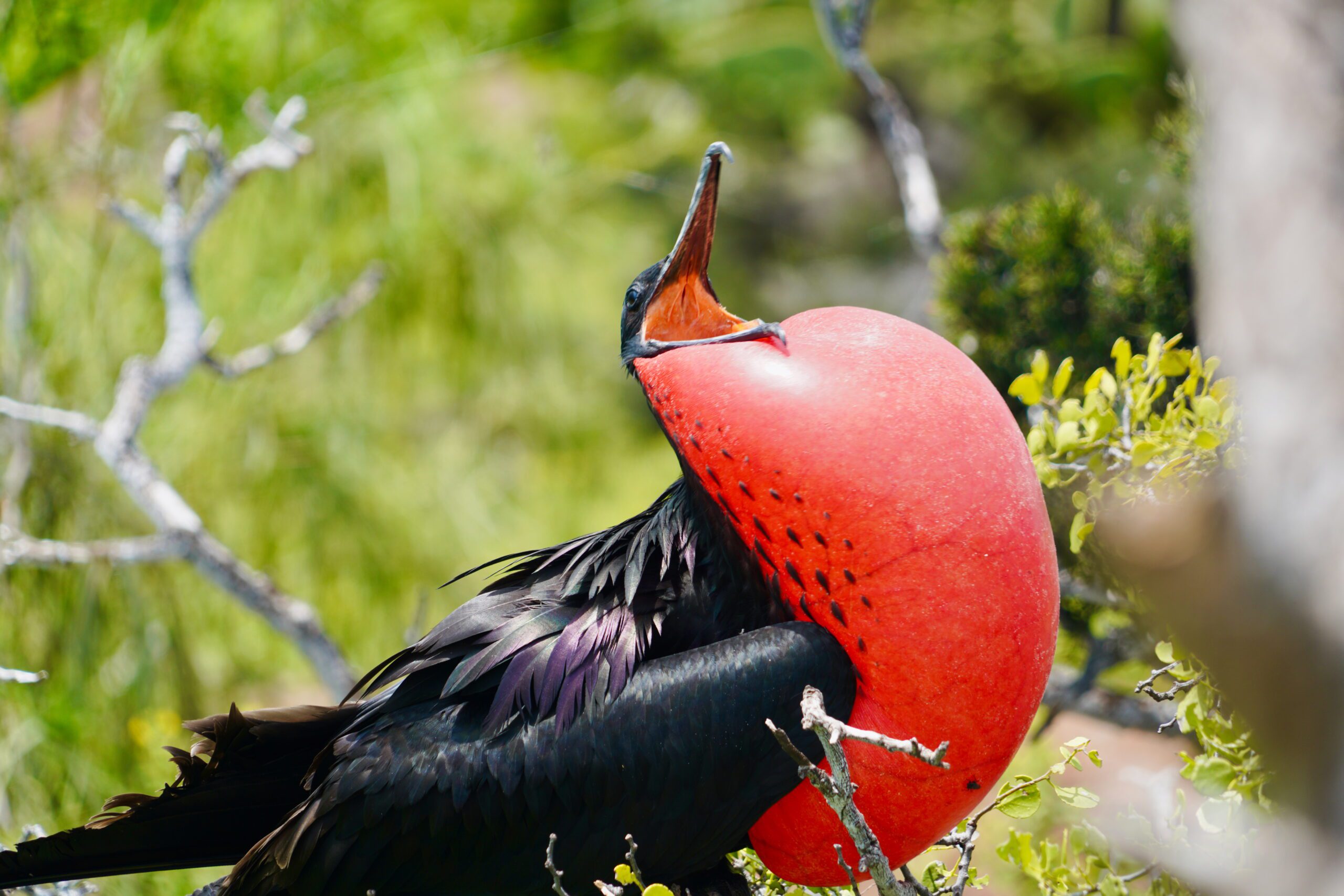
It was amazing watching them try to manage these massive sacs.
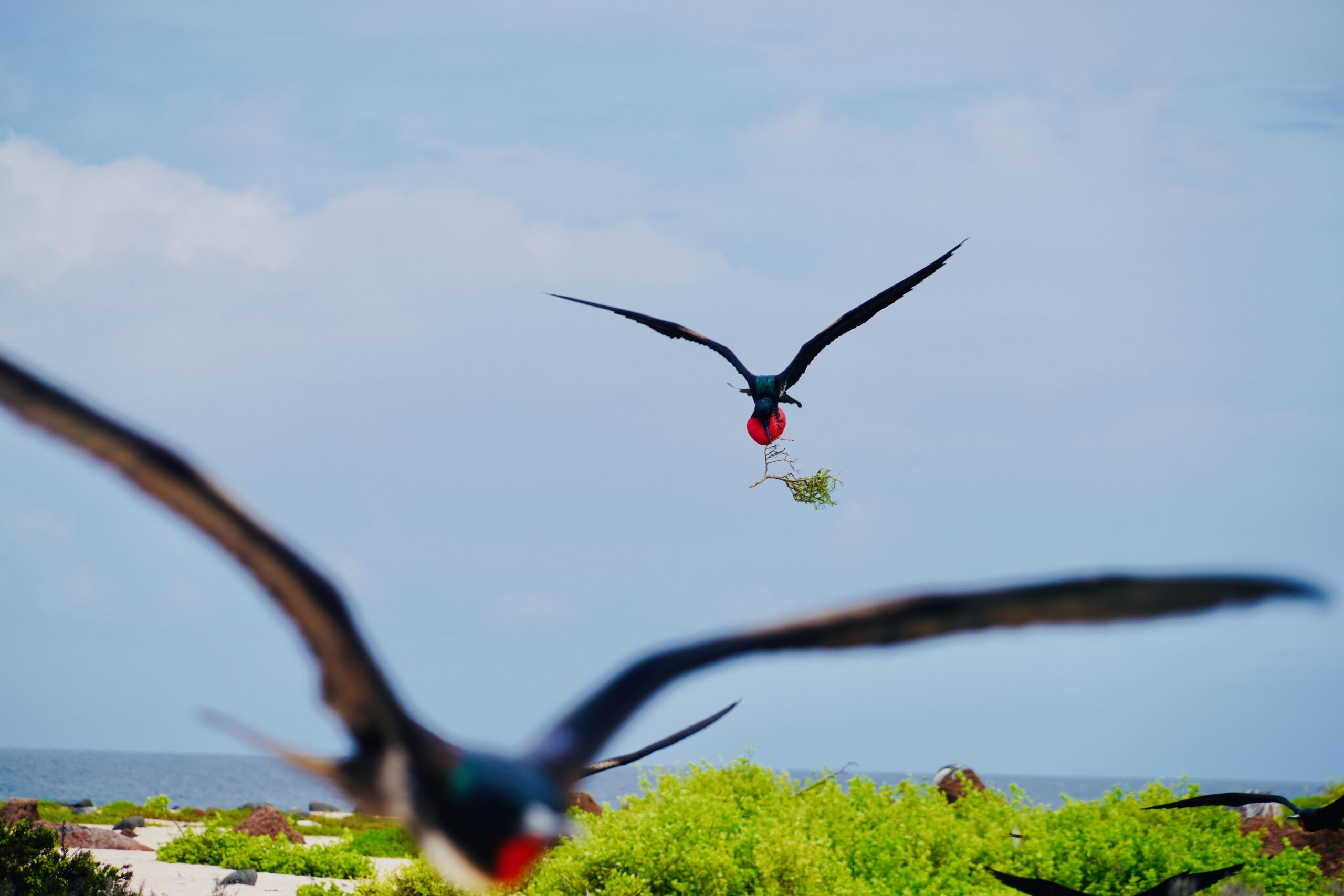
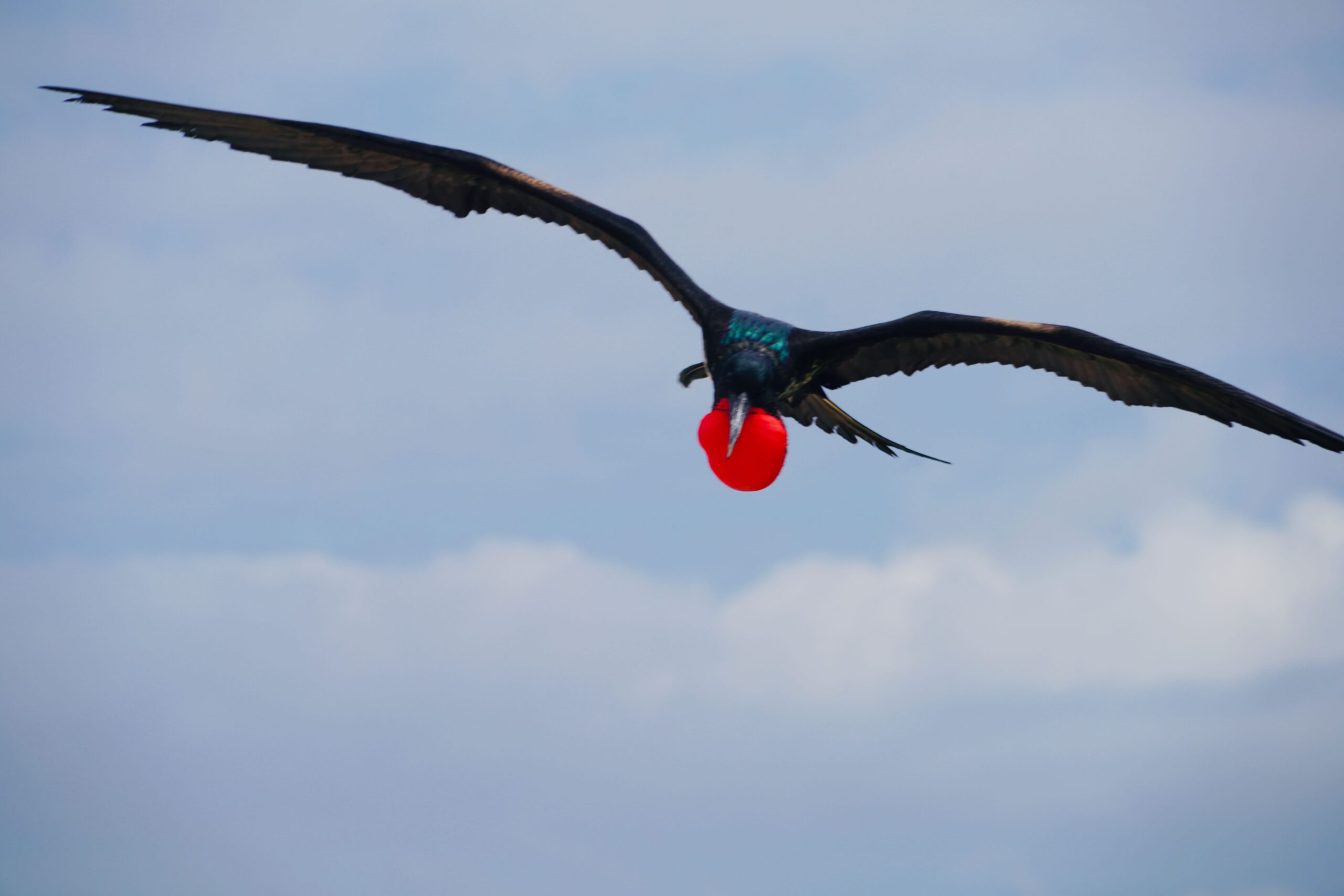
Since it was mating season, we saw numerous frigatebirds, both in flight and on land.
3. Galápagos Iguanas
We saw a lot of iguanas along the coast. The land iguanas are yellow, and the marine variety is black-ish.
It was just past iguana mating season when we were there.
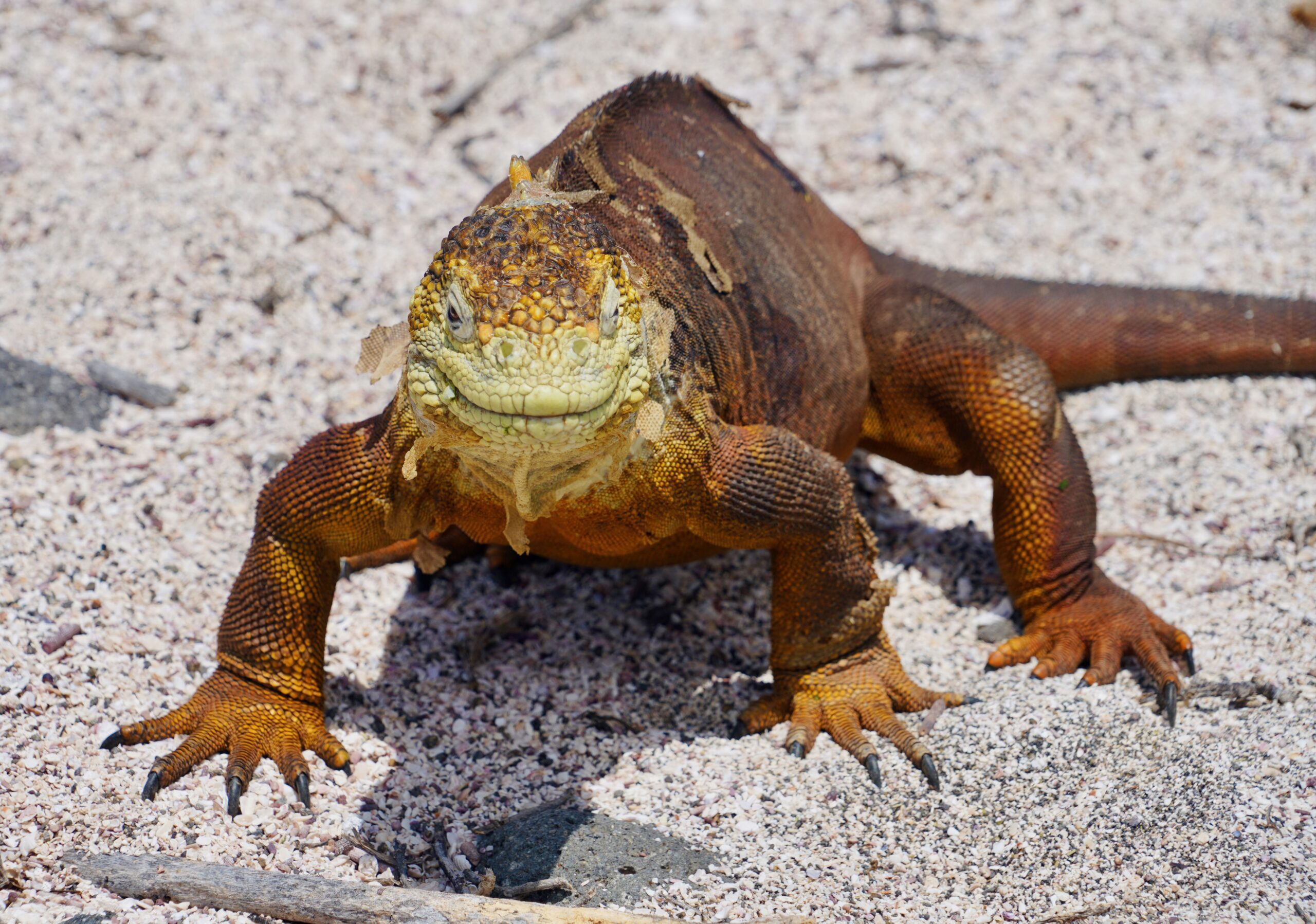
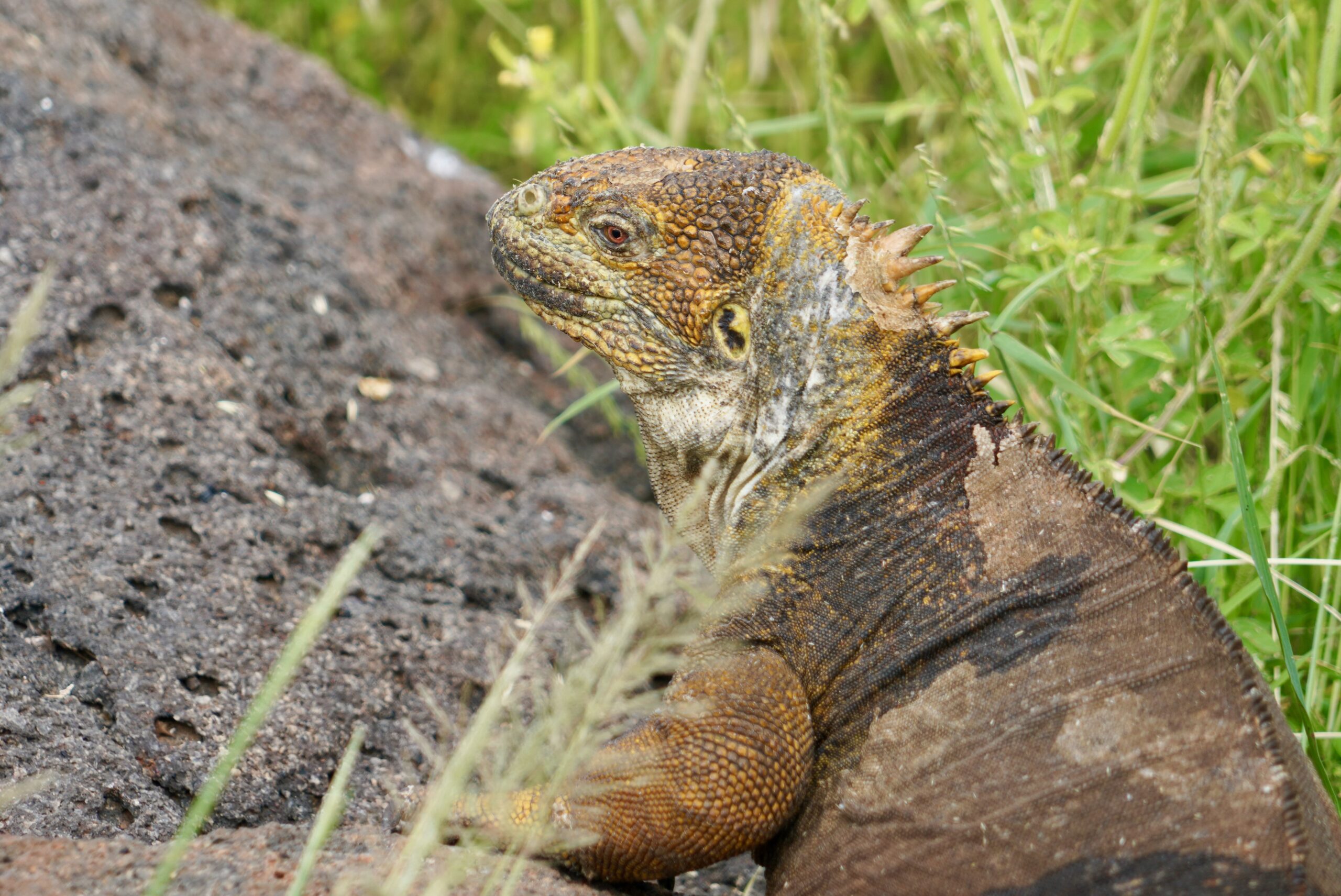
Once-endangered land iguanas
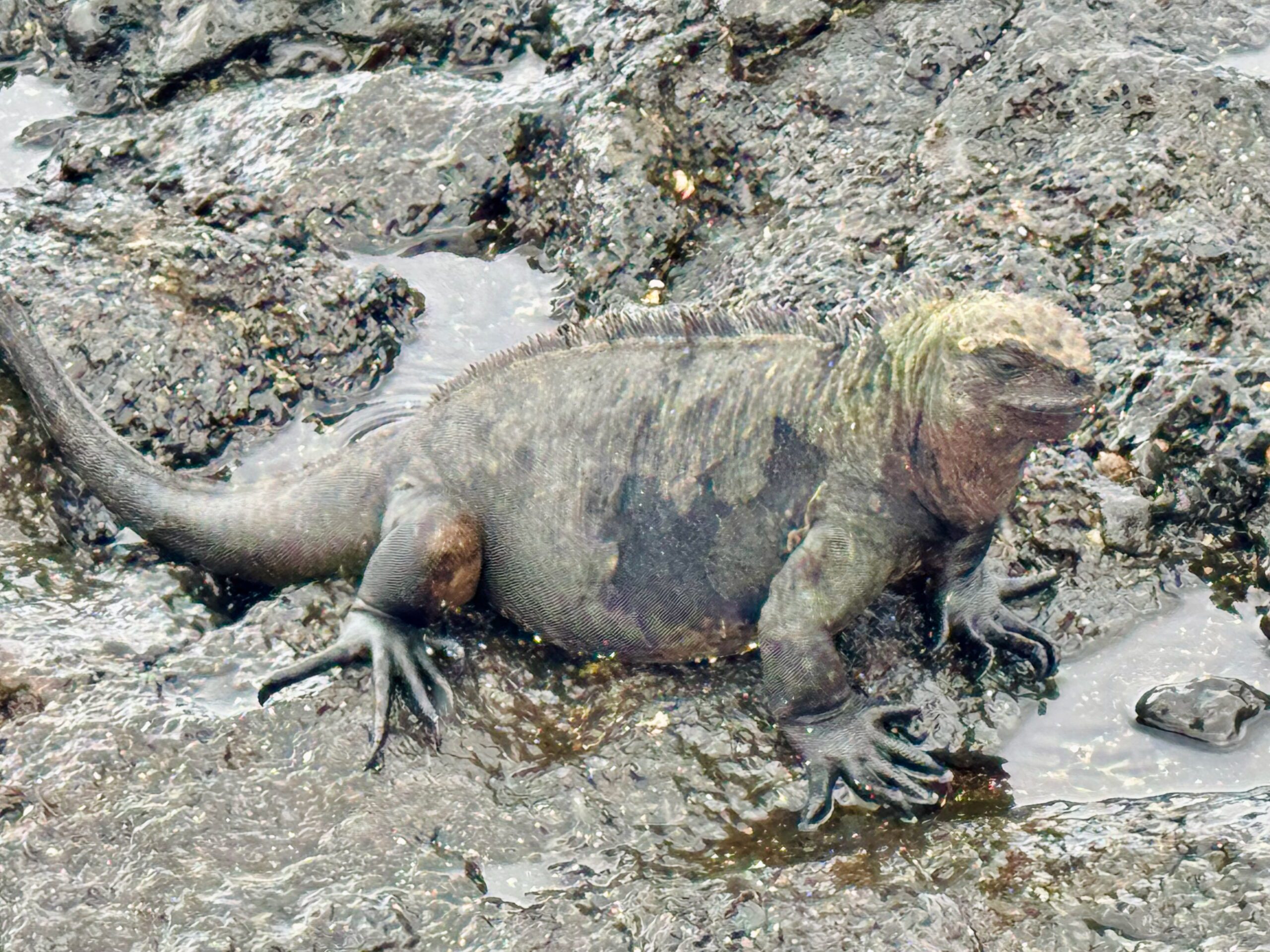
A Few Other Images from Our Time on North Seymour Island
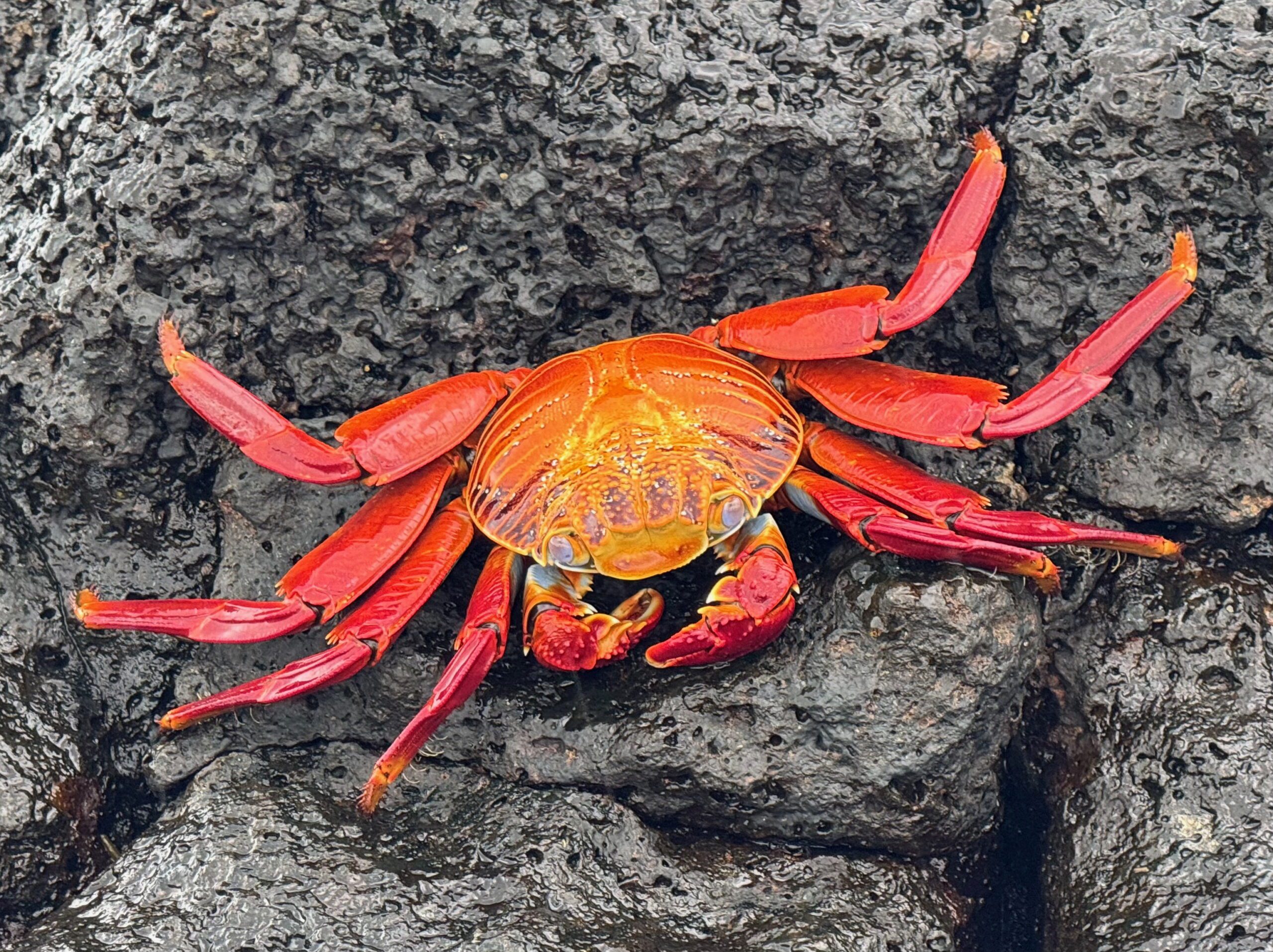
While on the shore, we saw several brightly colored crabs. This particular species—the Sally Lightfoot Crab—is rumored to have been named after a Caribbean dancer, due to its agility in jumping from rock to rock, ability to run in four directions, and capacity to climb up vertical slopes.

Getting There
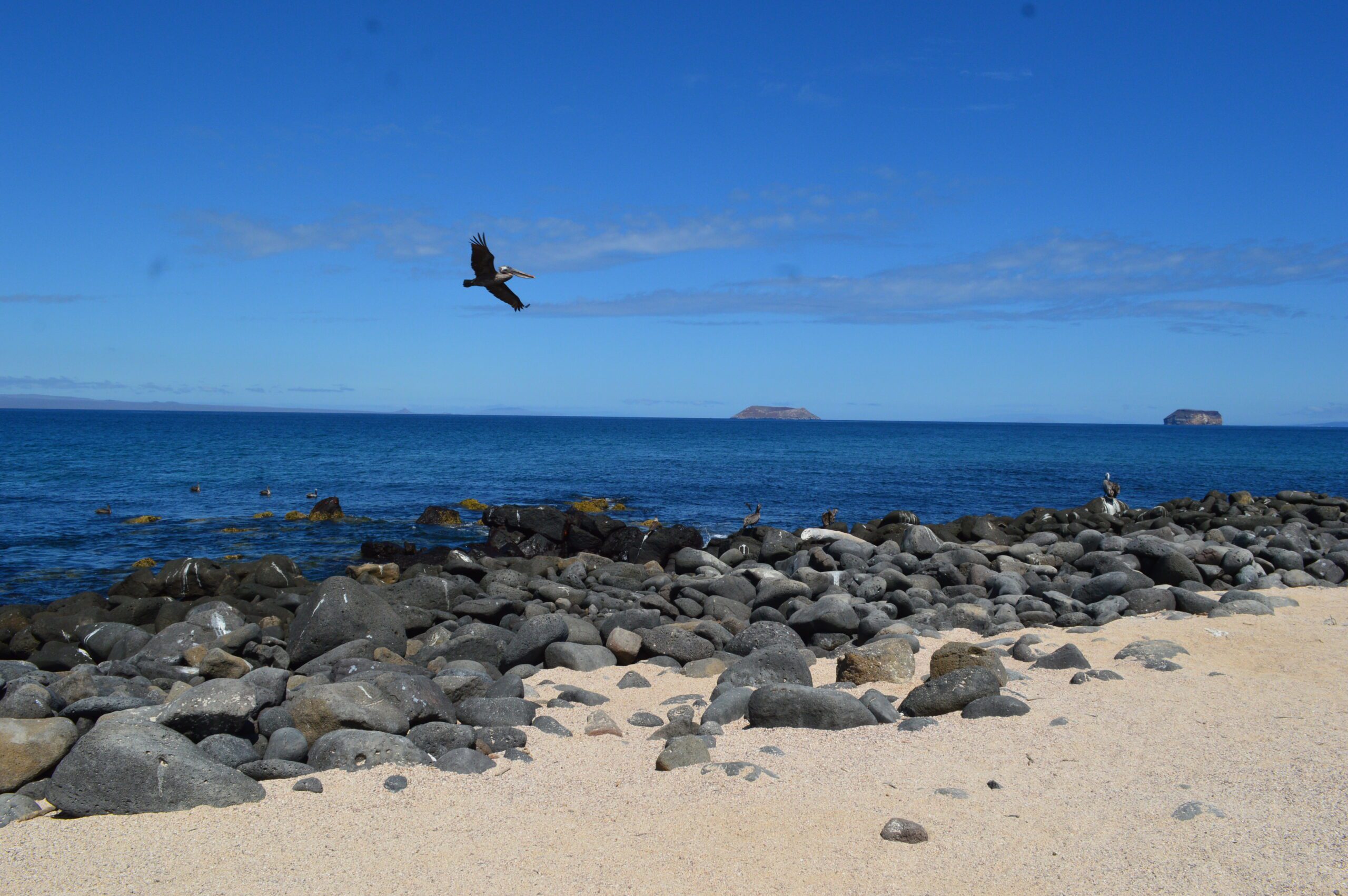
You can only get to North Seymour Island by boat.
Final Thoughts
There are no towns, permanent settlements, or human residents on North Seymour Island. It is uninhabited, protected, and used strictly for nature, research, and guided tourism.
Suffice it to say, this day trip was excellent. Prancing blue-footed boobies; once-endangered land iguanas; colorful crabs; and vibrant, red-pouched frigatebirds in a single day? It was fabulous.
Originally visited in April of 2025; content refreshed in January 2026.
